Adhyaya 242
धृतराष्ट्रस्य क्रतु-प्रवर्तनम् तथा पाण्डवानां निमन्त्रण-प्रतिवचनम् (Dhṛtarāṣṭra’s Sacrifice Commences and the Pandavas’ Reply to the Invitation)
Upa-parva: Dvāitavana-prasaṅga (Invitation to the Kaurava Sacrifice Episode)
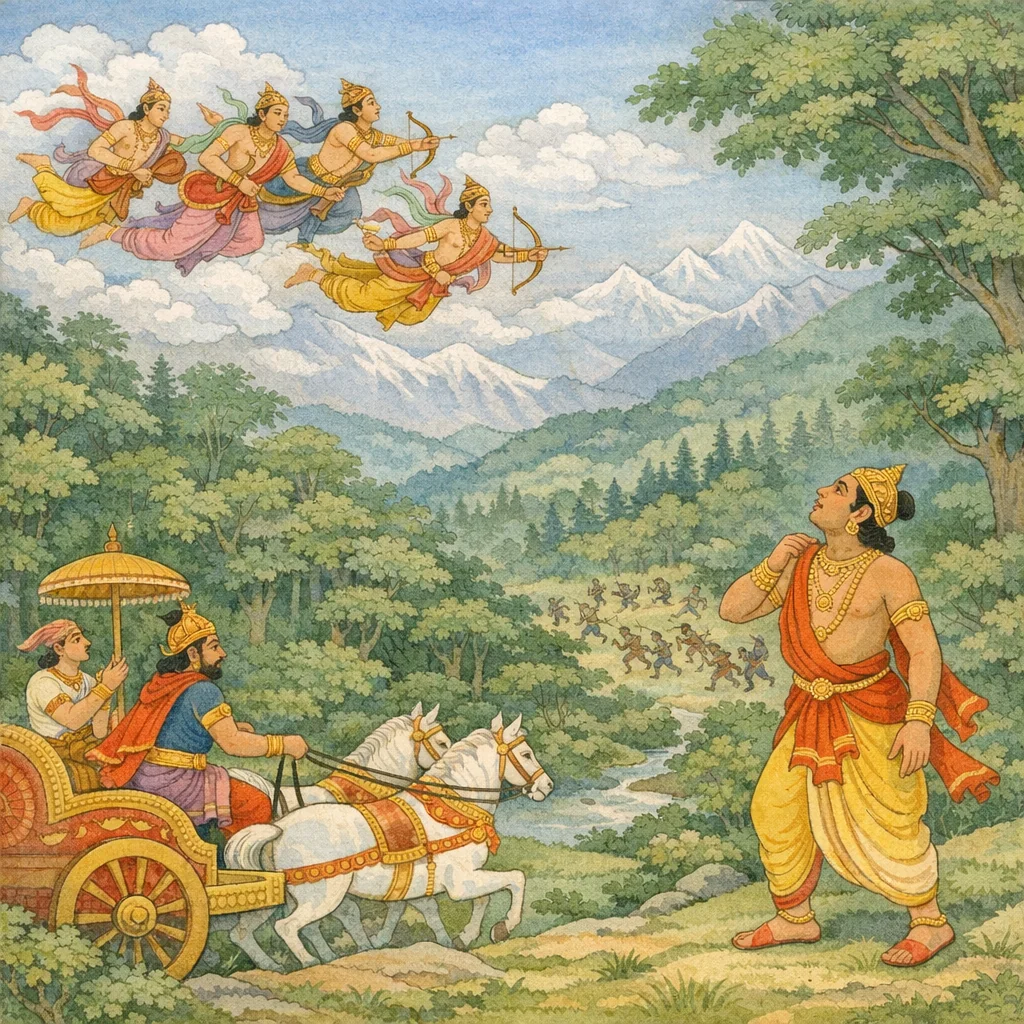
Vaiśaṃpāyana reports that artisans, senior ministers, and Vidura inform Dhṛtarāṣṭra that the planned sacrifice is prepared, including a splendid golden plough. Dhṛtarāṣṭra orders the rite’s commencement; the yajña proceeds with abundant, well-prepared provisions, and Gāndhārī undergoes consecration according to śāstra and sequence. Envoys are dispatched swiftly to invite kings and Brahmins. At Duryodhana’s prompting, one messenger is directed to Dvāitavana to invite the Pandavas and resident Brahmins. The envoy delivers the invitation, framing the sacrifice as supported by acquired wealth and attended by many. Yudhiṣṭhira responds with formal approval yet declines immediate participation, citing the necessity of preserving the thirteen-year term. Bhīma adds a restrained but explicit future-oriented warning: after the vow’s completion, the Pandava will return as a force of retribution in a battle-setting. The remaining Pandavas avoid harsh speech; the envoy reports back. Guests assemble at Dhṛtarāṣṭra’s city and are honored by rule and rank. Dhṛtarāṣṭra instructs Vidura to ensure universal satisfaction and adequate food; Vidura administers hospitality with offerings, garlands, fragrances, and garments. After the avabhṛtha and distribution of wealth, the king dismisses the rulers and Brahmins, then re-enters Hastināpura with his brothers and allies (including Karṇa and Śakuni).
Chapter Arc: गन्धर्वों द्वारा कौरव-सेना का मार्ग रोके जाने पर धृतराष्ट्रपुत्र दुर्योधन का अहंकार और अमर्ष भड़क उठता है; वह वन में अपनी शक्ति का प्रदर्शन करना चाहता है। → दुर्योधन गन्धर्वों को ‘अधर्मज्ञ’ कहकर दण्ड देने की धमकी देता है और उनकी वाणी/समझाइश को तुच्छ मानकर आगे बढ़ता है। गन्धर्व चित्रसेन को सूचना देते हैं; कौरव-सेना को बार-बार रोका जाता है, पर दुर्योधन और उसके साथियों का हठ बढ़ता जाता है। → गन्धर्वराज चित्रसेन क्रोध में उठकर निर्णायक आक्रमण करता है; कौरव सैनिक दुर्योधन के देखते-देखते दिशाओं में भागते हैं। कर्ण भी तलवार-ढाल लेकर विकर्ण के रथ पर चढ़कर ‘मोक्ष’ (बच निकलने) हेतु घोड़े दौड़ाता है—कौरव पक्ष की प्रतिष्ठा का चरम पतन। → गन्धर्वों की संगठित शक्ति के सामने कौरव-सेना तितर-बितर हो जाती है; दुर्योधन का दर्प चूर होता है और कौरव पक्ष पराजय/अव्यवस्था में चला जाता है। अध्याय का स्वर ‘कर्णपराभव’ की ओर संकेत करता है—कौरवों की हार को स्थिर निष्कर्ष की तरह बैठाता है। → कौरवों की इस पराजय के बाद दुर्योधन का क्या होगा—क्या वह पकड़ा जाएगा, कौन उसे छुड़ाएगा, और यह अपमान आगे के वैर को कैसे भड़काएगा?
Shlokas
Verse 1
(दाक्षिणात्य अधिक पाठका ३ श्लोक मिलाकर कुल ३१६ श्लोक हैं) 2.6 03.7 (9) #25-# #55-7 एकचत्वारिशर्दाधिकद्विशततमो< ध्याय: कौरवोंका गन्धवॉंके साथ युद्ध और कर्णकी पराजय वैशम्पायन उवाच ततस्ते सहिता: सर्वे दुर्योधनमुपागमन् । अब्र॒वंश्व महाराज यदूचु: कौरवं प्रति,वैशम्पायनजी कहते हैं--महाराज! तदनन्तर वे सब लोग एक साथ कुरुराज दुर्योधनके पास गये और गन्धर्वोने राजासे कहनेके लिये जो-जो बातें कही थीं, उन्हें कह सुनाया
Vaiśampāyana said: Then all of them, gathered together, approached Duryodhana. And, O great king, they reported to the Kaurava exactly the words that had been spoken to be conveyed to him. The scene underscores how messages in a royal crisis are carried collectively and formally, shaping responsibility and consequence in the unfolding conflict.
Verse 2
गन्धर्वर्वारिते सैन्ये धार्तराष्ट्र: प्रतापवान् । अमर्षपूर्ण: सैन्यानि प्रत्यभाषत भारत,भारत! गन्धर्वोद्वारा अपनी सेनाके रोक दिये जानेपर प्रतापी राजा दुर्योधनने अमर्षमें भरकर समस्त सैनिकोंसे कहा--
Vaiśampāyana said: When the army had been checked by the Gandharvas, the valiant Dhārtarāṣṭra (Duryodhana), filled with indignation, addressed all his troops—an outburst of wounded pride that foreshadows how unchecked anger and entitlement can cloud judgment and invite further harm.
Verse 3
शासतैनानधर्मज्ञान् मम विप्रियकारिण: । यदि प्रक्रीडते सर्वैर्देवे: सह शतक्रतुः,“अरे! यदि समस्त देवताओंके साथ इन्द्र भी यहाँ आकर क्रीडा करते हों, तो वे भी मेरा अप्रिय करनेवाले हैं। तुमलोग इन सब पापात्माओंको दण्ड दो'
Vaiśaṃpāyana said: “Punish these men who are ignorant of dharma and who act against my wishes. Even if Śatakratu (Indra) himself were to come here and sport together with all the gods, they too would be counted among those who do what is displeasing to me. Therefore, chastise all these sinful men.”
Verse 4
दुर्योधनवच: श्रुत्वा धार्तराष्ट्रा महाबला: । सर्व एवाभिसंनद्धा योधाश्वापि सहस्रश:,दुर्योधनकी यह बात सुनकर महाबली कौरव और उनके सहसौ्रों योद्धा सब-के-सब युद्धके लिये कमर कसकर तैयार हो गये
Vaiśampāyana said: Hearing Duryodhana’s words, the mighty sons of Dhṛtarāṣṭra—along with their warriors in the thousands—at once armed themselves and tightened their resolve for battle. The verse underscores how a leader’s speech can swiftly mobilize collective violence, turning intention into organized readiness for war.
Verse 5
ततः प्रमथ्य सर्वास्तांस्तद् वनं विविशुर्बलात् | सिंहनादेन महता पूरयन्तो दिशो दश,तदनन्तर वे अपने महान् सिंहनादसे दसों दिशाओंको गुँजाते हुए उन समस्त गन्धर्वोको रौंदकर बलपूर्वक द्वैतवनमें घुस गये
Then, trampling and overpowering all those Gandharvas, they forced their way into that forest. With a mighty lion-roar they made the ten directions resound—an act of aggressive entry that signals pride and intimidation rather than restraint or dharmic courtesy.
Verse 6
ततो<परैरवार्यन्त गन्धर्वै: कुरुसैनिका: । ते वार्यमाणा गन्धर्वै: साम्नैव वसुधाधिप,ततस्ते खेचरा: सर्वे चित्रसेने न््यवेदयन् । राजन! उस समय दूसरे-दूसरे गन्धर्वोने शान्तिपूर्ण वचनोंद्वारा ही कौरव सैनिकोंको रोका। रोकनेपर भी उन गन्धर्वोकी अवहेलना करके वे समस्त सैनिक उस महान् वनके भीतर प्रविष्ट हो गये। जब राजा दुर्योधनसहित समस्त कौरव वाणीद्वारा मना करनेपर न रुके, तब आकाशमें विचरनेवाले उन सभी गन्धर्वोने राजा चित्रसेनसे यह सारा समाचार निवेदन किया
Vaiśampāyana said: Then the Kuru soldiers were restrained by other Gandharvas. Yet, though being checked by the Gandharvas—who spoke only in conciliatory, peace-seeking words—those troops disregarded the warning and pressed on. When the Kauravas, with King Duryodhana among them, would not stop despite being verbally dissuaded, all those sky-ranging Gandharvas reported the entire matter to King Citrasena. The episode underscores how contempt for gentle counsel and rightful boundaries invites swift consequences and escalates conflict.
Verse 7
ताननादृत्य गन्धर्वास्तद् वनं विविशुर्महत् । यदा वाचा न तिष्ठन्ति धार्तराष्ट्रा: सराजका:
Disregarding them, the Gandharvas entered that vast forest. For when the Dhārtarāṣṭras—together with their king—do not abide by reasoned words, they become unrestrainable and rush onward despite counsel.
Verse 8
गन्धर्वराजस्तान् सर्वनत्रवीत् कौरवान् प्रति
Vaiśampāyana said: The king of the Gandharvas then struck fear into them all, turning his intimidating force against the Kauravas. The scene underscores how arrogance and aggression can invite a swift reversal, as a power outside the Kauravas’ control checks their conduct and exposes their vulnerability.
Verse 9
अनुज्ञाताश्च गन्धर्वश्षित्रसेनेन भारत
Vaiśampāyana said: “O Bhārata, the Gandharvas too were granted leave by Citraseṇa.”
Verse 10
तान् दृष्टवा पततः शीघ्रान् गन्धर्वनिद्यतायुधान्
Seeing them rushing down swiftly—bearing weapons famed and admired among the Gandharvas—Vaiśampāyana frames the moment as a sudden, formidable escalation, where prowess and reputation in arms become the immediate moral pressure upon the onlookers to respond with courage and restraint.
Verse 11
तान् दृष्टवा द्रवत:सर्वान् धार्तराष्ट्रानू पराड्मुखान्
Seeing all the sons of Dhṛtarāṣṭra fleeing in haste with their faces turned away, Vaiśaṃpāyana describes the moment as one of sudden reversal—where fear and loss of resolve overpower pride, and the consequences of prior choices begin to manifest in flight rather than steadfastness.
Verse 12
राधेयस्तु तदा वीरो नासीत् तत्र पराड्मुख: । धृतराष्ट्रके सब पुत्रोंको युद्धसे विमुख हो भागते देखकर भी राधानन्दन वीर कर्णने वहाँ पीठ नहीं दिखायी ।। आपततन्तीं तु सम्प्रेक्ष्य गन्धर्वाणां महाचमूम्
Vaiśampāyana said: At that time the heroic Rādheya (Karna) did not turn away in retreat. Even on seeing the sons of Dhṛtarāṣṭra abandon the fight and flee, the valiant son of Rādhā did not show his back there. Then, beholding the great host of Gandharvas rushing upon them, he stood his ground—embodying the warrior’s ethic of steadfastness amid panic and collapse of morale.
Verse 13
क्षुरप्रैविशिखैर्भल्लैर्वत्सदन्तैस्तथा55यसै:
Vaiśampāyana said: “With razor-edged, barbed arrows, with broad-headed shafts, with calf-tooth–like (serrated) missiles, and with iron weapons,”—thus describing the fierce shower of armaments in the unfolding combat, where skill and wrath manifest through ever more cutting and lethal projectiles.
Verse 14
पातयजन्नुत्तमाड्नि गन्धर्वाणां महारथ:
Vaiśampāyana said: The great chariot-warrior, striking down the foremost among the Gandharvas, continued to fell them in battle—an image of heroic prowess set within the larger moral tension of force used against celestial guardians.
Verse 15
ते वध्यमाना गन्धर्वा: सूतपुत्रेण धीमता,आपतद्धिम्महावेगैश्षित्रसेनस्य सैनिकै: | परम बुद्धिमान सूतपुत्र कर्णके द्वारा ज्यों-ज्यों गन्धर्वोपर मार पड़ने लगी, त्यों-ही-त्यों वे सैकड़ों और हजारोंकी संख्यामें वहाँ आ-आकर एकत्र होने लगे। इस प्रकार चित्रसेनके अत्यन्त वेगशाली सैनिकोंके आनेसे क्षणभरमें वहाँकी सारी पृथ्वी गन्धर्वमयी हो गयी
Vaiśaṃpāyana said: As the Gandharvas were being struck down by the wise son of a charioteer (Karna), the exceedingly swift troops of Citrasena kept rushing in. The more the Gandharvas were attacked, the more they gathered there in hundreds and thousands, so that in a moment the whole ground seemed filled—indeed transformed—into a host of Gandharvas. The scene underscores how violence can rapidly escalate conflict, drawing ever more forces into the fray and overwhelming the field.
Verse 16
भूय एवाभ्यवर्तन्त शतशो5थ सहस्रश:ः । गन्धर्वभूता पृथिवी क्षणेन समपद्यत
Vaiśaṃpāyana said: Again they surged back—by hundreds and then by thousands; in a moment the whole earth seemed transformed into a scene of Gandharvas, as if filled everywhere with their presence and tumult.
Verse 17
अथ दुर्योधनो राजा शकुनिश्चापि सौबल:
Then King Duryodhana, along with Śakuni of the Saubala line, proceeded—signaling the next turn in the narrative where their counsel and intentions begin to shape events with calculated purpose.
Verse 18
दुःशासनो विकर्णश्न ये चान्ये धृतराष्ट्रजा: । न्यहनंस्तत् तदा सैन्यं रथैर्गरुडनि:स्वनै:
Vaiśampāyana said: Duḥśāsana, Vikarṇa, and the other sons of Dhṛtarāṣṭra then struck down that force, charging in chariots whose rumbling roar was like that of Garuḍa—an image of overwhelming martial power unleashed in the service of a contested cause.
Verse 19
तदनन्तर राजा दुर्योधन, सुबलपुत्र शकुनि, दुःशासन, विकर्ण तथा अन्य जो धृतराष्ट्रपुत्र वहाँ आये थे, उन सबने गरुड़के समान भयंकर शब्द करनेवाले रथोंपर आखरूढ़ हो गन्धर्वोकी उस सेनाका संहार आरम्भ किया ।। भूयश्व योधयामासु: कृत्वा कर्णमथाग्रत: । महता रथसड्घेन रथचारेण चाप्युत
Vaiśampāyana said: Thereafter King Duryodhana—together with Śakuni the son of Subala, Duḥśāsana, Vikarṇa, and the other sons of Dhṛtarāṣṭra who had arrived there—mounted on chariots that roared with a terrifying sound like Garuḍa, began the slaughter of the Gandharva host. Again they pressed the fight, placing Karṇa at the front, supported by a great mass of chariots and charioteers as well. Ethically, the passage underscores how pride and factional loyalty drive escalation: rather than restraint or reconciliation, the Kauravas choose renewed violence and seek advantage through force and formation.
Verse 20
तत: संन्यपतन् सर्वे गन्धर्वा: कौरवै: सह
Then all the Gandharvas, together with the Kauravas, rushed headlong into the fray—an abrupt surge into conflict that underscores how pride and rivalry can swiftly turn a tense encounter into open violence.
Verse 21
तदा सुतुमुलं युद्धमभवल्लोमहर्षणम् । ततस्ते मृदवो5भूवन् गन्धर्वा: शरपीडिता:
Then a very fierce battle arose, one that made the hair stand on end. Thereafter those Gandharvas, tormented by the arrows, became subdued and lost their former boldness—showing how even the proud are softened when violence and its consequences press upon them.
Verse 22
उच्चक्रुशुश्न कौरव्या गन्धर्वान् प्रेक्ष्य पीडितान् | तत्पश्चात् सारे गन्धर्व संगठित हो कौरवोंके साथ भिड़ गये। उस समय उनमें घमासान युद्ध होने लगा, जो रोंगटे खड़े कर देनेवाला था। तदनन्तर कौरवोंके बाणोंसे पीड़ित हो गन्धर्व कुछ ढीले पड़ने लगे और उन्हें कष्ट पाते देख कौरव-योद्धा जोर-जोरसे गरजने लगे || २०-२१ $ || गन्धर्वास्त्रासितान् दृष्टवा चित्रसेनो हामर्षण:
Vaiśampāyana said: Seeing the Gandharvas hard-pressed and suffering, the Kaurava warriors raised loud cries. In the wake of this fierce clash, the Kauravas’ confidence swelled as their arrows seemed to gain the upper hand, while the Gandharvas, though celestial, appeared momentarily shaken—setting the stage for a renewed and more determined counterattack.
Verse 23
ततो मायास्त्रमास्थाय युयुधे चित्रमार्गवित् । तयामुहान्त कौरव्यश्रित्रसेनस्थ मायया
Then, taking up the weapon of illusion (māyāstra), the one skilled in wondrous stratagems fought on. By that very illusion, the Kaurava warriors were thrown into bewilderment, as Citrāsena stood employing his māyā. The episode underscores how power used through deception can overturn the confidence of the proud, and how discernment is tested when appearances are manipulated.
Verse 24
वे युद्धकी विचित्र पद्धतियोंके ज्ञाता थे। उन्होंने मायामय अस्त्रका आश्रय लेकर युद्ध आरम्भ किया। चित्रसेनकी उस मायासे समस्त कौरवोंपर मोह छा गया ।। एकैको हि तदा योधो धार्तराष्ट्रस्य भारत । पर्यवर्तत गन्धर्वैर्दशभिर्दशभि: सह,भारत! उस समय दुर्योधनका एक-एक सैनिक दस-दस गन्धर्वोके साथ लोहा ले रहा था
Vaiśampāyana said: Skilled in diverse and wondrous modes of combat, they began the battle by resorting to illusory weapons. Under Citrasena’s magic, delusion spread over all the Kauravas. Then, O Bhārata, each individual warrior of Dhṛtarāṣṭra’s host found himself contending—turning and fighting—against groups of ten Gandharvas at a time.
Verse 25
ततः: सम्पीड्यमानास्ते बलेन महता तदा । प्राद्रवन्त रणे भीता ये च राजज्जिगीषव:,राजन! तदनन्तर गन्धर्वोकी विशाल सेनासे पीड़ित हो वे सभी योद्धा, जो पहले जीतनेका हौसला रखते थे, भयभीत हो युद्धसे भाग चले
Vaiśampāyana said: Then, pressed hard by that great force, those warriors—who had earlier been eager to win the king—became frightened in the battle and fled from the field. The episode underscores how confidence rooted merely in ambition collapses when confronted by overwhelming power, and how fear can swiftly overturn the resolve of would‑be conquerors.
Verse 26
भज्यमानेष्वनीकेषु धार्तराष्ट्रेषु सर्वश: । कर्णो वैकर्तनो राजं॑स्तस्थौ गिरिरिवाचल:,जनमेजय! जब कौरवोंके सभी सैनिक युद्ध छोड़कर भागने लगे, उस समय भी सूर्यपुत्र कर्ण पर्वतकी भाँति अविचलभावसे उस युद्धभूमिमें डटा रहा
Vaiśampāyana said: When the Dhārtarāṣṭra battle-formations were being shattered on every side, Karṇa—son of the Sun, called Vaikartana—stood his ground, O King, unmoving like a mountain. In the midst of general collapse and flight, his steadfastness marks the warrior’s resolve to uphold his chosen allegiance and face danger without wavering.
Verse 27
दुर्योधनश्व कर्णश्व शकुनिश्चापि सौबल: । गन्धर्वान् योधयामासु: समरे भृशविक्षता:,दुर्योधन, कर्ण और सुबलपुत्र शकुनि--ये उस समरांगणमें यद्यपि बहुत घायल हो गये थे, तथापि गन्धर्वोसे युद्ध करते रहे
Vaiśampāyana said: Duryodhana, Karṇa, and Śakuni—the son of Subala—though grievously wounded, still continued to fight the Gandharvas on the battlefield. The verse highlights their stubborn persistence in combat even when physically broken, a resolve that can appear as valor yet is ethically shadowed when driven by pride and wrongdoing rather than righteous duty.
Verse 28
सर्व एव तु गन्धर्वा: शतशो5थ सहस्रश: । जिघांसमाना: सहिता: कर्णमभ्यद्रवन् रणे,इसपर सभी गन्धर्व एक साथ संगठित हो कर्णको मार डालनेकी इच्छासे सौ-सौ तथा हजार-हजारका दल बाँधकर रणभूमिमें कर्णके ऊपर टूट पड़े
Vaiśampāyana said: Then all the Gandharvas—arrayed in hundreds and in thousands—moved together with a single intent: to slay Karṇa. United in their ranks, they surged upon him on the battlefield, turning the encounter into a collective assault driven by lethal resolve.
Verse 29
असिश्रि: पट्टिशै: शूलैर्गदाभिश्न महाबला: । सूतपुत्रं जिघांसन्त: समनन््तात् पर्यवाकिरन्,उन महाबली वीरोंने सूतपुत्र कर्णके वधकी इच्छा रखकर उसके ऊपर चारों ओरसे तलवार, पट्टिश, शूल और गदाओंद्वारा प्रहार आरम्भ किया
Vaiśampāyana said: The mighty warriors, intent on killing Karṇa, the son of a charioteer, surrounded him on all sides and assailed him with swords, battle-axes, spears, and maces. The scene underscores the harsh ethic of war: when many converge upon one foe with the single aim of slaying him, valor and strategy are tested against the boundary between righteous combat and overwhelming force.
Verse 30
अन्येअस्य युगमच्छिन्दन् ध्वजमन्ये न्यपातयन् | ईषामन्ये हयानन्ये सूतमन्ये न््यपातयन्,किन्हींने उसके रथका जुआ काट दिया, दूसरोंने ध्वजा काटकर गिरा दी। कुछ लोगोंने ईषादण्डके टुकड़े-टुकड़े कर दिये। कुछ गन्धरवोंने कर्णके घोड़ोंको यमलोक पहुँचा दिया तथा दूसरोंने सारथिको मार गिराया
Vaiśampāyana said: Some of them cut away the yoke of his chariot; others struck down and felled the banner. Some shattered the pole and fittings; some slew the horses, and others brought down the charioteer. Thus, by disabling the chariot piece by piece, they neutralized the warrior’s power without meeting him only in direct exchange of blows—an episode that highlights how, in the press of conflict, strategy often targets the supports of strength (vehicle, standard, team, driver) as much as the fighter himself.
Verse 31
अन्ये छत्र॑ वरूथं च बन्धुरं च तथापरे | गन्धर्वा बहुसाहस्रास्तिलशो व्यधमन् रथम्,किसी एकने छत्र, दूसरोंने वरूथ- और अन्य सैनिकोंने रथके बन्धन काट डाले। गन्धर्वोंकी संख्या कई हजार थी। उन्होंने कर्णके रथको तिल-तिल करके काट दिया
Vaiśampāyana said: Some cut down the parasol, others the protective covering, and still others severed the fastenings of the chariot. The Gandharvas, numbering many thousands, tore the chariot to pieces—bit by bit—reducing it as though to grains. The scene underscores how sheer collective force and skill can dismantle even a famed warrior’s outward emblems of status and security, exposing the fragility of pride and protection in the face of overwhelming opposition.
Verse 32
ततो रथादवप्लुत्य सूतपुत्रोडसिचर्म भृत् । विकर्णरथमास्थाय मोक्षायाश्वानचोदयत्,तब सूतपुत्र कर्ण हाथमें तलवार और ढाल लिये अपने रथसे कूद पड़ा और विकर्णके रथपर बैठकर अपने प्राण बचानेके लिये उसके घोड़ोंको जोर-जोरसे हाँकने लगा
Vaiśaṃpāyana said: Then the charioteer’s son Karṇa, leaping down from his own chariot with sword and shield in hand, mounted Vikarna’s chariot and, intent on saving his life, urged the horses on with great speed. The moment underscores the harsh ethics of battle: even a famed warrior may be driven to seek escape when survival becomes the immediate dharma of the body, while the larger conflict continues to test courage, loyalty, and honor.
Verse 76
ततस्ते खेचरा: सर्वे चित्रसेने न््यवेदयन् । राजन! उस समय दूसरे-दूसरे गन्धर्वोने शान्तिपूर्ण वचनोंद्वारा ही कौरव सैनिकोंको रोका। रोकनेपर भी उन गन्धर्वोकी अवहेलना करके वे समस्त सैनिक उस महान् वनके भीतर प्रविष्ट हो गये। जब राजा दुर्योधनसहित समस्त कौरव वाणीद्वारा मना करनेपर न रुके, तब आकाशमें विचरनेवाले उन सभी गन्धर्वोने राजा चित्रसेनसे यह सारा समाचार निवेदन किया
Then all those sky-roaming Gandharvas reported the matter to Chitrasena. O king, at that time other Gandharvas tried to restrain the Kaurava soldiers only with peaceful words. Yet, disregarding the Gandharvas’ admonition, the entire force entered that great forest. When King Duryodhana, together with all the Kauravas, did not stop despite being verbally dissuaded, those Gandharvas who moved through the sky conveyed the whole account to King Chitrasena.
Verse 86
अनाय>्जछिसतेत्येतांक्षित्रसेनो5त्यमर्षण: | यह सुनकर गन्धर्वराज चित्रसेनको बड़ा अमर्ष हुआ। उन्होंने कौरवोंको लक्ष्य करके समस्त गन्धर्वोको आज्ञा दी, “अरे! इन दुष्टोंका दमन करो”
Vaiśampāyana said: Hearing those words—‘he does not obey orders’—the Gandharva king Citrasena, who was intolerant of insult, was seized by great indignation. Fixing his attention on the Kauravas, he commanded all the Gandharvas: “Drive down these wicked men; subdue them.” The episode highlights how arrogance and contempt for rightful authority provoke swift consequences, and how moral disorder invites corrective force.
Verse 96
प्रगृहीतायुधा: सर्वे धार्तराष्ट्रानभिद्रवन् । भारत! चित्रसेनकी आज्ञा पाते ही सब गन्धर्व अस्त्र-शस्त्र लेकर कौरवोंकी ओर दौड़े
Vaiśaṃpāyana said: At Citraseṇa’s command, all the Gandharvas, having taken up their weapons, rushed to attack the sons of Dhṛtarāṣṭra. The scene underscores how arrogance and misconduct invite swift resistance, and how power unchecked by restraint can lead to sudden peril.
Verse 103
प्राद्रवंस्ते दिश: सर्वे धार्तराष्ट्रस्य पश्यत: । गन्धर्वोको अस्त्र-शस्त्र लिये तीव्र वेगसे अपनी ओर आते देख वे सभी कौरव सैनिक दुर्योधनके देखते-देखते चारों ओर भागने लगे
Vaiśaṃpāyana said: As Dhṛtarāṣṭra’s son looked on, they all fled in every direction. Seeing the Gandharva host rushing toward them with fierce speed, armed with weapons and missiles, the Kaurava soldiers—before Duryodhana’s very eyes—broke ranks and ran away on all sides. The scene underscores how pride and aggression, when unsupported by inner discipline and righteous conduct, collapse into panic at the first true shock of danger.
Verse 123
महता शरवर्षेण राधेय: प्रत्यवारयत् । गन्धर्वोकी उस विशाल सेनाको अपनी ओर आती देख कर्णने भारी बाणवर्षा करके उसे आगे बढ़नेसे रोक दिया
Vaiśampāyana said: Seeing the great Gandharva host advancing toward him, Rādheya (Karna) checked their progress by unleashing a heavy rain of arrows. In the face of an oncoming force, he met aggression with disciplined martial resistance, halting their advance through sheer archery prowess.
Verse 133
गन्धवज्छितशो भ्यध्नल्लघुत्वात् सूतनन्दन । सूतपुत्र कर्णने अपने हाथोंकी फुर्तीके कारण लोहेके क्षुरप्र, विशिख, भल्ल और वत्सदन्त नामक बाणोंकी वर्षा करके सैकड़ों गन्धर्वोंकी घायल कर दिया
Vaiśampāyana said: “O son of the charioteer, by sheer swiftness Karṇa, the charioteer’s son, struck the Gandharvas so that they were cut down. With the quickness of his own hands he showered iron-headed arrows—razor-edged shafts, barbed missiles, broad-headed darts, and the ‘calf-tooth’ type—thereby wounding the Gandharvas by the hundreds.” Ethically, the verse highlights martial prowess and the intensity of armed conflict, where skill and speed become decisive, even as the violence of mass wounding underscores the grave cost of battle.
Verse 143
क्षणेन व्यधमत् सर्वा चित्रसेनस्थ वाहिनीम् । गन्धवोके मस्तक काटकर गिराते हुए महारथी कर्णने चित्रसेनकी सारी सेनाको क्षणभरमें छिन्न-भिन्न कर डाला
Vaiśampāyana said: In a single moment, Karṇa—the great chariot-warrior—shattered the entire army stationed under Citraseṇa. With blows that felled heads at the Gandharva’s command, he broke their ranks at once, displaying the swift, fearsome power of a warrior whose prowess can protect or destroy depending on the cause he serves.
Verse 166
आपतद्धिम्महावेगैश्षित्रसेनस्य सैनिकै: | परम बुद्धिमान सूतपुत्र कर्णके द्वारा ज्यों-ज्यों गन्धर्वोपर मार पड़ने लगी, त्यों-ही-त्यों वे सैकड़ों और हजारोंकी संख्यामें वहाँ आ-आकर एकत्र होने लगे। इस प्रकार चित्रसेनके अत्यन्त वेगशाली सैनिकोंके आनेसे क्षणभरमें वहाँकी सारी पृथ्वी गन्धर्वमयी हो गयी
Vaiśampāyana said: As the exceedingly swift troops of Citrāsena pressed in, whenever the supremely intelligent Karṇa—son of a charioteer—struck at the Gandharvas again and again, they in turn kept arriving in ever greater numbers, gathering there by the hundreds and thousands. Thus, with the coming of Citrāsena’s most rapid soldiers, in a mere moment the whole ground there seemed filled entirely with Gandharvas—showing how sheer numbers and coordinated force can overwhelm even a formidable warrior.
Verse 193
वैकर्तनं परीप्सन्तो गन्धर्वान् समवाकिरन् । उन्होंने कर्णको आगे करके पुनः बड़े वेगसे गन्धर्वोका सामना किया। उनके साथ रथोंका विशाल समूह था। वे रथोंको विचित्र गतियोंसे चलाते हुए कर्णकी रक्षा करने और गन्धर्वोपर बाण बरसाने लगे
Vaiśampāyana said: Seeking to secure Vaikartana (Karna), they showered the Gandharvas with missiles. Placing Karna at the fore, they again met the Gandharvas with great speed; accompanied by a vast array of chariots, they drove in varied formations—both to protect Karna and to rain arrows upon the Gandharvas. The passage highlights the Kauravas’ tactical solidarity and the ethical tension between loyalty to one’s ally and the consequences of aggressive retaliation.
Verse 226
उत्पपातासनात् क्रुद्धो वधे तेषां समाहितः । गन्धवोकोी भयभीत देखकर गन्धर्वराज चित्रसेनको बड़ा क्रोध हुआ। वे शत्रुओंके वधका दृढ़ संकल्प लेकर अपने आसनसे उछल पड़े
Vaiśampāyana said: Seeing them seized with fear, the Gandharva-king Citrasena flared up in wrath. Fixing his mind on their destruction and resolved to slay the foes, he sprang up from his seat, ready to act. The passage underscores how anger, once joined to firm resolve, can swiftly turn into violent intent—an ethical warning within the unfolding conflict.
Verse 240
इस प्रकार श्रीमह्याभारत वनपर्वके अन्तर्गत घोषयात्रापर्वमें यन्धर्वदुर्योधनसेनासंवादविषयक दो सौ चालीसवाँ अध्याय पूरा हुआ
Thus ends the two-hundred-and-fortieth chapter of the Vana Parva of the Śrī Mahābhārata, within the Ghoṣa-yātrā sub-episode, dealing with the dialogue concerning the Gandharvas, Duryodhana, and the army. The narration marks the close of this section’s account and signals a transition to what follows.
Verse 241
इति श्रीमहा भारते वनपर्वणि घोषयात्रापर्वणि कर्णपराभवे एकचत्वारिंशदधिकद्विशततमो<5ध्याय:
Thus, in the revered Mahābhārata, within the Vana Parva, in the section concerning the Ghoṣa-yātrā (the cattle-camp expedition), concludes the two-hundred-and-forty-first chapter, titled “The Defeat of Karṇa.”
Frequently Asked Questions
Whether to accept a royal invitation that could imply political accommodation versus maintaining the binding exile covenant; Yudhiṣṭhira prioritizes vow-integrity over ceremonial participation.
Legitimate authority is measured by procedural dharma—keeping vows, regulated speech, and equitable hospitality—rather than by display alone; restraint becomes a strategic and ethical discipline.
No explicit phalaśruti appears; the chapter functions as narrative-ethical documentation, embedding its lesson through action (vow-keeping, yajña order, and hospitality norms) rather than through a declared reward statement.