Adhyaya 15
स्त्रीपर्व — अध्याय १५: गान्धारी-युधिष्ठिर-संवादः (Gandhārī’s Confrontation and Consolation of Yudhiṣṭhira)
Upa-parva: Gāndhārī-Śoka–Yudhiṣṭhira-Sāntvana (episode within Strī Parva)
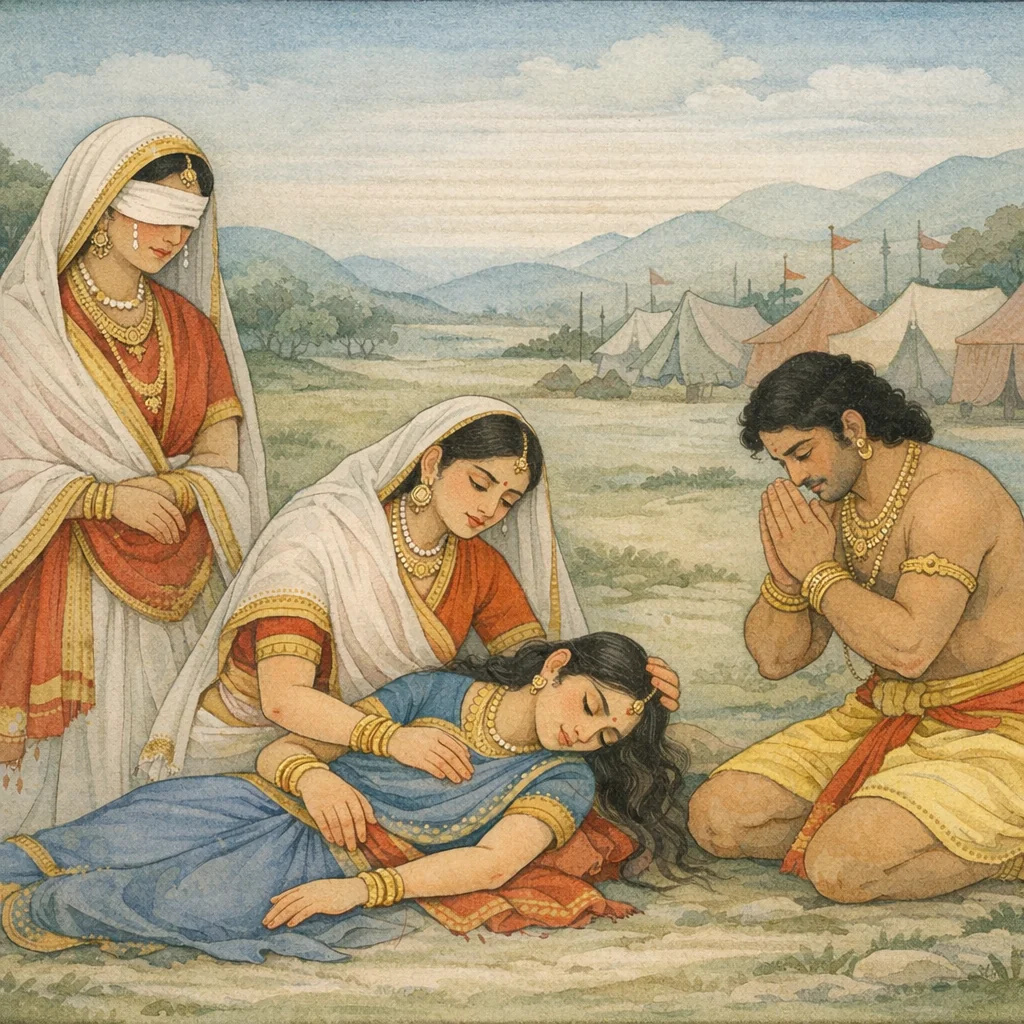
Vaiśaṃpāyana narrates Gandhārī’s charged inquiry—“Where is the king?”—as she is afflicted by the deaths of her descendants. Yudhiṣṭhira approaches trembling with folded hands and adopts a posture of radical self-blame, naming himself a ‘son-slayer’ and inviting condemnation, even a curse, while declaring disinterest in life, sovereignty, or wealth after killing his own relations. Gandhārī initially responds with silence and heavy sighing; as Yudhiṣṭhira bows toward her feet, she partially perceives him through the edge of her blindfold, noting his toes and nails, while Arjuna remains positioned behind Vāsudeva. The emotional field shifts: Gandhārī’s anger dissipates and she consoles the gathered men ‘like a mother.’ The narrative then pivots to Kuntī (Pṛthā) and the survivors approaching their mother; Kuntī weeps upon seeing her sons wounded by weapon strikes and grieves each in turn. Draupadī, bereft of her sons, laments the absence of the grandsons and questions the value of kingship without children. Kuntī comforts and raises Draupadī, and together they approach Gandhārī. Gandhārī addresses Draupadī as ‘daughter,’ urging her not to grieve alone and articulates a causal reading: the devastation appears driven by time’s cycle and inevitability, recalling Vidura’s earlier counsel, and asserting that those who died in battle are not to be mourned in the conventional sense—while also accepting personal fault for the destruction of her lineage.
Chapter Arc: रण-धूल अभी बैठी नहीं है; शोक की अग्नि में घिरी गान्धारी के सामने भीमसेन आता है—विजय का नहीं, अपराध-बोध का भार लेकर। → भीम अपने कर्म का उत्तरदायित्व स्वीकारते हुए कहता है कि भय, आत्म-रक्षा और दुर्योधन की असाधारण शक्ति ने उसे ‘विषम आचरण’ की ओर ढकेला; वह गान्धारी से क्षमा माँगता है और तर्क देता है कि धर्म्य युद्ध से दुर्योधन को कोई उठा नहीं सकता था। गान्धारी का मातृ-शोक, क्रोध और नैतिक प्रतिवाद भीतर-भीतर उफनता है; उधर द्रौपदी अपने हृतात्मजों के लिए विलाप करती हुई भूमि पर गिरती है, और स्त्रियों का करुण-कोलाहल सभा-सा बन जाता है। → गान्धारी का उत्तर—भीम की प्रशंसा-भरी सफाई को वह स्वीकार नहीं करती; वह संकेत देती है कि ‘तुमने जो कहा’ वह स्वयं एक प्रकार का अपराध-स्वीकार है। इसी करुण-उत्कर्ष में द्रौपदी का विलाप चरम पर पहुँचता है; कुन्ती स्वयं ‘आर्ततरा’ होकर आती है और द्रौपदी को उठाकर धैर्य देती है, मानो शोक का भार एक पीढ़ी से दूसरी पीढ़ी पर उतर रहा हो। → गान्धारी का क्रोध क्रमशः शान्त होता है; वह मातृवत् सान्त्वना देने लगती है। कृष्ण के समझाने/अनुनय का प्रभाव सीमित रहता है, फिर भी गान्धारी द्रौपदी और कुन्ती से कहती है कि शोक में डूबकर स्वयं को नष्ट न करें—यह काल-पर्याय से प्रेरित लोक-विनाश का चक्र है। → गान्धारी का क्रोध तो थमता है, पर उसके भीतर का न्याय-बोध और शाप-सम्भावना पूरी तरह बुझती नहीं—आगे यह देखना शेष है कि वह इस विनाश के लिए किसे उत्तरदायी ठहराती है और किस प्रकार का दैवी/नैतिक प्रतिकार उठता है।
Shlokas
Verse 1
अपना छा | अफ्--#क+ पजञ्चदशो< ध्याय: भीमसेनका गान्धारीको अपनी सफाई देते हुए उनसे क्षमा माँगना, अपना अपराध स्वीकार करना, गान्धारीके दृडटपातस युविष्टिसक पैरोंके नखोंका काला पड़ जाना, अर्जुनका भयभीत होकर श्रीकृष्णके पीछे छिप जाना, पाण्डवोंका अपनी मातासे मिलना, द्रौपदीका विलाप, कुन्तीका आश्वासन तथा गान्धारीका उन दोनोंको धीरज बँधाना वैशम्पायन उवाच तच्छुत्वा वचन तस्या भीमसेनो5थ भीतवत् | गान्धारीं प्रत्युवाचेदं वच: सानुनयं तदा,वैशम्पायनजी कहते हैं--जनमेजय! गान्धारीकी यह बात सुनकर भीमसेनने डरे हुएकी भाँति विनयपूर्वक उनकी बातका उत्तर देते हुए कहा--
Vaiśampāyana said: Hearing her words, Bhīmasena—appearing as though afraid—then replied to Gāndhārī with a speech filled with humility and entreaty. The moment frames the ethical weight of accountability after war: the victor must still face the grief-stricken mother and answer with restraint, remorse, and respect.
Verse 2
अधर्मो यदि वा धर्मस्त्रासात् तत्र मया कृत: । आत्मानं त्रातुकामेन तन्मे त्वं क्षन्तुमहसि,“माताजी! यह अधर्म हो या धर्म; मैंने दुर्योधनसे डरकर अपने प्राण बचानेके लिये ही वहाँ ऐसा किया था; अत: आप मेरे उस अपराधको क्षमा कर दें
‘Whether what I did there was unrighteous or righteous, I did it out of fear. Seeking only to save my own life, I acted so; therefore, O mother, you ought to forgive me for that fault.’
Verse 3
न हि युद्धेन पुत्रस्ते धर्म्येण स महाबल: । शक्य: केनचिदुद्यन्तुमतो विषममाचरम्,“आपके उस महाबली पुत्रको कोई भी धर्मानुकूल युद्ध करके मारनेका साहस नहीं कर सकता था; अतः मैंने विषमतापूर्ण बर्ताव किया
For your son, so mighty, could not have been brought down by anyone through a righteous, rule-bound battle. Therefore I resorted to an uneven course of action—conduct that departs from fair combat.
Verse 4
अधर्मेण जित: पूर्व तेन चापि युधिष्ठिर: । निकृताश्न सदेव सम ततो विषममाचरम्,“पहले उसने भी अधर्मसे ही राजा युधिष्ठिरको जीता था और हमलोगोंके साथ सदा ही धोखा किया था, इसलिये मैंने भी उसके साथ विषम बर्ताव किया
Vaiśampāyana said: “Earlier, King Yudhiṣṭhira too was defeated by him through adharma, and he continually dealt with us by deceit. Therefore, in response, I also acted toward him in an unequal and harsh manner.”
Verse 5
सैन्यस्यैको5वशिष्टो5यं गदायुद्धेन वीर्यवान् । मां हत्वा न हरेद् राज्यमिति वै तत् कृतं मया,“कौरव-सेनाका एकमात्र बचा हुआ यह पराक्रमी वीर गदायुद्धके द्वारा मुझे मारकर पुनः सारा राज्य हर न ले, इसी आशंकासे मैंने वह अयोग्य बर्ताव किया था
Vaiśampāyana said: “This one valiant warrior was the sole survivor of the army, mighty in the combat of the mace. Fearing that, after slaying me, he might seize the kingdom again, I acted in that way.”
Verse 6
राजपुत्रीं च पाउ्चालीमेकवस्त्रां रजस्वलाम् । भवत्या विदितं सर्वमुक्तवान् यत् सुतस्तव,“राजकुमारी द्रौपदीसे, जो एक वस्त्र धारण किये रजस्वला-अवस्थामें थी, आपके पुत्रने जो कुछ कहा था, वह सब आप जानती हैं
Vaiśampāyana said: “And as for the Pāñcāla princess Draupadī—clad in a single garment and in her menstrual state—you already know everything: whatever your son had spoken.”
Verse 7
सुयोधनमसंगृहा[ न शक््या भू: ससागरा | केवला भोक्तुमस्माभिरतश्वैतत् कृतं मया,“दुर्योधनका संहार किये बिना हमलोग निष्कण्टक पृथ्वीका राज्य नहीं भोग सकते थे, इसलिये मैंने यह अयोग्य कार्य किया
Vaiśampāyana said: “Without first removing Suyodhana (Duryodhana), it was not possible for us to enjoy this earth, even though it is bounded by the ocean, in peace and without obstruction. Therefore I have done this deed.”
Verse 8
तथाप्यप्रियमस्माकं पुत्रस्ते समुपाचरत् । द्रौपद्या यत् सभामध्ये सव्यमूरुमदर्शयत्,“आपके पुत्रने तो हम सब लोगोंका इससे भी बढ़कर अप्रिय किया था कि उसने भरी सभामें द्रौपदीको अपनी बाँयीं जाँच दिखायी
Vaiśampāyana said: “Even so, your son committed something even more offensive to us: in the midst of the full assembly, he displayed his left thigh to Draupadī.” The statement recalls a deliberate public insult—an act of shamelessness and humiliation—presented as a grave ethical transgression that deepened enmity and hastened the collapse of dharma in the Kuru court.
Verse 9
तदैव वध्य: सोअस्माकं दुराचारश्न ते सुतः । धर्मराजाज्ञया चैव स्थिता: सम समये तदा,“आपके उस दुराचारी पुत्रको तो हमें उसी समय मार डालना चाहिये था; परंतु धर्मराजकी आज्ञासे हमलोग समयके बन्धनमें बँधकर चुप रह गये
Vaiśampāyana said: “At that very time, your son—wicked in conduct—ought to have been slain by us. Yet, bound by the command of Dharmarāja, we restrained ourselves then and remained within the limits of the appointed time.”
Verse 10
वैरमुद्दीपितं राज्ञि पुत्रेण तव तन््महत् । क्लेशिताश्न वने नित्यं तत एतत् कृतं मया,“रानी! आपके पुत्रने उस महान् वैरकी आगको और भी प्रज्वलित कर दिया और हमें वनमें भेजकर सदा क्लेश पहुँचाया; इसीलिये हमने उसके साथ ऐसा व्यवहार किया है
Vaiśampāyana said: “O Queen, your son has fanned that great enmity into a blazing fire, and by sending us to the forest he caused us continual suffering. Therefore I have acted in this way.”
Verse 11
वैरस्यास्य गताः पार हत्वा दुर्योधन रणे । राज्यं युधिष्िर: प्राप्तो वयं च गतमन्यव:,“रणभूमिमें दुर्योधनका वध करके हमलोग इस वैरसे पार हो गये। राजा युधिष्ठिरको राज्य मिल गया और हमलोगोंका क्रोध शान्त हो गया”
Vaiśampāyana said: “Having slain Duryodhana on the battlefield, we have crossed beyond this enmity. Yudhiṣṭhira has obtained the kingdom, and our anger too has subsided.”
Verse 12
गान्धायुवाच न तस्यैष वधस्तात यत् प्रशंससि मे सुतम् । कृतवांश्षापि तत् सर्व यदिदं भाषसे मयि,गान्धारी बोलीं-- तात! तुम मेरे पुत्रकी इतनी प्रशंसा कर रहे हो; इसलिये यह उसका वध नहीं हुआ (वह अपने यशोमय शरीरसे अमर है) और मेरे सामने तुम जो कुछ कह रहे हो, वह सारा अपराध दुर्योधनने अवश्य किया है
Gāndhārī said: “Dear child, this is not truly his ‘death’ in the sense you imply, since you praise my son so highly—his fame makes him, as it were, enduring. And whatever you are saying to me here, all of that wrongdoing was indeed committed by Duryodhana.”
Verse 13
हताश्वे नकुले यत्तु वृषसेनेन भारत । अपिब: शोणितं संख्ये द:ःशासनशरीरजम्
Vaiśampāyana said: “O Bhārata, as for that deed—when Nakula’s horses had been slain—Vṛṣasena, in the thick of battle, drank blood that had issued from Duḥśāsana’s body.”
Verse 14
इस प्रकार श्रीमहाभारत स्त्रीपर्वके अन्तर्गत जलप्रदानिकपर्वमें गान्धारीकी सान्त्वनगाविषयक चौदहवाँ अध्याय पूरा हुआ,सद्धिविरगर्हितं घोरमनार्यजनसेवितम् । क्रूर कर्माकृथास्तस्मात्तदयुक्तं वृकोदर
“That deed was dreadful, condemned by the wise and dispassionate, and fit only for the company of the ignoble. Therefore, O Vṛkodara, you should not have done such a cruel act; it was improper.”
Verse 15
भारत! परंतु वृषसेनने जब नकुलके घोड़ोंको मारकर उसे रथहीन कर दिया था, उस समय तुमने युद्धमें दःशासनको मारकर जो उसका खून पी लिया, वह सत्पुरुषोंद्वारा निन्दित और नीच पुरुषोंद्वारा सेवित घोर क्रूरतापूर्ण कर्म है। वृकोदर! तुमने वही क्रूर कार्य किया है, इसलिये तुम्हारे द्वारा अत्यन्त अयोग्य कर्म बन गया है ।। भीमसेन उवाच अन्यस्यापि न पातव्यं रुधिरं कि पुनः स्वकम् | यथैवात्मा तथा भ्राता विशेषो नास्ति कश्नन,भीमसेन बोले--माताजी! दूसरेका भी खून नहीं पीना चाहिये; फिर अपना ही खून कोई कैसे पी सकता है? जैसे अपना शरीर है, वैसे ही भाईका शरीर है। अपनेमें और भाईमें कोई अन्तर नहीं है इति श्रीमहा भारते स्त्रीपर्वणि जलप्रदानिकपर्वणि पृथापुत्रदर्शने पजडचदशो<ध्याय: ।। २५ || इस प्रकार श्रीमह्ाभारत स्त्रीपर्वके अन्तर्गत जलप्रदानिकपर्वमें कुन्तीको अपने पुत्रोंका दर्शनविषयक पंद्रहवाँ अध्याय पूरा हुआ
Bhīmasena said: “Mother, one should not drink even another person’s blood—how then could anyone drink the blood of one’s own? As one’s own self is, so too is one’s brother; there is no real distinction between oneself and one’s brother.”
Verse 16
रुधिरं न व्यतिक्रामद् दन्तोष्ठं मे5म्ब मा शुचः । वैवस्वतस्तु तद् वेद हस्तौ मे रुधिरोक्षिती,माँ! आप शोक न करें। वह खून मेरे दाँतों और ओठोंको लाँचघकर आगे नहीं जा सका था। इस बातको सूर्यपुत्र यमराज जानते हैं कि केवल मेरे दोनों हाथ ही रक्तमें सने हुए थे
Bhīmasena said: “Mother, do not grieve. The blood did not pass beyond my teeth and lips. Vaivasvata (Yama), the son of the Sun, knows this: only my two hands were smeared with blood.”
Verse 17
हताश्चं नकुलं दृष्टवा वृषसेनेन संयुगे । 8 | सम्प्रह्ष्टानां त्रास: संजनितो मया,| वृषसेनके द्वारा नकुलके घोड़ोंको मारा गया देख जो दुःशासनके सभी भाई हर्षसे उललसित हो उठे थे, उनके मनमें वैसा करके मैंने केवल त्रास उत्पन्न किया था
Seeing Nakula struck down in battle by Vṛṣasena, I acted so as to generate fear in those who had exulted—those enemies who had risen in joy—by making them taste terror in return.
Verse 18
केशपक्षपरामर्शे द्रौपद्या द्यूतकारिते | क्रोधाद् यदब्रवं चाहं तच्च मे हृदि वर्तते,द्यूतक्रीडाके समय जब द्रौपदीका केश खींचा गया, उस समय क्रोधमें भरकर मैंने जो प्रतिज्ञा की थी, उसकी याद हमारे हृदयमें बराबर बनी रहती थी
When Draupadī’s hair was seized and dragged in the gambling hall outrage, I spoke in wrath a vow that was forced out of me by that insult; and that very utterance has remained fixed in my heart ever since—an unforgotten debt of justice demanding fulfillment.
Verse 19
क्षत्रधर्माच्च्युतो राज्ञि भवेयं शाश्वती: समा: । प्रतिज्ञां तामनिस्तीर्य ततस्तत् कृतवानहम्,रानीजी! यदि मैं उस प्रतिज्ञाको पूर्ण न करता तो सदाके लिये क्षत्रियधर्मसे गिर जाता, इसलिये मैंने यह काम किया था
Bhīmasena said: “O Queen, if I had failed to carry through that vow, I would have fallen away from the kṣatriya’s code of duty for endless years. Therefore I did that deed.”
Verse 20
न मामहसि गान्धारि दोषेण परिशड्कितुम् । अनिगृहा पुरा पुत्रानस्मास्वनपकारिषु । अधुना कि नु दोषेण परिशड्कितुमरहसि,माता गान्धारी! आपको मुझमें दोषकी आशंका नहीं करनी चाहिये। पहले जब हमलोगोंने कोई अपराध नहीं किया था, उस समय हमपर अत्याचार करनेवाले अपने पुत्रोंकी तो आपने रोका नहीं; फिर इस समय आप क्यों मुझपर दोषारोपण करती हैं?
Bhīmasena said: “Gāndhārī, you ought not to suspect me of wrongdoing. Formerly, when we had done you no harm, you did not restrain your sons as they committed outrages against us. Why then, now, do you deem it right to cast suspicion on me for some fault, O mother Gāndhārī?”
Verse 21
गान्धायुवाच वृद्धस्यास्य शतं पुत्रान् निध्नंस्त्वमपराजित: । कस्मान्नाशेषय: कंचिद् येनाल्पमराधितम्,गान्धारी बोलीं--बेटा! तुम अपराजित वीर हो। तुमने इन बूढ़े महाराजके सौ पुत्रोंको मारते समय किसी एकको भी, जिसने बहुत थोड़ा अपराध किया था, क्यों नहीं जीवित छोड़ दिया?
Gandhari said: “O unconquered hero, as you struck down the hundred sons of this aged king, why did you not spare even a single one—someone whose wrongdoing was only slight?”
Verse 22
संतानमावयोस्तात वृद्धयोहतराज्ययो: । कथमन्धद्वयस्यास्य यष्टिरेका न वर्जिता,तात! हम दोनों बूढ़े हुए। हमारा राज्य भी तुमने छीन लिया। ऐसी दशामें हमारी एक ही संतानको--हम दो अन्थोंके लिये एक ही लाठीके सहारेको तुमने क्यों नहीं जीवित छोड़ दिया?
Bhīmasena said: “Dear one, we are both aged, and our kingdom has been taken away. In such a plight, why did you not spare our only child—our single support, like one staff for two blind men?”
Verse 23
शेषे हवस्थिते तात पुत्राणामन्तके त्वयि । न मे दुःखं भवेदेतद् यदि त्वं धर्ममाचरे:,तात! तुम मेरे सारे पुत्रोंक लिये यमराज बन गये। यदि तुम धर्मका आचरण करते और मेरा एक पुत्र भी शेष रह जाता तो मुझे इतना दुःख नहीं होता
Bhīmasena said: “O dear one, while you remain alive, you have become like Death itself to my sons. If you had acted in accordance with dharma, and even a single son of mine had been left surviving, then this grief would not have been so unbearable for me.”
Verse 24
वैशम्पायन उवाच एवमुक््त्वा तु गान्धारी युधिष्ठिरमपृच्छत । क्व स राजेति सक्रोधा पुत्रपौत्रवधार्दिता,वैशम्पायनजी कहते हैं--राजन्! भीमसेनसे ऐसा कहकर अपने पुत्रों और पौजत्रोंके वधसे पीड़ित हुई गान्धारीने कुपित होकर पूछा--“कहाँ है वह राजा युधिष्ठटिर?”
Verse 25
तमभ्यगच्छद् राजेन्द्रो वेपमान: कृताज्जलि: । युधिष्ठिरस्त्विदं तत्र मधुरं वाक्यमब्रवीत्,यह सुनकर महाराज युधिष्छिर काँपते हुए हाथ जोड़े उनके सामने आये और बड़ी मीठी वाणीमें बोले--“देवि! आपके पुत्रोंका संहार करनेवाला क्रूरकर्मा युधिष्ठिर मैं हूँ। पृथ्वीभरके राजाओंका नाश करानेमें मैं ही हेतु हूँ, इसलिये शापके योग्य हूँ। आप मुझे शाप दे दीजिये
Then the king of kings, trembling and with hands joined in reverence, approached her. There, Yudhiṣṭhira spoke in a gentle, sweet voice—accepting moral responsibility for the slaughter of her sons and for the ruin of the earth’s rulers, and declaring himself fit to be cursed, inviting her to pronounce a curse upon him.
Verse 26
पुत्रहन्ता नृशंसो5हं तव देवि युधिष्ठिर: । शापा्ह: पृथिवीनाशे हेतुभूत: शपस्व माम्,यह सुनकर महाराज युधिष्छिर काँपते हुए हाथ जोड़े उनके सामने आये और बड़ी मीठी वाणीमें बोले--“देवि! आपके पुत्रोंका संहार करनेवाला क्रूरकर्मा युधिष्ठिर मैं हूँ। पृथ्वीभरके राजाओंका नाश करानेमें मैं ही हेतु हूँ, इसलिये शापके योग्य हूँ। आप मुझे शाप दे दीजिये
Vaiśampāyana said: Yudhiṣṭhira spoke, “O goddess-queen, I—Yudhiṣṭhira—am the ruthless slayer of your sons. I have become the cause of the destruction of kings across the earth; therefore I am fit to be cursed. Curse me.”
Verse 27
नहि मे जीवितेनार्थो न राज्येन धनेन वा । तादृशान् सुहृदो हत्वा मूढस्यास्य सुहृदद्गुह:,“मैं अपने सुहृदोंका द्रोही और अविवेकी हूँ। वैसे-वैसे श्रेष्ठ सुहदोंका वध करके अब मुझे जीवन, राज्य अथवा धनसे कोई प्रयोजन नहीं है”
Vaiśaṃpāyana said: “Life holds no value for me now—nor kingship, nor wealth. Having slain such noble friends, I, in my folly, stand condemned as a betrayer of my own well-wishers.”
Verse 28
तमेवंवादिनं भीतं संनिकर्षगतं तदा । नोवाच किंचिद् गान्धारी निःश्वासपरमा भूशम्,जब निकट आकर डरे हुए राजा युधिष्ठिरने ऐसी बातें कहीं, तब गान्धारी देवी जोर- जोरसे साँस खींचती हुई सिसकने लगीं। वे मुँहसे कुछ बोल न सकीं
When the frightened Yudhiṣṭhira, having come close, spoke in this manner, Gāndhārī—overwhelmed—could not utter a single word. She only breathed heavily again and again, her grief breaking into sobs.
Verse 29
तस्यावनतदेहस्य पादयोर्निपतिष्यत: । युधिष्ठिरस्य नृपतेर्धर्मज्ञा दीर्घदर्शिनी,राजा युधिष्ठिर शरीरको झुकाकर गान्धारीके चरणोंपर गिर जाना चाहते थे। इतनेहीमें धर्मको जाननेवाली दूर-दर्शिनी देवी गान्धारीने पट्टीके भीतरसे ही राजा युधिष्ठिरके पैरोंकी अंगुलियोंके अग्रभाग देख लिये। इतनेहीसे राजाके नख काले पड़ गये। इसके पहले उनके नख बड़े ही सुन्दर और दर्शनीय थे
Vaiśampāyana said: As King Yudhiṣṭhira, bending his body low, was about to fall at her feet, the far-seeing, dharma-knowing Gāndhārī perceived—through the cloth that covered her eyes—the very tips of his toes. From that mere glance, the king’s nails turned dark, though before they had been notably beautiful and pleasing to behold. The moment underscores how moral authority and inner power, born of austerity and righteous insight, can bless or wound even without physical sight.
Verse 30
अंगुल्यग्राणि ददृशे देवी पट्टान्तरेण सा । ततः स कुनखी भूतो दर्शनीयनखो नृप:,राजा युधिष्ठिर शरीरको झुकाकर गान्धारीके चरणोंपर गिर जाना चाहते थे। इतनेहीमें धर्मको जाननेवाली दूर-दर्शिनी देवी गान्धारीने पट्टीके भीतरसे ही राजा युधिष्ठिरके पैरोंकी अंगुलियोंके अग्रभाग देख लिये। इतनेहीसे राजाके नख काले पड़ गये। इसके पहले उनके नख बड़े ही सुन्दर और दर्शनीय थे
Vaiśampāyana said: Through the gap within her blindfold, the queen beheld the tips of his toes. At that very moment the king—whose nails had earlier been handsome and pleasing to behold—became one with discolored, blemished nails. The scene underscores how even a restrained, unintended glance from the dharma-knowing Gāndhārī carries moral force: Yudhiṣṭhira’s impulse to bow at her feet meets the residual power of grief and righteous austerity after the war.
Verse 31
त॑ दृष्टवा चार्जुनोडगच्छद् वासुदेवस्य पृष्ठत: । एवं संचेष्टमानांस्तानितश्षैतक्ष भारत
Seeing him thus, Arjuna moved and came to stand behind Vāsudeva (Kṛṣṇa). O Bhārata, while they were acting and moving about in this manner, Śaunaka (Śaitakṣa) observed them from there—marking the tense, watchful shifts of position that accompany grave counsel and the aftermath of war.
Verse 32
तया ते समनुज्ञाता मातरं वीरमातरम्
With her consent, they were duly granted leave to approach the mother—the mother of a hero—signaling a respectful, dharma-aligned transition from one authority’s permission to the next in the midst of grief and aftermath.
Verse 33
अभ्यगच्छन्त सहिता: पृथां पृथुलवक्षस: । फिर उनकी आज्ञा ले चौड़ी छातीवाले सभी पाण्डव एक साथ वीरजननी माता कुन्तीके पास गये ।। चिरस्य दृष्टवा पुत्रान् सा पुत्राधिभिरभिप्लुता
Vaiśampāyana said: Having taken her permission, all the broad-chested Pāṇḍavas went together to Pṛthā (Kuntī), the mother who had borne heroes. After a long time, seeing her sons again, she was overwhelmed—flooded with maternal feeling at the sight of her children.
Verse 34
बाष्पमाहारयद् देवी वस्त्रेणावृत्य वै मुखम् । कुन्तीदेवी दीर्घकालके बाद अपने पुत्रोंकी देखकर उनके कष्टोंका स्मरण करके करुणामें डूब गयीं और अंचलसे मुँह ढककर आँसू बहाने लगीं ।। ३३ $ ।। ततो बाष्पं समुत्सृज्य सह पुत्रैस्तदा पृथा
Vaiśampāyana said: The noble queen, covering her face with her garment, began to shed tears. Then, after letting her tears flow, Pṛthā (Kuntī), together with her sons, moved forward—overwhelmed by compassion as she recalled the long years of hardship and the suffering she now saw before her. The passage underscores the moral weight of war’s aftermath: even the victors are bound to grief, remembrance, and responsibility toward the dead and the living.
Verse 35
अपश्यदेतान् शस्त्रौचैर्बहुधा क्षतविक्षतान् | पुत्रोंसहित आँसू बहाकर उन्होंने उनके शरीरोंपर बारंबार दृष्टिपात किया। वे सभी अस्त्र-शस्त्रोंकी चोटसे घायल हो रहे थे ।। ३४ # || सा तानेकैकश: पुत्रान् संस्पृशन्ती पुन: पुनः:
Vaiśampāyana said: She kept touching her sons one by one, again and again—an act of grief-stricken recognition and maternal duty—lingering over their bodies as if to confirm what war’s violence had made unbearable. In this scene, the aftermath of battle is framed not as triumph but as the ethical cost of conflict, where kinship and compassion confront the ruin wrought by weapons.
Verse 36
अन्वशोचत दुःखार्ता द्रौपदी च हृतात्मजाम् | रुदतीमथ पाज्चालीं ददर्श पतितां भुवि
Vaiśampāyana said: Draupadī, stricken with grief, lamented for the one bereft of her sons. Then she saw the Pāñcālī woman lying fallen upon the ground, weeping—an image of war’s aftermath where even the righteous are compelled to confront unbearable loss and to respond with compassion amid ruin.
Verse 37
बारी-बारीसे पुत्रोंके शरीरपर बारंबार हाथ फेरती हुई कुन्ती दुःखसे आतुर हो उस द्रौपदीके लिये शोक करने लगीं, जिसके सभी पुत्र मारे गये थे। इतनेमें ही उन्होंने देखा कि द्रौपदी पास ही पृथ्वीपर गिरकर रो रही है ।। द्रौपहयुवाच आर्य पौत्रा: क््व ते सर्वे सौभद्रसहिता गता: । नत्वां तेड्द्याभिगच्छन्ति चिरं दृष्टया तपस्विनीम्
Vaiśampāyana said: Kuntī, repeatedly stroking the bodies of her sons again and again, overwhelmed by grief, began to lament for Draupadī—she whose sons had all been slain. Just then she saw Draupadī nearby, fallen upon the earth and weeping. Draupadī said: “Noble lady, where have all your grandsons gone, together with the son of Subhadrā? Why do they not come to you today, after seeing you—an ascetic woman—after so long?”
Verse 38
कि नु राज्येन वै कार्य विहीनाया: सुतैर्मम । द्रौपदी बोली--आर्ये! अभिमन्युसहित वे आपके सभी पौत्र कहाँ चले गये? वे दीर्घकालके बाद आयी हुई आज आप तपस्विनी देवीको देखकर आपके निकट क्यों नहीं आ रहे हैं? अपने पुत्रोंसे हीन होकर अब इस राज्यसे हमें क्या कार्य है? || ३७ ई ।। तां समाश्चासयामास पृथा पृुथुललोचना,अभ्यगच्छत गान्धारीमार्तामार्ततरा स्वयम् । नरेश्वर! विशाल नेत्रोंवाली कुन्तीने शोकसे कातर हो रोती हुई द्रपदकुमारीको उठाकर धीरज बँधाया और उसके साथ ही वे स्वयं भी अत्यन्त आर्त होकर शोकाकुल गान्धारीके पास गयीं। उस समय उनके पुत्र पाण्डव भी उनके पीछे-पीछे गये
Draupadī said: “Noble lady, where have all your grandsons gone, along with Abhimanyu? After so long, why do they not come near you today, seeing you here as an ascetic, venerable queen? Bereft of our sons, what purpose does this kingdom serve for us now?”
Verse 39
उत्थाप्य याज्ञसेनीं तु रुदतीं शोककर्शिताम् । तयैव सहिता चापि पुत्रैरनुगता नृप
Vaiśampāyana said: Having lifted up Yājñasenī—who was weeping and wasted by grief—the king, accompanied by her, proceeded onward, followed as well by her sons. The scene underscores the duty of kin and rulers to support the afflicted, even amid the aftermath of war’s devastation.
Verse 40
वैशम्पायन उवाच तामुवाचाथ गान्धारी सह वध्वा यशस्विनीम्,असिद्धानुनये कृष्णे यदुवाच महामति: । वैशम्पायनजी कहते हैं--जनमेजय! गान्धारीने बहू द्रौपदी और यशस्विनी कुन्तीसे कहा--“बेटी! इस प्रकार शोकसे व्याकुल न होओ। देखो, मैं भी तो दुःखमें डूबी हुई हूँ। मैं समझती हूँ, समयके उलट-फेरसे प्रेरित होकर यह सम्पूर्ण जगत्का विनाश हुआ है, जो स्वभावसे ही रोमांचकारी है। यह काण्ड अवश्यम्भावी था, इसीलिये प्राप्त हुआ है। जब संधि करानेके विषयमें श्रीकृष्णकी अनुनय-विनय सफल नहीं हुई, उस समय परम बुद्धिमान् विदुरजीने जो महत्त्वपूर्ण बात कही थी, उसीके अनुसार यह सब कुछ सामने आया है
Vaiśampāyana said: Then Gāndhārī spoke to that illustrious lady together with her daughter-in-law, saying: “My child, do not be overwhelmed by grief in this way. See— I too am submerged in sorrow. I understand that, driven by the reversal of Time, this destruction of the whole world has come to pass—terrible by its very nature. This calamity was bound to happen; therefore it has occurred. When Kṛṣṇa’s efforts of supplication for reconciliation did not succeed, events unfolded exactly in accordance with the weighty words earlier spoken by the supremely wise Vidura.”
Verse 41
मैवं पुत्रीति शोकार्ता पश्य मामपि दु:खिताम् । मन्ये लोकविनाशो<यं कालपर्यायनोदित:
“Do not grieve, saying, ‘My son!’ Look at me too, afflicted with sorrow. I believe this ruin of the world has arisen from the turning of Time’s cycle.”
Verse 42
अवश्यभावी सम्प्राप्त: स्वभावाल्लोमहर्षण: । इदं तत् समनुप्राप्तं विदुरस्य वचो महत्
Vaiśampāyana said: “That which was bound to happen has now come to pass—by the force of its own nature, it is hair-raising. This very outcome has arrived, fulfilling the great counsel once spoken by Vidura.”
Verse 43
तस्मिन्नपरिहार्येर्थे व्यतीते च विशेषत:,“जब यह विनाश किसी तरह टल नहीं सकता था, विशेषतः जब सब कुछ होकर समाप्त हो गया, तो अब तुम्हें शोक नहीं करना चाहिये। वे सभी वीर संग्राममें मारे गये हैं, अतः शोक करनेके योग्य नहीं हैं। आज जैसी मैं हूँ, वैसी ही तुम भी हो। हम दोनोंको कौन धीरज बँधायेगा? मेरे ही अपराधसे इस श्रेष्ठ कुल॒का संहार हुआ है”
Vaiśampāyana said: “When that inevitable calamity could not be averted—and especially now that everything has already happened and come to its end—you should not grieve any longer. Those heroes fell in battle; therefore they are not fit objects of lamentation. Today you are as I am; who, then, will give courage to the other? Through my own fault the destruction of this noble lineage has occurred.”
Verse 44
मा शुचो न हि शोच्यास्ते संग्रामे निधनं गता: । यथैवाहं तथैव त्वं को नावाश्वासयिष्यति । ममैव हापराधेन कुलमग्रयं विनाशितम्,“जब यह विनाश किसी तरह टल नहीं सकता था, विशेषतः जब सब कुछ होकर समाप्त हो गया, तो अब तुम्हें शोक नहीं करना चाहिये। वे सभी वीर संग्राममें मारे गये हैं, अतः शोक करनेके योग्य नहीं हैं। आज जैसी मैं हूँ, वैसी ही तुम भी हो। हम दोनोंको कौन धीरज बँधायेगा? मेरे ही अपराधसे इस श्रेष्ठ कुल॒का संहार हुआ है”
Vaiśaṃpāyana said: “Do not grieve. They are not to be mourned, for they met their end in battle. As I am now, so are you—who, then, will console us? Alas, through my own fault this noble lineage has been destroyed.”
Verse 313
गान्धारी विगतक्रोधा सान्त्वयामास मातृवत् | उनकी यह अवस्था देख अर्जुन भगवान् श्रीकृष्ण-के पीछे जाकर छिप गये। भारत! उन्हें इस प्रकार इधर-उधर छिपनेकी चेष्टा करते देख गान्धारीका क्रोध उतर गया और उन्होंने उन सबको स्नेहमयी माताके समान सान्त्वना दी
Vaiśaṃpāyana said: Gandhārī, her anger having subsided, comforted them all like a mother—seeing Arjuna slip behind Bhagavān Śrī Kṛṣṇa to hide, and noticing their anxious attempts to avoid her gaze, her wrath melted into maternal compassion. The episode underscores how grief and indignation can yield to forgiveness when one recognizes fear, remorse, and the need for consolation after catastrophe.
Verse 393
अभ्यगच्छत गान्धारीमार्तामार्ततरा स्वयम् । नरेश्वर! विशाल नेत्रोंवाली कुन्तीने शोकसे कातर हो रोती हुई द्रपदकुमारीको उठाकर धीरज बँधाया और उसके साथ ही वे स्वयं भी अत्यन्त आर्त होकर शोकाकुल गान्धारीके पास गयीं। उस समय उनके पुत्र पाण्डव भी उनके पीछे-पीछे गये
Vaiśaṃpāyana said: Kuntī, the large-eyed queen, herself more distressed than the distressed, lifted up the weeping daughter of Drupada, consoled her, and then—overwhelmed by grief—went to the sorrow-stricken Gāndhārī. The Pāṇḍava sons followed behind her. The scene underscores a dharmic ethic of compassion: even amid personal anguish, Kuntī first steadies another sufferer and then approaches the bereaved mother of the enemy side with shared human grief.
Verse 426
असिद्धानुनये कृष्णे यदुवाच महामति: । वैशम्पायनजी कहते हैं--जनमेजय! गान्धारीने बहू द्रौपदी और यशस्विनी कुन्तीसे कहा--“बेटी! इस प्रकार शोकसे व्याकुल न होओ। देखो, मैं भी तो दुःखमें डूबी हुई हूँ। मैं समझती हूँ, समयके उलट-फेरसे प्रेरित होकर यह सम्पूर्ण जगत्का विनाश हुआ है, जो स्वभावसे ही रोमांचकारी है। यह काण्ड अवश्यम्भावी था, इसीलिये प्राप्त हुआ है। जब संधि करानेके विषयमें श्रीकृष्णकी अनुनय-विनय सफल नहीं हुई, उस समय परम बुद्धिमान् विदुरजीने जो महत्त्वपूर्ण बात कही थी, उसीके अनुसार यह सब कुछ सामने आया है
Vaiśampāyana said: “Janamejaya, Gandhārī spoke to her daughters-in-law—Draupadī and the illustrious Kuntī: ‘My child, do not be so overwhelmed by grief. Look— I too am submerged in sorrow. I understand that, driven by the reversal of Time, the destruction of this entire world has come about—an event that, by its very nature, makes one shudder. This catastrophe was inevitable; therefore it has arrived. When Śrī Kṛṣṇa’s conciliatory entreaty failed in the matter of making peace, everything unfolded exactly in accordance with the weighty words that the supremely wise Vidura had spoken then.’”
Frequently Asked Questions
The dilemma is how to assign responsibility after collective catastrophe: Yudhiṣṭhira claims maximal culpability, while Gandhārī frames the outcome through inevitability (kāla) yet also acknowledges personal fault, creating a layered model of accountability.
The chapter advances a controlled ethics of mourning: anger is permitted as an initial response, but resolution requires restraint, shared consolation, and a reflective causal analysis that prevents grief from converting into further destructive action.
No explicit phalaśruti is presented here; the chapter functions as narrative-ethical documentation, preparing the ground for later systematic teachings by demonstrating grief, responsibility, and reconciliation in practice.