Adhyaya 26
Śalya-parva Adhyāya 26 — Duryodhana’s remnant formation and rapid engagements
Upa-parva: Gadāyuddha–pūrvabhāga (Preludes to the final confrontations)
Saṃjaya reports to Dhṛtarāṣṭra that Duryodhana stands with a small remainder of forces amid the horse formations. Kṛṣṇa urges Arjuna to act swiftly against Duryodhana before the remnant disperses, interpreting Duryodhana’s posture as inflated confidence after inflicting losses. Arjuna responds by enumerating the principal fallen leaders and the sharply reduced Kaurava inventory, then vows not to spare remaining adversaries and to recover what was taken in the dice-hall episode. Kṛṣṇa drives the chariot forward as Bhīma, Arjuna, and Sahadeva advance with intent to end resistance. A sequence of engagements follows: Śakuni’s side advances; Sudarśana attacks Bhīma; Sahadeva is struck but regains composure and counters; Arjuna cuts through mounted fighters and then engages the Trigarta leader Suśarmā, ultimately killing him with a decisive shot. Bhīma kills Sudarśana, after which the surrounding troops attempt to envelop him; the battlefield becomes mutually entangled as fighters on both sides fall and mourn kin even while the engagement continues.
Chapter Arc: दुर्योधन के अदृश्य हो जाने पर कौरव-सेना के बचे-खुचे पुत्र और योद्धा एकत्र होते हैं—और सामने भीमसेन को देखते हैं, दण्ड-हस्त क्रुद्ध अन्तक के समान, मानो प्राणहर मृत्यु स्वयं रणभूमि में चल रही हो। → हतशेष कौरव दल भय और क्रोध के बीच डगमगाता है; फिर भी युद्ध-लज्जा और राजभक्ति उन्हें भीम की ओर धकेलती है। इसी उथल-पुथल में श्रुतर्वा क्रुद्ध होकर धनुष उठाता है और भीम के वक्ष-भुजाओं पर बाणों की वर्षा करता है; दोनों ओर से आघात-प्रतिघात तेज होता जाता है, और भीम का संहार-प्रवाह पैदल, अश्व, रथ—सब पर फैलता है। → भीमसेन महात्मा क्षुरप्र से श्रुतर्वा का उत्तम मस्तक काट देता है; सिर कटते ही उसका धड़ रथ से गिरकर पृथ्वी को गूँजाता है—और कौरवों के हृदय में भय का शिखर टूट पड़ता है। → श्रुतर्वा के पतन के बाद भी कौरव योद्धा युद्धेच्छा से भीम पर टूट पड़ते हैं; भीमसेन उन कवचधारी आक्रमणकारियों को दृढ़ता से ग्रहण कर प्रतिघात करता है, और अपने परमेषु-पराक्रम से विशाल संहार कर पाण्डव पक्ष की प्रभुता को और दृढ़ कर देता है। → भयमोहित कौरव-सेना के बावजूद, शेष योद्धा भीमसेन पर धावा बोलते हैं—अगला क्षण यह तय करेगा कि यह प्रतिरोध टिकेगा या भीम का प्रलय-वेग उन्हें भी बहा ले जाएगा।
Shlokas
Verse 1
इस प्रकार श्रीमह्याभारत शल्यपर्वमें दुर्योधनका पलायनविषयक पचीसवाँ अध्याय पूरा हुआ ॥/ २५ ॥। अपन ह< बछ। है २ >> षड्विशो<5ध्याय: भीमसेनके द्वारा धृतराष्ट्रके ग्यारह पुत्रोंका और बहुत-सी चतुरंगिणी सेनाका वध संजय उवाच गजानीके हते तस्मिन् पाण्डुपुत्रेण भारत । वध्यमाने बले चैव भीमसेनेन संयुगे
Sañjaya said: “O Bhārata, when Gajānika had been slain by the son of Pāṇḍu, and when Bhīmasena in the thick of battle was also cutting down the forces, the slaughter on the field intensified—signaling the relentless momentum of war and the grave moral weight borne by those who fight for victory.”
Verse 2
चरन्तं च तथा दृष्टवा भीमसेनमरिंदमम् | दण्डहस्तं यथा क्रुद्धमन्तकं प्राणहारिणम्
Sañjaya said: Seeing Bhīmasena moving about in that manner—an enemy-crusher—holding a mace in his hand, he appeared like a wrathful Antaka, the taker of life. The verse heightens the moral gravity of the battlefield by portraying Bhīma as an instrument of inevitable death, where valor and righteous fury converge amid the destructive demands of war.
Verse 3
समेत्य समरे राजन् हतशेषा: सुतास्तव । अदृश्यमाने कौरव्ये पुत्रे दुर्योधने तव
Sañjaya said: O King, your sons—those few who remained after the slaughter—came together on the battlefield. But your Kaurava son Duryodhana was nowhere to be seen, having vanished from sight. The verse underscores the moral collapse of a war that has consumed nearly an entire lineage, leaving survivors disoriented and leaderless amid the consequences of adharma-driven conflict.
Verse 4
सोदर्या: सहिता भूत्वा भीमसेनमुपाद्रवन् । संजय कहते हैं--राजन्! भरतनन्दन! पाण्डुपुत्र भीमसेनके द्वारा आपकी गजसेना तथा दूसरी सेनाका भी संहार हो जानेपर जब आपका पुत्र कुरुवंशी दुर्योधन कहीं दिखायी नहीं दिया, तब मरनेसे बचे हुए आपके सभी पुत्र एक साथ हो गये और समरांगणमें दण्डधारी, प्राणान्तकारी यमराजके समान कुपित हुए शत्रुदमन भीमसेनको विचरते देख सब मिलकर उनपर टूट पड़े ।। दुर्मर्षण: श्रुतान्तश्न जैत्रो भूरिबलो रवि:
Sanjaya said: Then the brothers, gathering together as one, rushed to attack Bhīmasena. In the wake of the destruction of your elephant-corps and other divisions by the son of Pāṇḍu, and with Duryodhana not to be seen, the surviving sons of yours—seeing Bhīma roaming the battlefield in wrath, like Yama bearing the staff of punishment and bringing death—fell upon him all at once. (Names of the attackers follow in the next portion.)
Verse 5
जयत्सेन: सुजातश्च तथा दुर्विषहोडरिहा । दुर्विमोचननामा च दुष्प्रधर्षस्तथैव च
Sañjaya said: “Jayatsena, Sujāta, Durviṣaha, Ḍarihā, one named Durvimocana, and likewise Duṣpradharṣa as well”—thus he continues the roll-call of warriors in the Shalya Parva, underscoring how the war draws in many named fighters whose individual valor is counted even as the larger conflict moves inexorably toward destruction.
Verse 6
श्रुतर्वा च महाबाहु: सर्वे युद्धविशारदा: । इत्येते सहिता भूत्वा तव पुत्रा: समन््तत:
Sañjaya said: “And Śrutārvā, the mighty-armed one—indeed all of them skilled in the arts of war—thus, your sons, having gathered together, stood on every side.”
Verse 7
भीमसेनमभिद्रुत्य रुरुधु: सर्वतोदिशम् । दुर्मर्षण, श्रुतान्त (चित्रांग), जैत्र, भूरिबल (भीमबल), रवि, जयत्सेन, सुजात, दुर्विषह (दुर्विगाह), शत्रुनाशक दुर्विमोचन, दुष्प्रधर्ष (दुष्प्रधर्षण) और महाबाहु श्रुतर्वा--ये सभी आपके युद्धविशारद पुत्र एक साथ हो सब ओरसे भीमसेनपर धावा करके उनकी सम्पूर्ण दिशाओंको रोककर खड़े हो गये || ४--६ $ ।। ततो भीमो महाराज स्वरथं पुनरास्थित:
Sañjaya said: Rushing at Bhīmasena, your battle-skilled sons surrounded him from every side and blocked all directions—Durmarṣaṇa, Śrutānta (also known as Citrāṅga), Jaitra, Bhūribala (Bhīmabala), Ravi, Jayatsena, Sujāta, Durviṣaha (Durvigāha), Śatrunāśaka, Durvimochana, Duṣpradharṣa (Duṣpradharṣaṇa), and the mighty-armed Śrutarvā. Then, O king, Bhīma mounted his own chariot again.
Verse 8
मुमोच निशितान् बाणान् पुत्राणां तव मर्मसु । महाराज! तब भीम पुनः अपने रथपर आरूढ़ हो आपके पुत्रोंके मर्मस्थानोंमें तीखे बाणोंका प्रहार करने लगे ।। ते कीर्यमाणा भीमेन पुत्रास्तव महारणे
Sanjaya said: “He discharged sharp arrows into the vital points of your sons. O great king, then Bhima, mounting his chariot again, repeatedly struck your sons in their vulnerable spots with piercing shafts. Thus, in that great battle, your sons were being cut down and scattered by Bhima.”
Verse 9
ततः क्रुद्धो रणे भीम: शिरो दुर्मर्षणस्य ह
Sanjaya said: Then, inflamed with wrath amid the battle, Bhīma struck down the head of Durmarṣaṇa—thus did he act in the fierce logic of war, where anger and vengeance drive men to decisive, irreversible deeds.
Verse 10
क्षुरप्रेण प्रमथ्याशु पातयामास भूतले । तब रणभूमिमें क्रुद्ध हुए भीमसेनने एक क्षुरप्रसे दुर्मरषणका मस्तक शीघ्रतापूर्वक पृथ्वीपर काट गिराया ।। ततो<5परेण भल्लेन सर्वावरणभेदिना
Sañjaya said: With a razor-headed arrow he swiftly struck and felled him to the ground. Then, with another broad-headed shaft that could pierce through every kind of armor, he continued the assault. The scene underscores the relentless, skill-driven violence of the battlefield, where wrath and martial prowess override ordinary restraints and life is ended in an instant.
Verse 12
स पपात रथादू राजन् भूमौ तूर्ण ममार च,राजन! जयत्सेन रथसे पृथ्वीपर गिरा और तुरंत मर गया। मान्यवर नरेश! तदनन्तर क्रोधमें भरे हुए श्रुतर्वाने गीधकी पाँख और झुकी हुई गाँठवाले सौ बाणोंसे भीमसेनको बींध डाला
Sañjaya said: “O King, he fell from his chariot onto the ground and died at once.” The narration underscores the swift, irreversible consequence of battlefield violence, where prowess and life can end in a single moment, intensifying the moral weight of war’s relentless momentum.
Verse 13
जयत्सेनं ततो विद्धवा नाराचेन हसन्निव,श्रुतर्वा तु ततो भीम॑ क्रुद्धों विव्याध मारिष । शतेन गृध्रवाजानां शराणां नतपर्वणाम् राजन! जयत्सेन रथसे पृथ्वीपर गिरा और तुरंत मर गया। मान्यवर नरेश! तदनन्तर क्रोधमें भरे हुए श्रुतर्वाने गीधकी पाँख और झुकी हुई गाँठवाले सौ बाणोंसे भीमसेनको बींध डाला
Sañjaya said: Then, having struck Jayatsena with a nārāca arrow—as if laughing—he brought him down. After that, O revered king, Śrutārvā, inflamed with anger, pierced Bhīmasena with a hundred arrows, feathered like a vulture’s wings and fitted with bent joints. The scene underscores the war’s grim momentum: prowess and wrath drive swift retaliation, while the ethical weight of violence remains implicit in the relentless exchange of blows.
Verse 14
ततः क्रुद्धो रणे भीमो जैत्रं भूरिबलं रविम् । त्रीनेतांस्त्रिभिरानर्च्छद् विषाग्निप्रतिमै: शरै:,यह देख भीमसेन क्रोधसे जल उठे और उन्होंने रणभूमिमें विष और अग्निके समान भयंकर तीन बाणोंद्वारा जैत्र, भूरिबल और रवि--इन तीनोंपर प्रहार किया
Sañjaya said: Then Bhīma, inflamed with anger in the midst of battle, struck Jaitra, Bhūribala, and Ravi—those three—with three arrows, dreadful like poison and fire. The verse underscores Bhīma’s fierce resolve in war: his wrath is directed into decisive action against multiple opponents at once, reflecting the relentless, escalating violence of the Kurukṣetra conflict.
Verse 15
ते हता न््यपतन् भूमौ स्वन्दनेभ्यो महारथा: । वसन्ते पुष्पशबला निकृत्ता इव किंशुका:,उन बाणोंद्वारा मारे गये वे तीनों महारथी वसन्त-ऋतुमें कटे हुए पुष्पयुक्त पलाशके वृक्षोंकी भाँति रथोंसे पृथ्वीपर गिर पड़े
Sañjaya said: Struck down, those great chariot-warriors fell to the earth from their own chariots, like kiṃśuka (palāśa) trees—bright with spring blossoms—when cut down. The image underscores the stark transience of martial glory: even the most eminent fighters, once severed by the force of weapons, collapse as swiftly as flowering trees felled in season.
Verse 16
ततो5परेण भल््लेन तीक्ष्णेन च परंतप: । दुर्विमोचनमाहत्य प्रेषषयामास मृत्यवे,इसके बाद शत्रुओंको संताप देनेवाले भीमसेनने दूसरे तीखे भल्लसे दुर्विमोचनको मारकर मृत्युके लोकमें भेज दिया
Then, with another sharp bhalla-arrow, the foe-scorching warrior struck down Durvimocana and dispatched him to Death. The verse underscores the grim moral atmosphere of Kurukṣetra: valor and duty in battle are carried out with lethal finality, where a warrior’s prowess becomes the instrument by which fate is fulfilled.
Verse 17
स हत: प्रापतद् भूमौ स्वरथाद् रथिनां वर: । गिरेस्तु कूटजो भग्नो मारुतेनेव पादप:,रथियोंमें श्रेष्ठ दुर्विमोचन उस भललकी चोट खाकर अपने रथसे भूमिपर गिर पड़ा, मानो पर्वतके शिखरपर उत्पन्न हुआ वृक्ष वायुके वेगसे टूटकर धराशायी हो गया हो
Sañjaya said: Struck down, the foremost of chariot-warriors fell to the ground from his own chariot. He collapsed like a tree that has grown upon a mountain peak, snapped and brought down by the force of the wind—an image that underscores how, in battle, even the eminent are made fragile when fate and force converge.
Verse 18
दुष्प्रधर्ष ततश्वैव सुजातं च सुतं तव । एकैकं न्यहनत् संख्ये द्वाभ्यां द्वाभ्यां चमूमुखे,तदनन्तर भीमसेनने आपके पुत्र दुष्प्रधर्ष और सुजातको रणक्षेत्रमें सेनाके मुहानेपर दो-दो बाणोंसे मार गिराया
Sañjaya said: Then Bhīmasena struck down, on the battlefield, your sons Duṣpradharṣa and Sujāta—each one separately—at the very front of the army, felling them with two arrows apiece. The scene underscores the relentless momentum of war, where personal bonds and royal lineage are consumed by the demands of combat and the consequences of adharma-driven conflict.
Verse 19
तौ शिलीमुखविद्धाजडौ पेततू रथसत्तमौ | ततः पतन्न्तं समरे अभिवीक्ष्य सुतं तव,वे दोनों महारथी वीर बाणोंसे सारा शरीर बिंध जानेके कारण रणभूमिमें गिर पड़े। तत्पश्चात् आपके पुत्र दुर्विषहको संग्राममें चढ़ाई करते देख भीमसेनने एक भल्लसे मार गिराया। उस भल्लकी चोट खाकर दुर्विषह सम्पूर्ण धनुर्धरोंके देखते-देखते रथसे नीचे जा गिरा
Sañjaya said: Those two foremost warriors, their bodies pierced and numbed by sharp arrows, fell from their chariots. Then, seeing your son Durviṣaha advancing in the battle, Bhīmasena struck him down with a broad-headed shaft; and, before the eyes of all the bowmen, Durviṣaha fell from his chariot to the ground.
Verse 20
भल्लेन पातयामास भीमो दुर्विषहं रणे । स पपात हतो वाहात् पश्यतां सर्वधन्विनाम्,वे दोनों महारथी वीर बाणोंसे सारा शरीर बिंध जानेके कारण रणभूमिमें गिर पड़े। तत्पश्चात् आपके पुत्र दुर्विषहको संग्राममें चढ़ाई करते देख भीमसेनने एक भल्लसे मार गिराया। उस भल्लकी चोट खाकर दुर्विषह सम्पूर्ण धनुर्धरोंके देखते-देखते रथसे नीचे जा गिरा
Sanjaya said: In the thick of battle, Bhima struck down Durviṣaha with a bhalla-arrow. Wounded by that blow, Durviṣaha fell from his mount/vehicle before the eyes of all the bowmen. The scene underscores the relentless, public finality of kṣatriya warfare, where valor and consequence unfold in full view of the assembled warriors.
Verse 21
दृष्टवा तु निहतान् भ्रातृन् बहूनेकेन संयुगे । अमर्षवशमापन्न: श्रुतर्वा भीममभ्ययात्,युद्धस्थलमें एकमात्र भीमके द्वारा अपने बहुत-से भाइयोंको मारा गया देख श्रुतर्वा अमर्षके वशीभूत हो भीमसेनका सामना करनेके लिये आ पहुँचा
Sañjaya said: Seeing many of his brothers slain in the battle by Bhīma alone, Śrutarvā—overpowered by intolerant wrath—advanced to confront Bhīmasena. The verse frames a familiar ethical tension of the war: grief and rage narrowing judgment, driving a warrior toward a retaliatory duel.
Verse 22
विक्षिपन् सुमहच्चापं कार्तस्वरविभूषितम् । विसृजन् सायकांश्वैव विषाग्निप्रतिमान् बहून्ू,वह अपने सुवर्णभूषित विशाल धनुषको खींचकर उसके द्वारा विष और अग्निके समान भयंकर बहुतेरे बाणोंकी वर्षा कर रहा था
Sañjaya said: He kept brandishing and drawing his very great bow, adorned with gold, and he released in volleys many arrows—terrible like poison and fire—pouring them forth in the fury of battle. The scene underscores how martial prowess, when driven by wrath, becomes a force of devastation rather than restraint.
Verse 23
सतु राजन् धनुश्कछित्त्वा पाण्डवस्य महामृथे । अथीैनं छिन्नथन्वानं विंशत्या समवाकिरत्,राजन्! उसने उस महासमरमें पाण्डुपुत्रके धनुषको काटकर कटे हुए धनुषवाले भीमसेनको बीस बाणोंसे घायल कर दिया
Sañjaya said: O King, in that great clash of battle, he cut the bow of the Pāṇḍava; then, seeing him with his bow severed, he showered him with twenty arrows, wounding him amid the fury of war. The episode underscores how, in the ethics of kṣatriya combat, disabling an opponent’s weapon is a decisive tactical act, yet the fight continues relentlessly within the accepted code of battlefield prowess.
Verse 24
ततो<न्यद् धनुरादाय भीमसेनो महाबल: । अवाकिरत् तव सुतं तिष्ठ तिछेति चाब्रवीत्,तब महाबली भीमसेन दूसरा धनुष लेकर आपके पुत्रपर बाणोंकी वर्षा करने लगे और बोले--'खड़ा रह, खड़ा रह”
Sañjaya said: Then Bhīmasena, mighty in strength, took up another bow and showered your son with arrows, calling out, “Stand firm—stand firm!” In the harsh ethic of battlefield duty, the taunt is not mere cruelty but a warrior’s challenge meant to break the opponent’s resolve and force a decisive confrontation.
Verse 25
महदासीतू तयोर्युद्धे चित्ररूपं भयानकम् | यादृशं समरे पूर्व जम्भवासवयोर्युधि,उस समय उन दोनोंमें विचित्र, भयानक और महान् युद्ध होने लगा। पूर्वकालमें रणक्षेत्रमें जम्भ और इन्द्रका जैसा युद्ध हुआ था, वैसा ही उन दोनोंका भी हुआ
Sañjaya said: A great battle arose between those two—strange in its forms and terrifying to behold. It was like that ancient combat on the battlefield between Jambha and Vāsava (Indra); so too was the clash of these two warriors.
Verse 26
तयोस्तत्र शितैमुक्तिर्यमदण्डनि भै: शरै: । समाच्छन्ना धरा सर्वा खं दिशो विदिशस्तथा,उन दोनोंके छोड़े हुए यमदण्डके समान तीखे बाणोंसे सारी पृथ्वी, आकाश, दिशाएँ और विदिशाएँ आच्छादित हो गयीं इति श्रीमहाभारते शल्यपर्वणि एकादशधार्तराष्ट्रवधे षड्विंशो5ध्याय:
Sañjaya said: There, the volleys released by those two—sharp arrows like Yama’s rod of punishment—so thickly covered everything that the whole earth, the sky, and all the directions and intermediate quarters seemed veiled beneath them. The scene underscores how, in the fury of war, human resolve turns into an impersonal force of destruction, where death appears as an inevitable law rather than a personal enemy.
Verse 27
ततः श्रुतर्वा संक्रुद्धो धनुरादाय सायकै: । भीमसेनं रणे राजन् बाह्दोरुरसि चार्पयत्,राजन! तदनन्तर क्रोधमें भरे हुए श्रुतर्वने धनुष लेकर अपने बाणोंसे रणभूमिमें भीमसेनकी दोनों भुजाओं और छातीमें प्रहार किया
Sañjaya said: Then Śrutārvā, inflamed with anger, took up his bow and, with his arrows, struck Bhīmasena in the battle—piercing his arms and his chest, O King. The scene underscores how wrath drives warriors to intensify violence, even against a formidable foe, as the struggle descends further into relentless retaliation.
Verse 28
सो5तिविद्धो महाराज तव पुत्रेण धन्विना । भीम: संचुक्षुभे क्रुद्धः पर्वणीव महोदधि:,महाराज! आपके थधनुर्धर पुत्रद्वारा अत्यन्त घायल कर दिये जानेपर भीमसेनका क्रोध भड़क उठा और वे पूर्णिमाके दिन उमड़ते हुए महासागरके समान बहुत ही क्षुब्ध हो उठे
Sañjaya said: O King, though grievously pierced by the arrow of your bow-wielding son, Bhīma’s wrath flared up; he heaved and surged in fury like the great ocean swelling on the full-moon tide. The verse underscores how, in the heat of war, pain can intensify anger, and how a warrior’s inner turbulence can become as formidable as any weapon.
Verse 29
ततो भीमो रुषाविष्ट: पुत्रस्य तव मारिष | सारथिं चतुरश्चाश्वान् शरैर्निन्ये यमक्षयम्,आर्य! फिर रोषसे आविष्ट हुए भीमसेनने अपने बाणोंद्वारा आपके पुत्रके सारथि और चारों घोड़ोंको यमलोक पहुँचा दिया
Sañjaya said: Then Bhīma, seized by wrath, O venerable one, sent your son’s charioteer and the four horses to Yama’s abode with his arrows. The verse underscores the battlefield’s ruthless momentum: anger becomes an immediate instrument of death, and the ethical tension of war is felt in how swiftly life-supporting elements of a warrior’s chariot are destroyed.
Verse 30
विरथं तं समालक्ष्य विशिखैलोंमवाहिभि: । अवाकिरदमेयात्मा दर्शयन् पाणिलाघवम्,अमेय आत्मबलसे सम्पन्न भीमसेन श्रुतर्वाको रथहीन हुआ देख अपने हाथोंकी फुर्ती दिखाते हुए उसके ऊपर पक्षियोंके पंखसे युक्त होकर उड़नेवाले बाणोंकी वर्षा करने लगे
Sañjaya said: Seeing him deprived of his chariot, the immeasurable warrior—displaying the swiftness of his hands—showered him with arrows whose shafts were feathered with plumes. In the relentless ethic of battle, the moment underscores how prowess and presence of mind can press an advantage when an opponent is suddenly exposed, even as the scene remains framed by the harsh necessities of war.
Verse 31
श्रुतर्वा विरथो राजन्नाददे खड़्गचर्मणी । अथास्याददत: खड्गं शतचन्द्रं च भानुमत्
Sañjaya said: O King, Śrutārvā, now without a chariot, took up sword and shield. Then, as he was being equipped, he was given a radiant sword marked with a hundred moon-emblems. In the midst of chaos and loss, the warrior steadies himself by accepting the means of protection and duty, choosing readiness over despair.
Verse 32
छिन्नोत्तमाड्स्य तत: क्षुरप्रेण महात्मना
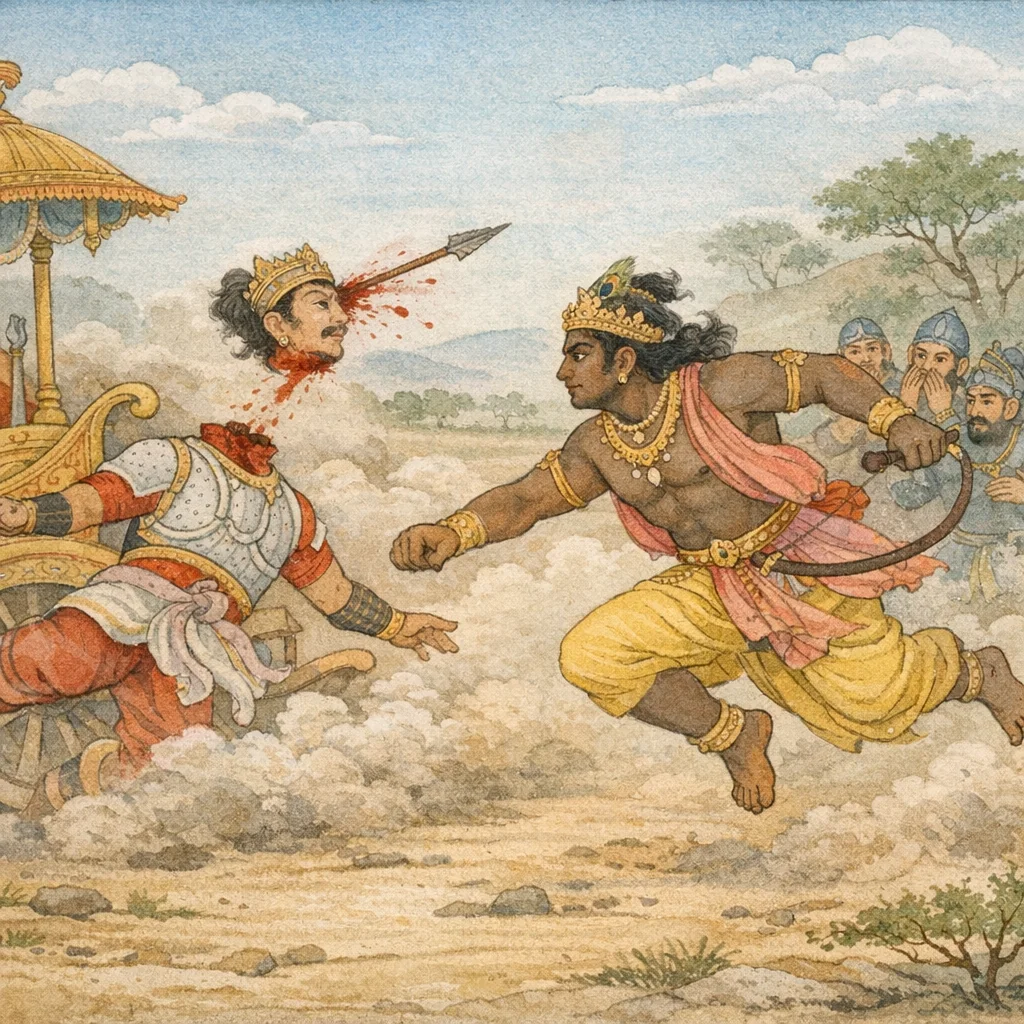
Sañjaya said: Then, with a razor-edged arrow, the great warrior struck and severed the opponent’s head. The line underscores the ruthless finality of battlefield action, where prowess and resolve culminate in irreversible consequences, reminding the listener of war’s grim moral weight even when performed by the ‘great-souled.’
Verse 33
तस्मिन् निपतिते वीरे तावका भयमोहिता:
Sañjaya said: When that heroic warrior fell, your men were seized by fear and bewilderment—showing how, in war, the collapse of a single pillar of strength can shake an entire host and cloud judgment.
Verse 34
तानापतत एवाशु हतशेषाद् बलार्णवात्
Sañjaya said: Those warriors, rushing in at once, came forth from the sea-like host—now reduced to its slain remnant—pressing on despite the devastation of battle.
Verse 35
ते तु तं वै समासाद्य परिवद्रु: समन््ततः,वे योद्धा भीमसेनके पास पहुँचकर उन्हें चारों ओरसे घेरकर खड़े हो गये। तब जैसे इन्द्र असुरोंको नष्ट करते हैं, उसी प्रकार घिरे हुए भीमसेनने पैने बाणोंद्वारा आपके उन समस्त सैनिकोंको पीड़ित करना आरम्भ किया
Sañjaya said: Those warriors, having reached Bhīmasena, surrounded him on every side. Then, encircled in battle, Bhīmasena began to harass and crush all those troops of yours with sharp arrows—just as Indra destroys the Asuras. The scene underscores the fierce momentum of combat, where courage and martial skill surge even amid overwhelming odds, and where the narrator frames Bhīma’s onslaught through a cosmic, morally charged comparison to Indra’s victory over demonic forces.
Verse 36
ततस्तु संवृतो भीमस्तावकान् निशितै: शरैः । पीडयामास तान् सर्वान् सहस्राक्ष इवासुरान्,वे योद्धा भीमसेनके पास पहुँचकर उन्हें चारों ओरसे घेरकर खड़े हो गये। तब जैसे इन्द्र असुरोंको नष्ट करते हैं, उसी प्रकार घिरे हुए भीमसेनने पैने बाणोंद्वारा आपके उन समस्त सैनिकोंको पीड़ित करना आरम्भ किया
Sañjaya said: Then Bhīma, though surrounded, began to harass and crush all your troops with his razor-sharp arrows—just as Sahasrākṣa (Indra) overwhelms the Asuras. The scene underscores the relentless momentum of battle: even when encircled, a warrior of great strength and resolve can turn pressure into decisive counter-force.
Verse 37
ततः: पञ्चशतान् हत्वा सवरूथान् महारथान् । जघान कुज्जरानीकं पुन: सप्तशतं युधि,तदनन्तर भीमसेनने आवरणोंसहित पाँच सौ विशाल रथोंका संहार करके युद्धमें सात सौ हाथियोंकी सेनाको पुनः मार गिराया। फिर उत्तम बाणोंद्वारा एक लाख पैदलों और सवारोंसहित आठ सौ घोड़ोंका वध करके पाण्डव भीमसेन विजयश्रीसे सुशोभित होने लगे
Sañjaya said: Then, having slain five hundred great chariot-warriors together with their chariot-gear, Bhīmasena again struck down, in the midst of battle, a force of seven hundred elephants. The passage underscores the relentless escalation of violence in war: prowess and victory are narrated as facts, yet the sheer scale of slaughter implicitly points to the terrible moral cost that accompanies martial glory.
Verse 38
हत्वा शतसहस््राणि पत्तीनां परमेषुभि: । वाजिनां च शतान्यष्टौ पाण्डव: सम विराजते,तदनन्तर भीमसेनने आवरणोंसहित पाँच सौ विशाल रथोंका संहार करके युद्धमें सात सौ हाथियोंकी सेनाको पुनः मार गिराया। फिर उत्तम बाणोंद्वारा एक लाख पैदलों और सवारोंसहित आठ सौ घोड़ोंका वध करके पाण्डव भीमसेन विजयश्रीसे सुशोभित होने लगे
Sañjaya said: Having slain hundreds of thousands of foot-soldiers with his finest arrows, and likewise eight hundreds of horses, the Pāṇḍava (Bhīmasena) shone forth on the battlefield. The passage underscores the terrible scale of destruction in war: prowess brings visible ‘victory-glory,’ yet it is inseparable from mass suffering, reminding the listener that triumph in battle is ethically weighty and never merely celebratory.
Verse 39
भीमसेनस्तु कौन्तेयो हत्वा युद्धे सुतांस्तव । मेने कृतार्थमात्मानं सफलं जन्म च प्रभो,प्रभो! इस प्रकार कुन्तीपुत्र भीमसेनने युद्धमें आपके पुत्रोंका विनाश करके अपने- आपको कृतार्थ और जन्मको सफल हुआ समझा
Sanjaya said: Kunti’s son Bhimasena, having slain your sons in battle, considered himself fulfilled—his purpose accomplished and his very birth made fruitful, O king. The line underscores the grim ethic of kṣatriya warfare: personal vows and clan-duty are taken as “success,” even when achieved through fratricidal destruction.
Verse 40
तं॑ तथा युद्धयमानं च विनिध्नन्तं च तावकान् । ईक्षितुं नोत्सहन्ते सम तव सैन्या नराधिप,नरेश्वर! इस तरह युद्ध और आपके पुत्रोंका वध करते हुए भीमसेनको आपके सैनिक देखनेका भी साहस नहीं कर पाते थे
Sañjaya said: “As Bhīmasena fought on in that manner, striking down your men, your troops—O king, O lord of men—no longer had the courage even to look at him. The sight of his relentless prowess shattered their resolve, and fear overcame their will to stand and witness.”
Verse 41
विद्राव्य च कुरून् सर्वास्तांश्व हत्वा पदानुगान् | दोर्भ्या शब्दं ततश्नक्रे त्रासयानो महाद्विपान्,समस्त कौरवोंको भगाकर और उनके अनुगामी सैनिकोंका संहार करके भीमसेनने बड़े-बड़े हाथियोंको डराते हुए अपनी दोनों भुजाओंद्वारा ताल ठोंकनेका शब्द किया
Sañjaya said: Having routed all the Kurus and slain their followers who pursued in their wake, Bhīmasena then made a resounding clap/booming sound with his arms, striking terror into the great war-elephants. The scene underscores the brutal momentum of battle—victory expressed not only by killing but by breaking the enemy’s will through fear.
Verse 42
हतभूयिष्ठयोधा तु तव सेना विशाम्पते । किंचिच्छेषा महाराज कृपणं समपद्यत,प्रजानाथ! महाराज! आपकी सेनाके अधिकांश योद्धा मारे गये और बहुत थोड़े सैनिक शेष रह गये; अतः वह सेना अत्यन्त दीन हो गयी थी
Sañjaya said: O lord of the people, your army—its warriors for the most part slain—had only a small remnant left, O great king; and thus it fell into a pitiable, broken condition. The report underscores the moral and practical collapse that follows mass slaughter in war: when the bulk of fighters are destroyed, what remains is not strength but helplessness and despair.
Verse 83
भीमसेनमपाकर्षन् प्रवणादिव कुड्जरम् । उस महासमरमें जब भीमसेन आपके पुत्रोंपर बाणोंका प्रहार करने लगे, तब वे भीमसेनको उसी प्रकार दूरतक खींच ले गये, जैसे शिकारी नीचे स्थानसे हाथीको खींचते हैं
Sañjaya said: As Bhīmasena began to strike your sons with his arrows in that great battle, they dragged Bhīmasena away to a distance—just as hunters pull an elephant down from a slope.
Verse 103
श्रुतान्तमवधीद् भीमस्तव पुत्र महारथ: । तत्पश्चात् समस्त आवरणोंका भेदन करनेवाले दूसरे भल्लके द्वारा महारथी भीमसेनने आपके पुत्र श्रुतान्तका अन्त कर दिया
Sañjaya said: Bhīma, that great chariot-warrior, slew your son Śrutānta. Thereafter, with a second bhallaka arrow—one capable of piercing through all protective coverings—Mahārathī Bhīmasena brought Śrutānta’s life to its end. The episode underscores the grim finality of battlefield skill: martial prowess, when yoked to the fury of war, cuts through defenses and kinship alike, leaving only the irreversible consequence of violence.
Verse 116
पातयामास कौरव्यं रथोपस्थादरिंदम: । फिर हँसते-हँसते उन शत्रुदमन वीरने कुरुवंशी जयत्सेनको नाराचसे घायल करके उसे रथकी बैठकसे नीचे गिरा दिया
Sañjaya said: The enemy-subduing warrior struck down the Kaurava—causing him to fall from the seat of his chariot. The scene underscores the relentless momentum of battle, where prowess and tactical precision decide life and death in an instant, and where martial excellence is displayed without pause amid the moral weight of fratricidal war.
Verse 313
क्षुरप्रेण शिर: कायात् पातयामास पाण्डव: । राजन! रथहीन हुए श्रुतर्वाने अपने हाथोंमें ढाल और तलवार ले ली। वह सौ चन्द्राकार चिह्नोंसे युक्त ढाल तथा अपनी प्रभासे चमकती हुई तलवार ले ही रहा था कि पाण्थुपुत्र भीमसेनने एक क्षुरप्रद्वारा उसके मस्तकको धड़से काट गिराया
Verse 326
पपात काय: स रथाद् वसुधामनुनादयन् । महामनस्वी भीमसेनके क्षुरप्रसे मस्तक कट जानेपर उसका धड़ वसुधाको प्रतिध्वनित करता हुआ रथसे नीचे गिर पड़ा
Sañjaya said: When his head was severed by Bhīmasena’s razor-edged shaft, that great-souled warrior’s body fell from the chariot to the earth, striking it with a resounding thud. Thus, in the relentless justice of war, pride and prowess alike are brought down, and the battlefield bears witness to the swift, irreversible consequences of violence.
Verse 333
अभ्यद्रवन्त संग्रामे भीमसेनं युयुत्सव: । उस वीरके गिरते ही आपके सैनिक भयसे व्याकुल होनेपर भी संग्राममें जूझनेकी इच्छासे भीमसेनकी ओर दौड़े
Sañjaya said: Eager to fight, they rushed toward Bhīmasena on the battlefield. Even as that hero fell and your troops were shaken with fear, their will to engage in combat drove them forward toward Bhīma—showing how, in war, resolve can momentarily override panic and grief.
Verse 343
दंशितान् प्रतिजग्राह भीमसेन: प्रतापवान् । मरनेसे बचे हुए सैन्यसमूहसे निकलकर शीघ्रतापूर्वक अपने ऊपर आक्रमण करते हुए उन कवचधारी योद्धाओंको प्रतापी भीमसेनने आगे बढ़नेसे रोक दिया
Sanjaya said: The mighty Bhimasena confronted the armored warriors. As those who had survived the slaughter surged out from the remaining host and rushed swiftly to strike at him, the valiant Bhima checked their advance and held them back. The scene underscores the grim ethic of battlefield duty: courage and protection of one’s side amid relentless, retaliatory assaults.
Frequently Asked Questions
The tension lies in concluding hostilities decisively to prevent further disorder while recognizing that near-total attrition blurs triumph with tragedy; action is framed as duty-bound yet morally weighty.
The chapter stresses time-sensitive decision-making: when an opponent’s cohesion is fragile, delaying can prolong instability; disciplined, targeted action is presented as strategically and politically consequential.
No explicit phalaśruti is presented here; the meta-commentary is implicit in Arjuna’s reflection on fallen leaders and the stated principle that no one escapes kāla, situating the episode within the epic’s broader causality and moral accounting.