Adhyaya 8
Droṇa-pātana-paripṛcchā (Inquiry into the Fall of Droṇa) | द्रोणपातनपरिपृच्छा
Upa-parva: Droṇa-vadha (Dronavadha) Context Unit
Dhṛtarāṣṭra, hearing that Droṇa has been killed, questions Sañjaya with escalating specificity. He first expresses incredulity that the highly accomplished master of weapons could be slain, then enumerates Droṇa’s qualities—discipline, range, speed of hand, mastery of Vedic and martial knowledge—and compares the event to cosmic impossibilities. The king’s grief is framed as both affective and forensic: he asks about the breaking of Droṇa’s chariot and bow, the surrounding escorts, and which forces confronted him. He focuses on the “rukma-ratha” (gold-adorned chariot) and its horses, asking whether they faltered amid the noise and pressure of battle. Dhṛtarāṣṭra also identifies Dhṛṣṭadyumna (Pārṣata, the Pāñcāla prince) as the likely agent, stressing the improbability that anyone else could accomplish the deed, especially given Arjuna’s protective role. The chapter ends with Dhṛtarāṣṭra’s mind overwhelmed, requesting a pause and promising further questions once composure returns.
Chapter Arc: संजय धृतराष्ट्र को बताता है कि द्रोणाचार्य रणभूमि में अपने नाम का घोष करते हुए ऐसी प्रचण्ड गति से पाण्डव-सेना पर टूट पड़े कि रथ, घोड़े, सूत और हाथी तक व्याकुल हो उठे—और पाण्डव उन्हें रोक पाने में क्षणभर को भी असमर्थ दिखे। → युधिष्ठिर, संकट को पहचानकर, धृष्टद्युम्न और अर्जुन से चारों ओर से यत्न करके ‘कुम्भयोनि’ द्रोण को रोकने का आदेश देते हैं। पाण्डव-पक्ष के अन्य राजा और वीर भी अपने-अपने कुल-वीर्य के अनुरूप अनेक पराक्रम दिखाते हैं, पर द्रोण का रौद्र रूप बढ़ता ही जाता है—वे शर-वर्षा से रथों को सूना कर देते, अंग-भंग करते, और महारथियों को ललकारते हैं। → द्रोण के रथ-घोष, मौर्वी-निष्पेषण और धनुष-शब्द से आकाश तक गूँज उठता है; दिशाएँ प्रतिध्वनित होती हैं। इसी उग्र कोलाहल के बीच निर्णायक घड़ी आती है—भरद्वाज-पुत्र महारथी द्रोण रण में निहत दिखाई देते हैं; देवता, पितर और पूर्वज-बान्धव तक उस दृश्य के साक्षी बताए जाते हैं। → द्रोण के पतन के साथ पाण्डव-सेना को विजय का अवसर मिलता है। पाण्डव सिंहनाद करते हैं; उनके महान् सिंहनाद से पृथ्वी तक काँप उठती है—रण का पलड़ा क्षणिक रूप से पाण्डवों की ओर झुकता है। → द्रोण-वध के बाद कौरव-पक्ष की प्रतिक्रिया और अगले सेनापति/रणनीति का उभार—यह प्रश्न अगले अध्याय की ओर कथा को धकेलता है।
Shlokas
Verse 1
अष्टमो< ध्याय: द्रोणाचार्यके पराक्रम और वधका संक्षिप्त समाचार संजय उवाच तथा द्रोणमभिष्नन्तं साश्वसूतरथद्विपान् व्यथिता: पाण्डवा दृष्टवा न चैनं पर्यवारयन्,संजय कहते हैं--महाराज! द्रोणाचार्यको इस प्रकार घोड़े, सारथि, रथ और हाथियोंका संहार करते देखकर भी व्यथित हुए पाण्डव-सैनिक उन्हें रोक न सके
Sañjaya said: “O King, seeing Droṇa thus striking down horses, charioteers, chariots, and elephants, the Pāṇḍava warriors—though distressed—were unable to check him or hold him back.”
Verse 2
ततो युधिष्ठिरो राजा धृष्टद्युम्नधनंजयौ । अब्रवीत् सर्वतो यत्तै: कुम्भयोनिर्निवार्यताम्,तब राजा युधिष्ठिरने धृष्टद्युम्म और अर्जुनसे कहा--“वीरो! मेरे सैनिकोंको सब ओरसे प्रयत्नशील होकर द्रोणाचार्यको रोकना चाहिये”
Then King Yudhiṣṭhira addressed Dhṛṣṭadyumna and Dhanañjaya (Arjuna): “With effort on every side, Drona—the son of the pot-born sage—must be checked.” In the moral pressure of battle, the king urges coordinated restraint of a formidable teacher-warrior, seeking to protect his forces while confronting the hard necessity of opposing one who is revered yet deadly in war.
Verse 3
तत्रैनमर्जुनश्वैव पार्षतश्न सहानुग: । प्रत्यगृह्नात् ततः सर्वे समापेतुर्महारथा:
Sañjaya said: There, Arjuna and Dṛṣṭadyumna (the son of Pṛṣata), together with their followers, received him in return; thereafter all the great chariot-warriors assembled. The scene underscores disciplined coordination among leaders and their retinues, where rightful reception and orderly gathering become part of the war’s ethical conduct and command structure.
Verse 4
यह सुनकर वहाँ अर्जुन और सेवकोंसहित धृष्टद्युम्नने द्रोणाचार्यको रोका। फिर तो सभी महारथी उनपर टूट पड़े ।। केकया भीमसेनश्न सौभद्रो5थ घटोत्कच: । युधिष्ठिरो यमौ मत्स्या द्रुपदस्यात्मजास्तथा,राजन! केकयराजकुमार, भीमसेन, अभिमन्यु, घटोत्कच, युधिष्ठिर, नकुल-सहदेव, मत्स्यदेशीय सैनिक, द्रुपदके सभी पुत्र, हर्ष और उत्साहमें भरे हुए द्रौपदीके पाँचों पुत्र, धृष्टकेतु, सात्यकि, कुपित चेकितान और महारथी युयुत्सु--ये तथा और भी जो भूमिपाल पाण्डुपुत्र युधिष्ठिरके अनुयायी थे, वे सब अपने कुल और पराक्रमके अनुकूल अनेक प्रकारके वीरोचित कार्य करने लगे
Sañjaya said: The Kekayas, Bhīmasena, Abhimanyu (son of Subhadrā), and Ghaṭotkaca; Yudhiṣṭhira, the twin brothers (Nakula and Sahadeva), the Matsya warriors, and the sons of Drupada as well—these champions, true to their lineage and prowess, surged into action and began performing many deeds befitting heroes in the thick of battle.
Verse 5
द्रौपदेयाश्व संहृष्टा धृष्टकेतु: ससात्यकि: । चेकितानश्र संक्रुद्धो युयुत्सुश्न महारथ:,राजन! केकयराजकुमार, भीमसेन, अभिमन्यु, घटोत्कच, युधिष्ठिर, नकुल-सहदेव, मत्स्यदेशीय सैनिक, द्रुपदके सभी पुत्र, हर्ष और उत्साहमें भरे हुए द्रौपदीके पाँचों पुत्र, धृष्टकेतु, सात्यकि, कुपित चेकितान और महारथी युयुत्सु--ये तथा और भी जो भूमिपाल पाण्डुपुत्र युधिष्ठिरके अनुयायी थे, वे सब अपने कुल और पराक्रमके अनुकूल अनेक प्रकारके वीरोचित कार्य करने लगे
Sañjaya said: The sons of Draupadī, filled with exhilaration, and Dhṛṣṭaketu together with Sātyaki; the enraged Cekitāna; and the great chariot-warrior Yuyutsu—these and other kings who followed Yudhiṣṭhira, the son of Pāṇḍu, began to perform many heroic deeds befitting their lineage and prowess. The verse underscores the ethical frame of kṣatriya-duty: in the face of calamity and injustice, the righteous side gathers resolve and acts with courage, discipline, and loyalty to their chosen cause.
Verse 6
ये चान्ये पार्थिवा राजन् पाण्डवस्यानुयायिन: । कुलवीर्यनुरूपाणि चक्कुः कर्माण्यनेकश:,राजन! केकयराजकुमार, भीमसेन, अभिमन्यु, घटोत्कच, युधिष्ठिर, नकुल-सहदेव, मत्स्यदेशीय सैनिक, द्रुपदके सभी पुत्र, हर्ष और उत्साहमें भरे हुए द्रौपदीके पाँचों पुत्र, धृष्टकेतु, सात्यकि, कुपित चेकितान और महारथी युयुत्सु--ये तथा और भी जो भूमिपाल पाण्डुपुत्र युधिष्ठिरके अनुयायी थे, वे सब अपने कुल और पराक्रमके अनुकूल अनेक प्रकारके वीरोचित कार्य करने लगे
Sañjaya said: “O King, those other rulers too who followed the son of Pāṇḍu began to perform many deeds of valor—actions befitting their lineage and their martial prowess.”
Verse 7
संरक्ष्यमाणां तां दृष्टवा पाण्डवैर्वाहिनीं रणे । व्यावृत्य चक्षुषी कोपाद् भारद्वाजो<न्ववैक्षत,उस रफक्षेत्रमें पाण्डवोंद्वारा सुरक्षित हुई उनकी सेनाकी ओर द्रोणाचार्यने क्रोधपूर्वक आँखें फाड़-फाड़कर देखा
Sañjaya said: Seeing that army on the battlefield being well-protected by the Pāṇḍavas, Bhāradvāja’s son (Droṇa), in anger, turned his eyes wide and stared at it—his wrath rising at the disciplined defense that checked his advance.
Verse 8
स तीव्रं कोपमास्थाय रथे समरदुर्जय: । व्यधमत् पाण्डवानीकमभ्राणीव सदागति:,जैसे वायु बादलोंको छिलन्न-भिन्न कर देती है, उसी प्रकार रथपर बैठे हुए रणदुर्जय वीर द्रोणाचार्य प्रचण्ड कोप धारण करके पाण्डव-सेनाका संहार करने लगे इति श्रीमहाभारते द्रोणपर्वणि द्रोणाभिषेकपर्वणि द्रोणवधश्रवणे अष्टमो5ध्याय: ।। ८ || इस प्रकार श्रीमह्ा भारत द्रोणपर्वके अन्तर्गत द्रोणाथिषेकपरवर्में द्रोणवधश्रवणविषयक आठवाँ अध्याय पूरा हुआ
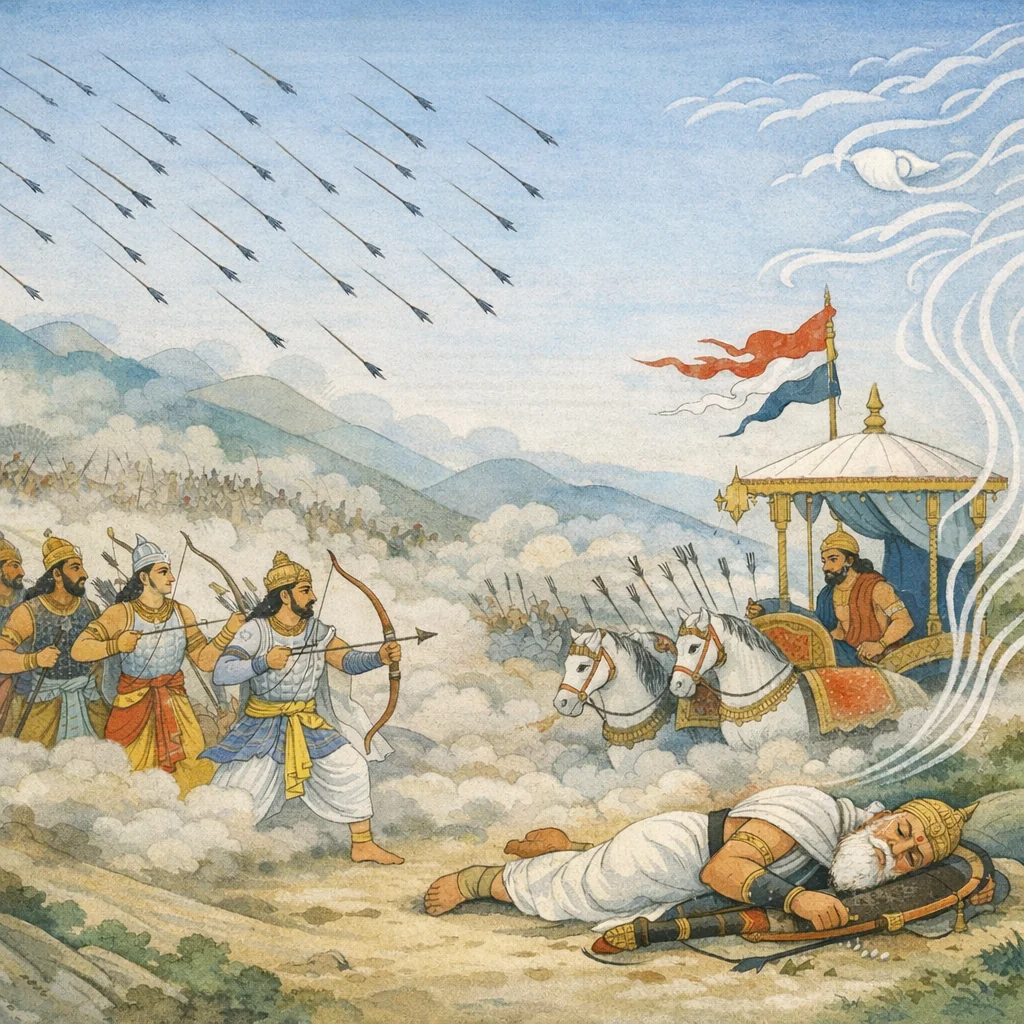
Sañjaya said: Mounting fierce wrath upon his chariot, Droṇa—hard to overcome in battle—began to crush the Pāṇḍava host, just as the ever-moving wind tears and scatters the clouds. The verse underscores how anger, when yoked to martial skill, becomes a devastating force that overwhelms armies and obscures restraint in war.
Verse 9
रथानश्वान् नरान् नागानभिधावन्नितस्ततः । चचारोन्मत्तवद द्रोणो वृद्धोडपि तरुणो यथा,वे बूढ़े होकर भी जवानके समान फुर्तीले थे। द्रोणाचार्य उन्मत्तकी भाँति युद्धस्थलमें इधर-उधर चारों ओर विचरते और रथों, घोड़ों, पैदल मनुष्यों तथा हाथियोंपर धावा करते थे
Sañjaya said: Drona, though advanced in years, moved with the speed and vigor of a young man. Like one possessed, he ranged across the battlefield, charging now here, now there—assailing chariots, horses, foot-soldiers, and elephants. The verse underscores the terrifying momentum of martial prowess when unrestrained by calm discernment, and how age and status do not necessarily temper the ferocity of war.
Verse 10
तस्य शोणितदिग्धाड्ा: शोणास्ते वातरंहस: । आजानेया हया राजन्नविश्रान्ता ध्रुवं ययु:,उनके घोड़े स्वभावत: लाल रंगके थे। उसपर भी उनके सारे अंग खूनसे लथपथ होनेके कारण वे और भी लाल दिखायी देते थे। उनका वेग वायुके समान तीव्र था। राजन्! उन घोड़ोंकी नस्ल अच्छी थी और वे बिना विश्राम किये निरन्तर दौड़ लगाते रहते थे
Sañjaya said: His horses—naturally chestnut in color—were now smeared with blood and therefore appeared even more red. Swift as the wind, O King, those well-bred steeds ran on unwearied, pressing forward without pause amid the violence of battle.
Verse 11
तमन्तकमिव क्रुद्धमापतन्तं यतव्रतम् । दृष्टवा सम्प्राद्रवन् योधा: पाण्डवस्य ततस्तत:,नियमपूर्वक व्रतका पालन करनेवाले द्रोणाचार्यको क्रोधमें भरे हुए कालके समान आते देख पाण्डुनन्दन युधिष्ठिरके सारे सैनिक इधर-उधर भाग चले
Sañjaya said: Seeing Droṇa—steadfast in his vowed discipline—charging forward in wrath like Antaka (Death) himself, the warriors of the son of Pāṇḍu scattered and fled in all directions. The verse underscores how disciplined power, when joined with anger in war, can overwhelm even seasoned troops and shake their moral and physical resolve.
Verse 12
तेषां प्राद्रवतां भीम: पुनरावर्ततामपि । पश्यतां तिष्ठतां चासीच्छब्द: परमदारुण:,वे कभी भागते, कभी पुनः लौटते और कभी चुपचाप खड़े होकर युद्ध देखते थे; इस प्रकारकी हलचलमें पड़े हुए उन योद्धाओंका अत्यन्त दारुण भयंकर कोलाहल चारों ओर गूँज उठा
Sañjaya said: As those warriors ran in confusion—some fleeing, some turning back again, and others standing still merely watching—there arose on all sides an exceedingly harsh and dreadful uproar. The scene reveals how fear and wavering resolve can seize even armed men in the midst of battle, turning disciplined combat into chaotic noise and panic.
Verse 13
शूराणां हर्षजननो भीरूणां भयवर्धन: । द्यावापृथिव्योर्विवरं पूरयामास सर्वतः:,वह कोलाहल शूरवीरोंका हर्ष और कायरोंका भय बढ़ानेवाला था। वह आकाश और पृथ्वीके बीचमें सब ओर व्याप्त हो गया
Sañjaya said: “That tumult, which gladdened the hearts of the brave and increased the terror of the fearful, spread everywhere, filling the entire space between heaven and earth.”
Verse 14
ततः पुनरपि द्रोणो नाम विश्रावयन् युधि । अकरोद् रौद्रमात्मानं किर|ञ्छरशतै: परान्,तब द्रोणाचार्यने पुन: रणभूमिमें अपना नाम सुना-सुनाकर शत्रुओंपर सैकड़ों बाणोंकी वर्षा करते हुए अपने भयंकर स्वरूपको प्रकट किया
Sañjaya said: Then once again, Droṇa, proclaiming his own name amid the battle, revealed his fierce and terrible aspect, showering the enemy with hundreds of arrows. The scene underscores how martial prowess, when driven by wrath and the demands of war, can manifest as a fearsome force that overwhelms opponents, even as it raises questions about restraint and the ethical cost of violence.
Verse 15
स तथा तेष्वनीकेषु पाण्डुपुत्रस्य मारिष | कालवदू व्यचरद् द्रोणो युवेव स्थविरो बली,आर्य! बलवान द्रोणाचार्य वृद्ध होकर भी तरुणके समान फुर्ती दिखाते हुए पाण्बुपुत्र युधिष्ठिरकी सेनाओंमें कालके समान विचरने लगे
Sañjaya said: “O venerable one, moving through the battle-formations of the son of Pāṇḍu, Droṇa—though aged—ranged about with the swiftness of a young man, powerful and relentless like Time itself. In this vision of war, prowess becomes a moral pressure: the teacher’s might turns into an impersonal force that spares none, reminding all that in battle the consequences of action arrive with the inevitability of kāla.”
Verse 16
उत्कृत्य च शिरांस्य॒ुग्रान् बाहूनपि सुभूषणान् । कृत्वा शून्यान् रथोपस्थानुदक्रोशन्महारथान्
Sañjaya said: Having hewn off fierce warriors’ heads, and even their well-adorned arms, they left the chariots’ platforms empty; and the great chariot-fighters cried out in tumult. The verse underscores the brutal immediacy of battle, where valor and ornament alike are rendered meaningless by violence, and the battlefield’s uproar becomes the only “voice” of triumph and grief.
Verse 17
वे योद्धाओंके मस्तकों और आभूषणोंसे भूषित भयंकर भुजाओंको भी काटकर रथकी बैठकोंको सूनी कर देते और महारथियोंकी ओर देख-देखकर दहाड़ते थे ।। तस्य हर्षप्रणादेन बाणवेगेन वा विभो । प्राकम्पन्त रणे योधा गाव: शीतार्दिता इव,प्रभो! उनके हर्षपूर्वक किये हुए सिंहनाद अथवा बाणोंके वेगसे उस रणक्षेत्रमें समस्त योद्धा सर्दीसे पीड़ित हुई गायोंकी भाँति थर-थर काँपने लगे
Sañjaya said: O mighty lord, by his exultant battle-roar—or by the sheer speed and force of his arrows—the warriors on that battlefield began to tremble, like cattle afflicted by winter-cold. The verse underscores how overwhelming martial prowess can unnerve even seasoned fighters, turning courage into fear amid the ethical chaos of war.
Verse 18
द्रोणस्य रथघोषेण मौर्वीनिष्पेषणेन च । धनु:शब्देन चाकाशे शब्द: समभवन्महान्,द्रोणाचार्यके रथकी घरघराहट, प्रत्यंचाको दबा-दबाकर खींचनेके शब्द और धनुषकी टंकारसे आकाशमें महान् कोलाहल होने लगा
Sanjaya said: With the thunder of Droṇa’s chariot, the harsh rasp of his bowstring being drawn tight, and the ringing twang of his bow, a mighty roar arose and filled the sky. The verse underscores how martial prowess and resolve manifest outwardly as overwhelming sound—an omen of escalating violence and the fearful momentum of war.
Verse 19
अथास्य धनुषो बाणा निश्चरन्त: सहस्रश: | व्याप्य सर्वा दिश: पेतुर्नागाश्वरथपत्तिषु,द्रोणाचार्यके धनुषसे सहस्रों बाण निकलकर सम्पूर्ण दिशाओंमें व्याप्त हो हाथी, घोड़े, रथ और पैदल सैनिकोंपर बड़े वेगसे गिरने लगे
Sañjaya said: Then, from his bow, arrows streamed forth by the thousand. Spreading through every direction, they fell with great force upon elephants, horses, chariots, and foot-soldiers—an overwhelming display of Droṇācārya’s martial power that intensifies the moral gravity of the battle’s destruction.
Verse 20
त॑ कार्मुकमहावेगमस्त्रज्वलितपावकम् । द्रोणमासादयांचक्रु: पजचाला: पाण्डवै: सह,द्रोणाचार्यके धनुषका वेग महान् था। उन्होंने अस्त्रोंद्वारा आग-सी प्रज्वलित कर दी थी। पाण्डव और पांचाल सैनिक उनके पास पहुँचकर उन्हें रोकनेकी चेष्टा करने लगे
Sañjaya said: The Pañcālas, together with the Pāṇḍavas, advanced upon Droṇa—whose bow had tremendous force and whose weapons blazed like fire—seeking to check his onslaught. In the ethical tension of the battle, this is the defenders’ attempt to restrain a devastating warrior-teacher whose martial power threatens to overwhelm the field.
Verse 21
तान् सकुण्जरप्त्त्यश्वान् प्राहिणोद् यमसादनम् । चक्रेडचिरेण च द्रोणो महीं शोणितकर्दमाम्,द्रोणाचार्यने हाथी, घोड़े और पैदलोंसहित उन समस्त योद्धाओंको यमलोक पहुँचा दिया और थोड़ी ही देरमें भूतलपर रक्तकी कीच मचा दी
Sañjaya said: Drona swiftly dispatched those warriors—together with their elephants and horses—to the abode of Yama. In no great time he turned the earth into a mire of blood, underscoring the grim moral cost of battle even when fought under the banner of duty.
Verse 22
तन्वता परमास्त्राणि शरान् सततमस्यता । द्रोणेन विहितं दिक्षु शरजालमदृश्यत,द्रोणाचार्यने निरन्तर बाणोंकी वर्षा और उत्तम अस्त्रोंका विस्तार करके सम्पूर्ण दिशाओंमें बाणोंका जाल-सा बुन दिया, जो स्पष्ट दिखलायी दे रहा था
Sañjaya said: As Droṇa ceaselessly discharged arrows and unfolded his supreme weapons, a net of shafts—spread out in every direction by him—became visible, as though the very quarters had been woven shut. The scene underscores how mastery of arms, when driven by the compulsions of war, can turn the battlefield into an inescapable enclosure for all who stand within it.
Verse 23
पदातिषु रथाश्वेषु वारणेषु च सर्वश: । तस्य विद्युदिवा भ्रेषु चरन् केतुरदृश्यत,पैदल सैनिकों, रथियों, घुड़सवारों तथा हाथीसवारोंमें सब ओर विचरता हुआ उनका ध्वज बादलोंमें विद्युत्-सा दृष्टिगोचर हो रहा था
Sañjaya said: Among the foot-soldiers, the chariot-warriors, the horsemen, and the elephant-riders—everywhere on the field—his banner was seen moving about, flashing like lightning amid the clouds. The image conveys the terrifying momentum of a single warrior’s advance, where the emblem above him becomes a moral sign of dominance and impending destruction in the chaos of war.
Verse 24
स केकयानां प्रवरांक्ष॒ पञच पज्चालराजं च शरै: प्रमथ्य । युधिष्ठटिरानीकमदीनसत्त्वो द्रोणो5भ्ययात् कार्मुकबाणपाणि:,पाँचों श्रेष्ठ केकयराजकुमारों तथा पांचालराज ट्रपदको अपने बाणोंसे मथकर उदार हृदयवाले द्रोणाचार्यने हाथोंमें धनुष-बाण लेकर युधिष्ठिरकी सेनापर आक्रमण किया
Sañjaya said: Having struck down with his arrows the five foremost princes of the Kekayas and also the king of the Pāñcālas, Drōṇa—undaunted in spirit—advanced against Yudhiṣṭhira’s army, bow and arrows in hand. The verse underscores the relentless momentum of battle: prowess is shown through disciplined martial skill, yet it also highlights the grim ethical weight of war, where even eminent allies and kings are cut down as the conflict escalates toward decisive confrontation.
Verse 25
त॑ भीमसेनश्ष धनंजयश्न शिनेश्व नप्ता द्रुपदात्मजश्न । शैब्यात्मज: काशिपति: शिबिश्न दृष्टवा नदन्तो व्यकिरणञ्छरौचै:,यह देख भीमसेन, अर्जुन, सात्यकि, धृष्टद्युम्न, शैब्यकुमार, काशिराज तथा शिबि गर्जना करते हुए उनके ऊपर बाणसमूहोंकी वर्षा करने लगे
Sañjaya said: Seeing them, Bhīmasena and Dhanañjaya (Arjuna), Sātyaki—the grandson of Śini—along with Dhṛṣṭadyumna, the son of Śaibya, the king of Kāśī, and Śibi, roaring aloud, showered dense volleys of arrows upon the foe. In the moral atmosphere of the war, their fierce battle-cry and missile-rain signal resolute commitment to their side’s duty, even as the violence underscores the tragic cost of kṣatriya conflict.
Verse 26
(तेषां शरा द्रोणशरैर्निकृत्ता भूमावदृश्यन्त विवर्तमाना: । श्रेणीकृता: संयति मोघवेगा द्वीपे नदीनामिव काशरोहा: ।।) इन सबके बाण द्रोणाचार्यके सायकोंद्वारा छिन्न-भिन्न एवं निष्फल हो युद्धस्थलमें धरतीपर लोटते दिखायी देने लगे, मानो नदियोंके द्वीपमें ढेर-के-ढेर कास अथवा सरकण्डे काटकर बिछा दिये गये हों। तेषामथ द्रोणधरनुर्विमुक्ता: पतत्रिण: काञ्चनचित्रपुड्खा: । भित्त्वा शरीराणि गजाश्चयूनां जम्मुर्महीं शोणितदिग्धवाजा:,द्रोणाचार्यके धनुषसे छूटे हुए सुवर्णमय विचित्र पंखोंसे युक्त बाण हाथी, घोड़े और युवकोंके शरीरोंको छेदकर धरतीमें घुस गये। उस समय उनके पंख रक्तसे रँग गये थे
Sañjaya said: Their arrows, cut down by Droṇa’s shafts, were seen twisting and rolling upon the ground—arrayed in rows on the battlefield, their force made futile—like heaps of kāśa grass or reeds strewn on the river-islands after being cut. The image underscores the grim efficiency of martial skill: in war, prowess can render even a great volley ethically “empty,” as violence multiplies while intentions and efforts are nullified by superior force.
Verse 27
सा योधसंघैश्न रथैश्न भूमि: शरैविभिन्नैर्गजवाजिभिश्ष । प्रच्छाद्यमाना पतितैर्बभूव समावृता द्यौरिव कालमेघै:,जैसे वर्षाकालके मेघोंकी घटासे आकाश आच्छादित हो जाता है, उसी प्रकार वहाँ बाणोंसे विदीर्ण होकर गिरे हुए योद्धाओंके समूहों, रथों, हाथियों और घोड़ोंसे सारी रणभूमि पट गयी थी
Sañjaya said: The battlefield became covered over—strewn with fallen masses of warriors, chariots, elephants, and horses, all pierced and shattered by arrows—so that the earth was veiled like the sky when it is overcast with dark monsoon clouds. The image underscores how war, when unrestrained, turns living strength into a suffocating shroud, obscuring clarity and compassion alike.
Verse 28
शैनेयभीमार्जुनवाहिनी शं सौभद्रपाज्चालसकाशिराजम् | अन्यांश्व वीरान् समरे मर्द द्रोण: सुतानां तव भूतिकाम:,सात्यकि, भीमसेन और अर्जुन जिसमें सेनापति थे तथा जिसके भीतर अभिमन्यु, द्रपद एवं काशिराज-जैसे योद्धा मौजूद थे, उस सेनाको तथा अन्यान्य महावीरोंको भी द्रोणाचार्यने समरांगणमें रौंद डाला; क्योंकि वे आपके पुत्रोंको ऐश्वर्यकी प्राप्ति कराना चाहते थे
Sañjaya said: Droṇa, intent on securing prosperity and advantage for your sons, crushed in battle that host led by Sātyaki, Bhīma, and Arjuna—within which stood Abhimanyu, the Pāñcālas, Drupada, and the king of Kāśī—and he also trampled down many other heroic warriors on the field.
Verse 29
एतानि चान्यानि च कौरवेन्द्र कर्माणि कृत्वा समरे महात्मा । प्रताप्य लोकानिव कालसूर्यो द्रोणो गत: स्वर्गमितो हि राजन्,राजन! कौरवेन्द्र! युद्धस्थलमें ये तथा और भी बहुत-से वीरोचित कर्म करके महात्मा द्रोणाचार्य प्रलयकालके सूर्यकी भाँति सम्पूर्ण लोकोंको तपाकर यहाँसे स्वर्गमें चले गये
Sañjaya said: O lord of the Kurus, after performing these and many other heroic deeds in the battle, the great-souled Droṇa—scorching the worlds like the sun at the time of dissolution—has departed from here to heaven, O King.
Verse 30
एवं रुक्मरथ: शूरो हत्वा शतसहस्रश: । पाण्डवानां रणे योधान् पार्षतेन निपातित:,इस प्रकार सुवर्णमय रथवाले शूरवीर द्रोणाचार्य रणक्षेत्रमें पाण्डवपक्षके लाखों योद्धाओंका संहार करके अन्तमें धृष्टद्युम्नके द्वारा मार गिराये गये
Sañjaya said: Thus the heroic Drona, whose chariot was adorned with gold, having slain the Pāṇḍavas’ warriors in battle by the hundreds of thousands, was at last struck down by Pārṣata (Dhṛṣṭadyumna). The verse underscores the grim moral tension of war: immense martial prowess and slaughter culminate in a decisive, fated counterstroke, where even a great teacher-warrior meets his end amid the ethical ambiguities of the battlefield.
Verse 31
अक्षौहिणीमभ्यधिकां शूराणामनिवर्तिनाम् | निहत्य पश्चाद् धृतिमानगच्छत् परमां गतिम्,धैर्यशाली द्रोणाचार्यने युद्धमें पीठ न दिखानेवाले शूरवीरोंकी एक अक्षौहिणीसे भी अधिक सेनाका संहार करके पीछे स्वयं भी परमगति प्राप्त कर ली
Sañjaya said: Having slain more than an akṣauhiṇī of warriors—heroes who would not turn back from battle—the steadfast one thereafter attained the highest state. The verse underscores the grim culmination of martial duty: unwavering resolve in war brings decisive destruction, yet it also raises the ethical tension between valor and the catastrophic cost of violence.
Verse 32
पाण्डवैः सह पज्चालैरशिवै: क्रूरकर्मभि: । हतो रुक्मरथो राजन् कृत्वा कर्म सुदुष्करम्,राजन्! सुवर्णमय रथवाले द्रोणाचार्य अत्यन्त दुष्कर पराक्रम करके अन्तमें पाण्डवोंसहित अमंगलकारी क्रूरकर्मा पांचालोंके हाथसे मारे गये
Sañjaya said: O King, Rukmaratha, after accomplishing a most difficult feat of arms, was slain by the Pāṇḍavas together with the Pañcālas—men of cruel deeds and ill-omened intent. The verse underscores how, in the moral chaos of war, even great valor can end in violent reversal when opposed by relentless and ruthless adversaries.
Verse 33
ततो निनादो भूतानामाकाशे समजायत । सैन्यानां च ततो राजन्नाचार्ये निहते युधि,नरेश्वर! युद्धस्थलमें आचार्य द्रोणके मारे जानेपर आकाशमें स्थित अदृश्य भूतोंका तथा कौरव-सैनिकोंका आर्तनाद सुनायी देने लगा
Sañjaya said: Then, O King, when the Teacher (Droṇa) had been slain in battle, a great wail arose—both from unseen beings stationed in the sky and from the armies below. The cry marks the moral shock of war: the fall of a revered preceptor turns victory into lament, revealing how the death of a dharma-authority destabilizes the very meaning of the fight.
Verse 34
द्यां धरां खं दिशो वापि प्रदिशश्वानुनादयन् | अहो धिगिति भूतानां शब्द: समभवद् भृशम्,उस समय स्वर्गलोक, भूलोक, अन्तरिक्षतोक, दिशाओं तथा विदिशाओंको भी प्रतिध्वनित करता हुआ समस्त प्राणियोंका 'अहो! धिक्कार है!” यह शब्द वहाँ जोर-जोरसे गूँजने लगा
Sañjaya said: A loud cry—“Alas! Shame!”—arose among all beings, echoing powerfully through heaven, earth, the sky, and across every direction and intermediate quarter. The moment is framed as a moral recoil: the violence of war has reached a point where the world itself seems to resound with condemnation.
Verse 35
देवता: पितरश्ैव पूर्वे ये चास्य बान्धवा: । ददृशुर्निहतं तत्र भारद्वाजं महारथम्,देवता, पितर तथा जो इनके पूर्ववर्ती भाई-बन्धु थे, उन्होंने भी वहाँ भरद्वाजनन्दन महारथी द्रोणाचार्यको मारा गया देखा
Sanjaya said: The gods, the ancestral fathers, and those earlier kinsmen of his as well beheld there the great chariot-warrior, Bhāradvāja’s son (Droṇa), lying slain. The scene underscores how the fall of a foremost teacher in war is witnessed not only by men but, in the epic’s moral imagination, by cosmic and ancestral orders—making the death a grave, world-marked event rather than a merely tactical outcome.
Verse 36
पाण्डवास्तु जयं लब्ध्वा सिंहनादान् प्रचक्रिरे । सिंहनादेन महता समकम्पत मेदिनी,पाण्डव विजय पाकर सिंहनाद करने लगे। उनके उस महान् सिंहनादसे पृथ्वी काँप उठी
Sañjaya said: Having won the victory, the Pāṇḍavas raised mighty lion-roars. By that great roar, the earth itself seemed to tremble—an outward sign of their triumph and the surging momentum of battle.
Frequently Asked Questions
The dilemma is interpretive rather than prescriptive: how to reconcile the fall of a revered teacher-warrior with ideals of merit, protection, and rightful conduct, when battlefield outcomes can contradict expectations of moral and technical superiority.
The chapter models how catastrophic loss is narrated through disciplined inquiry—linking emotion to analysis—while acknowledging that fate, policy, and human limitation jointly shape historical outcomes.
No explicit phalaśruti is stated here; the meta-function is structural, using Dhṛtarāṣṭra’s questions to cue a detailed account and to position Droṇa’s fall as a decisive interpretive pivot in the war narrative.