Adhyaya 132
Somadatta–Sātyaki Engagement; Bhīma’s Interventions; Droṇa–Yudhiṣṭhira Astra Exchange (Book 7, Chapter 132)
Upa-parva: Droṇābhisandhi Upa-Parva (Drona’s concentrated offensive; late-day engagements)
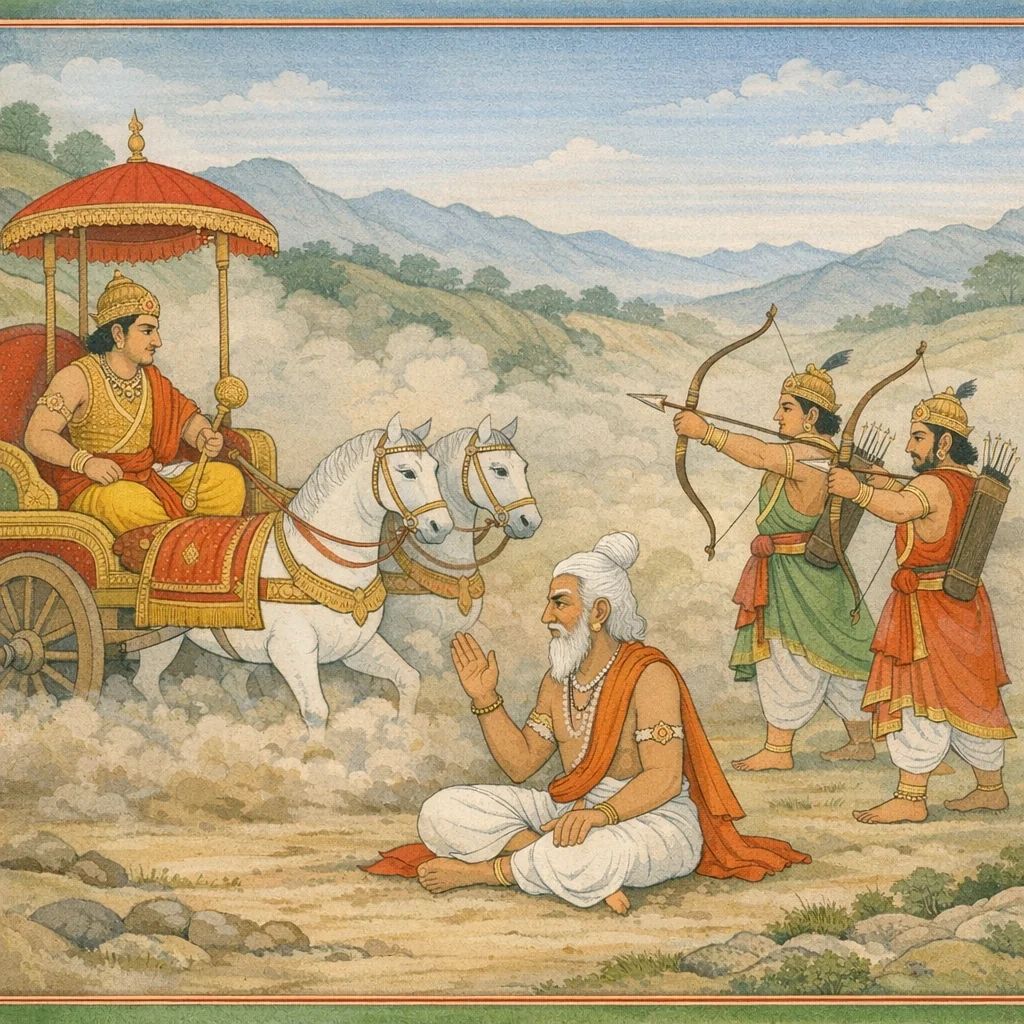
Sañjaya reports a rapid series of engagements after heavy losses among Drupada’s sons, Kuntibhoja’s line, and numerous rākṣasa fighters attributed to Droṇa’s son. Yudhiṣṭhira, Bhīma, Dhṛṣṭadyumna, and Sātyaki set their resolve for renewed combat. Somadatta attacks Sātyaki with dense arrow volleys; Bhīma counters on Sātyaki’s behalf, while Sātyaki lands a decisive strike, bringing Somadatta down. Bāhlīka advances amid his son’s disorientation; Bhīma wounds him, is struck by a spear (śakti) from Prātipīya, regains composure, and kills Bāhlīka with a mace blow. Subsequent retaliations by Bāhlīka’s sons and other allied figures are met by Bhīma’s sustained eliminations, including engagements involving Karṇa’s kin and Śakuni’s brothers. Yudhiṣṭhira then breaks enemy contingents and routes multiple named groups. Droṇa, urged by Dhṛtarāṣṭra’s son, confronts Yudhiṣṭhira: both exchange and neutralize a series of astras (Vāyavya, Vāruṇa, Yāmya, Āgneya, Tvāṣṭra, Sāvitra, Māhendra), culminating in Droṇa’s raising of Brahmāstra and Yudhiṣṭhira’s countering with Brahmāstra. The chapter closes with Droṇa turning to strike Drupada’s forces, causing Pāñcālas to flee, while Arjuna and Bhīma wheel back to engage Droṇa with concentrated arrow-storms, supported by allied formations.
Chapter Arc: कुरुसेना के बीच दुर्योधन का रथ वेग से द्रोणाचार्य की ओर बढ़ता है—राजा का मन क्षोभ से भरा है और वह सेनापति से उत्तर मांगने चला है। → दुर्योधन रक्तलोचन होकर उपालम्भ करता है—पाण्डवों के महारथी अब भी कैसे अजेय-से बने हैं, जयद्रथ-वध की छाया में कौरव-प्रतिष्ठा क्यों डगमगा रही है। द्रोण ‘बहुविध चिन्त्य’ कहकर स्थिति का कठोर लेखा खोलते हैं: पाण्डव-पक्ष के तीन महारथी (युधामन्यु, उत्तमौजस आदि) रक्षक-भित्ति बनकर कौरव-प्रहारों को रोक रहे हैं, और युद्ध अब केवल बल का नहीं, व्यवस्था और संकल्प का भी है। → युधामन्यु और उत्तमौजस—दो क्षत्रिय-प्रवरी, धनुष उठाए—दुर्योधन पर टूट पड़ते हैं; दुर्योधन के क्रुद्ध आक्रमण को देखकर वे रथोपस्थ से कूदकर/हटकर उसकी तीव्रता को झेलते हैं और रण में सीधा टकराव बनता है। इसी बीच द्रोण का वचन-प्रहार भी चरम पर है: यह युद्ध उसी ‘शकुनि-बुद्धिज’ द्यूत का फल है—सभा में जिसे जीत-हार समझा गया, वह आज रक्त में परिणत होकर सामने खड़ा है। → द्रोण दुर्योधन को समझाते हैं कि रण-परिणाम केवल सेनापति की इच्छा से नहीं बदलता; पाण्डवों की संगठित वीरता, रक्षक-व्यूह और समय की प्रतिकूलता—सब मिलकर कौरवों को रोक रहे हैं। दुर्योधन का रोष युद्ध-उत्साह में ढलता है, और वह प्रत्यक्ष द्वंद्व में अपनी प्रतिष्ठा बचाने को तत्पर होता है। → दुर्योधन बनाम युधामन्यु-उत्तमौजस का संघर्ष किस ओर झुकेगा—और द्रोण की रणनीति इस अपमान-बोध को कैसे साधेगी—यह अगले प्रसंग में तीव्र होता है।
Shlokas
Verse 1
(दाक्षिणात्य अधिक पाठके ३ ३ श्लोक मिलाकर कुल ४२३ “लोक हैं) न२्ंखय्स््स्लििसस ह्य £>ाभ्प्ट् त्रेशरदाधिकशततमो<्ध्याय: दुर्योधनका द्रोणाचार्यको उपालम्भ देना, द्रोणाचार्यका उसे द्यूतका परिणाम दिखाकर युद्धके लिये वापस भेजना और उसके साथ युधामन्यु तथा उत्तमौजाका युद्ध संजय उवाच तस्मिन् विलुलिते सैन्ये सैन्धवायार्जुने गते । सात्वते भीमसेने च पुत्रस्ते द्रोणमभ्ययात्
Sanjaya said: When that army had been thrown into confusion, and when Arjuna had gone after Saindhava, while Sātvata (Krishna) and Bhīmasena were also engaged elsewhere, your son approached Droṇācārya. The moment underscores how, amid the chaos of war and shifting responsibilities, Duryodhana turns to his commander—seeking accountability and renewed resolve—revealing the ethical tension between strategic necessity and the burdens of leadership in a dharma-war.
Verse 2
स रथस्तव पुत्रस्य त्वरया परया युत:
Sañjaya said: That chariot, belonging to your son, sped on—driven with the utmost haste. The line underscores the war’s relentless urgency, where swift action is prized even as it deepens the moral pressure of fratricidal conflict.
Verse 3
उवाच चैन पुत्रस्ते संरम्भाद् रक्तलोचन:
Sañjaya said: Then your son, his eyes reddened with furious agitation, spoke to him—his anger rising in the heat of the battle and the strain of duty and rivalry.
Verse 4
अर्जुनो भीमसेनश्व सात्यकिश्वापराजित:,“आचार्य! अर्जुन, भीमसेन और अपराजित वीर सात्यकि--ये तीनों महारथी मेरी सम्पूर्ण एवं विशाल सेनाओंको पराजित करके सिंधुराज जयद्रथके समीप पहुँच गये हैं। उन्हें कोई रोक नहीं सका है
Sanjaya said: “O Teacher! Arjuna, Bhimasena, and Satyaki—an unconquered hero—these three great chariot-warriors have broken through my entire vast host and have reached the vicinity of Jayadratha, the king of Sindhu. No one has been able to stop them.”
Verse 5
विजित्य सर्वसैन्यानि सुमहान्ति महारथा: । सम्प्राप्ता: सिन्धुराजस्य समीपमनिवारिता:,“आचार्य! अर्जुन, भीमसेन और अपराजित वीर सात्यकि--ये तीनों महारथी मेरी सम्पूर्ण एवं विशाल सेनाओंको पराजित करके सिंधुराज जयद्रथके समीप पहुँच गये हैं। उन्हें कोई रोक नहीं सका है
Sanjaya said: “O Teacher, those great chariot-warriors—Arjuna, Bhimasena, and the unconquered hero Satyaki—having overcome all my vast divisions of troops, have reached the presence of Jayadratha, the king of Sindhu. No one has been able to stop them.”
Verse 6
व्यायच्छन्ति च तत्रापि सर्व एवापराजिता: । यदि तावद्ू रणे पार्थो व्यतिक्रान्तो महारथ:
Sañjaya said: “Even there, all of them—still unconquered—press on and strive. If, in that battle, Pārtha (Arjuna), the great chariot-warrior, has indeed broken through…,”
Verse 7
आश्चर्यभूतं लोके5स्मिन् समुद्रस्येव शोषणम्,“विप्रवर! सात्यकि, भीमसेन तथा अर्जुनके द्वारा आपकी पराजय समुद्रको सुखा देनेके समान इस संसारमें एक आश्चर्यभरी घटना है। लोग बड़े जोरसे इस बातकी चर्चा कर रहे हैं
Sanjaya said: “O best of brahmins, your defeat at the hands of Sātyaki, Bhīmasena, and Arjuna is a wonder in this world—like the drying up of the ocean. People are speaking of it everywhere with great intensity.”
Verse 8
निर्जयस्तव विप्राग्रय सात्वतेनार्जुनेन च । तथैव भीमसेनेन लोक: संवदते भूशम्,“विप्रवर! सात्यकि, भीमसेन तथा अर्जुनके द्वारा आपकी पराजय समुद्रको सुखा देनेके समान इस संसारमें एक आश्चर्यभरी घटना है। लोग बड़े जोरसे इस बातकी चर्चा कर रहे हैं
Sañjaya said: “O foremost of Brahmins, people everywhere are speaking loudly of your defeat—brought about by Sātyaki, Arjuna, and likewise Bhīmasena. In the moral imagination of the world, such a reversal is treated as a startling, almost unimaginable event, and it has become the subject of intense public talk.”
Verse 9
कथं द्रोणो जित: संख्ये धनुर्वेदस्य पारग: । इत्येवं ब्रुवते योधा अश्रद्धेयमिदं तव,'सारे योद्धा यह कह रहे हैं कि धनुर्वेदके पारंगत आचार्य द्रोण कैसे युद्धमें पराजित हो गये। आपका यह हारना लोगोंके लिये अविश्वसनीय हो गया है
Sañjaya said: “How could Droṇa—master of the science of archery—be defeated in battle?” Thus the warriors speak; to them, this report of your defeat seems scarcely believable. The verse underscores how reputation, perceived invincibility, and the shock of reversal shape morale and judgment amid war.
Verse 10
नाश एव तु मे नूनं मन्दभाग्यस्य संयुगे | यत्र त्वां पुरुषव्याप्रं व्यतिक्रान्तास्त्रयो रथा:
Sañjaya said: “Surely, in this battle, destruction alone awaits me, ill-fated as I am—for three chariots have passed beyond you, O tiger among men.”
Verse 11
*वास्तवमें मेरा भाग्य ही खोटा है। ये तीनों महारथी जहाँ आप-जैसे पुरुषसिंह वीरको लाँघकर आगे बढ़ गये हैं, उस युद्धमें मेरा विनाश ही अवश्यम्भावी है ।। एवं गते तु कृत्ये5स्मिन् ब्रूहि यत् ते विवक्षितम् | यद् गतं गतमेवेदं शेषं चिन्तय मानद,'ऐसी परिस्थितिमें जो कर्तव्य है, उसके सम्बन्धमें आपकी क्या राय है, यह बताइये। मानद! जो हो गया सो तो हो ही गया। अब जो शेष कार्य है, उसका विचार कीजिये
Sañjaya said: “Since matters have come to this pass, tell me what you intend to say. What has happened is already done and cannot be undone; now, O giver of honor, consider what remains to be done.”
Verse 12
यत् कृत्यं सिन्धुराजस्य प्राप्तकालमनन्तरम् । तत् संविधीयतां क्षिप्रं साधु संचिन्त्य नो द्विज,“ब्रह्म! इस समय सिंधुराजकी रक्षाके लिये तुरंत करनेयोग्य जो कार्य हमारे सामने प्राप्त है, उसे अच्छी तरह सोच-विचारकर शीघ्र सम्पन्न कीजिये”
Sañjaya said: “O brāhmaṇa, the task that must be done at once—now that the critical moment has arrived—for the protection of the king of Sindhu: consider it well and carry it out swiftly.”
Verse 13
द्रोण उवाच चिन्त्यं बहुविधं तात यत् कृत्यं तच्छृणुष्व मे । त्रयो हि समतिक्रान्ता: पाण्डवानां महारथा:,द्रोणाचार्यने कहा--तात! सोचने-विचारनेको तो बहुत कुछ है, किंतु इस समय जो कर्तव्य प्राप्त है वह मुझसे सुनो। पाण्डवपक्षके तीन महारथी हमारी सेनाको लाँधकर आगे बढ़ गये हैं। पीछे उनका जितना भय है, उतना ही आगे भी है। परंतु जहाँ अर्जुन और श्रीकृष्ण हैं वहीं मेरी समझमें अधिक भयकी आशंका है
Droṇa said: “Dear son, there is much that could be pondered in many ways; yet listen to me now about what must be done. Three great chariot-warriors of the Pāṇḍavas have already broken through and advanced beyond our army.”
Verse 14
यावत् तेषां भयं पश्चात् तावदेषां पुरःसरम् । तद् गरीयस्तरं मन्ये यत्र कृष्णधनंजयौ,द्रोणाचार्यने कहा--तात! सोचने-विचारनेको तो बहुत कुछ है, किंतु इस समय जो कर्तव्य प्राप्त है वह मुझसे सुनो। पाण्डवपक्षके तीन महारथी हमारी सेनाको लाँधकर आगे बढ़ गये हैं। पीछे उनका जितना भय है, उतना ही आगे भी है। परंतु जहाँ अर्जुन और श्रीकृष्ण हैं वहीं मेरी समझमें अधिक भयकी आशंका है
Droṇa said: “As much danger as they pose from the rear, so much do they pose from the front as well. Yet I judge the greater peril to be where Kṛṣṇa and Dhanañjaya (Arjuna) are. Therefore, hear from me what must be done now—though there is much one could deliberate, the duty at hand is decisive.”
Verse 15
सा पुरस्ताच्च पश्चाच्च गृहीता भारती चमू: । तत्र कृत्यमहं मन्ये सैन्धवस्याभिरक्षणम्,इस समय कौरव-सेना आगे और पीछेसे भी शत्रुओंके आक्रमणका शिकार हो रही है। इस परिस्थितिमें मैं सबसे आवश्यक कार्य यही मानता हूँ कि सिंधुराज जयद्रथकी रक्षा की जाय
Droṇa said: “The Bhārata host is being pressed—assailed from the front and from the rear. In such a crisis, I judge the most necessary duty to be this: the protection of the Sindhu king Jayadratha.”
Verse 16
त्वरन्नेकरथेनैव बहुकृत्यं विचिन्तयन् । संजय कहते हैं--महाराज! इस प्रकार जब वह सेना विचलित होकर भाग चली, अर्जुन सिंधुराजके वधके लिये आगे बढ़ गये और उनके पीछे सात्यकि तथा भीमसेन भी वहाँ जा पहुँचे, तब आपका पुत्र दुर्योधन बड़ी उतावलीके साथ एकमात्र रथद्वारा बहुत-से आवश्यक कार्योके सम्बन्धमें सोचता-विचारता हुआ द्रोणाचार्यके पास गया,स नो रक्ष्यतमस्तात क्रुद्धाद् भीतो धनंजयात् । गतौ च सैन्धवं भीमौ युयुधानवृकोदरौ तात! जयद्रथ कुपित हुए अर्जुनसे डरा हुआ है। अतः वह हमारे लिये सबसे रक्षणीय है। भयंकर वीर सात्यकि और भीमसेन भी जयद्रथको ही लक्ष्य करके गये हैं
Sanjaya said: “Hurrying in his lone chariot, and anxiously weighing many urgent necessities, your son Duryodhana went to Droṇācārya. ‘Dear sir, Jayadratha must be protected above all for our sake—he is terrified of Dhanañjaya, who is enraged. And the two formidable warriors, Yuyudhāna (Sātyaki) and Vṛkodara (Bhīma), have also advanced, aiming at the Saindhava (Jayadratha).’”
Verse 17
सम्प्राप्तं तदिदं द्यूतं यत् तच्छकुनिबुद्धिजम् । न सभायां जयो वृत्तों नापि तत्र पराजय:
Droṇa said: “This very game of dice has now come to its destined outcome—an outcome born of Śakuni’s calculating intellect. In that assembly there was no true victory, nor was there any real defeat; for what occurred there was not righteous contest but a ruinous stratagem that corrupted the moral order.”
Verse 18
यान् सम तान् ग्लहते घोरान् शकुनि: कुरुसंसदि
Droṇa said: “Those very men who are equal (in strength and standing), Śakuni, in the Kuru assembly, challenges to dreadful games of dice.”
Verse 19
यत्र ते बहवस्तात कौरवेया व्यवस्थिता:,तात! (असली जूआ तो वहाँ हो रहा है) जहाँ तुम्हारे बहुत-से कौरवयोद्धा खड़े हैं। इस सेनाको ही तुम जुआरी समझो। प्रजानाथ! बाणोंको ही पासे मान लो। राजन! सिंधुराज जयद्रथको ही बाजी या दाँव समझो। उसीपर जूएकी हार-जीतका फैसला होगा
Droṇa said: “Dear one, the true gambling is taking place there—where your many Kaurava warriors stand arrayed. Think of this army itself as the gamblers; take the arrows as the dice. O lord of men, regard Jayadratha, the king of Sindhu, as the stake or wager. Upon him the victory or defeat of this ‘game’ will be decided.”
Verse 20
सेनां दुरोदरं विद्धि शरानक्षान् विशाम्पते । ग्लहं च सैन्धवं राजंस्तत्र द्यूतस्य निश्चय:,तात! (असली जूआ तो वहाँ हो रहा है) जहाँ तुम्हारे बहुत-से कौरवयोद्धा खड़े हैं। इस सेनाको ही तुम जुआरी समझो। प्रजानाथ! बाणोंको ही पासे मान लो। राजन! सिंधुराज जयद्रथको ही बाजी या दाँव समझो। उसीपर जूएकी हार-जीतका फैसला होगा
Droṇa said: “Know this army to be the reckless gambler, O lord of the people. Take the arrows as the dice. And, O king, regard the Saindhava (Jayadratha) as the stake in this game—upon him the decision of victory or defeat in this ‘gambling’ will be made, dear one.”
Verse 21
सैन्धवे तु महद् द्यूतं समासक्तं परै: सह । अत्र सर्वे महाराज त्यक्त्वा जीवितमात्मन:,महाराज! सिंधुराजके ही जीवनकी बाजी लगाकर शत्रुओंके साथ हमारी भारी द्यूतक्रीड़ा चल रही है। यहाँ तुम सब लोग अपने जीवनका मोह छोड़कर रणभूमिमें विधिपूर्वक जयद्रथकी रक्षा करो। निश्चय ही उसीपर हम द्यूतक्रीड़ा करनेवालोंकी असली हार-जीत निर्भर है
Droṇa said: “O King, with regard to Jayadratha (the lord of Sindhu), a great game of dice—our high-stakes contest—has been joined with the enemy. Therefore, here all of you, casting aside attachment to your own lives, protect Jayadratha on the battlefield according to proper martial rule; for upon him depends the true victory or defeat of us who are engaged in this ‘wager’ of war.”
Verse 22
विनय, था, सैन्धवस्य रणे रक्षां विधिवत् कर्तुमर्हथ । तत्र नो ग्लहमानानां ध्रुवी जयपराजयौ,महाराज! सिंधुराजके ही जीवनकी बाजी लगाकर शत्रुओंके साथ हमारी भारी द्यूतक्रीड़ा चल रही है। यहाँ तुम सब लोग अपने जीवनका मोह छोड़कर रणभूमिमें विधिपूर्वक जयद्रथकी रक्षा करो। निश्चय ही उसीपर हम द्यूतक्रीड़ा करनेवालोंकी असली हार-जीत निर्भर है
Drona said: “You must, in proper order and with due discipline, undertake the protection of the Sindhu prince in battle. For there, O King, the certain victory or defeat of us who are engaged in this wager depends. Indeed, with our very lives staked, a fierce game of dice is being played between us and the enemy. Therefore, casting off attachment to life, all of you should protect Jayadratha on the battlefield according to the rules of war; on him alone rests our true loss or gain.”
Verse 23
यत्र ते परमेष्वासा यत्ता रक्षन्ति सैन्धवम् | तत्र गच्छ स्वयं शीघ्र तांश्व रक्षत्व रक्षिण:,राजन! जहाँ वे महाधनुर्धर योद्धा सावधान होकर सिंधुराजकी रक्षा करने लगे हैं, वहीं तुम स्वयं ही शीघ्र चले जाओ और सिंधुराजके उन रक्षकोंकी रक्षा करो
Drona said: “Where your foremost archers, fully alert, are guarding Saindhava, go there yourself at once. Hurry, and protect those very protectors of the king of Sindhu.”
Verse 24
इहैव त्वहमासिष्ये प्रेषयिष्यामि चापरान् | निरोत्स्यामि च पञ्चालान् सहितान् पाण्डुसृञ्जयै:,मैं तो यहीं रहूँगा और तुम्हारे पास दूसरे-दूसरे रक्षकोंको भेजता रहूँगा। साथ ही पाण्डवों तथा सूंजयोंसहित आये हुए पांचालोंको व्यूहके भीतर जानेसे रोकूँगा
Droṇa said: “I shall remain right here and will dispatch other guards as well. And I will prevent the Pañcālas—who have come together with the Pāṇḍus and the Sṛñjayas—from entering into the battle-array.”
Verse 25
ततो दुर्योधनो5गच्छत् तूर्णमाचार्यशासनात् | उद्यम्यात्मानमुग्राय कर्मणे सपदानुग:,तदनन्तर आचार्यकी आज्ञासे दुर्योधन अपने-आपको उग्र कर्म करनेके लिये तैयार करके अपने अनुचरोंके साथ शीघ्र वहाँसे चला गया
Then Duryodhana, obeying the command of his teacher, departed at once. Rousing himself for a fierce deed, he quickly went from there together with his attendants—an image of prompt obedience harnessed to violent intent within the pressures of war.
Verse 26
तूर्णमभ्यद्रवद् द्रोणं मनोमारुतवेगवान् | आपके पुत्रका वह रथ मन और वायुके समान वेगशाली था। वह बड़ी तेजीके साथ तत्काल द्रोणाचार्यके पास जा पहुँचा,चक्ररक्षौ तु पाउ्चाल्यौ युधामन्यूत्तमौजसौ । बाहोन सेनामभ्येत्य जग्मतु: सव्यसाचिनम् अर्जुनके चक्ररक्षक पांचालराजकुमार युधामन्यु और उत्तमौजा सेनाके बाहरी भागसे होकर सव्यसाची अर्जुनके समीप जाने लगे
Sañjaya said: Your son’s chariot, swift as thought and as the wind, rushed at once toward Droṇācārya. Meanwhile the two Pāñcāla princes, Yudhāmanyu and Uttamaujā—appointed as the wheel-guards—moved along the outer flank of the army and went to join Savyasācī Arjuna. The scene underscores the tactical discipline of war: speed and direct assault on one side, and protective duty and coordinated positioning on the other.
Verse 27
यौ तु पूर्व महाराज वारितौ कृतवर्मणा । प्रविष्टे त्वर्जुने राजंस्तव सैन्यं युयुत्सया,महाराज! जब अर्जुन युद्धकी इच्छासे आपकी सेनाके भीतर घुसे थे, उस समय (ये दोनों भीमके साथ ही थे, किंतु) कृतवर्माने उन दोनोंको पहले रोक दिया था
Droṇa said: “O great king, those two whom Kṛtavarman had earlier held back—at the time when Arjuna, eager for battle, forced his way into your army—(were present then as well).”
Verse 28
पाश्वें भित्त्वा चमूं वीरौ प्रविष्टो तव वाहिनीम् | पाश्वेन सैन्यमायान्तौ कुरुराजो ददर्श ह,अब वे दोनों वीर पार्श्चधागसे आपकी सेनाका भेदन करके उसके भीतर घुस गये। पार््वभागसे सेनाके भीतर आते हुए उन दोनों वीरोंको कुरुराज दुर्योधनने देखा
Drona said: “Having broken through the flank of the battle-array, the two heroes forced their way into your host. As they advanced within the army from the side, the Kuru king Duryodhana saw those two warriors.”
Verse 29
ताभ्यां दुर्योधन: सार्थमकरोत् संख्यमुत्तमम् । त्वरितस्त्वरमाणाभ्यां भ्रातृभ्यां भारतो बली,तब उस बलवान् भरतवंशी वीर दुर्योधनने तुरंत आगे बढ़कर बड़ी उतावलीके साथ आते हुए उन दोनों भाइयोंके साथ भारी युद्ध छेड़ दिया
Droṇa said: Duryodhana, the mighty scion of Bharata’s line, swiftly advanced and, with those two brothers who were themselves rushing forward in haste, joined battle in a fierce and decisive combat. The verse underscores the momentum of war—how impatience and pride drive leaders into escalating violence, often eclipsing restraint and discernment.
Verse 30
तावेनमभ्यद्रवतामुभावुद्यतकार्मुकौ । महारथसमाख्वाती क्षत्रियप्रवरी युधि,वे दोनों क्षत्रियशिरोमणि विख्यात महारथी वीर थे। उन दोनोंने युद्धस्थलमें धनुष उठाकर दुर्योधनपर धावा बोल दिया
Drona said: “Then those two—both foremost among kṣatriyas, famed in battle as great chariot-warriors—rushed straight at him with bows raised, charging upon Duryodhana on the field.”
Verse 31
तमविध्यद् युधामन्युस्त्रिंशता कड्कपत्रिभि: | विंशत्या सारथिं चास्य चतुर्भिश्चतुरो हयान्,युधामन्युने कंकपत्रयुक्त तीस बाणोंद्वारा दुर्योधनको घायल कर दिया। फिर बीस बाणोंसे उसके सारथिको और चारसे चारों घोड़ोंको बींध डाला
Droṇa said: Yudhāmanyu struck him with thirty arrows fitted with heron-feathers. With twenty more he pierced that warrior’s charioteer, and with four he felled the four horses. The episode underscores the ruthless precision of battlefield skill—where the aim is not only to wound the foe but to disable the entire war-machine (driver and steeds), raising the ethical tension between martial necessity and the escalating severity of war.
Verse 32
दुर्योधनो युधामन्योर्ध्वजमेकेषुणाच्छिनत् । एकेन कार्मुकं॑ चास्य चकर्त तनयस्तव,तब आपके पुत्र दुर्योधनने एक बाणसे युधामन्युकी ध्वजा काट डाली और एकसे उसके धनुषके दो टुकड़े कर दिये
Droṇa said: “Your son Duryodhana, with a single arrow, cut down Yudhāmanyu’s banner; and with another he shattered his bow into two. Thus, in the heat of battle, he sought to break not only the warrior’s weapon but also his visible emblem of resolve and standing.”
Verse 33
ससम्भ्रममिदं वाक्यमब्रवीत् कुरुनन्दन: । उस समय आपका पुत्र कुरुनन्दन दुर्योधन क्रोधसे लाल आँखें करके घबराहटके स्वरमें द्रोणाचार्यसे इस प्रकार बोला--,सारथिं चास्य भल्लेन रथनीडादपाहरत् । ततो<विध्यच्छरैस्ती #णै क्षतुर्भि क्षतुरो हयान्
Sañjaya said: In a voice shaken with agitation, the Kuru prince spoke these words. Then, with a sharp broad-headed arrow he struck down the charioteer from the chariot-seat; thereafter, with four keen shafts he pierced the four horses. The scene underscores how, in the fury of battle, warriors seek to disable an opponent’s mobility and support—acts that intensify the moral darkness of war even as they follow the ruthless logic of combat.
Verse 34
इतना ही नहीं, एक भल्ल मारकर उसने युधामन्युके सारथिको भी रथकी बैठकसे नीचे गिरा दिया। फिर चार तीखे बाणोंद्वारा उसके चारों घोड़ोंको भी घायल कर दिया ।। युधामन्युश्व संक्रुद्धः शरांस्त्रिंशतमाहवे । व्यसृजत् तव पुत्रस्य त्वरमाण: स्तनान्तरे,इससे युधामन्यु भी कुपित हो उठा। उसने युद्धस्थलमें बड़ी उतावलीके साथ आपके पुत्रकी छातीमें तीस बाण मारे
Yudhāmanyu, enraged, swiftly released thirty arrows in the midst of battle, striking your son in the chest. The exchange underscores the escalating cycle of retaliation in war: injury provokes anger, and anger drives rapid, forceful counter-violence, tightening the moral pressure on warriors to balance prowess with restraint.
Verse 35
तथोत्तमौजा: संक्रुद्धः शरैहेमविभूषितै: । अविध्यत् सारथिं चास्य प्राहिणोद्ू यमसादनम्,इसी प्रकार उत्तमौजाने भी अत्यन्त कुपित हो अपने सुवर्णभूषित बाणोंद्वारा उसके सारथिको गहरी चोट पहुँचायी और उसे यमलोक भेज दिया
Then Uttamaujā, inflamed with anger, struck down his charioteer with arrows adorned with gold, and sent him to the abode of Yama. In the brutal momentum of battle, the fall of the driver signifies not only a tactical blow—disabling the chariot—but also the grim ethical tension of war, where rage and necessity can eclipse restraint and compassion.
Verse 36
दुर्योधनो5पि राजेन्द्र पाउ्चाल्यस्योत्तमौजस: । जघान चतुरो<स्याश्वानुभौ तौ पार्ष्णिसारथी,राजेन्द्र! तब दुर्योधनने भी पांचालराज उत्तमौजाके चारों घोड़ों और दोनों पार्श्वरक्षकोंको सारथिसहित मार डाला
Drona said: “O best of kings, Duryodhana too struck down the four horses of Uttamaujas, the Pāñcāla prince; and he also slew the two flank-guards together with the charioteer. Thus, in the press of battle, the assault is directed not only at the warrior but at the entire chariot-unit, revealing the ruthless, outcome-driven ethic that often governs war when victory is prized over restraint.”
Verse 37
उत्तमौजा हताश्वस्तु हतसूतश्च संयुगे । आरुरोह रथं भ्रातुर्युधामन्योरभित्वरन्
Drona said: “In the thick of battle, Uttamaujā—his horses slain and his charioteer killed—swiftly mounted his brother Yudhāmanyu’s chariot, pressing forward with urgency.”
Verse 38
युद्धमें घोड़ों और सारथिके मारे जानेपर उत्तमौजा शीघ्रतापूर्वक अपने भाई युधामन्युके रथपर जा चढ़ा ।। स रथं प्राप्य त॑ भ्रातुर्दुयो धनहयान् शरै: । बहुभिस्ताडयामास ते हता: प्रापतन् भुवि,भाईके रथपर बैठकर उत्तमौजाने अपने बहुसंख्यक बाणोंद्वारा दुर्योधनके घोड़ोंपर इतना प्रहार किया कि वे प्राणशून्य होकर धरतीपर गिर पड़े
When the horses and charioteer had been slain in battle, Uttamaujas swiftly mounted his brother Yudhāmanyu’s chariot. Having reached that chariot, he struck Duryodhana’s horses with many arrows, so that, killed by the blows, they collapsed lifeless onto the earth. The episode underscores the relentless mechanics of war: skill and speed are turned toward disabling the enemy’s mobility, even as the moral cost of such efficiency in violence remains implicit in the battlefield’s grim necessity.
Verse 39
हयेषु पतितेष्वस्य चिच्छेद परमेषुणा । युधामन्युर्धनु: शीघ्रं शरावापं च संयुगे,घोड़ोंके धराशायी हो जानेपर युधामन्युने उस युद्धस्थलमें उत्तम बाणका प्रहार करके दुर्योधनके धनुष और तरकसको भी शीजघ्रतापूर्वक काट गिराया
When his horses had been brought down, Yudhāmanyu, in the midst of battle, swiftly struck with an excellent arrow and cut down his bow and his quiver as well. The episode underscores the ruthless efficiency of warfare, where disabling an opponent’s means of fighting is treated as a decisive tactical act, even as it raises the ethical tension between valor and the escalating harshness of combat.
Verse 40
हताश्वसूतात् स रथादवतीर्य नराधिप: । गदामादाय ते पुत्र: पाज्चाल्यावभ्यधावत,घोड़े और सारथिके मारे जानेपर आपका पुत्र राजा दुर्योधन रथसे उतर पड़ा और गदा हाथमें लेकर पांचाल देशके उन दोनों वीरोंकी ओर दौड़ा
Drona said: When his horses and charioteer had been slain, the king (Duryodhana) descended from that chariot. Taking up his mace, your son charged straight toward those two Pāñcāla warriors—an act that shows both the desperation of a commander under pressure and the Kṣatriya resolve to continue the fight even after losing the supports of war.
Verse 41
तमापततन्तं सम्प्रेक्ष्य क्रुद्धं कुरुपतिं तदा । अवष्लुतौ रथोपस्थाद् युधामन्यूत्तमौजसौ,उस समय क्रोधमें भरे हुए कुरुराज दुर्योधनको अपनी ओर आते देख दोनों भाई युधामन्यु और उत्तमौजा रथके पिछले भागसे नीचे कूद गये
Then, seeing the Kuru king Duryodhana rushing toward them in anger, the two brothers—Yudhāmanyu and Uttamaujas—leapt down from the rear of the chariot. The moment underscores alertness and tactical restraint in battle: when a powerful, enraged leader charges, prudent warriors reposition rather than meet the onslaught from a disadvantage.
Verse 42
ततः स हेमचित्रं तं गदया स्यन्दनं गदी । संक्रुद्ध/ पोथयामास साश्वसूतध्वजं नृप,नरेश्वर! तदनन्तर अत्यन्त कुपित हुए गदाधारी दुर्योधनने घोड़े, सारथि और ध्वजसहित उस सुवर्णजटित सुन्दर रथको गदाके आघातसे चूर-चूर कर दिया
Then the mace-bearing warrior, inflamed with rage, struck that splendid chariot inlaid with gold with his mace and smashed it to pieces—together with its horses, charioteer, and banner. In the moral atmosphere of the war, the verse underscores how wrath (krodha) drives combatants beyond restraint, turning the battlefield into a scene where not only opponents but also the supports of life—men, animals, and emblems—are violently destroyed.
Verse 43
भड्वक्त्वा रथं स पुत्रस्ते हताश्वो हतसारथि: । मद्रराजरथं तूर्णमारुरोह परंतप:,इस प्रकार उस रथको तोड़-फोड़कर घोड़ों और सारथिसे हीन हुआ शत्रुसंतापी दुर्योधन शीघ्र ही मद्रराज शल्यके रथपर जा चढ़ा
Having smashed that chariot, your son—his horses slain and his charioteer killed—Duryodhana, the scorcher of foes, swiftly mounted the chariot of the Madra king Śalya. The scene underscores the relentless momentum of war: even when one’s support-system (steeds and driver) is destroyed, pride and resolve drive a warrior to seize another means and continue the fight, deepening the cycle of violence and escalation.
Verse 44
पज्चालानां ततो मुख्यौ राजपुत्रौ महारथौ । रथावन्यौ समारुह् बीभत्सुमभिजग्मतु:,तत्पश्चात् पांचाल-सेनाके वे दोनों प्रधान महारथी राजकुमार युधामन्यु और उत्तमौजा दूसरे दो रथोंपर आरूढ़ होकर अर्जुनके समीप चले गये
Then, among the Pañcālas, the two foremost princes—both great chariot-warriors—mounted two other chariots and advanced toward Bībhatsu (Arjuna). In the ethical frame of the battle, this signals the Pañcāla leaders’ deliberate choice to stand close by Arjuna as protectors and allies, reinforcing loyalty to their side’s cause and the duty of comradeship amid the peril of war.
Verse 66
कथं सात्यकिभीमाशभ्यां व्यतिक्रान्तो$सि मानद । “वहाँ भी वे सब-के-सब अपराजित होकर मेरी सेनापर प्रहार कर रहे हैं। मान लिया, महारथी अर्जुन रणभूमिमें (अधिक शक्तिशाली होनेके कारण) आपको लाँघकर आगे बढ़ गये हैं; परंतु दूसरोंको मान देनेवाले गुरुदेव! सात्यकि और भीमसेनने किस तरह आपका लंघन किया है?
Sañjaya said: “How were you bypassed by Sātyaki and Bhīmasena, O bestower of honor? Even if one concedes that the great chariot-warrior Arjuna, mightier in battle, pressed past you on the field, how did those two also overstep your defense?”
Verse 130
इति श्रीमहाभारते द्रोणपर्वणि जयद्रथवधपर्वणि दुर्योधनयुद्धे त्रिंशयवधिकशततमो<ध्याय:
Thus, in the Śrī Mahābhārata, within the Droṇa Parva—specifically in the section concerning the slaying of Jayadratha—this concludes the one-hundred-and-thirtieth chapter, themed around Duryodhana’s battle. (This is a colophon marking the end of the chapter rather than a spoken verse.)
Verse 173
इह नो ग्लहमानानामद्य तावज्जयाजयौ । शकुनिकी बुद्धिमें जो जूआ खेलनेकी बात पैदा हुई थी, वह वास्तवमें आज इस रूपमें सफल हो रही है। उस दिन सभामें किसी पक्षकी जीत या हार नहीं हुई थी। आज यहाँ जो हमलोग प्राणोंकी बाजी लगाकर जूआ खेल रहे हैं, इसीमें वास्तविक हार-जीत होनेवाली है
Verse 186
अक्षान् स मन्यमान: प्राक् शरास्ते हि दुरासदा: । शकुनि कौरवसभामें पहले जिन भयंकर पासोंको हाथमें लेकर जूएका खेल खेलता उन्हें वह तो पासे ही समझता था, परंतु वास्तवमें वे दुर्धर्ष बाण थे
Drona said: “Earlier, he took them to be mere dice; yet those were in truth arrows—terrible and unapproachable. The very instruments with which Śakuni once played the gambling match in the Kaurava assembly have now revealed their real nature as weapons, turning deceit and moral collapse into the violence of war.”
Frequently Asked Questions
The tension centers on escalation: commanders and champions pursue decisive advantage through increasingly powerful astras, raising the question of how far kṣātra-dharma permits intensification when broader harm and loss of control become likely.
The episode illustrates that tactical success and ethical legitimacy diverge under pressure; disciplined counteraction (including restraint and proportional response) becomes a form of dharma when power is available but consequences are expansive.
No explicit phalaśruti appears in this chapter; its meta-significance lies in demonstrating the epic’s recurring pattern: astra knowledge demands reciprocal responsibility, and narrative admiration for skill is paired with caution about uncontrolled escalation.