Adhyaya 82
अर्जुन–उलूपीसंवादः (Arjuna and Ulūpī: Explanation of Śānti and the Maṇipūra Resolution)
Upa-parva: Aśvamedhānugamana (Arjuna’s Horse-Guard Expedition) – Maṇipūra Episode
Arjuna addresses Ulūpī (daughter of the Nāga lord) with inquiries about her purpose and welfare, also asking whether he, Babhruvāhana, or Citrāṅgadā has caused any offense. Ulūpī responds with a clarifying account: she bears no grievance and requests Arjuna’s forbearance while she explains her actions. She frames the earlier Maṇipūra confrontation as a prescribed śānti (remedial pacification) connected to Bhīṣma’s death, which occurred under ethically complex conditions—Bhīṣma was not felled in straightforward combat but while engaged with Śikhaṇḍin. Ulūpī recounts a tradition involving the Vasus and Gaṅgā, indicating that without such śānti Arjuna would incur adverse karmic consequences; the arranged defeat by his own son functions as the corrective. Arjuna accepts the explanation, expresses satisfaction, and then instructs Babhruvāhana to attend Yudhiṣṭhira’s upcoming Aśvamedha with ministers and both mothers. Babhruvāhana agrees to come in a service capacity at the sacrifice; Arjuna, constrained by consecration (dīkṣā), declines to enter the city and continues following the sacrificial horse after due honors and leave-taking.
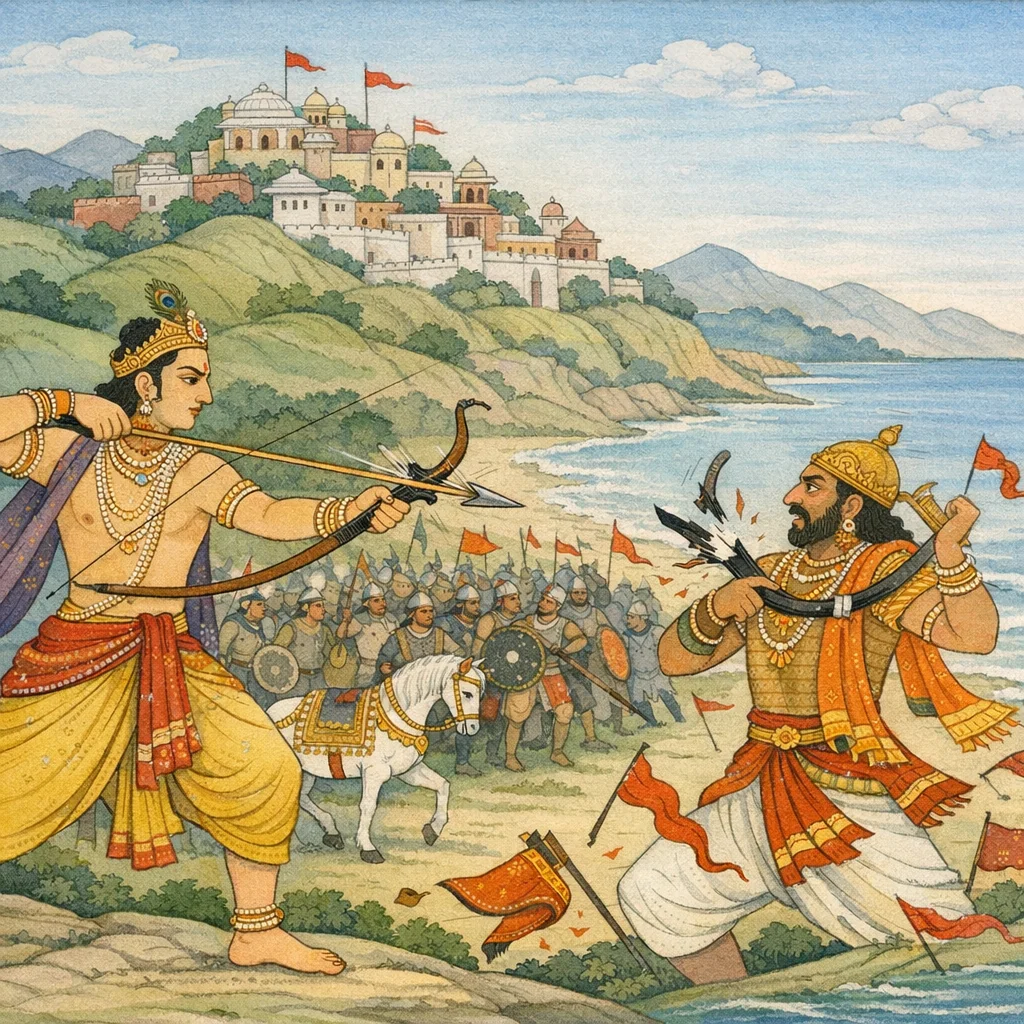
Chapter Arc: अश्वमेध का घोड़ा स्वेच्छाचारी होकर सीमाओं को लाँघता चला जाता है, और किरीटधारी अर्जुन उसके पीछे-पीछे चलते हुए दैवयोग से राजगृह (मगध) के निकट आ पहुँचते हैं। → नगर के पास अर्जुन को देखकर सहदेव का पुत्र (मगध-वीर) क्षत्रधर्म के अनुरूप चुनौती देता है—अश्व का अनुगमन रोकना ही उसके राज्य-गौरव की परीक्षा बन जाता है। रथ, ध्वज, पताका, अश्व और यंत्रों का वर्णन युद्ध-यंत्रणा को तीक्ष्ण करता है। → सव्यसाची क्रुद्ध होकर गाण्डीव खींचते हैं; शत्रु-पक्ष के अश्वों को निर्जीव कर देते हैं और सारथियों के शिर काटते हैं; फिर क्षुर से विरोधी का विशाल, विचित्र धनुष काटकर ध्वज-पताका गिरा देते हैं—मगध-वीर का प्रतिरोध निर्णायक रूप से टूट जाता है। → अर्जुन के वचन और पराक्रम से मेघसन्धि/मगध-पक्ष को सत्य का बोध होता है; वह हाथ जोड़कर अर्जुन का सम्मान करता है और अश्वमेध-घोड़े के अनुगमन में बाधा नहीं देता। → घोड़ा पुनः अपनी इच्छा से समुद्र-तट की ओर बढ़ता है—वंग, पुंड्र, कोसल आदि प्रदेशों में आगे अनेक म्लेच्छ-सेनाओं से संघर्ष का संकेत देता हुआ।
Shlokas
Verse 1
इस प्रकार श्रीमह्याभारत आश्वमेधिकपरववके अन्तर्गत अनुगीतापर्वरमें अश्चका अनुसरणविषयक इक्यासीवाँ अध्याय पूरा हुआ ॥/ ८१ ॥। ऑपन-- माल बछ। अकाल द्रयशीतितमो< ध्याय: मगधराज मेघसन्धिकी पराजय वैशम्पायन उवाच स तु वाजी समुद्रान्तां पर्येत्य वसुधामिमाम् । निवृत्तो5भिमुखो राजन् येन वारणसाह्दयम्,वैशम्पायनजी कहते हैं--राजन! इसके बाद वह घोड़ा समुद्रपर्यन्त सारी पृथ्वीकी परिक्रमा करके उस दिशाकी ओर मुँह करके लौटा, जिस ओर हस्तिनापुर था
Vaiśampāyana said: “O King, that sacrificial horse, having traversed this earth up to the ocean’s bounds, turned back and set its face toward the direction where Vāraṇasāhvaya (Hastināpura) lay.”
Verse 2
अनुगच्छंश्न॒ तुरगं निवृत्तो5थ किरीटभृत् । यदृच्छया समापेदे पुरं राजगृहं तदा,किरीटधारी अर्जुन भी घोड़ेका अनुसरण करते हुए लौट पड़े और दैवेच्छासे राजगृह नामक नगरमें आ पहुँचे
Vaiśampāyana said: Then Arjuna, the diadem-bearer, having turned back while still following the sacrificial horse, happened by providence to arrive at the city called Rājagṛha. The episode underscores how the royal rite proceeds under both human resolve and the shaping force of destiny, drawing the hero into the next moral encounter of the Aśvamedha campaign.
Verse 3
तमभ्याशगतं दृष्टवा सहदेवात्मज: प्रभो | क्षत्रधमें स्थितो वीर: समरायाजुहाव ह,प्रभो! अर्जुनको अपने नगरके निकट आया देख क्षत्रिय-धर्ममें स्थित हुए वीर सहदेवकुमार राजा मेघसन्धिने उन्हें युद्धके लिये आमन्त्रित किया
Vaiśaṃpāyana said: Seeing Arjuna come near his city, the valiant king Meghasandhi, son of Sahadeva, steadfast in the dharma of a kṣatriya, formally challenged him to battle—acting from the warrior’s code that demands meeting a rival openly in combat.
Verse 4
ततः पुरात् स निष्क्रम्प रथी धन्वी शरी तली । मेघसन्धि: पदातिं तं धनंजयमुपाद्रवत्,तत्पश्चात् स्वयं भी धनुष-बाण और दस्तानेसे सुसज्जित हो रथपर बैठकर नगरसे बाहर निकला। मेघसन्धिने पैदल आते हुए धनंजयपर धावा किया
Vaiśampāyana said: Then he went out from the city—mounted on a chariot, bearing his bow, equipped with arrows and protective gear. Meghasandhi, advancing on foot, rushed to attack Dhanañjaya. The scene underscores the warrior’s code: a challenger comes forth openly, and the encounter begins with direct, declared aggression rather than concealment.
Verse 5
आसाद्य च महातेजा मेघसन्धिर्धनंजयम् । बालभावान्महाराज प्रोवाचेद॑ न कौशलात्,महाराज! धनंजयके पास पहुँचकर महातेजस्वी मेघसन्धिने बुद्धिमानीके कारण नहीं, मूर्खतावश निम्नांकित बात कही--
Vaiśaṃpāyana said: Having approached Dhanañjaya (Arjuna), the highly radiant Meghasandhi, O King, spoke the following words—not out of prudence or skill, but out of childish folly. The narration signals that what follows is ethically and strategically misguided, setting up a contrast between true wisdom and impulsive, immature speech.
Verse 6
किमयं चार्यते वाजी स्त्रीमध्य इव भारत । हयमेनं हरिष्यामि प्रयतस्व विमोक्षणे,“भरतनन्दन! इस घोड़ेके पीछे क्यों फिर रहे हो! यह तो ऐसा जान पड़ता है, मानो स्त्रियोंके बीच चल रहा हो। मैं इसका अपहरण कर रहा हूँ। तुम इसे छुड़ानेका प्रयत्न करो
Vaiśampāyana said: “Why is this sacrificial horse being led about like this, O Bhārata—almost as if it were moving amid women? I am going to carry this horse off; strive with all your effort to free it.”
Verse 7
अदत्तानुनयो युद्धे यदि त्वं पितृभिर्मम । करिष्यामि तवातिथ्यं प्रहर प्रहहामि च,“यदि युद्धमें मेरे पिता आदि पूर्वजोंने कभी तुम्हारा स्वागत-सत्कार नहीं किया है तो आज मैं इस कमीको पूर्ण करूँगा। युद्धके मैदानमें तुम्हारा यथोचित आतिथ्य-सत्कार करूँगा। पहले मुझपर प्रहार करो, फिर मैं तुमपर प्रहार करूँगा”
Vaiśaṃpāyana said: “If, in battle, my fathers and forefathers never offered you due welcome and honor, then today I shall make good that lack. On this battlefield I will render you the fitting ‘hospitality’ owed to a guest—strike me first, and then I shall strike you in return.”
Verse 8
इत्युक्त: प्रत्युवाचैनं प्रहसन्निव पाण्डव: । विघ्नकर्ता मया वार्य इति मे व्रतमाहितम्,उसके ऐसा कहनेपर पाण्घुपुत्र अर्जुनने उसे हँसते हुए-से इस प्रकार उत्तर दिया --नरेश्वर! मेरे बड़े भाईने मेरे लिये इस व्रतकी दीक्षा दिलायी है कि जो मेरे मार्गमें विघ्न डालनेको उद्यत हो, उसे रोको। निश्चय ही यह बात तुम्हें भी विदित है। अतः तुम अपनी शक्तिके अनुसार मुझपर प्रहार करो। मेरे मनमें तुमपर कोई रोष नहीं है”
Thus addressed, the Pāṇḍava (Arjuna) replied to him, as if with a smile: “One who seeks to obstruct my course must be restrained by me—such is the vow enjoined upon me. Therefore, strike at me according to your strength; in my heart there is no anger toward you.”
Verse 9
भ्रात्रा ज्येष्देन नृपते तवापि विदितं ध्रुवम् । प्रहरस्व यथाशक्ति न मन्युर्विद्यते मम,उसके ऐसा कहनेपर पाण्घुपुत्र अर्जुनने उसे हँसते हुए-से इस प्रकार उत्तर दिया --नरेश्वर! मेरे बड़े भाईने मेरे लिये इस व्रतकी दीक्षा दिलायी है कि जो मेरे मार्गमें विघ्न डालनेको उद्यत हो, उसे रोको। निश्चय ही यह बात तुम्हें भी विदित है। अतः तुम अपनी शक्तिके अनुसार मुझपर प्रहार करो। मेरे मनमें तुमपर कोई रोष नहीं है”
Vaiśampāyana said: “O king, this is certainly known to you as well: my elder brother has bound me by a vow. Therefore, strike me according to your strength. There is no anger in me.”
Verse 10
इत्युक्त: प्राहरत् पूर्व पाण्डवं मगधेश्वर: । किरन् शरसहस्राणि वर्षाणीव सहस्रदूक्,अर्जुनके ऐसा कहनेपर मगधनरेशने पहले उनपर प्रहार किया। जैसे सहसनेत्रधारी इन्द्र जलकी वर्षा करते हैं, उसी प्रकार मेघसन्धि अर्जुनपर सहस्रों बाणोंकी झड़ी लगाने लगा
Vaiśaṃpāyana said: Thus addressed, the king of Magadha struck first at the Pāṇḍava. Showering thousands of arrows, he rained them down like the thousand-eyed Indra pouring forth the rains—an image that frames the assault as overwhelming force rather than measured restraint, testing the warrior’s steadiness and dharmic composure under sudden aggression.
Verse 11
ततो गाण्डीवभृच्छूरो गाण्डीवप्रहितै: शरै: । चकार मोघांस्तान् बाणान् सयत्नान् भरतर्षभ,भरतश्रेष्ठ। तब गाण्डीवधारी शूरवीर अर्जुनने गाण्डीव धनुषसे छोड़े गये बाणोंद्वारा मेघसन्धिके प्रयत्नपूर्वक चलाये गये उन सभी बाणोंको व्यर्थ कर दिया
Then the heroic bearer of Gāṇḍīva (Arjuna), using arrows discharged from the Gāṇḍīva bow, rendered futile all those arrows that had been launched with great effort—O bull among the Bharatas. In the narrative context, Arjuna’s disciplined mastery and righteous resolve neutralize an opponent’s force without panic, showing that true strength in battle lies in controlled skill aligned with duty rather than mere exertion.
Verse 12
स मोघं तस्य बाणौघं कृत्वा वानरकेतन: । शरान् मुमोच ज्वलितान् दीप्तास्यानिव पन्नगान्,शत्रुके बाणसमूहको निष्फल करके कपिध्वज अर्जुनने प्रज्वलित बाणका प्रहार किया। वे बाण मुखसे आग उगलनेवाले सर्पोंके समान जान पड़ते थे
Vaiśampāyana said: Having rendered his opponent’s shower of arrows futile, Arjuna—whose banner bore the emblem of Hanumān—released blazing shafts, like serpents with flaming mouths. The scene underscores the warrior’s disciplined mastery: strength is shown not by reckless fury, but by first neutralizing harm and then striking with decisive, controlled force.
Verse 13
ध्वजे पताकादण्डेषु रथे यन्त्रे हयेषु च । अन्येषु च रथाज्रेषु न शरीरे न सारथौ,उन्होंने मेघसन्धिकी ध्वजा, पताका, दण्ड, रथ, यन्त्र, अश्व तथा अन्य रथांगोंपर बाण मारे; परंतु उसके शरीर और सारथिपर प्रहार नहीं किया
Vaiśaṃpāyana said: He shot arrows at the chariot’s insignia and fittings—its banner, pennants, staff, the chariot-frame, its mechanisms, and the horses, and at other parts of the chariot as well; but he did not strike the warrior’s body, nor the charioteer. The scene highlights a deliberate restraint in combat: skill is displayed through disabling and warning rather than killing, aligning martial prowess with a measure of ethical self-control.
Verse 14
संरक्ष्यमाण: पार्थेन शरीरे सव्यसाचिना । मन्यमान: स्ववीर्य तन््मागध: प्राहिणोच्छरान्,यद्यपि सव्यसाची अर्जुनने जान-बूझकर उसके शरीरकी रक्षा की तथापि वह मगधराज इसे अपना पराक्रम समझने लगा और अर्जुनपर लगातार बाणोंका प्रहार करता रहा
Though his body was being deliberately protected by Pārtha, the ambidextrous Arjuna, the king of Magadha took it to be the result of his own prowess and kept sending a continuous shower of arrows at Arjuna. The episode highlights how pride can misread another’s restraint and compassion as weakness, thereby escalating conflict.
Verse 15
ततो गाण्डीवधन्वा तु मागधेन भूशाहतः । बभौ वसनन््तसमये पलाश: पुष्पितो यथा,मगधराजके बाणोंसे अत्यन्त घायल होकर गाण्डीवधारी अर्जुन रक्तसे नहा उठे। उस समय वे वसन्त-ऋतुमें फूले हुए पलाश-वृक्षकी भाँति सुशोभित हो रहे थे
Then Arjuna, the wielder of the Gāṇḍīva, grievously wounded by the Magadhan king, shone forth—his body drenched in blood—like a palāśa tree in the spring season when it bursts into bloom. The verse frames the warrior’s suffering not as moral collapse but as steadfast endurance amid righteous conflict, where even injury becomes a mark of unwavering resolve.
Verse 16
अवध्यमान: सो< भ्यघ्नन्मागध: पाण्डवर्ष भम् । तेन तस्थौ स कौरव्य लोकवीरस्य दर्शने,कुरुनन्दन! अर्जुन तो उसे मार नहीं रहे थे, परंतु वह उन पाण्डवशिरोमणिपर बारंबार चोट कर रहा था। इसीलिये विश्वविख्यात वीर अर्जुनकी दृष्टिमें वह तबतक ठहर सका
Vaiśampāyana said: Though Arjuna did not strike him down, the Magadhan kept repeatedly attacking that bull among the Pāṇḍavas. By this persistence he managed to remain standing before the eyes of the world-renowned hero, O best of the Kurus—so long as Arjuna refrained from killing him.
Verse 17
सव्यसाची तु संक्रुद्धों विकृष्प बलवद् धनु: । हयांश्वकार निर्जीवान् सारथेश्व शिरोडहरत्,अब सव्यसाची अर्जुनका क्रोध बढ़ गया। उन्होंने अपने धनुषको जोरसे खींचा और मेघसन्धिके घोड़ोंको प्राणहीन करके उसके सारथिका भी सिर उड़ा दिया
Vaiśampāyana said: Then Arjuna, the ambidextrous archer, inflamed with anger, drew his bow with great force. He struck down the horses, leaving them lifeless, and he also severed the charioteer’s head. The episode underscores how, in the heat of battle, wrath can drive even a righteous hero to swift and uncompromising violence—raising the ethical tension between necessary martial action and the peril of anger overwhelming restraint.
Verse 18
धनुश्नास्य महच्चित्रं क्षुरेण प्रचकर्त ह । हस्तावापं पताकां च ध्वजं चास्य न्यपातयत्,फिर उसके विशाल एवं विचित्र धनुषको क्षुरसे काट डाला और उसके दस्ताने, पताका तथा ध्वजाको भी धरतीपर काट गिराया
Vaiśampāyana said: With a razor-edged weapon he cut apart that warrior’s great and wondrous bow; and he also struck down to the ground his hand-guards, his banner, and his standard—an act that disables an opponent without needless slaughter, displaying mastery and restraint amid battle.
Verse 19
स राजा व्यथितो व्यश्वो विधनुर्हतसारथि: । गदामादाय कौन्तेयमभिदुद्राव वेगवान्,घोड़े, धनुष और सारथिके नष्ट हो जानेपर मेघसन्धिको बड़ा दुःख हुआ। वह गदा हाथमें लेकर कुन्तीनन्दन अर्जुनकी ओर बड़े वेगसे दौड़ा
Vaiśampāyana said: The king, shaken with distress—his horses scattered, his bow lost, and his charioteer slain—seized a mace and, driven by fierce momentum, charged straight at Arjuna, the son of Kuntī. The scene underscores how, in the collapse of one’s supports in war (mounts, weapons, and guidance), grief can harden into reckless aggression, testing both valor and restraint.
Verse 20
तस्यापतत एवाशु गदां हेमपरिष्कृताम् । शरैश्वकर्त बहुधा बहुभिग्गुप्रवाजितै:,उसके आते ही अर्जुनने गृध्रपंखयुक्त बहुसंख्यक बाणोंद्वारा उसकी सुवर्णभूषित गदाके शीघ्र ही अनेक टुकड़े कर डाले
Vaiśampāyana said: As soon as he rushed in, Arjuna swiftly shattered his gold-adorned mace into many pieces with numerous arrows fitted with vulture-feathers—an act showing disciplined mastery in battle, neutralizing a deadly weapon without needless delay.
Verse 21
सा गदा शकलीभूता विशीर्णमणिबन्धना । व्याली विमुच्यामानेव पपात धरणीतले,उस गदाकी मूँठ टूट गयी और उसके टुकड़े-टुकड़े हो गये। उस दशामें वह हाथसे छूटी हुई सर्पिणीके समान पृथ्वीपर गिर पड़ी
Vaiśampāyana said: That mace, shattered into fragments, its jeweled fastening broken, slipped away and fell upon the ground—like a she-serpent dropping when released. The image underscores the sudden collapse of martial power: even the proud instruments of violence are subject to breakage and loss, reminding the listener of the impermanence of force and the inevitability of decline after fury and conflict.
Verse 22
विरथ॑ं विधनुष्कं च गदया परिवर्जितम् | सान्त्वपूर्वमिदं वाक््यमब्रवीत् कपिकेतन:,जब मेघसन्धि रथ, धनुष और गदासे भी वंचित हो गया, तब कपिध्वज अर्जुनने उसे सान्त्वना देते हुए इस प्रकार कहा--
When he was left without a chariot, without a bow, and even deprived of his mace, Arjuna—whose banner bears the emblem of Hanumān—spoke to him with words of reassurance and consolation. The narrative highlights a warrior’s duty to temper victory with compassion, offering calming counsel rather than cruelty toward one who has been disarmed.
Verse 23
पर्याप्त: क्षत्रधर्मो<यं दर्शित: पुत्र गम्यताम् । बह्नेतत् समरे कर्म तव बालस्य पार्थिव,“बेटा! तुमने क्षत्रियधर्मका पूरा-पूरा प्रदर्शन कर लिया। अब अपने घर जाओ। भूपाल! तुम अभी बालक हो। इस समरांगणमें तुमने जो पराक्रम किया है, यही तुम्हारे लिये बहुत है
Vaiśampāyana said: “Enough—this duty of a kṣatriya has been fully displayed by you, my son. Now go back home. O king, you are still a child; the valor you have shown in this battlefield is more than sufficient for you.”
Verse 24
युधिष्ठटिरस्य संदेशो न हन्तव्या नूपा इति । तेन जीवसि राजंस्त्वमपराद्धो5पि मे रणे,“राजन! महाराज युधिष्ठटिरका यह आदेश है कि “तुम युद्धमें रुजाओंका वध न करना।' इसीलिये तुम मेरा अपराध करनेपर भी अबतक जीवित हो”
Vaiśampāyana said: “This is the command of Yudhiṣṭhira: ‘Kings are not to be slain.’ Therefore, O king, even though you offended me in battle, you are still alive—because I have acted in accordance with that injunction.”
Verse 25
इति मत्वा तदात्मान प्रत्यादिष्टं सम मागध: । तथ्यमित्यभिगम्यैनं प्राउजलि: प्रत्यपूजयत्,अर्जुनकी यह बात सुनकर मेघसन्धिको यह विश्वास हो गया कि अब इन्होंने मेरी जान छोड़ दी है। तब वह अर्जुनके पास गया और हाथ जोड़ उनका समादर करते हुए कहने लगा--
Understanding thus that his life had truly been spared and that he had been formally dismissed, the Magadhan approached Arjuna. With hands joined in reverence, he honored him respectfully—signaling a shift from fear and hostility to acknowledgment of righteous restraint and magnanimity.
Verse 26
पराजितो<स्मि भद्ठ ते नाहं योद्धुमिहोत्सहे । यद् यत् कृत्यं मया तेड्द्य तद् ब्रूहि कृतमेव तु,“वीरवर! आपका कल्याण हो। मैं आपसे परास्त हो गया। अब मैं युद्ध करनेका उत्साह नहीं रखता। अब आपको मुझसे जो-जो सेवा लेनी हो, वह बताइये और उसे पूर्ण की हुई ही समझिये'
Verse 27
तमर्जुन: समाश्चास्य पुनरेवेदमब्रवीत् । आगन्तव्यं परां चैत्रीमश्वमेथे नृपस्य न:,तब अर्जुनने उसे धैर्य देते हुए पुनः इस प्रकार कहा--“राजन्! तुम आगामी चैत्रमासकी पूर्णिमाको हमारे महाराजके अश्वमेधयज्ञमें अवश्य आना”
Vaiśampāyana said: Having reassured him, Arjuna again spoke these words: “You must certainly come on the coming full-moon of the month of Caitra to the Aśvamedha sacrifice of our king.” The statement underscores reconciliation and the restoration of rightful royal order through a public, dharmic rite rather than continued hostility.
Verse 28
इत्युक्त: स तथेत्युक्त्वा पूजयामास तं इयम् । फाल्गुनं च युधि श्रेष्ठ विधिवत् सहदेवज:,उनके ऐसा कहनेपर सहदेवपुत्रने 'बहुत अच्छा” कहकर उनकी आज्ञा शिरोधार्य की और उस घोड़े तथा युद्धस्थलके श्रेष्ठ वीर अर्जुनका विधिपूर्वक पूजन किया
Vaiśampāyana said: Thus addressed, he replied, “So be it,” accepted the command with due reverence, and then, in accordance with proper rites, worshipped that horse and also Phālguna (Arjuna), the foremost hero in battle. The passage underscores disciplined obedience to rightful instruction and the honoring of sacred instruments and exemplary warriors within a dharmic framework.
Verse 29
ततो यथेष्टमगमत् पुनरेव स केसरी । ततः समुद्रतीरेण वज्भान् पुण्ड्रानू सकोसलान्,तदनन्तर वह घोड़ा पुनः अपनी इच्छाके अनुसार आगे चला। वह समुद्रके किनारे- किनारे होता हुआ वड़, पुण्ड्र और कोसल आदि देशोंमें गया
Vaiśampāyana said: Then that lion-like one moved on again as he pleased. Thereafter, keeping to the seashore, he proceeded through the lands of Vaṅga and Puṇḍra, and also through Kośala and other regions—continuing the onward course of the sacrificial horse’s campaign, which tests submission to righteous sovereignty rather than mere conquest.
Verse 30
तत्र तत्र च भूरीणि म्लेच्छसैन्यान्यनेकश: । विजिग्ये धनुषा राजन् गाण्डीवेन धनंजय:,राजन! उन देशोंमें अर्जुनने केवल गाण्डीव धनुषकी सहायतासे म्लेच्छोंकी अनेक सेनाओंको परास्त किया
Vaiśaṃpāyana said: “There and there, in many regions, O King, Dhanañjaya (Arjuna) conquered numerous armies of the mlecchas—again and again—by the power of his bow, the Gāṇḍīva.” The verse underscores Arjuna’s disciplined martial prowess in the service of royal duty, presenting victory as the outcome of steadfast skill and resolve rather than mere aggression.
Verse 82
इति श्रीमहाभारते आश्वमेधिके पर्वणि अनुगीतापर्वणि अश्वानुसरणे मागधपराजये दयशीतितमो<्ध्याय:
Thus, in the Śrī Mahābhārata, within the Āśvamedhika Parva—specifically in the Anugītā sub-section—ends the eighty-second chapter, describing the pursuit of the sacrificial horse and the defeat of the Māgadhas. This is a colophon marking the close of a narrative unit, situating the episode within the larger ethical frame of royal duty (rājadharma) and the responsibilities surrounding the Aśvamedha rite.
Frequently Asked Questions
The chapter problematizes responsibility for Bhīṣma’s death: although strategically achieved, it is portrayed as not a straightforward combat kill, prompting the need for remedial śānti so that strategic necessity does not remain ethically unresolved.
Even when actions occur within a sanctioned conflict, ethically ambiguous means may require restorative measures; dharma is maintained through acknowledgement, proportionate remediation, and reintegration rather than denial or triumphalism.
There is no explicit phalaśruti formula; instead, the meta-function is etiological and normative—linking a narrative event to karmic consequence and presenting śānti as the interpretive key that prevents moral residue from persisting into the post-war order.