Adhyaya 100
नियोगप्रसङ्गः — The Niyoga Episode: Births of Dhṛtarāṣṭra, Pāṇḍu, and Vidura
Upa-parva: Sambhava Upa-Parva (Genealogical Origins and Dynastic Continuity)
Vaiśaṃpāyana narrates how Satyavatī instructs the newly-wedded queens to receive Vyāsa for niyoga at the appointed time. Ambikā, encountering Vyāsa’s ascetic appearance, closes her eyes in fear; Vyāsa prophesies that her son will be powerful and eminent yet blind due to the mother’s reaction, leading to the birth of Dhṛtarāṣṭra. Satyavatī seeks a second son for dynastic fitness; Ambālikā, frightened and turning pale, receives Vyāsa, and he declares her son will be pale (Pāṇḍu) and bear that very name. When the elder queen again fails to comply, she sends a well-adorned maid instead; the maid receives Vyāsa respectfully and without fear. Vyāsa blesses her with freedom from servitude and foretells a righteous, supremely intelligent child; Vidura is born, identified as Dharma incarnate due to a prior curse narrative (Māṇḍavya), and becomes brother to Dhṛtarāṣṭra and Pāṇḍu. The chapter closes by summarizing that these births, though through Vyāsa in Vicitravīrya’s field, become the principal continuers of the Kuru line.
Chapter Arc: शान्तनु, गङ्गा के रहस्य से व्याकुल, पूछते हैं—जिस पुत्र को तुमने दिया, उसने ऐसा कौन-सा कर्म किया कि उसे मनुष्यों में रहना पड़े? और जो वसु लोकाधीश्वर हैं, वे मानव-योनि में कैसे आए? → गङ्गा (जाह्नवी) वसुओं के पतन का कारण खोलती है—वसुओं ने वसिष्ठ के आश्रम से दिव्य कामधेनु का अपहरण किया; यह अपराध ऋषि-धर्म और तपोबल के विरुद्ध था। वसिष्ठ दिव्यदृष्टि से चोरी जान लेते हैं और क्रोध का ज्वार उठता है। → वसिष्ठ क्रोधावेश में वसुओं को शाप देते हैं—देवत्व से गिरकर मनुष्यलोक में जन्म लेना पड़ेगा; शाप का विधान अटल हो जाता है और वसु प्रसाद पाने में असफल रहते हैं। → शाप-बंधन के भीतर भी एक मार्ग निकलता है—वसु द्युनाम (महाभाग) शान्तनु के पुत्र रूप में जन्म लेते हैं; बालक का नाम देवव्रत (गाङ्गेय) पड़ता है। शान्तनु शोकाकुल होकर नगर लौटते हैं, और वंश-इतिहास की धारा आगे बढ़ती है। → देवव्रत के असाधारण गुणों का संकेत देकर कथा आगे के लिए छोड़ दी जाती है—यह बालक आगे चलकर वंश-धर्म को किस मूल्य पर थामेगा?
Shlokas
Verse 1
(दाक्षिणात्य अधिक पाठके ४ ३ श्लोक मिलाकर कुल २८३ लोक हैं) नवनवतितमो< ध्याय: महर्षि वसिष्ठद्वारा वसुओंको शाप प्राप्त होनेकी कथा शान्तनुरुवाच आपतवो नाम को न्वेष वसूनां कि च दुष्कृतम् । यस्याभिशापात् ते सर्वे मानुषी योनिमागता:,शान्तनुने पूछा--देवि! ये आपव नामके महात्मा कौन हैं? और वसुओंका क्या अपराध था, जिससे आपवके शापसे उन सबको मनुष्य-योनिमें आना पड़ा
Śāntanu asked: “Goddess, who is this great sage named Āpava? And what wrongdoing did the Vasus commit, such that, because of his curse, all of them were forced to enter the wombs of human birth?” The question frames the moral logic of the episode: even exalted beings are bound by accountability, and a sage’s curse functions as a consequence that restores ethical order.
Verse 2
अनेन च कुमारेण त्वया दत्तेन कि कृतम् । यस्य चैव कृतेनायं मानुषेषु निवत्स्यति,और तुम्हारे दिये हुए इस पुत्रने कौन-सा कर्म किया है, जिसके कारण यह मनुष्यलोकमें निवास करेगा
Vaiśampāyana said: “What deed has been done by this boy—given by you—because of which he will dwell among human beings?”
Verse 3
ईशा वै सर्वलोकस्य वसवस्ते च वै कथम् | मानुषेषूदपद्यन्त तन््ममाचक्ष्व जाहल्नवि,जाह्नवि! वसु तो समस्त लोकोंके अधीश्वर हैं, वे कैसे मनुष्यलोकमें उत्पन्न हुए? यह सब बात मुझे बताओ
Vaiśampāyana said: “The Vasus are indeed lords of all the worlds. How, then, did they come to be born among human beings? Tell me this fully, O Jāhnavī—O descendant of Jahnu (Gāṅgā).”
Verse 4
वैशम्पायन उवाच एवमुक्ता तदा गड़ा राजानमिदमतब्रवीत् | भर्तरें जाह्नवी देवी शान्तनुं पुरुषर्षभ,वैशम्पायनजी कहते हैं--नरश्रेष्ठ जनमेजय! अपने पति राजा शान्तनुके इस प्रकार पूछनेपर जह्लुपुत्री गंगादेवीने उनसे इस प्रकार कहा
Vaiśampāyana said: Thus addressed at that time, the goddess Gaṅgā—known as Jāhnavī—spoke these words to her husband, King Śāntanu, O best of men. The narrative turns to Gaṅgā’s reply, framed within marital duty and the king’s rightful questioning, setting the ethical tone for what she is about to disclose.
Verse 5
गजड़ोवाच यं लेभे वरुण: पुत्र पुरा भरतसत्तम । वसिष्ठनामा स मुनि: ख्यात आपव इत्युत,गंगा बोलीं--भरतश्रेष्ठ! पूर्वकालमें वरुणने जिन्हें पुत्ररूपमें प्राप्त किया था, वे वसिष्ठ नामक मुनि ही “आपव'” नामसे विख्यात हैं
Vaiśampāyana said: “O best of the Bharatas, the sage whom Varuṇa long ago obtained as a son is the muni named Vasiṣṭha; he is also renowned by the epithet ‘Āpava.’” The passage situates Vasiṣṭha’s authority in a sacred lineage, implying that spiritual stature is grounded in divine association and recognized tradition.
Verse 6
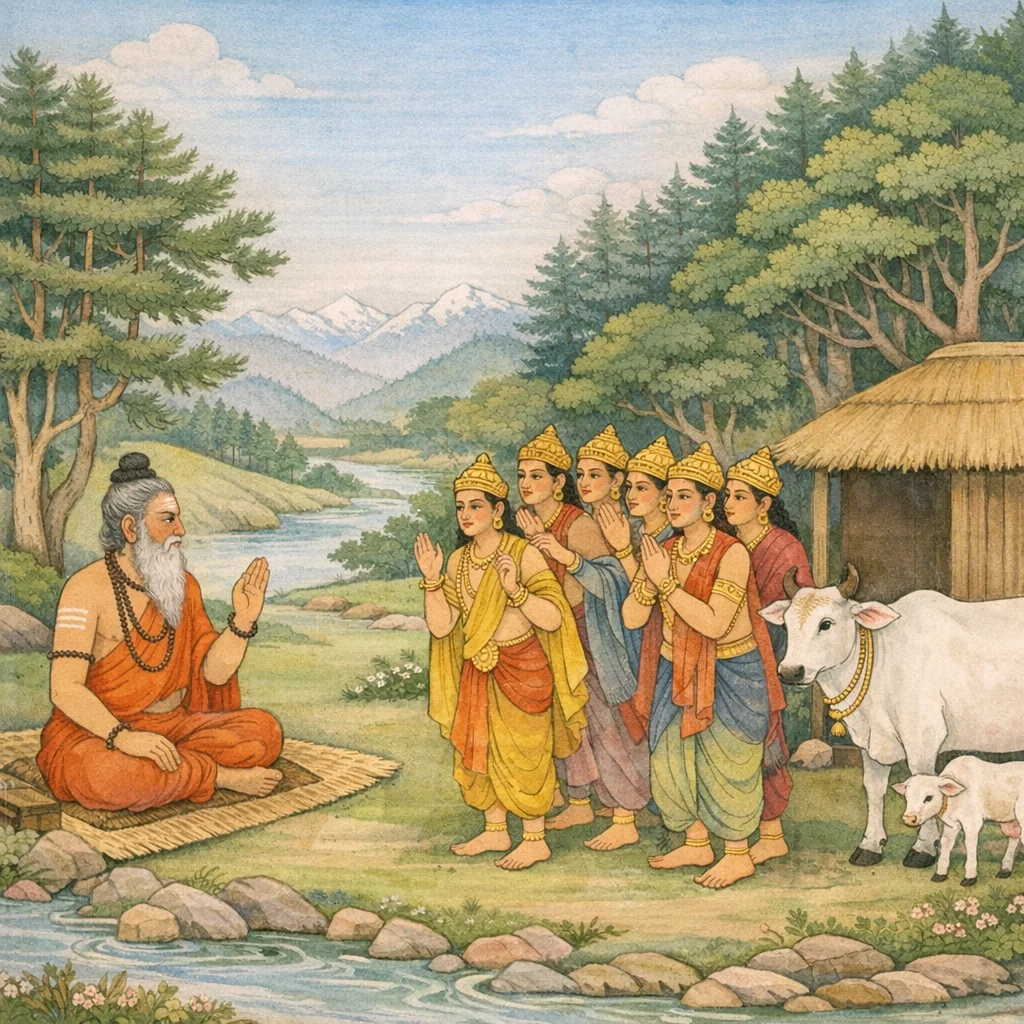
तस्याश्रमपदं पुण्यं मृगपक्षिसमन्वितम् । मेरो: पाश्वे नगेन्द्रस्य सर्वर्तुकुसुमावृतम्,गिरिराज मेरुके पार्श्वभागमें उनका पवित्र आश्रम है; जो मृग और पक्षियोंसे भरा रहता है। सभी ऋतुओंमें विकसित होनेवाले फ़ूल उस आश्रमकी शोभा बढ़ाते हैं
Vaiśampāyana said: Near Meru, the king of mountains, lay his sacred hermitage-site—alive with deer and birds, and adorned with flowers that bloom in every season. The scene frames the āśrama as a moral landscape: a place where harmony with living beings and the steady rhythm of nature support tapas, restraint, and dharma.
Verse 7
स वारुणिस्तपस्तेपे तस्मिन् भरतसत्तम | वने पुण्यकृतां श्रेष्ठ: स्वादुमूलफलोदके,भरतवंशशिरोमणे! उस वनमें स्वादिष्ट फल, मूल और जलकी सुविधा थी, पुण्यवानोंमें श्रेष्ठ वरुणनन्दन महर्षि वसिष्ठ उसीमें तपस्या करते थे
Vaiśampāyana said: O best of the Bharatas, there in that forest—rich in sweet roots, fruits, and water—Vāruṇi, foremost among the meritorious, practiced austerities. The setting underscores an ethical ideal: true spiritual effort is sustained by simplicity and purity of place, not by luxury, and the righteous seek seclusion where life’s basic needs are met without harm.
Verse 8
दक्षस्य दुहिता या तु सुरभीत्यभिशब्दिता | गां प्रजाता तु सा देवी कश्यपाद् भरतर्षभ,महाराज! दक्ष प्रजापतिकी पुत्रीने, जो देवी सुरभि नामसे विख्यात है, कश्यपजीके सहवाससे एक गौको जन्म दिया
Vaiśampāyana said: Dakṣa’s daughter, renowned by the name Surabhī, bore a cow through her union with Kaśyapa, O bull among the Bharatas. The narration situates Surabhī within the sacred genealogy of beings, presenting procreation as an ordered, dharmic process that sustains the world through established lineages.
Verse 9
अनुग्रहार्थ जगत: सर्वकामदुहां वरा । तां लेभे गां तु धर्मात्मा होमधेनुं स वारुणि:,वह गौ सम्पूर्ण जगतपर अनुग्रह करनेके लिये प्रकट हुई थी तथा समस्त कामनाओंको देनेवालोंमें श्रेष्ठ थी। वरुणपुत्र धर्मात्मा वसिष्ठने उस गौको अपनी होमधेनुके रूपमें प्राप्त किया
Verse 10
सा तस्मिंस्तापसारण्ये वसन्ती मुनिसेविते । चचार पुण्ये रम्ये च गौरपेतभया तदा,वह गौ मुनियोंद्वारा सेवित उस पवित्र एवं रमणीय तापसवनमें रहती हुई सब ओर निर्भय होकर चरती थी
Vaiśampāyana said: Living in that ascetics’ forest, frequented and protected by sages, the cow then wandered about in a holy and delightful woodland, free from fear. The scene underscores the ethical ideal that a righteous hermitage is a refuge where the vulnerable are safe under the guardianship of the disciplined and compassionate.
Verse 11
अथ तद् वनमाजग्मु: कदाचिद् भरतर्षभ । पृथ्वाद्या वसव: सर्वे देवा देवर्षिसेवितम्,भरतश्रेष्ठी) एक दिन उस देवर्षिसेवित वनमें पृथु आदि वसु तथा सम्पूर्ण देवता पधारे
Vaiśampāyana said: “O bull among the Bharatas, once upon a time all the gods—together with the Vasus beginning with Pṛthu—came to that forest, a place frequented and honored by divine seers.”
Verse 12
ते सदारा वनं तच्च व्यचरन्त समन्तत:ः । रेमिरे रमणीयेषु पर्वतेषु वनेषु च,वे अपनी स्त्रियोंक साथ उस वनमें चारों ओर विचरने तथा रमणीय पर्वतों और वनोंमें रमण करने लगे
Vaiśampāyana said: Accompanied by their wives, they wandered all around that forest, taking delight in its lovely mountains and woodland retreats. The passage underscores a phase of peaceful enjoyment and companionship, set apart from conflict, where life is lived in harmony with nature and social propriety.
Verse 13
तत्रैकस्थाथ भार्या तु वसोर्वासवविक्रम । संचरन्ती वने तस्मिन् गां ददर्श सुमध्यमा,इन्द्रके समान पराक्रमी महीपाल! उन वसुओंमेंसे एककी सुन्दरी पत्नीने उस वनमें घूमते समय उस गौको देखा
Vaiśampāyana said: There, the beautiful, slender-waisted wife of one of the Vasus—O king whose prowess is like Indra’s—while wandering in that forest, caught sight of a cow. This sight becomes the immediate occasion for a choice that will carry moral consequences, showing how desire and impulse can set in motion events that bind even the exalted to the results of action.
Verse 14
नन्दिनीं नाम राजेन्द्र सर्वकामधुगुत्तमाम् । सा विस्मयसमाविष्टा शीलद्रविणसम्पदा,राजेन्द्र! सम्पूर्ण कामनाओंको देनेवालोंमें उत्तम नन्दिनी नामवाली उस गायको देखकर उसकी शीलसम्पत्तिसे वह वसुपत्नी आश्वर्यचकित हो उठी
Vaiśampāyana said: “O king, (she beheld) the cow named Nandinī—foremost among those that yield every desired boon. Seeing her, that lady, endowed with noble conduct and prosperity, was struck with wonder.”
Verse 15
द्यवे वै दर्शयामास तां गां गोवृषभेक्षण । आपीनां च सुदोग्ध्रीं च सुवालधिखुरां शुभाम्,वृषभके समान विशाल नेत्रोंवाले महाराज! उस देवीने द्यो नामक वसुको वह शुभ गाय दिखायी, जो भलीभाँति हृष्ट-पुष्ट थी। दूधसे भरे हुए उसके थन बड़े सुन्दर थे, पूँछ और खुर भी बहुत अच्छे थे। वह सुन्दर गाय सभी सदगुणोंसे सम्पन्न और सर्वोत्तम शील-स्वभावसे युक्त थी। पूरवंशका आनन्द बढ़ानेवाली सम्राट! इस प्रकार पूर्वकालमें वसुका आनन्द बढ़ानेवाली देवीने अपने पति वसुको ऐसे सदगुणोंवाली गौका दर्शन कराया। गजराजके समान पराक्रमी महाराज! द्योने उस गायको देखते ही उसके रूप और गुणोंका वर्णन करते हुए अपनी पत्नीसे कहा--'यह कजरारे नेत्रोंवाली उत्तम गौ दिव्य है। वरारोहे! यह उन वरुणनन्दन महर्षि वसिष्ठकी गाय है, जिनका यह उत्तम तपोवन है। सुमध्यमे! जो मनुष्य इसका स्वादिष्ट दूध पी लेगा, वह दस हजार वर्षोतक जीवित रहेगा और उतने समयतक उसकी युवावस्था स्थिर रहेगी।' नृपश्रेष्ठ! सुन्दर कटि-प्रदेश और निर्दोष अंगोंवाली वह देवी यह बात सुनकर अपने तेजस्वी पतिसे बोली--'प्राणनाथ! मनुष्यलोकमें एक राजकुमारी मेरी सखी है”
Vaiśampāyana said: O king with the gaze of a bull among cows, the goddess showed that cow to Dyu (one of the Vasus). She was well-fed and flourishing, an excellent milker, auspicious, and possessed of a fine tail and hooves. The passage underscores how outward beauty here signifies inner excellence and merit: the cow is presented as a bearer of extraordinary value, inviting reflection on restraint and right conduct in the face of temptation.
Verse 16
उपपन्नां गुणै: सर्वे: शीलेनानुत्तमेन च । एवंगुणसमायुक्तां वसवे वसुनन्दिनी,वृषभके समान विशाल नेत्रोंवाले महाराज! उस देवीने द्यो नामक वसुको वह शुभ गाय दिखायी, जो भलीभाँति हृष्ट-पुष्ट थी। दूधसे भरे हुए उसके थन बड़े सुन्दर थे, पूँछ और खुर भी बहुत अच्छे थे। वह सुन्दर गाय सभी सदगुणोंसे सम्पन्न और सर्वोत्तम शील-स्वभावसे युक्त थी। पूरवंशका आनन्द बढ़ानेवाली सम्राट! इस प्रकार पूर्वकालमें वसुका आनन्द बढ़ानेवाली देवीने अपने पति वसुको ऐसे सदगुणोंवाली गौका दर्शन कराया। गजराजके समान पराक्रमी महाराज! द्योने उस गायको देखते ही उसके रूप और गुणोंका वर्णन करते हुए अपनी पत्नीसे कहा--'यह कजरारे नेत्रोंवाली उत्तम गौ दिव्य है। वरारोहे! यह उन वरुणनन्दन महर्षि वसिष्ठकी गाय है, जिनका यह उत्तम तपोवन है। सुमध्यमे! जो मनुष्य इसका स्वादिष्ट दूध पी लेगा, वह दस हजार वर्षोतक जीवित रहेगा और उतने समयतक उसकी युवावस्था स्थिर रहेगी।' नृपश्रेष्ठ! सुन्दर कटि-प्रदेश और निर्दोष अंगोंवाली वह देवी यह बात सुनकर अपने तेजस्वी पतिसे बोली--'प्राणनाथ! मनुष्यलोकमें एक राजकुमारी मेरी सखी है”
Vaiśampāyana said: Endowed with every virtue and possessed of unsurpassed conduct and character, that cow—so richly furnished with such qualities—was shown by the goddess to the Vasu, as one that would delight the Vasus. The passage emphasizes excellence of nature (śīla) alongside outward beauty, suggesting that true worth is measured by inner virtue as much as by desirable attributes.
Verse 17
दर्शयामास राजेन्द्र पुरा पौरवनन्दन । द्यौस्तदा तां तु दृष्टवैव गां गजेन्द्रेन्द्रविक्रम,वृषभके समान विशाल नेत्रोंवाले महाराज! उस देवीने द्यो नामक वसुको वह शुभ गाय दिखायी, जो भलीभाँति हृष्ट-पुष्ट थी। दूधसे भरे हुए उसके थन बड़े सुन्दर थे, पूँछ और खुर भी बहुत अच्छे थे। वह सुन्दर गाय सभी सदगुणोंसे सम्पन्न और सर्वोत्तम शील-स्वभावसे युक्त थी। पूरवंशका आनन्द बढ़ानेवाली सम्राट! इस प्रकार पूर्वकालमें वसुका आनन्द बढ़ानेवाली देवीने अपने पति वसुको ऐसे सदगुणोंवाली गौका दर्शन कराया। गजराजके समान पराक्रमी महाराज! द्योने उस गायको देखते ही उसके रूप और गुणोंका वर्णन करते हुए अपनी पत्नीसे कहा--'यह कजरारे नेत्रोंवाली उत्तम गौ दिव्य है। वरारोहे! यह उन वरुणनन्दन महर्षि वसिष्ठकी गाय है, जिनका यह उत्तम तपोवन है। सुमध्यमे! जो मनुष्य इसका स्वादिष्ट दूध पी लेगा, वह दस हजार वर्षोतक जीवित रहेगा और उतने समयतक उसकी युवावस्था स्थिर रहेगी।' नृपश्रेष्ठ! सुन्दर कटि-प्रदेश और निर्दोष अंगोंवाली वह देवी यह बात सुनकर अपने तेजस्वी पतिसे बोली--'प्राणनाथ! मनुष्यलोकमें एक राजकुमारी मेरी सखी है”
Vaiśampāyana said: O king, delight of the Puru line, in former times the goddess showed to her husband Dyau a splendid cow. O bull-like monarch, mighty as the lord of elephants, the moment Dyau beheld that broad-eyed cow—well-nourished and auspicious—he was struck by her excellence. Her udders were full of milk and beautiful; her tail and hooves were also fine. Endowed with every good quality and possessed of the best disposition, she appeared as a divine treasure. Thus, O emperor who increases the joy of the Puru race, the goddess revealed to the Vasu Dyau a cow of such virtues—an episode that frames desire for extraordinary gain against the ethical boundaries of rightful possession.
Verse 18
उवाच राजंस्तां देवीं तस्या रूपगुणान् वदन् | एषा गौरुत्तमा देवी वारुणेरसितेक्षणा,वृषभके समान विशाल नेत्रोंवाले महाराज! उस देवीने द्यो नामक वसुको वह शुभ गाय दिखायी, जो भलीभाँति हृष्ट-पुष्ट थी। दूधसे भरे हुए उसके थन बड़े सुन्दर थे, पूँछ और खुर भी बहुत अच्छे थे। वह सुन्दर गाय सभी सदगुणोंसे सम्पन्न और सर्वोत्तम शील-स्वभावसे युक्त थी। पूरवंशका आनन्द बढ़ानेवाली सम्राट! इस प्रकार पूर्वकालमें वसुका आनन्द बढ़ानेवाली देवीने अपने पति वसुको ऐसे सदगुणोंवाली गौका दर्शन कराया। गजराजके समान पराक्रमी महाराज! द्योने उस गायको देखते ही उसके रूप और गुणोंका वर्णन करते हुए अपनी पत्नीसे कहा--'यह कजरारे नेत्रोंवाली उत्तम गौ दिव्य है। वरारोहे! यह उन वरुणनन्दन महर्षि वसिष्ठकी गाय है, जिनका यह उत्तम तपोवन है। सुमध्यमे! जो मनुष्य इसका स्वादिष्ट दूध पी लेगा, वह दस हजार वर्षोतक जीवित रहेगा और उतने समयतक उसकी युवावस्था स्थिर रहेगी।' नृपश्रेष्ठ! सुन्दर कटि-प्रदेश और निर्दोष अंगोंवाली वह देवी यह बात सुनकर अपने तेजस्वी पतिसे बोली--'प्राणनाथ! मनुष्यलोकमें एक राजकुमारी मेरी सखी है”
Vaiśampāyana said: O King, describing her beauty and virtues, he spoke to that divine lady: “This is an excellent cow, O goddess—dark-eyed one, born of Varuṇa.” The passage situates the cow not merely as an object of desire but as a sacred, merit-bearing being whose possession and use carry ethical consequences, foreshadowing the moral tension between reverence for holy property and the temptation to appropriate it for personal gain.
Verse 19
ऋषेस्तस्य वरारोहे यस्येदं वनमुत्तमम् | अस्या: क्षीरं पिबेन्मर्त्य: स्वादु यो वै सुमध्यमे,वृषभके समान विशाल नेत्रोंवाले महाराज! उस देवीने द्यो नामक वसुको वह शुभ गाय दिखायी, जो भलीभाँति हृष्ट-पुष्ट थी। दूधसे भरे हुए उसके थन बड़े सुन्दर थे, पूँछ और खुर भी बहुत अच्छे थे। वह सुन्दर गाय सभी सदगुणोंसे सम्पन्न और सर्वोत्तम शील-स्वभावसे युक्त थी। पूरवंशका आनन्द बढ़ानेवाली सम्राट! इस प्रकार पूर्वकालमें वसुका आनन्द बढ़ानेवाली देवीने अपने पति वसुको ऐसे सदगुणोंवाली गौका दर्शन कराया। गजराजके समान पराक्रमी महाराज! द्योने उस गायको देखते ही उसके रूप और गुणोंका वर्णन करते हुए अपनी पत्नीसे कहा--'यह कजरारे नेत्रोंवाली उत्तम गौ दिव्य है। वरारोहे! यह उन वरुणनन्दन महर्षि वसिष्ठकी गाय है, जिनका यह उत्तम तपोवन है। सुमध्यमे! जो मनुष्य इसका स्वादिष्ट दूध पी लेगा, वह दस हजार वर्षोतक जीवित रहेगा और उतने समयतक उसकी युवावस्था स्थिर रहेगी।' नृपश्रेष्ठ! सुन्दर कटि-प्रदेश और निर्दोष अंगोंवाली वह देवी यह बात सुनकर अपने तेजस्वी पतिसे बोली--'प्राणनाथ! मनुष्यलोकमें एक राजकुमारी मेरी सखी है”
Vaiśampāyana said: “O fair-hipped lady, this excellent forest belongs to that sage. O slender-waisted one, any mortal who drinks the sweet milk of this cow will live for ten thousand years, and his youth will remain steady for that entire span.”
Verse 20
दशवर्षसहस््त्राणि स जीवेत् स्थिरयौवन: । एतच्छुत्वा तु सा देवी नृपोत्तम सुमध्यमा,वृषभके समान विशाल नेत्रोंवाले महाराज! उस देवीने द्यो नामक वसुको वह शुभ गाय दिखायी, जो भलीभाँति हृष्ट-पुष्ट थी। दूधसे भरे हुए उसके थन बड़े सुन्दर थे, पूँछ और खुर भी बहुत अच्छे थे। वह सुन्दर गाय सभी सदगुणोंसे सम्पन्न और सर्वोत्तम शील-स्वभावसे युक्त थी। पूरवंशका आनन्द बढ़ानेवाली सम्राट! इस प्रकार पूर्वकालमें वसुका आनन्द बढ़ानेवाली देवीने अपने पति वसुको ऐसे सदगुणोंवाली गौका दर्शन कराया। गजराजके समान पराक्रमी महाराज! द्योने उस गायको देखते ही उसके रूप और गुणोंका वर्णन करते हुए अपनी पत्नीसे कहा--'यह कजरारे नेत्रोंवाली उत्तम गौ दिव्य है। वरारोहे! यह उन वरुणनन्दन महर्षि वसिष्ठकी गाय है, जिनका यह उत्तम तपोवन है। सुमध्यमे! जो मनुष्य इसका स्वादिष्ट दूध पी लेगा, वह दस हजार वर्षोतक जीवित रहेगा और उतने समयतक उसकी युवावस्था स्थिर रहेगी।' नृपश्रेष्ठ! सुन्दर कटि-प्रदेश और निर्दोष अंगोंवाली वह देवी यह बात सुनकर अपने तेजस्वी पतिसे बोली--'प्राणनाथ! मनुष्यलोकमें एक राजकुमारी मेरी सखी है”
He would live for ten thousand years, with youth remaining steady and unwaning. Hearing this, that divine lady—slender-waisted—(responded), O best of kings. In context, the statement highlights the extraordinary boon attributed to Vasiṣṭha’s cow: whoever drinks her milk gains immense longevity and sustained vigor, a temptation that tests restraint and right conduct (dharma) when confronted with coveted, sacred property.
Verse 21
तमुवाचानवद्याड्री भर्तारं दीप्ततेजसम् | अस्ति मे मानुषे लोके नरदेवात्मजा सखी,वृषभके समान विशाल नेत्रोंवाले महाराज! उस देवीने द्यो नामक वसुको वह शुभ गाय दिखायी, जो भलीभाँति हृष्ट-पुष्ट थी। दूधसे भरे हुए उसके थन बड़े सुन्दर थे, पूँछ और खुर भी बहुत अच्छे थे। वह सुन्दर गाय सभी सदगुणोंसे सम्पन्न और सर्वोत्तम शील-स्वभावसे युक्त थी। पूरवंशका आनन्द बढ़ानेवाली सम्राट! इस प्रकार पूर्वकालमें वसुका आनन्द बढ़ानेवाली देवीने अपने पति वसुको ऐसे सदगुणोंवाली गौका दर्शन कराया। गजराजके समान पराक्रमी महाराज! द्योने उस गायको देखते ही उसके रूप और गुणोंका वर्णन करते हुए अपनी पत्नीसे कहा--'यह कजरारे नेत्रोंवाली उत्तम गौ दिव्य है। वरारोहे! यह उन वरुणनन्दन महर्षि वसिष्ठकी गाय है, जिनका यह उत्तम तपोवन है। सुमध्यमे! जो मनुष्य इसका स्वादिष्ट दूध पी लेगा, वह दस हजार वर्षोतक जीवित रहेगा और उतने समयतक उसकी युवावस्था स्थिर रहेगी।' नृपश्रेष्ठ! सुन्दर कटि-प्रदेश और निर्दोष अंगोंवाली वह देवी यह बात सुनकर अपने तेजस्वी पतिसे बोली--'प्राणनाथ! मनुष्यलोकमें एक राजकुमारी मेरी सखी है”
Vaiśampāyana said: Then the blameless lady spoke to her radiant husband: “In the world of humans, I have a friend who is the daughter of a king.” (The verse introduces her appeal, setting up a morally charged request that will test restraint, loyalty, and the consequences of desire.)
Verse 22
नाम्ना जितवती नाम रूपयौवनशालिनी । उशीनरस्य राजर्षे: सत्यसंधस्य धीमत:,“उसका नाम है जितवती। वह सुन्दर रूप और युवावस्थासे सुशोभित है। सत्यप्रतिज्ञ बुद्धिमान् राजर्षि उशीनरकी पुत्री है। रूपसम्पत्तिकी दृष्टिसे मनुष्यलोकमें उसकी बड़ी ख्याति है। महाभाग! उसीके लिये बछड़ेसहित यह गाय लेनेकी मेरी बड़ी इच्छा है
Vaiśampāyana said: “Her name is Jitavatī—radiant with beauty and the bloom of youth. She is the daughter of the royal sage Uśīnara, a wise man steadfast in truth. For her sake, renowned among mortals for her loveliness, I greatly desire to take this cow along with her calf.”
Verse 23
दुहिता प्रथिता लोके मानुषे रूपसम्पदा । तस्या हेतोर्महाभाग सवत्सां गां ममेप्सिताम्,“उसका नाम है जितवती। वह सुन्दर रूप और युवावस्थासे सुशोभित है। सत्यप्रतिज्ञ बुद्धिमान् राजर्षि उशीनरकी पुत्री है। रूपसम्पत्तिकी दृष्टिसे मनुष्यलोकमें उसकी बड़ी ख्याति है। महाभाग! उसीके लिये बछड़ेसहित यह गाय लेनेकी मेरी बड़ी इच्छा है
Vaiśampāyana said: “There is a daughter renowned among men for the excellence of her beauty. For her sake, O noble one, I desire to obtain from you a cow together with her calf.”
Verse 24
आनयस्वामरश्रेष्ठ त्वरितं पुण्यवर्धन । यावदस्या: पय: पीत्वा सा सखी मम मानद,'सुरश्रेष्ठ आप पुण्यकी वृद्धि करनेवाले हैं। इस गायको शीघ्र ले आइये। मानद! जिससे इसका दूध पीकर मेरी वह सखी मनुष्यलोकमें अकेली ही जरावस्था एवं रोग- व्याधिसे बची रहे। महाभाग! आप निन्दारहित हैं; मेरे इस मनोरथको पूर्ण कीजिये
Vaiśampāyana said: “O best among the immortals, O increaser of merit, bring her quickly. O giver of honor, let my friend drink this cow’s milk, so that she may remain in the human world—alone—protected from old age and disease. O noble one, you are beyond reproach; fulfill this wish of mine.”
Verse 25
मानुषेषु भवत्वेका जरारोगविवर्जिता । एतन्मम महाभाग कर्तुमर्हस्यनिन्दित,'सुरश्रेष्ठ आप पुण्यकी वृद्धि करनेवाले हैं। इस गायको शीघ्र ले आइये। मानद! जिससे इसका दूध पीकर मेरी वह सखी मनुष्यलोकमें अकेली ही जरावस्था एवं रोग- व्याधिसे बची रहे। महाभाग! आप निन्दारहित हैं; मेरे इस मनोरथको पूर्ण कीजिये
Vaiśampāyana said: “Let her, among human beings, be the only one free from old age and disease. O noble one, blameless as you are, you ought to accomplish this wish of mine.”
Verse 26
प्रियं प्रियतरं हास्मान्नास्ति मेडन्यत् कथंचन । एतच्छुत्वा वचस्तस्या देव्या: प्रियचिकीर्षया,“मेरे लिये किसी तरह भी इससे बढ़कर प्रिय अथवा प्रियतर वस्तु दूसरी नहीं है।' उस देवीका यह वचन सुनकर उसका प्रिय करनेकी इच्छासे द्यो नामक वसुने पृथु आदि अपने भाइयोंकी सहायतासे उस गौका अपहरण कर लिया। राजन! कमलदलके समान विशाल नेत्रोंवाली पत्नीसे प्रेरित होकर द्योने गौका अपहरण तो कर लिया; परंतु उस समय उन महर्षि वसिष्ठकी तीव्र तपस्याके प्रभावकी ओर वे दृष्टिपात नहीं कर सके और न यही सोच सके कि ऋषिके कोपसे मेरा स्वर्गसे पतन हो जायगा
Vaiśampāyana said: “For me there is nothing at all dearer or more beloved than this.” Hearing these words of the goddess and wishing to please her, the Vasu named Dyau, with the help of his brothers such as Pṛthu, carried off that cow. O King, urged on by his lotus-petaled, large-eyed wife, Dyau did indeed seize the cow; but at that moment he failed to reckon with the force of the great sage Vasiṣṭha’s fierce austerity, nor did he consider that the sage’s wrath could cause his fall from heaven. The passage highlights how desire to gratify a loved one, when it overrides reverence for dharma and the sanctity of a sage’s property, leads to grave consequences.
Verse 27
पृथ्वद्यैर्भातृभि: सार्थ द्यौस्तदा तां जहार गाम् तया कमलतपत्राक्ष्या नियुक्तो द्यौस्तदा नृप,“मेरे लिये किसी तरह भी इससे बढ़कर प्रिय अथवा प्रियतर वस्तु दूसरी नहीं है।' उस देवीका यह वचन सुनकर उसका प्रिय करनेकी इच्छासे द्यो नामक वसुने पृथु आदि अपने भाइयोंकी सहायतासे उस गौका अपहरण कर लिया। राजन! कमलदलके समान विशाल नेत्रोंवाली पत्नीसे प्रेरित होकर द्योने गौका अपहरण तो कर लिया; परंतु उस समय उन महर्षि वसिष्ठकी तीव्र तपस्याके प्रभावकी ओर वे दृष्टिपात नहीं कर सके और न यही सोच सके कि ऋषिके कोपसे मेरा स्वर्गसे पतन हो जायगा
Vaiśampāyana said: O king, urged on by his lotus-petaled-eyed wife, the Vasu named Dyaus, together with his brothers such as Pṛthu, abducted that cow. In his eagerness to please her, he failed to consider the blazing power of the sage Vasiṣṭha’s austerity, nor did he foresee that the sage’s wrath could cause his fall from heaven. The episode frames an ethical warning: desire-driven wrongdoing, especially against a sage’s rightful possession, brings inevitable consequence despite divine status.
Verse 28
ऋषेस्तस्य तपस्तीव्रं न शशाक निरीक्षितुम् ह्ृता गौ: सा सदा तेन प्रपातस्तु न तर्कित:,“मेरे लिये किसी तरह भी इससे बढ़कर प्रिय अथवा प्रियतर वस्तु दूसरी नहीं है।' उस देवीका यह वचन सुनकर उसका प्रिय करनेकी इच्छासे द्यो नामक वसुने पृथु आदि अपने भाइयोंकी सहायतासे उस गौका अपहरण कर लिया। राजन! कमलदलके समान विशाल नेत्रोंवाली पत्नीसे प्रेरित होकर द्योने गौका अपहरण तो कर लिया; परंतु उस समय उन महर्षि वसिष्ठकी तीव्र तपस्याके प्रभावकी ओर वे दृष्टिपात नहीं कर सके और न यही सोच सके कि ऋषिके कोपसे मेरा स्वर्गसे पतन हो जायगा
Vaiśampāyana said: They were unable to perceive the formidable power of that sage’s intense austerity. Having carried off that cow—so dear to him—they did not reflect that such an act would bring about their own downfall. In ethical terms, the passage underscores how desire to please and attachment can blind even celestial beings to the consequences of violating a holy man’s rightful possession and the moral order guarded by tapas.
Verse 29
अथाश्रमपदं प्राप्त: फलान्यादाय वारुणि: । न चापश्यत् स गां तत्र सवत्सां काननोत्तमे,कुछ समयके बाद वरुणनन्दन वसिष्ठजी फल-मूल लेकर आश्रमपर आये; परंतु उस सुन्दर काननमें उन्हें बछड़ेसहित अपनी गाय नहीं दिखायी दी
Vaiśampāyana said: After some time, Vāruṇi (the son of Varuṇa) returned to the hermitage, carrying fruits. But in that most beautiful forest-grove he did not see his cow there—nor her calf. The moment quietly signals a breach of expected order: what is entrusted to one’s care has gone missing, calling for vigilance, responsibility, and a search for the cause.
Verse 30
ततः स मृगयामास वने तस्मिंस्तपोधन: । नाध्यगच्छच्च मृगयंस्तां गां मुनिरुदारधी:,तब तपोधन वसिष्ठजी उस वनमें गायकी खोज करने लगे; परंतु खोजनेपर भी वे उदारबुद्धि महर्षि उस गायको न पा सके
Then that ascetic, rich in austerity, began to search in that forest. Yet, though he kept looking, the sage of noble understanding could not find that cow. The passage underscores the restraint and perseverance expected of a holy man: even when a valued possession is lost, one is to act with steadiness rather than haste or anger.
Verse 31
ज्ञात्वा तथापनीतां तां वसुभिर्दिव्यदर्शन: । ययौ क्रोधवशं सद्यः शशाप च वसूंस्तदा,तब उन्होंने दिव्य दृष्टिसे देखा और यह जान गये कि वसुओंने उसका अपहरण किया है। फिर तो वे क्रोधके वशीभूत हो गये और तत्काल वसुओंको शाप दे दिया--
Seeing with his divine sight and realizing that the Vasus had carried her off, he was immediately overcome by anger and, on the spot, pronounced a curse upon the Vasus. The episode underscores how even a seer’s knowledge can be followed by a lapse into wrath, setting in motion consequences that shape later destinies.
Verse 32
यस्मान्मे वसवो जह्र्गा वै दोग्ध्रीं सुवालधिम् । तस्मात् सर्वे जनिष्यन्ति मानुषेषु न संशय:,“वसुओंने सुन्दर पूँछवाली मेरी कामधेनु गायका अपहरण किया है, इसलिये वे सब- के-सब मनुष्य-योनिमें जन्म लेंगे, इसमें संशय नहीं है”
Vaiśampāyana said: “Since the Vasus have indeed carried off my milch-cow, the beautiful-tailed giver of milk, therefore they shall all be born among human beings—of this there is no doubt.” The statement frames a moral consequence: even exalted beings incur embodied suffering when they violate rightful ownership and act through forceful appropriation.
Verse 33
एवं शशाप भगवान् वसूंस्तान् भरतर्षभ । वशं क्रोधस्य सम्प्राप्त आपवो मुनिसत्तम:,भरतर्षभ! इस प्रकार मुनिवर भगवान् वसिष्ठने क्रोधके आवेशमें आकर उन वसुओंको शाप दिया
Vaiśampāyana said: “O bull among the Bharatas, thus did the revered sage pronounce a curse upon those Vasus. Having fallen under the sway of anger, that foremost of ascetics spoke words that bound them to the consequences of their offense.”
Verse 34
शप्त्वा च तान् महाभागस्तपस्येव मनो दधे । एवं स शप्तवान् राजन् वसूनष्टी तपोधन:,उन्हें शाप देकर उन महाभाग महर्षिने फिर तपस्यामें ही मन लगाया। राजन! तपस्याके धनी ब्रह्मर्षि वसिष्ठका प्रभाव बहुत बड़ा है। इसीलिये उन्होंने क्रोधमें भरकर देवता होनेपर भी उन आठों वसुओंको शाप दे दिया। तदनन्तर हमें शाप मिला है, यह जानकर वे वसु पुनः महामना वसिष्ठके आश्रमपर आये और उन महर्षिको प्रसन्न करनेकी चेष्टा करने लगे। नृपश्रेष्ठी महर्षि आपव समस्त धर्मोके ज्ञानमें निपुण थे। महाराज! उनको प्रसन्न करनेकी पूरी चेष्टा करने-पर भी वे वसु उन मुनिश्रेष्ठसे उनका कृपाप्रसाद न पा सके
Having cursed them, the great sage turned his mind back to austerity alone. Thus, O king, that treasure-house of ascetic power cursed the eight Vasus. (The narrative underscores that even divine beings are not beyond the reach of moral consequence when they transgress, and that a sage’s disciplined spiritual power—when joined with anger—can become an instrument of retribution.)
Verse 35
महाप्रभावो ब्रद्य॒र्षिदेवान् क्रोधसमन्वित: । अथाश्रमपदं प्राप्तास्ते वै भूयो महात्मन:,उन्हें शाप देकर उन महाभाग महर्षिने फिर तपस्यामें ही मन लगाया। राजन! तपस्याके धनी ब्रह्मर्षि वसिष्ठका प्रभाव बहुत बड़ा है। इसीलिये उन्होंने क्रोधमें भरकर देवता होनेपर भी उन आठों वसुओंको शाप दे दिया। तदनन्तर हमें शाप मिला है, यह जानकर वे वसु पुनः महामना वसिष्ठके आश्रमपर आये और उन महर्षिको प्रसन्न करनेकी चेष्टा करने लगे। नृपश्रेष्ठी महर्षि आपव समस्त धर्मोके ज्ञानमें निपुण थे। महाराज! उनको प्रसन्न करनेकी पूरी चेष्टा करने-पर भी वे वसु उन मुनिश्रेष्ठसे उनका कृपाप्रसाद न पा सके
Vaiśampāyana said: The great-souled Brahmarṣi, possessed of immense spiritual power, became filled with anger and (even) cursed the gods. Thereafter those beings came again to the hermitage of that high-minded sage, seeking to approach him once more—aware that a curse had fallen upon them and striving to win back his favor. The episode underscores that ascetic authority (tapas) can restrain even the divine, and that wrongdoing brings consequences that must be faced through humility and restitution rather than entitlement.
Verse 36
शप्ता: सम इति जानन्त ऋषिं तमुपचक्रमु: । प्रसादयन्तस्तमृषिं वसव: पार्थिवर्षभ,उन्हें शाप देकर उन महाभाग महर्षिने फिर तपस्यामें ही मन लगाया। राजन! तपस्याके धनी ब्रह्मर्षि वसिष्ठका प्रभाव बहुत बड़ा है। इसीलिये उन्होंने क्रोधमें भरकर देवता होनेपर भी उन आठों वसुओंको शाप दे दिया। तदनन्तर हमें शाप मिला है, यह जानकर वे वसु पुनः महामना वसिष्ठके आश्रमपर आये और उन महर्षिको प्रसन्न करनेकी चेष्टा करने लगे। नृपश्रेष्ठी महर्षि आपव समस्त धर्मोके ज्ञानमें निपुण थे। महाराज! उनको प्रसन्न करनेकी पूरी चेष्टा करने-पर भी वे वसु उन मुनिश्रेष्ठसे उनका कृपाप्रसाद न पा सके
Knowing, “We have been cursed,” the Vasus approached that sage again, O bull among kings. Seeking to appease him, they tried to win the favor of the rishi; yet, despite their efforts, they could not obtain his gracious pardon—showing how even divine beings must bow to the moral force of a brahmarṣi’s austerity and the consequences of wrongdoing.
Verse 37
लेभिरे न च तस्मात् ते प्रसादमृषिसत्तमात् । आपपवात् पुरुषव्याप्र सर्वधर्मविशारदात्,उन्हें शाप देकर उन महाभाग महर्षिने फिर तपस्यामें ही मन लगाया। राजन! तपस्याके धनी ब्रह्मर्षि वसिष्ठका प्रभाव बहुत बड़ा है। इसीलिये उन्होंने क्रोधमें भरकर देवता होनेपर भी उन आठों वसुओंको शाप दे दिया। तदनन्तर हमें शाप मिला है, यह जानकर वे वसु पुनः महामना वसिष्ठके आश्रमपर आये और उन महर्षिको प्रसन्न करनेकी चेष्टा करने लगे। नृपश्रेष्ठी महर्षि आपव समस्त धर्मोके ज्ञानमें निपुण थे। महाराज! उनको प्रसन्न करनेकी पूरी चेष्टा करने-पर भी वे वसु उन मुनिश्रेष्ठसे उनका कृपाप्रसाद न पा सके
Vaiśampāyana said: Those Vasus did not obtain favor from that foremost of sages; O tiger among men, they could not win grace from Āpāpava, the knower skilled in all dharmas. (Implied context: Though they tried to appease the great ascetic after being cursed, the sage’s displeasure did not readily subside, underscoring the moral weight of a brahmarṣi’s tapas and the seriousness of transgression.)
Verse 38
उवाच च स धर्मात्मा शप्ता यूयं धरादय: । अनुसंवत्सरात् सर्वे शापमोक्षमवाप्स्थथ,उस समय धर्मात्मा वसिष्ठने उनसे कहा--“मैंने धर आदि तुम सभी वसुओंको शाप दे दिया है; परंतु तुमलोग तो प्रति वर्ष एक-एक करके सब-के-सब शापसे मुक्त हो जाओगे
Then that righteous sage said: “O Vasus beginning with Dhara, you have indeed been cursed. Yet, year by year, each of you will attain release from this curse, until all are freed.”
Verse 39
अयं तु यत्कृते यूयं मया शप्ता: स वत्स्यति । द्यौस्तदा मानुषे लोके दीर्घकालं स्वकर्मणा,'किंतु यह द्यो, जिसके कारण तुम सबको शाप मिला है, मनुष्यलोकमें अपने कर्मानुसार दीर्घकालतक निवास करेगा
Vaiśaṃpāyana said: “But he for whose sake you were cursed by me—Dyaus—shall then dwell in the world of humans for a long time, in accordance with his own deeds.”
Verse 40
नानृतं तच्चिकीर्षामि क्रुद्धो युष्मान् यदब्रुवम् । न प्रजास्यति चाप्येष मानुषेषु महामना:,“मैंने क्रोधमें आकर तुमलोगोंसे जो कुछ कहा है, उसे असत्य करना नहीं चाहता। ये महामना द्यो मनुष्यलोकमें संतानकी उत्पत्ति नहीं करेंगे
Vaiśampāyana said: “I do not wish to make untrue what I spoke to you in anger. Nor will this great-souled one beget offspring among human beings.”
Verse 41
भविष्यति च धर्मात्मा सर्वशास्त्रविशारद: । पितुः प्रियहिते युक्त: स्त्री भोगान् वर्जयिष्यति,“और धर्मात्मा तथा सब शाम्त्रोंमें निपुण विद्वान् होंगे; पिताके प्रिय एवं हितमें तत्पर रहकर स्त्री-सम्बन्धी भोगोंका परित्याग कर देंगे”
Vaiśampāyana said: “He will become a righteous-souled man, thoroughly proficient in all the śāstras. Devoted to what is dear and beneficial to his father, he will renounce indulgence in pleasures connected with women.”
Verse 42
एवमुक्क्त्वा वसून् सर्वान् स जगाम महानृषि: । ततो मामुपजग्मुस्ते समेता वसवस्तदा,उन सब वसुओंसे ऐसी बात कहकर वे महर्षि वहाँसे चल दिये। तब वे सब वसु एकत्र होकर मेरे पास आये
Having spoken thus to all the Vasus, that great sage departed from that place. Then, at that time, the Vasus—gathered together—came to me, seeking what was to be done next in consequence of his words.
Verse 43
अयाचन्त च मां राजन् वरं तच्च मया कृतम् । जाताउ्जातानू प्रक्षिपास्मान् स्वयं गड़े त्वमम्भसि,राजन्! उस समय उन्होंने मुझसे याचना की और मैंने उसे पूर्ण किया। उनकी याचना इस प्रकार थी--“गंगे! हम ज्यों-ज्यों जन्म लें, तुम स्वयं हमें अपने जलमें डाल देना'
Vaiśampāyana said: “O King, they begged a boon of me, and I granted it. Their request was this: ‘O Gaṅgā, whenever we are born again and again, you yourself should cast us into your waters, O King.’”
Verse 44
एवं तेषामहं सम्यक् शप्तानां राजसत्तम | मोक्षार्थ मानुषाल्लोकादू यथावत् कृतवत्यहम्,राजशिरोमणे! इस प्रकार उन शापग्रस्त वसुओंको इस मनुष्यलोकसे मुक्त करनेके लिये मैंने यथावत् प्रयत्न किया है
Vaiśaṁpāyana said: “O best of kings, O crest-jewel among rulers, I have duly and conscientiously done what was required to secure the release of those Vasus who had been cursed, so that they might be freed from the human world.”
Verse 45
अयं शापादृषेस्तस्य एक एव नृपोत्तम | द्यौ राजन मानुषे लोके चिरं वत्स्यति भारत,भारत! नृपश्रेष्ठ) यह एकमात्र द्यो ही महर्षिके शापसे दीर्घकालतक मनुष्यलोकमें निवास करेगा
Vaiśampāyana said: “O best of kings, because of that seer’s curse, this Dyau alone will dwell for a long time in the human world, O Bhārata.” The statement underscores the moral force attributed to a ṛṣi’s utterance: a king’s fate can be bound to the ethical-spiritual authority of ascetic speech, and prolonged earthly life here is framed not as a boon but as the consequence of a curse.
Verse 46
(अयं देवब्रतश्वैव गड्भादत्तश्न मे सुतः | द्विनामा शान्तनो: पुत्र: शान्तनोरधिको गुणै: ।। अयं कुमार: पुत्रस्ते विवृद्धः पुनरेष्यति । अहं च ते भविष्यामि आदह्वानोपगता नृप ।।) राजन! मेरा यह पुत्र देवव्रत और गंगादत्त--दो नामोंसे विख्यात होगा। आपका बालक गुणोंमें आपसे भी बढ़कर होगा। (अच्छा, अब जाती हूँ) आपका यह पुत्र अभी शिशु- अवस्थामें है। बड़ा होनेपर फिर आपके पास आ जायगा और आप जब मुझे बुलायेंगे तभी मैं आपके सामने उपस्थित हो जाऊँगी। वैशम्पायन उवाच एतदाख्याय सा देवी तत्रैवान्तरधीयत । आदाय च कुमारं तं जगामाथ यथेप्सितम्,वैशम्पायनजी कहते हैं-जनमेजय! ये सब बातें बताकर गंगादेवी उस नवजात शिशुको साथ ले वहीं अन्तर्धान हो गयीं और अपने अभीष्ट स्थानको चली गयीं
Vaiśampāyana said: “This son of mine will be known by two names—Devavrata and Gaṅgādatta. He is Śāntanu’s son, and in virtues he will surpass even Śāntanu. This child, your son, is still young; when he has grown, he will return to you. And whenever you summon me, O king, I shall come before you.” Having said this, the goddess disappeared there itself; taking the boy with her, she went to the place she desired. Thus, Janamejaya, after declaring these matters, Gaṅgā vanished with the newborn and departed as she wished.
Verse 47
स तु देवब्रतो नाम गाड़ेय इति चाभवत् | द्युनामा शान्तनो: पुत्र: शान्तनोरधिको गुणै:,उस बालकका नाम हुआ देवव्रत। कुछ लोग गांगेय भी कहते थे। द्यु- नामवाले वसु शान्तनुके पुत्र होकर गुणोंमें उनसे भी बढ़ गये
That child was named Devavrata, and he also came to be known as Gāṅgeya. The Vasu called Dyunāma, born as the son of Śāntanu, surpassed even Śāntanu in noble qualities—signaling the rise of an exemplary heir whose virtue would shape the Kuru line.
Verse 48
शान्तनुश्वापि शोकार्तो जगाम स्वपुरं तत:ः । तस्याहं कीर्तयिष्यामि शान्तनोरधिकान् गुणान्,इधर शान्तनु शोकसे आतुर हो पुनः अपने नगरको लौट गये। शान्तनुके उत्तम गुणोंका मैं आगे चलकर वर्णन करूँगा
Vaiśampāyana said: “Then Śāntanu too, stricken with grief, returned to his own city. In due course I shall recount the exceptional virtues of Śāntanu.”
Verse 49
महाभाग्यं च नृपतेर्भारतस्य महात्मन: । यस्येतिहासो द्युतिमान् महाभारतमुच्यते,उन भरतवंशी महात्मा नरेशके महान् सौभाग्यका भी मैं वर्णन करूँगा, जिनका उज्ज्वल इतिहास “महाभारत” नामसे विख्यात है
Vaiśampāyana said: “I shall also describe the great good fortune of that high-souled king of the Bharata line—he whose radiant history is known as the Mahābhārata.”
Verse 99
इति श्रीमहाभारते आदिपर्वणि सम्भवपर्वणि आपवोपाख्याने नवनवतितमो< ध्याय:,इस प्रकार श्रीमह्या भारत आदिपव॑के अन्तर्गत यम्भवपववनमें आपवोपाख्यानविषयक निन््यानबेवाँ अध्याय पूरा हुआ
Thus, in the Śrī Mahābhārata, within the Ādi Parva, in the Sambhava Parva, in the episode known as the Āpava-upākhyāna, the ninety-ninth chapter concludes. (This is a colophon marking the end of the chapter rather than a narrative verse.)
Frequently Asked Questions
The narrative presents a dharma-sankat between dynastic obligation (producing heirs for political continuity) and individual psychological limits (fear, aversion, and consent within a constrained royal duty).
Inner disposition matters: the text links embodied outcomes to mental states, implying that fear, composure, and ethical attentiveness can shape both personal destiny and public history.
No explicit phalaśruti is stated; the meta-function is etiological—explaining the origins and defining traits of Dhṛtarāṣṭra, Pāṇḍu, and Vidura to contextualize later ethical and political developments.