Adhyaya 3
वेदव्यास-परम्परा तथा प्रणव-ब्रह्म-स्तुति
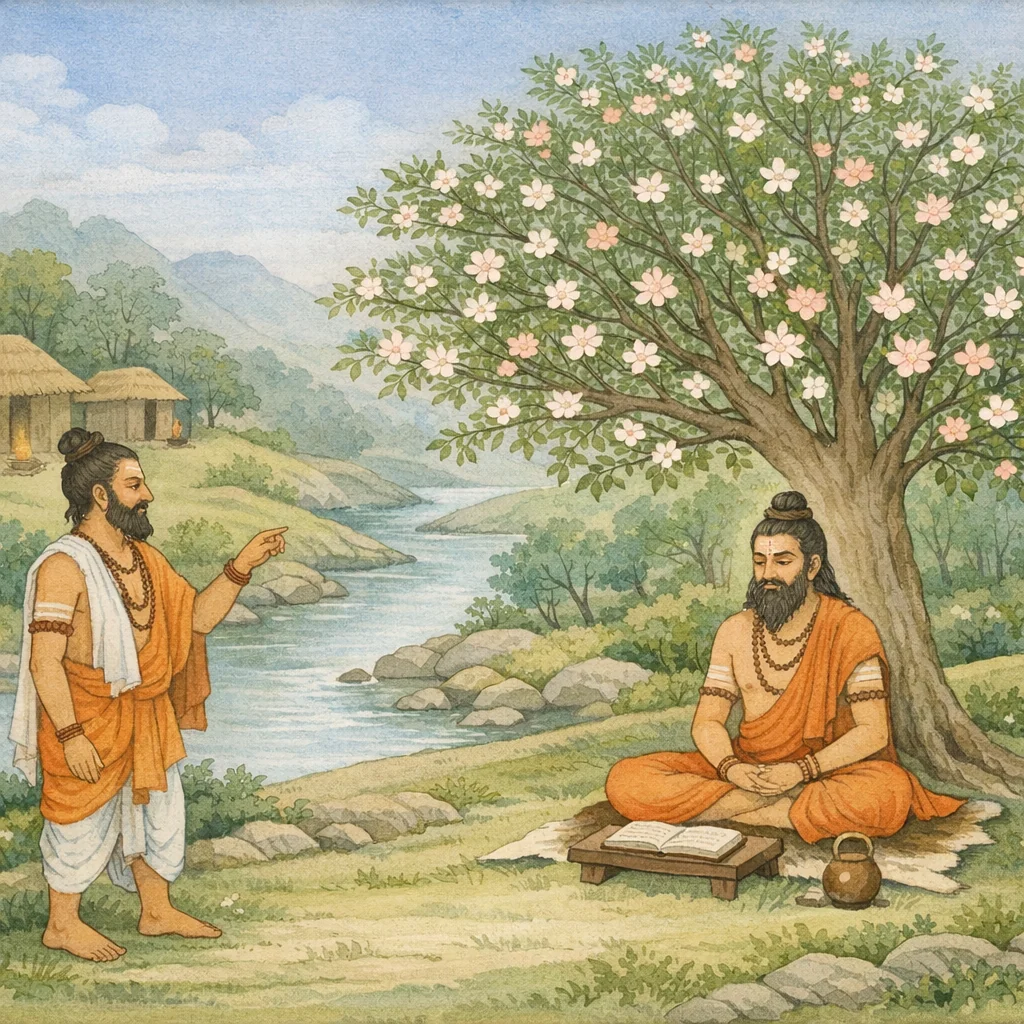
Maitreya affirms the siddhānta that all is of Viṣṇu, in Viṣṇu, and from Viṣṇu, and asks how the Lord repeatedly divides the Veda in every age while acting as Vedavyāsa. Parāśara explains the governing principle: in each Dvāpara, Viṣṇu becomes Vyāsa and reorders the one Veda into many divisions for the benefit of beings whose strength and capacity have declined, likening the Veda to a tree with innumerable branches. He says this has occurred twenty-eight times in the Vaivasvata Manvantara, lists the succession of the twenty-eight Vyāsas (from Svayambhū and Prajāpati, including Uśanā, Bṛhaspati, Savitṛ, Mṛtyu, Indra, Vasiṣṭha, and others), traces the genealogy to Parāśara and then Kṛṣṇa Dvaipāyana, and notes a future Vyāsa (Drauṇi). The chapter then becomes hymn-like: Brahman is established as Oṁ (praṇava), the source and essence of the Vedas, the cause of creation and dissolution, ultimately identical with Vāsudeva/Paramātman. Both the Veda’s differentiation and its total unity rest in the one Ananta Bhagavān, knowledge itself and the promulgator of all śākhās.
Shlokas
Verse 1
ज्ञातम् एतन् मया त्वत्तो यथा सर्वम् इदं जगत् विष्णुर् विष्णौ विष्णुतश् च न परं विद्यते ततः
From you I have understood this truth: all this universe is Vishnu—existing as Vishnu, resting in Vishnu, and proceeding from Vishnu; beyond Him there is no higher reality whatsoever.
Verse 2
एतत् तु श्रोतुम् इच्छामि व्यस्ता वेदा महात्मना वेदव्यासस्वरूपेण यथा तेन युगे युगे
This I desire to hear: how, age after age, that great-souled one—assuming the form and office of Vedavyāsa—sets the Vedas in order and divides them again and again in every yuga.
Verse 3
यस्मिन् यस्मिन् युगे व्यासो यो य आसीन् महामुने तं तम् आचक्ष्व भगवञ् शाखाभेदांश् च मे वद
O great sage, O venerable one, tell me: in each and every age, who served as Vyāsa? And explain to me as well the divisions and branching traditions (śākhās) of the Veda.
Verse 4
वेदद्रुमस्य मैत्रेय शाखाभेदैः सहस्रशः न शक्यो विस्तरो वक्तुं संक्षेपेण शृणुष्व तम्
O Maitreya, the Veda is like a mighty tree with thousands of branching recensions; its full expanse cannot be spoken in detail—therefore hear from me its essence in brief.
Verse 5
द्वापरे द्वापरे विष्णुर् व्यासरूपी महामुने वेदम् एकं स बहुधा कुरुते जगतो हितः
O great sage, in every Dvāpara age, Viṣṇu Himself—assuming the form of Vyāsa—takes the single Veda and arranges it into many divisions, for the welfare of the world.
Verse 6
वीर्यं तेजो बलं चाल्पं मनुष्याणाम् अवेक्ष्य च हिताय सर्वभूतानां वेदभेदान् करोति सः
Observing that the vigor, splendor, and strength of human beings are limited, he—out of compassion for the welfare of all creatures—brought about distinctions within the Veda, so its truth might be approached according to capacity.
Verse 7
यया स कुरुते तन्वा वेदम् एकं पृथक् प्रभुः वेदव्यासाभिधाना तु सा मूर्तिर् मधुविद्विषः
By that very embodied power, the Sovereign Lord separates the single Veda into distinct parts; and that form of the Slayer of Madhu is known by the name “Vedavyāsa.”
Verse 8
यस्मिन् मन्वन्तरे ये ये व्यासास् तांस् तान् निबोध मे यथा च भेदः शाखानां व्यासेन क्रियते मुने
In each Manvantara, whoever the Vyāsas may be—learn of them from me, one by one; and, O sage, understand also how the Vyāsa brings about the differentiation of the Vedic branches (śākhās).
Verse 9
अष्टाविंशतिकृत्वो वै वेदो व्यस्तो महर्षिभिः वैवस्वते ऽन्तरे तस्मिन् द्वापरेषु पुनः पुनः
In that Vaivasvata Manvantara, in the Dvāpara ages again and again, the great seers arranged and re-divided the Veda—twenty-eight times in all.
Verse 10
वेदव्यासा व्यतीता ये अष्टाविंशति सत्तम चतुर्धा यैः कृतो वेदो द्वापरेषु पुनः पुनः
Those Veda‑Vyāsas who have already passed are twenty‑eight in number; and by them, again and again in the Dvāpara ages, the single Veda was arranged into four divisions.
Verse 11
द्वापरे प्रथमे व्यस्ताः स्वयं वेदाः स्वयंभुवा द्वितीये द्वापरे चैव वेदव्यासः प्रजापतिः
In the first Dvāpara age, Svayambhū (Brahmā) himself set the Vedas in order; and in the second Dvāpara, Prajāpati—Veda‑Vyāsa—performed that same ordering.
Verse 12
तृतीये चोशना व्यासश् चतुर्थे च बृहस्पतिः सविता पञ्चमे व्यासो मृत्युः षष्ठे स्मृतः प्रभुः
In the third, Uśanā (Śukra) is the Vyāsa; in the fourth, Bṛhaspati. In the fifth, Savitṛ is the Vyāsa; and in the sixth, the Lord is remembered as Mṛtyu (Death).
Verse 13
सप्तमे च तथैवेन्द्रो वसिष्ठश् चाष्टमे स्मृतः सारस्वतश् च नवमे त्रिधामा दशमे स्मृतः
In the seventh Manvantara, Indra is likewise appointed; in the eighth, the great seer Vasiṣṭha is remembered. In the ninth, Sārasvata is declared; and in the tenth, Tridhāmā is recalled.
Verse 14
एकादशे तु त्रिवृषा भारद्वाजस् ततः परम् त्रयोदशे चान्तरिक्षो वर्णी चापि चतुर्दशे
In the eleventh, Trivṛṣā is remembered; thereafter, in the twelfth, Bhāradvāja. In the thirteenth is Antarikṣa, and in the fourteenth also Varṇī—thus they are enumerated in due sequence.
Verse 15
त्रय्यारुणः पञ्चदशे षोडशे तु धनंजयः क्रतुंजयः सप्तदशे ऋणज्यो ऽष्टादशे स्मृतः
In the fifteenth he is remembered as Trayyāruṇa; in the sixteenth as Dhanaṃjaya. In the seventeenth as Kratuṃjaya; and in the eighteenth as Ṛṇajya—many names revealing one sustaining principle through the course of time.
Verse 16
ततो व्यासो भरद्वाजो भरद्वाजात् तु गौतमः गौतमाद् उत्तमो व्यासो हर्यात्मा यो ऽभिधीयते
Thereafter came Vyāsa; from Vyāsa, Bhāradvāja; and from Bhāradvāja, Gautama. From Gautama arose the excellent Vyāsa, spoken of as Haryātmā—“whose very self is Hari.”
Verse 17
अथ हर्यात्मनो वेनः स्मृतो वाजश्रवास् तु यः सोमः शुष्मायणस् तस्मात् तृणबिन्दुर् इति स्मृतः
Now, from Haryātmā is remembered Vena; and from Vena, Vājaśravas—also known as Soma, the son of Śuṣmāyaṇa. From him arose the one famed as Tṛṇabindu.
Verse 18
ऋक्षो ऽभूद् भार्गवस् तस्माद् वाल्मीकिर् यो ऽभिधीयते तस्माद् अस्मत्पिता शक्तिर् व्यासस् तस्माद् अहं मुने
From Bhārgava arose Ṛkṣa; from him came the sage renowned as Vālmīki. From Vālmīki was born our father Śakti; from Śakti came Vyāsa; and from Vyāsa, O sage, I was born.
Verse 19
जातुकर्णो ऽभवन् मत्तः कृष्णद्वैपायनस् ततः अष्टाविंशतिर् इत्य् एते वेदव्यासाः पुरातनाः
From me arose Jātukarṇa; and after him came Kṛṣṇa Dvaipāyana (Vyāsa). Thus, these are remembered as twenty-eight ancient Vyāsas, the venerable arrangers of the Veda from age to age.
Verse 20
एको वेदश् चतुर्धा तु यैः कृतो द्वापरादिषु
The Veda is truly one; yet in the Dvāpara age and in the ages that follow, those sages render it into a fourfold form.
Verse 21
भविष्ये द्वापरे चापि द्रौणिर् व्यासो भविष्यति व्यतीते मम पुत्रे ऽस्मिन् कृष्णद्वैपायने मुनौ
And in a future Dvāpara age as well, Droṇa’s son, Drauṇi, will become the Vyāsa—when this sage, my son Kṛṣṇa Dvaipāyana, has passed away.
Verse 22
ध्रुवम् एकाक्षरं ब्रह्म ओम् इत्य् एवं व्यवस्थितम् बृहत्वाद् बृंहणत्वाच् च तद् ब्रह्मेत्य् अभिधीयते
The Imperishable Reality is the one-syllabled Brahman, established as “Oṁ”. And because It is vast in greatness and makes all things expand and grow, It is spoken of as “Brahman”.
Verse 23
प्रणवावस्थितं नित्यं भूर् भुवः स्वर् इतीर्यते ऋग्यजुःसामाथर्वाणं यत् तस्मै ब्रह्मणे नमः
Salutations to the eternal Brahman who abides as the Praṇava (Oṃ), who is proclaimed as the sacred utterance “Bhūḥ, Bhuvaḥ, Svaḥ,” and who is the very essence by which the Ṛg, Yajus, Sāman, and Atharvan Vedas are known.
Verse 24
जगतः प्रलयोत्पत्तौ यत् तत् कारणसंज्ञितम् महतः परमं गुह्यं तस्मै सुब्रह्मणे नमः
Salutations to the Supreme Brahman—most hidden beyond all—who is known as the Cause, the very principle through which the universe’s dissolution and arising take place.
Verse 25
अगाधापारम् अक्षय्यं जगत्संमोहनालयम् संप्रकाशप्रवृत्तिभ्यां पुरुषार्थप्रयोजनम्
He is unfathomable and shoreless, imperishable—the very abode from which the world’s bewilderment arises. By His twin powers of illumination and activity, He becomes the supreme ground and final purpose of the human aims of life.
Verse 26
सांख्यज्ञानवतां निष्ठा गतिः शमदमात्मनाम् यत् तद् अव्यक्तम् अमृतं प्रवृत्तिर् ब्रह्म शाश्वतम्
That Reality is the steadfast culmination of those endowed with Sāṅkhya-knowledge, the final refuge of souls disciplined by tranquility and self-restraint—That is the Unmanifest: deathless, the ever-flowing ground of all manifestation, the eternal Brahman.
Verse 27
प्रधानम् आत्मयोनिश् च गुहासत्त्वं च शब्द्यते अविभागं तथा शुक्रम् अक्षरं बहुधात्मकम्
That unmanifest first principle is spoken of by many names—Pradhāna, the self-born source, and the inner reality hidden in the cave of the heart. It is undivided; it is the pure, luminous seed; it is imperishable—yet it becomes the ground of manifold forms.
Verse 28
परमब्रह्मणे तस्मै नित्यम् एव नमो नमः यद् रूपं वासुदेवस्य परमात्मस्वरूपिणः
Unceasingly, again and again, I bow to that Supreme Brahman—whose form is Vāsudeva, whose very nature is the Paramātman.
Verse 29
एतद् ब्रह्म त्रिधाभेदम् अभेदम् अपि स प्रभुः सर्वभूतेष्व् अभेदो ऽसौ भिद्यते भिन्नबुद्धिभिः
This very Brahman—the sovereign Lord—though spoken of as threefold, is truly undivided. He is non-different within all beings; yet minds of division imagine Him divided.
Verse 30
स ऋङ्मयः साममयः सर्वात्मा स यजुर्मयः ऋग्यजुःसामसारात्मा स एवात्मा शरीरिणाम्
He is of the Ṛg, of the Sāman, the inner Self of all; He is of the Yajus as well. He is the inmost essence of Ṛg, Yajus, and Sāman—He alone is the Ātman abiding in embodied beings.
Verse 31
स भिद्यते वेदमयः स वेदं करोति भेदैर् बहुभिः सशाखम् शाखाप्रणेता स समस्तशाखा ज्ञानस्वरूपो भगवान् अनन्तः
He whose very essence is the Veda appears as the Veda’s differentiation; by countless distinctions He fashions the one Veda into many branches and lineages. He is the promulgator of the Vedic schools, yet He Himself is the totality of all schools—Bhagavān Ananta, Knowledge embodied.
Frequently Asked Questions
Because human vigor and capacity decline; out of compassion and for loka-hita, Viṣṇu assumes the Vyāsa function to reorganize the one Veda into accessible divisions and branches so dharma and knowledge remain practicable.
Twenty-eight Vyāsas are said to have arranged the Veda repeatedly in the Dvāpara ages within the Vaivasvata Manvantara.
It praises Brahman as Oṁ (praṇava), the essence behind Ṛg-Yajus-Sāman-Atharvan and the cause of creation/dissolution, and identifies that supreme Brahman’s form as Vāsudeva, the Paramātman—non-different within all beings.