
Vastrapatha Kshetra Mahatmya
Vastrapatha Kshetra Mahatmya
This section situates its māhātmya within the Prabhāsa sacred zone, focusing on the kṣetra called Vastrāpatha. The site is presented as a pilgrimage node (tīrtha-complex) where darśana of Bhava/Śiva is framed as exceptionally potent, and where ancillary rites—such as dāna (gifting), feeding of brāhmaṇas, and piṇḍadāna (memorial offerings)—are integrated into the devotional economy of the landscape.
Adhyayas in Vastrapatha Kshetra Mahatmya
19 chapters to explore.
Adhyaya 1
दामोदरतीर्थ-रैवतकक्षेत्रमाहात्म्यम् (Damodara Tīrtha and Raivataka-Kṣetra Māhātmya)
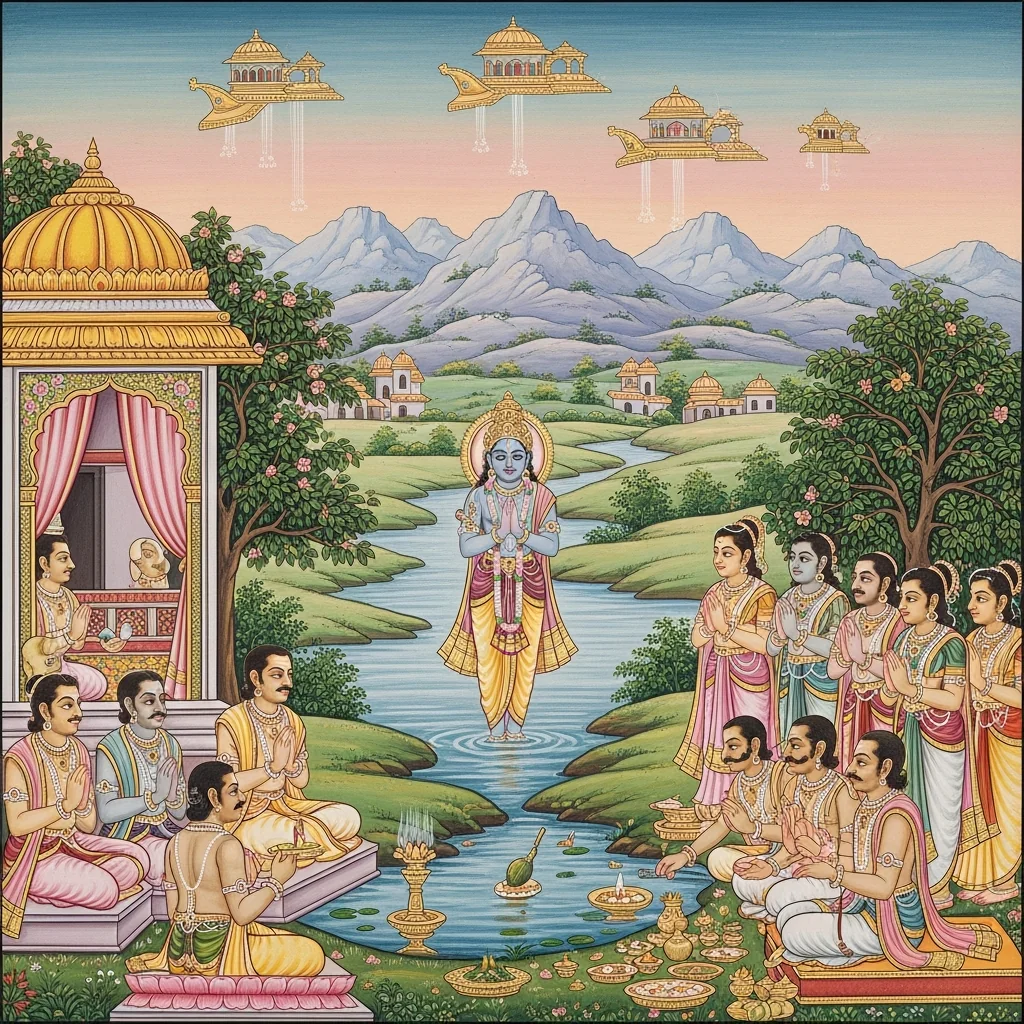
Chapter 1 opens with Īśvara revealing the “kṣetra-garbha” (inner sanctity) of Vastrāpatha, naming Raivataka-giri, the Suvarṇarevā, and merit-bestowing kuṇḍas—especially Mṛgīkuṇḍa—where śrāddha brings heightened satisfaction to the ancestors. At Devī’s request for more detail, Īśvara recounts an earlier episode: on a holy bank of the Gaṅgā, King Gaja and his queen Saṅgatā undertake purification and worship. Bhadrarṣi arrives with other ascetics, and the king asks how an “akṣaya” (imperishable) heaven is attained through proper time, place, and rite. Bhadrarṣi conveys a tradition of Nārada that lists month-wise merits at renowned tīrthas, concluding that no tīrtha equals Damodara; in Kārttika—especially on Dvādaśī and during Bhīṣmapañcaka—bathing in Damodara’s waters yields extraordinary results. The chapter then describes Vastrāpatha’s sacred landscape near Somnātha and Raivataka—mineral-rich ground, holy flora and fauna, and motifs of liberation through contact. It catalogs exemplary gifts and observances (offerings of leaf, flower, and water; feeding; lamp-giving; temple-building; flag-installation) with graded phalaśruti, and affirms a dual devotional ethic: worship of Hari (Damodara) and of Bhava (Śiva) alike leads to exalted realms. It closes with King Gaja’s Kārttika pilgrimage, extensive yajñas and austerities by diverse practitioners, the descent of celestial vimānas, and the king’s ascent. A concluding phalaśruti promises purification and ultimate attainment to all who recite or listen.
Adhyaya 2
Vastrāpathakṣetre Bhavadarśana–Yātrāphala (वस्त्रापथक्षेत्रे भवदर्शन–यात्राफल)
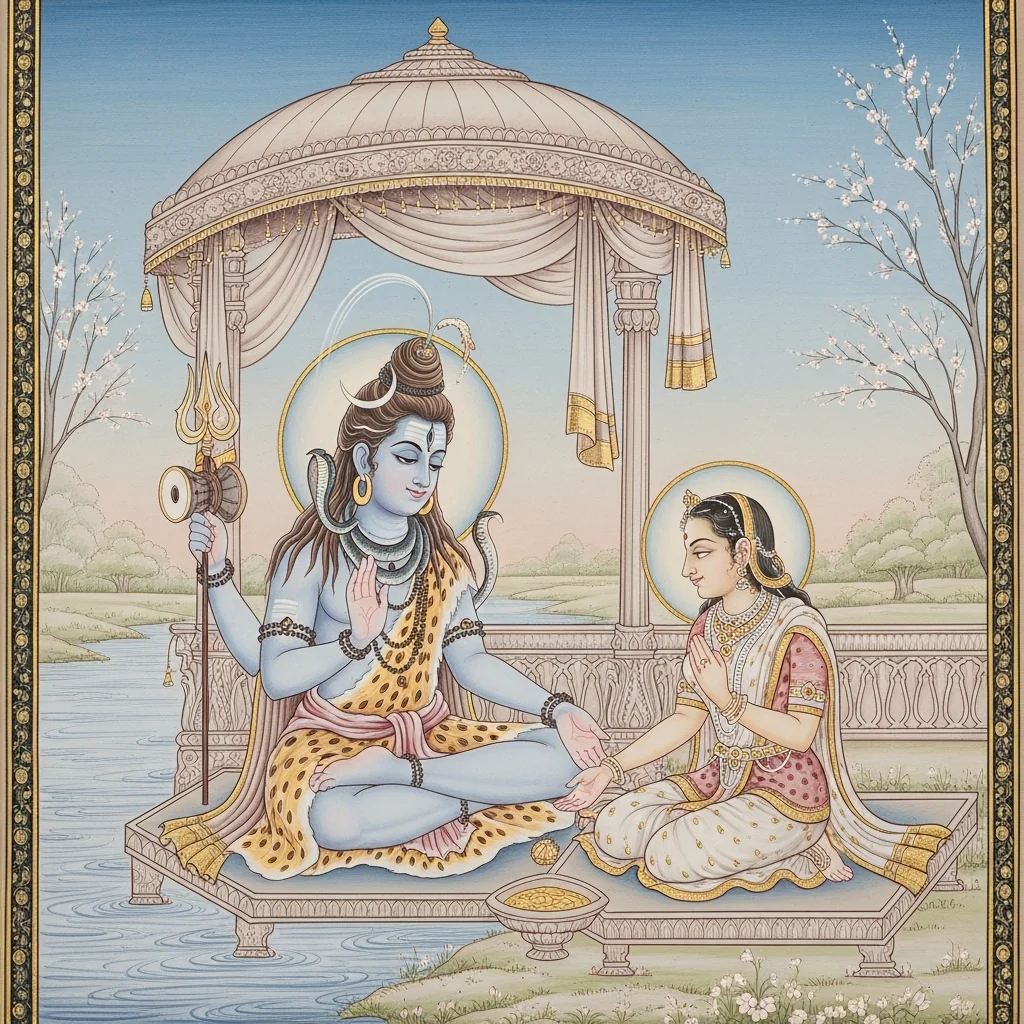
Chapter 2 is a brief theological and sacred-geographical instruction in which Īśvara teaches Mahādevī about the kṣetra called Vastrāpatha in Prabhāsa. Bhava/Śiva is affirmed as the primordial Lord—direct creator and destroyer—abiding there as a self-manifest presence. The chapter then sets out the pilgrimage discipline and its fruits: even a single yātrā, bathing in the local tīrthas, and performing proper worship bring ritual completion and full merit. Bhava-darśana is praised as yielding fruits comparable to, and more swiftly effective than, those of renowned holy places such as Vārāṇasī, Kurukṣetra, and the Narmadā. It also marks sacred time: darśana in the months of Caitra and Vaiśākha is linked with liberation from rebirth. Ethical-ritual supports—go-dāna, feeding brāhmaṇas, and piṇḍadāna—are commended as enduring acts that secure the satisfaction of ancestors. The closing phalaśruti declares that hearing this māhātmya diminishes sin and grants results like those of vast sacrificial rites.
Adhyaya 3
Vastrāpathakṣetre Tīrtha-Saṅgrahaḥ (Catalogue of Tīrthas in Vastrāpatha)
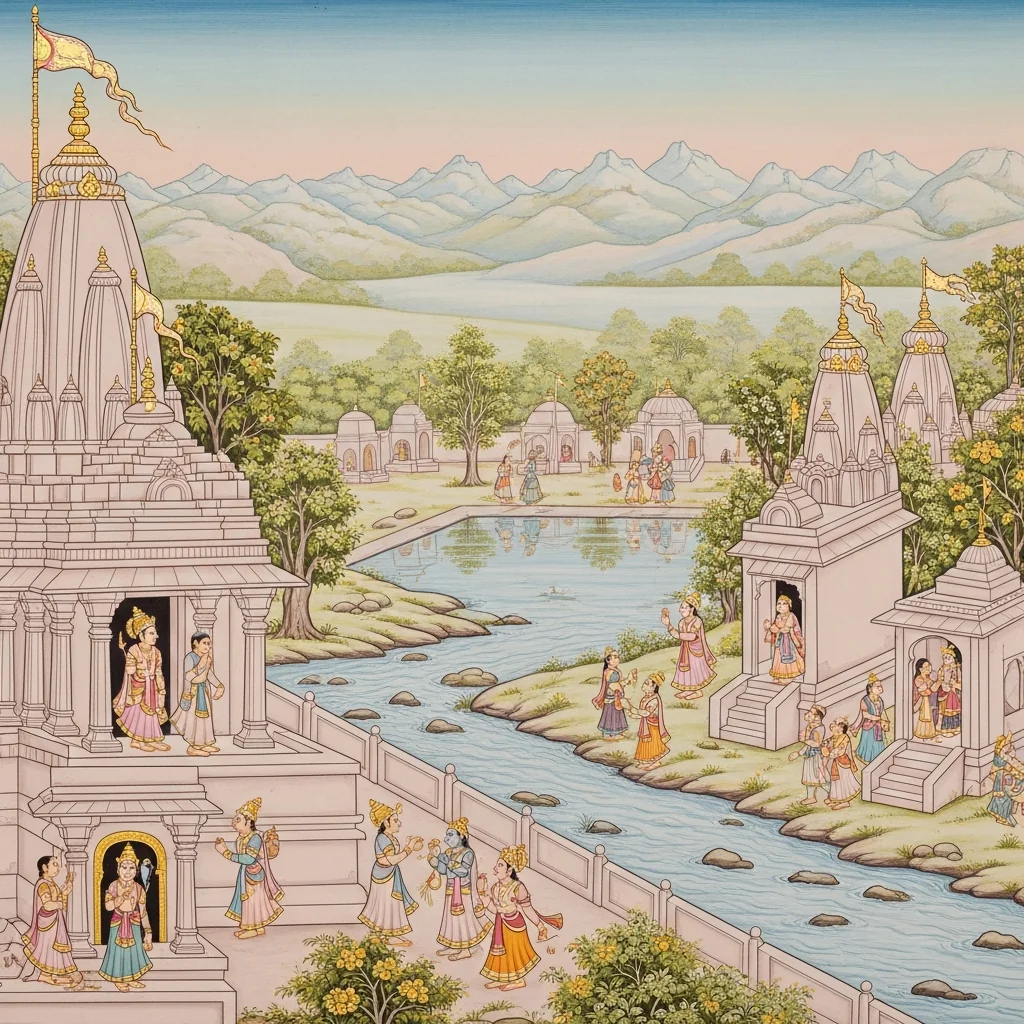
This adhyāya is a concise yet authoritative catalogue spoken in Īśvara’s own voice. It opens by acknowledging that Vastrāpatha contains tīrthas in overwhelming multitude (“koṭiśaḥ”), and then sets a guiding method: only the “sāra” (essence) will be stated, as a distilled map of the most important sacred sites. It names the Dāmodarā river, also remembered as Suvarṇarekhā, and places Brahmakuṇḍa beside the Brahmeśvara shrine. The chapter then lists further Śaiva loci—Kālamēgha, Bhava/Dāmodara, Kālikā (two gavyūtis away), Indreśvara, the mountains Raivata and Ujjayanta—followed by Kumbhīśvara and Bhīmeśvara. The kṣetra’s extent is measured as five gavyūtis, and Mṛgīkuṇḍa is singled out for its power to destroy sin. The closing verse frames the whole as a deliberate summary and notes the region’s association with mineral and ratna (gem) deposits, joining sacred topography with resource-topography in an archival register.
Adhyaya 4
Dunnāvilla–Pātāla-vivara and the Sixteen Siddha-sthānas (दुन्नाविल्ले पातालविवरं सिद्धस्थानानि च)
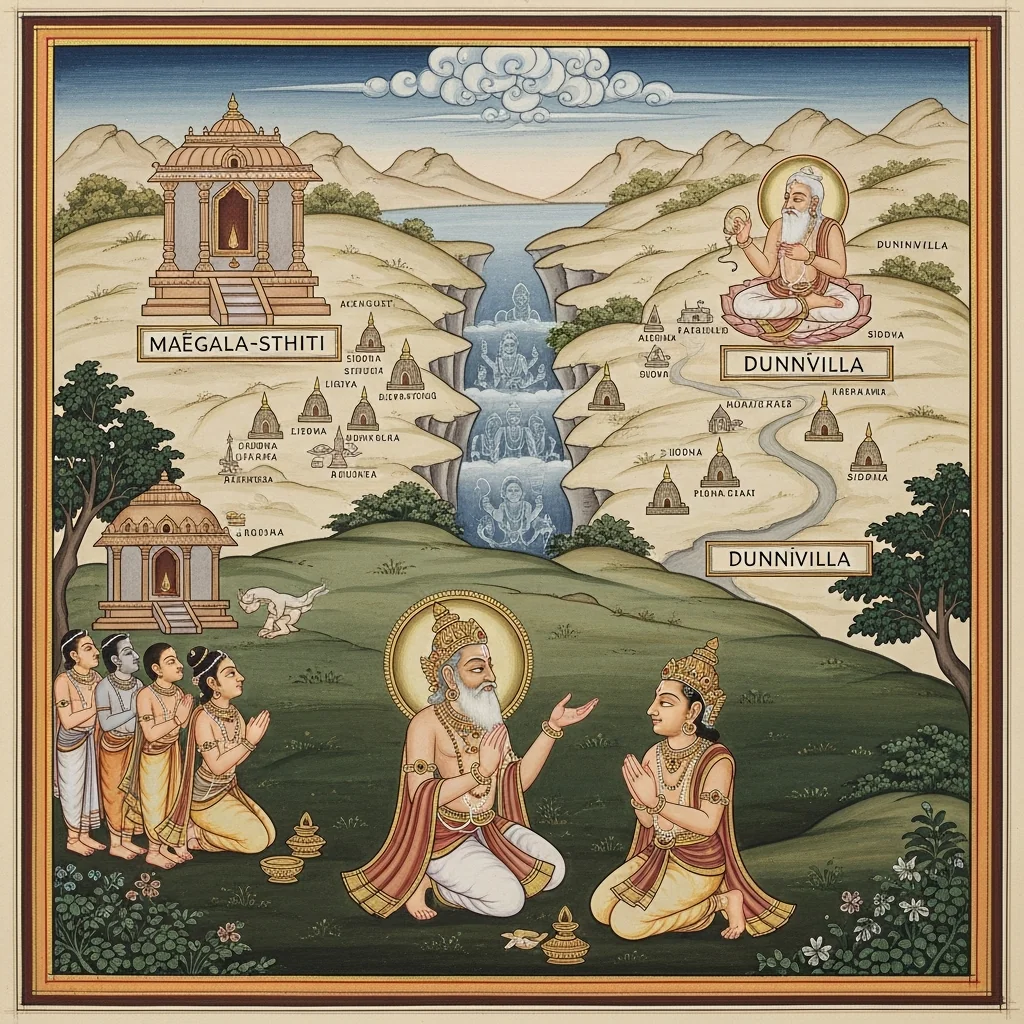
Chapter 4 is framed as Īśvara’s instruction to Devī, outlining a short pilgrimage to Dunnāvilla, one yojana west of Maṅgala-sthiti. The teaching situates the place within a layered sacred memory and folds it into the kṣetra’s map. It recalls an episode involving Bhīma and the name “Dunnaka,” said to have been formerly consumed and then abandoned, as an etiological sign for the site’s renown. It then speaks of a “divine opening” (divya-vivara), a major route to pātāla, bringing cosmological geography into the sacred landscape. The pātāla account is cited as having been taught earlier in a prior compilation (pātāla-uttara-saṅgraha), indicating continuity of tradition. Dunnāvilla is further praised for its many liṅgas and sixteen siddha-sthānas, forming a concentrated Śaiva holy cluster. Finally, the place is remembered as once a gold mine, and people are directed to go there seeking “bhūti” (prosperity/attainment), acknowledging worldly aims while placing them within a sanctified itinerary.
Adhyaya 5
गंगेश्वरमाहात्म्यवर्णनम् (Gangeśvara Māhātmya—Account of the Glory of Gangeśvara)
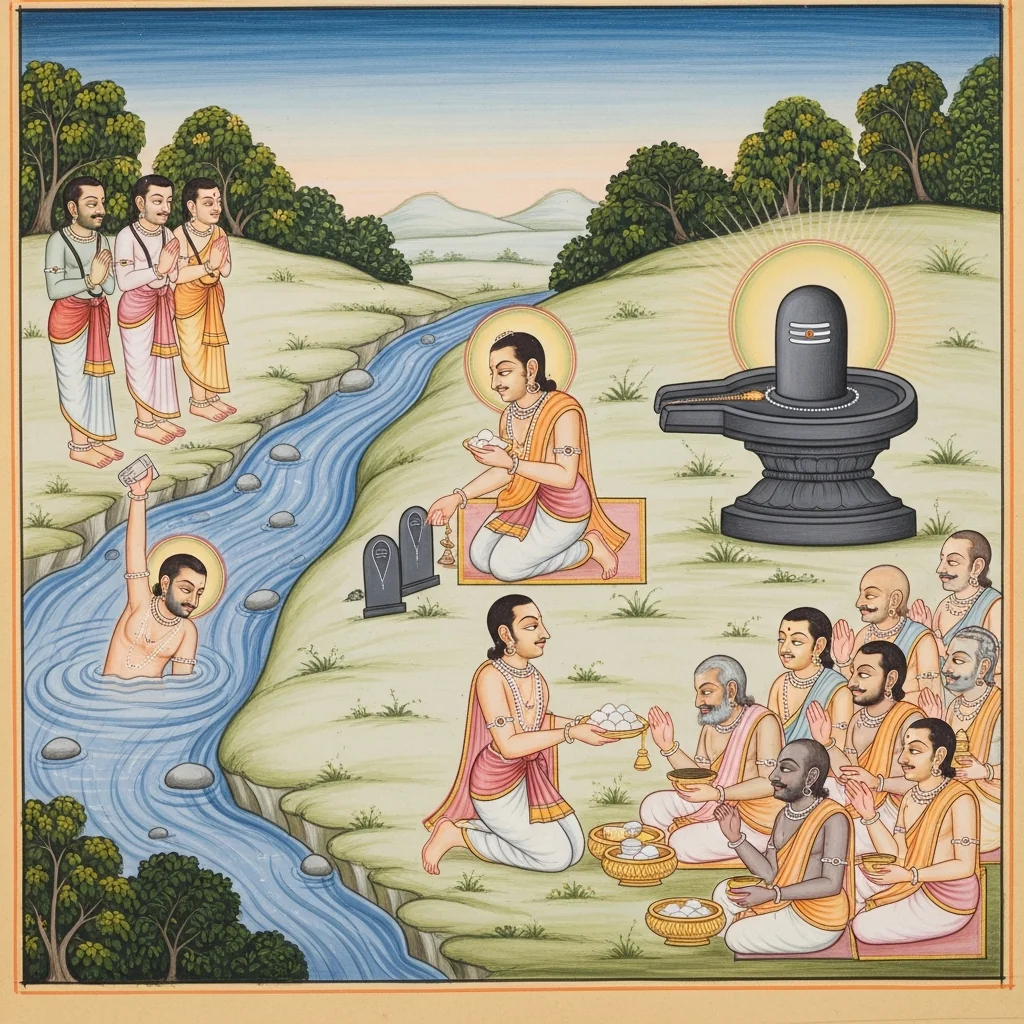
This chapter is framed as Īśvara’s instruction to Devī on a westward pilgrimage from the earlier landmark “Maṅgala.” He directs the pilgrim to the sacred stream called Gaṅgā-srota and to a liṅga to be worshipped there, with a special mention of Surārka. Its core is the prescribed procedure for gaining the fruit of pilgrimage (yātrā-phala): one should approach these holy places according to proper vidhi, perform purifying bathing (snāna), complete piṇḍa offerings, and then give generously—feeding Brāhmaṇas (anna-dāna) along with dakṣiṇā. The phalaśruti conclusion declares these tīrtha-glories auspicious and capable of destroying the accumulated sins of the Kali age (kali-pāpa-augha); reading or reciting the account is also said to remove aggregates of sin. A protective note follows: it should not be given to the ill-disposed (durbuddhi) and must be heard in accordance with right injunction, emphasizing guarded transmission and correct reception.
Adhyaya 6
Vastrāpatha Pilgrimage Circuit and the Etiology of the Deer-Faced Woman (वस्त्रापथ-तीर्थपरिक्रमा तथा मृगमुखी-आख्यान-प्रस्ताव)
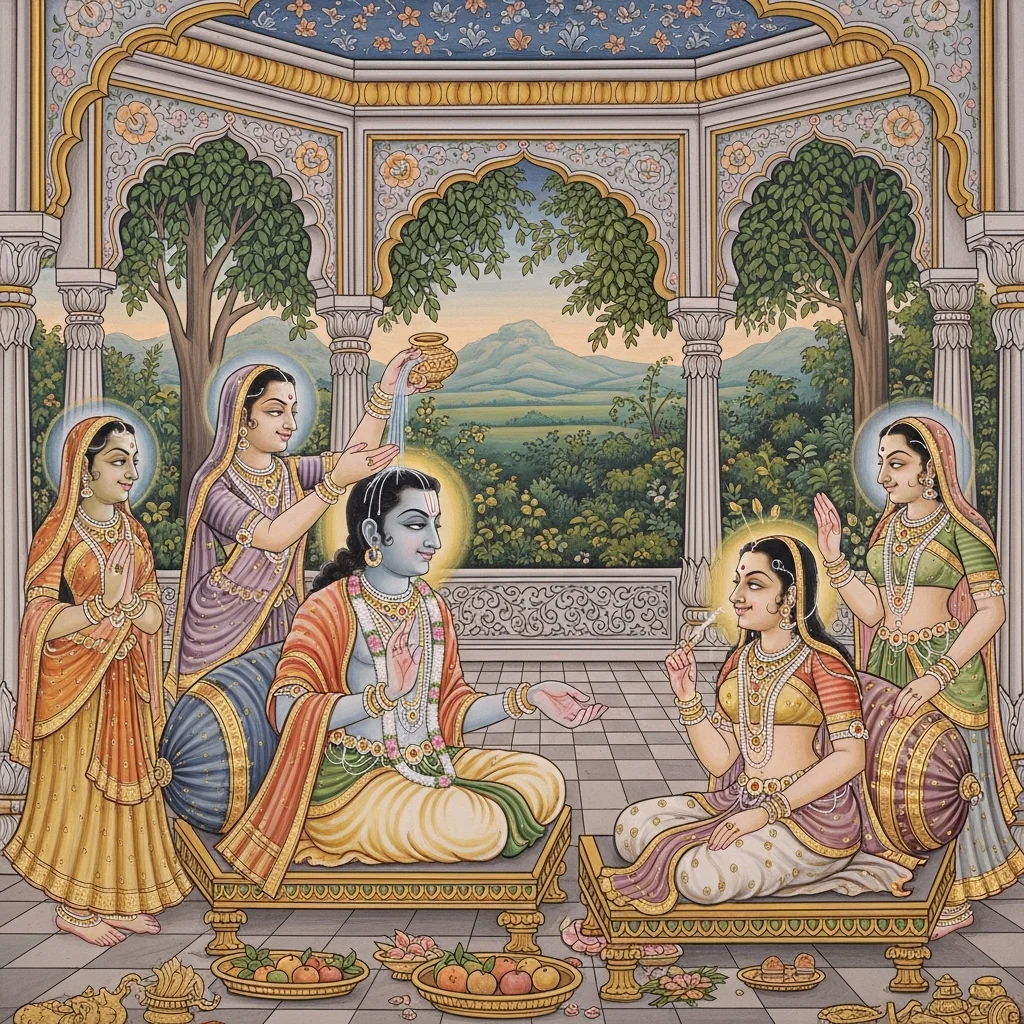
Chapter 6 begins with Īśvara setting out a westward pilgrimage sequence from Maṅgala: darśan of Siddheśvara as the bestower of accomplishments, Cakratīrtha—explicitly said to grant the fruit of “crores of tīrthas”—and Lokeśvara as a svayambhū liṅga. The route continues to Yakṣavana, where Yakṣeśvarī is praised as a wish-fulfilling goddess, and then returns to Vastrāpatha with an extension to Mount Raivataka, portrayed as holding innumerable tīrthas (including Mṛgīkūṇḍa and other named sites) and many divine presences such as Ambikā, Pradyumna, Sāmba, and further Śaiva markers. The dialogue then shifts as Pārvatī recalls the great sacred rivers and liberation-giving cities already heard, and asks why Vastrāpatha is deemed especially significant and how Śiva is established there as svayambhū. Īśvara introduces the promised explanation through an etiological tale: in Kānyakubja, King Bhoja captures a mysterious deer-faced woman from among a herd; she remains mute until priests direct him to the ascetic Sārasvata. Through ritual consecration (abhiṣeka) and mantra-framed procedures, her speech and memory return, and she recounts an extended karmic history across births—kingship, widowhood, animal rebirths, and violent death motifs—culminating in a convergence at Raivataka/Vastrāpatha, presenting the kṣetra as the key to purification and release.
Adhyaya 7
Mṛgīmukhī-ākhyāna and the Vastrāpatha–Swarnarekhā Tīrtha Discourse (मृगीमुखी-आख्यानम्)
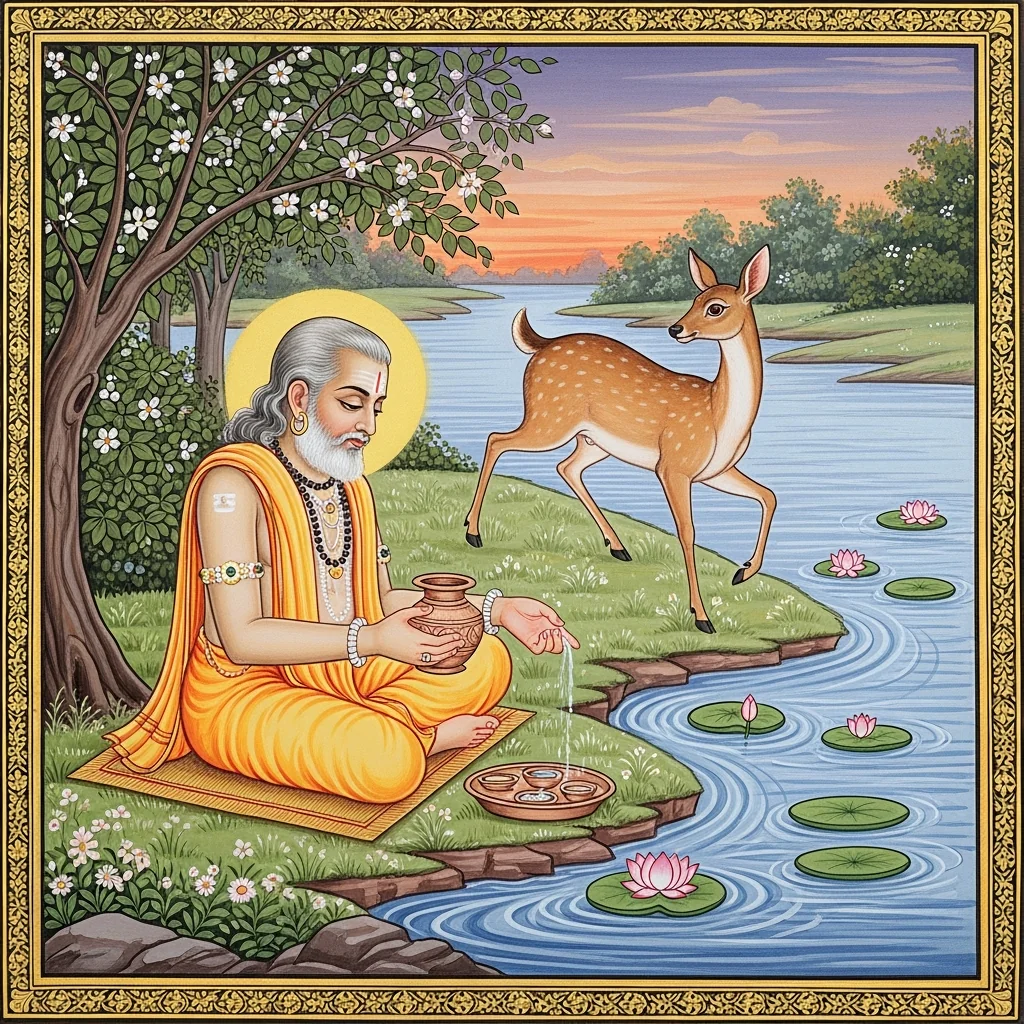
Chapter 7 unfolds as a dialogue on karmic causality, bodily transformation, and the power of tīrthas. A king questions a woman who appears with a deer-like face about her origin. She recounts a conception episode on the bank of the Gaṅgā connected with the ascetic Uddālaka: a chance occurrence involving a vīrya-bindu and a doe becomes the cause of her being human in identity yet marked with a deer-faced form. The narrative then turns to moral reckoning. She contrasts her chastity across many births with the king’s former lapse in kṣatriya-dharma, speaking of accumulated sin and the need for expiation, even invoking motifs of self-immolation. The text lists meritorious deaths and deeds—falling in battle, daily feeding and charity, and dying at named tīrthas, including Vastrāpatha in Prabhāsa—while an incorporeal voice (aśarīriṇī) declares the king’s karmic sequence: first the fruit of sin is endured, then heaven is attained. A practical remedy is prescribed: if the king releases a head/effigy into the Swarnarekhā waters at Vastrāpatha, her face will become human. A messenger/door-keeper is sent, the head is found in a forest setting and ritually consigned to the tīrtha, and the girl undertakes a month-long Cāndrāyaṇa vow, culminating in her transformation into a divinely described human beauty. The chapter closes with Īśvara’s praise of the kṣetra as supreme among regions and forests, inhabited by gods and semi-divine beings, with Śiva (Bhava) permanently established; bathing, sandhyā, tarpaṇa, śrāddha, and flower-offering worship grant release from worldly becoming and ascent to heaven.
Adhyaya 8
Suvarṇarekhā-tīrthotpatti and the Brahmā–Viṣṇu–Śiva Theological Discourse (Chapter 8)
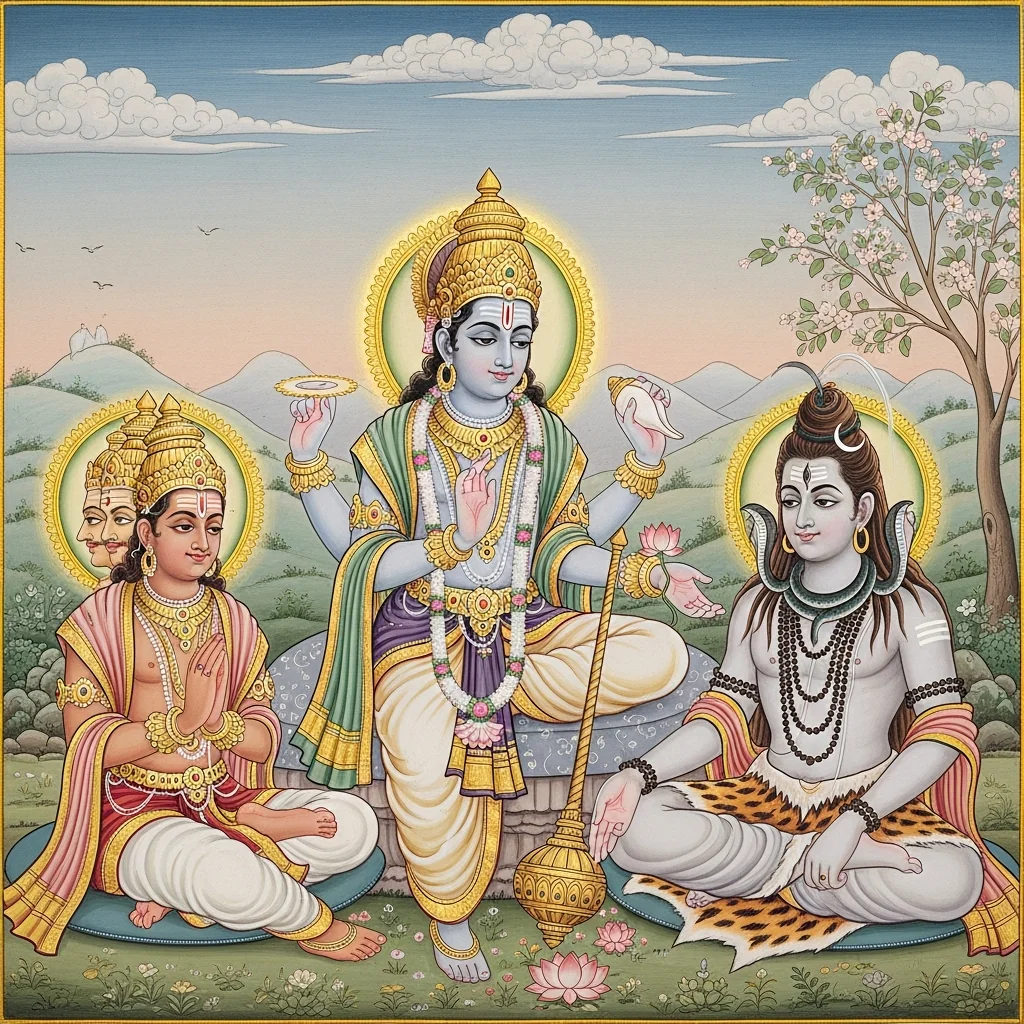
Chapter 8 begins with King Bhoja asking for a full account of Vastrāpatha-kṣetra and Mount Raivataka, and above all the origin (utpatti) and purifying sanctity of the tīrtha-waters called Suvarṇarekhā. He inquires who, among Brahmā, Viṣṇu, and Śiva, is established as supreme in this setting, why the gods gather at the tīrtha, and how it is said that Nārāyaṇa comes there in person. Sārasvata replies that merely hearing this sacred narrative diminishes wrongdoing, and then frames the tīrtha account within cosmogony: at the close of a “day of Brahmā,” Rudra withdraws the world, and the triad is described as briefly unified before differentiating by function—Brahmā as creator, Hari as preserver, and Rudra as dissolver. A dispute over precedence then arises between Brahmā and Rudra on Kailāsa, with Viṣṇu mediating. Viṣṇu’s instruction points to a prior, singular Mahādeva who transcends the cosmos; Brahmā praises Śiva with Vedic-style epithets, and Śiva grants a boon, preparing the ground for the later details of the tīrtha’s origin.
Adhyaya 9
Vastrāpatha Tīrtha-Foundation and the Dakṣa-Yajña Cycle (वस्त्रापथतीर्थप्रतिष्ठा तथा दक्षयज्ञप्रसङ्गः)
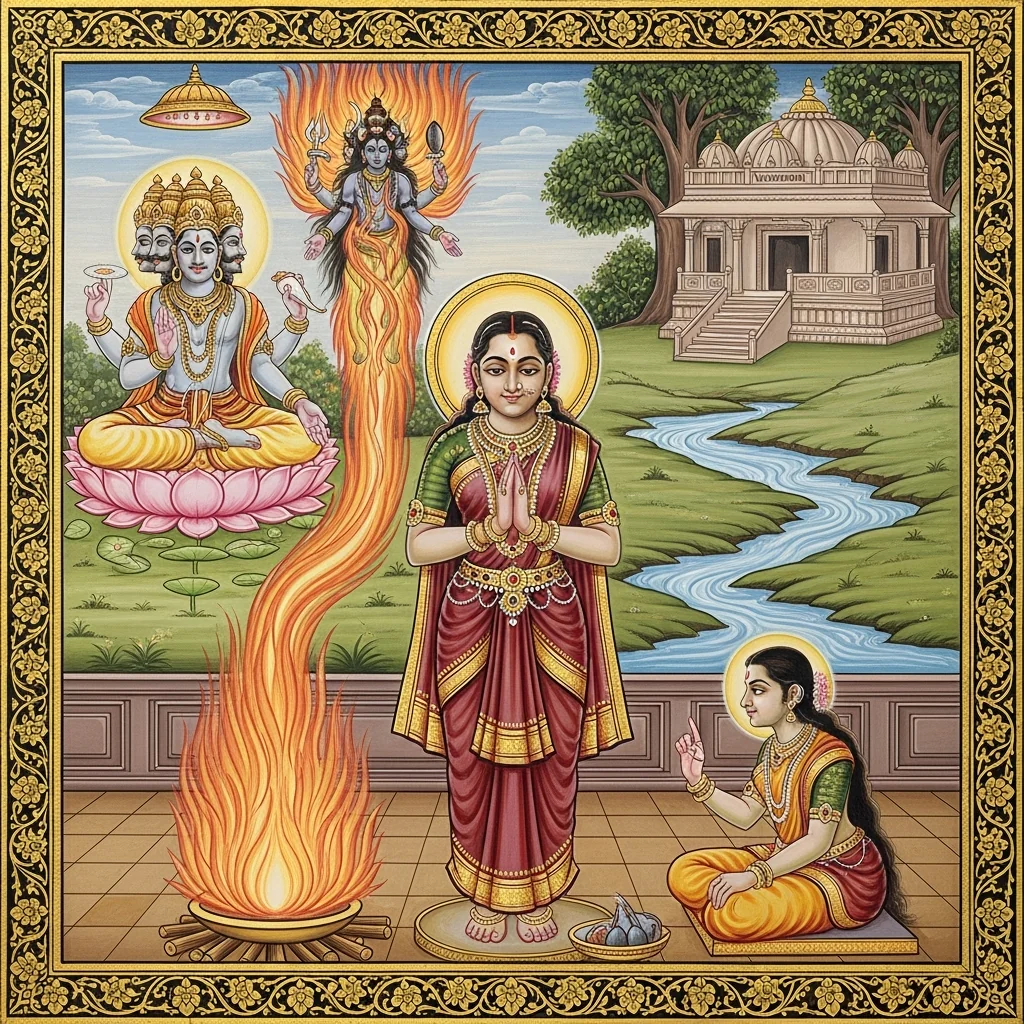
Chapter 9 presents a multi‑stage theological account of how Vastrāpatha Tīrtha becomes a firmly established sacred site within Prabhāsa. It opens with Brahmā’s ritual act of creation through Atharvaveda recitation and the manifestation of Rudra, who divides into multiple Rudras, providing a cosmological ground for Śaiva plurality. The narrative then turns to the Dakṣa–Satī–Śiva conflict: Satī is given to Rudra, Dakṣa’s disrespect intensifies, and Satī self‑immolates, setting in motion cycles of curse and eventual restoration for Dakṣa. The destruction of the yajña by Vīrabhadra and the gaṇas portrays ritual collapse as the consequence of excluding the “worthy” from worship and violating the ethics of reverence. A doctrinal reconciliation follows, declaring Śiva and Viṣṇu non‑different in essence, alongside practical guidance for devotion in kali‑yuga—such as the merit of alms to Śiva in ascetic form and modes of household worship. The account extends to conflict with Andhaka and the integration of divine feminine forms, culminating in localized divine presence: Bhava is stationed at Vastrāpatha, Viṣṇu at Raivataka, and Ambā on the mountain peak; Suvarṇarekhā is defined as a purifying river. The closing phalaśruti states that hearing or reciting brings purification and heavenly attainment, and that bathing, performing sandhyā/śrāddha at Suvarṇarekhā, and worshipping Bhava yield exalted results.
Adhyaya 10
वस्त्रापथकथानुक्रमः — Counsel to the King on Pilgrimage, Renunciation, and Household Restraint
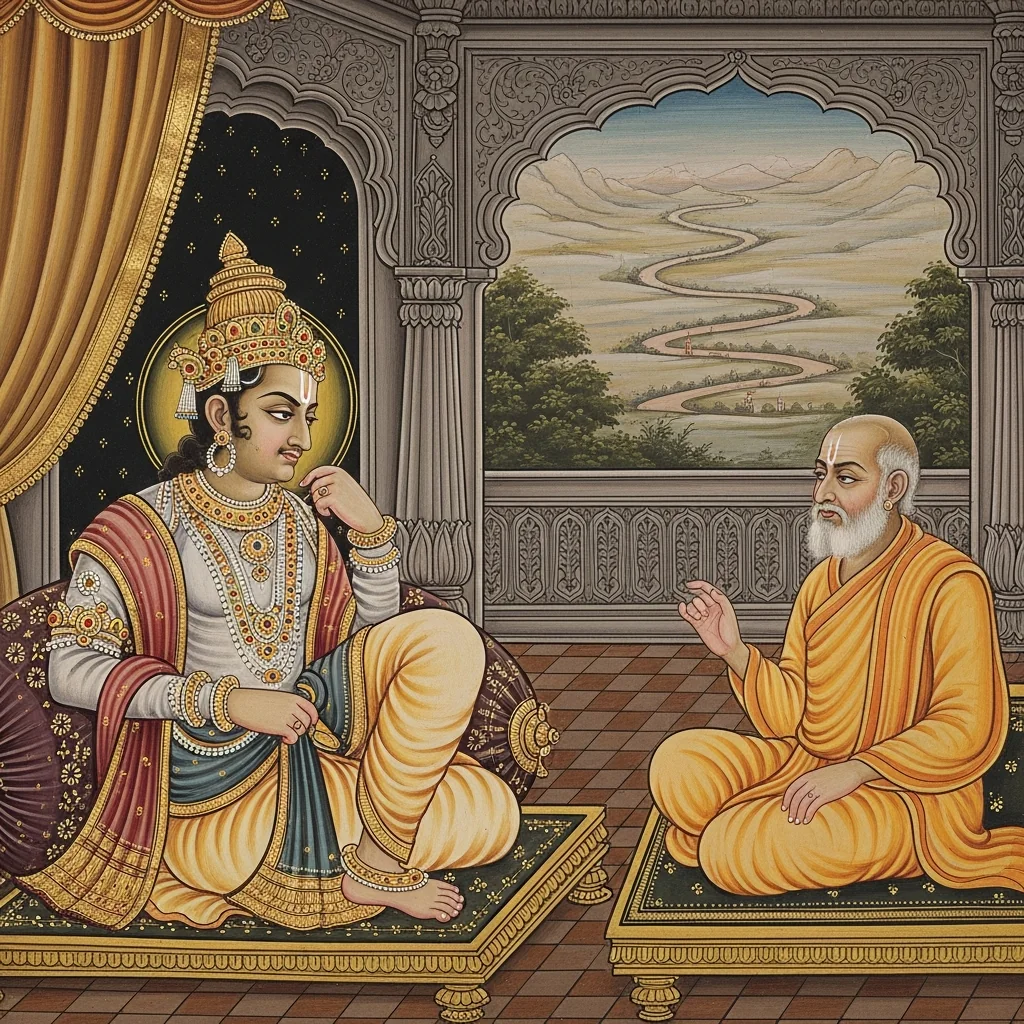
Adhyāya 10 unfolds as a theological dialogue shaped by inquiry. Pārvatī first marvels at the māhātmya of the tīrtha, Mount Raivataka, Bhava (Śiva), and Vastrāpatha, establishing that sacred geography is confirmed by divine speech. She then asks what the earthly king—Bhojarāja/Janeśvara—does after obtaining a deer and meeting the sage Sārasvata, shifting the focus from place-glory to moral narrative. Īśvara replies with normative teaching on social and relational ethics: the ideal woman is virtuous and auspicious, and kinship roles are duties that uphold stability for both women and men. The king, delighted at gaining such a wife, praises Sārasvata as one endowed with ascetic power and revelatory knowledge. The king then recounts the fame of Saurāṣṭra, Raivataka, and Vastrāpatha, recalling divine assemblies on Ujjayanta and motifs involving Vāmana and Bali. He declares his wish to renounce kingship and undertake pilgrimage through higher worlds up to Śiva’s abode, but the sage restrains him, teaching that divine presence and requisite rites can be honored within the household as well, and that the urge for far travel must be governed by right counsel and steady dharma.
Adhyaya 11
Vastrāpatha Yātrāvidhi and Kṣetra-Pramāṇa (वस्त्रापथ-यात्राविधिः क्षेत्रप्रमाणं च)
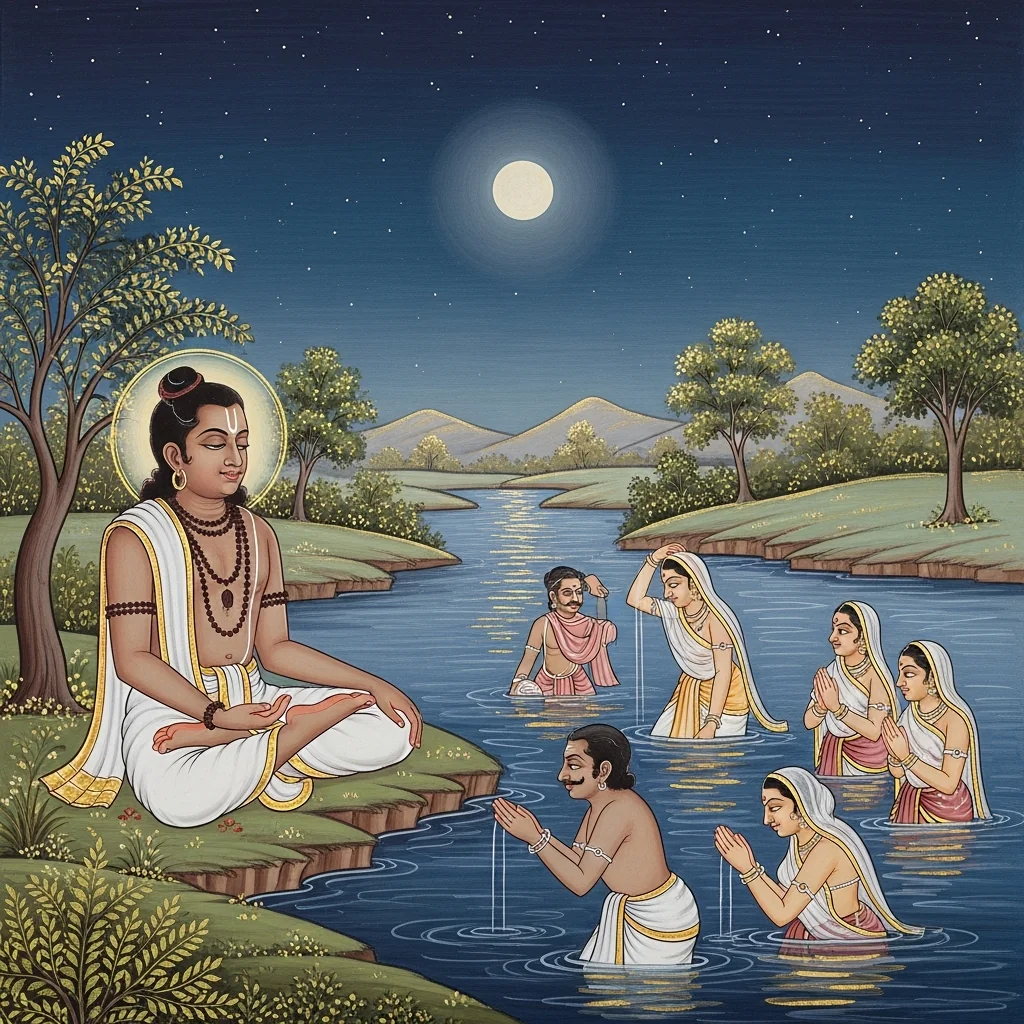
This chapter is framed as a practical manual prompted by the king’s inquiry. Having heard the sage’s earlier teaching, the king asks for a concise, workable account of pilgrimage: what to accept or renounce, what to give in dāna, and the rules for fasting, bathing, twilight rites (sandhyā), worship, sleep, and nocturnal japa. Sārasvata answers by locating the journey in Saurāṣṭra near Mount Revataka/Ujjayanta, and by prescribing departure protocols based on auspicious timing—planetary strength, lunar factors, and favorable omens. A ritual calendar follows, naming generally suitable months and tithis, with special emphasis on Aṣṭamī, Caturdaśī, month-end, Pūrṇimā, saṅkrānti, and eclipses as prime occasions for Bhava (Śiva) worship. An etiological account is then given: on the fifteenth of Vaiśākha, Bhava is said to have manifested, accompanied by the purifying appearance of the Suvarṇarekhā river and sacred waters associated with Ujjayanta. The text next defines Vastrāpatha’s kṣetra-pramāṇa through directional boundaries and yojana measures, praising it as a region that grants worldly welfare and liberation. It concludes by listing graded ascetic disciplines for travel—walking, restricted diets, austerities, and endurance of hardship—and by proclaiming a strong phalāśruti: the uplift of ancestors, imagery of celestial conveyance, and liberation even for those burdened with grave transgressions, through regulated devotion and remembrance of Śiva within the kṣetra.
Adhyaya 12
Vastrāpatha Tīrtha: Ritual Offerings, Śrāddha Protocols, and Ethical Restraints (वस्त्रापथतीर्थ-विधि-श्राद्ध-नियमाः)
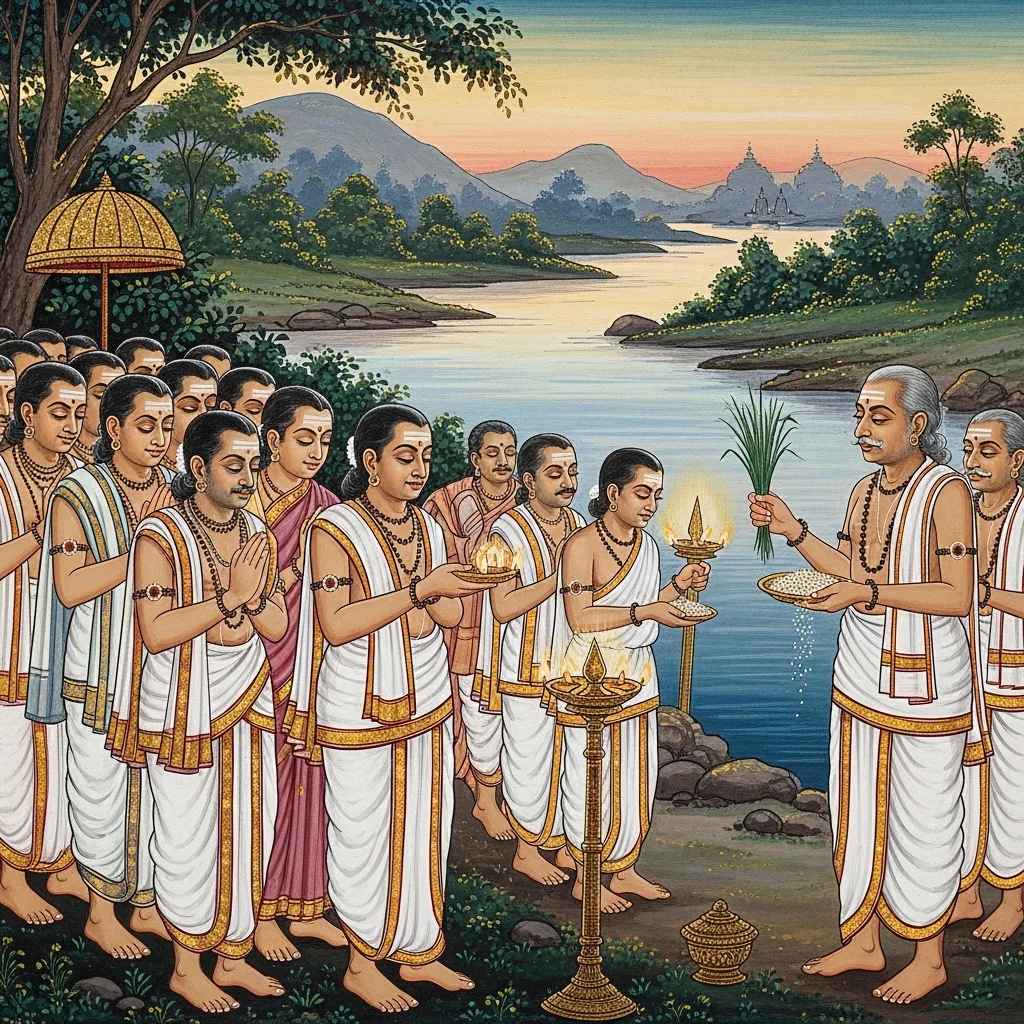
Spoken by Sarasvata, this chapter sets forth a pilgrimage-ritual regimen at Vastrāpatha Tīrtha, insisting that ethical self-restraint is the necessary foundation. It opens by listing auspicious items to carry and offer—Gaṅgā-water, honey, ghee, sandal, aguru, saffron, guggulu, bilva leaves, and flowers—and describes the pilgrim’s discipline of walking and purity. After bathing, one should behold (darśana) and honor Śiva, Viṣṇu, and Brahmā; through proper vision and offerings, bondage is said to be cut and liberation approached. It then portrays communal pilgrimage and the making and installation of a deity image upon a chariot, anointed with fragrant substances, accompanied by music, dance, lamps, and gifts—gold, cows, water, food, cloth, fuel, and pleasing speech. The chapter turns to ritual correctness: receiving brāhmaṇa instruction, performing sandhyā, using darbha and tila with havis-foods, and offering tulasī, the hundred-petaled lotus, camphor, and śrīkhaṇḍa. A calendrical framework is given for the efficacy of saṅkalpa and śrāddha—ayana, viṣuva, saṅkrānti, eclipses, month-end, and kṣaya-days—while strongly emphasizing ancestral rites at rivers and great tīrthas. Śrāddha is linked to the satisfaction of the pitṛs and to household auspicious increase (vṛddhi-śrāddha). Moral faults to be abandoned—lust, anger, greed, delusion, intoxication, envy, slander, negligence, betrayal, laziness, adultery, theft, and more—are enumerated, for only by forsaking them does the full tīrtha-fruit arise: snāna, japa, homa, tarpaṇa, śrāddha, and pūjā become effective. The chapter concludes with a broad catalogue of tīrthas and an inclusive promise: even non-human beings dying there gain heavenly enjoyments and later liberation; mere remembrance of such places destroys sin, so one must not miss the chance for worship and darśana.
Adhyaya 13
Dāna-Śīla and Gṛhastha-Niyama: Ethical Guidelines and Merit of Gifts (Chapter 13)
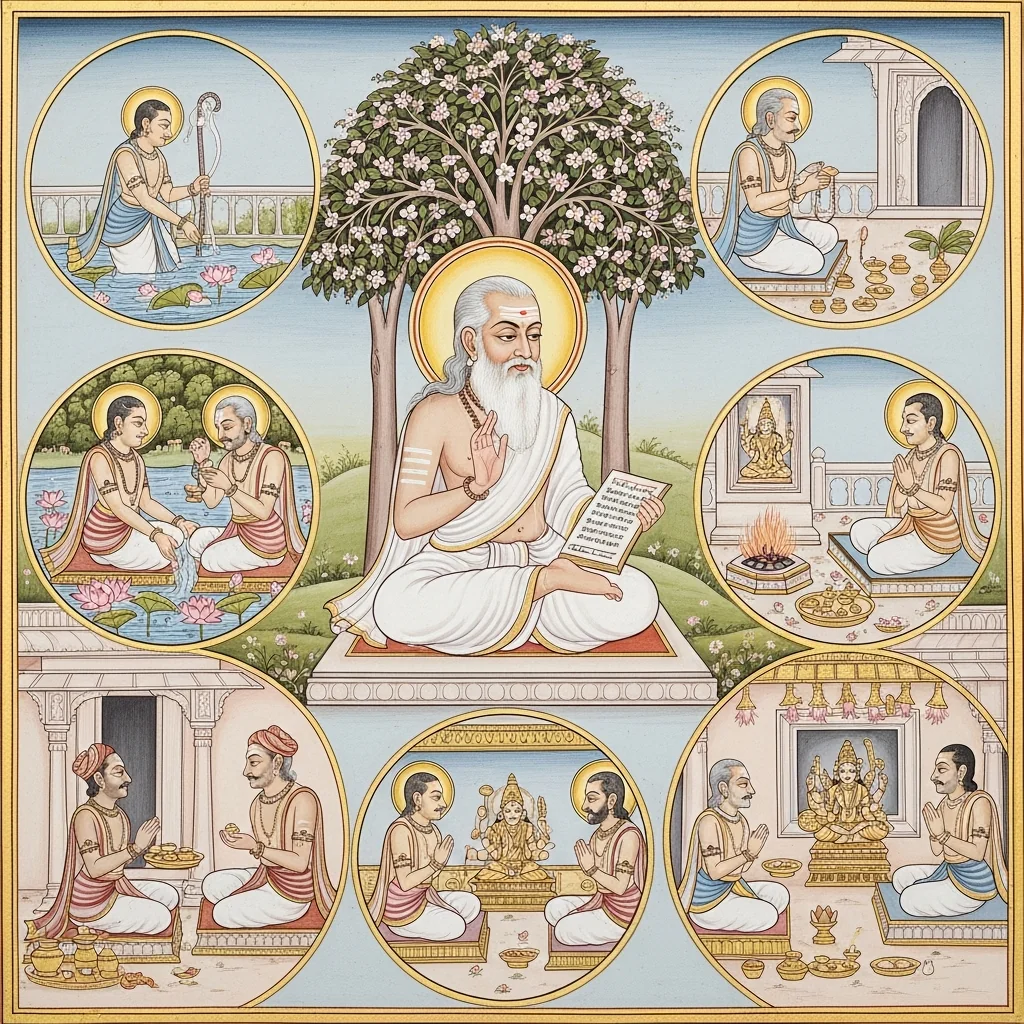
Chapter 13 presents a prescriptive discourse by Sārasvata, laying out a practical discipline for householders (gṛhasthas) who seek purification and auspicious advancement. It opens by stressing that one cannot easily rise beyond the mixed workings of wholesome and unwholesome karma (śubha/aśubha) without sustained virtuous conduct. It then lists daily and periodic duties: repeated bathing, worship of Hari–Hara, truthful and beneficial speech, and charity according to one’s means; avoidance of slander and sexual misconduct; and restraint from intoxicants, gambling, quarrels, and violence. Rites performed correctly—snāna, dāna, japa, homa, deva-pūjā, and dvija-arcana—are said to yield “imperishable” results. A major section catalogs types of gifts—cow, bull, horse, elephant, house, gold, silver, perfumes, foods, ritual materials, utensils, clothing, travel assistance, and continual food-giving—each linked to a phala pattern: release from sin, heavenly conveyances, and protection on the path of Yama (Yama-path). The chapter also codifies śrāddha etiquette regarding worthy invitees, the necessity of śraddhā (faith), and honoring ascetics and guests, and it closes by turning toward the forthcoming “yātrā-vidhi” (pilgrimage procedure).
Adhyaya 14
Somēśvara-liṅga-prādurbhāva and Vastrāpatha Puṇya (सोमेश्वरलिङ्गप्रादुर्भावः)
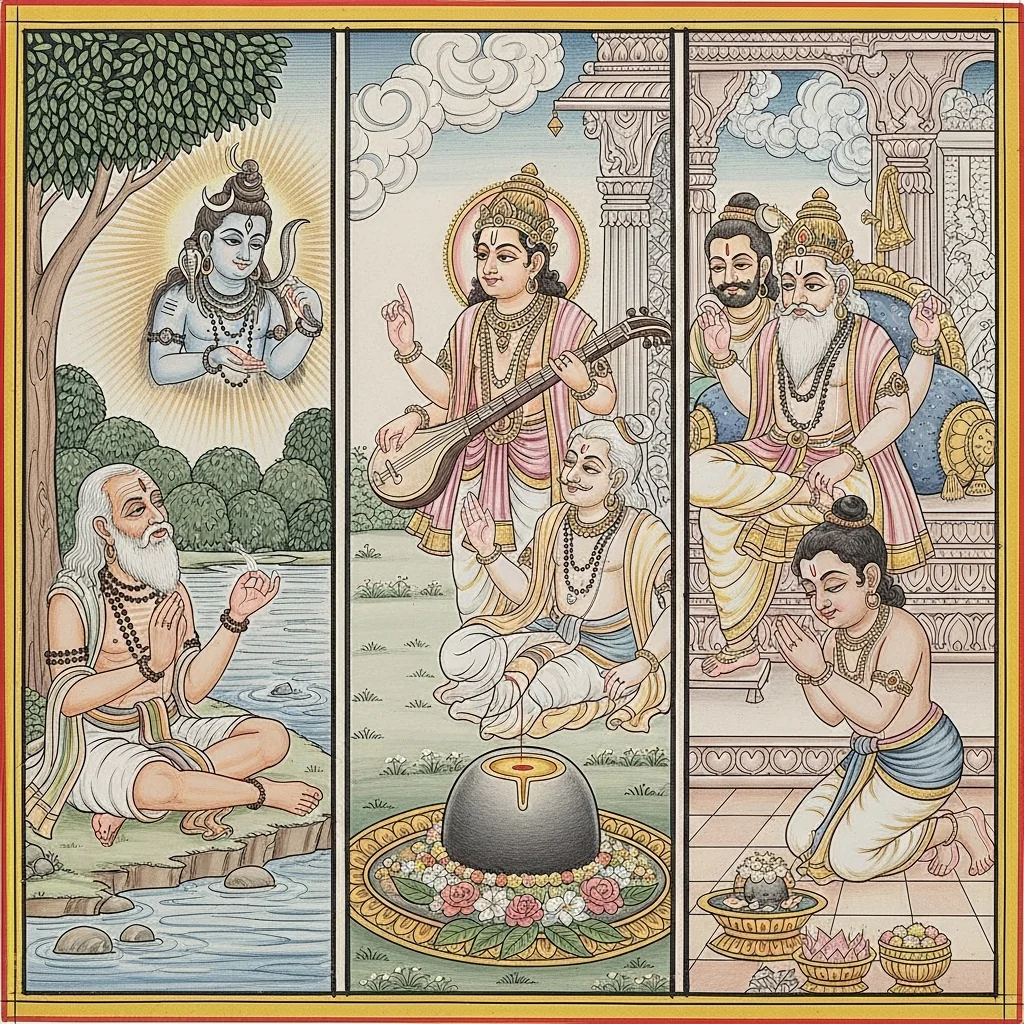
Adhyāya 14 weaves two interlinked narratives that meet in the ritual authority of Vastrāpatha. Sarasvata recounts Vasiṣṭha’s austerities on the bank of the Suvarṇarekhā, where Rudra appears and grants a boon that Śiva will abide there “as long as moon and stars endure,” so that bathing and worship there continually bring pāpa-kṣaya. The scene then shifts to the political-theological backdrop of Bali’s universal sovereignty and Nārada’s displeasure with a world lacking the turbulence of war and sacrifice. Nārada’s words provoke Indra, yet Bṛhaspati urges strategy and the summoning of Viṣṇu. The narrative moves into Vāmana’s incarnation: arriving in Surāṣṭra, Vāmana resolves to worship Somēśvara first, undertaking severe observances until Śiva manifests as a liṅga. Vāmana prays that this svāyambhu liṅga remain before him. The phalāśruti declares that even single-minded worship can free one from grave sins, including brahmahatyā and other mahāpātakas, and after death lead through divine realms to Rudraloka; it concludes that merely hearing this origin account itself yields pāpa-kṣaya.
Adhyaya 15
श्रीदामोदरमाहात्म्यवर्णनम् (Glorification of Dāmodara at Raivataka and the Suvarṇarekhā Tīrtha)
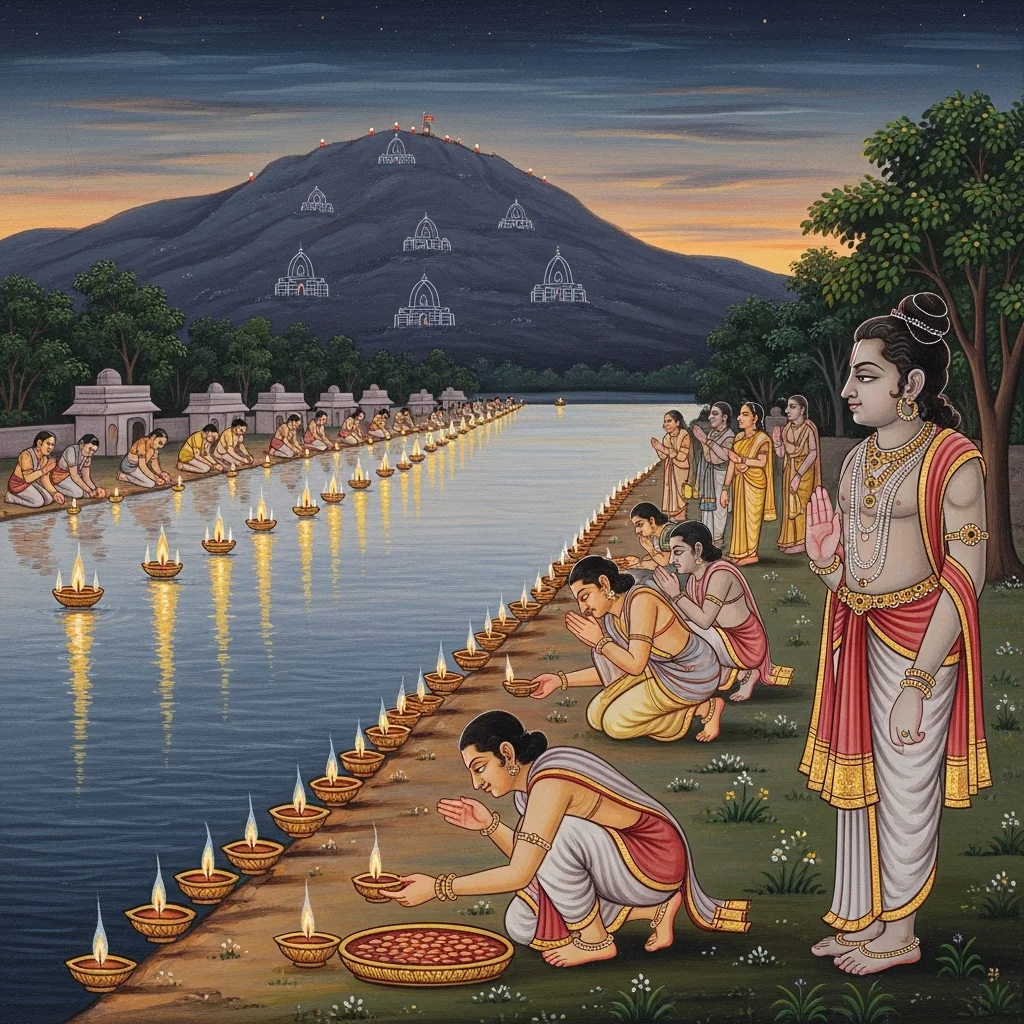
In this chapter, spoken in Sārasvata’s discourse, Vāmana the brāhmaṇa—having gained proper ritual knowledge for worship—journeys through the luxuriant forest of Raivataka. A long catalogue of trees is given, including auspicious “shade-trees” whose very sight is said to bring about the wasting away of sin (pāpa-kṣaya). Near the summit he encounters five fearsome kṣetrapālas, territorial guardians marked by formidable iconography. Through ascetic power he recognizes their divinity and learns that Mahādeva appointed them to regulate entry and protect the sacred precinct. They name themselves—Ekāpāda, Giridāruṇa, Meghānāda, Siṃhanāda, and Kālamegha—and, after granting a boon, accept permanent installation at designated sites (the mountain flank, the summit, the Bhavānī–Śaṅkara area, the front of Vastrāpatha, and the bank of the Suvarṇarekhā) for the welfare of all. The narrative then turns to the Dāmodara-māhātmya: the Suvarṇarekhā is proclaimed “all tīrthas embodied,” bestowing both worldly enjoyment and liberation (bhukti–mukti) and cleansing disease and poverty. Kārttika discipline and Bhīṣma-pañcaka observances are prescribed—sacred bathing, lamp-offering (dīpa-dāna), offerings and temple rites, night-long vigil (jāgaraṇa), śrāddha, and feeding brāhmaṇas and the vulnerable. A strong phalaśruti declares that even grave transgressors are freed from major sins through bathing, Dāmodara-darśana, and wakeful devotion, while the negligent do not attain Hari’s realm. The chapter closes by affirming salvific merit for those who read or hear this purāṇic account.
Adhyaya 16
Adhyāya 16: Narasiṃha-Guardianship, Ujjayanta Ascent, and Śivarātri Vrata Protocols at Vastrāpatha
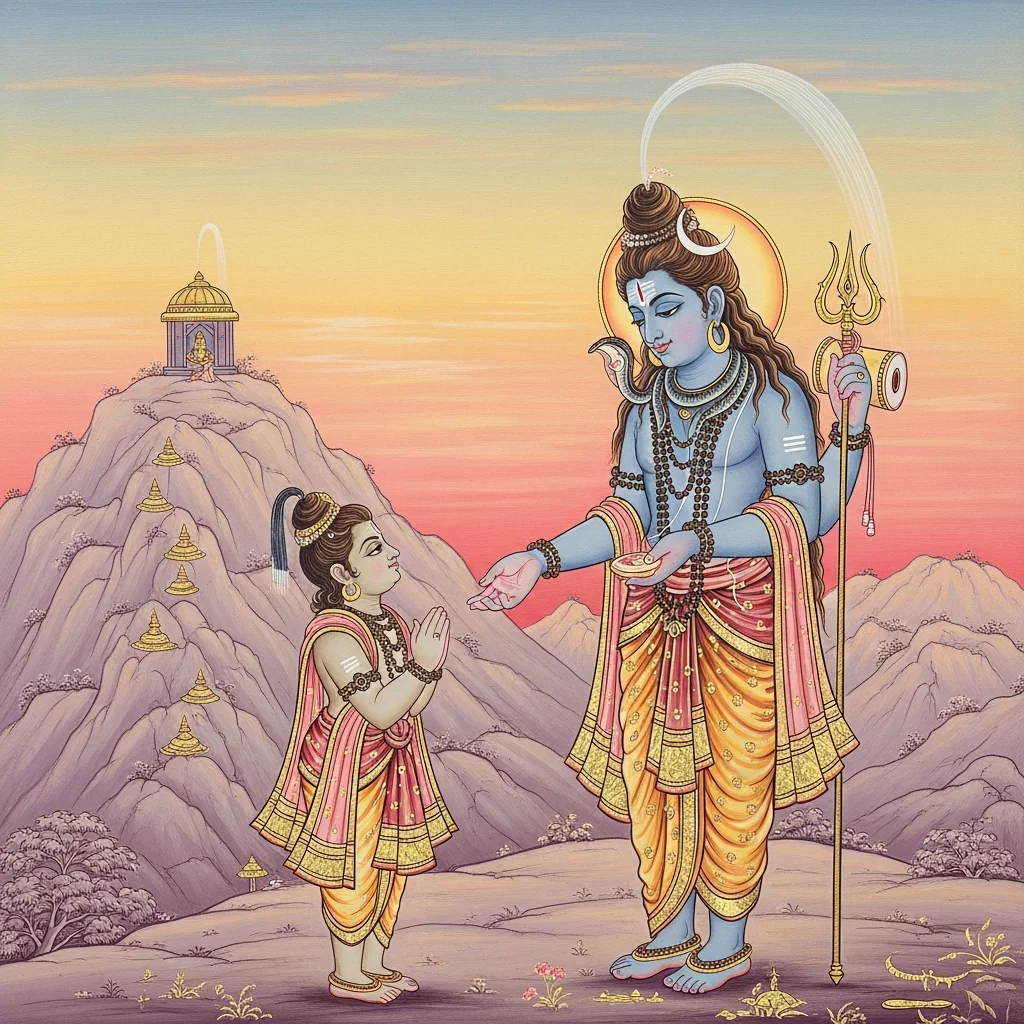
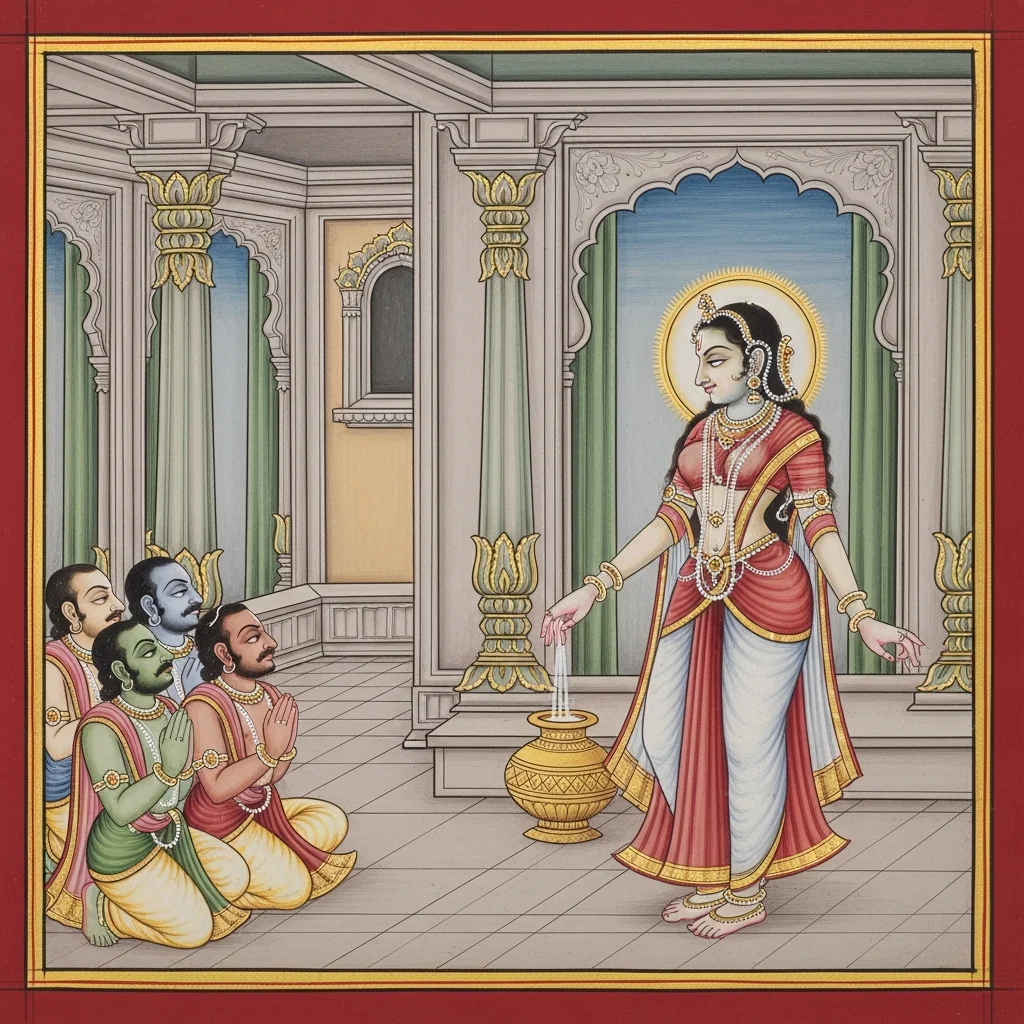
Chapter 16 unfolds as a journey narrative interwoven with instruction. When the king asks about Vāmana’s solitary deeds in the forest, Sārasvata recounts Vāmana’s travel to Raivataka, his bath in the Suvarṇarekhā River, and his worship with offerings. In a forest both radiant and fearsome, Vāmana inwardly remembers Hari; Narasiṃha appears to protect him and is entreated to eternally guard the residents of the tīrthas and to remain stationed before the deity Dāmodara. Vāmana then honors Dāmodara and Bhava (Śiva), proceeds to Vastrāpatha, and beholds Mount Ujjayanta, reflecting on “subtle dharmas” that yield great results through small ethical acts and attentive devotion. Ascending the mountain, he encounters Devī as Ambā, Skanda’s mother, worshiped on the summit, and receives a vision of Bhava/Śaṅkara. Śiva grants boons—growth of influence, mastery of Vedic learning and performative arts, and steady efficacy—and instructs him to survey Vastrāpatha’s tīrthas. Rudra then indicates directional shrines: a divine pond and a jāli forest with a clay liṅga that destroys the sin of brahmahatyā by mere darśana, along with liṅgas linked to Kubera/Dhanada, Heramba-gaṇa, Citragupta (Citraguptīśvara), and Kedāra established by Prajāpati. The chapter also embeds the Indra–hunter Śivarātri episode: the hunter’s night vigil earns celestial honor; Indra, Yama, and Citragupta respond with reverence, visit the site, and a perennial spring arises from Airāvata’s footprint on Ujjayanta. The conclusion becomes a practical manual for the Śivarātri vrata—annual or condensed observance, fasting and bathing rules, prohibitions (oil-bath, intoxicants, gambling), lamp-offering, night vigil with recitation and performance, dawn worship, feeding ascetics and brahmacārins, and end-of-vow gifts such as cows and vessels—promising purification and auspicious prosperity.
Adhyaya 17
नारद–बलिसंवादः, रैवतकोत्पत्तिः, विष्णुवल्लभव्रतविधानम् (Nārada–Bali Dialogue, Origin of Raivataka, and the Viṣṇuvallabha Vrata)
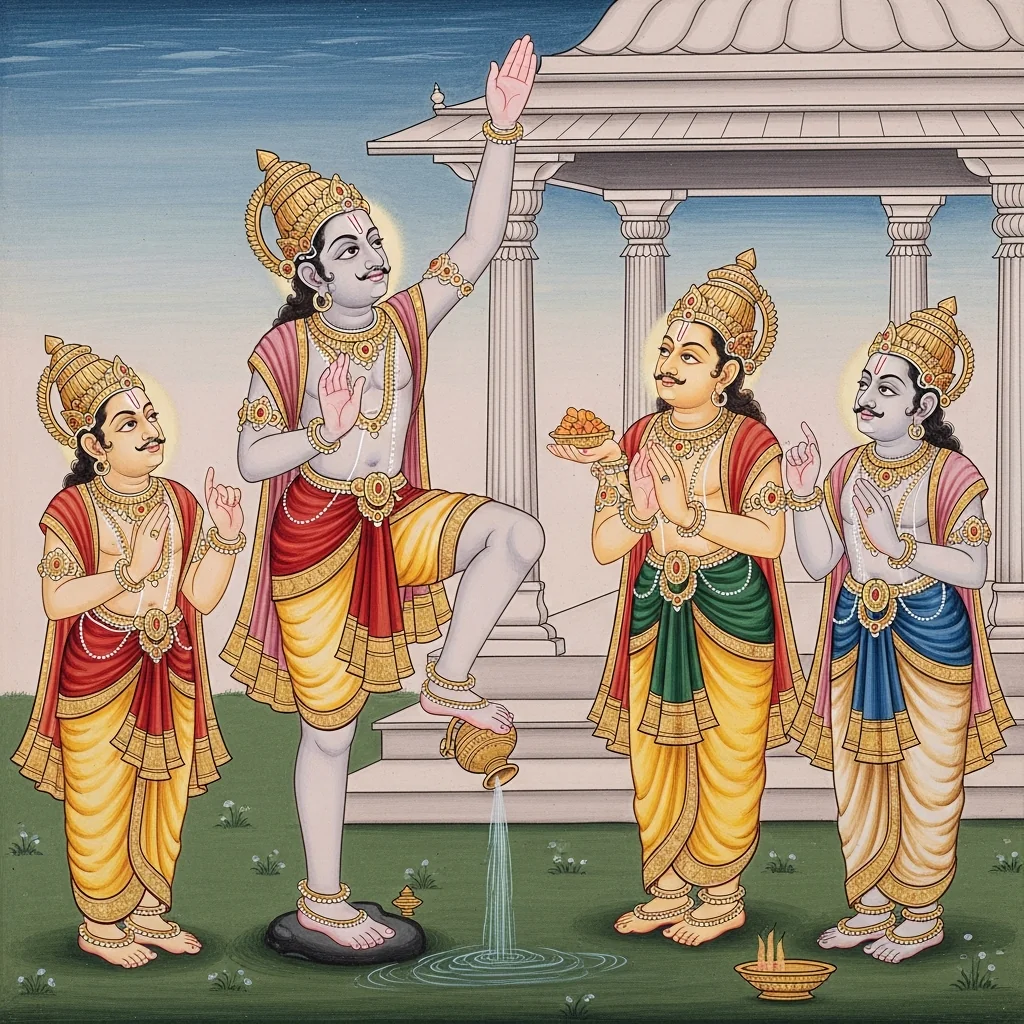
This chapter begins with a king’s query and a sage’s narration, leading to Nārada’s deliberate journey to Bali’s court in view of the impending Vāmana avatāra and the ethical problem of engaging in conflict without violating reverence for one’s guru. Bali is shown among daitya nobles who question the cosmic allotment of amṛta, jewels, and heavenly privileges; the Mohinī episode is recalled to display divine strategy and social restraint, including the protocol of self-choice and warnings against transgression. Nārada then counsels Bali on honoring brāhmaṇas, on kingship through a catalogue of royal virtues, and on turning attention to the sacred landscape of Raivataka. The narrative proceeds with the origin legend of Raivataka/Revati-kuṇḍa and the reordering of the Revati star, culminating in the institution of the place-based vow, the Viṣṇuvallabha vrata. It prescribes fasting on the bright-fortnight Ekādaśī of Phālguna, bathing, flower-worship, night vigil with kathā-listening, circumambulation with fruits, lamp-offering, and regulated food. Finally, it returns to political consequence: the daitya–deva conflict, ominous signs in Bali’s realm after Vāmana’s advent, and the injunction of an expiatory “all-giving” sacrifice to pacify disturbances—binding ritual observance, righteous rule, and cosmological change into a single instructive arc.
Adhyaya 18
वामनयोगोपदेशः, तत्त्वनिर्णयः, बलियज्ञ-त्रिविक्रमप्रसंगश्च (Vāmana’s Yogic Instruction, Tattva Taxonomy, and the Bali–Trivikrama Episode)
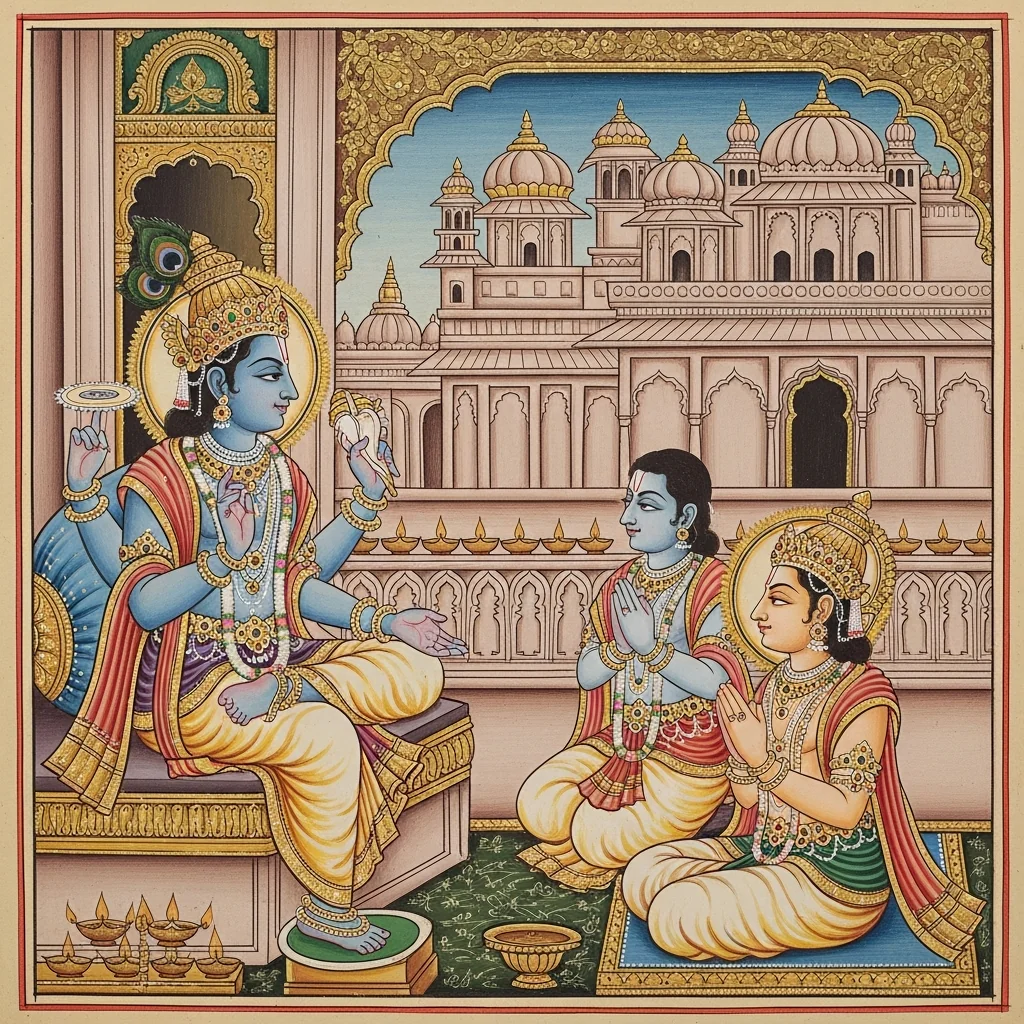
Chapter 18 begins with a king’s question about what Vāmana did upon reaching the great sacred field of Vastrāpatha. Sārasvata describes Vāmana’s disciplined observance: bathing in the Svarṇarekhā, worshiping Bhava (Śiva), and settling into seated yoga—padmāsana, restraint of the senses, silence, and regulated breath. The chapter then defines prāṇāyāma in its classic terms—pūraka, recaka, kumbhaka—and teaches that yogic knowledge purifies the faults accumulated over time. A direct theological instruction follows: Īśvara sets forth a Sāṅkhya-like ordering of tattvas, culminating in the 25th principle, puruṣa, while pointing toward realization of the supreme Self beyond all enumeration. With Nārada’s arrival, the narrative expands into cosmology and the sequence of avatāras (from Matsya through Narasiṃha and beyond), highlighting the Prahlāda–Hiraṇyakaśipu episode as a model of unwavering bhakti and metaphysical vision. The chapter then turns to Bali’s yajña: his vow of generosity, Śukra’s warning, Vāmana’s request for three steps, and the manifestation of Trivikrama. It concludes with sacred-water imagery—Gaṅgā as the water from Viṣṇu’s foot—and a final emphasis on purification, worship, and liberation through knowledge and disciplined practice.
Adhyaya 19
वामन-त्रिविक्रमसंवादः, बलिसुतलबन्धनं, दीपोत्सव-प्रशंसा (Vāmana/Trivikrama Dialogue, Bali in Sutala, and the Praise of a Lamp-Festival)
Adhyāya 19 unfolds as a theological dialogue. Prompted by a royal question, Sarasvata recounts how Hari as Vāmana/Trivikrama completes the yajña: when the sacrifice ends, Bali is reminded of a remaining “debt” (ṛṇa) in the third step—an ethical demand to fulfill the gift he pledged. Bali’s son Bāṇa challenges the propriety of taking a third step in a cosmic form after requesting land as a dwarf, raising concerns about truthful exchange and the conduct expected of sādhus. Janārdana answers with measured reasoning: the request was made within a stated measure and was accepted; the act ultimately benefits Bali, granting him residence in Sutala/Mahātala and future eminence, even an Indra-role in a coming manvantara. Trivikrama then instructs Bali to dwell in Sutala, while promising abiding presence in Bali’s heart and renewed closeness. The chapter also projects an auspicious lamp-festival (dīpa) and communal worship, linking devotional celebration to Bali’s name and to social well-being. The closing phalaśruti declares that remembering, hearing, and reciting this account diminishes sin and steadies devotion to Śiva and Kṛṣṇa; it urges proper patronage to the reciter (dāna) and warns against sharing the “secret” with the irreverent, marking the ethical boundary of Purāṇic transmission.
FAQs about Vastrapatha Kshetra Mahatmya
Vastrāpatha is portrayed as a central and beloved locus of Prabhāsa where Bhava/Śiva is directly present; the site’s glory is anchored in the immediacy of divine darśana and the completeness (kṛtakṛtyatā) attributed to pilgrimage there.
Merits include rapid accrual of tīrtha-fruit through bathing and visitation, equivalence to major pan-Indian pilgrimages, and soteriological benefits such as release from adverse post-mortem states when devotion and rites are performed with steadiness.
Rather than a multi-episode legend cycle in this excerpt, the section’s core narrative claim is theological: Bhava as the self-born lord stationed at Prabhāsa, with Vastrāpatha identified as a privileged site for encountering that presence.