Adhyaya 7
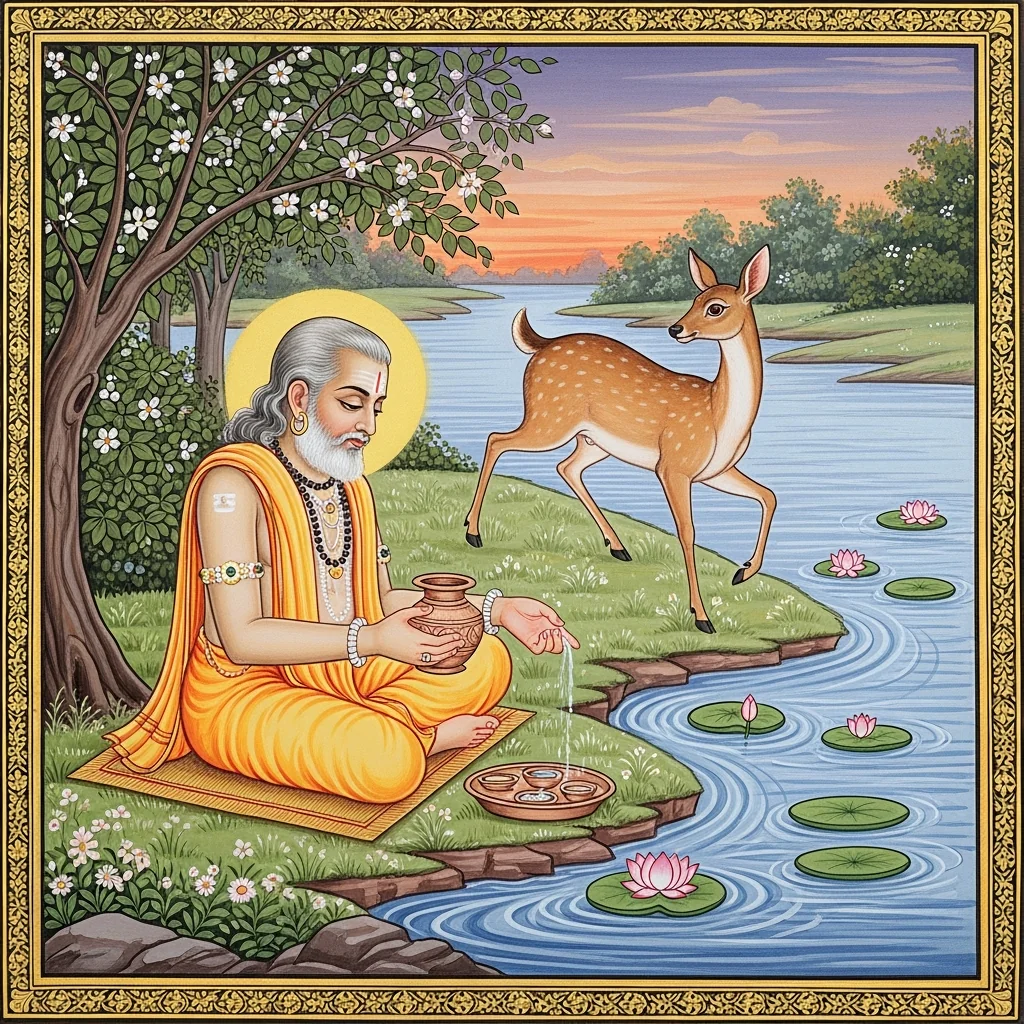
Chapter 7 unfolds as a dialogue on karmic causality, bodily transformation, and the power of tīrthas. A king questions a woman who appears with a deer-like face about her origin. She recounts a conception episode on the bank of the Gaṅgā connected with the ascetic Uddālaka: a chance occurrence involving a vīrya-bindu and a doe becomes the cause of her being human in identity yet marked with a deer-faced form. The narrative then turns to moral reckoning. She contrasts her chastity across many births with the king’s former lapse in kṣatriya-dharma, speaking of accumulated sin and the need for expiation, even invoking motifs of self-immolation. The text lists meritorious deaths and deeds—falling in battle, daily feeding and charity, and dying at named tīrthas, including Vastrāpatha in Prabhāsa—while an incorporeal voice (aśarīriṇī) declares the king’s karmic sequence: first the fruit of sin is endured, then heaven is attained. A practical remedy is prescribed: if the king releases a head/effigy into the Swarnarekhā waters at Vastrāpatha, her face will become human. A messenger/door-keeper is sent, the head is found in a forest setting and ritually consigned to the tīrtha, and the girl undertakes a month-long Cāndrāyaṇa vow, culminating in her transformation into a divinely described human beauty. The chapter closes with Īśvara’s praise of the kṣetra as supreme among regions and forests, inhabited by gods and semi-divine beings, with Śiva (Bhava) permanently established; bathing, sandhyā, tarpaṇa, śrāddha, and flower-offering worship grant release from worldly becoming and ascent to heaven.
Shlokas
Verse 1
राजोवाच । कथं त्वं हरिणीरूपे जाता मानुषरूपिणी । केन संवर्धिता बाल्ये कथं ते रूपमीदृशम्
The King said: “How were you born in the form of a doe, yet possessing a human body? By whom were you raised in childhood, and how did you come to have such a form as this?”
Verse 2
मृग्युवाच । शृणु देव प्रवक्ष्यामि यद्वृत्तं कन्यके वने । ऋषिरुद्दालकोनाम गंगाकूले महातपाः
The Doe-woman said: “Listen, O King; I shall tell what happened in the Kanyaka forest. On the bank of the Gaṅgā there was a great ascetic sage named Uddālaka.”
Verse 3
प्रभाते मूत्रमुत्सृष्टुं गतो देव वनांतरे । मूत्रांते पतितो भूमौ वीर्यबिंदुर्द्विजन्मनः
At dawn, O King, he went into the forest to urinate. At the end of that act, a drop of the twice-born’s seed fell upon the ground.
Verse 4
यावत्स चलितो विप्रः शौचं कृत्वा प्रयत्नतः । तावन्मृगी समायाता दृष्ट्वा पुष्पवनांतरात्
As the brāhmaṇa moved on, having carefully performed the rite of purification, at that very moment a doe arrived there, having seen him from within a grove of flowers.
Verse 5
चापल्याद्भक्षितं वीर्यं दृष्टं ब्रह्मर्षिणा स्वयम् । यस्मादश्नाति मे वीर्यं तस्माद्गर्भो भविष्यति
Out of restlessness she consumed the seed—this the brahmarṣi himself beheld. “Since she has eaten my seed, therefore pregnancy shall arise,” he concluded.
Verse 6
ममरूपा तववक्त्रा नारी गर्भे भविष्यति । वर्द्धयिष्यति देव्यस्तां रसैर्दिव्यैः सुतां तव
A woman—bearing my very form and your very face—will be conceived in a womb. The Goddess will nourish and cause that daughter of yours to grow with divine essences.
Verse 7
केनापि दैवयोगेन ज्ञानं तस्या भविष्यति । एवमुद्दालकादेव संजाताहं मृगानना । प्रविश्याग्नौ मृता पूर्वं त्वया सार्द्धं नराधिप
By some mysterious conjunction of fate, knowledge will arise in her. Thus, from Uddālaka alone I was born as Mṛgānanā. Formerly, O king, I entered the fire and died together with you.
Verse 8
तस्माज्जातं सतीत्वं मे सप्तजन्मनि वै प्रभो । यत्त्वया कुर्वता राज्यं पापं वै समुपार्जितम्
Therefore, O lord, my fidelity as a satī has arisen through seven births—because while you ruled the kingdom, sin was indeed accumulated.
Verse 9
क्षत्त्रधर्मं परित्यज्य पलायनपरो मृतः । तदेनो हि मया दग्धं चिताग्नौ नृपसत्तम
Forsaking the kṣatriya’s dharma, you died with your mind set on flight. Yet that very sin was burned away by me in the fire of the funeral pyre, O best of kings.
Verse 10
पतिं गृहीत्वा या नारी मृतमग्नौ विशेद्यदि । सा तारयति भर्तारमात्मानं च कुलद्वयम्
If a woman, taking hold of her husband, enters the fire after he has died, she delivers her husband, herself, and both lineages.
Verse 11
गोग्रहे देशभंगे च संग्रामे सम्मुखे मृतः । स सूर्यमण्डलं भित्त्वा ब्रह्मलोके महीयते
One who dies facing the enemy—whether while protecting cows, defending the land, or in battle—pierces the orb of the sun and is honored in Brahmā’s world.
Verse 12
अनाशकं यो विदधाति मर्त्त्यो दिनेदिने यज्ञसहस्रपुण्यम् । स याति यानेन गणान्वितेन विधूय पापानि सुरैः स पूज्यते
The mortal who observes a daily fast gains the merit of a thousand sacrifices. Shaking off sins, he departs in a celestial chariot attended by divine hosts, and he is honored by the gods.
Verse 13
गंगाजले प्रयागे वा केदारे पुष्करे च ये । वस्त्रापथे प्रभासे च मृतास्ते स्वर्गगामिनः
Those who die in the waters of the Gaṅgā, or at Prayāga, or at Kedāra, or at Puṣkara—and likewise at Vastrāpatha in Prabhāsa—are destined for heaven.
Verse 14
द्वारावत्यां कुरुक्षेत्रे योगाभ्यासेन ये मृताः । हरिरित्यक्षरं मृत्यौ येषां ते स्वर्गगामिनः
Those who die at Dvāravatī or at Kurukṣetra through the discipline of yoga—and those on whose lips at death is the syllable “Hari”—they go to heaven.
Verse 15
पूजयित्वा हरिं ये तु भूमौ दर्भतिलैः सह । तिलांश्च पञ्चलोहं च दत्त्वा ये तु पयस्विनीम्
Those who worship Hari upon the ground, together with darbha grass and sesame—and those who give sesame and the five metals, and who also donate a milch-cow—attain auspicious fruits.
Verse 16
ये मृता राजशार्दूल ते नराः स्वर्ग गामिनः । उत्पाद्य पुत्रान्संस्थाप्य पितृपैतामहे पदे
O tiger among kings, those men who die in this sacred context attain heaven—having begotten sons and established them in the ancestral station, continuing the line of fathers and grandfathers.
Verse 17
निर्मला निष्कलंका ये ते मृताः स्वर्गगामिनः । व्रतोपवासनिरताः सत्याचारपरायणाः । अहिंसानिरताः शांतास्ते नराः स्वर्गगामिनः
Those who are pure and free from stain—when they die—go to heaven. Devoted to vows and fasting, steadfast in truthful conduct, committed to non-violence and established in peace: such men indeed attain heaven.
Verse 18
सापवादो रणं त्यक्त्वा मृतो यस्मान्नराधिप । सप्तयोनिषु ते जन्म तस्माज्जातं मया सह
O lord of men, because he died after abandoning the battlefield—bearing reproach—he was born through seven wombs; thus it came to pass that he was born together with me in the same course of rebirth.
Verse 19
त्वां विना मे पतिर्मा भून्मरणे याचितं मया । तदांतरिक्षे राजेन्द्र वागुवाचाशरीरिणी । आदौ पापफलं भुक्त्वा पश्चा त्स्वर्गं गमिष्यसि
“Let my husband not be without you”—thus I prayed at the time of death. Then, O king of kings, a bodiless voice spoke in the sky: “First you shall experience the fruit of sin; afterward you will go to heaven.”
Verse 20
यदि वस्त्रापथे गत्वा शिरः कश्चिद्विमुंचति । स्वर्णरेखाजले राजन्मानुषं स्यान्मुखं मम
O king, if someone goes to Vastrāpatha and offers a head there, then in the waters of the Svarṇarekhā my face will become human.
Verse 21
अहं मानुषवक्त्राऽस्मि पापच्छायाऽवृतं मुखम् । दृश्यते मृगवक्त्राभं तस्माच्छीघ्रं विमुंचय
I am one with a human face, yet my face is covered by the shadow of sin. It appears like the face of a deer; therefore, release it quickly (and set in motion the remedy).
Verse 22
इति श्रुत्वा वचो राजा सारस्वतमुदैक्षत । जनो विहस्य सानन्दं सर्वं सत्यं मृगीवचः
Hearing these words, the king looked toward Sārasvata. The people, laughing with delight, acknowledged that every word spoken by the doe was true.
Verse 23
इत्युक्त्वाऽह द्विजेन्द्रः स एवं कुरु नृपोत्तम । एवं राज्ञा समादिष्टः प्रतीहारो ययौ वनम्
Having spoken thus, that best of Brahmins said, “Do so, O best of kings.” Commanded accordingly by the king, the chamberlain (pratīhāra) went to the forest.
Verse 24
वस्त्रापथे महातीर्थे भवं द्रष्टुं त्वरान्वितः । त्वक्सारजालिर्महती स्वर्णरेखाजलोपरि
Hastening to behold Bhava (Śiva) at the great sacred ford of Vastrāpatha, he saw a vast net of bark-fibres spread out upon the waters of the Svarṇarekhā.
Verse 25
वर्त्तते तच्छिरो यत्र वंशप्रोतं महावने । सारस्वतस्य शिष्येण कुशलेन निवेदितम्
Where that head was—fastened to a bamboo staff in the great forest—this was duly reported by Kuśala, the disciple of Sārasvata.
Verse 26
तीर्थं वस्त्रापथं गत्वा भवस्याग्रे महानदी । जाले तत्र शिरो दृष्टं तच्च तोये विमोचितम्
Having gone to the sacred ford called Vastrāpatha, to the great river before Bhava (Śiva), he saw a head caught in a net there and released it into the water.
Verse 27
स्नात्वा संपूज्य तीर्थेशं प्रतीहारः समभ्यगात् । शिष्येण सहितो वेगाद्रथेनादित्यवर्चसा
After bathing and duly worshipping the Lord of the Tīrtha, the pratīhāra (chamberlain) arrived swiftly, accompanied by his disciple, in a chariot radiant like the sun.
Verse 28
यदागतः प्रतीहारस्तदा सारस्वतेन सा । वृता चान्द्रायणेनैव मासमेकं निरन्तरम्
When the pratīhāra arrived, she was observing the Sārasvata discipline, and also continuously keeping the Cāndrāyaṇa vow for a full month.
Verse 29
संपूर्णे तु व्रते तस्या दिव्यं वक्त्रं सुलोचनम् । सुशोभनं दीर्घकेशं दीर्घकर्णं शुभद्विजम्
When her vow was fulfilled, she revealed a divine and lovely face with beautiful eyes—radiant, with long hair and long ears, and with auspicious, excellent teeth.
Verse 30
कम्बुग्रीवं पद्मगंधं सर्वलक्षणसंयुतम् । व्रतांते मूर्च्छिता बाला गतज्ञाना वभूव सा
She had a conch-like neck and a lotus-like fragrance, endowed with every auspicious mark; yet at the vow’s end the young girl fainted, losing consciousness and awareness.
Verse 31
न देवी न च गंधर्वी नासुरी न च किंनरी । यादृशी सा तदा जाता तीर्थभावेन सुन्दरी
She was neither a goddess, nor a Gandharvī, nor an Asurī, nor a Kinnarī; yet such beauty she attained then, by the very power of the tīrtha.
Verse 32
परिणीता तु सा तेन भोजराजेन सुन्दरी । मृगीमुखीति विख्याता देवी सा भुवनेश्वरी
That beautiful woman was married by King Bhoja; she became renowned as “Mṛgīmukhī” (Doe-faced). She was a goddess—Bhuvaneśvarī herself.
Verse 33
न जानाति पुनः किंचिद्यद्वृत्तं राजमन्दिरे । कृता सा पट्टमहिषी भोजराजेन धीमता
She no longer knew anything of what had occurred in the royal palace; the wise King Bhoja made her his chief queen (paṭṭa-mahiṣī).
Verse 34
ईश्वर उवाच । देशानां प्रवरो देशो गिरीणां प्रवरो गिरिः । क्षेत्राणामुत्तमं क्षेत्रं वनानामुत्तमं वनम्
Īśvara said: “Among regions, this is the foremost region; among mountains, the foremost mountain; among sacred kṣetras, the supreme kṣetra; among forests, the supreme forest.”
Verse 35
गंगा सरस्वती तापी स्वर्णरेखाजले स्थिता । ब्रह्मा विष्णुश्च सूर्यश्च सर्व इन्द्रादयः सुराः
Gaṅgā, Sarasvatī, and Tāpī are present in the waters of the Svarṇarekhā; Brahmā, Viṣṇu, and Sūrya too—and all the gods beginning with Indra—are present there.
Verse 36
नागा यक्षाश्च गन्धर्वा अस्मिन्क्षेत्रे व्यवस्थिताः । ब्रह्मांडं निर्मितं येन त्रैलोक्यं सचराचरम्
Nāgas, Yakṣas, and Gandharvas abide established in this sacred kṣetra. Here is the One by whom the cosmic egg (brahmāṇḍa) was fashioned—the three worlds, with all that moves and all that is unmoving.
Verse 37
देवा ब्रह्मादयो जाताः स भवोऽत्र व्यवस्थितः । शिवो भवेति विख्यातः स्वयं देवस्त्रिलोचनः
The gods—Brahmā and the rest—came into being; and that Bhava is established here. He is Śiva, famed as ‘Bhava’—the Three-eyed Lord himself.
Verse 38
वेवेति स्कन्दरचनाद्भवानी चात्र संस्थिता । अतो यन्नाधिकं प्रोक्तं तीर्थं देवि मया तव
From Skanda’s utterance—“Veve!”—Bhavānī too became established here. Therefore, O Goddess, I have told you of this tīrtha; nothing greater remains to be said.
Verse 39
तस्मिञ्जले स्नानपरो नरो यदि संध्यां विधायानु करोति तर्पणम् । श्राद्धं पितॄणां च ददाति दक्षिणां भवोद्भवं पश्यति मुच्यते भवात्
If a man bathes with devotion in that water, performs the sandhyā rites, and then offers tarpaṇa; if he performs śrāddha for the Pitṛs and gives the due dakṣiṇā—he beholds Bhavodbhava and is released from bhava, worldly becoming.
Verse 40
अथ यदि भवपूजां दिव्यपुष्पैः करोति तदनु शिवशिवेति स्तोत्रपाठं च गीतम् । सुरवर गणवृन्दैः स्तूयमानो विमानैः सुरवरशिवरूपो मानवो याति नाकम्
And if one worships Bhava with divine flowers, then recites hymns and sings the praise of “Śiva, Śiva,” that person—lauded by hosts of excellent gods and borne in celestial chariots—goes to heaven, attaining a form akin to Śiva among the gods.