Adhyaya 14
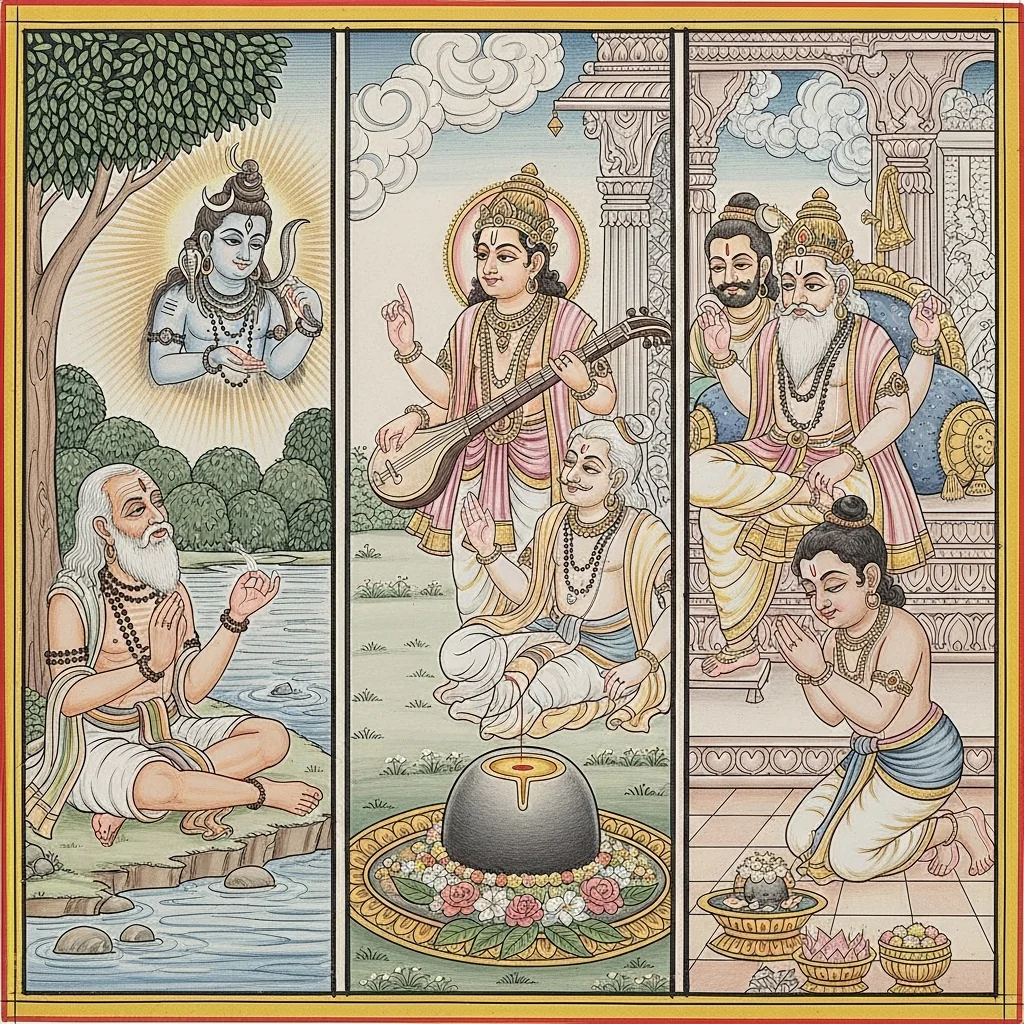
Adhyāya 14 weaves two interlinked narratives that meet in the ritual authority of Vastrāpatha. Sarasvata recounts Vasiṣṭha’s austerities on the bank of the Suvarṇarekhā, where Rudra appears and grants a boon that Śiva will abide there “as long as moon and stars endure,” so that bathing and worship there continually bring pāpa-kṣaya. The scene then shifts to the political-theological backdrop of Bali’s universal sovereignty and Nārada’s displeasure with a world lacking the turbulence of war and sacrifice. Nārada’s words provoke Indra, yet Bṛhaspati urges strategy and the summoning of Viṣṇu. The narrative moves into Vāmana’s incarnation: arriving in Surāṣṭra, Vāmana resolves to worship Somēśvara first, undertaking severe observances until Śiva manifests as a liṅga. Vāmana prays that this svāyambhu liṅga remain before him. The phalāśruti declares that even single-minded worship can free one from grave sins, including brahmahatyā and other mahāpātakas, and after death lead through divine realms to Rudraloka; it concludes that merely hearing this origin account itself yields pāpa-kṣaya.
Shlokas
Verse 1
सारस्वत उवाच । वस्त्रापथे महाक्षेत्रे नगरे वामने पुरा । पुत्रशोकाभिसंतप्तो वसिष्ठो भगवानृषिः
Sārasvata said: Formerly, in the city called Vāmana within the great sacred field of Vastrāpatha, the blessed sage Vasiṣṭha, scorched by grief over his son, (arrived there).
Verse 2
आजगाम तपस्तप्तुं स्वर्णरेखानदीतटे । ईशानकोणे नगरात्स्वर्णरेखानदीजले
He came to practice austerities (tapas) on the bank of the river Svarṇarekhā—at the river’s waters, to the northeast of the city.
Verse 3
स्नात्वा ध्यात्वा शिवं देवं मनसाऽचिन्तयद्यदा । तदा रुद्रः समायातस्त्रिनेत्रो वृषभध्वजः । महर्षे तव तुष्टोऽहं किं करोमि वदस्व तत्
When he had bathed, meditated, and contemplated Lord Śiva within his mind, then Rudra arrived—three-eyed, bearing the bull as his emblem—and said: “O great sage, I am pleased with you. Tell me—what shall I do for you?”
Verse 4
वसिष्ठ उवाच । यदि तुष्टो महादेव वरो देयो ममाधुना । तदाऽत्र भवता स्थेयं यावदाचंद्रतारकम्
Vasiṣṭha said: If you are pleased, O Mahādeva (Śiva), then grant me a boon now: may you abide here as long as the moon and stars endure.
Verse 5
अत्र स्नानं करिष्यंति ये नराः पापकर्मिणः । तेषां पापक्षयो देव कर्तव्यो भवता सदा
Those who have committed sinful deeds will bathe here; O Deva, may you ever bring about the destruction of their sins.
Verse 6
नरा ये पापकर्माणः पूजयंति त्रिलोचनम् । तान्नरान्नय देवेश विमानैः शिवमंदिरम्
Even those engaged in sinful deeds—if they worship the Three-eyed Lord (Śiva)—O Lord of gods, lead them in celestial chariots to Śiva’s own temple-abode.
Verse 7
सारस्वत उवाच । तथेत्युक्ता हरो देवस्तत्रैवांतर धीयत । हिरण्यकशिपुं हत्वा नरसिंहो महाबलः । त्रैलोक्यमिंद्राय ददौ कालरुद्रं स्वयं ययौ
Sārasvata said: “So be it.” Thus addressed, Lord Hara (Śiva) vanished there itself. After slaying Hiraṇyakaśipu, the mighty Narasiṃha handed over the three worlds to Indra, and himself departed to Kālarudra.
Verse 8
तदन्वये बलिर्जातः स चातीव बला धिकः । एकातपत्रां पृथिवीं बलिश्चक्रे बलाधिकः । अकृष्टपच्या सुजला धरित्री सस्यशालिनी
In that lineage Bali was born, exceedingly mighty. That supremely powerful Bali brought the earth “under one umbrella” (unified under a single rule). The land yielded crops without ploughing, was well-watered, and rich in harvests.
Verse 9
गन्धवंति च पुष्पाणि रसवंति फलानि च । आस्कन्धफलिनो वृक्षाः पुटके पुटके मधु
Flowers were fragrant, and fruits were rich with taste. Trees bore fruit up to their very trunks, and in every hollow and every cavity there was honey.
Verse 10
चतुर्वेदा द्विजाः सर्वे क्षत्रिया युद्धकोविदाः । गोषु सेवापरा वैश्याः शूद्राः शुश्रूषणे रताः
All the twice-born were versed in the four Vedas; the Kṣatriyas were skilled in warfare; the Vaiśyas were devoted to the service of cattle; and the Śūdras delighted in faithful service.
Verse 11
सदाचारा जनपदा ईतिव्याधिविवर्जिताः । हृष्टपुष्टजनाः सर्वे सदानंदाः सदोद्यताः
The towns and regions were of good conduct, free from calamity and disease. All people were cheerful and well-nourished—ever joyful and ever energetic.
Verse 12
कुंकुमागुरुलिप्तांगाः सुवेषाः साधुमंडिताः । दारिद्र्यदुःखमरणैर्विमुक्ताश्चिरजीविनः
Their limbs were anointed with saffron and aloe-wood; they were well-dressed and adorned with virtues. Freed from poverty, sorrow, and untimely death, they lived long lives.
Verse 13
दीपोद्द्योतितभूभागा रात्रावपि यथा दिने । विचरंति तथा मर्त्या देवा देवालये यथा
The land was illuminated by lamps, so that even at night it appeared like day. People moved about then as freely as the gods move within a divine temple.
Verse 14
पृथिव्यां स्वर्गरूपायां राज्यं चक्रेऽसुरो बलिः । नित्यं विवाहवादित्रैर्नादितं भूपमंदिरम्
On the earth that had become like heaven, the Asura Bali ruled his kingdom. Each day the royal palace resounded with festive music and instruments, like those played at weddings.
Verse 15
धरित्रीं बुभुजे दैत्यो देवराजो यथा दिवि । देवेन्द्रो बलिना नित्यं यज्ञैः संतोषितस्तदा
The Daitya Bali enjoyed and governed the earth as the king of the gods enjoys heaven. In those days Devendra (Indra) was continually satisfied by Bali through sacrifices (yajñas).
Verse 16
देवानां दानवानां च नास्ति युद्धं परस्परम् । एक एव महीपालो युद्धं नास्ति धरातले
Between the Devas and the Dānavas there was no war with one another. There was but one ruler upon the earth, and on the face of the world there was no warfare at all.
Verse 17
सपत्नककलिर्नाम नास्ति युद्धं हरेर्गजैः । न सर्प्पनकुलैर्नित्यं न बिडालैश्च मूषकैः
That rivalry called ‘enmity between co-wives’ was absent; there was no battle between lions and elephants. Nor was there perpetual strife between serpents and mongooses, nor between cats and mice.
Verse 18
मैत्रीभावं गतं सर्वं जगत्स्थावर जंगमम् । त्रैलोक्यभ्रमणं कृत्वा नारदो नंदने वने
All the world—moving and unmoving—had entered a state of friendship. After wandering through the three worlds, Nārada arrived in the Nandana grove.
Verse 19
गतो न पश्यते युद्धं त्रैलोक्ये सचराचरे । तावत्तस्योदरे पीडा महती समजायत
Though he went about, he saw no war anywhere in the three worlds, among all that moves and does not move. Yet at that very time, a great pain arose in his belly.
Verse 20
न मे स्नानादिना कार्यं तर्प्पणैः किं प्रयोजनम् । जपहोमादिना सर्वमन्यथा मम चेष्टितम्
For me there is no need of bathing and the like; what purpose do the tarpaṇa libations serve? All such acts—japa, homa, and the rest—have, for me, become vain, even contrary to their true aim.
Verse 21
तत्स्नानं यत्र युध्यन्ते गजा दंतविघट्टनैः । सा संध्या यत्र निहतैः कबन्धैर्भूर्विभूषिता
“That is bathing,” where elephants fight, clashing their tusks. “That is twilight worship (sandhyā),” where the earth is adorned with headless trunks of the slain.
Verse 22
कुंतघातविनिर्भिन्नगजकुम्भोद्भवासृजा । तृप्यंति यत्र क्रव्यादास्तर्पणं तन्मम प्रियम्
The tarpaṇa libation dear to me is where flesh-eaters are satisfied by the blood that gushes from elephants’ temples, split open by spear-blows.
Verse 23
गजशीर्षैरगम्यास्ते निहताः क्षत्रिया रणे । स होमो यत्र हूयंते गजाश्च नरपुंगवाः
Those Kṣatriyas, slain in battle, lie in places made impassable by elephants’ heads. “That is the homa,” where elephants and the foremost of men are offered into the fire (of war).
Verse 24
शब्दाग्नौ नारदस्यायं होमस्त्रै लोक्यविश्रुतः । छिन्नपादशिरोहस्तैरंतरांत्रविलबितैः
In the fire of words, this homa of Nārada became renowned throughout the three worlds—a vision of severed feet, heads, and hands, with entrails hanging down within.
Verse 25
यदर्च्यते भूमितलं तन्मे नित्यं सुरार्चनम् । किं देवैर्दिवि मे कार्यं किं मनुष्यैर्धरातले
Whatever is worshipped upon the surface of the earth—that alone is, for me, the daily worship of the gods. What need have I of the gods in heaven, and what need of human beings upon the earth?
Verse 26
पन्नगैः किं तु पाताले न युध्यन्ते परस्परम् । तथा करिष्ये देवेन्द्रादुपेन्द्राच्च धरातले
“Do not the serpent-beings in the netherworld fight among themselves? Even so, upon the earth I shall contend with both Devendra (Indra) and Upendra (Viṣṇu).”
Verse 27
रसातलं बलिर्यातु सत्यमस्तु वचो मम । जीवितेनापि राज्येन यदा दामोदरं हरिम्
“Let Bali go down to Rasātala; let my word be true. Even at the cost of life and kingdom—when the time comes regarding Dāmodara Hari (Viṣṇu)…”
Verse 28
तोषयिष्यति यत्नेन तदेन्द्रोऽसौ भविष्यति । देवेन्द्रो वृत्रहा भूत्वा भ्रष्टराज्यो भविष्यति
“He will strive earnestly to propitiate the Lord; then that one will become Indra. But Devendra, having become the slayer of Vṛtra, will lose his sovereignty.”
Verse 29
यदा वस्त्रापथे गत्वा भवं भावेन पूजयेत् । सुराधिपस्तदा भूयो ब्रह्महत्याविवर्जितः
When the Lord of the gods goes to Vastrāpatha and worships Bhava (Śiva) with heartfelt devotion, then once again he becomes free from the sin of brahma-hatyā.
Verse 30
अनेन मन्त्रजाप्येन स शांतोदरवे दनः । नारदो देवराजस्य समीपं सहसा ययौ
By this repetition of the mantra, he became calm within. Then Nārada swiftly went into the presence of the king of the gods.
Verse 31
सिंहासनं समारुह्य नन्दने संस्थितो हरिः । आस्ते परिवृतो देवेर्देवराजो महाबलः
Ascending his lion-throne and seated in Nandana-grove, Hari—the mighty king of the gods—sat surrounded by the devas.
Verse 32
निरीक्षमाणो नृत्यन्तीं रंभां तां सुरसुन्दरीम् । आयांतं ददृशे देवो नारदं विस्मयान्वितः
While watching Rambhā—the celestial beauty—dancing, the god (Indra) saw Nārada approaching, and was filled with wonder.
Verse 33
अहो विरुद्धो भगवान्नारदो मयि दृश्यते । नृत्यते किं न वा नृत्ये गीयते किं न गीयते
“Ah! The venerable Nārada appears displeased with me. Is it that there should be no dancing? Or that there should be no singing?”
Verse 34
वाद्यतां तालमानैः किं यावच्चिंतापरो हरिः । ऋषिः समागतस्तावज्जलाभ्युक्षणत त्परः
What use is music with measured tāla and rhythm, while Hari (Indra) is absorbed in anxious thought? Just then the ṛṣi arrived, intent on the auspicious rite of sprinkling water as he approached.
Verse 36
महर्षे स्वागतं तेऽद्य कुतो वाऽग म्यते त्वया । स्नाने संध्यार्चने होमे कुशलं तव विद्यते
O great sage, welcome today. From where have you come? Are you well in your observances—ritual bathing, the twilight worship (sandhyā), and the sacred fire-offering (homa)?
Verse 37
इति प्रोक्तो विहस्याथ बभाषे नारदो हरिम् । यद्येतज्जायते मह्यं किमन्येन प्रयोजनम्
Thus addressed, Nārada laughed and spoke to Hari: “If this indeed comes to pass for me, what need would I have of anything else?”
Verse 38
प्रेक्षणीकस्य ते स्थानं नाहं पश्यामि स्वर्पते । यावद्राज्यं बलेस्तावत्त्वया मे न प्रयोजनम्
O Lord of heaven, I see no place for you to stand as a mere spectator. So long as Bali’s kingship endures, I have no need of you in that role.
Verse 39
आदित्याद्या ग्रहाः सर्वे काल मानेन योजिताः । आहुत्या प्लाविता मेघा वर्षंति हृषिता भुवि
From the Sun onward, all the planets move according to the measure of Time. And the clouds, filled by the āhuti of sacrifice, joyfully pour rain upon the earth.
Verse 40
रोगादिमरणं नास्ति यमो धर्मेण पीडितः
There is no death from disease and the like; even Yama is restrained, pressed back by Dharma.
Verse 41
एकातपत्रां पृथिवीं बुभुजे स नराधिपः । त्रैलोक्यनाथेति महानृपेति संग्रामविद्याकुशलेति नित्यम् । त्रैलोक्यलक्ष्मीकुचकामुकेति संस्तूयते चारणबंदिवृन्दैः
That king enjoyed the earth beneath a single umbrella, as sole sovereign. Hosts of cāraṇas and bards ever praised him as “Lord of the three worlds,” “Great monarch,” “Skilled in the arts of war,” and “Beloved of the bosom of Lakṣmī, the Fortune of the three worlds.”
Verse 42
ब्रह्मेति कृष्णेति हरेति भूमाविंद्रेति सूर्येति धनाधिपेति । देवारिनाथेति सुराधिपेति जेगीयते चारणबंदिवृन्दैः
On earth, hosts of cāraṇas and bards sang of him as “Brahmā,” “Kṛṣṇa,” “Hari,” “Indra,” “Sūrya,” “Lord of wealth,” “Master over the enemies of the gods,” and “Chief of the gods.”
Verse 43
युद्धं विना दैत्यगणा हसंति मत्ताः प्रमत्ताः करिणो नदंति । रथाधिरूढाः पुरुषा भ्रमंति सेनाधिपा स्त्रीषु गृहे रमंति
“When there is no war, the hosts of daityas laugh; intoxicated, heedless elephants trumpet; men mounted on chariots wander about; and commanders of armies take their pleasure at home with women.”
Verse 44
यज्ञाग्निधूमेन नभो विराजते सुवर्णरूपा पृथिवी विराजते । शून्यं तु वेदैर्भुवनं च शोभते धिष्ण्यं बलेर्दैर्त्यैगणैश्च शोभते
“The sky shines with the smoke of sacrificial fires; the earth shines as though golden. Yet the world is, as it were, empty of the Vedas; and Bali’s royal seat is splendid with hosts of daityas.”
Verse 45
बलिर्न जानाति सुराधिपं त्वां सुराश्च सर्वे बलियज्ञभोजिनः । त्वमेव तेऽरिं हृदि चिंतय स्वयं युक्तं तवेदं कथितं मयेति
Bali does not recognize You as the Lord of the gods, and all the devas partake of Bali’s sacrifices. Therefore, You Yourself should ponder within Your heart upon Your enemy; what I have spoken is fitting for You.
Verse 46
रंभा न राजते रंगे मेनका त्वां न मन्यते । तिलोत्तमापि मनुते बलिराजं सुरेश्वरम्
Rambhā does not shine upon the stage; Menakā does not regard You as supreme. Even Tilottamā deems King Bali to be the Lord of the gods.
Verse 47
उर्वशी चैव तं याति सुकेशा सह भाषते । मञ्जुघोषा मुखं वक्त्रं कृत्वा त्वां न निरीक्षते
Urvaśī goes to him; Sukeśā speaks with him. Mañjughoṣā, turning her face away, does not look upon You.
Verse 48
पुलोमा पुलकोद्भेदं न करोति बलिं विना । पौलोमी पुरतो गत्वा बलिं स्तौति च मंथरा
Pulomā does not even feel a thrill of joy without Bali. Paulomī, going before him, praises Bali—and Mantharā praises him as well.
Verse 49
नारदः पर्वतश्चैव हाहा हूहूश्च तुंबुरुः । बलिराज्यं प्रशंसंति रुद्रस्याग्रे मया श्रुतम्
Nārada, Parvata, Hāhā, Hūhū, and Tumburu praise the sovereignty of King Bali—this I have heard in the presence of Rudra.
Verse 50
आज्याहुतीभिः सन्तुष्टा ऋषयो ब्रह्मसद्मनि । ब्रह्मणोऽग्रे प्रशंसंति तदेवं कथितं मया
Pleased by the ghee-offerings, the ṛṣis in Brahmā’s abode praise (him) before Brahmā. Thus have I related it.
Verse 51
बृहस्पतिर्यदाचष्टे न तद्वाच्यं मया तव । इंद्राणी बलिनं मत्वा बलिं चित्रेषु पश्यति
What Bṛhaspati declares is not for me to tell you. Indrāṇī, deeming Bali mighty, gazes upon Bali in paintings (portraits).
Verse 52
अनेन वाक्येन सुराधिपस्तु चचाल कोपावरितस्तदानीम् । गजेति वज्रेति जगाद सूतं समानयासिं कवचं रथं च
At these words, the lord of the gods was shaken and at once veiled in anger. He told the charioteer, “Bring the elephant and the thunderbolt (vajra); bring also my sword, armor, and chariot.”
Verse 53
रथेन सूर्यो मरुतो गजेन वृषेण रुद्रो महिषेण सौरिः । वाद्यंतु वाद्यानि रणाय मेऽद्य चण्डी गणेशास्त्वरिताः प्रयातु
Let Sūrya come by chariot; the Maruts by elephant; Rudra by bull; and Sauri by buffalo. Let the instruments of war be sounded for my battle today, and let Caṇḍī and the Gaṇeśas go forth swiftly.
Verse 54
दृष्ट्वा सुरेन्द्रं संक्रुद्धं बृहस्पतिरुदारधीः । ऋषिमध्ये गतो विद्वान्बभाषे समयोचितम्
Seeing Indra enraged, Bṛhaspati—the wise one of noble mind—went among the ṛṣis and spoke what was fitting to the moment.
Verse 55
सामाद्या नीतयः प्रोक्ताश्चतस्रो मनुना पुरा । सामसाध्येषु कार्येषु दण्डस्तेन न पात्यताम्
Long ago Manu taught four policies, beginning with sāma, conciliation. In matters that can be accomplished by conciliation, let punishment not be employed.
Verse 56
अतो ह्युपेन्द्र्माहूय मंत्रयन्तु सुरोत्तमाः । तदधीनं जगत्सर्वं त्रैलोक्यं सचराचरम्
Therefore, having summoned Upendra, let the best of the gods deliberate. For the entire world—the three realms with all that moves and does not move—depends upon him.
Verse 57
विनष्टेषु च कार्येषु तस्य वाच्यं शुभाशुभम् । स एव प्रथमं गच्छेत्पृथिव्यां स्वार्थसिद्धये
When undertakings are ruined, one should declare to him what is auspicious and inauspicious; and he himself should be the first to go forth upon the earth, so that his own purpose may be fulfilled.
Verse 58
तथेति देवैर्विज्ञप्तस्तथा चक्रे सुरेश्वरः । मन्दरेऽथ गिरौ विष्णुः सत्यलोकात्समागतः
Thus petitioned by the gods, the Lord of the Devas assented, saying “So be it,” and acted accordingly. Then, upon Mount Mandara, Viṣṇu arrived, coming from Satyaloka.
Verse 59
ऋषयस्तत्र ते यांतु समानेतुं जनार्द्दनम् । इत्युक्तो नारदः स्वर्गात्स्नातुं प्राप्तः स मन्दरे
“Let the sages go there to bring Janārdana.” Thus instructed, Nārada came down from heaven and arrived at Mandara to bathe.
Verse 60
गौतमोऽत्रिर्भरद्वाजो विश्वामित्रोऽथ कश्यपः । जमदग्निर्वसिष्ठश्च संप्राप्ता हरिमन्दिरे
Gautama, Atri, Bharadvāja, Viśvāmitra, and Kaśyapa—together with Jamadagni and Vasiṣṭha—arrived at Hari’s temple.
Verse 61
गिरौ गंगा जले स्नानं संध्यां चक्रे स नारदः । यावदास्ते तदा हृष्टा वालखिल्या महर्षयः
On the mountain, Nārada bathed in the waters of the Gaṅgā and performed the Sandhyā rites. While he remained there, the Vālakhilya great sages were delighted.
Verse 62
विनयेनाभिवाद्याथ कथयामास नारदः । ऋषयो मन्दरे प्राप्ता विष्णुं नेतुं सुरालये
Having respectfully saluted them with humility, Nārada spoke: “The sages have arrived at Mandara to lead Viṣṇu to the abode of the gods.”
Verse 63
ऋषयो दर्शनं कर्त्तुं भवतामपि युज्यते । तदेतद्वचनं श्रुत्वा हर्षितास्ते महर्षयः
“It is fitting for you as well to go and obtain the sages’ darśana.” Hearing these words, those great seers became joyful.
Verse 64
अंगुष्ठपर्वमात्रांस्तान्वामनान्हरिमन्दिरे । गतान्गंगाजले स्नातुं वालखिल्यान्पुरो हरिः
Hari went ahead of those Vālakhilyas—dwarf-like sages, only the size of a thumb-joint—who had gone from Hari’s temple to bathe in the waters of the Gaṅgā.
Verse 65
जहास वामनान्सर्वान्भाविकार्यबलात्ततः । ब्रह्मपुत्रा वालखिल्याः सर्वे ते शंसितव्रताः
Then, compelled by the force of what was yet to come, he laughed at all those dwarf-like sages. Those Vālakhilyas were sons of Brahmā, all renowned for their praised vows.
Verse 66
लज्जान्विताः क्रोधपरा उच्चैरूचुः परस्परम् । केनापि देवकार्येण वामनोऽयं भविष्यति
Filled with shame and driven by anger, they cried aloud to one another: “By what divine task will this one become a dwarf?”
Verse 67
ऋषिभिर्वि ष्णुना सर्वे प्रतिबोध्य प्रसादिताः । भाग्यमोक्षः कदा विष्णोर्भविष्यति तदुच्यताम्
Having all been instructed and graciously appeased by Viṣṇu along with the sages, they said: “O Viṣṇu, when will the destined liberation be attained? Please declare it.”
Verse 68
प्रभासादधिकं क्षेत्रं यदा वस्त्रापथं भवेत् । भविष्यति तदा वृद्धिर्ध्रुवमण्डलव्यापिनी । तथा वस्त्रापथं क्षेत्रं भविष्यति यवाधिकम्
When Vastrāpatha becomes a sacred field even greater than Prabhāsa, then its increase in glory will surely spread throughout the entire firmament. Thus the holy Kṣetra of Vastrāpatha will become ever more abundant and eminent.
Verse 69
दृष्ट्वा सोमेश्वरं देवं दोषमुक्तो भविष्यति । असाध्यसाधनी शक्तिर्भविष्यति स्थिरा तव
By beholding the god Someśvara, one becomes freed from faults. And for you there will arise a steady power—able to accomplish even what seems impossible.
Verse 70
वस्त्रापथे सोमनाथं यः पश्यति स पश्यति । इन्द्रोपेन्द्रौ समालिंग्याथासीनौ तौ वरासने
He who beholds Somanātha at Vastrāpatha truly beholds the Supreme Reality. There one sees Indra and Upendra, embracing each other, seated upon an excellent throne.
Verse 71
विष्णुरुवाच । किं ते कार्यं देवराज तदवश्यं करोम्यहम्
Viṣṇu said: “O king of the gods, what is your need? That I shall certainly accomplish.”
Verse 72
इन्द्र उवाच । हिरण्यकशिपोर्वंशे बलिर्दैत्यो महा बलः । तेनेदं सकलं व्याप्तं देवा यज्ञभुजः कृताः
Indra said: “In the lineage of Hiraṇyakaśipu there is Bali, a mighty Daitya. By him this entire realm has been overrun, and the gods have been reduced to mere ‘eaters of sacrificial offerings’, deprived of their sovereignty.”
Verse 73
देवलोके भूमिलोको गतः सर्वोऽपि केशव । यावन्नो विकृतिं याति पूर्ववैरमनुस्मरन् । भ्रष्टराज्यो बलिस्तावत्पातालमधितिष्ठतु
“O Keśava, the earthly world has, as it were, passed into the domain of the gods. Until he—remembering former enmity—does not turn his mind into perversity against us, let Bali, deprived of kingship, dwell in Pātāla.”
Verse 74
सूर्यसोमान्वये कश्चिद्राजा भवतु भूतले
“Let some king from the Solar–Lunar lineage arise upon the earth.”
Verse 75
सारस्वत उवाच । इत्येतद्वचनं श्रुत्वा स्वयं संचिन्त्य चेतसा । तथा करिष्ये तं प्रोच्य मुनीन्प्राह जनार्दनः
Sārasvata said: Hearing these words, Janārdana pondered within his own heart and replied, “So shall I do,” and then spoke to the sages.
Verse 76
ऋषयस्तत्र गच्छंतु कारयन्तु महामखम् । अहं तत्रागमिष्यामि साधयिष्यामि तं बलिम्
“Let the sages go there and have a great sacrifice performed. I too shall come there, and I will accomplish that task, bringing Bali under control.”
Verse 77
इत्युक्ता मुनयः सर्वे गतास्ते यज्ञमण्डपे । द्वादशाहो महायज्ञः प्रारब्धः सर्वदक्षिणः
Thus addressed, all the sages went to the sacrificial pavilion. There a twelve-day great sacrifice was begun, complete with every due dakṣiṇā and gift.
Verse 78
सुराष्ट्रदेशं विख्यातं क्षेत्रं वस्त्रापथं नृप । तस्य दक्षिणदिग्भागे बलेः सिद्धं महापुरम्
O King, in the famed land of Surāṣṭra lies the renowned sacred region called Vastrāpatha. In its southern quarter stands Bali’s perfected great city, a firmly established mahāpura.
Verse 79
क्षेत्राद्बहिः समारब्धो यज्ञः सर्वस्वदक्षिणः । शुक्रेणामन्त्रिताः सर्वे मुनयो यज्ञकर्मणि । अतिहृष्टो बलिर्यज्ञे ददौ दानान्यनेकधा
Outside the boundary of the sacred region, a sacrifice was commenced with one’s entire wealth offered as dakṣiṇā. At Śukra’s invitation, all the sages were summoned for the sacrificial rites. Greatly delighted, Bali bestowed manifold charities during that sacrifice.
Verse 80
स्वर्णपात्रेषु सर्वेषु दीयते भोजनं बहु । अतिथिर्ब्राह्मणो विद्वान्सर्वस्वेनापि पूज्यते । दानाद्यज्ञो भवेत्पूर्णो दानहीनो वृथा भवेत्
In all golden vessels, abundant food was given. The learned brāhmaṇa-guest should be honored even with one’s entire wealth. A sacrifice is made complete through charity; without charity it becomes fruitless.
Verse 81
एतस्मिन्नेव काले तु विष्णुर्वामनतां गतः । मध्यदेशे चतुर्वेदो ब्राह्मणस्तीर्थयात्रिकः । महोदरो ह्रस्वभुजः खञ्जपादो महाशिराः
At that very time, Viṣṇu assumed the form of Vāmana. In Madhyadeśa he appeared as a brāhmaṇa pilgrim, versed in the four Vedas—pot-bellied, with short arms, limping feet, and a large head.
Verse 82
महाहनुः स्थूलजंघः स्थूलग्रीवोऽतिलंपटः । श्वेतवस्त्रो बद्धशिखश्छत्रोपानत्कमण्डलून्
He had a prominent jaw, thick shanks, and a thick neck, and appeared exceedingly ungainly. Wearing white garments with his hair tied up, he carried an umbrella, sandals, and a water-pot (kamaṇḍalu).
Verse 83
द्रष्टुं तीर्थान्यनेकानि बभ्राम स महीतले । सुराष्ट्रदेशे संप्राप्तः क्षेत्रे वस्त्रापथे द्विजः
To behold many sacred fords (tīrthas), he wandered upon the earth. That brāhmaṇa then arrived in the land of Surāṣṭra, at the sacred region of Vastrāpatha.
Verse 84
स्वर्णरेखा नदीतीरे चिंतयामास वामनः । प्रथमं किं भवं दृष्ट्वा यामि सोमेश्वरं शिवम्
On the bank of the river Svarṇarekhā, Vāmana reflected: “Having first beheld Bhava, shall I then go to Someśvara—Śiva?”
Verse 85
अथ सोमेश्वरं पूज्य पश्चाद्यास्यामि मन्दरम् । इति चिन्तापरो भूत्वा कृत्यं सञ्चिन्त्य चेतसा । अत्र स्थितः सोमनाथं पूजयिष्यामि निश्चितम्
“First I shall worship Someśvara; afterwards I will go to Mandara.” Thus, intent on reflection and having carefully considered his duty in his heart, he resolved: “Staying here, I will certainly worship Somanātha.”
Verse 86
वस्त्रापथे महाक्षेत्रे भवं सोमेश्वरं वृथा । पूजयंति जना नित्यं तथा कार्यं मया धुवम्
“In the great sacred region of Vastrāpatha, people daily worship Bhava—Someśvara—yet to no true purpose (as they do so without proper understanding). Therefore, it is surely to be done by me (rightly and meaningfully).”
Verse 87
देशानामुत्तमो देशो गिरीणामुत्तमो गिरिः । क्षेत्राणामुत्तमं क्षेत्रं नदीनामुत्तमा सरित्
Among regions, this is the best region; among mountains, this is the supreme mountain; among holy fields, this is the highest sacred kṣetra; and among rivers, this is the foremost stream.
Verse 88
दिव्यं वनं वनानां तु देवानामुत्तमो भवः । यदा सोमेश्वरो देवो भूमिं भित्त्वा भविष्यति
This is the divine forest—the best among forests—and Bhava (Śiva) is the highest among the gods. When the god Someśvara will cleave the earth and manifest (here)…
Verse 89
तदाम्रमण्डले दिव्यं क्षेत्रमेतद्यवाधिकम् । चैत्र शुक्लचतुर्दश्यामग्निसाधनतत्परः
Then, within that divine mango-grove enclosure, this kṣetra becomes even more excellent. On the fourteenth lunar day of the bright fortnight of Caitra, devoted to the discipline of fire (agni-sādhana)…
Verse 90
ऊर्ध्वबाहुः सूर्यकाले भवं तावत्स पश्यति । मध्यंदिनं परं याते दिननाथे विलंबिते
At sunrise, with arms uplifted, he beholds Bhava (Śiva) for that very span. When midday has passed and the lord of the day—the sun—lingers onward…
Verse 91
अग्नि तापांगसंतप्तस्तावत्पश्यति शंकरम् । सोमनाथं शिवं शांतं सर्वदेवनमस्कृतम् । अर्घ्येण पुष्पमिश्रेण जलमिश्रेण भामिनि
With limbs scorched by the heat of fire, he then beholds Śaṅkara—Somanātha, the tranquil Śiva, revered by all the gods. With arghya-water mingled with flowers and with water-offerings, O fair lady…
Verse 92
सारस्वत उवाच । भूमिं भित्त्वाथ देवेशः स्वयं सोमेश्वरः स्थितः । लिंगरूपो महादेवो यावदाब्रह्मवासरम्
Sārasvata said: Having cleft the earth, the Lord of gods—Someśvara himself—stood forth. The Great God remained in liṅga-form until the day of Brahmā, the end of the cosmic day.
Verse 93
सोमेश्वर उवाच । सिद्धस्त्वं मत्प्रसादेन कार्यं सिद्धं भविष्यति । इत्युक्तो वामनो देवं प्रत्युवाच महेश्वरम्
Someśvara said: “By my grace you are accomplished; your purpose shall be fulfilled.” Thus addressed, Vāmana replied to the god Maheśvara.
Verse 94
वामन उवाच । यदि तुष्टो महादेव यदि देयो वरो मम । तदाऽत्र लिंगे स्थातव्यमस्तु दिव्यं पुरो मम
Vāmana said: “If you are pleased, O Mahādeva, and if a boon is to be granted to me—then may you abide here in this liṅga, as the divine presence before my city.”
Verse 95
यस्तु स्वायंभुवं लिंगं वामने नगरे मम । पूजयिष्यति ब्रह्मघ्नो गोघ्नो वा बालघातकः
Whoever worships the self-manifest (svayambhū) liṅga in my city of Vāmana—even if he be a slayer of a brāhmaṇa, a slayer of a cow, or one who has slain a child—
Verse 96
गुरुद्रोही स्वर्णचोरो मुच्यते सर्वपातकैः । निर्दोषः पूजयेद्यस्तु सकृत्सोमेश्वरं हरम्
A betrayer of the guru and a thief of gold is freed from all sins. And whoever, with a guileless heart, worships Someśvara—Hara (Śiva)—even once,
Verse 97
मृतो विमानमारुह्य दिव्यस्त्रीपरिवेष्टितः । संस्तूयमानो दिक्पालैर्यातु स्वर्गे शिवालये
Upon death, may he ascend a celestial chariot, surrounded by divine maidens; praised by the guardians of the directions, may he go to heaven—to the abode of Śiva.
Verse 98
ब्रह्मलोकमतिक्रम्य रुद्रलोके स गच्छतु । तथेत्युक्त्वा सोमनाथस्तत्रैवान्तरधीयत
“Passing beyond even Brahmā’s world, let him go to Rudra’s realm.” Having said, “So be it,” Somnātha vanished on that very spot.
Verse 99
प्रकाश्य वामनो लिगं सोमनाथं स्वयंभुवम् । प्राप्तज्ञानो लब्धवृद्धिर्ययौ द्रष्टुं भवं हरम्
Having revealed Somnātha’s self-born (svayambhū) liṅga, the brāhmaṇa Vāmana—now endowed with true knowledge and spiritual increase—set forth to behold Bhava, the Lord Hara (Śiva).
Verse 100
गंगाद्याः सरितः सर्वाः स्वर्णरेखाजले स्थिताः । एतां सोमेश्वरोत्पत्तिं ये शृण्वंति नराः स्त्रियः । सर्वपापक्षयस्तेषां जायते नात्र संशयः
All rivers—beginning with the Gaṅgā—are present in the waters of the Svarṇarekhā. Men and women who hear this account of the origin of Someśvara attain the complete destruction of their sins; of this there is no doubt.