Adhyaya 2
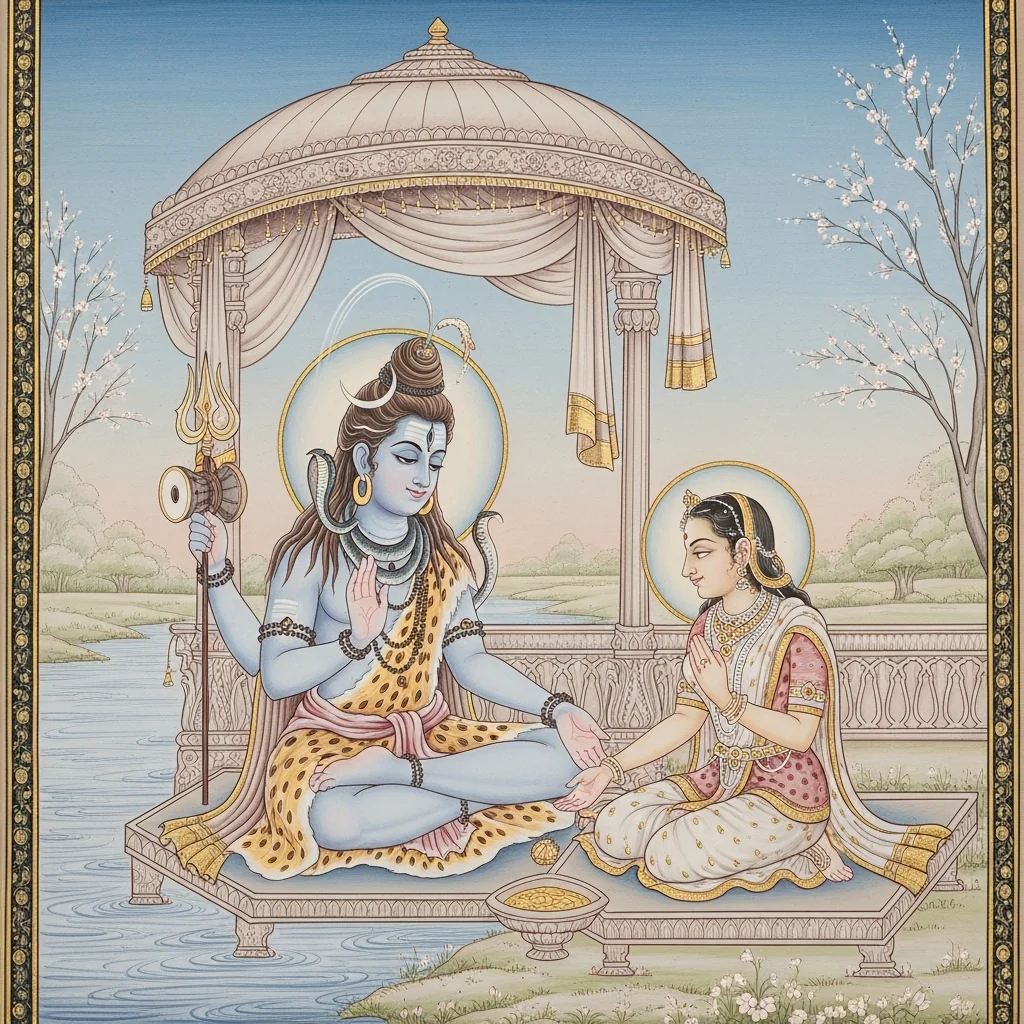
Chapter 2 is a brief theological and sacred-geographical instruction in which Īśvara teaches Mahādevī about the kṣetra called Vastrāpatha in Prabhāsa. Bhava/Śiva is affirmed as the primordial Lord—direct creator and destroyer—abiding there as a self-manifest presence. The chapter then sets out the pilgrimage discipline and its fruits: even a single yātrā, bathing in the local tīrthas, and performing proper worship bring ritual completion and full merit. Bhava-darśana is praised as yielding fruits comparable to, and more swiftly effective than, those of renowned holy places such as Vārāṇasī, Kurukṣetra, and the Narmadā. It also marks sacred time: darśana in the months of Caitra and Vaiśākha is linked with liberation from rebirth. Ethical-ritual supports—go-dāna, feeding brāhmaṇas, and piṇḍadāna—are commended as enduring acts that secure the satisfaction of ancestors. The closing phalaśruti declares that hearing this māhātmya diminishes sin and grants results like those of vast sacrificial rites.
Shlokas
Verse 1
ईश्वर उवाच । ततो गच्छेन्महादेवि क्षेत्रं वस्त्रापथं पुनः । यत्प्रभासस्य सर्वस्वं क्षेत्रं नाभिः प्रियं मम
Īśvara said: “Then, O Great Goddess, one should again go to the holy field called Vastrāpatha—the very heart and treasure of Prabhāsa, dear to me like my own navel, the center.”
Verse 2
यत्र साक्षाद्भवो देवः सृष्टिसंहारकारकः । पृथिव्यां स त्वधिष्ठाता तत्त्वानामादिमः प्रभुः
There, Bhava abides directly—the deity who brings about creation and dissolution; on earth he is the presiding ruler, the primordial Lord of the tattvas, the principles of reality.
Verse 3
स स्वयंभूः स्थितस्तत्र प्रभासे भूतिदो भवः । भवतीदं जगद्यस्मात्तस्माद्भव इति स्मृतः
There in Prabhāsa stands Bhava (Śiva), self-manifest and bestower of prosperity. Because from Him this world comes to be, He is therefore remembered by the name “Bhava”.
Verse 4
यः सकृत्कुरुते यात्रां क्षेत्रे वस्त्रापथे पुनः । विगाह्य तत्र तीर्थानि कृतकृत्यः स जायते
Whoever even once undertakes the pilgrimage to the kṣetra of Vastrāpatha and bathes in the tīrthas there becomes one who has fulfilled life’s purpose.
Verse 5
अथ दृष्ट्वा भवं देवं सकृत्पूज्यविधानतः । केदारयात्राफलभाक्स भवेन्मनुजोत्तमः
Having beheld Lord Bhava (Śiva) and worshipped Him even once according to proper rite, that excellent person becomes a recipient of the very merit of the Kedāra pilgrimage.
Verse 6
चैत्रे मासि भवं दृष्ट्वा न पुनर्जायते भुवि । वैशाख्यामथवा सम्यग्भवं दृष्ट्वा विमुच्यते
By beholding Bhava in the month of Caitra, one is not born again upon the earth; or else, by rightly beholding Bhava in Vaiśākha, one is set free.
Verse 7
वाराणस्यां कुरुक्षेत्रे नर्मदायां तु यत्फलम् । तत्फलं निमिषार्द्धेन भवं दृष्ट्वा दिनेदिने
Whatever merit is gained at Vārāṇasī, at Kurukṣetra, and on the Narmadā—one gains that same merit in half a moment by beholding Bhava here, day after day.
Verse 8
दुर्ल्लभस्तत्र वासस्तु दुर्ल्लभं भवदर्शनम् । प्रेतत्वं नैव तस्यास्ति न याम्या नारकी व्यथा
Rare indeed is dwelling there, and rare is the darśana of Bhava (Śiva). For one who attains it, there is no state of preta; no torment of Yama, nor the suffering of hell.
Verse 9
येषां भवालये प्राणा गता वै वरवर्णिनि । धन्यानामपि धन्यास्ते देवानामपि देवताः
O fair one, those whose life-breath departs in the abode of Bhava (Śiva) are blessed beyond the blessed—like divinities even among the gods.
Verse 10
वस्त्रापथे मतिर्येषां भवे येषां मतिः स्थिरा । गोदानं तत्र शंसंति ब्राह्मणानां च भोजनम् । पिंडदानं च तत्रैव कल्पांतं तृप्तिमा वहेत्
Those whose mind is set on Vastrāpatha, and whose devotion to Bhava (Śiva) is steadfast—there they commend the gift of a cow and the feeding of brāhmaṇas. And piṇḍa-offerings made there bring satisfaction even until the end of a kalpa.
Verse 11
इति संक्षेपतः प्रोक्तं माहात्म्यं ते भवोद्भवम् । श्रुतं पापोपशमनं यज्ञायुतफलप्रदम्
Thus, in brief, has the greatness born of Bhava (Śiva) been told to you. When heard, it pacifies sins and bestows the fruit of ten thousand yajñas.