Adhyaya 16
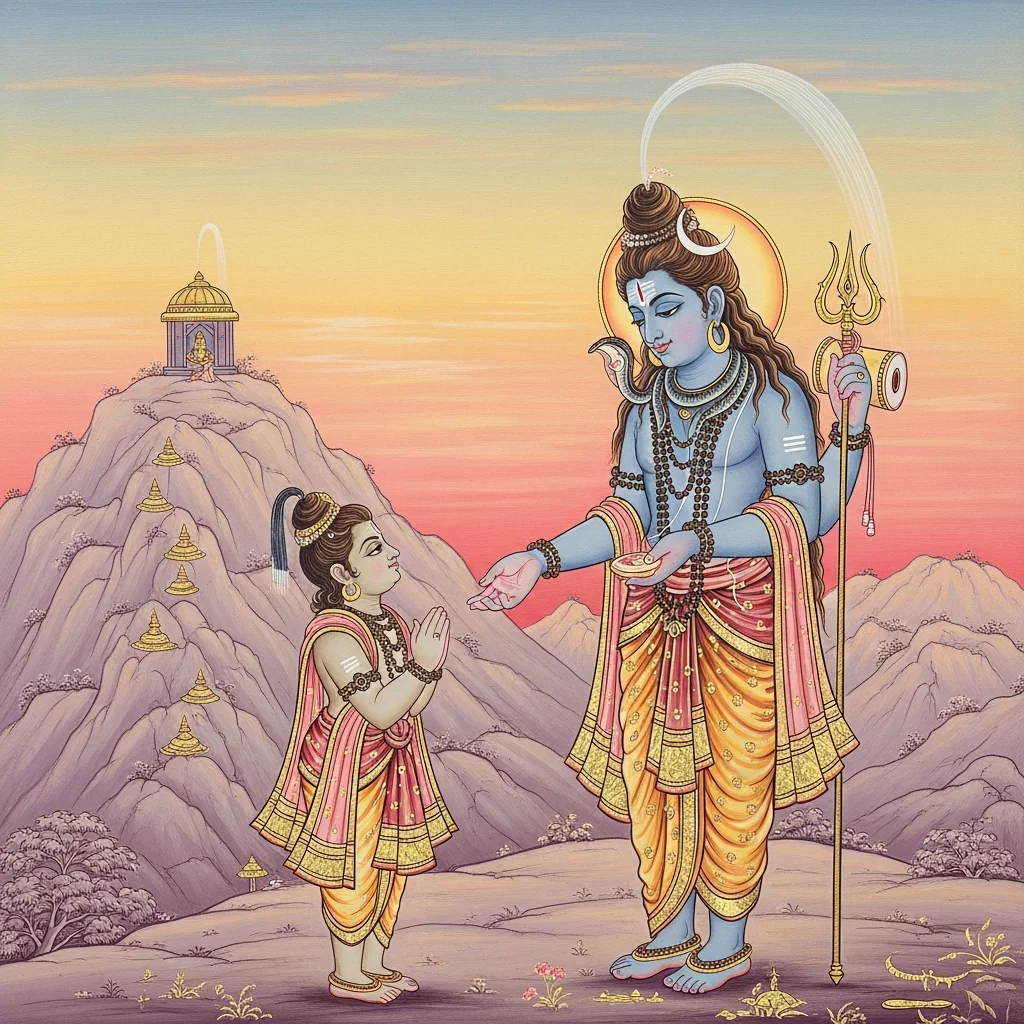
Chapter 16 unfolds as a journey narrative interwoven with instruction. When the king asks about Vāmana’s solitary deeds in the forest, Sārasvata recounts Vāmana’s travel to Raivataka, his bath in the Suvarṇarekhā River, and his worship with offerings. In a forest both radiant and fearsome, Vāmana inwardly remembers Hari; Narasiṃha appears to protect him and is entreated to eternally guard the residents of the tīrthas and to remain stationed before the deity Dāmodara. Vāmana then honors Dāmodara and Bhava (Śiva), proceeds to Vastrāpatha, and beholds Mount Ujjayanta, reflecting on “subtle dharmas” that yield great results through small ethical acts and attentive devotion. Ascending the mountain, he encounters Devī as Ambā, Skanda’s mother, worshiped on the summit, and receives a vision of Bhava/Śaṅkara. Śiva grants boons—growth of influence, mastery of Vedic learning and performative arts, and steady efficacy—and instructs him to survey Vastrāpatha’s tīrthas. Rudra then indicates directional shrines: a divine pond and a jāli forest with a clay liṅga that destroys the sin of brahmahatyā by mere darśana, along with liṅgas linked to Kubera/Dhanada, Heramba-gaṇa, Citragupta (Citraguptīśvara), and Kedāra established by Prajāpati. The chapter also embeds the Indra–hunter Śivarātri episode: the hunter’s night vigil earns celestial honor; Indra, Yama, and Citragupta respond with reverence, visit the site, and a perennial spring arises from Airāvata’s footprint on Ujjayanta. The conclusion becomes a practical manual for the Śivarātri vrata—annual or condensed observance, fasting and bathing rules, prohibitions (oil-bath, intoxicants, gambling), lamp-offering, night vigil with recitation and performance, dawn worship, feeding ascetics and brahmacārins, and end-of-vow gifts such as cows and vessels—promising purification and auspicious prosperity.
Shlokas
Verse 1
राजोवाच । अथासौ वामनो विप्रः प्रविष्टो गहने वने । एकाकी किं चकाराथ कौतुकं तद्वदस्व मे
The King said: “Then that dwarf brāhmaṇa, Vāmana, entered a deep forest. Being alone, what did he do there? Tell me that wondrous matter.”
Verse 2
सारस्वत उवाच । अथासौ वामनो विप्रो गत्वा रैवतके गिरौ । स्वर्णरेखानदीतोये स्नात्वाथ विधिपूर्वकम्
Sārasvata said: “Then the brāhmaṇa Vāmana went to Mount Raivataka; bathing in the waters of the river Svarṇarekhā, he performed the rites in the due and prescribed order.”
Verse 3
सुगंधपुष्पधूपाद्यैर्देवं संपूज्य भक्तितः । तस्थौ तदग्रतो राजन्नेकाकी निर्जने वने
With fragrant flowers, incense, and other offerings he worshipped the Deity in devotion; then, O King, he stood before Him, alone in the lonely forest.
Verse 4
सर्वसत्त्वसमायुक्ते सरीसृपसमाकुले । अनेकस्वरसंघुष्टे मयूरध्वनिनादिते
That forest was filled with every kind of creature, crowded with reptiles, resounding with many calls, and made vibrant by the cries of peacocks.
Verse 5
कोकिलारावरम्ये च वनकुक्कुटघोषिते । खद्योतद्योतिते तस्मिन्वलीमुखविधूनिते
Charming with the cooing of cuckoos, echoed by the calls of wild fowl, and lit by the glow of fireflies—there the monkeys leapt, shaking the branches.
Verse 6
क्वचिद्वंशाग्निना शांते क्वचित्पुष्पितपादपे । गगनासक्तविटपे सूर्यतापविवर्जिते
In some places it was calm, the bamboo-fires quenched; in others, trees were in bloom—branches rising as though to touch the sky—free from the sun’s scorching heat.
Verse 7
लुब्धकाघात संत्रस्तभ्रांतसूकरशंबरे । संहृष्टक्षत्रियवातस्थानदानविचक्षणे
There, boars and deer wandered in confusion, frightened by the hunters’ blows; and warriors, exhilarated, keenly surveyed the wind-swept ground as though it were fit for an encampment.
Verse 8
अनेकाश्चर्यसंपन्नं सस्मार मनसा हरिम् । तं भीतमिव विज्ञाय नरसिंहः समाययौ
Seeing that place filled with many wonders, he remembered Hari within his mind; and knowing him to be as though afraid, Narasiṃha came there.
Verse 9
रक्षार्थं तस्य विप्रस्य बभाषे पुरतः स्थितः । न भेतव्यं त्वया विप्र वद ते किं करोम्यहम्
Standing before him to protect that brāhmaṇa, he spoke: “Do not fear, O brāhmaṇa. Tell me—what shall I do for you?”
Verse 10
विप्र उवाच । यदि तुष्टो वरो देयो नरसिंह त्वया मम । सदात्र रक्षा कर्त्तव्या सर्वेषां तीर्थवासिनाम्
The brāhmaṇa said: “If You are pleased and would grant me a boon, O Narasiṃha, then may You ever protect all who dwell at this sacred ford (tīrtha).”
Verse 11
देवस्याग्रे सदा स्थेयं यावदिंद्राश्चतुर्द्दश । एवमस्त्विति तं प्रोच्य तथा चक्रे हरिस्तदा
“Stand ever before the Deity—so long as the fourteen Indras endure.” Saying to him, “So be it,” Hari then did exactly so.
Verse 12
अतो दामोदरस्याग्रे नरसिंहः स पूज्यते । वनं सौम्यं कृतं तेन तीर्थरक्षां करोति सः
Therefore Narasiṃha is worshipped before Dāmodara. By his power that forest was made gentle and auspicious; he stands as the guardian of the tīrtha, protecting it.
Verse 13
भूतप्रेतादिसंवासो वने तस्मिन्न जायते । नरसिंहप्रभावेन नष्टं सिंहादिजं भयम्
In that forest there is no dwelling of bhūtas, pretas, and the like. By Narasiṃha’s might, fear arising from lions and other dangers is destroyed.
Verse 14
कार्त्तिके वासरे विष्णोर्द्वादश्यां पारणे कृते । दामोदरं नमस्कृत्य भवं द्रष्टुं ततो ययौ
In Kārttika, on Viṣṇu’s day, when the fast was duly concluded on the Dvādaśī, he bowed to Dāmodara and then set out to behold Bhava (Śiva).
Verse 15
चतुर्दश्यां कृतस्नानो भवं संपूज्य भावतः । भवभावभवं पापं भस्मीभूतं भवार्चनात्
On Caturdaśī, having bathed in purity, he worshipped Bhava with heartfelt devotion. By the adoration of Bhava, the sin born of worldly becoming and its entanglements was burned to ashes.
Verse 16
स क्षीणपापनिचयो जातो देवस्य दर्शनात् । भवस्याग्रे स्थितं शांतं तथा वस्त्रापथस्य च
By the vision of the Deity, his accumulated sins were exhausted. Then he stood in peace before Bhava, and likewise before the deity of Vastrāpatha.
Verse 17
तं कालमेघं समभ्यर्च्य ततो वस्त्रापथं ययौ । देवं संपूज्य मंत्रैः स वेदोक्तैर्विधिपूर्वकम्
Having duly worshipped that Kālamēgha, he then went to Vastrāpatha. There he performed complete worship of the deity with Veda-proclaimed mantras, according to proper rite.
Verse 18
धूपदीपादिनैवेद्यैः सर्वं चक्रे स वामनः । प्रदक्षिणाशतं कृत्वा भवस्याग्रे व्यवस्थितः
That Vāmana performed the entire worship with incense, lamps, and offerings of food. Having completed a hundred circumambulations, he stood before Bhava.
Verse 19
यावन्निरीक्षते सर्वं तावत्पश्यति पर्वतम् । उज्जयंतं गिरिवरं मैनाकस्य सहोदरम्
As he looked all around, he beheld a mountain—Ujjayanta, an excellent peak, said to be the brother of Maināka.
Verse 20
सुराष्ट्रदेशे विख्यातं युगादौ प्रथमं स्थितम् । भूधरं भूधरैर्युक्तं शिलापादपमंडितम्
Renowned in the land of Surāṣṭra, established from the very dawn of the age, it is a mighty mountain-mass, joined by other ranges, adorned with rocks and trees.
Verse 21
तं दृष्ट्वा चिंतयामास सूक्ष्मान्धर्मान्स वामनः । अल्पायासान्सुबहुलान्पुत्रलक्ष्मीप्रदायकान्
Seeing it, Vāmana pondered subtle ways of dharma—observances of little exertion yet abundant fruit, bestowing the blessings of progeny and prosperity.
Verse 22
अवश्यं क्रिय माणेषु स्वधर्म उपजायते । दृष्ट्वा नदीं सागरगां स्नात्वा पापैः प्रमुच्यते
When sacred acts are surely undertaken, one’s own dharma naturally arises. By merely beholding the river that flows to the ocean, and by bathing in it, one is released from sins.
Verse 23
गां स्पृष्ट्वा ब्राह्मणं नत्वा संपूज्य गुरुदेवताः । तपस्विनं यतिं शांतं श्रोत्रियं ब्रह्मचारिणम्
Having touched the cow, bowed to a brāhmaṇa, and duly honored one’s gurus and deities—(and likewise honoring) the ascetic, the renunciant yati, the peaceful one, the Veda-trained śrotriya, and the celibate brahmacārin—(one gains great merit).
Verse 24
पितरं मातरं भगिनीं तत्पतिं दुहितां पतिम् । भागिनेयमथ दौहित्रं मित्रसंबधिबांधवान् । संभोज्य पातकैः सर्वैर्मुच्यंते गृहमेधिनः
Householders are freed from all sins by feeding and hosting: father and mother, sister and her husband, daughter and son-in-law, nephew and grandson, as well as friends, relations, and kinsmen.
Verse 25
राजा गजाश्वनकुलं सतीवृषमहीधराः । आदर्शक्षीरवृक्षाश्च सततान्नप्रदास्तु ते
May they attain kingship; may their lineages abound in elephants, horses, and noble families; may they have virtuous wives, excellent bulls, and prosperity like mountains; and may there be wish-fulfilling “milk-trees” and constant givers of food.
Verse 26
दृष्टमात्राः पुनन्त्येते ये नित्यं सत्यवादिनः । वेदधर्मकथां श्रुत्वा भुक्तिमुक्तिप्रदा नरान्
These people, ever speaking truth, purify others by mere sight. Hearing their discourse on Veda and dharma, humans are granted both worldly enjoyment and liberation beyond.
Verse 27
स्मृत्वा हरिहरौ गंगां कृत्वा तीरेण मार्जनम् । गत्वा जागरणे विष्णोर्दत्त्वा दानं च शक्तितः
Remembering Hari and Hara and the Gaṅgā, performing cleansing rites upon the riverbank, going to Viṣṇu’s night-vigil, and giving charity according to one’s capacity—these are praised as meritorious acts.
Verse 28
तांबूलं कुसुमं दीपं नैवेद्यं तुलसीदलम् । गीतं नृत्यं च वाद्यं च विधाय सुरमंदिरे
In the divine temple, offering betel-leaf, flowers, lamps, food offerings (naivedya), and tulasī leaves—and arranging singing, dancing, and instrumental music—one performs worship of great merit.
Verse 29
एते सूक्ष्माः स्मृता धर्माः क्रियमाणा महोदयाः । अतो गिरीन्द्रं पश्यामि सर्वदेवालयं शुभम्
These are remembered as subtle forms of dharma; when practiced, they bring great uplift. Therefore I behold the “Lord of Mountains”—auspicious, a dwelling-place of all the gods.
Verse 30
तेषां करतले स्वर्गः शिखरं यांति ये नराः
Heaven lies, as it were, in the palm of their hand—those who reach the summit of that sacred mountain.
Verse 31
इति ज्ञात्वा समा रूढो वामनो गिरिमूर्द्धनि । ऐरावतपदाक्रांत्या यत्र तोयं विनिःसृतम्
Knowing thus, Vāmana ascended to the mountain’s crest—where water sprang forth from the impress of Airāvata’s footstep.
Verse 32
ततः शिखरमारूढां भवानीं स्कन्दमातरम् । द्रष्टुं स वामनो याति शिखरे गगनाश्रिते
Then Vāmana went to behold Bhavānī—the Mother of Skanda—who had ascended to the peak, upon that summit which seemed to rest in the very sky.
Verse 33
यथायथा गिरिवरे समारोहंति मानवाः । तथातथा विमुच्यंते पातकैः सर्वदेहिनः
As people climb that excellent mountain, so do all embodied beings become released from sins, step by step.
Verse 34
इति कृत्वा मतिं विप्रो जगाम गिरिमूर्द्धनि । भवभक्तो भवानीं स ददर्श स्कन्दमातरम्
Having resolved thus, the brāhmaṇa went to the mountain’s crest; devoted to Bhava (Śiva), he beheld Bhavānī—the Mother of Skanda.
Verse 35
अंबेति भाषते स्कंदस्ततोऽन्ये सर्वदेवताः । पृथिव्यां मानवाः सर्वे पाताले सर्वपन्नगाः
Skanda uttered the cry “Ambā!”, and then all the other deities echoed it. Upon the earth all humans proclaimed it, and in Pātāla all the nāga-serpents as well.
Verse 36
अतो ह्यंबेति विख्याता पूज्यते गिरिमूर्द्धनि । संपूज्य विविधैर्मुख्यैः फलैर्नानाविधैर्द्विजः
Therefore she is famed as “Ambā” and is worshipped upon the mountain’s crest. The brāhmaṇa, having duly honored her with many kinds of choice fruits, continued his rite.
Verse 37
गगनासक्तशिखरे संस्थितः कौतुकान्वितः । एकाकी शिखरे तस्मिन्नूर्द्ध्वबाहुर्व्यवस्थितः
Standing upon that sky-touching peak, filled with wonder, alone on that summit he remained—steadfast there with arms uplifted.
Verse 38
निरीक्ष्य मेदिनीं सर्वां सपर्वतससागराम् । आद्यं सनातनं देवं भास्करं त्रिगुणात्मकम्
Having surveyed the whole earth—with its mountains and oceans—he contemplated Bhāskara, the primeval and eternal God, whose nature is the three guṇas.
Verse 39
सर्वतेजोमयं सर्वदेवं देवैर्नमस्कृतम् । भ्रममाणं निराधारं कालमानप्रयोजकम्
He beheld the all-radiant One—the god who, in a sense, is “all the gods,” saluted by the deities—moving onward unsupported, and establishing the measures of time.
Verse 40
यावत्पश्यति तं विप्रस्तावत्पश्यति शंकरम् । दिगंबरं भवं देवं समंतादश्मगुंठितम्
So long as the brāhmaṇa gazed upon him (Bhāskara), for that long he also beheld Śaṅkara—Bhava, the Digambara Lord, the God clad in the directions—encircled on every side by masses of rock.
Verse 41
बुद्धरूपाकृतिं देवं सर्वज्ञं गुणभूषितम् । कृशांगं जटिलं सौम्यं व्योममार्गे स्वयं स्थितम्
He beheld the God with a Buddha-like form—omniscient and adorned with virtues—slender-limbed, matted-haired, gentle, and standing of himself upon the path of the sky.
Verse 42
श्रीशिव उवाच । शृणु वामन तुष्टोऽहं दास्ये ते विविधान्वरान् । त्रैलोक्यव्यापिनी वृद्धिर्भविष्यति न संशयः
Śrī Śiva said: “Listen, O Vāmana. I am pleased. I shall grant you various boons. Your prosperity and spiritual increase shall spread through the three worlds—of this there is no doubt.”
Verse 43
प्रतिभास्यंति ते वेदा गीतनृत्यादिकं च यत् । असाध्यसाधनी शक्ति भविष्यति तव स्थिरा । परं वस्त्रापथे गत्वा कुरु तीर्थावलोकनम्
“The Vedas will shine forth to you in clear understanding, and so too the arts such as song and dance. A steady power that accomplishes even what seems impossible will arise in you. Therefore, go to Vastrāpatha and behold the sacred tīrthas.”
Verse 44
वामन उवाच । वस्त्रापथे महादेव यानि तीर्थानि तानि मे । वद देव विशेषेण यद्यस्ति करुणा मयि
Vāmana said: “O Mahādeva, tell me in detail which tīrthas are in Vastrāpatha—if indeed you have compassion for me.”
Verse 45
रुद्र उवाच । वस्त्रापथस्य वायव्ये कोणे दिव्यं सरोवरम् । तस्य पश्चिमदिग्भागे जालिर्गहनपल्लवा
Rudra said: “In the north‑western corner of Vastrāpatha there is a divine lake. On its western side lies a thicket called Jāli, dense with foliage and tender shoots.”
Verse 46
बिल्ववृक्षमयी मध्ये लिंगं तत्रास्ति मृन्मयम् । यत्रासौ लुब्धकः सिद्धो गतो मम पुरे पुरा
“In the midst of that bilva grove there is an earthen liṅga of clay. At that very spot a hunter once attained perfection and long ago went to my city, Śiva’s abode.”
Verse 47
तस्य दर्शनमात्रेण ब्रह्महत्या विनश्यति । इंद्रो वै वृत्रहा यस्मिन्विमुक्तो ब्रह्महत्यया
“By the mere sight of that liṅga, the sin of brahmahatyā is destroyed. There Indra—the slayer of Vṛtra—was freed from the taint of brahmahatyā.”
Verse 48
तस्माद्रुत्तरदिग्भागे धनदेन प्रतिष्ठितम् । लिंगं त्रैलोक्यविख्यातं तत्र देवी त्रिशूलिनी
“To the north of that place is a liṅga established by Dhanada (Kubera), renowned throughout the three worlds. There too is the Goddess Triśūlinī.”
Verse 49
यस्या दर्शनमात्रेण पुत्रोऽस्य नलकूबर । पाशानुषक्तहस्तोऽभूद्देवं चक्रे त्रिशूलिनम्
“By the mere sight of her (Triśūlinī), his son Nalakūbara—whose hand was bound by a noose—was restored; and he rendered worshipful service to the god Triśūlin, Śiva who bears the trident.”
Verse 50
भवस्य नैरृते कोणे गणो हेरंबसंज्ञितः । यमेन कुर्वता लिंगं प्रथमं च प्रतिष्ठितः
In the south‑western corner of Bhava’s (Śiva’s) domain dwells a gaṇa named Heraṃba. There Yama, while performing his appointed duty, first established and installed a liṅga.
Verse 51
विचित्रं तस्य माहात्म्यं चित्रगुप्तोऽति विस्मितः । दृष्ट्वा समागतो द्रष्टुं देवं तं मृन्मयं पुरा
Wondrous indeed is the glory of that (liṅga and holy spot). Citragupta, greatly astonished upon seeing/hearing of it, once came there to behold that deity fashioned of earth—the clay liṅga.
Verse 52
तेनापि निर्मितं लिंगं तस्मिन्क्षेत्रे द्विजोत्तम । चित्रगुप्तेश्वरंनाम विख्यातं भुवन त्रये
O best of the twice-born, he too established a liṅga in that sacred field. It became renowned throughout the three worlds by the name Citraguptēśvara.
Verse 53
पश्चिमेन चकारोच्चैः प्रजापतिरुदारधीः । केदाराख्यं तदा लिंगं गिरौ रैवतके स्थितम् । प्रजापतिः स्वयं तस्थौ तत्र पर्वतसानुनि
To the west, Prajāpati, noble in mind, then established a liṅga famed as Kedāra, situated on Mount Raivataka. Prajāpati himself remained there upon the mountain slope.
Verse 54
रुद्र उवाच । इंद्रेश्वरस्य माहात्म्यं कथयिष्ये शृणुष्व तत् । ईशानकोणे विख्यातं भवस्य विदितं मम
Rudra said: I shall declare the greatness of Indreśvara—listen to it. It is renowned in the northeastern quarter, and it is well known to me and to Bhava (Śiva).
Verse 55
वामन उवाच । कस्मादिंद्रः समायातः कथं चक्रे हरं हरिः । कथां सविस्तरामेतां कथयस्व मम प्रभो
Vāmana said: For what reason did Indra come here, and how did Hari bring about the manifestation of Hara (Śiva)? Tell me this sacred tale in full detail, O Lord.
Verse 56
रुद्र उवाच । लुब्धकस्तु पुरा सिद्धः शिवरात्रिप्रजागरात् । शिवलोके तदा प्राप्तं विमानं गणसंयुतम्
Rudra said: Long ago a hunter attained spiritual accomplishment (siddhi) by keeping vigil on the night of Śivarātri. Then, in Śiva’s realm, a celestial vimāna arrived, accompanied by the gaṇas.
Verse 57
सर्वत्रगं सुरुचिरं दिव्यस्त्रीगीतनादितम् तदारुह्य समायातो द्रष्टुं तां नगरीं हरेः
That vimāna, able to move everywhere, was exceedingly beautiful and resounded with the songs of divine maidens. Mounting it, he came to behold the city of Hari.
Verse 58
यस्यां युद्धं समभवद्गणानां यमकिंकरैः । आगच्छमानं तं ज्ञात्वा देवराजेन चिंतितम्
In that place a battle had arisen between Śiva’s gaṇas and Yama’s servants. Knowing that he was approaching, Indra, king of the gods, grew anxious and began to ponder.
Verse 59
पूज्योऽयं हरवत्सर्वैश्चित्रगुप्तयमादिभिः । इंद्रो गजं समारुह्य महिषेण यमो यतः
“This one is to be honored like Hari by all—by Citragupta, Yama, and the rest.” Therefore Indra mounted his elephant, while Yama set forth upon his buffalo.
Verse 60
विधाय लेखनीं कर्णे चित्रगुप्तो यमाज्ञया । ततो हूता गणाः सर्वे ये नीता धरणीतलात्
By Yama’s command, Citragupta set the stylus to his ear, ready to record. Then all the gaṇas who had been brought from the earth’s surface were summoned.
Verse 61
निजापराधसंतप्ता गतास्ते दक्षिणामुखम् आथित्यपू । जा कर्तव्या लुब्धके गृहमागते
Tormented by awareness of their own offences, they went southward. When a hunter comes to one’s home as a guest, hospitality and reverent worship should be offered.
Verse 62
अपूजिते गते ह्यस्मिन्हरो मां शपयिष्यति । तस्मात्पूजां करिष्यामि यथा तुष्यति शंकरः
“If I depart from here without worship, Hara will surely curse me. Therefore I shall perform the worship so that Śaṅkara is fully pleased.”
Verse 63
देवं द्रष्टुं समायातं ददर्शादूरतः स्थितम् । विमानस्थं हराकारं सूर्यकोटिसमप्रभम्
He saw the deity who had come to be beheld, standing at a distance—seated in a celestial chariot, bearing the form of Hara, radiant like ten million suns.
Verse 64
संस्तूयमानं चरितैः शिवरात्रेः शिवस्य च । माघे मासे चतुर्द्दश्यां कृष्णायां जागरे कृते
He was being praised through the sacred accounts of Śivarātri and of Śiva himself—when, in the month of Māgha, on the fourteenth day of the dark fortnight, the night-vigil had been observed.
Verse 65
तदेवं जायते सर्वं सुरेश्वर धरातले । एवं देवांगना काचिदाचक्षंती पुरंदरम् । निवार्य हस्तमुद्यम्य गजेंद्रं चारुलोचना
Thus, O Lord of the gods, all this comes to pass upon the earth. In this manner a celestial maiden spoke to Purandara; the beautiful-eyed one restrained him, raising her hand toward the majestic lord of elephants.
Verse 66
किं दानैर्बहुभिर्दत्तैर्व्रतैः किं किं सुरार्चनैः । किं योगैः किं तपोभिश्च ब्रह्मचर्य्यैः सुरेश्वर
What use are many gifts and charities? What is gained by vows, by worship of the gods, by yogic disciplines, by austerities, and by brahmacarya—O Lord of the gods?
Verse 67
गयायां पिंडदानेन प्रयागमरणेन किम् । सोमेश्वरे सरस्वत्यां सोमपर्वणि किं गतैः
What is achieved by offering piṇḍas at Gayā, or by dying at Prayāga? What is achieved by going to Someśvara, or to the Sarasvatī, on the sacred Soma-parvan day?
Verse 68
कुरुक्षेत्रगतैः किं स्याद्राहुग्रस्ते दिवाकरे । तुलासुवर्णदानेन वेदपाठेन किं भवेत्
What is gained by going to Kurukṣetra when the sun is eclipsed by Rāhu? What results from gifting gold by the scale (tulā-dāna), or from recitation of the Vedas?
Verse 69
सर्वपापक्षयो येन वृषोत्सर्गेण तेन किम् । गोदानं किं करोत्येवं जलदानं तथैव च
Even that vṛṣotsarga—the releasing of a bull—by which all sins are said to be destroyed, what is its point? What, then, does the gifting of a cow accomplish in comparison—and likewise the gifting of water?
Verse 70
अयने विषुवे चैव संक्रांतौ कीदृशं फलम् । माघमासे चतुर्दश्यां यादृशं जागरे कृते
At the ayana (solstice), at the viṣuva (equinox), and at a saṅkrānti, what kind of fruit of merit is obtained? And on the fourteenth day of the month of Māgha, what incomparable fruit is gained when the night‑vigil (jāgara) is performed?
Verse 71
यमः संभाषते वाण्या महिषोपरि संस्थितः । पश्य रुद्रस्य माहात्म्यं चित्रगुप्त विचारय
Yama, seated upon his buffalo, spoke these words: “Behold the greatness of Rudra—O Citragupta, consider it well.”
Verse 72
अयं स लुब्धको येन हरः संपूजितः पुरा । सुराष्ट्रदेशे विख्यातं तीर्थं वस्त्रापथं शृणु
This is that very hunter by whom Hara (Śiva) was once duly worshipped. Now listen of the famed tīrtha called Vastrāpatha, renowned in the land of Surāṣṭra.
Verse 73
उज्जयंतो गिरिस्तत्र तथा रैवतको गिरिः । महती वर्त्तते जालिस्तयोर्मध्ये मया श्रुतम्
There stands Mount Ujjayanta, and also Mount Raivataka. Between those two lies the great Jāli—so I have heard.
Verse 74
मृन्मयं वर्तते लिगं रात्रौ चानेन पूजितः । रात्रौ जागरणं कर्त्तुं येन कार्येण चागतः
There is a liṅga made of clay, and he worshipped it at night. He had come with the purpose of keeping a night-long vigil.
Verse 75
तदस्माभिः कथं वाच्यं स्वयं जानंति ते सुराः । वरांगना वरं द्रष्टुं वरयंति परस्परम् । इंद्रावासात्समायाता नंदने वेगवत्तराः
How can we speak of it? Those gods know it of themselves. The celestial maidens, longing to behold the best, chose among one another; swift in their going, they came from Indra’s abode into the Nandana grove.
Verse 76
विरंचिना रायणशंकरत्विषा देहेन चागच्छति कोऽपि पूरुषः । पुरीं सुरेशाधिपतेर्निरीक्षितुं भर्त्ता ममायं तव चास्ति किं पतिः
A certain man is coming, his body radiant with the splendor of Virāñci (Brahmā), Nārāyaṇa, and Śaṅkara. He has come to behold the city of the lord of the gods (Indra). “This one is my husband!”—but do you too have a husband to claim him?
Verse 77
मृदंगवीणा पटहस्वरस्तुतैः प्रवोधिताभिः सुरराजमन्दिरे । देवो हरोऽयं न नरो हराकृतिर्दृष्टोंगनाभिस्तव किं किमावयोः
In the palace of the king of the gods, awakened by praises voiced to the sounds of mṛdaṅga, vīṇā, and paṭaha, they perceived: “This is the god Hara—no mere man, though bearing Hara’s form!” Now that the maidens have seen him, what is yours, and what is mine, to claim?
Verse 78
गायंति काश्चिद्विहसंति काश्चिन्नृत्यंति काश्चित्प्रपठंति काश्चित् । वदन्ति काश्चिज्जयशब्दसंयुतैर्वाक्यैरनेकैर्गुरुसन्निधाने
Some sang, some laughed, some danced, and some recited. Some spoke many words filled with cries of victory, in the presence of the revered teacher.
Verse 79
काचिच्छिवं स्तौति शिवां तथान्या पृच्छत्यथान्या किमु बिल्वपत्रात् । किं वोपवासेन फलं तवेदं निद्राक्षयेणाथ फलं तवैतत्
One praised Śiva; another praised Śivā, the Goddess. Another asked: “What indeed is gained by offering bilva leaves? What fruit comes to you from fasting? And what fruit comes to you from keeping vigil, when sleep is cast away?”
Verse 80
तासां नानाविधा वाचः श्रूयन्ते नन्दने वने । ब्रह्मलोकादिका वार्त्ताः कृत्वा च तदनन्तरम्
In the Nandana forest, their voices of many kinds were heard. Having spoken of Brahmaloka and other worlds, they then went onward.
Verse 81
देवेन्द्रो लुब्धकं भूयो बभाषे कौतुकान्वितः । कस्मिन्देशे गिरौ जालिर्लिंगं यत्रास्ति दर्शय
Devendra (Indra) again spoke to the hunter, filled with curiosity: “In what land, on which mountain, is that Jāli where the liṅga is? Show me—tell me.”
Verse 82
लुब्धक उवाच । सुराष्ट्रदेशे विख्यातो यस्मिन्देशे सरस्वती । वाडवं शिरसा धृत्वा प्रविष्टा लवणोदधौ
The hunter said: “In the renowned land of Surāṣṭra there is a famed region where the river Sarasvatī, bearing the Vāḍava—the subterranean fire—upon her head, enters the salt ocean.”
Verse 83
यत्र सा गोमती याति यत्रास्ते गन्धमादनः । उज्जयंतो गिरिवरो यत्र रैवतको गिरिः
“Where the river Gomatī flows; where Gandhamādana stands; where the excellent mountain Ujjayanta is; and where Mount Raivataka is—”
Verse 84
तत्र वस्त्रापथं क्षेत्रं भवस्तत्र व्यवस्थितः । तत्रास्ते मृन्मयं लिंगं जालिमध्ये सुरोत्तम
“There lies the sacred field called Vastrāpatha; Bhava (Śiva) abides there. There too, O best of the gods, within Jāli, there is an earthen liṅga.”
Verse 85
इन्द्र उवाच । सहितैस्तत्र गंतव्यं पूजयिष्ये भवं स्वयम् । जालिमध्ये तथा लिंगं दर्शयस्व च लुब्धक
Indra said: “Let us all go there together; I myself shall worship Bhava (Śiva). And, O hunter, show us also the liṅga within Jālī.”
Verse 86
परदारादिकं पापं दैत्यानां तु विकृंतने । वधे वृत्रस्य संजातं तत्सर्वं क्षालयाम्यहम्
“The sin that begins with offences such as violating another’s wife, the sin incurred while cutting down the Dāityas, and the sin that arose from slaying Vṛtra—I shall wash all of it away.”
Verse 87
इत्युक्त्वा सहिताः सर्वे संप्राप्ता गिरिमूर्द्धनि । वाहनानि च ते त्यक्त्वा प्रस्थिताः पादचारिणः
Having spoken thus, they all together reached the mountain’s summit; abandoning their vehicles, they set out on foot.
Verse 88
उज्जयन्तगिरेर्मूर्ध्नि गजराजः समागतः । तदाग्रचरणं तस्य ददौ मूर्धनि कारणात्
On the summit of Mount Ujjayanta the lordly elephant arrived; then, for a certain reason, he placed his forefoot upon the peak.
Verse 89
तेनाक्रान्तो गिरिवरस्तोयं सुस्राव निर्मलम् । गजपादोद्भवं वारि भविष्यति सदा स्थिरम्
When that excellent mountain was pressed by him, pure water flowed forth. That water, born from the elephant’s foot, shall endure forever—steadfast and unchanging.
Verse 90
इति प्रोक्तं सुरेन्द्रेण लोकानां हितकाम्यया । सर्वे समागतास्तत्र यत्र जालिर्व्यवस्थिता
Thus spoke Indra, lord of the gods, desiring the welfare of the worlds. Then all assembled there, where Jāli is established.
Verse 91
संपूज्य विविधैः पुष्पैर्माघमासे चतुर्दशी । तस्यां जागरणं कृत्वा सञ्जातो निर्मलो हरिः
After worshipping with many kinds of flowers on the fourteenth day of Māgha, and keeping vigil that night, Hari became purified and stainless.
Verse 92
वस्त्रापथे भवं पूज्य हरिं रैवतके गिरौ । इन्द्रेश्वरं प्रतिष्ठाप्य संप्राप्तः स्वनिकतनम्
Having worshipped Bhava (Śiva) at Vastrāpatha and Hari upon Mount Raivataka, he installed Indreśvara (the liṅga) and then returned to his own abode.
Verse 93
लुब्धकोऽपि विमानेन संप्राप्तो हरिमन्दिरे । इत्युक्त्वा स भवो देवस्तत्रैवांतरधीयत
“Even the hunter, borne in a celestial chariot (vimāna), has reached the temple of Hari.” Saying this, Lord Bhava (Śiva) disappeared then and there.
Verse 94
वामनोपि ततश्चक्रे तत्र तीर्थावगाहनम् । यादृग्रूपः शिवो दृष्टः सूर्यबिंबे दिगंबरः
Thereafter Vāmana too bathed at that tīrtha. He beheld Śiva in such a form—Digambara, “clad in the directions,” visible within the orb of the sun.
Verse 95
पद्मासनस्थितः सौम्यस्तथा तं तत्र संस्मरन् । प्रतिष्ठाप्य महामूर्त्तिं पूजयामास वासरम्
Seated in the lotus posture, gentle in bearing, and remembering Him there, he installed a great sacred icon (mahāmūrti) and worshipped throughout the day.
Verse 96
मनोऽभीष्टार्थसिद्ध्यर्थं ततः सिद्धिमवाप्तवान् । नेमिनाथशिवेत्येवं नाम चक्रे स वामनः
For the fulfillment of his heart’s desired aim, he then attained success. Thereupon Vāmana gave it the name “Neminātha-Śiva”.
Verse 97
भवस्य पश्चिमे भागे प्रत्यासन्ने धरातले । वामनो वसतिं चक्रे तीर्थे वस्त्रापथे तदा
Then, on the ground close to the western side of Bhava’s (Śiva’s) shrine, Vāmana established his dwelling at the Vastrāpatha tīrtha.
Verse 98
अतो यवाधिकं प्रोक्तं तीर्थं देवैः सवासवैः । इंद्रेण कुर्वता देवं समागत्य भवाग्रतः
Therefore the gods, together with Vāsava (Indra), declared this tīrtha to be “Yavādhika”. When Indra was fashioning/establishing the deity, they assembled before Bhava (Śiva).
Verse 99
यवाधिकं प्रभासात्तु तीर्थमेतद्भवाज्ञया । अन्येषां षड्गुणं तीर्थं भविष्यति शिवाज्ञया
This tīrtha, by Bhava’s command, is called “Yavādhika”, surpassing even Prabhāsa. And by Śiva’s command it shall bear sixfold merit compared to other tīrthas.
Verse 100
इत्येतत्कथितं सर्वं किमन्यत्परिपृच्छसि
Thus all this has been told; what else do you wish to ask?
Verse 101
राजोवाच । शिवरात्रिप्रभावोयमतुलः परिकीर्त्तितः । अजानता कृता तेन लुब्धकेन पुरा श्रुतम्
The King said: “This incomparable greatness of Śivarātri has been proclaimed. I have heard that long ago that hunter observed it even without knowing its full import.”
Verse 102
इदानीं वद कर्त्तव्या कथमन्यैर्जनैर्विभो । किं ग्राह्यं किं नु मोक्तव्यं शिवरात्र्यां वदस्व मे
Now tell me, O Lord: how should other people perform it? What must be observed and what must be avoided on Śivarātri—declare this to me.
Verse 103
सारस्वत उवाच । संप्राप्य मानुषं जन्म ज्ञात्वा देवं महेश्वरम् । शिवरात्रिः सदा कार्या भुक्तिमुक्तिप्रदायिनी
Sārasvata said: Having attained a human birth and having recognized the Lord Maheśvara, one should always observe Śivarātri, for it bestows both worldly enjoyment and liberation.
Verse 104
ईदृशं जायते पुण्यमेकया कृतया नृप । ये कुर्वंति सदा मर्त्त्यास्तेषां पुण्यमनंतकम्
O King, such merit arises even from performing it once. For mortals who observe it continually, their merit becomes limitless.
Verse 105
द्वादशाब्दं व्रतमिदं कर्त्तव्यं प्रतिवत्सरम् । जीवितं चंचलं नृणां यदि कर्तुं न शक्यते
This sacred vow is to be undertaken for twelve years, observed year after year. Yet human life is unsteady; if one cannot do so for that long…
Verse 106
तदा द्वादशभिर्मासैर्व्रत मेतत्समाप्यते । माघमासे चतुर्दश्यां प्रारम्भः क्रियते नृप
Then this vow may be completed within twelve months. O King, its commencement is performed on the fourteenth day (caturdaśī) in the month of Māgha.
Verse 107
प्रतिमासं ततः कार्यं पौषांते तु समाप्यते । विघ्नश्चेज्जायते मध्ये कथं चिद्दैवयोगतः
Thereafter it should be performed every month, and it is completed at the end of Pauṣa. If some obstacle arises in the middle due to an unforeseen turn of fate…
Verse 108
न भवेद्व्रतभंगस्तु पुनः कार्यमनन्तरम् । द्वादशैव प्रकर्तव्याः कृत्वा संख्या विशेषतः
It should not be regarded as a breach of the vow; one should perform it again immediately. Indeed, twelve observances must be completed—making up the count precisely.
Verse 109
कृतं न नश्यते लोके शुभं वा यदि वाऽशुभम् । कृष्णायां तु चतुर्दश्यां कृतपूर्वाह्निकक्रियः
In this world, what one has done does not perish—whether good or evil. Therefore, on the fourteenth day of the dark fortnight (kṛṣṇa pakṣa), having completed the forenoon rites…
Verse 110
उपवासनियमो ग्राह्यो नद्यां स्नानं विधीयते । तदभावे तडागादौ कार्यं स्नानं स्वशक्तितः
One should undertake the discipline of fasting, and bathing in a river is enjoined. If that is not available, then bathing in a pond and the like should be done according to one’s capacity.
Verse 111
तैलाभ्यंगो न कर्त्तव्यो न कार्यं गमनं क्वचित् । तीर्थसेवा प्रकर्त्तव्या तस्मिंश्चागमनं शुभम्
Oil-massage should not be done, and one should not go wandering elsewhere. Service to the sacred ford (tīrtha) should be undertaken; and going to that (tīrtha) is auspicious.
Verse 112
शिवरात्रिः सदा कार्या लिंगे स्वायंभुवे नरैः । तदभावे महापुण्ये लिंगे वर्षशताधिके
Men should always observe Śivarātri at a self-manifest (svayambhū) Liṅga. If such a Liṅga is not available, then the vow should be performed at a greatly meritorious Liṅga that has been established for more than a hundred years.
Verse 113
गिरौ वने समुद्रांते नद्यां यच्च शिवालये । तद्वै स्वायंभुवं लिंगं स्वयं तत्रैव संस्थितम्
Whether on a mountain, in a forest, at the sea-shore, on a river-bank, or in a Śiva-temple—wherever it is found—know that to be a self-manifest Liṅga, established there by itself.
Verse 114
वालुलिंगादिकं लिंगं पूजितं फलदं स्मृतम् । दिवा संपूज्य यत्नेन पुष्पधूपादिना नरः
A liṅga such as a sand-liṅga (vāluliṅga) is remembered to bestow results when worshipped. In the daytime, a person should carefully worship it with effort, using flowers, incense, and the like.
Verse 115
वर्जयेन्मदिरां द्यूतं नारीं नखनिकृन्तनम् । ब्रह्मचर्यपरैः शांतैः कर्त्तव्यं समुपोषणम्
One should avoid liquor, gambling, sexual indulgence, and trimming the nails. With serenity and steadfastness in brahmacarya, one should properly undertake the fast and the discipline of vigil.
Verse 116
रात्रौ देवाग्रतो गत्वा कर्त्तव्याः सप्त पर्वताः । पक्वान्नफलतांबूलपुष्पधूपादिचर्चिताः
At night, going before the deity, one should prepare seven ‘parvatas’ (ritual heaps of offering), adorned with cooked food, fruits, betel, flowers, incense, and the like.
Verse 117
घृतेन दीपः कर्त्तव्यः पापनाशनहेतवे । यतो दीपस्य माहात्म्यं विज्ञेयं मुक्तिदायकम्
A lamp should be kindled with ghee for the destruction of sin; for the greatness of the lamp is to be known as a giver of liberation (mukti).
Verse 118
दीपः सदैव कर्त्तव्यो गृहे देवालये नरैः । दिवा निशि च संध्यायां दीपः कार्यः स्वशक्तितः
People should always maintain a lamp—at home and in temples. By day, by night, and at the time of sandhyā (twilight), a lamp should be lit according to one’s capacity.
Verse 119
किञ्चिदुद्द्योतमात्रेण देवास्तुष्यंति भूतले । पितॄणां प्रथमं दीपः कर्त्तव्यः श्राद्धकर्मणि
Even a mere little illumination pleases the gods upon the earth. And for the Pitṛs (ancestors), first of all, a lamp should be offered in the śrāddha rite.
Verse 120
रात्रौ जागरणं कार्यं यथा निद्रा न जा यते । शिवरात्रिप्रभावोऽयं श्रोतव्यः शिवसंनिधौ
At night one should keep vigil so that sleep does not arise. This power and glory of Śivarātri should be heard in the very presence of Śiva.
Verse 121
शिवस्य चरितं रात्रौ श्रोतव्यं बहुविस्तरम् । गीतं नृत्यं तथा वाद्यं कर्तव्यं शिवसंनिधौ
At night, the deeds and sacred narrative of Śiva should be listened to in full detail. Singing, dancing, and instrumental music should also be performed in Śiva’s presence.
Verse 122
एवं सा नीयते रात्रिर्मुख्यं जागरणं यतः । रात्रौ देयानि दानानि शक्त्या वै तत्र जागरे
Thus should the night be passed, for keeping vigil is the principal observance. During that night’s wakefulness, one should give donations according to one’s capacity.
Verse 123
पुनः स्नात्वा प्रभाते तु कर्त्तव्यं शिवपूजनम् । पूजनीयाश्च यतयो भोजनाच्छादनादिभिः
Then, after bathing again at dawn, one should perform worship of Śiva. Ascetics too should be honored—with food, clothing, and other offerings.
Verse 124
तपस्विनां प्रदातव्यं भोजनं गृहमेधिभिः । द्वादशाष्टौ च चत्वारो भोक्तव्या एक एव वा
Householders should provide food to ascetics. One may feed twelve, or eight, or four—or even a single one.
Verse 125
एकोऽपि ब्रह्मचारी यो ब्रह्मविच्छिवपूजकः । सहस्राणां समो भक्त्या गृहे संभोजितो भवेत्
Even a single brahmacārin—knower of Brahman and worshipper of Śiva—when fed in one’s home with devotion, is equal in merit to feeding a thousand.
Verse 126
अक्षारालवणं पत्रे भोक्तव्यं वाग्यतैः स्वयम् । पुत्रमित्रकलत्राणां दातव्यं भोजनं पुरः
With speech restrained, one should oneself eat bland, unsalted food served on a leaf. Food should first be given to one’s sons, friends, and wife.
Verse 127
अनेन विधिना कार्या शिवरात्रिः शिवव्रतैः । द्वादशैता यदा पूर्णास्तिलपात्राणि वै तदा
By this method, Śivarātri should be observed through Śiva’s vows. When these twelve are completed, then twelve vessels of sesame should be prepared (as offerings or gifts).
Verse 128
द्वादशैव प्रदेयानिगुरुब्राह्मणज्ञातिषु । व्रतांते गौः प्रदातव्या कृष्णा वत्सयुता दृढा
Those twelve vessels of sesame should indeed be given to one’s guru, to brāhmaṇas, and to relatives. At the end of the vow, a sturdy black cow together with a calf should be gifted.
Verse 129
सवस्त्राभरणा देया घंटाभरणभूषिता । अंगुलीयकवासांसि च्छत्रोपानत्कमण्डलु
It should be given with cloth and ornaments, adorned with bell-ornaments. One should also give rings, garments, an umbrella, footwear, and a water-pot (kamaṇḍalu).
Verse 130
गुरवे दक्षिणा देयाब्राह्मणेभ्यः स्वशक्तितः । एवं कृत्वा ततो देयं तपस्विभ्योऽथ भोजनम् । मिष्टान्नं विविधं दत्त्वा क्षमाप्य च विसर्जयेत्
One should offer dakṣiṇā to the guru, and give to the brāhmaṇas according to one’s means. Having done so, one should then provide a meal for the ascetics; after offering various sweet foods, one should ask forgiveness and respectfully take leave of them.
Verse 131
एवं यः कुरुते सत्यं तस्य पापं न विद्यते । संतानमुत्तमं लब्ध्वा भुक्त्वा भोगाननुत्तमान्
Truly, for one who acts in this way, no sin remains. Having obtained excellent progeny, one enjoys unsurpassed blessings and delights.
Verse 132
दिव्यविमानमारूढो दिव्यस्त्रीपरिवेष्टितः । गतिवादित्रनिर्घोषैर्नीयते शिवमन्दिरे
Mounted upon a celestial vimāna and surrounded by heavenly women, he is borne to Śiva’s temple amid the resounding music of moving divine instruments.
Verse 133
तदेतत्कथितं पुण्यं शिवरात्रिव्रतं मया । कृतेन येन लोकानां सर्वपापक्षयो भवेत्
Thus have I described this meritorious Śivarātri vow; by performing it, people attain the destruction of all sins.