Adhyaya 1
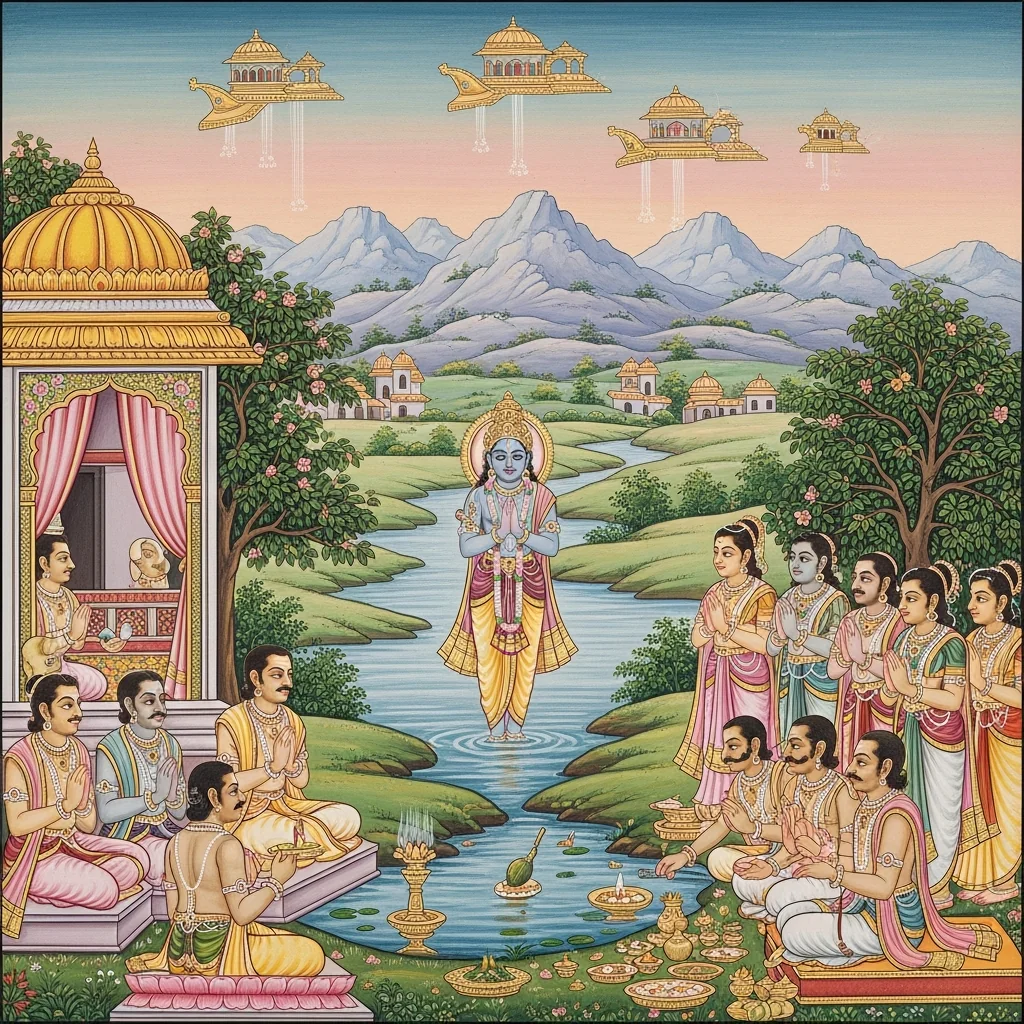
Chapter 1 opens with Īśvara revealing the “kṣetra-garbha” (inner sanctity) of Vastrāpatha, naming Raivataka-giri, the Suvarṇarevā, and merit-bestowing kuṇḍas—especially Mṛgīkuṇḍa—where śrāddha brings heightened satisfaction to the ancestors. At Devī’s request for more detail, Īśvara recounts an earlier episode: on a holy bank of the Gaṅgā, King Gaja and his queen Saṅgatā undertake purification and worship. Bhadrarṣi arrives with other ascetics, and the king asks how an “akṣaya” (imperishable) heaven is attained through proper time, place, and rite. Bhadrarṣi conveys a tradition of Nārada that lists month-wise merits at renowned tīrthas, concluding that no tīrtha equals Damodara; in Kārttika—especially on Dvādaśī and during Bhīṣmapañcaka—bathing in Damodara’s waters yields extraordinary results. The chapter then describes Vastrāpatha’s sacred landscape near Somnātha and Raivataka—mineral-rich ground, holy flora and fauna, and motifs of liberation through contact. It catalogs exemplary gifts and observances (offerings of leaf, flower, and water; feeding; lamp-giving; temple-building; flag-installation) with graded phalaśruti, and affirms a dual devotional ethic: worship of Hari (Damodara) and of Bhava (Śiva) alike leads to exalted realms. It closes with King Gaja’s Kārttika pilgrimage, extensive yajñas and austerities by diverse practitioners, the descent of celestial vimānas, and the king’s ascent. A concluding phalaśruti promises purification and ultimate attainment to all who recite or listen.
Shlokas
Verse 1
ईश्वर उवाच । अथ ते संप्रवक्ष्यामि क्षेत्रगर्भं महोदयम् । तद्वस्त्रापथमाहात्म्यं यत्र रैवतको गिरिः
Īśvara said: Now I shall fully declare to you the profound “heart of the sacred region”, a great and auspicious subject—namely, the glorification of Vastrāpatha, where the mountain Raivataka stands.
Verse 2
दामोदरं रैवतके भवं वस्त्रापथे तथा । एतद्रैवतकं क्षेत्रं वस्त्रापथमिति स्मृतम्
Dāmodara is present on Raivataka, and Bhava (Śiva) likewise at Vastrāpatha. Therefore this Raivataka sacred region is remembered by the name “Vastrāpatha”.
Verse 3
सुवर्णरेवा यत्रस्था नदी पातकनाशनी । यत्र साक्षात्स्थितः कृष्णो दामोदर इति स्मृतः
There flows the river Suvarṇarevā, the destroyer of sins; and there Kṛṣṇa himself abides in direct presence, remembered by the name Dāmodara.
Verse 4
यत्र स्थितं मृगीकुण्डं महापातकनाशनम् । सकृच्छ्राद्धे कृते यत्र कल्पकोटिसहस्रकम् । पितॄणां जायते तृप्तिरपुनर्भवकांक्षिणी
There is the Mṛgīkuṇḍa, which destroys even great sins. If śrāddha is performed there even once, the ancestors gain a satisfaction equal to thousands of crores of kalpas—one that longs for no further rebirth.
Verse 5
देव्युवाच । भगवन्विस्तराद्ब्रूहि दामोदरमहोदयम् । क्षेत्रगर्भस्य माहात्म्यं कर्णिकारूपसंस्थितम्
The Goddess said: O Lord, explain in detail the great glory of Dāmodara, and the greatness of the kṣetra’s inner essence—established in the form of a karṇikā, the lotus’s central core.
Verse 6
ईश्वर उवाच । शृणु देवि प्रवक्ष्यामि दामोदरहरिं प्रति । इतिहासं पुराख्यातमृषिभिः कल्पवासिभिः
Īśvara said: Listen, O Goddess; I shall relate, concerning Dāmodara-Hari, an ancient account—one proclaimed long ago by sages who dwelt through the ages of the kalpas.
Verse 7
गंगातीरे शुभे रम्ये पुण्ये जनपदाकुले । ऋषिभिः सेविते नित्यं स्वर्गमार्गप्रदे ध्रुवम्
On the auspicious bank of the Gaṅgā—lovely, holy, and thronged with settlements—this place is ever frequented by sages, and it surely grants the path to heaven.
Verse 8
तत्र ज्ञानविदो विप्रा यजंति विविधैर्मखैः । ऋषयः सांख्ययोगेन दानेनैवेतरे जनाः
There, Brāhmaṇas skilled in sacred knowledge worship through many kinds of sacrifices; the Ṛṣis pursue the path by Sāṃkhya and Yoga; and other people by the merit of charitable giving (dāna).
Verse 9
ब्राह्मणाः क्षत्रिया वैश्याः शूद्रा स्वर्गमभीप्सवः । सेवंते तज्जलं दिव्यं देवानामपि दुर्लभम्
Brāhmaṇas, Kṣatriyas, Vaiśyas, and Śūdras—longing for heaven—resort to that divine water, hard to obtain even for the Devas.
Verse 10
तत्र राजा गजोनाम बली सर्वजनाधिपः । गंगाजलाभिषेकार्थं त्यक्वा राज्यं जगाम ह
There lived a mighty king named Gaja, lord of all his people; intent on receiving the abhiṣeka with the waters of the Gaṅgā, he renounced his kingdom and set forth.
Verse 11
भार्या तस्य सती साध्वी पुत्रिणी रूपसंयुता । साऽप्ययात्सह तेनैव भर्त्रा वै भर्तृवत्सला
His wife—virtuous satī, devout and noble, blessed with children and graced with beauty—also set out with that very husband, for she was loving and faithful to her lord.
Verse 12
संगता नाम नाम्ना च दक्षा दाक्षायणी यथा । एवं निवसतोस्तत्र वर्षाणामयुतं गतम्
Her name was Saṅgatā—skilful and capable, like Dakṣāyāṇī, the daughter of Dakṣa. Thus, as the two dwelt there, ten thousand years passed.
Verse 13
आजगाम ऋषिस्तत्र भद्रोनाम महायशाः । सहितो बहुभिर्विप्रैर्जपहोमपरायणैः
Then the greatly renowned sage named Bhadra arrived there, accompanied by many brāhmaṇas devoted to japa and homa.
Verse 14
त्यक्त्वा संसारमार्गं तु स्वर्गमार्गजिगीषवः । गंगानिषेवणं कृत्वा स्फोटयित्वाऽत्मजं मलम्
Renouncing the road of worldly entanglement and striving to attain the path to heaven, they practiced devotion to the Gaṅgā, casting off the impurity born of the self.
Verse 15
जलं दत्त्वा तु भूतेभ्यः पूजयित्वा जनार्द्दनम् । यावद्यांति नदीतीर ऋषयो भद्रकादयः । तावत्पश्यंति राजानं गजं वरगजोपमम्
Having offered water to living beings and worshiped Janārdana, as the sages led by Bhadra proceeded toward the riverbank, they beheld King Gaja—splendid like a noble elephant.
Verse 16
तेनैव दृष्टा मुनयो राज्ञा निहतकल्मषाः । सप्तर्षयो यथा स्वर्गे सुरराजेन धीमता
Those sages were seen by that king—his sins removed—just as, in heaven, the Seven Ṛṣis are seen by the wise lord of the gods.
Verse 17
तमृषिं स च संप्रेक्ष्य पदानि दश पंच च । आगच्छन्त्वत्र पूजार्हा भवतो मम मन्दिरम्
Seeing that sage, he advanced fifteen steps and said: “Come here, venerable ones worthy of worship—please come to my abode.”
Verse 18
पश्यंतु संगतां सर्वे मम भार्यां यशस्विनीम् । तस्याः पूजां समादाय यो मार्गो मनसि स्थितः
Let all behold my illustrious wife, Saṅgatā. Having duly received her worship, follow the path that is established within your mind.
Verse 19
तं गच्छध्वं महाभागाः पुण्याः पुण्यमभीप्सवः । एवमुक्तास्तु ते राज्ञा ऋषयः कौतुकान्विताः । आजग्मुर्मंदिरं शुभ्रं पुरंदरपुरोपमम्
Go there, O greatly fortunate ones—pure seekers who desire merit. Thus addressed by the king, the sages, filled with curiosity, came to the radiant mansion, like the city of Purandara (Indra).
Verse 20
आसनानि विचित्राणि दत्त्वा तेषां मनस्विनी । संगता राजराजेन सार्द्धमग्रे व्यवस्थिता
Having offered them various splendid seats, the wise and resolute Saṅgatā then, together with the king of kings, took her place in front.
Verse 21
कृत्वा करपुटं राजा ऋषीणां पुण्यकर्मणाम् । बभाषे वचनं राजा भद्रो भद्रं सुसंगतम्
The king, folding his hands in reverence before the sages of holy deeds, spoke fitting and auspicious words—well placed and well timed.
Verse 22
वसुधा वसुसंपूर्णा मंडिता नगरी पुरी । पर्वतैश्च समुद्रैश्च सरिद्भिश्च सरोवरैः
The earth, rich with treasures, adorned that city, graced by mountains and seas, by rivers and by lakes.
Verse 23
ग्रामैश्चतुष्पथैर्घोरैर्गोकुलैराकुलीकृता । नररत्नैरश्वरत्नैर्गजरत्नैस्तु संकुला
It was thronged with villages and bustling crossroads, alive with cowherd-settlements; and it was crowded as well with “human jewels,” noble horses, and splendid elephants.
Verse 24
दुस्त्यजा भोगभोक्तृणां परं ज्ञानमजानताम् । संसारेऽत्र महाघोरे पुनरावृत्तिकारिणि
For those who live only to enjoy pleasures and do not know the highest wisdom, this terrible saṃsāra is hard to renounce—ever causing repeated return (rebirth).
Verse 25
पतंति पुरुषा भद्र पत्राणीव पुनःपुनः । कृतेन येन विप्रेंद्र स्वर्गं प्राप्नोति निर्मलम् । दानेन तपसा चैव तत्त्वमा चक्ष्व सुव्रत
Men fall again and again, O Bhadra, like leaves. O best of brāhmaṇas, by what deed does one attain the stainless heaven? Tell me the truth—through charity and through austerity, O you of excellent vows.
Verse 26
भद्र उवाच । तीर्थानि तोयपूर्णानि देवाः पाषाणमृन्मयाः । आत्मस्थं ये न पश्यंति ते न पश्यंति तत्परम्
Bhadra said: “Tīrthas are but waters filled with water; the gods are images of stone or clay. Those who do not see the Supreme dwelling within the Self—those do not truly see the Highest.”
Verse 27
संति तीर्थान्यनेकानि पुण्यान्यायतनानि च । पुण्यतोया पवित्रश्च सरितः सागरास्तथा । बहुपुण्यप्रदा पृथ्वी स्थानेस्थाने पदेपदे
There are many tīrthas and many holy sanctuaries. Rivers and oceans too are purifying, their waters meritorious. The earth bestows abundant merit—place by place, step by step.
Verse 28
यद्यस्ति तव राजेंद्र ज्ञानं ज्ञानवतां वर । विष्णुं जिष्णुं हृषीकेशं शंखिनं गदिनं तथा
If you truly possess wisdom, O lord of kings, best among the wise, then know Viṣṇu—the Victorious One (Jiṣṇu), Hṛṣīkeśa, bearer of the conch and likewise wielder of the mace.
Verse 29
चतुर्भुजं महाबाहुं प्रभासे दैत्यसूदनम् । वाराहं वामनं चैव नारसिंहं बलार्जुनम्
Four-armed and mighty-armed, the slayer of the Daityas in Prabhāsa—know Him as Varāha and Vāmana, and also as Narasiṃha, the strong hero, Arjuna-like in valor.
Verse 30
रामं रामं च रामं च पुरुषोत्तममेव च । पुंडरीकेक्षणं चैव गदापाणिं तथैव च
“Remember and praise Rāma—Rāma—Rāma; and also the Supreme Person, Puruṣottama; the Lotus-eyed Lord; and likewise the One who holds the mace in His hand.”
Verse 31
राघवं शक्रदमनं गोविंदं बहुपुण्यदम् । जयं च भूधरं चैव देवदेवं जनार्द्दनम्
“Remember Rāghava, the subduer of Indra; Govinda, the giver of abundant merit; Jaya; the Bearer of the earth; the God of gods; and Janārdana.”
Verse 32
सुरोत्तमं श्रीधरं च हरिं योगीश्वरं तथा । कपिलेशं भूतनाथं श्वेतद्वीपपतिं हरिम्
“Remember the Best among the gods; Śrīdhara; Hari; the Lord of Yogins; Kapileśa; the Lord of beings; and Hari, the Sovereign of Śvetadvīpa.”
Verse 33
बदर्याश्रमवासौ च नरनारायणौ तथा । पद्मनाभं सुनाभं च हयग्रीवं विशां पते
(One should remember) Nara and Nārāyaṇa who abide in Badarī-āśrama; Padmanābha; Sunābha; and Hayagrīva—O lord of the people.
Verse 34
द्विजनाथं धरानाथं खड्गपाणिं तथैव च । दामोदरं जलावासं सर्वपापहरं हरिम्
(One should remember) the Lord of the twice-born; the Lord of the earth; the Sword-bearing One; Dāmodara; the One whose abode is in the waters; and Hari who removes all sins.
Verse 35
एतान्येव हि स्थानानि देवदेवस्य चक्रिणः । गच्छते यत्र तत्रैव मुच्यते सर्वपातकैः
Indeed, these are the very sacred abodes of the God of gods, the Bearer of the discus. Wherever one goes (to such places), there itself one is released from all grave sins.
Verse 36
गंगा च यमुना चैव तथा देवी सरस्वती । दृषद्वती गोमती च तापी कावेरिणी तथा
Gaṅgā and Yamunā, and also the goddess Sarasvatī; Dṛṣadvatī and Gomatī; Tāpi and likewise Kāverī.
Verse 37
नर्मदा शर्मदा चैव नदी गोदावरी तथा । शतद्रुश्च तथा विंध्या पयोष्णी वरदा तथा
Narmadā and Śarmadā, and also the river Godāvarī; Śatadru, and likewise (the river) Vindhyā; Payoṣṇī and Varadā as well.
Verse 38
चर्मण्वती च सरयूर्गंडकी चंडपापहा । चंद्रभागा विपाशा च शोणश्चैव पुनःपुनः
Carmaṇvatī and Sarayū; Gaṇḍakī, the fierce destroyer of sin; Candrabhāgā, Vipāśā, and also Śoṇa—praised again and again.
Verse 39
एताश्चान्याश्च बहवो हिमवत्प्रभवाः शुभाः । तासु स्नातो नरः स्वर्गं याति पातकवर्जितः
These and many other auspicious rivers, born from Himavat—having bathed in them, a person goes to heaven, freed from sin.
Verse 40
वनानि नंदनादीनि पर्वता मंदरादयः । नामोच्चारेण येषां हि पापं याति रसातले
Forests such as Nandana and mountains such as Mandara—by the mere utterance of whose names, sin falls down to the nether depths.
Verse 41
गज उवाच । भद्रं हि भाषितं भद्र आख्यानममृतोपमम् । पृच्छामि सर्वधर्मज्ञ त्वामहं किंचिदेव हि
Gaja said: “O Bhadra, auspicious indeed is what you have spoken; this narration is like nectar. O knower of all dharma, I wish to ask you something further.”
Verse 42
यस्मिन्मासे दिने यस्मिंस्तीर्थे यस्मिन्क्रमान्नरैः । अक्षयं सेव्यते स्वर्गस्तन्ममाचक्ष्व सुव्रत
In which month, on which day, at which tīrtha, and by what observance performed by people does heaven become ‘imperishable’ in its fruit? Tell me that, O you of excellent vows.
Verse 43
स्नानं दानं जपो होमः स्वाध्यायो देवतार्चनम् । अक्षयो येन वै स्वर्गस्तन्मे गदितुमर्हसि
Bathing, charity, mantra-recitation, fire-offerings, Vedic study, and worship of the deity—by which of these does heaven become unfailing in its reward? Pray tell me that.
Verse 44
भद्र उवाच । श्रूयतां राजशार्दूल कथां कथयतो मम । यां श्रुत्वा मुच्यते पापान्नरो नरवरोत्तम
Bhadra said: “O tiger among kings, listen as I relate this account. Having heard it, a man is freed from sins, O best of men.”
Verse 45
ऋषीणां कथितं पूर्वं नारदेन महात्मना
Formerly, this was told to the sages by the great-souled Nārada.
Verse 46
एवं पृष्टश्च तैः सर्वैर्नारदो मुनिसत्तमः । कथयामास संहृष्टो मेघदुदुभिनिस्वनैः
Thus questioned by all of them, Nārada—the best of sages—joyfully began to narrate, with a voice resonant like the beating of cloud-drum thunder.
Verse 47
रम्ये हिमवतः पृष्ठे समवाये मया श्रुतम् । तदहं तव वक्ष्यामि श्रोतुकामं नरर्षभ
In a delightful assembly upon the slopes of the Himālaya, I heard this. Now I shall tell it to you, O bull among men, since you desire to hear.
Verse 48
तीर्थान्येव हि सर्वाणि पुनरावर्त्तकानि तु । अक्षयांल्लभते लोकांस्तत्तीर्थं कथयामि ते
Truly, all other tīrthas grant fruits from which one returns again; but by that tīrtha one attains imperishable worlds. That tīrtha I shall declare to you.
Verse 49
मार्गशीर्षे कान्यकुब्ज उषित्वा राजसत्तम । न शोचति नरो नारी स्वर्गं याति परावरम्
In the month of Mārgaśīrṣa, having stayed at Kānyakubja, O best of kings, neither man nor woman grieves; they go to heaven, the supreme realm.
Verse 50
पौषस्य पौर्णमासी या यदि सा क्रियतेऽर्बुदे । वर्षाणामर्बुदं स्वर्गे मोदते पितृभिः सह
If one duly observes the full-moon rite (Paurṇamāsī) of the month of Pauṣa at Arbuda, one rejoices in heaven for a crore of years together with the Pitṛs (ancestors).
Verse 51
माघ्यां यदि गयाश्राद्धं पितॄणां यच्छते नरः । त्रयाणामपि देवानां चतुर्थः स प्रजायते
If, in the month of Māgha, a man offers the Gayā-śrāddha for his ancestors, he becomes as it were a “fourth” among the three classes of gods—born into divine status.
Verse 52
फाल्गुन्यां हिमवत्पृष्ठे वसन्नेकां निशां नरः । स याति परमं स्थानं यत्र देवो जनार्द्दनः
If, in Phālguna, a man dwells for a single night upon the slopes of Himavat, he attains the supreme abode where the Lord Janārdana resides.
Verse 53
चैत्र्यां श्राद्धं प्रभासे तु ये कुर्वंति मनीषिणः । न ते मर्त्त्या भवन्तीह कुलजैः सह सत्तमाः
The wise who perform śrāddha at Prabhāsa in the month of Caitra do not remain mere mortals here; together with their lineage, they become exalted.
Verse 54
चतुर्भुजे तु वैशाख्यां ये कुर्वंति जलप्रिये । तथावंत्यां नरः कश्चित्स याति परमां गतिम्
In Vaiśākha, those who perform the prescribed rite at Caturbhuja—O beloved of the waters—and likewise whoever does so at Avantī, attains the highest destination.
Verse 55
ज्यैष्ठ्यां ज्येष्ठर्क्षयुक्तायां श्राद्धं च त्रितकूपके । कुर्युर्युगानि ते त्रीणि वसंति नाकसद्मनि
In Jyaiṣṭha, when the asterism Jyeṣṭhā is conjoined, those who perform śrāddha at Tritakūpaka dwell for three yugas in the celestial abode.
Verse 56
यो व्रजेशवने नद्यां दिनानि नव पंच च । तिष्ठते च नरः स्वर्गं वैकुण्ठमभिगच्छति
Whoever stays by the river in Vrajeśavana for fourteen days attains heaven—indeed reaches Vaikuṇṭha.
Verse 57
श्रावणस्य तु मासस्य पूर्णायां पूर्वसागरे । स्नानं दानं जपं श्राद्धं नरः कुर्वन्न शोचति
On the full-moon of Śrāvaṇa, at the Eastern Ocean, one who performs bathing, charity, recitation (japa), and śrāddha does not grieve hereafter.
Verse 58
तथा भाद्रपदे क्षेत्रे प्रभासे शशिभूषणम् । पूजयित्वा नरो लिंगं देवलिंगी भवेत्ततः
Likewise, in Bhādrapada, in the sacred kṣetra of Prabhāsa, having worshipped the liṅga called Śaśibhūṣaṇa, a man thereafter becomes “deva-liṅgī”—one endowed with a divine liṅga-state.
Verse 59
आश्विने चंद्रभागायां श्राद्धं स्नानं करोति यः । स्थानं युगसहस्राणां कृतं तेन त्रिविष्टपे
Whoever, in Āśvina, performs bathing and śrāddha at the Candrabhāgā is granted a station in Triviṣṭapa (heaven) lasting a thousand yugas.
Verse 60
अष्टाक्षरैश्चतुर्बाहुं ध्यायंति मुनिसत्तमाः । बहुनाऽत्र किमुक्तेन गजाहं प्रवदामि ते
By the eight-syllabled mantra, the best of sages meditate upon the four-armed Lord. What need is there to say much more here? O Elephant, I shall declare it to you plainly.
Verse 61
दामोदरसमं तीर्थं न भूतं न भविष्यति । मासानां कार्त्तिकः श्रेष्ठः कार्त्तिके भीष्मपंचकम्
No sacred ford equal to Dāmodara has existed in the past, nor will one arise in the future. Among months, Kārttika is supreme; and in Kārttika, the Bhīṣma-pañcaka is especially sacred.
Verse 62
तत्रापि द्वादशी श्रेष्ठा राजन्दामोदरे जले । किमन्यैर्बहुभिस्तीर्थेः कि क्षेत्रैः कि महावनैः । दामोदरे नरः स्नात्वा सर्वपापैः प्रमुच्यते
Even there, O King, Dvādaśī is the best day for the waters of Dāmodara. What need is there for many other tīrthas, for other holy fields, or for vast forests? Having bathed in Dāmodara, a person is released from all sins.
Verse 63
गज उवाच । भद्र भद्रं त्वया प्रोक्तं रसायनमिवापरम् । भूयोऽहं श्रोतुमिच्छामि तीर्थस्यास्य महाफलम्
The Elephant said: O Bhadra, what you have spoken is auspicious, like another life-giving elixir. I wish to hear further of the great fruit of this tīrtha.
Verse 64
के देशाः किं प्रमाणं तु का नदी केः च पर्वताः । जना वसंति के तत्र ऋषयः के तपस्विनः
Which regions are there, what is their extent, what river is there, and which mountains? What people dwell there, and which sages and ascetics reside in that place?
Verse 65
भद्र उवाच । पृथिवी वसुसंपूर्णा सागरेण तु वेष्टिता । मंडिता नगरैर्ग्रामैः सुरैः परपुरंजय
Bhadra said: The earth is filled with riches and is indeed encircled by the ocean; it is adorned with cities and villages—and with the gods, O conqueror of enemy strongholds.
Verse 66
वाराणसी प्रभासं च संगमं सितकृष्णयोः । एवं साराणि तीर्थानि यस्मान्मृत्युहराणि च
Vārāṇasī, and Prabhāsa, and the confluence of the White and the Black rivers—these are the essential tīrthas, for they remove death, overcoming the fear and bondage of mortality.
Verse 67
दामोदरेति ये नूनं स्मरंतो यत्र तत्र हि । ते वसंति हरेर्गेहं न सरंति कदाचन
Surely, those who remember the name “Dāmodara”—wherever they may be—dwell in the house of Hari, and never fall away from that state at any time.
Verse 68
सोमनाथस्य सान्निध्य उदयन्तो गिरिर्महान् । तस्य पश्चिमभागे तु रैवतक इति स्मृतः
Near Somanātha stands the great mountain called Udayanta; on its western side is the mountain remembered as Raivataka.
Verse 69
वाहिनी वहते तत्र नदी कांचनशेखरात् । धातवस्तत्र ते रक्ताः श्वेता नीलास्तथाऽसिताः
There the river Vāhinī flows, issuing from Kāñcanaśekhara. The minerals found there are red, white, blue, and also black.
Verse 70
पाषाणाः कुञ्जराकाराश्चान्ये सैरिभसन्निभाः । चणकाकृतयश्चान्ये अन्ये गोक्षुरकप्रभाः
There are stones shaped like elephants; others resemble the mighty buffalo. Some appear like chickpeas in form, and others shine like the gokṣura thorn-fruit—such wondrous signs are seen in that sacred tract.
Verse 71
वृक्षा वल्ल्यश्च गुल्माश्च संतानाः संत्यनेकशः । सर्वं तत्कांचनमयं मूलं पुष्पं फलं दलम्
There are trees, creepers, and shrubs in countless profusion; and all of them are of golden nature—root, flower, fruit, and leaf alike.
Verse 72
न हि पश्यति पापात्मा मुक्तः पापेन पश्यति । सेव्यते स गिरिर्नित्यं धातुवादपरैर्नरैः
The sin-bound soul does not truly behold it; only one freed from sin can behold it. Therefore that mountain is constantly resorted to by men devoted to dhātuvāda, the lore of metals.
Verse 73
ब्राह्मणैः क्षत्रियैर्वैश्यैः शूद्रैः शूद्रानुगैर्बहिः । पक्षिणस्तत्र बहवः शिवाशिवगिरस्तदा
Outside were Brāhmaṇas, Kṣatriyas, Vaiśyas, Śūdras, and attendants of the Śūdras; and many birds too were there, uttering cries both auspicious and inauspicious.
Verse 74
हंससारसचक्राह्वाः शुककोकिलबर्हिणः । मृगाश्च वानरेन्द्राश्च हंसा व्याघ्रास्तथैव च
There were swans, cranes, cakravāka birds, parrots, cuckoos, and peacocks; deer and lordly monkeys as well—swans, and even tigers too.
Verse 76
सर्वे विमानमारूढा गच्छन्ति हरिमन्दिरम् । वायुना पातितं यत्र पत्रपुष्पफलादिकम्
All of them, having mounted celestial cars, go to the temple-abode of Hari. There, whatever leaves, flowers, fruits, and the like are cast down by the wind—
Verse 77
तस्या नद्या जलं स्पृष्ट्वा सर्वं वै मुक्तिमाप्नुते । सा नदी पृथिवीं भित्त्वा पातालादागता नृप
By merely touching the water of that river, all indeed attain liberation (mokṣa). That river, O king, has come up from Pātāla, cleaving the earth.
Verse 78
पूर्वं पन्नगराजस्तु तेन मार्गेण चागतः । स्नातुं दामोदरे तीर्थे यममृत्युप्रघातिनि
Formerly the king of serpents came by that very path, to bathe at the Dāmodara tīrtha—the holy ford that strikes down Yama and Death.
Verse 79
स्वर्गादागत्य चन्द्रोऽपि यष्टुं यज्ञं सुपुष्कलम् । यक्ष्मरोगाद्विनिर्मुक्तो गतः स्वर्गं निरामयः
Even Candra (the Moon) descended from heaven to perform a most abundant yajña; freed from the wasting disease yakṣmā, he returned to heaven, healthy and unharmed.
Verse 80
बलिना चैव दानानि दत्तान्यागत्य कार्तिके । हरिश्चन्द्रेण विधिना नलेन नहुषेण च
And Bali too, coming here in Kārtika, bestowed gifts in charity; likewise Hariścandra according to due rite, and also Nala and Nahuṣa.
Verse 81
नाभागेनांबरीषाद्यैः कृतं कर्म सुदुष्करम् । दत्त्वा दानान्यनेकानि गजा गावो हया रथाः
Nabhāga, Ambārīṣa, and others performed a deed most difficult to accomplish—by giving many kinds of gifts: elephants, cows, horses, and chariots.
Verse 82
अनडुत्कांचना भूमिं रत्नानि विविधानि च । छत्राणि विप्रमुख्येभ्यो यानानि चैव वाससी
They also gave bulls, gold, land, and various kinds of jewels; and to foremost brāhmaṇas they gave umbrellas, vehicles, and garments as well.
Verse 83
अन्नानि रसमिश्राणि दत्त्वा दामोदराग्रतः । गतास्ते विष्णु भुवनं नागच्छंति महीतले
Having offered foods blended with savory tastes in the presence of Dāmodara, they went to Viṣṇu’s abode and do not return again to the earth.
Verse 84
पत्रं पुष्पं फलं तोयं तस्मिंस्तीर्थे ददाति यः । द्विजानां भक्तिसंयुक्तः स याति जलशायिनम्
Whoever, in that tīrtha, offers leaf, flower, fruit, or water—endowed with devotion toward the twice-born—attains the Lord who reclines upon the waters.
Verse 85
प्रकृतिं चापि यो दद्यान्मुष्टिं वाथ क्षुधार्थिने । विमानवरमारूढः स सोमं प्रति गच्छति
Even one who gives a mere portion of food—indeed, even a handful—to a hungry person, ascends a splendid celestial car and goes to the realm of Soma.
Verse 86
दामोदराग्रतः कृत्वा पर्वतानन्नसंभवान् । पूजितान्फलपुष्पैश्च दीपं दद्यात्सवर्त्तिकम्
In the presence of Dāmodara, having fashioned ‘mountains’ made of food and worshipped them with fruits and flowers, one should offer a lamp complete with a wick.
Verse 87
अवाप्य दुष्करं स्थानं कुलानां तारयेच्छतम् । चतुरंगुलमात्रेपि दत्ते दामोदराग्रतः
Attaining a state that is hard to reach, he delivers a hundred lineages—if he gives even a measure of four finger-breadths in the presence of Dāmodara.
Verse 88
दाने युगसहस्राणि स्वर्गलोके महीयते । मा गच्छ हिमवत्पृष्ठं मलयं मा च मन्दरम्
By such giving, one is honored in heaven for thousands of ages. Do not go to the heights of Himavat, nor to Malaya, nor to Mandara.
Verse 89
गच्छ रैवतकं शैलं यत्र दामोदरः स्थितः । कृत्वा मासोपवासं तु द्विजो दामोदराग्रतः
Go to Mount Raivataka, where Lord Dāmodara abides. A brāhmaṇa who observes a month-long fast and stands in devotion before Dāmodara attains the promised fruit.
Verse 90
न निवर्तति कालेन दामोदरपुरं व्रजेत् । करोत्यनशनं यश्च नरो नार्यथवा पुनः । सर्व लोकानतिक्रम्य स हरेर्गेहमाप्नुयात्
He does not return in due course; he goes to Dāmodara’s city. Whoever—man or woman—undertakes complete fasting, transcending all worlds, attains the very abode of Hari.
Verse 91
विघ्नानि तत्र तिष्ठन्ति नित्यं पञ्चशतानि च । धर्मविध्वंसकर्तॄणि नरस्तत्र न गच्छति
There, five hundred obstacles ever remain—destroyers of dharma; therefore a man does not go to that place.
Verse 92
प्रद्युम्नबलशैनेयगदाचक्रादिभिः सदा । शतलक्षप्रमाणैस्तु सेव्यते स गिरिर्महान्
That great mountain is ever attended by Pradyumna, Bala, Śaineya, Gadā, Cakra and others—indeed in numbers amounting to hundreds of lakhs.
Verse 93
क्रीडंति नार्यस्तेषां हि नित्यं दामोदराग्रतः । सुचन्द्रवदना गौर्यः श्यामाश्चैव सुमध्यमाः
Indeed, their women ever sport before Dāmodara—some with moon-like lovely faces, some fair, and some dark-hued, all slender-waisted.
Verse 94
नितंबिन्यः सुकेशाश्च शुभ्राः स्वायतलोचनाः । सुगंडा ललिताश्चैव सुकक्षाः सुपयोधराः
With graceful hips and lovely hair, radiant and wide-eyed; with fair cheeks and gentle charm—well-formed at the waist and full-bosomed.
Verse 95
शोभमानाः सुजंघाश्च सुपादाः सुन्दरांगुलीः । राजपुत्र्यो गिरौ तस्मिन्हसंति च रमंति च
Radiant, with fine calves, lovely feet, and beautiful toes—princesses upon that mountain laugh and delight in sport.
Verse 96
कौसुंभं पादयुगले कुंकुमं पीतकंचुकम् । ब्राह्मणीभ्यो ददन्तीह स्पर्द्धमानाः पृथक्पृथक्
Here, vying with one another, they give to Brāhmaṇa women—safflower-dye for the pair of feet, kumkuma, and yellow bodices—each separately.
Verse 97
भक्ष्यं भोज्यं च पेयं च लेह्यं चोष्यं च पिच्छिलम् । तांबूलं पुष्पसंयुक्तं कार्तिके हरिवासरे
Edibles and meals, drinks, licked-sweets, chewables, and soft delicacies; and betel with flowers—are offered in Kārtika, on Hari’s sacred day.
Verse 98
दृष्ट्वा तु रेवतीकुंडं प्रदद्यात्फलमुत्तमम् । पुत्रिणी ऋद्धिसंपन्ना सुभगा जायते सती
But upon seeing Revatī-kuṇḍa, one receives the highest fruit: a virtuous woman becomes blessed with children, endowed with prosperity, and fortunate.
Verse 99
एवं कृत्वा तु सा रात्रि नीयते निद्रया विना । वेदघोषैः सुपुण्यैस्तु भारताख्यानवाचनैः
Having done thus, that night is passed without sleep, filled with most meritorious Vedic recitations and the reading of the Bhārata narratives.
Verse 100
हुंकृतैस्तलशब्दैश्च तालशब्दैः पुनःपुनः । देशभाषाविभाषिण्यो रामामण्डलमध्यतः । हास्यनृत्यसमायुक्ता राजन्दामोदराग्रतः
With exclamations, clapping sounds, and rhythmic beats again and again—speaking in regional tongues—within the circle of women, they laugh and dance, O King, before Dāmodara.
Verse 101
पञ्चपाषाणकं हर्म्यं यः करोति शिवालयम् । पंचवर्षसहस्राणि स्वर्ग लोके महीयते
Whoever builds a Śiva-temple, a shrine-house, using five stones is honored in the heavenly world for five thousand years.
Verse 102
दशपाषाणसंयुक्तं कृत्वा दामोदराग्रतः । दशवर्षसहस्राणि स्वर्गे हल्लति मल्लति
Having made a shrine-structure joined with ten stones in front of Dāmodara, one sports and rejoices in heaven for ten thousand years.
Verse 103
शतपाषाणकं हर्म्यं यः करोति महन्नृप । मन्दिरं सुन्दरं शुभ्रं स याति हरिमन्दिरम्
O great king, whoever builds a temple-house made of a hundred stones—beautiful and pure—attains the abode of Hari.
Verse 104
कृत्वा साहस्रिकं चैत्यं बहुरूपसमन्वितम् । सर्वांल्लोकानतिक्रम्य परं ब्रह्माधिगच्छति
Having built a thousandfold shrine (caitya), endowed with many forms, one transcends all worlds and attains the Supreme Brahman.
Verse 105
पंचवर्णध्वजं दद्याद्दामोदरगृहोपरि । तं तु प्रमाणवर्षाणि दिव्यानि स दिवं व्रजेत्
One should place a five-colored banner atop the house (temple) of Dāmodara; for the measured span of divine years, he goes to heaven.
Verse 106
तस्य गव्यूतिमात्रेण क्षेत्रं वस्त्रापथं शुभम् । यद्दृष्ट्वा सर्वपापानि विलीयन्ते बहूनि च
This auspicious sacred field of Vastrāpatha extends only for a gavyūti; merely by seeing it, many sins—indeed all sins—melt away.
Verse 107
राजंस्तत्पदमायाति यद्गत्वा न निवर्त्तते । पूजयित्वा भवं देवं भवसंभवनाशनम्
O king, he reaches that state from which, once gone, one does not return—after worshipping Lord Bhava (Śiva), the destroyer of rebirth in worldly becoming.
Verse 108
नरो नारी नृपश्रेष्ठ शिवलोके महीयते । तच्छ्रुत्वा वचनं तस्य भद्रस्य च सुभाषितम्
O best of kings, whether man or woman, one is honored in Śiva’s world. Hearing those words—Bhadra’s well-spoken speech—(the narrative continues).
Verse 109
आगतः कार्तिकीं कर्त्तुं देवे दामोदरे ततः । ऋग्यजुःसामसंयुक्तैर्ब्राह्मणैर्ब्रह्मवित्तमैः
Then he came to observe the Kārtikī rite before the god Dāmodara, accompanied by brāhmaṇas who knew Brahman and were versed in the Ṛg, Yajus, and Sāman.
Verse 110
क्षत्रियैः क्षत्रधर्मज्ञैर्वैश्यैर्दानपरायणैः । सह शूद्रैः समायातस्तस्मिंस्तीर्थे गजो नृपः
Along with kṣatriyas who knew the duties of rulership, vaiśyas devoted to charity, and also śūdras, King Gaja arrived together at that tīrtha.
Verse 111
दत्त्वा दानान्यनेकानि हुत्वा हविर्हुताशने । अग्निष्टोमादिकान्यज्ञान्हयमेधादिकान्बहून् । चकार विधिवद्राजा गजस्तत्र समाहितः
Having bestowed many kinds of gifts and offered oblations (havis) into the sacrificial fire, King Gaja—his mind fully collected at that sacred place—performed according to rule numerous sacrifices such as the Agniṣṭoma and many others, including the Aśvamedha.
Verse 112
ततश्च न्यवसत्तत्र तपः कर्तुं सहर्षिभिः । ऊर्द्ध्वपादाः स्थिता विप्राः पीत्वा धूममधोमुखाः । शुष्कपत्राशनाश्चान्ये अन्ये वै फलभोजनाः
Then he stayed there along with ṛṣis to undertake austerity. Some brāhmaṇas stood with their feet raised; others drank smoke while facing downward; some lived on dry leaves, and others subsisted on fruits.
Verse 113
मूलानि चान्ये भक्षंति अन्ये वार्यंशना द्विजाः । आलोकंति स्वमन्ये च तथान्ये जलशायिनः
Some ate roots; other twice-born (dvija) lived on water alone. Some fixed their gaze upon the Self (Ātman), while others practiced the vow of lying in water.
Verse 114
पञ्चाग्निसाधकाश्चान्ये शिलाचूर्णस्य भक्षकाः । जपंति चान्ये संशुद्धा गायत्रीं वेदमातरम् । सावित्रीं मनसा चान्ये देवीमन्ये सरस्वतीम्
Some practiced the five-fire austerity, and others even consumed powdered stone. Others, purified, recited the Gāyatrī—the Mother of the Vedas; some contemplated Sāvitrī in the mind, and others worshipped the goddess Sarasvatī.
Verse 115
सूक्तानि हि पवित्राणि ब्रह्मणा निर्मितानि च । अन्येऽवसंस्तदा तत्र द्वादशाक्षरचिन्तकाः
For the sacred hymns are purifying and were fashioned by Brahmā. At that time, others dwelt there as contemplators of the twelve-syllabled mantra.
Verse 116
आलोक्य सर्वशास्त्राणि विचार्य च पुनःपुनः । इदमेव सुनिष्पन्नं ध्येयो नारायणः सदा
Having surveyed all the śāstras and reflected again and again, this alone stands firmly concluded: Nārāyaṇa is ever to be meditated upon.
Verse 117
आराधितः सुदुष्पारे भवे भगवतो विना । तथा नान्यो महादेवात्पतन्तं योऽभिरक्षति
In this hard-to-cross ocean of worldly becoming, apart from the Lord who is worshipped, there is likewise none other than Mahādeva who protects the falling one.
Verse 118
गतागतानि वर्तंते चंद्रसूर्यादयो ग्रहाः । अद्यापि न निवर्तंते द्वादशाक्षरचिंतकाः
The luminaries such as the Moon and Sun move in their comings and goings; but even today, the contemplators of the twelve-syllabled mantra do not turn back from their steadfast practice.
Verse 119
येऽक्षरा ऋषयश्चान्ये देवलोकजिगीषवः । प्राप्नुवंति ततः स्थानं दग्धबीजं च तत्तथा
Those imperishable sages, and others who yearn to win the world of the gods, attain that state; and there their seed is as though burnt—thus indeed the cause of rebirth is destroyed.
Verse 120
सकृदुच्चरितं येन हरिरित्यक्षरद्वयम् । बद्धः परिकरस्तेन मोक्षाय गमनं प्रति
Whoever utters even once the two-syllabled name “Hari”—for that person the means for liberation are secured, and the journey toward mokṣa is set in motion.
Verse 121
एकभक्तं तथा नक्तमयाच्यमुषितं तथा । एवमादीनि चान्यानि कृत्वा दामोदराग्रतः । कृतकृत्या भवंतीह यावदाभूतसंप्लवम्
By observing disciplines such as eating only once a day, eating only at night, and dwelling without begging—along with other such vows—when performed in the presence of Dāmodara, one becomes fulfilled in this very life and remains so until the cosmic dissolution.
Verse 122
स राजा ऋषिभिः सार्द्धं यावत्तिष्ठति तत्र वै । विमानानि सहस्राणि तावत्तत्रागतानि च
So long as that king remains there together with the sages, for that same duration thousands of celestial chariots also arrive there.
Verse 123
गंधर्वाप्सरस्तत्र सिद्धचारणकिन्नराः । सर्वे विमानमारूढाः शतशोऽथ सहस्रशः
There, Gandharvas and Apsarases, as well as Siddhas, Cāraṇas, and Kinnaras—mounted upon celestial chariots—assemble by the hundreds and even by the thousands.
Verse 124
सर्वैर्जनपदैः सार्द्ध स राजा भार्यया सह । गतो विमानमारूढो यत्तत्पदमनामयम्
Accompanied by all his people, that king—together with his queen—ascended a celestial chariot and departed for that stainless, sorrowless state, the supreme abode.
Verse 125
य इदं पठते नित्यं शृणुयाद्वाऽपि मानवः । सर्वपापविनिर्मुक्तः परं ब्रह्माधिगच्छति
Whoever recites this regularly—or even listens to it—becomes freed from all sins and attains the Supreme Brahman.
Verse 785
तत्तीर्थस्य प्रभावेन न दुष्टान्याचरंति ते । कालेन मृत्युमायांति पशुपक्षिसरीसृपाः
By the power of that sacred ford, they do not commit wicked acts; and in due time, even beasts, birds, and reptiles meet death in a natural, orderly way.