Adhyaya 15
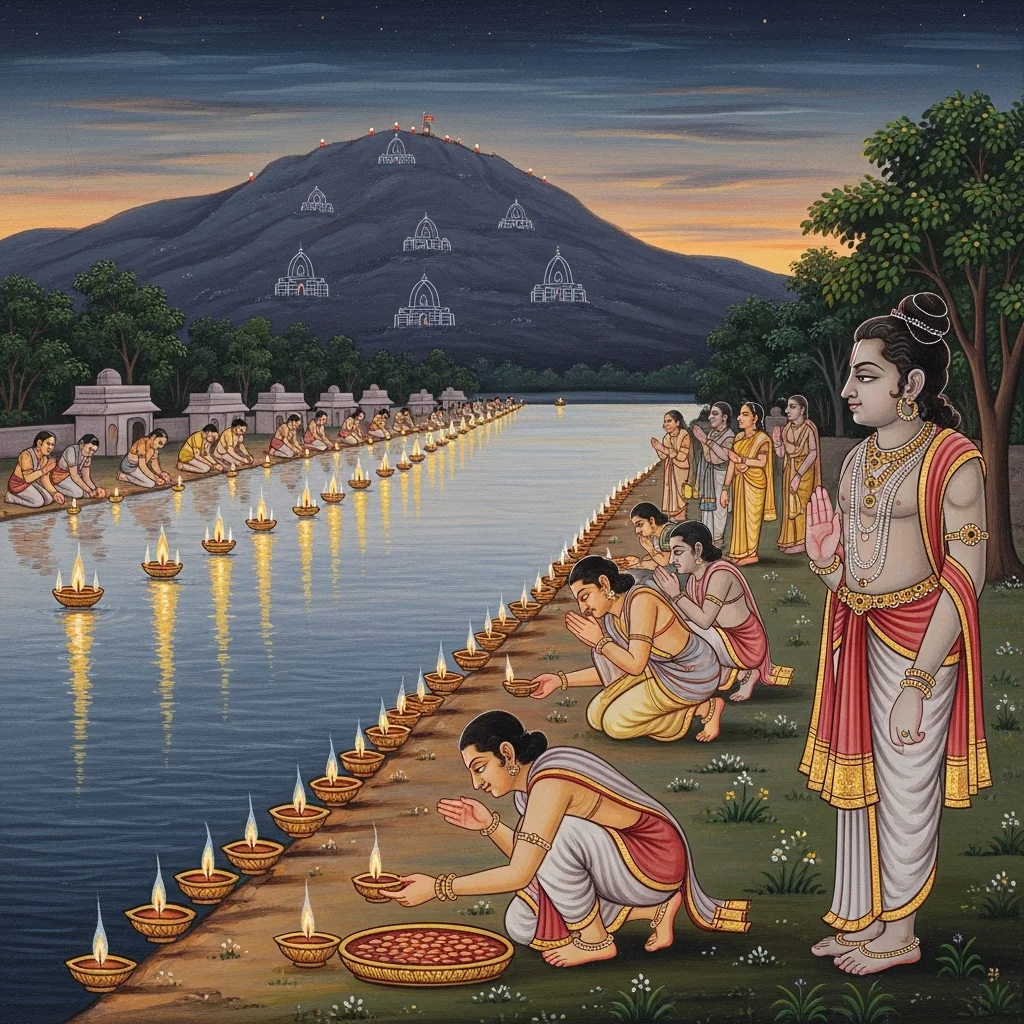
In this chapter, spoken in Sārasvata’s discourse, Vāmana the brāhmaṇa—having gained proper ritual knowledge for worship—journeys through the luxuriant forest of Raivataka. A long catalogue of trees is given, including auspicious “shade-trees” whose very sight is said to bring about the wasting away of sin (pāpa-kṣaya). Near the summit he encounters five fearsome kṣetrapālas, territorial guardians marked by formidable iconography. Through ascetic power he recognizes their divinity and learns that Mahādeva appointed them to regulate entry and protect the sacred precinct. They name themselves—Ekāpāda, Giridāruṇa, Meghānāda, Siṃhanāda, and Kālamegha—and, after granting a boon, accept permanent installation at designated sites (the mountain flank, the summit, the Bhavānī–Śaṅkara area, the front of Vastrāpatha, and the bank of the Suvarṇarekhā) for the welfare of all. The narrative then turns to the Dāmodara-māhātmya: the Suvarṇarekhā is proclaimed “all tīrthas embodied,” bestowing both worldly enjoyment and liberation (bhukti–mukti) and cleansing disease and poverty. Kārttika discipline and Bhīṣma-pañcaka observances are prescribed—sacred bathing, lamp-offering (dīpa-dāna), offerings and temple rites, night-long vigil (jāgaraṇa), śrāddha, and feeding brāhmaṇas and the vulnerable. A strong phalaśruti declares that even grave transgressors are freed from major sins through bathing, Dāmodara-darśana, and wakeful devotion, while the negligent do not attain Hari’s realm. The chapter closes by affirming salvific merit for those who read or hear this purāṇic account.
Shlokas
Verse 1
सारस्वत उवाच । अथासौ वामनो विप्रो लब्धज्ञानो भवार्चने । जगाम तद्वनं रम्यं गिरे रैवतकस्य यत्
Sārasvata said: Then the brāhmaṇa Vāmana, having gained spiritual knowledge through the worship of Bhava (Śiva), went to that delightful forest belonging to Mount Raivataka.
Verse 2
यत्र वृक्षा बहुविधा दीर्घशाखाः फलान्विताः । वटोदुम्बरबिल्वाश्च सर्जार्जुनकदंबकाः
There, trees of many kinds stand—long-branched and laden with fruit: banyan (vaṭa), udumbara, and bilva, as well as sarja, arjuna, and kadamba.
Verse 3
पलाशाश्वत्थनिंबाश्च धवाटीवारुणीद्रुमाः । शमीकंकोललिंबांश्च बीजपूरी च दाडिमः
There are palāśa, aśvattha, and nimba trees, dhavā and other vāruṇī trees; also śamī, kaṃkola, lime trees, bījapūrī, and pomegranate.
Verse 4
बदरी निंबकः पूगः कदली शल्लकी शिवा । तालहिंतालशिरसा बीजकावंशखादिराः
There are jujube (badarī), nimba, areca (pūga), banana (kadalī), śallakī and śivā trees; tāla palms, hiṃtāla, śirasā, and also bījaka, bamboo, and khadira.
Verse 5
अजगासनगागुच्छा इंगुदीकोरवेंगुदाः । ब्रह्मवृक्षाः कुरुबकाः करंजाः पुत्रजीविनः
There are ajagāsana trees and clusters of gā trees; iṅgudī, korava, and eṅguda; brahma-trees, kurubaka, karañja, and putrajīvaka.
Verse 6
अंकोल्लाः पारिभद्राश्च कलंबाः पनसास्तथा । उज्ज्वलाश्च हरिद्राश्च गंगडीवायवा द्रुमाः
There are aṃkolla trees, pārijāta/pāribhadra, kalamba, and jackfruit; also bright ujjvala trees, haridrā trees, and gaṃgaḍī-vāyava trees.
Verse 7
तेसुण्डकाः शिरीषाश्च खर्जूरीकरवंदिकाः । सेवाली शाल्मली शाला मधूकाश्च विभीतकाः
There were tesuṇḍaka trees and śirīṣas, date-palms and karavaṃdikas; sevālīs, śālmalīs and śāla trees, along with madhūka and vibhītaka—forming a sacred grove that adorns Vastrāpatha-kṣetra.
Verse 8
हरीतक्यः कटाहाश्च कर्यष्टा आटरूषकाः । विकच्छवः कपित्थाश्च रोहिणीवेत्रकद्रुमाः
There were harītakī trees and kaṭāhas, karyaṣṭā and āṭarūṣaka plants; vikacchavas and kapittha trees, and rohiṇī trees together with vetraka trees—spreading the auspicious beauty of that holy tract.
Verse 9
मदनफलानिर्गुण्डीपाटलानंदिपादपाः । लवंगैलालवल्यश्च सन्ताना अगरुद्रुमाः
There were madana-fruit trees, nirguṇḍī and pāṭalā trees, and also naṃdi trees; clove and cardamom plants, lavalī creepers, santānā trees, and agarwood trees—fragrant growths befitting a revered tīrtha.
Verse 10
श्रीखण्डकर्पूरनगाः कल्पवृक्षा नगोतमाः । वामनेन तदा दृष्टाश्छायावृक्षाः सुरार्चिताः
Then Vāmana beheld the finest trees—sandal and camphor, and the wish-fulfilling kalpavṛkṣas—shade-giving trees revered even by the gods.
Verse 11
उदयास्तमने येषां छाया न प्रतिहन्यते । तेषां दर्शनमात्रेण सर्वपापक्षयो भवेत्
Those trees whose shade is not cut off at sunrise or at sunset—by the mere sight of them, the destruction of all sins comes to pass.
Verse 12
ये जनाः पुण्यकर्माणस्तेषां ते दृष्टिगोचराः । एतान्पश्यन्ययौ वृक्षांस्ततो रैवतकं गिरिम्
Only those people of meritorious deeds can bring them within the range of their sight. Beholding those trees, he then proceeded to Mount Raivataka.
Verse 13
यावन्निरीक्षते तुंगं शिखरं तस्य मूर्द्धनि । आश्चर्यं ददृशे विप्रो महल्लोकभयंकरम्
As the brāhmaṇa gazed up at the lofty peak upon its summit, he saw a wondrous sight—vast and terrifying to the world.
Verse 14
धूमज्वलनमध्यस्थान्पुरुषान्पंच पश्यति । कृष्णांगान्खेचरान्रौद्रान्कृष्णागुरुविभूषितान्
He saw five male beings standing amid smoke and flame—black-limbed, moving through the sky, fierce in appearance, and adorned with dark agarwood.
Verse 15
इति श्रीस्कांदे महापुराण एकाशीतिसाहस्र्यां संहितायां सप्तमे प्रभास खण्डे द्वितीये वस्त्रापथक्षेत्रमाहात्म्ये सारस्वतप्रोक्ततीर्थयात्राविधाने श्रीदामोदरमाहात्म्यवर्णनंनाम पंचदशोऽध्यायः
Thus ends the fifteenth chapter, called “The Description of the Greatness of Śrī Dāmodara,” in the second part, “Vastrāpatha-kṣetra Māhātmya,” within the seventh, Prabhāsa Khaṇḍa of the venerable Skanda Mahāpurāṇa, in the Ekāśīti-sāhasrī Saṃhitā, in the section on the procedure for pilgrimage as taught by Sārasvata.
Verse 16
सघर्घरीकचरणन्यासनादितपर्वतान् । फेत्कारभासुराकारान्काशकुञ्चितमूर्द्धजान्
He beheld mountain-like forms, as if set in place by thunderous footfalls—shining with dreadful cries, and with heads of hair curled like kāśa-grass.
Verse 17
नरमांसवसासारकवलव्यग्रतालुकान् । जनगंधसमाज्ञानभवतीव्रविलोचनान्
Their palates were intent on mouthfuls of human flesh and the essence of fat; by recognizing the scent of men, they fixed fierce, penetrating eyes upon them.
Verse 18
पञ्चाग्निसाधनाव्याप्तदिव्यचक्षुः प्रभावतः । देवान्पश्यति विप्रेन्द्रो ज्ञातकार्यपरंपरः
By the power of his divine sight—sharpened through the discipline of the five fires—the best of brāhmaṇas beheld the gods, understanding the sequence of what must be done.
Verse 19
एते क्षेत्राधिपाः पञ्च महादेवेन निर्मिताः । महाबला रैवतके निवसंति गिरौ सदा
These five lords of the sacred domain—created by Mahādeva—are mighty in strength and ever dwell upon Mount Raivataka.
Verse 20
स्वेच्छाचारान्नरान्मर्त्त्यान्वारयति नगे तथा । हरिं हरं नदीं देवीं न पश्यंति गिरिं यथा
So too, upon the mountain they restrain mortal men who act by mere whim; such people do not behold Hari (Viṣṇu), Hara (Śiva), the goddess-river, nor even the mountain as it truly is.
Verse 21
दृष्ट्वा ज्ञात्वा स्तुतिं चक्रे ध्यात्वा देवं महेश्वरम् । जयंति दुष्टदैत्येंद्रयुद्धध्यानांकितं वपुः । बिभ्रति भ्रातरो ये ते पंचेंद्रसमविक्रमाः
Having seen and understood, he offered praise after meditating on Maheśvara. Victorious are those brothers who bear bodies marked by contemplation of battle with the wicked lords of the daityas—valiant with prowess equal to five Indras.
Verse 22
रुद्रवक्त्रोद्भवा दक्षा दक्षाध्वरविनाशकाः । स्वावलीढाहुतीनष्टभीतवाडवनंदिताः
Born from Rudra’s mouth, capable and mighty, they are destroyers of Dakṣa’s sacrifice—celebrated for terrifying the Vāḍava fire when the oblations were consumed and ruined.
Verse 23
कुङ्कुमागरुकर्पूरलिप्तांगाः सुविभूषिताः । मदिरामोदमत्तांगनृत्यगीतकराः सुराः
Anointed with saffron, aloe-wood, and camphor, richly adorned, the gods—intoxicated with the delight of wine—moved with dancing limbs and hands engaged in song.
Verse 24
ब्रह्मांडभ्रमणश्रांत स्वगंधत्रस्तसंचराः । मनोजवाः कामगमा क्षेत्रपाला जयंति ते
Victorious are those guardians of the sacred domain—wearied from roaming the universe, moving about with their own dread-inspiring scent; swift as the mind and able to go wherever they will.
Verse 25
इत्यादिवचनात्तुष्टा द्विजस्याग्रे स्वयं स्थिताः । एकपादोऽस्म्यहं चैको द्वितीयो गिरिदारुणः
Pleased by such words, they of their own accord stood before the brāhmaṇa. One said, “I am Ekapāda,” and another, “The second is Giridāruṇa.”
Verse 26
तृतीयो मेघनादस्तु सिंहनादश्चतुर्थकः । पंचमः कालमेघोऽहं कुर्मः किं ते वदस्व तत्
“The third is Meghanāda, the fourth Siṃhanāda; I am the fifth, Kālamegha. What shall we do for you? Tell us that.”
Verse 27
द्विज उवाच । यदि तुष्टा भवंतो मे यदि देयो वरो धुवम् । अहो आप्रलयं यावत्स्थातव्यं मत्प्रतिष्ठितैः
The Brāhmaṇa said: “If you are pleased with me, and if a boon is indeed to be granted, then—ah!—may you remain established here by my consecration, enduring until the very dissolution of the world.”
Verse 28
एकपादो गिरि तटे प्रहर्षात्प्रथमं स्थितः । वसतौ वसता तेन गिरौ च गिरिदारुणः
Ekapāda first took his stand in joy upon the mountain-slope; and by his dwelling there, that mountain too became awe-inspiring, mighty in sanctity and power.
Verse 29
प्रतिष्ठितः प्रसाद्याथ वरदोऽसौ स्वयं स्थितः । उज्जयंतगिरेर्मूर्ध्नि मेघनादः स्वयं ययौ
Thus established and graciously propitiated, that boon-giver remained there of his own accord. And Meghanāda himself went to the summit of Mount Ujjayanta.
Verse 30
भवानीशंकरं रम्यं सिंहनादस्तथाविशत् । स्वयं वस्त्रापथेनैव भवस्याग्रे निरूपितः
Then Siṃhanāda entered the delightful abode of Bhavānī and Śaṅkara. By Vastrāpatha itself he was appointed to stand before Bhava (Śiva).
Verse 31
स्वणरेखानदीतीरे कालमेघो महाबलः । सर्वलोकोपकारार्थं तीर्थं संस्थापितं पुरा
On the bank of the Svarṇarekhā River, the mighty Kālamegha once established a tīrtha, a sacred ford, for the welfare of all the worlds.
Verse 32
वामनेन स्वयं गत्वा क्षेत्रपालास्तु पूजिताः । पुरा युगादौ राजेंद्र सर्वे देवाः समागताः
Vāmana himself went there and worshipped the guardians of the sacred precinct. Long ago, at the beginning of the age, O king, all the gods assembled there.
Verse 33
सुराष्ट्रदेशे संप्राप्ताः पुण्ये रैवतके गिरौ । रक्षार्थं सर्वलोकानां वधार्थं देववैरिणाम्
They arrived in the land of Surāṣṭra, upon the holy Raivataka Mountain—so as to protect all worlds and to destroy the enemies of the gods.
Verse 34
विष्णोः कण्ठे तदा मुक्ता जयमाला सुरोत्तमैः । दामोदरेति विख्यातं दत्तं नामोत्तमं हरेः
Then the foremost of the gods placed a garland of victory upon Viṣṇu’s neck; and Hari received the excellent name, famed as “Dāmodara”.
Verse 35
सारमेय समारूढान्करिहस्तान्समेखलान् । खङ्गखेटकहस्तांश्च डमरुड्डामरस्वनान्
Mounted upon dogs, with elephant-like hands, girded with belts; bearing swords and shields, and resounding with the clamor of ḍamaru-drums—
Verse 36
सर्वतीर्थमयी पुण्या स्वर्णरेखा नदी स्थिता । भुक्तिमुक्तिप्रदं पुण्यं विष्णुलोकप्रदायकम्
The holy Svarṇarekhā River stands here as the very essence of all tīrthas. Meritorious and auspicious, it grants worldly enjoyment and liberation, and bestows attainment of Viṣṇu’s realm.
Verse 37
क्षालनं सर्वपापानां रोगदारिद्र्यनाशनम् । दामोदरं रैवतके परमानंददायकम्
Bathing here washes away all sins and destroys illness and poverty. Dāmodara at Raivataka bestows the highest bliss.
Verse 38
ये पश्यंति विमानैस्ते नीयंते विष्णुमंदिरे । न गृहे कार्तिकः कार्यो विशेषाद्भीष्मपंचकम्
Those who behold this holy manifestation are carried in celestial chariots to Viṣṇu’s abode. The Kārtika observance—especially the Bhīṣma-pañcaka—should not be performed merely at home, but in this sacred place.
Verse 39
पंचकाद्द्वादशी श्रेष्ठा कार्या दामोदरे जले । प्रातःस्नानं प्रकर्त्तव्यं संप्राप्ते कार्तिके जनैः
Among the five-day observances of Kārtika, Dvādaśī is the most excellent and should be observed in the waters of Dāmodara. When Kārtika arrives, people should perform morning bathing.
Verse 40
मासोपवासः कर्त्तव्यो यतिभिर्ब्रह्मचारिभिः । सतीभिर्विधवाभिश्च मुक्तिस्थानमभीप्सुभिः
Ascetics and students established in brahmacarya should undertake a month-long fast; likewise virtuous women and widows—indeed all who yearn for the abode of liberation—should observe it.
Verse 41
एकभक्तेन नक्तेन तथैवायाचितेन च । उपवासेवन कृच्छ्रेण शाकाहारेण वा पुनः
By eating once a day, or only at night, or taking only what is not solicited, or by fasting; or again, by severe austerity or by living on vegetables—thus may the vow be observed.
Verse 42
संसेव्यः कार्त्तिके विष्णुर्दीपदानपरैर्नरैः । ब्रह्मचर्यपरैर्मासो नीयते यदि मानवैः
In Kārtika, those devoted to offering lamps should worship Viṣṇu with reverence. If people pass the month steadfast in brahmacarya, that observance is supremely meritorious.
Verse 43
तदा विष्णुपुरे वासः क्रियते विष्णुना सह । पञ्चोपवासाः कर्त्तव्याः संप्राप्ते भीष्मपंचके
Then one is made to dwell in Viṣṇu’s city, together with Viṣṇu. When the Bhīṣma-pañcaka arrives, five fasts should be undertaken.
Verse 44
एकादशीं समारभ्य पंचमी पूर्णिमादिनम् । तदेतत्पंचकं प्रोक्तं सर्वपापहरं नृणाम्
Beginning from Ekādaśī and continuing to the fifth day that ends on the full-moon day—this is proclaimed as the Pañcaka, which removes all sins of people.
Verse 45
सर्वेषामपि मासानां पञ्चकात्कार्तिकादपि । एकादशी कार्तिकस्य पुण्या दामोदरे कृता
Among all months—and even within the Kārtika Pañcaka—the Ekādaśī of Kārtika, when observed before Dāmodara, is especially holy.
Verse 46
मिष्टान्नं कार्तिके देयं हविष्यं सघृतप्लुतम् । सुवर्णं रजतं वस्त्रं तोयमन्नं फलानि च
In Kārtika, sweet food should be given in charity, and haviṣya offerings moistened with ghee as well. Gold, silver, cloth, water, grain/food, and fruits should likewise be donated.
Verse 47
मासांते विविधं देयं गौस्तिलाः कुसुमानि च । सर्वदानेषु यत्पुण्यं सर्व तीर्थेषु यत्फलम्
At the close of the month, one should give various gifts—such as a cow, sesame, and flowers. By doing so, one attains the merit of all charities and the fruit of all sacred tīrthas.
Verse 48
अश्वमेधादिभिर्यज्ञैर्गयायां पिंडदस्य यत् । तत्फलं जायते नॄणां दृष्टे दामोदरे नृप
O King, the very fruit that arises from great sacrifices beginning with the Aśvamedha, and from offering piṇḍas at Gayā, comes to people merely by beholding Dāmodara.
Verse 49
एकादश्यां कृतस्नानो देव पूजापरो भवेत् । स्नाप्य पञ्चामृतेनैव ततस्तीर्थोदकेन च
On Ekādaśī, having bathed, one should become intent upon worship of the Deity—bathing (the sacred form) with pañcāmṛta, and thereafter also with the water of the holy tīrtha.
Verse 50
कुंकुमागरुश्रीखंडकर्पूरोदकमिश्रितैः । पूजयित्वा ततः पुष्पैः शतपत्रैः सुगं धिभिः
Having worshipped with water blended with saffron, agaru (aloeswood), sandal, and camphor, one should then worship with fragrant flowers—lotuses of a hundred petals.
Verse 51
मालतीकुसुमैः शुभ्रैर्बहुभिस्तुलसीदलैः । वस्त्रयज्ञोपवीतं च दत्त्वा धूपं प्रधूपयेत्
With many white mālatī blossoms and many tulasī leaves, and after offering cloth and the sacred thread (yajñopavīta), one should then thoroughly fumigate the shrine with incense.
Verse 52
दीपं दद्याद्धृतेनैव तैलेनापि घृतं विना । नैवेद्यं विविधं देयं फलं तांबूलमेव च
One should offer a lamp with ghee, or, when ghee is unavailable, with oil. One should also present varied naivedya (food-offerings), along with fruit and tāmbūla (betel).
Verse 53
प्रासादपूजा कर्त्तव्या ध्वजदानादिना नृप । गौः सवत्सा ततो देया संसारार्णवतारिणी
O King, worship of the temple should be performed, including gifts such as the offering of a dhvaja (flag) and the like. Thereafter, a cow together with her calf should be given—a gift that carries one across the ocean of saṃsāra.
Verse 54
ततः प्रदक्षिणां कृत्वा गीतवादित्रनिस्वनैः । वेदपाठपुराणैश्च व्याख्यादिव्यकथादिभिः
Then, having performed pradakṣiṇā (circumambulation), amid the sounds of song and instruments, and with Vedic recitation, Purāṇic readings, explanations, and other sacred narratives, one should celebrate the worship.
Verse 55
देवाग्रे जागरः कार्यो दीपो देयोंऽतिभूमिषु । सप्तधान्यमयाः सप्त पर्वता दीपसंयुताः
In the presence of the Deity, one should keep the night-vigil and offer lamps upon elevated platforms. Seven “mountains” made of the seven grains should be arranged, each furnished with lamps.
Verse 56
फलतांबूलपक्वान्नपूरिताः परिकल्पिताः । विद्वद्भिः श्रोत्रियैः श्रांतैर्ब्राह्मणैर्गृहमेधिभिः
These arrangements should be prepared—filled with fruits, tāmbūla (betel), and cooked food—by learned Brāhmaṇas, śrotriya trained in the Veda, even if weary, as householders.
Verse 57
स्त्रीभिश्च नरशार्दूल श्रोतव्या वैष्णवी कथा । एवं जागरणं कार्यं रागक्रोधविवर्जितैः
O tiger among men, women too should listen to the sacred Vaiṣṇava narration. In this manner the night-vigil should be observed—free from attachment and anger.
Verse 58
कृत्वा जागरणं रात्रावुदिते सूर्यमडले । पूर्वां संध्यां ततः स्नात्वा कृत्वा मध्याह्नमाचरेत्
Having kept the vigil through the night, when the orb of the sun has risen one should perform the morning saṃdhyā; then, after bathing, one should duly carry out the midday rite.
Verse 59
देवान्पितॄन्मनुष्यांश्च संतर्प्य विधिपूर्वकम् । कृत्वा श्राद्धं पितॄणां तु दद्याद्दानं स्वशक्तितः
After duly offering tarpaṇa to the gods, the ancestors, and humans according to rule, and after performing śrāddha for the forefathers, one should give charity according to one’s capacity.
Verse 60
देवं दामोदरं पूज्य पुष्पधूपादिना पुनः । नरसिंहं सुरं पूज्य वैनतेयं च पूजयेत्
One should worship Lord Dāmodara again with flowers, incense, and the like. One should worship the divine Narasiṃha, and also worship Vainateya (Garuḍa).
Verse 61
कृत्वा जागरणं रात्रावुत्थाप्य मधुसूदनम् । द्वादशीभुक्तिमासाद्य कार्यं पारणकं नरैः
Having kept the vigil at night and then ritually “awakening” Madhusūdana, one should perform the pāraṇa—breaking the fast—upon reaching the proper eating-time of Dvādaśī.
Verse 62
ब्राह्मणान्भोजयित्वा च सहितः पुत्रबांधवैः । विकलांधकृपणानां देयमन्नं स्वशक्तितः
After feeding the Brāhmaṇas, together with one’s sons and kinsmen, one should give food—according to one’s ability—to the disabled, the blind, and the poor.
Verse 63
दामोदरे रैवतके स्वर्णरेखानदीजले । एवं यः कुरुते यात्रां तस्य पुण्यफलं शृणु
At Dāmodara on Raivataka, and in the waters of the river Svarṇarekhā—whoever performs the pilgrimage in this way, listen to the holy merit that results.
Verse 64
ब्रह्मघ्नश्च सुरापश्च ग्रामसीमाविलोपकः । राजद्रोही गुरुद्रोही मिथ्याव्रतधरश्च यः
Whether one is a slayer of a brāhmaṇa, a drinker of intoxicants, a remover of village boundary-marks, a traitor to the king, a betrayer of one’s teacher, or one who bears false vows—
Verse 65
कूटसाक्ष्यप्रदो यश्च यश्च न्यासापहारकः । बालस्त्रीघातको विप्रः संध्यास्नानविवर्जितः
Whether one gives false testimony, or steals what has been entrusted as a deposit, or kills a child or a woman—even a brāhmaṇa who neglects the saṃdhyā rites and sacred bathing—
Verse 66
देवब्रह्म स्वहर्त्ता च वेदविक्रयकारकः । कन्याविक्रयकर्त्ता च देवब्राह्मणनिंदकः
Whether one steals property belonging to a deity or to brāhmaṇas, traffics in the sale of the Veda, sells a maiden, or reviles the gods and brāhmaṇas—
Verse 67
विश्वासघातको विप्रः शूद्रान्नादोऽथ लुब्धकः । नायकः परदाराणां स्वयंदत्तापहारकः
Even a brāhmaṇa who betrays trust, one who lives on food obtained from śūdras, a greedy hunter, one who leads others into relations with another’s wife, and one who steals back what he himself has given—such people are counted among grievous sinners.
Verse 68
पर्वमैथुनसेवी च तथा वै सेतुभेदकः । परिणीतामृतुस्नातां स्वयं यो नाभिगच्छति
One who indulges in sexual union on forbidden holy days, one who breaks a causeway or sacred embankment, and one who neglects his duly wedded wife when she has bathed after her monthly course—such a man too falls into sin.
Verse 69
ब्राह्मणी विधवा बाला न भवेच्छ्रुतधारिणी । महापातकिनश्चैते तथान्ये बहवो नृप
A brāhmaṇa woman, widowed while still young, does not retain the holding of sacred learning; these and many others, O king, are counted as mahāpātakins—great sinners.
Verse 70
स्वर्णरेखाजले स्नात्वा दृष्ट्वा दामोदरं हरिम् । रात्रौ जागरणं कृत्वा मुच्यते सर्वपातकैः
Having bathed in the waters of the Svarṇarekhā, having beheld Hari as Dāmodara, and having kept vigil through the night, one is freed from all sins.
Verse 71
न तु ये पापकर्माणः समायाताः प्रजागरे । संसारसागरे तीर्थे गच्छंति न हरेः पुरम्
But those devoted to sinful deeds, even if they come to the night vigil, do not reach Hari’s city by way of the Saṃsārasāgara tīrtha.
Verse 72
यथा यथा याति नरः प्रजागरे तथातथा विष्णुपुरे विचिंत्यते । वासः सुरैर्वैष्णवलोकहेतवे मृदंगगीतध्वनिनादिते गृहे
In whatever manner a man spends the night in vigil, in that very manner he is remembered and accounted for in Viṣṇu’s city. For attaining the Vaiṣṇava world, the gods prepare for him a dwelling resounding with mṛdaṅga drums and sacred song.
Verse 73
गदासि शंखारिधराश्चतुर्भुजा दैतेयदर्पापहरूपधारिणः । प्रगीयमानाः सुरसुंदरीभिस्ते यांति खं खेचरगात्रसंगाः
Bearing mace and sword, holding conch and discus, four-armed and taking forms that crush the pride of the daityas—praised in song by celestial maidens, they ascend into the sky in the company of heavenly beings.
Verse 74
वाराहकल्पे प्रथमं युगादौ दामोदरो रैवतके प्रसिद्धः । सैषा नदी या सरितां वरिष्ठा सोऽयं हरिर्यो भुवनस्य कर्ता
In the Varāha-kalpa, at the very dawn of the first age, Dāmodara became renowned on Raivataka. This very river is the most excellent among rivers; and this very Hari is the maker of the worlds.
Verse 75
इदं पुराणं पठते शृणोति नरो विमानैर्मधुसूद नालये । देवांगनादत्तभुजश्चतुर्भुजः स नीयते देवगणैरभिष्टुतः
He who reads or hears this Purāṇa in the abode of Madhusūdana is borne aloft in celestial vimānas; by the gift of divine maidens he becomes four-armed, and is led forth, praised by the hosts of gods.