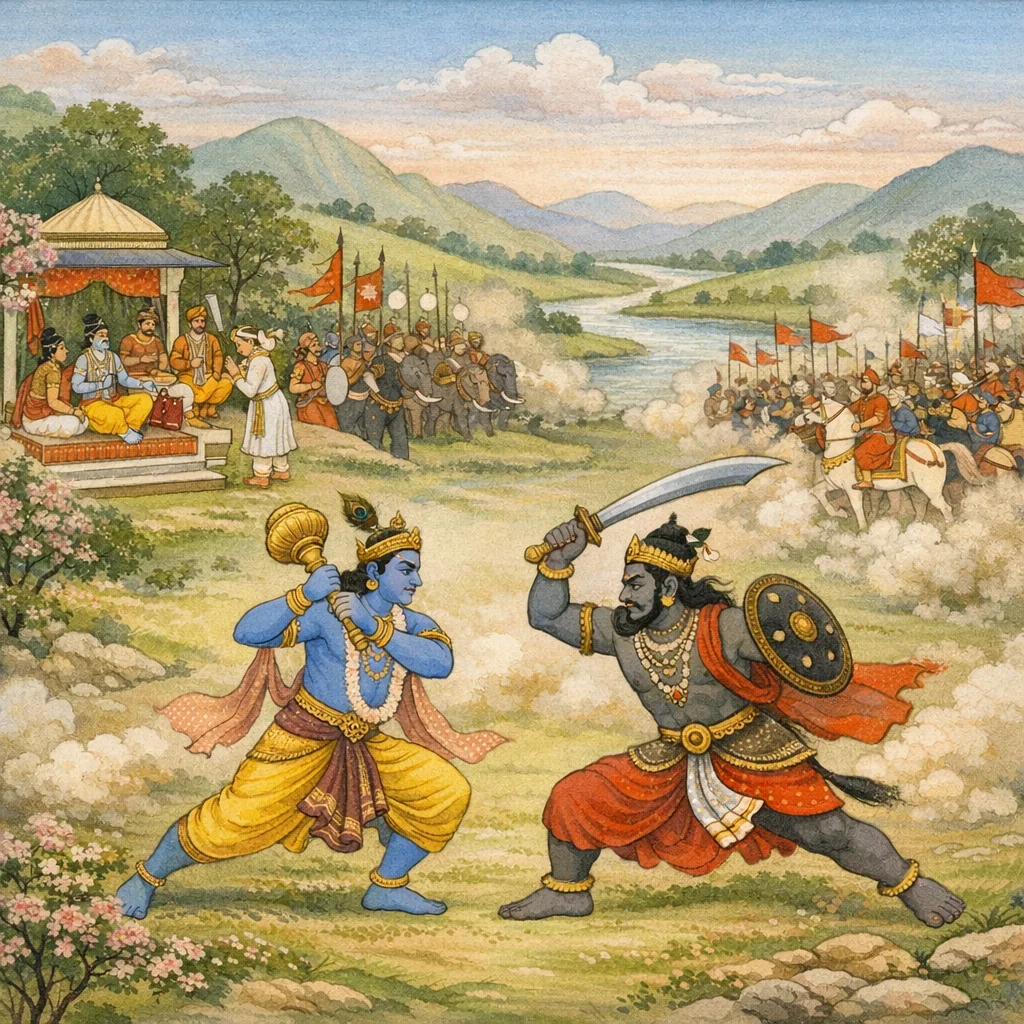
शिवदूतेन युद्धनिश्चयः तथा देवदानवयुद्धारम्भः (Śiva’s Envoy and the Commencement of the Deva–Dānava War)
Adhyāya 36 begins as Sanatkumāra recounts how Śiva’s envoy delivers Śiva’s message to Śaṃkhacūḍa in full detail and with decisive intent. Hearing it, the mighty dānava-king Śaṃkhacūḍa willingly accepts battle, mounts his vehicle with his ministers, and commands his forces to march against Śaṅkara. Śiva, in turn, swiftly mobilizes his own army and the devas; the Lord himself prepares, described as doing so līlayā (playfully), revealing his transcendence beyond exertion. The war starts at once: martial instruments resound, tumult rises, and heroic cries fill the field. The chapter then lists paired duels between devas and dānavas, repeatedly stressing that the fighting proceeds “according to dharma,” within a rule-governed cosmic order rather than chaotic violence. Noted matchups include Indra vs Vṛṣaparvan, Sūrya vs Vipracitti, Viṣṇu vs Dambha, Kāla vs Kālāsura, Agni vs Gokarṇa, Kubera vs Kālakeya, Viśvakarmā vs Maya, Mṛtyu vs Bhayaṃkara, Yama vs Saṃhāra, Varuṇa vs Kālambika, Vāyu vs Caṃcala, Budha vs Ghaṭapṛṣṭha, and Śanaiścara vs Raktākṣa.
Shlokas
Verse 1
सनत्कुमार उवाच । स दूतस्तत्र गत्वा च शिववाक्यं जगाद ह । सविस्तरं यथार्थं च निश्चयं तस्य तत्त्वतः
Sanatkumāra said: Having gone there, that messenger conveyed Śiva’s message—fully, truthfully, and in detail—communicating Śiva’s settled resolve in accord with the true principle of the matter.
Verse 2
तच्छुत्वा शंखचूडोऽसौ दानवेन्द्रः प्रतापवान् । अंगीचकार सुप्रीत्या रणमेव स दानवः
Hearing that, Śaṅkhacūḍa—the mighty lord of the Dānavas—gladly accepted battle itself with great delight.
Verse 3
समारुरोह यानं च सहामात्यैश्च सत्वरः । आदिदेश स्वसैन्यं च युद्धार्थं शंकरेण च
Hastening, he mounted his chariot along with his ministers, and—by the command and sanction of Śaṅkara—he ordered his own army to set forth for battle.
Verse 4
शिवस्स्वसैन्यं देवांश्च प्रेरयामास सत्वरः । स्वयमप्यखिलेशोपि सन्नद्धोभूच्च लीलया
Śiva swiftly urged on His own army and the gods; and He Himself too—though the Lord of all—became fully armed, as a divine play (līlā).
Verse 5
युद्धारंभो बभूवाशु नेदुर्वाद्यानि भूरिशः । कोलाहलश्च संजातो वीरशब्दस्तथैव च
The battle began at once. Many instruments resounded, and a great uproar arose—along with the cries of heroes.
Verse 6
देवदानवयोर्युद्धं स्परमभून्मुने । धर्मतो युयुधे तत्र देवदानवयोर्गणः
O sage, a fierce battle arose between the Devas and the Dānavas. Yet in that encounter, the hosts of both sides fought according to dharma, within the bounds of righteous conduct.
Verse 7
स्वयं महेन्द्रो युयुधे सार्धं च वृषपर्वणा । भास्करो युयुधे विप्रचित्तिना सह धर्मतः
Mahendra (Indra) himself fought together with Vṛṣaparvan; and Bhāskara (the Sun) fought with Vipracitti—each entering battle in accordance with dharma, the righteous code of war.
Verse 8
दंभेन सह विष्णुश्च चकार परमं रणम् । कालासुरेण कालश्च गोकर्णेन हुताशनः
Viṣṇu fought a most intense battle with Dambha. Kāla (Time/Death) battled the demon Kālāsura, and Hutāśana (Agni, the Fire-god) fought with Gokarṇa.
Verse 9
कुबेरः कालकेयेन विश्वकर्मा मयेन च । भयंकरेण मृत्युश्च संहारेण यमस्तथा
Kubera was engaged by Kālakeya; Viśvakarmā by Maya; Mṛtyu (Death) by Bhayaṅkara; and likewise Yama by Saṃhāra—each being confronted and held in battle by his respective opponent.
Verse 10
कालम्बिकेन वरुणश्चंचलेन समीरणः । बुधश्च घटपृष्ठेन रक्ताक्षेण शनैश्चरः
Varuṇa, lord of the waters, rode Kālambika; Samīraṇa, the Wind, rode Caṃcala; Budha (Mercury) rode Ghaṭapṛṣṭha; and Śanaiścara (Saturn) rode Raktākṣa—each taking position with his own mount in that martial array.
Verse 11
जयन्तो रत्नसारेण वसवो वर्चसां गणैः । अश्विनौ दीप्तिमद्भ्यां च धूम्रेण नलकूबरः
Jayanta advanced with Ratnasāra; the Vasus came with companies of the radiant. The Aśvinī twins too arrived with brilliant hosts, and Nalakūbara came accompanied by Dhūmra.
Verse 12
धुरंधरेण धर्मश्च गणकाक्षेण मंगलः । शोभाकरेण वैश्वानः पिपिटेन च मन्मथः
Dharma (Righteousness) came with Dhuraṃdhara; Maṅgala (auspicious Mars) came with Gaṇakākṣa; Vaiśvāna (the Fire principle) came with Śobhākara; and Manmatha (the god of desire) came with Pipiṭa.
Verse 13
गोकामुखेन चूर्णेन खड्गनाम्नाऽसुरेण च । धूम्रेण संहलेनापि विश्वेन च प्रतापिना
There were also other mighty asuras—Gokāmukha, Cūrṇa, the demon named Khaḍga, Dhūmra, Saṃhala, and the valiant Viśva—each blazing with pride and martial power.
Verse 14
पलाशेन द्वादशाऽर्का युयुधुर्धर्मतः परे । असुरैरमरास्सार्द्धं शिवसाहाय्यशालिनः
Then, in the righteous course of battle, the twelve Ādityas fought with the Palāśa weapon, and the Devas—endowed with Lord Śiva’s support—joined together to contend against the Asuras.
Verse 15
एकादश महारुद्राश्चैकादशभयंकरैः । असुरैर्युयुधुर्वीरैर्मैहाबलपराक्रमैः
Then the eleven Mahārudras fought against eleven terrifying Asura heroes—mighty in strength and formidable in valor.
Verse 16
महामणिश्च युयुधे चोग्रचंडादिभिस्सह । राहुणा सह चन्द्रश्च जीवः शुक्रेण धर्मतः
Mahāmaṇi fought together with Ogracaṇḍa and the others. The Moon battled with Rāhu, and Jīva engaged Śukra—each in that war according to the dharmically ordained alignment of their sides.
Verse 17
नन्दीश्वरादयस्सर्वे दानवप्रवरैस्सह । युयुधुश्च महायुद्धे नोक्ता विस्तरतः पृथक्
Nandīśvara and all the others (leaders of Śiva’s gaṇas), together with the foremost among the Dānavas, fought in that great battle; their combats are not set forth separately in detailed expansion.
Verse 18
वटमूले तदा शंभुस्तस्थौ काल्याः सुतेन च । सर्वे च युयुधुस्सैन्यसमूहास्सततं मुने
Then Śambhu stood at the foot of the banyan tree, together with Kālī’s son. And all the gathered hosts of armies continued to fight unceasingly, O sage.
Verse 19
रत्नसिंहासने रम्ये कोटिदानवसंयुतः । उवास शंखचूडश्च रत्नभूषणभूषितः
Adorned with jeweled ornaments, Śaṅkhacūḍa sat upon a splendid jeweled throne, surrounded by crores of dānavas, demonic warriors.
Verse 20
महायुद्धो बभूवाथ देवासुरविमर्दनः । नानायुधानि दिव्यानि चलंतिस्म महामृधे
Then a great battle arose, crushing Devas and Asuras alike. In that mighty clash, many divine weapons began to whirl and surge about.
Verse 21
गदर्ष्टिपट्टिशाश्चक्रभुशुंडिप्रासमुद्गराः । निस्त्रिंशभल्लपरिघाः शक्त्युन्मुखपरश्वधाः
In that battle, weapons were brandished on every side: maces, clubs, spears, discus-weapons, bhūśuṇḍī missiles, lances, and hammers; also swords, arrows, iron bars, javelins (śakti), and uplifted axes.
Verse 22
शरतोमरखड्गाश्च शतघ्न्यश्च सहस्रशः । भिंदिपालादयश्चान्ये वीरहस्तेषु शोभिताः
Arrows, spears, and swords, and thousands upon thousands of śataghnīs; along with other weapons such as the bhiṇḍipāla and more, shone brilliantly in the hands of the valiant warriors.
Verse 23
शिरांसि चिच्छिदुश्चैभिर्वीरास्तत्र महो त्सवाः । वीराणामुभयोश्चैव सैन्ययोर्गर्जतो रणे
In that battle, the heroic warriors, exulting as though at a great festival, severed heads with their weapons. On both sides, the armies of valiant men roared loudly as the fight raged on.
Verse 24
गजास्तुरंगा बहवः स्यन्दनाश्च पदातयः । सारोहवाहा विविधास्तत्रासन् सुविखंडिताः
There, many elephants and horses, chariots and foot-soldiers—along with their riders and mounts of various kinds—were seen completely shattered and broken apart in the battle.
Verse 25
निकृत्तबाहूरुकरकटिकर्णयुगांघ्रयः । संछिन्नध्वजबाणासितनुत्र वरभूषणाः
Arms, thighs, hands, waists, pairs of ears, and feet were cut down; banners, arrows, swords, and armour were shattered—along with splendid ornaments—amid the fury of battle.
Verse 26
समुद्धतकिरीटैश्च शिरोभिस्सह कुंडलैः । संरंभनष्टैरास्तीर्णा बभौ भूः करभोरुभिः
The earth appeared strewn with severed heads—crowns torn off and earrings still clinging—along with mighty thighs, shattered in the fury of battle.
Verse 27
महाभुजैस्साभरणैस्संछिन्नैस्सायुधैस्तथा । अंगैरन्यैश्च सहसा पटलैर्वा ससारघैः
Then, in an instant, there rushed forth masses of severed mighty arms—still adorned and still bearing weapons—along with other limbs, falling in heaps like dense, spreading clusters.
Verse 28
मृधे भटाः प्रधावंतः कबंधान् स्वशिरोक्षिभिः । पश्यंतस्तत्र चोत्पेतुरुद्यतायुधसद्भुजैः
In the thick of battle, the warriors ran about, beholding there headless trunks—each with its own severed head and eyes; and those bodies, with strong arms still lifting their weapons aloft, sprang up again in that same field.
Verse 29
वल्गंतोऽतितरां वीरा युयुधुश्च परस्परम् । शस्त्रास्त्रैर्विविधैस्तत्र महाबलपराक्रमाः
There, the heroes—leaping forth with great ardor—fought one another hand to hand, displaying mighty strength and valor, striking with many kinds of weapons and missiles.
Verse 30
केचित्स्वर्णमुखैर्बाणैर्विनिहत्य भटान्मृधे । व्यनदन् वीरसन्नादं सतोया इव तोयदाः
Some warriors, having struck down the soldiers in the thick of battle with arrows whose tips were like gold, roared with the thunderous cry of heroes—like rain-bearing clouds rumbling when heavy with water.
Verse 31
सर्वतश्शरकूटेन वीरस्सरथसारथिम् । वीरं संछादयामास प्रावृट्सूर्यमिवांबुदः
That mighty warrior, with a dense volley of arrows from every side, wholly covered the hero along with his chariot and charioteer—just as a monsoon cloud veils the sun in the rainy season.
Verse 32
अन्योन्यमभिसंसृत्य युयुधुर्द्वन्द्वयोधिनः । आह्वयंतो विशंतोऽग्रे क्षिपंतो मर्मभिर्मिथः
Closing in upon one another, the paired champions fought in single combat—calling out challenges aloud, pressing into the front ranks, and striking each other again and again at the vital points.
Verse 33
सर्वतो वीरसंघाश्च नानाबाहुध्वजायुधाः । व्यदृश्यंत महासंख्ये कुर्वंतः सिंहसंरवम्
On all sides, hosts of heroes became visible in that vast battle—bearing many kinds of arms, banners, and weapons—raising a lion-like roar.
Verse 34
महारवान्स्वशंखांश्च विदध्मुर्वै पृथक् पृथक् । वल्गनं चक्रिरे तत्र महावीराः प्रहर्षिताः
With a great roar, each mighty hero there blew his own conch separately; and, filled with exhilaration, they performed spirited martial displays upon the battlefield.
Verse 35
एवं चिरतरं कालं देवदानवयोर्महत् । बभूव युद्धं विकटं करालं वीरहर्षदम्
Thus, for a very long time, a great battle raged between the Devas and the Danavas—terrifying and formidable, fierce in aspect, and a source of exhilaration for the valiant.
Verse 36
इति श्रीशिवमहापुराणे द्वितीयायां रुद्रसंहितायां पञ्चमे युद्धखंडे शंखचूडवधे परस्परयुद्धवर्णनं नाम षट्त्रिंशोऽध्यायः
Thus ends the thirty-sixth chapter, entitled “Description of the Mutual Battle,” in the fifth section—Yuddhakhaṇḍa—of the second book of the Śrī Śiva Mahāpurāṇa, within the Rudra Saṃhitā, in the account of the slaying of Śaṅkhacūḍa.
Frequently Asked Questions
Śiva’s envoy delivers a decisive message to Śaṃkhacūḍa, who accepts war; Śiva and the devas mobilize, and the deva–dānava battle formally begins with paired duels.
The repeated “dharmataḥ” frames warfare as subordinated to cosmic law; the roster of matchups functions as a cosmological taxonomy where divine powers confront disruptive forces, under Śiva’s overarching sovereignty.
Śiva as akhileśa acting in līlā (effortless readiness), and multiple devas as functional manifestations—Kāla (time), Mṛtyu (death), Yama (restraint/judgment), Agni (fire), Kubera (wealth), Vāyu (wind), Varuṇa (waters), etc.—each opposed by a named dānava.