Sarga 82
भरतस्य धर्मप्रतिज्ञा तथा रामनिवर्तनयात्रा (Bharata’s Vow of Dharma and the Expedition to Recall Rama)
अयोध्याकाण्ड
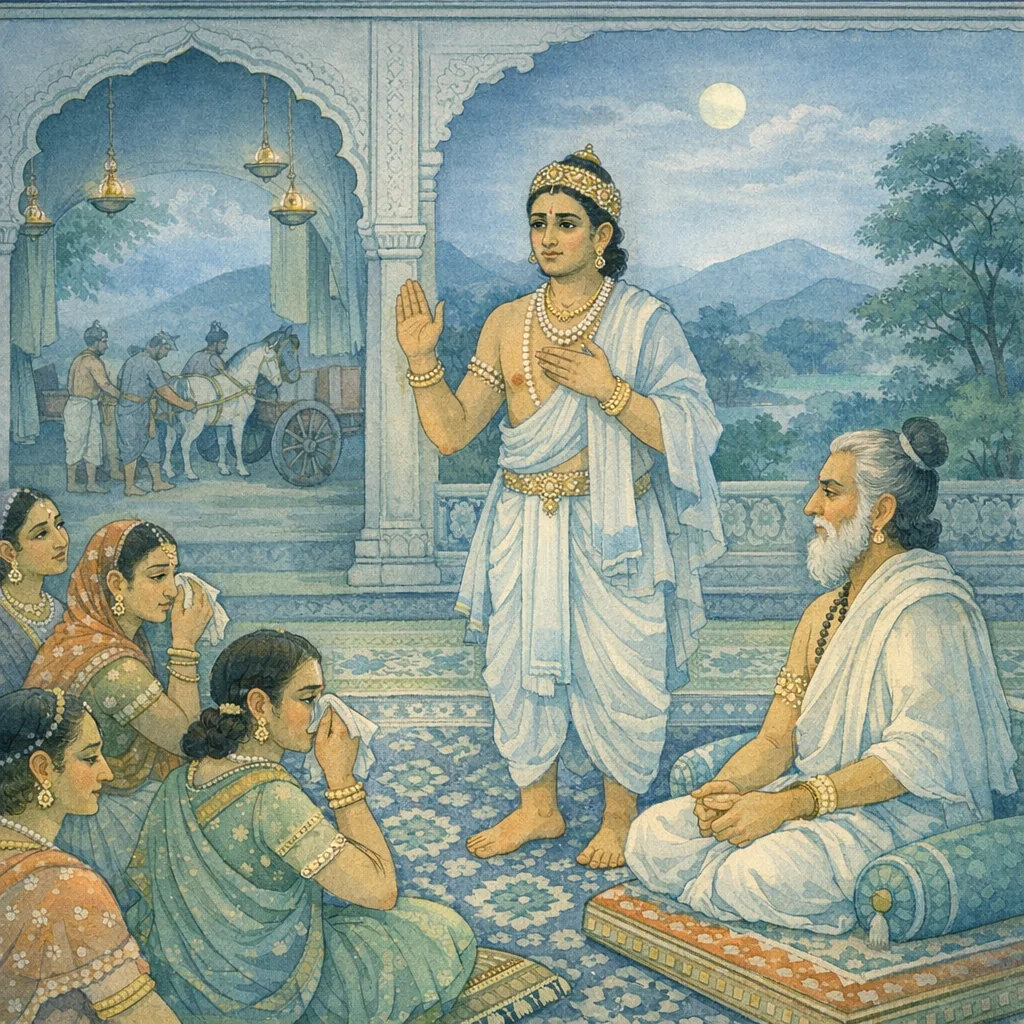
Sarga 82 presents a formal sabhā (assembly) in Ayodhyā, adorned with lunar similes and the radiance of its eminent members. Vasiṣṭha, invoking rājadharma and the now-completed transfer of sovereignty, urges Bharata to accept consecration and enjoy a “thornless” kingdom made prosperous by tribute. Bharata, overwhelmed by grief and moral revulsion, publicly rejects any thought of usurping Rāma’s rightful rule. He declares that both he and the kingdom belong to Rāma, condemns the sin bound up with his mother’s deed, and calls acceptance of the throne a disgrace to the Ikṣvāku line. He vows either to bring Rāma back or to dwell in the forest like Lakṣmaṇa. The assembly responds with tears of joy at his dharmic words. Then Bharata orders Sumantra to mobilize leaders and troops. Scouts and road-protectors have already been dispatched; households and military units harness vehicles and animals, and preparations begin for an expedition meant to appease Rāma and restore him, for the welfare of the world.
Shlokas
Verse 1
तामार्यगणसम्पूर्णां भरतः प्रग्रहां सभाम्।ददर्श बुद्धिसम्पन्नः पूर्णचन्द्रो निशामिव।।।।
Clear-minded Bharata beheld that assembly hall, filled with noble men, as the full moon beholds the night spread out before it.
Verse 2
आसनानि यथान्यायमार्याणां विशतां तदा।वस्त्राङ्गरागप्रभया द्योतिता सा सभोत्तमा।।।।
Then, as the honorable elders and nobles took their seats according to proper rank and custom, that eminent assembly shone—bright with the splendor of garments and the fragrant glow of unguents.
Verse 3
सा विद्वज्जनसम्पूर्णा सभा सुरुचिरा तदा।अदृश्यत घनापाये पूर्णचन्द्रेव शर्वरी।।।।
Then that splendid assembly, filled with learned people, shone forth like a night bright with the full moon after the rainy-season clouds had cleared.
Verse 4
राज्ञस्तु प्रकृती स्सर्वा स्समग्राः प्रेक्ष्य धर्मवित्।इदं पुरोहितो वाक्यं भरतं मृदु चाब्रवीत्।।।।
Seeing all the king’s ministers and principal officers assembled, the chief priest, knower of dharma, spoke these gentle words to Bharata.
Verse 5
तात राजा दशरथ स्स्वर्गतो धर्ममाचरन्।धनधान्यवतीं स्फीतां प्रदाय पृथिवीं तव।।।।
“Dear child, King Daśaratha, practicing righteousness, has gone to heaven—having entrusted to you this vast kingdom, rich in wealth and grain.”
Verse 6
रामस्तथा सत्यधृतिस्सतां धर्ममनुस्मरन्।नाजहात्पितुरादेशं शशी ज्योत्स्नामिवोदितः।।।।
“So too Rāma, steadfast in truth and mindful of the dharma of the virtuous, did not abandon his father’s command—just as the risen moon does not forsake its moonlight.”
Verse 7
पित्रा भ्रात्रा च ते दत्तं राज्यं निहतकण्टकम्।तद्भुङ्क्ष्व मुदितामात्यः क्षिप्रमेवाभिषेचय।।।।
This kingdom—purged of all impediments—has been bestowed on you by your father and also by your brother. Accept it with ministers made glad, and receive the sacred consecration without delay.
Verse 8
उदीच्या श्च प्रतीच्या श्च दाक्षिणात्याश्च केवलाः।कोट्यापरान्तास्सामुद्रारत्नान्यभिहरन्तुते।।।।
Let kings from the north and the west, and those of the south as well; and the frontier rulers and sea-going merchants in countless numbers bring you, as tribute, jewels born of the ocean.
Verse 9
तच्छ्रुत्वा भरतो वाक्यं शोकेनाभिपरिप्लुतः।जगाम मनसा रामं धर्मज्ञो धर्मकाङ्क्षया।।।।
Hearing those words, Bharata—knowing what dharma demands—was flooded with grief; yet, yearning to act righteously, he went to Rama in his mind, fixing his thought upon him.
Verse 10
सबाष्पकलया वाचा कलहंसस्वरो युवा।विललाप सभामध्ये जगर्हे च पुरोहितम्।।।।
Young Bharata, his swan-like melodious voice broken by tears, lamented in the midst of the royal assembly and reproached the family priest Vasiṣṭha.
Verse 11
चरितब्रह्मचर्यस्य विद्यास्नातस्य धीमतः।धर्मे प्रयतमानस्य को राज्यं मद्विधो हरेत्।।।।
Who—someone like me—could ever seize the kingdom from Rāma, who has lived the discipline of brahmacarya, is fully trained in learning, is wise, and strives steadfastly in righteousness?
Verse 12
कथं दशरथाज्जातो भवेद्राज्यापहारकः।राज्यं चाहं च रामस्य धर्मं वक्तुमिहार्हसि।।।।
How could one born of Daśaratha become a usurper of the kingdom? Both the kingdom and I belong to Rāma—therefore, in this matter you ought to speak the truth of dharma.
Verse 13
ज्येष्ठ श्श्रेष्ठश्च धर्मात्मा दिलीपनहुषोपमः।लब्धुमर्हति काकुत्स्थो राज्यं दशरथो यथा।।।।
Rāma of the Kakutstha line—eldest, best, and righteous, comparable to Dilīpa and Nahuṣa—deserves to obtain this kingdom, just as Daśaratha did.
Verse 14
अनार्यजुष्टमस्वर्ग्यं कुर्यां पापमहं यदि।इक्ष्वाकूणामहं लोके भवेयं कुलपांसनः।।।।
If I were to commit such a sin—favoured by ignoble people and leading away from heaven—I would become, in the eyes of the world, a disgrace to the Ikṣvāku lineage.
Verse 15
यद्धि मात्रा कृतं पापं नाहं तदपि रोचये।इहस्थो वनदुर्गस्थं नमस्यामि कृताञ्जलिः।।।।
Even the sin committed by my mother, I do not approve. Remaining here, I bow with folded hands to my brother who dwells in the forest fastness.
Verse 16
राममेवानुगच्छामि राजा स द्विपदां वरः।त्रयाणामपि लोकानां राज्यमर्हति राघवः।।।।
I shall follow Rāma alone; he—best among men—is the king. Rāghava deserves sovereignty even over the three worlds.
Verse 17
तद्वाक्यं धर्मसंयुक्तं श्रुत्वा सर्वे सभासदः।हर्षान्मुमुचुरश्रूणि रामे निहितचेतसः।।।।
Hearing those words, filled with dharma, all the members of the assembly—fixing their minds on Rāma—shed tears of joy.
Verse 18
यदि त्वार्यं न शक्ष्यामि विनिवर्तयितुं वनात्।वने तत्रैव वत्स्यामि यथाऽर्यो लक्ष्मणस्तथा।।।।
If I cannot bring my noble brother back from the forest, then I shall dwell there in the woods themselves—just as the noble Lakṣmaṇa does.
Verse 19
सर्वोपायं तु वर्तिष्ये विनिवर्तयितुं बलात्।समक्षमार्यमिश्राणां साधूनां गुणवर्तिनाम्।।।।
I shall employ every means—indeed even compelling force—to bring him back, in the presence of these noble elders, the pious and the virtuous.
Verse 20
विष्टिकर्मान्तिका स्सर्वे मार्गशोधकरक्षकाः।प्रस्थापिता मया पूर्वं यत्रापि मम रोचते।।।।
I have already sent ahead all the scouts and road-guards—those pressed into service as well as those hired—so that the route may be searched and protected, wherever this journey of mine is to proceed.
Verse 21
एवमुक्त्वा तु धर्मात्मा भरतो भ्रातृवत्सलः।समीपस्थमुवाचेदं सुमन्त्रं मन्त्रकोविदम्।।।।
Having spoken thus, righteous Bharata—affectionate toward his brother—addressed Sumantra, skilled in counsel, who was standing nearby.
Verse 22
तूर्णमुत्थाय गच्छ त्वं सुमन्त्र मम शासनात्।यात्रामाज्ञापय क्षिप्रं बलं चैव समानय।।।।
“Sumantra, rise at once and go by my command. Proclaim the departure without delay, and have the troops assembled as well.”
Verse 23
एवमुक्त स्सुमन्त्रस्तु भरतेन महात्मना।हृष्टस्तदाऽदिशत्सर्वं यथासन्दिष्टमिष्टवत्।।।।
Thus instructed by the great-souled Bharata, Sumantra rejoiced and set everything in motion exactly as ordered—eagerly, as though it were his own cherished task.
Verse 24
ताः प्रहृष्टाः प्रकृतयो बलाध्यक्षा बलस्य च।श्रुत्वा यात्रां समाज्ञप्तां राघवस्य निवर्तने।।।।
Hearing that an expedition had been ordered to bring Rāghava back, the citizens and the commanders of the army were filled with joy.
Verse 25
ततो योधाङ्गना स्सर्वा भर्त्रून्सर्वान्गृहेगृहे।यात्रागमनमाज्ञाय त्वरयन्ति स्म हर्षिताः।।।।
Then, the soldiers’ wives—delighted on learning of the departure—went from house to house urging all their husbands to make haste.
Verse 26
ते हयैर्गोरथैश्शीघ्रैस्स्यन्दनैश्च महाजवैःसह योधैर्बलाध्यक्षा बलं सर्वमचोदयन्।।।।
Those commanders of the army urged the whole force onward—together with the soldiers, with horses, swift bullock-carts, and chariots of great speed.
Verse 27
सज्जं तु तद्बलं दृष्ट्वा भरतो गुरुसन्निधौ।रथं मे त्वरयस्वेति सुमन्त्रं पार्श्वतोऽब्रवीत्।।।।
Seeing the army ready, Bharata, in the presence of the revered preceptor, said to Sumantra at his side: “Make my chariot ready at once.”
Verse 28
भरतस्य तु तस्याज्ञां प्रतिगृह्य च हर्षितः।रथं गृहीत्वा प्रययौ युक्तं परमवाजिभिः।।।।
Receiving Bharata’s command with delight, Sumantra took the chariot, yoked with excellent horses, and set out.
Verse 29
स राघव स्सत्यधृतिः प्रतापवान् ब्रुवन् सुयुक्तं दृढसत्यविक्रमः।गुरुं महारण्यगतं यशस्विनं प्रसादयिष्यन्भरतोऽब्रवीत्तदा।।।।
Then Bharata, of the Raghu line—steadfast in truth and mighty in valor—spoke with sound judgment, intending to win the favor of his revered and illustrious elder brother Rama, who had gone into the great forest.
Verse 30
तूर्णं समुत्थाय सुमन्त्र गच्छ बलस्य योगाय बलप्रधानान्।आनेतुमिच्छामि हि तं वनस्थं प्रसाद्य रामं जगतो हिताय।।।।
“Sumantra, rise quickly—go to the leaders of the army and have the forces assembled. For the welfare of the world, I wish to appease Rama, who dwells in the forest, and bring him back.”
Verse 31
ससूतपुत्रो भरतेन सम्यगाज्ञापितस्सम्परिपूर्णकामः।शशास सर्वान्प्रकृतिप्रधानान्बलस्य मुख्यांश्च सुहृज्जनं च।।।।
Thus the charioteer’s son, clearly instructed by Bharata and fully content in his charge, conveyed the command to all the chief officers of the realm, to the foremost leaders of the army, and to their loyal well-wishers.
Verse 32
तत स्समुत्थाय कुले कुले ते राजन्यवैश्या वृषलाश्च विप्राः।अयूयुजन्नुष्ट्रखरान्रथांश्च नागान्हयांश्चैव कुलप्रसूतान्।।।।
Thereafter, in every household, kṣatriyas and vaiśyas, śūdras and brāhmaṇas rose up and made ready their conveyances—yoking camels and donkeys to chariots, and harnessing elephants and well-bred horses.
Frequently Asked Questions
The dilemma is whether Bharata should accept a legally offered coronation after Daśaratha’s death; Bharata frames acceptance as adharma (usurpation) and instead asserts that sovereignty belongs to Rāma alone, choosing moral legitimacy over political possession.
Dharma is grounded in rightful order and inner integrity: even when power is attainable, one must refuse gain born of wrongdoing, protect lineage-honor, and act for lokahita (welfare of the world) through truth-aligned governance.
The sabhā of Ayodhyā functions as the cultural-political landmark where public legitimacy is negotiated; the ‘forest’ (vana/mahāraṇya) is the counter-space of exile to which Bharata plans an expedition, marking the epic’s shift from court to wilderness.