Adhyaya 315
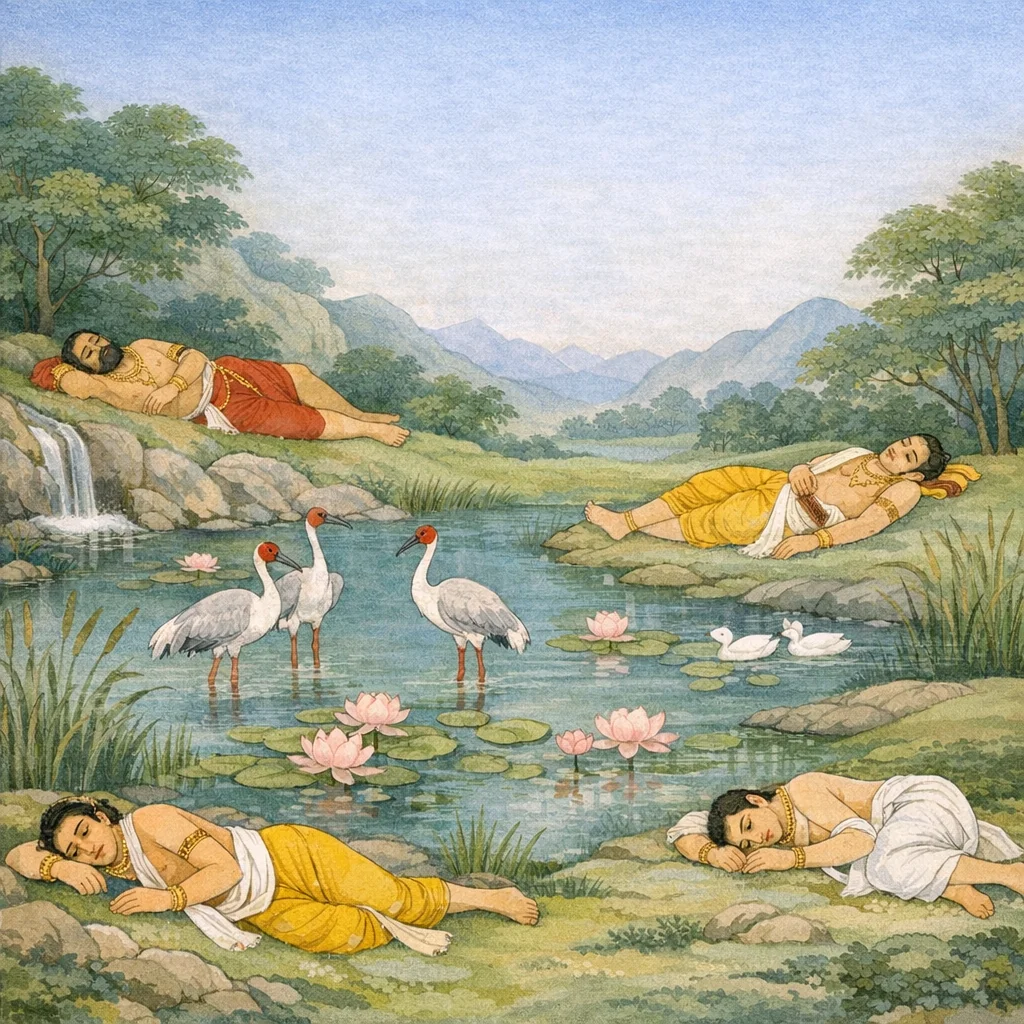
Chapter Arc: वन में जल की तीव्र आवश्यकता के बीच युधिष्ठिर नकुल को सरोवर से पानी लाने भेजते हैं—पर वह लौटता नहीं, और मौन वन में अनिष्ट की आहट फैल जाती है। → नकुल के विलम्ब पर सहदेव, फिर अर्जुन, फिर भीम—एक-एक कर उसी दिशा में भेजे जाते हैं। सरोवर-तट पर जल के संकेत (जलाश्रयी वृक्ष, सारसों का कलरव) आशा जगाते हैं, पर प्रत्येक भाई वहाँ पहुँचकर किसी अदृश्य चेतावनी-स्वर को अनसुना कर जल पीता है और अचेत होकर गिर पड़ता है। → अर्जुन दौड़ते हुए आकाशवाणी सुनता है—‘प्रश्नों का उत्तर दिए बिना मत पीओ’—पर वह अवज्ञा कर जल पीता है और तुरंत मूर्छित हो गिर पड़ता है; चारों भाइयों का एक ही सरोवर-तट पर निःशब्द पतन संकट को चरम पर पहुँचा देता है। → इस अध्याय में समाधान नहीं आता; केवल यह स्थापित होता है कि सरोवर पर कोई यक्ष-शक्ति पहरा दे रही है और उसके नियम का उल्लंघन प्राणघातक सिद्ध हो रहा है। → चारों भाई अचेत पड़े हैं; अब युधिष्ठिर स्वयं क्या करेंगे—क्या वे भी जल पीकर गिरेंगे, या यक्ष के प्रश्नों का सामना करेंगे?
Shlokas
Verse 1
हि >> आन (0) हि 7 आम द्वादर्शाधिकत्रिशततमो< ध्याय: पानी लानेके लिये गये हुए नकुल आदि चार भाइयोंका सरोवरके तटपर अचेत होकर गिरना युधिछिर उवाच नापदामस्ति मर्यादा न निमित्तं न कारणम् | धर्मस्तु विभजत्यर्थमुभयो: पुण्यपापयो:,युधिष्ठिर बोले--भैया! आपत्तियोंकी न तो कोई सीमा है, न कोई निमित्त दिखायी देता है और न कोई विशेष कारण ही परिलक्षित होता है। पहलेका किया हुआ पुण्य और पापरूप कर्म ही प्रारब्ध बनकर सुख और दुःखरूप फल बाँटता रहता है
Yudhiṣṭhira said: “Brother, calamities have no fixed limit; no clear occasion is seen for them, nor any particular cause. Rather, Dharma—working through one’s own past deeds—apportions the outcomes of both merit and sin, distributing their fruits as happiness and suffering.”
Verse 2
भीम उवाच प्रातिकाम्यनयत् कृष्णां सभायां प्रेष्यवत् तदा । न मया निहततस्तत्र तेन प्राप्ता: सम संशयम्,भीमसेनने कहा--जब प्रातिकामीकी जगह दूत बनकर गया हुआ दु:शासन द्रौपदीको कौरवोंकी सभामें दासीकी भाँति बलपूर्वक खींच ले आया, उस समय मैंने जो उसका वध नहीं कर डाला; इसीके कारण हमलोग ऐसे धर्मसंकटमें पड़े हैं
Bhima said: “When, acting like a mere servant-messenger, Duḥśāsana went in place of Pratikāmin and dragged Krishna (Draupadi) into the Kauravas’ assembly like a slave-woman, I did not strike him down then and there. Because of that failure, we have now fallen into this grievous moral peril and doubt.”
Verse 3
अजुन उवाच वाचस्तीक्ष्णास्थिभेदिन्य: सूतपुत्रेण भाषिता: । अतितीव्रा मया क्षान्तास्तेन प्राप्ता: सम संशयम्,अर्जुन बोले--सूतपुत्र कर्णके कहे हुए कठोर अस्थियोंको भी विदीर्ण कर देनेवाले अत्यन्त कड़वे वचन सुनकर भी जो हमने सहन कर लिये; उसीसे आज हम धर्मसंकटकी अवस्थामें आ पहुँचे हैं
Arjuna said: “The words spoken by the Sūta’s son, Karṇa, were sharp—so bitter that they seemed to split even the bones. Yet I endured those exceedingly harsh insults. It is precisely because I bore them that we have now fallen into a grave moral dilemma, uncertain of the right course.”
Verse 4
सहदेव उवाच शकुनिस्त्वां यदाजैषीदक्षद्यूतेन भारत । स मया न हतत्तत्र तेन प्राप्ता: सम संशयम्,सहदेवने कहा--भारत! जब शकुनिने आपको जूएमें जीत लिया और उस समय मैंने उसे मार नहीं डाला, उसीका यह फल है कि आज हमलोग धर्मसंकटमें पड़ गये हैं
Sahadeva said: “O Bhārata, when Śakuni defeated you in the game of dice, I did not kill him then. The consequence of that omission is this: today we have fallen into grave doubt and peril, caught in a crisis of dharma.”
Verse 5
वैशम्पायन उवाच ततो युधिषछिरो राजा नकुलं वाक्यमब्रवीत् । आरुह्द वृक्ष माद्रेय निरीक्षस्व दिशो दश,वैशम्पायनजी कहते हैं--तदनन्तर राजा युधिष्ठिरने नकुलसे कहा--“माद्रीनन्दन! किसी वृक्षपर चढ़कर सब दिशाओंमें दृष्टिपात करो। कहीं आस-पास पानी हो, तो देखो अथवा जलके किनारे होनेवाले वृक्षोंपर भी दृष्टि डालो। तात! तुम्हारे ये भाई थके-माँदे और प्यासे हैं!
Vaiśampāyana said: Then King Yudhiṣṭhira spoke to Nakula: “O son of Mādrī, climb a tree and survey the ten directions. Look to see whether there is water nearby, or any trees that mark the presence of a riverbank or waterside. Dear one, your brothers are weary and tormented by thirst.”
Verse 6
पानीयमन्तिके पश्य वृक्षांश्चाप्युदकाश्रितान् । एते हि भ्रातर: श्रान्तास्तव तात पिपासिता:,वैशम्पायनजी कहते हैं--तदनन्तर राजा युधिष्ठिरने नकुलसे कहा--“माद्रीनन्दन! किसी वृक्षपर चढ़कर सब दिशाओंमें दृष्टिपात करो। कहीं आस-पास पानी हो, तो देखो अथवा जलके किनारे होनेवाले वृक्षोंपर भी दृष्टि डालो। तात! तुम्हारे ये भाई थके-माँदे और प्यासे हैं!
Vaiśampāyana said: “Look for water nearby, and also look for trees that grow where water is found. For these brothers of yours, dear child, are weary and parched with thirst.”
Verse 7
नकुलस्तु तथेत्युक्त्वा शीघ्रमारुह्म पादपम् । अब्रवीद् भ्रातरं ज्येष्ठमभिवीक्ष्य समन्तत:,तब नकुल “बहुत अच्छा” कहकर शीघ्र ही एक पेड़पर चढ़ गये और चारों ओर दृष्टि डालकर अपने बड़े भाईसे बोले--
Vaiśampāyana said: Nakula, replying “So be it,” quickly climbed a tree. After surveying all directions, he addressed his eldest brother.
Verse 8
पश्यामि बहुलान् राजन् वृक्षानुदकसंश्रयान् । सारसानां च निर्हादमत्रोदकमसंशयम्,“राजन! मैं ऐसे बहुतेरे वृक्ष देख रहा हूँ, जो जलके किनारे ही होते हैं। सारसोंकी आवाज भी सुनायी देती है; अतः नि:संदेह यहाँ आस-पास ही कोई जलाशय है”
Vaiśampāyana said: “O King, I see many trees that grow close to water. I also hear the calls of sārasas (cranes); therefore, without doubt, there is a body of water nearby.”
Verse 9
ततोअब्रवीत् सत्यधृतिः कुन्तीपुत्रो युधिष्ठिर: । गच्छ सौम्य ततः शीघ्र तूणी: पानीयमानय,तब सत्यका पालन करनेवाले कुन्तीनन्दन युधिष्ठटिरने नकुलसे कहा--'सौम्य! शीघ्र जाओ और तरकसोंमें पानी भर लाओ'
Then Yudhiṣṭhira, Kuntī’s son, steadfast in truth, spoke: “Dear one, go at once—quickly—and bring water in the quivers.”
Verse 10
नकुलस्तु तथेत्युक्त्वा भ्रातुर्ज्येछ्सल्थ शासनात् । प्राद्रवद् यत्र पानीयं शीघ्रं चैवान्वपद्यत,नकुल “बहुत अच्छा” कहकर बड़े भाईकी आज्ञासे शीघ्रतापूर्वक गये और जहाँ जलाशय था, वहाँ तुरंत पहुँच गये
Vaiśaṃpāyana said: Nakula, replying “So be it,” obeyed the command of his eldest brother. He hurried off at once to the place where water was to be found and quickly reached the water-source.
Verse 11
स दृष्टवा विमल तोयं सारसै: परिवारितम् । पातुकामस्ततो वाचमन्तरिक्षात् स शुश्रुवे
Vaiśampāyana said: Seeing that lake’s crystal-clear water, surrounded by sārasas (cranes), and wishing to drink, he then heard a voice coming from the sky.
Verse 12
वहाँ सारसोंसे घिरे हुए जलाशयका स्वच्छ जल देखकर नकुलको उसे पीनेकी इच्छा हुई। इतनेमें ही आकाशसे उनके कानोंमें एक स्पष्ट वाणी सुनायी दी ।। यक्ष उवाच मा तात साहसं कार्षीमम पूर्वपरिग्रह: । प्रश्नानुक्त्वा तु माद्रेय ततः पिब हरस्व च,यक्ष बोला--तात! तुम इस सरोवरका पानी पीनेका साहस न करो। इसपर पहलेसे ही मेरा अधिकार हो चुका है। माद्रीकुमार! पहले मेरे प्रश्नोंका उत्तर दे दो, फिर पानी पीओ और ले भी जाओ
The Yaksha spoke: “Dear child, do not act rashly. This lake has already been claimed by me. O son of Madri, first answer my questions; only then may you drink—and even take the water away.”
Verse 13
अनादृत्य तु तद् वाक्यं नकुलः सुपिपासितः । अपिबच्छीतलं तोय॑ं पीत्वा च निपपात ह,नकुलकी प्यास बहुत बढ़ गयी थी। उन्होंने यक्षेके कथनकी अवहेलना करके वहाँका शीतल जल पी लिया। पीते ही वे अचेत होकर गिर पड़े
But Nakula, tormented by intense thirst, disregarded the Yakṣa’s warning. He drank the cool water, and the moment he had drunk, he collapsed senseless.
Verse 14
चिरायमाणे नकुले कुन्तीपुत्रो युधिष्ठिर: । अब्रवीद् भ्रातरं वीर॑ं सहदेवमरिंदमम्,नकुलके लौटनेमें जब अधिक विलम्ब हो गया, तब कुन्तीनन्दन युधिष्ठिरने अपने शत्रुहन्ता वीर भ्राता सहदेवसे कहा--
When Nakula was delayed for a long time, Yudhiṣṭhira, Kuntī’s son, spoke to his heroic brother Sahadeva, the subduer of foes—urging him to act as concern steadily grew.
Verse 15
भ्राता हि चिरयातो न: सहदेव तवाग्रज: । तथैवानय सोदर्य पानीयं च त्वमानय,“सहदेव! हमारे अनुज और तुम्हारे अग्रज भ्राता नकुलको यहाँसे गये बहुत देर हो गयी। तुम जाकर अपने सहोदर भाईको बुला लाओ और पानी भी ले आओ'
“Sahadeva, our younger brother—your elder brother Nakula—has been gone a long time. Go and bring your own full brother here, and fetch water as well.”
Verse 16
सहदेवस्तथेत्यक्त्वा तां दिशं प्रत्यपद्यत । ददर्श च हतं भूमौ भ्रातरं नकुलं तदा,तब सहदेव “बहुत अच्छा” कहकर उसी दिशाकी ओर चल दिये। वहाँ पहुँचकर उन्होंने देखा, भाई नकुल पृथ्वीपर मरे पड़े हैं
Sahadeva replied, “So be it,” and set out in that very direction. When he arrived, he saw his brother Nakula lying slain upon the ground.
Verse 17
भ्रातृशोकाभिसंतप्तस्तृषया च प्रपीडित: । अभिदुद्राव पानीयं ततो वागभ्यभाषत
Scorched by grief for his brothers and tormented by thirst, he rushed toward the water. At that moment, a voice spoke out.
Verse 18
भाईके शोकसे उनका हृदय संतप्त हो उठा। साथ ही प्याससे भी वे बहुत कष्ट पा रहे थे; अतः पानीकी ओर दौड़े। उसी समय आकाशवाणी बोल उठी-- ।। मा तात साहसं कार्षीमम पूर्वपरिग्रह: । प्रश्नानुक्त्वा यथाकामं पिबस्व च हरस्व च,“तात! पानी पीनेका साहस न करो। यहाँ पहलेसे ही मेरा अधिकार हो चुका है। तुम पहले मेरे प्रश्नोंका उत्तर दे दो, फिर इच्छानुसार जल पीओ और साथ ले भी जाओ”
The Yakṣa spoke: “Dear one, do not act rashly. This water has already been claimed by me. First answer my questions; then, as you wish, drink the water—and you may even take it away.”
Verse 19
अनादृत्य तु तद् वाक््यं सहदेव: पिपासित: । अपिबच्छीतलं तोय॑ं पीत्वा च निपपात ह,प्यासे सहदेव उस वचनकी अवहेलना करके वहाँका ठंडा जल पीने लगे एवं पीते ही अचेत होकर गिर पड़े
But Sahadeva, tormented by thirst, disregarded that warning. He drank the cool water there, and the moment he had drunk, he collapsed, losing consciousness—showing the peril of ignoring a righteous injunction and acting from overpowering impulse.
Verse 20
अथाब्रवीत् स विजयं कुन्तीपुत्रो युधिष्ठिर: । भ्रातरी ते चिरगतौ बीभत्सो शत्रुकर्शन,तदनन्तर कुन्तीकुमार युधिष्ठिरने अर्जुनसे कहा--“शत्रुनाशन बीभत्सो! तुम्हारे दोनों भाइयोंको गये बहुत देर हो गयी
Then Kuntī’s son Yudhiṣṭhira spoke to Vijaya (Arjuna): “O Bībhatsu, subduer of foes—your two brothers have been gone a long time.” In the ethical frame of the Yakṣa episode, the line conveys Yudhiṣṭhira’s alert concern for his brothers’ welfare and his sense of responsibility, even while facing a mysterious, testing presence.
Verse 21
तौ चैवानय भद्र ते पानीयं च त्वमानय । त्वं हि नस्तात सर्वेषां द:खितानामपाश्रय:,“तुम्हारा कल्याण हो। तुम उन दोनोंको बुला लाओ और साथ ही पानी भी ले आओ। तात! तुम्हीं हम सब दुःखी बन्धुओंके सहारे हो”
The Yakṣa said: “May good befall you. Go and bring those two here, and also fetch water. Dear child, you are the sole refuge for all of us sorrowing kinsmen.”
Verse 22
एवमुक्तो गुडाकेश: प्रगृह्म सशरं धनु: । आमुक्तखड््गो मेधावी तत् सर: प्रत्यपद्यत,युधिष्ठिरके ऐसा कहनेपर निद्राविजयी बुद्धिमान् अर्जुन धनुष-बाण और खड़्ग लिये उस सरोवरके तटपर गये
Thus addressed, Gudakesha (Arjuna)—the wise conqueror of sleep—took up his bow with arrows and, with his sword girded on, went toward that lake. The scene underscores disciplined readiness: even in uncertainty, the righteous act with alertness, restraint, and preparedness rather than rashness.
Verse 23
ततः पुरुषशार्दूली पानीयहरणे गतौ । तौ ददर्श हतौ तत्र भ्रातरौ श्वेतवाहन:,श्वेतवाहन अर्जुनने जल लानेके लिये गये हुए उन दोनों पुरुषसिंह भाइयोंको वहाँ मरे हुए देखा
Then Śvetavāhana (Arjuna), having gone to fetch water, saw there those two lion-like brothers lying slain. The scene underscores the peril of heedlessness and the moral gravity of approaching the unknown without discernment, as the consequences of error fall first upon one’s own kin.
Verse 24
प्रसुप्ताविव तौ दृष्टवा नरसिंह: सुदु:खित: । धनुरुद्यम्य कौन्तेयो व्यलोकयत तद् वनम्,दोनोंको प्रगाढ़ निद्रामें सोये हुएकी भाँति देखकर मनुष्योंमें सिंहके समान पराक्रमी अर्जुनको बहुत दुःख हुआ। उन्होंने धनुष उठाकर उस वनका अच्छी तरह निरीक्षण किया
Seeing the two of them lying as if in deep sleep, the lion among men was overwhelmed with sorrow. Lifting his bow, the son of Kuntī carefully surveyed that forest—alert, searching for the cause, and ready to act with restraint rather than rash violence.
Verse 25
नापश्यत् तत्र किज्चित् स भूतमस्मिन् महावने । सव्यसाची ततः श्रान्त: पानीयं सो5भ्यधावत,जब उस विशाल वनमें उन्हें कोई भी हिंसक प्राणी नहीं दिखायी दिया, तब सव्यसाची अर्जुन थककर पानीकी ओर दौड़े
There, in that vast forest, he saw no creature at all. Then Savyasācī (Arjuna), worn out, hurried toward the water—setting the scene for the Yakṣa’s impending moral trial, where restraint and right conduct will matter more than strength.
Verse 26
अभिधावंस्ततो वाक्यमन्तरिक्षात् स शुश्रुवे । किमासीदसि पानीयं नैतच्छक्यं बलात् त्वया,दौड़ते समय उन्हें आकाशकी ओरसे आती हुई वाणी सुनायी दी--“कुन्तीनन्दन! क्यों पानीके निकट जा रहे हो? तुम जबरदस्ती यह जल नहीं पी सकते। भारत! यदि मेरे उन प्रश्नोंका उत्तर दे सको, तो यहाँका पानी पीओ और साथ ले भी जाओ'
As he hurried forward, he heard a voice from the sky: “O son of Kuntī, why are you rushing toward the water? You cannot drink this by force. O Bhārata, if you are able to answer my questions, then drink this water—and take it away as well, as you please.”
Verse 27
कौन्तेय यदि प्रश्नांस्तान् मयोक्तान् प्रतिपत्स्यसे । ततः पास्यसि पानीयं हरिष्यसि च भारत,दौड़ते समय उन्हें आकाशकी ओरसे आती हुई वाणी सुनायी दी--“कुन्तीनन्दन! क्यों पानीके निकट जा रहे हो? तुम जबरदस्ती यह जल नहीं पी सकते। भारत! यदि मेरे उन प्रश्नोंका उत्तर दे सको, तो यहाँका पानी पीओ और साथ ले भी जाओ'
The Yaksha said: “O son of Kuntī, why are you going toward the water? You cannot drink this water by force. O Bhārata, if you can correctly respond to the questions I have asked, then you may drink this water—and you may also take it away.”
Verse 28
वारितस्त्वब्रवीत् पार्थो दृश्यमानो निवारय । यावद् बाणैविंनिर्भिन्न: पुनर्नैंवं वदिष्यसि,इस प्रकार रोके जानेपर अर्जुनने कहा--“जरा सामने आकर रोको। सामने आते ही बाणोंसे टुकड़े-टुकड़े हो जानेपर फिर तुम इस प्रकार नहीं बोल पाओगे”
When restrained, Arjuna replied, “If you wish to stop me, come into view and try. Once you are shattered to pieces by my arrows, you will not be able to speak like this again.” The line highlights a surge of warrior-pride and impatience—speech driven by prowess rather than discernment—set against the Yakṣa’s testing presence.
Verse 29
एवमुक्त्वा ततः पार्थ: शरैरस्त्रानुमन्त्रितै: । प्रववर्ष दिश: कृत्स्ना: शब्दवेधं च दर्शयन्,ऐसा कहकर अर्जुनने अपनी शब्दवेध-कलाका परिचय देते हुए दिव्यास्त्रोंसे अभिमन्त्रित बाणोंकी सब ओर झड़ी लगा दी
Having spoken thus, Pārtha (Arjuna) then, displaying his mastery of striking by sound, showered every direction with arrows empowered by sacred weapon-mantras—demonstrating disciplined skill rather than reckless violence.
Verse 30
कर्णिनालीकनाराचानुत्सूजन् भरतर्षभ । स त्वमोघानिषून् मुक््त्वा तृष्णयाभिप्रपीडित:
The Yakṣa said: “O bull among the Bharatas, you are letting fly barbed arrows—nālikas and nārācas. Yet you, tormented and driven by thirst, have discharged a whole shower of unfailing shafts.”
Verse 31
यक्ष उवाच कि विघातेन ते पार्थ प्रश्नानुकत्वा ततः पिब
The Yakṣa said: “O Pārtha, what is the use of this struggle for you? First answer the questions; then drink.”
Verse 32
एवमुक्तस्तत: पार्थ: सव्यसाची धनंजय:
Then, thus addressed, Pārtha—Arjuna, famed as Savyasācī and Dhanañjaya—responded, marking the moment when the Yakṣa’s probing questions draw him into a test of discernment, self-control, and dharma.
Verse 33
अथाब्रवीद् भीमसेन कुन्तीपुत्रो युधिछ्ठिर:
Then Yudhiṣṭhira, the son of Kuntī, addressed Bhīmasena. In the midst of the Yakṣa’s testing, the elder brother turns to Bhīma—signaling a shift from impulsive strength to disciplined speech and right judgment, where dharma is to be upheld through measured response rather than force.
Verse 34
नकुल: सहदेवश्न बीभत्सुश्च॒ परंतप । चिरं गतास्तोयहेतोर्न चागच्छन्ति भारत
The Yakṣa said: “Nakula and Sahadeva, and Bībhatsu (Arjuna) too, O scorcher of foes—having gone long ago in search of water, have not returned, O Bhārata.”
Verse 35
तांश्वैवानय भद्ठरें ते पानीयं च त्वमानय । तब कुन्तीकुमार युधिष्ठिरने भीमसेनसे कहा--“परंतप! भरतनन्दन! नकुल, सहदेव और अर्जुनको पानीके लिये गये बहुत देर हो गयी। वे अभीतक नहीं आ रहे हैं। तुम्हारा कल्याण हो। तुम जाकर उन्हें बुला लाओ और पानी भी ले आओ” ।। ३३-३४ $ ।। भीमसेनस्तथेत्युक्त्वा त॑ देशं प्रत्यपद्यत
The Yakṣa said: “Bring them here; may good befall you. And you yourself bring water as well.” Thus instructed, Bhīmasena replied, “So be it,” and set out toward that place. In the surrounding narrative, Yudhiṣṭhira—anxious that Nakula, Sahadeva, and Arjuna have been gone too long in search of water—sends Bhīma to call them back and fetch water, showing responsible leadership and care for companions amid hardship.
Verse 36
यत्र ते पुरुषव्याप्रा भ्रातरोडस्थ निपातिता: । तान् दृष्टवा दु:खितो भीमस्तृषया च प्रपीडित:
The Yakṣa said: “There, where your brothers—men of vigorous effort—lay fallen, eight in number, Bhīma, on seeing them, was overwhelmed with grief and at the same time tormented by thirst.”
Verse 37
तब भीमसेन “बहुत अच्छा” कहकर उस स्थान-पर गये, जहाँ वे पुरुषसिंह तीनों भाई पृथ्वीपर पड़े थे। उन्हें उस अवस्थामें देखकर भीमसेनको बड़ा दुःख हुआ। इधर प्यास भी उन्हें बहुत कष्ट दे रही थी ।। अमन्यत महाबाहु: कर्म तद् यक्षरक्षसाम् स चिन्तयामास तदा योद्धव्यं ध्रुवमद्य वै
Bhīmasena said, “Very well,” and went to the place where the three brothers, lions among men, lay upon the earth. Seeing them in that state, Bhīma was stricken with great sorrow, and thirst too tormented him. The mighty-armed hero deemed it the work of a Yakṣa or a Rākṣasa, and then resolved: “Today, surely, there must be battle.”
Verse 38
पास्यामि तावत् पानीयमिति पार्थो वृकोदर: । ततो<भ्यधावत् पानीयं पिपासु: पुरुषर्षभ:
“I will first look for water,” said Pārtha (Arjuna) to Vṛkodara (Bhīma). Then that bull among men, tormented by thirst, hurried toward the water—setting in motion the moral test that will soon demand restraint, reverence, and obedience to rightful counsel rather than impulsive need.
Verse 39
महाबाहु भीमसेनने मन-ही-मन यह निश्चय किया कि “यह यक्षों तथा राक्षस्रोंका काम है।' फिर उन्होंने सोचा; “आज निश्चय ही मुझे शत्रुके साथ युद्ध करना पड़ेगा, अतः पहले जल तो पी लूँ।” ऐसा निश्चय करके प्यासे नरश्रेष्ठ कुन्तीकुमार भीमसेन जलकी ओर दौड़े ।। यक्ष उवाच मा तात साहसं कार्षीमम पूर्वपरिग्रह: । प्रश्नानुक्त्वा तु कौन्तेय ततः पिब हरस्व च,यक्ष बोला--तात! पानी पीनेका साहस न करना। इस जलपर पहलेसे ही मेरा अधिकार स्थापित हो चुका है। कुन्तीकुमार! पहले मेरे प्रश्नोंका उत्तर दे दो, फिर पानी पीओ और ले भी जाओ
The Yaksha said: “My child, do not act rashly. This water has already been claimed by me. O son of Kunti, first answer my questions; only then may you drink—and even take the water away.”
Verse 40
एवमुक्तस्तदा भीमो यक्षेणामिततेजसा । अनुक्त्वैव तु तान् प्रश्नान् पीत्वैव निपपात ह,अमिततेजस्वी यक्षके ऐसा कहनेपर भी भीमसेन उन प्रश्नोंका उत्तर दिये बिना ही जल पीने लगे और पीते ही मूर्च्छिंत होकर गिर पड़े
Thus addressed by the Yaksha of immeasurable splendor, Bhima—without answering those questions—drank the water nonetheless; and as soon as he drank, he collapsed, senseless.
Verse 41
ततः कुन्तीसुतो राजा प्रचिन्त्य पुरुषर्षभ: । समुत्थाय महाबाहुर्दहुमानेन चेतसा,तदनन्तर कुन्तीपुत्र पुरुषरत्न महाबाहु राजा युधिष्ठिर बहुत देरतक सोच-विचार करके उठे और जलते हुए हृदयसे उन्होंने उस विशाल वनमें प्रवेश किया, जहाँ मनुष्योंकी आवाजतक नहीं सुनायी देती थी। वहाँ रुरु मृग, वराह तथा पक्षियोंके समुदाय ही निवास करते थे
Then the king, Kunti’s son—foremost among men—pondered deeply. Rising up, the mighty-armed Yudhishthira, his mind burning with anxious resolve, set out into that vast forest where not even the sound of human voices could be heard—inhabited only by ruru-deer, boars, and flocks of birds.
Verse 42
व्यपेतजननिर्घोष॑ प्रविवेश महावनम् । रुरुभिश्न वराहैश्व पक्षिभिश्न निषेवितम्,तदनन्तर कुन्तीपुत्र पुरुषरत्न महाबाहु राजा युधिष्ठिर बहुत देरतक सोच-विचार करके उठे और जलते हुए हृदयसे उन्होंने उस विशाल वनमें प्रवेश किया, जहाँ मनुष्योंकी आवाजतक नहीं सुनायी देती थी। वहाँ रुरु मृग, वराह तथा पक्षियोंके समुदाय ही निवास करते थे
He entered the vast forest, from which the sounds of human beings had vanished—haunted only by ruru-deer, boars, and flocks of birds. Thereafter, Kunti’s son, the mighty-armed king Yudhishthira—after long, heavy reflection—rose with a heart burning in distress and stepped into that great wilderness where no human voice could be heard.
Verse 43
नीलभास्वरवर्णश्न॒ पादपैरुपशोभितम् | भ्रमरैरुपगीतं च पक्षिभिश्न महायशा:,नीले रंगके चमकीले वृक्ष उस वनकी शोभा बढ़ा रहे थे। भ्रमरोंके गुंजन और विहंगोंके कलरवसे वह वनप्रान्त शब्दायमान हो रहा था
O illustrious one, that forest-region was adorned by trees of deep blue, lustrous hue. It resounded with sound—filled with the humming songs of bees and the calls of birds—heightening the scene’s vivid, living beauty.
Verse 44
स गच्छन् कानने तस्मिन् हेमजालपरिष्कृतम् । ददर्श तत् सर: श्रीमान् विश्वकर्मकृतं यथा,महायशस्वी श्रीमान् युधिष्ठिरने उस वनमें विचरण करते हुए उस सरोवरको देखा, जो सुनहरे रंगके कुसुमकेसरोंसे विभूषित था। जान पड़ता था; साक्षात् विश्वकर्माने ही उसका निर्माण किया है
As the illustrious Yudhiṣṭhira moved through that forest, he beheld a splendid lake, as though adorned with a net of gold—seeming like a work fashioned by Viśvakarman himself.
Verse 45
उपेतं नलिनीजालै: सिन्धुवारै: सवेतसै: । केतकै: करवीरैश्नव पिप्पलैश्वैव संवृतम् । (ततो धर्मसुतः श्रीमान् भ्रातृदर्शनलालस: ।) श्रमार्तस्तदुपागम्य सरो दृष्टवाथ विस्मित:,उस सरोवरका जल कमलकी बेलोंसे आच्छादित हो रहा था और उसके चारों किनारोंपर सिंदुवार, बेंत, केवड़े, करवीर तथा पीपलके वृक्ष उसे घेरे हुए थे। उस समय भाइयोंसे मिलनेके लिये उत्सुक श्रीमान् धर्मनन्दन युधिष्ठिर थकावटसे पीड़ित हो उस सरोवरपर आये और वहाँकी अवस्था देखकर बड़े विस्मित हुए
The lake was overgrown with clusters of lotus-creepers, and all around it stood sindhuvāra shrubs, willows, ketaka plants, karavīra trees, and pippala trees, enclosing it on every side. Then the illustrious son of Dharma, Yudhiṣṭhira—eager to find his brothers—came there worn out by fatigue; and on seeing that lake and its uncanny stillness, he was struck with wonder.
Verse 306
अनेकैरिषुसड्घातैरन्तरिक्षे ववर्ष ह । भरतश्रेष्ठ जनमेजय! अर्जुन उस समय कर्णि, नालीक तथा नाराच आदि बाणोंकी वर्षा कर रहे थे। प्याससे पीड़ित हुए अर्जुनने कितने ही अमोघ बाणोंका प्रयोग करके आकाशमें भी कई बार बाण-समूहकी वर्षा की
With countless volleys of arrows he rained them down through the sky. O best of the Bharatas, Janamejaya—at that time Arjuna was showering arrows such as karṇī, nālīka, and nārāca. Tormented by thirst, Arjuna employed many unfailing shafts and again and again made even the heavens resound with a downpour of clustered arrows.
Verse 311
इस प्रकार श्रीमह्याभारत वनपर्वके अन्तर्गत आरणेयपर्वमें मृगका अनुसंधानविषयक तीन सौ ग्यारहवाँ अध्याय पूरा हुआ
Thus ends the three hundred and eleventh chapter of the Mahābhārata’s Vana Parva, within the Āraṇeya section, dealing with the pursuit and tracking of a deer.
Verse 316
अनुक्त्वा च पिबन प्रश्नान् पीत्वैव न भविष्यसि । यक्ष बोला--पार्थ! इस प्रकार प्राणियोंपर आघात करनेसे क्या लाभ? पहले मेरे प्रश्नोंका उत्तर दो, फिर जल पीओ। यदि तुम प्रश्नोंका उत्तर दिये बिना ही यहाँका जल पीओगे, तो पीते ही मर जाओगे
The Yakṣa said: “If you drink without first answering my questions, you will not live after drinking. O Pārtha, what gain is there in striking at living beings in this way? Answer my questions first; then drink the water. If you drink the water here without replying, you will die the moment you drink.”
Verse 323
अवज्ञायैव तां वाचं पीत्वैव निपपात ह । उसके ऐसा कहनेपर कुन्तीपुत्र सव्यसाची धनंजय उसके वचनोंकी अवहेलना करके जल पीने लगे और पीते ही अचेत होकर गिर पड़े
Ignoring the Yakṣa’s warning, he drank the water nonetheless; and the moment he drank, he collapsed, senseless. The episode underscores the ethical cost of disregarding a rightful admonition and acting from impulse rather than restraint and discernment.
Verse 3312
इति श्रीमहा भारते वनपर्वणि आरणेयपर्वणि नकुलादिपतने द्वादशाधिकत्रिशततमो<5ध्याय:
Thus ends the three-hundred-and-twenty-fourth chapter (with twelve added) in the Vana Parva of the Śrī Mahābhārata, within the Āraṇeya section, concerning the falling down of Nakula and the others. This is a colophon marking the close of the chapter in the Yakṣa–Dharma dialogue episode, where the moral testing of Yudhiṣṭhira unfolds through the fate of his brothers.