Adhyaya 240
Daitya-āśvāsana of Duryodhana; Karṇa’s assurance and the mobilization of the Kaurava host
Upa-parva: Duryodhana–Prāyopaveśana-nivāraṇa (Daitya-āśvāsana episode)
The chapter opens with dānavas addressing Duryodhana, who has adopted a hazardous resolve of prāyopaveśana. They characterize the act as contrary to purpose and laden with reputational harm, urging restraint and steadiness. They then present a cosmological reassurance: Duryodhana’s body is described as divinely constituted—crafted through ascetic acquisition and extraordinary materials—implying he is not merely human and is therefore destined for a larger role. They forecast intensified conflict through the assertion that various warriors will be internally overpowered/impelled to fight without ordinary attachments, including the Saṃśaptakas, who are portrayed as oriented toward Arjuna’s destruction. A strategic thread follows concerning Karṇa and Arjuna: the text anticipates Karṇa’s confrontation with Kṛṣṇa–Arjuna, the intervention of Indra (Vajrī) to remove Karṇa’s natural protections, and the deployment of numerous daitya/rākṣasa forces as supportive agents. After the daityas depart, Duryodhana interprets the episode as dreamlike yet emerges with firm resolve to defeat the Pandavas. Karṇa later reinforces this resolve, arguing that death cannot secure victory and promising to kill Arjuna. The chapter concludes with Duryodhana organizing a vast, well-appointed army and returning toward his city amid auspicious acclamations and the visible pageantry of royal power.
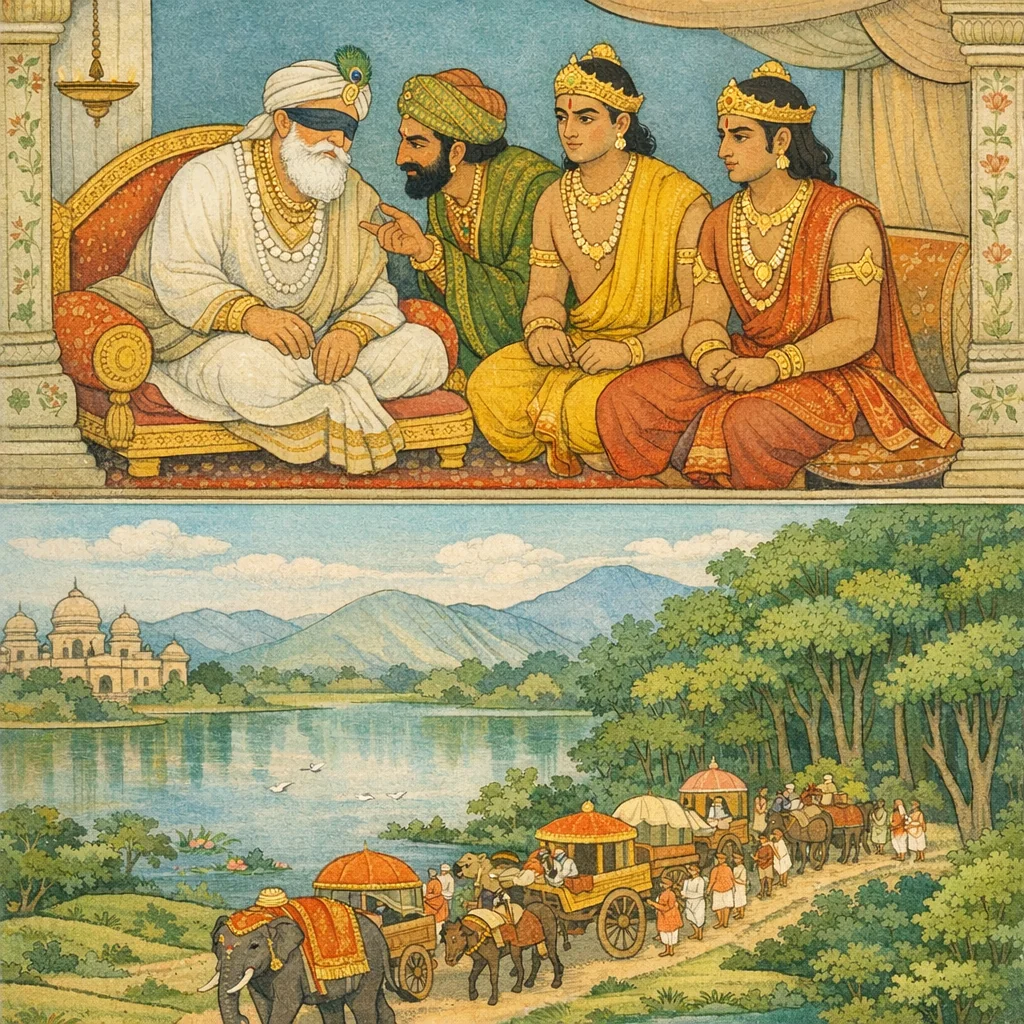
Chapter Arc: हस्तिनापुर के भीतर एक नया षड्यंत्र जन्म लेता है—कर्ण और शकुनि धृतराष्ट्र के पास जाकर द्वैतवन की ‘घोषयात्रा’ (गोधन-निरीक्षण/विहार) का प्रस्ताव रखते हैं, मानो यह केवल मनोरंजन हो। → शकुनि दुर्योधन के लिए ‘मृगया’ और वन-प्रवास को समयोचित बताकर धृतराष्ट्र की शंका को धीरे-धीरे ढीला करता है; साथ ही पहले से ‘समंग’ नामक ग्वाले को सिखा-पढ़ाकर व्यवस्था पक्की कर दी जाती है—यात्रा दिखती सरल है, पर भीतर से योजनाबद्ध। → शकुनि के तर्कों से दबे धृतराष्ट्र अनिच्छा से ही सही, दुर्योधन को मंत्रियों सहित जाने की अनुमति दे देते हैं—यही क्षण आगे के अपमान-योजनाओं और वन में होने वाले संकटों का द्वार खोलता है। → आज्ञा पाकर दुर्योधन कर्ण के साथ, विशाल सेना और वाहनों सहित नगर से निकलता है; दो कोस दूर पड़ाव डालकर आगे द्वैतवन-सरोवर की ओर प्रस्थान करता है। → द्वैतवन की ओर बढ़ती यह राजसी यात्रा किसे देखने/दुखाने के लिए है—और वन में कौन-सा अनपेक्षित प्रतिरोध इसका स्वागत करेगा?
Shlokas
Verse 1
हि >> आय न (हुक है 7 7 एकोनचत्वारिशर्दाधिकद्विशततमो< ध्याय: कर्ण आदिके द्वारा द्वैतवनमें जानेका प्रस्ताव, राजा धृतराष्ट्रकी अस्वीकृति, शकुनिका समझाना, धृतराष्ट्रका अनुमति देना तथा दुर्योधनका प्रस्थान वैशम्पायन उवाच धृतराष्ट्र ततः सर्वे ददृशुर्जनमेजय । पृष्टवा सुखमथो राज्ञ: पृष्टा राज्ञा च भारत,वैशम्पायनजी कहते हैं--भरतनन्दन जनमेजय! तदनन्तर वे सब लोग राजा धृतराष्ट्रसे मिले। उन्होंने राजाकी कुशल पूछी तथा राजाने उनकी
Vaiśampāyana said: “O Janamejaya, thereafter they all met King Dhṛtarāṣṭra. Having inquired after the king’s welfare, they in turn were asked about their well-being by the king, O descendant of Bharata.”
Verse 2
ततस्तैर्विहित: पूर्व समज्रो नाम बल्लव: । समीपस्थास्तदा गावो धृतराष्टे न्न्यवेदयत्,उन लोगोंने समंग नामक एक ग्वालेको पहलेसे ही सिखा-पढ़ाकर ठीक कर लिया था। उसने राजा धृतराष्ट्रकी सेवामें निवेदन किया कि महाराज! आजकल आपकी गौएँ समीप ही आयी हुई हैं!
Vaiśampāyana said: Then, having been previously coached and prepared by them, a cowherd named Samajra approached King Dhṛtarāṣṭra and submitted: “O King, at present your cows have come and are staying nearby.”
Verse 3
अनन्तरं च राधेय: शकुनिश्च विशाम्पते । आहतुः पार्थिवश्रेष्ठं धृतराष्ट्र जनाधिपम्,जनमेजय! इसके बाद कर्ण और शकुनिने राजाओंमें श्रेष्ठ जननायक धृतराष्ट्रसे कहा --
Vaiśampāyana said: Then Karṇa (son of Rādhā) and Śakuni addressed Dhṛtarāṣṭra, the lord of men and foremost among kings—O Janamejaya—thus.
Verse 4
रमणीयेषु देशेषु घोषा: सम्प्रति कौरव । स्मारणे समय: प्राप्तो वत्सानामपि चाडुकनम्,“कुरुराज! इस समय हमारी गौओंके स्थान रमणीय प्रदेशोंमें हैं। यह समय गौओं और बछड़ोंकी गणना करने तथा उनकी आयु, रंग, जाति एवं नामका ब्यौरा लिखनेके लिये भी अत्यन्त उपयोगी है
“O Kaurava king, our cattle-stations now lie in pleasant lands. The time has come to take account of the cows and the calves, to count them and set their particulars in order.”
Verse 5
मृगया चोचिता राजन्नस्मिन् काले सुतस्य ते । दुर्योधनस्य गमनं समनुज्ञातुमहसि,“राजन! इस समय आपके पुत्र दुर्योधनके लिये हिंसक पशुओंके शिकार करनेका भी उपयुक्त अवसर है। अतः आप इन्हें द्वैतवनमें जानेकी आज्ञा दीजिये”
Vaiśampāyana said: “O King, this is a fitting time for your son Duryodhana to engage in the royal sport of hunting. Therefore you ought to grant him permission to set out (to the forest).”
Verse 6
धृतराष्ट उवाच मृगया शोभना तात गवां हि समवेक्षणम् । विश्रम्भस्तु न गन्तव्यो बल्लवानामिति स्मरे,धृतराष्ट्र बोले--तात! हिंसक पशुओंका शिकार खेलनेका प्रस्ताव सुन्दर है। गौओंकी देख-भालका काम भी अच्छा ही है; परंतु ग्वालोंकी बातोंपर विश्वास नहीं करना चाहिये, यह नीतिका वचन है, जिसका मुझे स्मरण हो आया है
Dhṛtarāṣṭra said: “Dear son, the proposal of hunting is indeed attractive, and the task of overseeing the cattle is also commendable. Yet I recall a maxim of statecraft: one should not place trust in cowherds.”
Verse 7
ते तु तत्र नरव्याप्रा: समीप इति नः श्रुतम् अतो नाभ्यनुजानामि गमन तत्र वः स्वयम्,मैंने सुना है कि नरश्रेष्ठ पाण्डव भी इन दिनों वहीं कहीं आस-पास ठहरे हुए हैं; अतः तुमलोगोंको मैं स्वयं वहाँ जानेकी आज्ञा नहीं दे सकता
“But we have heard that the Pandavas—those foremost among men—are staying somewhere nearby in that very region. Therefore I cannot grant you permission to go there on your own.”
Verse 8
छटद्दाना निर्जितास्ते तु कर्शिताश्व महावने । तपोनित्याश्न राधेय समर्थाश्ष महारथा:,राधानन्दन! पाण्डव छलपूर्वक हराये गये हैं। महान् वनमें रहकर उन्हें बड़ा कष्ट भोगना पड़ा है। वे निरन्तर तपस्या करते रहे हैं और अब विशेष शक्तिसम्पन्न हो गये हैं। महारथी तो वे हैं ही
Dhṛtarāṣṭra said: “Those (Pāṇḍavas) were defeated through deceitful play and have been worn down by hardship in the great forest. Living there, they have endured severe suffering; they have remained constantly devoted to austerity. Now, O son of Rādhā, they have become especially empowered—and in any case they are great chariot-warriors.”
Verse 9
धर्मराजो न संक्रुद्धयेद् भीमसेनस्त्वमर्षण: । यज्ञसेनस्य दुहिता तेज एव तु केवलम्,माना कि धर्मराज युधिष्ठिर क्रोध नहीं करेंगे, परंतु भीमसेन तो सदा ही अमर्षमें भरे रहते हैं और राजा ट्रुपदकी पुत्री कृष्णा भी साक्षात् अग्निकी ही मूर्ति है
Dhṛtarāṣṭra said: “King Yudhiṣṭhira, the upholder of dharma, will not be provoked into anger; but Bhīmasena is by nature intolerant of insult and quick to wrath. And Kṛṣṇā, the daughter of Yajñasena (Drupada), is nothing but sheer fiery splendor itself.”
Verse 10
यूयं चाप्यपराध्येयु्दर्पमोहसमन्विता: । ततो विनिर्दहेयुस्ते तपसा हि समन्विता:,तुमलोग तो अहंकार और मोहमें चूर रहते ही हो; अतः उनका अपराध अवश्य करोगे। उस दशामें वे तुम्हें भस्म किये बिना नहीं छोड़ेंगे। क्योंकि उनमें तपःशक्ति विद्यमान है
Blinded by pride and delusion, you too are bound to commit an offence. Then those ascetics—endowed with the power of austerity—will not let you go without burning you down with their spiritual force.
Verse 11
अथवा सायुधा वीरा मन्युनाभिपरिप्लुता: । सहिता बद्धनिस्त्रिंशा दहेयु: शस्त्रतेजसा
Or else, those heroes—armed and overwhelmed by wrath—might, united together with their swords drawn, burn everything down by the blazing power of their weapons.
Verse 12
अथवा, उन वीरोंके पास अस्त्र-शस्त्रोंकी भी कमी नहीं है। तुम्हारे प्रति उनका क्रोध सदा ही बना रहता है। वे तलवार बाँधे सदा एक साथ रहते हैं; अतः वे अपने शस्त्रोंके तेजसे भी तुम्हें दग्ध कर सकते हैं ।। अथ यूय॑ बहुत्वात् तानभियात कथंचन । अनार्य परमं तत् स्यादशक््यं तच्च वै मतम्,यदि संख्यासे अधिक होनेके कारण तुमने ही किसी प्रकार उनपर चढ़ाई कर दी तो यह भी तुम्हारी बड़ी भारी नीचता ही समझी जायगी। मेरी समझमें तो तुमलोगोंका पाण्डवोंपर विजय पाना असम्भव ही है
Dhṛtarāṣṭra said: “Or else, those heroes are not lacking in weapons and arms. Their anger toward you remains ever present. With swords girded, they stay together at all times; therefore, by the very brilliance and force of their weapons they can burn you down. And if, relying on your greater numbers, you should somehow march against them, that would be the height of ignoble conduct. In my judgment, your victory over the Pāṇḍavas is impossible.”
Verse 13
उषितो हि महाबाहुरिन्द्रलोके धनंजय: । दिव्यान्यस्त्राण्यवाप्याथ तत:ः प्रत्यागतो वनम्,महाबाहु धनंजय इन्द्रलोकमें रह चुके हैं और वहाँसे दिव्यास्त्रोंकी शिक्षा लेकर वनमें लौटे हैं
Dhṛtarāṣṭra said: “For indeed the mighty-armed Dhanañjaya (Arjuna) has dwelt in Indra’s world; having obtained instruction in the divine weapons there, he has now returned again to the forest.”
Verse 14
अकृतास्त्रेण पृथिवी जिता बीभत्सुना पुरा । कि पुनः स कृतास्त्रोडद्य न हन्याद् वो महारथ:,पहले जब अर्जुनको दिव्यास्त्र नहीं प्राप्त हुए थे, तभी उन्होंने सारी पृथ्वीको जीत लिया था। अब तो महारथी अर्जुन दिव्यास्त्रोंके विद्वान् हैं, ऐसी दशामें वे तुम्हें मार डालें, यह कौन बड़ी बात है?
Dhṛtarāṣṭra said: “Formerly, when Bībhatsu (Arjuna) had not yet mastered celestial weapons, he still conquered the earth. How much more, then, now that he is trained in divine missiles—what great thing would it be if that mighty chariot-warrior were to slay you?”
Verse 15
अथवा मद्वच: श्रुत्वा तत्र यत्ता भविष्यथ | उद्विग्नवासो विश्रम्भाद् दुःखं तत्र भविष्यति,अथवा मेरी बात सुनकर तुमलोग वहाँ यदि अपनेको काबूमें रखते हुए सावधानीके साथ रह सको, तो भी यह विश्वास करके कि ये लोग सत्यवादी होनेके कारण हमें कष्ट नहीं देंगे, वनवाससे उद्विग्न हुए पाण्डवोंके बीचमें निवास करना तुम्हारे लिये दुःखदायी ही होगा
Or else, even if—after hearing my words—you restrain yourselves and live there with caution, still, trusting that “these men are truthful and therefore will not harm us,” dwelling among the Pāṇḍavas already distressed by their forest exile will inevitably become a source of suffering for you.
Verse 16
अथवा सैनिका: केचिदपकुर्युर्युधिष्ठिरम् । तदबुद्धिकृतं कर्म दोषमुत्पादयेच्च व:,अथवा यह भी सम्भव है कि तुमलोगोंके कुछ सैनिक युधिष्ठिरका अपमान कर बैठें और तुम्हारे अनजानमें किया गया यह अपराध तुमलोगोंके लिये हानिकारक हो जाय
Or it may happen that some of your soldiers insult Yudhiṣṭhira; and that wrongful act—done out of ignorance and without your intent—could still generate blame and bring harmful consequences upon you.
Verse 17
तस्माद् गच्छन्तु पुरुषा: स्मारणायाप्तकारिण: । न स्वयं तत्र गमनं रोचये तव भारत,अतः भरतनन्दन! दूसरे विश्वसनीय पुरुष गौओंकी गणना करनेके लिये वहाँ चले जायँगे। स्वयं तुम्हारा वहाँ जाना मुझे ठीक नहीं जान पड़ता
Therefore, let trustworthy men—those who will carry out what is entrusted to them—go there to make the necessary reckoning and record (such as counting the cattle). As for you, O Bhārata, I do not approve of your going there in person.
Verse 18
शकुनिरुवाच धर्मज्ञ: पाण्डवो ज्येष्ठ: प्रतिज्ञातं च संसदि | तेन द्वादश वर्षाणि वस्तव्यानीति भारत,शकुनि बोला--भारत! ज्येष्ठ पाण्डव युधिष्ठिर धर्मात्मा हैं। उन्होंने भरी सभामें यह प्रतिज्ञा की है कि “हमें बारह वर्षोतक वनमें रहना है”
Śakuni said: “O Bhārata, the eldest of the Pāṇḍavas, Yudhiṣṭhira, is a knower of dharma. In the full assembly he made a solemn vow; therefore it has been agreed that they must dwell for twelve years (in exile).”
Verse 19
अनुवृत्ताश्न ते सर्वे पाण्डवा धर्मचारिण: । युधिष्ठिरस्तु कौन्तेयो न न: कोप॑ करिष्यति
Dhṛtarāṣṭra said: “All the Pāṇḍavas are steadfast followers of dharma. But Yudhiṣṭhira, Kuntī’s son—he will not, I think, direct his anger against us.”
Verse 20
अन्य पाण्डव भी धर्मपर ही चलनेवाले हैं; अतः वे सब-के-सब युधिष्ठिरका ही अनुसरण करते हैं। कुन्तीनन्दन युधिष्ठिर हमलोगोंपर कदापि क्रोध नहीं करेंगे ।। मृगयां चैव नो गन्तुमिच्छा संवर्तते भृशम् । स्मारणं तु चिकीर्षामो न तु पाण्डवदर्शनम्,हमारी विशेष इच्छा केवल हिंसक पशुओंका शिकार खेलनेकी है। हमलोग वहाँ स्मरणके लिये केवल गौओंकी गणना करना चाहते हैं। पाण्डवोंसे मिलनेकी हमारी इच्छा बिलकुल नहीं है
Dhṛtarāṣṭra said: “The other Pāṇḍavas too are devoted to dharma; therefore they all follow Yudhiṣṭhira alone. Yudhiṣṭhira, Kuntī’s son, will never become angry with us. Our strong desire is simply to go out for the hunt. We wish only to carry out the ‘counting’ (a pretext of inspection and record-keeping), not to seek an audience with the Pāṇḍavas.”
Verse 21
न चानार्यसमाचार: कक्षित् तत्र भविष्यति | न च तत्र गमिष्यामो यत्र तेषां प्रतिश्रय:,हमारी ओरसे वहाँ कोई भी नीचतापूर्ण व्यवहार नहीं होगा। जहाँ पाण्डवोंका निवास होगा, उधर हमलोग जायाँगे ही नहीं
Dhṛtarāṣṭra said: “Nor will there be any base or uncivil conduct on our side there. And we shall not go to that place where the Pāṇḍavas have their refuge and residence.”
Verse 22
वैशम्पायन उवाच एवमुक्त: शकुनिना धृतराष्ट्रो जनेश्वर: । दुर्योधनं सहामात्यमनुजज्ञे न कामत:,वैशम्पायनजी कहते हैं--जनमेजय! शकुनिके ऐसा कहनेपर राजा धृतराष्ट्रने इच्छा न होते हुए भी मन्त्रियों-सहित दुर्योधनको वहाँ जानेकी आज्ञा दे दी
Vaiśampāyana said: When Śakuni had spoken thus, King Dhṛtarāṣṭra, lord of men, though not wishing it, nevertheless granted permission for Duryodhana—together with his ministers—to go there.
Verse 23
अनुज्ञातस्तु गान्धारि: कर्णेन सहितस्तदा । निर्यया भरतश्रेष्ठो बलेन महता वृतः,धृतराष्ट्रकी आज्ञा पाकर गान्धारीपुत्र भरतश्रेष्ठ दुर्योधन कर्ण और विशाल सेनाके साथ नगरसे बाहर निकला
Vaiśampāyana said: Having received permission, the foremost of the Bharatas—Gāndhārī’s son (Duryodhana)—then set out, accompanied by Karṇa and surrounded by a great army.
Verse 24
दुःशासनेन च तथा सौबलेन च धीमता । संवृतो भ्रातृभि श्षान्यै: स्त्रीभिश्वापि सहस्रश:,दुःशासन, बुद्धिमान् शकुनि, अन्यान्य भाइयों तथा सहस्ौरों स्त्रियोंसे घिरे हुए दुर्योधनने वहाँसे प्रस्थान किया
Vaiśampāyana said: Surrounded in that manner by Duḥśāsana and by the wise Saubala (Śakuni), as well as by his other brothers and by thousands of women, Duryodhana set out from that place.
Verse 25
त॑ निर्यान्तं महाबाहुं द्रष्ट द्वैतवनं सर: । पौराश्चानुययु: सर्वे सहदारा वनं च तत्,द्वैतववन नामक सरोवर तथा वनको देखनेके लिये यात्रा करनेवाले महाबाहु दुर्योधनके पीछे समस्त पुरवासी भी अपनी स्त्रियोंको साथ लेकर गये
Vaiśampāyana said: As the mighty-armed Duryodhana set out to see the lake in Dvaitavana and that forest, all the townspeople followed after him as well, taking their wives along.
Verse 26
अष्टौ रथसहस्राणि त्रीणि नागायुतानि च । पत्तयो बहुसाहस्रा हयाश्व नवति: शता:,दुर्योधनके साथ आठ हजार रथ, तीस हजार हाथी, कई हजार पैदल और नौ हजार घोड़े गये
Vaiśampāyana said: Along with Duryodhana there went eight thousand chariots, three ayutas (i.e., thirty thousand) elephants, many thousands of foot-soldiers, and nine thousand horses.
Verse 27
शकटापणवेशाक्र वणिजो वन्दिनस्तथा । नराक्ष मृगयाशीला: शतशो5थ सहस्रश:,बोझ ढोनेके लिये सैकड़ों छकड़े, दुकानें तथा वेष-भूषाकी सामग्रियाँ भी साथ चलीं। वणिक्, वंदीजन तथा आखेटप्रिय मनुष्य सैकड़ों-हजारोंकी संख्यामें साथ गये
Vaiśampāyana said: Along with them went hundreds and even thousands—wagon-bearers and market-stalls, supplies of dress and adornment, merchants and bards as well, and men devoted to guarding people and to the pursuit of the hunt.
Verse 28
ततः प्रयाणे नृपते: सुमहानभवत् स्वनः । प्रावषीव महावायोरुद्धतस्य विशाम्पते,राजन! राजा दुर्योधनके प्रस्थानकालमें बड़े जोरका कोलाहल हुआ, मानो वर्षाकालमें प्रचण्ड वायुका भयंकर शब्द सुनायी दे रहा हो
Vaiśampāyana said: Then, as the king set out, a tremendous roar arose—O lord of the people, O king—like the dreadful sound of a mighty wind whipped up in the rainy season.
Verse 29
गव्यूतिमात्रे न्यवसद् राजा दुर्योधनस्तदा । प्रयातो वाहनै: सर्वैस्ततो द्वैतवनं सर:,नगरसे दो कोस दूर जाकर राजा दुर्योधनने पड़ाव डाल दिया। फिर वहाँसे समस्त वाहनोंके साथ द्वैतवन एवं सरोवरकी ओर प्रस्थान किया
Vaiśampāyana said: Then King Duryodhana halted after going only a gavyūti’s distance. From there, accompanied by all his vehicles and mounts, he set out toward the Dvaitavana forest and its lake.
Verse 238
इस प्रकार श्रीमहाभारत वनपर्वके अन्तर्गत घोषयात्रापर्वमें घोषयात्राके सम्बन्धमें परामर्शविषयक दो सौ अड़तीसवाँ अध्याय पूरा हुआ
Thus ends the two hundred and thirty-eighth chapter of the Mahābhārata’s Vana Parva, within the Ghoṣa-yātrā sub-section, dealing with deliberation concerning the cowherd expedition. This closing notice marks the completion of a unit of counsel and planning, emphasizing that collective reflection and prudent advice precede consequential action.
Verse 239
इति श्रीमहाभारते वनपर्वणि घोषयात्रापर्वणि दुर्योधनप्रस्थाने एकोनचत्वारिंशदधिकद्विशततमो<5 ध्याय:,इस प्रकार श्रीमह्ाभारत वनपर्वके अन्तर्गत घोषयात्रापर्वमें दुर्योधनप्रस्थानविषयक दो सौ उनतालीसवाँ अध्याय पूरा हुआ
Vaiśaṃpāyana said: “Thus, in the Śrī Mahābhārata, within the Vana Parva, in the section concerning the ‘Cattle-Expedition’ (Ghoṣa-yātrā), the chapter on Duryodhana’s departure comes to an end—this being the two-hundred-and-thirty-ninth chapter.” This closing colophon situates the episode within the epic’s larger moral frame: Duryodhana’s outward display of power and intent to provoke the Pāṇḍavas is recorded as part of the forest narrative, where pride and hostility are repeatedly shown to deepen adharma and hasten conflict.
Frequently Asked Questions
The dilemma is whether despair justifies self-termination (prāyopaveśana) for a ruler; the counsel reframes it as a breach of responsibility that damages collective welfare, legitimacy, and strategic continuity.
Steadfastness and disciplined judgment are treated as ethical instruments of governance: a leader must restrain self-destructive impulses, assess consequences for dependents, and act in ways that preserve order and purpose.
No formal phalaśruti is stated in this passage; the meta-level significance operates narratively—explaining a psychological turn toward renewed resolve and foreshadowing later confrontations through embedded strategic prophecy.