Adhyaya 207
Agni’s Withdrawal to the Forest and Identification with Āṅgirasa (अग्न्याङ्गिरस-इतिहासः)
Upa-parva: Mārkaṇḍeya–Yudhiṣṭhira Saṃvāda: Agni–Āṅgirasa Itihāsa (Embedded Mythic Discourse)
Vaiśaṃpāyana reports that, after hearing a dharma-inflected account, Yudhiṣṭhira again questions sage Mārkaṇḍeya. Yudhiṣṭhira asks how Agni ‘went to the forest,’ how Agni became Āṅgirasa in ancient times, and how—when Agni was ‘lost’—a great ṛṣi carried oblations by becoming Agni. He also requests clarification on the apparent paradox that Agni is one yet observed as many through diverse ritual functions, and he extends the inquiry to divine genealogy motifs (including the emergence of Kumāra/Skanda traditions as a connected curiosity). Mārkaṇḍeya responds by citing an ancient itihāsa: the fire-deity (Hutavaha/Havyavāhana), angered or strained, undertakes tapas in the forest; in that condition, another fire operates for the worlds by Brahmā’s ordinance, and Agni reflects on the loss of his ‘agnitva’ (office/identity). Agni then perceives a great muni blazing like fire—Āṅgirasa—approaches him with apprehension, and is urged to resume his station as the primordial, darkness-dispelling fire. Agni expresses concern about fame and recognition, proposing a transfer of primacy: Āṅgirasa becomes the ‘first’ fire, while Agni becomes a secondary, Prajāpatya-associated form. Āṅgirasa requests a boon of progeny; Agni complies, producing Bṛhaspati as Āṅgirasa’s son. The gods inquire into the cause, accept the explanation, and the discourse transitions toward a promised classification of many agnis renowned for many rites—framing Agni’s unity-in-plurality as a ritual and cosmological principle.
Chapter Arc: मार्कण्डेय ऋषि कौशिक ब्राह्मण का उपाख्यान उठाते हैं—एक ऐसा द्विजश्रेष्ठ जो वेद-उपनिषद् सहित स्वाध्याय में रत है और अपने तपोबल पर भीतर-ही-भीतर गर्व भी पालता है। → वृक्ष पर छिपी बलाका (बगुली) अनायास उसके ऊपर विष्ठा गिरा देती है; क्रोध से दग्ध कौशिक उसे केवल दृष्टि-तेज से भस्म कर देता है। उसी उग्र अहं-तेज के साथ वह भिक्षा हेतु नगर में जाता है, पर एक गृहिणी (पतिव्रता) जूठे बर्तन मांजते हुए उसे क्षण भर प्रतीक्षा कराती है; भूख से पीड़ित ब्राह्मण उसे अपमान मानकर कटु वचन कह बैठता है। → पतिव्रता शांत पर अडिग स्वर में उसे उसके ही कर्म का दर्पण दिखाती है—वह बताती है कि उसने बलाका को क्रोध में भस्म किया, और वृद्धों/धर्मज्ञों के प्रति अवलिप्तता त्याज्य है; वह ब्राह्मण-धर्म के सार—सत्य, शौच, स्वाध्याय, मनोनिग्रह, इन्द्रियनिग्रह, सरलता—का स्मरण कराती है और उसके अहं को तोड़ देती है। → कौशिक अपनी भूल स्वीकार कर क्षमा मांगता है; गृहिणी उसे समझाती है कि केवल वेद-पाठ नहीं, आचरण ही धर्म का प्रमाण है—और यदि वह यथार्थ धर्म-ज्ञान चाहता है तो मिथिला में ‘धर्मव्याध’ से पूछे। → कौशिक को यह विस्मय सालता है कि एक गृहिणी और फिर एक ‘व्याध’ धर्म का अधिकारी कैसे—वह मिथिला की ओर चलने को बाध्य होता है।
Shlokas
Verse 1
हि मय न (0) ऑल अप षर्डाधिकॉद्विशततमो< ध्याय: कौशिक ब्राह्मण और पतिव्रताके उपाख्यानके अन्तर्गत ब्राह्मणोंके धर्मका वर्णन मार्कण्डेय उवाच वश्चिद् द्विजातिप्रवरो वेदाध्यायी तपोधन: । तपस्वी धर्मशीलक्ष॒ कौशिको नाम भारत,मार्कण्डेयजी कहते हैं--भरतनन्दन! कौशिक नामसे प्रसिद्ध एक ब्राह्मण था, जो वेदका अध्ययन करनेवाला, तपस्याका धनी और धर्मात्मा था। वह तपस्वी ब्राह्मण सम्पूर्ण द्विजातियोंमें श्रेष्ठ समझा जाता था
Mārkaṇḍeya said: “O Bhārata, there once lived a Brahmin named Kauśika—foremost among the twice-born—devoted to Vedic study, rich in austerity, a true ascetic, and steadfast in dharma.”
Verse 2
साड्रोपनिषदो वेदानधीते द्विजसत्तम: । स वक्षमूले कम्मिंश्चिद् वेदानुच्चारयन् स्थित:,द्विजश्रेष्ठ कौशिकने सम्पूर्ण अंगोंसहित वेदों और उपनिषदोंका अध्ययन किया था। एक दिनकी बात है, वह किसी वृक्षके नीचे बैठकर वेदपाठ कर रहा था
Mārkaṇḍeya said: “That best of twice-born men had mastered the Vedas together with the six Upaniṣads. Once, seated beneath the root of a tree, he remained there reciting the Vedas.”
Verse 3
उपरिष्टाच्च वृक्षस्थ बलाका संन्यलीयत । तया पुरीषणमुत्सूष्ट ब्राह्मणस्य तदोपरि,उस समय उस वृक्षके ऊपर एक बगुली छिपी बैठी थी। उसने ब्राह्मण देवताके ऊपर बीट कर दी
Mārkaṇḍeya said: “Just then, a heron that was concealed above, perched in the tree, let fall its droppings upon the brāhmaṇa.”
Verse 4
तामवेक्ष्य ततः क्रुद्ध/ समपध्यायत द्विज: । भृशं क्रोधाभिभूतेन बलाका सा निरीक्षिता
Seeing her, the brahmin then became enraged and began to brood with hostile intent. Overpowered by fierce anger, he fixed his gaze upon that crane—his wrath gathering as he stared.
Verse 5
बलाकां पतितां दृष्टवा गतसत्त्वामचेतनाम्,उस बगुलीको अचेत एवं निष्प्राण होकर पड़ी देख ब्राह्मणका हृदय दयासे द्रवित हो उठा। उसे अपने इस कुकृत्यपर पश्चात्ताप हुआ। वह इस प्रकार शोक प्रकट करता हुआ बोला--“'ओह! आज क्रोध और आसक्तिके वशीभूत होकर मैंने यह अनुचित कार्य कर डाला'
Mārkaṇḍeya said: Seeing the heron fallen to the ground—senseless and as if lifeless—the brāhmaṇa’s heart melted with compassion. Struck by remorse for his own wrongdoing, he lamented aloud: “Alas! Today, overcome by anger and attachment, I have committed an improper deed.”
Verse 6
कारुण्यादभिसंतप्त: पर्यशोचत तां द्विज: । अकार्य कृतवानस्मि रोषरागबलात्कृत:,उस बगुलीको अचेत एवं निष्प्राण होकर पड़ी देख ब्राह्मणका हृदय दयासे द्रवित हो उठा। उसे अपने इस कुकृत्यपर पश्चात्ताप हुआ। वह इस प्रकार शोक प्रकट करता हुआ बोला--“'ओह! आज क्रोध और आसक्तिके वशीभूत होकर मैंने यह अनुचित कार्य कर डाला'
Mārkaṇḍeya said: Moved and scorched by compassion, the twice-born man lamented over her. Repenting, he grieved, saying, “Alas! Overpowered by the force of anger and attachment, I have done what ought not to be done.”
Verse 7
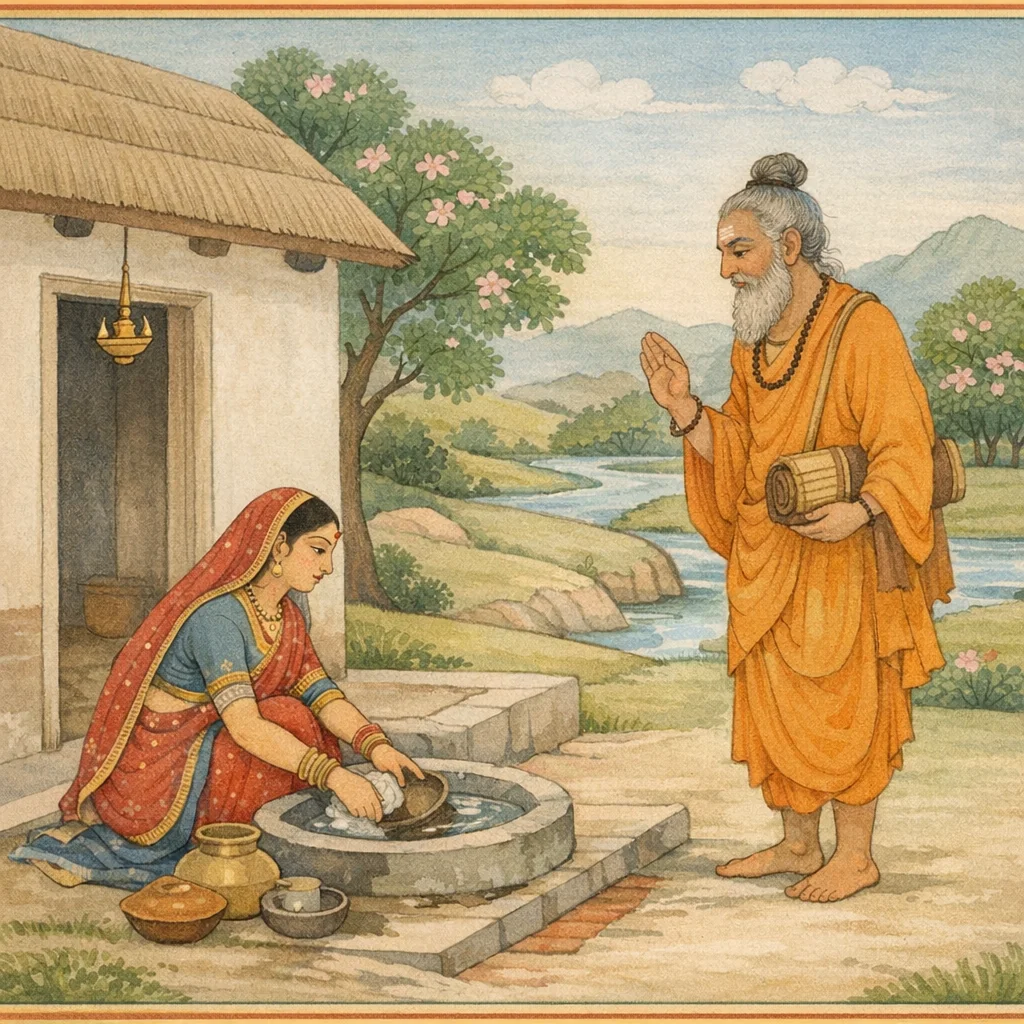
की) है कद सा :2 2 हट! ॥224%॥ ( ४ पर द क्र ८ पदक है, हा हा 3 ल्ं हक, ही | २; रा कं ५ $| “ “४ 3, <. रे! पे! मार्कण्डेय उवाच इत्युक्त्वा बहुशो विद्वान ग्रामं भैक्ष्याय संश्रित: । ग्रामे शुचीनि प्रचरन् कुलानि भरतर्षभ,मार्कण्डेयजी कहते हैं--भरतश्रेष्ठ) इस प्रकार बार-बार पछताकर वह दिद्दान ब्राह्मण गाँवमें भिक्षाके लिये गया। उस गाँवमें जो लोग शुद्ध और पवित्र आचरणवाले थे, उन्हींके घरोंपर भिक्षा माँगता हुआ वह एक ऐसे घरपर जा पहुँचा, जहाँ पहले भी कभी किक्षा प्राप्त कर चुका था। दरवाजेपर पहुँचकर ब्राह्मण बोला--'भिक्षा दें!” भीतरसे किसी स्त्रीने उत्तर दिया--“ठहरो! (अभी लाती हूँ)”
Mārkaṇḍeya said: “Having spoken thus, the learned brāhmaṇa, repenting again and again, resorted to a village to seek alms. O bull among the Bharatas, moving about in that village, he begged only at households known for purity of conduct.”
Verse 8
प्रविष्टस्तत् कुलं॑ यत्र पूर्व चरितवांस्तु सः । देहीति याचमानो सौ तिषछेत्युक्त: स्त्रिया ततः,मार्कण्डेयजी कहते हैं--भरतश्रेष्ठ) इस प्रकार बार-बार पछताकर वह दिद्दान ब्राह्मण गाँवमें भिक्षाके लिये गया। उस गाँवमें जो लोग शुद्ध और पवित्र आचरणवाले थे, उन्हींके घरोंपर भिक्षा माँगता हुआ वह एक ऐसे घरपर जा पहुँचा, जहाँ पहले भी कभी किक्षा प्राप्त कर चुका था। दरवाजेपर पहुँचकर ब्राह्मण बोला--'भिक्षा दें!” भीतरसे किसी स्त्रीने उत्तर दिया--“ठहरो! (अभी लाती हूँ)”
Mārkaṇḍeya said: He entered that household where he had formerly gone before. As he begged, saying, “Give (alms),” a woman from within replied, “Wait (a moment),” and so he stood there.
Verse 9
शौचं तु यावत् कुरुते भाजनस्य कुटुम्बिनी । एतस्मिन्नन्तरे राजन् क्षुधासम्पीडितो भृशम्
Mārkaṇḍeya said: “While the housewife was still engaged in cleaning the vessel, O King, in that very interval he became severely tormented by hunger.”
Verse 10
सा तु दृष्टवा पतिं साध्वी ब्राह्मणं व्यवहाय तम्,पतिको आया देख उस श्याम नेत्रोंवाली पतिव्रताने ब्राह्मणगको तो उसी दशामें छोड़ दिया और अत्यन्त विनीतभावसे वह पतिकी सेवामें लग गयी। पानी लाकर उसने पतिके पैर धोये, हाथ-मुँह धुलाये और बैठनेको आसन दिया
Seeing her husband—the Brahmin—lying in that condition, the virtuous, dark-eyed wife left him as he was and, with deep humility, devoted herself to his service. Bringing water, she washed his feet, cleansed his hands and face, and then offered him a seat.
Verse 11
पतिको आया देख उस श्याम नेत्रोंवाली पतिव्रताने ब्राह्मणगको तो उसी दशामें छोड़ दिया और अत्यन्त विनीतभावसे वह पतिकी सेवामें लग गयी। पानी लाकर उसने पतिके पैर धोये, हाथ-मुँह धुलाये और बैठनेको आसन दिया
Mārkaṇḍeya said: Seeing her husband return, the dark-eyed, devoted wife left the brāhmaṇa as he was and, with deep humility, turned to her husband’s service. Bringing water, she washed his feet, helped him cleanse his hands and face, and offered him a seat.
Verse 12
आहारेणाथ भक्ष्यैश्न भोज्यै: सुमधुरैस्तथा । उच्छिष्ट भाविता भर्तुर्भुड्धक्ते नित्यं युधिष्ठिर
Mārkaṇḍeya said: “And so, O Yudhiṣṭhira, she would sustain herself on food—sweet delicacies and cooked dishes—yet all of it was only what had been left over after her husband had eaten. Thus she lived each day, devoted to her lord, accepting his remnants as her own portion.”
Verse 13
फिर सुन्दर स्वादिष्ट भक्ष्य-भोज्य पदार्थ परोसकर वह पतिको भोजन कराने लगी। युधिष्ठिर! वह सती स्त्री प्रतिदिन पतिको भोजन कराकर उनके उच्छिष्टको प्रसाद मानकर बड़े आदर और प्रेमसे भोजन करती थी ।। दैवतं च पतिं मेने भर्तृश्रित्तानुसारिणी । कर्मणा मनसा वाचा नान्यचित्ताभ्यगात् पतिम्,वह पतिको देवता मानती और उनके विचारके अनुकूल ही चलती थी। उसका मन कभी पर पुरुषकी ओर नहीं जाता था। वह मन, वाणी और क्रियासे पतिपरायणा थी
Mārkaṇḍeya said: She served fine and savory foods and fed her husband first. O Yudhiṣṭhira, each day that virtuous woman, after her husband had eaten, regarded his leftovers as prāsāda and ate them with reverence and love. She held her husband to be her very deity, followed his wishes, and never turned her heart toward another man; in deed, in mind, and in speech she was devoted to her husband alone.
Verse 14
त॑ सर्वभावोपगता पतिशुश्रूषणे रता । साध्वाचारा शचिर्दक्षा कुटुम्बस्य हितैषिणी
Mārkaṇḍeya said: “She, having given herself wholly in mind and conduct, delighted in serving her husband—virtuous in behavior, pure and steadfast, capable in her duties, and ever seeking the welfare of the household.”
Verse 15
अपने हृदयकी समस्त भावनाएँ, सम्पूर्ण प्रेम पतिके चरणोंमें चढ़ाकर वह अनन्यभावसे उन्हींकी सेवामें लगी रहती थी। सदाचारका पालन करती, बाहर-भीतरसे शुद्ध--पवित्र रहती, घरके काम-काजको कुशलतापूर्वक करती और कुटुम्बके सभी लोगोंका हित चाहती थी।। भर्तुश्नापि हितं यत् तत् सततं सानुवर्तते । देवतातिथि भत्यानां श्वश्रूश्वशुरयोस्तथा
Mārkaṇḍeya said: She constantly followed whatever was beneficial to her husband. Likewise, she sought the welfare of the household’s sacred obligations—toward the gods, guests, and servants—and also toward her mother-in-law and father-in-law.
Verse 16
शुश्रूषणपरा नित्यं सततं संयतेन्द्रिया । पतिके लिये जो हितकर कार्य जान पड़ता उसमें भी वह सदा संलग्न रहती थी। देवताओंकी पूजा, अतिथियोंके सत्कार, भृत्योंके भरण-पोषण और सास-ससुरकी सेवामें भी वह सर्वदा तत्पर रहती थी। अपने मन और इन्द्रियोंपर वह निरन्तर पूर्ण संयम रखती थी।। सा ब्राह्मणं तदा दृष्टवा संस्थितं भैक्ष्यकाड्क्षिणम् | कुर्वती पतिशुश्रूषां सस्माराथ शुभेक्षणा
Mārkaṇḍeya said: Ever devoted to service, ever self-controlled and steadfast in restraining the senses, she remained constantly engaged in whatever she understood to be beneficial for her husband. She was diligent in worship of the gods, in honoring guests, in supporting the household servants, and in serving her parents-in-law, while keeping her mind and senses under firm discipline. Then, seeing a brāhmaṇa standing there seeking alms, the auspicious-eyed woman—though occupied in attending upon her husband—recollected what was to be done.
Verse 17
पतिकी सेवा करते-करते उस मंगलमयी दृष्टिवाली देवीको भिक्षाके लिये खड़े हुए ब्राह्मगकी याद आयी ।। व्रीडिता साभवत् साध्वी तदा भरतसत्तम । भिक्षामादाय विप्राय निर्जगाम यशस्विनी,भरतवंशविभूषण! अपनी भूलके कारण वह यशस्विनी साध्वी स्त्री बहुत लज्जित हुई और ब्राह्मणके लिये भिक्षा लेकर घरसे बाहर निकली
Markandeya said: While she was continually engaged in serving her husband, that auspicious, clear-sighted lady suddenly remembered the brāhmaṇa who was standing for alms. Realizing her lapse, she became deeply ashamed. Then, O best of the Bharatas, she took the alms meant for the brāhmaṇa and went out to give it to him—her conduct marked by modesty and a renewed sense of duty.
Verse 18
ब्राह्मण उवाच किमिदं भवति त्वं मां तिछेत्युक्त्वा वराड़ने | उपरोध॑ं कृतवती न विसर्जितवत्यसि,उसे देखकर ब्राह्मणने कहा--सुन्दरी! तुम्हारा यह कैसा बर्ताव है? देख! तुम्हें इतना विलम्ब करना था तो “ठहरो' कहकर मुझे रोक क्यों लिया? मुझे जाने क्यों नहीं दिया?
The brāhmaṇa said: “What is this behavior? O fair-limbed lady, after telling me, ‘Wait,’ you have detained me—yet you have not let me go.”
Verse 19
मार्कण्डेय उवाच ब्राह्मणं क्रोधसंतप्तं ज्वलन्तमिव तेजसा । दृष्टवा साध्वी मनुष्येन्द्र सान्त्वपूर्व वचो5ब्रवीत्
Markandeya said: Seeing the brāhmaṇa scorched by anger, blazing as if with fiery splendor, the virtuous woman, O lord of men, first sought to soothe him and then spoke words of gentle conciliation.
Verse 20
कष्ट ७0४ रूयुवाच क्षन्तुमर्हसि मे विद्वन् भर्ता मे दैवतं महत् । स चापि क्षुधित: श्रान्तः प्राप्त: शुश्रूषितो मया
She said: “O wise one, please forgive me. My husband is my great divinity. And he too—hungry and weary—has come here; I have been attending upon him with devoted service.”
Verse 21
स्त्री बोली--विद्वत्! क्षमा करें। मेरे लिये सबसे बड़े देवता पति हैं। वे भूखे और थके हुए घरपर आये थे। (उन्हें छोड़कर कैसे आती?) उन्हींकी सेवामें लग गयी ।। ब्राह्मण उवाच ब्राह्मणा न गरीयांसो गरीयांस्ते पति: कृत: । गृहस्थधर्मे वर्तन्ती ब्राह्मणानवमन्यसे,तब ब्राह्मण बोला--क्या ब्राह्मण बड़े नहीं हैं; तुमने पतिको ही सबसे बड़ा बना दिया? गृहस्थधर्ममें रहकर भी तुम ब्राह्मणोंका अपमान करती हो?
The Brahmin said: “Are Brahmins not worthy of the highest honor? Yet you have made your husband the greatest. Though you live within the duties of a householder, you show contempt for Brahmins.”
Verse 22
इन्द्रोडप्येषां प्रणमते कि पुनर्मानवो भुवि | अवलिप्ते न जानीषे वृद्धानां न श्रुतं त्वया
The brāhmaṇa said: “Even Indra bows to such elders—how much more should a mere human on earth do so! But you, puffed up with pride, do not understand; you have not heeded what the elders have taught.”
Verse 23
रूयुवाच नाहं बलाका विदप्रर्षे त्यज क्रोध॑ं तपोधन,स्त्री बोली--तपोधन! क्रोध न करो। ब्रह्मर्ष! मैं बगुली नहीं हूँ जो तुम्हारी इस क्रोधभरी दृष्टिसे जल जाऊँगी। तुम इस तरह कुपित होकर मेरा क्या करोगे? मैं ब्राह्मणोंका अपमान नहीं करती। मनस्वी ब्राह्मण तो देवताके समान होते हैं
The woman said: “I am not that heron, O sage. Abandon your anger, O rich in austerity. O Brahmarṣi, you cannot burn me with an angry glance. What will you accomplish by raging at me? I do not insult Brahmins; high-minded Brahmins are like the gods themselves.”
Verse 24
अनया क्रुद्धया दृष्ट्या क्रुद्ध: कि मां करिष्यसि । नावजानाम्यहं विप्रान् देवैस्तुल्यानू मनस्विन:,स्त्री बोली--तपोधन! क्रोध न करो। ब्रह्मर्ष! मैं बगुली नहीं हूँ जो तुम्हारी इस क्रोधभरी दृष्टिसे जल जाऊँगी। तुम इस तरह कुपित होकर मेरा क्या करोगे? मैं ब्राह्मणोंका अपमान नहीं करती। मनस्वी ब्राह्मण तो देवताके समान होते हैं
The woman replies: “Why are you angered by this angry look? What will you do to me in your wrath? I do not dishonor brahmins; for high-minded brahmins are equal to the gods.”
Verse 25
अपराधमिमं विदप्र क्षन्तुमहसि मेडनघ । जानामि तेजो विप्राणां महाभाग्यं च धीमताम्
The brāhmaṇa said: “Knowing this offence of mine, you ought to forgive me, O sinless one of keen understanding. I know well the spiritual power of brāhmaṇas, and the great good fortune that attends the wise.”
Verse 26
निष्पाप ब्राह्मण! तुम मेरे इस अपराधको क्षमा करो। मैं बुद्धिमान् ब्राह्मणोंके तेज और महत्त्वको जानती हूँ ।। अपेय: सागर: क्रोधात् कृतो हि लवणोदक: । तथैव दीप्ततपसां मुनीनां भावितात्मनाम्
“O sinless Brāhmaṇa, please forgive this offence of mine. I understand the radiance and greatness of wise Brāhmaṇas. Indeed, the ocean became undrinkable—turned into salt water—because of wrath; in the same way, the anger of sages whose austerities blaze and whose selves are disciplined becomes formidable.”
Verse 27
ब्राह्मणानां परिभवाद् वातापि: सुदुरात्मवान्
“Because of his contemptuous treatment of Brahmins, Vātāpi—of thoroughly wicked disposition—(met ruin).”
Verse 28
बहुप्रभावा: श्रूयन्ते ब्राह्मणानां महात्मनाम्,ब्रह्मन! महात्मा ब्राह्मणोंके प्रभावको बतानेवाले बहुत-से चरित्र सुने जाते हैं। उन महात्माओंका क्रोध और कृपा दोनों ही महान् होते हैं। निष्पाप ब्रह्मन! मेरेद्वारा जो तुम्हारा अपराध बन गया है, उसे क्षमा करो
“O Brahmin! Many accounts are heard that tell of the great power of high-souled Brahmins. Both their wrath and their favor are mighty. O sinless Brahmin, please forgive the offence I have committed against you.”
Verse 29
क्रोध: सुविपुलो ब्रह्मन् प्रसादश्च महात्मनाम् । अम्मिंस्त्वतिक्रमे ब्रह्मन् क्षन्तुमहसि मेडनघ,ब्रह्मन! महात्मा ब्राह्मणोंके प्रभावको बतानेवाले बहुत-से चरित्र सुने जाते हैं। उन महात्माओंका क्रोध और कृपा दोनों ही महान् होते हैं। निष्पाप ब्रह्मन! मेरेद्वारा जो तुम्हारा अपराध बन गया है, उसे क्षमा करो
The Brahmin said: “O Brahmin, the wrath of great-souled men is exceedingly vast, and so too is their grace. Therefore, O Brahmin, in this act of transgression, you should forgive me, O wise one.”
Verse 30
पतिशुश्रूषया धर्मो यः स मे रोचते द्विज । दैवतेष्वपि सर्वेषु भर्ता मे दैवतं परम्,विप्रवर! मुझे तो पतिकी सेवासे जो धर्म प्राप्त होता है, वही अधिक पसंद है। सम्पूर्ण देवताओंमें भी पति ही मेरे सबसे बड़े देवता हैं
O twice-born one, the dharma that comes to me through devoted service to my husband is what I value most. Even among all the gods, my husband is for me the highest divinity.
Verse 31
अविशेषेण तस्याहं कुर्या धर्म द्विजोत्तम | शुश्रूषाया: फल पश्य पत्युब्राह्मिण यादृशम्,द्विजश्रेष्ठ! मैं साधारणरूपसे ही पतिसेवारूप धर्मका पालन करती हूँ। ब्राह्मणदेवता! इस पतिसेवाका जैसा फल है, उसे प्रत्यक्ष देख लो
The Brahmin woman said: “O best of the twice-born, I uphold my dharma in a plain, unpretentious way—by serving my husband. O venerable Brahmin, behold with your own eyes what fruit such devoted service to one’s husband brings.”
Verse 32
बलाका हि त्वया दग्धा रोषात् तद् विदितं मया | क्रोध: शत्रु: शरीरस्थो मनुष्याणां द्विजोत्तम,तुमने क्रोध करके जो एक बगुलीको जला दिया था वह बात मुझे मालूम हो गयी। द्विजश्रेष्ठ! मनुष्योंका एक बहुत बड़ा शत्रु है, वह उनके शरीरमें ही रहता है। उसका नाम है 'क्रोध”
“The heron you burned in anger is known to me. O best of Brahmins, there is a great enemy of human beings—one that dwells within the body itself—and its name is anger.”
Verse 33
य: क्रोधमोहौ त्यजति त॑ देवा ब्राह्मणं विदु: । यो वदेदिह सत्यानि गुरु संतोषयेत च
The Brahmin said: “One who casts off anger and delusion—the gods themselves recognize him as a true brāhmaṇa. And he who, in this world, speaks truth and also brings satisfaction to his teacher—such conduct marks the path of dharma.”
Verse 34
जितेन्द्रियो धर्मपर: स्वाध्यायनिरत: शुचि:
“He is one who has conquered his senses, is devoted to dharma, is constantly engaged in sacred study, and is pure in conduct.”
Verse 35
यस्य चात्मसमो लोको धर्मज्ञस्य मनस्विन:
The brāhmaṇa said: “For that wise and high-minded knower of dharma, the whole world becomes as his own self—regarded with equal regard and impartiality.”
Verse 36
योड्ध्यापयेदधीयीत यजेद् वा याजयीत वा
The brāhmaṇa said: “One may train others in warfare, or pursue sacred study; one may perform a sacrifice oneself, or officiate and conduct sacrifices for others.”
Verse 37
दद्याद् वापि यथाशक्ति त॑ देवा ब्राह्मणं विदु: । जो पढ़े और पढ़ाये, यज्ञ करे और कराये तथा यथाशक्ति दान दे, उसे देवतालोग ब्राह्मण कहते हैं ।। ब्रह्मचारी वदान्यो योडधीयीत द्विजपुड़व:
The brāhmaṇa said: “Even giving according to one’s capacity is a mark of true worth; the gods recognize as a brāhmaṇa the one who, living with disciplined conduct, is generous, and applies himself to sacred study. Such a person—foremost among the twice-born—upholds the standard of brahminhood through learning, self-restraint, and charity.”
Verse 38
यद् ब्राह्मणानां कुशलं तदेषां परिकीर्तयेत्
The Brahmin said: “Whatever conduces to the welfare and well-being of Brahmins—let one proclaim and recommend that for these people.”
Verse 39
धर्म तु ब्राह्मणस्याहु: स्वाध्यायं दममार्जवम्
The Brahmin said: “They declare that the dharma of a Brahmin is this: devoted study of the sacred texts, self-restraint, and straightforward integrity.”
Verse 40
सत्यार्जवे धर्ममाहु: परं धर्मविदो जना:,धर्मज्ञ पुरुष सत्य और सरलताको सर्वोत्तम धर्म बताते हैं। सनातनधर्मके स्वरूपको जानना तो अत्यन्त कठिन है, परंतु वह सत्यमें प्रतिष्ठित है। जो वेदोंके द्वारा प्रमाणित हो, वही धर्म है--यह वृद्ध पुरुषोंका उपदेश है
The brāhmaṇa said: Those who truly know dharma declare that truthfulness and straightforwardness are the highest dharma. The real nature of the eternal dharma is exceedingly difficult to grasp, yet it stands firmly rooted in truth. What is attested by the Vedas alone is dharma—so teach the elders.
Verse 41
दुर्ज्ेयः शाश्व॒तो धर्म: स च सत्ये प्रतिष्ठित: श्रुतिप्रमाणो धर्म: स्यादिति वृद्धानुशासनम्,धर्मज्ञ पुरुष सत्य और सरलताको सर्वोत्तम धर्म बताते हैं। सनातनधर्मके स्वरूपको जानना तो अत्यन्त कठिन है, परंतु वह सत्यमें प्रतिष्ठित है। जो वेदोंके द्वारा प्रमाणित हो, वही धर्म है--यह वृद्ध पुरुषोंका उपदेश है
The brāhmaṇa said: “Dharma is eternal and hard to fathom, yet it stands firmly upon truth. The elders teach that only what is validated by Śruti (the Veda) is to be regarded as dharma.”
Verse 42
बहुधा दृश्यते धर्म: सूक्ष्म एव द्विजोत्तम । भवानपि च धर्मज्ञ: स्वाध्यायनिरत: शुचि:,द्विजश्रेष्ठ! बहुधा धर्मका स्वरूप सूक्ष्म ही देखा जाता है। तुम भी धर्मज्ञ, स्वाध्यायपरायण और पवित्र हो
“O best of the twice-born, dharma is seen in many ways, and indeed it is subtle. You too are a knower of dharma—devoted to sacred study and inwardly pure.”
Verse 43
अपध्याता च विप्रेण न््यपतद् धरणीतले । यह देख ब्राह्मण क्रोधित हो गया और उस पक्षीकी ओर दृष्टि डालकर उसका अनिष्टचिन्तन करने लगा। उसने अत्यन्त कुपित होकर उस बगुलीको देखा और उसका अनिष्टचिन्तन किया था, अतः वह पृथ्वीपर गिर पड़ी,न तु तत्त्वेन भगवन् धर्म वेत्सीति मे मतिः । यदि विप्र न जानीषे धर्म परमकं द्विज
‘And the bird fell to the ground because of the brahmin’s hostile thought. Yet, revered sir, it is my view that you do not truly understand dharma in its essence. If you, O brahmin, do not know the supreme dharma…’
Verse 44
मातापितृभ्यां शुश्रूषु: सत्यवादी जितेन्द्रिय:,मिथिलामें एक व्याध रहता है, जो माता-पिताका सेवक, सत्यवादी और जितेन्द्रिय है, वह तुम्हें धर्मका उपदेश करेगा। द्विजश्रेष्ठ! तुम अपनी रुचिके अनुसार वहीं जाओ, तुम्हारा मंगल हो
The Brahmin said: “In Mithilā there lives a hunter who is devoted to serving his mother and father, truthful in speech, and master of his senses. He will instruct you in dharma. O best of the twice-born, go there as you deem fit—may good befall you.”
Verse 45
मिथिलायां वसेद् व्याध: स ते धर्मान् प्रवक्ष्यति । तत्र गच्छस्व भद्ठर|ं ते यथाकामं द्विजोत्तम,मिथिलामें एक व्याध रहता है, जो माता-पिताका सेवक, सत्यवादी और जितेन्द्रिय है, वह तुम्हें धर्मका उपदेश करेगा। द्विजश्रेष्ठ! तुम अपनी रुचिके अनुसार वहीं जाओ, तुम्हारा मंगल हो
In Mithilā there lives a hunter; he will expound dharma to you. Go there, O best of twice-born; may good befall you—go as you wish.
Verse 46
अत्युक्तमपि मे सर्व क्षन्तुमर्हस्यनिन्दित । स्त्रियों ह्यवध्या: सर्वेषां ये च धर्मविदो जना:,अनिन्दनीय ब्राह्मण! यदि मेरे मुखसे कोई अनुचित बातें निकल गयी हों तो उन सबके लिये मुझे क्षमा करें; क्योंकि जो धर्मज्ञ पुरुष हैं, उन सबकी दृष्टिमें स्त्रियाँ अदण्डनीय हैं
O blameless brāhmaṇa, be pleased to forgive all that I have said, even if it was excessive, should any improper words have slipped from my mouth. For in the eyes of men who know dharma, women are, for all, not fit to be punished.
Verse 47
ब्राह्मण उवाच प्रीतो5स्मि तव भद्रें ते गत: क्रोधश्व॒ शोभने । उपालम्भस्त्वयात्युक्तो मम नि:श्रेयसं परम् । स्वस्ति ते5स्तु गमिष्यामि साधयिष्यामि शोभने,(धन्या त्वमसि कल्याणि यस्यास्ते वृत्तमीदृशम् ।) ब्राह्मण बोला--शुभे! तुम्हारा भला हो। मैं तुमपर बहुत प्रसन्न हूँ। मेरा सारा क्रोध दूर हो गया। तुमने जो उलाहना दिया है, वह अनुचित वचन नहीं, मेरे लिये परम कल्याणकारी है। शोभने! तुम्हारा कल्याण हो। अब मैं जाऊँगा और अपना कार्यसाधन करूँगा। कल्याणि! तुम धन्य हो, जिसका सदाचार इतनी उच्चकोटिका है
The brāhmaṇa said: “Auspicious lady, blessings upon you. I am truly pleased with you; my anger has completely passed away. The reproach you spoke was not improper—rather, it has become for me the highest good. May well-being be yours, O fair one. Now I shall depart and accomplish my purpose. Fortunate indeed are you, O noble lady, whose conduct is of such an exalted kind.”
Verse 48
मार्कण्डेय उवाच तया विसृष्टो निर्गम्य स्वमेव भवनं ययौ । विनिन्दन् स स्वमात्मानं कौशिको द्विजसत्तम:,मार्कण्डेयजी कहते हैं--युधिष्ठि!! उस साध्वी स्त्रीसे विदा लेकर वह द्विजश्रेष्ठ कौशिक अपने आत्माकी निन्दा करता हुआ अपने घरको लौट गया
Markandeya said: Having been respectfully dismissed by that virtuous woman, the brahmin Kaushika departed and returned to his own home. All the while, the best of the twice-born reproached himself.
Verse 96
भर्ता प्रविष्ट: सहसा तस्या भरतसत्तम | राजन्! वह घरकी मालकिन थी, जो जूँठे बर्तन माँज रही थी। ज्यों ही वह बर्तन साफ करके उधरसे निवृत्त हुई, त्यों ही उसके पतिदेव सहसा घरपर आ गये। भरतश्रेष्ठ! वे भूखसे अत्यन्त पीड़ित थे
Mārkaṇḍeya said: “O best of the Bharatas, O king—she, the mistress of the house, was washing the soiled dishes. As soon as she finished cleaning them and turned away from that task, her husband suddenly arrived at home. O foremost of the Bharatas, he was tormented by intense hunger.”
Verse 97
!
The provided Sanskrit text is missing (shown only as “!”), so a faithful translation cannot be produced for this verse without the actual wording from Vana Parva 207.97 (Gita Press).
Verse 131
पाद्यमाचमनीयं वै ददौ भर्तुस्तथा55सनम् | प्रह्मा पर्यचरच्चापि भर्तारमसितेक्षणा
Mārkaṇḍeya said: She offered her husband water for washing the feet and for sipping as the rite of hospitality, and likewise provided him a seat. The dark-eyed lady also attended upon her husband with reverent service—conduct befitting dharma and marital fidelity.
Verse 206
इति श्रीमहाभारते वनपर्वणि मार्कण्डेयसमास्यापर्वणि पतिव्रतोपाख्याने षडधिकद्धिशततमो<ध्याय:
Thus ends the two-hundred-and-sixth chapter in the Vana Parva of the Śrī Mahābhārata, within the section known as the Markandeya-samāsya Parva, in the episode (upākhyāna) concerning the devoted wife (pativratā).
Verse 226
ब्राह्मणा हाग्निसदृशा दहेयु: पृथिवीमपि । अरी! (स्वर्गलोकके स्वामी) इन्द्र भी इन ब्राह्मणोंके आगे सिर झुकाते हैं, फिर भूतलके मनुष्योंकी तो बात ही कया है? धमंडमें भरी हुई स्त्री! क्या तुम ब्राह्मणोंका प्रभाव नहीं जानती? कभी बड़े-बूढ़ोंके मुखसे भी नहीं सुना? अरी! ब्राह्मण अग्निके समान तेजस्वी होते हैं। वे चाहें तो इस पृथ्वीको भी जलाकर भस्म कर सकते हैं
The Brahmin said: “Brahmins are like fire itself—if they chose, they could burn even the earth. Even Indra, lord of heaven, bows his head before Brahmins; what then need be said of mere mortals on this ground? O woman swollen with pride—do you not know the power of Brahmins? Have you never even heard it from the mouths of elders? Brahmins blaze with the radiance of fire; if they will it, they can reduce the very earth to ashes.”
Verse 263
येषां क्रोधाग्निरद्यापि दण्डके नोपशाम्यति | ब्राह्मणोंके ही क्रोधका फल है कि समुद्रका पानी खारा एवं पीनेके अयोग्य बना दिया गया। इसी प्रकार जिनकी तपस्या बहुत बढ़ी-चढ़ी थी और जिनका अन्त:करण परम पवित्र हो चुका था ऐसे मुनियोंने भी जो क्रोधकी आग प्रज्वलित की थी, वह आज भी दण्डकारण्यमें बुझ नहीं पा रही है
The Brahmin said: “In the Dandaka forest, the fire of anger kindled by certain sages has not subsided even to this day. Such is the consequence of wrath: it is said that the ocean’s waters became salty and unfit to drink because of a Brahmin’s anger; likewise, even ascetics of immense austerity and purified hearts, when they ignite the blaze of anger, leave effects that endure and continue to scorch the world.”
Verse 276
अगस्त्यमृषिमासाद्य जीर्ण: क्रूरो महासुर: । ब्राह्मणोंका तिरस्कार करनेसे ही क्रूर स्वभाववाला महान् असुर अत्यन्त दुरात्मा वातापि अगस्त्य मुनिके पेटमें जाकर पच गया
Having approached the sage Agastya, the aged, cruel great demon—Vātāpi, utterly wicked by nature—was digested after entering Agastya’s belly, as a consequence of his contemptuous treatment of brāhmaṇas. The episode underscores that arrogance toward the righteous and the learned rebounds upon the offender, while the power of tapas and dharma protects the virtuous.
Verse 336
हिंसितश्न न हिंसेत त॑ देवा ब्राह्मणं विदु: । जो क्रोध और मोहको त्याग देता है, उसीको देवतागण ब्राह्मण मानते हैं। जो यहाँ सत्य बोले, गुरुको संतुष्ट रखे, किसीके द्वारा मार खाकर भी बदलेमें उसे न मारे, उसको देवतालोग ब्राह्मण मानते हैं
The Brahmin said: “Even when one has been harmed, one should not harm in return—such a person the gods recognize as a true Brahmin. The one who abandons anger and delusion, speaks truth here, keeps the teacher satisfied, and even after being struck does not strike back—him the gods regard as a Brahmin.”
Verse 346
कामक्रोधौ वशौ यस्य त॑ देवा ब्राह्मण विदु: । जो जितेन्द्रिय, धर्मपरायण, स्वाध्यायतत्पर और पवित्र है तथा काम और क्रोध जिसके वशमें है, उसे देवतालोग ब्राह्मण मानते हैं
The Brahmin said: “He whose desire and anger are held in check—under his mastery—is recognized by the gods as a true Brahmin. One who has conquered the senses, is devoted to dharma, is intent on sacred study, and is pure; for whom lust and wrath are subdued—such a person the divine beings regard as a Brahmin.”
Verse 356
सर्वधर्मेषु च रतस्तं देवा ब्राह्मणं विदुः । जिस धर्मज्ञ एवं मनस्वी पुरुषका सम्पूर्ण जगत्के प्रति आत्मभाव है तथा सभी धर्मोंपर जिसका समान अनुराग है, उसे देवतालोग ब्राह्मण मानते हैं
The gods recognize as a true brāhmaṇa that person who delights in all forms of dharma—one whose understanding is broad and whose regard is impartial, embracing the whole world with the spirit of the Self.
Verse 373
स्वाध्यायवानमन्तो वै त॑ देवा ब्राह्मणं विदु: । जो द्विजश्रेष्ठ ब्रह्मचर्यका पालन करे, उदार बने, वेदोंका अध्ययन करे और सतत सावधान रहकर स्वाध्यायमें ही लगा रहे, उसे देवतालोग ब्राह्मण मानते हैं
The Brahmin said: “The gods recognize as a true Brahmin the man who is devoted to self-study and disciplined recitation. He who, as the best among the twice-born, preserves brahmacarya, becomes generous in conduct, studies the Vedas, and remains constantly vigilant—steadfastly engaged in svādhyāya—such a person is regarded by the divine as a Brahmin.”
Verse 383
सत्यं तथा व्याहरतां नानृते रमते मन: । ब्राह्मणके लिये जो हितकर कर्म हो, उसीका उनके सामने वर्णन करना चाहिये। सत्य बोलनेवाले लोगोंका मन कभी असत्यमें नहीं लगता
The Brahmin said: “Let those who speak speak the truth; the mind does not take delight in falsehood. One should set forth before a Brahmin only that course of action which is beneficial and wholesome for him. The mind of truth-speaking people never becomes attached to untruth.”
Verse 393
इन्द्रियाणां निग्रहं च शाश्वृतं द्विजसत्तम । द्विजश्रेष्ठ! स्वाध्याय, मनोनिग्रह, सरलता और इन्द्रियनिग्रह--ये ब्राह्मणके लिये सनातनधर्म कहे गये हैं
The brāhmaṇa said: “O best of the twice-born, restraint of the senses is an everlasting discipline. O foremost brāhmaṇa—self-study of sacred learning, restraint of the mind, straightforward simplicity, and restraint of the senses: these are declared to be the eternal dharma of a brāhmaṇa.”
Verse 436
धर्मव्याधं तत: पृच्छ गत्वा तु मिथिलां पुरीम् । भगवन्! तो भी मेरा विचार यह है कि तुम्हें धर्मका यथार्थ ज्ञान नहीं है। विप्रवर! यदि तुम परम धर्म क्या है, यह नहीं जानते तो मिथिलापुरीमें धर्मव्याधके पास जाकर पूछो
The brahmin said: “Then go to the city of Mithilā and question the righteous hunter. Revered sir, this is my judgment: you do not yet know dharma in its true sense. O best of brāhmaṇas, if you do not understand what the highest dharma is, then go to Mithilā and ask the dharma-vyādha.”
Frequently Asked Questions
The chapter formalizes a metaphysical-ritual dilemma: Agni is described as one reality, yet appears as many ‘agnis’ because distinct rites and cosmic roles manifest differentiated functions of the same principle.
Legitimate knowledge is framed as lineage-based instruction combined with rational questioning; cosmic order is maintained when offices (like Agni’s) are properly restored and interpreted through function rather than mere name or fame.
No explicit phalaśruti appears in the provided passage; the meta-commentary operates implicitly by signaling a forthcoming systematic exposition (‘I will explain the many kinds of agnis’), positioning this chapter as a prologue to ritual taxonomy and doctrinal clarification.