Adhyaya 151
Kuberasaras-darśana (Bhīma beholds Kubera’s guarded lotus-lake) / कुबेरसरः-दर्शनम्
Upa-parva: Saugandhika-haraṇa Parva (Episode of the Saugandhika lotuses near Kubera’s lake)
Vaiśaṃpāyana describes Bhīmasena’s arrival at a beautiful nalinī (lotus-lake) on the pleasant heights of Kailāsa, near Kubera’s abode. The lake is portrayed with dense lotuses, golden-hued blossoms, jewel-like stalks, cool and clear water likened to nectar, and a sanctifying, wondrous quality. It is characterized as Kubera’s recreational domain, honored by devas and frequented by gandharvas and apsarases, as well as visited by ṛṣis and guarded under Vaiśravaṇa’s authority. Bhīma, delighted at the sight, approaches; the rākṣasa guardians—identified as Krodhavaśā, numerous and well-armed—observe him and raise alarm. They converge and interrogate him formally: noting his ascetic-like attire and weapons, they ask his identity and purpose, establishing the immediate thematic frame of access-control, authority, and declared intention in a protected realm.
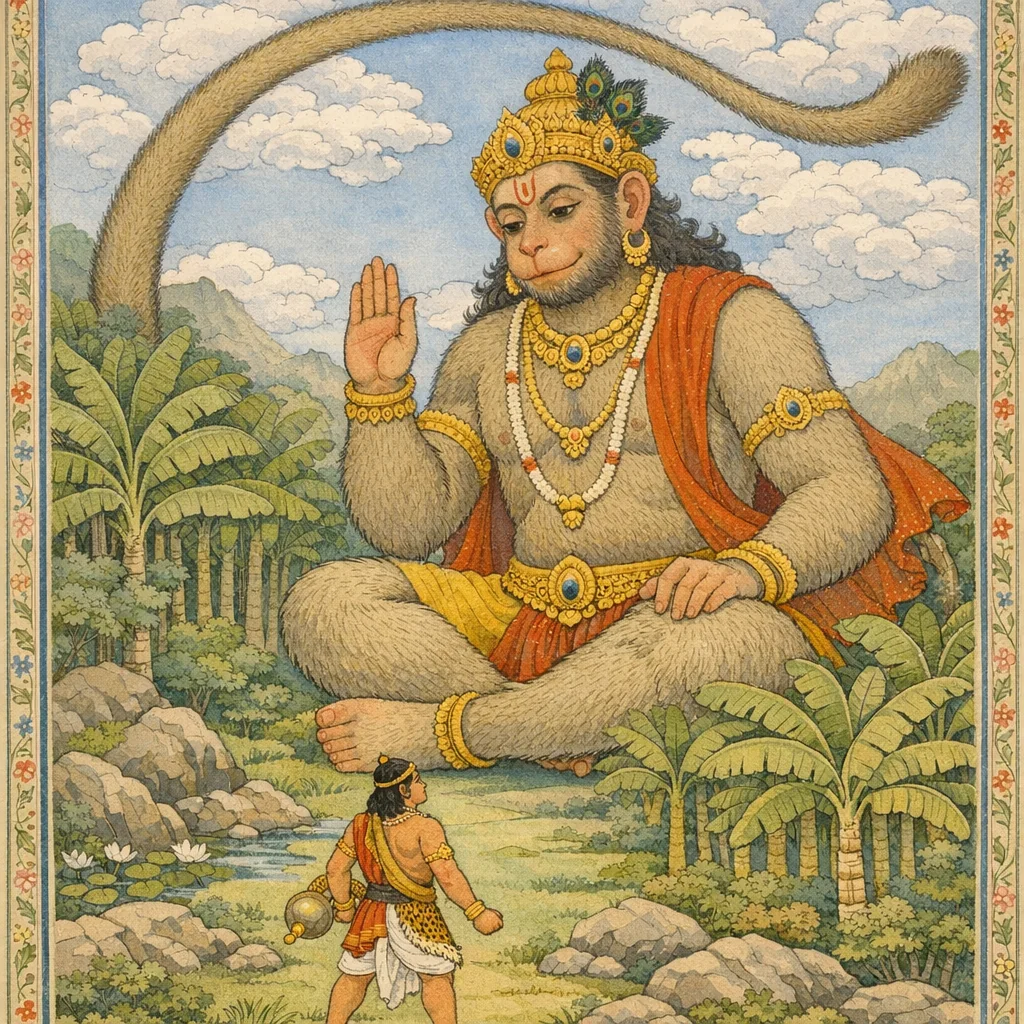
Chapter Arc: कदलीवन के भीतर भीमसेन के वचन सुनकर हनुमान स्मित करते हैं—और अपने सागर-लङ्घन-कालीन तेज का संकेत देते हुए, भीम के सामने अपना अद्भुत रूप प्रकट करने को उद्यत होते हैं। → भ्रातृ-प्रियता से प्रेरित होकर हनुमान अपना शरीर आयाम-विस्तार में बढ़ाते जाते हैं; पर्वत-तुल्य महाकाय, ताम्र-नेत्र, तीक्ष्ण-दंष्ट्र, भृकुटि-वक्र मुख—और दीर्घ लाङ्गूल को घुमाते हुए दिशाओं को मानो घेर लेते हैं। भीम के भीतर बल-गर्व और विस्मय साथ-साथ उठते हैं। → हनुमान का विराट् रूप—‘द्वितीय इव पर्वतः’—भीम के सामने साक्षात् खड़ा हो जाता है; उसी क्षण बल का अहंकार तप-तेज के आगे झुकता है और भीम को अपने पराक्रम की सीमा का बोध होता है। → संवाद का स्वर उपदेश में ढलता है: राजधर्म के साधन—साम, दान, दण्ड, भेद; गुप्तचर, उत्तम बुद्धि, सुरक्षित मन्त्रणा; निग्रह-अनुग्रह और चातुर्य—इनका विधान बताया जाता है। राजा को योग्य को योग्य कर्म में नियुक्त करने और दण्ड-नीति को काम-द्वेष से रहित, अलुब्ध, अक्रोधी होकर चलाने की शिक्षा दी जाती है; क्षत्रिय का स्वर्ग-मार्ग ‘निग्रह-पालन’ और सम्यक् दण्ड-प्रणयन से जोड़ा जाता है। → हनुमान के उपदेश के बाद भीम के भीतर यह प्रश्न शेष रहता है कि आगामी संघर्ष में वह बल को धर्म-नीति के अधीन कैसे रखेगा—और तीर्थयात्रा का अगला चरण किस परीक्षा की ओर ले जाएगा।
Shlokas
Verse 1
हि आय न [हुक हि 7 2 - सत्ययुगके मनुष्य आदि प्राणियोंमें दोषोंका अभाव बतलाया है, उसका यह अभिप्राय समझना चाहिये कि अधिकांशमें उनमें इन दोषोंका अभाव था। पजञज्चाशर्दाधिकशततमोब् ध्याय: श्रीहनुमानजीके द्वारा भीमसेनको अपने विशाल रूपका प्रदर्शन और चारों वर्णोके धर्मोका प्रतिपादन भीमसेन उवाच पूर्वरूपमदृष्टवा ते न यास्यामि कथंचन । यदि ते5हमनुग्राह्मो दर्शयात्मानमात्मना,भीमसेनने कहा--कपिप्रवर! मैं आपका वह पूर्वरूप देखे बिना किसी प्रकार नहीं जाऊँगा। यदि मैं आपका कृपापात्र होऊँ, तो आप स्वयं ही अपने-आपको मेरे सामने प्रकट कर दीजिये
Bhīmasena said: “Without seeing your former (true) form, I will not go—by any means. If I am worthy of your favor, then reveal yourself to me by your own power.”
Verse 2
वैशम्पायन उवाच एवमुक्तस्तु भीमेन स्मितं कृत्वा प्लवंगम: । तद् रूप॑ दर्शयामास यद् वै सागरलड्घने,वैशम्पायनजी कहते हैं--जनमेजय! भीमसेनके ऐसा कहनेपर हनुमानजीने मुसकराकर उन्हें अपना वह रूप दिखाया, जो उन्होंने समुद्र-लंघनके समय धारण किया था
Vaiśampāyana said: When Bhīma had spoken thus, the monkey-hero Hanumān, smiling, revealed to him that very form which he had assumed when he leapt across the ocean.
Verse 3
भ्रातु: प्रियमभीप्सन् वै चकार सुमहद् वपुः । देहस्तस्य ततो$तीव वर्धत्यायामविस्तरै:,उन्होंने अपने भाईका प्रिय करनेकी इच्छासे अत्यन्त विशाल शरीर धारण किया। उनका शरीर लंबाई, चौड़ाई और ऊँचाईमें बहुत बड़ा हो गया। वे अमित तेजस्वी वानरवीर वृक्षोंसहित समूचे कदलीवनको आच्छादित करते हुए गन्धमादन पर्वतकी ऊँचाईको भी लाँघकर वहाँ खड़े हो गये
Vaiśampāyana said: Wishing to do what was pleasing to his brother, he assumed an exceedingly vast form. Thereupon his body grew immensely in length and breadth, expanding beyond measure—an act of strength placed in the service of fraternal duty and loyal assistance.
Verse 4
सद्रुमं कदलीषण्डं छादयन्नमितद्युति: । गिरेश्लोच्छूयमाक्रम्य तस्थौ तत्र च वानर:,उन्होंने अपने भाईका प्रिय करनेकी इच्छासे अत्यन्त विशाल शरीर धारण किया। उनका शरीर लंबाई, चौड़ाई और ऊँचाईमें बहुत बड़ा हो गया। वे अमित तेजस्वी वानरवीर वृक्षोंसहित समूचे कदलीवनको आच्छादित करते हुए गन्धमादन पर्वतकी ऊँचाईको भी लाँघकर वहाँ खड़े हो गये
Vaiśampāyana said: The mighty, radiant monkey-hero expanded himself so greatly that he covered the entire banana-grove along with its trees. Striding beyond the mountain’s lofty height, he came to a halt there—an act driven by the resolve to accomplish what would please his brother, displaying strength placed in the service of kinship and duty.
Verse 5
समुच्छितमहाकायो द्वितीय इव पर्वत: । ताम्रेक्षणस्तीक3्ष्णदंष्टो भूकुटीकुटिलानन:,उनका वह उन्नत विशाल शरीर दूसरे पर्वतके समान प्रतीत होता था। लाल आँखों तीखी दाढ़ों और टेढ़ी भौंहोंसे युक्त उनका मुख था
Vaiśampāyana said: “He stood with a towering, massive frame, like a second mountain. His eyes were copper-red, his fangs sharp, and his face was made grim by a brow twisted into a fierce frown.”
Verse 6
दीर्घलाडरूलमाविध्य दिशो व्याप्य स्थित: कपि: । तद् रूप॑ महदालक्ष्य भ्रातु: कौरवनन्दन:,वे वानरवीर अपनी विशाल पूँछको हिलाते हुए सम्पूर्ण दिशाओंको घेरकर खड़े थे। भाईके उस विराट् रूपको देखकर कौरवनन्दन भीमको बड़ा आश्चर्य हुआ। उनके शरीरमें बार-बार हर्षसे रोमांच होने लगा। हनुमानजी तेजमें सूर्यके समान दिखायी देते थे। उनका शरीर सुवर्णमय मेरुपर्वतके समान था और उनकी प्रभासे सारा आकाशमण्डल प्रज्वलित- सा जान पड़ता था। उनकी ओर देखकर भीमसेनने दोनों आँखें बंद कर लीं। तब हनुमानजी उनसे मुसकराते हुए-से बोले---
Vaiśampāyana said: The monkey stood there, spreading across the directions as he swung his long tail. Seeing that vast form of his brother, Bhīma—the delight of the Kuru line—was struck with wonder. The scene underscores the humbling power of divine strength: even a mighty hero is reminded that true greatness may surpass human measure, calling forth reverence rather than pride.
Verse 7
विसिष्मिये तदा भीमो जहृषे च पुन: पुनः । तमर्कमिव तेजोभि: सौवर्णमिव पर्वतम्,वे वानरवीर अपनी विशाल पूँछको हिलाते हुए सम्पूर्ण दिशाओंको घेरकर खड़े थे। भाईके उस विराट् रूपको देखकर कौरवनन्दन भीमको बड़ा आश्चर्य हुआ। उनके शरीरमें बार-बार हर्षसे रोमांच होने लगा। हनुमानजी तेजमें सूर्यके समान दिखायी देते थे। उनका शरीर सुवर्णमय मेरुपर्वतके समान था और उनकी प्रभासे सारा आकाशमण्डल प्रज्वलित- सा जान पड़ता था। उनकी ओर देखकर भीमसेनने दोनों आँखें बंद कर लीं। तब हनुमानजी उनसे मुसकराते हुए-से बोले---
Vaiśampāyana said: Then Bhīma was struck with wonder, and again and again he thrilled with joy. Hanumān appeared to him radiant like the sun in his splendor, and like a golden mountain in form—so overwhelming that Bhīma’s heart surged with awe and exhilaration at the sight of his brother’s vast, divine presence.
Verse 8
प्रदीप्तमिव चाकाशं दृष्टवा भीमो न्यमीलयत् । आबभाषे च हनुमान् भीमसेनं स्मयन्निव,वे वानरवीर अपनी विशाल पूँछको हिलाते हुए सम्पूर्ण दिशाओंको घेरकर खड़े थे। भाईके उस विराट् रूपको देखकर कौरवनन्दन भीमको बड़ा आश्चर्य हुआ। उनके शरीरमें बार-बार हर्षसे रोमांच होने लगा। हनुमानजी तेजमें सूर्यके समान दिखायी देते थे। उनका शरीर सुवर्णमय मेरुपर्वतके समान था और उनकी प्रभासे सारा आकाशमण्डल प्रज्वलित- सा जान पड़ता था। उनकी ओर देखकर भीमसेनने दोनों आँखें बंद कर लीं। तब हनुमानजी उनसे मुसकराते हुए-से बोले---
Seeing the sky as though ablaze, Bhīma shut his eyes. Then Hanumān, as if smiling, addressed Bhīmasena. The scene shows how divine radiance can humble even the mighty, and how true strength is tempered by reverence and self-restraint before a higher power.
Verse 9
एतावदिह शक्तस्त्वं द्रष्ट रूप॑ं ममानघ । वर्धेडहं चाप्पतो भूयो यावन्मे मनसि स्थितम् | भीमशशत्रुषु चात्यर्थ वर्धते मूर्तिरोजसा,“अनघ! तुम यहाँ मेरे इतने ही बड़े रूपको देख सकते हो, परंतु मैं इससे भी बड़ा हो सकता हूँ। मेरे मनमें जितने बड़े स्वरूपकी भावना होती है, उतना ही मैं बढ़ सकता हूँ। भयानक शशत्रुओंके समीप मेरी मूर्ति अत्यन्त ओजके साथ बढ़ती है”
Vaiśaṃpāyana said: “O blameless one, here you are able to behold only so much of my form. Yet I can expand beyond this: as vast as the form conceived within my mind, to that extent I can grow. And when dreadful enemies are near, my embodied presence swells exceedingly, charged with overpowering energy.”
Verse 10
वैशम्पायन उवाच तदद्धुतं महारौद्रं विन्ध्यपर्वतसंनिभम् । दृष्टवा हनूमतो वर्ष्म सम्भ्रान्त: पवनात्मज:,वैशम्पायनजी कहते हैं-जनमेजय! हनुमानजीका वह विन्न्ध्य पर्वतके समान अत्यन्त भयंकर और अद्भुत शरीर देखकर वायुपुत्र भीमसेन घबरा गये। उनके शरीरमें रोंगटे खड़े होने लगे। उस समय उदार-हृदय भीमने हाथ जोड़कर अपने सामने खड़े हुए हनुमानूजीसे कहा--
Vaiśampāyana said: Seeing Hanūmān’s body—marvellous, exceedingly fearsome, and like the Vindhya mountain in its vastness—the son of the Wind (Bhīma) was shaken with awe. His hair stood on end; and then, with hands joined, the large-hearted Bhīma addressed Hanūmān who stood before him.
Verse 11
प्रत्युवाच ततो भीम: सम्प्रहृष्टतनूरुह: । कृताञ्जलिरदीनात्मा हनूमन्तमवस्थितम्,वैशम्पायनजी कहते हैं-जनमेजय! हनुमानजीका वह विन्न्ध्य पर्वतके समान अत्यन्त भयंकर और अद्भुत शरीर देखकर वायुपुत्र भीमसेन घबरा गये। उनके शरीरमें रोंगटे खड़े होने लगे। उस समय उदार-हृदय भीमने हाथ जोड़कर अपने सामने खड़े हुए हनुमानूजीसे कहा--
Vaiśampāyana said: Then Bhīma replied. His body thrilled with raised hairs; with palms joined in reverence and with an undaunted heart, he addressed Hanūmān who stood before him. The scene frames Bhīma’s strength within humility and proper conduct toward a venerable elder, showing that true valor is guided by respect and self-control.
Verse 12
दृष्ट प्रमाणं विपुलं शरीरस्यास्य ते विभो । संहरस्व महावीर्य स्वयमात्मानमात्मना,'प्रभो! आपके इस शरीरका विशाल प्रमाण प्रत्यक्ष देख लिया। महापराक्रमी वीर! अब आप स्वयं ही अपने शरीरको समेट लीजिये
Vaiśampāyana said: “O Lord, I have directly beheld the vast measure of this body of yours. O hero of great power, now withdraw it—gather yourself back into yourself by your own will.”
Verse 13
न हि शव्नोमि त्वां द्रष्टं दिवाकरमिवोदितम् । अप्रमेयमनाधृष्यं मैनाकमिव पर्वतम्,“आप तो सूर्यके समान उदित हो रहे हैं। मैं आपकी ओर देख नहीं सकता। आप अप्रमेय तथा दुर्धर्ष मैनाक पर्वतके समान खड़े हैं
Vaiśaṃpāyana said: “I cannot look upon you—like the sun newly risen. You stand beyond measure and beyond assault, like Mount Maināka.”
Verse 14
विस्मयश्चैव मे वीर सुमहान् मनसोउद्य वै । यद् रामस्त्वयि पार्श्रस्थे स्वयं रावणमभ्यगात्,“वीर! आज मेरे मनमें इस बातको लेकर बड़ा आश्चर्य हो रहा है कि आपके निकट रहते हुए भी भगवान् श्रीरामने स्वयं ही रावणका सामना किया
Vaiśaṃpāyana said: “O hero, a very great wonder has arisen in my mind: that Rāma, even while you were standing close by his side, went forth himself to confront Rāvaṇa.”
Verse 15
त्वमेव शक्तस्तां लड़कां सयोधां सहवाहनाम् | स्वबाहुबलमाश्रित्य विनाशयितुमज्जसा,“आप तो अकेले ही अपने बाहुबलका आश्रय लेकर योद्धाओं और वाहनोंसहित समूची लंकाको अनायास नष्ट कर सकते थे
Vaiśampāyana said: “You alone were capable—relying on the strength of your own arms—of swiftly destroying that entire Laṅkā, together with its warriors and their conveyances.”
Verse 16
नहि ते किंचिदप्राप्यं मारुतात्मज विद्यते | तव नैकस्य पर्याप्तो रावण: सगणो युधि,“मारुतनन्दन! आपके लिये कुछ भी असम्भव नहीं है। समरभूमिमें अपने सैनिकोंसहित रावण अकेले आपका ही सामना करनेमें समर्थ नहीं था'
Vaiśampāyana said: “O son of the Wind-god, nothing lies beyond your reach. In battle, Rāvaṇa—even with all his followers—was not sufficient to stand against you alone.”
Verse 17
वैशम्पायन उवाच एवमुक्तस्तु भीमेन हनूमान् प्लवगोत्तम: । प्रत्युवाच ततो वाक्य स्निग्धगम्भीरया गिरा,वैशम्पायनजी कहते हैं--जनमेजय! भीमके ऐसा कहनेपर कपिश्रेष्ठ हनुमानजीने स्नेहयुक्त गम्भीर वाणीमें इस प्रकार उत्तर दिया--
Vaiśampāyana said: When Bhīma had spoken thus, Hanūmān—the foremost of the monkeys—then replied with words uttered in a voice both affectionate and deep.
Verse 18
हनूमानुवाच एवमेतन्महाबाहो यथा वदसि भारत । भीमसेन न पर्याप्तो ममासौ राक्षसाधम:,हनुमानजी बोले--भारत! महाबाहु भीमसेन! तुम जैसा कहते हो, ठीक ही है। वह अधम राक्षस वास्तवमें मेरा सामना नहीं कर सकता था
Hanuman said: “So it is, O mighty-armed Bhārata—just as you say, Bhīmasena. That vile rākṣasa truly was no match for me.”
Verse 19
मया तु निहते तस्मिन् रावणे लोककण्टके । कीर्तिनिश्येद् राघवस्य तत एतदुपेक्षितम्,किंतु सम्पूर्ण लोकोंको काँटेके समान कष्ट देनेवाला रावण यदि मेरे ही हाथों मारा जाता, तो भगवान् श्रीरामचन्द्रजीकी कीर्ति नष्ट हो जाती। इसीलिये मैंने उसकी उपेक्षा कर दी
“But had I slain Rāvaṇa, the scourge and thorn of the worlds, with my own hands, the glory of Rāghava (Śrī Rāma) would have been diminished. Therefore I let him be.”
Verse 20
तेन वीरेण तं हत्वा सगणं राक्षसाधमम् । आनीता स्वपुरं सीता कीर्तिश्वाख्यापिता नृूषु
Vaiśampāyana said: Having slain that vilest of Rākṣasas along with his followers, the hero brought Sītā back to his own city; and his fame was proclaimed among men.
Verse 21
वीरवर श्रीरामचन्द्रजी सेनासहित उस अधम राक्षसका वध करके सीताजीको अपनी अयोध्यापुरीमें ले आये। इससे मनुष्योंमें उनकी कीर्तिका भी विस्तार हुआ ।। तद् गच्छ विपुलप्रज्ञ भ्रातु: प्रियहिते रत: । अरिष्ट क्षेममध्वानं वायुना परिरक्षित:,अच्छा, महाप्राज्ञ! अब तुम अपने भाईके प्रिय एवं हितमें तत्पर रहकर वायुदेवतासे सुरक्षित हो क्लेशरहित मार्गसे कुशलपूर्वक जाओ
Vaiśampāyana said: “Therefore, O man of vast understanding, go forth—devoted to what is dear and beneficial to your brother. Travel on a path free from harm and secure, protected by the Wind-god, and proceed in well-being.”
Verse 22
एष पन्था: कुरुश्रेष्ठ सौगन्धिकवनाय ते । द्रक्ष्यससे धनदोद्यानं रक्षितं यक्षराक्षसै:,कुरुश्रेष्ठ! यह मार्ग सौगन्धिक वनको जाता है। इससे जानेपर तुम्हें कुबेरका बगीचा दिखायी देगा, जो यक्षों तथा राक्षसोंसे सुरक्षित है
Vaiśampāyana said: “O best of the Kurus, this is the path that leads you to the Saugaṇdhika forest. Going by it, you will behold the garden of Dhanada (Kubera), guarded and protected by Yakṣas and Rākṣasas.”
Verse 23
न च ते तरसा कार्य: कुसुमावचय: स्वयम् । देवतानि हि मान्यानि पुरुषेण विशेषत:,वहाँ जाकर तुम जल्दीसे स्वयं ही उसके फूल न तोड़ने लगना। मनुष्योंको तो विशेषरूपसे देवताओंका सम्मान ही करना चाहिये
And there, do not act in haste by plucking the flowers with your own hand. For the gods are indeed to be honored—especially by human beings.
Verse 24
बलिहोमनमस्कारेैर्मन्त्रैक्ष भरतर्षभ । दैवतानि प्रसादं हि भक्त्या कुर्वन्ति भारत,भरतश्रेष्ठ! पूजा, होम, नमस्कार, मन्त्रजप तथा भक्तिभावसे देवता प्रसन्न होकर कृपा करते हैं
Vaiśampāyana said: “O bull among the Bharatas, by offerings, by sacrificial oblations (homa), by reverent salutations, and by the recitation of mantras, the deities are indeed pleased; and through devotion they bestow their grace, O Bhārata.”
Verse 25
मा तात साहसं कार्षी: स्वधर्मं परिपालय । स्वधर्मस्थ: परं धर्म बुध्यस्व गमयस्व च,तात! तुम दुःसाहस न कर बैठना, अपने धर्मका पालन करना, स्वधर्ममें स्थित रहकर तुम श्रेष्ठ धर्मको समझो और उसका पालन करो
Vaiśampāyana said: “My dear child, do not commit rashness. Protect and uphold your own duty (svadharma). Standing firm in your rightful path, understand what the higher dharma is—and then put it into practice, my child.”
Verse 26
न हि धर्ममविज्ञाय वृद्धाननुपसेव्य च । धर्मार्थी वेदितुं शक्यौ बृहस्पतिसमैरपि,क्योंकि धर्मको जाने बिना और वृद्ध पुरुषोंकी सेवा किये बिना बृहस्पति-जैसे विद्वानोंके लिये भी धर्म और अर्थके तत्त्वको समझना सम्भव नहीं है
Vaiśaṃpāyana said: Without first understanding dharma, and without serving and learning from the elders, it is not possible to truly grasp the principles of dharma and artha—even for scholars as wise as Bṛhaspati.
Verse 27
अधर्मो यत्र ध्माख्यो धर्मश्चाधर्मसंज्ञित: । स विज्ञेयो विभागेन यत्र मुहान्त्यबुद्धयः,कहीं अधर्म ही धर्म कहलाता है और कहीं धर्म भी अधर्म कहा जाता है। अतः धर्म और अधर्मके स्वरूपका पृथक्-पृथक् ज्ञान प्राप्त करना चाहिये। बुद्धिहीनलोग इसमें मोहित हो जाते हैं
In some places, adharma is called “dharma,” and elsewhere dharma itself is branded “adharma.” Therefore one must know, by clear discernment, what is dharma and what is adharma; the witless are deluded in this.
Verse 28
आचारसम्भवो धर्मों धर्मे वेदा: प्रतिष्ठिता: । वेदैर्यज्ञा: समुत्पन्ना यज्जैर्देवा: प्रतिष्ठिता:,आचारसे धर्मकी उत्पत्ति होती है। धर्ममें वेदोंकी प्रतिष्ठा है। वेदोंसे यज्ञ प्रकट हुए हैं और यज्ञोंसे देवताओंकी स्थिति है
Vaiśaṃpāyana said: Dharma arises from right conduct (ācāra). The Vedas are established within dharma; from the Vedas arise the sacrificial rites, and through sacrifice the gods themselves are sustained and remain in their ordained station. Thus, ethical practice, sacred knowledge, ritual action, and cosmic order are shown as a single interdependent chain.
Verse 29
वेदाचारविधानोक्तिर्यज्नैर्धार्यन्ति देवता: । बृहस्पत्युशन:प्रोक्तैर्नयैर्धार्यन्ति मानवा:,वेदोक्त आचारके विधानसे बतलाये हुए यज्ञोंद्वारा देवतवाओंकी आजीविका चलती है और बृहस्पति तथा शुक्राचार्यकी कही हुई नीतियाँ मनुष्योंके जीवन-निर्वाहकी आधारभूमि हैं
Vaiśaṃpāyana said: By the sacrifices enjoined according to the codes of conduct taught in the Vedas, the gods are sustained. And by the principles of polity and right counsel proclaimed by Bṛhaspati and Uśanas (Śukrācārya), human beings are upheld in their livelihood and order.
Verse 30
पण्याकरवणिज्याभि: कृष्यागोजाविपोषणै: । विद्यया धार्यते सर्व धर्मरेतैद्विजातिभि:,हाट-बाजार करना, कर (लगान या टैक्स) लेना, व्यापार, खेती, गोपालन, भेड़ और बकरोंका पोषण तथा विद्या पढ़ना-पढ़ाना--इन धर्मानुकूल वृत्तियोंद्वारा द्विजगण सम्पूर्ण जगतकी रक्षा करते हैं
Vaiśaṃpāyana said: Through market dealings and the taking of taxes, through trade, through agriculture, through the tending of cattle, the rearing of sheep and goats, and through learning—studying and teaching—by these dharma-aligned livelihoods the twice-born uphold and safeguard the whole world.
Verse 31
त्रयी वार्ता दण्डनीतिस्तिस््रो विद्या विजानताम् | ताभि: सम्यक् प्रयुक्ताभिलोंकयात्रा विधीयते,वेदत्रयी, वार्ता (कृषि-वाणिज्य आदि) और दण्डनीति--ये तीन विद्याएँ हैं (इनमें वेदाध्ययन ब्राह्मणकी, वार्ता वैश्यकी और दण्डनीति क्षत्रियकी जीविकावृत्ति है)। विज्ञ पुरुषोंद्वारा इन वृत्तियोंका ठीक-ठीक प्रयोग होनेसे लोकयात्राका निर्वाह होता है
Vaiśampāyana said: The threefold Veda, material livelihood (such as agriculture and trade), and the science of governance and punishment—these are the three branches of knowledge recognized by the wise. When these are applied rightly and in due measure, the life of the world is sustained and social order is maintained.
Verse 32
सा चेद् धर्मकृता न स्यात् त्रयीधर्ममृते भुवि । दण्डनीतिमृते चापि निर्मर्यादमिदं भवेत्,यदि लोकमयात्रा धर्मपूर्वक न चलायी जाय, इस पृथ्वीपर वेदोक्त धर्मका पालन न हो और दण्डनीति भी उठा दी जाय तो यह सारा जगत् मर्यादाहीन हो जाय
Vaiśampāyana said: If the world’s course were not upheld by dharma—if, on this earth, the Vedic order (the dharma grounded in the three Vedas) were absent, and if the discipline of punishment and governance were also removed—then this entire world would become without boundaries, restraint, or moral order.
Verse 33
वार्ताधर्मे ह्ुवर्तिन्यो विनश्येयुरिमा: प्रजा: । सुप्रवृत्तैस्त्रिभिह तिर्धर्म सूयन्ति वै प्रजा:,यदि यह प्रजा वार्ता-धर्म (कृषि, गोरक्षा और वाणिज्य) में प्रवृत्त न हो तो नष्ट हो जायगी। इन तीनोंकी सम्यक प्रवृत्ति होनेसे प्रजा धर्मका सम्पादन करती है
Vaiśampāyana said: If these people were not engaged in the dharma of livelihood—agriculture, cattle-protection, and trade—they would perish. But when these three are properly pursued, the people indeed bring forth and sustain dharma (social order and righteous living).
Verse 34
द्विजातीनामृतं धर्मो होकश्चैवैकलक्षण: । यज्ञाध्ययनदानानि त्रयः साधारणा: स्मृता:,द्विजातियोंका मुख्य धर्म है सत्य (सत्य-भाषण, सत्य-व्यवहार, सद्भाव)। यह धर्मका एक प्रधान लक्षण है। यज्ञ, स्वाध्याय और दान--ये तीन धर्म द्विजमात्रके सामान्य धर्म माने गये हैं
Vaiśampāyana said: For the twice-born (dvijas), truth (satya) is a dharma like nectar of immortality, and it is the foremost mark of dharma. Sacrifice (yajña), sacred study (svādhyāya), and giving (dāna)—these three are remembered as duties common to all dvijas.
Verse 35
याजनाध्यापन विदप्रे धर्मश्नैव प्रतिग्रह: । पालन क्षत्रियाणां वै वैश्यधर्मश्ष पोषणम्,यज्ञ कराना, वेद और शास्त्रोंको पढ़ाना तथा दान ग्रहण करना--यह ब्राह्मणका ही आजीविकाप्रधान धर्म है। प्रजा-पालन क्षत्रियोंका और पशु-पालन वैश्योंका धर्म है
Vaiśampāyana said: Performing sacrifices for others, teaching (the Veda and śāstras), and accepting gifts—these are the livelihood-centered duties chiefly assigned to a brāhmaṇa. Protecting and governing the people is the duty of kṣatriyas; and sustaining society through nourishment and support—especially by tending and maintaining productive resources—is the duty of vaiśyas. Thus, each social order is defined by the ethical work through which it upholds the common good.
Verse 36
शुश्रूषा च द्विजातीनां शूद्राणां धर्म उच्यते । भैक्ष्यहोमव्रतैहीनास्तथैव गुरुवासिता:,ब्राह्मण आदि तीनों वर्णोकी सेवा करना शूद्रोंका धर्म बताया गया है। तीनों वर्णोंकी सेवामें रहनेवाले शूद्रोंके लिये भिक्षा, होम और व्रत मना है
Vaiśampāyana said: “Service and attentive attendance upon the twice-born is declared to be the dharma of the Śūdras. Those Śūdras who live in the service of the three higher varṇas are, accordingly, not enjoined to undertake the disciplines of mendicant begging, sacrificial fire-offerings, or formal vows.”
Verse 37
क्षत्रधर्मो5त्र कौन्तेय तव धर्मोउत्र रक्षणम् | स्वधर्म प्रतिपद्यस्व विनीतो नियतेन्द्रिय:,कुन्तीनन्दन! सबकी रक्षा करना क्षत्रियका धर्म है, अतः तुम्हारा धर्म भी यही है। अपने धर्मका पालन करो। विनयशील बने रहो और इन्द्रियोंको वशमें रखो
Vaiśampāyana said: “O son of Kuntī, here the duty of a kṣatriya is protection; therefore your duty in this matter is to safeguard others. Enter upon your own rightful duty. Remain humble and disciplined, keeping your senses under control.”
Verse 38
वृद्ध: सम्मन्त्रय सद्धिश्व बुद्धिमद्धि: श्रुतान्वितै: । आस्थित: शास्ति दण्डेन व्यसनी परिभूयते,वेद-शास्त्रोंके विद्वान, बुद्धिमान् तथा बड़े-बूढ़े श्रेष्ठ पुरुषोंस सलाह करके उनका कृपापात्र बना हुआ राजा ही दण्डनीतिके द्वारा शासन कर सकता है। जो राजा दुर्व्यसनोंमें आसक्त होता है, उसका पराभव हो जाता है
Vaiśampāyana said: Having taken counsel with elders—good and wise men endowed with learning—a king who stands firmly in their guidance can govern through the policy of punishment and restraint. But a ruler addicted to destructive vices is brought low and suffers defeat.
Verse 39
निग्रहानुग्रहैः सम्यग् यदा राजा प्रवर्तते । तदा भवन्ति लोकस्य मर्यादा: सुव्यवस्थिता:,जब राजा निग्रह और अनुग्रहके द्वारा प्रजावर्गके साथ यथोचित बर्ताव करता है, तभी लोककी सम्पूर्ण मर्यादाएँ सुरक्षित होती हैं
Vaiśampāyana said: When a king conducts himself properly—restraining wrongdoing and granting favor where it is due—then the boundaries of social order and lawful conduct among the people remain firmly and well established.
Verse 40
तस्माद् देशे च दुर्गे च शत्रुमित्रबलेषु च । नित्यं चारेण बोद्धव्यं स्थान वृद्धि: क्षयस्तथा,इसलिये राजाको उचित है कि वह देश और दुर्गमें अपने शत्रु और मित्रोंके सैनिकोंकी स्थिति, वृद्धि और क्षयका गुप्तचरोंद्वारा सदा पता लगाता रहे
Therefore, a king should always learn through spies the situation in the realm and in the forts, and likewise the strength of enemies and allies—where they stand, and how they increase or decline.
Verse 41
रज्ञामुपायश्चारश्न बुद्धिमन्त्रपराक्रमा: । निग्रहप्रग्रहौ चैव दाक्ष्यं वै कार्यसाधकम्
Vaiśampāyana said: “For kings, the true means to success are sound policy and vigilant intelligence-gathering, wise counsel joined with valor, and the twin capacities to restrain and to encourage. Indeed, practical skill is what brings undertakings to completion.”
Verse 42
साम, दान, दण्ड, भेद--ये चार उपाय, गुप्तचर, उत्तम बुद्धि, सुरक्षित मन्त्रणा, पराक्रम, निग्रह, अनुग्रह और चतुरता--ये राजाओंके लिये कार्य-सिद्धिके साधन हैं ।। साम्ना दानेन भेदेन दण्डेनोपेक्षणेन च । साधनीयानि कर्माणि समासव्यासयोगत:,साम, दान, भेद, दण्ड और उपेक्षा--इन नीतियोंमेंसे एक-दोके द्वारा या सबके एक साथ प्रयोगद्वारा राजाओंको अपने कार्य सिद्ध करने चाहिये
Vaiśampāyana said: By conciliation, by gifts, by sowing division, by punishment, and also by strategic disregard, a king should accomplish what must be accomplished—employing these measures either in brief or in full, singly, in pairs, or together as the situation demands.
Verse 43
मन्त्रमूला नया: सर्वे चाराश्न भरतर्षभ । सुमन्त्रितेन या सिद्धिस्तां द्विजै:ः सह मन्त्रयेत्,भरतश्रेष्ठ! सारी नीतियों और गुप्तचरोंका मूल आधार है मन्त्रणाको गुप्त रखना। उत्तम मन्त्रणा या विचारसे जो सिद्धि प्राप्त होती है, उसके लिये द्विजोंके साथ गुप्त परामर्श करना चाहिये
Vaiśampāyana said: “O bull among the Bharatas, all policies of statecraft and even the work of spies rest upon counsel. The success that comes from well-considered deliberation should be pursued through confidential consultation with learned brāhmaṇas.”
Verse 44
स्त्रिया मूढेन बालेन लुब्धेन लघुनापि वा । न मन्त्रयीत गुह्मानि येषु चोन््मादलक्षणम्,स्त्री, मूर्ख, बालक, लोभी और नीच पुरुषोंके साथ तथा जिसमें उनन््मादका लक्षण दिखायी दे, उसके साथ भी गुप्त परामर्श न करे
One should not consult on secrets with a woman, a fool, a child, a greedy man, or one of low character; nor with anyone in whom signs of madness are seen.
Verse 45
मन्त्रयेत् सह विद्वद्धिः शक्तै: कर्माणि कारयेत् । स्निग्धैश्व नीतिविन्यासान् मूर्खान् सर्वत्र वर्जयेत्,विद्वानोंके साथ ही गुप्त मन्त्रणा करनी चाहिये। जो शक्तिशाली हों, उन्हींसे कार्य कराने चाहिये। जो स्नेही (सुहृद) हों उन्हींके द्वारा नीतिके प्रयोगका काम कराना चाहिये। मूर्खोको तो सभी कार्योसे अलग रखना चाहिये
Vaiśampāyana said: “One should deliberate in confidence only with the learned. One should have tasks executed only by those who are capable and strong. One should entrust the application of policy and strategy to trusted, affectionate allies. As for fools, one should exclude them from every undertaking.”
Verse 46
धार्मिकान् धर्मकार्येषु अर्थकार्येषु पण्डितान् । सत्रीषु क्लीबान् नियुज्जीत क्रूरान् क्रूरेषु कर्मसु,राजाको चाहिये कि वह धर्मके कार्योमें धार्मिक पुरुषोंको, अर्थसम्बन्धी कार्योमें अर्थशास्त्रके पण्डितोंको, स्त्रियोंकी देख-भालके लिये नपुंसकोंको और कठोर कार्याँमें क्रूर स्वभावके मनुष्योंको लगावे
Vaiśampāyana said: A king should assign the righteous to duties of dharma, the learned to matters of wealth and administration, eunuchs to the supervision of women’s quarters, and men of harsh disposition to harsh tasks.
Verse 47
स्वेभ्यश्चैव परेभ्यश्व कार्याकार्यसमुद्धवा । बुद्धि: कर्मसु विज्ञेया रिपूणां च बलाबलम्,बहुत-से कार्योंकी आरम्भ करते समय अपने तथा शत्रुपक्षके लोगोंसे भी यह सलाह लेनी चाहिये कि अमुक काम करनेयोग्य है या नहीं। साथ ही, शत्रुकी प्रबलता और दुर्बलताको भी जाननेका प्रयत्न करना चाहिये
At the very outset of undertaking many enterprises, one should seek counsel both from one’s own side and even from the opposing side as to whether a given act is truly to be done or not. Along with this, one must also strive to understand the enemy’s strength and weakness.
Verse 48
बुद्धया स्वप्रतिपन्नेषु कुर्यात् साधुष्वनुग्रहम् । निग्रहं चाप्यशिष्टेषु निर्मर्यादेषु कारयेत्,बुद्धिसे सोच-विचारकर अपनी शरणमें आये हुए श्रेष्ठ कर्म करनेवाले पुरुषोंपर अनुग्रह करना चाहिये और मर्यादा भंग करनेवाले दुष्ट पुरुषोंको दण्ड देना चाहिये
With discernment one should show favor to the virtuous who, established in right conduct, come seeking refuge; but the unruly—those without discipline who transgress all bounds—should be restrained and made to bear punishment.
Verse 49
निग्रहे प्रग्रहे सम्यग् यदा राजा प्रवर्तते । तदा भवति लोकस्य मर्यादा सुव्यवस्थिता,जब राजा निग्रह और अनुग्रहमें ठीक तौरसे प्रवृत्त होता है, तभी लोककी मर्यादा सुरक्षित रहती है
When a king acts rightly—knowing when to restrain and when to show favor—then the moral boundaries and social order of the people remain firmly and properly established.
Verse 50
एष ते5भिहित: पार्थ घोरो धर्मो दुरन्वय: । त॑ स्वधर्मविभागेन विनयस्थोडनुपालय,कुन्तीनन्दन! यह मैंने तुम्हें कठोर राज्य-धर्मका उपदेश दिया है। इसके मर्मको समझना अत्यन्त कठिन है। तुम अपने धर्मके विभागानुसार विनीतभावसे इसका पालन करो
O Pārtha, I have thus explained to you this formidable rule of dharma—hard to grasp and harder to apply. Therefore, O son of Kuntī, abiding in humility, uphold it in accordance with the proper divisions of your own duty.
Verse 51
तपोधर्मदमेज्याभिरविप्रा यान्ति यथा दिवम् | दानातिथ्यक्रियाधर्मर्यान्ति वैश्याश्व सद्गतिम्
By austerity, righteous conduct, self-restraint, and sacrificial worship, those who are not brāhmaṇas also attain heaven. And by charity, hospitality to guests, and dutiful performance of prescribed acts, vaiśyas too reach a good and blessed state.
Verse 52
क्षत्र याति तथा स्वर्ग भुवि निग्रहपालनै: । सम्यक् प्रणीतदण्डा हि कामद्वेषविवर्जिता: । अलुब्धा विगतक्रोधा: सतां यान्ति सलोकताम्
In the same way, the kṣatriya attains heaven by exercising restraint and protection upon the earth. For those who administer punishment rightly—free from desire and hatred, ungreedy and rid of anger—reach the very world of the virtuous.
Verse 149
इस प्रकार श्रीमह्याभारत वनपर्वके अन्तर्गत लोमशतीर्थयात्राके प्रसंगमें कदलीवनके भीतर हनुमानजी और भीमसेनका संवादविषयक एक सौ उनचासवाँ अध्याय पूरा हुआ
Thus ends the one hundred and forty-ninth chapter of the Vana Parva of the Śrī Mahābhārata, within the episode of Lomasa’s pilgrimage: the account of the dialogue between Hanumān and Bhīmasena inside the Kadali forest. This colophon marks the completion of the section, framing the encounter as a spiritually charged meeting in which strength is tempered by humility and guided by dharma.
Verse 150
जैसे तपस्या, धर्म, इन्द्रिय-संयम और यज्ञानुष्ठानके द्वारा ब्राह्मण उत्तम लोकमें जाते हैं तथा जिस प्रकार वैश्य दान और आतिथ्यरूप धर्मोसे उत्तम गति प्राप्त कर लेते हैं, उसी प्रकार इस लोकमें निग्रह और अनुग्रहके यथोचित प्रयोगसे क्षत्रिय स्वर्गलोकमें जाता है। जिनके द्वारा दण्डनीतिका उचित रीतिसे प्रयोग किया जाता है, जो राग-द्वेषसे रहित, लोभशून्य तथा क्रोधहीन हैं; वे क्षत्रिय सत्पुरुषोंको प्राप्त होनेवाले लोकोंमें जाते हैं ।। इति श्रीमहाभारते वनपर्वणि तीर्थयात्रापर्वणि लोमशतीर्थयात्रायां हनुमद्धीमसेनसंवादे पज्चाशदधिकशततमो<ध्याय:
Vaiśampāyana said: Just as brāhmaṇas reach the highest worlds through austerity, righteousness, restraint of the senses, and the proper performance of sacrifices, and just as vaiśyas attain an excellent destiny through charity and the dharma of hospitality, so too a kṣatriya reaches heaven in this world by applying, in due measure, both restraint and favor. Those who employ the science of punishment and governance (dandanīti) correctly—free from attachment and aversion, devoid of greed, and without anger—such kṣatriyas go to the realms attained by the truly good.
Frequently Asked Questions
The implicit dilemma concerns approaching a guarded, sovereign-controlled sacred resource: personal desire or initiative must be reconciled with the moral requirement of permission, identification, and respect for custodial authority.
The passage models procedural ethics: before action in contested or protected spaces, one should disclose identity, clarify purpose, and recognize jurisdiction—reducing conflict through transparent inquiry.
No explicit phalaśruti appears in these verses; the chapter’s function is primarily narrative staging and ethical framing, preparing subsequent developments rather than offering a stated merit formula.