Adhyaya 56
राजधर्मप्रश्नः — Yudhiṣṭhira’s Inquiry into Rājadharma (Śānti-parva 56)
Upa-parva: Rājadharmānuśāsana Upa-Parva (Instruction on Kingly Duties)
Vaiśaṃpāyana narrates Yudhiṣṭhira’s formal approach to instruction: he bows to Kṛṣṇa (Hṛṣīkeśa), salutes Bhīṣma, and respectfully consults the elders. Yudhiṣṭhira frames kingship as a supreme dharmic burden and requests a specialized exposition of rājadharma, asserting that social order depends upon it as reins guide a horse or an elephant-goad directs a tusker. Bhīṣma opens with invocations to Dharma, Kṛṣṇa, and the brahmins, then outlines foundational royal disciplines: proper reverence to deities and twice-born, sustained effort (utthāna) alongside destiny, composure under setbacks, and truth as the primary basis of trust and success. He recommends balanced temperament—neither perpetual softness nor perpetual severity—likening ideal rule to the sun of spring: luminous yet not scorching. The chapter includes citations attributed to Manu and Uśanas, emphasizing the interdependence and potential friction between brahminical authority and kṣatriya power, and prescribes protection and restrained handling of brahmins even when accused, typically through removal rather than bodily harm. Bhīṣma further warns against excessive informality and jesting with attendants: over-familiarity breeds contempt, indiscipline, corruption, disclosure of counsel, and operational sabotage. Overall, the adhyāya functions as an entry-point charter for ethical governance: truth, measured force, disciplined court culture, and public-spirited self-restraint.
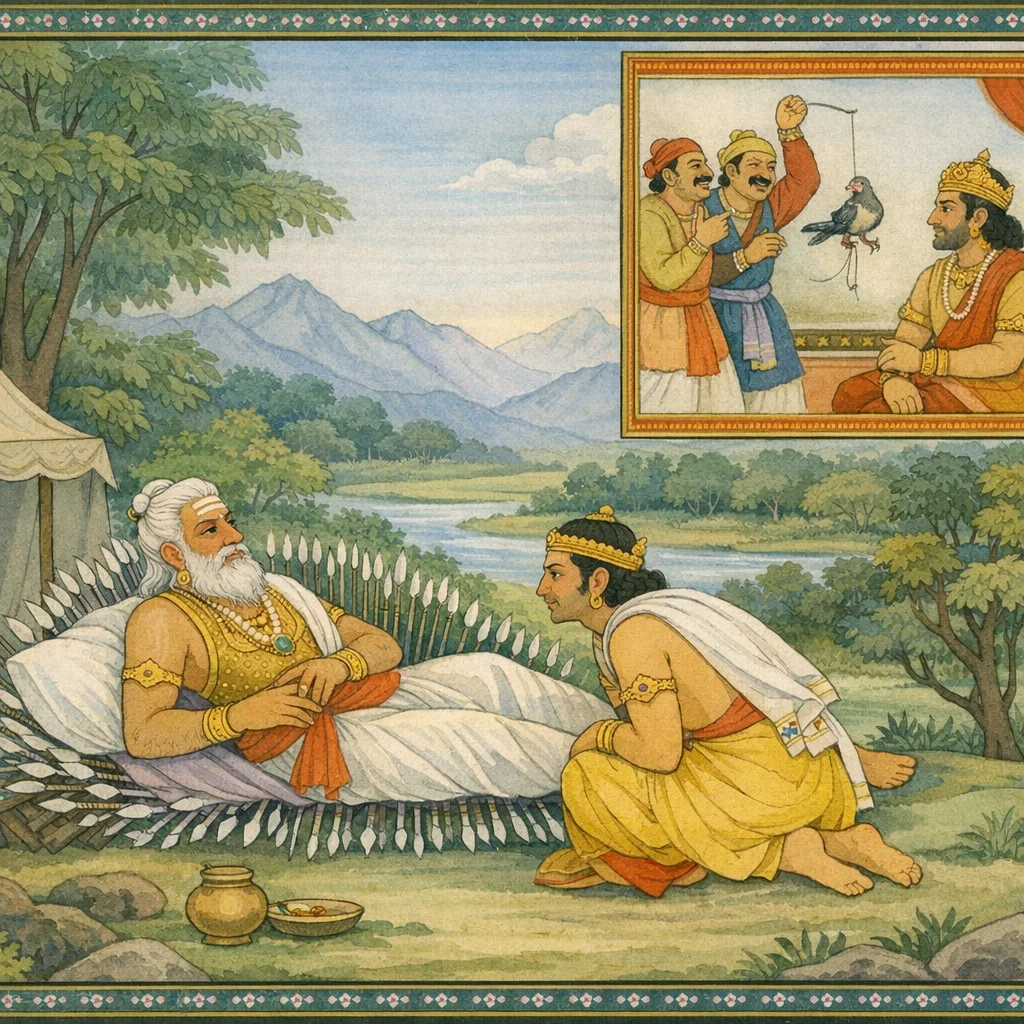
Chapter Arc: शरशय्या पर पड़े भीष्म के पास युधिष्ठिर का प्रश्न उठता है—‘राजाओं का परम धर्म’ जिसे धर्मवेत्ता सर्वोच्च कहते हैं, वह इतना भारी क्यों है, और उसे कैसे साधा जाए? → युधिष्ठिर आग्रह करते हैं कि राजधर्म समस्त जीव-जगत का आश्रय है; अतः उसका ‘विशेष’ वर्णन हो। भीष्म नियमपूर्वक एकाग्र होकर सुनने को कहते हैं और राजधर्म के व्यावहारिक संकट खोलते हैं—राजा के लिए पुरुषार्थ, सत्य, संयम और व्यसनों का त्याग अनिवार्य है; किंतु कोमलता/परिहासशीलता और ढील से राज्य-तंत्र में दोष पनपते हैं। → भीष्म चेताते हैं कि जब राजा मृदु, हर्षशील और अनुशासन-शिथिल होता है, तब अधिकारी/सेवक अधिकार से बाहर जाकर काम को निंदित करते, संतोष नहीं करते, राज-देय हरते, और राजा को ‘डोर से बँधी चिड़िया’ की तरह खेल का विषय बना लेते हैं—यही राजधर्म का कठोर सत्य है: शासन में दया के साथ दंड-नीति का संतुलन टूटते ही व्यवस्था भ्रष्ट हो जाती है। → भीष्म राजधर्म का सार स्थिर करते हैं—राजा को सत्यनिष्ठ, पुरुषार्थी, सतर्क, व्यसन-रहित और अनुशासन-प्रधान होना चाहिए; शासन में ‘संग’ (दोषपूर्ण आसक्ति/अनुचित मेल) से बचना और राज्य-यंत्रणा के सूक्ष्म संकेतों को पहचानना आवश्यक है। → भीष्म की चेतावनी आगे के लिए द्वार खोलती है—राजा को किन-किन उपायों से अमात्य-वर्ग, कर-व्यवस्था और दंड-नीति को शुद्ध रखना चाहिए, इसका विस्तृत विधान अभी शेष है।
Shlokas
Verse 1
अत-#-#क्त षट्पज्चाशत्तमो<5 ध्याय: युधिष्ठटिरके पूछनेपर भीष्मके द्वारा राजधर्मका वर्णन, राजाके लिये पुरुषार्थ और सत्यकी आवश्यकता, ब्राह्मणोंकी अदण्डनीयता तथा राजाकी परिहासशीलता और मृदुतासे प्रकट होनेवाले दोष वैशम्पायन उवाच प्रणिपत्य हृषीकेशमभिवाद्य पितामहम् । अनुमान्य गुरून् सर्वान् पर्यपृच्छद् युधिष्ठिर:,वैशम्पायनजी कहते हैं--राजन्! तदनन्तर भगवान् श्रीकृष्ण और भीष्मको प्रणाम करके युधिष्ठिरने समस्त गुरुजनोंकी अनुमति ले इस प्रकार प्रश्न किया इति श्रीमहाभारते शान्तिपर्वणि राजधर्मानुशासनपर्वणि षट्पञ्चाशत्तमो<5 ध्याय: ।। ५६ || इस प्रकार श्रीमह्या भारत शान्तिपर्वके अन्तर्गत राजधर्मानुशासनपर्वनें छप्पनवाँ अध्याय पूरा हुआ ॥/ १६ ॥। हि 7 छा आप >फअटार:-ह > व्यसन अठारह प्रकारके बताये गये हैं। इनमें दस तो कामज हैं, और आठ क्रोधज। शिकार, जूआ, दिनमें सोना, परनिन्दा, स्त्रीसेवन, मद, वाद्य, गीत, नृत्य और मदिरापान--ये दस कामज व्यसन बताये गये हैं। चुगली, साहस, द्रोह, ईर्ष्या, असूया, अर्थदूषण, वाणीकी कठोरता और दण्डकी कठोरता--ये आठ क्रोधज व्यसन कहे गये हैं। सप्तपञ्चाशत्तमोड ध्याय: राजाके धर्मानुकूल नीतिपूर्ण बर्तावका वर्णन भीष्म उवाच नित्योद्युक्तेन वै राज्ञा भवितव्यं युधिष्ठिर । प्रशस्यते न राजा हि नारीवोद्यमवर्जित:
Vaiśampāyana said: Having bowed down to Hṛṣīkeśa (Kṛṣṇa) and having paid homage to the Grandsire Bhīṣma, Yudhiṣṭhira—after obtaining the assent of all the elders and teachers present—then put forward his question. The scene frames the coming instruction on royal duty as a disciplined inquiry made with reverence, consent, and ethical seriousness.
Verse 2
युधिषछिर उवाच राज्ञां वै परमो धर्म इति धर्मविदो विदु: । महान्तमेतं भारं च मन्ये तद् ब्रूहि पार्थिव,युधिष्ठिर बोले--पितामह! धर्मज्ञ विद्वानोंकी यह मान्यता है कि राजाओंका धर्म श्रेष्ठ है। मैं इसे बहुत बड़ा भार मानता हूँ, अतः भूपाल! आप मुझे राजधर्मका उपदेश कीजिये
Yudhishthira said: “Grandsire, the wise who know dharma hold that the dharma of kings is supreme. I deem it a very great burden; therefore, O ruler, instruct me in rājadharma.”
Verse 3
राजधर्मान् विशेषेण कथयस्व पितामह | सर्वस्य जीवलोकस्य राजधर्म: परायणम्,पितामह! राजधर्म सम्पूर्ण जीवजगत्का परम आश्रय है; अतः आप राजधर्मोंका ही विशेषरूपसे वर्णन कीजिये
Yudhiṣṭhira said: “O Grandsire, describe to me in particular the duties of kingship. For the dharma of the king is the supreme refuge of the entire world of living beings, O Pitāmaha.”
Verse 4
त्रिवर्गों हि समासक्तो राजधर्मेषु कौरव । मोक्षधर्मश्ष विस्पष्ट: सकलो<त्र समाहित:,कुरुनन्दन! राजाके धर्मोमें धर्म, अर्थ और काम तीनोंका समावेश है, और यह स्पष्ट है कि सम्पूर्ण मोक्षधर्म भी राजधर्ममें निहित है
Yudhiṣṭhira said: “O Kaurava, within the duties of kingship the three aims of life—dharma, artha, and kāma—are all bound together and actively engaged. And it is also evident that the entire teaching on liberation (mokṣa-dharma) is, in its fullness, contained here within rāja-dharma.”
Verse 5
यथा हि रश्मयो<श्वस्य द्विरदस्याड्कुशो यथा । नरेन्द्रधर्मो लोकस्य तथा प्रग्रहणं स्मृतम्,जैसे घोड़ोंको काबूमें रखनेके लिये लगाम और हाथीको वशमें करनेके लिये अकुंश है, उसी प्रकार समस्त संसारको मर्यादाके भीतर रखनेके लिये राजधर्म आवश्यक है; वह उसके लिये प्रग्रह अर्थात् उसको नियन्त्रित करनेमें समर्थ माना गया है
Just as reins restrain a horse and a goad controls an elephant, so the dharma of a king is remembered as the bridle of the world—capable of holding society within proper bounds and preventing it from running into disorder.
Verse 6
तत्र चेत् सम्प्रमुह्देत धर्मे राजर्षिसेविते । लोकस्य संस्था न भवेत् सर्व च व्याकुलीभवेत्,प्राचीन राजर्षियोंद्वारा सेवित उस राजधर्ममें यदि राजा मोहवश प्रमाद कर बैठे तो संसारकी व्यवस्था ही बिगड़ जाय और सब लोग दुखी हो जायेँ
If, in that royal dharma upheld and practiced by the ancient royal sages, a king were to fall into delusion and negligence, then the very order of the world would fail, and everyone would be thrown into distress and confusion.
Verse 7
उदयन् हि यथा सूर्यो नाशयत्यशुभं तम: । राजधर्मास्तथालोक्यां निक्षिपन्त्यशुभां गतिम्,जैसे सूर्यदेव उदय होते ही घोर अन्धकारका नाश कर देते हैं, उसी प्रकार राजधर्म मनुष्योंक अशुभ आचरणोंका, जो उन्हें पुण्य लोकोंसे वज्चित कर देते हैं, निवारण करता है
Yudhiṣṭhira said: “Just as the sun, upon rising, destroys the inauspicious darkness, so too the duties of kingship, when rightly applied in the world, cast away the evil course of conduct that deprives people of meritorious realms.”
Verse 8
तदग्रे राजधर्मान् हि मदर्थे त्वं पितामह । प्रत्रूहि भरतश्रेष्ठ त्वं हि धर्मभूतां वर:,अतः भरतश्रेष्ठ पितामह! आप सबसे पहले मेरे लिये राजधर्मोका ही वर्णन कीजिये; क्योंकि आप धर्मात्माओंमें श्रेष्ठ हैं
Yudhiṣṭhira said: “Therefore, O Grandfather, first of all tell me—on my behalf—about the duties of kingship. O best of the Bharatas, instruct me; for among the righteous you are the foremost.”
Verse 9
आगमगमश्न परस्त्वत्त: सर्वेषां न: परंतप । भवन्तं हि परं बुद्धौ वासुदेवो5भिमन्यते,परंतप पितामह! हम सब लोगोंको आपसे ही शास्त्रोंके उत्तम सिद्धान्तका ज्ञान हो सकता है। भगवान् श्रीकृष्ण भी आपको ही बुद्धिमें सर्वश्रेष्ठ मानते हैं
Yudhiṣṭhira said: “The highest understanding of the scriptures and their authoritative traditions can come to all of us only from you, O scorcher of foes. For even Vāsudeva regards you as the foremost in wisdom, O Pitāmaha.”
Verse 10
भीष्म उवाच नमो धर्माय महते नम: कृष्णाय वेधसे । ब्राह्मुणेभ्यो नमस्कृत्य धर्मान् वक्ष्यामि शाश्वतान्,भीष्मजीने कहा--महान् धर्मको नमस्कार है। विश्वविधाता भगवान् श्रीकृष्णको नमस्कार है। अब मैं ब्राह्मणोंको नमस्कार करके सनातन धर्मोंका वर्णन आरम्भ करूँगा
Bhīṣma said: “Homage to mighty Dharma; homage to Kṛṣṇa, the Creator and Ordainer of the world. Now, having bowed to the Brahmins, I shall begin to set forth the eternal laws of righteousness.”
Verse 11
शृणु कार्त्स्न्येन मत्तस्त्वं राजधर्मान् युधिष्ठिर । निरुच्यमानान् नियतो यच्चान्यदपि वाउ्छसि,युधिष्ठिर! अब तुम नियमपूर्वक एकाग्र हो मुझसे सम्पूर्णरूपसे राजधर्मोंका वर्णन सुनो, तथा और भी जो कुछ सुनना चाहते हो, उसका श्रवण करो
Bhīṣma said: “Yudhiṣṭhira, listen to me with full attention as I set forth, in their entirety, the duties of kingship. Be disciplined and focused; and whatever else you still wish to hear, listen to that as well.”
Verse 12
आदावेव कुरुश्रेष्ठ राज्ञा रञज्जनकाम्यया । देवतानां द्विजानां च वर्तितव्यं यथाविधि,कुरुश्रेष्ठ॒ राजाको सबसे पहले प्रजाका रञ्जन अर्थात् उसे प्रसन्न रखनेकी इच्छासे देवताओं और ब्राह्मणोंके प्रति शास्त्रोक्त विधिके अनुसार बर्ताव करना चाहिये (अर्थात् वह देवताओंका विधिपूर्वक पूजन तथा ब्राह्मणोंका आदर-सत्कार करे)
Bhīṣma said: “O best of the Kurus, a king, from the very outset and with the desire to delight and win the hearts of his subjects, should conduct himself in the scripturally prescribed manner toward the gods and toward the twice-born—performing due worship of the deities and showing proper honor and support to the Brahmins.”
Verse 13
देवतान्यर्चयित्वा हि ब्राह्मणांश्व कुरूद्वह आनृण्यं याति धर्मस्य लोकेन च समर्च्यते,कुरुकुलभूषण! देवताओं और ब्राह्मणोंका पूजन करके राजा धर्मके ऋणसे मुक्त होता है और सारा जगत् उसका सम्मान करता है
Bhishma said: “O best of the Kurus, by duly worshipping the gods and honoring the Brahmanas, a king becomes free from the debt he owes to dharma; and, in turn, the whole world accords him respect.”
Verse 14
उत्थानेन सदा पुत्र प्रयतेथा युधिष्ठिर न हात्थानमृते दैवं राज्ञामर्थ प्रसादयेत्,बेटा युधिष्ठिर! तुम सदा पुरुषार्थके लिये प्रयत्नशील रहना। पुरुषार्थंके बिना केवल प्रारब्ध राजाओंका प्रयोजन नहीं सिद्ध कर सकता
Bhishma said: “My son Yudhishthira, always strive through energetic effort. Without personal exertion, mere fate cannot bring a king’s aims to fulfillment.”
Verse 15
साधारण द्वयं होतद् दैवमुत्थानमेव च । पौरुषं हि परं मन्ये देवं निश्चितमुच्यते,यद्यपि कार्यकी सिद्धिमें प्रारब्ध और पुरुषार्थ--ये दोनों साधारण कारण माने गये हैं, तथापि मैं पुरुषार्थको ही प्रधान मानता हूँ। प्रारब्ध तो पहलेसे ही निश्चित बताया गया है
Bhishma said: “In the accomplishment of any undertaking, two factors are commonly acknowledged as causes—destiny and personal effort. Yet I regard human effort as the higher principle; for ‘destiny’ is spoken of as something already fixed beforehand.”
Verse 16
विपन्ने च समारम्भे संतापं मा सम वै कृथा: । घटस्वैव सदा55त्मानं राज्ञामेष परो नय:,अतः यदि आरम्भ किया हुआ कार्य पूरा न हो सके अथवा उसमें बाधा पड़ जाय तो इसके लिये तुम्हें अपने मनमें दुःख नहीं मानना चाहिये। तुम सदा अपने आपको पुरुषार्थमें ही लगाये रखो। यही राजाओंकी सर्वोत्तम नीति है
Bhishma said: “If an undertaking fails or meets with obstruction, do not give way to grief. Keep yourself continually engaged in resolute effort. This, for kings, is the highest principle of statecraft.”
Verse 17
न हि सत्यादृते किंचिद् राज्ञां वै सिद्धिकारकम् | सत्ये हि राजा निरत: प्रेत्य चेह च नन्दति,सत्यके सिवा दूसरी कोई वस्तु राजाओंके लिये सिद्धिकारक नहीं है। सत्यपरायण राजा इहलोक और परलोकमें भी सुख पाता है
Bhishma said: “For kings, nothing brings true accomplishment apart from truth. A ruler devoted to truth rejoices both here in this world and after death.”
Verse 18
ऋषीणामपि राजेन्द्र सत्यमेव परं धनम् । तथा राज्ञां परं सत्यान्नान्यद् विश्वासकारणम्,राजेन्द्र! ऋषियोंके लिये भी सत्य ही परम धन है। इसी प्रकार राजाओंके लिये सत्यसे बढ़कर दूसरा कोई ऐसा साधन नहीं है, जो प्रजावर्गमें उसके प्रति विश्वास उत्पन्न करा सके
O king of kings, even for the rishis truth alone is the highest treasure. So too for kings there is nothing beyond truth; no other means can awaken the people’s trust in a ruler, O king.
Verse 19
गुणवान् शीलवान् दान्तो मृदुर्धर्म्यो जितेन्द्रिय: । सुदर्श: स्थूललक्ष्यश्न न भ्रश्येत सदा श्रिय:,जो राजा गुणवान, शीलवान्ू, मन और इन्द्रियोंको संयममें रखनेवाला, कोमलस्वभाव, धर्मपरायण, जितेन्द्रिय, देखनेमें प्रसन्नमुख और बहुत देनेवाला उदारचित्त है, वह कभी राजलक्ष्मीसे भ्रष्ट नहीं होता
Bhīṣma said: A king endowed with virtue and good conduct—self-restrained, gentle by nature, devoted to dharma, and master of his senses—pleasing to behold and marked with broad, auspicious signs, never falls away from royal prosperity.
Verse 20
आर्जवं सर्वकार्येषु श्रयेथा: कुरुनन्दन । पुनर्नयविचारेण त्रयीसंवरणेन च
Bhīṣma said: “O delight of the Kurus, in all your undertakings take refuge in straightforwardness; and again, govern yourself through careful reflection on right policy and through restraint guided by the threefold Vedic discipline.”
Verse 21
कुरुनन्दन! तुम सभी कार्योंमें सरलता एवं कोमलताका अवलम्बन करना, परंतु नीतिशास्त्रकी आलोचनासे यह ज्ञात होता है कि अपने छिद्र, अपनी मन्त्रणा तथा अपने कार्य-यकौशल--इन तीन बातोंको गुप्त रखनेमें सरलताका अवलम्बन करना उचित नहीं है ।। मृदुर्हि राजा सततं लड्घयो भवति सर्वशः । तीक्ष्णाच्चोद्विजते लोकस्तस्मादुभयमाश्रय,जो राजा सदा सब प्रकारसे कोमलतापूर्ण बर्ताव करने वाला ही होता है, उसकी आज्ञाका लोग उल्लघंन कर जाते हैं, और केवल कठोर बर्ताव करनेसे भी सब लोग उद्विग्न हो उठते हैं; अतः तुम आवश्यकतानुसार कठोरता और कोमलता दोनोंका अवलम्बन करो
Bhīṣma said: “O descendant of Kuru, in all undertakings you should generally rely on straightforwardness and gentleness. Yet political wisdom shows it is not proper to be ‘simple’ in keeping three things concealed—your own vulnerabilities, your counsel, and your practical skill in executing plans. For a king who is always mild is liable to be disregarded and his commands transgressed; but if he is only harsh, the people become alarmed and resentful. Therefore, adopt both—gentleness and severity—according to what the situation requires.”
Verse 22
अदण्ड्याश्रैव ते पुत्र विप्राश्न ददतां वर । भूतमेतत् परं लोके ब्राह्मणो नाम पाण्डव,दाताओंमें श्रेष्ठ बेटा पाण्डुकुमार युधिष्छिर! तुम्हें ब्राह्मगोंको कभी दण्ड नहीं देना चाहिये; क्योंकि संसारमें ब्राह्मण सर्वश्रेष्ठ प्राणी है
Bhīṣma said: “O son, best among givers, you must never punish Brahmins. This is the highest principle in the world, O Pāṇḍava: the Brahmin is regarded as the foremost being.”
Verse 23
मनुना चैव राजेन्द्र गीतौ श्लोकौ महात्मना । धर्मेषु स्वेषु कौरव्य हृदि तौ कर्तुमहसि,राजेन्द्र! कुरुनन्दन! महात्मा मनुने अपने धर्मशास्त्रोंमें दो श"्लोकोंका गान किया है, तुम उन दोनोंको अपने हृदयमें धारण करो
Bhishma said: “O best of kings, the great-souled Manu has sung two verses concerning one’s own duties. O Kaurava, take those two verses into your heart—make them your inner guide in matters of dharma.”
Verse 24
अद्भयोउन्नि््रह्यृत: क्षत्रमश्मनो लोहमुत्थितम् । तेषां सर्वत्रगं तेज: स्वासु योनिषु शाम्यति
Bhishma said: “From the waters, royal power—the Kshatriya principle of rule and force—is drawn forth; from stone, iron is produced. Yet the energy that seems to pervade everywhere in these things ultimately becomes quiet and spent within its own proper source.”
Verse 25
“अग्नि जलसे, क्षत्रिय ब्राह्मणसे और लोहा पत्थरसे प्रकट हुआ है। इनका तेज अन्य सब स्थानोंपर तो अपना प्रभाव दिखाता है; परंतु अपनेको उत्पन्न करनेवाले कारणसे टक्कर लेनेपर स्वयं ही शान्त हो जाता है ।। अयो हन्ति यदाश्मानमग्निना वारि हन्यते । ब्रह्म च क्षत्रियो द्वेष्टि तदा सीदन्ति ते त्रय:,“जब लोहा पत्थरपर चोट करता है, आग जलको नष्ट करने लगती है और क्षत्रिय ब्राह्मणसे द्वेष करने लगता है, तब ये तीनों ही दुःख उठाते हैं। अर्थात् ये दुर्बल हो जाते हैं
Bhishma said: “Fire is manifest in relation to water, the Kshatriya in relation to the Brahmin, and iron in relation to stone. Each shows its power against many things; yet when it contends with the very source or counter-principle from which it is manifested, its force is checked and it becomes quiet. Thus, when iron strikes stone, when fire is met by water, and when a Kshatriya turns to hatred of a Brahmin, all three suffer decline—each is weakened by that hostile collision.”
Verse 26
एवं कृत्वा महाराज नमस्या एव ते द्विजा: । भीम ब्रह्म द्विजश्रेष्ठा धारयन्ति समर्चिता:,महाराज! ऐसा सोचकर तुम्हें ब्राह्मणोंको सदा नमस्कार ही करना चाहिये; क्योंकि वे श्रेष्ठ ब्राह्मण पूजित होनेपर भूतलके ब्रह्मको अर्थात् वेदको धारण करते हैं
Bhishma said: “Therefore, O great king, you should indeed always offer reverent salutations to the twice-born (brahmins). For those foremost among brahmins, when duly honored, uphold the ‘Brahman of the earth’—that is, the Veda—thereby sustaining the moral and spiritual order.”
Verse 27
एवं चैव नरव्यात्र लोकत्रयविघातका: । निग्राह्मा एव सततं बाहुभ्यां ये स्युरीदूशा:,पुरुषसिंह! यद्यपि ऐसी बात है, तथापि यदि ब्राह्मण भी तीनों लोकोंका विनाश करनेके लिये उद्यत हो जायेँ तो ऐसे लोगोंको अपने बाहु-बलसे परास्त करके सदा नियमन्त्रणमें ही रखना चाहिये
Bhishma said: “So too, O tiger among men: even if a brāhmaṇa should rise up intent on the ruin of the three worlds, such a person—if of that kind—must be subdued by the strength of one’s arms and kept continually under restraint.”
Verse 28
श्लोकौ चोशनसा गीतौ पुरा तात महर्षिणा । तौ निबोध महाराज त्वमेकाग्रमना नृप,तात! नरेश्वर! इस विषयमें दो श्लोक प्रसिद्ध हैं, जिन्हें पूर्वकालमें महर्षि शुक्राचार्यने गाया था। महाराज! तुम एकाग्रचित्त होकर उन दोनों श्लोकोंको सुनो
Bhīṣma said: “Dear child, long ago the great sage Uśanas (Śukrācārya) sang two well-known verses on this matter. O great king, ruler of men—listen to those two verses with a mind gathered into single-pointed attention.”
Verse 29
उद्यम्य शस्त्रमायान्तमपि वेदान्तगं रणे | निगृह्नीयात् स्वधर्मेण धमपिक्षी नराधिप:,*वेदान्तका पारड्त विद्वान ब्राह्मण ही क्यों न हो; यदि वह शस्त्र उठाकर युद्धमें सामना करनेके लिये आ रहा हो तो धर्मपालनकी इच्छा रखनेवाले राजाको अपने धर्मके अनुसार ही युद्ध करके उसे कैद कर लेना चाहिये
Bhīṣma said: “Even if a man is learned in Vedānta, if he comes forward in battle having raised a weapon, a king who is intent on upholding dharma should, in accordance with his own royal duty, fight and restrain him—taking him into custody.”
Verse 30
विनश्यमानं धर्म हि योउभिरक्षेत् स धर्मवित् । न तेन धर्महा स स्यान्मन्युस्तन्मन्युमृच्छति,“जो राजा उसके द्वारा नष्ट होते हुए धर्मकी रक्षा करता है, वह धर्मज्ञ है। अतः उसे मारनेसे वह धर्मका नाशक नहीं माना जाता। वास्तवमें क्रोध ही उनके क्रोधसे टक्कर लेता है"
“He who, by his own strength, protects dharma when it is being destroyed is a knower of dharma. Therefore, in slaying him one is not deemed a destroyer of dharma; in truth, it is wrath alone that meets wrath.”
Verse 31
एवं चैव नरश्रेष्ठ रक्ष्या एव द्विजातय: । सापराधानपि हि तान् विषयान्ते समुत्सूजेत्,नरश्रेष्ठ॒ यह सब होनेपर भी ब्राह्मणोंकी तो सदा रक्षा ही करनी चाहिये; यदि उनके द्वारा अपराध बन गये हों तो उन्हें प्राणदण्ड न देकर अपने राज्यकी सीमासे बाहर करके छोड़ देना चाहिये
Bhīṣma said: “Even so, O best of men, the twice-born must always be protected. Even if they have committed offenses, one should not inflict capital punishment upon them; rather, one should expel them beyond the borders of one’s realm and let them go.”
Verse 32
अभिशस्तमपि होषां कृपायीत विशाम्पते । ब्रह्मघ्ने गुरुतल्ये च भ्रूणहत्ये तथैव च,प्रजानाथ! इनमें कोई कलड्कित हो तो उसपर भी कृपा ही करनी चाहिये। ब्रह्महत्या, गुरुपत्नीगमन, भ्रूणहत्या तथा राजद्रोहका अपराध होनेपर भी ब्राह्मणको देशसे निकाल देनेका ही विधान है--उसे शारीरिक दण्ड कभी नहीं देना चाहिये
Bhīṣma said: “O lord of the people, even one who is publicly accused and disgraced should be treated with compassion. Even in cases such as the slaying of a Brahmin, violation of the teacher’s bed (adultery with the guru’s wife), and the killing of an embryo, the ruler should not rush to bodily punishment; the ethical thrust here is restraint and mercy in royal justice, especially regarding Brahmins, where expulsion is indicated rather than physical harm.”
Verse 33
राजद्विषप्टे च विप्रस्य विषयान्ते विसर्जनम् | विधीयते न शारीरं दण्डमेषां कदाचन,प्रजानाथ! इनमें कोई कलड्कित हो तो उसपर भी कृपा ही करनी चाहिये। ब्रह्महत्या, गुरुपत्नीगमन, भ्रूणहत्या तथा राजद्रोहका अपराध होनेपर भी ब्राह्मणको देशसे निकाल देनेका ही विधान है--उसे शारीरिक दण्ड कभी नहीं देना चाहिये
Bhishma said: Even when a Brahmin is found guilty of hostility to the king, the prescribed penalty is banishment to the edge of the realm. For such persons, O lord of the people, corporal punishment is never to be inflicted. The dharmic intent is restraint in royal justice: even grave transgressions by a Brahmin are to be met with expulsion rather than bodily harm, safeguarding his person and reminding the king to temper punishment with mercy.
Verse 34
दयिताश्च नरास्ते स्युर्भक्तिमन्तो द्विजेषु ये । न कोश: परमोडन््यो<स्ति राज्ञां पुरुषसंचयात्,जो मनुष्य ब्राह्मणोंके प्रति भक्ति रखते हैं, वे सबके प्रिय होते हैं। राजाओंके लिये ब्राह्मणके भक्तोंका संग्रह करनेसे बढ़कर दूसरा कोई कोश नहीं है
Bhishma said: “Those men who are devoted to the twice-born (Brahmins) become dear to all. For kings, there is no treasury higher than the gathering and retention of such worthy persons—for the true wealth of a ruler lies in a loyal, dharma-aligned body of people rather than in mere stored riches.”
Verse 35
दुर्गेषु च महाराज षट्सु ये शास्त्रनिश्चिता: । सर्वदुर्गेषु मन्यन्ते नरदुर्ग सुदुस्तरम्,महाराज! मरु (जलरहित भूमि), जल, पृथ्वी, वन, पर्वत और मनुष्य--इन छः प्रकारके दुर्गोंमें मानवदुर्ग ही प्रधान है। शास्त्रोंके सिद्धान्तको जाननेवाले विद्वान् उक्त सभी दुर्गोमें मानव दुर्गको ही अत्यन्त दुर्लघ्य मानते हैं
Bhishma said: “O great king, those who are firmly grounded in the conclusions of the śāstras speak of six kinds of fortresses. Among all fortresses, they regard the ‘human fortress’—the defense constituted by men—as the most difficult to overcome.”
Verse 36
तस्मान्नित्यं दया कार्या चातुर्वण्यें विपश्चिता | धर्मात्मा सत्यवाक् चैव राजा रञ्जयति प्रजा:,अतः विद्वान राजाको चारों वर्णोॉपर सदा दया करनी चाहिये, धर्मात्मा और सत्यवादी नरेश ही प्रजाको प्रसन्न रख पाता है
Therefore, the wise king should always practice compassion toward the four social orders. For it is the righteous and truth-speaking ruler alone who can keep the people content and well-disposed.
Verse 37
न च क्षान्तेन ते नित्यं भाव्यं पुत्र समन््ततः । अधर्मो हि मृदू राजा क्षमावानिव कुज्जर:
Bhishma said: “And you should not, my son, conduct yourself at all times and in every situation only with forbearance. A king who is merely soft becomes a vehicle for adharma—like a tame, compliant elephant that can be driven anywhere.”
Verse 38
बेटा! तुम्हें सदा और सब ओर क्षमाशील ही नहीं बने रहना चाहिये; क्योंकि क्षमाशील हाथीके समान कोमल स्वभाववाला राजा दूसरोंको भयभीत न कर सकनेके कारण अधर्मके प्रसारमें ही सहायक होता है ।। बाह्स्पत्ये च शास्त्रे च श्लोको निगदित: पुरा । अस्मिन्नर्थे महाराज तन्मे निगदत: शृणु,महाराज! इसी बातके समर्थनमें बाह्स्पत्य-शास्त्रका एक प्राचीन श्लोक पढ़ा जाता है। मैं उसे बता रहा हूँ, सुनो
Bhishma said: “My son, you should not remain forgiving at all times and in every situation. For a king who is gentle by nature—like a forgiving elephant—cannot inspire fear in wrongdoers; and because he cannot restrain others, he ends up aiding the spread of unrighteousness. Indeed, on this very point an ancient verse is recited in the Bārhaspatya treatise. O great king, listen as I state it.”
Verse 39
क्षममाण्ं नृपं नित्यं नीच: परिभवेज्जन: । हस्तियन्ता गजस्यैव शिर एवारुरुक्षति,“नीच मनुष्य क्षमाशील राजाका सदा उसी प्रकार तिरस्कार करते रहते हैं, जैसे हाथीका महावत उसके सिरपर ही चढ़े रहना चाहता है”
Bhīṣma said: “When a king is continually forbearing, base people repeatedly insult and overstep him. Just as a mahout, in handling an elephant, keeps trying to climb and sit upon its head, so do the low-minded keep mounting upon the patient ruler.”
Verse 40
तस्मान्नैव मृदुर्नित्यं तीक्ष्णो नैव भवेन्नूप: । वासन्तार्क इव श्रीमान् न शीतो न च घर्मद:,जैसे वसन््त ऋतुका तेजस्वी सूर्य न तो अधिक ठंडक पहुँचाता है और न कड़ी धूप ही करता है, उसी प्रकार राजाको भी न तो बहुत कोमल होना चाहिये और न अधिक कठोर ही
Therefore, O king, a ruler should not be perpetually soft, nor should he become relentlessly harsh. Like the radiant sun of the spring season—neither excessively chilling nor scorching—so too should a king maintain a balanced temper, firm without cruelty and gentle without weakness.
Verse 41
प्रत्यक्षेणानुमानेन तथौपम्यागमैरपि । परीक्ष्यास्ते महाराज स्वे परे चैव नित्यश:,महाराज! प्रत्यक्ष, अनुमान, उपमान और अताम--इन चारों प्रमाणोंके द्वारा सदा अपने-परायेकी पहचान करते रहना चाहिये
Bhīṣma said: “O great king, you should constantly examine and discern what belongs to your own side and what belongs to others—using direct perception, inference, comparison, and the testimony of authoritative tradition. By these means, keep your judgment steady and your conduct aligned with dharma.”
Verse 42
व्यसनानि च सर्वाणि त्यजेथा भूरिदक्षिण । न चैव न प्रयुड्जीत सड़ूं तु परिवर्जयेत्,प्रचुर दक्षिणा देनेवाले नरेश्वर! तुम्हें सभी प्रकारके व्यसनोंको- त्याग देना चाहिये; परंतु साहस आदिका भी सर्वथा प्रयोग न किया जाय, ऐसी बात नहीं है (क्योंकि शत्रुविजय आदिके लिये उसकी आवश्यकता है): अत: सभी प्रकारके व्यसनोंकी आसक्तिका परित्याग करना चाहिये
Bhīṣma said: “O king of abundant generosity, you should abandon every kind of vice and ruinous addiction. Yet it is not that one should never employ bold effort at all—for courage and initiative are needed for aims such as overcoming enemies. Therefore, what must be renounced is attachment to vices in every form.”
Verse 43
लोकस्य व्यसनी नित्यं परिभूतो भवत्युत | उद्वेजयति लोकं च यो5तिद्वेषी महीपति:,व्यसनोंमें आसक्त हुआ राजा सदा सब लोगोंके अनादरका पात्र होता है और जो भूपाल सबके प्रति अत्यन्त द्वेष रखता है, वह सब लोगोंको उद्देगयुक्त कर देता है
Bhishma said: A king who is perpetually addicted to vices becomes an object of contempt among his people. And the ruler who harbors excessive hatred toward others throws the whole populace into anxiety and agitation.
Verse 44
भवितव्यं सदा राज्ञा गर्भिणीसहधर्मिणा । कारणं च महाराज शृणु येनेदमिष्यते,महाराज! राजाका प्रजाके साथ गर्भिणी स्त्रीका-सा बर्ताव होना चाहिये। किस कारणसे ऐसा होना उचित है, यह बताता हूँ, सुनो
Bhishma said: “O great king, a ruler should always conduct himself toward his subjects as one would toward a pregnant wife—protective, gentle, and ever mindful of their welfare. Now hear the reason, O Maharaja, by which this principle is rightly approved.”
Verse 45
यथा हि गर्भिणी हित्वा स्वं प्रियं मनसो5नुगम् । गर्भस्य हितमाधत्ते तथा राज्ञाप्पसंशयम्,जैसे गर्भवती स्त्री अपने मनको अच्छे लगने-वाले प्रिय भोजन आदिका भी परित्याग करके केवल गर्भस्थ बालकके हितका ध्यान रखती है, उसी प्रकार धर्मात्मा राजाको भी चाहिये कि नि:संदेह वैसा ही बर्ताव करे। कुरुश्रेष्ठ) राजा अपनेको प्रिय लगनेवाले विषयका परित्याग करके जिसमें सब लोगोंका हित हो वही कार्य करे
Bhishma said: “Just as a pregnant woman, setting aside even those foods and pleasures that her mind finds dear, attends instead to what benefits the child in her womb, so too should a king—without hesitation—set aside what is personally pleasing and act only for the welfare of all.”
Verse 46
वर्तितव्यं कुरुश्रेष्ठ सदा धर्मनिवर्तिना । स्वं प्रियं तु परित्यज्य यद् यलल्लोकहितं भवेत्,जैसे गर्भवती स्त्री अपने मनको अच्छे लगने-वाले प्रिय भोजन आदिका भी परित्याग करके केवल गर्भस्थ बालकके हितका ध्यान रखती है, उसी प्रकार धर्मात्मा राजाको भी चाहिये कि नि:संदेह वैसा ही बर्ताव करे। कुरुश्रेष्ठ) राजा अपनेको प्रिय लगनेवाले विषयका परित्याग करके जिसमें सब लोगोंका हित हो वही कार्य करे
Bhishma said: O best of the Kurus, one who is guided by dharma should always conduct himself in this way: setting aside what is personally dear, he should do whatever brings about the welfare of the people. As a pregnant woman gives up even foods and pleasures she likes, keeping in view only the good of the child in her womb, so too should a righteous king, without doubt, renounce his own preferences and act solely for the common good.
Verse 47
न संत्याज्यं च ते धैर्य कदाचिदपि पाण्डव । धीरस्य स्पष्टदण्डस्य न भयं विद्यते क्वचित्,पाण्डुनन्दन! तुम्हें कभी भी धैर्यका त्याग नहीं करना चाहिये। जो अपराधियोंको दण्ड देनेमें संकोच नहीं करता और सदा धैर्य रखता है, उस राजाको कभी भय नहीं होता
Bhishma said: “O Pandava, you must never abandon your steadfastness. For a ruler who is resolute and who administers punishment openly and without hesitation to wrongdoers, fear finds no place at any time.”
Verse 48
परिहासश्च भृत्यैस्ते नात्यर्थ वदतां वर । कर्तव्यो राजशार्दूल दोषमत्र हि मे शृूणु,वक्ताओंमें श्रेष्ठ राजसिंह! तुम्हें सेवकोंके साथ अधिक हँसी-मजाक नहीं करना चाहिये; इसमें जो दोष है, वह मुझसे सुनो
Bhīṣma said: “O best of speakers, O tiger among kings, you should not indulge in excessive joking and banter with your servants. Hear from me the fault that lies in such familiarity.”
Verse 49
अवमन्यन्ति भर्तारें संघर्षादुपजीविन: । स्वे स्थाने न च तिष्ठन्ति लंघयन्ति च तद्गबच:,राजासे जीविका चलानेवाले सेवक अधिक मुँहलगे हो जानेपर मालिकका अपमान कर बैठते हैं। वे अपनी मर्यादामें स्थिर नहीं रहते और स्वामीकी आज्ञाका उल्लंघन करने लगते हैं
Bhīṣma said: “Those who live by serving another, when emboldened by familiarity and friction, come to slight their master. They do not remain within their proper station, and they begin to transgress the lord’s commands.”
Verse 50
प्रेष्प्माणा विकल्पन्ते गुह्मां चाप्पनुयुञ्जते । अयाच्य॑ चैव याचन्ते भोज्यान्याहारयन्ति च,वे जब किसी कार्यके लिये भेजे जाते हैं तो उसकी सिद्धिमें संदेह उत्पन्न कर देते हैं। राजाकी गोपनीय त्रुटियोंको भी सबके सामने ला देते हैं। जो वस्तु नहीं माँगनी चाहिये उसे भी माँग बैठते हैं, तथा राजाके लिये रक्खे हुए भोज्य पदार्थोंको स्वयं खा लेते हैं
Bhīṣma said: “When such men are sent to accomplish a task, they throw its success into doubt by raising needless hesitations. They pry into what should remain secret and expose the king’s hidden faults. They ask for what ought not to be asked, and even consume the food set aside for the king.”
Verse 51
क्रुश्यन्ति परिदीप्यन्ति भूमिपायाधितिष्ठते । उत्कोचैर्वज्चनाभि श्र कार्याण्यनुविहन्ति च,राज्यके अधिपति भूपालको कोसते हैं, उनके प्रति क्रोधसे तमतमा उठते हैं; घूस लेकर और धोखा देकर राजाके कार्योमें विघ्न डालते हैं
Bhīṣma said: “They cry out and flare up in anger against the king who rules the land; and, taking bribes and resorting to deceit, they obstruct the king’s affairs.”
Verse 52
जर्जर चास्य विषयं कुर्वन्ति प्रतिरूपकै: । स्त्रीरक्षिभिश्व सज्जन्ते तुल्यवेषा भवन्ति च,वे जाली अज्ञापत्र जारी करके राजाके राज्यको जर्जर कर देते हैं। रनवासके रक्षकोंसे मिल जाते हैं अथवा उनके समान ही वेशभूषा धारण करके वहाँ घूमते फिरते हैं
Bhīṣma said: “By means of impostors and look‑alikes they undermine and weaken the king’s realm. They also form connections with the guards of the women’s quarters, or else disguise themselves in similar attire and move about there.”
Verse 53
वान्तं निष्ठीवनं चैव कुर्वते चास्य संनिधौ । निर्लज्जा राजशार्दूल व्याहरन्ति च तद्बच:,राजाके पास ही मुँह बाकर जँभाई लेते और थूकते हैं, नृपश्रेष्ठ! वे मुँहलगे नौकर लाज छोड़कर मनमानी बातें बोलते हैं
Bhīṣma said: “In the king’s very presence they even yawn with open mouth and spit; and, casting off all shame, those overfamiliar attendants speak whatever words they please. O tiger among kings, such conduct marks the decay of discipline and respect around a ruler.”
Verse 54
हयं वा दन्तिनं वापि रथं वा नृपसत्तम | अभिरोहन्त्यनादृत्य हर्षुले पार्थिवे मृदौ,नूपशिरोमणे! परिहासशील कोमलस्वभाववाले राजाको पाकर सेवकगण उसकी अवहेलना करते हुए उसके घोड़े, हाथी अथवा रथको अपनी सवारीके काममें लाते हैं
Bhishma said: “O best of kings, when a ruler is soft and pliant by nature and given to frivolous mirth, his attendants, disregarding him, mount and use his horse, his elephant, or his chariot as if for their own pleasure.”
Verse 55
इस प्रकार श्रीमह्ाभारत शान्तिपर्वके अन्तर्गत राजधर्मानुशासनपर्वनें युधिष्ठिरको आश्वासनविषयक पचपनवाँ अध्याय पूरा हुआ,इदं ते दुष्करं राजन्निदं ते दुष्टचेष्टितम् । इत्येवं सुह्दो वाचं वदन्ते परिषद्गता:
“O King, this is hard for you; this is your wicked conduct”—thus speak, in the royal council, those who sit there as ‘friends’.
Verse 56
आम दरबारमें बैठकर दोस्तोंकी तरह बराबरीका बर्ताव करते हुए कहते हैं कि 'राजन! आपसे इस कामका होना कठिन है, आपका यह बर्ताव बहुत बुरा है” ।। क्रुद्धे चास्मिन् हसन्त्येव न च हृष्यन्ति पूजिता: । संघर्षशीलाश्न तदा भवन्त्यन्योन्यकारणात्,इस बातसे यदि राजा कुपित हुए तो वे उन्हें देखकर हँस देते हैं और उनके द्वारा सम्मानित होनेपर भी वे धृष्ट सेवक प्रसन्न नहीं होते। इतना ही नहीं, वे सेवक परस्पर स्वार्थ- साधनके निमित्त राजसभामें ही राजाके साथ विवाद करने लगते हैं
They sit in the king’s open court and, with a false familiarity as if they were equals, speak bluntly: “O King, this task is hard for you; your conduct is very improper.” If the king becomes angry, they merely laugh at him; even when he honors them, such insolent servants do not feel gratitude or joy. Worse still, driven by self-interest, they grow quarrelsome and begin disputing with the king right there in the royal assembly.
Verse 57
विस्नंसयन्ति मन्त्र च विवृण्वन्ति च दुष्कृतम् लीलया चैव कुर्वन्ति सावज्ञास्तस्य शासनम्,राजकीय गुप्त बातों तथा राजाके दोषोंको भी दूसरों पर प्रकट कर देते हैं। राजाके आदेशकी अवहेलना करके खिलवाड़ करते हुए उसका पालन करते हैं
Bhishma said: “They disparage the king’s counsel and even divulge it; they also expose his misdeeds. Treating his authority with contempt, they make a sport of his commands—appearing to comply, yet in truth undermining and mocking the very discipline of his rule.”
Verse 58
अलंकारे च भोज्ये च तथा स्नानानुलेपने । हेलनानि नरव्याप्र स्वस्थास्तस्योपशृण्वत:,पुरुषसिंह! राजा पास ही खड़ा-खड़ा सुनता रहता है निर्भय होकर उसके आभूषण पहनने, खाने, नहाने और चन्दन लगाने आदिका मजाक उड़ाया करते हैं
Bhishma said: “O tiger among men, while the king stands nearby and listens, those who feel secure mock him—making sport of his wearing of ornaments, his food, his bathing, and his anointing with sandal and the like. Yet the king, fearless, continues to hear it all while standing there.”
Verse 59
निन्दन्ते स्वानधीकारान् संत्यजन्ते च भारत । न वृत्त्या परितुष्यन्ति राजदेयं हरन्ति च,भारत! उनके अधिकारमें जो काम सौंपा जाता है, उसको वे बुरा बताते और छोड़ देते हैं। उन्हें जो वेतन दिया जाता है, उससे वे संतुष्ट नहीं होते हैं और राजकीय धनको हड़पते रहते हैं
“O Bharata, they disparage the duties entrusted to them and abandon them. They are not satisfied with the wages they receive, and they even seize and embezzle the royal wealth.”
Verse 60
क्रीडितुं तेन चेच्छन्ति ससूत्रेणेव पक्षिणा । अस्मत्प्रणेयो राजेति लोकांश्वैव वदन्त्युत,जैसे लोग डोरेमें बँधी हुई चिड़ियाके साथ खेलते हैं, उसी प्रकार वे भी राजाके साथ खेलना चाहते हैं और साधारण लोगोंसे कहा करते हैं कि “राजा तो हमारा गुलाम है!
Bhishma said: “They wish to sport with the king just as one toys with a bird tied by a string. And they even tell the common people, ‘The king is under our control—our servant.’”
Verse 61
एते चैवापरे चैव दोषा: प्रादुर्भवन्त्युत । नृपतौ मार्दवोपेते हर्षुले च युधिष्ठिर,युधिष्ठि! राजा जब परिहासशील और कोमल-स्वभावका हो जाता है, तब ये ऊपर बताये हुए तथा दूसरे दोष भी प्रकट होते हैं
Bhishma said: “These very faults, and others besides, inevitably come to the surface, O Yudhishthira, when a king becomes overly soft in disposition and given to frivolous mirth. Such tenderness and jesting, when they replace firmness, allow governance to slip and invite further vices to arise.”
Frequently Asked Questions
The dilemma is how a ruler can exercise coercive authority (daṇḍa) without collapsing into either permissive softness that invites contempt or harsh severity that provokes fear and instability—requiring a principled balance grounded in dharma.
Rājadharma is portrayed as the stabilizing mechanism of society: truthfulness establishes legitimacy, disciplined effort enables outcomes, and measured enforcement—guided by public welfare—prevents disorder while preserving moral accountability.
No explicit phalāśruti is stated here; the meta-claim is functional and ethical: when rājadharma is confused or neglected, social institutions fail and the world becomes unsettled, whereas well-applied rājadharma restrains harmful trajectories.