Adhyaya 144
कपोती-विलापः स्वर्गसंयोगश्च (The Dove’s Lament and Celestial Reunion)
Upa-parva: Strī-dharma / Pativratā-ākhyāna (Kapotī–Kapotā narrative unit)
Bhīṣma narrates that after the hunter (śākunika) departs, the capotī (female dove) speaks in acute grief, recalling her husband and collapsing into lamentation. She asserts she remembers no offense by him and frames widowhood—regardless of progeny—as a pitiable condition for a woman bereft of her lord. She then enumerates shared experiences of tenderness and companionship: being cherished with gentle speech, enjoying secluded mountain caves, river cascades, and pleasant treetops, and sharing the happiness of flight. The discourse elevates the husband as an incomparable refuge and source of well-being, contrasting limited gifts of other relations with the husband as the “giver of the immeasurable.” Declaring life purposeless without him, she performs a decisive act: as a pativratā, she enters the blazing fire. The narrative then shifts to a visionary outcome: she beholds her husband adorned and honored in a celestial vehicle among the meritorious; finally, the pair are reunited in heaven, the reunion attributed to the moral force of conduct (karma) and devotion.
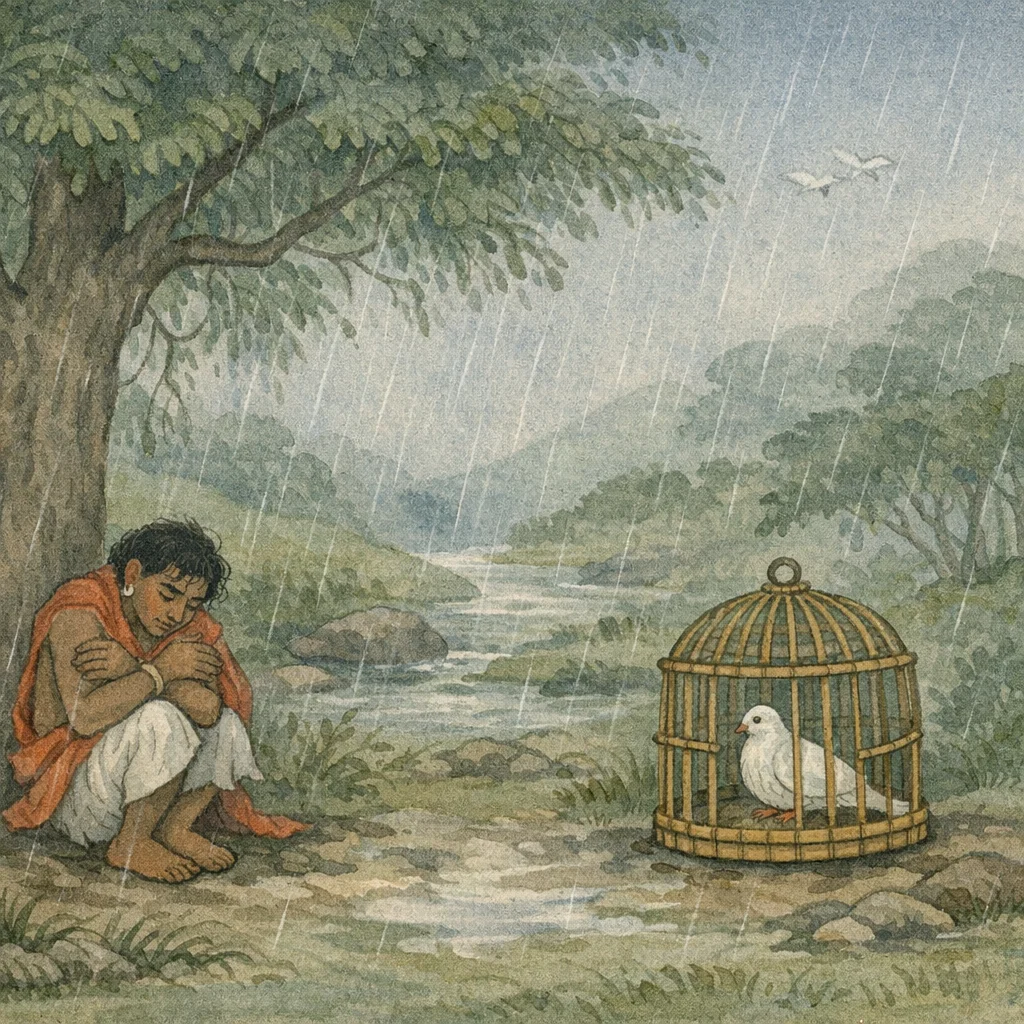
Chapter Arc: भीष्म युधिष्ठिर को धर्म का शिखर दिखाते हैं—‘शरणागत की रक्षा’ ऐसा धर्म है जो राजाओं को भी सिद्धि तक पहुँचा देता है; और इसी सत्य को उजागर करने हेतु वे एक बहेलिये तथा कपोत-कपोती का प्रसंग उठाते हैं। → मूसलाधार वर्षा और कँपकँपाती ठंड में बहेलिया वन में भटकता है, स्वयं शीतार्त और अचेत-सा। उसी संकट में वह एक कपोती को देखता है; दया और लोभ का द्वंद्व उठता है, पर पापबुद्धि प्रबल होकर वह उसे पकड़कर पिंजड़े में डाल देता है—अपने दुख में भी दूसरे के लिए दुख रचता है। रात गहराती है; बहेलिया पत्ते बिछाकर शिला पर सिर रख सोने का यत्न करता है, पर भीतर की व्याकुलता और बाहर का प्रलय-सा मौसम कथा को और कसता जाता है। → शरण की पुकार और शरण देने की परीक्षा एक ही क्षण में आमने-सामने आती है: बहेलिया भय, ठंड और असहायता में उसी वृक्ष/वनस्पति के नीचे हाथ जोड़कर ‘शरणं यामि’ कहकर आश्रय माँगता है—जबकि उसी के पास एक जीव (कपोती) उसकी कैद में तड़प रहा है। शरणागत-धर्म का प्रश्न अब उपदेश नहीं, जीवित विरोधाभास बन जाता है। → भीष्म इस प्रसंग के माध्यम से युधिष्ठिर को यह बोध कराते हैं कि शरणागत-पालन ‘महान धर्म’ है—राजा शिबि जैसे महात्मा इसी से परम सिद्धि को प्राप्त हुए। साथ ही वे क्रूरता और प्राणहरण की निंदा करते हैं: जो प्राणियों के प्राण हरते हैं वे भूतों के लिए व्याल (सर्प/हिंस्र पशु) के समान भयावह हैं। कथा का नैतिक निष्कर्ष स्पष्ट होता है—दुख में भी परदुख-कारिता अधर्म है, और शरण माँगने वाला स्वयं भी शरण देने के धर्म से बँधा है। → कथा बहेलिये की शरण-याचना पर टिकती है—अब प्रश्न यह रह जाता है कि जिस व्यक्ति ने कपोती को कैद किया, उसके साथ ‘शरणागत’ के रूप में कैसा व्यवहार होना चाहिए, और कपोत-कपोती का धर्म-प्रत्युत्तर क्या रूप लेगा।
Shlokas
Verse 1
अपर बछ। ] अति्ऑकशाड< त्रिचत्वारिशर्दाधिकशततमो< ध्याय: शरणागतकी रक्षा करनेके विषयमें एक बहेलिये और कपोत-कपोतीका प्रसंग, सर्दीसे पीड़ित हुए बहेलियेका एक वृक्षके नीचे जाकर सोना युधिछिर उवाच पितामह महाप्राज्ञ सर्वशास्त्रविशारद । शरणं पालयानस्य यो धर्मस्तं वदस्व मे,युधिष्ठिरने पूछा--परमबुद्धिमान् पितामह! आप सम्पूर्ण शास्त्रोंके विशेषज्ञ हैं; अतः मुझे यह बताइये कि शरणागतकी रक्षा करनेवाले प्राणीको किस धर्मकी प्राप्ति होती है?
Yudhishthira said: “O grandsire, supremely wise and well-versed in all the śāstras, tell me: what is the dharma—and what merit accrues—to one who protects a being that has come seeking refuge?”
Verse 2
भीष्म उवाच महान् धर्मो महाराज शरणागतपालने । अर्ह: प्रष्टें भवांश्वैव प्रश्न भरतसत्तम,भीष्मजीने कहा--महाराज! शरणागतकी रक्षा करनेमें महान् धर्म है। भरतश्रेष्ठ! तुम्हीं ऐसा प्रश्न पूछनेके अधिकारी हो
Bhishma said: “O great king, there is a supreme dharma in protecting one who has sought refuge. O best of the Bharatas, you indeed are worthy to ask this question.”
Verse 3
शिबिप्रभूतयो राजन् राजान: शरणागतान् | परिपाल्य महात्मान: संसिद्धि परमां गता:
Bhīṣma said: “O King, rulers such as Śibi and others—great-souled monarchs—protected those who came to them seeking refuge, and by upholding this duty of asylum they attained the highest perfection.”
Verse 4
राजन! शिबि आदि महात्मा राजाओंने तो शरणागतोंकी रक्षा करके ही परम सिद्धि प्राप्त कर ली थी ।। श्रूयते च कपोतेन शत्रु: शरणमागत: । पूजितश्न यथान्यायं स्वैश्व मांसैर्निमन्त्रित:
Bhishma said: “O King, the great-souled rulers beginning with Śibi attained the highest perfection precisely by protecting those who sought refuge. And it is also heard in tradition that even a pigeon received an enemy who came seeking shelter—honoured him as was proper, and offered him hospitality with its own flesh.”
Verse 5
यह भी सुना जाता है कि एक कबूतरने शरणमें आये हुए शत्रुका यथायोग्य सत्कार किया था और अपना मांस खानेके लिये उसको निमन्त्रित किया था ।। युधिछिर उवाच कथं कपोतेन पुरा शत्रु: शरणमागत: । स्वमांसं भोजित: कां च गति लेभे स भारत,युधिष्ठिरने पूछा--भरतनन्दन! प्राचीनकालमें कबूतरने शरणागत शत्रुको किस प्रकार अपना मांस खिलाया और ऐसा करनेसे उसे कौन-सी सदगति प्राप्त हुई
Yudhiṣṭhira said: “O descendant of Bharata, how did a pigeon in ancient times receive an enemy who had come seeking refuge, and even feed him with its own flesh? And what blessed destiny did that pigeon attain as a result?”
Verse 6
भीष्म उवाच शृणु राजन् कथां दिव्यां सर्वपापप्रणाशिनीम् । नृपतेर्मुचुकुन्दस्य कथितां भार्गवेण वै,भीष्मजीने कहा--राजन्! वह दिव्य कथा सुनो, जो सब पापोंका नाश करनेवाली है। परशुरामजीने राजा मुचुकुन्दको यह कथा सुनायी थी
Bhishma said: “O King, listen to this divine tale, a destroyer of all sin. It was narrated by the Bhargava (Parashurama) to King Muchukunda.”
Verse 7
इममर्थ पुरा पार्थ मुचुकुन्दो नराधिप: । भार्गव परिपप्रच्छ प्रणत: पुरुषर्षभ,पुरुषप्रवर कुन्तीनन्दन! पहलेकी बात है, राजा मुचुकुन्दने परशुरामजीको प्रणाम करके उनसे यही प्रश्न किया था
Bhishma said: “O Partha, in former times King Muchukunda, a ruler among men, approached the Bhargava (Parashurama) with reverence and questioned him about this very matter. O bull among men, O foremost of men, son of Kunti—this is an ancient precedent for the inquiry you now raise.”
Verse 8
तस्मै शुश्रूषमाणाय भार्गवोडकथयत् कथाम् । इमां यथा कपोतेन सिद्धि: प्राप्ता नराधिप,नरेश्वर! तब परशुरामजीने सुननेके लिये उत्सुक हुए मुचुकुन्दको कबूतरने जिस प्रकार सिद्धि प्राप्ति की थी, वह कथा कह सुनायी
Seeing him eager to listen and serve, Bhārgava (Paraśurāma) narrated this tale to him, O king: how a dove attained spiritual fulfillment and success through its conduct—an example offered to illuminate righteous duty and selfless virtue.
Verse 9
मुनिर्वाच धर्मनिश्चयसंयुक्तां कामार्थसहितां कथाम् | शृणुष्वावहितो राजन् गदतो मे महाभुज,मुनि बोले--महाबाहो! यह कथा धर्मके निर्णयसे युक्त तथा अर्थ और कामसे सम्पन्न है। राजन्! तुम सावधान होकर मेरे मुखसे इस कथाको सुनो
The sage said: “O mighty-armed king, listen attentively as I speak. This narrative is grounded in a clear determination of dharma, and it is also complete with the aims of artha (worldly welfare) and kāma (rightful desire).”
Verse 10
वश्षित् क्षुद्रसमाचार: पृथिव्यां कालसम्मित: । विचचार महारण्ये घोर: शकुनिलुब्धक:,एक समयकी बात है किसी महान् वनमें कोई भयंकर बहेलिया चारों ओर विचर रहा था। वह बड़े खोटे आचार-विचारका था। पृथ्वीपर वह कालके समान जान पड़ता था
Bhishma said: “Once there was a dreadful fowler who roamed about in a vast forest. His conduct was base and petty; on earth he seemed like Death itself, moving everywhere in search of prey.”
Verse 11
काकोल इव कृष्णाड़रो रक्ताक्ष: कालसम्मित: । दीर्घजड्घो हस्वपादो महावक्त्रो महाहनुः,उसका सारा शरीर “काकोल' जातिके कौओंके समान काला था। आँखें लाल-लाल थीं। वह देखनेपर काल-सा प्रतीत होता था। बड़ी-बड़ी पिंडलियाँ, छोटे-छोटे पैर, विशाल मुख और लंबी-सी ठोढ़ी--यही उसकी हुलिया थी
Bhishma said: “He was black all over like a kākola crow, with blood-red eyes, and in appearance he seemed akin to Death itself. He had long shanks, short feet, a huge mouth, and a massive jaw.”
Verse 12
नैव तस्य सुद्गत् वश्रिन्न सम्बन्धी न बान्धवा: । स हि तैः सम्परित्यक्तस्तेन रौद्रेण कर्मणा,उसके न कोई सुहृद, न सम्बन्धी और न भाई-बन्धु ही थे। उसके भयानक क्रूर-कर्मके कारण सबने उसे त्याग दिया था
Bhishma said: “Indeed, he had no well-wisher, no kinsman, and no relatives to stand by him. For because of that fierce and cruel course of action, he had been completely abandoned by them all.”
Verse 13
नर: पापसमाचारस्त्यक्तव्यो दूरतो बुध: । आत्मानं यो5भिसंधत्ते सोअन्यस्य स्यात् कथं हितः,वास्तवमें जो पापाचारी हो, उसे विज्ञ पुरुषोंको दूरसे ही त्याग देना चाहिये। जो अपने आपको धोखा देता है, वह दूसरेका हितैषी कैसे हो सकता है?
Bhishma said: A man whose conduct is sinful should be abandoned from afar by the wise. For one who deceives his own self—how could such a person ever truly be a well-wisher of another?
Verse 14
ये नृशंसा दुरात्मान: प्राणिप्राणहरा नरा: । उद्बवेजनीया भूतानां व्याला इव भवन्ति ते,जो मनुष्य क्रूर, दुरात्मा तथा दूसरे प्राणियोंके प्राणोंका अपहरण करनेवाले होते हैं, उन्हें सर्पोंकि समान सभी जीवोंकी ओरसे उद्घेग प्राप्त होता है
Bhīṣma said: Those men who are cruel and wicked at heart, who take away the lives of living beings, become objects of fear and revulsion to all creatures—like venomous serpents. The teaching is that violence born of cruelty isolates a person from the moral community: such a life makes one universally dreaded rather than respected.
Verse 15
स वै क्षारकमादाय द्विजान् हत्वा वने सदा | चकार विक्रयं तेषां पतज्ञानां जनाधिप,नरेश्वर! वह प्रतिदिन जाल लेकर वनमें जाता और बहुत-से पक्षियोंको मारकर उन्हें बाजारमें बेंच दिया करता था
Bhishma said: Taking a bird-snare (net) with him, that man would always go into the forest, kill birds, and then sell those winged creatures for profit—an act presented here as a morally blameworthy livelihood driven by gain rather than restraint.
Verse 16
एवं तु वर्तमानस्य तस्य वृत्तिं दुरात्मन: । अगमत् सुमहान् कालो न चाधर्ममबुध्यत,यही उसका नित्यका काम था। इसी वृत्तिसे रहते हुए उस दुरात्माको वहाँ दीर्घ काल व्यतीत हो गया, किंतु उसे अपने इस अधर्मका बोध नहीं हुआ
Thus, as that wicked-minded man continued in this habitual course of conduct, a very long time passed; yet he did not awaken to the fact that his way of life was unrighteous. The verse underscores how prolonged indulgence in a fixed pattern of wrongdoing can dull moral awareness and make adharma feel normal.
Verse 17
तस्य भार्यासहायस्य रममाणस्य शाश्वतम् । दैवयोगविमूढस्य नान्या वृत्तिररोचत,सदा अपनी स्त्रीके साथ विहार करता हुआ वह बहेलिया दैवयोगसे ऐसा मूढ़ हो गया था कि उसे दूसरी कोई वृत्ति अच्छी ही नहीं लगती थी
Bhishma said: Ever sporting in the constant company of his wife, that fowler—bewildered by the workings of fate—found no other way of life pleasing. The verse underscores how attachment, when reinforced by a sense of inevitability (“it is destiny”), can narrow one’s moral and practical choices until alternative duties and disciplines no longer appeal.
Verse 18
ततः कदाचित् तस्याथ वनस्थस्य समन्ततः । पातयन्निव वक्षांस्तान् सुमहान् वातसम्भ्रम:,तदनन्तर एक दिन वह वनमें ही घूम रहा था कि चारों ओरसे बड़े जोरकी आँधी उठी। वायुका प्रचण्ड वेग वहाँके समस्त वृक्षोंको धराशायी करता हुआ-सा जान पड़ा
Bhīṣma said: Then, once, as he was living in the forest, a very great tumult of wind arose on every side. It seemed as though the fierce rush of air was felling the tree-trunks all around, bringing the wilderness under sudden, overpowering force.
Verse 19
मेघसंकुलमाकाशं विद्युन्मण्डलमण्डितम् | संछन्नस्तु मुहूर्तेन नौसार्थरिव सागर:,आकाशमें मेघोंकी घटाएँ घिर आयीं, विद्युन्मण्डलसे उसकी अपूर्व शोभा होने लगी। जैसे समुद्र नौकारोहियोंके समुदायसे ढक जाता है, उसी प्रकार दो ही घड़ीमें जल- धाराओंके समूहसे आच्छादित हुए इन्द्रदेवने व्योममण्डलमें प्रवेश किया और क्षणभरमें इस पृथ्वीको जलराशिसे भर दिया
Bhīṣma said: The sky became crowded with masses of clouds, adorned with circles of lightning. In a short while it was completely covered—like the ocean when it is filled with a multitude of boats.
Verse 20
वारिधारासमूहेन सम्प्रविष्ट: शतक्रतु: । क्षणेन पूरयामास सलिलेन वसुन्धराम्,आकाशमें मेघोंकी घटाएँ घिर आयीं, विद्युन्मण्डलसे उसकी अपूर्व शोभा होने लगी। जैसे समुद्र नौकारोहियोंके समुदायसे ढक जाता है, उसी प्रकार दो ही घड़ीमें जल- धाराओंके समूहसे आच्छादित हुए इन्द्रदेवने व्योममण्डलमें प्रवेश किया और क्षणभरमें इस पृथ्वीको जलराशिसे भर दिया
Bhīṣma said: Śatakratu (Indra), having entered amid dense masses of streaming rain, in a single moment flooded the earth with water.
Verse 21
उस समय मूसलाधार पानी बरस रहा था। बहेलिया शीतसे पीड़ित हो अचेत सा हो गया और व्याकुल हृदयसे सारे वनमें भटकने लगा
At that time a torrential rain was pouring down. The hunter, tormented by the cold, became almost senseless; with a heart distressed and unsteady, he wandered through the entire forest.
Verse 22
नैव निम्नं स्थलं वापि सो$5विन्दत विहड़हा । पूरितो हि जलौघेन तस्य मार्गो वनस्य च,वनका मार्ग जिसपर वह चलता था, जलके प्रवाहमें डूब गया था। उस बहेलियेको नीची-ऊँची भूमिका कुछ पता नहीं चलता था
Bhīṣma said: The bird-catcher could discern neither low ground nor high ground. For the torrent of water had flooded the path he was following, and even the forest-tracks were submerged—so that he could no longer tell where the way lay.
Verse 23
पक्षिणो वर्षवेगेन हता लीनास्तदा भवन् । मृगसिंहवराहाश्व स्थलम॒श्रित्य शेरते
Bhishma said: Driven down by the force of the rain, the birds were struck and fell silent, hiding themselves. Deer, lions, boars, and horses, taking refuge on higher ground, lay there—each seeking safety when nature’s violence overwhelms.
Verse 24
वर्षके वेगसे बहुतेरे पक्षी मरकर धरतीपर लोट गये थे। कितने ही अपने घोंसलोंमें छिपे बैठे थे। मृग, सिंह और सूअर स्थल-भूमिका आश्रय लेकर सो रहे थे ।। महता वातवर्षेण त्रासितास्ते वनौकस: । भयातत्षि क्षुधार्ताश्न॒ बश्रमु: सहिता वने,भारी आँधी और वर्षासे आंतकित हुए वनवासी जीव-जन्तु भय और भूखसे पीड़ित हो झुंड-के-झुंड एक साथ घूम रहे थे
Bhishma said: Driven into panic by a fierce storm and heavy rain, the creatures of the forest—tormented by fear, thirst, and hunger—wandered about together in groups within the woods.
Verse 25
स तु शीतहतैगत्रिन जगाम न तस्थिवान् । ददर्श पतितां भूमौ कपोतीं शीतविह्नललाम्,बहेलियेके सारे अंग सर्दीसे ठिठुर गये थे। इसलिये न तो वह चल पाता था और न खड़ा ही हो पाता था। इसी अवस्थामें उसने धरतीपर गिरी हुई एक कबूतरी देखी, जो सर्दीके कष्टसे व्याकुल हो रही थी
But he, his limbs numbed and battered by the cold, could neither walk on nor even stand. In that condition he saw, fallen upon the ground, a female pigeon trembling in distress from the torment of winter.
Verse 26
दृष्टवा5<र्तोंडपि हि पापात्मा स तां पज्जरके5क्षिपत् । स्वयं दुःखाभिभूतो5पि दुःखमेवाकरोत् परे
Even after seeing her in distress, that sinful-minded man threw her into a cage. Though he himself was overwhelmed by suffering, he still inflicted nothing but suffering upon another.
Verse 27
सो<5पश्यत् तरुखण्डेषु मेघनीलवनस्पतिम्,इतनेमें ही उसे वृक्षोंके समूहमें मेघके समान सघन एवं नील एक विशाल वृक्ष दिखायी दिया, जिसपर बहुतसे विहंग छाया, निवास और फलकी इच्छासे बसेरे लेते थे, मानो विधाताने परोपकारके लिये ही उस साधुतुल्य महान् वृक्षका निर्माण किया था
Bhishma said: “Then he saw, amid a cluster of trees, a great tree dark-blue like a rain-cloud and densely spreading. Many birds had taken shelter upon it, dwelling there for shade and for its fruits—as though the Creator had fashioned that noble, mighty tree solely for the welfare of others.”
Verse 28
सेव्यमानं विहज्गौघैश्छायावासफलार्थिभि: । धात्रा परोपकाराय स साधुरिव निर्मित:,इतनेमें ही उसे वृक्षोंके समूहमें मेघके समान सघन एवं नील एक विशाल वृक्ष दिखायी दिया, जिसपर बहुतसे विहंग छाया, निवास और फलकी इच्छासे बसेरे लेते थे, मानो विधाताने परोपकारके लिये ही उस साधुतुल्य महान् वृक्षका निर्माण किया था
Bhīṣma said: “That great tree was being frequented by flocks of birds seeking shade, shelter, and fruit. It seemed as though the Creator had fashioned it—like a saintly person—for the very purpose of benefiting others.”
Verse 29
अथाभवत् क्षणेनैव वियद् विमलतारकम् | महत्सर इवोत्फुल्लं॑ कुमुदच्छुरितोदकम्,तदनन्तर एक ही क्षणमें आकाशके बादल फट गये, निर्मल तारे चमक उठे, मानो खिले हुए कुमुद-पुष्पोंसे सुशोभित जलवाला कोई विशाल सरोवर प्रकाशित हो रहा हो
Bhishma said: “Then, in a single instant, the sky became clear and studded with pure, shining stars—like a vast lake suddenly revealed, its waters bright and beautiful with fully blossomed white lotuses.”
Verse 30
ताराब्यं कुमुदाकारमाकाशं निर्मल बहु । घनैर्मुक्ते नभो दृष्टवा लुब्धक: शीतविह्नल:,प्रभो! ताराओंसे भरा हुआ अत्यन्त निर्मल आकाश विकसित कुमुद-कुसुमोंसे सुशोभित सरोवर-सा प्रतीत होता था। आकाशको मेघोंसे मुक्त हुआ देख सर्दीसे काँपते हुए उस व्याधने सम्पूर्ण दिशाओंकी ओर दृष्टिपात किया और गाढ़े अन्धकारसे भरी हुई रात्रि देखकर मन-ही-मन विचार किया कि मेरा निवासस्थान तो यहाँसे बहुत दूर है
Bhishma said: “The sky, thickly strewn with stars and exceedingly clear, looked like a lake adorned with fully blossomed white water-lilies. Seeing the heavens freed from clouds, the hunter—shivering with cold—cast his gaze in all directions; and, beholding the night heavy with darkness, he reflected inwardly that his dwelling lay far away from that place.”
Verse 31
दिशो विलोकयामास विगाढ़ां प्रेक्ष्य शर्वरीम् दूरतो मे निवेशश्व अस्माद् देशादिति प्रभो,प्रभो! ताराओंसे भरा हुआ अत्यन्त निर्मल आकाश विकसित कुमुद-कुसुमोंसे सुशोभित सरोवर-सा प्रतीत होता था। आकाशको मेघोंसे मुक्त हुआ देख सर्दीसे काँपते हुए उस व्याधने सम्पूर्ण दिशाओंकी ओर दृष्टिपात किया और गाढ़े अन्धकारसे भरी हुई रात्रि देखकर मन-ही-मन विचार किया कि मेरा निवासस्थान तो यहाँसे बहुत दूर है
Bhīṣma said: Seeing the night grown dense with darkness, he looked around in all directions. Observing the deep gloom, he reflected inwardly, “O lord, my dwelling is far away from this place.” The clear, star-filled sky—free of clouds—seemed like a lake adorned with fully opened white water-lilies; yet, shivering in the cold, the hunter scanned the quarters and worried about the long distance to his home.
Verse 32
कृतबुद्धि्द्रूमे तस्मिन् वस्तुं तां रजनी ततः । साञ्जलि: प्रणतिं कृत्वा वाक्यमाह वनस्पतिम्
Then, intending to spend that night there, she approached that tree—described as a ‘tree of steadfast understanding.’ With hands joined in reverence and after bowing, she addressed the lord of the forest with respectful words, framing her request within humility and proper conduct.
Verse 33
! स शिलायां शिर: कृत्वा पर्णान्यास्तीर्य भूतले । दुःखेन महता<5<विष्टस्तत: सुष्वाप पक्षिहा,ऐसा कहकर उसने पृथ्वीपर पत्ते बिछा दिये और एक शिलापर सिर रखकर महान् दुःखसे घिरा हुआ वह बहेलिया वहाँ सो गया
Bhishma said: Having spread leaves upon the ground and placing his head upon a stone, the bird-catcher—overwhelmed by intense sorrow—then lay down and fell asleep there. The scene underscores how wrongdoing and its consequences can swiftly turn into inner torment, and how grief itself becomes a kind of punishment that follows harmful action.
Verse 143
इति श्रीमहाभारते शान्तिपर्वणि आपद्धर्मपर्वणि कपोतलुब्धकसंवादोपक्रमे त्रिचत्वारिंशदाधिकशततमो<5 ध्याय:,इस प्रकार श्रीमहाभारत शान्तिपर्वके अन्तर्गत आपद्धर्मपर्वमें कपोत और व्याधके संवादका उपक्रमविषयक एक सौ तैतालीसवाँ अध्याय पूरा हुआ
Thus, in the Śrī Mahābhārata, within the Śānti Parva—specifically in the section on conduct in times of distress (Āpaddharma)—the one-hundred-and-forty-third chapter concludes, introducing the dialogue between the dove (kapota) and the hunter (lubdhaka). The colophon signals a transition into a moral narrative that examines dharma under extreme circumstances and the testing of compassion, restraint, and right action.
Verse 231
ततो धाराकुले काले सम्भ्रमन् नष्टचेतन: । शीतार्तस्तद् वन॑ सर्वमाकुलेनान्तरात्मना
Then, as the time grew turbulent and threatening, he wandered about in confusion, his awareness failing. Tormented by cold, and inwardly shaken, he beheld that entire forest as if everything in it were thrown into disorder—his own agitated mind coloring the world he saw.
Verse 266
पापात्मा पापकारित्वात् पापमेव चकार स: । वह पापात्मा व्याध यद्यपि स्वयं भी बड़े कष्टमें था तो भी उसने उस कबूतरीको उठाकर पिंजड़ेमें डाल लिया। स्वयं दुःखसे पीड़ित होनेपर भी उसने दूसरे प्राणीको दुःख ही पहुँचाया। सदा पापमें ही प्रवृत्त रहनेके कारण उस पापात्माने उस समय भी पाप ही किया
Bhishma said: Because he was of sinful nature and habituated to wrongdoing, he committed only sin. Even though the hunter himself was in great distress, he still seized the dove and shut her in a cage; though suffering, he inflicted suffering on another being. Ever inclined toward sin, that wicked man chose sin even at that moment.
Verse 326
शरणं यामि यान्यस्मिन् दैवतानि वनस्पतौ । इसके बाद उसने उस वृक्षके नीचे ही रातभर रहनेका निश्चय किया। फिर हाथ जोड़ प्रणाम करके उस वनस्पतिसे कहा--“इस वृक्षपर जो-जो देवता हों, उन सबकी मैं शरण लेता हूँ
Bhīṣma said: “I seek refuge in whatever deities dwell in this tree.” With folded hands he offered reverence to the tree and resolved to spend the entire night beneath it, placing himself under the protection of the sacred presences believed to inhabit it—an act that reflects humility, faith, and the ethic of honoring nature as a vessel of the divine.
Frequently Asked Questions
The staged dilemma is how to interpret and respond to irreversible loss: the capotī frames continued life without her spouse as devoid of purpose, presenting an extreme model of devotion that raises questions about duty, attachment, and socially sanctioned ideals.
The chapter uses narrative compression to assert the husband’s centrality as refuge and to depict unwavering spousal fidelity as morally potent, linking conduct (karma) to an elevated post-mortem outcome (svarga and reunion).
No explicit phalaśruti formula appears in the provided verses; the chapter’s ‘result-claim’ is conveyed narratively through the depicted heavenly vision and reunion, functioning as an implicit consequence statement within the exemplum.