Adhyaya 9
वारुणी सभा — Varuṇa’s Divine Assembly (Nārada’s Description)
Upa-parva: Sabhā-vibhāga (Divine Assembly Halls: Varuṇa-sabhā and transition to Kubera-sabhā)
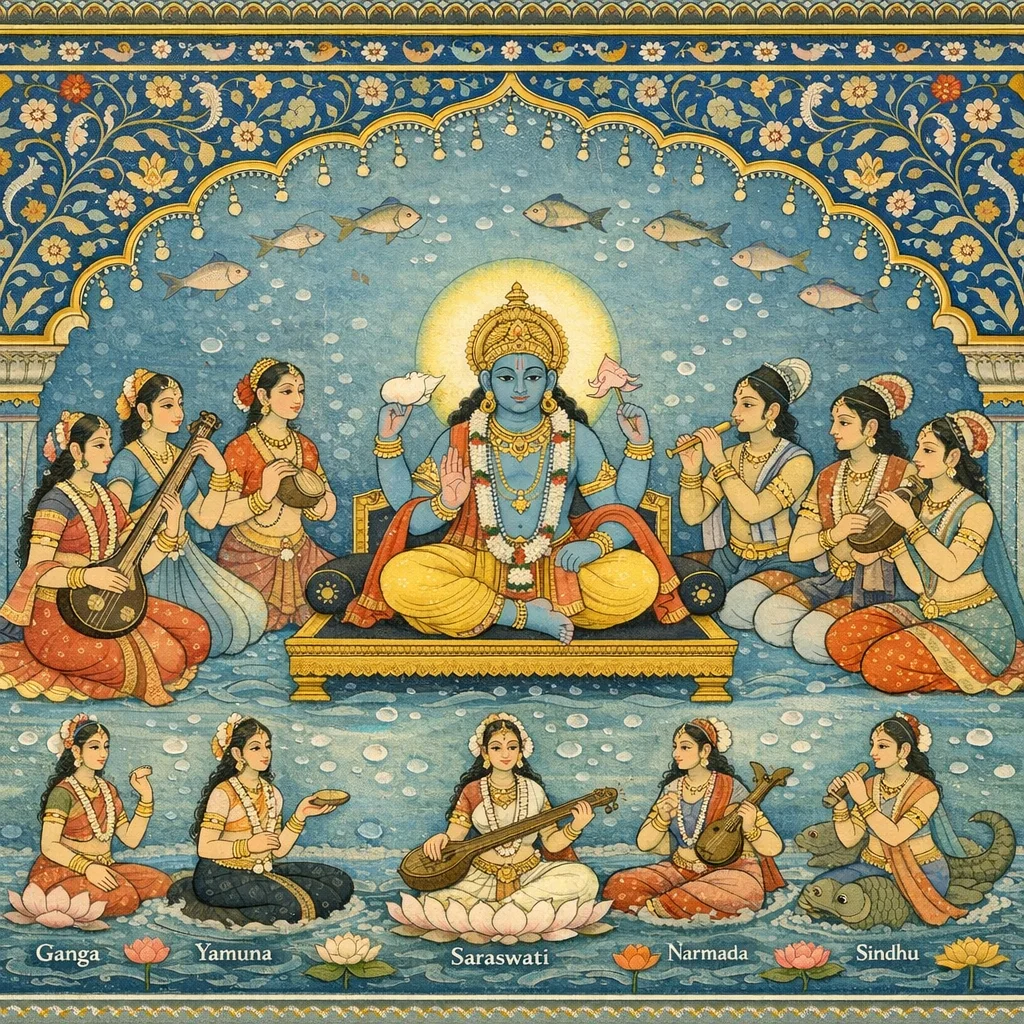
Nārada narrates to Yudhiṣṭhira the features of Varuṇa’s radiant white assembly hall, constructed by Viśvakarman and situated amid inner waters. The hall is portrayed as climatically balanced and sensorially pleasant, ornamented with gem-like trees bearing flowers and fruits, and populated by multicolored botanical forms and innumerable birds with gentle, indistinct calls. Varuṇa is described as seated with Vāruṇī, adorned with divine garments and ornaments, receiving veneration from Ādityas. A detailed roll of Nāgas follows (including Vāsuki, Takṣaka, Airāvata, and others), characterized by banners, coils, and hoods, attending without fatigue. Daityas and Dānavas are also listed as present—garlanded, crowned, and richly accoutred—depicted as recipients of boons and steadfast in observance within Varuṇa’s order. The chapter expands the court’s constituency to the four oceans, major rivers (e.g., Bhāgīrathī, Kāliṇdī, Narmadā, Sindhu), waterscapes (wells, ponds, lakes), directions, earth, mountains, aquatic beings, and the musical praise of Gandharvas and Apsarases. The unit concludes with Nārada stating he has seen this Vāruṇī sabhā and inviting Yudhiṣṭhira to hear next of Kubera’s hall, marking a transition in the divine-sabhā catalog.
Chapter Arc: वैशम्पायन जनमेजय को उस अद्भुत सभा का वर्णन सुनाते हैं जिसे विश्वकर्मा ने जल के भीतर रचा—रत्नमय वृक्षों, फल-फूलों और दिव्य प्रकाश से भरी हुई। → सभा के भीतर के रंग-रूप और बनावट का विस्तार होता है—नीले, पीले, काले, श्वेत, लाल लता-गुल्म; मञ्जरी-जाल; और अग्नियों के अनेक नामों का स्मरण, मानो यज्ञ-शक्ति स्वयं वास्तु में प्रवाहित हो। फिर सभा में उपस्थित दैत्य-दानव, गन्धर्व-अप्सरा, नदियाँ-तीर्थ और मूर्तिमान रस/पर्वत—सबका क्रमशः परिचय आता है, जिससे यह स्थान केवल भवन नहीं, एक जीवित ब्रह्माण्ड-सभा बन जाता है। → वरुण-सभा में समस्त गन्धर्व-अप्सराएँ वाद्य-गीत सहित वरुण की स्तुति करते हैं; रत्नयुक्त पर्वत और प्रतिष्ठित ‘रस’ मधुर कथाएँ कहते हैं; और वरुण का मन्त्री सुनाभ पुत्र-पौत्रों सहित, ‘गौ’ तथा ‘पुष्कर’ तीर्थ के साथ उपासना में स्थित दिखता है—यह दृश्य सभा की दिव्यता और देव-व्यवस्था की पराकाष्ठा है। → अध्याय सभा की पूर्णता को स्थिर करता है—निर्माण (विश्वकर्मा), अलंकरण (रत्न-वृक्ष, रंग-लताएँ), और निवास/उपासना (वरुण-स्तुति, मन्त्री-परिवार, तीर्थ-नदियाँ) के माध्यम से यह स्पष्ट होता है कि यह सभा धर्म-व्यवस्था और ऐश्वर्य का केन्द्र है। → यह दिव्य वैभव आगे चलकर मनुष्यों की सभा-राजनीति और अहंकार के लिए मानक/प्रलोभन बनेगा।
Shlokas
Verse 1
- नीलकण्ठने अपनी टीकामें इन सत्ताईस पावकोंके नाम इस प्रकार बताये हैं--अंगिरा, दक्षिणाग्नि, गार्हपत्याग्नि, आहवनीयाग्नि, निर्मन्थ्य, वैद्युत, शूर, संवर्त, लौकिक, जठराग्नि, विषग, क्रव्यात्, क्षेमवान्, वैष्णव, दस्युमान्ू, बलद, शान्त, पुष्ट, विभावसु, ज्योतिष्मान, भरत, भद्र, स्विष्टकृत्, वसुमान्, क्रतु, सोम और पितृमान्। नवमो<्ध्याय: वरुणकी सभाका वर्णन नारद उवाच युधिष्ठिर सभा दिव्या वरुणस्यामितप्र भा । प्रमाणेन यथा याम्या शुभप्राकारतोरणा,नारदजी कहते हैं--युधिष्ठिर! वरुणदेवकी दिव्य सभा अपनी अनन्त कान्तिसे प्रकाशित होती रहती है। उसकी भी लंबाई-चौड़ाईका मान वही है, जो यम-राजकी सभाका है। उसके परकोटे और फाटक बड़े सुन्दर हैं
Narada said: “O Yudhiṣṭhira, Varuṇa’s celestial assembly-hall shines with immeasurable radiance. In its dimensions it matches the hall of Yama, and its surrounding ramparts and gateways are exceedingly beautiful.”
Verse 2
अन्त:ःसलिलमास्थाय विदहिता विश्वकर्मणा । दिव्यै रत्नमयैर्वृक्षै:ः फलपुष्पप्रदैर्युता,विश्वकर्माने उस सभाको जलके भीतर रहकर बनाया है। वह फल-फूल देनेवाले दिव्य रत्नमय वृक्षोंसे सुशोभित होती है
Narada said: The hall was fashioned by Viśvakarman while remaining within the waters, and it was adorned with celestial, jewel-like trees that bestowed fruits and flowers.
Verse 3
नीलपीतासितश्यामै: सितैलॉहितकैरपि । अवतानैस्तथा गुल्मैर्मज्जरीजालधारिभि:,उस सभाके भिन्न-भिन्न प्रदेश नीले-पीले, काले, सफेद और लाल रंगके लतागुल्मोंसे आच्छादित हैं। उन लताओंने मनोहर मंजरीपुंज धारण कर रखे हैं
Nārada describes the wondrous hall as being covered in different sections with creepers and shrubs of many hues—blue, yellow, dark, dusky, white, and red—each bearing charming clusters and nets of blossoms.
Verse 4
तथा शकुनयस्तस्यां विचित्रा मधुरस्वरा: । अनिर्देश्या वपुष्मन्त: शतशो5थ सहस्रश:,सभाभवनके भीतर विचित्र और मधुर स्वरसे बोलनेवाले सैकड़ों-हजारों पक्षी चहकते रहते हैं। उनके विलक्षण रूप-सौन्दर्यका वर्णन नहीं हो सकता। उनकी आकृति बड़ी सुन्दर है
Nārada said: “Likewise, within that hall there were hundreds and even thousands of birds—variegated in appearance and sweet-voiced. Their beauty and form were beyond precise description; their bodies were exquisitely lovely.”
Verse 5
सा सभा सुखसंस्पर्शा न शीता न च घर्मदा । वेश्मासनवती रम्या सिता वरुणपालिता,वरुणकी सभाका स्पर्श बड़ा ही सुखद है, वहाँ न सर्दी है, न गर्मी। उसका रंग श्वेत है, उसमें कितने ही कमरे और आसन (दिव्य मंच आदि) सजाये गये हैं। वरुणजीके द्वारा सुरक्षित वह सभा बड़ी रमणीय जान पड़ती है
Varuṇa’s hall was delightful to the touch; there was neither cold nor heat. It shone white, with many chambers and seats—divine platforms—arrayed within. Guarded by Varuṇa, that assembly-hall appeared exceedingly lovely.
Verse 6
यस्यामास्ते स वरुणो वारुण्या च समन्वित: । दिव्यरत्नाम्बरधरो दिव्याभरणभूषित:,उसमें दिव्य रत्नों और वस्त्रोंकी धारण करनेवाले तथा दिव्य अलंकारोंसे अलंकृत वरुणदेव वारुणी देवीके साथ विराजमान होते हैं
In that hall, Varuṇa himself is seated, accompanied by Vāruṇī. He is clad in celestial garments set with radiant jewels and adorned with divine ornaments—an image of sovereign splendor and ordered majesty.
Verse 7
स्रग्विणो दिव्यगन्धाश्न दिव्यगन्धानुलेपना: । आदित्यास्तत्र वरुणं जलेश्वरमुपासते,उस सभामें दिव्य हार, दिव्य सुगन्ध तथा दिव्य चन्दनका अंगराग धारण करनेवाले आदित्यगण जलके स्वामी वरुणकी उपासना करते हैं
Nārada said: In that celestial assembly, the Ādityas—adorned with divine garlands, fragrant with heavenly perfumes, and anointed with divine sandal-paste—worship Varuṇa, the lord of the waters. The scene underscores the ordered hierarchy of the cosmos, where even great deities honor the rightful sovereign of a domain through reverent service.
Verse 8
इस प्रकार श्रीमहाभारत सभापवके अन्तर्गत लोकपालयभाख्यानपर्वमें यमस भा-वर्णन नामक आठवाँ अध्याय पूरा हुआ,वासुकिस्तक्षकश्नैव नागश्चनैरावतस्तथा । कृष्णश्न लोहितश्रैव पद्मश्रित्रश्न वीर्यवान् वासुकि नाग, तक्षक, ऐरावतनाग, कृष्ण, लोहित, पद्म और पराक्रमी चित्र,
Thus, in the Mahābhārata’s Sabhā Parva, within the Lokapāla-assembly narrative, the eighth chapter entitled “Description of Yama’s Hall” came to its close. Then are named the mighty nāgas: Vāsuki, Takṣaka, Airāvata-nāga, Kṛṣṇa, Lohita, Padma, and the valiant Citra.
Verse 9
कम्बलाश्चतरौ नागौ धृतराष्ट्रबलाहकौ । (मणिनागश्न नागश्न मणि: शड्खनखस्तथा । कौरव्य: स्वस्तिकश्नैव एलापत्रश्ष॒ वामन: ।। अपराजिततश्न दोषश्न नन्दकः पूरणस्तथा । अभीक: शिभिक: श्वेतो भद्ठरो भद्रेश्वरस्तथा ।।) मणिमान् कुण्डधारश्व॒ कर्कोटकथनंजयौ,कम्बल, अश्वतर, धृतराष्ट्र, बलाहक, मणिनाग, नाग, मणि, शंखनख, कौरव्य, स्वस्तिक, एलापत्र, वामन, अपराजित, दोष, नन्दक, पूरण, अभीक, शिभिक, श्वेत, भद्र, भद्रेश्वर, मणिमान्, कुण्डधार, कर्कोटक, धनंजय, इति श्रीमहाभारते सभापर्वणि लोकपालसभाख्यानपर्वणि वरुणसभावर्णने नवमो<ध्याय:
Nārada said: “There are two nāga-serpents named Kambala and Aśvatara, and also Dhṛtarāṣṭra and Balāhaka. Likewise are Maṇināga, Nāga, Maṇi, and Śaṅkhanakha; Kauravya, Svastika, Elāpatra, and Vāmana; Aparājita, Doṣa, Nandaka, and Pūraṇa; Abhīka, Śibhika, Śveta, Bhadra, and Bhadreśvara; and also Maṇimān, Kuṇḍadhāra, Karkoṭaka, and Dhanañjaya.” In the description of Varuṇa’s assembly, this catalog of nāga names underscores the vast, ordered retinue of the Lokapāla, presenting cosmic governance as structured and populated by powerful beings who serve within a larger moral and ritual order.
Verse 10
पाणिमान् कुण्डधारश्न बलवान् पृथिवीपते । प्रहादो मूषिकादश्व॒ तथैव जनमेजय:,पाणिमान्ू, बलवान कुण्डधार, प्रहाद, मूषिकाद, जनमेजय आदि नाग जो पताका, मण्डल और फणोंसे सुशोभित वहाँ उपस्थित होते हैं, महानाग भगवान् अनन्त भी वहाँ स्थित होते हैं, जिन्हें देखते ही जलके स्वामी वरुण आसन आदि देते और सत्कारपूर्वक उनका पूजन करते हैं। वासुकि आदि सभी नाग हाथ जोड़कर उनके सामने खड़े होते और भगवान् शेषकी आज्ञा पाकर यथायोग्य आसनोंपर बैठकर वहाँकी शोभा बढ़ाते हैं। युधिष्ठि!! ये तथा और भी बहुतसे नाग उस सभामें क्लेशरहित हो महात्मा वरुणकी उपासना करते हैं
Narada said: “O lord of the earth, there are also Nāgas named Pāṇimān, Kuṇḍadhāra, Balavān, Prahrāda, Mūṣikāda, and likewise Janamejaya.” In this context, Narada is enumerating prominent serpent-lords who attend Varuṇa’s splendid assembly—adorned with banners, coils, and hoods—where even Ananta (Śeṣa) is present and honored. The passage underscores a courtly ethic of reverence: Varuṇa receives the great ones with due hospitality, and the other Nāgas stand with folded hands, taking their seats only by Śeṣa’s command, worshipping without distress.
Verse 11
पाणिमान्ू, बलवान कुण्डधार, प्रहाद, मूषिकाद, जनमेजय आदि नाग जो पताका, मण्डल और फणोंसे सुशोभित वहाँ उपस्थित होते हैं, महानाग भगवान् अनन्त भी वहाँ स्थित होते हैं, जिन्हें देखते ही जलके स्वामी वरुण आसन आदि देते और सत्कारपूर्वक उनका पूजन करते हैं। वासुकि आदि सभी नाग हाथ जोड़कर उनके सामने खड़े होते और भगवान् शेषकी आज्ञा पाकर यथायोग्य आसनोंपर बैठकर वहाँकी शोभा बढ़ाते हैं। युधिष्ठि!! ये तथा और भी बहुतसे नाग उस सभामें क्लेशरहित हो महात्मा वरुणकी उपासना करते हैं
Narada says: Many serpent-lords—Pāṇimān, the mighty Kuṇḍadhāra, Prahlāda, Mūṣikāda, Janamejaya, and others—adorned with banners, circular emblems, and splendid hoods, are present there. The great serpent, the divine Ananta, is also seated in that assembly; at the very sight of him Varuṇa, lord of the waters, rises to honor him, offers him a seat and other courtesies, and worships him with due reverence. Vāsuki and the other nāgas stand before him with folded hands; then, by the command of the blessed Śeṣa, they take their appropriate seats and enhance the splendor of the hall. O Yudhiṣṭhira, these and many other nāgas dwell there without distress, devotedly attending upon the great-souled Varuṇa. The passage highlights a moral order in which even powerful beings observe hierarchy, humility, and proper hospitality toward the truly venerable.
Verse 12
बलिवैंरोचनो राजा नरकः पृथिवींजय: । प्रह्मादो विप्रचित्तिश्ष कालखज्जाश्नल दानवा:,विरोचनपुत्र राजा बलि, पृथ्वीविजयी नरकासुर, प्रह्मद, विप्रचित्ति, कालखंज दानव, सुहनु, दुर्मुख, शंख, सुमना, सुमति, घटोदर, महापार्श्व, क्रथन, पिठर, विश्वरूप, स्वरूप, विरूप, महाशिरा, दशमुख रावण, वाली, मेघवासा, दशावर, टिट्टिभ, विटभूत, संहाद तथा इन्द्रतापन आदि सभी दैत्यों और दानवोंके समुदाय मनोहर कुण्डल, सुन्दर हार, किरीट तथा दिव्य वस्त्राभूषण धारण किये उस सभामें धर्मपाशधारी महात्मा वरुणदेवकी सदा उपासना करते हैं। वे सभी दैत्य वरदान पाकर शौर्यसम्पन्न हो मृत्युरहित हो गये हैं। उनका चरित्र एवं व्रत बहुत उत्तम है
Narada said: “King Bali, son of Virocana, and Naraka the conqueror of the earth; Prahlada, Vipracitti, and the Danavas such as Kalakhañja—along with many other Daityas and Danavas—appear in that celestial assembly adorned with charming earrings, beautiful garlands, crowns, and divine garments and ornaments. There they continually attend upon the great Varuṇa, bearer of the noose of Dharma. Having obtained boons, they are mighty in valor and free from death; their conduct and vows are described as excellent.”
Verse 13
सुहनुर्दुर्मुख: शुड्ख: सुमना: सुमतिस्तत: । घटोदरो महापार्शच: क्रथन: पिठरस्तथा,विरोचनपुत्र राजा बलि, पृथ्वीविजयी नरकासुर, प्रह्मद, विप्रचित्ति, कालखंज दानव, सुहनु, दुर्मुख, शंख, सुमना, सुमति, घटोदर, महापार्श्व, क्रथन, पिठर, विश्वरूप, स्वरूप, विरूप, महाशिरा, दशमुख रावण, वाली, मेघवासा, दशावर, टिट्टिभ, विटभूत, संहाद तथा इन्द्रतापन आदि सभी दैत्यों और दानवोंके समुदाय मनोहर कुण्डल, सुन्दर हार, किरीट तथा दिव्य वस्त्राभूषण धारण किये उस सभामें धर्मपाशधारी महात्मा वरुणदेवकी सदा उपासना करते हैं। वे सभी दैत्य वरदान पाकर शौर्यसम्पन्न हो मृत्युरहित हो गये हैं। उनका चरित्र एवं व्रत बहुत उत्तम है
Nārada said: “Suhanu, Durmukha, Śaṅkha, Sumanas, Sumati; Ghaṭodara, Mahāpārśva, Krathana, Piṭhara; King Bali, son of Virocana; the earth-conquering Narakāsura; Prahlāda; Vipracitti; the Dānava Kālakhañja; and many others—Viśvarūpa, Svarūpa, Virūpa, Mahāśiras, the ten-headed Rāvaṇa, Vālī, Meghavāsa, Daśāvara, Ṭiṭṭibha, Viṭabhūta, Saṃhāda, Indratāpana, and the rest—these hosts of Daityas and Dānavas, adorned with charming earrings, splendid garlands, crowns, and divine garments and ornaments, continually worship in that assembly the great god Varuṇa, the noble bearer of the ‘noose of Dharma’. Having obtained boons, they have become valorous and free from death; their conduct and vows are declared to be exceedingly excellent.”
Verse 14
विश्वरूप: स्वरूपश्ष विरूपो5थ महाशिरा: । दशग्रीवक्ष॒ वाली च मेघवासा दशावर:,विरोचनपुत्र राजा बलि, पृथ्वीविजयी नरकासुर, प्रह्मद, विप्रचित्ति, कालखंज दानव, सुहनु, दुर्मुख, शंख, सुमना, सुमति, घटोदर, महापार्श्व, क्रथन, पिठर, विश्वरूप, स्वरूप, विरूप, महाशिरा, दशमुख रावण, वाली, मेघवासा, दशावर, टिट्टिभ, विटभूत, संहाद तथा इन्द्रतापन आदि सभी दैत्यों और दानवोंके समुदाय मनोहर कुण्डल, सुन्दर हार, किरीट तथा दिव्य वस्त्राभूषण धारण किये उस सभामें धर्मपाशधारी महात्मा वरुणदेवकी सदा उपासना करते हैं। वे सभी दैत्य वरदान पाकर शौर्यसम्पन्न हो मृत्युरहित हो गये हैं। उनका चरित्र एवं व्रत बहुत उत्तम है
Narada said: There in that assembly are gathered hosts of Daityas and Danavas—Viśvarūpa, Svarūpa, Virūpa, Mahāśiras; Daśagrīva (Rāvaṇa), Vālī, Meghavāsa, Daśāvara; King Bali, son of Virocana; the earth-conqueror Narakāsura; Prahlāda; Vipracitti; the Danava Kālakhañja; Suhanu, Durmukha, Śaṅkha, Sumanas, Sumati, Ghaṭodara, Mahāpārśva, Krathana, Piṭhara, and others. Adorned with charming earrings, splendid garlands, crowns, and divine garments and ornaments, they continually worship the great-souled god Varuṇa, who bears the noose of dharma. Having obtained boons, they are endowed with valor and have become free from death; their conduct and their vowed observances are described as exceedingly excellent.
Verse 15
टिट्टिभो विटभूतश्न संद्वादश्रेन्द्रतापन: । देत्यदानवसड्घाश्च सर्वे रुचिरकुण्डला:,विरोचनपुत्र राजा बलि, पृथ्वीविजयी नरकासुर, प्रह्मद, विप्रचित्ति, कालखंज दानव, सुहनु, दुर्मुख, शंख, सुमना, सुमति, घटोदर, महापार्श्व, क्रथन, पिठर, विश्वरूप, स्वरूप, विरूप, महाशिरा, दशमुख रावण, वाली, मेघवासा, दशावर, टिट्टिभ, विटभूत, संहाद तथा इन्द्रतापन आदि सभी दैत्यों और दानवोंके समुदाय मनोहर कुण्डल, सुन्दर हार, किरीट तथा दिव्य वस्त्राभूषण धारण किये उस सभामें धर्मपाशधारी महात्मा वरुणदेवकी सदा उपासना करते हैं। वे सभी दैत्य वरदान पाकर शौर्यसम्पन्न हो मृत्युरहित हो गये हैं। उनका चरित्र एवं व्रत बहुत उत्तम है
Nārada said: “There are many hosts of Daityas and Dānavas—adorned with charming earrings—such as Ṭiṭṭibha, Viṭabhūta, Saṃdvāda, Indratāpana, the king Bali (son of Virocana), the earth-conqueror Narakāsura, Prahlāda, Vipracitti, Kālakhañja, Suhanu, Durmukha, Śaṅkha, Sumanas, Sumati, Ghaṭodara, Mahāpārśva, Krathana, Piṭhara, Viśvarūpa, Svarūpa, Virūpa, Mahāśiras, the ten-headed Rāvaṇa, Vālī, Meghavāsa, Daśāvara, and others. Wearing beautiful garlands, crowns, and divine garments and ornaments, they continually worship in that assembly the great Varuṇa, who bears the noose of Dharma. Having obtained boons, they have become valorous and free from death; their conduct and vows are described as exceedingly excellent.”
Verse 16
स्रग्विणो मौलिनश्वैव तथा दिव्यपरिच्छदा: । सर्वे लब्धवरा: शूरा: सर्वे विगतमृत्यव:,विरोचनपुत्र राजा बलि, पृथ्वीविजयी नरकासुर, प्रह्मद, विप्रचित्ति, कालखंज दानव, सुहनु, दुर्मुख, शंख, सुमना, सुमति, घटोदर, महापार्श्व, क्रथन, पिठर, विश्वरूप, स्वरूप, विरूप, महाशिरा, दशमुख रावण, वाली, मेघवासा, दशावर, टिट्टिभ, विटभूत, संहाद तथा इन्द्रतापन आदि सभी दैत्यों और दानवोंके समुदाय मनोहर कुण्डल, सुन्दर हार, किरीट तथा दिव्य वस्त्राभूषण धारण किये उस सभामें धर्मपाशधारी महात्मा वरुणदेवकी सदा उपासना करते हैं। वे सभी दैत्य वरदान पाकर शौर्यसम्पन्न हो मृत्युरहित हो गये हैं। उनका चरित्र एवं व्रत बहुत उत्तम है
Nārada said: “Wearing garlands and diadems, clad in divine attire, all of them heroic and all made deathless by boons—King Bali, son of Virocana; the earth-conquering Narakāsura; Prahlāda; Vipracitti; the Dānava Kālakhañja; Suhanu, Durmukha, Śaṅkha, Sumanas, Sumati, Ghaṭodara, Mahāpārśva, Krathana, Piṭhara, Viśvarūpa, Svarūpa, Virūpa, Mahāśiras; the ten-faced Rāvaṇa; Vālī; Meghavāsa; Daśāvara; Ṭiṭṭibha; Viṭabhūta; Saṃhāda; Indratāpana and others—these hosts of Daityas and Dānavas, adorned with charming earrings, beautiful necklaces, crowns, and celestial garments and ornaments, continually worship in that assembly the great-souled Varuṇa, bearer of the noose of dharma. Having obtained boons, they have become valorous and free from death; their conduct and vows are described as excellent.”
Verse 17
ते तस्यां वरुणं देवं धर्मपाशधरं सदा । उपासते महात्मानं सर्वे सुचरितव्रता:,विरोचनपुत्र राजा बलि, पृथ्वीविजयी नरकासुर, प्रह्मद, विप्रचित्ति, कालखंज दानव, सुहनु, दुर्मुख, शंख, सुमना, सुमति, घटोदर, महापार्श्व, क्रथन, पिठर, विश्वरूप, स्वरूप, विरूप, महाशिरा, दशमुख रावण, वाली, मेघवासा, दशावर, टिट्टिभ, विटभूत, संहाद तथा इन्द्रतापन आदि सभी दैत्यों और दानवोंके समुदाय मनोहर कुण्डल, सुन्दर हार, किरीट तथा दिव्य वस्त्राभूषण धारण किये उस सभामें धर्मपाशधारी महात्मा वरुणदेवकी सदा उपासना करते हैं। वे सभी दैत्य वरदान पाकर शौर्यसम्पन्न हो मृत्युरहित हो गये हैं। उनका चरित्र एवं व्रत बहुत उत्तम है
Nārada said: In that assembly they continually worship Varuṇa, the divine bearer of the noose of Dharma—great-souled and ever steadfast. There, the Daityas and Dānavas—Bali the son of Virocana; Narakāsura, conqueror of the earth; Prahlāda; Vipracitti; the Dānava Kālakhañja; Suhanu; Durmukha; Śaṅkha; Sumanas; Sumati; Ghaṭodara; Mahāpārśva; Krathana; Piṭhara; Viśvarūpa; Svarūpa; Virūpa; Mahāśiras; Daśamukha Rāvaṇa; Vālī; Meghavāsa; Daśāvara; Ṭiṭṭibha; Viṭabhūta; Saṃhāda; Indratāpana and others—adorned with charming earrings, splendid garlands, crowns, and divine garments and ornaments, offer constant reverence to Varuṇa, the upholder of moral restraint. Having obtained boons, they are endowed with valor and are said to be free from death; their conduct and vows are described as exceptionally excellent.
Verse 18
तथा समुद्राश्चत्वारो नदी भागीरथी च सा | कालिन्दी विदिशा वेणा नर्मदा वेगवाहिनी,चारों समुद्र, भागीरथी नदी, कालिन्दी, विदिशा, वेणा, नर्मदा, वेगवाहिनी,
Nārada said: “Likewise, there are the four oceans, and that famed river Bhāgīrathī; and the rivers Kāliṇdī, Vidiśā, Veṇā, and the swift-flowing Narmadā.”
Verse 19
विपाशा च शठतद्गुश्न चन्द्रभागा सरस्वती । इरावती वितस्ता च सिन्धुर्देवनदी तथा,विपाशा, शतद्रु, चन्द्रभागा, सरस्वती, इरावती, वितस्ता, सिन्धु, देवनदी,
Narada said: “There are also these sacred rivers—Vipāśā, Śatadrū, Candrabhāgā, Sarasvatī, Irāvatī, Vitastā, and Sindhu, and likewise the Devī-nadī.”
Verse 20
गोदावरी कृष्णवेणा कावेरी च सरिद्वधरा । किम्पुना च विशल्या च तथा वैतरणी नदी,गोदावरी, कृष्णवेणा, सरिताओंमें श्रेष्ठ कावेरी, किम्पुना, विशल्या, वैतरणी नदी,
Nārada said: “(There are) the rivers Godāvarī, Kṛṣṇaveṇā, and Kāverī—foremost among rivers—along with Kimpunā, Viśalyā, and the river Vaitaraṇī.”
Verse 21
तृतीया, ज्येष्ठलिला, महानद शोण, चर्मण्वती, पर्णाशा, महानदी,
Nārada continued, naming renowned rivers: Tṛtīyā, Jyeṣṭhalīlā, the great river Śoṇa, Carmaṇvatī, Parṇāśā, and yet another mighty stream.
Verse 22
सरयूर्वारवत्याथ लाड़्ली च सरिद्वरा । करतोया तथात्रेयी लौहित्यशक्ष महानद:,सरयू, वारखत्या, सरिताओंमें श्रेष्ठ लांगली, करतोया, आत्रेयी, महानद लौहित्य,
Nārada said: “There are also these rivers—Sarayu, Varavatī, and the excellent Langalī; likewise Karatoyā and Ātreyī; and the great river Lauhitya.”
Verse 23
तृतीया ज्येछ्ठिला चैव शोणश्लवापि महानद: । चर्मण्वती तथा चैव पर्णाशा च महानदी,लड्घती गोमती चैव संध्या त्रि:स्रोतसी तथा । एताश्षान्याश्न राजेन्द्र सुतीर्था लोकविश्रुता: भरतवंशी राजेन्द्र युधिष्ठिर! लंघती, गोमती, संध्या और त्रिस्रोतसी, ये तथा दूसरे लोकविख्यात उत्तम तीर्थ (वहाँ वरुणकी उपासना करते हैं),
Nārada said: “O best of kings, there are also these celebrated tīrthas: Tṛtīyā, Jyeṣṭhilā, Śoṇaślavā, the great river Carmaṇvatī, and Parṇāśā, likewise a mighty stream; also Laṅghatī, Gomātī, Sandhyā, and Triḥsrotasī. These and many others are renowned in the world as excellent tīrthas.”
Verse 24
सरित: सर्वतश्नान्यास्तीर्थानि च सरांसि च | कूृपाश्न सप्रस्रवणा देहवन्तो युधिष्ठिर,उपासते महात्मानं॑ सर्वे जलचरास्तथा । समस्त सरिताएँ, जलाशय, सरोवर, कूप, झरने, पोखरे और तालाब, सम्पूर्ण दिशाएँ, पृथ्वी, पर्वत तथा सम्पूर्ण जलचर जीव अपने-अपने स्वरूप धारण करके महात्मा वरुणकी उपासना करते हैं
Nārada said: “O Yudhiṣṭhira, all rivers fit for bathing, all tīrthas, and all lakes; wells and springs with their flowing outlets—indeed all these, as though taking embodied form, worship the great-souled Varuṇa. In the same way, every creature that moves in water pays him reverence.”
Verse 25
पल्वलानि तडागानि देहवन्त्यथ भारत । दिशस्तथा मही चैव तथा सर्वे महीधरा:
Nārada said: “O Bhārata, the marshy pools and the lakes, embodied beings, the quarters of space, the earth itself, and likewise all the mountains—these all stand as parts of the ordered world.”
Verse 26
गीतवादित्रवन्तश्न गन्धर्वाप्सरसां गणा:
Nārada said: “And there were hosts of Gandharvas and Apsarases, resounding with song and instrumental music.”
Verse 27
महीधरा रत्नवन्तो रसा ये च प्रतिछ्िता:
Nārada said: “The mountains are rich with jewels, and the lands are firmly established and endowed with their own vital essences.”
Verse 28
वारुणश्न तथा मन्त्री सुनाभ: पर्युपासते
Nārada said: “Likewise, Vāruṇaśna and the minister Sunābha remain in constant attendance, serving with diligence and readiness.”
Verse 29
सर्वे विग्रहवन्तस्ते तमीश्वरमुपासते,ये सभी शरीर धारण करके लोकेश्वर वरुणकी उपासना करते रहते हैं
Nārada said: “All of them, embodied in form, continually worship that Lord—Varuṇa, the sovereign of the worlds.”
Verse 30
एषा मया सम्पतता वारुणी भरतर्षभ | दृष्टपूर्वा सभा रम्या कुबेरस्य सभां शूणु,भरतश्रेष्ठ। पहले सब ओर घूमते हुए मैंने वरुणजीकी इस रमणीय सभाका भी दर्शन किया है। अब तुम कुबेरकी सभाका वर्णन सुनो
Nārada said: “O bull among the Bharatas, as I ranged about, I have already beheld this delightful hall of Varuṇa. Now, O best of the Bharatas, listen as I describe Kubera’s assembly-hall.”
Verse 113
पताकिनो मण्डलिन: फणावन्तश्न सर्वश: । (अनन्तश्न महानागो यं स दृष्टवा जलेश्वर: । अभ्यर्चयति सत्कारैरासनेन च त॑ विभुम् ।। वासुकिप्रमुखाश्वैव सर्वे प्राजजलय: स्थिता: । अनुज्ञाताश्व शेषेण यथा्हमुपविश्य च ।।) एते चान्ये च बहव: सर्पस्तिस्यां युधिष्ठिर । उपासते महात्मानं वरुण विगतक्क्लमा:
Nārada said: “There are serpents of every kind—bearing banners, coiled in circles, and crowned with raised hoods. When the great serpent Ananta is seen, the Lord of the Waters (Varuṇa) rises to honor that mighty one with respectful offerings and a seat. Vāsuki and the other chief nāgas stand with folded hands; and, with Śeṣa’s permission, I too sat down as was proper. These and many other serpents, O Yudhiṣṭhira, attend upon the great-souled Varuṇa there, free from fatigue.”
Verse 253
उपासते महात्मानं॑ सर्वे जलचरास्तथा । समस्त सरिताएँ, जलाशय, सरोवर, कूप, झरने, पोखरे और तालाब, सम्पूर्ण दिशाएँ, पृथ्वी, पर्वत तथा सम्पूर्ण जलचर जीव अपने-अपने स्वरूप धारण करके महात्मा वरुणकी उपासना करते हैं
Nārada says that all aquatic beings likewise worship the great-souled Varuṇa. Rivers and every kind of water-source—lakes, wells, springs, ponds, and tanks—together with the directions, the earth, and the mountains, and all creatures that move in water, each assuming its own proper form, offer reverent worship to Varuṇa.
Verse 263
स्तुवन्तो वरुणं तस्यां सर्व एव समासते । सभी गन्धर्व और अप्सराओंके समुदाय भी गीत गाते और बाजे बजाते हुए उस सभामें वरुणदेवताकी स्तुति एवं उपासना करते हैं
Nārada said: “In that splendid hall, all those present sat together, offering praise to Varuṇa. The Gandharvas and hosts of Apsarases, singing and playing instruments, performed worshipful eulogies—presenting devotion and reverence as the proper conduct within a divine assembly.”
Verse 276
कथयन्त: सुमधुरा: कथास्तत्र समासते । रत्नयुक्त पर्वत और प्रतिष्ठित रस (मूर्तिमान् होकर) अत्यन्त मधुर कथाएँ कहते हुए वहाँ निवास करते हैं
Nārada said: “There, they sit together, telling exceedingly sweet and delightful stories. Even the jewel-adorned mountains and the established essences of taste—taking embodied form—dwell in that place, continually narrating tales of extraordinary sweetness.”
Verse 286
पुत्रपौत्रै: परिवृतों गोनाम्ना पुष्करेण च | वरुणका मन्त्री सुनाभ अपने पुत्र-पौत्रोंसे घिरा हुआ गौ तथा पुष्कर नामवाले तीर्थके साथ वरुणदेवकी उपासना करता है
Nārada said: “Surrounded by his sons and grandsons, Sunābha—the minister of Varuṇa—continues his worship of Varuṇa, associated with the sacred ford named Gau and with the pilgrimage-place called Puṣkara.”
Frequently Asked Questions
The motif is accountability through moral restraint: Varuṇa’s sovereignty is presented as rule that binds wrongdoing and stabilizes order, implying governance grounded in enforceable ethical norms.
It instructs that authority is validated by ordered integration—ritual, environment, and diverse constituencies—so a sabhā symbolizes not only power but the capacity to harmonize domains under a coherent rule.
No formal phalaśruti appears; the closing functions as narrative meta-direction, with Nārada asserting eyewitness credibility and shifting the discourse toward Kubera’s sabhā as the next comparative exemplar.