Adhyaya 47
दुर्योधनस्य बलिवर्णनम् — Duryodhana’s Description of Tribute at the Rājasūya
Upa-parva: Rājasūyika (Rājasūya) Upa-Parva — Tribute Presentation Episode
Duryodhana addresses Dhṛtarāṣṭra, urging him to hear what he observed regarding the Pandavas’ wealth and the tribute brought by rulers from many regions. He describes high-value textiles and garments, horses and camels, and delegations waiting at the gate with offerings—sometimes being regulated or delayed in entry—illustrating the scale of administration around Yudhiṣṭhira’s sacrificial venue. The narration expands into a wide-ranging inventory: gold and silver, ivory and crafted vessels, weapons, chariots, beds and seats, perfumes, tastes, gems, and large counts of animals. Duryodhana notes groups from distant lands and border peoples, emphasizing variety and magnitude, and concludes with the image of an eastern ruler entering the sacrificial hall after presenting substantial gifts. The chapter’s function is both documentary (ritual-political economy) and psychological (spectacle as a driver of rivalry).
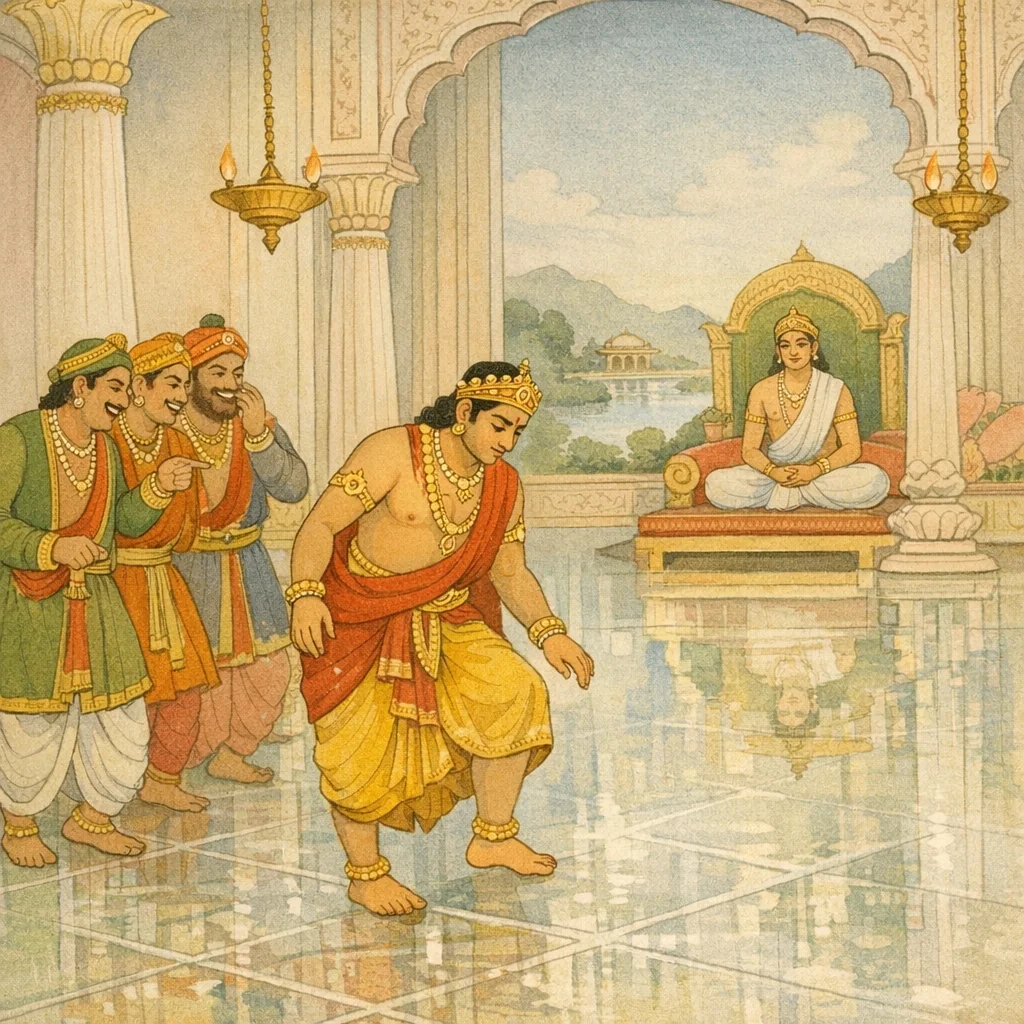
Chapter Arc: मय-निर्मित दिव्य सभाभवन में प्रवेश करते ही दुर्योधन की दृष्टि ऐसे अद्भुत दृश्यों पर पड़ती है जिन्हें उसने न कभी देखा था, न कल्पना की थी—और उसी क्षण से उसका अहंकार परीक्षा में पड़ जाता है। → सभामध्य में स्फटिक-भूमि को जल समझकर, और जल को भूमि समझकर, वह बार-बार भ्रमित होता है; पग-पग पर ठोकरें, गिरना, रुकना—और रक्षकों/सेवकों का उपहास—उसके भीतर जलती हुई ईर्ष्या को और भड़काता है। साथ ही वह धर्मराज युधिष्ठिर की अनुपम श्री और पाण्डव-वैभव को देख-देखकर भीतर ही भीतर दग्ध होता जाता है। → सभाभवन और युधिष्ठिर की ज्वलन्त-सी राजलक्ष्मी को देखकर, तथा उपहास से आहत होकर, दुर्योधन अमर्ष से भर उठता है—उसकी बुद्धि पाप की ओर मुड़ती है और वह भीतर-ही-भीतर प्रतिशोध का संकल्प पकाने लगता है। → सभासे निकलते समय वह अकेला, अनेक विचारों से व्याकुल, अपने अपमान और पाण्डव-समृद्धि का ही चिंतन करता रहता है; अंततः वह अपने मामाश्री शकुनि से कहता है कि वह असह्य दुःख और अमर्ष से घिर गया है और धृतराष्ट्र को सब निवेदित करने की अनुमति/आज्ञा चाहता है। → शकुनि के सामने दुर्योधन का यह संताप अब एक योजना का रूप लेने को है—धृतराष्ट्र के पास यह विषाद किस रूप में पहुँचेगा: विनाशकारी द्यूत-आह्वान के रूप में या खुली शत्रुता के रूप में?
Shlokas
Verse 1
/ ऑपन-माज बछ। -्:डि सप्तचत्वारिशो<्ध्याय: दुर्योधनका मयनिर्मित सभाभवनको देखना और पग- पगपर भ्रमके कारण उपहासका पात्र बनना तथा युधिष्टिरके वैभवको देखकर उसका चिन्तित होना वैशम्पायन उवाच वसन् दुर्योधनस्तस्यां सभायां पुरुषर्षभ । शनैर्ददर्श तां सर्वां सभां शकुनिना सह,वैशम्पायनजी कहते हैं--नरश्रेष्ठ जनमेजय! राजा दुर्योधनने उस सभाभवनमें निवास करते समय शकुनिके साथ धीरे-धीरे उस सारी सभाका निरीक्षण किया
Vaiśampāyana said: “O Janamejaya, best of men, while staying in that assembly hall, King Duryodhana, together with Śakuni, slowly surveyed the entire sabhā.”
Verse 2
तस्यां दिव्यानभिप्रायान् ददर्श कुरुनन्दन: । न दृष्टपूर्वा ये तेन नगरे नागसाह्दये,कुरुनन्दन दुर्योधन उस सभामें उन दिव्य अभिप्रायों (दृश्यों)-को देखने लगा, जिन्हें उसने हस्तिनापुरमें पहले कभी नहीं देखा था
In that wondrous hall, the Kuru prince beheld celestial marvels and ingenious sights—things he had never before seen in the city called Nāgasāhvaya (Hastināpura).
Verse 3
स कदाचित् सभामध्ये धार्तराष्ट्री महीपति: । स्फाटिकं स्थलमासाद्य जलमित्यभिशड्कया,एक दिनकी बात है, राजा दुर्योधन उस सभाभवनमें घूमता हुआ स्फटिक-मणिमय स्थलपर जा पहुँचा और वहाँ जलकी आशंकासे उसने अपना वस्त्र ऊपर उठा लिया। इस प्रकार बुद्धिगमोह हो जानेसे उसका मन उदास हो गया और वह उस स्थानसे लौटकर सभामें दूसरी ओर चक्कर लगाने लगा
Vaiśampāyana said: Once, in the midst of the royal assembly hall, the Dhārtarāṣṭra king (Duryodhana) came upon a crystal-paved spot. Mistaking it for water, he lifted up his garment in apprehension. That small confusion—born of delusion—became a moment of humiliation.
Verse 4
स्ववस्त्रोत्कर्षणं राजा कृतवान् बुद्धिमोहित: । दुर्मना विमुखश्वैव परिचक्राम तां सभाम्,एक दिनकी बात है, राजा दुर्योधन उस सभाभवनमें घूमता हुआ स्फटिक-मणिमय स्थलपर जा पहुँचा और वहाँ जलकी आशंकासे उसने अपना वस्त्र ऊपर उठा लिया। इस प्रकार बुद्धिगमोह हो जानेसे उसका मन उदास हो गया और वह उस स्थानसे लौटकर सभामें दूसरी ओर चक्कर लगाने लगा
The king, his judgment deluded, lifted up his own garment. Then, his mind turning gloomy and his face averted in embarrassment, he wandered about that assembly hall.
Verse 5
ततः स्थले निपतितो दुर्मना व्रीडितो नृप: । निःश्वसन् विमुखश्चापि परिचक्राम तां सभाम्,तदनन्तर वह स्थलमें ही गिर पड़ा, इससे वह मन-ही-मन दुःखी और लज्जित हो गया तथा वहाँसे हटकर लम्बी साँसें लेता हुआ सभाभवनमें घूमने लगा
Then the king collapsed right there on the spot. His heart sank in misery and he was overcome with shame; turning his face away and heaving long sighs, he moved about the assembly hall.
Verse 6
ततः स्फाटिकतोयां वै स्फाटिकाम्बुजशोभिताम् । वापीं मत्वा स्थलमिव सवासा: प्रापतज्जले,तत्पश्चात् स्फटिकमणिके समान स्वच्छ जलसे भरी और स्फटिकमणिमय कमलोंसे सुशोभित बावलीको स्थल मानकर वह वस्त्रसहित जलमें गिर पड़ा
Vaiśampāyana said: Then, mistaking a crystal-clear pool—adorned with crystal lotuses—for solid ground, he stepped forward as if onto land and, still clothed, fell into the water.
Verse 7
जले निपतितं दृष्टवा भीमसेनो महाबल: । जहास जहसुश्चैव किंकराश्न सुयोधनम्
Vaiśampāyana said: Seeing Suyodhana fallen into the water, the mighty Bhīmasena burst into laughter and mocked him—calling him a servant’s food.
Verse 8
वासांसि च शुभान्यस्मै प्रददू राजशासनात् | तथागतं तु तं दृष्टवा भीमसेनो महाबल:
By the king’s command, fine garments were presented to him. But when the mighty Bhīmasena saw him arrive in that manner, his reaction was stirred.
Verse 9
अर्जुनश्व यमौ चोभौ सर्वे ते प्राहसंस्तदा । नामर्षयत् ततस्तेषामवहासममर्षण:
Vaiśampāyana said: Then Arjuna and the two twins—indeed all of them—laughed aloud. But he who could not endure insult did not tolerate their mockery.
Verse 10
उसे जलमें गिरा देख महाबली भीमसेन हँसने लगे। उनके सेवकोंने भी दुर्योधनकी हँसी उड़ायी तथा राजाज्ञासे उन्होंने दुर्योधनको सुन्दर वस्त्र दिये। दुर्योधनकी यह दुरवस्था देख महाबली भीमसेन, अर्जुन और नकुल-सहदेव सभी उस समय जोर-जोरसे हँसने लगे। दुर्योधन स्वभावसे ही अमर्षशील था; अत: वह उनका उपहास न सह सका ।। आकार रक्षमाणस्तु न स तान् समुदैक्षत । पुनर्वसनमुत्त्षिप्य प्रतरिष्यन्निव स्थलम्,वह अपने चेहरेके भावको छिपाये रखनेके लिये उनकी ओर दृष्टि नहीं डालता था। फिर स्थलमें ही जलका भ्रम हो जानेसे वह कपड़े उठाकर इस प्रकार चलने लगा; मानो तैरनेकी तैयारी कर रहा हो
Trying to conceal the expression on his face, he did not look toward them. Then, mistaking the dry ground for water once again, he lifted up his garment and moved as if preparing to swim—an image that further exposed his humiliation amid the others’ laughter.
Verse 11
आरुरोह तत: सर्वे जहसुश्न पुनर्जना: । द्वारं तु पिहिताकारं स्फाटिकं प्रेक्ष्य भूमिप: । प्रविशन्नाहतो मूर्थ्नि व्याघूर्णित इव स्थित:
Then they all ascended, and the people laughed again. Seeing a crystal doorway that seemed to be shut, the king tried to enter; he struck his head and stood there reeling, as if stunned.
Verse 12
इस प्रकार जब वह ऊपर चढ़ा, तब सब लोग उसकी भ्रान्तिपर हँसने लगे। उसके बाद राजा दुर्योधनने एक स्फटिकमणिका बना हुआ दरवाजा देखा, जो वास्तवमें बंद था, तो भी खुला दीखता था। उसमें प्रवेश करते ही उसका सिर टकरा गया और उसे चक््कर-सा आ गया ।। तादृशं च परं द्वारं स्फाटिकोरुकपाटकम् | विघटूटयन् कराभ्यां तु निष्क्रम्याग्रे पपात ह,ठीक उसी तरहका एक दूसरा दरवाजा मिला, जिसमें स्फटिकमणिके बड़े-बड़े किंवाड़ लगे थे। यद्यपि वह खुला था, तो भी दुर्योधनने उसे बंद समझकर उसपर दोनों हाथोंसे धक्का देना चाहा। किंतु धक्केसे वह स्वयं द्वारके बाहर निकलकर गिर पड़ा
Vaiśampāyana said: Then he encountered another door of the same kind, fitted with large crystal panels. Mistaking what was actually open for something shut, Duryodhana tried to force it with both hands; but with that push he himself stumbled out through the doorway and fell forward. The onlookers laughed at his confusion.
Verse 13
द्वारं तु वितताकारं समापेदे पुनश्च सः । तद्वत्तं चेति मन्वानो द्वारस्थानादुपारमत्,आगे जानेपर उसे एक बहुत बड़ा फाटक और मिला; परंतु कहीं पिछले दरवाजोंकी भाँति यहाँ भी कोई अप्रिय घटना न घटित हो इस भयसे वह उस दरवाजेके इधरसे ही लौट आया
Then he again came upon a gate of vast expanse. Suspecting that the same kind of untoward incident might occur there as had happened at the earlier doors, he desisted and turned back from the very threshold.
Verse 14
एवं प्रलम्भान् विविधानू प्राप्य तत्र विशाम्पते । पाण्डवेयाभ्यनुज्ञातस्ततो दुर्योधनो नृप:,राजन! इस प्रकार बार-बार धोखा खाकर राजा दुर्योधन राजसूय महायज्ञमें पाण्डवोंके पास आयी हुई अद्भुत समृद्धिपर दृष्टि डालकर पाण्डुनन्दन युधिष्ठिर-की आज्ञा ले अप्रसन्न मनसे हस्तिनापुरको चला गया
Vaiśaṃpāyana said: Thus, having met with various humiliations and deceptions there, O lord of the people, King Duryodhana—after casting his gaze upon the wondrous prosperity that had come to the Pāṇḍavas for the Rājasūya—took Yudhiṣṭhira’s leave and departed for Hastināpura with a displeased heart.
Verse 15
अप्रह्ृष्टेन मनसा राजसूये महाक्रतौ । प्रेक्ष्य तामद्भुतामृद्धि जगाम गजसाह्दयम्,राजन! इस प्रकार बार-बार धोखा खाकर राजा दुर्योधन राजसूय महायज्ञमें पाण्डवोंके पास आयी हुई अद्भुत समृद्धिपर दृष्टि डालकर पाण्डुनन्दन युधिष्ठिर-की आज्ञा ले अप्रसन्न मनसे हस्तिनापुरको चला गया
Vaiśampāyana said: With a joyless mind, at the great Rājasūya sacrifice, Duryodhana—after beholding that wondrous prosperity—departed for Hastināpura, O king, his heart heavy with envy and humiliation.
Verse 16
पाण्डवश्रीप्रतप्तस्य ध्यायमानस्य गच्छत: । दुर्योधनस्थ नृपते: पापा मतिरजायत,पाण्डवोंकी राजलक्ष्मीसे संतप्त हो उसीका चिन्तन करते हुए जानेवाले राजा दुर्योधनके मनमें पापपूर्ण विचारका उदय हुआ
Vaiśampāyana said: As King Duryodhana went on, inwardly scorched by the Pāṇḍavas’ royal splendor and brooding over it, a sinful resolve arose in his mind—envy ripening into an intention against dharma, bound to drive him toward further wrongdoing.
Verse 17
पार्थान् सुमनसो दृष्ट्वा पार्थिवांश्ष वशानुगान् । कृत्स्नं चापि हितं लोकमाकुमारं कुरूद्गह,कुरुश्रेष्ठ! यह देखकर कि कुन्तीके पुत्रोंका मन प्रसन्न है, भूमण्डलके सब नरेश उनके वशमें हैं तथा बच्चोंसे लेकर बूढ़ोंतक सारा जगत् उनका हितैषी है, इस प्रकार महात्मा पाण्डवोंकी महिमा अत्यन्त बढ़ी हुई देखकर धृतराष्ट्रपुत्र दुर्योधनका रंग फीका पड़ गया
Vaiśampāyana said: Seeing the sons of Pṛthā (the Pāṇḍavas) cheerful, seeing the kings of the earth following under their sway, and seeing the whole world—children and elders alike—well-disposed toward them, Dhṛtarāṣṭra’s son Duryodhana grew pale. For the glory of the great-souled Pāṇḍavas had risen exceedingly, and that very prosperity stirred envy and unrest within him.
Verse 18
महिमान परं चापि पाण्डवानां महात्मनाम् | दुर्योधनो धार्तराष्ट्रो विवर्ण: समपद्यत,कुरुश्रेष्ठ! यह देखकर कि कुन्तीके पुत्रोंका मन प्रसन्न है, भूमण्डलके सब नरेश उनके वशमें हैं तथा बच्चोंसे लेकर बूढ़ोंतक सारा जगत् उनका हितैषी है, इस प्रकार महात्मा पाण्डवोंकी महिमा अत्यन्त बढ़ी हुई देखकर धृतराष्ट्रपुत्र दुर्योधनका रंग फीका पड़ गया
Vaiśampāyana said: Seeing the supreme greatness of the high-souled Pāṇḍavas—how their hearts were joyful, how all the kings of the earth had come under their influence, and how the whole world, from children to the aged, wished them well—Dhṛtarāṣṭra’s son Duryodhana grew pale, O best of the Kurus. The verse shows how another’s flourishing, met with envy rather than discernment, becomes the seed of inner collapse and future wrongdoing.
Verse 19
स तु गच्छन्ननेकाग्र: सभामेको<5न्वचिन्तयत् । श्रियं च तामनुपमां धर्मराजस्य धीमत:,रास्तेमें जाते समय वह नाना प्रकारके विचारोंसे चिन्तातुर था। वह अकेला ही परम बुद्धिमान् धर्मराज युधिष्ठिकी अलौकिक सभा तथा अनुपम लक्ष्मीके विषयमें सोच रहा था
As he went on his way, his mind was pulled in many directions, burdened with anxious thoughts. Walking alone, he kept reflecting on the wondrous royal hall and the incomparable prosperity of the wise Dharmarāja Yudhiṣṭhira—an outward sign of kingship grounded in dharma, able to awaken awe, envy, and strategic unease in others.
Verse 20
प्रमत्तो धृतराष्ट्रस्य पुत्रो दुर्योधनस्तदा । नाभ्यभाषत् सुबलजं भाषमाणं पुन: पुन:,इस समय धूृतराष्ट्रपुत्र दुर्योधन उन्मत्त-सा हो रहा था। वह शकुनिके बार-बार पूछनेपर भी उसे कोई उत्तर नहीं दे रहा था
Vaiśampāyana said: At that time Duryodhana, the son of Dhṛtarāṣṭra, had become heedless and agitated. Though Śakuni—born of Subala—spoke to him again and again, Duryodhana did not reply. The scene shows how pride and inner turmoil can silence sound counsel and hasten ethical collapse.
Verse 21
अनेकाग्रं तु तं दृष्टवा शकुनि: प्रत्यभाषत । दुर्योधन कुतोमूलं नि:श्वसन्निव गच्छसि,उसे नाना प्रकारकी चिन्ताओंसे युक्त देख शकुनि-ने पूछा--'दुर्योधन! तुम्हें कहाँसे यह दुःखका कारण प्राप्त हो गया, जिससे तुम लंबी साँसें खींचते चल रहे हो”
Seeing him distracted by many anxious thoughts, Śakuni addressed him: “Duryodhana, from what source has this sorrow arisen, that you go along as if heaving deep sighs?”
Verse 22
दुर्योधन उवाच दृष्टवेमां पृथिवीं कृत्स्नां युधिष्ठिरवशानुगाम् । जितामस्त्रप्रतापेन श्वेताश्व॒स्य महात्मन:,दुर्योधनने कहा--मामाजी! मैंने देखा है, श्वेतवाहन महात्मा अर्जुनके अस्त्रोंके प्रतापसे जीती हुई यह सारी पृथ्वी युधिष्ठिरके वशमें हो गयी है। महातेजस्वी युधिष्ठिरका वह राजसूययज्ञ उसी प्रकार सम्पन्न हुआ है, जैसे देवताओंमें देवराज इन्द्रका यज्ञ पूर्ण हुआ था। यह सब देखकर मैं दिन-रात ईष्यासे भरा ठीक उसी प्रकार जलता रहता हूँ, जैसे ग्रीष्म- ऋतुमें थोड़ा-ला जल जल्दी सूख जाता है
Duryodhana said: “O maternal uncle, I have seen this entire earth brought under Yudhiṣṭhira’s control—conquered by the might of the weapons of the great-souled Arjuna, the one with white horses. Seeing such supremacy and acclaim gathered for Yudhiṣṭhira through Arjuna’s prowess, I am consumed by envy, my mind burning day and night at the sight of another’s righteous rise to sovereignty.”
Verse 23
तं च यज्ञ तथाभूतं दृष्टवा पार्थस्य मातुल । यथा शक्रस्य देवेषु तथाभूतं महाद्युते:,दुर्योधनने कहा--मामाजी! मैंने देखा है, श्वेतवाहन महात्मा अर्जुनके अस्त्रोंके प्रतापसे जीती हुई यह सारी पृथ्वी युधिष्ठिरके वशमें हो गयी है। महातेजस्वी युधिष्ठिरका वह राजसूययज्ञ उसी प्रकार सम्पन्न हुआ है, जैसे देवताओंमें देवराज इन्द्रका यज्ञ पूर्ण हुआ था। यह सब देखकर मैं दिन-रात ईष्यासे भरा ठीक उसी प्रकार जलता रहता हूँ, जैसे ग्रीष्म- ऋतुमें थोड़ा-ला जल जल्दी सूख जाता है
Duryodhana said: “O maternal uncle of Pārtha (Arjuna), having seen that Rājasūya sacrifice accomplished in such grandeur—just as Indra’s sacrifice is among the gods—(I am consumed within). Seeing the mighty splendour that has arisen through the Pāṇḍavas’ success, my heart burns with envy day and night.”
Verse 24
अमर्षेण तु सम्पूर्णो दहममानो दिवानिशम् । शुचिशुक्रागमे काले शुष्येत् तोयमिवाल्पकम्,दुर्योधनने कहा--मामाजी! मैंने देखा है, श्वेतवाहन महात्मा अर्जुनके अस्त्रोंके प्रतापसे जीती हुई यह सारी पृथ्वी युधिष्ठिरके वशमें हो गयी है। महातेजस्वी युधिष्ठिरका वह राजसूययज्ञ उसी प्रकार सम्पन्न हुआ है, जैसे देवताओंमें देवराज इन्द्रका यज्ञ पूर्ण हुआ था। यह सब देखकर मैं दिन-रात ईष्यासे भरा ठीक उसी प्रकार जलता रहता हूँ, जैसे ग्रीष्म- ऋतुमें थोड़ा-ला जल जल्दी सूख जाता है
Duryodhana said: “I am filled to the brim with resentment; burning day and night with envy, I wither away—just as a little water quickly dries up when the season of clear, bright heat arrives.”
Verse 25
पश्य सात्वतमुख्येन शिशुपालो निपातित: । न च तत्र पुमानासीत् कश्चित् तस्य पदानुग:,और भी देखिये, यदुवंशशिरोमणि श्रीकृष्णने शिशुपालको मार गिराया, परंतु वहाँ कोई भी वीर पुरुष उसका बदला लेनेको तैयार नहीं हुआ
Duryodhana said: “Look—Śiśupāla was struck down by the foremost of the Sātvatas (Śrī Kṛṣṇa). Yet there was not a single man there who followed in his steps—no one ready to take up his cause or seek retaliation.”
Verse 26
दहामाना हि राजान: पाण्डवोत्थेन वल्नलिना । क्षान्तवन्तो5पराध॑ ते को हि तत् क्षन्तुमहति,पाण्डवजनित आगसे दग्ध होनेवाले राजाओंने वह अपराध क्षमा कर दिया। अन्यथा इतने बड़े अन्यायको कौन सह सकता है?
Duryodhana said: “Those kings, scorched by the fire that has arisen because of the Pāṇḍavas, have nevertheless forgiven that offence. Otherwise, who could possibly endure—let alone pardon—so great an injustice, when the fault itself has been caused by the Pāṇḍavas?”
Verse 27
वासुदेवेन तत् कर्म यथायुक्त महत् कृतम् । सिद्ध च पाण्डुपुत्राणां प्रतापेन महात्मनाम्,वासुदेव श्रीकृष्णने जैसा महान् अनुचित कर्म किया था, वह महामना पाण्डवोंके प्रतापसे सफल हो गया
Duryodhana said: “That great deed was carried out by Vāsudeva in a manner that was ‘fitting’ (as he judged it)—yet it was, in truth, an improper act. Still, it succeeded, upheld by the prowess and influence of the high-souled sons of Pāṇḍu.”
Verse 28
तथा हि रत्नान्यादाय विविधानि नृपा नृपम् | उपातिष्ठन्त कौन्तेयं वैश्या इव करप्रदा:,जैसे कर देनेवाले व्यापारी वैश्य नाना प्रकारके रत्नोंकी भेंट लेकर राजाकी सेवामें उपस्थित होते हैं, उसी प्रकार सब राजा अनेक प्रकारके उत्तम रत्न लेकर राजा युधिष्ठिरकी सेवामें उपस्थित हुए थे
“Indeed, bringing many kinds of precious gems, the kings presented themselves before the king—Yudhiṣṭhira, son of Kuntī—just as tax-paying Vaiśya merchants come forward to attend upon a ruler with varied valuables.”
Verse 29
श्रियं तथा55गतां दृष्टवा ज्वलन्तीमिव पाण्डवे । अमर्षवशमापन्नो दह्मामि न तथोचित:,पाणए्डुपुत्र युधिष्ठिरके समीप प्राप्त हुई उस प्रकाश-मयी लक्ष्मीको देखकर मैं ईरष्यावश जल रहा हूँ। यद्यपि मेरी यह दुरवस्था उचित नहीं है
Duryodhana said: “Seeing that radiant prosperity come to the son of Pāṇḍu—blazing as if on fire—I am seized by intolerant envy and burn within. Yet this wretched state of mine is not fitting.”
Verse 30
एवं स निश्चयं कृत्वा ततो वचनमत्रवीत् । पुनर्गान््धारनृपतिं दहुमान इवाग्निना,ऐसा निश्चय करके दुर्योधन चिन्ताकी आगसे दग्ध-सा होता हुआ पुनः गान्धारराज शकुनिसे बोला
Having thus formed his resolve, Duryodhana then spoke. Burning as though scorched by fire—by the inner blaze of anxious brooding—he again addressed the king of Gandhāra, Śakuni, pressing forward with his intent.
Verse 31
वल्लिमेव प्रवेक्ष्यामि भक्षयिष्यामि वा विषम् | अपो वापि प्रवेक्ष्यामि न हि शक्ष्यामि जीवितुम्,मैं आगमें प्रवेश कर जाऊँगा, विष खा लूँगा अथवा जलमें डूब मरूँगा, अब मैं जीवित नहीं रह सकूँगा
Duryodhana, overwhelmed by humiliation and despair, declares that he will either enter a blazing fire, swallow poison, or plunge into water to drown—because, in his present dishonor, he feels he cannot continue to live.
Verse 32
को हि नाम पुमॉल्लोके मर्षयिष्यति सत्त्ववान् । सपत्नानृद्धयतो दृष्टवा हीनमात्मानमेव च,संसारमें कौन ऐसा शक्तिशाली पुरुष होगा, जो शत्रुओंकी वृद्धि और अपनी हीन दशा होती देखकर भी चुपचाप सहन कर लेगा
Duryodhana said: “For who in this world—any man of strength and spirit—could possibly endure in silence, after seeing his rivals prosper and himself reduced to a lesser state?”
Verse 33
सोऊहं न स्त्री न चाप्यस्त्री न पुमान्नापुमानपि । योऊहं तां मर्षयाम्यद्य तादृशीं श्रियमागताम्,मैं इस समय न तो स्त्री हूँ, न अस्त्रबलसे सम्पन्न हूँ, न पुरुष हूँ और न नपुंसक ही हूँ, तो भी अपने शत्रुओंके पास आयी हुई वैसी उत्कृष्ट सम्पत्तिको देखकर भी चुपचाप सहन कर रहा हूँ?
Duryodhana said: “What sort of person am I now? I am neither a woman, nor one without weapons, nor a man, nor even a eunuch—yet even today I endure in silence, seeing such splendid prosperity come into the hands of my enemies.”
Verse 34
ईश्वरत्वं पृथिव्याश्व॒ वसुमत्तां च तादृशीम् । यज्ञं च तादृशं दृष्टवा मादृश: को न संज्वरेत्,शत्रुओंके पास समस्त भूमण्डलका वह साम्राज्य, वैसी धन-रत्नोंसे भरी सम्पदा और उनका वैसा उत्कृष्ट राजसूययज्ञ देखकर मेरे-जैसा कौन पुरुष चिन्तित न होगा?
Duryodhana said: “Seeing such sovereignty over the earth, such wealth and splendor, and such a magnificent sacrifice, what man like me would not burn with anxiety?”
Verse 35
अशक्तश्नैक एवाहं तामाहर्तु नृपश्रियम् । सहायांश्व न पश्यामि तेन मृत्युं विचिन्तये,मैं अकेला उस राजलक्ष्मीको हड़प लेनेमें असमर्थ हूँ और अपने पास योग्य सहायक नहीं देखता हूँ, इसीलिये मृत्युका चिन्तन करता हूँ
Duryodhana said: “I alone am not capable of seizing that royal fortune and sovereignty. Nor do I see any competent allies at my side; therefore I brood upon death.”
Verse 36
दैवमेव परं मन्ये पौरुषं च निरर्थकम् | दृष्टवा कुन्तीसुते शुद्धां श्रियं तामहतां तथा,कुन्तीपुत्र युधिष्ठिके पास उस अक्षय विशुद्ध लक्ष्मीका संचय देख मैं दैवको ही प्रबल मानता हूँ, पुरुषार्थ तो निरर्थक जान पड़ता है
Duryodhana said: “I hold Fate alone to be supreme, and human effort to be futile. For I have seen in Yudhiṣṭhira, Kuntī’s son, a pure, unassailable prosperity—an inexhaustible store of fortune—despite all attempts to diminish it.”
Verse 37
कृतो यत्नो मया पूर्व विनाशे तस्यथ सौबल । तच्च सर्वमतिक्रम्य संवृद्धो5प्स्विव पड़कजम्,सुबलपुत्र! मैंने पहले धर्मराज युधिष्ठिरको नष्ट कर देनेका प्रयत्न किया था, किंतु उन सारे संकटोंको लाँध करके वे जलमें कमलकी भाँति उत्तरोत्तर बढ़ते गये
Duryodhana said: “Earlier, O Saubala, I made every effort to bring about his destruction. Yet, having overstepped all those dangers, he has only grown ever more—like a lotus flourishing in water.”
Verse 38
तेन दैवं परं मनन््ये पौरुषं च निरर्थकम् | धार्तराष्ट्राश्न॒ हीयन्ते पार्था वर्धन्ति नित्यश:,इसीसे मैं दैवको उत्तम मानता हूँ और पुरुषार्थको निरर्थक; क्योंकि हम धृतराष्ट्रपुत्र हानि उठा रहे हैं और ये कुन्तीके पुत्र प्रतिदिन उन्नति करते जा रहे हैं
“Therefore I deem Fate to be supreme and human effort futile; for we, the sons of Dhṛtarāṣṭra, are diminished, while the sons of Kuntī prosper day by day.”
Verse 39
सोहहं श्रियं च तां दृष्टवा सभां तां च तथाविधाम् | रक्षिभिश्षावहासं तं॑ परितप्ये यथाग्निना,मैं उस राजलक्ष्मीको, उस दिव्य सभाको तथा रक्षकोंद्वारा किये गये अपने उपहासको देखकर निरन्तर संतप्त हो रहा हूँ, मानो आगमें जलता होऊँ
“Having seen that royal splendor and that wondrous assembly-hall, and recalling the mockery directed at me by the guards, I am continually scorched within—burning as though in fire.”
Verse 40
स मामभ्यनुजानीहि मातुलाद्य सुदुःखितम् | अमर्ष च समाविष्टं धृतराष्ट्रे निवेदय,मामाजी! अब मुझे (मरनेके लिये) आज्ञा दीजिये, क्योंकि मैं बहुत दुःखी हूँ और ईर्ष्यकी आगमें जल रहा हूँ। महाराज धृतराष्ट्रको मेरी यह अवस्था सूचित कर दीजियेगा
Duryodhana said: “O maternal uncle, grant me leave now. I am overwhelmed with intense sorrow, and I am consumed by intolerant resentment. Please report my condition to King Dhṛtarāṣṭra.”
Verse 47
इति श्रीमहाभारते सभापर्वणि द्यूतपर्वणि दुर्योधनसंतापे सप्तचत्वारिंशो 5ध्याय: ।। ४७ || इस प्रकार श्रीमहाभारत सभापरववके अन्तर्गत झ्यूतपर्वमें दुर्योधनसंतापविषयक सैंतालीसवाँ अध्याय पूरा हुआ
Thus, in the Śrī Mahābhārata, within the Sabhā Parva, in the Dyūta section, the forty-seventh chapter—concerning Duryodhana’s anguish—comes to an end. This closing colophon declares that the moral ruin wrought by the dice-game culminates not in true satisfaction, but in Duryodhana’s inward torment, foreshadowing the ethical consequences yet to unfold.
Frequently Asked Questions
The tension between legitimate prosperity (earned through alliance, governance, and ritual order) and the corrosive reinterpretation of that prosperity as a threat—where perception and envy can override fair judgment and restraint.
Institutional legitimacy is not only moral intent but also visible administrative competence; however, spectacle without inner discipline can provoke status anxiety, making political stability contingent on ethical self-governance.
No explicit phalaśruti is presented here; the chapter operates as narrative documentation and psychological framing within the Rājasūya context rather than as a standalone soteriological instruction.