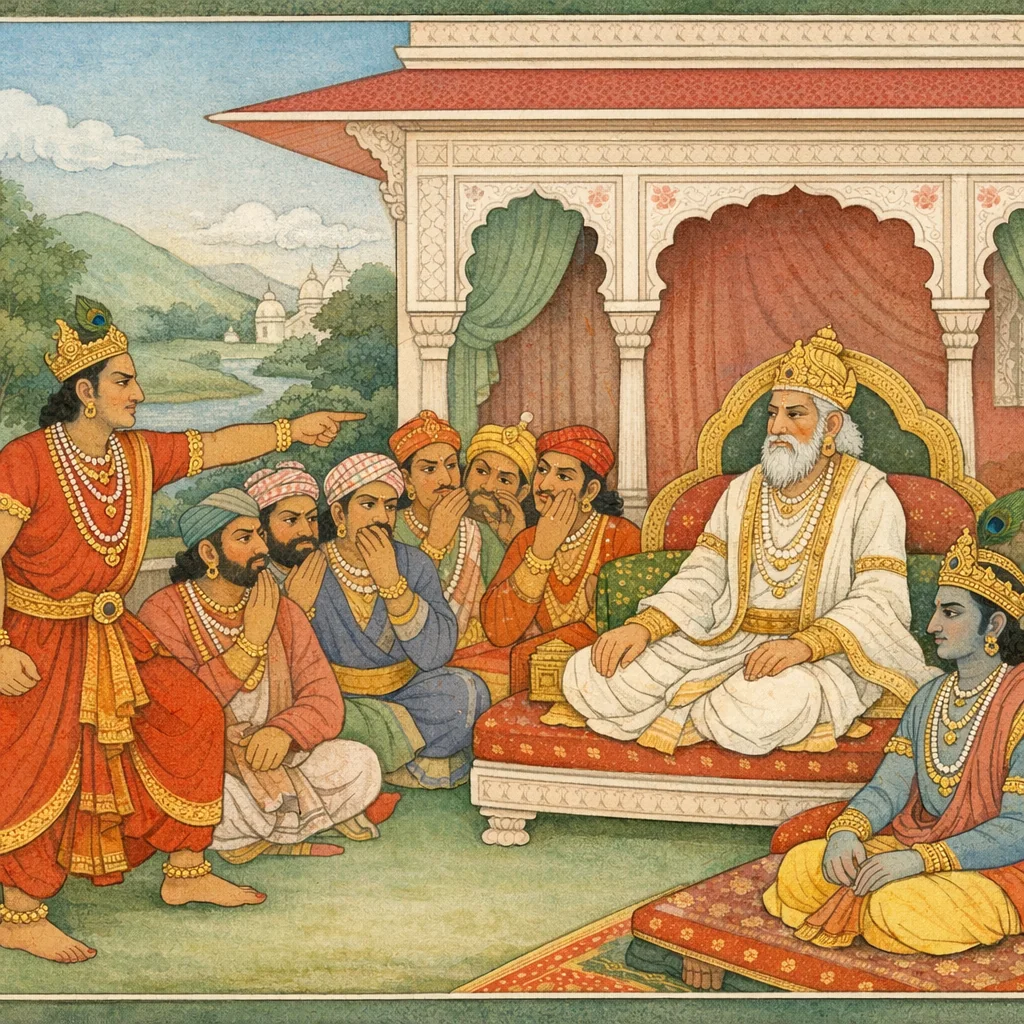
Adhyaya 41
Bhīṣma–Śiśupāla-saṃvādaḥ (Bhishma and Shishupala’s exchange in the assembly)
Upa-parva: Rājasūya-sabhā: Śiśupāla–Bhīṣma dispute (within the assembly proceedings)
The chapter opens with Bhīṣma interpreting Śiśupāla’s challenge as operating under a larger inevitability tied to Kṛṣṇa’s will, framing the confrontation as more than personal rivalry (1–4). Vaiśaṃpāyana narrates Śiśupāla’s immediate refusal to tolerate Bhīṣma’s assessment, leading to a sustained verbal attack that accuses Bhīṣma of improper praise and urges him instead to laud other eminent warriors and kings (5–13). Śiśupāla then turns the critique into a moralizing indictment of rhetorical misconduct—self-deprecation, self-praise, blaming others, and praising others—presented as a fourfold pattern outside ārya conduct (14–16). He illustrates his point with the Bhūliṅga bird analogy, warning against reckless speech and misread devotion (18–23). Bhīṣma replies with uncompromising stance: he claims he does not depend on the approval of earthly rulers and treats their hostility as inconsequential (24–31). He closes by pointing to Govinda present and honored in the assembly, and calls for Kṛṣṇa to be summoned in combat, presenting the dispute as reaching a decisive threshold (32–33).
Chapter Arc: राजसूय-यज्ञ की सभा में, कृष्ण के अग्रपूजन से जली हुई शिशुपाल की वाणी अचानक भीष्म पर टूट पड़ती है—वह पूछता है कि भीष्म इतने राजाओं के सामने निर्लज्ज होकर कृष्ण की प्रशंसा क्यों कर रहे हैं। → शिशुपाल भीष्म को अपमानित करने के लिए कटु उपमाएँ और आरोपों की वर्षा करता है—भीष्म को ‘तीसरी प्रकृति’ में स्थित कहकर तिरस्कृत करता, कौरवों को अंधों की तरह अंधे का अनुसरण करने वाला बताता, और कृष्ण के पूतना-वध आदि कर्मों का उल्लेख कर यह जताता है कि ऐसी कथाएँ सुनकर उसका मन और अधिक व्यथित होता है। सभा में बैठे राजाओं का क्रोध और असहजता बढ़ती जाती है। → शिशुपाल का चरम प्रहार तब आता है जब वह भीष्म को ‘कौरवाधम’ कहकर संबोधित करता और यह आरोप लगाता है कि भीष्म सत्पुरुषों के मार्ग से गिर चुके हैं—जिनके लिए कृष्ण परम पूजनीय हैं, उनके ‘प्रदर्शक’ होकर भीष्म धर्मज्ञ होने का ढोंग कर रहे हैं। वह पुराण-गाथाओं और दृष्टांतों का सहारा लेकर भीष्म की प्रतिष्ठा को सार्वजनिक रूप से तोड़ने का प्रयास करता। → अध्याय का अंत शिशुपाल के वाक्य-प्रवाह पर ही होता है—यह एक ‘आरोप-पर्व’ की तरह सभा को विषाक्त कर देता है, पर तत्काल दंड/प्रतिउत्तर का वर्णन यहाँ नहीं आता; केवल यह स्पष्ट होता है कि शिशुपाल ने मर्यादा-रेखा लांघ दी है और सभा का संतुलन डगमगा गया है। → शिशुपाल की यह निर्भीक निंदा अब किस सीमा तक जाएगी—और कृष्ण/भीष्म/सभा इसका उत्तर कैसे देंगे—यह तनाव अगले प्रसंग पर छोड़ दिया जाता है।
Shlokas
Verse 1
ऑपन- माल बछ। अकाल एकचत्वारिशो< ध्याय: शिशुपालद्दारा भीष्मकी निन्दा शिशुपाल उवाच विभीषिकाभिर्बलद्वीभिभभीषयन् सर्वपार्थिवान् । न व्यपत्रपसे कस्माद् वृद्ध: सन् कुलपांसन,शिशुपाल बोला--कुलको कलंकित करनेवाले भीष्म! तुम अनेक प्रकारकी विभीषिकाओंद्वारा इन सब राजाओंको डरानेकी चेष्टा कर रहे हो। बड़े-बूढ़े होकर भी तुम्हें अपने इस कृत्यपर लज्जा क्यों नहीं आती?
Shishupala said: “With terrifying threats and forceful intimidation you are trying to cow all these kings. Why do you feel no shame for such conduct, even though you are an elder—O Bhishma, disgrace to your lineage?”
Verse 2
युक्तमेतत् तृतीयायां प्रकृतौ वर्तता त्वया । दक्तुं धर्मादपेतार्थ त्वं हि सर्वकुरूत्तम:,तुम तीसरी प्रकृतिमें स्थित (नपुंसक) हो, अतः तुम्हारे लिये इस प्रकार धर्मविरुद्ध बातें कहना उचित ही है। फिर भी यह आश्चर्य है कि तुम समूचे कुरुकुलके श्रेष्ठ पुरुष कहे जाते हो
“That is fitting enough, since you abide in the ‘third nature’ (neither man); thus it suits you to utter words that stray from dharma. Yet it is astonishing that you are still called the foremost man of the entire Kuru line.”
Verse 3
नावि नौरिव सम्बद्धा यथान्धो बान्धमन्वियात् | तथाभूता हि कौरव्या येषां भीष्म त्वमग्रणी:,भीष्म! जैसे एक नाव दूसरी नावमें बाँध दी जाय, एक अंधा दूसरे अंधेके पीछे चले; वही दशा इन सब कौरवोंकी है, जिन्हें तुम-जैसा अगुआ मिला है
Śiśupāla said: “As when one boat is merely tied to another, or as a blind man follows another blind man, so too are these Kauravas—bound and led without true sight—since you, Bhīṣma, have become their foremost guide.”
Verse 4
पूतनाघातपूर्वाणि कर्माण्यस्य विशेषत: । त्वया कीर्तयतास्माकं भूय: प्रव्यथितं मन:,तुमने श्रीकृष्णके पूतना-वध आदि कर्मोका जो विशेषरूपसे वर्णन किया है, उससे हमारे मनको पुन: बहुत बड़ी चोट पहुँची है
Śiśupāla said: “By your detailed recounting of his deeds—beginning with the slaying of Pūtanā—our hearts have been wounded anew. Your praise, instead of soothing, has stirred fresh anguish within us.”
Verse 5
अवलिप्तस्य मूर्खस्य केशवं स्तोतुमिच्छत: । कथं भीष्म न ते जिह्ला शतधेयं विदीर्यते,भीष्म! तुम्हें अपने ज्ञानीपनका बड़ा घमंड है, परंतु तुम हो वास्तवमें बड़े मूर्ख! ओह! इस केशवकी स्तुति करनेकी इच्छा होते ही तुम्हारी जीभके सैकड़ों टुकड़े क्यों नहीं हो जाते?
Śiśupāla, in a burst of contempt, taunts Bhīṣma: “You are an arrogant fool. When you feel the urge to praise Keśava, how is it that your tongue does not split into a hundred pieces?” The verse frames a moral contrast: abusive pride and hostility toward the virtuous versus reverent speech that honors perceived righteousness.
Verse 6
यत्र कुत्सा प्रयोक्तव्या भीष्म बालतरैनरै: | तमिमं ज्ञानवृद्धः सन् गोपं संस्तोतुमिच्छसि,भीष्म! जिसके प्रति मूर्ख-से-मूर्ख मनुष्योंको भी घृणा करनी चाहिये, उसी ग्वालियेकी तुम ज्ञानवृद्ध होकर भी स्तुति करना चाहते हो (यह आश्चर्य है!)
Śiśupāla said: “O Bhīṣma, one toward whom even the most childish and foolish men ought to direct only contempt—him, that cowherd—you, though mature in knowledge, wish to praise. This is astonishing.”
Verse 7
यद्यनेन हतो बाल्ये शकुनिश्ित्रमत्र किम् । तौ वाश्ववृषभौ भीष्म यौ न युद्धविशारदौ,भीष्म! यदि इसने बचपनमें एक पक्षी (बकासुर)-को अथवा जो युद्धकी कलासे सर्वथा अनभिज्ञ थे, उन अश्व (केशी) और वृषभ (अरिष्टासुर) नामक पशुओंको मार डाला तो इसमें क्या आश्वर्यकी बात हो गयी?
Śiśupāla said: “O Bhīṣma, if in his childhood he killed but a bird (Bakāsura), or slew Keśī the horse and Ariṣṭāsura the bull—creatures wholly unskilled in the arts of war—what is astonishing in that?”
Verse 8
चेतनारहितं काष्ठं यद्यनेन निपातितम् । पादेन शकटं भीष्म तत्र कि कृतमद्भुतम्,भीष्म! छकड़ा क्या है, चेतनाशून्य लकड़ियोंका ढेर ही तो, यदि इसने पैरसे उसको उलट ही दिया तो कौन अनोखी करामात कर डाली?
Śiśupāla said: “O Bhīṣma, a cart is nothing but a heap of insentient wood. If he has merely overturned it with his foot, what marvel has really been done there?”
Verse 9
(अर्कप्रमाणौ तौ वृक्षौ यद्यनेन निपातितौ । नागश्न पातितो$नेन तत्र को विस्मय: कृत: ।।) आकके पौधोंके बराबर दो अर्जुन वृक्षोंको यदि श्रीकृष्णने गिरा दिया अथवा एक नागको ही मार गिराया तो कौन बड़े आश्वर्यका काम कर डाला?। वल्मीकमात्र: सप्ताहं यद्यनेन धृतो5चल: । तदा गोवर्धनो भीष्म न तच्चित्रं मतं मम,भीष्म! यदि इसने गोवर्धनपर्वतको सात दिनतक अपने हाथपर उठाये रखा तो उसमें भी मुझे कोई आश्वर्यकी बात नहीं जान पड़ती; क्योंकि गोवर्धन तो दीमकोंकी खोदी हुई मिट्टीका ढेरमात्र है
Śiśupāla said: “If he has felled those two trees that were only as big as arka-plants, or if he has merely brought down a serpent, what great marvel has he really accomplished? And if he held up a mountain for seven days—Bhīṣma—then even that seems no wonder to me; for Govardhana is, in my view, nothing more than a heap like an anthill.”
Verse 10
भुक्तमेतेन बद्धन्नं क्रीडता नगमूर्थनि । इति ते भीष्म शृण्वाना: परे विस्मयमागता:,भीष्म! कृष्णने गोवर्धनपर्वतके शिखरपर खेलते हुए अकेले ही बहुत-सा अन्न खा लिया, यह बात भी तुम्हारे मुँहले सुनकर दूसरे लोगोंको ही आश्चर्य हुआ होगा (मुझे नहीं)
Śiśupāla said: “Bhīṣma, they say that while playing upon the mountain’s summit he alone consumed a great quantity of prepared food. Hearing such words from your own mouth, others must indeed have been struck with amazement—though I am not.”
Verse 11
यस्य चानेन धर्मज्ञ भुक्तमन्नं बलीयस: । स चानेन हतः कंस इत्येतन्न महाद्भुतम्,धर्मज्ञ भीष्म! जिस महाबली कंसका अन्न खाकर यह पला था, उसीको इसने मार डाला। यह भी इसके लिये कोई बड़ी अदभुत बात नहीं है
Śiśupāla said: “O knower of dharma, this man once lived on the food of the mighty Kaṃsa; and yet he killed that very Kaṃsa. In this, O dharma-knowing Bhīṣma, there is nothing especially wondrous.”
Verse 12
न ते श्रुतमिदं भीष्म नूनं कथयतां सताम् | यद् वक्ष्ये त्वामधर्मज्ञं वाक्यं कुरुकुलाधम,कुरुकुलाधम भीष्म! तुम धर्मको बिलकुल नहीं जानते। मैं तुमसे धर्मकी जो बात कहूँगा, वह तुमने संत-महात्माओंके मुखसे भी नहीं सुनी होगी
Śiśupāla said: “O Bhīṣma, surely you have never heard this from the lips of the virtuous. I shall speak to you—one who is ignorant of dharma—words fit for the disgrace of the Kuru line.”
Verse 13
स्त्रीषु गोषु न शस्त्राणि पातयेद् ब्राह्मणेषु च । यस्य चान्नानि भुञ्जीत यत्र च स्यात् प्रतिश्रयः,स्त्रीपर, गौपर, ब्राह्मणोंपर तथा जिसका अन्न खाय अथवा जिनके यहाँ अपनेको आश्रय मिला हो, उनपर भी हथियार न चलाये
Śiśupāla declared a rule of righteous conduct in conflict: one should not strike with weapons at women, at cows, or at Brāhmaṇas; nor should one raise arms against a person whose food one has eaten, or in the very place where one has received shelter.
Verse 14
इति सन्तो5नुशासन्ति सज्जन धर्मिण: सदा । भीष्म लोके हि तत् सर्व वितथं त्वयि दृश्यते,भीष्म! जगत्में साधु धर्मात्मा पुरुष सज्जनोंको सदा इसी धर्मका उपदेश देते रहते हैं; किंतु तुम्हारे निकट यह सब धर्म मिथ्या दिखायी देता है
“Thus do the good and righteous always instruct the virtuous: this is the way of dharma. Yet, Bhīṣma, in your case all that teaching appears false—at least as the world sees it. Your conduct makes the very principles you are meant to uphold seem untrue.”
Verse 15
ज्ञानवृद्धं च वृद्धं च भूयांसं केशवं मम । अजानत इवाख्यासि संस्तुवन् कौरवाधम,कौरवाधम! तुम मेरे सामने इस कृष्णकी स्तुति करते हुए इसे ज्ञानवृद्ध और वयोवृद्ध बता रहे हो, मानो मैं इसके विषयमें कुछ जानता ही न होऊँ
Shishupala said: “You are praising Keshava right before me, calling him mature in wisdom and advanced in years, as though I knew nothing about him at all—O worst of the Kauravas!”
Verse 16
गोघ्नः स्त्रीघ्नश्व सन् भीष्म त्वद्वाक्याद् यदि पूज्यते । एवंभूतश्न यो भीष्म कथं संस्तवमहति,भीष्म! यदि तुम्हारे कहनेसे गोघाती और स्त्रीहन्ता होते हुए भी इस कृष्णकी पूजा हो रही है तो तुम्हारी धर्मज्ञताकी हद हो गयी। तुम्हीं बताओ, जो इन दोनों ही प्रकारकी हत्याओंका अपराधी है, वह स्तुतिका अधिकारी कैसे हो सकता है?
Śiśupāla said: “O Bhīṣma, if—on the strength of your words—this Kṛṣṇa is being honored despite being a killer of cows and a killer of women, then the limits of your discernment of dharma have been reached. Tell me, Bhīṣma: how can one who bears such crimes be worthy of praise?”
Verse 17
असोौ मतिमतां श्रेष्ठी य एब जगत: प्रभु: । सम्भावयति चाप्येवं त्वद्वाक्याच्च जनार्दन: । एवमेतत् सर्वमिति तत् सर्व वितथं ध्रुवम्,तुम कहते हो--ये बुद्धिमानोंमें श्रेष्ठ हैं, ये ही सम्पूर्ण जगतके ईश्वर हैं” और तुम्हारे ही कहनेसे यह कृष्ण अपनेको ऐसा ही समझने भी लगा है। वह इन सभी बातोंको ज्यों-की त्यों ठीक मानता है; परंतु मेरी दृष्टिमें कृष्णके सम्बन्धमें तुम्हारे द्वारा जो कुछ कहा गया है, वह सब निश्चय ही झूठा है
Śiśupāla said: “You claim, ‘He is the foremost among the wise; he is the Lord of the whole world.’ And, merely because you speak so, Janārdana (Kṛṣṇa) has even begun to accept himself in that way. He takes all these assertions as entirely true; but in my view, everything you have said about Kṛṣṇa is certainly false.”
Verse 18
न गाथागाथिनं शास्ति बहु चेदपि गायति । प्रकृतिं यान्ति भूतानि भूलिड्गशकुनिर्यथा,कोई भी गीत गानेवालेको कुछ सिखा नहीं सकता, चाहे वह कितनी ही बार क्यों न गाता हो। भूलिंग पक्षीकी भाँति सब प्राणी अपनी प्रकृतिका ही अनुसरण करते हैं
No one can truly instruct a mere singer of songs, even if he repeats them again and again. Living beings follow their own inborn nature—just as the bhūliṅga bird does.
Verse 19
नूनं प्रकृतिरेषा ते जघन्या नात्र संशय: । अति पापीयसी चैषा पाण्डवानामपीष्यते,निश्चय ही तुम्हारी यह प्रकृति बड़ी अधम है, इसमें संशय नहीं है। अतएव इन पाण्डवोंकी प्रकृति भी तुम्हारे ही समान अत्यन्त पापमयी होती जा रही है
Śiśupāla said: “Surely this is your nature—base and ignoble; of that there is no doubt. And now that same exceedingly sinful disposition is being approved of, even in the case of the Pāṇḍavas.”
Verse 20
येषामर्च्यतम: कृष्णस्त्वं च येषां प्रदर्शक: । धर्मवांस्त्वमधर्मज्ञ: सतां मार्गादवप्लुत:,अथवा क्यों न हो, जिनका परम पूजनीय कृष्ण है और सत्पुरुषोंके मार्गसे गिरा हुआ तुम-जैसा धर्मज्ञानशून्य धर्मात्मा जिनका मार्गदर्शक है
“For those whose most worship-worthy object is Kṛṣṇa—and for whom you, fallen from the path of the righteous, are held up as a guide—how could it be otherwise? You are paraded as ‘virtuous’ though you are ignorant of adharma; you have slipped away from the very road walked by the good.”
Verse 21
को हि धर्मिणमात्मानं जानन् ज्ञानविदां वर: | कुर्याद् यथा त्वया भीष्म कृतं धर्ममवेक्षता,भीष्म! कौन ऐसा पुरुष होगा, जो अपनेको ज्ञानवानोंमें श्रेष्ठ और धर्मात्मा जानते हुए भी ऐसे नीच कर्म करेगा, जो धर्मपर दृष्टि रखते हुए भी तुम्हारे द्वारा किये गये हैं
Shishupala said: “Who, knowing himself to be righteous and the foremost among the wise, would commit so base an act as the one done by you, Bhishma—done even while claiming to keep Dharma in view?”
Verse 22
चेत् त्वं धर्म विजानासि यदि प्राज्ञा मतिस्तव । अन्यकामा हि धर्मज्ञा कन्यका प्राज्ञमानिना । अम्बा नामेति भद्रं ते कथं सापहता त्वया,यदि तुम धर्मको जानते हो, यदि तुम्हारी बुद्धि उत्तम ज्ञान और विवेकसे सम्पन्न है तो तुम्हारा भला हो, बताओ, काशिराजकी जो धर्मज्ञ कन्या अम्बा दूसरे पुरुषमें अनुरक्त थी, उसका अपनेको पण्डित माननेवाले तुमने क्यों अपहरण किया?
Śiśupāla said: “If you truly understand dharma, and if your intellect is genuinely wise and discerning, then tell me—may it be well with you—why did you, who consider yourself learned, abduct Ambā, that dharma-knowing maiden of the King of Kāśī, when her heart was already set on another man?”
Verse 23
तां त्वयापि हतां भीष्म कन्यां नैषितवान् यतः । भ्राता विचित्रवीर्यस्ते सतां मार्गमनुछित:,भीष्म! तुम्हारे द्वारा अपहरण की गयी उस काशिराजकी कन्याको तुम्हारे भाई विचित्रवीर्यने अपनानेकी इच्छा नहीं की, क्योंकि वे सन्मार्गपर स्थित रहनेवाले थे
O Bhīṣma, even though you had carried off that maiden, your brother Vicitravīrya did not accept her as his wife—because he was committed to the righteous path upheld by the virtuous.
Verse 24
दारयोर्यस्य चान्येन मिषत:ः प्राज्ञमानिन: । तव जातान्यपत्यानि सज्जनाचरिते पथि,उन्हींकी दोनों विधवा पत्नियोंके गर्भसे तुम-जैसे पण्डितमानीके देखते-देखते दूसरे पुरुषद्वारा संतानें उत्पन्न की गयीं, फिर भी तुम अपनेको साधु पुरुषोंके मार्गपर स्थिर मानते हो
Śiśupāla said: “Even while you—who pride yourself on wisdom—looked on, children were begotten for your two widowed wives by another man. Yet you still claim to stand upon the path of conduct followed by the virtuous.”
Verse 25
को हि धर्मोडस्ति ते भीष्म ब्रह्म॒चर्यमिदं वृथा । यद् धारयसि मोहाद् वा क्लीबत्वाद् वा न संशय:,भीष्म! तुम्हारा धर्म कया है! तुम्हारा यह ब्रह्मचर्य भी व्यर्थका ढकोसलामात्र है, जिसे तुमने मोहवश अथवा नपुंसकताके कारण धारण कर रखा है, इसमें संशय नहीं
“Bhīṣma, what ‘dharma’ do you really have? This vow of celibacy of yours is pointless—mere show—since you maintain it either out of delusion or out of impotence; of that there is no doubt.”
Verse 26
न त्वहं तव धर्मज्ञ पश्याम्युपचयं क्वचित् | नहि ते सेविता वृद्धा य एवं धर्ममब्रवी:,धर्मज्ञ भीष्म! मैं तुम्हारी कहीं कोई उन्नति भी तो नहीं देख रहा हूँ। मेरा तो विश्वास है, तुमने ज्ञानवृद्ध पुरुषोंका कभी संग नहीं किया है। तभी तो तुम ऐसे धर्मका उपदेश करते हो
Śiśupāla said: “O knower of dharma, I do not see any true advancement in you anywhere. Surely you have never associated with elders grown wise in understanding; that is why you speak of dharma in this manner.”
Verse 27
इष्टं दत्तमधीतं च यज्ञाश्व बहुदक्षिणा: । सर्वमेतदपत्यस्य कलां नाहन्ति षोडशीम्,यज्ञ, दान, स्वाध्याय तथा बहुत दक्षिणावाले बड़े-बड़े यज्ञ--ये सब संतानकी सोलहवीं कलाके बराबर भी नहीं हो सकते
Shishupala said: “Ritual worship duly performed, gifts bestowed, sacred learning pursued, and even great sacrifices accompanied by abundant priestly fees—none of all this can equal even a sixteenth part of the worth of offspring.”
Verse 28
ब्रतोपवासैर्बहुभि: कृतं भवति भीष्म यत् | सर्व तदनपत्यस्य मोघं भवति निश्चयात्,भीष्म! अनेक व्रतों और उपवासोंद्वारा जो पुण्य कार्य किया जाता है, वह सब संतानहीन पुरुषके लिये निश्चय ही व्यर्थ हो जाता है
Shishupala addresses Bhishma: “Bhishma! Whatever merit is accumulated through many vows and fasts becomes, in my view, certainly fruitless for a man who has no offspring.”
Verse 29
सो<नपत्यश्व वृद्धश्न॒ मिथ्याधर्मानुसारक: । हंसवत् त्वमपीदानी ज्ञातिभ्य: प्राप्तुया वधम्,तुम संतानहीन, वृद्ध और मिथ्याधर्मका अनुसरण करनेवाले हो; अत: इस समय हंसकी भाँति तुम भी अपने जातिभाइयोंके हाथसे ही मारे जाओगे
Śiśupāla said: “You are without offspring, aged, and one who follows a counterfeit version of dharma. Therefore, now—like a haṃsa—you too are destined to meet death at the hands of your own kinsmen.”
Verse 30
एवं हि कथयन्त्यन्ये नरा ज्ञानविद: पुरा । भीष्म यत् तदहं सम्यग् वक्ष्यामि तव शृण्वतः,भीष्म! पहलेके विवेकी मनुष्य एक प्राचीन वृत्तान्त सुनाया करते हैं, वही मैं ज्यों-का- त्यों तुम्हारे सामने उपस्थित करता हूँ, सुनो
Śiśupāla said: “Bhīṣma! In former times, men of discernment used to recount an ancient tale. That very account I shall relate to you faithfully as you listen—hear me.”
Verse 31
वृद्ध: किल समुद्रान्ते कश्चिद्धंसो5भवत् पुरा । धर्मवागन्यथावृत्त: पक्षिण: सोडनुशास्ति च,पूर्वकालकी बात है, समुद्रके निकट कोई बूढ़ा हंस रहता था। वह धर्मकी बातें करता; परंतु उसका आचरण ठीक उसके विपरीत होता था। वह पक्षियोंको सदा यह उपदेश किया करता कि धर्म करो, अधर्मसे दूर रहो। सदा सत्य बोलनेवाले उस हंसके मुखसे दूसरे-दूसरे पक्षी यही उपदेश सुना करते थे
Śiśupāla said: “Long ago, on the shore of the sea, there lived an old swan. He spoke lofty words about dharma, yet his own conduct ran contrary to them. Still, he kept instructing the other birds—‘Practice righteousness; keep far from unrighteousness.’ Thus the birds repeatedly heard moral counsel from the mouth of that ever-truth-speaking swan.”
Verse 32
धर्म चरत माधर्ममिति तस्य वच: किल । पक्षिण: शुश्रुवुर्भीष्म सततं सत्यवादिन:,पूर्वकालकी बात है, समुद्रके निकट कोई बूढ़ा हंस रहता था। वह धर्मकी बातें करता; परंतु उसका आचरण ठीक उसके विपरीत होता था। वह पक्षियोंको सदा यह उपदेश किया करता कि धर्म करो, अधर्मसे दूर रहो। सदा सत्य बोलनेवाले उस हंसके मुखसे दूसरे-दूसरे पक्षी यही उपदेश सुना करते थे
“‘Practice dharma; do not practice adharma’—so ran his saying, it is told. O Bhīṣma, the birds repeatedly heard this counsel from him, a constant speaker of truth. Yet the point of the tale is that his conduct stood in contradiction to his preaching: he instructed others in righteousness while himself living otherwise.”
Verse 33
अथास्य भक्ष्यमाजहु: समुद्रजलचारिण: । अण्डजा भीष्म तस्यान्ये धर्मार्थमिति शुश्रुम,भीष्म! ऐसा सुननेमें आया है कि वे समुद्रके जलमें विचरनेवाले पक्षी धर्म समझकर उसके लिये भोजन जुटा दिया करते थे
Then, O Bhīṣma, I have heard that certain egg-born creatures—birds that move about in the waters of the sea—would gather food for him, considering it a duty of dharma. The report is offered as an example of how even non-human beings were said to act from a sense of righteous obligation toward him.
Verse 34
ते च तस्य समभ्याशे निक्षिप्याण्डानि सर्वश: । समुद्राम्भस्यमज्जन्त चरन्तो भीष्म पक्षिण: । तेषामण्डानि सर्वेषां भक्षयामास पापकृत्,भीष्म! हंसपर विश्वास हो जानेके कारण वे सभी पक्षी अपने अण्डे उसके पास ही रखकर समुद्रके जलमें गोते लगाते और विचरते थे; परंतु वह पापी हंस उन सबके अण्डे खा जाता था
And those birds, O Bhīṣma, trusting him, would place all their eggs close by him and then dive and roam about in the waters of the sea. But that wicked swan would devour the eggs of them all—an image of betrayal, where confidence is exploited and innocence is harmed.
Verse 35
स हंस: सम्प्रमत्तानामप्रमत्त: स्वकर्मणि । ततः प्रक्षीयमाणेषु तेषु तेष्वण्डजो5पर: । अशड्कत महाप्राज्ञ: स कदाचिद् ददर्श ह,वे बेचारे पक्षी असावधान थे और वह अपना काम बनानेके लिये सदा चौकन्ना रहता था। तदनन्तर जब वे अण्डे नष्ट होने लगे, तब एक बुद्धिमान् पक्षीको हंसपर कुछ संदेह हुआ और एक दिन उसने उसकी सारी करतूत देख भी ली
That swan, seeing the others careless, remained ever vigilant about his own purpose. Then, as their eggs began to be steadily destroyed, another bird—highly intelligent—grew suspicious of the swan, and one day actually witnessed his misdeed.
Verse 36
ततः स कथयामास दृष्टवा हंसस्य किल्बिषम् | तेषां परमदु:खार्त: स पक्षी सर्वपक्षिणाम्,हंसका यह पापपूर्ण कृत्य देखकर वह पक्षी दुःखसे अत्यन्त आतुर हो उठा और उसने अन्य सब पक्षियोंसे सारा हाल कह सुनाया
Then, having witnessed the swan’s wrongdoing, that bird—overwhelmed with the deepest sorrow on their behalf—went and reported the entire matter to all the other birds.
Verse 37
ततः प्रत्यक्षतो दृष्टवा पक्षिणस्ते समीपगा: । निजलघ्नुस्तं तदा हंसं मिथ्यावृत्तं कुरूद्वह,कुरुवंशी भीष्म! तब उन पक्षियोंने निकट जाकर सब कुछ प्रत्यक्ष देख लिया और धर्मात्माका मिथ्या ढोंग बनाये हुए उस हंसको मार डाला
Then those birds, having come close and seen the matter directly with their own eyes, struck down that swan who was putting on a false show of righteousness—O best of the Kurus.
Verse 38
ते त्वां हंससधर्माणमपीमे वसुधाधिपा: । निहन्युर्भीष्म संक्रुद्धा: पक्षिणस्तं यथाण्डजम्,तुम भी उस हंसके ही समान हो, अतः ये सब नरेश अत्यन्त कुपित होकर आज तुम्हें उसी तरह मार डालेंगे, जैसे उन पक्षियोंने हंसकी हत्या कर डाली थी। भीष्म! इस विषयमें पुराणवेत्ता विद्वान् एक गाथा गाया करते हैं। भरतकुलभूषण! मैं उसे भी तुमको भलीभाँति सुनाये देता हूँ
You too are like that swan in nature; therefore these kings, enraged, will strike you down today, O Bhīṣma—just as birds once killed that swan, the egg-born one. In this matter, O ornament of the Bharata line, the learned knowers of the Purāṇas sing an old gāthā; I shall recount it to you clearly.
Verse 39
गाथामप्यत्र गायन्ति ये पुराणविदो जना: । भीष्म यां तां च ते सम्यक् कथयिष्यामि भारत,तुम भी उस हंसके ही समान हो, अतः ये सब नरेश अत्यन्त कुपित होकर आज तुम्हें उसी तरह मार डालेंगे, जैसे उन पक्षियोंने हंसकी हत्या कर डाली थी। भीष्म! इस विषयमें पुराणवेत्ता विद्वान् एक गाथा गाया करते हैं। भरतकुलभूषण! मैं उसे भी तुमको भलीभाँति सुनाये देता हूँ
Śiśupāla said: “Here, too, those people who know the Purāṇas sing a traditional verse. O Bhīṣma—O scion of Bharata—I shall recount to you accurately that very gāthā.”
Verse 40
इस प्रकार श्रीमह्या भारत सभापव॑के अन्तर्गत शिशुपालवधपर्वमें युधिष्ठिरको आश्वासन नामक चालीसवाँ अध्याय पूरा हुआ,अन्तरात्मन्यभिहते रौषि पत्ररथाशुचि । अण्डभक्षणकर्मतत् तव वाचमतीयते “हंस! तुम्हारी अन्तरात्मा रागादि दोषोंसे दूषित है, तुम्हारा यह अण्डभक्षणरूप अपवित्र कर्म तुम्हारी इस धर्मोपदेशमयी वाणीके सर्वथा विरुद्ध है”
“O swan! Your inner conscience is tainted by rāga and other faults; this impure act of eating eggs stands wholly opposed to your dharma-preaching words.”
Verse 41
इति श्रीमहा भारते समापर्वणि शिशुपालवधपर्वणि शिशुपालवाक्ये एकचत्वारिंशो5 ध्याय:,इस प्रकार श्रीमह्ााभारत सभापव॑के अन्तर्गत शिशुपालवधपर्वनें शिशुपालवाक्यविषयक इकतालीसवाँ अध्याय पूरा हुआ
Thus, in the Śrī Mahābhārata, within the Sabhā Parva, in the section concerning the slaying of Śiśupāla, the forty-first chapter—centred on Śiśupāla’s speech—comes to an end. In this way, the forty-first chapter of the Sabhā Parva, included in the Śiśupāla-vadha episode and dealing with Śiśupāla’s words, is concluded.
Frequently Asked Questions
The dilemma concerns legitimate dissent versus corrosive invective: whether public criticism in a royal assembly can be ethically grounded when it targets the person and the institution of honor-allocation rather than the merits of policy or conduct.
Speech is a governance instrument: praise and blame must be regulated by discernment (viveka) and proportionality, because rhetorical excess can destabilize institutions and convert deliberation into factional conflict.
No explicit phalaśruti is stated here; the meta-commentary is implicit in the narrative framing—Vaiśaṃpāyana’s report of polarized reactions and Bhīṣma’s self-positioning—highlighting how assemblies reveal collective ethics under pressure.