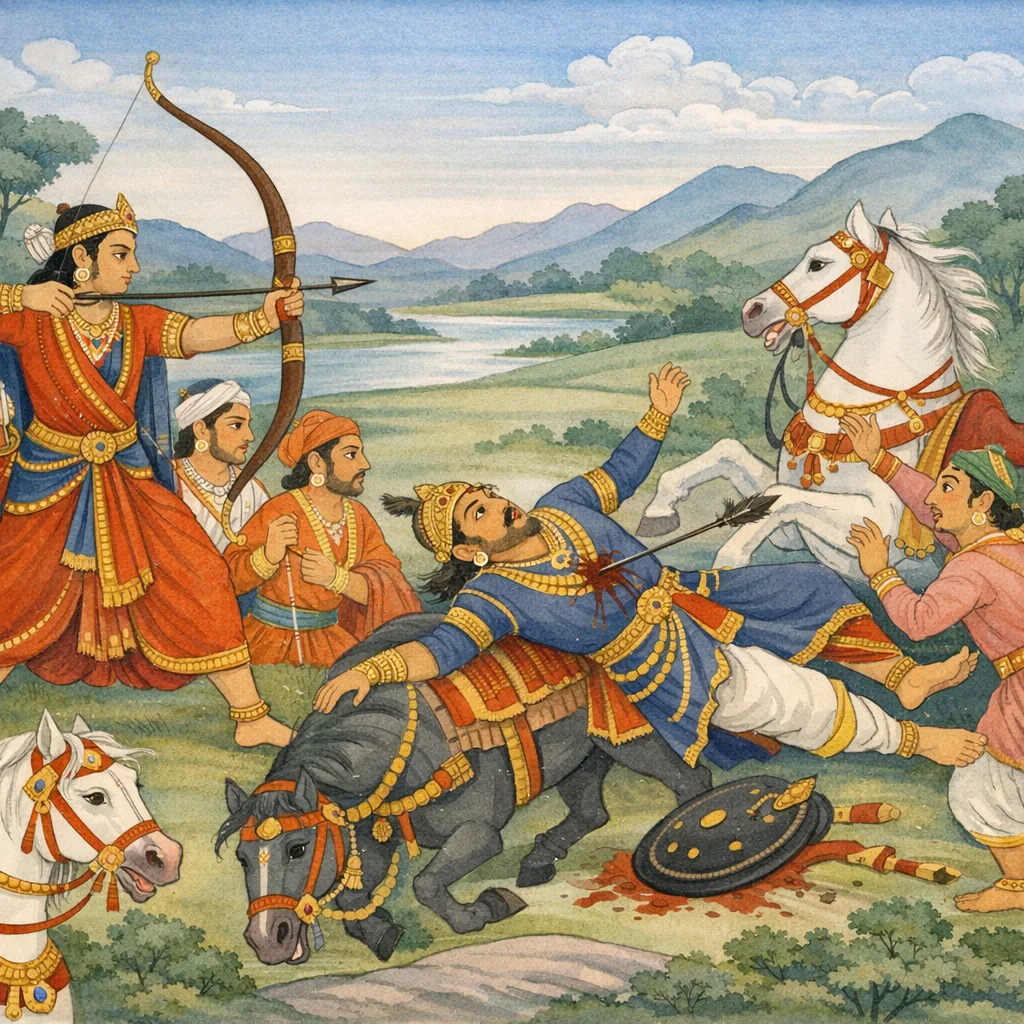
Adhyaya 85
Chapter Arc: संजय धृतराष्ट्र को बतलाते हैं कि कर्णपुत्र वृषसेन ने नकुल का धनुष-तलवार काटकर उसे रथहीन कर दिया—पाण्डव-पक्ष में क्षणिक हाहाकार और कौरव-पक्ष में उत्साह फैलता है। → दोनों सेनाओं के चुने हुए योद्धा एक-दूसरे पर टूट पड़ते हैं—द्रौपदीपुत्र, शैनेय, द्रुपदवंशी और अन्य महारथी कौरवों का संहार करते हैं; उधर कृप, अश्वत्थामा, दुर्योधन, शकुनि आदि भीषण प्रत्याक्रमण करते हैं। हाथियों-रथों की टक्कर, बाण-वर्षा और सहायक दलों के टूटने से रणभूमि का संतुलन डगमगाता है। → समस्त सेनाओं के बीच किरीटधारी अर्जुन वृषसेन पर धावा बोलते हैं; तीक्ष्ण क्षुर-बाणों से उसके धनुष, भुजाएँ और अंततः शिर/प्राणघातक अंगों पर प्रहार कर उसे रण में गिरा देते हैं—वृषसेन-वध अध्याय का निर्णायक क्षण बनता है। → वृषसेन के गिरते ही कौरव-पक्ष की पंक्तियाँ क्षण भर के लिए शिथिल पड़ती हैं; पाण्डव-पक्ष में उत्साह उठता है, पर विजय-उन्माद टिकता नहीं—क्योंकि यह वध कर्ण के क्रोध को ज्वालामुखी बना देता है। → पुत्रवध से संतप्त कर्ण रोष में अर्जुन के रथ पर रथ चढ़ाकर शीघ्र निर्णायक प्रतिशोध के लिए बढ़ता है—अगला संघर्ष और भी प्रचण्ड होने वाला है।
Shlokas
Verse 1
संजय कहते हैं--महाराज! वृषसेनने नकुलके धनुष और तलवारको काट दिया है, वे रथहीन हो गये हैं, शत्रुके बाणोंसे पीड़ित हैं तथा कर्णके पुत्रने अपने अस्त्रोंद्वारा उन्हें पराजित कर दिया है, यह जानकर श्रेष्ठ पुरुष भीमसेनके आदेशसे हाथोंमें अस्त्र-शस्त्र लिये शत्रुओंका सामना करनेमें समर्थ ट्रुपदके पाँच श्रेष्ठ पुत्र, छठे सात्यकि तथा द्रौपदीके पाँच पुत्र--ये ग्यारह वीर आपके पक्षके हाथी, घोड़े, रथ और पैदल सैनिकोंका अपने सर्पतुल्य बाणोंद्वारा संहार करते हुए रथोंद्वारा वहाँ शीघ्रतापूर्वक आ पहुँचे। उस समय उनके रथकी पताकाएँ वायुके वेगसे फहरा रही थीं। उनके घोड़े उछलते हुए आ रहे थे और वे सब-के- सब जोर-जोरसे गर्जना कर रहे थे
Sañjaya said: “O King, Vṛṣasena has cut down Nakula’s bow and sword, leaving him without a chariot and tormented by the enemy’s arrows; and the son of Karṇa has overcome him by the force of his weapons. Knowing this, and acting on the command of the foremost man Bhīmasena, eleven heroes—Drupada’s five best sons, Sātyaki as the sixth, and Draupadī’s five sons—came swiftly to that place in their chariots, fully armed and able to face the foe. As they advanced, they slaughtered your side’s elephants, horses, chariots, and foot-soldiers with serpent-like shafts. Their chariot-banners streamed in the wind’s rush, their horses leapt forward, and all of them roared aloud.”
Verse 2
ट्रपदसुतवरिष्ठा: पठ्च शैनेयषष्ठा द्रुपददुहितृपुत्रा: प्च चामित्रसाहा: । द्विरदरथनराश्चान् सूदयन्तस्त्वदीयान् भुजगपतिनिकाशैर्मार्गणैरात्तशस्त्रा:,संजय कहते हैं--महाराज! वृषसेनने नकुलके धनुष और तलवारको काट दिया है, वे रथहीन हो गये हैं, शत्रुके बाणोंसे पीड़ित हैं तथा कर्णके पुत्रने अपने अस्त्रोंद्वारा उन्हें पराजित कर दिया है, यह जानकर श्रेष्ठ पुरुष भीमसेनके आदेशसे हाथोंमें अस्त्र-शस्त्र लिये शत्रुओंका सामना करनेमें समर्थ ट्रुपदके पाँच श्रेष्ठ पुत्र, छठे सात्यकि तथा द्रौपदीके पाँच पुत्र--ये ग्यारह वीर आपके पक्षके हाथी, घोड़े, रथ और पैदल सैनिकोंका अपने सर्पतुल्य बाणोंद्वारा संहार करते हुए रथोंद्वारा वहाँ शीघ्रतापूर्वक आ पहुँचे। उस समय उनके रथकी पताकाएँ वायुके वेगसे फहरा रही थीं। उनके घोड़े उछलते हुए आ रहे थे और वे सब-के- सब जोर-जोरसे गर्जना कर रहे थे
Sañjaya said: “O King, the five foremost sons of Drupada—together with Śaineya (Sātyaki) as the sixth—and the five sons of Draupadī, all valiant and unconquerable in the face of foes, came swiftly in their chariots. With weapons in hand, they were cutting down your forces—elephants, chariots, and foot-soldiers—by means of arrows like the king of serpents. Their standards streamed in the wind; their horses sprang forward; and they roared aloud as they advanced.”
Verse 3
अथ तव रथमुख्यास्तान् प्रतीयुस्त्वरन्तः कृपह्नदिकसुतौ च द्रौणिदुर्योधनौ च । शकुनिसुतवृकौ च क्राथदेवावृधौ च द्विदजलदघोषै: स्यन्दनै: कार्मुकैश्व,तदनन्तर कृपाचार्य, कृतवर्मा, अश्वत्थामा, दुर्योधन, शकुनिपुत्र उलूक, वृक, क्राथ और देवावृध--ये आपके प्रमुख महारथी बड़ी उतावलीके साथ धनुष लिये हाथी और मेघोंके समान शब्द करनेवाले रथोंपर आरूढ़ हो उन पाण्डववीरोंका सामना करनेके लिये आ पहुँचे
Sañjaya said: Then your foremost chariot-warriors hurried forward—Kṛpa, Hārdikaputra Kṛtavarman, Droṇa’s son Aśvatthāman, and Duryodhana; and also Śakuni’s son Ulūka, along with Vṛka, Krāthadeva, and Devāvṛdha. Mounted on chariots whose roar was like that of elephants and thunderclouds, and bearing their bows, they advanced to confront the Pāṇḍava heroes.
Verse 4
तव नृप रथिवर्यास्तान् दशैकं च वीरान् नृवर शरवराग्रैस्ताडयन्तो5 भ्यरुन्धन् । नवजलदसवर्णहस्तिभिस्तानुदीयु- गिरिशिखरनिकाशैर्भीमवेगै: कुलिन्दा:
Sañjaya said: O king, your foremost chariot-warriors—those eleven heroes—were checked and hemmed in as they were struck by volleys of sharp arrows. Then the Kulindas surged forward with elephant-troops dark as fresh rain-clouds, their charge terrifying in speed, like mountain-peaks in mass—pressing into the battle with overwhelming force.
Verse 5
नरश्रेष्ठ नरेश्वर! कृपाचार्य आदि आपके रथी वीरोंने अपने उत्तम बाणोंद्वारा प्रहार करते हुए वहाँ पाण्डव-पक्षके उन ग्यारह महारथी वीरोंको आगे बढ़नेसे रोक दिया। तत्पश्चात् कुलिन्ददेशके योधा नूतन मेघके समान काले, पर्वतशिखरोंके समान विशालकाय और भयंकर वेगशाली हाथियोंद्वारा कौरववीरोंपर चढ़ आये ।। सुकल्पिता हैमवता मदोत्कटा रणाभिकामै: कृतिभि: समास्थिता: । सुवर्णजालैरवितता बभुर्गजा- स्तथा यथा खे जलदा: सविद्युत:,वे हिमाचलप्रदेशके मदोन्मत्त हाथी अच्छी तरह सजाये गये थे। उनकी पीठोंपर सोनेकी जालियोंसे युक्त झूल पड़े हुए थे और उनके ऊपर युद्धकी अभिलाषा रखनेवाले, रणकुशल कुलिन्द वीर बैठे हुए थे। उस समय रणभूमिमें वे हाथी आकाशमें बिजलीसहित मेघोंके समान शोभा पा रहे थे
Sanjaya said: O best of men, O king! Kripa and the other chariot-warriors on your side, striking with their finest arrows, checked those eleven great champions of the Pandava host and prevented them from pressing forward. Then the fighters from the land of Kulinda surged against the Kaurava heroes, mounted on elephants—dark as newly formed clouds, huge as mountain peaks, and charging with terrifying speed. Those Himalayan elephants, splendidly caparisoned and intoxicated with musth, bore upon their backs skilled warriors eager for battle; draped with golden netting, they shone on the field like thunderclouds in the sky streaked with lightning.
Verse 6
कुलिन्दपुत्रो दशभिर्महायसै: कृप॑ ससूताश्चमपीडयद् भूशम् । ततः शरद्वत्सुतसायकै्हत: सहैव नागेन पपात भूतले,कुलिन्दराजके पुत्रने लोहेके बने हुए दस विशाल बाणोंसे सारथि और घोड़ोंसहित कृपाचार्यको अत्यन्त पीड़ित कर दिया। तदनन्तर शरद्वानके पुत्र कृपाचार्यके बाणोंद्वारा मारा जाकर वह हाथीके साथ ही पृथ्वीपर गिर पड़ा
Sañjaya said: The son of the Kulinda king grievously harassed Kṛpācārya—together with his charioteer and horses—by means of ten great iron arrows. Then, struck down by the arrows of Śaradvat’s son (Kṛpa), he fell to the ground along with his elephant.
Verse 7
कुलिन्दपुत्रावरजस्तु तोमरै- दिवाकरांशुप्रतिमैरयस्मयै: । रथं च विक्षोभ्य ननाद नर्दत- स्ततो<स्य गान्धारपति: शिरो5हरत्,कुलिन्दराजकुमारका छोटा भाई सूर्यकी किरणोंके समान कान्तिमान् एवं लोहेके बने हुए तोमरोंद्वारा गान्धारराजके रथकी धज्जियाँ उड़ाकर जोर-जोरसे गर्जना करने लगा। इतनेहीमें गान्धारराजने उस गर्जते हुए वीरका सिर काट लिया
Sañjaya said: The younger brother of the Kulinda prince, hurling iron javelins radiant as the sun’s rays, shook the Gandhāra king’s chariot and roared a challenge. Then the lord of Gandhāra cut off the head of that roaring warrior.
Verse 8
ततः कुलिन्देषु हतेषु तेष्वथ प्रह्ष्रूपास्तव ते महारथा: । भशं प्रदध्मुर्लवणाम्बुसम्भवान् परांश्न बाणासनपाणयो< भ्ययु:,उन कुलिन्द वीरोंके मारे जानेपर आपके महारथी बड़े प्रसन्न हुए। वे जोर-जोरसे शंख बजाने लगे और हाथमें धनुष-बाण लिये शत्रुओंपर टूट पड़े
Sañjaya said: Then, when those Kulinda warriors had been slain, your great chariot-fighters grew openly elated. Blowing their conches, born of the ocean’s salt waters, they surged against the enemy with bows and arrows in hand.
Verse 9
अथाभवद् युद्धमतीव दारुणं पुन: कुरूणां सह पाण्डुसृञ्जयै: । शरासिशव्त्यृष्टिगदापरश्वधै- नराश्वनागासुहरं भूशाकुलम्,तदनन्तर कौरवोंका पाण्डवों तथा सूंजयोंके साथ पुनः अत्यन्त भयंकर युद्ध होने लगा। वह घमासान युद्ध बाण, खड्ग, शक्ति, ऋष्टि, गदा और फरसोंकी मारसे मनुष्यों, घोड़ों और हाथियोंके प्राण ले रहा था
Sañjaya said: Then once again a most dreadful battle arose between the Kurus and the Pāṇḍavas together with the Sṛñjayas. With arrows, swords, spears, lances, maces, and axes it took the lives of men, horses, and elephants, and the earth was thrown into turmoil.
Verse 10
रथाश्वमातड्रपदातिभिस्तत: परस्परं विप्रहतापतन् क्षितौ । यथा सविद्युत्स्तनिता बलाहका: समाहता दिग्भ्य इवोग्रमारुतै:
Sañjaya said: Then the charioteers, horsemen, and foot-soldiers—striking one another in close combat—fell upon the earth. They crashed down like thunderclouds, flashing with lightning and roaring with thunder, driven together from all directions by fierce winds.
Verse 11
जैसे बिजलीकी चमक और गर्जनासे युक्त मेघ भयंकर वायुके वेगसे ताड़ित हो सम्पूर्ण दिशाओंसे गिर जाते हैं, उसी प्रकार रथों, घोड़ों, हाथियों और पैदलोंद्वारा परस्पर मारे जाकर वे युद्धपरायण योद्धा धराशायी होने लगे ।। तत: शतानीकमतान् महागजां- स्तथा रथान् पत्तिगणांश्व तान् बहून् | जघान भोजस्तु हयानथापतन् क्षणाद् विशस्ता: कृतवर्मण: शरै:,तदनन्तर शतानीकद्वारा सम्मानित विशाल गजराजों, अश्वों, रथों और बहुत-से पैदलसमूहोंको कृतवर्माने मार डाला। वे कृतवर्माके बाणोंसे छिन्न-भिन्न हो क्षणभरमें धरतीपर गिर पड़े
Sañjaya said: As clouds, flashing with lightning and rumbling with thunder, when struck by the rush of a dreadful wind, seem to collapse and pour down from every quarter, so too the warriors—intent only on battle—began to fall to the earth, cut down in mutual slaughter by chariots, horses, elephants, and foot-soldiers. Then Kṛtavarman of the Bhoja line struck down the great elephants honored by Śatānīka, along with chariots, horses, and many companies of infantry; shredded by Kṛtavarman’s arrows, they dropped to the ground in an instant.
Verse 12
अथापरे द्रौणिहता महाद्विपा- स्त्रय: ससर्वायुधयोधकेतना: । निपेतुरु्व्या व्यसवो निपातिता- स्तथा यथा वज्रहता महाचला:,इसके बाद अअश्वत्थामाने सम्पूर्ण आयुधों, योद्धाओं और ध्वजाओंसहित अन्य तीन विशाल गजराजोंको मार गिराया। उसके द्वारा मारे गये वे विशाल गजराज वज्के मारे हुए महान् पर्वतोंके समान प्राणशून्य होकर पृथ्वीपर गिर पड़े
Sañjaya said: Then Aśvatthāman struck down three other mighty elephant-lords, together with all their weapons, warriors, and banners. Slain by him, those great elephants fell lifeless upon the earth, like huge mountains shattered by Indra’s thunderbolt.
Verse 13
कुलिन्दराजावरजादनन्तर: स्तनान्तरे पत्रिवरैरताडयत् । तवात्मजं तस्य तवात्मज: शरै: शितै: शरीरं व्यहनद् द्विपं च तम्,कुलिन्दराजके छोटे भाईसे भी जो छोटा था, उसने श्रेष्ठ बाणोंद्वारा आपके पुत्रकी छातीमें चोट पहुँचायी। तब आपके पुत्रने अपने तीखे बाणोंसे उसके शरीर और हाथी दोनोंको घायल कर दिया
Sañjaya said: The younger brother of the king of the Kulindas’ younger brother struck your son in the chest with excellent, feathered arrows. In response, your son, with keen shafts, wounded both that warrior’s body and the elephant he rode.
Verse 14
स नागराज: सह राजसूनुना पपात रक्त बहु सर्वत: क्षरन् । महेन्द्रवजप्रहतो 5म्बुदागमे यथा जल गैरिकपर्वतस्तथा
Sañjaya said: The lord of elephants fell down together with the king’s son, blood streaming profusely from every side. Struck as if by Indra’s thunderbolt at the coming of the rain-clouds, he collapsed like a mountain of red ochre from which water pours.
Verse 15
जैसे वर्षाकालमें इन्द्रके वज़्से आहत हुआ गेरूका पर्वत लाल रंगका पानी बहाता है, इसी प्रकार वह गजराज अपने शरीरसे सब ओर बहुत-सा रक्त बहाता हुआ कुलिन्दराजकुमारके साथ ही धराशायी हो गया ।। कुलिन्दपुत्रप्रहितो5परो द्विपः क्राथस्य सूताश्चरथं व्यपोथयत् । ततो5पतत् क्राथशराभिघातित: सहेश्वरो वजहतो यथा गिरि:,अब कुलिन्दराजकुमारने दूसरा हाथी आगे बढ़ाया। उसने क्राथके सारथि, घोड़ों और रथको कुचल डाला, परंतु क्राथके बाणोंसे पीड़ित हो वह हाथी वजच्रताड़ित पर्वतके समान अपने स्वामीके साथ ही धराशायी हो गया
Sañjaya said: Then the prince of Kulinda sent forward another elephant. It crushed Krātha’s charioteer, horses, and chariot. But struck and tormented by Krātha’s arrows, that elephant—together with its rider—fell to the earth like a mountain shattered by Indra’s thunderbolt.
Verse 16
रथी द्विपस्थेन हतो5पतच्छरै: क्राथाधिप: पर्वतजेन दुर्जय: । सवाजिसूतेष्वसनध्वजस्तथा यथा महावातहतो महाद्रुम:,तदनन्तर जैसे आँधीका उखाड़ा हुआ विशाल वृक्ष पृथ्वीपर गिर जाता है, उसी प्रकार घोड़े, सारथि, धनुष और ध्वजसहित दुर्जय महारथी क्राथ नरेश हाथीपर बैठे हुए एक पर्वतीय वीरके बाणोंसे मारा जाकर रथसे नीचे जा गिरा
Sañjaya said: The mighty king of Krātha, the hard-to-conquer great chariot-warrior Durjaya, was struck down by the arrows of a mountain-born hero who fought from an elephant. Falling from his chariot—together with his horses, charioteer, bow, and banner—he crashed to the earth like a huge tree torn down by a violent wind.
Verse 17
वृको द्विपस्थं गिरिराजवासिनं भृशं शरैर्द्धादशभि: पराभिनत् | ततो वृकं साश्वरथं महाद्विपो द्रुतं चतुर्भिश्वरणैव्यपोथयत्,तब वृकने उस पहाड़ी राजाको बारह बाण मारकर अत्यन्त घायल कर दिया। चोट खाकर पर्वतीय नरेशका वह विशाल गजराज वृककी ओर झपटा और उसने रथ और घोड़ोंसहित वृकको अपने चारों पैरोंसे दबाकर तुरंत ही उसका कचूमर निकाल दिया
Sañjaya said: Vṛka fiercely pierced the mountain-king’s elephant-mounted warrior with twelve arrows, grievously wounding him. Struck and enraged, that great elephant of the hill-chief rushed at Vṛka and, in an instant, crushed him—along with his chariot and horses—by trampling him under its four feet. The episode underscores the brutal reciprocity of battlefield violence: skill and aggression invite immediate counter-force, and in war even a moment’s advantage can turn into sudden destruction.
Verse 18
स नागराज: सनियन्तृको5पतत् तथा हतो बश्रुसुतेषुभिर्भुशम् । स चापि देवावृधसूनुरर्दित: पपात नुन्न: सहदेवसूनुना,अन्तमें बश्रुपुत्रके बाणोंसे अत्यन्त आहत होकर वह गजराज भी संचालकसहित धरतीपर लोट गया। फिर वह देवावृधकुमार भी सहदेवके पुत्रसे पीड़ित हो धराशायी हो गया
Sañjaya said: Struck down with great force by the arrows of Bāhru’s sons, the lordly elephant collapsed to the ground together with its driver. And the son of Devāvṛdha too—harassed and driven back by Sahadeva’s son—fell down, brought low in the press of battle. The scene underscores the relentless reciprocity of war: prowess meets counter-prowess, and even the mighty are felled when dharma has yielded to the logic of the battlefield.
Verse 19
विषाणगात्रावरयोधपातिना गजेन हन्तुं शकुनिं कुलिन्दज: । जगाम वेगेन भृशार्दयंश्न तं ततो<स्य गान्धारपति: शिरो5हरत्,तत्पश्चात् दूसरे कुलिन्दराजकुमारने शकुनिको मार डालनेके लिये दाँत, शरीर और सूँड़के द्वारा बड़े-बड़े योद्धाओंको मार गिरानेवाले हाथीके द्वारा उसपर वेगपूर्वक आक्रमण किया और उसे अत्यन्त घायल कर दिया। तब गान्धारराज शकुनिने उसका सिर काट लिया
Sañjaya said: A prince of the Kulindas, intent on killing Śakuni, charged at him at speed upon an elephant that, with its tusks, massive body, and trunk, had been felling great warriors. He struck Śakuni fiercely and grievously wounded him; but then the lord of Gāndhāra (Śakuni) cut off the attacker’s head. The episode underscores the brutal reciprocity of battlefield violence: even a powerful assault driven by vengeance and martial prowess can be answered instantly by ruthless counter-killing, with little space left for restraint or mercy.
Verse 20
तत:ः शतानीकहता महागजा हया रथा: पत्तिगणाश्न तावका: । सुपर्णवातप्रहता यथोरगा- स्तथागता गां विवशा विचूर्णिता:,यह देख शतानीकने आपकी सेनापर आक्रमण किया। जैसे गरुड़के पंखोंकी हवासे आहत हुए सर्प पृथ्वीपर गिर पड़ते हैं, उसी प्रकार शतानीकद्वारा मारे गये आपके विशाल हाथी, घोड़े, रथ और पैदल विवश हो पृथ्वीपर गिरकर चूर-चूर हो गये
Sañjaya said: Then your great elephants, horses, chariots, and companies of foot-soldiers—struck down by Śatānīka—fell helplessly upon the earth and were shattered. Just as serpents, beaten down by the wind from Garuḍa’s wings, drop to the ground, so too did your forces collapse under Śatānīka’s assault. The verse underscores the ruthless momentum of battle and the fragility of martial pride when confronted by overwhelming prowess.
Verse 21
ततो<भ्यविद्धाद् बहुभि: शितै: शरै: कलिज्जपुत्रो नकुलात्मजं स्मयन् ततो<स्य कोपाद् विचकर्त नाकुलिः: शिर: क्षुरेणाम्बुजसंनिभाननम्,तदनन्तर मुसकराते हुए कलिंगराजके पुत्रने अपने बहुसंख्यक पैने बाणोंद्वारा नकुलके पुत्र शतानीकको क्षत-विक्षत कर दिया। इससे नकुलकुमारको बड़ा क्रोध हुआ और उसने एक क्षुरके द्वारा कलिंगराजकुमारका कमलसदृश मुखवाला मस्तक काट डाला
Sañjaya said: Then the son of the king of Kaliṅga, smiling, struck Nakula’s son with many sharp arrows, wounding him severely. Enraged at this, Nakula’s son retaliated and, with a razor-edged arrow, cut off the Kaliṅga prince’s head—his face likened to a lotus. The episode underscores how mockery and pride on the battlefield can provoke swift, lethal retribution, and how wrath (kopa) drives warriors beyond restraint amid the ethics of war.
Verse 22
तत: शतानीकमविध्यदायसै- स्त्रिभि: शरै: कर्णसुतोअ्डर्जुनं त्रिभि: । त्रिभिश्व भीम॑ नकुलं च सप्तभि- ज॑नार्दनं द्वादशभिश्न॒ सायकै:,तत्पश्चात् कर्णपुत्र वृषसेनने लोहेके बने हुए तीन बाणोंसे शतानीकको घायल कर दिया। फिर उसने अर्जुनको तीन, भीमसेनको तीन, नकुलको सात और श्रीकृष्णको बारह बाणोंसे बींध डाला
Sañjaya said: Then Karṇa’s son struck Śatānīka with three iron-tipped arrows. Next he pierced Arjuna with three, Bhīmasena with three, Nakula with seven, and Janārdana (Kṛṣṇa) with twelve shafts. The scene underscores the relentless escalation of battle, where prowess and loyalty are tested amid the harsh ethics of war.
Verse 23
तदस्य कर्मातिमनुष्यकर्मण: समीक्ष्य हृष्टा: कुरवो5भ्यपूजयन् । पराक्रमज्ञास्तु धनंजयस्य ये हुतोडयमग्नाविति ते तु मेनिरे,अलौकिक पराक्रम करनेवाले वृषसेनके इस कर्मको देखकर समस्त कौरव हर्षमें भर गये और उसकी भूरि-भूरि प्रशंसा करने लगे; परंतु जो अर्जुनके पराक्रमको जानते थे, उन्होंने निश्चिरूपसे यह समझ लिया कि अब यह वृषसेन आगकी आहुति बन जायगा
Sañjaya said: Seeing that deed of his—an exploit beyond ordinary human measure—the Kauravas were delighted and honored him with praise. But those who truly knew the prowess of Dhanañjaya (Arjuna) concluded with certainty: “This Vṛṣasena is now as good as an offering cast into the fire,” destined to be consumed by Arjuna’s might.
Verse 24
तत: किरीटी परवीरघाती हताश्चमालोक्य नरप्रवीर: । माद्रीसुतं नकुलं लोकमध्ये समीक्ष्य कृष्णं भृशविक्षतं च
Sañjaya said: Then Arjuna, the diademed slayer of enemy heroes, that foremost of men, seeing the warriors lying slain, and beholding Nakula—the son of Mādrī—fallen in the midst of the host, and also seeing Kṛṣṇa grievously wounded, was struck with anguish and alarm amid the ruin of war.
Verse 25
तमापततन्तं नरवीरमुग्रं महाहवे बाणसहस्रधारिणम्
Sañjaya said: In that great battle, the fierce hero of men came rushing on, bearing a rain of a thousand arrows—an image of relentless martial force pressing forward amid the ethical darkness of war.
Verse 26
ततो द्रुतं चैकशरेण पार्थ शितेन विद्ध्वा युधि कर्णपुत्र:
Sañjaya said: Then, swiftly, Karṇa’s son struck Pārtha in the midst of battle with a single, razor-sharp arrow—an act that intensifies the duel’s moral tension, where prowess and resolve are tested amid the larger demands of duty in war.
Verse 27
ननाद नादं सुमहानुभावो विद्ध्वेव शक्रं नमुचि: स वीर: । फिर महानुभाव कर्णपुत्र वीर वृषसेन युद्धस्थलमें कुन्तीकुमार अर्जुनको तुरंत ही एक तीखे बाणसे घायल करके बड़े जोर-जोरसे गर्जना करने लगा। ठीक वैसे ही, जैसे नमुचिने इन्द्रको बींधकर सिंहनाद किया था ।। पुनः स पार्थ वृषसेन उग्रै- बणिरविद्धाद् भुजमूले तु सब्ये
Sañjaya said: The mighty and illustrious hero Vṛṣasena roared with a tremendous cry, as though Namuci, having pierced Indra, had uttered a lion-like shout. Then again, with fierce arrows, he struck Pārtha (Arjuna) at the base of his left arm.
Verse 28
पूर्व यथा वृषसेनप्रयुक्ति- रभ्याहत: श्वेतहय: शरैस्तै:
Sañjaya said: Just as before, the white horses were struck down by those arrows launched at Vṛṣasena—felled again in the same manner, as the battle’s violence relentlessly repeated itself.
Verse 29
ततः किरीटी रणमूर्थ्नि कोपात् कृत्वा त्रिशाखां भ्रुकुटिं ललाटे
Sañjaya said: Then Kirīṭī (Arjuna), standing at the very forefront of the battle, in a surge of wrath, drew his brow into a threefold furrow upon his forehead—an outward sign that his resolve had hardened for the demands of righteous combat.
Verse 30
मुमोच तूर्ण विशिखान् महात्मा वधे धृत: कर्णसुतस्य संख्ये । तदनन्तर किरीटथारी महात्मा अर्जुनने युद्धस्थलमें कर्णपुत्रके वधका दृढ़ निश्चय करके अपने ललाटमें स्थित भौंहोंको क्रोधपूर्वक तीन जगहसे टेढ़ी करके युद्धके मुहानेपर शीघ्रतापूर्वक बाणोंका प्रहार आरम्भ किया ।। आरक्तनेत्रो5न्तकशत्रुहन्ता उवाच कर्ण भृशमुत्स्मयंस्तदा
Sañjaya said: With his resolve fixed on killing Karṇa’s son in the press of battle, the great-souled warrior swiftly released a shower of arrows. Then the diadem-wearing Arjuna, his eyes reddened in anger, that slayer of foes—like Death’s own adversary—addressed Karṇa with a grim smile.
Verse 31
दुर्योधन द्रौणिमुखांश्व॒ सर्वा- नहं रणे वृषसेनं तमुग्रम् । सम्पश्यत: कर्ण तवाद्य संख्ये नयामि लोकं निशितै: पृषत्कै:
Sañjaya said: “O Karṇa, while you look on today in the thick of battle, I shall, with my sharp arrows, send that fierce Vṛṣasena—and all those foremost warriors beginning with Aśvatthāmā—into the world of the dead.”
Verse 32
उस समय उनके नेत्र रोषसे कुछ लाल हो गये थे। वे यमराज-जैसे शत्रुको भी मार डालनेमें समर्थ थे। उस समय उन्होंने मुसकराते हुए वहाँ कर्ण, दुर्योधन और अश्व॒त्थामा आदि सब वीरोंको लक्ष्य करके कहा--'कर्ण! आज युद्धस्थलमें मैं तुम्हारे देखते-देखते उस उमग्रपराक्रमी वीर वृषसेनको अपने पैने बाणोंद्वारा यमलोक भेज दूँगा ।। ऊनं च तावद्धि जना वदन्ति सर्वेर्भवद्धिर्मम सूनुर्हतो5सौ । एको रथो मद्विहीनस्तरस्वी अहं हनिष्ये भवतां समक्षम्,“मेरा वेगशाली वीर पुत्र महारथी अभिमन्यु अकेला था। मैं उसके साथ नहीं था। उस अवस्थामें तुम सब लोगोंने मिलकर उसका वध किया था। तुम्हारे उस कर्मको सब लोग खोटा बताते हैं; परंतु आज मैं तुम सब लोगोंके सामने वृषसेनका वध करूँगा। रथपर बैठे हुए महारथियो! अपने इस पुत्रको बचा सको तो बचाओ। मैं अर्जुन आज रणभूमिमें पहले उग्रवीर वृषसेनको मारूँगा; फिर तुझ विवेकशून्य सूतपुत्रका भी वध कर डालूँगा
Sanjaya said: At that moment his eyes reddened with wrath; he looked capable of striking down even an enemy like Yama himself. Smiling, he fixed his gaze on Karna, Duryodhana, Ashvatthama and the other heroes and declared: “Karna, today—while you watch—I will send that fiercely valiant warrior Vrishasena to Yama’s realm with my keen arrows. People everywhere say this much: all of you together killed my son. Abhimanyu, a swift and mighty chariot-warrior, stood alone, and I was not beside him. The world condemns that deed as blameworthy. Therefore, in your very presence, I will kill Vrishasena. O great chariot-fighters seated on your cars—save this son of yours if you can. I, Arjuna, will first slay the formidable Vrishasena on the battlefield, and then I will also kill you, Karna—the charioteer’s son, bereft of discernment.”
Verse 33
संरक्ष्यतां रथसंस्था: सुतो5य- महं हनिष्ये वृषसेनमुग्रम् । पश्चाद् वधिष्ये त्वामपि सम्प्रमूढ- महं हनिष्ये$र्जुन आजिमध्ये,“मेरा वेगशाली वीर पुत्र महारथी अभिमन्यु अकेला था। मैं उसके साथ नहीं था। उस अवस्थामें तुम सब लोगोंने मिलकर उसका वध किया था। तुम्हारे उस कर्मको सब लोग खोटा बताते हैं; परंतु आज मैं तुम सब लोगोंके सामने वृषसेनका वध करूँगा। रथपर बैठे हुए महारथियो! अपने इस पुत्रको बचा सको तो बचाओ। मैं अर्जुन आज रणभूमिमें पहले उग्रवीर वृषसेनको मारूँगा; फिर तुझ विवेकशून्य सूतपुत्रका भी वध कर डालूँगा
Sañjaya said: “Let the great warriors seated in their chariots protect this son if they can. I shall strike down the fierce Vṛṣasena. Thereafter, you too—bewildered one—shall be slain by me. In the midst of battle, I, Arjuna, will kill you.” The utterance frames the coming combat as a moral reckoning: a public challenge to defend one’s kin and a vow of retribution, invoking the shame of earlier collective wrongdoing and demanding accountability on the battlefield.
Verse 34
तमद्य मूलं कलहस्य संख्ये दुर्योधनापाश्रयजातदर्पम् त्वामद्य हन्तास्मि रणे प्रसहय अस्यैव हन्ता युधि भीमसेन:
“Today, on this battlefield, I shall forcibly slay you—the very root of this quarrel—whose arrogance has arisen from taking refuge in Duryodhana. Indeed, it is Bhīmasena himself who will be the slayer of this man in war.”
Verse 35
स एवमुकत्वा विनिमृज्य चापं लक्ष्यं हि कृत्वा वृषसेनमाजौ
Sañjaya said: Having spoken thus, he wiped and readied his bow; then, fixing Vṛṣasena as his target on the battlefield, he prepared to strike—an image of war’s grim resolve where words immediately harden into action.
Verse 36
विव्याध चैनं दशभि: पृषत्कै- मर्मस्वशड्कं प्रहसन् किरीटी
Sañjaya said: Laughing with fearless confidence, the diademed warrior (Arjuna) pierced him with ten arrows, striking at his vital points—an act that intensifies the ruthless momentum of battle where skill and resolve are tested against the limits of life and duty.
Verse 37
स पार्थबाणाभिहत: पपात रथाद् विबाहुर्विशिरा धरायाम्
Sañjaya said: Struck by Arjuna’s arrows, he fell from his chariot—his arms severed, his head cut off—down upon the earth. The line underscores the grim moral weight of war: prowess and pride collapse in an instant when fate and martial skill converge, reminding the listener of the battlefield’s ruthless finality.
Verse 38
सुपुष्पितो वृक्षवरो5तिकायो वातेरित: शाल इवाद्रिशृज्भात् । अर्जुनके बाणोंसे आहत हो बाहु और मस्तकसे रहित होकर वृषसेन उसी प्रकार रथसे नीचे पृथ्वीपर गिर पड़ा, जैसे सुन्दर फूलोंसे भरा हुआ श्रेष्ठ एवं विशाल शालवृक्ष हवाके झोंके खाकर पर्वतशिखरसे नीचे जा गिरा हो ।। सम्प्रेक्ष्य बाणाभिहतं पतन्तं रथात् सुतं सूतज: क्षिप्रकारी
Sañjaya said: Struck by Arjuna’s arrows, Vṛṣasena—shorn of arm and head—fell from his chariot onto the earth, like a magnificent, towering śāla tree laden with beautiful blossoms, toppled by a gust of wind from a mountain peak. Seeing his son thus pierced by arrows and falling from the chariot, the charioteer’s son (Karna), swift to act, responded at once.
Verse 39
ततः समक्ष स्वसुतं विलोक्य कर्णो हतं श्वेतहयेन संख्ये । संरम्भमागम्य परं महात्मा कृष्णार्जुनी सहसैवा भ्यधावत्,अपने पुत्रको अपनी आँखोंके सामने ही युद्धमें श्वेतवाहन अर्जुनद्वारा मारा गया देख महामनस्वी कर्णको महान् क्रोध हुआ तथा उसने श्रीकृष्ण और अर्जुनपर सहसा आक्रमण कर दिया
Sañjaya said: Then Karṇa, seeing before his very eyes his own son slain in battle by Arjuna of the white steeds, was seized by an overwhelming fury. The great warrior, driven by that rage, suddenly rushed to attack Kṛṣṇa and Arjuna.
Verse 85
इति श्रीमहाभारते कर्णपर्वणि वृषसेनवधे पठचाशीतितमो<ध्याय:
Thus ends the eighty-fifth chapter of the Karṇa Parva of the Śrī Mahābhārata, in the section concerning the slaying of Vṛṣasena. The narrator Sañjaya marks the close of this episode, underscoring the relentless moral and emotional cost of war, where even the fall of a single warrior becomes a decisive turn in the larger conflict.
Verse 256
अभ्यापतत् कर्णसुतो महारथं यथा महेन्द्र नमुचि: पुरा तथा । महासमरमें सहस्रों बाण धारण करनेवाले भयंकर नरवीर महारथी अर्जुनको अपनी ओर आते देख कर्णकुमार वृषसेन भी उनकी ओर उसी प्रकार दौड़ा, जैसे पूर्वकालमें नमुचिने देवराज इन्द्रपर आक्रमण किया था
Sañjaya said: Karna’s son, a great chariot-warrior, rushed at the mighty hero just as Namuci of old once assailed Mahendra (Indra). In the dreadful press of battle, seeing Arjuna—terrible and steadfast, bearing countless arrows—advancing toward him, Vṛṣasena charged to meet him, invoking the ancient paradigm of a bold challenger striking at the lord of the gods.
Verse 273
तथैव कृष्णं नवश्ि: समार्दयत् पुनश्न पार्थ दशभिर्जघान । इसके बाद वृषसेनने भयंकर बाणोंद्वारा अर्जुनकी बायीं भुजाके मूलभागमें पुन: प्रहार किया तथा नौ बाणोंसे श्रीकृष्णको भी चोट पहुँचाकर दस बाणोंद्वारा कुन्तीकुमार अर्जुनको फिर घायल कर दिया
Sañjaya said: In the same manner, Vṛṣasena struck Śrī Kṛṣṇa with nine arrows, and then again wounded Pārtha (Arjuna) with ten. The scene underscores the relentless intensity of battle, where even the charioteer-guide is not spared, and Arjuna endures repeated blows while remaining steadfast in his duty as a warrior.
Verse 283
संरम्भमीषद्गमितो वधाय कर्णात्मजस्याथ मन: प्रदप्रे । वृषसेनके चलाये हुए उन बाणोंद्वारा पहले ही आहत होकर श्वेतवाहन अर्जुनके मनमें थोड़ा-सा क्रोध जाग्रतू हुआ। फिर उन्होंने मन-ही-मन कर्णकुमारके वधका निश्चय किया
Sañjaya said: Slightly stirred to wrath and intent on slaying Karṇa’s son, Arjuna’s mind was inflamed—having already been struck by the arrows discharged by Vṛṣasena. Thereupon, within himself, he resolved upon the death of the son of Karṇa.
Verse 343
दुर्योधनस्थाधमपूरुषस्य यस्यानयादेष महान् क्षयो5भवत् | “कर्ण! तू ही इस कलहकी जड़ है। दुर्योधनका सहारा मिल जानेसे तेरा घमंड बहुत बढ़ गया है। आज रणक्षेत्रमें मैं हठपूर्वक तेरा वध करूँगा और जिसके अन्यायसे यह महान् संहार हुआ है, उस नराधम दुर्योधनका वध युद्धमें भीमसेन करेंगे”
Sañjaya said: “Karna, you are the very root of this strife. Having gained Duryodhana’s support, your arrogance has greatly increased. Today, on the battlefield, I will stubbornly bring about your death. And Duryodhana—that vilest of men—by whose injustice this vast slaughter has come to pass, will be slain in war by Bhīmasena.”
Verse 356
ससर्ज बाणान् विशिखान् महात्मा वधाय राजन् कर्णसुतस्य संख्ये । राजन्! ऐसा कहकर महात्मा अर्जुनने अपने धनुषको पोंछा और कर्णपुत्र वृषसेनका वध करनेके लिये युद्धमें उसीको लक्ष्य बनाकर बाणोंका प्रहार आरम्भ किया
Sañjaya said: O King, the great-souled Arjuna loosed sharp arrows in the thick of battle, intent on the death of Karṇa’s son. Having spoken thus, he wiped his bow and, fixing Vṛṣasena as his chosen target, began a focused assault—an act framed by the grim ethics of war, where resolve and duty drive a warrior to strike decisively against a formidable foe.
Verse 366
चिच्छेद चास्येष्वसनं भुजौ च क्षुरैश्षतुर्भिनिशितै: शिरश्न | किरीटधारी अर्जुनने हँसते हुए-से दस बाणोंसे उसके मर्मस्थानोंमें निर्भीक होकर आघात किया। फिर चार तीखे छुरोंसे उसके धनुषको, दोनों भुजाओंको तथा मस्तकको भी काट डाला
Sañjaya said: Arjuna, the wearer of the diadem, as though smiling, fearlessly struck his opponent’s vital points with ten arrows. Then, with four razor-sharp shafts, he severed his bow, both arms, and even his head. The scene underscores the grim ethic of battlefield skill: decisive force directed at the enemy’s capacity to fight, carried out without hesitation amid the demands of war.
Verse 386
रथं रथेनाशु जगाम रोषात् किरीटिन: पुत्रवधाभितप्त: । शीघ्रतापूर्वक कार्य करनेवाला सूतपुत्र कर्ण अपने बेटेको बाणविद्ध हो रथसे नीचे गिरते देख पुत्रके वधसे संतप्त हो उठा और रोषमें भरकर रथके द्वारा अर्जुनके रथकी ओर तीव्र वेगसे चला
Sañjaya said: Burning with grief over the slaying of his son, the diademed warrior swiftly drove his chariot forward in wrath, rushing chariot-to-chariot toward his foe. In the moral atmosphere of the war, personal loss ignites anger, and that anger immediately hardens into renewed violence on the battlefield.
Verse 2436
समभ्यधावद् वृषसेनमाहवे स सूतजस्य प्रमुखे स्थितस्तदा । तदनन्तर शत्रुवीरोंका संहार करनेवाले मानवलोकके प्रमुख वीर किरीटधारी अर्जुनने समस्त सेनाओंके बीच माद्रीकुमार नकुलके घोड़ोंको वृषसेनद्वारा मारा गया और भगवान् श्रीकृष्णको अत्यन्त घायल हुआ देख युद्धस्थलमें वृषसेनपर धावा किया। वृषसेन उस समय कर्णके सामने खड़ा था
Sañjaya said: Then Arjuna, the diadem-wearing foremost hero among men and a destroyer of enemy champions, charged at Vṛṣasena on the battlefield. Seeing, amid the armies, that Vṛṣasena had slain Nakula’s horses and that Lord Śrī Kṛṣṇa had been grievously wounded, Arjuna rushed upon Vṛṣasena in the thick of combat. At that moment Vṛṣasena stood positioned before Karṇa.