Adhyaya 8
Adhyāya 8: Saṃprahāra-varṇana and Bhīma–Kṣemadhūrti Dvipa-Yuddha (Combat Description and Elephant Duel)
Upa-parva: Bhīma–Kṣemadhūrti Dvipa-Yuddha (Elephant Duel Episode)
Saṃjaya describes the armies closing in with heightened energy, likened to divine–asuric hosts. A generalized mêlée follows: elephants, chariots, cavalry, and infantry intermix; severed heads and limbs are depicted with comparative imagery (moon, sun, lotus; serpents struck by Garuḍa), emphasizing the sensory density of the battlefield. The narrative then shifts from panoramic slaughter to organized arrivals of Pāṇḍava-aligned forces—Dhṛṣṭadyumna, Śikhaṇḍin, the Draupadeyas, Prabhadrakas, Sātyaki, Cekitāna, and multiple regional contingents—framing a renewed push into the Kaurava center led by Bhīma. A focal duel emerges: Bhīma and Kṣemadhūrti engage first as elephant-combatants with tomara exchanges, then maneuver into circling tactics and archery. Kṣemadhūrti wounds Bhīma; Bhīma responds with projectile and then sustained arrow pressure that destabilizes the enemy elephant. After forcing the elephant’s collapse, Bhīma strikes Kṣemadhūrti with a mace as the latter approaches with sword raised. The Kulūta ruler falls, and Saṃjaya notes the demoralization and flight within Dhṛtarāṣṭra’s forces upon witnessing the death of a celebrated king.
Chapter Arc: जनमेजय पूछते हैं—कर्ण के युद्ध में मारे जाने और पुत्रों के गिरने का समाचार सुनकर धृतराष्ट्र ने उस घड़ी क्या कहा? → वैशम्पायन बताते हैं कि कर्ण-वध का वृत्तांत धृतराष्ट्र के लिए ‘अश्रद्धेय’ और ‘भूतसम्मोहन’ जैसा बन गया; वह हाँफता, दीन होकर ‘हाहे’ करता है और अपने ही पूर्वाग्रहों, लोभ और दुर्योधन-आसक्ति की स्मृतियों में उलझता चला जाता है। → धृतराष्ट्र कर्ण की युद्ध-प्रताप-गाथा को विलाप में बदल देता है—जिसकी धनुष-टंकार और बाण-वर्ष से रथी-गज-घुड़सवार थर्राते थे, वही धर्मात्मा कर्ण द्वैरथ-युद्ध में मारा गया; और वह स्वयं ‘शोकार्णव’ में बिना नाव के डूबते पुरुष की भाँति हो जाता है, यहाँ तक कह उठता है कि उसका हृदय वज्र से भी कठोर है जो ऐसे दुःखों में भी टूटकर मृत्यु नहीं देता। → विलाप के भीतर धृतराष्ट्र का आत्म-स्वीकार उभरता है—दुर्योधन के राज्य-लोभ को उसने बार-बार मन्द वाणी से उकसाया/अनदेखा किया; अब कर्ण के पतन के साथ उसके आश्रय, आशा और विजय-कल्पना का आधार ढह गया। → कर्ण के बिना कौरव-पक्ष की अगली चाल और धृतराष्ट्र के शोक का प्रभाव—क्या वह संजय से आगे के युद्ध-वृत्तांत को सह पाएगा?
Shlokas
Verse 1
अपन बक। ] अति्ऑशा:< अष्टमो< ध्याय: धृतराष्ट्रका विलाप जनमेजय उवाच श्रुत्वा कर्ण हत॑ युद्धे पुत्रांश्षेव निपातितान् । नरेन्द्र: किंचिदाश्व॒स्तो द्विजश्रेष्ठ किमब्रवीत्,जनमेजय बोले--द्विजश्रेष्ठ! युद्धमें कर्ण मारा गया और पुत्र भी धराशायी हो गये, यह सुनकर अचेत हुए राजा धेृतराष्ट्रको जब पुनः कुछ चेत हुआ, तब उन्होंने क्या कहा?
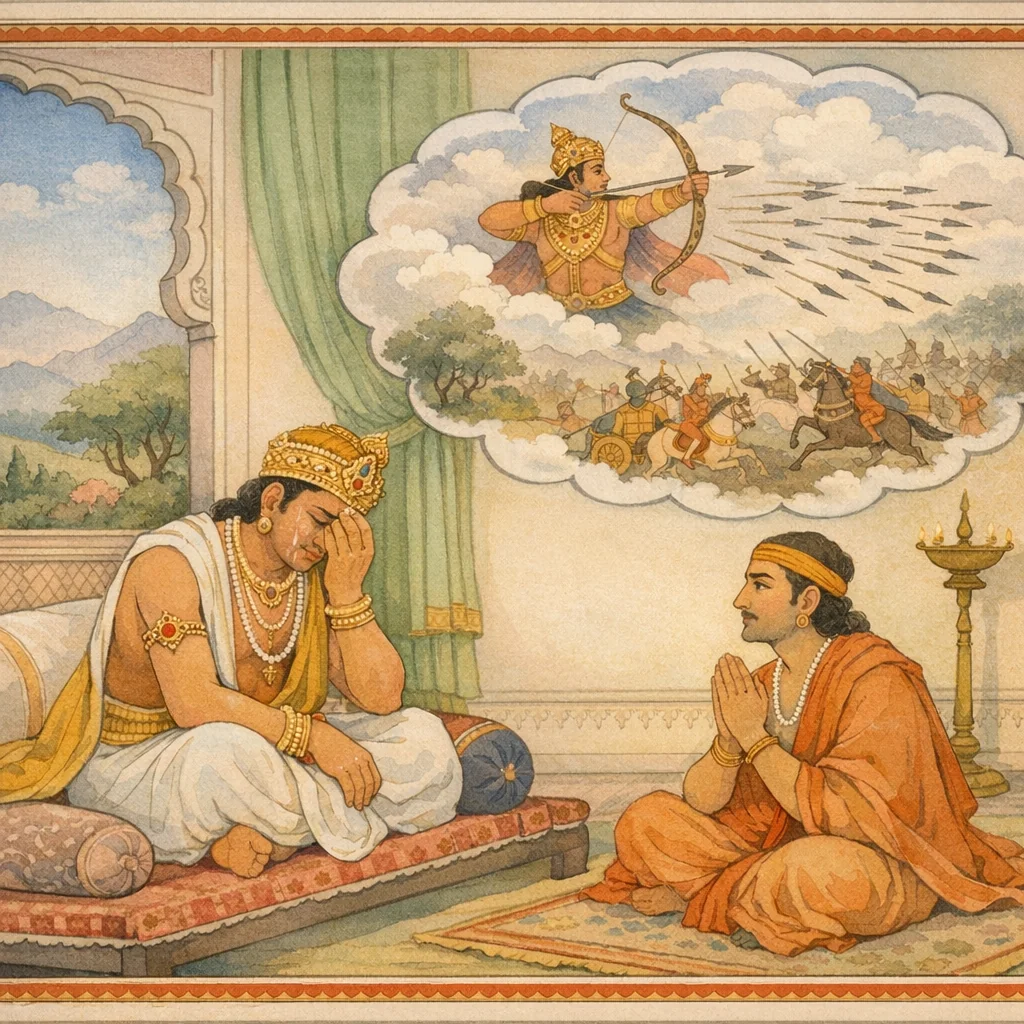
Janamejaya said: “O best of Brahmins, when King Dhṛtarāṣṭra heard that Karṇa had been slain in battle and that his sons too had fallen, and when—after losing consciousness—he regained a little composure, what did he say?”
Verse 2
प्राप्तवान् परम दु:खं पुत्रव्यसनजं महत् । तस्मिन् यदुक्तवान् काले तन्ममाचश्वच पृच्छत:,धृतराष्ट्रको अपने पुत्रोंके मारे जानेके कारण बड़ा भारी दु:ख प्राप्त हुआ था, उस समय उन्होंने जो कुछ कह, उसे मैं पूछ रहा हूँ; आप मुझे बताइये
Janamejaya said: “Dhṛtarāṣṭra was overwhelmed by the deepest sorrow—great anguish born of the calamity that befell his sons. At that time, whatever he spoke, please recount it to me, for I ask to hear it.”
Verse 3
वैशम्पायन उवाच श्रुत्वा कर्णस्य निधनमश्रद्धेयमिवाद्भधुतम् । भूतसम्मोहनं भीम॑ मेरो: संसर्पणं यथा,वैशम्पायनजीने कहा--राजन्! कर्णका मारा जाना अद्भुत और अविश्वसनीय-सा लग रहा था। वह भयंकर कर्म उसी प्रकार समस्त प्राणियोंको मोहमें डालनेवाला था, जैसे मेरु पर्वतवका अपने स्थानसे हटकर अन्यत्र चला जाना। परम बुद्धिमान् भृगुनन्दन परशुरामजीके चित्तमें मोह उत्पन्न होना जैसे सम्भव नहीं है, जैसे भयंकर कर्म करनेवाले देवराज इन्द्रका अपने शत्रुओंसे पराजित होना असम्भव है, जैसे महातेजस्वी सूर्यके आकाशसे पृथ्वीपर गिरने और अक्षय जलवाले समुद्रके सूख जानेकी बात मनमें सोचीतक नहीं जा सकती; पृथ्वी, आकाश, दिशा और जलका सर्वनाश होना एवं पाप तथा पुण्य-- दोनों प्रकारके कर्मोका निष्फल हो जाना जैसे आश्वर्यजनक घटना है; उसी प्रकार समरमें कर्ण-वधरूपी असम्भव कर्मको भी सम्भव हुआ सुनकर और उसपर बुद्धिद्वारा अच्छी तरह विचार करके राजा धृतराष्ट्र यह सोचने लगे कि “अब यह कौरवदल बच नहीं सकता। कर्णकी ही भाँति अन्य प्राणियोंका भी विनाश हो सकता है।” यह सब सोचते ही उनके हृदयमें शोककी आग प्रज्वलित हो उठी और वे उससे तपने एवं दग्ध-से होने लगे। उनके सारे अंग शिथिल हो गये। महाराज! वे अम्बिकानन्दन धृतराष्ट्र दीनभावसे लंबी साँस खींचने और अत्यन्त दुःखी हो “हाय! हाय!” कहकर विलाप करने लगे
Vaiśampāyana said: Hearing of Karṇa’s death, it seemed astonishing—almost beyond belief. That dreadful event bewildered all living beings, as if Mount Meru itself had shifted from its ordained place and moved elsewhere.
Verse 4
चित्तमोहमिवायुक्त भार्गवस्य महामते: । पराजयमिवेन्द्रस्य द्विषद्धयो भीमकर्मण:,वैशम्पायनजीने कहा--राजन्! कर्णका मारा जाना अद्भुत और अविश्वसनीय-सा लग रहा था। वह भयंकर कर्म उसी प्रकार समस्त प्राणियोंको मोहमें डालनेवाला था, जैसे मेरु पर्वतवका अपने स्थानसे हटकर अन्यत्र चला जाना। परम बुद्धिमान् भृगुनन्दन परशुरामजीके चित्तमें मोह उत्पन्न होना जैसे सम्भव नहीं है, जैसे भयंकर कर्म करनेवाले देवराज इन्द्रका अपने शत्रुओंसे पराजित होना असम्भव है, जैसे महातेजस्वी सूर्यके आकाशसे पृथ्वीपर गिरने और अक्षय जलवाले समुद्रके सूख जानेकी बात मनमें सोचीतक नहीं जा सकती; पृथ्वी, आकाश, दिशा और जलका सर्वनाश होना एवं पाप तथा पुण्य-- दोनों प्रकारके कर्मोका निष्फल हो जाना जैसे आश्वर्यजनक घटना है; उसी प्रकार समरमें कर्ण-वधरूपी असम्भव कर्मको भी सम्भव हुआ सुनकर और उसपर बुद्धिद्वारा अच्छी तरह विचार करके राजा धृतराष्ट्र यह सोचने लगे कि “अब यह कौरवदल बच नहीं सकता। कर्णकी ही भाँति अन्य प्राणियोंका भी विनाश हो सकता है।” यह सब सोचते ही उनके हृदयमें शोककी आग प्रज्वलित हो उठी और वे उससे तपने एवं दग्ध-से होने लगे। उनके सारे अंग शिथिल हो गये। महाराज! वे अम्बिकानन्दन धृतराष्ट्र दीनभावसे लंबी साँस खींचने और अत्यन्त दुःखी हो “हाय! हाय!” कहकर विलाप करने लगे
Vaiśampāyana said: O king, the news seemed almost impossible to accept—like imagining delusion arising in the mind of the great-souled Bhārgava (Paraśurāma), or like picturing Indra, the doer of terrible deeds, being defeated by his enemies. In this way the narrator frames the event as a moral and cosmic shock: what should not happen, has happened, and that very reversal signals the collapse of confidence and the nearing ruin of the Kaurava cause.
Verse 5
दिव: प्रपतनं भानोरुव्यामिव महाद्युते: | संशोषणमिवाचिन्त्यं समुद्रस्याक्षयाम्भस:,वैशम्पायनजीने कहा--राजन्! कर्णका मारा जाना अद्भुत और अविश्वसनीय-सा लग रहा था। वह भयंकर कर्म उसी प्रकार समस्त प्राणियोंको मोहमें डालनेवाला था, जैसे मेरु पर्वतवका अपने स्थानसे हटकर अन्यत्र चला जाना। परम बुद्धिमान् भृगुनन्दन परशुरामजीके चित्तमें मोह उत्पन्न होना जैसे सम्भव नहीं है, जैसे भयंकर कर्म करनेवाले देवराज इन्द्रका अपने शत्रुओंसे पराजित होना असम्भव है, जैसे महातेजस्वी सूर्यके आकाशसे पृथ्वीपर गिरने और अक्षय जलवाले समुद्रके सूख जानेकी बात मनमें सोचीतक नहीं जा सकती; पृथ्वी, आकाश, दिशा और जलका सर्वनाश होना एवं पाप तथा पुण्य-- दोनों प्रकारके कर्मोका निष्फल हो जाना जैसे आश्वर्यजनक घटना है; उसी प्रकार समरमें कर्ण-वधरूपी असम्भव कर्मको भी सम्भव हुआ सुनकर और उसपर बुद्धिद्वारा अच्छी तरह विचार करके राजा धृतराष्ट्र यह सोचने लगे कि “अब यह कौरवदल बच नहीं सकता। कर्णकी ही भाँति अन्य प्राणियोंका भी विनाश हो सकता है।” यह सब सोचते ही उनके हृदयमें शोककी आग प्रज्वलित हो उठी और वे उससे तपने एवं दग्ध-से होने लगे। उनके सारे अंग शिथिल हो गये। महाराज! वे अम्बिकानन्दन धृतराष्ट्र दीनभावसे लंबी साँस खींचने और अत्यन्त दुःखी हो “हाय! हाय!” कहकर विलाप करने लगे
Vaiśaṃpāyana said: “O King, this event is like an impossibility—like the radiant Sun falling from heaven to the earth, and like the ocean, believed to be inexhaustible, drying up beyond all imagining.” In ethical weight and epic force, Karṇa’s death is cast as a world-upending reversal of what seems fixed by nature, marking a decisive and irreversible turning of the war’s moral order.
Verse 6
महीवियद्दिगम्बूनां सर्वनाशमिवाद्धुतम् । कर्मणोरिव वैफल्यमुभयो: पुण्यपापयो:,वैशम्पायनजीने कहा--राजन्! कर्णका मारा जाना अद्भुत और अविश्वसनीय-सा लग रहा था। वह भयंकर कर्म उसी प्रकार समस्त प्राणियोंको मोहमें डालनेवाला था, जैसे मेरु पर्वतवका अपने स्थानसे हटकर अन्यत्र चला जाना। परम बुद्धिमान् भृगुनन्दन परशुरामजीके चित्तमें मोह उत्पन्न होना जैसे सम्भव नहीं है, जैसे भयंकर कर्म करनेवाले देवराज इन्द्रका अपने शत्रुओंसे पराजित होना असम्भव है, जैसे महातेजस्वी सूर्यके आकाशसे पृथ्वीपर गिरने और अक्षय जलवाले समुद्रके सूख जानेकी बात मनमें सोचीतक नहीं जा सकती; पृथ्वी, आकाश, दिशा और जलका सर्वनाश होना एवं पाप तथा पुण्य-- दोनों प्रकारके कर्मोका निष्फल हो जाना जैसे आश्वर्यजनक घटना है; उसी प्रकार समरमें कर्ण-वधरूपी असम्भव कर्मको भी सम्भव हुआ सुनकर और उसपर बुद्धिद्वारा अच्छी तरह विचार करके राजा धृतराष्ट्र यह सोचने लगे कि “अब यह कौरवदल बच नहीं सकता। कर्णकी ही भाँति अन्य प्राणियोंका भी विनाश हो सकता है।” यह सब सोचते ही उनके हृदयमें शोककी आग प्रज्वलित हो उठी और वे उससे तपने एवं दग्ध-से होने लगे। उनके सारे अंग शिथिल हो गये। महाराज! वे अम्बिकानन्दन धृतराष्ट्र दीनभावसे लंबी साँस खींचने और अत्यन्त दुःखी हो “हाय! हाय!” कहकर विलाप करने लगे
Vaiśaṃpāyana said: “O King, it seemed as astonishing as the total destruction of earth, sky, the directions, and the waters—like the very futility of both kinds of deeds, merit and sin.” So too, the report that Karṇa had been slain in battle sounded almost impossible, as though the moral order itself had been overturned.
Verse 7
इस प्रकार श्रीमह्ाभारत कर्णपर्वमें संजयवाक्यविषयक सातवाँ अध्याय पूरा हुआ,संचिन्त्य निपुणं बुद्धया धृतराष्ट्रो जनेश्वर: । नेदमस्तीति संचिन्त्य कर्णस्य समरे वधम् वैशम्पायनजीने कहा--राजन्! कर्णका मारा जाना अद्भुत और अविश्वसनीय-सा लग रहा था। वह भयंकर कर्म उसी प्रकार समस्त प्राणियोंको मोहमें डालनेवाला था, जैसे मेरु पर्वतवका अपने स्थानसे हटकर अन्यत्र चला जाना। परम बुद्धिमान् भृगुनन्दन परशुरामजीके चित्तमें मोह उत्पन्न होना जैसे सम्भव नहीं है, जैसे भयंकर कर्म करनेवाले देवराज इन्द्रका अपने शत्रुओंसे पराजित होना असम्भव है, जैसे महातेजस्वी सूर्यके आकाशसे पृथ्वीपर गिरने और अक्षय जलवाले समुद्रके सूख जानेकी बात मनमें सोचीतक नहीं जा सकती; पृथ्वी, आकाश, दिशा और जलका सर्वनाश होना एवं पाप तथा पुण्य-- दोनों प्रकारके कर्मोका निष्फल हो जाना जैसे आश्वर्यजनक घटना है; उसी प्रकार समरमें कर्ण-वधरूपी असम्भव कर्मको भी सम्भव हुआ सुनकर और उसपर बुद्धिद्वारा अच्छी तरह विचार करके राजा धृतराष्ट्र यह सोचने लगे कि “अब यह कौरवदल बच नहीं सकता। कर्णकी ही भाँति अन्य प्राणियोंका भी विनाश हो सकता है।” यह सब सोचते ही उनके हृदयमें शोककी आग प्रज्वलित हो उठी और वे उससे तपने एवं दग्ध-से होने लगे। उनके सारे अंग शिथिल हो गये। महाराज! वे अम्बिकानन्दन धृतराष्ट्र दीनभावसे लंबी साँस खींचने और अत्यन्त दुःखी हो “हाय! हाय!” कहकर विलाप करने लगे
Vaiśaṃpāyana said: Having reflected with keen intelligence, King Dhṛtarāṣṭra, lord of men, pondered Karṇa’s death in battle and thought, “This cannot be; it is impossible.” Yet, as he weighed the report, the very fact that such an “unthinkable” deed had occurred struck him as a sign that the Kaurava host could no longer be saved. If Karṇa could be slain, then the destruction of others too was now conceivable. With that realization, grief flared up within him; his limbs slackened, and he sank into lamentation.
Verse 8
प्राणिनामेवमन्येषां स्थादपीति विनाशनम् | शोकाग्निना दहामानो धम्यमान इवाशये,वैशम्पायनजीने कहा--राजन्! कर्णका मारा जाना अद्भुत और अविश्वसनीय-सा लग रहा था। वह भयंकर कर्म उसी प्रकार समस्त प्राणियोंको मोहमें डालनेवाला था, जैसे मेरु पर्वतवका अपने स्थानसे हटकर अन्यत्र चला जाना। परम बुद्धिमान् भृगुनन्दन परशुरामजीके चित्तमें मोह उत्पन्न होना जैसे सम्भव नहीं है, जैसे भयंकर कर्म करनेवाले देवराज इन्द्रका अपने शत्रुओंसे पराजित होना असम्भव है, जैसे महातेजस्वी सूर्यके आकाशसे पृथ्वीपर गिरने और अक्षय जलवाले समुद्रके सूख जानेकी बात मनमें सोचीतक नहीं जा सकती; पृथ्वी, आकाश, दिशा और जलका सर्वनाश होना एवं पाप तथा पुण्य-- दोनों प्रकारके कर्मोका निष्फल हो जाना जैसे आश्वर्यजनक घटना है; उसी प्रकार समरमें कर्ण-वधरूपी असम्भव कर्मको भी सम्भव हुआ सुनकर और उसपर बुद्धिद्वारा अच्छी तरह विचार करके राजा धृतराष्ट्र यह सोचने लगे कि “अब यह कौरवदल बच नहीं सकता। कर्णकी ही भाँति अन्य प्राणियोंका भी विनाश हो सकता है।” यह सब सोचते ही उनके हृदयमें शोककी आग प्रज्वलित हो उठी और वे उससे तपने एवं दग्ध-से होने लगे। उनके सारे अंग शिथिल हो गये। महाराज! वे अम्बिकानन्दन धृतराष्ट्र दीनभावसे लंबी साँस खींचने और अत्यन्त दुःखी हो “हाय! हाय!” कहकर विलाप करने लगे संजय! मैं विष खाकर, अग्निमें प्रविष्ट होकर तथा पर्वतके शिखरसे नीचे गिरकर भी मृत्युका वरण कर लूँगा। परंतु अब ये कष्टदायक दुःख नहीं सह सकूँगा ।। इति श्रीमहाभारते कर्णपर्वणि धृतराष्ट्रवाक्येडष्टमो 5ध्याय:
Vaiśaṃpāyana said: “Thus he reflected that for other living beings too, destruction might likewise come to pass. Burned by the fire of grief, he seemed as though he were being blown upon in his very heart—his inner being fanned into greater anguish.”
Verse 9
विस्नस्ताड़: श्वसन् दीनो हाहेत्युक्त्वा सुदु:ःखितः: । विललाप महाराज धृतराष्ट्रोडम्बिकासुत:,वैशम्पायनजीने कहा--राजन्! कर्णका मारा जाना अद्भुत और अविश्वसनीय-सा लग रहा था। वह भयंकर कर्म उसी प्रकार समस्त प्राणियोंको मोहमें डालनेवाला था, जैसे मेरु पर्वतवका अपने स्थानसे हटकर अन्यत्र चला जाना। परम बुद्धिमान् भृगुनन्दन परशुरामजीके चित्तमें मोह उत्पन्न होना जैसे सम्भव नहीं है, जैसे भयंकर कर्म करनेवाले देवराज इन्द्रका अपने शत्रुओंसे पराजित होना असम्भव है, जैसे महातेजस्वी सूर्यके आकाशसे पृथ्वीपर गिरने और अक्षय जलवाले समुद्रके सूख जानेकी बात मनमें सोचीतक नहीं जा सकती; पृथ्वी, आकाश, दिशा और जलका सर्वनाश होना एवं पाप तथा पुण्य-- दोनों प्रकारके कर्मोका निष्फल हो जाना जैसे आश्वर्यजनक घटना है; उसी प्रकार समरमें कर्ण-वधरूपी असम्भव कर्मको भी सम्भव हुआ सुनकर और उसपर बुद्धिद्वारा अच्छी तरह विचार करके राजा धृतराष्ट्र यह सोचने लगे कि “अब यह कौरवदल बच नहीं सकता। कर्णकी ही भाँति अन्य प्राणियोंका भी विनाश हो सकता है।” यह सब सोचते ही उनके हृदयमें शोककी आग प्रज्वलित हो उठी और वे उससे तपने एवं दग्ध-से होने लगे। उनके सारे अंग शिथिल हो गये। महाराज! वे अम्बिकानन्दन धृतराष्ट्र दीनभावसे लंबी साँस खींचने और अत्यन्त दुःखी हो “हाय! हाय!” कहकर विलाप करने लगे
Vaiśaṃpāyana said: O great king, Ambikā’s son Dhṛtarāṣṭra—shaken and unstrung—breathed heavily. Wretched and overwhelmed with grief, he cried out “Alas! Alas!” and began to lament. The report of Karṇa’s fall struck him as something almost impossible, and, reflecting on it, he was seized by the fear that if even Karṇa could be slain, then the Kaurava host could no longer be saved and further destruction was inevitable.
Verse 10
धृतराष्ट्र रवाच संजयाधिरथिरीर: सिंहद्विरदविक्रम: । वृषभप्रतिमस्कन्धो वृषभाक्षगतिश्नचरन्,धृतराष्ट्र बोले--संजय! अधिरथका वीर पुत्र कर्ण सिंह और हाथीके समान पराक्रमी था। उसके कंधे साँड़के कंधोंके समान हृष्टपुष्ट थे। उसकी आँखें और चाल-ढाल भी साँड़के ही सदृश थीं। वह स्वयं भी दानकी वर्षा करनेके कारण वृषभस्वरूप था। रणभूमिमें विचरता हुआ कर्ण इन्द्र-जैसे शत्रुसे पाला पड़नेपर भी साँड़के समान कभी युद्धसे पीछे नहीं हटता था। उसकी युवा-अवस्था थी। उसका शरीर इतना सुदृढ़ था, मानो वज्ञसे गढ़ा गया हो
Dhṛtarāṣṭra said: “Sañjaya, Karṇa—the valiant son of Adhiratha—moved about on the battlefield with the prowess of a lion and an elephant. His shoulders were like those of a bull; his eyes and his gait too were bull-like. Because he poured forth gifts like rain, he himself was spoken of as a vṛṣabha, a bull. Amid the clash of arms, even when he met an Indra-like foe, he never turned back from battle. He was in the vigor of youth, and his body was so hard as though forged from the vajra.”
Verse 11
वृषभो वृषभस्येव यो युद्धे न निवर्तते । शत्रोरपि महेन्द्रस्य वज़संहननो युवा,धृतराष्ट्र बोले--संजय! अधिरथका वीर पुत्र कर्ण सिंह और हाथीके समान पराक्रमी था। उसके कंधे साँड़के कंधोंके समान हृष्टपुष्ट थे। उसकी आँखें और चाल-ढाल भी साँड़के ही सदृश थीं। वह स्वयं भी दानकी वर्षा करनेके कारण वृषभस्वरूप था। रणभूमिमें विचरता हुआ कर्ण इन्द्र-जैसे शत्रुसे पाला पड़नेपर भी साँड़के समान कभी युद्धसे पीछे नहीं हटता था। उसकी युवा-अवस्था थी। उसका शरीर इतना सुदृढ़ था, मानो वज्ञसे गढ़ा गया हो
Dhṛtarāṣṭra said: “Like a bull among bulls, he never turned back in battle. Even when facing an enemy as formidable as Mahendra (Indra), the young warrior—his body hard as if forged of the vajra—did not retreat.”
Verse 12
यस्य ज्यातलशब्देन शरवृष्टिरवेण च । रथाश्वनरमातज् नावतिष्ठन्ति संयुगे,जिसकी प्रत्यंचाकी टंकार तथा बाण-वर्षके भयंकर शब्दसे भयभीत हो रथी, घुड़सवार, गजारोही और पैदल सैनिक युद्धमें सामने नहीं ठहर पाते थे
Vaiśampāyana said: “By the sharp twang of his bowstring and by the dreadful roar of his shower of arrows, charioteers, horsemen, elephant-riders, and foot-soldiers could not stand their ground in battle.”
Verse 13
यमाश्रित्य महाबाहुं विद्विषां जयकाड्क्षया । दुर्योधनो5करोद् वैरं पाण्डुपुत्रैर्महारथै:,जिस महाबाहुका भरोसा करके शत्रुओंपर विजय पानेकी इच्छा रखते हुए दुर्योधनने महारथी पाण्डवोंके साथ वैर बाँध रखा था
Vaiśaṃpāyana said: “Relying on that mighty-armed hero, and driven by the desire to conquer his foes, Duryodhana entered into enmity with the Pāṇḍava sons of Pāṇḍu—those great chariot-warriors.”
Verse 14
स कथ॑ रथिनां श्रेष्ठ: कर्ण: पार्थेन संयुगे । निहतः पुरुषव्याप्र: प्रसहासहा[विक्रम:,जिसका पराक्रम शत्रुओंके लिये असहा था, वह रथियोंमें श्रेष्ठ पुरुषसिंह कर्ण युद्धस्थलमें कुन्तीपुत्र अर्जुनके द्वारा बलपूर्वक कैसे मारा गया?
Vaiśampāyana said: “How was Karṇa—foremost among chariot-warriors, a tiger among men, whose valor was unbearable to his foes—slain by Pārtha (Arjuna) in the press of battle? By what force and in what manner did that mighty one fall?”
Verse 15
यो नामन्यत वै नित्यमच्युतं च धनंजयम् । न वृष्णीन् सहितानन्यान् स्वबाहुबलदर्पितः,जो अपने बाहुबलके घमंडमें भरकर श्रीकृष्णको, अर्जुनको तथा एक साथ आये हुए अन्यान्य वृष्णिवंशियोंको भी कभी कुछ नहीं समझता था
Vaiśampāyana said: Swollen with pride in his own bodily might, he never held Acyuta (Kṛṣṇa) and Dhanaṃjaya (Arjuna) in due regard, nor even the other Vṛṣṇis who had come together with them.
Verse 16
शार्ज़्गाण्डीवधन्चानौ सहितावपराजितौ । अहं दिव्याद् रथादेक: पातयिष्यामि संयुगे,जो राज्यकी इच्छा रखनेवाले तथा चिन्तासे आतुर हो मुँह लटकाये बैठे हुए मेरे लोभमोहित मूर्ख पुत्र दुर्योधनसे सदा यही कहा करता था कि “मैं अकेला ही युद्धस्थलमें शार्ज़् और गाण्डीव धनुष धारण करनेवाले दोनों अपराजित वीर श्रीकृष्ण और अर्जुनको उनके दिव्यरथसे एक साथ ही मार गिराऊँगा”
Vaiśampāyana said: “Those two unconquered heroes together—Kṛṣṇa bearing the Śārṅga bow and Arjuna bearing the Gāṇḍīva— I alone will strike down in battle, casting them from their divine chariot.”
Verse 17
इति यः सततं मन्दमवोचल्लो भमोहितम् । दुर्योधनमवाचीनं राज्यकामुकमातुरम्,जो राज्यकी इच्छा रखनेवाले तथा चिन्तासे आतुर हो मुँह लटकाये बैठे हुए मेरे लोभमोहित मूर्ख पुत्र दुर्योधनसे सदा यही कहा करता था कि “मैं अकेला ही युद्धस्थलमें शार्ज़् और गाण्डीव धनुष धारण करनेवाले दोनों अपराजित वीर श्रीकृष्ण और अर्जुनको उनके दिव्यरथसे एक साथ ही मार गिराऊँगा”
Vaiśaṃpāyana said: Thus he would repeatedly address Duryodhana—dull-witted, deluded by greed, morally fallen, consumed by desire for the kingdom and distressed with anxiety—sitting with a downcast face, saying again and again: “I alone, on the battlefield, will strike down together from their divine chariot those two unconquered heroes, Kṛṣṇa and Arjuna, who bear the Śārṅga and the Gāṇḍīva bows.”
Verse 18
योडजयत् सर्वकाम्बोजानावन्त्यान् केकयै: सह | गान्धारान् मद्रकान् मत्स्यांस्त्रिगर्तास्तड्रणाउ्शकान्,जिस वीरने पहले समस्त काम्बोज, आवन्त्य, केकय, गान्धार, मद्र, मत्स्य, त्रिगर्त, तंगण, शक, पांचाल, विदेह, कुलिन्द, काशी, कोसल, सुहा, अंग, वंग, निषाद, पुण्ड्र, चीरक, वत्स, कलिंग, तरल, अश्मक तथा ऋषिक--इन सभी देशों तथा शबर, परहूण, प्रहूण और सरल जातिके लोगों, म्लेच्छराज्यके अधिपतियों तथा दुर्ग एवं वनोंमें रहनेवाले योद्धाओं-को समरभूमिमें जीतकर कर देनेवाला बना दिया था
Vaiśampāyana said: “He was the hero who, on the battlefield, subdued and made tributary all the Kāmbojas; the Avantis together with the Kekayas; and likewise the Gāndhāras, the Madras, the Matsyas, the Trigartas, the Taṅgaṇas, and the Śakas.”
Verse 19
पज्चालांश्व विदेहांश्व कुलिन्दानू काशिकोसलान् । सुह्यानज़ांश्व वड़ांश्व निषादान् पुण्ड्रचीरकान्,जिस वीरने पहले समस्त काम्बोज, आवन्त्य, केकय, गान्धार, मद्र, मत्स्य, त्रिगर्त, तंगण, शक, पांचाल, विदेह, कुलिन्द, काशी, कोसल, सुहा, अंग, वंग, निषाद, पुण्ड्र, चीरक, वत्स, कलिंग, तरल, अश्मक तथा ऋषिक--इन सभी देशों तथा शबर, परहूण, प्रहूण और सरल जातिके लोगों, म्लेच्छराज्यके अधिपतियों तथा दुर्ग एवं वनोंमें रहनेवाले योद्धाओं-को समरभूमिमें जीतकर कर देनेवाला बना दिया था
Vaiśampāyana said: He had already subdued in battle and made tributary the peoples of Pañcāla and Videha, the Kulindas, and the realms of Kāśī and Kośala; likewise the Suhyas, the Aṅgas and Vaṅgas, the Niṣādas, and the Puṇḍras and Cīrakas.
Verse 20
वत्सान् कलिड्रांस्तरलानश्मकानृषिकानपि । (शबरान् परहृणांश्व प्रहूणान् सरलानपि । म्लेच्छराष्ट्राधिपां श्वैव दुर्गानाटविकांस्तथा ।।) जित्वैतान् समरे वीरश्नक्रे बलिभृत: पुरा,जिस वीरने पहले समस्त काम्बोज, आवन्त्य, केकय, गान्धार, मद्र, मत्स्य, त्रिगर्त, तंगण, शक, पांचाल, विदेह, कुलिन्द, काशी, कोसल, सुहा, अंग, वंग, निषाद, पुण्ड्र, चीरक, वत्स, कलिंग, तरल, अश्मक तथा ऋषिक--इन सभी देशों तथा शबर, परहूण, प्रहूण और सरल जातिके लोगों, म्लेच्छराज्यके अधिपतियों तथा दुर्ग एवं वनोंमें रहनेवाले योद्धाओं-को समरभूमिमें जीतकर कर देनेवाला बना दिया था
Vaiśampāyana said: That hero, having conquered in battle the Vatsas, the Kaliṅgas, the Taralas, the Aśmakas, and the Ṛṣikas—along with the Śabaras, the Parahūṇas, the Prahūṇas, the Saralas, the overlords of Mleccha realms, and also the fighters who dwelt in forts and forests—formerly made them all tributary to Indra (Śakra).
Verse 21
शखव्रातै: सुनिशितै: सुतीक्ष्पै: कड़कपत्रिभि: । (करमाहारयामास जित्वा सर्वानरीस्तथा ।) दुर्योधनस्य वृद्धयर्थ राधेयो रथिनां वर:,घातित: पाण्डवै: शूरै: समरे वीर्यशालिभि: । रथियोंमें श्रेष्ठ जिस राधापुत्रने दुर्योधनकी वृद्धिके लिये कंकपत्रयुक्त, तीखी धारवाले पैने बाण-समूहोंद्वारा समस्त शत्रुओंको परास्त करके उनसे कर वसूल किया था, जो दिव्यास्त्रोंका ज्ञाता, उत्तम अस्त्रोंका जानकार और हमारी सेनाओंका रक्षक था, वह महातेजस्वी धर्मात्मा वैकर्तन कर्ण अपने शूरवीर एवं बलशाली शत्रु पाण्डवोंद्वारा कैसे मारा गया?
Vaiśampāyana said: With clusters of arrows—well-whetted, razor-sharp, and fletched with heron-feathers—Rādheya, the foremost of charioteers, had conquered all enemies and exacted tribute, all for the increase of Duryodhana’s power. How, then, was that mighty, righteous Vikarṭana Karṇa—knower of divine missiles, master of excellent weapons, and protector of our forces—slain in battle by the heroic and powerful Pāṇḍavas?
Verse 22
दिव्यास्त्रविन्महातेजा: कर्णो वैकर्तनो वृष: । सेनागोपश्न स कथं शत्रुभि: परमास्त्रवित्
Vaiśampāyana said: Karṇa—Vaikartana, the mighty and radiant hero, a master of divine missiles—was the very protector and pillar of the army. How, then, could he be overcome by enemies who were supreme in weapon-craft?
Verse 23
वृषो महेन्द्रो देवेषु वृष: कर्णो नरेष्वपि
Vaiśampāyana said: “Among the gods, Mahendra (Indra) is the mighty bull; and among men too, Karṇa is a bull-like champion.”
Verse 24
उच्चै:श्रवा वरो<श्चानां राज्ञां वैश्रवणो वर:
Vaiśampāyana said: “Among horses, Uccaiḥśravā is the foremost; among kings, Vaiśravaṇa (Kubera) is the foremost.”
Verse 25
योडजित: पार्थिवै: शूरै: समर्थवीर्यशालिभि:
Vaiśampāyana said: In battle he could not be conquered by heroic kings—warriors endowed with effective strength and proven valor.
Verse 26
दुर्योधनस्य वृद्धयर्थ कृत्स्नामुर्वीमथाजयत् | यं लब्ध्वा मागधो राजा सान्त्वमानो5थ सौहदै:
Vaiśampāyana said: Seeking Duryodhana’s advancement, he then conquered the entire earth. Having obtained him, the king of Magadha thereafter sought to win him over—offering conciliatory words and gestures of friendship.
Verse 27
अरौत्सीत् पार्थिवं क्षत्रमृते यादवकौरवान् । त॑ श्रुत्वा निहतं कर्ण द्वैरथे सव्यसाचिना
Vaiśaṃpāyana said: The royal warrior host raised a great outcry—except for the Yādavas and the Kauravas. Hearing that Karṇa had been slain by Savyasācin (Arjuna) in the duel of chariots, the rest were shaken into lamentation and alarm.
Verse 28
शोकार्णवे निमग्नो5हं भिन्ना नौरिव सागरे | जो पराक्रमशाली, समर्थ एवं शूरवीर नरेशोंद्वारा भी कभी जीता न जा सका, जिसने दुर्योधनकी वृद्धिके लिये समस्त भूमण्डलपर विजय पायी थी, जिसे अपना सहायक पाकर मगधनरेश जरासंधने भी सौहार्दवश शान्त हो यादवों और कौरवोंको छोड़कर भूतलके अन्य नरेशोंको ही अपने कारागारमें कैद किया था; उसी कर्णको सव्यसाची अर्जुनने द्वैरथयुद्धमें मार डाला, यह सुनकर मैं शोकके समुद्रमें डूब गया हूँ, मानो मेरी नाव बीच समुद्रमें जाकर टूट गयी हो || २५--२७ $ ।। त॑ वृष निहत॑ श्र॒त्वा द्वेरथे रथिनां वरम्
Vaiśampāyana said: “I have sunk into an ocean of grief, like a boat shattered in mid-sea. Hearing that Vṛṣa (Karna)—the foremost of chariot-warriors—has been slain by Savyasācin Arjuna in a duel between two chariots, I am overwhelmed by sorrow.”
Verse 29
ईदशैर्यद्यहं दु:ःखैर्न विनश्यामि संजय
“If I do not perish, Saṃjaya, even under such sufferings…”
Verse 30
ज्ञातिसम्बन्धिमित्राणामिमं श्रुत्वा पराभवम्
Vaiśampāyana said: Hearing of this defeat that had befallen their kinsmen, relations, and allies, they were shaken by the shock of loss—an episode that shows how war’s outcomes ripple through networks of loyalty and obligation, testing the bonds of kinship and friendship.
Verse 31
को मदन्य: पुमॉल्लोके न जह्यात् सूत जीवितम् । सूत! कुट॒म्बीजनों, सगे-सम्बन्धियों और मित्रोंके पराभवका यह समाचार सुनकर संसारमें मेरे सिवा दूसरा कौन पुरुष होगा, जो अपने जीवनका परित्याग न कर दे ।। विषमन्निं प्रपातं च पर्वताग्रादहं वृणे । न हि शक्ष्यामि दुःखानि सोढुं कष्टानि संजय
Vaiśampāyana said: “O charioteer, who else in this world—besides me—would not abandon life on hearing this report of the defeat of my household, my kinsmen, and my friends? I would rather choose poison, fire, or a plunge from a mountain peak. For, O Sañjaya, I will not be able to endure these grievous and crushing sorrows.”
Verse 223
घातित: पाण्डवै: शूरै: समरे वीर्यशालिभि: । रथियोंमें श्रेष्ठ जिस राधापुत्रने दुर्योधनकी वृद्धिके लिये कंकपत्रयुक्त, तीखी धारवाले पैने बाण-समूहोंद्वारा समस्त शत्रुओंको परास्त करके उनसे कर वसूल किया था, जो दिव्यास्त्रोंका ज्ञाता, उत्तम अस्त्रोंका जानकार और हमारी सेनाओंका रक्षक था, वह महातेजस्वी धर्मात्मा वैकर्तन कर्ण अपने शूरवीर एवं बलशाली शत्रु पाण्डवोंद्वारा कैसे मारा गया?
Vaiśampāyana said: Slain in battle by the heroic Pāṇḍavas, men of proven might—how indeed was Karṇa, the radiant and righteous Vaikartana, brought down by those brave and powerful foes? He was the foremost of chariot-warriors, the son of Rādhā, who for Duryodhana’s increase and advantage had subdued all enemies with sharp, keen-edged volleys of arrows and exacted tribute from them. He was a knower of divine missiles, skilled in the finest weapons, and a protector of our armies. How could such a one be killed by the Pāṇḍavas?
Verse 236
तृतीयमन्यं लोकेषु वृष॑ नैवानुशुश्रुम । देवताओंमें देवराज इन्द्रको वृष कहा गया है (क्योंकि वे जलकी वर्षा करते हैं), इसी प्रकार मनुष्योंमें भी कर्णको वृष कहा जाता था (क्योंकि वह याचकोंके लिये धनकी वर्षा करता था); इन दोके सिवा किसी तीसरे पुरुषको तीनों लोकोंमें वृष नाम दिया गया हो, वह मैंने नहीं सुना
Vaiśampāyana said: “I have never heard of any third person in the worlds being called ‘Vṛṣa’. Among the gods, Indra—the lord of the devas—is called ‘Vṛṣa’ because he makes the rain fall; and among men, Karṇa was called ‘Vṛṣa’ because he ‘rained’ wealth upon supplicants. Apart from these two, I have not heard of anyone else in the three worlds bearing the name ‘Vṛṣa’.”
Verse 243
वरो महेन्द्रो देवानां कर्ण: प्रहरतां वर: । जैसे घोड़ोंमें उच्चै:श्रवा, राजाओंमें कुबेर और देवताओंमें महेन्द्र श्रेष्ठ हैं, उसी प्रकार कर्ण योद्धाओंमें ऊँचा स्थान रखता था
Vaiśampāyana said: “Among the gods, Mahendra (Indra) is the foremost; and among those who strike in battle, Karṇa is the foremost. Just as Uccaiḥśravā is supreme among horses, Kubera among kings, and Mahendra among the gods, so too did Karṇa hold the highest rank among warriors.”
Verse 286
शोकार्णवे निमग्नो5डहमप्लव: सागरे यथा । रथियोंमें श्रेष्ठ उस धर्मात्मा कर्णको द्वैरथयुद्धमें मारा गया सुनकर मैं समुद्रमें नौकारहित पुरुषकी भाँति शोक-सागरमें निमग्न हो गया हूँ
Vaiśampāyana said: “On hearing that Karṇa—righteous at heart and foremost among chariot-warriors—had been slain in a duel between two chariots, I sank into an ocean of grief, like a man in the sea without a boat. The fall of such a hero, and the moral weight of his death amid fratricidal war, overwhelms the listener with sorrow.”
Verse 296
वज़्ादू् दृढतरं मन्ये हृदयं मम दुर्भिदम् । संजय! यदि ऐसे दुःखोंसे भी मेरी मृत्यु नहीं हो रही है तो मैं ऐसा समझता हूँ कि मेरा यह हृदय वज़से भी अधिक सुदृढ़ और दुर्भेद्य है
I deem my heart harder than a vajra, impossible to break. O Sañjaya, if even such crushing sorrows do not bring me death, then I must conclude that my heart is more adamant than vajra itself—unyielding and unpierceable. The line conveys the moral weight of war’s grief: the speaker marvels at the grim endurance forced upon him, where suffering that ought to end life instead only hardens the inner self.
Frequently Asked Questions
The chapter implicitly contrasts the warrior’s obligation to neutralize threats and protect one’s host with the visible, immediate human cost of close-quarters engagements, raising the question of how duty is executed without erasing accountability for harm.
The duel models tactical adaptability and persistence: shifting methods when an approach fails (projectiles, archery, then close engagement), while illustrating how individual contests can influence collective morale and battlefield momentum.
No explicit phalaśruti appears in this excerpt; its meta-significance is conveyed indirectly through narrative causality—how choices in leadership, courage, and tactical judgment produce immediate strategic effects and longer karmic trajectories.