Adhyaya 57
कर्णपर्व — अध्याय ५७ (Arjuna’s targeted advance; Śalya–Karṇa dialogue; interception attempts)
Upa-parva: Dvaīratha-pravṛtti (Arjuna’s advance toward Karṇa; Śalya’s exhortation and Karṇa’s reply)
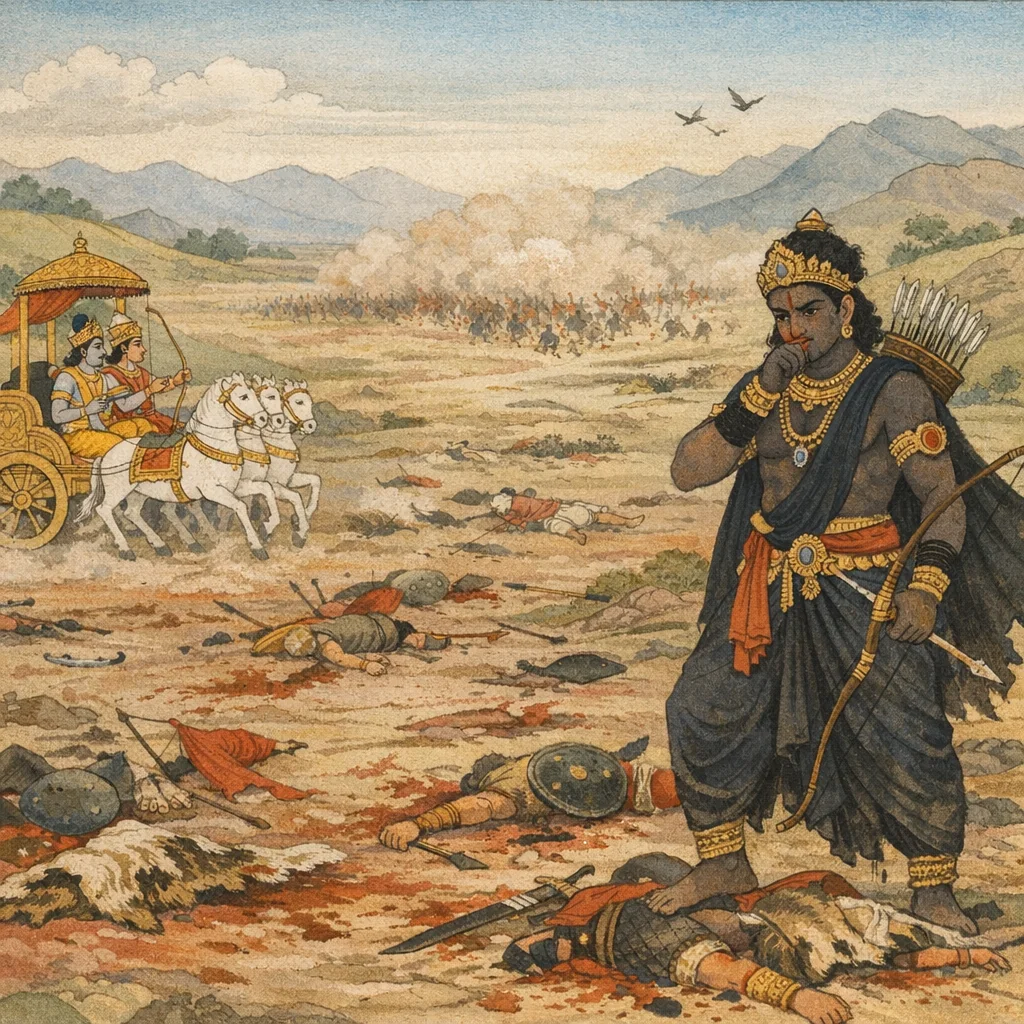
Saṃjaya reports that Arjuna, after arranging forces, sights Karṇa’s standard and interprets the battlefield as saturated with destruction imagery, then instructs Vāsudeva (Kṛṣṇa) to drive the chariot forward with the explicit intention not to withdraw without confronting Karṇa. The narrative notes Kaurava leadership markers (Duryodhana’s white umbrella) and protective figures (Kṛpa, Kṛtavarman, Aśvatthāman) as the coalition attempts to maintain coherence under pressure. Śalya, positioned as Karṇa’s charioteer, identifies the approaching chariot with white horses and Kṛṣṇa as driver, describing Arjuna’s singular focus and the broader fear and dispersal among Kaurava units. He urges Karṇa to meet Arjuna as the only counterweight capable of checking his advance. Karṇa replies with confident declarations, acknowledging the exceptional pairing of Arjuna and Kṛṣṇa while asserting his readiness to engage them. The chapter then depicts Arjuna’s rapid suppression of multiple attackers: Kṛpa, Kṛtavarman, and Duryodhana’s forces attempt interception, but Arjuna cuts standards, weapons, and chariot components, scattering units. The imagery culminates in Arjuna likened to the sun with a halo amid a ‘darkness’ of arrows, while mutual volleys intensify and the field becomes visually obscured by missile flight.
Chapter Arc: द्रोणपुत्र (अश्वत्थामा) सहित अनेक महारथियों को पराजित कर अर्जुन रथ पर खड़े-खड़े वासुदेव से कहता है कि अब युधिष्ठिर के पास चलें—पर सामने ही पाण्डव-सेना का बिखराव और कर्ण का प्रचण्ड संहार दिख रहा है। → अर्जुन कृष्ण को संकेत करता है—“देखो, पाण्डवी चमू भाग रही है; और कर्ण संग्राम में महारथियों को काल के समान काट रहा है।” हरि अर्जुन के वचन से रथ बढ़ाते हैं, और चलते-चलते युद्धभूमि के दृश्य—हाथियों के झूल, मृगचर्म, कम्बल, टूटे अंकुश, रक्त-कीचड़, दाँतों से ओठ चबाते, भ्रुकुटि टेढ़ी किए क्रोध-भरे योद्धा—सब मिलकर विनाश का विराट चित्र रचते हैं। → गोविन्द अर्जुन को युद्ध-त्याग/विराम की भूल का बोध कराते हैं—जनक्षय के बीच वे बताते हैं कि ‘मृत्यु’ को निमित्त बनाकर पीछे हटना क्षत्रिय-धर्म नहीं; और उसी क्षण युद्धभूमि का चरम भयावह दृश्य उभरता है: पर्वताकार हाथी-घोड़े ढेर, जीभें बाहर निकलीं, वैजयन्ती पताकाएँ बिखरीं, पृथ्वी शोणित-कर्दम से सनी, जल के लिए दौड़ते योद्धा प्यास में प्राण त्यागते। → अध्याय का निष्कर्ष अर्जुन के भीतर ‘कर्तव्य-स्मरण’ की ओर झुकाव है—कृष्ण का उपदेश उसे वर्तमान संकट (कर्ण की धावा और पाण्डव-सेना का विचलन) के प्रति सजग करता है, और युद्धभूमि की साक्षी-भाषा उसे बताती है कि अब निर्णय विलम्ब का नहीं, धैर्य और धर्म का है। → कर्ण के बढ़ते प्रहार के बीच अर्जुन-कृष्ण का रथ युधिष्ठिर की ओर बढ़ता है—पर क्या वे समय रहते पाण्डव-सेना का मनोबल और व्यवस्था संभाल पाएँगे?
Shlokas
Verse 1
/ ऑपन-माज बछ। अकाल अष्टपञज्चाशत्तमो< ध्याय: अर्जुनका श्रीकृष्णसे युधिष्ठिरके पास चलनेका आग्रह तथा श्रीकृष्णका उन्हें युद्ध भूल दिखाते और वहाँका समाचार हुए रथको आगे बढ़ाना संजय उवाच एवमेष महानासीत् संग्राम: पृथिवीक्षिताम् । क्रुद्धेडर्जुने तथा कर्णे भीमसेने च पाण्डवे,संजय कहते हैं--राजन्! इस प्रकार अर्जुन, कर्ण एवं पाण्डुपुत्र भीमसेनके कुपित होनेपर राजाओंका वह संग्राम उत्तरोत्तर बढ़ने लगा
Sañjaya said: “O King, in this manner the great battle of the rulers of the earth swelled ever more. For Arjuna and Karṇa were enraged, and so too was Bhīmasena, the Pāṇḍava; and their wrath drove the conflict to intensify.”
Verse 2
द्रोणपुत्रं पराजित्य जित्वा चान्यान् महारथान् । अब्रवीदर्जुनो राजन् वासुदेवमिदं वच:,नरेश्वर! द्रोणपुत्र तथा अन्यान्य महारथियोंकों हताकर और उनपर विजय पाकर अर्जुनने भगवान् श्रीकृष्णसे इस प्रकार कहा--
Sañjaya said: “O King, after defeating Droṇa’s son and overcoming other great chariot-warriors as well, Arjuna addressed Vāsudeva (Kṛṣṇa) with these words.”
Verse 3
पश्य कृष्ण महाबाहो द्रवन्तीं पाण्डवीं चमूम् । कर्ण पश्य च संग्रामे कालयन्तं महारथान्,“महाबाहु श्रीकृष्ण! देखिये, वह पाण्डव-सेना भागी जा रही है तथा कर्ण समरांगणमें बड़े-बड़े महारथियोंको कालके गालमें भेज रहा है
Sañjaya said: “O Kṛṣṇa, mighty-armed one, look— the Pāṇḍava host is fleeing in disarray. And look there at Karṇa in the thick of battle, sending even great chariot-warriors to their death, as though delivering them into the jaws of Time.”
Verse 4
न च पश्यामि दाशार्ह धर्मराजं युधिष्ठिरम् । नापि केतुर्युधां श्रेष्ठ धर्मराजस्य दृश्यते,“दाशारह! इस समय मुझे धर्मराज युधिष्ठिर नहीं दिखायी दे रहे हैं। योद्धाओंमें श्रेष्ठ श्रीकृष्ण! धर्मराजके ध्वजका भी दर्शन नहीं हो रहा है
Sañjaya said: “O Dāśārha, I do not see Dharmarāja Yudhiṣṭhira. And, O best of warriors, even the banner of Dharmarāja is not to be seen.”
Verse 5
त्रिभागश्नावशिष्टोडयं दिवसस्य जनार्दन । नच मां धार्तराष्ट्रेषु कच्चिद् युध्यति संयुगे,“जनार्दन! इस सम्पूर्ण दिनके ये तीन भाग ही शेष रह गये हैं। दुर्योधनकी सेनाओंमेंसे कोई भी मेरे साथ युद्ध नहीं कर रहा है'
Sañjaya said: “O Janārdana, only three parts of this day now remain. Yet among the sons of Dhṛtarāṣṭra none engages me in battle. Their refusal to meet me in combat shows a collapse of martial resolve and duty at a decisive hour, when a kṣatriya’s obligation is to stand and fight rather than withdraw from a righteous contest.”
Verse 6
तस्मात् त्वं मत्प्रियं कुर्वन् याहि यत्र युधिष्ठिर: । दृष्टवा कुशलिन युद्धे धर्मपुत्रं सहानुजम्
“Therefore, acting in a way that is dear to me, go to where Yudhiṣṭhira is. See for yourself whether the son of Dharma—together with his younger brothers—remains safe and well amid the battle.”
Verse 7
ततः प्रायाद् रथेनाशु बीभत्सोर्वचनाद्धरि:
Sañjaya said: Then, at Bībhatsu’s command, Hari swiftly set forth in the chariot—showing the disciplined harmony of warrior intent and charioteer service amid the moral pressure of battle.
Verse 8
अयुध्यंस्तावकै: सार्ध मृत्युं कृत्वा निवर्तनम्,वे मृत्युको ही युद्धसे निवृत्त होनेका निमित्त बनाकर आपके योद्धाओंके साथ युद्ध कर रहे थे। तदनन्तर जहाँ वह भारी जनसंहार हो रहा था, उस संग्रामभूमिको देखते हुए भगवान् श्रीकृष्ण सव्यसाची अर्जुनसे इस प्रकार बोले--
They fought against your warriors, using “death” itself as a pretext to withdraw from the battle. Thereafter, beholding the battlefield where a dreadful slaughter was taking place, the Blessed Śrī Kṛṣṇa spoke to Savyasācī Arjuna as follows—
Verse 9
ततः संग्रामभूमिं तां वर्तमाने जनक्षये । अवेक्षमाणो गोविन्द: सव्यसाचिनमब्रवीत्,वे मृत्युको ही युद्धसे निवृत्त होनेका निमित्त बनाकर आपके योद्धाओंके साथ युद्ध कर रहे थे। तदनन्तर जहाँ वह भारी जनसंहार हो रहा था, उस संग्रामभूमिको देखते हुए भगवान् श्रीकृष्ण सव्यसाची अर्जुनसे इस प्रकार बोले--
Sañjaya said: Then, as the slaughter of men was unfolding on that battlefield, Govinda—surveying the scene—addressed Arjuna, the ambidextrous archer. The moment frames Kṛṣṇa’s role as a moral guide amid escalating destruction, preparing to redirect Arjuna’s resolve toward duty rather than withdrawal in the face of death and loss.
Verse 10
पश्य पार्थ महारौद्रो वर्तते भरतक्षय: । पृथिव्यां क्षत्रियाणां वै दुर्योधनकृते महान्,“कुन्तीनन्दन! देखो, दुर्योधनके कारण भरत-वंशियोंका तथा भूमण्डलके अन्य क्षत्रियोंका महाभयंकर विनाश हो रहा है
Sañjaya said: “Behold, O Pārtha—an exceedingly dreadful destruction of the Bharata line is unfolding. Indeed, upon the earth a vast slaughter of kṣatriyas is taking place, all on account of Duryodhana.”
Verse 11
पश्य भारत चापानि रुक्मपृष्ठानि धन्विनाम् | मृतानामपविद्धानि कलापांश्व महाधनान्,“भरतनन्दन! देखो, मरे हुए धनुर्धरोंके ये सोनेके पृष्ठभागवाले धनुष और बहुमूल्य तरकस फेंके पड़े हैं
Sañjaya said: “Behold, O Bhārata—here lie the bows of the archers, their backs plated with gold, cast away after their owners have fallen; and here too are the costly quivers, flung aside.”
Verse 12
जातरूपमयै: पुडखी: शरांश्वानतपर्वण: । तैलथौतांश्व नाराचान् निर्मुक्तान् पन्नगानिव,'सुवर्णमय पंखोंसे युक्त झुकी हुई गाँठवाले बाण तथा तेलमें धोये हुए नाराच केंचुल छोड़कर निकले हुए सर्पोके समान दिखायी दे रहे हैं
Sañjaya said: “Arrows fitted with golden-hued feathers, their joints bent and well-knit, and heavy nārāca shafts—polished as though washed in oil—when released, appeared like serpents casting off their slough.”
Verse 13
हस्तिदन्तत्सरून् खड्गान् जातरूपपरिष्कृतान् । वर्माणि चापविद्धानि रुक्मगर्भाणि भारत,“भारत! हाथीके दाँतकी बनी हुई मूँठवाले सुवर्णजटित खड्ग तथा स्वर्णभूषित कवच भी फेंके पड़े हैं
Sañjaya said: “O Bhārata, swords with hilts fashioned from elephant ivory and adorned with refined gold lay cast aside; and coats of mail too—gold-inlaid—had been flung away.”
Verse 14
सुवर्णविकृतान् प्रासाउशक्ती: कनकभूषणा: । जाम्बूनदमयै: पट्टैर्बद्धाश्व विपुला गदा:,“देखो, ये सुवर्णमय प्रास, स्वर्णभूषित शक्तियाँ तथा सोनेके बने हुए पत्रोंसे मढ़ी हुई विशाल गदाएँ पड़ी हैं
Sañjaya said: “Behold—here lie spears fashioned and worked in gold, javelins adorned with golden ornaments, and massive maces bound and plated with bands of pure Jāmbūnada gold.”
Verse 15
जातरूपमयीश्ष्टी: पट्टिशान् हेमभूषणान् । दण्डै: कनकचित्रैश्न विप्रविद्धान् परश्रधान्,'स्वर्णमयी ऋष्टि, हेमभूषित पट्टिश तथा सुवर्णजटित दण्डोंसे युक्त फरसे फेंके हुए हैं
Sañjaya said: “Golden spears, iron pikes adorned with gold, and axes whose handles were inlaid with gold were hurled forth with force.”
Verse 16
अयःकुन्तांश्व॒ पतितान् मुसलानि गुरूणि च । शतघ्नी: पश्य चित्राश्न विपुलान् परिघांस्तथा,'लोहेके कुन्त (भाले), भारी मूसल, विचित्र शतध्नियाँ और विशाल परिघ इधर-उधर पड़े हैं
Sañjaya said: “Behold—iron-tipped spears lying fallen about, and heavy maces; see also the many wondrous śataghnīs, and likewise the massive iron clubs (parighas) scattered everywhere.”
Verse 17
चक्राणि चापविद्धानि तोमरांश्व महारणे । नानाविधानि शस्त्राणि प्रगृह् जयगृद्धिन:
Sañjaya said: “In that great battle, warriors—hungry for victory—took up and hurled discus-like weapons, spears, and many other kinds of arms.”
Verse 18
जीवन्त इव दृश्यन्ते गततत्त्वास्तरस्विन: । “इस महासमरमें फेंके गये इन चक्रों और तोमरोंको भी देखो। विजयकी अभिलाषा रखनेवाले वेगशाली योद्धा नाना प्रकारके शस्त्रोंको हाथमें लिये हुए ही अपने प्राण खो बैठे हैं; तथापि जीवित-से दिखायी देते हैं || १७ & ।। गदाविमशथितैगत्रिर्मुसलैर्भिन्नमस्तकान्
Sañjaya said: “Though their life has departed, the swift warriors appear as if still alive. In this great battle, even after being struck down amid the hurled weapons, they remain standing with arms in hand.”
Verse 19
गजवाजिरथक्षुण्णान् पश्य योधान् सहस्रश: । “देखो, सहस्रों योद्धाओंके शरीर गदाओंके आघातसे चूर-चूर हो रहे हैं। मूसलोंकी मारसे उनके मस्तक फट गये हैं, तथा हाथी, घोड़े एवं रथोंसे वे कुचल दिये गये हैं ।। १८ ई || मनुष्यहयनागानां शरशक््त्यूष्टिपट्टिशै:
Sañjaya said: “Behold—thousands of warriors are being crushed under elephants, horses, and chariots.”
Verse 20
परिघैरायसैघोरैरय:कुन्तै: परश्वथै: । शरीरैर्बहुभिश्छिन्ने: शोणितौघपरिप्लुतै:
Sañjaya said: The battlefield was strewn with dreadful iron clubs, iron-tipped spears, and axes; and with many severed bodies, all flooded and soaked in torrents of blood—an image of war’s brutal cost and the collapse of bodily life amid the clash of arms.
Verse 21
गतासुभिरमित्रघ्न संवृता रणभूमय: । 'शत्रुसूदन! बाण, शक्ति, ऋष्टि, पट्टिश, लोहमय परिघ, भयंकर लोहनिर्मित कुन्त और फरसोंसे मनुष्यों, घोड़ों और हाथियोंके बहुसंख्यक शरीर छिलन्न-भिन्न होकर खूनसे लथपथ और प्राणशून्य हो गये हैं और उनके द्वारा रणभूमि आच्छादित दिखायी देती है || १९-२० ई || बाहुभिश्वन्दनादिग्धै: साड्रदैहेमभूषितै:
Sanjaya said: O slayer of foes, the battlefields are covered over with the lifeless. O destroyer of enemies, by arrows, spears, lances, axes, iron clubs, dreadful iron javelins, and battle-axes, countless bodies of men, horses, and elephants have been hacked and shattered, drenched in blood and bereft of breath; and by them the ground of battle appears wholly carpeted. Arms smeared with sandal-paste and bodies adorned with gold ornaments now lie fallen—an image of splendor overturned into ruin, exposing the moral cost of war even amid heroic display.
Verse 22
साड्रलिन्रैर्भुजाग्रैश्न विप्रविद्धरलंकृतै:,पतितैर्ऋषषभाक्षाणां विराजति वसुंधरा । साँड़के समान विशाल नेत्रोंवाले वेगशाली वीरोंके दस्तानोंसहित आभूषणभूषित हाथ कटकर गिरे हैं। हाथियोंके शुण्डदण्डोंके समान मोटी जाँघें खण्डित होकर पड़ी हैं तथा श्रेष्ठ चूड़ामणि धारण किये कुण्डलमण्डित मस्तक भी धड़से अलग होकर पड़े हैं। इन सबके द्वारा रणभूमिकी अपूर्व शोभा हो रही है
Sañjaya said: The earth shone with a strange, dreadful splendor, strewn with severed hands—adorned with ornaments and struck down in battle—belonging to heroes whose eyes were large like those of noble bulls. The battlefield’s beauty here is not celebratory but grim: it exposes how martial pride and bodily magnificence are reduced to fragments, reminding the listener of war’s ethical cost and the perishability of embodied power.
Verse 23
हस्तिहस्तोपमैश्छिन्नैरूरुभिश्न॒ तरस्विनाम् । बद्धचूडामणिवरै: शिरोभिश्नल सकुण्डलै:
Sañjaya said: The battlefield was strewn with the severed thighs of mighty warriors—thick like the trunks of elephants—and with heads still adorned with tied topknots, splendid crest-jewels, and earrings. The scene underscores the terrible cost of wrath-driven combat, where honor and ornament alike are reduced to mute remnants amid slaughter.
Verse 24
कबन्धै: शोणितादिग्धैश्छिन्नगात्रशिरोधरै:
Sañjaya said: “(The battlefield) was filled with headless trunks, smeared with blood, bearing severed limbs and heads—an image of war’s brutal cost, where the collapse of bodily life starkly exposes the moral weight of violence.”
Verse 25
रथांश्व बहुधा भग्नान् हेमकिड्किणिन: शुभान्
Sañjaya said: “Many chariots and horses—splendid, adorned with golden bells—were seen shattered in various ways.”
Verse 26
अनुकर्षनुपासांगान् पताका विविधध्वजान्
Sañjaya said: “They dragged along the auxiliary parts of the equipment, with banners and standards of many kinds.”
Verse 27
रथिनां च महाशड्खान् पाण्डुरांश्व प्रकीर्णकान् | “अनुकर्ष, उपासंग, पताका, नाना प्रकारके ध्वज तथा रथियोंके बड़े-बड़े श्वेत शंख बिखरे पड़े हैं ।। निरस्तजिद्दान् मातड़ान् शयानान् पर्वतोपमान्
Sañjaya said: “Scattered about were the great conches of the chariot-warriors, pale and white, along with their harness-gear—traces and straps—together with banners and many kinds of standards. There also lay, cast down and motionless, huge bodies like mountains.”
Verse 28
वारणानां परिस्तोमांस्तथैवाजिनकम्बलान्,“हाथियोंके विचित्र झूल, मृगचर्म और कम्बल चिथड़े-चिथड़े होकर गिरे हैं। चाँदीके तारोंसे चित्रित झूल, अंकुश और अनेक टुकड़ोंमें बँटे हुए बहुत-से घंटे महान् गजराजोंके साथ ही धरतीपर गिरे पड़े हैं
Sañjaya said: “The elephants’ ornate trappings and coverings—along with deer-skins and blankets—were torn to shreds and fell away. Silver-threaded caparisons, goads, and many bells broken into pieces lay scattered on the earth together with the great lordly elephants, marking the ruin and waste that war brings in its wake.”
Verse 29
विपाटितविचित्रांश्व॒ रूप्यचित्रान् कुथाड्कुशान् | भिन्नाश्न बहुधा घण्टा महद्धिः पतितैर्गजै:,“हाथियोंके विचित्र झूल, मृगचर्म और कम्बल चिथड़े-चिथड़े होकर गिरे हैं। चाँदीके तारोंसे चित्रित झूल, अंकुश और अनेक टुकड़ोंमें बँटे हुए बहुत-से घंटे महान् गजराजोंके साथ ही धरतीपर गिरे पड़े हैं
Sañjaya said: “Torn to shreds, the elephants’ splendid trappings—some adorned with silver-work—together with their goads and axes, and many great bells broken into numerous pieces, lay scattered on the ground, fallen along with the mighty elephants.”
Verse 30
वैदूर्यदण्डांश्व शुभान् पतितानड्कुशान् भुवि । बद्धा: सादिभुजाग्रेषु सुवर्णविकृता: कशा:,“जिनमें वैदूर्यमणिके डंडे लगे हुए हैं, ऐसे बहुत-से सुन्दर अंकुश पृथ्वीपर पड़े हैं। सवारोंके हाथोंमें सटे हुए कितने ही सुवर्णनिर्मित कोड़े कटकर गिरे हैं
Sañjaya said: “On the ground lay many fine goads, their handles set with vaidūrya gems. And many gold-fashioned whips—once held close in the riders’ hands—had been severed and fallen. The scene shows how the instruments of control and command in war are themselves broken, marking the collapse of order amid the violence.”
Verse 31
विचित्रमणिचित्रांश्व जातरूपपरिष्कृतान् । अश्वास्तरपरिस्तोमान् राड़कवान् पतितान् भुवि,“विचित्र मणियोंसे जटित और सोनेके तारोंसे विभूषित रंकुमृगके चमड़ेके बने हुए, घोड़ोंकी पीठपर बिछाये जानेवाले बहुत-से झूल भूमिपर पड़े हैं
Sañjaya said: “On the ground lay many horse-coverings—saddle-cloths meant to be spread upon the backs of steeds—woven with variegated gems and adorned with threads of gold, fashioned from the hide of the ruru-deer. Thus the battlefield displayed the ruin of royal splendor, where costly ornaments and comforts had fallen with their owners.”
Verse 32
चूडामणीन् नरेन्द्राणां विचित्रा: काउ्चनस्रज: । छत्राणि चापविद्धानि चामरव्यजनानि च,“नरपतियोंके मणिमय मुकुट, विचित्र स्वर्णमय हार, छत्र, चँवर और व्यजन फेंके पड़े हैं
Sañjaya said: “The jewel-studded diadems of kings, their ornate golden garlands, and their umbrellas—along with the yak-tail fans and hand-fans—lie cast aside. The battlefield has reduced the emblems of sovereignty and honor to discarded objects, exposing the moral cost of war and the fragility of worldly power.”
Verse 33
चन्द्रनक्षत्रभासैश्न वदनैश्वारुकुण्डलै: । क्लृप्तश्मश्रुभिरत्यर्थ वीराणां समलंकृतैः
Sañjaya said: “The warriors appeared splendidly adorned—faces shining like the moon and stars, ears graced with beautiful earrings, and their moustaches carefully trimmed—each hero richly decorated for battle.”
Verse 34
सजीवांश्वापरान् पश्य कूजमानान् समन्ततः,'प्रजापालक अर्जुन! उन दूसरे योद्धाओंपर दृष्टिपात करो जिनके प्राण अभीतक शेष हैं और जो चारों ओर कराह रहे हैं। उनके बहुसंख्यक कुटुम्बीजन हथियार डालकर उनके निकट आ बैठे हैं और बारंबार रो रहे हैं
Sañjaya said: “O Arjuna, protector of the people, look upon those other horses that still have life in them—wailing all around. Near them, their many attendants and kinsmen have cast aside their weapons, sat close by, and are weeping again and again.”
Verse 35
उपास्यमानान् बहुशो न्यस्तशस्त्रैविशाम्पते । ज्ञातिभि: सहितांस्तत्र रोदमानैमुहुर्मुहु:,'प्रजापालक अर्जुन! उन दूसरे योद्धाओंपर दृष्टिपात करो जिनके प्राण अभीतक शेष हैं और जो चारों ओर कराह रहे हैं। उनके बहुसंख्यक कुटुम्बीजन हथियार डालकर उनके निकट आ बैठे हैं और बारंबार रो रहे हैं
Sanjaya said: O lord of men, look upon those other warriors whose lives still remain—groaning on every side. Around them, their many kinsmen, having laid down their weapons, sit close by and weep again and again.
Verse 36
व्युत्क्रान्तानपरान् योधांश्छादयित्वा तरस्विन: । पुनर्युद्धाय गच्छन्ति जयगृद्धा: प्रमन््यव:,“जिनके प्राण निकल गये हैं, उन योद्धाओंको वस्त्र आदिसे ढककर विजयाभिलाषी वेगशाली वीर पुनः अत्यन्त क्रोधपूर्वक युद्धके लिये जा रहे हैं
Sanjaya said: Having covered over those other warriors whose life-breath had departed, the swift and mighty heroes—hungry for victory and inflamed with fierce wrath—go again to the battle.
Verse 37
अपरे तत्र तत्रैव परिधावन्ति मानवा: । ज्ञातिभि: पतितै: शूरैर्याच्यमानास्तथोदकम्,“दूसरे बहुत-से सैनिक रणभूमिमें गिरे हुए अपने शूरवीर कुटुम्बीजनोंके पानी माँगनेपर वहीं इधर-उधर दौड़ रहे हैं
Sanjaya said: Elsewhere on that very battlefield, other men ran about in different directions, as their fallen kinsmen—heroic warriors—begged them for water.
Verse 38
जलार्थ च गता: केचितन्निष्प्राणा बहवो<र्जुन । संनिवृत्ताश्न ते शूरास्तान् वै दृष्टवा विचेतस:
Sanjaya said: Some went in search of water, O Arjuna, and many of them returned lifeless. Seeing those fallen men, the surviving heroes withdrew, their minds shaken.
Verse 39
जल पीत्वा मृतान् पश्य पिबतो<न््यांश्व॒ मारिष,'श्रेष्ठ वीर अर्जुन! उधर देखो, कुछ लोग पानी पीकर मर गये और कुछ लोग पीते-पीते ही अपने प्राण खो बैठे। कितने ही बान्धवजनोंके प्रेमी सैनिक अपने प्रिय बान्धवोंको छोड़कर उस महासमरमें जहाँ-तहाँ प्राणशून्य हुए दिखायी देते हैं
Sanjaya said: O Arjuna, foremost of heroes, look there: some died after drinking water, and some lost their lives even as they drank. Many soldiers, bound by love for their kin, left their beloved behind and are seen here and there, lifeless, upon that great battlefield.
Verse 40
परित्यज्य प्रियानन्ये बान्धवान् बान्धवप्रिया: । व्युत्क्रान्ता: समदृश्यन्त तत्र तत्र महारणे,'श्रेष्ठ वीर अर्जुन! उधर देखो, कुछ लोग पानी पीकर मर गये और कुछ लोग पीते-पीते ही अपने प्राण खो बैठे। कितने ही बान्धवजनोंके प्रेमी सैनिक अपने प्रिय बान्धवोंको छोड़कर उस महासमरमें जहाँ-तहाँ प्राणशून्य हुए दिखायी देते हैं
Sañjaya said: In that vast and terrible battle, some—though deeply devoted to their kinsmen—were seen lying lifeless here and there, having abandoned their beloved relatives. The scene reveals how war severs even the strongest bonds of affection, turning love of family into grief and helplessness amid the collapse of life and duty.
Verse 41
तथापरान् नरश्रेष्ठ संदष्टौष्पुटान् पुन: । भ्रुकुटीकुटिलै र्वक्त्रै: प्रेक्षमाणान् समन््ततः,“नरश्रेष्ठ) उन दूसरे योद्धाओंको देखो, जो दाँतोंसे ओठ चबाते हुए टेढ़ी भौंहोंसे युक्त मुखोंद्वारा चारों ओर दृष्टिपात कर रहे हैं!
Sañjaya said: “O best of men, look also at those other warriors—again and again biting their lips with clenched teeth—casting glances in every direction, their faces tightened by furrowed, crooked brows. Their outward agitation reveals the inner strain of battle, where fear, anger, and resolve contend within the mind.”
Verse 42
एवं ब्रुवंस्तदा कृष्णो ययौ यत्र युधिष्ठिर: । अर्जुनश्नापि नृपतेर्दर्शनार्थ महारणे,इस प्रकार बातें करते हुए भगवान् श्रीकृष्ण और अर्जुन उस महासमरमें राजाका दर्शन करनेके लिये उस स्थानकी ओर चल दिये, जहाँ राजा युधिष्छिर विद्यमान थे
Sañjaya said: While speaking thus, Kṛṣṇa proceeded to the place where Yudhiṣṭhira was. Arjuna too, in that great battle, went in order to see the king—moving toward the spot where Yudhiṣṭhira was stationed. The verse underscores purposeful action amid war: even in the turmoil of combat, leaders seek counsel, reassurance, and right alignment with dharma through direct meeting.
Verse 43
याहि याहीति गोविन्द मुहुर्महुरचोदयत् । तां युद्धभूमिं पार्थस्य दर्शयित्वा च माधव:,अर्जुन भगवान् श्रीकृष्णसे बारंबार कहते थे, “चलिये, चलिये'। भगवान् श्रीकृष्ण बड़ी उतावलीके साथ अर्जुनको युद्धभूमिका दर्शन कराते हुए आगे बढ़े और धीरे-धीरे उनसे इस प्रकार बोले--*पाण्डुनन्दन! देखो, राजाके पास बहुत-से भूपाल जा पहुँचे हैं
Sañjaya said: Arjuna repeatedly urged Govinda, “Go on, go on!” Then Mādhava, showing Pārtha the battlefield, advanced with haste—guiding him toward the scene where the gathered kings and warriors were converging, and drawing his attention to the grave, dharma-laden reality of the coming clash.
Verse 44
त्वरमाणस्तत: कृष्ण: पार्थमाह शनैरिदम् | पश्य पाण्डव राजानमुपयातांश्व पार्थिवान्,अर्जुन भगवान् श्रीकृष्णसे बारंबार कहते थे, “चलिये, चलिये'। भगवान् श्रीकृष्ण बड़ी उतावलीके साथ अर्जुनको युद्धभूमिका दर्शन कराते हुए आगे बढ़े और धीरे-धीरे उनसे इस प्रकार बोले--*पाण्डुनन्दन! देखो, राजाके पास बहुत-से भूपाल जा पहुँचे हैं
Sañjaya said: Then Kṛṣṇa, moving with urgency, spoke softly to Pārtha: “Look, O son of Pāṇḍu—see the king, and see how many earthly rulers have now come up to him.” In the charged moral atmosphere of the battlefield, Kṛṣṇa’s hurried yet gentle counsel frames Arjuna’s attention: the war is not a private duel but a convergence of many kings and their obligations, where choices carry public, dharmic consequences.
Verse 45
कर्ण पश्य महारज्गे ज्वलन्तमिव पावकम् | असौ भीमो महेष्वास: संनिवृत्तो रणं प्रति,“उधर दृष्टिपात करो। कर्ण युद्धके महान् रंगमंचपर प्रज्वलित अग्निके समान प्रकाशित हो रहा है और महाधनुर्धर भीमसेन युद्धस्थलकी ओर लौट पड़े हैं
Sañjaya said: “O Karṇa, look—upon this vast theatre of war he blazes like a fire. That Bhīma, the great archer, has turned back and is returning toward the battlefield.”
Verse 46
तमेते विनिवर्तन्ते धृष्टद्युम्नपुरोगमा: । पाञज्चालसृज्जयानां च पाण्डवानां च ये मुखम्,'पांचालों, सूंजयों और पाण्डवोंके जो धृष्टद्युम्न आदि प्रमुख वीर हैं, वे भी भीमसेनके साथ ही युद्धके लिये लौट रहे हैं
Sañjaya said: Those warriors—led in the forefront by Dhṛṣṭadyumna—who formed the vanguard of the Pāñcālas, the Sṛñjayas, and the Pāṇḍavas, now turn back again, returning to the battle together with Bhīmasena. The scene underscores the collective resolve of the righteous alliance: when a principal champion re-enters the fray, the leading fighters rally and rejoin, reaffirming solidarity and duty amid the chaos of war.
Verse 47
निवत्तैश्न पुनः पार्थर्भग्नं शत्रुबलं महत् । कौरवान् द्रवतो होष कर्णो रोधयते<र्जुन,“अर्जुन! वह देखो, लौटे हुए पाण्डव योद्धाओंने शत्रुओंकी विशाल वाहिनीके पाँव उखाड़ दिये। भागते हुए कौरववीरोंको यह कर्ण रोक रहा है
Sanjaya said: “O Arjuna, behold! The Pandava warriors, having turned back again, have shattered the enemy’s vast host and broken its momentum. And see—Karna is now checking the Kaurava fighters as they flee.”
Verse 48
अन्तकप्रतिमो वेगे शक्रतुल्यपराक्रम: । असौ गच्छति कौरव्य द्रौणि: शस्त्रभूतां वर:,“कुरुनन्दन! जो वेगमें यमराज और पराक्रममें इन्द्रके समान है, वह शस्त्रधारियोंमें श्रेष्ठ अश्वृत्थामा उधर ही जा रहा है
Sañjaya said: “O scion of the Kuru line, that Aśvatthāmā—Drona’s son—who in speed is like Antaka (Death) and in prowess equal to Śakra (Indra), the foremost among weapon-bearers, is moving in that direction.” The line underscores how, in war, extraordinary martial power can appear almost cosmic in scale—yet it also hints at the grave ethical weight such power carries when unleashed.
Verse 49
तमेव प्रद्र॒ुतं संख्ये धृष्टद्युम्नो महारथ: । अनुप्रयाति संग्रामे हतान् पश्य च सृज्जयान्,“महारथी धृष्टद्युम्न युद्धस्थलमें बड़े वेगसे जाते हुए अश्वत्थामाका ही पीछा कर रहे हैं। वह देखो, संग्राममें बहुत-से संजय वीर मार डाले गये”
Sañjaya said: “In the thick of battle, the great chariot-warrior Dhṛṣṭadyumna pursues that very one who is fleeing in haste. Look there—upon the field of combat, many of the Sṛñjayas lie slain.”
Verse 50
सर्वमाह सुदुर्धर्षो वासुदेव: किरीटिने । ततो राजन् महाघोर: प्रादुरासीन्महारण:,राजन! अत्यन्त दुर्जय वीर भगवान् श्रीकृष्णने किरीटधारी अर्जुनसे ये सारी बातें बतायीं। तत्पश्चात् वहाँ अत्यन्त भयंकर महायुद्ध होने लगा
Sañjaya said: The invincible Vāsudeva (Śrī Kṛṣṇa) told everything to the diadem-wearing Arjuna. Then, O King, a most dreadful great battle broke forth—when counsel gives way to the harsh testing of resolve and dharma amid war.
Verse 51
सिंहनादरवाश्नैव प्रादुरासन् समागमे । उभयो: सेनयो राजन मृत्युं कृत्वा निवर्तनम्,नरेश्वर! दोनों सेनाओंमें मृत्युको ही युद्धसे निवृत्त होनेकी अवधि नियत करके संघर्ष छिड़ गया और वीरोंके सिंहनाद होने लगे
Sañjaya said: “O King, in that great encounter, lion-like battle-cries and tumultuous roars burst forth. Both armies entered the clash having fixed only death as the limit of withdrawal—treating the battlefield as a place from which one turns back only after meeting one’s end.”
Verse 52
एवमेष क्षयो वृत्त: पृथिव्यां पृथिवीपते । तावकानां परेषां च राजन दुर्मन्त्रिते तव,पृथ्वीनाथ! इस प्रकार इस भूतलपर आपकी और शत्रुओंकी सेनाओंका महान् संहार हुआ है। राजन्! यह सब आपकी कुमन्त्रणाका ही फल है
Sañjaya said: “Thus has this great destruction occurred upon the earth, O lord of the earth—of your own forces and of the enemy’s as well. O King, this calamity is the consequence of your ill counsel.”
Verse 58
इति श्रीमहाभारते कर्णपर्वणि वासुदेववाक्ये अष्टपञ्चाशत्तमो5ध्याय:
Thus, in the Śrī Mahābhārata, within the Karṇa Parva, in the section known as “Vāsudeva’s discourse,” the fifty-eighth chapter concludes.
Verse 66
पुनर्योद्धास्मि वार्ष्णेय शत्रुभि: सह संयुगे । “अतः आप मेरा प्रिय करनेके लिये वहीं चलिये, जहाँ राजा युधिष्ठिर हैं। वार्ष्णेय! भाइयोंसहित धर्मपुत्र युधिष्ठिरको युद्धमें सकुशल देखकर मैं पुनः समरांगणमें शत्रुओंके साथ युद्ध करूँगा'
Sañjaya said: “O Vārṣṇeya (Kṛṣṇa), I shall fight again in the battle against the enemies. Therefore, to fulfill what is dear to me, let us go there where King Yudhiṣṭhira is. When I have seen Dharmaputra Yudhiṣṭhira—together with his brothers—safe and well amid the fighting, I will return to the field and resume combat with the foe.”
Verse 76
यतो युधिष्ठिरो राजा सृज्जयाश्व महारथा: । तदनन्तर अर्जुनके कथनानुसार श्रीकृष्ण तुरंत ही रथके द्वारा उसी ओर चल दिये, जहाँ राजा युधिष्ठिर और सूंजय महारथी मौजूद थे
Sañjaya said: In the direction where King Yudhiṣṭhira and the great chariot-warrior Sṛñjaya were stationed, Śrī Kṛṣṇa—acting at once in accordance with Arjuna’s words—immediately drove the chariot that way. The passage highlights prompt, disciplined action in war: counsel is heeded, duty is executed without delay, and leadership is supported through swift coordination.
Verse 216
सतलन्रै: सकेयूरैर्भाति भारत मेदिनी । “भारत! चन्दनचर्चित, अंगदों और केयूरोंसे अलंकृत, सोनेके अन्य आभूषणोंसे विभूषित तथा दस्तानोंसे युक्त वीरोंकी कटी हुई भुजाओंसे युद्धभूमिकी अद्भुत शोभा हो रही है
Sañjaya said: “O Bhārata, the earth—the battlefield—shines in a dreadful, astonishing way, strewn with severed arms of warriors: arms smeared with sandal paste, adorned with armlets (aṅgadas) and keyūras, and glittering with golden ornaments and protective coverings. The verse underscores the grim splendor of war, where outward beauty and royal adornment cannot shield the body from the consequences of violence.”
Verse 233
पतितैर्ऋषषभाक्षाणां विराजति वसुंधरा । साँड़के समान विशाल नेत्रोंवाले वेगशाली वीरोंके दस्तानोंसहित आभूषणभूषित हाथ कटकर गिरे हैं। हाथियोंके शुण्डदण्डोंके समान मोटी जाँघें खण्डित होकर पड़ी हैं तथा श्रेष्ठ चूड़ामणि धारण किये कुण्डलमण्डित मस्तक भी धड़से अलग होकर पड़े हैं। इन सबके द्वारा रणभूमिकी अपूर्व शोभा हो रही है
Sanjaya said: The earth shines, strewn with the fallen—mighty warriors with bull-like eyes. Hands adorned with ornaments, still bearing their protective arm-guards, have been severed and lie scattered. Thick thighs, massive like the trunks of elephants, are broken and cast down; and heads, decked with earrings and crowned with excellent crest-jewels, lie apart from their bodies. By all this, the battlefield displays a strange and unprecedented splendor—an image that simultaneously proclaims valor and exposes the terrible cost of war.
Verse 243
भूर्भाति भरतश्रेष्ठ शान्तार्चिभिरिवाग्निभि: । “भरतश्रेष्ठ] जिनकी गर्दन कट गयी है, विभिन्न अंग छिलन्न-भिन्न हो गये हैं तथा जो खूनसे लथपथ होकर लाल दिखायी देते हैं, उन कबन्धों (धड़ों)-से रणभूमि ऐसी जान पड़ती है, मानो वहाँ जगह-जगह बुझी हुई लपटोंवाले आगके अंगारे पड़े हों
Sañjaya said: “O best of the Bharatas, the earth on the battlefield appears as though strewn with fires whose flames have died down—so do the blood-smeared trunks of the fallen, with severed necks and mangled limbs, lie scattered about, glowing red like embers.”
Verse 256
वाजिनश्न हतान् पश्य निष्कीर्णान्त्राउ्शराहतान् | “देखो, जिनमें सोनेकी छोटी-छोटी घंटियाँ लगी हैं, ऐसे बहुत-से सुन्दर रथ टुकड़े- टुकड़े होकर पड़े हैं। वे बाणोंसे घायल हुए घोड़े मरे पड़े हैं और उनकी आँतें बाहर निकल आयी हैं
Sañjaya said: “Behold the horses lying slain—pierced by arrows, their entrails spilled out.” The scene underscores the brutal cost of war, where even noble steeds and splendid war-gear are reduced to ruin, confronting the listener with the ethical weight of violence on the battlefield.
Verse 276
वैजयन्तीर्विचित्राश्ष हतांक्ष गजवाजिन: । “जिनकी जीभें बाहर निकल आयी हैं, ऐसे अगणित पर्वताकार हाथी धरतीपर सदाके लिये सो गये हैं। विचित्र वैजयन्ती पताकाएँ खण्डित होकर पड़ी हैं तथा हाथी और घोड़े मारे गये हैं
Sañjaya said: Variegated vaijayantī banners lay shattered, and elephants and horses had been slain—signs of the battlefield’s ruin, where the pride of armies collapses and the cost of violence becomes unmistakable.
Verse 333
वदनै: पश्य संछज्ञां महीं शोणितकर्दमाम् । “देखो, चन्द्रमा और नक्षत्रोंके समान कान्तिमान्, मनोहर कुण्डलोंसे विभूषित तथा दाढ़ी-मूँछसे युक्त वीरोंके आभूषणभूषित मुखोंसे रणभूमि अत्यन्त आच्छादित हो गयी है और इसपर रक्तकी कीच जम गयी है
Sañjaya said: “Behold—the earth is completely covered with faces, and the ground has become a mire of blood. The battlefield is choked with the ornamented countenances of fallen heroes—radiant like the moon and stars, adorned with charming earrings, and marked with beard and moustache—now lying as grim testimony to the ruin that war brings.”
Verse 386
जल त्यक्त्वा प्रधावन्ति क्रोशमाना: परस्परम् । “अर्जुन! कितने ही योद्धा पानी लानेके लिये गये, इसी बीचमें पानी चाहनेवाले बहुत-से वीरोंके प्राण निकल गये। वे शूरवीर जब पानी लेकर लौटे हैं, तब अपने उन सम्बन्धियोंको चेतनारहित देखकर पानीको वहीं फेंक परस्पर चीखते-चिल्लाते हुए चारों ओर दौड़ रहे हैं
Sanjaya said: Casting away the water, they run about in all directions, crying out to one another. The scene underscores the cruelty and futility that war breeds: even life-saving efforts arrive too late, and grief overwhelms duty, as comrades who returned with water find their own kinsmen fallen senseless and, in anguish, abandon the water and rush about wailing.
Frequently Asked Questions
The chapter frames a duty-based dilemma of prioritization: whether a principal warrior should concentrate on a single decisive opponent to prevent wider harm, or remain engaged in broader defensive fighting. Arjuna’s resolve to confront Karṇa is presented as a necessary containment choice under coalition pressure.
The implied lesson is that leadership in crisis requires clarity of aim and acceptance of responsibility for outcomes. Both Śalya’s counsel and Arjuna’s resolve depict how morale, perception, and decisive commitment shape collective survival in high-stakes contexts.
No explicit phalaśruti is presented in this chapter. Its meta-function is narrative and ethical: it situates the approaching Arjuna–Karṇa confrontation within the epic’s broader inquiry into duty, consequence, and the limits of control amid escalating conflict.