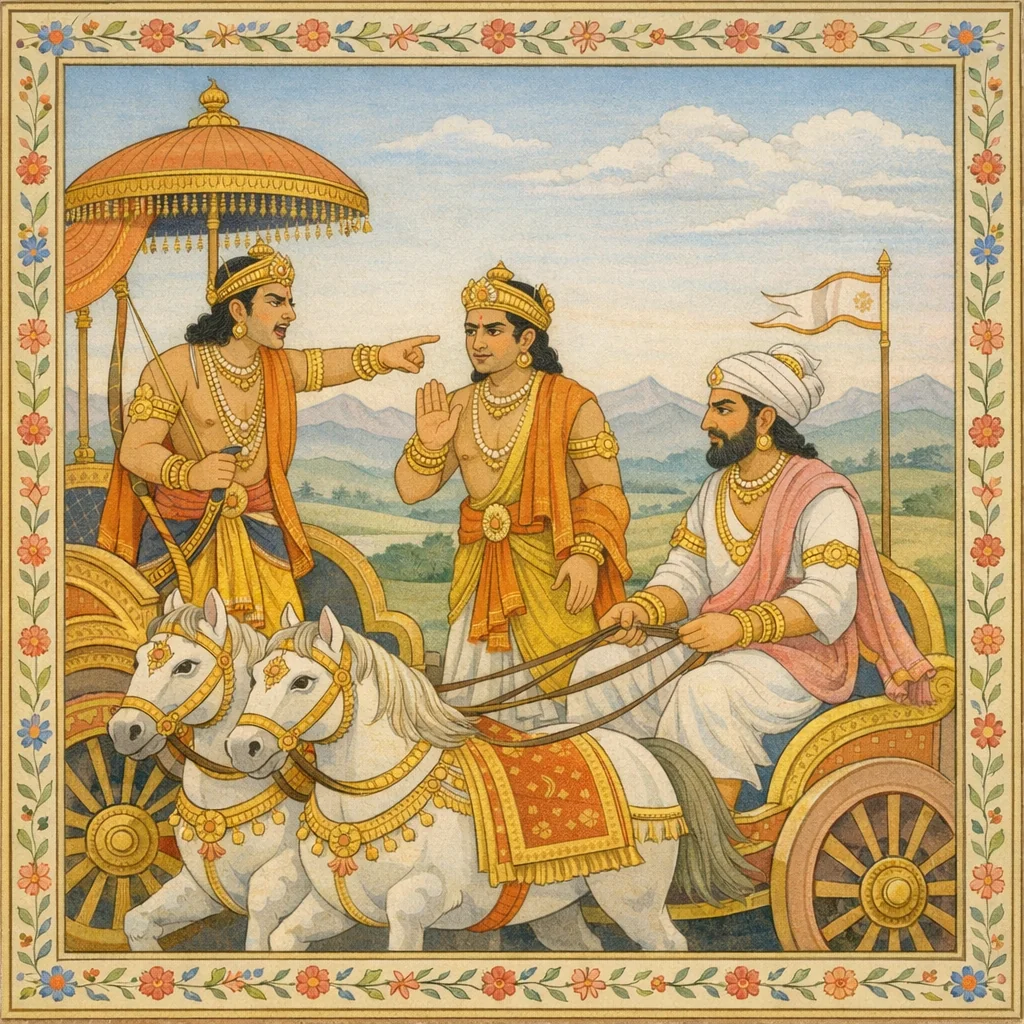
Adhyaya 44
कर्णेन सैन्यस्थापनं तथा नानायुद्धसमवायः (Karna Reforms the Host and Multiple Duels Converge)
Upa-parva: Karṇa-yuddha-pravṛtti (Renewal of Engagements under Karṇa’s Initiative)
Dhṛtarāṣṭra, observing reports of Kaurava forces being pressed and wavering, asks Saṃjaya what actions the Kurus took amid repeated rout-like movement. Saṃjaya describes Karṇa, angered at the sight of Bhīma and the Pandava advance, moving to confront Bhīma while simultaneously restoring order among retreating Kaurava units through deliberate re-formation. The chapter then presents a structured set of simultaneous engagements: Śikhaṇḍī checks Karṇa with volleys; Karṇa counters by disabling horses, charioteer, and standard, and Śikhaṇḍī withdraws under pressure. Dhṛṣṭadyumna clashes with Duḥśāsana in an exchange of bow-cutting and rapid arrow-work, with Duḥśāsana demonstrating tactical resilience amid acclaim. Nakula and Vṛṣasena trade heavy arrow strikes; the broader formation fractures and is then partially stabilized. Sahadeva blocks Ulūka, killing his horses and charioteer, forcing Ulūka to dismount and seek protection among allied troops. Sātyaki wounds Śakuni, cuts his standard, and strikes his charioteer and horses; Śakuni escapes by mounting Ulūka’s chariot. Across the field, other duels (e.g., Yudhāmanyu vs. Kṛpa; Uttamaujā vs. Kṛtavarmā) illustrate the chapter’s theme: late-war combat is governed by rapid tactical adaptation, vehicle disablement, and morale effects as much as by direct slaying. The episode closes with intensified pressure on the Pandava host as combatants regroup and surge again.
Chapter Arc: रणभूमि के बीच, रथ पर बैठे कर्ण का क्रोध शल्य पर फूट पड़ता है—वह मद्र-देश और बाहीक-निवासियों के ‘दोष’ गिनाकर शल्य को नीचा दिखाने का संकल्प करता है। → कर्ण व्यंग्य-कथा और लोक-प्रसंगों की शृंखला छेड़ता है—एक ब्राह्मण अतिथि की दृष्टि से घर-गृहस्थी के आचार, हिमालय-निवास और विविध देशों के धर्मों का वर्णन, तथा बाहीकों के ‘विपर्यय’ (एक ही व्यक्ति का बार-बार वर्ण-परिवर्तन, दासत्व में गिरना) जैसे आरोपों से शल्य की जाति-भूमि को कलंकित करता है। → कर्ण बाहीक-आचरण की ‘अधर्म-सूची’ को तीखे श्लोकों में उछाल देता है—कृतघ्नता, परधन-अपहरण, मद्यपान, गुरुपत्नीगमन, वाक्पारुष्य, गोवध, रात्रिचर्या, परवस्त्र-उपभोग आदि—और उन्हें धर्महीन ठहराकर शल्य के सम्मान पर सीधा प्रहार करता है। → शल्य प्रत्युत्तर देता है, और दुर्योधन बीच में पड़कर दोनों को रोकता है; कर्ण को विराम दिया जाता है, शल्य भी प्रतिवाद के बाद युद्ध-कर्तव्य की ओर मुख करता है—कटु वाणी को दबाकर रथ-युद्ध की तैयारी पुनः केंद्र में आती है। → कटुता शांत तो होती है, पर भीतर की दरार बनी रहती है—आगामी संग्राम में यही रथ-सारथी और रथी का तनाव निर्णायक क्षणों में कैसे फूटेगा, यह अनकहा रह जाता है।
Shlokas
Verse 1
अ्र-क्ा पज्चचत्वारिशो< ध्याय: कर्णका मद्र आदि बाहीक-निवासियोंके दोष बताना, शल्यका उत्तर देना और दुर्योधनका दोनोंको शान्त करना कर्ण उवाच हन्त शल्य विजानीहि हन्त भूयो ब्रवीमि ते । उच्यमानं मया सम्यक् त्वमेकाग्रमना: शृणु,कर्ण बोला--शल्य! पहले जो बातें बतायी गयी हैं, उन्हें समझो। अब मैं पुनः तुमसे कुछ कहता हूँ। मेरी कही हुई इस बातको तुम एकाग्रचित्त होकर सुनो--
Karna said: “Come, Śalya—understand what has already been stated. And now, again, I will speak to you. Listen with a single-pointed mind to what I am saying, spoken clearly and in full.”
Verse 2
ब्राह्मण: किल नो गेहमध्यगच्छत् पुरातिथि: । आचार ं तत्र सम्प्रेक्ष्य प्रीतो वचनमत्रवीत्,पूर्वकालमें एक ब्राह्मण अतिथिरूपसे हमारे घरपर ठहरा था। उसने हमारे यहाँका आचार-विचार देखकर प्रसन्नता प्रकट करते हुए यह बात कही--
Karna said: “Once, in former times, a Brahmin—an old-time guest—stayed at our house. Observing the conduct and customary practice maintained there, he was pleased and spoke these words.”
Verse 3
मया हिमवत: शृड्गमेकेनाध्युषितं चिरम् । दृष्टाश्न बहवो देशा नानाधर्मसमावृता:,“मैंने अकेले ही दीर्घकालतक हिमालयके शिखरपर निवास किया है और विभिन्न धर्मोंसे सम्पन्न बहुत-से देश देखे हैं
Karna said: “I lived alone for a long time upon a peak of the Himavat, and I have seen many lands—each covered and shaped by diverse forms of dharma.”
Verse 4
न च केन च धर्मेण विरुध्यन्ते प्रजा इमा: । सर्व हि तेडब्रुवन् धर्म यदुक्त वेदपारगै:,“इन सब देशोंके लोग किसी भी निमित्तसे धर्मके विरुद्ध नहीं जाते। वेदोंके पारगामी विद्वानोंने जैसा बताया है, उसी रूपमें वे लोग सम्पूर्ण धर्मको मानते और बतलाते हैं
Karna said: “And these peoples do not, for any reason, act in opposition to dharma. Indeed, they proclaim and uphold the whole of dharma exactly as it has been declared by those who have mastered the Vedas.”
Verse 5
अटता तु ततो देशान् नानाधर्मसमाकुलान् । आगच्छता महाराज वाहीकेषु निशामितम्,“महाराज! विभिन्न धर्मोंसे युक्त अनेक देशोंमें घूमता-घामता जब मैं बाहीक देशमें आ रहा था, तब वहाँ ऐसी बातें देखने और सुननेमें आयीं
Karna said: “As I wandered through various regions—lands filled with many differing religious and social customs—and as I was coming here, O great king, I observed certain things among the Vāhīkas.”
Verse 6
तत्र वै ब्राह्मणो भूत्वा ततो भवति क्षत्रिय: । वैश्य: शूद्रश्न वाहीकस्ततो भवति नापित:,“उस देशमें एक ही बाहीक पहले ब्राह्मण होकर फिर क्षत्रिय होता है। तत्पश्चात् वैश्य और शूद्र भी बन जाता है। उसके बाद वह नाई होता है। नाई होकर फिर ब्राह्मण हो जाता है। ब्राह्मण होनेके पश्चात् फिर वही दास बन जाता है-
Karna said: “In that land, a single Vāhīka becomes a brāhmaṇa first, then turns into a kṣatriya; thereafter he becomes a vaiśya and even a śūdra, and then he becomes a barber. Thus, by shifting roles again and again, he cycles through castes and occupations.”
Verse 7
नापितश्च ततो भूत्वा पुनर्भवति ब्राह्मण: । द्विजो भूत्वा च तत्रैव पुनर्दासोडभिजायते,“उस देशमें एक ही बाहीक पहले ब्राह्मण होकर फिर क्षत्रिय होता है। तत्पश्चात् वैश्य और शूद्र भी बन जाता है। उसके बाद वह नाई होता है। नाई होकर फिर ब्राह्मण हो जाता है। ब्राह्मण होनेके पश्चात् फिर वही दास बन जाता है-
Karna said: “Having become a barber thereafter, he again becomes a Brahmin. And even after becoming a twice-born there in that very land, he is born once more as a slave.”
Verse 8
भवन्त्येककुले विप्रा: प्रसृष्टा: कामचारिण: । गान्धारा मद्रकाश्नैव वाहीकाक्षाल्पचेतस:,“वहाँ एक ही कुलमें कुछ लोग ब्राह्मण और कुछ लोग स्वेच्छाचारी वर्णसंकर संतान उत्पन्न करनेवाले होते हैं। गान्धार, मद्र और बाहीक--इन सभी देशोंके लोग मन्दबुद्धि हुआ करते हैं
Karna said: “In a single lineage there can arise some who are Brahmins, and also others who, unrestrained and acting by mere desire, beget mixed offspring. The people of Gandhāra, Madra, and Vāhīka too are of scant discernment.”
Verse 9
एतन्मया श्रुतं तत्र धर्मसंकरकारकम् । कृत्स्नामटित्वा पृथिवीं वाहीकेषु विपर्यय:
Karna said: “This I heard there—something that brings about a confusion and corruption of dharma. Having wandered over the whole earth, I found that among the Vāhīkas there is a perverse inversion of proper conduct.”
Verse 10
“उस देशमें मैंने इस प्रकार धर्मसंकरता फैलानेवाली बातें सुनीं। सारी पृथ्वीमें घूमकर केवल बाहीक देशमें ही मुझे धर्मके विपरीत आचार-व्यवहार दिखायी दिया” ।। हन्त शल्य विजानीहि हन्त भूयो ब्रवीमि ते । यदप्यन्यो5ब्रवीद् वाक््यं वाहीकानां च कुत्सितम्,शल्य! ये सब बातें जान लो। अभी और कहता हूँ। एक दूसरे यात्रीने भी बाहीकोंके सम्बन्धमें जो घृणित बातें बतायी थीं, उन्हें सुनो--
Karna said: “Listen, Shalya, and understand. I will speak again. Hear also the vile report that another traveler once related about the Vāhīkas.” In this passage Karna frames his denunciation as a warning grounded in dharma: after roaming widely, he claims to have witnessed conduct opposed to righteous norms specifically in the Vāhīka country, and he urges Shalya to take note of such accounts.
Verse 11
सती पुरा हृता काचिदारट्टात् किल दस्युभि: । अधर्मतश्नोपयाता सा तानभ्यशपत् ततः,“कहते हैं, प्राचीन कालमें लुटेरे डाकुओंने आरट्ट देशसे किसी सती स्त्रीका अपहरण कर लिया और अधर्मपूर्वक उसके साथ समागम किया। तब उसने उन्हें यह शाप दे दिया --
Karna said: “It is said that long ago a chaste woman was abducted from the land of Āraṭṭa by bandits. After they violated her through unrighteous force, she then pronounced a curse upon them.”
Verse 12
बालां बन्धुमतीं यन्मामधर्मेणोपगच्छथ । तस्मान्नार्यों भविष्यन्ति बन्धक्यो वै कुलस्य च
Karna said: “Since you approach me in an unrighteous manner regarding a young woman who is under protection and bound by family ties, therefore the women of your house shall become captives as well.”
Verse 13
तस्मात् तेषां भागहरा भागिनेया न सूनव:,“इसलिये उनकी धन-सम्पत्तिके उत्तराधिकारी भानजे होते हैं, पुत्र नहीं
Karna said: “Therefore, in their case, the rightful takers of the allotted share and inheritors of property are the sister’s sons (nephews), not the sons.”
Verse 14
कुरव: सहपाञ्चाला: शाल्वा मत्स्या: सनैमिषा: | कोसला: काशयोडज्जञाशक्ष॒ कालिड्रा मागधास्तथा
Karna said: “The Kurus, together with the Pañcālas; the Śālvas; the Matsyas; those connected with Naimiṣa; the Kosalas; the Kāśis; and likewise the Māgadhas—these and other allied peoples are all drawn into this war.”
Verse 15
नानादेशेषु सन्तश्न प्रायो बाह्मालयादृते,'भिन्न-भिन्न देशोंमें बाहीकनिवासियोंको छोड़कर प्राय: सर्वत्र श्रेष्ठ पुरुष उपलब्ध होते हैं। मत्स्यसे लेकर कुरु और पांचाल देशतक, नैमिषारण्यसे लेकर चेदिदेशतक जो लोग निवास करते हैं, वे सभी श्रेष्ठ एवं साधु पुरुष हैं और प्राचीन धर्मका आश्रय लेकर जीवननिर्वाह करते हैं। मद्र और पंचनद प्रदेशोंमें ऐसी बात नहीं है। वहाँके लोग कुटिल होते हैं!
Karna said: “In many lands, as a rule, noble men are found almost everywhere—except among the Bāhlīkas. From Matsya up to the lands of the Kurus and the Pañcālas, and from Naimiṣāraṇya up to the country of Cedi, the people who dwell there are all eminent and virtuous, sustaining their lives by taking refuge in the ancient dharma. But it is not so in the regions of Madra and the Pañcanadas; the people there are crooked in nature.”
Verse 16
आ मत्स्येभ्य: कुरुपज्चालदेश्या आ नैमिषाच्चेदयो ये विशिष्टा: । धर्म पुराणमुपजीवन्ति सन््तो मद्रानृते पाउ्चनदांश्व जिह्मान्,'भिन्न-भिन्न देशोंमें बाहीकनिवासियोंको छोड़कर प्राय: सर्वत्र श्रेष्ठ पुरुष उपलब्ध होते हैं। मत्स्यसे लेकर कुरु और पांचाल देशतक, नैमिषारण्यसे लेकर चेदिदेशतक जो लोग निवास करते हैं, वे सभी श्रेष्ठ एवं साधु पुरुष हैं और प्राचीन धर्मका आश्रय लेकर जीवननिर्वाह करते हैं। मद्र और पंचनद प्रदेशोंमें ऐसी बात नहीं है। वहाँके लोग कुटिल होते हैं!
Karna said: “Except for the Madras and the people of the Panchnada region, noble men are found almost everywhere. From the Matsyas up to the lands of the Kurus and the Panchalas, and from Naimisha to the Chedis—those who dwell there are distinguished and virtuous; they sustain their lives by relying on the ancient dharma. But it is not so among the Madras and the Panchnadas; the people there are crooked in conduct.”
Verse 17
एवं विद्वान् धर्मकथासु राजं- स्तृष्णी भूतो जडवच्छल्य भूय: । त्वं तस्य गोप्ता च जनस्य राजा षड्भागहर्ता शुभदुष्कृतस्य,राजा शल्य! ऐसा जानकर तुम जड पुरुषोंके समान धर्मोपदेशकी ओरसे मुँह मोड़कर चुपचाप बैठे रहो। तुम बाहीक देशके लोगोंके राजा और रक्षक हो; अतः उनके पुण्य और पापका भी छठा भाग ग्रहण करते हो
Karna said: “Though you know this, O king, in matters of discourse on dharma you again sit silent, turning away like a dull-witted man, O Shalya. You are the king and protector of that people; therefore you also take a sixth share of their merit and their sin.”
Verse 18
अथवा दुष्कृतस्य त्वं हर्ता तेषामरक्षिता । रक्षिता पुण्यभाग् राजा प्रजानां त्वं हपुण्यभाक्,अथवा उनकी रक्षा न करनेके कारण तुम केवल उनके पापोंमें ही हिस्सा बँटाते हो। प्रजाकी रक्षा करनेवाला राजा ही उसके पुण्यका भागी होता है; तुम तो केवल पापके ही भागी हो
Or else, by failing to protect them, you become the taker of their wrongdoing and the one who leaves them unguarded. A king who protects his subjects becomes a sharer in their merit; but you, by neglecting their protection, become a sharer only in their sin.
Verse 19
पूज्यमाने पुरा धर्मे सर्वदेशेषु शाश्वते । धर्म पाज्चनदं दृष्टवा धिगित्याह पितामह:,पूर्वकालमें समस्त देशोंमें प्रचलित सनातन धर्मकी जब प्रशंसा की जा रही थी, उस समय ब्रह्माजीने पंचनदवासियोंके धर्मपर दृष्टिपात करके कहा था कि '“धिक्कार है इन्हें!”
Karna said: “In former times, when the eternal Dharma was honored throughout all lands, the Grandsire (Brahmā), casting his gaze upon the Dharma of the people of Pañcanada, declared, ‘Shame upon them!’”
Verse 20
व्रात्यानां दासमीयानां कृते5प्यशुभकर्मणाम् । ब्रह्मणा निन्दिते धर्मे स त्वं लोके किमब्रवी:,संस्कारहीन, जारज और पापकर्मी पंचनदवासियोंके धर्मकी जब ब्रह्माजीने सत्ययुगमें भी निन्दा की, तब तुम उसी देशके निवासी होकर जगत्मे क्यों धर्मोपदेश करने चले हो?
“That is the dharma Brahmā condemned—the dharma of the Vrātyas and the Dāsamīyas, of those without the purificatory rites, of the base-born, and of those who commit inauspicious deeds. Why then do you, a man of that land, go about preaching dharma to the world?”
Verse 21
इति पाउ्चनदं धर्ममवमेने पितामह: । स्वधर्मस्थेषु वर्षेषु सो5प्येतान् नाभ्यपूजयत्,पितामह ब्रह्माने पंचनदनिवासियोंके आचार-व्यवहाररूपी धर्मका इस प्रकार अनादर किया है। अपने धर्ममें तत्पर रहनेवाले अन्य देशोंकी तुलनामें उन्होंने इनका आदर नहीं किया
Karna said: “Thus did the Grandsire show contempt for the dharma—meaning the customary code of conduct—of the people of the Pañcanada region. Even though they were steadfast in their own duties, he did not honor them as he did other lands devoted to their respective dharmas.”
Verse 22
हन्त शल्य विजानीहि हन्त भूयो ब्रवीमि ते । कल्माषपाद: सरसि निमज्जन् राक्षसोडब्रवीत्,शल्य! इन सब बातोंको अच्छी तरह जान लो। अभी इस विषयमें तुमसे कुछ और भी बातें बता रहा हूँ, जिन्हें सरोवरमें डूबते हुए राक्षस कल्माषपादने कहा था--
Karna said: “Come, Śalya—understand this well. Come, I will tell you still more. As the rākṣasa Kalmāṣapāda was sinking in a lake, he spoke these words.”
Verse 23
क्षत्रियस्य मल भैक्ष्यं ब्राह्मणस्याश्रुतं मलम् मलं॑ पृथिव्यां वाहीका: स्त्रीणां मद्रस्त्रियो मलम्,'क्षत्रियका मल है भिक्षावृत्ति, ब्राह्मणका मल है वेद-शास्त्रोंके विपरीत आचरण, पृथ्वीके मल हैं बाहीक और स्त्रियोंके मल हैं मद्रदेशकी स्त्रियाँ"
Karna said: “For a kshatriya, the disgrace (mala) is living by alms; for a brahmin, the disgrace is conduct that goes against what is heard in the Vedas and sacred teaching. The disgrace upon the earth is the Vāhīkas, and the disgrace among women is the women of Madra.”
Verse 24
निमज्जमानमुद्धृत्य कश्चिद् राजा निशाचरम् | अपृच्छत् तेन चाख्यातं प्रोक्तवांस्तन्निबोध मे,उस डूबते हुए राक्षसका किसी राजाने उद्धार करके उससे कुछ प्रश्न किया। उनके उस प्रश्नके उत्तरमें राक्षसने जो कुछ कहा था, उसे सुनो--
A certain king lifted up a night-roaming rākṣasa who was sinking and questioned him. Listen now: what that rākṣasa related in reply to the inquiry, I shall recount.
Verse 25
मानुषाणां मल म्लेच्छा म्लेच्छानां शौण्डिका मलम् | शौण्डिकानां मलं षण्ढा: षण्ढानां राजयाजका:,“मनुष्योंके मल हैं म्लेच्छ, म्लेच्छोंके मल हैं शराब बेचनेवाले कलाल, कलालोंके मल हैं हींजड़े और हींजड़ोंके मल हैं राजपुरोहित
Karna said: “Among humans, the outcaste is the ‘mleccha’; among mlecchas, the lowest are liquor-sellers; among liquor-sellers, the lowest are eunuchs; and among eunuchs, the lowest are those who serve as royal priests.”
Verse 26
राजयाजकयाज्यानां मद्रकाणां च यन्मलम् | तद् भवेद् वै तव मल यद्यस्मान्न विमुड्चसि,“राजपुरोहितोंके पुरोहितों तथा मद्रदेशवासियोंका जो मल है, वह सब तुम्हें प्राप्त हो, यदि इस सरोवरसे तुम मेरा उद्धार न कर दो”
Karna said: “If you do not release me from this lake, then may the defilement attributed to royal sacrificers and to those for whom sacrifices are performed, and the impurity imputed to the people of Madra, come upon you as your own.”
Verse 27
इति रक्षोपसृष्टेषु विषवीर्यहतेषु च । राक्षसं भैषजं प्रोक्ते संसिद्धवचनोत्तरम्,जिनपर राक्षसोंका उपद्रव है तथा जो विषके प्रभावसे मारे गये हैं, उनके लिये यह उत्तम सिद्ध वाक्य ही राक्षसके प्रभावका निवारण करनेवाला एवं जीवनरक्षक औषध बताया गया है
Karna said: “Thus, for those afflicted by the assault of rākṣasas, and for those struck down by the potency of poison, this perfected utterance has been declared a rākṣasa-countering remedy—an efficacious medicine that wards off such malignant influence and restores life.”
Verse 28
ब्राह्मं पज्चाला: कौरवेयास्तु धर्म्य सत्यं मत्स्या: शूरसेनाश्न यज्ञम् । प्राच्या दासा वृषला दाक्षिणात्या: स्तेना वाहीका: संकरा वै सुराष्ट्रा:,पांचाल देशके लोग वेदोक्त धर्मका आश्रय लेते हैं, कुरुदेशके निवासी धर्मानुकूल कार्य करते हैं, मत्स्यदेशके लोग सत्य बोलते और शूरसेननिवासी यज्ञ करते हैं। पूर्वदेशके लोग दासकर्म करनेवाले, दक्षिणके निवासी वृषल, बाहीक देशके लोग चोर और सौराष्ट्र-निवासी वर्णसंकर होते हैं
Karna said: “The people of Pañcāla adhere to Vedic (brahmanical) norms; the Kuru folk act in ways consistent with dharma. The Matsyas are known for truthfulness, and the Śūrasenas for performing sacrifices. But the easterners are fit for servile work; the southerners are ‘vṛṣalas’ (outside the orthodox social order); the Vāhīkas are thieves; and the people of Surāṣṭra are of mixed social origin.”
Verse 29
कृतघ्नता परवित्तापहारो मद्यपानं गुरुदारावमर्द: । वाक्पारुष्यं गोवधो रात्रिचर्या बहिर्गेहं परवस्त्रोपभोग:
Karna said: “Ingratitude, stealing another’s wealth, drinking intoxicants, violating the wife of one’s teacher, harsh and abusive speech, killing a cow, roaming about at night for improper ends, staying outside one’s home, and wearing or enjoying another person’s clothes—these are acts that mark moral downfall and bring blame in the order of dharma.”
Verse 30
आ पाज्चाल्येभ्य: कुरवो नैमिषाश्न मत्स्याश्वैतेडप्पथ जानन्ति धर्मम् । अथोदीच्याश्षाज्गका मागधाश्ष शिष्टान् धर्मानुपजीवन्ति वृद्धा:
Karna said: “From the Pāñcālas onward, the Kurus, the people of Naimiṣa, and the Matsyas—these now know the proper course of dharma. Likewise, the northerners, the Śāṅgakas, and the Māgadhas—especially their elders—live by the refined, established norms of righteous conduct.”
Verse 31
पांचाल, कौरव, नैमिष और मत्स्यदेशोंके निवासी धर्मको जानते हैं। उत्तर, अंग तथा मगधदेशोंके वृद्ध पुरुष शास्त्रोक्त धर्मोका आश्रय लेकर जीवन निर्वाह करते हैं ।। प्राचीं दिशं श्रिता देवा जातवेद:पुरोगमा: । दक्षिणां पितरो गुप्तां यमेन शुभकर्मणा
Karna says that the people of Panchala, the Kauravas, those of Naimisha, and the inhabitants of the Matsya country understand dharma. In the northern regions, and in Anga and Magadha, the elders sustain their lives by taking refuge in the dharma taught in the scriptures. He further recalls the cosmic order: the gods abide in the eastern direction with Agni (Jātavedas) leading them, while the southern quarter—guarded by Yama through his righteous governance—is the domain of the ancestors.
Verse 32
प्रतीचीं वरुण: पाति पालयान: सुरान् बली | उदीचीं भगवान् सोमो ब्राह्मणैः सह रक्षति
Karna said: “Mighty Varuṇa, sustaining the gods, guards the western quarter. And the blessed Soma, together with the Brahmins, protects the northern quarter.”
Verse 33
अग्नि आदि देवता पूर्वदिशाका आश्रय लेकर रहते हैं, पितर पुण्यकर्मा यमराजके द्वारा सुरक्षित दक्षिण दिशामें निवास करते हैं, बलवान् वरुण देवताओंका पालन करते हुए पश्चिम दिशाकी रक्षामें तत्पर रहते हैं और भगवान् सोम ब्राह्मणोंके साथ उत्तर दिशाकी रक्षा करते हैं।। तथा रक्ष:पिशाचाश्न हिमवन्तं नगोत्तमम् | गुहुका श्व महाराज पर्वतं गन्धमादनम्
Karna said: “Agni and the other gods take their station in the eastern quarter. The Pitṛs, whose deeds are meritorious, dwell in the southern quarter under the protection of King Yama. Mighty Varuṇa, upholding the gods, remains intent on guarding the western quarter. And the blessed Soma, together with the Brāhmaṇas, protects the northern quarter. Likewise, O great king, the Himavant—the best of mountains—is associated with hosts of Rākṣasas and Piśācas, and the mountain Gandhamādana with the Guhyakas.”
Verse 34
इज्ितज्ञाश्व मगधा:ः प्रेक्षितज्ञाक्ष कोसला:,मगधदेशके लोग इशारेसे ही सब बात समझ लेते हैं, कोसलनिवासी नेत्रोंकी भावभंगीसे मनका भाव जान लेते हैं, कुरु तथा पांचालदेशके लोग आधी बात कहनेपर ही पूरी बात समझ लेते हैं, शाल्वदेशके निवासी पूरी बात कह देनेपर उसे समझ पाते हैं, परंतु शिबिदेशके लोगोंकी भाँति पर्वतीय प्रान्तोंक निवासी इन सबसे विलक्षण होते हैं। वे पूरी बात कहनेपर भी नहीं समझ पाते
Karna said: “The people of Magadha grasp a matter from a mere hint; the men of Kosala read the mind from the play of the eyes. The Kurus and the Panchalas understand the whole even when only half is spoken. The Shalvas comprehend only after the entire statement has been made. But the mountain-border folk—like the people of Shibi—are unlike all these: even when everything is said, they still do not understand.”
Verse 35
अर्धोक्ता: कुरुपज्चाला: शाल्वा: कृत्स्नानुशासना: । पर्वतीयाश्ष विषमा यथैव शिबयस्तथा,मगधदेशके लोग इशारेसे ही सब बात समझ लेते हैं, कोसलनिवासी नेत्रोंकी भावभंगीसे मनका भाव जान लेते हैं, कुरु तथा पांचालदेशके लोग आधी बात कहनेपर ही पूरी बात समझ लेते हैं, शाल्वदेशके निवासी पूरी बात कह देनेपर उसे समझ पाते हैं, परंतु शिबिदेशके लोगोंकी भाँति पर्वतीय प्रान्तोंक निवासी इन सबसे विलक्षण होते हैं। वे पूरी बात कहनेपर भी नहीं समझ पाते
Karna said: “The Kurus and the Panchalas grasp the whole meaning even when only half is spoken. The people of Śālva understand only when the instruction is given in full. But the mountain-dwellers are difficult to deal with—like the Śibis: even when the entire matter is stated, they still do not comprehend.”
Verse 36
सर्वज्ञा यवना राजन शूराश्वैव विशेषत: । म्लेच्छा: स्वसंज्ञानियता नानुक्तमितरे जना:
Karna said: “O King, the Yavanas are regarded as all-knowing—especially the Śūrāśvas. The Mlecchas, too, are recognizable by their own distinctive marks and conventions; but other peoples cannot be identified so readily unless they are explicitly described.”
Verse 37
स त्वमेतादृश: शल्य नोत्तरं वक्तुमहसि । पृथिव्यां सर्वदेशानां मद्रको मलमुच्यते,शल्य! ऐसे ही तुम हो। अब मेरी बातका जवाब नहीं दोगे। मद्रदेशके निवासीको पृथ्वीके सम्पूर्ण देशोंका मल बताया जाता है
Karna said: “So you are indeed like this, Śalya—unfit to give any reply to my words. On this earth, the man of Madra is spoken of as the ‘filth’ of all lands; thus, Śalya.”
Verse 38
सीधो: पान॑ गुरुतल्पावमर्दों भ्रूणहत्या परवित्तापहार: | येषां धर्मस्तान् प्रति नास्त्यधर्म आरडट्टजान् पञ्चनदान् धिगस्तु
Karna said: “Drinking intoxicants, violating the teacher’s bed, killing an embryo, and stealing another’s wealth—toward those whose very ‘dharma’ consists of such acts, there can be no question of ‘adharma’ (in opposing them). Shame upon those born of such disgrace—those men of the land of the five rivers.”
Verse 39
मदिरापान, गुरुकी शय्याका उपभोग, भ्रूणहत्या और दूसरोंके धनका अपहरण--ये जिनके लिये धर्म हैं, उनके लिये अधर्म नामकी कोई वस्तु है ही नहीं। ऐसे आरट्ट और पंचनददेशके लोगोंको धिक्कार है! ।। एतज्ज्ञात्वा जोषमास्स्व प्रतीपं मा सम वै कृथा: । मा त्वां पूर्वमहं हत्वा हनिष्ये केशवार्जुनौ,यह जानकर तुम चुपचाप बैठे रहो। फिर कोई प्रतिकूल बात मुँहसे न निकालो। अन्यथा पहले तुम्हींको मारकर पीछे श्रीकृष्ण और अर्जुनका वध करूँगा
Karna declares that for those who treat drunkenness, violating the teacher’s bed, killing an unborn child, and stealing others’ wealth as ‘dharma,’ there is no such thing as ‘adharma’ at all—such people have lost the very moral vocabulary by which right and wrong are distinguished. He then condemns the people of Ārāṭṭa and the Pañcanada region as exemplars of this moral inversion. Having said this, he orders his opponent to remain silent and not speak in a hostile or contrary manner; otherwise, Karna threatens to kill that person first and then proceed to slay Kṛṣṇa (Keśava) and Arjuna.
Verse 40
शल्य उवाच आतुराणां परित्याग: स्वदारसुतविक्रय: । अड़े प्रवर्तते कर्ण येषामधिपतिर्भवान्,शल्य बोले--कर्ण! तुम जहाँके राजा बनाये गये हो, उस अंगदेशमें क्या होता है? अपने सगे-सम्बन्धी जब रोगसे पीड़ित हो जाते हैं तो उनका परित्याग कर दिया जाता है। अपनी ही स्त्री और बच्चोंको वहाँके लोग सरे बाजार बेचते हैं
Śalya said: “Karna, in the land of Aṅga—over which you have been made the ruler—such practices are said to prevail: when one’s own kin fall sick, they are abandoned; and people even sell their own wives and children in the marketplace.”
Verse 41
रथातिरथसंख्यायां यत् त्वां भीष्मस्तदाब्रवीत् । तान् विदित्वा55त्मनो दोषान् निर्मन्युर्भव मा क्रुध:,उस दिन रथी और अतिरथियोंकी गणना करते समय भीष्मजीने तुमसे जो कुछ कहा था, उसके अनुसार अपने उन दोषोंको जानकर क्रोधरहित हो शान्त हो जाओ
When the ranks of chariot-warriors and great chariot-warriors were being assessed, whatever Bhīṣma told you then—recognizing those faults in yourself in light of that, become free from anger; do not give way to wrath. Calm yourself.
Verse 42
सर्वत्र ब्राह्मणा: सन्ति सन्ति सर्वत्र क्षत्रिया: । वैश्या: शूद्रास्तथा कर्ण स्त्रिय: साध्व्यश्न सुव्रता:,कर्ण! सर्वत्र ब्राह्मण हैं। सब जगह क्षत्रिय, वैश्य और शूद्र हैं तथा सभी देशोंमें उत्तम व्रतका पालन करनेवाली साध्वी स्त्रियाँ होती हैं
Śalya said: “O Karṇa, Brahmins are found everywhere; likewise, Kshatriyas are found everywhere. So too are Vaishyas and Shudras; and in every land there are also virtuous women—chaste and steadfast in good vows.”
Verse 43
रमन्ते चोपहासेन पुरुषा: पुरुषै: सह | अन्योन्यमवतक्षन्तो देशे देशे समैथुना:,सभी देशोंके पुरुष दूसरे पुरुषोंक साथ बात करते समय उपहासके द्वारा एक-दूसरेको चोट पहुँचाते हैं और स्त्रियोंके साथ रमण करते हैं
Śalya said: “Men, in every land, take pleasure in mocking one another when they speak together—wounding each other with ridicule—and they also seek enjoyment in sexual union.”
Verse 44
इस प्रकार श्रीमह्या भारत कर्णपर्वमें कर्ण और शल्यका संवादविषयक चौवालीसवाँ अध्याय पूरा हुआ,परवाच्येषु निपुण: सर्वो भवति सर्वदा । आत्मवाच्यं न जानीते जानन्नपि च मुह्ति दूसरोंके दोष बतानेमें सभी लोग सदा ही निपुण होते हैं; परंतु अपने दोषोंका उन्हें पता नहीं रहता, अथवा जानकर भी अनजान बने रहते हैं
Thus ends the forty-fourth chapter of the Karṇa Parva of the Śrī Mahābhārata, dealing with the dialogue between Karṇa and Śalya. Everyone is ever skilled at pointing out what is blameworthy in others; yet one does not recognize what is blameworthy in oneself—or, even knowing it, becomes deluded and acts as though unaware.
Verse 45
सर्वत्र सन्ति राजान: स्वं स्वं धर्ममनुव्रता: । दुर्मनुष्यान् निगृह्नन्ति सन्ति सर्वत्र धार्मिका:,सभी देशोंमें अपने-अपने धर्मका पालन करनेवाले राजा रहते हैं, जो दुष्टोंका दमन करते हैं तथा सर्वत्र ही धर्मात्मा मनुष्य निवास करते हैं इति श्रीमहाभारते कर्णपर्वणि कर्णशल्यसंवादे पञठ्चचत्वारिंशो5ध्याय:
Śalya said: “Everywhere there are kings who adhere to their own rightful codes of conduct. They restrain wicked men; and everywhere, too, there dwell people devoted to dharma.”
Verse 46
न कर्ण देशसामान्यात् सर्व: पापं निषेवते । यादृशा: स्वस्वभावेन देवा अपि न तादृशा:,कर्ण! एक देशमें रहनेमात्रसे सब लोग पापका ही सेवन नहीं करते हैं। उसी देशमें मनुष्य अपने श्रेष्ठ शील-स्वभावके कारण ऐसे महापुरुष हो जाते हैं कि देवता भी उनकी बराबरी नहीं कर सकते
Śalya said: “O Karṇa, it is not the case that everyone who merely lives in a particular region necessarily indulges in sin. In that very same land, some people—by the excellence of their own character and innate disposition—become such great souls that even the gods cannot match them.”
Verse 47
संजय उवाच ततो दुर्योधनो राजा कर्णशल्याववारयत् | सखिभावेन राधेयं शल्यं स्वाञउ्जल्यकेन च,संजय कहते हैं--राजन्! तब राजा दुर्योधनने कर्ण तथा शल्य दोनोंको रोक दिया। उसने कर्णको तो मित्रभावसे समझाकर मना किया और शल्यको हाथ जोड़कर रोका
Sañjaya said: Then King Duryodhana restrained both Karṇa and Śalya. He checked Rādheya (Karṇa) by appealing to him in the spirit of friendship, and he held back Śalya with folded hands.
Verse 48
ततो निवारित: कर्णों धार्तराष्ट्रेण मारिष | कर्णो5पि नोत्तरं प्राह शल्यो5प्यभिमुख: परान् । ततः प्रहस्य राधेय: पुनर्याहीत्यचोदयत्,मान्यवर! दुर्योधनके मना करनेपर कर्णने कोई उत्तर नहीं दिया और शल्यने भी शत्रुओंकी ओर मुँह फेर लिया। तब राधापुत्र कर्णने हँसकर शल्यको रथ बढ़ानेकी आज्ञा देते हुए कहा--“चलो, चलो”
Sañjaya said: Then Karṇa was checked by Dhṛtarāṣṭra’s son (Duryodhana), O venerable one. Karṇa, however, gave no reply, and Śalya too turned his face toward the enemy. Then Rādheya (Karṇa), laughing, urged Śalya with the command, “Drive on—go forward again.”
Verse 123
न चैवास्मात् प्रमोक्षध्वं घोरात् पापान्नराधमा: । “मैं अभी बालिका हूँ और मेरे भाई-बन्धु मौजूद हैं तो भी तुमलोगोंने अधर्मपूर्वक मेरे साथ समागम किया है। इसलिये इस कुलकी सारी स्त्रियाँ व्यभिचारिणी होंगी। नराधमो! तुम्हें इस घोर पापसे कभी छुटकारा नहीं मिलेगा”
“Do not think you will ever be released from this dreadful sin, you vilest of men! I am still a maiden, and my brothers and kinsmen are present, yet you have consorted with me in adharma. Therefore all the women of this lineage shall become adulterous. O wretches, you shall never find deliverance from this terrible crime.”
Verse 146
चेदयश्न महाभागा धर्म जानन्ति शाश्वतम् | “कुरु, पांचाल, शाल्व, मत्स्य, नैमिष, कोसल, काशी, अंग, कलिंग, मगध और चेदिदेशोंके बड़भागी मनुष्य सनातन धर्मको जानते हैं
Karna said: “The fortunate people of Cedi know the eternal Dharma. Likewise, the blessed men of the lands of the Kurus, the Panchalas, the Shalvas, the Matsyas, Naimisha, Kosala, Kashi, Anga, Kalinga, Magadha, and Cedi understand the timeless law of righteousness.”
Verse 293
येषां धर्मस्तान् प्रति नास्त्यधर्मो ह्यारट्टानां पजचनदान् धिगस्तु । कृतघ्नता, दूसरोंके धनका अपहरण, मदिरापान, गुरुपत्नीगमन, कटुवचनका प्रयोग, गोवध, रातके समय घरसे बाहर घूमना और दूसरोंके वस्त्रका उपभोग करना-ये सब जिनके धर्म हैं, उन आरट्टों और पंचनदवासियोंके लिये अधर्म नामकी कोई वस्तु है ही नहीं। उन्हें धिक्कार है!
Karna said: “For those whose very ‘dharma’ consists of ingratitude, stealing others’ wealth, drinking liquor, violating the teacher’s wife, using harsh speech, killing cows, roaming outside at night, and wearing or enjoying others’ garments—such people have no such thing as ‘adharma’ at all, for they treat wrongdoing as their rule of life. Shame upon those Āraṭṭas and the inhabitants of Pañcanada.”
Verse 336
ध्रुव: सर्वाणि भूतानि विष्णु: पाति जनार्दन: । महाराज! राक्षस, पिशाच और गुह्मक--ये गिरिराज हिमालय तथा गन्धमादन पर्वतकी रक्षा करते हैं और अविनाशी एवं सर्वव्यापी भगवान् जनार्दन समस्त प्राणियोंका पालन करते हैं (परंतु बाहीक देशपर किसी भी देवताका विशेष अनुग्रह नहीं है)
“All beings are bound to what is ordained; Vishnu—Janārdana—protects the world. O great king, the Rākṣasas, Piśācas, and Guhyakas guard the lordly Himalaya and Mount Gandhamādana; and the imperishable, all-pervading Lord Janārdana sustains every living creature (yet upon the land of Vāhīka no deity bestows any special favor).”
Verse 366
प्रतिरब्धास्तु वाहीका न च केचन मद्रका: । राजन! यद्यपि यवनजातीय म्लेच्छ सभी उपायोंसे बात समझ लेनेवाले और विशेषत: शूर होते हैं, तथापि अपने द्वारा कल्पित संज्ञाओंपर ही अधिक आग्रह रखते हैं (वैदिक धर्मको नहीं मानते)। अन्य देशोंके लोग बिना कहे हुए कोई बात नहीं समझते हैं, परंतु बाहीक देशके लोग सब काम उलटे ही करते हैं (उनकी समझ उलटी ही होती है) और मद्रदेशके कुछ निवासी तो ऐसे होते हैं कि कुछ भी नहीं समझ पाते
Karna said: “The Vāhīkas are obstinate, and some among the Madrakas are no better. O King, although the Yavana-born mlecchas are quick to grasp matters by every means and are especially brave, they cling most strongly to names and conventions of their own invention, refusing the Vedic way. People of other lands do not understand what is left unsaid; but the men of Vāhīka do everything in reverse, their understanding itself being inverted. And among the Madras there are even some who comprehend nothing at all.”
Frequently Asked Questions
The dilemma concerns leadership under collapse conditions: whether and how a commander should arrest panic, reconstitute formations, and re-engage—balancing immediate aggression (seeking key opponents) with the duty to preserve the army’s coherence.
Operational stability is portrayed as decisive: disabling mobility assets (horses, charioteers, standards) and managing morale can shift outcomes even without immediate fatalities, illustrating a pragmatic layer of kṣātra conduct.
No explicit phalaśruti is presented here; the meta-sense is conveyed through Saṃjaya’s evaluative narration of extraordinary battle intensity and the implied significance of understanding command nīti within the epic’s broader dharma–karma framework.