Adhyaya 21
कर्णार्जुनयुद्ध-प्रवृत्तिः (Renewal of the Karṇa–Arjuna Engagement at Day’s End)
Upa-parva: Karṇābhisandhi–Arjuna-Saṅgrāma (Late-day engagement; Chapter 21 context)
Saṃjaya reports that the Kaurava forces, placing Karṇa at the front, re-enter the conflict with heightened intensity. The field is portrayed through combined-arms motion and sensory density: conch and troop sounds, missile showers, and mounting casualties, with the ground strewn with crowned heads and broken formations. Sātyaki (Śiniputra/Śinivṛṣabha) engages Karṇa; allies surge to support Karṇa when pressured. Arjuna and Kṛṣṇa arrive after completing ritual duties and immediately generate a suppressive arrow-storm, dismantling chariots, standards, horses, and drivers; Duryodhana advances but is materially checked as Arjuna severs bow, charioteer, banner, horses, and parasol, while Drauṇi interrupts a decisive projectile. Arjuna continues disabling multiple Kaurava champions’ weapon-systems (bows, flags, mounts). Karṇa then reorients toward Arjuna, striking both Arjuna and Kṛṣṇa; Sātyaki retaliates with heavy volleys. Pandava allies mass around Karṇa, but Karṇa disperses the assault and inflicts severe losses until Arjuna counters Karṇa’s astras with his own, producing mutual missile saturation. As darkness, dust, and reduced visibility spread, both sides withdraw to camps; the Pandavas return in orderly morale, while the battlefield is described as attracting yakṣas, rākṣasas, piśācas, and scavengers—an epic marker of nightfall after large-scale loss.
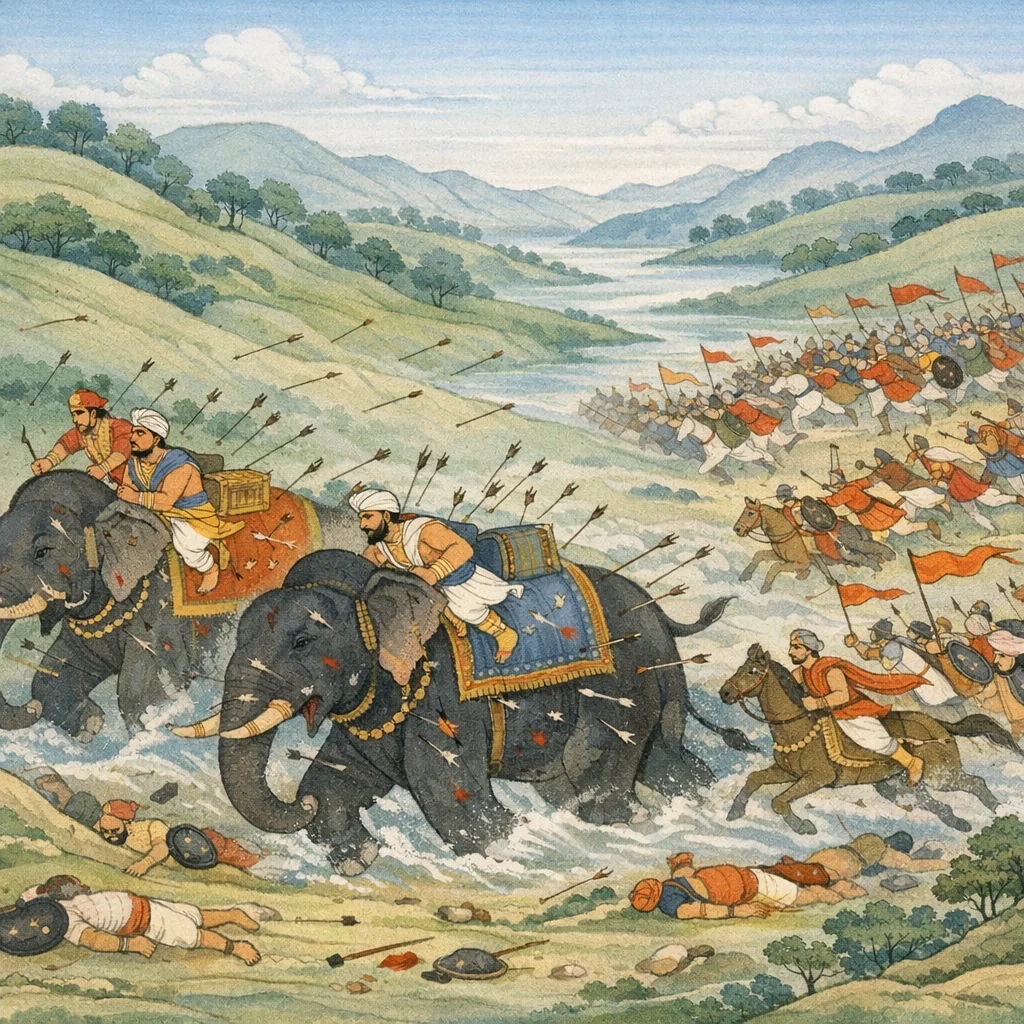
Chapter Arc: संजय धृतराष्ट्र से कहता है—दुर्योधन की आज्ञा पाकर अनेक महावत क्रोध में धृष्टद्युम्न को मारने की इच्छा से गजसेना सहित उस पर टूट पड़े; रणभूमि पर विशाल नागों की गर्जना और ध्वज-पताकाओं का समुद्र उठ खड़ा हुआ। → पूर्व-दक्षिण दिशाओं के प्रसिद्ध गजयोद्धा (मेकल, कोसल, मद्र, दशार्ण, निषध आदि) अपने-अपने दलों सहित आगे बढ़ते हैं; एड़ी, अँगूठे और अंकुश की मार से उकसाए गए हाथी शत्रु-सेना को कुचलने को आतुर होकर पंक्तियाँ तोड़ते हैं, और पाण्डव-पक्ष पर गज-आक्रमण का भयावह दबाव बनता है। → पाण्डव महारथियों की बाण-वृष्टि ‘बादलों’ की तरह बरसती है; सहदेव अकेले ही 64 तीक्ष्ण बाणों से आठ महागजों को शीघ्र मार गिराता है—और शत्रु के ‘हाथी-रूपी पर्वत’ वज्र-वर्षा से ढहते पर्वतों की भाँति धराशायी होने लगते हैं। → श्रेष्ठ पाण्डव महारथियों द्वारा गजसेना का संहार देखकर कौरव-सेना किनारा तोड़ती नदी की तरह बिखरकर भागने लगती है; गज-आक्रमण का वेग टूटता है और रण-भूमि पर पाण्डवों का पलड़ा भारी दिखने लगता है। → पराजय के बीच भी मेकल-उत्कल-कालिङ्ग-निषध-ताम्रलिप्त आदि दल शर-तोमर-वर्षा करते हुए फिर से मारने की इच्छा से आगे बढ़ते हैं—अगला धक्का किस पर पड़ेगा, यह अनिश्चित रह जाता है।
Shlokas
Verse 1
इस प्रकार श्रीमह्याभारत कर्णपर्वमें संकुलयुद्धविषयक इक्कीसवाँ अध्याय पूरा हुआ ॥/ २१ ॥ ऑपन--माज बछ। अकाल दाविशोद्ध्याय: पाण्डव-सेनापर भयानक गजसेनाका आक्रमण, पाण्डवोंद्वारा पुण्ड़्रकी पराजय तथा बंगराज और अंगराजका वध, गजसेनाका विनाश और पलायन संजय उवाच हस्तिभिस्तु महामात्रास्तव पुत्रेण चोदिता: । धृष्टय्युम्नं जिघांसन्त: क्रुद्धा: पार्षतमभ्ययु:
Sañjaya said: Urged on by your son, the great commanders with their war-elephants—angered and intent on killing Dhṛṣṭadyumna, the son of Pārṣata—advanced against him.
Verse 2
संजय कहते हैं--राजन्! आपके पुत्र दुर्योधनकी आज्ञा पाकर बहुत-से महावत धष्टद्युम्नको मार डालनेकी इच्छासे क्रोधपूर्वक हाथियोंके साथ आकर उनपर टूट पड़े ।। प्राच्याश्न दाक्षिणात्याश्व प्रवरा गजयोधिन: । अड्डा वज्ञश्च पुण्ड़ाश्न मागधास्ताम्रलिप्तका:,भारत! पूर्व और दक्षिण दिशाके श्रेष्ठ गजयोद्धा तथा अंग, बंग, पुण्ड्र, मगध, ताम्रलिप्त, मेकल, कोसल, मद्र, दशार्ण तथा निषध देशोंके समस्त गजयुद्धनिपुण वीर कलिंगोंके साथ मिलकर वर्षा करनेवाले मेघोंके समान समरांगणमें पांचाल-सेनापर बाण, तोमर और नाराचोंकी वृष्टि करने लगे
Sañjaya said: O King, at the command of your son Duryodhana, many elephant-commanders, inflamed with anger and eager to slay Dhrishtadyumna, charged upon him with their elephants. Warriors skilled in elephant-combat—foremost men from the eastern and southern regions—together with fighters from Anga, Vanga, Pundra, Magadha, Tamralipta, Mekala, Kosala, Madra, Dasharna, Nishadha, and the Kalingas, advanced like rain-bearing clouds and poured a storm of arrows, javelins, and iron darts upon the Panchala army on the battlefield.
Verse 3
मेकला: कोसला मद्रा दशार्णा निषधास्तथा | गजयुद्धेषु कुशला: कलिज्जैः सह भारत,भारत! पूर्व और दक्षिण दिशाके श्रेष्ठ गजयोद्धा तथा अंग, बंग, पुण्ड्र, मगध, ताम्रलिप्त, मेकल, कोसल, मद्र, दशार्ण तथा निषध देशोंके समस्त गजयुद्धनिपुण वीर कलिंगोंके साथ मिलकर वर्षा करनेवाले मेघोंके समान समरांगणमें पांचाल-सेनापर बाण, तोमर और नाराचोंकी वृष्टि करने लगे
Sañjaya said: The warriors of Mekalā, Kosala, Madra, Daśārṇa, and Niṣadha—skilled in fighting from elephants—joined forces with the Kaliṅgas, O Bhārata. In the unfolding battle, these renowned elephant-corps from the eastern and southern regions pressed forward like rain-bearing clouds, showering the Pañcāla host with volleys of arrows, javelins, and iron darts.
Verse 4
शरतोमरनाराचैववृष्टिमन्त इवाम्बुदा: । सिषिचुस्ते ततः सर्वे पाउ्चालबलमाहवे,भारत! पूर्व और दक्षिण दिशाके श्रेष्ठ गजयोद्धा तथा अंग, बंग, पुण्ड्र, मगध, ताम्रलिप्त, मेकल, कोसल, मद्र, दशार्ण तथा निषध देशोंके समस्त गजयुद्धनिपुण वीर कलिंगोंके साथ मिलकर वर्षा करनेवाले मेघोंके समान समरांगणमें पांचाल-सेनापर बाण, तोमर और नाराचोंकी वृष्टि करने लगे
Sañjaya said: Then all those warriors drenched the Pāñcāla host in battle with a shower of arrows, javelins, and iron darts—like rain-laden clouds pouring down.
Verse 5
तान् सम्मिमर्दिषून् नागान् पार्ष्ण्यड्गुष्ठाडकुशैर्भशम् । चोदितान् पार्षतो बाणैर्नाराचैर भ्यवीवृषत्
Sañjaya said: As those mighty elephants were being violently pressed and driven on—goaded hard with heel, toe, and the elephant-hook—Dhṛṣṭadyumna, the son of Pṛṣata, showered them at close range with arrows, especially iron-headed nārācas, checking their onrush amid the fury of battle.
Verse 6
वे नाग शत्रुओंकी सारी सेनाको कुचल डालनेकी इच्छा रखते थे और उन्हें पैरोंकी एड़ी, अँगूठों तथा अंकुशोंकी मारसे बारंबार आगे बढ़नेके लिये प्रेरित किया जा रहा था। यह देखकर ट्रुपदकुमार धृष्टद्युम्नने उनपर नाराच नामक बाणोंकी वर्षा आरम्भ कर दी ।। एकैकं दशभि: षड्भिरष्टाभिरपि भारत । द्विरदानभिविव्याध क्षिप्तैर्गिरिनिभान् शरै:,भरतनन्दन! धृष्टद्युम्नने उन पर्वताकार हुए हाथियोंमेंसे प्रत्येकको अपने चलाये हुए दस-दस, छ:-छ: और आठ-आठ बाणोंसे घायल कर दिया
Sañjaya said: O Bharata, with arrows shot in swift succession, Dhrishtadyumna pierced those mountain-like elephants—each one struck with ten, with six, and with eight shafts. Seeing them being driven forward again and again by the goad and by blows to heel and toe, he began a rain of nārāca arrows upon them, seeking to check their crushing advance and the slaughter they threatened to inflict upon the opposing host.
Verse 7
प्रच्छाद्यमान द्विरदैर्मेघैरिव दिवाकरम् । प्रययु: पाण्डुपज्चाला नदन्तो निशितायुधा:,उस समय मेघोंकी घटासे ढके हुए सूर्यके समान धृष्टद्युम्मनको उन हाथियोंसे आच्छादित हुआ देख पाण्डव और पांचाल सैनिक तीखे आयुध लिये गर्जना करते हुए आगे बढ़े
Sañjaya said: Seeing Dhṛṣṭadyumna covered over by elephants—like the sun veiled by masses of clouds—the Pāṇḍavas and the Pañcāla warriors, bearing keen-edged weapons, surged forward with roaring cries.
Verse 8
तान् नागानभिवर्षन्तो ज्यातन्त्रीतलनादितै: । वीरनृत्यं प्रनृत्यन्तः शूरतालप्रचोदितै: । नकुल: सहदेवश्न द्रौपदेया: प्रभद्रका:,वे प्रत्यंचारूपी वीणाके तारको झंकारते, शूरवीरोंके दिये हुए तालसे प्रेरणा लेते तथा वीरोचित नृत्य करते हुए उन हाथियोंपर बाणोंकी वर्षा कर रहे थे। नकुल, सहदेव, द्रौपदीके पाँचों पुत्र, प्रभद्रकगण, सात्यकि, शिखण्डी तथा पराक्रमी चेकितान--ये सभी वीर चारों ओरसे उन हाथियोंपर उसी प्रकार बाणोंकी वृष्टि करने लगे, जैसे बादल पर्वतोंपर पानी बरसाते हैं
Sañjaya said: Stirred by the martial rhythm—like the beat of bowstrings and the clatter of time-keeping—those heroes performed a warrior’s dance and showered arrows upon the elephants. Nakula, Sahadeva, Draupadī’s five sons, the Prabhadrakas, Sātyaki, Śikhaṇḍī, and the mighty Cekitāna all poured arrows from every side, as rain-clouds drench mountains with water.
Verse 9
सात्यकिश्न शिखण्डी च चेकितानश्च वीर्यवान् | समन्तात् सिषिचुर्वीरा मेघास्तोयैरिवाचलान्,वे प्रत्यंचारूपी वीणाके तारको झंकारते, शूरवीरोंके दिये हुए तालसे प्रेरणा लेते तथा वीरोचित नृत्य करते हुए उन हाथियोंपर बाणोंकी वर्षा कर रहे थे। नकुल, सहदेव, द्रौपदीके पाँचों पुत्र, प्रभद्रकगण, सात्यकि, शिखण्डी तथा पराक्रमी चेकितान--ये सभी वीर चारों ओरसे उन हाथियोंपर उसी प्रकार बाणोंकी वृष्टि करने लगे, जैसे बादल पर्वतोंपर पानी बरसाते हैं
Sañjaya said: Sātyaki, Śikhaṇḍī, and the mighty Cekitāna—those heroes—poured down showers of arrows from every side upon the enemy, just as rain-clouds drench mountains with water.
Verse 10
ते म्लेच्छै: प्रेषिता नागा नरानश्वान् रथानपि । हस्तैराक्षिप्य ममृदुः पद्धिश्चाप्पतिमन्यव:,म्लेच्छोंद्वारा आगे बढ़ाये हुए वे अत्यन्त क्रोधी गजराज मनुष्यों, घोड़ों और रथोंको अपनी सूँड़ोंसे उठाकर फेंक देते और उन्हें पैरोंसे मसल डालते थे
Sanjaya said: Urged on by the Mlecchas, the elephant-lords—seized by fierce wrath—would snatch up men, horses, and even chariots with their trunks, hurl them away, and then crush them underfoot. The sight revealed how, in battle’s frenzy, unbridled anger turns both living beings and war-machines into objects of violent ruin, deepening the moral darkness of the field.
Verse 11
विषाणलग्नाश्षाप्यन्ये परिपेतुर्विभीषणा:,कितनोंको अपने दाँतोंके अग्रभागसे विदीर्ण कर देते और बहुतोंको सूँड्रोंसे खींचकर दूर फेंक देते थे। कितने ही योद्धा उनके दाँतोंमें गुथकर बड़ी भयानक अवस्थामें नीचे गिरते थे
Sanjaya said: Some warriors, caught upon the beasts’ horns, were hurled about in terror. Some were torn apart by the very tips of their tusks; many were seized by their trunks and flung far away. Others, wedged fast between their teeth, fell down in a most dreadful state. The scene lays bare the war’s brutal momentum, where valor and duty are eclipsed by indiscriminate violence that consumes combatants.
Verse 12
प्रमुखे वर्तमान तु द्विपं वज्गस्य सात्यकि: । नाराचेनोग्रवेगेन भित्त्वा मर्माण्यपातयत्,इसी समय सात्यकिने अपने सामने उपस्थित हुए वंगराजके हाथीके मर्मस्थानोंको भयंकर वेगवाले नाराचसे विदीर्ण करके उसे धराशायी कर दिया
Sanjaya said: Then Sātyaki, facing the elephant of the king of Vaṅga in the forefront, struck it with a razor-sharp nārāca arrow of terrible speed, piercing its vital points and bringing the great beast down. The scene underscores the grim ethic of battlefield necessity, where skill and resolve are turned toward disabling even mighty war-elephants to protect one’s side and break the enemy’s advance.
Verse 13
तस्यावर्जितकायस्य द्विरदादुत्पतिष्यत: । नाराचेनाहनद् वक्ष: सात्यकि: सो5पतद् भुवि,वंगराज अपने शरीरको सिकोड़कर उस हाथीसे कूदना ही चाहता था कि सात्यकिने नाराचद्वारा उसकी छाती छेद डाली; अतः: वह घायल होकर भूतलपर गिर पड़ा
Sanjaya said: As the king of Aṅga, drawing in his body, was just about to spring away from the elephant, Sātyaki struck him in the chest with a nārāca arrow. Wounded by that blow, he fell to the ground. The scene underscores the ruthless immediacy of battlefield dharma, where resolve and agility are met by swift, decisive force, and a warrior’s intent can be cut down in an instant.
Verse 14
पुण्ड्स्यापततो नागं चलन्तमिव पर्वतम् | सहदेव: प्रयत्नास्तै्नाराचैरहनत् त्रिभि:,दूसरी ओर पुण्ड्रराज आक्रमण कर रहे थे। उनका हाथी चलते-फिरते पर्वतके समान जान पड़ता था। सहदेवने प्रयत्नपूर्वक चलाये हुए तीन नाराचोंद्वारा उसे घायल कर दिया
Sanjaya said: As the king of Puṇḍra charged, his war-elephant looked like a moving mountain. Sahadeva, exerting himself with focused effort, struck it with three nārāca arrows, wounding it and checking the onrush amid the righteous fury of battle.
Verse 15
विपताकं वियन्तारं विवर्मध्वजजीवितम् । त॑ कृत्वा द्विरदं भूय: सहदेवो5ज्रमभ्ययात्,इस प्रकार उस हाथीको पताका, महावत, कवच, ध्वज तथा प्राणोंसे हीन करके सहदेव पुनः अंगराजकी ओर बढ़े
Sañjaya said: Having rendered that elephant bereft of its banner, its driver, its armor, its standard, and even its life, Sahadeva once again advanced toward the king of Aṅga.
Verse 16
सहदेवं तु नकुलो वारयित्वांगमार्दयत् । नाराचैर्यमदण्डाभैस्त्रिभि्ागं शतेन तम्,परंतु नकुलने सहदेवको रोककर स्वयं ही अंगराजको पीड़ित किया। उन्होंने यमदण्डके समान तीन भयानक नाराचोंद्वारा उनके हाथीको और सौ नाराचोंसे अंगराजको घायल कर दिया
Sañjaya said: Nakula first checked Sahadeva and then himself pressed the attack against the king of Aṅga (Karna). With three dreadful nārāca arrows, like Yama’s rod of punishment, he struck, and with a hundred more he wounded Karna.
Verse 17
दिवाकरकरप्रख्यानड्डश्नचिक्षेप तोमरान् । नकुलाय शतान्यष्टौ त्रिचैकैक॑ तु सो5च्छिनत्,अंगराजने नकुलपर सूर्यकिरणोंके समान तेजस्वी आठ सौ तोमर चलाये; परंतु नकुलने उनमेंसे प्रत्येकके तीन-तीन टुकड़े कर डाले
Sañjaya said: Karṇa, the Aṅga king, hurled eight hundred spears at Nakula, blazing like the rays of the sun. Yet Nakula cut each spear into three pieces.
Verse 18
तथार्धचन्द्रेण शिरस्तस्य चिच्छेद पाण्डव: । स पपात हतो म्लेच्छस्तेनैव सह दन्तिना,तत्पश्चात् पाण्डुकुमार नकुलने एक अर्धचन्द्रके द्वारा अंगग़जका सिर काट लिया। इस प्रकार मारा गया म्लेच्छजातीय अंगराज अपने हाथीके साथ ही पृथ्वीपर गिर पड़ा
Sañjaya said: Then the Pāṇḍava struck with a half-moon–shaped arrow and severed his head. Slain, that mleccha warrior fell to the earth together with his elephant.
Verse 19
अथाड्रपुत्रे निहते हस्तिशिक्षाविशारदे । अड्जाः क्रुद्धा महामात्रा नागैर्नकुलमभ्ययु:,गजशिक्षामें कुशल अंगराजके पुत्रके मारे जानेपर कुपित हुए अंगदेशीय महावतोंने हाथियोंद्वारा नकुलपर आक्रमण किया
Sañjaya said: When the son of the king of Aṅga—skilled in the training of elephants—had been slain, the enraged Aṅga commanders (mahouts and officers) advanced against Nakula with their war-elephants.
Verse 20
चलत्पताकै: सुमुखैहेमकक्षातनुच्छदै: । मिमर्दिषन्तस्त्वरिता: प्रदीप्तैरिव पर्वतै:,उन हाथियोंपर पताकाएँ फहरा रही थीं। उनके मुख बहुत सुन्दर थे। उनको कसनेके लिये बनी हुई रस्सी और कवच सुवर्णमय थे। वे प्रज्वलित पर्वतोंके समान जान पड़ते थे। उन हाथियोंके द्वारा नकुलको कुचलवा देनेकी इच्छा रखकर मेकल, उत्कल, कलिंग, निषध तथा ताग्रलिप्तदेशीय योद्धा बड़ी उतावलीके साथ बाणों और तोमरोंकी वर्षा कर रहे थे। वे सब-के-सब उन्हें मार डालनेको उतारू थे
Sañjaya said: “With banners fluttering, with handsome faces, and with golden girths and protective trappings, the elephants rushed forward intent on crushing—like blazing mountains in motion. Eager to have Nakula trampled down, warriors from Mekala, Utkala, Kaliṅga, Niṣadha, and the Tāmralipta region hastened to shower arrows and javelins; all of them were bent on killing him.”
Verse 21
उन हाथियोंपर पताकाएँ फहरा रही थीं। उनके मुख बहुत सुन्दर थे। उनको कसनेके लिये बनी हुई रस्सी और कवच सुवर्णमय थे। वे प्रज्वलित पर्वतोंके समान जान पड़ते थे। उन हाथियोंके द्वारा नकुलको कुचलवा देनेकी इच्छा रखकर मेकल, उत्कल, कलिंग, निषध तथा ताग्रलिप्तदेशीय योद्धा बड़ी उतावलीके साथ बाणों और तोमरोंकी वर्षा कर रहे थे। वे सब-के-सब उन्हें मार डालनेको उतारू थे
Sañjaya said: Banners streamed above those elephants, and their faces appeared strikingly beautiful. The ropes made to bind them and their armor were of gold, so that the beasts looked like blazing mountains. Eager to have Nakula crushed beneath the elephants, warriors from Mekala, Utkala, Kaliṅga, Niṣadha, and Tāmraliptā rained arrows and javelins in great haste. All of them were bent on killing him.
Verse 22
तैश्छाद्यमानं नकुलं दिवाकरमिवाम्बुदै: । परिपेतु: सुसंरब्धा: पाण्डुपाज्चालसोमका:,बादलोंसे ढके हुए सूर्यके समान नकुलको उनके द्वारा आच्छादित होते देख क्रोधमें भरे हुए पाण्डव, पांचाल और सोमक योद्धा तुरंत उन म्लेच्छोंपर टूट पड़े इति श्रीमहाभारते कर्णपर्वणि संकुलयुद्धे द्वाविशो5ध्याय:
Sanjaya said: Seeing Nakula being covered over by them—like the sun veiled by clouds—the warriors of the Pāṇḍavas, the Pāñcālas, and the Somakas, inflamed with wrath, immediately surged forward and fell upon those foreign fighters.
Verse 23
ततस्तदभवद् युद्ध॑ रथिनां हस्तिभि: सह । सृजतां शरवर्षाणि तोमरांश्व सहस्रशः,तब उन रथियोंका हाथियोंके साथ युद्ध छिड़ गया। वे रथी वीर उनके ऊपर सहसों तोमरों और बाणोंकी वर्षा कर रहे थे
Sañjaya said: Then a fierce battle broke out between the chariot-warriors and the elephants. Those heroes on chariots poured down showers of arrows and hurled spears by the thousand, intensifying the slaughter and the relentless momentum of war.
Verse 24
नागानां प्रास्फुटन् कुम्भा मर्माणि विविधानि च । वन्ताश्वैवातिविद्धानां नाराचैर्भूषणानि च,नाराचोंसे अत्यन्त घायल हुए उन हाथियोंके कुम्भस्थल फूट गये, विभिन्न मर्मस्थान विदीर्ण हो गये तथा उनके दाँत और आभूषण कट गये
Sañjaya said: Struck again and again by nārāca arrows, the frontal globes of the elephants burst open; their various vital points were torn apart, and even their tusks and ornaments were shorn away.
Verse 25
तेषामष्टौ महानागांश्षतुःषष्ट्या सुतेजनै: । सहदेवो जघानाशु तेडपतन् सह सादिभि:,सहदेवने उनमेंसे आठ महागजोंको चौंसठ पैने बाणोंसे शीघ्र मार डाला। वे सब-के-सब सवारोंके साथ धराशायी हो गये
Sañjaya said: Sahadeva swiftly struck down eight great war-elephants with sixty-four razor-sharp arrows. All of them collapsed to the ground together with their riders. The scene underscores the grim efficiency of battlefield skill, where courage and duty are enacted through decisive, lethal action amid the larger moral weight of war.
Verse 26
अज्जोगतिभिरायम्य प्रयत्नाद् धनुरुत्तमम् । नाराचैरहनन्नागान् नकुल: कुलनन्दन:
Sañjaya said: With swift, well-aimed movements, Nakula—delight of his lineage—drew his excellent bow with effort and struck down the elephants with sharp iron arrows. The verse underscores disciplined skill and determined exertion in the midst of war, where prowess is displayed through controlled action rather than mere fury.
Verse 27
अपने कुलको आनन्दित करनेवाले नकुलने भी प्रयत्नपूर्वक उत्तम धनुषको खींचकर अनायास ही दूरतक जानेवाले नाराचोंद्वारा बहुत-से हाथियोंका वध कर डाला ।। ततः पाञ्चालशैनेयौ द्रौपदेया: प्रभद्रका: । शिखण्डी च महानागान् सिषिचु: शरवृष्टिभि:,तदनन्तर धृष्टद्युम्न, सात्यकि, द्रौपदीके पुत्र, प्रभद्रकगण तथा शिखण्डीने भी उन महान् गजराजोंपर अपने बाणोंकी वर्षा की
Sañjaya said: Then the Pāñcālas and the Śaineya, along with Draupadī’s sons, the Prabhadraka warriors, and Śikhaṇḍī, showered those mighty lordly elephants with a rain of arrows. The scene underscores the relentless momentum of battle—where disciplined coordination and martial resolve are turned toward the destruction of formidable war-beasts, raising the ethical tension between strategic necessity and the grim cost of war.
Verse 28
ते पाण्डुयोधाम्बुधरै: शत्रुद्विरदपर्वता: । बाणवर्ष्िता: पेतुर्वज़वर्षरिवाचला:
Sañjaya said: Struck by showers of arrows released by the Pāṇḍava warriors—like rainclouds pouring down—the enemy’s elephant-like champions, towering as mountains, fell, as if mountains themselves were brought down by a rain of thunderbolts. The verse frames the battle’s violence through cosmic imagery, underscoring how martial prowess, when unleashed, can topple even the mightiest, and how war reduces proud strength to sudden ruin.
Verse 29
जैसे वज्रोंकी वर्षासे पर्वत ढह जाते हैं, उसी प्रकार पाण्डव-सैनिकरूपी बादलोंद्वारा की हुई बाणोंकी वृष्टिसे आहत हो शत्रुओंके हाथीरूपी पर्वत धराशायी हो गये ।। एवं हत्वा तव गजांस्ते पाण्डुरथकुञ्जरा: । द्रुतां सेनामवैक्षन्त भिन्नकूलामिवापगाम्
Sañjaya said: After slaying your elephants, those mighty warriors of the Pāṇḍavas—like elephants yoked to pale chariots in their force—looked upon your army as it broke and fled, like a river whose banks have been shattered. The image underscores how, in war, even the proudest strength (elephant-corps) collapses when struck by concentrated skill and resolve, and how a host without cohesion loses its moral and strategic footing alike.
Verse 30
इस प्रकार उन श्रेष्ठ पाण्डव महारथियोंने आपके हाथियोंका संहार करके देखा कि आपकी सेना किनारा तोड़कर बहनेवाली नदीके समान सब ओर भाग रही है ।। तां ते सेनां समालोड्य पाण्डुपुत्रस्य सैनिका: । विक्षोभयित्वा च पुन: कर्ण समभिदुद्रुवु:,पाण्डुपुत्र युधिष्ठिके उन सैनिकोंने आपकी उस सेनाको मथकर उसमें हलचल पैदा करके पुन: कर्णपर धावा किया
Sanjaya said: Thus those foremost Pandava great chariot-warriors, having destroyed your elephants, saw your army break its bounds and flee in all directions like a river that has burst its banks. Having churned and shaken your forces into confusion, the soldiers of the son of Pandu once again rushed straight at Karna.
Verse 231
मेकलोत्कलकालिड्ञा निषधास्ताम्रलिप्तका: । शरतोमरवर्षाणि विमुज्चन्तो जिघांसव:
Sanjaya said: The warriors from Mekala, Utkala, and Kalinga, along with the Nishadhas and the men of Tamralipta—intent on killing—kept hurling down showers of arrows and javelins.
Frequently Asked Questions
The chapter frames a tension between loyalty to a commander/ally and the escalating duty to limit harm: multiple leaders choose intensified concentration of force, raising the epic’s question of responsibility under coalition pressure.
Competence and valor do not neutralize consequence: tactical success and ritual propriety coexist with irreversible attrition, underscoring the Mahābhārata’s view that action (karma) carries cumulative moral and social residue.
No explicit phalaśruti is stated here; the chapter’s meta-function is structural—marking the day’s closure, the limits of visibility and control, and the narrative transition from open engagement to nocturnal withdrawal.