Adhyaya 182
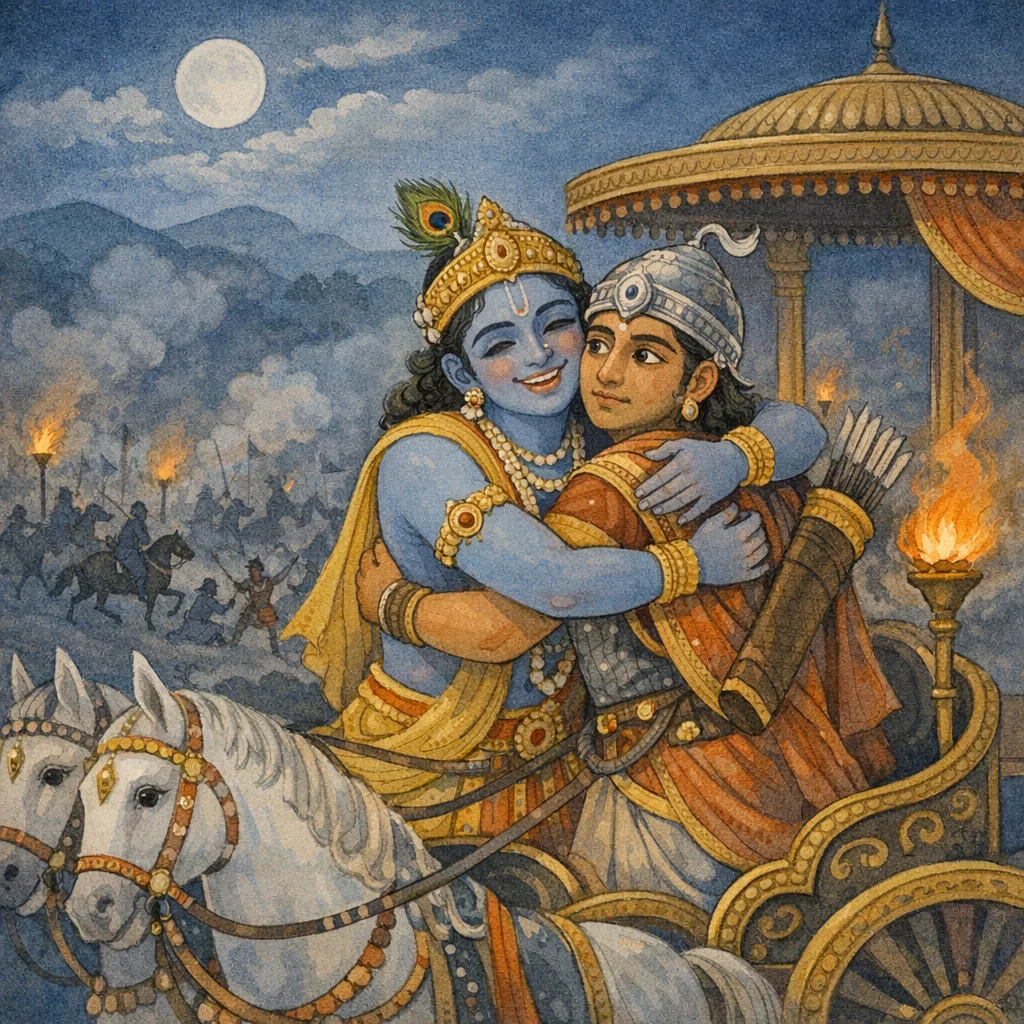
Chapter Arc: रात्रियुद्ध के धुएँ-धूल और राक्षसी मायाओं के बीच पाण्डव-पक्ष घटोत्कच-वध से शोकाकुल है—उसी क्षण संजय धृतराष्ट्र को बताता है कि आश्चर्यतः श्रीकृष्ण हर्ष से भर उठे। → अर्जुन के रथ पर वासुदेव का सिंहनाद, आलिंगन और पीठ थपथपाना पाण्डवों के शोक के विपरीत एक तीखा विरोध रचता है; यह संकेत देता है कि घटोत्कच का पतन केवल हानि नहीं, किसी बड़े संकट के टलने का कारण है। → श्रीकृष्ण का उन्मत्त-हर्ष—घोड़ों की रास रोककर, वृक्ष-सा थरथराते हुए गर्जना करना, अर्जुन को बार-बार परिष्वजित करना—और यह कहना कि आज जो हुआ वह समुद्र के सूखने या मेरु के हिलने जैसा अद्भुत है (अर्थात् कर्ण की शक्ति का लक्ष्य बदल गया)। → कृष्ण का आशय स्पष्ट होता है: कर्ण की एकमात्र अचूक/प्रलयंकारी शक्ति घटोत्कच पर व्यय हो गई; अब अर्जुन-वध का वह ‘एकमात्र योग’ (अवसर) टूट गया, इसलिए भविष्य का निर्णायक द्वंद्व पाण्डवों के लिए संभव हुआ। → रात्रि के रक्त-आवरण के बाद अगला प्रश्न शेष रहता है—अब कर्ण अपने शेष पराक्रम से किसे लक्ष्य करेगा, और अर्जुन-कर्ण का अनिवार्य महासंग्राम किस रूप में फूटेगा?
Shlokas
Verse 1
ऑपनआक्राा बछ। 5 - खंभेके समान आकृतिवाले। अशीर्त्याधिकशततमो<& ध्याय: घटोत्कचके वधसे पाण्डवोंका शोक तथा श्रीकृष्णकी प्रसन्नता और उसका कारण संजय उवाच हैडिम्बिं निहतं दृष्टवा विशीर्णमिव पर्वतम् । बभूवु: पाण्डवा: सर्वे शोकबाष्पाकुलेक्षणा:,संजय कहते हैं--राजन्! जैसे पर्वत ढह गया हो, उसी प्रकार हिडिम्बाकुमार घटोत्कचको मारा गया देख समस्त पाण्डवोंके नेत्रोंमें शोकके आँसू भर आये
Sanjaya said: O King, when they saw Hidimba’s son Ghaṭotkaca slain—like a mountain shattered and collapsed—all the Pāṇḍavas were overcome with grief, their eyes clouded with tears.
Verse 2
वासुदेवस्तु हर्षण महताभिपरिप्लुत: । ननाद सिंहनादं वै पर्यष्वजत फाल्गुनम्,परंतु वसुदेवनन्दन भगवान् श्रीकृष्ण बड़े हर्षमें मगन होकर सिंहनाद करने लगे। उन्होंने अर्जुनको छातीसे लगा लिया
Sañjaya said: Vāsudeva, overwhelmed with great joy, let out a lion-like roar and embraced Phālguna (Arjuna).
Verse 3
स विनद्य महानादमभीषून् संनियम्य च । ननर्त हर्षसंवीतो वातोद्धूत इव ट्रुम:,वे बड़े जोरसे गर्जना करके घोड़ोंकी रास रोककर हवाके हिलाये हुए वृक्षके समान हर्षसे झूमकर नाचने लगे
Sañjaya said: Having let out a mighty roar and then reining in the horses’ reins, he began to dance, overcome with exhilaration—like a tree swayed by the wind.
Verse 4
ततः परिष्वज्य पुन: पार्थमास्फोट्य चासकृत् । रथोपस्थगतो धीमान् प्राणदत् पुनरच्युत:,तत्पश्चात् पुनः अर्जुनको हृदयसे लगाकर बारंबार उनकी पीठ ठोंककर रथके पिछले भागमें बैठे हुए बुद्धिमान् भगवान् श्रीकृष्ण फिर जोर-जोरसे गर्जना करने लगे
Sañjaya said: Then, embracing Pārtha once more and repeatedly patting him on the back, the wise Acyuta, seated on the rear part of the chariot, again let out a mighty roar—reviving courage and resolve in the midst of the war’s moral strain.
Verse 5
प्रह्ष्टमनसं ज्ञात्वा वासुदेव॑ महाबल: । अर्जुनो<थाब्रवीद् राजन्नातिहृष्टमना इव,राजन! भगवान् श्रीकृष्णके मनमें अधिक प्रसन्नता हुई जानकर महाबली अर्जुन कुछ अप्रसन्न-से होकर बोले--
Sañjaya said: Seeing that Vāsudeva (Kṛṣṇa) was inwardly delighted, the mighty Arjuna then spoke to you, O King—yet his own mind did not seem overly elated.
Verse 6
अतिहर्षोडयमस्थाने तवाद्य मधुसूदन । शोकस्थाने तु सम्प्राप्ते हैडिम्बस्य वधेन तु,“मधुसूदन! हिडिम्बाकुमार घटोत्कचके वधसे आज हमारे लिये तो शोकका अवसर प्राप्त हुआ है, परंतु आपको यह बेमौके अधिक हर्ष हो रहा है
Sañjaya said: “O Madhusūdana, today you are showing excessive joy at an improper time. For us, however, this is a moment of grief—because Haiḍimba (Ghaṭotkaca), the son of Hiḍimbā, has been slain.”
Verse 7
विमुखानीह सैन्यानि हतं दृष्टवा घटोत्कचम् । वयं च भृशमुद्विग्ना हैडिम्बेस्तु निपातनात्,“घटोत्कचको मारा गया देख हमारी सेनाएँ यहाँ युद्धसे विमुख होकर भागी जा रही हैं। हिडिम्बाकुमारके धराशायी होनेसे हमलोग भी अत्यन्त उद्विग्न हो उठे हैं
Sañjaya said: Seeing Ghaṭotkaca slain, the armies here have turned away from the fight and are falling back in disarray. And we too are deeply shaken, for the son of Hiḍimbā has been struck down.
Verse 8
नैतत्कारणमल्पं हि भविष्यति जनार्दन । तदद्य शंस मे पृष्ट: सत्यं सत्यवतां वर,'परंतु जनार्दन! आपको जो इतनी खुशी हो रही है उसका कोई छोटा-मोटा कारण न होगा। वही मैं आपसे पूछता हूँ। सत्यवक्ताओंमें श्रेष्ठ प्रभो! आप इसका मुझे यथार्थ कारण बताइये
This cannot be a trivial cause, O Janārdana, for such joy to arise. Therefore, since I ask you today, tell me truly—O best among truth-speakers—what is the real reason for it.
Verse 9
यद्येतन्न रहस्यं ते वक्तुमर्हस्यरिंदम । धैर्यस्य वैकृतं ब्रूहि त्वमद्य मधुसूदन,“शत्रुदमन! यदि कोई गोपनीय बात न हो तो मुझे अवश्य बतावें। मधुसूदन! आपके इस हर्ष-प्रदर्शनसे आज हमारा धैर्य छूटा जा रहा है, अतः आप इसका कारण अवश्य बतावें
Sañjaya said: “O subduer of foes, if this is not something that must remain secret and you deem it fit to speak, then tell me. O Madhusūdana, today our composure is being unsettled by this unusual display of elation—therefore, explain its cause.”
Verse 10
समुद्रस्येव संशोष॑ मेरोरिव विसर्पणम् । तथैतदद्य मन्ये5हं तव कर्म जनार्दन,'जनार्दन! जैसे समुद्रका सूखना और मेरु पर्वतका विचलित होना आश्वर्यकी बात है, उसी प्रकार आज मैं आपके इस हर्षप्रकाशनरूपी कर्मको आश्चर्यजनक मानता हूँ”
Sañjaya said: “O Janardana, just as it would be a wonder for the ocean to dry up or for Mount Meru to shift from its place, so too I regard your action today—this open display of joy—as something astonishing.”
Verse 11
भगवान् श्रीकृष्णने कहा--धनंजय! आज वास्तवमें मुझे यह अत्यन्त हर्षका अवसर प्राप्त हुआ है, इसका क्या कारण है, यह तुम मुझसे सुनो। मेरे मनको तत्काल अत्यन्त प्रसन्नता प्रदान करनेवाला वह उत्तम कारण इस प्रकार है
The Blessed Lord Śrī Kṛṣṇa spoke: “Dhanañjaya, today I have truly been granted an occasion of the highest joy. Hear from me what the reason is. The noble cause that at once fills my mind with deep gladness is as follows.”
Verse 12
शक्ति घटोत्कचेनेमां व्यंसयित्वा महाद्युते । कर्ण निहतमेवाजौ विद्धि सद्यो धनंजय,महातेजस्वी धनंजय! इन्द्रकी दी हुई शक्तिको घटोत्कचके द्वारा कर्णके हाथसे दूर कराकर अब तुम युद्धमें कर्णको शीघ्र मरा हुआ ही समझो
Vāyu said: “O greatly radiant one, once this divine spear has been made to miss through Ghaṭotkaca, know that Karṇa is as good as slain on the battlefield, O Dhanañjaya. Mighty Dhanañjaya—after the spear given by Indra has been drawn away from Karṇa’s hand through Ghaṭotkaca, you should regard Karṇa in this war as destined to fall without delay.”
Verse 13
शक्तिहस्तं पुनः: कर्ण को लोके5स्ति पुमानिह । य एनमभितस्तिछेत् कार्तिकेयमिवाहवे,इस संसारमें कौन ऐसा पुरुष है, जो युद्धस्थलमें कार्तिकेयके समान शक्तिशाली कर्णके सामने खड़ा हो सके
Vāyu said: “Again, who in this world—what man here—could stand facing Karṇa when he bears the śakti in his hand? In battle he is like Kārtikeya himself.”
Verse 14
दिष्ट्यापनीतकवचो दिष्ट्यापह्तकुण्डल: । दिष्ट्या सा व्यंसिता शक्तिरमोघास्य घटोत्कचे,सौभाग्यकी बात है कि कर्णका दिव्य कवच उतर गया, सौभाग्यसे ही उसके कुण्डल छीने गये तथा सौभाग्यसे ही उसकी वह अमोघशक्ति घटोत्कचपर गिरकर उसके हाथसे निकल गयी
Vāyu said: “Fortunate indeed that Karṇa has been stripped of his divine armor; fortunate that his earrings have been taken away; and fortunate that his unfailing spear—meant to be irresistible—has been expended upon Ghaṭotkaca and has left his hand.”
Verse 15
यदि हि स्यात् सकवचस्तथैव स्यात् सकुण्डल: । सामरानपि लोकांस्त्रीनेक: कर्णो जयेद् रणे,यदि कर्ण कवच और कुण्डलोंसे सम्पन्न होता तो वह अकेला ही रणभूमिमें देवताओंसहित तीनों लोकोंको जीत सकता था
Vāyu said: “If Karṇa had still been wearing his natural armor and earrings, then in battle he alone could have conquered the three worlds—even with the gods included.”
Verse 16
वासवो वा कुबेरो वा वरुणो वा जलेश्वर: । यमो वा नोत्सहेत् कर्ण रणे प्रतिसमासितुम्,उस अवस्थामें इन्द्र, कुबेर, जलेश्वर वरुण अथवा यमराज भी रणभूमिमें कर्णका सामना नहीं कर सकते थे
Vāyu said: “In that condition, neither Indra (Vāsava), nor Kubera, nor Varuṇa—the lord of the waters—nor even Yama would have had the courage to confront Karṇa face to face on the battlefield.”
Verse 17
गाण्डीवमुद्यम्य भवांश्क्रं चाहं सुदर्शनम् । न शक्तौ स्वो रणे जेतुं तथायुक्त नरर्षभम्,तुम गाण्डीव उठाकर और मैं सुदर्शनचक्र लेकर दोनों एक साथ जाते तो भी समरांगणमें कवच-कुण्डलोंसे युक्त नरश्रेष्ठ कर्णको नहीं जीत सकते थे
Vāyu said: “Even if you, raising the Gāṇḍīva, and I, bearing the Sudarśana discus, were to advance together, we still would not have the power in battle to defeat that bull among men—Karna—so long as he stood protected by his armor and earrings.”
Verse 18
त्वद्धितार्थ तु शक्रेण मायापहृतकुण्डल: । विहीनकवचश्चायं कृत: परपुरंजय:,तुम्हारे हितके लिये इन्द्रने शत्रु-नगरीपर विजय पानेवाले कर्णके दोनों कुण्डल मायासे हर लिये और उसे कवचसे भी वंचित कर दिया
Vāyu said: “For your welfare, Śakra (Indra) used māyā—deception—to take away Karṇa’s two earrings, and thus made this conqueror of enemy cities bereft of his natural armor as well.”
Verse 19
उत्कृत्य कवचं यस्मात् कुण्डले विमले च ते । प्रादाच्छक्राय कर्णो वै तेन वैकर्तन: स्मृत:,कर्णने कवच तथा उन निर्मल कुण्डलोंको स्वयं ही अपने शरीरसे कुतरकर इन्द्रको दे दिया था; इसीलिये उसका नाम वैकर्तन हुआ
Because Karṇa cut from his own body the natural armor and the two spotless earrings and gave them to Śakra (Indra), he came to be remembered by the epithet Vaikartana—“the one who cut (them) away.”
Verse 20
आशीविष इव क्रुद्धो जृभितो मन्त्रतेजसा । तथाद्य भाति कर्णो मे शान्तज्वाल इवानल:,जैसे क्रोधमें भरे हुए सर्पको मन्त्रके तेजसे स्तब्ध कर दिया जाय तथा प्रज्वलित आगकी ज्वालाको बुझा दिया जाय, शक्तिसे वंचित हुआ कर्ण भी आज मुझे वैसा ही प्रतीत होता है
Vāyu said: “Just as a venomous serpent, though enraged, is rendered motionless by the power of a mantra, and just as a blazing fire appears when its flames have been quenched, so today Karṇa seems to me—his might checked and his force deprived—like that: present, yet effectively neutralized.”
Verse 21
यदाप्रभृति कर्णाय शक्तिर्दत्ता महात्मना । वासवेन महाबाहो क्षिप्ता यासै घटोत्कचे,महाबाहो! जबसे महात्मा इन्द्रने कर्णको उसके दिव्य कवच और कुण्डलोंके बदलेमें अपनी शक्ति दी थी, जिसे उसने घटोत्कचपर चला दिया है, उस शक्तिको पाकर धर्मात्मा कर्ण सदा तुम्हें रणभूमिमें मारा गया ही मानता था
From the time the great-souled Vāsava (Indra) granted Karṇa the divine Śakti—given in exchange for his celestial armor and earrings—and that weapon was then hurled at Ghaṭotkaca, Karṇa, having obtained (and expended) that Śakti, continually regarded you, O mighty-armed one, as already slain on the battlefield.
Verse 22
कुण्डलाभ्यां निमायाथ दिव्येन कवचेन च । तां प्राप्पामन्यत वृष: सतत त्वां हतं रणे,महाबाहो! जबसे महात्मा इन्द्रने कर्णको उसके दिव्य कवच और कुण्डलोंके बदलेमें अपनी शक्ति दी थी, जिसे उसने घटोत्कचपर चला दिया है, उस शक्तिको पाकर धर्मात्मा कर्ण सदा तुम्हें रणभूमिमें मारा गया ही मानता था
Vāyu said: “Having bartered away his earrings and his divine cuirass, and having obtained that (invincible) power in return, Vṛṣa (Karna) constantly regarded you, O mighty-armed one, as already slain on the battlefield.”
Verse 23
एवंगतो5पि शक््यो<यं हन्तुं नान्येन केनचित् । ऋते त्वां पुरुषव्याप्र शपे सत्येन चानघ,पुरुषसिंह! आज ऐसी अवस्थामें आकर भी कर्ण तुम्हारे सिवा किसी दूसरे योद्धासे नहीं मारा जा सकता। अनघ! मैं सत्यकी शपथ खाकर यह बात कहता हूँ
Even in this diminished state, he can be slain by no one else. Except for you, O tiger among men—O sinless one—I swear by truth: Karṇa cannot be killed by any other warrior.
Verse 24
ब्रह्मण्य: सत्यवादी च तपस्वी नियतव्रत:ः । रिपुष्वपि दयावांश्व॒ तस्मात् कर्णो वृष: स्मृत:,कर्ण ब्राह्मणभक्त, सत्यवादी, तपस्वी, नियम और व्रतका पालक तथा शत्रुओंपर भी दया करनेवाला है; इसीलिये उसे वृष (धर्मात्मा) कहा गया है
Vāyu-deva said: “Karna is devoted to the Brahmins, a speaker of truth, an ascetic, and one who keeps his vows under discipline. He shows compassion even toward enemies; therefore Karna is remembered as ‘Vṛṣa’—a righteous man, steadfast in dharma.”
Verse 25
युद्धशौण्डो महाबाहुर्नित्योद्यतशरासन: । केसरीव वने नर्दन् मातड़ इव यूथपान्
Vāyu said: “He is a mighty-armed hero, ever eager for battle, his bow always strung and ready. Roaring in the forest like a lion, he strikes terror among the leaders of the enemy host like a rutting elephant scattering the chiefs of a herd.”
Verse 26
मध्यं गत इवादित्यो यो न शक्यो निरीक्षितुम्,पुरुषसिंह! तुम्हारे महामनस्वी श्रेष्ठ योद्धा दोपहरके तपते हुए सूर्यकी भाँति कर्णकी ओर देख भी नहीं सकते। जैसे शरद्-ऋतुके निर्मल आकाशमें सूर्य अपनी सहस्रों किरणें बिखेरता है, उसी प्रकार कर्ण युद्धमें अपने बाणोंका जाल-सा बिछा देता है
Vāyu said: “Like the sun standing at midday—impossible to gaze upon—so is Karṇa. O lion among men, even your high-souled, foremost warriors cannot bear to look toward him, as one cannot stare into the blazing noon sun. And just as, in the clear sky of autumn, the sun scatters its countless rays, so does Karṇa in battle spread forth a net-like web of arrows.”
Verse 27
त्वदीयै: पुरुषव्यात्र योधमुख्यैर्महात्मभि: । शरजालसहसांशु: शरदीव दिवाकर:,पुरुषसिंह! तुम्हारे महामनस्वी श्रेष्ठ योद्धा दोपहरके तपते हुए सूर्यकी भाँति कर्णकी ओर देख भी नहीं सकते। जैसे शरद्-ऋतुके निर्मल आकाशमें सूर्य अपनी सहस्रों किरणें बिखेरता है, उसी प्रकार कर्ण युद्धमें अपने बाणोंका जाल-सा बिछा देता है
Vāyu said: “O tiger among men, your foremost warriors—great-souled as they are—cannot even fix their gaze upon Karṇa. Like the sun in the clear autumn sky scattering its thousand rays, so does Karṇa in battle spread out a net-like shower of arrows.”
Verse 28
तपान्ते जलदो यद्धच्छरधारा: क्षरन् मुहुः । दिव्यास्त्रजलद: कर्ण: पर्जन्य इव वृष्टिमान्,जैसे वर्षाकालमें बरसनेवाला मेघ पानीकी धारा गिराता है, उसी प्रकार दिव्यास्त्ररूपी जल प्रदान करनेवाला कर्णरूपी मेघ बारंबार बाणधाराकी वर्षा करता रहता है
As a rain-cloud, heated by the season’s blaze, repeatedly pours down streams of water, so Karṇa—like a cloud that grants the waters of divine weapons—keeps showering torrents of arrows again and again, filling the battlefield with an unceasing storm of war.
Verse 29
त्रिदशैरपि चास्यद्धि: शरवर्ष समन्तत:ः । अशक्यस्तदयं जेतुं स्रवद्धिमासशोणितम्,चारों ओर बाणोंकी वृष्टि करके शत्रुओंके शरीरोंसे रक्त और मांस बहानेवाले देवता भी कर्णको परास्त नहीं कर सकते
Śrī Vāyudeva said: “Even if the gods themselves were to shower arrows on him from every side, this warrior cannot be overcome—he makes the flesh and blood of his foes stream as he fights.”
Verse 30
कवचेन विहीनश्न कुण्डलाभ्यां च पाण्डव | सोख्द्य मानुषतां प्राप्तो विमुक्त: शक्रदत्तया,पाण्डुनन्दन! कर्ण कवच और कुण्डलसे हीन तथा इन्द्रकी दी हुई शक्तिसे शून्य होकर अब साधारण मनुष्यके समान हो गया है
Vāyu said: “O Pāṇḍava, now that Karṇa has been deprived of his armor and earrings, and has also been stripped of the divine spear granted by Śakra (Indra), he has fallen to the level of an ordinary mortal. His former invulnerability has been undone, and the moral weight of gifts, vows, and divine bargains is now turning the tide of war.”
Verse 31
एको हि योगो5स्य भवेद् वधाय च्छिद्रे होनं स्वप्रमत्त: प्रमत्तम् । कृच्छू प्राप्त रथचक्रे विमग्ने हन्या: पूर्व त्वं तु संज्ञां विचार्य,इतनेपर भी इसके वधका एक ही उपाय है। कोई छिढठद्र प्राप्त होनेपर जब वह असावधान हो, तुम्हारे साथ युद्ध होते समय जब कर्णके रथका पहिया (शापवश) धरतीमें धँस जाय और वह संकटमें पड़ जाय, उस समय तुम पूर्ण सावधान हो मेरे संकेतपर ध्यान देकर उसे पहले ही मार डालना
Vāyu said: “There is only one effective means for his killing: when he becomes vulnerable—careless while you remain fully alert—then strike. When, in the midst of combat, Karṇa’s chariot-wheel sinks into the earth (as a consequence of the curse) and he is plunged into distress, you must, being completely vigilant and heeding my signal, slay him before he can recover.”
Verse 32
न हाद्यतास्त्रं युधि हन्यादजय्य- मप्येकवीरो बलभित् सवज्ञ: । जरासंधश्चेदिराजो महात्मा महाबाहुश्वैकलव्यो निषाद:
Vāyu said: “In battle, even a single hero—mighty, all-knowing, and a breaker of others’ strength—cannot strike down one who is truly unconquerable by weapons. Such were Jarāsandha, the great-souled king of Cedi, and the mighty-armed Ekalavya the Niṣāda.”
Verse 33
अथापरे निहता राक्षसेन्द्रा हिडिम्बकिर्मीरवकप्रधाना: । अलायुध: परचक्रावमर्दी घटोत्कचश्नोग्रकर्मा तरस्वी,इनके सिवा हिडिम्ब, किर्मीर और बक आदि दूसरे-दूसरे राक्षसराज, शत्रुदलका संहार करनेवाला अलायुध और भयंकर कर्म करनेवाला वेगशाली घटोत्कच भी तुम्हारे हितके लिये ही मारे और मरवाये गये हैं
Vāyu said: “And besides these, other lordly Rākṣasas—chief among them Hiḍimba, Kirmīra, and Baka—were also slain. Alāyudha, the crusher of the enemy’s host, and the swift Ghaṭotkaca, whose deeds were fearsome, were likewise made to kill and be killed for your welfare alone.”
Verse 131
श्रीवायुदेव उवाच अतिहर्षमिमं प्राप्तं शृणु मे त्वं धनंजय । अतीव मनस: सद्य: प्रसादकरमुत्तमम्
Śrī Vāyudeva said: “O Dhanañjaya, listen to me. I have attained a great joy—an excellent gladness that at once brings clarity and serenity to the mind.”
Verse 180
इति श्रीमहाभारते द्रोणपर्वणि घटोत्कचवधपर्वणि रात्रियुद्धे घटोत्कचवधे श्रीकृष्णहर्षेडशीत्यधिकशततमो<ध्याय:
Thus, in the Śrī Mahābhārata, within the Droṇa Parva—specifically the section on the slaying of Ghaṭotkaca, in the account of the night-battle—ends the one-hundred-and-eighty-second chapter, marked by Śrī Kṛṣṇa’s exultation. The colophon frames the episode as a decisive moral and strategic turning point in the war, where the night’s violence and extraordinary weapons culminate in consequences that reshape the balance of dharma and survival on the battlefield.
Verse 326
एकैकशो निहता: सर्व एते योगैस्तैस्तैस्त्वद्धितार्थ मयैव । अन्यथा जब वह युद्धके लिये अस्त्र उठा लेगा, उस समय उस अजेय वीर कर्णको त्रिलोकीके एकमात्र शूरवीर वज्रधारी इन्द्र भी नहीं मार सकेंगे। मगधराज जरासंध, महामनस्वी चेदिराज शिशुपाल और निषादजातीय महाबाहु एकलव्य--इन सबको मैंने ही तुम्हारे हितके लिये विभिन्न उपायोंद्वारा एक-एक करके मार डाला है
Vāyu said: “All these men were slain one by one by me alone, through various stratagems, solely for your welfare. Otherwise, when he takes up his weapons for battle, not even Indra himself—the thunderbolt-bearing lord, famed as the foremost hero of the three worlds—would be able to kill that unconquerable warrior Karṇa. Jarāsandha, king of Magadha; the high-minded Śiśupāla, king of Cedi; and Ekalavya, the mighty-armed Niṣāda—each of them I have put down, one after another, by diverse means, for your benefit.”
Verse 2536
विमदान् रथशार्दूलान् कुरुते रणमूर्थनि । महाबाहु कर्ण युद्धमें कुशल है। उसका धनुष सदा उठा ही रहता है। वनमें दहाड़नेवाले सिंहके समान वह सदा गर्जता रहता है। जैसे मतवाला हाथी कितने ही यूथपतियोंको मदरहित कर देता है, उसी प्रकार कर्ण युद्धके मुहानेपर सिंहके समान पराक्रमी महारथियोंका भी घमंड चूर कर देता है
Vāyu-deva said: “On the very crest of battle Karṇa makes even the tiger-like chariot-warriors lose their pride. Mighty-armed and skilled in war, his bow is ever raised; like a lion roaring in the forest, he continually thunders. And just as a rutting elephant strips many herd-leaders of their intoxication, so does Karṇa at the mouth of combat shatter the arrogance even of great chariot-fighters.”