Adhyaya 165
Droṇa’s Withdrawal, Death, and the Kaurava Rout (द्रोणनिधन-प्रसङ्गः)
Upa-parva: Droṇa-vadha (The Fall of Droṇa) — episodic unit within Droṇa-parva
Saṃjaya describes a battlefield rendered chaotic by broken chariots, fallen standards, and mass casualties. Yudhiṣṭhira directs the Sṛñjaya mahārathas to press Droṇa (Bhāradvāja), while ominous portents accompany the decisive engagement. Dhṛṣṭadyumna intensifies the assault with dense arrow-volleys; Droṇa counters, then becomes increasingly oriented toward relinquishing life through yogic composure. Bhīma articulates an ethical reproach emphasizing ahiṃsā as a superior norm and the incongruity of a brāhmaṇa engaging in expansive killing for filial and material motives. Droṇa publicly lays down weapons, offers non-fear to beings, and enters yogic absorption; a limited set of observers perceive his luminous ascent. In the ensuing vulnerability, Dhṛṣṭadyumna approaches with a sword and kills Droṇa despite protests, provoking immediate Kaurava demoralization and flight. The chapter closes with Droṇa’s son (Aśvatthāman) learning of his father’s death and rising into intense anger, setting up subsequent retaliatory actions.
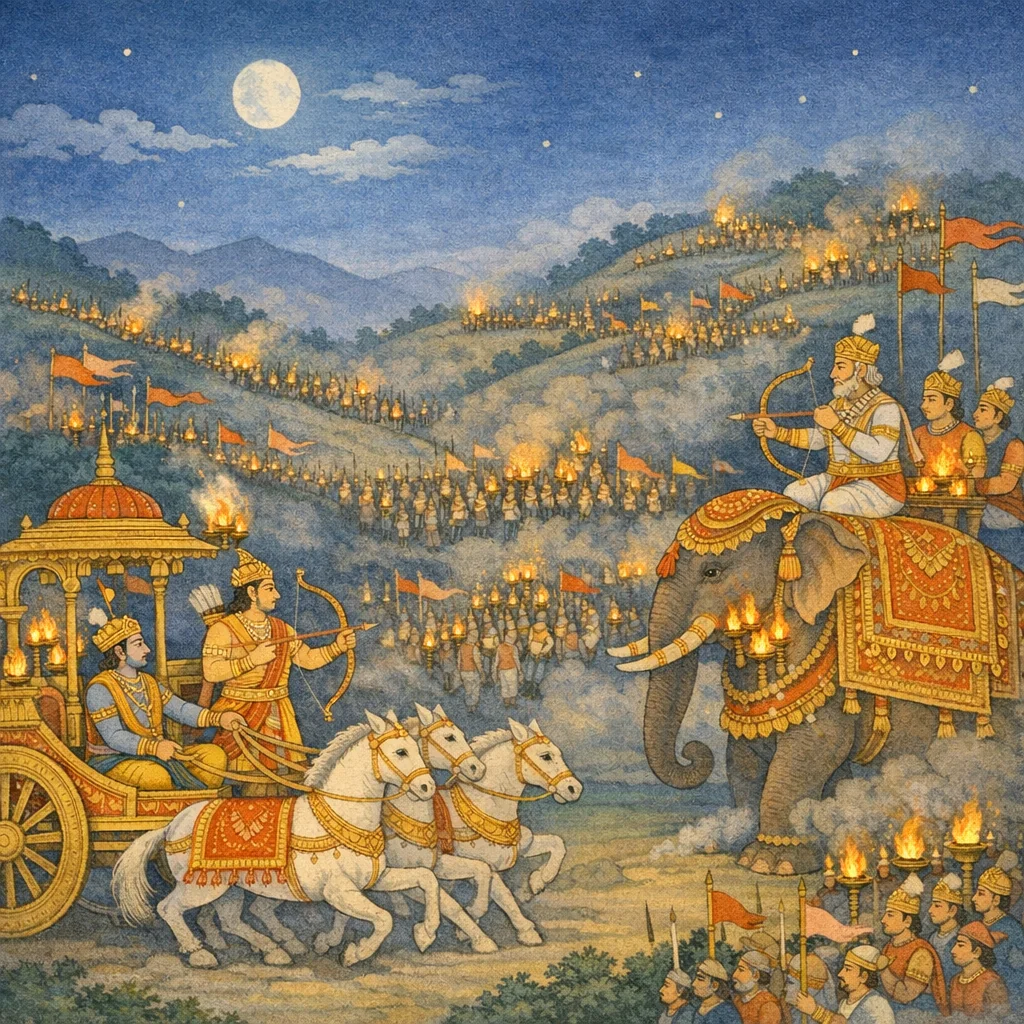
Chapter Arc: संजय धृतराष्ट्र से कहता है—घोर युद्ध रात्रि में भी थमा नहीं; अंधकार ऐसा कि योद्धा सामने खड़े शत्रु को भी नहीं पहचान पाते। → अंधेरे में अनुमान और पुकार के सहारे वार-प्रतिवार बढ़ता जाता है; तब दोनों सेनाएँ एक-एक रथ, हाथी और ध्वज के पास मशालें/प्रदीप बाँधकर समूचे रणक्षेत्र को प्रकाश से भर देती हैं। → प्रदीपों की ज्वाला, दिव्य आभूषणों की चमक और दीप्त शस्त्रों के तेज से रात ‘शरत्काल के मध्याह्न सूर्य’ जैसी दहकती प्रतीत होती है—और उसी प्रकाश में रथ-घोड़े-गजों का महासागर, रक्त-वर्षा और शस्त्र-वृष्टि के बीच ‘रात्रि का रण-दुर्दिन’ चरम पर पहुँचता है। → प्रकाशित रणभूमि में सेना पुनः व्यवस्थित दिखती है, पर दृश्य भयावह है—वीरों के गिरने से युद्धस्थल देव-गन्धर्व-यक्ष-अप्सराओं से भरे किसी दिव्य लोक-समारोह जैसा भी प्रतीत होता है; युद्ध का वेग बना रहता है। → रात को दिन बना देने वाले प्रदीपों के बीच यह ‘रण-दुर्दिन’ आगे किस महावीर को निगल लेगा—यह अनिश्चितता अगले प्रसंग पर छोड़ दी जाती है।
Shlokas
Verse 1
/ अपन का बा | अफड-ए क्र त्रिषष्ट्याधिकशततमो< ध्याय: कौरवों और पाण्डवोंकी सेनाओंमें प्रदीपों (मशालों)-का प्रकाश संजय उवाच वर्तमाने तथा युद्धे घोररूपे भयावहे । तमसा संवृते लोके रजसा च महीपते,संजय कहते हैं--राजन्! जिस समय वह भयंकर घोर युद्ध चल रहा था, उस समय सम्पूर्ण जगत् अन्धकार और धूलसे आच्छादित था; इसीलिये रणभूमिमें खड़े हुए योद्धा एक-दूसरेको देख नहीं पाते थे। वह महान् युद्ध अनुमानसे तथा नाम या संकेतोंद्वारा चलता हुआ उत्तरोत्तर बढ़ता जा रहा था
Sañjaya said: O King, while that battle—terrible in form and dreadful to behold—was raging on, the whole world seemed shrouded in darkness and choked with dust. In that obscurity the warriors on the field could scarcely discern one another, and the fighting pressed forward by inference, by names, and by shouted signals rather than by clear sight.
Verse 2
नापश्यन्त रणे योधा: परस्परमवस्थिता: । अनुमानेन संज्ञाभियद्धं तद् ववृधे महत्,संजय कहते हैं--राजन्! जिस समय वह भयंकर घोर युद्ध चल रहा था, उस समय सम्पूर्ण जगत् अन्धकार और धूलसे आच्छादित था; इसीलिये रणभूमिमें खड़े हुए योद्धा एक-दूसरेको देख नहीं पाते थे। वह महान् युद्ध अनुमानसे तथा नाम या संकेतोंद्वारा चलता हुआ उत्तरोत्तर बढ़ता जा रहा था
Sañjaya said: O King, in that battle the warriors, though standing face to face, could not see one another. Covered by darkness and dust, the fighting went on by inference and by shouted names and signals—and that great war only swelled further.
Verse 3
नरनागाश्चवमथनं परमं लोमहर्षणम् । द्रोणकर्णकृपा वीरा भीमपार्षतसात्यका:
Sañjaya said: “There occurred a supreme, hair-raising tumult—men and elephants in violent upheaval. The heroes Droṇa, Karṇa, Kṛpa, Bhīma, Dhṛṣṭadyumna (Pārṣata), and Sātyaki were at the heart of that dreadful clash.”
Verse 4
वध्यमानानि सैन्यानि समन्तात् तैर्महारथै:
Sañjaya said: The armies, being cut down on every side by those great chariot-warriors, were falling into ruin—an image of war’s relentless momentum, where prowess overwhelms multitudes and the moral weight of slaughter presses upon the field.
Verse 5
ते सर्वतो विद्रवन्तो योधा विध्वस्तचेतना:
Sañjaya said: Those warriors, their minds shattered by the shock of battle, fled in all directions—an image of how fear and confusion can dissolve discipline and resolve amid the moral and physical chaos of war.
Verse 6
महारथसहस््राणि जषघ्नुरन्योन्यमाहवे
Sañjaya said: In the press of battle, thousands of great chariot-warriors struck down one another—an image of war’s self-consuming fury, where prowess turns into mutual destruction and the moral cost of violence becomes starkly visible.
Verse 7
ततः: सर्वाणि सैन्यानि सेनागोपाश्ष भारत । व्यमुहन्त रणे तत्र तमसा संवृते सति
Sañjaya said: Then, O Bhārata, all the armies and their commanders rearranged themselves into battle-formations there on the field, as darkness had spread over everything. In that obscurity, strategy and survival took precedence, and the warriors’ duty to their side expressed itself through rapid, disciplined re-ordering amid confusion.
Verse 8
भरतनन्दन! तदनन्तर उस रणभूमिके तिमिराच्छन्न हो जानेपर समस्त सेनाएँ और सेनापति मोहित हो गये ।। धृतराष्ट्र रवाच तेषां संलोड्यमानानां पाण्डवैर्विहतौजसाम् । अन्धे तमसि मग्नानामासीत् कि वो मनस्तदा
Dhṛtarāṣṭra said: “When your warriors, their strength shattered by the Pāṇḍavas, were being thrown into confusion and were sinking in blinding darkness, what was the state of your mind at that time?”
Verse 9
धृतराष्ट्रने पूछा--संजय! जिस समय तुम सब लोग अन्धकारमें डूबे हुए थे और पाण्डव तुम्हारे बल और पराक्रमको नष्ट करके तुम्हें मथे डालते थे, उस समय तुम्हारे और उन पाण्डवोंके मनकी कैसी अवस्था थी? ।। कथं प्रकाशस्तेषां वा मम सैन्यस्य वा पुन: । बभूव लोके तमसा तथा संजय संवृते,संजय! जब कि सारा जगत् अन्धकारसे आवृत था, उस समय पाण्डवोंको अथवा मेरी सेनाको कैसे प्रकाश प्राप्त हुआ
Dhṛtarāṣṭra said: “Sañjaya, when all of you were plunged into darkness and the Pāṇḍavas were crushing your strength and valor, churning your forces as it were—what was the state of mind then, of my men and of those Pāṇḍavas? And when the whole world was thus covered by darkness, how did light arise again—either for them or for my army?”
Verse 10
संजय उवाच ततः सर्वाणि सैन्यानि हतशिष्टानि यानि वै । सेनागोप्तृनथादिश्य पुनर्व्यूहमकल्पयत्
Sañjaya said: Then, gathering whatever troops still remained after the slaughter, he appointed protectors and commanders for the army and once again arranged the forces into a fresh battle-formation. The verse underscores the grim persistence of war: even after heavy loss, leadership reorganizes what is left, prioritizing order and control amid devastation.
Verse 11
संजयने कहा--राजन्! तदनन्तर जितनी सेनाएँ मरनेसे बची हुई थीं, उन सबको तथा सेनापतियोंको आदेश देकर दुर्योधनने उनका पुनः व्यूह-निर्माण करवाया ।। द्रोण: पुरस्ताज्जघने तु शल्य- स्तथा द्रौणि: पार्श्वृत: सौबलश्न । स्वयं तु सर्वाणि बलानि राजन् राजाभ्ययाद् गोपयन् वै निशायाम्,राजन! उस व्यूहके अग्रभागमें द्रोणाचार्य, मध्यभागमें शल्य तथा पार्श्चभागमें अश्वत्थामा और शकुनि थे। स्वयं राजा दुर्योधन उस रात्रिके समय सम्पूर्ण सेनाओंकी रक्षा करता हुआ युद्धके लिये आगे बढ़ रहा था
Sañjaya said: O King, thereafter Duryodhana, having issued orders to all the surviving troops and to the commanders, had the battle-formation arranged anew. At the front stood Droṇa; in the rear was Śalya; on the flanks were Aśvatthāmā (the son of Droṇa) and Saubala (Śakuni). And the king himself—Duryodhana—advanced in the night, guarding and steadying the entire force.
Verse 12
उवाच सर्वाश्चव पदातिसड्घान् दुर्योधन: पार्थिव सान्त्वपूर्वम् । उत्सृज्य सर्वे परमायुधानि गृह्नीत हस्तैज्वलितान् प्रदीपान्,पृथ्वीनाथ! उस समय दुर्योधनने समस्त पैदल सैनिकोंसे सान्त्वनापूर्ण वचनोंमें कहा --वीरो! तुम सब लोग उत्तम आयुध छोड़कर अपने हाथोंमें जलती हुई मशालें ले लो'
Sañjaya said: Then King Duryodhana addressed all the bodies of foot-soldiers with soothing, reassuring words: “All of you, set aside your finest weapons and take up blazing torches in your hands.”
Verse 13
ते चोदिता: पार्थिवसत्तमेन ततः प्रह्ृष्टा जगृहुः प्रदीपान् । देवर्षिगन्धर्वसुर्िसऊड्ूघा विद्याधराश्चाप्सरसां गणाश्न
Sañjaya said: Urged on by the foremost of kings, they then, filled with joy, took up the lamps. Along with them were hosts of divine seers, Gandharvas, Suras, Vidyādharas, and companies of Apsarases—gathering in assent and celebration at the king’s command.
Verse 14
नागा: सयक्षोरगकिन्नराश्न हृष्टा दिविस्था जगृहुः प्रदीपान् | नृपश्रेष्ठ दुर्योधनकी आज्ञा पाकर उन पैदल सिपाहियोंने बड़े हर्षके साथ हाथोंमें मशालें ले लीं। आकाशमें खड़े हुए देवता, ऋषि, गन्धर्व, देवर्षि, विद्याधर, अप्सराओंके समूह, नाग, यक्ष, सर्प और किन्नर आदिने भी प्रसन्न होकर हाथोंमें प्रदीप ले लिये ।। १३ ई ।। दिग्देवतेभ्यश्ष॒ समापतन्तो- <दृश्यन्त दीपा: ससुगन्धितैला:
Sañjaya said: Rejoicing, the Nāgas—together with Yakṣas, serpentine beings (oragas), and Kinnaras—who were stationed in the heavens, took up lamps. Lamps filled with fragrant oil could be seen descending from the guardians of the directions. The scene cast an uncanny, celebratory illumination over the battlefield, as if celestial order itself were marking the moment.
Verse 15
सा भूय एव ध्वजिनी विभक्ता व्यरोचताग्निप्रभया निशायाम्
Sañjaya said: That army, once again arranged into separate divisions, shone in the night with a radiance like fire—its ordered ranks turning the darkness into a fearful spectacle of renewed resolve and relentless warfare.
Verse 16
रथे रथे पञज्च विदीपकास्तु प्रदीपकास्तत्र गजे त्रयक्ष,एक-एक रथके पास पाँच-पाँच मशालें थीं। प्रत्येक हाथीके साथ तीन-तीन प्रदीप जलते थे। प्रत्येक घोड़ेके साथ एक महाप्रदीपकी व्यवस्था की गयी थी। पाण्डवों तथा कौरवोंके द्वारा इस प्रकार व्यवस्थापूर्वक जलाये गये समस्त प्रदीप क्षणभरमें आपकी सारी सेनाको प्रकाशित करने लगे
Sañjaya said: “On each chariot, five torches were set up and kept burning; and with each elephant, three great lamps were arranged. For each horse, a single powerful lamp was provided. Thus, the lamps systematically kindled by both the Pāṇḍavas and the Kauravas quickly illuminated your entire army.”
Verse 17
प्रत्यश्चमेकश्न महाप्रदीप: कृतास्तु तैः पाण्डवै: कौरवेयै: । क्षणेन सर्वे विहिता: प्रदीपा व्यादीपयन्तो ध्वजिनीं तवाशु,एक-एक रथके पास पाँच-पाँच मशालें थीं। प्रत्येक हाथीके साथ तीन-तीन प्रदीप जलते थे। प्रत्येक घोड़ेके साथ एक महाप्रदीपकी व्यवस्था की गयी थी। पाण्डवों तथा कौरवोंके द्वारा इस प्रकार व्यवस्थापूर्वक जलाये गये समस्त प्रदीप क्षणभरमें आपकी सारी सेनाको प्रकाशित करने लगे
Sañjaya said: “For each horse a single great torch was arranged by the Pāṇḍavas and the sons of the Kurus. In a moment, all those lamps that had been set in order blazed forth, swiftly lighting up your entire army.”
Verse 18
सर्वस्तु सेना व्यतिसेव्यमाना: पदातिभि: पावकतैलहस्तै: । प्रकाश्यमाना ददृशुर्निशायां यथान्तरिक्षे जलदास्तडिद्धिः
Sañjaya said: “The entire army, being closely attended and served by the foot-soldiers carrying fire and oil, became clearly visible in the night—like clouds in the sky lit up by flashes of lightning.”
Verse 19
सब लोगोंने देखा कि मशाल और तेल हाथमें लिये पैदल सैनिकोंद्वारा सेवित सारी सेनाएँ रात्रिके समय उसी प्रकार प्रकाशित हो उठी हैं, जैसे आकाशमें बादल बिजलियोंके प्रकाशसे प्रकाशित हो उठते हैं ।। प्रकाशितायां तु ततो ध्वजिन्यां द्रोणो&ग्निकल्प: प्रतपन् समन्तात् । रराज राजेन्द्र सुवर्णवर्मा मध्यं गत: सूर्य इवांशुमाली
Sañjaya said: “When the army had thus been lit up—attended by foot-soldiers carrying torches and oil—Droṇa, blazing like fire and scorching all around, shone forth, O best of kings. Clad in golden armour, he stood in the midst like the radiant sun with its rays.”
Verse 20
राजेन्द्र! सारी सेनामें प्रकाश फैल जानेपर अग्निके समान प्रतापी द्रोणाचार्य सुवर्णमय कवच धारण करके दोपहरके सूर्यकी भाँति सब ओर देदीप्यमान होने लगे ।। जाम्बूनदेष्वाभरणेषु चैव निष्केषु शुद्धेषु शरासनेषु । पीतेषु शस्त्रेषु च पावकस्य प्रतिप्रभास्तत्र तदा बभूवु:,उस समय सोनेके आभूषणों, शुद्ध निष्कों, धनुषों तथा चमकीले शणस्त्रोंमें वहाँ उन मशालोंकी आगगके प्रतिबिम्ब पड़ रहे थे
Sañjaya said: “O king, when a blaze of light spread through the whole army, Droṇācārya—fierce in splendour like fire—put on his golden armour and began to shine in every direction like the midday sun. At that moment, in the Jāmbūnada-gold ornaments, in the spotless neck-plates, in the bows, and in the gleaming weapons, the firelight appeared again as reflected radiance.”
Verse 21
गदाश्न शैक्या: परिधघाश्न शुभ्रा रथेषु शक््त्यश्न विवर्तमाना: । प्रतिप्रभारश्मिभिराजमीढ पुनः पुन: संजनयन्ति दीपान्,अजमीढकुलनन्दन! वहाँ जो गदाएँ, शैक्य, चमकीले परिघ तथा रथ-शक्तियाँ घुमायी जा रही थीं, उनमें जो उन मशालोंकी प्रभाएँ प्रतिबिम्बित होती थीं, वे मानो पुन:-पुनः बहुत- से नूतन प्रदीप प्रकट करती थीं
Sañjaya said: “O descendant of Ajāmīḍha, as maces, śaikya-weapons, bright iron clubs (parighas), and chariot-spears were being whirled about, the torchlight striking and reflecting from them seemed again and again to kindle many new lamps.”
Verse 22
छत्राणि वालव्यजनानि खड़््गा दीप्ता महोल्काश्न तथैव राजन् | व्याघूर्णमानाश्न सुवर्णमाला व्यायच्छतां तत्र तदा विरेजु:,राजन! छत्र, चँवर, खड्ग, प्रज्वलित विशाल उल्काएँ तथा वहाँ युद्ध करते हुए वीरोंकी हिलती हुई सुवर्णमालाएँ उस समय प्रदीपोंके प्रकाशसे बड़ी शोभा पा रही थीं
Sañjaya said: “O King, there the parasols, the yak-tail fans, the swords, and the blazing great firebrands—and likewise the golden garlands swaying upon the warriors as they fought—shone brilliantly at that time, as if illuminated by lamplight.”
Verse 23
शस्त्रप्रभाभिक्ष विराजमान दीपप्रभाभिश्च तदा बल॑ तत् प्रकाशितं चाभरणप्रभाभि- भुशं प्रकाशं नृपते बभूव,नरेश्वर! उस समय चमकीले अस्त्रों, प्रदीपों तथा आभूषणोंकी प्रभाओंसे प्रकाशित एवं सुशोभित आपकी सेना अत्यन्त प्रकाशसे उद्धासित होने लगी
Sañjaya said: “At that time, O king, your army—resplendent with the radiance of weapons, and also with the glow of lamps—shone forth. Illuminated further by the brilliance of ornaments, it became exceedingly radiant.”
Verse 24
पीतानि शस्त्राण्यसगुक्षितानि वीरावधूतानि तनुच्छदानि । दीप्तां प्रभां प्राजनयन्त तत्र तपात्यये विद्युदिवान्तरिक्षे,पानीदार एवं खूनसे रँँगे हुए शस्त्र तथा वीरोंद्वारा कँपाये हुए कवच वहाँ प्रदीपोंके प्रतिबिम्ब ग्रहण करके वर्षाकालके आकाशमें चमकनेवाली बिजलीकी भाँति अत्यन्त उज्ज्वल प्रभा बिखेर रहे थे
Sañjaya said: “There, weapons stained and grimy, and the warriors’ armour and protective gear shaken and battered in the tumult, caught the lamplight and cast forth a blazing radiance—like lightning flashing across the sky at the end of the hot season.”
Verse 25
प्रकम्पितानामभिघातवेगै- रभिष्नतां चापततां जवेन । वक््त्राण्यकाशन्त तदा नराणां वाय्वीरितानीव महाम्बुजानि,आधघातके वेगसे कम्पित, आघात करनेवाले तथा वेगपूर्वक शत्रुकी ओर झपटनेवाले वीर मनुष्योंके मुख-मण्डल उस समय वायुसे हिलाये हुए बड़े-बड़े कमलोंके समान सुशोभित हो रहे थे
Sañjaya said: “As they were shaken by the force of blows—striking and rushing forward with speed—the faces of those warriors shone at that moment like great lotus-flowers stirred by the wind.”
Verse 26
महावने दारुमये प्रदीप्ते यथा प्रभा भास्करस्यापि नश्येत् । तथा तदा<5<सीद् ध्वजिनी प्रदीप्ता महाभया भारत भीमरूपा,भरतनन्दन! जैसे सूखे काठके विशाल वनमें आग लग जानेपर वहाँ सूर्यकी भी प्रभा फीकी पड़ जाती है, उसी प्रकार उस समय अधिक प्रकाशसे प्रज्वलित होती हुई-सी आपकी भयानक सेना महान् भय उत्पन्न करनेवाली प्रतीत होती थी
Sañjaya said: “Just as, when a vast forest of dry timber is ablaze, even the radiance of the sun seems to fade there, so at that time your army—though appearing as if lit up with intense brilliance—looked terrifying, assuming a dreadful form and generating great fear, O descendant of Bharata.”
Verse 27
तत् सम्प्रदीप्तं बलमस्मदीयं निशम्य पार्थास्त्विरितास्तथैव । सर्वेषु सैन्येषु पदातिसंघा- नचोदयंस्ते5पि चक्रुः प्रदीपान्,हमारी सेनाको मशालोंके प्रकाशसे प्रकाशित देख कुन्तीके पुत्रोंने भी तुरंत ही सारी सेनाके पैदल सैनिकोंको मशाल जलानेकी आज्ञा दी, अतः उन्होंने भी मशालें जला लीं
Sañjaya said: Hearing that our army had been lit up by blazing torches, the sons of Kuntī likewise acted at once. Throughout their forces they urged the companies of foot-soldiers to kindle torches, and they too set the lamps aflame—meeting the night’s darkness with equal readiness and resolve in the conduct of war.
Verse 28
गजे गजे सप्त कृताः प्रदीपा रथे रथे चैव दश प्रदीपा: । द्वावश्वपषछ्े परिपार्श्वतो 5न्ये ध्वजेषु चान्ये जघनेघु चान्ये,उनके एक-एक हाथीके लिये सात-सात और एक-एक रथके लिये दस-दस प्रदीपोंकी व्यवस्था की गयी। घोड़ोंके पृष्ठभागमें दो प्रदीप थे। अगल-बगलमें, ध्वजाओंके समीप तथा रथके पिछले भागोंमें अन्यान्य दीपकोंकी व्यवस्था की गयी थी
Sañjaya said: For each elephant, seven lamps were arranged, and for each chariot, ten lamps. Two lamps were fixed upon the horses’ backs; other lamps were set along the sides, near the standards (flags), and others again at the rear of the chariots. Thus the army’s movement and formations were made visible even amid the darkness of war—an outward order imposed upon an inwardly perilous night of violence.
Verse 29
सेनासु सर्वासु च पार्श्चतो <5न्ये पश्चात् पुरस्ताच्च समन्ततश्न । मध्ये तथान्ये ज्वलिताग्निहस्ता व्यदीपयन् पाण्डुसुतस्य सेनाम्
Sañjaya said: In all the divisions of the army, some attacked from the flanks, others from behind and from the front, and others from every side. Still others, standing in the midst with blazing firebrands in their hands, lit up the army of the son of Pāṇḍu—intensifying the terror and confusion of the night-battle and driving the conflict toward ruthless, all-surrounding violence.
Verse 30
सारी सेनाओंके पार्श्रभागमें, आगे, पीछे, बीचमें एवं चारों ओर भिन्न-भिन्न सैनिक चलती हुई मशालें हाथमें लेकर पाण्डुपुत्रकी सेनाको प्रकाशित करने लगे ।। मध्ये तथान्ये ज्वलिताग्निहस्ता: सेनाद्वयेडपि सम नरा विचेरु: । सर्वेषु सैन्येषु पदातिसड्घा विमिश्रिता हस्तिरथाश्चववन्दै:
Sañjaya said: In the midst of both armies, other men too moved about evenly, holding blazing fires in their hands. Throughout the forces, masses of foot-soldiers mingled with elephants and chariots, and the whole field seemed to surge with interwoven ranks—an ominous illumination that made the opposing host plainly visible and intensified the night’s moral tension of war.
Verse 31
तेन प्रदीप्तेन तथा प्रदीप्तं बल॑ तवासीदू बलवद् बलेन
Sañjaya said: By that blazing force, your army too was set aflame—overpowered and inflamed by a might that was itself intensely powerful.
Verse 32
तयो: प्रभा: पृथिवीमन्तरिक्षं सर्वा व्यतिक्रम्य दिशश्व वृद्धा:
Sañjaya said: The radiance of those two swelled so greatly that, surpassing the earth and the mid-air, it spread beyond all the directions.
Verse 33
तेन प्रकाशेन दिवं गतेन सम्बोधिता देवगणाश्न राजन्
Sañjaya said: O King, by that radiance which had risen up to the heavens, the hosts of gods were roused and made aware.
Verse 34
तद् देवगन्धर्वसमाकुलं च यक्षासुरेन्द्राप्सरसां गणैश्न
Sañjaya said: “That scene became crowded with celestial beings—gods and Gandharvas—along with hosts of Yakṣas, lordly Asuras, and companies of Apsarases.”
Verse 35
रथाश्वनागाकुलदीपदीप्त॑ संरब्धयोध॑ं हतविद्रुताश्वम्
Sañjaya said: “The battlefield blazed with the light of lamps amid a tumult of chariots, horses, and elephants; the warriors fought in fierce agitation, while many horses lay slain or fled in panic.”
Verse 36
अन्योन्यं क्षोभयामासु: सैन्यानि नृपसत्तम । उस समय अत्यन्त रोमांचकारी युद्ध हो रहा था। उसमें मनुष्य, हाथी और घोड़े मथे जा रहे थे। एक ओरसे द्रोण, कर्ण और कृपाचार्य ये तीन वीर युद्ध करते थे तथा दूसरी ओरसे भीमसेन, धृष्टद्युम्न एवं सात्यकि सामना कर रहे थे। नृपश्रेष्ठ) ये एक-दूसरेकी सेनाओंमें हलचल मचाये हुए थे,तच्छक्तिसंघाकुलचण्डवातं महारथाभ्रं गजवाजिघोषम्
Sañjaya said: O best of kings, the armies threw one another into turmoil. The battle surged like a fierce gale choked with masses of weapons—like a storm-cloud of great chariot-warriors—resounding with the cries of elephants and horses. In that thrilling clash, men, elephants, and steeds were being churned together; on one side Droṇa, Karṇa, and Kṛpa fought as three foremost champions, and on the other Bhīmasena, Dhṛṣṭadyumna, and Sātyaki stood against them.
Verse 37
तस्मिन् महाग्निप्रतिमो महात्मा संतापयन् पाण्डवान् विप्रमुख्य:
Sañjaya said: In that encounter, the great-souled warrior—like a blazing great fire—scorched the Pāṇḍavas, forcing them to turn away in disarray.
Verse 38
गभस्तिभिम्मध्यगतो यथार्को वर्षात्यये तद्धदभून्नरेन्द्र
Sañjaya said: O king, it became like the sun standing amid its own rays at the end of the rainy season—clear, blazing, and unmistakable.
Verse 46
तमसा संवृते चैव समन्ताद् विप्रदुद्रुवु: । उन महारथियोंद्वारा उस अन्धकाराच्छन्न प्रदेशमें सब ओरसे मारी जाती हुई सेनाएँ चारों ओर भागने लगीं
Sañjaya said: When the region was enveloped in darkness, the troops—struck down on every side by those great chariot-warriors—broke formation and fled in all directions.
Verse 56
अहन्यन्त महाराज धावमानाश्न संयुगे । महाराज! वे योद्धा अचेत होकर सब ओर भागते थे और भागते हुए ही उस युद्धस्थलमें मारे जाते थे
Sañjaya said: O King, in that battle even those warriors who, having lost awareness, were fleeing in all directions were struck down as they ran.
Verse 63
अन्धे तमसि मूढानि पुत्रस्य तव मन्त्रिते । आपके पुत्र दुर्योधनकी सलाहसे होनेवाले उस युद्धके भीतर प्रगाढ़ अन्धकारमें किंकर्तव्यविमूढ़ हुए सहस्रों महारथियोंने एक-दूसरेको मार डाला
Sañjaya said: In that battle—set in motion by the counsel of your son—many great warriors, bewildered in dense darkness and confusion, lost all sense of right action and ended up striking down one another.
Verse 143
विशेषतो नारदपर्वताभ्यां सम्बोध्यमाना: कुरुपाण्डवार्थम् | दिशाओंकी अधिष्ठात्री देवियोंके यहाँसे भी सुगन्धित तैलसे भरे हुए दीप वहाँ उतरते दिखायी दिये। विशेषत: नारद और पर्वत नामक मुनियोंने कौरव और पाण्डवोंकी सुविधाके लिये वे दीप जलाये थे
Sañjaya said: For the sake of the Kurus and the Pandavas, and especially at the prompting of the sages Narada and Parvata, lamps filled with fragrant oil were seen descending there—even from the abodes of the goddesses who preside over the directions. Those two seers had kindled these lights to aid both sides.
Verse 153
महाधनैराभरणैश्न दिव्यै: शस्त्रैश्न दीप्तैरपि सम्पतद्धिः । रातके समय अग्निकी प्रभासे वह सेना पुनः विभागपूर्वक प्रकाशित हो उठी। बहुमूल्य आभूषणों तथा सैनिकोंपर गिरनेवाले दीप्तिमान् दिव्यास्त्रोंस भी वह सेना बड़ी शोभा पा रही थी
Sañjaya said: In the night-time, by the glow of the fires, that army once again became clearly visible in ordered divisions. Adorned with costly ornaments and struck by blazing divine missiles and shining weapons, the host appeared all the more resplendent.
Verse 162
इस प्रकार श्रीमह्याभारत द्रोणपर्वके अन्तर्गत घटोत्कचवधपर्वमें रात्रियुद्धविषयक एक सौ बासठवाँ अध्याय पूरा हुआ
Sañjaya said: Thus, in the revered Mahābhārata, within the Droṇa Parva—specifically in the section concerning the slaying of Ghaṭotkaca—this 162nd chapter, dealing with the night-battle, is concluded.
Verse 163
नरेन्द्र! जैसे शरत्कालमें मध्याह्नका सूर्य अपनी प्रखर किरणोंसे भारी संताप देता है, उसी प्रकार उस युद्धस्थलमें महान् अग्निके समान तेजस्वी महामना विप्रवर द्रोणाचार्य पाण्डवोंके लिये संतापकारी हो रहे थे ।। इति श्रीमहाभारते द्रोणपर्वणि घटोत्कचवधपर्वणि रात्रियुद्धे दीपोद्योतने त्रिषष्ट्यधिकशततमो<ध्याय:
Sañjaya said: “O king, just as the midday sun in the autumn season, with its fierce rays, causes intense heat, so on that battlefield the radiant Droṇācārya—great-souled, foremost among Brahmins—became for the Pāṇḍavas a source of burning distress, like a mighty fire.”
Verse 306
व्यदीपयंस्ते ध्वजिनी प्रदीप्तां तथा बलं॑ पाण्डवेयाभिगुप्तम् । दोनों ही सेनाओंके अन्यान्य पैदल सैनिक हाथोंमें प्रदीप धारण किये दोनों ही सेनाओंके भीतर विचरण करने लगे। सारी सेनाओंके पैदलसमूह हाथी, रथ और अश्वसमूहोंके साथ मिलकर आपकी सेनाको तथा पाण्डवोंद्वारा सुरक्षित वाहिनीको भी अत्यन्त प्रकाशित करने लगे
Sañjaya said: “They illuminated your blazing army-host, and likewise the force protected by the sons of Pāṇḍu. Moving within both armies with lamps in hand, the foot-soldiers made the mass of infantry—together with elephants, chariots, and horses—shine clearly, so that both your host and the Pāṇḍava-guarded division became fully visible.”
Verse 313
भा: कुर्वता भानुमता ग्रहेण दिवाकरेणाग्निरिवाभिगुप्त: । जैसे किरणोंद्वारा सुशोभित और अपनी प्रभा बिखेरनेवाले सूर्यग्रहके द्वारा सुरक्षित अग्निदेव और भी प्रकाशित हो उठते हैं, उसी प्रकार प्रदीपोंकी प्रभासे अत्यन्त प्रकाशित होनेवाले उस पाण्डव सैन्यके द्वारा आपकी सेनाका प्रकाश और भी बढ़ गया
Sañjaya said: “Just as Fire, guarded by the radiant Sun and made resplendent by its rays, shines forth even more, so too the splendour of your army was heightened by that Pāṇḍava host—brilliant with the glow of countless lamps.”
Verse 326
तेन प्रकाशेन भृशं प्रकाशं बभूव तेषां तव चैव सैन्यम् | उन दोनों सेनाओंका बढ़ा हुआ प्रकाश पृथ्वी, आकाश तथा सम्पूर्ण दिशाओंको लाँघकर चारों ओर फैल गया। प्रदीपोंके उस प्रकाशसे आपकी तथा पाण्डवोंकी सेना भी अधिक प्रकाशित हो उठी थी
Sañjaya said: By that radiance, the armies on both sides—yours and theirs—became exceedingly illuminated. The intensified light spread in all directions, seeming to overpass the earth, the sky, and every quarter, making the Kaurava and Pāṇḍava forces shine more brightly amid the moral darkness of war.
Verse 336
गन्धर्वयक्षासुरसिद्धसंघा: समागमन्नप्सरसश्ष सर्वा: | राजन! स्वर्गलोकतक फैले हुए उस प्रकाशसे उद्बोधित होकर देवता, गन्धर्व, यक्ष, असुर और सिद्धोंके समुदाय तथा सम्पूर्ण अप्सराएँ भी युद्ध देखनेके लिये वहाँ आ पहुँचीं
Sanjaya said: O King, stirred and awakened by that radiance spreading through the heavenly world, the gods—together with hosts of Gandharvas, Yakshas, Asuras, and Siddhas—and all the Apsarases as well, gathered there to witness the battle.
Verse 343
हतैश्न शूरैर्दिवमारुहद्धि- रायोधनं दिव्यकल्पं बभूव । देवताओं, गन्धर्वों, यक्षों, असुरेन्द्रों और अप्सराओंके समुदायसे भरा हुआ वह युद्धस्थल वहाँ मारे जाकर स्वर्गलोकपर आरूढ़ होनेवाले शूरवीरोंके द्वारा दिव्यलोक-सा जान पड़ता था
Sañjaya said: That battlefield, filled with companies of gods, Gandharvas, Yakṣas, lords of the Asuras, and Apsarases, appeared like a divine realm; for the heroes who fell there were believed to ascend to heaven, and thus the scene took on the splendor of the otherworld.
Verse 356
महद् बल व्यूढरथाश्वनागं सुरासुरव्यूहसमं बभूव । रथ, घोड़े और हाथियोंसे परिपूर्ण, प्रदीपोंकी प्रभासे प्रकाशित, रोषमें भरे हुए योद्धाओंसे युक्त, घायल होकर भागनेवाले घोड़ोंसे उपलक्षित तथा व्यूहबद्ध रथ, घोड़े एवं हाथियोंसे सम्पन्न दोनों पक्षोंका वह महान् सैन्यसमूह देवताओं और असुरोंके सैन्यव्यूहके समान जान पड़ता था
Sañjaya said: The vast host—arrayed in battle-formation and filled with chariots, horses, and elephants—appeared like the famed formations of gods and demons. Lit by blazing lamps and driven by warriors aflame with wrath, it was marked by wounded, panic-stricken horses in flight; yet, in its ordered ranks of chariots, cavalry, and elephants, both armies stood as a single immense spectacle of war, terrible and awe-inspiring.
Verse 366
शस्त्रौघवर्ष रुधिराम्बुधारं निशि प्रवृत्तं रणदुर्दिनं तत् । रातमें होनेवाला वह युद्ध मेघोंकी घटासे आच्छादित दिनके समान प्रतीत होता था। उस समय शक्तियोंका समूह प्रचण्डवायुके समान चल रहा था। विशाल रथ मेघसमूहके समान दिखायी देते थे। हाथियों और घोड़ोंके हींसने और चिग्घाड़नेका शब्द ही मानो मेघोंका गम्भीर गर्जन था। अस्त्रसमूहोंकी वर्षा ही जलकी वृष्टि थी तथा रक्तकी धारा ही जलधाराके समान जान पड़ती थी
Sañjaya said: That night-battle, set in motion like a day of storm, seemed as though the sky were covered with war-clouds. The massed weapons flew like a fierce wind; great chariots loomed like banks of clouds; the neighing of horses and the trumpeting of elephants sounded like deep thunder. The shower of missiles was like rainfall, and the streams of blood ran like torrents of water—an image of war’s dreadful excess, where valor and duty unfold amid overwhelming destruction.
Frequently Asked Questions
The dilemma concerns how a revered ācārya and brāhmaṇa-warrior should be treated when he withdraws from combat: the tension between tactical necessity, norms of restraint toward elders/teachers, and the ethical status of killing a disarmed opponent.
The chapter juxtaposes two registers: (1) dharma as role-based duty under war conditions and (2) dharma as higher ethical aspiration (ahiṃsā, truthfulness, equanimity). It suggests that when speech and duty are instrumentalized, the resulting moral injury destabilizes both sides, while yogic composure is portrayed as a distinct, inward resolution at life’s end.
No explicit phalaśruti is stated; the meta-commentary functions narratively through Saṃjaya’s eyewitness framing and the note that only select observers perceive Droṇa’s yogic ascent, emphasizing epistemic limits and the interpretive stakes of dharma in history.