Adhyaya 123
Chapter Arc: द्रोण-पर्व के रण में एक विचित्र दृश्य उठता है—म्लेच्छ पाषाणयोधी, पर्वत-से शिलाखण्ड उठाकर, रथों और गजों पर वर्षा करने लगते हैं; और कौरव-सेना के बीच यह प्रश्न गूँजता है कि मृत्यु को सामने देखकर भी धृति कैसे टिकेगी। → कौरव योद्धा अपने ही सैन्य-मध्य में पराजय की लज्जा और क्षात्र-प्रतिष्ठा के भय से काँपते हैं—“सात्यकि युद्ध में कैसे व्यतिक्रान्त हो गया?”—और दूसरी ओर सात्यकि, सिंह की भाँति, द्रोण के निकटवर्ती रण में भीषण वेग से म्लेच्छ-पाषाणयोधियों पर टूट पड़ता है। → सात्यकि का उन्मत्त संहार-प्रवाह—रथसेना, गजसेना, अश्वारोही और दस्यु-म्लेच्छ सबका सर्वथा विनाश; गिरिरूप गजराज धराशायी होते हैं, और भूमि हारों-आभूषणों-वस्त्रों से ऐसी ढँक जाती है मानो आकाश तारागणों से भर गया हो। → कौरवों को यह बोध होता है कि वे प्रस्तरयुद्ध में प्रवीण नहीं; भय-निवारण के लिए पुकार उठती है—“अभिद्रवत, मा भैष्ट, सात्यकि तुम्हें न पा सकेगा”—पर रणभूमि पर सात्यकि की विजय-छाया और शव-शिलाखण्डों का ढेर उनकी बात को खोखला कर देता है। → सात्यकि की इस प्रचण्ड गति को रोकने के लिए कौरव-पक्ष किस महाबली को आगे करेगा—और क्या यह वेग द्रोण-व्यूह के भीतर और गहरे प्रवेश का द्वार बनेगा?
Shlokas
Verse 1
(दाक्षिणात्य अधिक पाठके १६३ श्लोक मिलाकर कुल ४८३ “लोक हैं।) फल र (0) आज अत+- एकविशर्त्याधेकशततमो< ध्याय: सात्यकिके द्वारा पाषाणयोधी म्लेच्छोंकी सेनाका संहार और दुःशासनका सेनासहित पलायन धृतराष्ट्र रवाच सम्प्रमृद्य महत् सैन्यं यान्तं शैनेयमर्जुनम् । निर्ह्लीका मम ते पुत्रा: किमकुर्वत संजय,धृतराष्ट्रने पूछा--संजय! मेरी विशाल सेनाको रौंदकर जाते हुए सात्यकि और अर्जुनको देखकर मेरे उन निर्लज्ज पुत्रोंने क्या किया?
Dhṛtarāṣṭra said: “Sañjaya, when Śaineya (Sātyaki) and Arjuna were advancing—crushing my vast army as they went—what did those shameless sons of mine do then?”
Verse 2
कथं वैषां तदा युद्धे धृतिरासीन्मुमूर्षताम् । शैनेयचरितं दृष्टवा यादृशं सव्यसाचिन:,वे सब-के-सब मरना चाहते थे। उस समय युद्धस्थलमें अर्जुनके समान ही सात्यकिका चरित्र देखकर उनकी कैसी धारणा हुई थी?
Sañjaya said: “How, in that battle, did resolve arise in those men who were ready to die? And when they witnessed the conduct and prowess of Śaineya—so like that of Arjuna (Savyasācin)—what kind of conviction and temper of mind did it produce in them?”
Verse 3
कि नु वक्ष्यन्ति ते क्षात्र॑ सैन्यमध्ये पराजिता: । कथं नु सात्यकिर्युद्धे व्यतिक्रान्तो महायशा:,वे सेनाके बीचमें परास्त होकर अपने क्षात्रबलका क्या वर्णन करेंगे? समरांगणमें महायशस्वी सात्यकि किस प्रकार सारी सेनाको लाँचकर आगे बढ़ गये?
Sañjaya said: “What, indeed, will those warriors say about their vaunted martial strength after being defeated in the midst of their own army? And how did the greatly renowned Sātyaki, in the thick of battle, break through and press forward, cutting across the entire host?”
Verse 4
कथं च मम पुत्राणां जीवतां तत्र संजय । शैनेयोडभिययौ युद्धे तन्ममाचक्ष्य संजय,संजय! युद्धस्थलमें मेरे पुत्रोंके जीते-जी शिनिनन्दन सात्यकि किस तरह आगे जा सके? संजय! यह सब मुझे बताओ
Sañjaya said: “How, while my sons were still alive there, did Śaineya advance in that battle? Tell me that in full, Sañjaya.”
Verse 5
अत्यद्भुतमिदं तात त्वत्सकाशाच्छूणोम्यहम् । एकस्य बहुभि: सार्ध शत्रुभिस्तैर्महारथै:,तात! यह मैं तुम्हारे मुँहसे अत्यन्त विचित्र बात सुन रहा हूँ कि शत्रुदलके उन बहुसंख्यक महारथियोंके साथ एकमात्र सात्यकिका ऐसा घोर संग्राम हुआ
Sañjaya said: “O dear father, I am hearing from you something utterly astonishing: that a single warrior faced a fierce battle against many enemies—those great chariot-fighters.”
Verse 6
विपरीतमहं मन्ये मन्दभाग्यं सुतं प्रति । यत्रावध्यन्त समरे सात्वतेन महारथा:,मैं अपने भाग्यहीन पुत्रके लिये सब कुछ विपरीत ही मान रहा हूँ; क्योंकि समरांगणमें अकेले सात्यकिने बहुत-से महारथियोंका वध कर डाला है
Sañjaya said: “For my ill-fated son, I see everything turning out contrary to hope; for on that battlefield many great chariot-warriors were slain in combat by the Sātvata hero (Sātyaki).”
Verse 7
एकस्य हि न पर्याप्त यत्सैन्यं तस्प संजय । क़ुद्धस्य युयुधानस्य सर्वे तिष्ठन्तु पाण्डवा:,संजय! और सब पाण्डव तो दूर रहें, क्रोधमें भरे हुए अकेले सात्यकिके लिये भी मेरी सारी सेना पर्याप्त नहीं है
Sañjaya said: “O Sañjaya, the army that I command is not sufficient even against that single warrior—Yuyudhāna (Sātyaki)—when he is inflamed with wrath. Let all the Pāṇḍavas stand aside; even without their support, he alone is more than a match for my entire host.”
Verse 8
निर्जित्य समरे द्रोणं कृतिनं चित्रयोधिनम् । यथा पशुगणान् सिंहस्तद्वद्धन्ता सुतानू मम,जैसे सिंह पशुओंको मार डालता है, उसी प्रकार सात्यकि विचित्र युद्ध करनेवाले दिद्वान् द्रोणाचार्यको भी युद्धमें परास्त करके मेरे पुत्रोंका वध कर डालेंगे
Sañjaya said: Having overcome Droṇa in battle—Droṇa the accomplished master of arms and a warrior of wondrous prowess—Sātyaki will then slay my sons, just as a lion strikes down herds of beasts.
Verse 9
कृतवर्मादिश्ि: शूरैर्यत्तैर्बहुभिराहवे । युयुधानो न शकितो हन्तुं यत् पुरुषर्षभ:,कृतवर्मा आदि बहुत-से शूरवीर समरांगणमें प्रयत्न करते ही रह गये; परंतु पुरुषप्रवर सात्यकि मारे न जा सके
Sañjaya said: Though many valiant warriors—led by Kṛtavarmā—strove with all their might on the battlefield, they were unable to slay Yuyudhāna (Sātyaki), that bull among men.
Verse 10
नैतदीदृशकं युद्ध॑ कृतवांस्तत्र फाल्गुन: । यादृशं कृतवान् युद्ध शिनेर्नप्ता महायशा:,शिनिके महायशस्वी पौत्र सात्यकिने वहाँ जैसा युद्ध किया, वैसा तो अर्जुनने भी नहीं किया था
Sañjaya said: Arjuna (Phalguna) had not fought there a battle of this kind. Such a battle as was fought by the highly renowned grandson of Śini—Sātyaki of great fame—had not been matched even by Arjuna.
Verse 11
संजय उवाच तव दुर्मन्त्रिते राजन् दुर्योधनकृतेन च । शृणुष्वावहितो भूत्वा यत् ते वक्ष्यामि भारत,संजयने कहा--राजन्! आपकी खोटी सलाह और दुर्योधनकी काली करतूतसे यह सब कुछ हुआ है। भारत! मैं जो कुछ कहता हूँ, उसे सावधान होकर सुनिये
Sañjaya said: O King, because of your ill-judged counsel—and because of Duryodhana’s own deeds—this has come to pass. O Bharata, listen with full attention to what I am about to tell you.
Verse 12
ते पुनः संन्यवर्तन्त कृत्वा संशप्तकान् मिथ: । परां युद्धे मतिं क्रूरां तव पुत्रस्य शासनात्,आपके पुत्रकी आज्ञासे युद्धके लिये अत्यन्त क्रूरतापूर्ण निश्चय करके परस्पर शपथ ले वे सभी पराजित योद्धा पुन: लौट आये
Sañjaya said: Then those warriors, having bound themselves again by mutual vows as the Saṁśaptakas, turned back once more. At your son’s command they fixed their minds on a ruthless resolve for battle, returning to the field despite having been driven back.
Verse 13
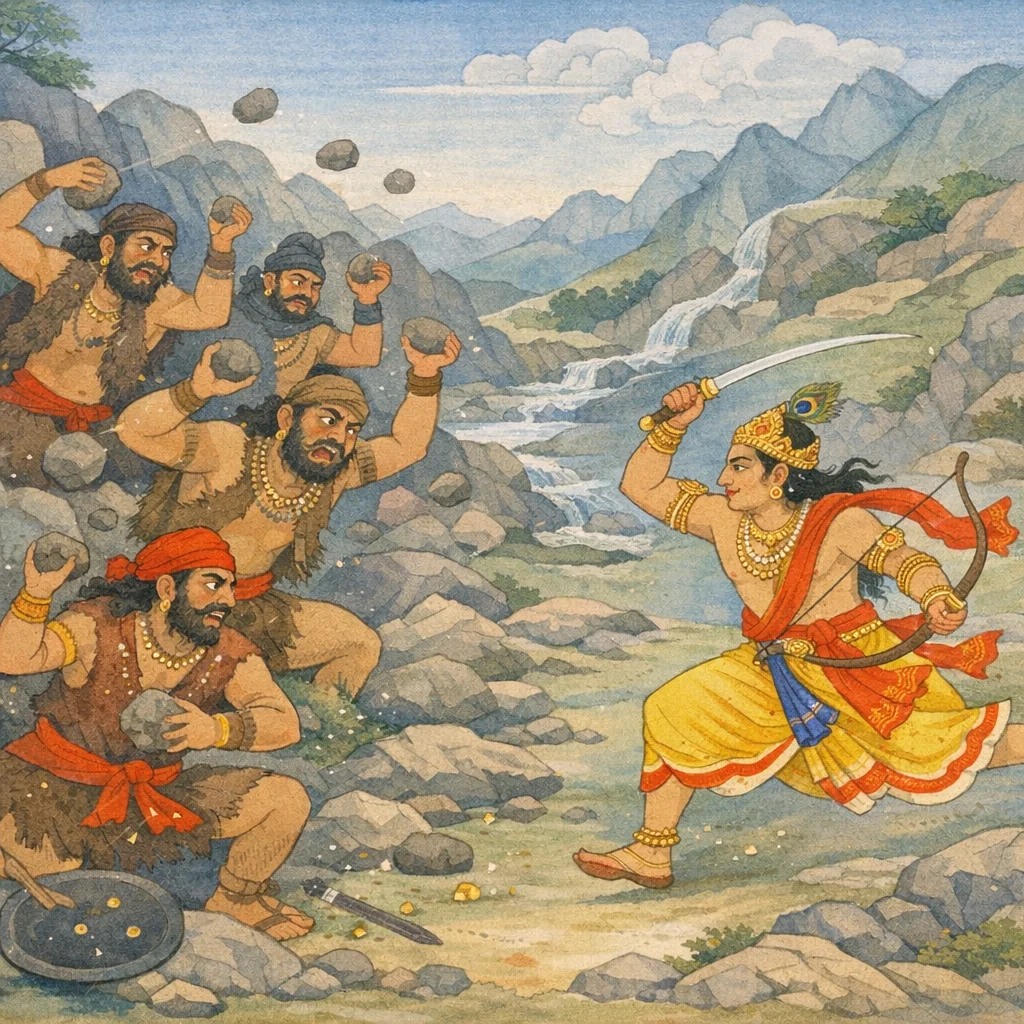
त्रीणि सादिसहस््राणि दुर्योधनपुरोगमा: । शककाम्बोजबाह्लीका यवना: पारदास्तथा,अभ्यद्रवन्त शैनेयं शलभा: पावकं यथा । तीन हजार घुड़सवार और हाथीसवार दुर्योधनको अपना अगुआ बनाकर चले। उनके साथ शक, काम्बोज, बाह्लीक, यवन, पारद, कुलिन्द, तंगण, अम्बष्ठ, पैशाच, बर्बर तथा पर्वतीय योद्धा भी थे। राजेन्द्र! वे सब-के-सब कुपित हो हाथोंमें पत्थर लिये सात्यकिकी ओर उसी प्रकार दौड़े, जैसे फतिंगे जलती हुई आगपर टूट पड़ते हैं
Sañjaya said: Led by Duryodhana, three thousand warriors—together with the Śakas, Kāmbojas, Bāhlīkas, Yavanas, and Pāradas—rushed upon Śaineya (Sātyaki). In their wrath they surged forward like moths plunging into a blazing fire.
Verse 14
कुलिन्दास्तड्भणाम्बष्ठा: पैशाचाश्न सबर्बरा: । पर्वतीयाश्न राजेन्द्र क़ुद्धा: पाषाणपाणय:,अभ्यद्रवन्त शैनेयं शलभा: पावकं यथा । तीन हजार घुड़सवार और हाथीसवार दुर्योधनको अपना अगुआ बनाकर चले। उनके साथ शक, काम्बोज, बाह्लीक, यवन, पारद, कुलिन्द, तंगण, अम्बष्ठ, पैशाच, बर्बर तथा पर्वतीय योद्धा भी थे। राजेन्द्र! वे सब-के-सब कुपित हो हाथोंमें पत्थर लिये सात्यकिकी ओर उसी प्रकार दौड़े, जैसे फतिंगे जलती हुई आगपर टूट पड़ते हैं
Sañjaya said: “O king, the Kulindas, Taṅgaṇas, Ambaṣṭhas, Paiśācas, Barbarians, and the mountain tribes—enraged, stones in hand—rushed upon Śaineya (Sātyaki), as moths fling themselves into a blazing fire.”
Verse 15
।। युक्ताश्न पर्वतीयानां रथा: पाषाणयोधिनाम्
Sañjaya said: “The chariots of those stone-fighting warriors were harnessed with mountain-bred steeds.”
Verse 16
ततो रथसहस्रेण महारथशतेन च,अभ्यद्रवन्त शैनेयमसंख्येयाश्ष पत्तय: । तत्पश्चात् एक हजार रथी, सौ महारथी, एक हजार हाथी और दो हजार घुड़सवारोंके साथ बहुत-से महारथी और असंख्य पैदल सैनिक सात्यकिपर नाना प्रकारके बाणोंकी वर्षा करते हुए टूट पड़े
Then, with a thousand chariots and a hundred great chariot-warriors, countless infantrymen charged straight at Śaineya (Sātyaki). After that, with a thousand chariot-fighters, a hundred mahārathas, a thousand elephants, and two thousand horsemen—along with many other great warriors and innumerable foot-soldiers—they fell upon Sātyaki, pouring on him showers of arrows of many kinds.
Verse 17
द्विरदानां सहस्नरेण द्विसाहसैश्व॒ वाजिभि: । शरवर्षाणि मुज्चन्तो विविधानि महारथा:
Sañjaya said: “With a thousand elephants and two thousand horses, the great chariot-warriors kept releasing showers of arrows of many kinds.”
Verse 18
तांश्व संचोदयन् सर्वान् घ्नतैनमिति भारत
Sañjaya said: “Urging them all on, he cried, ‘Strike him down!’—O Bhārata—thus inciting the warriors to a decisive act.”
Verse 19
तत्राद्भुतमपश्याम शैनेयचरितं महत्
Sañjaya said: “There we witnessed something wondrous—the great deed and heroic conduct of Śaineya.”
Verse 20
अवधीच्च रथानीकं द्विरदानां च तद् बलम्
Sañjaya said: He cut down the chariot-division, and that force of elephants as well—thus further breaking the enemy’s organized strength in the midst of battle.
Verse 21
तत्र चक्रैविमथितैर्भग्नैश्न परमायुधै:
Sañjaya said: There, the battlefield was churned and torn by the wheels of chariots, and even the finest weapons lay shattered—an image of war’s relentless force, where pride in arms collapses before the sheer momentum of destruction.
Verse 22
अक्षैश्व बहुधा भग्नैरीषादण्डकबन्धुरै: । कुण्जरैर्मथितैश्वापि ध्वजैश्व विनिपातितैः
Sañjaya said: “The field was strewn in many ways—with chariots whose axles were shattered, with yokes and pole-shafts broken, with elephants crushed and mangled, and with standards and banners hurled down. Thus the signs of pride and power were reduced to wreckage amid the relentless violence of war.”
Verse 23
वर्मभिश्व तथानीकैव्यवरकीर्णा वसुंधरा । वहाँ चूर-चूर हुए चक्कों, टूटे हुए उत्तमोत्तम आयुधों, टूक-टूक हुए धुरों, खण्डित हुए ईषादण्डों और बन्धुरों, मथे गये हाथियों, तोड़कर गिराये हुए ध्वजों, छिन्न-भिन्न कवचों और विनष्ट हुए सैनिकोंकी लाशोंसे वहाँकी पृथ्वी पट गयी थी || २१-२२ ह ।। स्रग्भिराभरणैर्वस्त्रैरनुकर्षैश्व मारिष
Sañjaya said: The earth there was strewn over with armour and with scattered battle-formations. That ground was as though carpeted with the wreckage of war—wheels smashed to fragments, the finest weapons broken, yokes splintered, shafts and fittings shattered, elephants mangled in the crush, banners torn down and cast aside, cuirasses ripped to pieces, and the bodies of fallen soldiers. It was a stark tableau of the moral cost of battle, where prowess and pride alike end in ruin, and the field itself bears witness to the devastation wrought when dharma is contested by arms.
Verse 24
गिरिरूपधराश्चापि पतिता: कुज्जरोत्तमा:
Sañjaya said: “Even the finest elephants, bearing forms like mountains, fell down.”
Verse 25
सुप्रतीककुले जाता महापद्मकुले तथा,नरेश्वर! सुप्रतीक, महापद्मय, ऐरावत तथा अन्य [पुण्डरीक, पुष्पदन््त और सार्वभौम-- (इन) दिग्गजोंके] कुलोंमें उत्पन्न हुए बहुतेरे दंतार हाथी भी वहाँ धरतीपर लोट रहे थे
Sañjaya said: “O king, many tusked elephants of royal stock—born in the lineages of Supratīka and Mahāpadma, and likewise of Airāvata, as well as other famed ‘world-elephant’ clans such as Puṇḍarīka, Puṣpadanta, and Sārvabhauma—were there, rolling upon the earth.”
Verse 26
ऐरावतकुले चैव तथान्येषु कुलेषु च । जाता दन्तिवरा राजन् शेरते बहवो हता:,नरेश्वर! सुप्रतीक, महापद्मय, ऐरावत तथा अन्य [पुण्डरीक, पुष्पदन््त और सार्वभौम-- (इन) दिग्गजोंके] कुलोंमें उत्पन्न हुए बहुतेरे दंतार हाथी भी वहाँ धरतीपर लोट रहे थे
Sañjaya said: “O King, many excellent tusked elephants—born in the lineage of Airāvata and likewise in other famed lineages—lay there slain, strewn upon the earth.”
Verse 27
वनायुजानू् पर्वतीयान् काम्बोजान् बाह्विकानपि | तथा हयवरान् राजन् निजघ्ने तत्र सात्यकि:,राजन! वहाँ सात्यकिने वनायु, काम्बोज (काबुल) और बाह्लीक देशोंमें उत्पन्न हुए श्रेष्ठ अश्वों तथा पहाड़ी घोड़ोंको भी मार गिराया
Sañjaya said: “O King, there Sātyaki struck down even the finest horses—those bred among the Vanāyus, the mountain-bred steeds, and those from the Kāmboja and Bāhlīka regions.”
Verse 28
नानादेशसमुत्थांश्व नानाजातींश्व दन्तिन: । निजघ्ने तत्र शैनेय: शतशो5थ सहस्रश:,शिनिके उस वीर पौत्रने अनेक देशोंमें उत्पन्न हुए विभिन्न जातिके सैकड़ों और हजारों हाथियोंका भी संहार कर डाला
Sañjaya said: “There, Śaineya (Sātyaki), the valiant grandson of Śini, struck down hundreds and even thousands of elephants—drawn from many regions and of many breeds.”
Verse 29
तेषु प्रकाल्यमानेषु दस्यून् दुःशासनोडब्रवीत् । निवर्तध्वमधर्मज्ञा युध्यध्वं कि सृतेन व:,वे हाथी जब कालके गालमें जा रहे थे, उस समय दुःशासनने लूट-पाट करनेवाले म्लेच्छोंसे इस प्रकार कहा--“धर्मको न जाननेवाले योद्धाओ! इस तरह भाग जानेसे तुम्हें क्या मिलेगा? लौटो और युद्ध करो”
As those elephants were being driven toward the jaws of death, Duḥśāsana addressed the plundering raiders: “You who do not understand dharma—what will you gain by fleeing like this? Turn back and fight. What use is this running away to you?”
Verse 30
तांश्वातिभग्नान् सम्प्रेक्ष्य पुत्रो द:ःशासनस्तव । पाषाणयोधिन: शूरान् पर्वतीयानचोदयत्,इतनेपर भी उन्हें चोर-जोरसे भागते देख आपके पुत्र दुःशासनने पत्थरोंद्वारा युद्ध करनेवाले शूरवीर पर्वतीयोंको आज्ञा दी--
Sañjaya said: Seeing those warriors utterly shattered and fleeing in disorder, your son Duḥśāsana urged on the mountain-fighters—valiant men who wage battle with stones—commanding them to press the attack.
Verse 31
अभश्मयुद्धेषु कुशला नैतज्जानाति सात्यकि: । अश्मयुद्धमजानन्तं घ्नतैनं युद्धकार्मुकम्,“वीरो! तुमलोग प्रस्तरोंद्वारा युद्ध करनेमें कुशल हो। सात्यकिको इस कलाका ज्ञान नहीं है। प्रस्तरयुद्धको न जानते हुए भी युद्धकी इच्छा रखनेवाले इस शत्रुकोी तुमलोग मार डालो
“Heroes! You are skilled in fighting with stones. Sātyaki does not know this art. Slay this enemy—the bowman eager for battle—though he is ignorant of stone-fighting!”
Verse 32
तथैव कुरव: सर्वे नाश्मयुद्धविशारदा: । अभिद्रवत मा भैष्ट न व: प्राप्स्पति सात्यकि:,“इसी प्रकार समस्त कौरव भी प्रस्तरयुद्धमें प्रवीण नहीं हैं। अतः तुम डरो मत। आक्रमण करो। सात्यकि तुम्हें नहीं पा सकता”
Sañjaya said: “Likewise, all the Kurus too are not skilled in fighting with stones. Therefore do not be afraid—charge forward. Sātyaki will not be able to reach you.”
Verse 33
ते पर्वतीया राजान: सर्वे पाषाणयोधिन: । अभ्यद्रवन्त शैनेयं राजानमिव मन्त्रिण:,जैसे मन्त्री राजाके पास जाते हैं, उसी प्रकार वे पाषाणयोधी समस्त पर्वतीय नरेश सात्यकिकी ओर दौड़े
Sañjaya said: All those mountain-kings, fighters who hurled stones, rushed straight at Śaineya (Sātyaki), as ministers hasten toward their king—closing in upon him with coordinated intent amid the press of war.
Verse 34
ततो गजशिर:प्रख्यैरुपलै: शैलवासिन: । उद्यतैर्युयुधानस्य पुरतस्तस्थुराहवे,वे पर्वतनिवासी योद्धा हाथीके मस्तकके समान बड़े-बड़े प्रस्तर हाथमें लेकर समरांगणमें युयुधानके सामने युद्धके लिये तैयार होकर खड़े हो गये
Sanjaya said: Then the mountain-dwelling warriors, holding aloft great stones resembling an elephant’s head, took their stand in battle directly before Yuyudhāna, ready to fight.
Verse 35
क्षेपणीयैस्तथाप्यन्ये सात्वतस्य वधैषिण: । चोदितास्तव पुत्रेण सर्वतो रुरुधुर्दिश:,आपके पुत्र दुःशासनसे प्रेरित होकर सात्यकिके वधकी इच्छा रखनेवाले अन्य बहुतेरे सैनिकोंने भी क्षेपणीयास्त्र उठाकर सब ओरसे सात्यकिकी सम्पूर्ण दिशाओंको अवरुद्ध कर लिया
And many others, seeking the death of the Sātvata (Sātyaki), lifted their missiles; urged on by your son Duḥśāsana, they hemmed him in from every side, blocking all directions.
Verse 36
तेषामापततामेव शिलायुद्ध॑ं चिकीर्षताम् । सात्यकि: प्रतिसंधाय निशितान् प्राहिणोच्छरान्,प्रस्तरयुद्धकी इच्छा रखनेवाले उन योद्धाओंके आक्रमण करते ही सात्यकिने तेज किये हुए बाणोंका संधान करके उन्हें उनपर चलाया
As they rushed in, intent on fighting with stones, Sātyaki took careful aim and sent his sharpened arrows against them.
Verse 37
तामश्मवृष्टिं तुमुलां पर्वतीय: समीरिताम् । चिच्छेदोरगसंकाशै्नासचै: शिनिपुड्रव:,पर्वतीय सैनिकोंद्वारा की हुई उस भयंकर पाषाणवर्षाको शिनिप्रवर सात्यकिने अपने सर्पतुल्य नाराचोंद्वारा छिन्न-भिन्न कर दिया
The Shini-hero Sātyaki shattered that dreadful, roaring shower of stones hurled by the mountain warriors, cutting it apart with his serpent-like nārāca arrows.
Verse 38
तैरश्मचूर्णै्दीप्यद्धि: खद्योतानामिव व्रजै: । प्राय: सैन्यान्यहन्यन्त हाहाभूतानि मारिष,माननीय नरेश! जुगनुओंकी जमातोंके समान उद्धासित होनेवाले उन प्रस्तरचूर्णोंसे प्रायः सारी सेनाएँ आहत हो हाहाकार करने लगीं
O venerable king, by those blazing showers of stone-fragments, like swarms of fireflies, nearly all the troops were struck, and cries of “Alas! Alas!” arose.
Verse 39
ततः पड्चशतं शूरा: समुद्यतमहाशिला: । निकृत्तबाहवो राजन निपेतुर्धरणीतले,राजन! तदनन्तर बड़े-बड़े प्रस्तरखण्ड उठाये हुए पाँच सौ शूरवीर अपनी भुजाओंके कट जानेसे धरतीपर गिर पड़े
Sañjaya said: Then, O King, five hundred valiant warriors—having lifted great rocks aloft—fell upon the ground, for their arms had been cut off.
Verse 40
पुनर्दशशताश्चान्ये शतसाहस्रिणस्तथा । सोपलैर्बाहुिभिश्क्िन्नै: पेतुरप्राप्पय सात्यकिम्,फिर एक हजार दूसरे योद्धा तथा एक लाख अन्य सैनिक सात्यकितक पहुँचने भी नहीं पाये थे कि अपने हाथमें लिये शिलाखण्डोंसे कटी हुई बाहुओंके साथ ही धराशायी हो गये
Sañjaya said: Again, other bands—some numbering a thousand, and likewise others a hundred thousand strong—fell to the ground before they could even reach Sātyaki, their arms severed, still clutching stones.
Verse 41
(सात्वतस्य च भल््लेन निष्पिष्टैस्तैस्तथाद्रिभि: । न्यपतन् निहता म्लेच्छास्तत्र तत्र गतासव: ।। ते हन्यमाना: समरे सात्वतेन महात्मना | अभश्मवृष्टिं महाघोरां पातयन्ति सम सात्वते ।।) सात्यकिके भल्लसे चूर-चूर हुए शिलाखण्डोंद्वारा मारे गये म्लेच्छ प्राणशून्य होकर जहाँ-तहाँ पड़े थे। महामना सात्यकिद्वारा समरभूमिमें मारे जाते हुए वे म्लेच्छ सैनिक उनपर बड़ी भयंकर पत्थरोंकी वर्षा करते थे। पाषाणयोधिन: शूरान् यतमानानवस्थितान् । न्यवधीद् बहुसाहस्रांस्तदद्भुतमिवाभवत्,वे पाषाणोंद्वारा युद्ध करनेवाले शूरवीर विजयके लिये यत्नशील होकर रणक्षेत्रमें डटे हुए थे। उनकी संख्या अनेक सहस्र थी; परंतु सात्यकिने उन सबका संहार कर डाला। वह एक अद्भुत-सी घटना हुई
Sañjaya said: Struck by the Sātvata’s sharp arrows, and crushed by the very rocks that were shattered by those shafts, the Mleccha warriors fell dead, their lives gone, strewn here and there. Yet, as that great-souled Sātvata (Sātyaki) cut them down on the battlefield, they rained upon him a terrifying storm of stones, like a cloudburst of rock. Those heroes who fought with stones—steadfast and striving for victory, numbering many thousands—were all slain by Sātyaki; it seemed almost a marvel.
Verse 42
ततः पुनर्व्यात्तमुखास्ते5श्मवृष्टी: समनन््ततः । अयोहस्ता: शूलहस्ता दरदास्तड्रणा: खसा:,तदनन्तर पुनः हाथमें लोहेके गोले और त्रिशूल लिये मुँह फैलाये हुए दरद, तंगण, खस, लम्पाक और कुलिन्ददेशीय म्लेच्छोंने सात्यकिपर चारों ओरसे पत्थर बरसाने आरम्भ किये; परंतु प्रतीकार करनेमें निपुण सात्यकिने अपने नाराचोंद्वारा उन सबको छिज्न-भिन्न कर दिया
Sañjaya said: Then again, those fierce warriors, their mouths agape in rage, began to shower stones from every side. With iron clubs in hand and tridents raised—Daradas, Taṅgaṇas, and Khasas—they pressed in around Sātyaki. Yet Sātyaki, skilled in countering attacks, shattered and cut them down with his sharp arrows.
Verse 43
लम्पाकाश्न कुलिन्दाश्न चिक्षिपुस्तांश्न सात्यकि: । नाराचै: प्रतिचिच्छेद प्रतिपत्तिविशारद:,तदनन्तर पुनः हाथमें लोहेके गोले और त्रिशूल लिये मुँह फैलाये हुए दरद, तंगण, खस, लम्पाक और कुलिन्ददेशीय म्लेच्छोंने सात्यकिपर चारों ओरसे पत्थर बरसाने आरम्भ किये; परंतु प्रतीकार करनेमें निपुण सात्यकिने अपने नाराचोंद्वारा उन सबको छिज्न-भिन्न कर दिया
Sañjaya said: The Lampākas and the Kulindas hurled their missiles; but Sātyaki—skilled in swift countermeasures—cut them down with his nārāca arrows.
Verse 44
अद्रीणां भिद्यमानानामन्तरिक्षे शितै: शरै: । शब्देन प्राद्रवन् संख्ये रथाश्वगजपत्तय:,आकाशकमें तीखे बाणोंद्वारा टूटने-फ़ूटनेवाले प्रस्तर-खण्डोंके शब्दसे भयभीत हो रथ, घोड़े, हाथी और पैदल सैनिक युद्धस्थलमें इधर-उधर भागने लगे
Sañjaya said: As sharp arrows split the rocky masses in mid-air, the crashing sound of those shattering stones spread terror; and on the battlefield charioteers, horsemen, elephant-corps, and foot-soldiers broke ranks and ran in all directions. The verse underscores how war’s violence and noise can dissolve discipline and courage, driving even trained forces into panic.
Verse 45
अश्मचूर्णरवाकीर्णा मनुष्यगजवाजिन: । नाशवनुवन्नवस्थातु भ्रमरैरिव दंशिता:,पत्थरके चूर्णोंसे व्याप्त हुए मनुष्य, हाथी और घोड़े वहाँ ठहर न सके, मानो उन्हें भ्रमरोंने डस लिया हो
Sañjaya said: The ground was strewn and filled with the roar of stone-dust; men, elephants, and horses could not hold their positions there, as if they had been stung by swarming bees. The image underscores the battlefield’s intolerable violence—so overwhelming that even the strongest beings lose steadiness and order amid the chaos.
Verse 46
हतशिष्टा: सरुधिरा भिन्नमस्तकपिण्डिका: । (विभिन्नशिरसो राजन दन्तैश्छिन्नेश्व॒ दन्तिन: । निर्धूतैश्व॒ करैनागा व्यड्राश्न शतश: कृता: ।। हत्वा पञ्चशतान् योधांस्तत्क्षणेनैव मारिष । व्यचरत् पृतनामध्ये शैनेय: कृतहस्तवत् ।।) कुण्जरा वर्जयामासुर्युयुधानरथं तदा,जो मरनेसे बचे थे, वे हाथी भी खूनसे लथपथ हो रहे थे। उनके कुम्भस्थल विदीर्ण हो गये थे। राजन! बहुत-से हाथियोंके सिर क्षत-विक्षत हो गये थे। उनके दाँत टूट गये थे, शुण्डदण्ड खण्डित हो गये थे तथा सैकड़ों गजराजोंके सात्यकिने अंग-भंग कर दिये थे। माननीय नरेश! सात्यकि सिद्धहस्त पुरुषकी भाँति क्षणभरमें पाँच सौ योद्धाओंका संहार करके सेनाके मध्यभागमें विचरने लगे। उस समय घायल हुए हाथी युयुधानके रथको छोड़कर भाग गये
Verse 47
(अश्मनां भिद्यमानानां सायकै: श्रूयते ध्वनि: । घद्मपत्रेषु धाराणां पतन्तीनामिव ध्वनि: ।।) बाणोंसे चूर-चूर होनेवाले पत्थरोंकी ऐसी ध्वनि सुनायी पड़ती थी, मानो कमलदलोंपर गिरती हुई जलधाराओंका शब्द कानोंमें पड़ रहा हो । ततः शब्द: समभवत् तव सैन्यस्य मारिष । माधवेनार्यमानस्य सागरस्येव पर्वणि,आर्य! जैसे पूर्णिमाके दिन समुद्रका गर्जन बहुत बढ़ जाता है, उसी प्रकार सात्यकिके द्वारा पीड़ित हुई आपकी सेनाका महान् कोलाहल प्रकट हो रहा था
Sanjaya said: “The sound was heard of stones being shattered by arrows—like the soft, continuous murmur of streams falling upon lotus-leaves. Then, O revered one, a great roar arose from your army, tormented by Madhava’s warrior (Sātyaki), like the ocean swelling in thunder on the day of the full moon.”
Verse 48
तं शब्द तुमुलं श्र॒ुत्वा द्रोणो यन्तारमब्रवीत् । एष सूत रणे क्रुद्ध: सात्वतानां महारथ:,उस भयंकर शब्दको सुनकर द्रोणाचार्यने अपने सारथिसे कहा--'सूत! यह सात्वतकुलका महारथी वीर सात्यकि रफक्षेत्रमें क्ुद्ध होकर कौरव-सेनाको बारंबार विदीर्ण करता हुआ कालके समान विचर रहा है। सारथे! जहाँ यह भयानक शब्द हो रहा है, वहीं मेरे रथको ले चलो
Sañjaya said: Hearing that tumultuous roar, Droṇa addressed his charioteer: “O charioteer, this great chariot-warrior of the Sātvatas, enraged in battle, is moving about like Death itself, repeatedly rending the Kaurava host. Drive my chariot to the very place from which that dreadful sound is rising.”
Verse 49
दारयन् बहुधा सैन्यं रणे चरति कालवत् | यत्रैष शब्दस्तुमुलस्तत्र सूत रथं नय,उस भयंकर शब्दको सुनकर द्रोणाचार्यने अपने सारथिसे कहा--'सूत! यह सात्वतकुलका महारथी वीर सात्यकि रफक्षेत्रमें क्ुद्ध होकर कौरव-सेनाको बारंबार विदीर्ण करता हुआ कालके समान विचर रहा है। सारथे! जहाँ यह भयानक शब्द हो रहा है, वहीं मेरे रथको ले चलो
Sañjaya said: “Tearing through the army again and again, he moves about in battle like Death itself. O charioteer, drive the chariot to the place where that tumultuous roar is rising.”
Verse 50
पाषाणयोधिभिननू्नं युयुधान: समागत: । तथा हि रथिन: सर्वे ह्वियन्ते विद्रुतैर्हयै:,“निश्चय ही युयुधान पाषाणयोधी योद्धाओंसे भिड़ गया है, तभी तो ये भागे हुए घोड़े सम्पूर्ण रथियोंको रणभूमिसे बाहर लिये जा रहे हैं
Sañjaya said: “Surely Yuyudhāna has come into close combat with the stone-weapon fighters; for that is why the horses, bolting in panic, are dragging all the charioteers away from the battlefield.”
Verse 51
विशस्त्रकवचा रुग्णास्तत्र तत्र पतन्ति च । न शवनुवन्ति यन्तार: संयन्तुं तुमुले हयान्,“ये रथी शस्त्र और कवचसे हीन होकर शस्त्रोंके आघातसे रुग्ण हो यत्र-तत्र गिर रहे हैं। इस भयंकर युद्धमें सारथि अपने घोड़ोंको काबूमें नहीं रख पाते हैं!
Sañjaya said: “Stripped of weapons and armor, and wounded by the blows of arms, the warriors fall here and there. In that tumultuous battle even the charioteers cannot restrain their horses.”
Verse 52
इत्येतद् वचन श्रुत्वा भारद्वाजस्य सारथि: । प्रत्युवाच ततो द्रोणं सर्वशस्त्रभूतां वरम्
Sañjaya said: Having heard these words, the charioteer of Bhāradvāja’s son then replied to Droṇa—who was foremost among all who wield weapons.
Verse 53
सैन्यं द्रवति चायुष्मन् कौरवेयं समन्तत: । पश्य योधान् रणे भग्नान् धावतो वै ततस्तत:
Sañjaya said: “O long-lived one, the Kaurava host is breaking and streaming away on every side. Look—warriors, shattered in battle, are fleeing in all directions.”
Verse 54
द्रोणाचार्यका यह वचन सुनकर सारथिने सम्पूर्ण शस्त्रधारियोंमें श्रेष्ठ द्रोणसे इस प्रकार कहा--'आयुष्मन्! कौरव-सेना चारों ओर भाग रही है। देखिये, रणक्षेत्रमें वे सब योद्धा व्यूह-भंग करके इधर-उधर दौड़ रहे हैं ।। इमे च संहता: शूरा: पञ्चाला: पाण्डवै: सह । त्वामेव हि जिघांसन्त आद्रवन्ति समन््तत:,'ये पाण्डवोंसहित पांचाल वीर संगठित हो आपको मार डालनेकी इच्छासे सब ओरसे आपपर ही आक्रमण कर रहे हैं
Sanjaya said: Hearing this, the charioteer addressed Drona—foremost among all weapon-bearers—saying, “O venerable one, the Kaurava army is fleeing on every side. Look: on the battlefield the warriors, their formation broken, are running here and there. Meanwhile, the valiant Panchalas, united with the Pandavas, are advancing from all directions with a single intent—to slay you.”
Verse 55
अत्र कार्य समाधत्स्व प्राप्तकालमरिंदम । स्थाने वा गमने वापि दूरं यातश्न सात्यकि:,'शत्रुदमन! इस समय जो कर्तव्य प्राप्त हो, उसपर ध्यान दीजिये; यहीं ठहरना है या अन्यत्र जाना है। सात्यकि तो बहुत दूर चले गये”
Sanjaya said: “O subduer of foes, fix your mind now on the duty demanded by the moment. Decide whether you should hold your ground here or move elsewhere—for Sātyaki has already gone far away.”
Verse 56
तथैवं वदतस्तस्य भारद्वाजस्य सारथे: । प्रत्यदृश्यत शैनेयो निध्नन् बहुविधान् रथात्,द्रोणाचार्यका सारथि जब इस प्रकार कह रहा था, उसी समय शिनिनन्दन सात्यकि बहुतेरे रथियोंका संहार करते दिखायी दिये
Sañjaya said: While the charioteer of Bhāradvāja’s son (Droṇa) was speaking in this manner, Śaineya Sātyaki came into view, striking down many kinds of chariot-warriors.
Verse 57
ते वध्यमाना: समरे युयुधानेन तावका: । युयुधानरथं त्यक्त्वा द्रोणानीकाय दुद्गरुवु:,समरांगणमें युयुधानकी मार खाते हुए आपके सैनिक उनके रथको छोड़कर द्रोणाचार्यकी सेनाकी ओर भाग गये
Sañjaya said: Struck down in the thick of battle by Yuyudhāna, your soldiers abandoned Yuyudhāna’s chariot and fled toward Droṇa’s battle-formation.
Verse 58
यैस्तु दुःशासन: सार्ध रथै: पूर्व न्यवर्तत । ते भीतास्त्वभ्यधावन्त सर्वे द्रोणरथं प्रति,पहले दुःशासन जिन रथियोंके साथ लौटा था, वे सब-के-सब भयभीत होकर द्रोणाचार्यके रथकी ओर भाग गये
Sañjaya said: Those chariot-warriors with whom Duḥśāsana had earlier withdrawn now, seized by fear, all ran toward Droṇācārya’s chariot.
Verse 120
इस प्रकार श्रीमहाभारत द्रोणपर्वके अन्तर्गत जयद्रथवधपर्वमें सात्यकिका शत्रुसेनामें प्रवेश और दुर्योधनका पलायनविषयक एक सौ बीसवाँ अध्याय पूरा हुआ
Sañjaya said: Thus concludes the one hundred and twentieth chapter of the Jayadratha-slaying section within the Droṇa Parva of the Śrī Mahābhārata, describing Sātyaki’s entry into the enemy host and Duryodhana’s flight. The close of the chapter underscores the moral pressure of war: valor and resolve drive one side forward, while fear and strategic retreat overtake the other, revealing how adharma and shaken leadership can erode courage amid crisis.
Verse 121
इति श्रीमहाभारते द्रोणपर्वणि जयद्रथवधपर्वणि सात्यकिकप्रवेशे एकविंशत्यधिकशततमो<ध्याय:
Thus, in the Śrī Mahābhārata, within the Droṇa Parva—specifically in the section concerning the slaying of Jayadratha—this concludes the one-hundred-and-twenty-first chapter, themed around Sātyaki’s entry (into the battle formation). As a colophon, it signals a transition in the war narrative, marking the close of a unit of action and the moral weight of the ensuing events tied to vengeance, duty, and the escalating costs of war.
Verse 153
शूरा: पञ्चशता राजन् शैनेयं समुपाद्रवन् | राजन! पत्थरोंद्वारा युद्ध करनेवाले पर्वतीयोंके पाँच सौ शूरवीर रथी युद्धके लिये सुसज्जित हो सात्यकिपर चढ़ आये
Sañjaya said: O King, five hundred valiant warriors rushed together against Śaineya (Sātyaki). They were mountain-fighters, equipped for battle and accustomed to hurling stones, and they surged forward to engage him in war.
Verse 173
अभ्यद्रवन्त शैनेयमसंख्येयाश्ष पत्तय: । तत्पश्चात् एक हजार रथी, सौ महारथी, एक हजार हाथी और दो हजार घुड़सवारोंके साथ बहुत-से महारथी और असंख्य पैदल सैनिक सात्यकिपर नाना प्रकारके बाणोंकी वर्षा करते हुए टूट पड़े
Sañjaya said: Countless foot-soldiers rushed upon Śaineya (Sātyaki). After them came a thousand chariot-warriors, a hundred great chariot-warriors, a thousand elephants, and two thousand horsemen; along with many other mighty fighters and innumerable infantry, they surged against Sātyaki from all sides, showering him with arrows of many kinds. The scene underscores the war’s ruthless momentum: a single righteous ally is tested by overwhelming force, and courage is measured not by ease but by steadfastness amid massed violence.
Verse 186
दुःशासनो महाराज सात्यकिं पर्यवारयत् । भरतवंशी महाराज! “इस सात्यकिको मार डालो”, इस प्रकार उन समस्त सैनिकोंको प्रेरित करते हुए दुःशासनने उन्हें चारों ओरसे घेर लिया
Sañjaya said: O King, Duḥśāsana surrounded Sātyaki on all sides, urging the assembled warriors with the cry, “Kill this Sātyaki!” The scene shows the Kaurava prince inciting collective violence in the heat of battle, where strategic pressure and moral restraint are both tested amid the chaos of war.
Verse 193
यदेको बहुभि: सार्धमसम्भ्रान्तमयुध्यत । वहाँ हमने सात्यकिका अत्यन्त अद्भुत चरित्र देखा कि वे बिना किसी घबराहटके अकेले ही बहुसंख्यक योद्धाओंके साथ युद्ध कर रहे थे
Sañjaya said: There we witnessed Sātyaki’s most astonishing feat—calm and unshaken, he fought alone against a multitude. The scene reveals a warrior’s steadiness of mind amid chaos, where courage is measured not by rage but by composure and resolve before overwhelming odds.
Verse 206
सादिनश्वैव तान् सर्वान् दस्यूनपि च सर्वशः । उन्होंने रथसेना और गजसेनाका तथा उन समस्त घुड़सवारों एवं लुटेरे म्लेच्छोंका भी सब प्रकारसे संहार कर डाला
Sañjaya said: He utterly destroyed them all—along with the chariot troops, the elephant corps, and the cavalry—and in every way even the marauding mlecchas, bandit-like raiders. The verse underscores the battlefield’s totalizing violence, where not only formal armies but also predatory plunderers are swept into the same annihilating tide of war.
Verse 236
संछन्ना वसुधा तत्र द्यौगग्रहैरिव भारत । माननीय भरतनरेश! योद्धाओंके हारों, आभूषणों, वस्त्रों और अनुकर्षोंसे आच्छादित हुई वहाँकी भूमि तारोंसे व्याप्त हुए आकाशके समान जान पड़ती थी
Sañjaya said: O Bharata, O venerable king of the Bharatas, the earth there was completely covered—strewn with warriors’ garlands, ornaments, garments, and trappings—so that the battlefield looked like the sky filled with stars. The image underscores how war turns human finery into scattered debris, a stark reminder of the moral cost of violence and the fragility of worldly splendor.
Verse 2436
अजगज्जनस्य कुले जाता वामनस्य च भारत । भारत! अंजन और वामन नामक दिग्गजके कुलमें उत्पन्न हुए पर्वताकार श्रेष्ठ गजराज भी वहाँ धराशायी हो गये थे
Sañjaya said: O Bhārata, even the foremost elephant-kings—huge as mountains—born in the famed line of the mighty elephants Añjana and Vāmana, were struck down there. The scene shows how, in the fury of war, neither pedigree nor sheer strength can shield even the greatest from destruction.