Adhyaya 3
उत्पातवर्णनम् (Utpāta-varṇanam) — Catalogue of Portents
Upa-parva: Utpāta-darśana (Portents before the war)
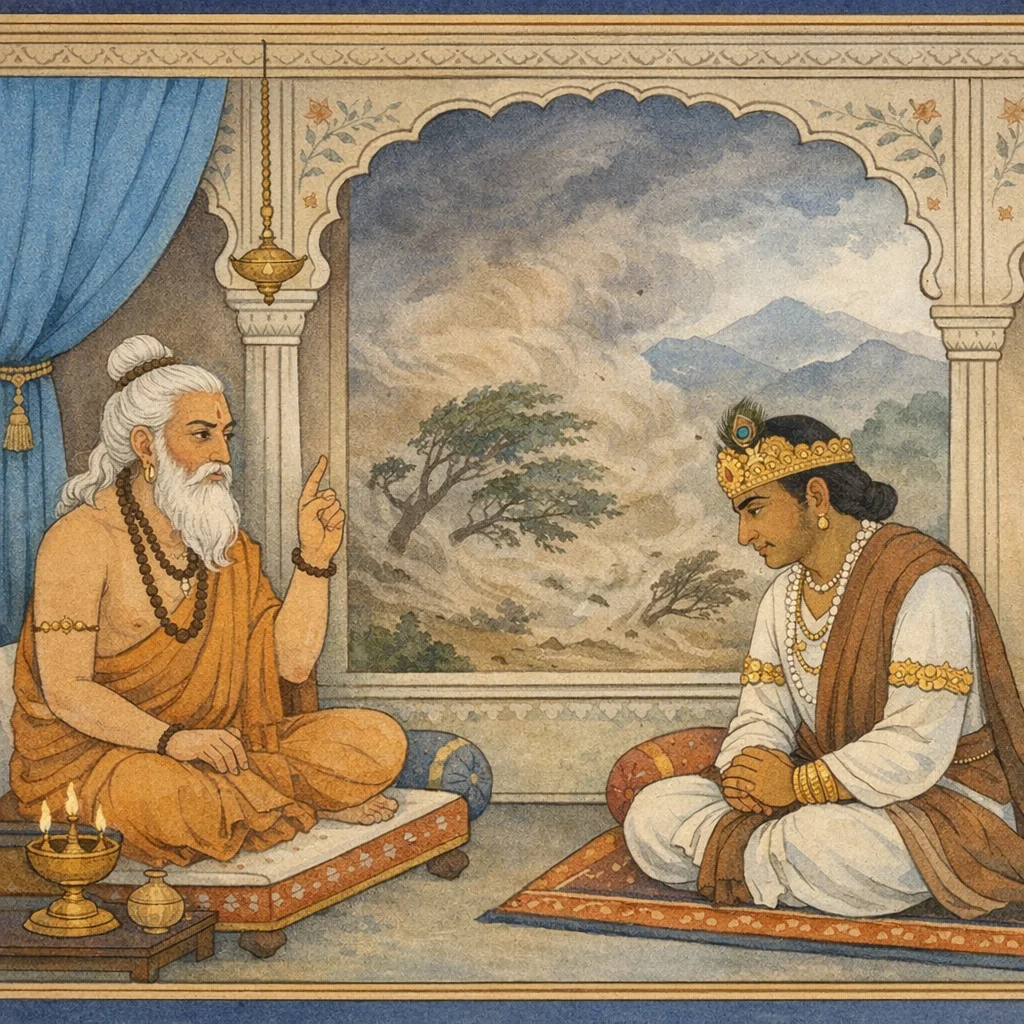
The chapter opens with Vyāsa enumerating pervasive anomalies: livestock and humans produce aberrant offspring; animals and birds utter inauspicious cries; unusual flora appear on trees; dust-laden winds and persistent atmospheric haze intensify. A sequence of astronomical disturbances follows—eclipses, hostile planetary placements, comet-like phenomena, and ominous configurations around nakṣatras—interpreted as signaling severe harm to the Kuru polity and to both armies. The text then expands to environmental and civic portents: blood- and flesh-like rains, rivers running counter-current with blood-tinged waters, meteoric falls with thunder, earthquakes, collapsing peaks, agitated oceans, and destructive winds. Ritual and sensory inversions are noted (fire burning with strange colors, reversed sensory qualities), alongside militarized omens (weapons appearing to blaze) and unsettling behavior among banners, drums, birds, horses, and elephants. Vyāsa concludes by urging Dhṛtarāṣṭra to decide appropriately so that society does not move toward total ruin. Vaiśaṃpāyana reports Dhṛtarāṣṭra’s reply: he reads the crisis as fated and asserts that kṣatriyas who fall in duty-bound conflict attain honor, fame, and a valorized posthumous state.
Chapter Arc: व्यास मुनि धृतराष्ट्र के सम्मुख युद्ध-पूर्व क्षितिज पर उभरते अपशकुनों का द्वार खोलते हैं—गायों में विकृत जन्म, पशुओं का अस्वाभाविक व्यवहार, और प्रकृति का उलटा चलन मानो धर्म-राज्य की देहरी पर अँधेरा लिख रहा हो। → अपशकुनों की शृंखला बढ़ती जाती है: विचित्र देह-रचना वाले पशु, असामान्य तिथियाँ और ग्रहण-सा आकाश, तथा अस्त्र-शस्त्रों से ज्वाला निकलने जैसे संकेत—सेनाएँ उपस्थित हैं, पर स्वयं समय (काल) मानो युद्ध का उद्घोष कर रहा है। व्यास यह भी बताते हैं कि विशाल सेना का संनिपात स्वयं में स्थिर नहीं—भगदड़ और अव्यवस्था को रोकना कठिन है, और संख्या से विजय निश्चित नहीं। → सबसे तीखा क्षण तब आता है जब संकेत प्रत्यक्ष युद्ध-निकटता में बदल जाते हैं—धनुषों से अग्नि-लपटें निकलती दिखती हैं, शस्त्र ‘संग्रामं समुपस्थितम्’ का संदेश देते हैं, और आकाश-गति (तिथि-क्षय/ग्रहण) तथा धरती के कंपकंपाते स्वर मिलकर बताते हैं कि यह भूमि सहस्रों राजाओं का रक्तपान करेगी। → व्यास का निष्कर्ष स्पष्ट है: विजय केवल बाहुबल या संख्या का फल नहीं; ‘दैव’ (काल-नियति) भी निर्णायक है। वे धृतराष्ट्र को संकेतों का अर्थ समझाते हैं—यह युद्ध टलने योग्य नहीं दिखता, और जो ‘जयवन्त’ होंगे वे भी कृतकृत्य होकर भारी मूल्य चुकाएँगे। → धृतराष्ट्र इन वचनों के बाद गहन ध्यान/चिंतन में डूबते हैं—पर प्रश्न हवा में लटका रहता है: क्या वह पुत्र-मोह से ऊपर उठकर विनाश रोक पाएँगे, या अपशकुनों की धारा अब अपरिवर्तनीय हो चुकी है?
Shlokas
Verse 1
ऑपनआक्रात बछ। अर तृतीयो<थध्याय: व्यासजीके द्वारा अमंगलसूचक उत्पातों तथा विजयसूचक लक्षणोंका वर्णन व्यास उवाच खरा गोषु प्रजायन्ते रमन्ते मातृभि: सुता: । अनार्तवं पुष्पफलं दर्शयन्ति वनद्रुमा:,व्यासजीने कहा--राजन! गायोंके गर्भसे गदहे पैदा होते हैं, पुत्र माताओंके साथ रमण करते हैं। वनके वृक्ष बिना ऋतुके फूल और फल प्रकट करते हैं
Vyāsa said: “O King, donkeys are being born from cows; sons consort with their own mothers. The forest trees put forth flowers and fruits out of season. These are ominous portents, foretelling the collapse of natural order and moral restraint as the great war draws near.”
Verse 2
इस प्रकार श्रीमह्ााभारत भीष्मपर्वके अन्तर्गत जम्बूखण्डविनिर्माणपर्वमें श्रीवेदव्यासदर्शनविषयक दूसरा अध्याय पूरा हुआ,गर्भिण्यो$जातपुत्राश्न जनयन्ति विभीषणान् । क्रव्यादा: पक्षिभिश्नापि सहाश्नन्ति परस्परम् गर्भवती स्त्रियाँ पुत्रको जन्म न देकर अपने गर्भसे भयंकर जीवोंको पैदा करती हैं। मांसभक्षी पशु भी पक्षियोंके साथ परस्पर मिलकर एक ही जगह आहार ग्रहण करते हैं
Vaiśampāyana said: “Pregnant women, instead of bringing forth sons, give birth from their wombs to dreadful beings. Even flesh-eating creatures, together with birds, feed in the same place, consuming one another.” These are ominous portents—signs of moral disorder and inverted natural norms—foreshadowing the catastrophic violence of war and the collapse of dharma.
Verse 3
त्रिविषाणाश्षतुर्नेत्रा: पज्चपादा द्विमेहना: । द्विशीर्षाश्न द्विपुच्छाश्च दंष्टिग: पशवोडशिवा:,इति श्रीमहाभारते भीष्मपर्वणि जम्बूखण्डविनिर्माणपर्वणि निमित्ताख्याने तृतीयो<5ध्याय:
Vyāsa said: “There are inauspicious beasts—some with three horns and four eyes, some with five feet and double organs of urination, some with two heads and two tails, and some armed with fangs.” In the narrative, these unnatural creatures are ominous portents, signaling disorder in the world and warning that when nature itself is distorted, human conduct too may fall away from dharma.
Verse 4
जायन्ते विवृतास्याश्च व्याहरन्तो5शिवा गिर: । तीन सींग, चार नेत्र, पाँच पैर, दो मूत्रेन्द्रिय, दो मस्तक, दो पूँछ और अनेक दाँढ़ोंवाले अमंगलमय पशु जन्म लेते तथा मुँह फैलाकर अमंगलसूचक वाणी बोलते हैं ।। ३ इ ।। त्रिपदा: शिखिनस्ताक्ष्यश्चतुर्दष्टा विषाणिन:,गरुड़ पक्षीके मस्तकपर शिखा और सींग हैं। उनके तीन पैर तथा चार दाढ़ें दिखायी देती हैं। इसी प्रकार अन्य जीव भी देखे जाते हैं। वेदवादी ब्राह्मणोंकी स्त्रियाँ तुम्हारे नगरमें गरुड़ और मोर पैदा करती हैं
Vyāsa said: “Portentous creatures are born—beasts with gaping mouths that utter inauspicious cries. Some appear with three horns, four eyes, five feet, two organs of urination, two heads, two tails, and many fangs. Such births and sounds are read as ominous signs, foretelling moral disorder in the world and calamity in the wake of adharma.”
Verse 5
तथैवान्याश्न दृश्यने स्त्रियो वै ब्रह्मवादिनाम् । वैनतेयान् मयूरांश्व जनयन्ति पुरे तव,गरुड़ पक्षीके मस्तकपर शिखा और सींग हैं। उनके तीन पैर तथा चार दाढ़ें दिखायी देती हैं। इसी प्रकार अन्य जीव भी देखे जाते हैं। वेदवादी ब्राह्मणोंकी स्त्रियाँ तुम्हारे नगरमें गरुड़ और मोर पैदा करती हैं
Likewise, other strange sights are seen: the wives of Brahmanical seers, devoted to Vedic discourse, are said to give birth in your city to beings like Garuḍas (Vainateyas, sons of Vinatā) and to peacocks. The saying deepens the air of marvel and inversion, as though nature itself were casting portents within your realm.
Verse 6
गोवत्सं वडवा सूते श्वा सृगालं महीपते । कुक्कुरान् करभाश्नैव शुकाश्नाशुभवादिन:,भूपाल! घोड़ी गायके बछड़ेको जन्म देती है, कुतियाके पेटसे सियार पैदा होता है, हाथी कुत्तोंको जन्म देते हैं और तोते भी अशुभसूचक बोली बोलने लगे हैं
Vyāsa said: “O king, the natural order has been overturned: a mare gives birth to a calf; a bitch bears a jackal; even she-asses produce dogs; and parrots too have begun to utter inauspicious, ominous speech. These portents signal a grave disorder of dharma, foretelling calamity as adharma ripens before the great war.”
Verse 7
स्त्रिय: काश्रित्प्रजायन्ते चतस्र: पजच कन्यका: । जातमात्राश्च नृत्यन्ति गायन्ति च हसन्ति च,कुछ स्त्रियाँ एक ही साथ चार-चार या पाँच-पाँच कन्याएँ पैदा करती हैं। वे कन्याएँ पैदा होते ही नाचती, गाती तथा हँसती हैं
Vyāsa describes uncanny portents in the world: some women give birth at once to four or five daughters, and those girls, the moment they are born, dance, sing, and laugh. These marvels are told as ominous signs of moral and cosmic disturbance as the great war draws near—when dharma is shaken, nature itself displays disordering wonders.
Verse 8
पृथग्जनस्य सर्वस्य क्षुद्रका: प्रहसन्ति च । नृत्यन्ति परिगायन्ति वेदयन्तो महद् भयम्,समस्त नीच जातियोंके घरोंमें उत्पन्न हुए काने, कुबड़े आदि बालक भी महान् भयकी सूचना देते हुए जोर-जोरसे हँसते, गाते और नाचते हैं
Vyāsa said: “Among the common people everywhere, even lowly-born children—such as the one-eyed and the hunchback—laugh loudly, sing, and dance, as though proclaiming a great and ominous fear. The world itself seems to give warning that the coming conflict will bring widespread dread and disorder.”
Verse 9
प्रतिमाश्चवालिखन्त्येता: सशस्त्रा: कालचोदिता: । अन्योन्यमभिधावन्ति शिशवो दण्डपाणय:,ये सब कालसे प्रेरित हो हाथोंमें हथियार लिये मूर्तियाँ लिखते और बनाते हैं। छोटे-छोटे बच्चे हाथमें डंडा लिये एक-दूसरेपर धावा करते हैं
Vyāsa describes ominous portents driven by Time itself: armed figures are seen sketching and fashioning images, and even little children, sticks in hand, rush at one another as if in battle. The scene suggests moral disorder in society—innocence turning toward violence—foretelling the inevitable escalation of the coming war.
Verse 10
अन्योन्यमभिमृद्नन्ति नगराणि युयुत्सव: । पद्मोत्पलानि वृक्षेषु जायन्ते कुमुदानि च,और कृत्रिम नगर बनाकर परस्पर युद्धकी इच्छा रखते हुए उन नगरोंको रौंदकर मिट्टीमें मिला देते हैं। पद्य, उत्पल और कुमुद आदि जलीय पुष्प वृक्षोंपर पैदा होते हैं
Vyāsa describes a world turned upside down: those eager for fighting trample and crush one another’s cities into dust, and even nature seems inverted—lotuses, blue lotuses, and white water-lilies are said to grow upon trees. The verse conveys the moral disarray as the great war approaches, when human aggression and cosmic order alike appear distorted.
Verse 11
विष्वग्वाताश्न वान्त्युग्रा रजो नाप्युपशाम्यति । अभीक्षणं कम्पते भूमिरर्क राहुरुपैति च,चारों ओर भयंकर आँधी चल रही है, धूलका उड़ना शान्त नहीं हो रहा है, धरती बारंबार काँप रही है तथा राहु सूर्यके निकट जा रहा है
Vyāsa reports ominous portents on the eve of the great conflict: fierce winds rage in every direction and the dust will not settle; the earth repeatedly trembles; and Rāhu moves toward the sun, as if to seize it. These signs frame the war as a moral crisis for the world—nature itself reflecting the disorder unleashed when kṣatriya power turns toward fratricidal destruction and dharma is strained to its limits.
Verse 12
श्वेतो ग्रहस्तथा चित्रां समतिक्रम्य तिष्ठति । अभावं हि विशेषेण कुरूणां तत्र पश्यति,केतु चित्राका अतिक्रमण करके स्वातीपर स्थित हो रहा है; उसकी विशेषरूपसे कुरुवंशके विनाशपर ही दृष्टि है
Vyāsa said: “The bright planet (Śveta) has crossed beyond Citrā and now stands at Svātī. In this sign, it seems to gaze especially upon the coming ruin of the Kurus.”
Verse 13
धूमकेतुर्महाघोर: पुष्यं चाक्रम्य तिष्ठति । सेनयोरशिवं घोर करिष्यति महाग्रह:,अत्यन्त भयंकर धूमकेतु पुष्य नक्षत्रपर आक्रमण करके वहीं स्थित हो रहा है। यह महान् उपग्रह दोनों सेनाओंका घोर अमंगल करेगा
Vyāsa said: “A terribly fearsome comet has advanced upon the Puṣya constellation and now stands there. This mighty celestial portent will bring dreadful ill-omen upon both armies.”
Verse 14
मघास्वड्रारको वक्र: श्रवणे च बृहस्पति: । भगं नक्षत्रमाक्रम्य सूर्यपुत्रेण पीड्यते,मंगल वक्र होकर मघा नक्षत्रपर स्थित है, बृहस्पति श्रवण नक्षत्रपर विराजमान है तथा सूर्यपुत्र शनि पूर्वा फाल्गुनी नक्षत्रपर पहुँचकर उसे पीड़ा दे रहा है
Vyāsa said: “Mars is in retrograde in the constellation Maghā, and Jupiter is stationed in Śravaṇa. Saturn, the son of the Sun, having advanced upon the asterism Bhaga (Pūrvaphālgunī), is afflicting it.” These ominous planetary configurations are presented as portents, suggesting a disturbance in the cosmic order that mirrors the moral and social disorder driving the war.
Verse 15
शुक्र: प्रोष्ठपदे पूर्वे समारुह्मु विरोचते । उत्तरे तु परिक्रम्य सहित: समुदीक्षते,शुक्र पूर्वा भाद्रपदापर आरूढ़ हो प्रकाशित हो रहा है और सब ओर घूम-फिरकर परिघ नामक उपग्रहके साथ उत्तरा भाद्रपदा नक्षत्रपर दृष्टि लगाये हुए है
Vyāsa describes an ominous celestial sign: the planet Venus, having risen in the asterism Pūrvā Proṣṭhapadā, shines conspicuously. Then, moving in a circling course, it is seen in conjunction with the comet-like body called Pari-gha, fixing its aspect toward Uttarā Proṣṭhapadā—an indication, in the epic’s war-context, of impending disturbance and grave consequences.
Verse 16
श्वेतो ग्रह: प्रजज्लित: सधूम इव पावक: । ऐन्द्रं तेजस्वि नक्षत्र ज्येष्ठामाक्रम्य तिषतति,केतु नामक उपग्रह धूमयुक्त अग्निके समान प्रज्वलित हो इन्द्रदेवतासम्बन्धी तेजस्वी ज्येष्ठा नक्षत्रपर जाकर स्थित है
Vyāsa said: “A white celestial body blazes forth, like fire wreathed in smoke. That radiant object, associated with Indra, has advanced upon the nakṣatra Jyeṣṭhā and stands there.” In the war-foreboding atmosphere of Bhīṣma Parva, this omen signals a disturbance in the cosmic order, reflecting how adharma and impending violence cast their shadow even upon the heavens.
Verse 17
ध्रुवं प्रजजलितो घोरमपसपव्यं प्रवर्तते । रोहिणीं पीडयत्येवमुभी च शशिभास्करौ । चित्रास्वात्यन्तरे चैव विछित: परुषग्रह:,चित्रा और स्वातीके बीचमें स्थित हुआ क्रूर ग्रह राहु सदा वक्री होकर रोहिणी तथा चन्द्रमा और सूर्यको पीड़ा पहुँचाता है तथा अत्यन्त प्रज्वलित होकर ध्रुवकी बायीं ओर जा रहा है, जो घोर अनिष्टका सूचक है
Vyāsa said: “A fiercely blazing, dreadful portent is surely unfolding: the fiery phenomenon moves to the left of Dhruva, signaling grave misfortune. In the same way, the harsh planet Rāhu, stationed between Citrā and Svātī and ever moving in a crooked course, torments Rohiṇī and afflicts both the Moon and the Sun.”
Verse 18
वक्रानुवक्रं कृत्वा च श्रवण पावकप्रभ: । ब्रह्मराशिं समावृत्य लोहिताजड़ी व्यवस्थित:,अग्निके समान कान्तिमान् मंगल ग्रह (जिसकी स्थिति मघा नक्षत्रमें बतायी गयी है) बारंबार वक्र होकर ब्रह्मराशि (बृहस्पतिसे युक्त नक्षत्र) श्रवणको पूर्णरूपसे आवृत करके स्थित है
Vyāsa said: “Maṅgala (Mars), radiant as fire, moves in curve upon curve. Having wholly covered the nakṣatra Śravaṇa within the Brahma-rāśi, it stands there, red as blood.”
Verse 19
सर्वसस्यपरिच्छन्ना पृथिवी सस्यमालिनी । पज्चशीर्षा यवाशक्षापि शतशीर्षाश्ष शालय:,(इसका प्रभाव खेतीपर अनुकूल पड़ा है) पृथ्वी सब प्रकारके अनाजके पौधोंसे आच्छादित है, शस्यकी मालाओंसे अलंकृत है, जौमें पाँच-पाँच और जड़हन धानमें सौ-सौ बालियाँ लग रही हैं
Vyāsa said: The earth was wholly covered with crops, adorned as if with garlands of grain. Barley bore five heads to a stalk, and the rice plants bore a hundred heads—an image of extraordinary fertility, suggesting a season in which nature itself became favorable to cultivation and human sustenance.
Verse 20
प्रधाना: सर्वलोकस्य यास्वायत्तमिदं जगत् | ता गाव: प्रस्नुता वत्सै: शोणितं प्रक्षरन्त्युत,जो सम्पूर्ण जगत्में माताके समान प्रधान मानी जाती हैं, यह समस्त संसार जिनके अधीन है, वे गौएँ बछड़ोंसे पिन्हा जानेके बाद अपने थनोंसे खून बहाती हैं
Those cows—regarded as foremost for all the worlds, upon whom this entire universe is said to depend—when pressed and drawn by their calves, are seen to let blood flow from their teats. The statement underscores a grave inversion of the natural moral order: even beings revered as universal mothers are driven into suffering, signaling the spread of adharma and the ominous conditions surrounding the war.
Verse 21
निश्चेरुरचिषश्चापात् खड्गाश्न॒ ज्वलिता भृशम् | व्यक्त पश्यन्ति शस्त्राणि संग्रामं समुपस्थितम्,योद्धाओंके धनुषसे आगकी लपटें निकलने लगी हैं, खड्ग अत्यन्त प्रज्वलित हो उठे हैं मानो सम्पूर्ण शस्त्र स्पष्टरूपसे यह देख रहे हैं कि संग्राम उपस्थित हो गया है
Flames burst forth from the warriors’ bows, and the swords blazed fiercely. It was as though all the weapons could plainly see that battle had come.
Verse 22
अग्निवर्णा यथा भास: शस्त्राणामुदकस्य च । कवचानां ध्वजानां च भविष्यति महाक्षय:,शस्त्रोंकी, जलकी, कवचोंकी और ध्वजाओंकी कान्तियाँ अग्निके समान लाल हो गयी हैं; अतः निश्चय ही महान् जनसंहार होगा
Vyāsa said: “The gleam of the weapons, the water, the coats of mail, and the banners has turned fire-red, as if aflame. This is an omen: surely a great destruction of men is about to occur.”
Verse 23
पृथिवी शोणितावर्ता ध्वजोडुपसमाकुला । कुरूणां वैशसे राजन् पाण्डवैः सह भारत,राजन्! भरतनन्दन! जब पाण्डवोंके साथ कौरवोंका हिंसात्मक संग्राम आरम्भ हो जायगा, उस समय धरतीपर रक्तकी नदियाँ बह चलेंगी, उनमें शोणितमयी भँवरें उठेंगी तथा रथकी ध्वजाएँ उन नदियोंके ऊपर छोटी-छोटी डोंगियोंके समान सब ओर व्याप्त दिखायी देंगी
Vyāsa said: “O king, O Bhārata—when the Kurus plunge into slaughter together with the Pāṇḍavas, the earth will become a torrent of blood, churning with crimson whirlpools; and the chariot-banners will appear scattered everywhere upon those streams like little boats.”
Verse 24
दिक्षु प्रज्वलितास्याश्व व्याहरन्ति मृगद्धिजा: । अत्याहितं दर्शयन्तो वेदयन्ति महद् भयम्,चारों दिशाओंमें पशु और पक्षी प्राणान्तकारी अनर्थका दर्शन कराते हुए भयंकर बोली बोल रहे हैं। उनके मुख प्रज्वलित दिखायी देते हैं और वे अपने शब्दोंसे किसी महान् भयकी सूचना दे रहे हैं
Vyāsa said: “In every direction, beasts and birds cry out with mouths that seem aflame. By displaying ominous portents of deadly calamity, their calls announce the approach of a great terror.”
Verse 25
एकपफक्षाक्षिचरण: शकुनि: खचरो निशि । रौद्रं वदति संरब्ध: शोणितं छर्दयन्निव,रातमें एक आँख, एक पाँख और एक पैरका पक्षी आकाशमें विचरता है और कुपित होकर भयंकर बोली बोलता है। उसकी बोली ऐसी जान पड़ती है, मानो कोई रक्त वमन कर रहा हो
Vyāsa said: “In the night there moved through the sky a bird of ill omen, having but one wing, one eye, and one foot. Enraged, it uttered a dreadful cry—its sound seeming as though it were vomiting blood—foretelling a violent, unrighteous slaughter and the terror that accompanies the coming war.”
Verse 26
शस्त्राणि चैव राजेन्द्र प्रज्वलन्तीव सम्प्रति । सप्तर्षीणामुदाराणां समवच्छाद्यते प्रभा,राजेन्द्र! सभी शस्त्र इस समय जलते-से प्रतीत होते हैं। उदार सप्तर्षियोंकी प्रभा फीकी पड़ती जाती है
Vyāsa said: “O king, even the weapons now appear as though they are blazing. The radiance of the noble Seven Sages is being veiled and grows dim.”
Verse 27
संवत्सरस्थायिनौ च ग्रहौ प्रज्वलितावुभौ । विशाखाया: समीपस्थौ बृहस्पतिशनैश्लरी,वर्षपर्यन्त एक राशिपर रहनेवाले दो प्रकाशमान ग्रह बृहस्पति और शनैश्वर तिर्यग्वेधके द्वारा विशाखा नक्षत्रके समीप आ गये हैं
Vyāsa said: “Two blazing planets—Jupiter and Saturn—both remaining in a single zodiacal sign for a full year, have come to a position near the lunar mansion Viśākhā.”
Verse 28
चन्द्रादित्यावुभौ ग्रस्तावेकाद्नवा हि त्रयोदशीम् । अपर्वणि ग्रहं यातौ प्रजासंक्षयमिच्छत:,(इस पक्षमें तो तिथियोंका क्षय होनेके कारण) एक ही दिन त्रयोदशी तिथिको बिना पर्वके ही राहुने चन्द्रमा और सूर्य दोनोंको ग्रस लिया है। अतः ग्रहणावस्थाको प्राप्त हुए वे दोनों ग्रह प्रजाका संहार चाहते हैं
Vyāsa said: “On the thirteenth lunar day, with the calendrical order disturbed so that the tithis seem to have collapsed into a single day, Rāhu has seized both the Moon and the Sun without the proper festival juncture. Those two luminaries, fallen into eclipse, appear as though they desire the destruction of the people.”
Verse 29
अशोभिता दिश: सर्वा: पांसुवर्ष: समन्ततः । उत्पातमेघा रौद्राश्न रात्रौ वर्षन्ति शोणितम्,चारों ओर धूलकी वर्षा होनेसे सम्पूर्ण दिशाएँ शोभाहीन हो गयी हैं। उत्पातसूचक भयंकर मेघ रातमें रक्तकी वर्षा करते हैं
Vyāsa said: “All the directions have lost their beauty, for dust is raining down on every side. Ominous, terrifying clouds—portents of calamity—pour down blood in the night.”
Verse 30
कृत्तिकां पीडयंस्ती&णैर्नक्षत्रं पृथिवीपते । अभीक्षणवाता वायन्ते धूमकेतुमवस्थिता:,राजन! अपने तीक्ष्ण (क्रूरतापूर्ण) कर्मोंके द्वारा उपलक्षित होनेवाला राहु (चित्रा और स्वातीके बीचमें रहकर सर्वतोभद्रचक्रगतवेधके अनुसार) कृत्तिका नक्षत्रको पीड़ा दे रहा है। बारंबार धूमकेतुका आश्रय लेकर प्रचण्ड आँधी उठती रहती है
Vyāsa said: “O lord of the earth, Rāhu—marked out by his sharp and cruel workings—now afflicts the lunar mansion Kṛttikā. Again and again, taking refuge in the portent of a comet, violent winds rise and blow.”
Verse 31
विषमं जनयन्त्येत आक्रन्दजननं महत् । त्रिषु सर्वेषु नक्षत्रनक्षत्रेषु विशाम्पते । गृथ्र: सम्पतते शीर्ष जनयन् भयमुन्तमम्,वह महान् युद्ध एवं विषम परिस्थिति पैदा करनेवाली है। राजन्! (अश्विनी आदि नक्षत्रोंकी तीन भागोंमें बाँटनेपर जो नौ-नौ नक्षत्रोंक तीन समुदाय होते हैं, वे क्रमशः अश्वपति, गजपति तथा नरपतिके छत्र कहलाते हैं; ये ही पापग्रहसे आक्रान्त होनेपर क्षत्रियोंका विनाश सूचित करनेके कारण “नक्षत्र-नक्षत्र” कहे गये हैं) इन तीनों अथवा सम्पूर्ण नक्षत्र-नक्षत्रोंमें शीर्षस्थानपर यदि पापग्रहसे वेध हो तो वह ग्रह महान् भय उत्पन्न करनेवाला होता है; इस समय ऐसा ही कुयोग आया है
These portents generate a dire imbalance, giving rise to a great outcry. O lord of the people, across all the three divisions of the so‑called “nakṣatra-groups,” a vulture swoops upon the foremost point, producing the highest fear. Such a malignant conjunction has arisen now—an omen of calamity and slaughter in war, where dharma is eclipsed by violent disorder.
Verse 32
चतुर्दशी पञ्चदशीं भूतपूर्वां च षोडशीम् । इमां तु नाभिजाने5हममावास्यां त्रयोदशीम् । चन्द्रसूर्यावु भौ ग्रस्तावेकमासीं त्रयोदशीम्,एक तिथिका क्षय होनेपर चौदहवें दिन, तिथिक्षय न होनेपर पंद्रहवें दिन और एक तिथिकी वृद्धि होनेपर सोलहवें दिन अमावास्याका होना तो पहले देखा गया है; परंतु इस पक्षमें जो तेरहवें दिन यह अमावास्या आ गयी है, ऐसा पहले भी कभी हुआ है, इसका स्मरण मुझे नहीं है। इस एक ही महीनेमें तेरह दिनोंके भीतर चन्द्रग्रहण और सूर्यग्रहण दोनों लग गये
Vyāsa said: “In former times I have indeed seen the new-moon day (amāvāsyā) fall on the fourteenth, the fifteenth, and even the sixteenth lunar day—when a tithi is lost or when it is extended. But I do not recall ever before a new-moon occurring on the thirteenth. In this single month, within thirteen days, both the Moon and the Sun have been seized (eclipsed).” The statement frames these eclipses as ominous disruptions in cosmic order, foreshadowing the moral and social upheaval that culminates in war.
Verse 33
अपर्वणि ग्रहेणैतौ प्रजा: संक्षपयिष्यत: । मांसवर्ष पुनस्तीव्रमासीत् कृष्णचतुर्दशीम् । शोणितैर्वक्त्रसम्पूर्णा अतृप्तास्तत्र राक्षसा:,इस प्रकार अप्रसिद्ध पर्वमें ग्रहण लगनेके कारण ये सूर्य और चन्द्रमा प्रजाका विनाश करनेवाले होंगे। कृष्णपक्षकी चतुर्दशीको बड़े जोरसे मांसकी वर्षा हुई थी। उस समय राक्षसोंका मुँह रक्तसे भरा हुआ था। वे खून पीते अघाते नहीं थे
Vyāsa said: “Because an eclipse occurs at an unseasonal and inauspicious time, the Sun and the Moon will become agents of the people’s destruction. Again, on the fourteenth day of the dark fortnight, there was a fierce rain of flesh. Then the rākṣasas there had their mouths filled with blood; drinking it, they were still not satisfied.”
Verse 34
प्रतिस्रोतो महानद्य: सरित: शोणितोदका: । फेनायमाना: कूपाश्च कूर्दन्ति वृषभा इव,बड़ी-बड़ी नदियोंके जल रक्तके समान लाल हो गये हैं और उनकी धारा उलटे स्रोतकी ओर बहने लगी है। कुँओंसे फेन ऊपरको उठ रहे हैं, मानो वृषभ उछल रहे हों
Vyāsa said: Great rivers and streams now run against their natural current, their waters turned red like blood. Wells froth and surge upward, as if bulls were leaping—ominous portents that the moral order has been disturbed and that the coming war will be drenched in violence.
Verse 35
पतन्त्युल्का सनिर्घाता: शक्राशनिसमप्रभा: । अद्य चैव निशां व्युष्टामनयं समवाप्स्यथ,बिजलीकी कड़कड़के साथ इन्द्रकी अशनिके समान प्रकाशित होनेवाली उल्काएँ गिर रही हैं। आजकी रात बीतनेपर सबेरेसे ही तुमलोगोंको अपने अन्यायका फल मिलने लगेगा
Vyāsa said: “Fiery meteors, crashing with thunder and blazing like Indra’s thunderbolt, are falling. And when this very night has passed and dawn arrives, you will begin to receive the consequence of your wrongdoing.”
Verse 36
विनि:सृत्य महोल्काभिस्तिमिरं सर्वतोदिशम् । अन्योन्यमुपतिष्ठद्धिस्तत्र चोक्त महर्षिभि:,सम्पूर्ण दिशाओंमें अन्धकार व्याप्त होनेके कारण बड़ी-बड़ी मशालें जलाकर घरसे निकले हुए महर्षियोंने एक-दूसरेके पास उपस्थित हो इन उत्पातोंके सम्बन्धमें अपना मत इस प्रकार प्रकट किया है
As darkness spread in every direction, the great seers came out of their dwellings carrying blazing torches. Drawing close to one another, they spoke their considered judgment on these ominous portents—signs that the order of dharma was being shaken and that grave consequences were drawing near.
Verse 37
भूमिपालसहस्राणां भूमि: पास्यति शोणितम् | कैलासमन्दराभ्यां तु तथा हिमवता विभो
Vyāsa said: “The earth will drink the blood of thousands of kings. O mighty one, so too will it be with Kailāsa and Mandara, and with Himavat.”
Verse 38
महाभूता भूमिकम्पे चत्वार: सागरा: पृथक् । वेलामुद्वर्तयन्तीव क्षोभयन्तो वसुंधराम्,भूकम्प होनेके कारण पृथक्-पृथक् चारों सतर वृद्धिको प्राप्त होकर वसुधामें क्षोभ उत्पन्न करते हुए अपनी सीमाको लाँघते हुए-से जान पड़ते हैं
Vyāsa describes an ominous upheaval: as the earth quakes, the four oceans, each in its own quarter, seem to surge beyond their proper shores, churning the world itself. The image signals a breakdown of natural boundaries—an ethical and cosmic disturbance that mirrors the approaching violence of war.
Verse 39
वृक्षानुन्मथ्य वान्त्युग्रा वाता: शर्करकर्षिण: । आभग्ना: सुमहावातैरशनीभि: समाहता:
Vyāsa describes ominous portents: fierce winds tear up trees and drag along gravel and grit. Great gusts break and shatter things, as if struck down by thunderbolts—signs of a world disturbed on the eve of war and adharma’s upheaval.
Verse 40
नीललोहितपीतश्च भवत्यग्निहुतो द्विजै:,ब्राह्मणलोगोंके आहुति देनेपर प्रज्वलित हुई अग्नि काले, लाल और पीले रंगकी दिखायी देती है। उसकी लपटें वामावर्त होकर उठ रही हैं। उससे दुर्गन्ध निकलती है और वह भयानक शब्द प्रकट करती रहती है। राजन! स्पर्श, गन्ध तथा रस--इन सबकी स्थिति विपरीत हो गयी है
Vyāsa said: “When the twice-born offer oblations, the sacrificial fire, though kindled, appears in ominous hues—dark, red, and yellow. Its flames rise in a leftward whirl; a foul stench issues from it, and it keeps producing terrifying sounds. O King, the very order of the senses—touch, smell, and taste—has turned contrary.”
Verse 41
वामार्चिर्दष्टगन्धश्न॒ मुज्चन् वै दारुणं स्वनम् । स्पर्शा गन्धा रसाश्चैव विपरीता महीपते,ब्राह्मणलोगोंके आहुति देनेपर प्रज्वलित हुई अग्नि काले, लाल और पीले रंगकी दिखायी देती है। उसकी लपटें वामावर्त होकर उठ रही हैं। उससे दुर्गन्ध निकलती है और वह भयानक शब्द प्रकट करती रहती है। राजन! स्पर्श, गन्ध तथा रस--इन सबकी स्थिति विपरीत हो गयी है
Vyāsa said: “O king, the sacrificial fire—though kindled by the Brāhmaṇas’ offerings—shows ominous signs: its flames curl in a leftward course, it gives off a foul stench, and it releases a dreadful sound. Even touch, smell, and taste have turned contrary. Such reversals in the very order of the senses signal a disturbance of dharma and a forewarning of calamity in the coming war.”
Verse 42
धूमं ध्वजा: प्रमुडचन्ति कम्पमाना मुहुर्मुहु: । मुज्चन्त्यज्रारवर्ष च भेर्यश्व॒ पटहास्तथा,ध्वज बारंबार कम्पित होकर धूआँ छोड़ते हैं। ढोल, नगाड़े अंगारोंकी वर्षा करते हैं
Vyāsa narrates the ominous portents of the battlefield: the standards tremble again and again and seem to emit smoke, while the war-drums—kettledrums and other percussion—resound as though they are showering sparks. The scene heightens the moral gravity of the coming slaughter, suggesting that even inanimate emblems of war participate in the foreboding of adharma-driven destruction.
Verse 43
शिखराणां समृद्धानामुपरिष्टात् समन्तत: । वायसाश्व रुवन्त्युग्रं वामं मण्डलमाश्रिता:,फल-फूलसे सम्पन्न वृक्षोंकी शिखाओंपर बायीं ओरसे घूम-घूमकर सब ओर कौए बैठते हैं और भयंकर काँव-काँवका कोलाहल करते हैं
Vyāsa said: “Upon the lofty, flourishing treetops, all around, crows have gathered and, keeping to the leftward circuit, cry out harshly with a dreadful clamor.” In the war-context, this is presented as an ominous sign—nature itself seeming to warn of impending destruction and the moral gravity of the conflict.
Verse 44
पकक््वापक्वेति सुभृशं वावाश्यन्ते वयांसि च । निलीयमन्ते ध्वजाग्रेषु क्षयाय पृथिवीक्षिताम्,बहुत-से पक्षी “पक्वा-पक्वा” इस शब्दका बारंबार जोर-जोरसे उच्चारण करते और ध्वजाओंके अग्रभागमें छिपते हैं। यह लक्षण राजाओंके विनाशका सूचक है
Birds, crying loudly again and again, call out “ripe, unripe,” and then hide themselves upon the tips of the banners—an ominous sign foretelling the destruction of the kings who rule the earth. In the ethical frame of the epic, such portents signal that adharma-driven conflict is ripening toward inevitable ruin.
Verse 45
ध्यायन्त: प्रकिरन्तश्न व्याला वेपथुसंयुता: । दीनास्तुरड्रमा: सर्वे वारणा: सलिलाश्रया:,दुष्ट हाथी काँपते और चिन्ता करते हुए भयके मारे मल-मूत्र त्याग कर रहे हैं, घोड़े अत्यन्त दीन हो रहे हैं और सम्पूर्ण गजराज पसीने-पसीने हो रहे हैं
Vyāsa said: “The beasts, seized by trembling fear, stand brooding and, in panic, void their filth. The horses have become utterly dejected, and the great elephants—clinging to water for relief—are drenched in sweat. The scene signals an ominous moral atmosphere: when adharma gathers for war, even animals reflect the dread and disorder that precede calamity.”
Verse 46
एतच्छुत्वा भवानत्र प्राप्तकालं व्यवस्यताम् । यथा लोक: समुच्छेदं नायं गच्छेत भारत,भारत! यह सुनकर (और उसके परिणामपर विचार करके) तुम इस अवसरके अनुरूप ऐसा कोई उपाय करो, जिससे यह संसार विनाशसे बच जाय
Having heard this, you should, here and now, resolve upon the course of action suited to the present crisis, so that this world, O Bhārata, may not go to utter ruin.
Verse 47
वैशम्पायन उवाच पितुर्वचो निशम्यैतद् धृतराष्ट्रोडब्रवीदिदम् । दिष्टमेतत् पुरा मन्ये भविष्यति नरक्षय:,वैशम्पायनजी कहते हैं--जनमेजय! अपने पिता व्यासजीका यह वचन सुनकर धृतराष्ट्रने कहा--“भगवन्! मैं तो इसे पूर्वनिश्चित दैवका विधान मानता हूँ; अतः यह जनसंहार होगा ही
Vaiśampāyana said: O Janamejaya, having heard these words of his father Vyāsa, Dhṛtarāṣṭra spoke: “Revered sir, I deem this to be fate ordained long ago; therefore a great slaughter of men will surely come to pass.”
Verse 48
राजान: क्षत्रधर्मेण यदि वध्यन्ति संयुगे । वीरलोकं समासाद्य सुखं प्राप्स्पन्ति केवलम्,“यदि राजालोग क्षत्रियधर्मके अनुसार युद्धमें मारे जायँगे तो वीरलोकको प्राप्त होकर केवल सुखके भागी होंगे
Vaiśampāyana said: If kings, adhering to the warrior’s duty, are slain in battle, then upon reaching the heroes’ realm they attain nothing but happiness.
Verse 49
इह कीर्ति परे लोके दीर्घकालं महत् सुखम् । प्राप्स्यन्ति पुरुषव्याप्रा: प्राणांस्त्यकत्वा महाहवे,“वे पुरुषसिंह नरेश महायुद्धमें प्राणोंका परित्याग करके इहलोकमें कीर्ति तथा परलोकमें दीर्घकालतक महान् सुख प्राप्त करेंगे!
Vaiśampāyana said: “Here in this world they will gain fame; and in the world beyond they will attain great happiness for a long time—those heroic men of action who, in the great battle, lay down their lives.”
Verse 50
वैशम्पायन उवाच एवमुक्तो मुनिस्तत्त्वं कवीन्द्रो राजसत्तम । धृतराष्ट्रेण पुत्रेण ध्यानमन्वगमत् परम्,वैशम्पायनजी कहते हैं--नृपश्रेष्ठ अपने पुत्र धृतराष्ट्रके इस प्रकार यथार्थ बात कहनेपर ज्ञानियोंमें श्रेष्ठ महर्षि व्यास कुछ देरतक बड़े सोच-विचारमें पड़े रहे
Vaiśampāyana said: Thus addressed with truthful words by Dhṛtarāṣṭra’s son, Vyāsa—the foremost of sages, lord among poets—O best of kings, entered into deep and supreme contemplation.
Verse 51
स मुहूर्त तथा ध्यात्वा पुनरेवाब्रवीद् वच: । असंशयं पार्थिवेन्द्र काल: संक्षिपते जगत्
Having reflected for a brief while, he spoke again: “O lord of the earth, without doubt Time is contracting the world, driving all things swiftly toward their end.”
Verse 52
सृजते च पुनर्लोकान् नेह विद्यति शाश्वतम् । दो घड़ीतक चिन्तन करनेके बाद वे पुन: इस प्रकार बोले--'राजेन्द्र! इसमें संशय नहीं है कि काल ही इस जगत्का संहार करता है और वही पुनः इन सम्पूर्ण लोकोंकी सृष्टि करता है। यहाँ कोई वस्तु सदा रहनेवाली नहीं है ।। ५१ है ।। ज्ञातीनां वै कुरूणां च सम्बन्धिसुहृदां तथा,“राजन! तुम अपने जाति-भाई, कौरवों, सगे-सम्बन्धियों तथा हितैषी-सुहृदोंको धर्मानुकूल मार्गका उपदेश करो; क्योंकि तुम उन सबको रोकनेमें समर्थ हो। जाति-वधको अत्यन्त नीच कर्म बताया गया है। वह मुझे अत्यन्त अप्रिय है। तुम यह अप्रिय कार्य न करो
Vaiśampāyana said: “And Time again brings forth the worlds. In this realm, nothing is eternal.” After reflecting for a short while, he continued: “O best of kings, there is no doubt—Time alone destroys this universe, and Time alone creates all these worlds anew. Therefore, instruct your kinsmen—the Kurus—along with your relatives and well-wishers, in the path of dharma; for you are capable of restraining them. The slaughter of one’s own kin is declared a most base deed; it is deeply displeasing to me. Do not commit this hateful act.”
Verse 53
धर्म्य देशय पन्थानं समर्थों ह्सि वारणे । क्षुद्रे जातिवरध॑ प्राहुर्मा कुरुष्व ममाप्रियम्,“राजन! तुम अपने जाति-भाई, कौरवों, सगे-सम्बन्धियों तथा हितैषी-सुहृदोंको धर्मानुकूल मार्गका उपदेश करो; क्योंकि तुम उन सबको रोकनेमें समर्थ हो। जाति-वधको अत्यन्त नीच कर्म बताया गया है। वह मुझे अत्यन्त अप्रिय है। तुम यह अप्रिय कार्य न करो
Vaiśaṃpāyana said: “Teach them the righteous path. You are capable of restraining them. The killing of one’s own kin is declared a most base deed—something deeply hateful to me. Do not commit this grievous act.”
Verse 54
कालो<थयं पुत्ररूपेण तव जातो विशाम्पते । न वध: पूज्यते वेदे हितं॑ नैव कथंचन,“महाराज! यह काल तुम्हारे पुत्ररूपसे उत्पन्न हुआ है। वेदमें हिंसाकी प्रशंसा नहीं की गयी है। हिंसासे किसी प्रकार हित नहीं हो सकता
“O lord of the people, this very Time has been born as your son. The Veda does not extol killing; and from violence, no true welfare can arise in any way.”
Verse 55
हन्यात् स एन॑ यो हन्यात् कुलधर्म स्विकां तनुम् | कालेनोत्पथगन्तासि शक््ये सति यथा55पदि,कुलधर्म अपने शरीरके ही समान है। जो इस कुलधर्मका नाश करता है, उसे वह धर्म ही नष्ट कर देता है। जबतक धर्मका पालन सम्भव है (जबतक तुमपर कोई आपत्ति नहीं आयी है), तबतक तुम कालसे प्रेरित होकर ही धर्मकी अवहेलना करके कुमार्गपर चल रहे हो, जैसा कि बहुधा लोग किसी आपफत्तिमें पड़नेपर ही करते हैं
Vaiśaṃpāyana said: “He who destroys the clan’s dharma destroys, as it were, his own very body; and that very dharma strikes him down in return. While it is still possible for you to uphold righteousness—before any unavoidable calamity has overtaken you—you are, driven by Time, turning away from dharma and walking the wrong path, as people often do only after they have fallen into distress.”
Verse 56
कुलस्यास्य विनाशाय तथैव च महीक्षिताम् | अनर्थों राज्यरूपेण तव जातो विशाम्पते,“राजन! तुम्हारे कुलका तथा अन्य बहुत-से राजाओंका विनाश करनेके लिये यह तुम्हारे राज्यके रूपमें अनर्थ ही प्राप्त हुआ है
Vaiśaṃpāyana said: “O lord of the people, this sovereignty has come to you as a calamity—destined to bring about the ruin of your own lineage and, likewise, of many kings. Power, when seized or held without restraint, turns into the very instrument of destruction for family and realm alike.”
Verse 57
लुप्तधर्मा परेणासि धर्म दर्शय वै सुतान् । कि ते राज्येन दुर्धर्ष येन प्राप्तोडसि किल्बिषम्,“तुम्हारा धर्म अत्यन्त लुप्त हो गया है। अपने पुत्रोंको धर्मका मार्ग दिखाओ। दुर्धर्ष वीर! तुम्हें राज्य लेकर क्या करना है, जिसके लिये अपने ऊपर पापका बोझ लाद रहे हो?
“Your dharma has been eclipsed by another’s influence. Show your sons the path of righteousness. O hard-to-overcome hero, what use is a kingdom to you, for the sake of which you have taken upon yourself the burden of sin?”
Verse 58
यशो धर्म च कीर्ति च पालयन् स्वर्गमाप्स्यसि । लभन्तां पाण्डवा राज्यं शमं गच्छन्तु कौरवा:,“तुम मेरी बात माननेपर यश, धर्म और कीर्तिका पालन करते हुए स्वर्ग प्राप्त कर लोगे। पाण्डवोंको उनके राज्य प्राप्त हों और समस्त कौरव आपसमें संधि करके शान्त हो जायूँ'
“By heeding my counsel, you will uphold honor, righteousness, and lasting renown—and thereby attain heaven. Let the Pāṇḍavas regain their rightful kingdom, and let the Kauravas enter into reconciliation and come to peace.”
Verse 59
एवं ब्रुवति विप्रेन्द्रे धृतराष्ट्रीडम्बिकासुतः । आक्षिप्य वाक्यं॑ वाक्यज्ञो वाक््यं चैवाब्रवीत् पुन:,विप्रवर व्यासजी जब इस प्रकार उपदेश दे रहे थे, उसी समय बोलनेमें चतुर अम्बिकानन्दन धृतराष्ट्रने बीचमें ही उनकी बात काटकर उनसे इस प्रकार कहा
As that foremost of Brahmins spoke thus, Dhṛtarāṣṭra—Ambikā’s son, skilled in the use of words—cut across his speech and replied again as follows.
Verse 60
धृतराष्ट उवाच यथा भवान् वेत्ति तथैव वेत्ता भावाभावी विदितौ मे यथार्थो स्वार्थे हि सम्मुह्ाति तात लोको मां चापि लोकात्मकमेव विद्धि,धृतराष्ट्र बोले--तात! जैसा आप जानते हैं, उसी प्रकार मैं भी इन बातोंको समझता हूँ। भाव और अभावका यथार्थ स्वरूप मुझे भी ज्ञात है, तथापि यह संसार अपने स्वार्थके लिये मोहमें पड़ा रहता है। मुझे भी संसारसे अभिन्न ही समझें
Dhṛtarāṣṭra said: “Dear one, just as you understand these matters, so do I. The true nature of being and non-being is known to me as it really is. Yet the world, driven by self-interest, falls into delusion. Know me too as one whose very nature is bound up with the world.”
Verse 61
प्रसादये त्वामतुलप्रभाव॑ं त्वं नो गतिर्दर्शयिता च धीर: । न चापि ते मद्वशगा महर्षे न चाधर्म कर्तुमर्हा हि मे मति:,आपका प्रभाव अनुपम है। आप हमारे आश्रय, मार्गदर्शक तथा धीर पुरुष हैं। मैं आपको प्रसन्न करना चाहता हूँ। महर्षे! मेरी बुद्धि भी अधर्म करना नहीं चाहती; परंतु क्या करूँ? मेरे पुत्र मेरे वशमें नहीं हैं
Dhṛtarāṣṭra said: “I seek to win your favor, O one of incomparable power. You are our refuge, our guide who shows the way, and a steadfast man of wisdom. Yet, O great seer, my sons are not under my control; and my own mind does not consent to commit unrighteousness—still, what can I do?”
Verse 62
त्वं हि धर्मप्रवृत्तिश्न यश: कीर्तिश्व भारती । कुरूणां पाण्डवानां च मान्यश्वलापि पितामह:,आप ही हम भरतवंशियोंकी धर्मप्रवृत्ति, यश तथा कीर्तिके हेतु हैं। आप कौरवों और पाण्डवों--दोनोंके माननीय पितामह हैं
Dhṛtarāṣṭra said: “Indeed, you are the very source and support of righteous conduct, and of the fame and renown of the Bhārata line. You are the revered grandsire, worthy of honor to both the Kurus and the Pāṇḍavas alike.”
Verse 63
व्याय उवाच वैचित्रवीर्य नृपते यत् ते मनसि वर्तते । अभिधत्स्व यथाकामं छेत्तास्मि तव संशयम्,व्यासजी बोले--विचित्रवीर्यकुमार! नरेश्वर! तुम्हारे मनमें जो संदेह है, उसे अपनी इच्छाके अनुसार प्रकट करो। मैं तुम्हारे संशयका निवारण करूँगा
Vyāsa said: “O son of Vicitravīrya, O king—whatever doubt or thought is moving in your mind, speak it out as you wish. I shall cut through your uncertainty and remove your doubt.”
Verse 64
धृतराष्ट्र रवाच यानि लिड्डनि संग्रामे भवन्ति विजयिष्यताम् | तानि सर्वाणि भगवज्छोतुमिच्छामि तत्त्वतः,धृतराष्ट्र बोले--भगवन्! युद्धमें निश्चितरूपसे विजय पानेवाले लोगोंको जो शुभ लक्षण दीख पड़ते हैं, उन सबको यथार्थरूपसे सुननेकी मेरी इच्छा है
Dhṛtarāṣṭra said: “O revered one, I wish to hear, in their true nature, all those auspicious signs that appear in battle for those who are destined to win.”
Verse 65
व्यास उवाच प्रसन्नभा: पावक ऊर्ध्वरश्मि: प्रदक्षिणावर्त शिखो विधूम: । पुण्या गन्धाश्चाहुतीनां प्रवान्ति जयस्यैतद् भाविनो रूपमाहु:,व्यासजीने कहा--अग्निकी प्रभा निर्मल हो, उसकी लपटें ऊपरकी ओर दक्षिणावर्त होकर उठें और धूआँ बिलकुल न रहे; साथ ही अग्निमें जो आहुतियाँ डाली जायूँ, उनकी पवित्र सुगन्ध वायुमें मिलकर सर्वत्र व्याप्त होती रहे--यह भावी विजयका स्वरूप (लक्षण) बताया गया है
Vyāsa said: “When the sacrificial fire shines with a clear, tranquil radiance; when its flames rise upward, curling to the right, and there is no smoke at all; and when the offerings cast into it send forth a pure fragrance that spreads on the wind—these are declared to be the visible signs of victory that is about to come.”
Verse 66
गम्भीरघोषाश्न महास्वनाश्र शड्खा मृदड्भाश्न नदन्ति यत्र । विशुद्धरश्मिस्तपन: शशी च जयस्यैतद् भाविनो रूपमाहु:,जिस पक्षमें शंखों और मृदंगोंकी गम्भीर आवाज बड़े जोर-जोरसे हो रही हो तथा जिन्हें सूर्य और चन्द्रमाकी किरणें विशुद्ध प्रतीत होती हों, उनके लिये यह भावी विजयका शुभ लक्षण बताया है
Vyāsa said: “On the side where conches and war-drums resound with deep, powerful thunder, and where the rays of the Sun and the Moon appear clear and pure—this is declared to be the auspicious sign of victory that is yet to come.”
Verse 67
इष्टा वाच: प्रसृता वायसानां सम्प्रस्थितानां च गमिष्यतां च । ये पृष्ठतस्ते त्वरयन्ति राजन् ये चाग्रतस्ते प्रतिषेधयन्ति,जिनके प्रस्थित होनेपर अथवा प्रस्थानके लिये उद्यत होनेपर कौवोंकी मीठी आवाज फैलती है, उनकी विजय सूचित होती है। राजन्! जो कौवे पीछे बोलते हैं, वे मानो सिद्धिकी सूचना देते हुए शीघ्रतापूर्वक आगे बढ़नेके लिये प्रेरित करते हैं और जो सामने बोलते हैं, वे मानो युद्धमें जानेसे रोकते हैं
Vyāsa said: “When one is setting out, or just about to depart, and the crows’ pleasing calls spread around, it is taken as a sign of success. O King, the crows that cry from behind seem to urge swift advance, as though announcing attainment; but those that cry from the front seem to restrain one, as though warning against going into battle.”
Verse 68
कल्याणवाच: शकुना राजहंसा: शुका: क्रौज्चा: शतपत्राश्न यत्र । प्रदक्षिणाश्रैव भवन्ति संख्ये ध्रुवं जयस्तत्र वदन्ति विप्रा:,जहाँ शुभ एवं कल्याणमयी बोली बोलनेवाले राजहंस, शुक, क्रौंच तथा शतपत्र (मोर) आदि पक्षी सैनिकोंकी प्रदक्षिणा करते हैं (दाहिने जाते हैं), उस पक्षकी युद्धमें निश्चितरूपसे विजय होती है, यह ब्राह्मणोंका कथन है
Vyāsa said: Where birds that utter auspicious, welfare-bringing cries—royal swans, parrots, krauñca-cranes, and peacocks—circle to the right around an army on the battlefield, the learned Brahmins declare that victory for that side is certain.
Verse 69
अलड्कारै: कवचै: केतुभिश्न सुखप्रणादैहेंषितैर्वा हयानाम् । भ्राजिष्मती दुष्प्रतिवीक्षणीया येषां चमूस्ते विजयन्ति शत्रून्,अलंकार, कवच, ध्वजा-पताका, सुखपूर्वक किये जानेवाले सिंहनाद अथवा घोड़ोंके हिनहिनानेकी आवाजसे जिनकी सेना अत्यन्त शोभायमान होती है तथा शत्रुओंको जिनकी सेनाकी ओर देखना भी कठिन जान पड़ता है, वे अवश्य अपने विपक्षियोंपर विजय पाते हैं
Vyāsa said: Those whose army shines with ornaments, armor, and banners, and with auspicious, confident battle-cries and the neighing of horses—so resplendent that it is hard for the enemy even to look upon it—such warriors surely conquer their foes.
Verse 70
हृष्टा वाचस्तथा सत्त्वं योधानां यत्र भारत । न म्लायन्ति स्रजश्नैव ते तरन्ति रणोदधिम्,भारत! जिस पक्षके योद्धाओंकी बातें हर्ष और उत्साहसे परिपूर्ण होती हैं, मन प्रसन्न रहता है तथा जिनके कण्ठमें पड़ी हुई पुष्पमालाएँ कुम्हलाती नहीं हैं, वे युद्धरूपी महासागरसे पार हो जाते हैं
Vyāsa said: O Bhārata, that side whose warriors speak with joy and confident spirit—whose inner resolve remains bright, and whose garlands do not even wither—those men cross over the ocean of battle.
Verse 71
इष्टा वाच: प्रविष्टस्य दक्षिणा: प्रविविक्षत: । पश्चात् संधारयन्त्यर्थमग्रे च प्रतिषेधिका:,जिस पक्षके योद्धा शत्रुकी सेनामें प्रवेश करनेकी इच्छा करते समय अथवा उसमें प्रवेश कर लेनेपर अभीष्ट वचन (मैं तुझे अभी मार भगाता हूँ इत्यादि शौर्यसूचक बातें) बोलते हैं और अपने रणकौशलका परिचय देते हैं, वे पीछे प्राप्त होनेवाली अपनी विजयको पहलेसे ही निश्चित कर लेते हैं। इसके विपरीत जिन्हें शत्रुसेनामें प्रवेश करते समय सामनेसे निषेधसूचक वचन सुननेको मिलते हैं, उनकी पराजय होती है
Vyāsa said: When warriors are about to enter the enemy host—or have already entered it—if they utter confident, welcome words of valor and display their skill in battle, they thereby secure in advance what will come later: their victory. But when, at the very front, they meet with forbidding, discouraging words as they attempt to enter the enemy ranks, that becomes a sign of their defeat.
Verse 72
शब्दरूपरसस्पर्शगन्धाश्वाविकृता: शुभा: । सदा हर्षश्व योधानां जयतामिह लक्षणम्,जिनके शब्द, रूप, रस, गन्ध और स्पर्श आदि निर्विकार एवं शुभ होते हैं तथा जिन योद्धाओंके हृदयमें सदा हर्ष और उत्साह बना रहता है, उनके विजयी होनेका यही शुभ लक्षण है
Vyāsa said: “When sound, form, taste, touch, and smell appear untainted and auspicious, and when warriors keep steady joy and high spirit within their hearts, this is the favorable sign here that they are destined to be victorious.”
Verse 73
अनुगा वायवो वान्ति तथाभ्राणि वयांसि च | अनुप्लवन्ति मेघाश्न तथैवेन्द्रधनूंषि च,राजन्! हवा जिनके अनुकूल बहती है, बादल और पक्षी भी जिनके अनुकूल होते हैं, मेघ जिनके पीछे-पीछे छत्रछाया किये चलते हैं तथा इन्द्रधनुष भी जिन्हें अनुकूल दिशामें ही दृष्टिगोचर होते हैं, उन विजयी वीरोंके लिये ये विजयके शुभ लक्षण हैं। जनेश्वर! मरणासन्न मनुष्योंको इसके विपरीत अशुभ लक्षण दिखायी देते हैं
Vyāsa said: “O King, when the winds blow in one’s favour, and the clouds and birds also move in harmony with that direction; when the clouds seem to follow along like a canopy of shade, and even rainbows appear in auspicious quarters—these are fortunate signs of victory for heroic men destined to prevail. But for those near death, the very opposite kinds of omens appear as inauspicious portents.”
Verse 74
एतानि जयमानानां लक्षणानि विशाम्पते | भवन्ति विपरीतानि मुमूर्षणां जनाधिप,राजन्! हवा जिनके अनुकूल बहती है, बादल और पक्षी भी जिनके अनुकूल होते हैं, मेघ जिनके पीछे-पीछे छत्रछाया किये चलते हैं तथा इन्द्रधनुष भी जिन्हें अनुकूल दिशामें ही दृष्टिगोचर होते हैं, उन विजयी वीरोंके लिये ये विजयके शुभ लक्षण हैं। जनेश्वर! मरणासन्न मनुष्योंको इसके विपरीत अशुभ लक्षण दिखायी देते हैं
Vyāsa said: “O lord of the people, these are the auspicious signs that attend those who are rising to victory. But, O king and ruler of men, for those who are near death these very signs appear in reverse, turning into inauspicious omens.”
Verse 75
अल्पायां वा महत्यां वा सेनायामिति निश्चय: । हर्षो योधगणस्यैको जयलक्षणमुच्यते,सेना छोटी हो या बड़ी, उसमें सम्मिलित होनेवाले सैनिकोंका एकमात्र हर्ष ही निश्चितरूपसे विजयका लक्षण बताया जाता है
Vyāsa declares a firm conclusion: whether an army is small or vast, the single sure sign of victory is the shared exhilaration and confident spirit of its warriors.
Verse 76
एको दीर्णो दारयति सेनां सुमहतीमपि । तां दीर्णामनुदीर्यन्ते योधा: शूरतरा अपि,यदि सेनाका एक सैनिक भी उत्साहहीन होकर पीछे हटे तो वह अपनी ही देखा-देखी अत्यन्त विशाल सेनाको भी भगा देता है (उसके भागनेमें कारण बन जाता है)। उस सेनाके पलायन करनेपर बड़े-बड़े शूरवीर सैनिक भी भागनेको विवश होते हैं
Vyāsa said: Even a single soldier, once broken in spirit and giving way, can throw into disorder even a very great army. When that army is thus shattered, even warriors of greater valor are carried along and are forced to flee in its wake.
Verse 77
दुर्निवर्त्या तदा चैव प्रभग्ना महती चमू: । अपामिव महावेगास्त्रस्ता मृगगणा इव,जब बड़ी भारी सेना भागने लगती है, तब डरकर भागे हुए मृगोंके झुंड तथा नीची भूमिकी ओर बहनेवाले जलके महान् वेगकी भाँति उसे पीछे लौटाना बहुत कठिन है
Vyāsa said: When a vast army has once broken and begun to flee, turning it back becomes exceedingly difficult—like trying to check waters rushing with great force downhill, or like recalling a herd of frightened deer that has scattered in panic.
Verse 78
नैव शक््या समाधातुं संनिपाते महाचमू: । दीर्णामित्येव दीर्यन्ते सुविद्वांसोईपि भारत,भरतनन्दन! विशाल सेनामें जब भगदड़ मच जाती है, तब उसे समझा-बुझाकर रोकना कठिन हो जाता है। सेना भाग रही है, इतना सुनकर ही बड़े-बड़े युद्धविद्याके विद्वान् भी भागने लगते हैं
Vyāsa said: In the press of a great host assembled together, a mighty army cannot easily be brought back to order. The moment the cry is heard—“It has broken!”—even highly learned and battle-skilled men begin to scatter and flee, O Bhārata, O joy of the Bharatas.
Verse 79
भीतान् भग्नांश्व सम्प्रेक्ष्य भयं भूयोडभिवर्धते । प्रभग्ना सहसा राजन् दिशो विद्रवते चमू:,राजन! भयभीत होकर भागते हुए सैनिकोंको देखकर अन्य योद्धाओंका भय, बहुत अधिक बढ़ जाता है; फिर तो सहसा सारी सेना हतोत्साह होकर सम्पूर्ण दिशाओंमें भागने लगती है
Vyāsa said: “Seeing troops who are terrified and already broken in spirit, fear in the others swells all the more. Then, O King, the whole host—suddenly demoralized—scatters and flees in every direction.”
Verse 80
नैव स्थापयितुं शक््या शूरैरपि महाचमू: । सत्कृत्य महतीं सेनां चतुरड्रां महीपति: । उपायपूर्व मेधावी यतेत सततोत्थित:,उस समय बहुत-से शूरवीर भी उस विशाल वाहिनीको रोककर खड़ी नहीं रख सकते। इसलिये बुद्धिमान् राजाको चाहिये कि वह सतत सावधान रहकर कोई-न-कोई उपाय करके अपनी विशाल चतुरंगिणी सेनाको विशेष सत्कारपूर्वक स्थिर रखनेका यत्न करे
Vyāsa said: Even many heroes cannot simply halt and hold in place a vast host. Therefore a wise king, ever alert and ready to act, should employ well-considered means and, with due honor and careful attention, strive to keep his great fourfold army steady and disciplined.
Verse 81
उपायविजयं श्रेष्ठमाहुभेंदेन मध्यमम् । जघन्य एष विजयो यो युद्धेन विशाम्पते,राजन! साम-दानरूप उपायसे जो विजय प्राप्त होती है, उसे श्रेष्ठ बताया गया है। भेदनीतिके द्वारा शत्रुसेनामें फ़ूट डालकर जो विजय प्राप्त की जाती है, वह मध्यम है तथा युद्धके द्वारा मार-काट मचाकर जो शत्रुको पराजित किया जाता है, वह सबसे निम्नश्रेणीकी विजय है
Vyāsa said: “The victory gained through prudent means (policy) is declared the best. The victory won by ‘bheda’—splitting the enemy through dissension—is considered middling. But the victory achieved by war, through slaughter and destruction, O lord of the people, O king, is the lowest kind of victory.”
Verse 82
महादोष: संनिपातस्तस्याद्य: क्षय उच्यते । परस्परज्ञा: संहृष्टा व्यवधूता: सुनिश्चिता:,युद्ध महान् दोषका भण्डार है। उन दोषोंमें सबसे प्रधान है जनसंहार। यदि एक दूसरेको जाननेवाले, हर्ष और उत्साहमें भरे रहनेवाले, कहीं भी आसक्त न होकर विजय- प्राप्तिका दृढ़ निश्चय रखनेवाले तथा शौर्यसम्पन्न पचास सैनिक भी हों तो वे बड़ी भारी सेनाको धूलमें मिला देते हैं। यदि पीछे पैर न हटानेवाले पाँच, छ: और सात ही योद्धा हों तो वे भी निश्चितरूपसे विजयी होते हैं
Vyāsa said: “In war, the massing together of forces becomes a great fault; and the foremost consequence of that fault is destruction—wholesale slaughter. But if even a small band of warriors—who know one another well, are filled with joy and ardor, are free from distracting attachments, and are firmly resolved upon victory—stand together in valor, they can grind down a far larger army. Even five, six, or seven heroes who do not turn back can, with certainty, prevail.”
Verse 83
पड्चाशदपि ये शूरा मृद्गन्ति महतीं चमूम् । अपि वा पज्च षट् सप्त विजयन्त्यनिवर्तिन:,युद्ध महान् दोषका भण्डार है। उन दोषोंमें सबसे प्रधान है जनसंहार। यदि एक दूसरेको जाननेवाले, हर्ष और उत्साहमें भरे रहनेवाले, कहीं भी आसक्त न होकर विजय- प्राप्तिका दृढ़ निश्चय रखनेवाले तथा शौर्यसम्पन्न पचास सैनिक भी हों तो वे बड़ी भारी सेनाको धूलमें मिला देते हैं। यदि पीछे पैर न हटानेवाले पाँच, छ: और सात ही योद्धा हों तो वे भी निश्चितरूपसे विजयी होते हैं
Vyāsa said: Even fifty heroic warriors can crush a vast army. Indeed, even five, six, or seven fighters—if they do not turn back—can surely win.
Verse 84
न वैनतेयो गरुड: प्रशंसति महाजनम् । दृष्टवा सुपर्णोडपचितिं महत्या अपि भारत,भारत! सुन्दर पंखोंवाले विनतानन्दन गरुड़ विशाल सेनाका भी विनाश होता देखकर अधिक जनसमूहकी प्रशंसा नहीं करते हैं
Vyāsa said: Even Vainateya, Garuḍa—the fair-winged son of Vinatā—does not praise a great crowd. For, O Bhārata, even after witnessing the vast destruction of a mighty host, the wise do not glorify mere multitude; they value discernment and right conduct over numbers.
Verse 85
न बाहुल्येन सेनाया जयो भवति नित्यश: । अध्रुवो हि जयो नाम दैवं चात्र परायणम् । जयवन्तो हि संग्रामे कृतकृत्या भवन्ति हि,सदा अधिक सेना होनेसे ही विजय नहीं होती है। युद्धमें जीत प्राय: अनिश्चित होती है। उसमें दैव ही सबसे बड़ा सहारा है। जो संग्राममें विजयी होते हैं, वे ही कृतकार्य होते हैं
Vyāsa said: Victory does not always arise merely from the sheer size of an army. In war, what is called ‘victory’ is uncertain; here, fate (the divine dispensation) is the highest refuge. Those who prevail in battle alone are regarded as having accomplished their purpose.
Verse 376
सहस्रशो महाशब्द: शिखराणि पतन्ति च । जान पड़ता है, यह भूमि सहस्रों भूमिपालोंका रक्तपान करेगी। प्रभो! कैलास, मन्दराचल तथा हिमालयसे सहसों प्रकारके अत्यन्त भयानक शब्द प्रकट होते हैं और उनके शिखर भी टूट-टूटकर गिर रहे हैं
Vyāsa said: “From every side arise thunderous, terrifying sounds in their thousands, and even the mountain-peaks are breaking off and falling. Such portents suggest that this earth is about to drink the blood of countless kings—an ominous forewarning of the vast, unrighteous slaughter that war unleashes when dharma is eclipsed by ambition.”
Verse 396
वृक्षा: पतन्ति चैत्याश्व ग्रामेषु नगरेषु च । बालू और कंकड़ खींचकर बरसानेवाले भयानक बवंडर उठकर वृक्षोंको उखाड़ डालते हैं। गाँवों तथा नगरोंमें वृक्ष और चैत्यवृक्ष प्रचण्ड आँधियों तथा बिजलीके आघातोंसे टूटकर गिर रहे हैं
Vyāsa said: Trees are falling—both in villages and in cities. Sacred trees at shrines are also being torn down, as terrifying whirlwinds that hurl sand and stones rise up and uproot them. These violent gales, together with the blows of lightning, are breaking and casting down trees everywhere—an ominous sign that the moral order is being shaken as the great war approaches.
Frequently Asked Questions
The dilemma is whether political leadership should continue on an escalatory path when multiple indicators suggest systemic instability; Vyāsa’s warning frames a choice between timely restraint/counsel and proceeding toward a foreseeable, large-scale societal depletion.
The chapter teaches that ethical governance requires interpretive vigilance: when signs of disorder appear across nature and society, leaders must reassess intentions and consequences, balancing fate-language with responsibility for decisions that affect collective welfare.
There is no formal phalaśruti formula; the meta-commentary functions through Vyāsa’s concluding injunction to act at the ‘right time’ to prevent social annihilation, and through Dhṛtarāṣṭra’s doctrinal framing that links duty-bound death with fame and a valorized posthumous outcome.