Adhyaya 25
Bhāgīrathī-tīra-śauca, Kurukṣetra-gamana, and Śatayūpa-āśrama-dīkṣā (गङ्गातीरशौच–कुरुक्षेत्रगमन–शतयूपाश्रमदीक्षा)
Upa-parva: Tīrtha-śauca and Āśrama-praveśa (Bhāgīrathī to Kurukṣetra episode)
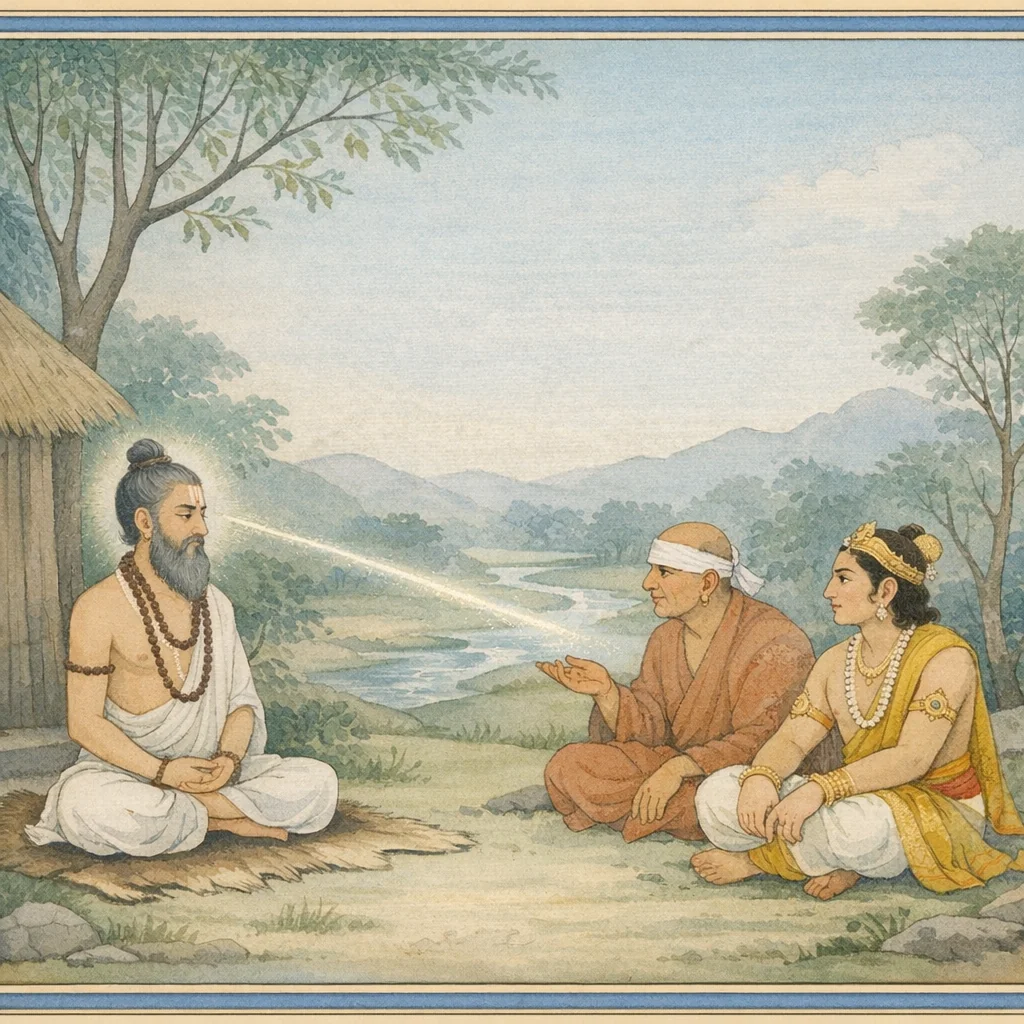
Vaiśaṃpāyana reports that Dhṛtarāṣṭra, following Vidura’s counsel, establishes residence on the sanctified Bhāgīrathī bank. Local residents and diverse social groups gather to attend him; the king acknowledges them with courteous discourse, formally honoring and then dismissing them according to protocol. In the evening, Dhṛtarāṣṭra and Gāndhārī perform prescribed purification at the Gaṅgā; others—Vidura and companions—bathe at separate tīrthas and complete their ritual duties. After purification, Kuntī escorts the elderly Dhṛtarāṣṭra (her father-in-law) and Gāndhārī back to the riverbank, where officiants prepare the ritual ground and the king performs fire offerings. Subsequently, the disciplined party departs from the Bhāgīrathī to Kurukṣetra. There Dhṛtarāṣṭra approaches the āśrama-site and meets the sage Śatayūpa, a former Kekaya king who had installed his son in sovereignty and entered forest life. Accompanied by Śatayūpa, Dhṛtarāṣṭra proceeds to Vyāsa’s āśrama and is received with due rites. Dhṛtarāṣṭra undertakes initiation (dīkṣā) and resides in Śatayūpa’s āśrama; the procedural details of forest-discipline (āraṇyaka-vidhi) are explained under Vyāsa’s sanction. The chapter closes by emphasizing sustained tapas: Dhṛtarāṣṭra’s severe asceticism, Gāndhārī’s and Kuntī’s shared vow-practice in bark garments, and the attendant service of Vidura and Saṃjaya, characterized by self-control and austerity.
Chapter Arc: वन-आश्रम की निस्तब्धता में वृद्ध धृतराष्ट्र धर्मराज युधिष्ठिर से कुशल-समाचार पूछते हैं—राज्य, प्रजा, आश्रित जन, मंत्री, गुरुजन और अतिथियों तक का हाल जानकर मानो राजधर्म की कसौटी पर उन्हें परखते हैं। → धृतराष्ट्र के प्रश्न क्रमशः तीखे और व्यापक होते जाते हैं—क्या प्रजा निर्भय है, क्या प्राचीन राजर्षि-परंपरा का पालन हो रहा है, क्या ब्राह्मण अपने कर्म में निरत हैं, क्या अतिथि-सत्कार अन्न-जल से होता है; युधिष्ठिर के उत्तरों में नीति-धर्म का भार और युद्धोत्तर राज्य-चिंता की छाया उभरती है। → इसी संवाद-धारा के बीच विदुर का देह-त्याग-सा दृश्य आता है—राजा विदुर के शरीर को वृक्ष के सहारे स्तब्ध, निश्चेष्ट देखते हैं; और विदुर का तेज/प्राण-तत्त्व युधिष्ठिर में प्रवेश कर जाता है, जैसे नीति स्वयं धर्मराज में प्रतिष्ठित हो गई हो। → युधिष्ठिर विदुर के लिए दाह-संस्कार का विचार करते हैं, पर यह बोध कराया जाता है कि यति-धर्म को प्राप्त विदुर शोक के योग्य नहीं; धृतराष्ट्र-युधिष्ठिर का संवाद ‘कुशल-प्रश्न’ से आगे बढ़कर राजवंश की प्रतिष्ठा और धर्म-पालन की पुष्टि पर टिकता है। → वन-जीवन में यह अद्भुत संन्यासी-गति और विदुर-तत्त्व का अंतर्धान आगे के प्रसंगों के लिए संकेत छोड़ता है कि अब आश्रमवास में भी नियति की गांठें खुलने वाली हैं।
Shlokas
Verse 1
अपन क्ा+< छा | ऑफ क्र षड्विशो<5ध्याय: धृतराष्ट्र और युधिष्ठिरकी बातचीत तथा विदुरजीका युधिष्ठिरके शरीरमें प्रवेश धृतराष्ट उवाच युधिषछ्ठिर महाबाहो कच्चित् त्वं कुशली हासि । सहितो भ्रातृभि: सर्व: पौरजानपदैस्तथा,धृतराष्ट्रने पूछा--महाबाहो युधिष्ठिर! तुम नगर तथा जनपदकी समस्त प्रजाओं और भाइयोंसहित कुशलसे तो हो न?
Dhṛtarāṣṭra said: “O Yudhiṣṭhira of mighty arms, are you truly well? Are you, together with all your brothers, and likewise with the citizens of the city and the people of the countryside, living in safety and good order?”
Verse 2
ये च त्वामनुजीवन्ति कच्चित् तेडपि निरामया: । सचिवा भृत्यवर्गाश्च गुरवश्चैव ते नूप,नरेश्वर! जो तुम्हारे आश्रित रहकर जीवन-निर्वाह करते हैं, वे मन्त्री, भृत्यवर्ग और गुरुजन भी सुखी और स्वस्थ तो हैं न?
Dhṛtarāṣṭra said: “And those who live depending upon you—are they also free from illness and at ease? Your ministers, the body of attendants, and your venerable elders and teachers—O king, lord of men—are they all well and content?”
Verse 3
कच्चित् तेडपि निरातड्का वसन्ति विषये तव । कच्चिद् वर्तसि पौराणीं वृत्तिं राजर्षिसेविताम्,क्या वे भी तुम्हारे राज्यमें निर्भय होकर रहते हैं? क्या तुम प्राचीन राजर्षियोंसे सेवित पुरानी रीति-नीतिका पालन करते हो?
Dhṛtarāṣṭra said: “Do your subjects dwell in your realm free from fear and disturbance? And do you conduct yourself according to the ancient, time-honored code of governance upheld by the royal sages?”
Verse 4
कच्चिन्न्यायाननुच्छिद्य कोशस्ते$भिप्रपूर्यते । अरिमध्यस्थमित्रेषु वर्तसे चानुरूपत:,क्या तुम्हारा खजाना न्यायमार्गका उल्लंघन किये बिना ही भरा जाता है। क्या तुम शत्रु, मित्र और उदासीन पुरुषोंके प्रति यथायोग्य बर्ताव करते हो?
Dhṛtarāṣṭra said: “Tell me—does your treasury continue to be filled without violating justice? And do you conduct yourself appropriately toward enemies, neutrals, and friends, in a manner suited to each?”
Verse 5
ब्राह्मणानग्रहारैर्वा यथावदनुपश्यसि । कच्चित् ते परितुष्यन्ति शीलेन भरतर्षभ,भरतश्रेष्ठ! कया तुम ब्राह्मणोंको माफी जमीन देकर उनपर यथोचित दृष्टि रखते हो? क्या तुम्हारे शील-स्वभावसे वे संतुष्ट रहते हैं?
Dhṛtarāṣṭra said: “Do you duly look after the brāhmaṇas—whether by granting them tax-free lands (agrahāras) or by other proper means? O bull among the Bharatas, are they satisfied with you because of your conduct and character?”
Verse 6
शत्रवो5पि कुतः पौरा भृत्या वा स्वजनो5पि वा | कच्चिद् यजसि राजेन्द्र श्रद्धावान् पितृदेवता:,राजेन्द्र! पुरवासी स्वजनों और सेवकोंकी तो बात ही क्या है, क्या शत्रु भी तुम्हारे बर्तावसे संतुष्ट रहते हैं? क्या तुम श्रद्धापूर्वक देवताओं और पितरोंका यजन करते हो?
Dhṛtarāṣṭra said: “O lord of kings, not only your citizens, servants, and kinsmen—are even your enemies satisfied by your conduct? And do you, with faith, offer worship and sacrifice to the gods and to the Pitṛs, the ancestral spirits?”
Verse 7
अतिथीनन्नपानेन कच्चिदर्चसि भारत । कच्चिन्नयपथे विप्रा: स्वकर्मनिरतास्तव
Dhṛtarāṣṭra said: “O Bhārata, do you duly honor your guests with food and drink? And are the brāhmaṇas in your care, devoted to their own prescribed duties, proceeding on the right path of conduct?”
Verse 8
कच्चित् स्त्रीबालवृद्धं ते न शोचति न याचते
Dhṛtarāṣṭra said: “Tell me—are the women, children, and the aged in your care not left to grieve, and not forced to beg?”
Verse 9
जामय: पूजिता: कच्चित् तव गेहे नरर्षभ । नरश्रेष्ठ! तुम्हारे राज्यमें स्त्रियों, बालकों और वृद्धोंको दुःख तो नहीं भोगना पड़ता? वे जीविकाके लिये भीख तो नहीं माँगते हैं? तुम्हारे घरमें सौभाग्यवती बहू-बेटियोंका आदर- सत्कार तो होता है न? ।। ८ $ ।। कच्चिद् राजर्षिवंशो5यं त्वामासाद्य महीपतिम्
Dhṛtarāṣṭra said: “O bull among men, are the women of your household duly honored? O best of men, in your kingdom do women, children, and the aged live without being forced to endure suffering? Are they not compelled to beg for their livelihood? And in your home, are your fortunate daughters-in-law and daughters treated with respect and hospitality? Has this royal-sage lineage, having attained you as its king, continued to flourish…?”
Verse 10
वैशम्पायन उवाच इत्येवंवादिनं तं स न्यायवित् प्रत्यभाषत
Vaiśampāyana said: Thus, to him who was speaking in that manner, the wise man—knowing what is just—replied in return.
Verse 11
विदुरका सूक्ष्मशरीरसे युधिष्ठिरमें प्रवेश युधिछिर उवाच कच्चित् ते वर्धते राजंस्तपो दमशमौ च ते,युधिष्ठिर बोले--राजन्! (मेरे यहाँ सब कुशल है) आपके तप, इन्द्रियसंयम और मनोनिग्रह आदि सदगुणोंकी वृद्धि तो हो रही है न? ये मेरी माता कुन्ती आपकी सेवा- शुश्रूषा करनेमें क्लेशका अनुभव तो नहीं करतीं? क्या इनका वनवास सफल होगा?
Yudhiṣṭhira said: “O King, are your austerity, self-restraint, and inner calm steadily increasing?”
Verse 12
अपि मे जननी चेयं शुश्रूषुर्विगतक्लमा । अथास्या: सफलो राजन् वनवासो भविष्यति,युधिष्ठिर बोले--राजन्! (मेरे यहाँ सब कुशल है) आपके तप, इन्द्रियसंयम और मनोनिग्रह आदि सदगुणोंकी वृद्धि तो हो रही है न? ये मेरी माता कुन्ती आपकी सेवा- शुश्रूषा करनेमें क्लेशका अनुभव तो नहीं करतीं? क्या इनका वनवास सफल होगा?
Yudhiṣṭhira said: “O King, is this my mother here—ever attentive in service—free from fatigue? If so, O King, then her life in the forest will indeed become fruitful.”
Verse 13
इयं च माता ज्येष्ठा मे शीतवाताध्वकर्शिता । घोरेण तपसा युक्ता देवी कच्चिन्न शोचति,ये मेरी बड़ी माता गान्धारीदेवी सर्दी, हवा और रास्ता चलनेके परिश्रमसे कष्ट पाकर अत्यन्त दुबली हो गयी हैं घोर तपस्यामें लगी हुई हैं। ये देवी युद्धमें मारे गये अपने क्षत्रिय- धर्मपरायण महापराक्रमी पुत्रोंक लिये कभी शोक तो नहीं करतीं? और हम अपराधियोंका कभी कोई अनिष्ट तो नहीं सोचती हैं?
Yudhiṣṭhira said: “And this my eldest mother—worn down by cold, wind, and the hardship of travel—has become exceedingly emaciated and is engaged in severe austerities. Does this noble lady still grieve for her mighty sons, steadfast in kṣatriya-duty, who were slain in the war? And does she ever harbor any ill will toward us, the offenders?”
Verse 14
हतान् पुत्रान् महावीर्यनन् क्षत्रधर्मपरायणान् । नापध्यायति वा कच्चिदस्मान् पापकृत: सदा,ये मेरी बड़ी माता गान्धारीदेवी सर्दी, हवा और रास्ता चलनेके परिश्रमसे कष्ट पाकर अत्यन्त दुबली हो गयी हैं घोर तपस्यामें लगी हुई हैं। ये देवी युद्धमें मारे गये अपने क्षत्रिय- धर्मपरायण महापराक्रमी पुत्रोंक लिये कभी शोक तो नहीं करतीं? और हम अपराधियोंका कभी कोई अनिष्ट तो नहीं सोचती हैं?
Yudhiṣṭhira said: “Those sons of hers—mighty in valor and steadfast in the warrior’s dharma—have been slain. Does she not grieve for them at all? And does she, at any time, harbor ill will toward us, the constant doers of sin (offenders)?”
Verse 15
क्व चासौ विदुरो राजन् नेमं पश्यामहे वयम् । सजञ्जय: कुशली चायं कच्चिन्नु तपसि स्थिर:,राजन! ये संजय तो कुशलपूर्वक स्थिरभावसे तपस्यामें लगे हुए हैं न? इस समय विदुरजी कहाँ हैं? इन्हें हमलोग नहीं देख पा रहे हैं
Yudhiṣṭhira said: “O King, where is that Vidura? We do not see him here. And is this Sañjaya well—has he indeed become steady and steadfast in his life of austerity?”
Verse 16
वैशम्पायन उवाच इत्युक्त: प्रत्युवाचेदं धृतराष्ट्री जनाधिपम् । कुशली विदुर: पुत्र तपो घोरं समाश्रित:,वैशम्पायनजी कहते हैं--राजा युधिष्ठिरके इस प्रकार पूछनेपर धृतराष्ट्रने उनसे कहा --<बेटा! विदुरजी कुशलपूर्वक हैं। वे बड़ी कठोर तपस्यामें लगे हैं
Vaiśampāyana said: Thus questioned, Dhṛtarāṣṭra replied to Yudhiṣṭhira, lord of the people: “My son, Vidura is well. He has taken up a most severe austerity.”
Verse 17
वायुभक्षो निराहार: कृशो धमनिसन्ततः । कदाचिद् दृश्यते विप्रै: शून्येडस्मिन् कानने क्वचित्,*वे निरन्तर उपवास करते और वायु पीकर रहते हैं, इसलिये अत्यन्त दुर्बल हो गये हैं। उनके सारे शरीरमें व्याप्त हुई नस-नाड़ियाँ स्पष्ट दिखायी देती हैं। इस सूने वनमें ब्राह्मणोंको कभी-कभी कहीं उनके दर्शन हो जाया करते हैं!
Vaiśampāyana said: Living on air and otherwise fasting, he has become extremely emaciated; the network of veins and sinews spread through his body stands out clearly. In this deserted forest, the brahmins sometimes catch sight of him here and there—only on rare occasions.
Verse 18
इत्येवं ब्रुवतस्तस्य जटी वीटामुख: कृश: । दिग्वासा मलदिग्धाड़री वनरेणुसमुक्षित:,राजा धृतराष्ट्र इस प्रकार कह ही रहे थे कि मुखमें पत्थरका टुकड़ा लिये जटाधारी कृशकाय विदुरजी दूरसे आते दिखायी दिये। वे दिगम्बर (वस्त्रहीन) थे। उनके सारे शरीरमें मैल जमी हुई थी। वे वनमें उड़ती हुई धूलोंसे नहा गये थे। राजा युधिष्ठिरको उनके आनेकी सूचना दी गयी। राजन्! विदुरजी उस आश्रमकी ओर देखकर सहसा पीछेकी ओर लौट पड़े
As he spoke thus, a gaunt ascetic came into view from a distance—matted-haired, his mouth bearing a stone-like lump, naked to the quarters, his limbs smeared with grime and coated with the dust of the forest. News of his arrival was conveyed to King Yudhiṣṭhira. But Vidura, casting a glance toward the hermitage, suddenly turned back and withdrew—his conduct reflecting the austere restraint of one who has renounced social identity and seeks inward steadiness rather than recognition.
Verse 19
दूरादालक्षित: क्षत्ता तत्राख्यातो महीपते: । निवर्तमान: सहसा राजन् दृष्टवा55श्रमं प्रति,राजा धृतराष्ट्र इस प्रकार कह ही रहे थे कि मुखमें पत्थरका टुकड़ा लिये जटाधारी कृशकाय विदुरजी दूरसे आते दिखायी दिये। वे दिगम्बर (वस्त्रहीन) थे। उनके सारे शरीरमें मैल जमी हुई थी। वे वनमें उड़ती हुई धूलोंसे नहा गये थे। राजा युधिष्ठिरको उनके आनेकी सूचना दी गयी। राजन्! विदुरजी उस आश्रमकी ओर देखकर सहसा पीछेकी ओर लौट पड़े
Vaiśampāyana said: From afar the chamberlain Vidura was recognized and his arrival was reported there to the king. But, O king, as soon as he looked toward the hermitage, he suddenly turned back and began to withdraw—suggesting a deliberate restraint and a mind set on renunciation rather than immediate reunion.
Verse 20
तमन्वधावन्नपतिरेक एव युधिष्ठिर: । प्रविशन्तं वन॑ घोरं लक्ष्यालक्ष्यं क्वचित् क्वचित्
Vaiśampāyana said: Only Yudhiṣṭhira, without any attendant, ran after him, as he entered a dreadful forest—now visible, now disappearing from sight at different moments. The scene underscores Yudhiṣṭhira’s solitary sense of responsibility and steadfast concern, even when the path ahead is uncertain and fearsome.
Verse 21
भो भो विदुर राजाहं दयितस्ते युधिष्ठिर: । इति ब्रुवन्नरपतिस्तं यत्नादभ्यधावत
Vaiśampāyana said: Calling out repeatedly, “O Vidura! I am the king—Yudhiṣṭhira, dear to you,” the lord of men spoke thus and then hurried toward him with earnest effort. The moment underscores Yudhiṣṭhira’s humility and reliance on the wise Vidura, seeking moral clarity and affectionate recognition amid the austerity of the forest life.
Verse 22
यह देख राजा युधिष्ठिर अकेले ही उनके पीछे-पीछे दौड़े। विदुरजी कभी दिखायी देते और कभी अदृश्य हो जाते थे। जब वे एक घोर वनमें प्रवेश करने लगे, तब राजा युधिष्छिर यत्नपूर्वक उनकी ओर दौड़े और इस प्रकार कहने लगे--'ओ विदुरजी! मैं आपका परमप्रिय राजा युधिष्ठिर आपके दर्शनके लिये आया हूँ” ।। ततो विविक्त एकान्ते तस्थौ बुद्धिमतां वर: । विदुरो वृक्षमाश्रित्य कच्चित्तत्र वनान्तरे,तब बुद्धिमानोंमें श्रेष्ठ विदुरजी वनके भीतर एक परम पवित्र एकान्त प्रदेशमें किसी वृक्षका सहारा लेकर खड़े हो गये
Then Vidura, the foremost among the wise, halted in a secluded and solitary spot within the forest, standing with the support of a tree. There, in that woodland solitude, he remained—suggesting a deliberate withdrawal from worldly ties and an invitation to the king to approach with restraint, reverence, and self-control rather than mere pursuit.
Verse 23
अभिजज्ञे महाबुद्धि महाबुद्धिर्युधिछ्िर:,वे बहुत ही दुर्बल हो गये थे। उनके शरीरका ढाँचामात्र रह गया था, इतनेहीसे उनके जीवित होनेकी सूचना मिलती थी। परम बुद्धिमान् राजा युधिष्ठिरने उन महाबुद्धिमान् विदुरको पहचान लिया
Vaiśaṃpāyana said: The supremely intelligent King Yudhiṣṭhira recognized the great-minded Vidura. Vidura had become exceedingly weak—his body was little more than a frame, and only by that much could one tell that life still remained in him. Yet Yudhiṣṭhira, guided by discernment and reverence for virtue, identified him and understood the gravity of his condition.
Verse 24
युधिष्ठिरो 5हमस्मीति वाक्यमुकत्वाग्रत: स्थित: । विदुरस्य श्रवे राजा तं॑ च प्रत्यभ्यपूजयत्,'मैं युधिष्ठिर हूँ" ऐसा कहकर वे उनके आगे खड़े हो गये। यह बात उन्होंने उतनी ही दूरसे कही थी, जहाँसे विदुरजी सुन सकें; फिर पास जाकर राजाने उनका बड़ा सत्कार किया
Vaiśampāyana said: Declaring, “I am Yudhiṣṭhira,” the king stood before him, speaking from just such a distance that Vidura could clearly hear. Then, approaching nearer, the king honored him with great respect—an act of humility and dharmic courtesy toward a venerable elder and counselor.
Verse 25
इस प्रकार श्रीमहाभारत आश्रमवासिकपव॑के अन्तर्गत आश्रमवासपर्वमें ऋषियोंके प्रति युधिष्ठटिर आदिका परिचयविषयक पचीसवाँ अध्याय पूरा हुआ,ततः सो5निमिषो भूत्वा राजानं तमुदैक्षत । संयोज्य विदुरस्तस्मिन् दृष्टिं दृष्टया समाहित: तदनन्तर महात्मा विदुरजी राजा युधिष्ठिकी ओर एकटक देखने लगे। वे अपनी दृष्टिको उनकी दृष्टिसे जोड़कर एकाग्र हो गये
Then Vidura became unblinking and fixed his gaze upon that king. Joining his sight with the king’s sight, Vidura gathered his mind into deep concentration—an act suggesting a deliberate, disciplined inner focus rather than ordinary looking, and hinting at a grave, purposeful spiritual intent in the encounter.
Verse 26
विवेश विदुरो धीमान् गात्रैर्गात्राणि चैव ह । प्राणान् प्राणेषु च दधदिन्द्रियाणीन्द्रियेषु च,बुद्धिमान् विदुर अपने शरीरको युधिष्ठिरके शरीरमें, प्राणोंको प्राणोंमें और इन्द्रियोंको उनकी इन्द्रियोंमें स्थापित करके उनके भीतर समा गये इति श्रीमहाभारते आश्रमवासिके पर्वणि आश्रमवासपर्वणि विदुरनिर्याणे षड्विंशो5ध्याय:
Vaiśampāyana said: The wise Vidura entered (into Yudhiṣṭhira). He placed limb into limb, breath into breath, and sense-faculties into sense-faculties—merging his very being into the king. The scene presents Vidura’s final act as one of disciplined yogic withdrawal and selfless union, affirming that true wisdom culminates in inner mastery rather than outward power.
Verse 27
स योगबलमास्थाय विवेश नृपतेस्तनुम् । विदुरो धर्मराजस्य तेजसा प्रज्वलन्निव,उस समय विदुरजी तेजसे प्रज्वलित हो रहे थे। उन्होंने योगबलका आश्रय लेकर धर्मराज युधिष्ठिरके शरीरमें प्रवेश किया
Vaiśampāyana said: Then Vidura, as though blazing with spiritual radiance, relied upon the power of yoga and entered the body of Dharmarāja Yudhiṣṭhira. The episode signals the inward transmission of dharma—Vidura’s hard-won wisdom and ascetic force becoming one with the king’s moral authority at the close of an era.
Verse 28
विदुरस्य शरीरं तु तथैव स्तब्धलोचनम् | वृक्षाश्रितं तदा राजा ददर्श गतचेतनम्,राजाने देखा, विदुरजीका शरीर पूर्ववत् वृक्षके सहारे खड़ा है। उनकी आँखें अब भी उसी तरह निन्निमिष हैं, किंतु अब उनके शरीरमें चेतना नहीं रह गयी है
Vaiśaṃpāyana said: Then the king saw Vidura’s body leaning against a tree—his eyes still fixed and unblinking as before, yet the life-consciousness had departed. The scene underscored the austere culmination of renunciation: a body held in stillness, but the self no longer bound to it.
Verse 29
बलवन्तं तथा55त्मानं मेने बहुगुणं तदा । धर्मराजो महातेजास्तच्च सस्मार पाण्डव:,इसके विपरीत उन्होंने अपनेमें विशेष बल और अधिक गुणोंका अनुमान किया। प्रजानाथ! इसके बाद महातेजस्वी पाण्डुपुत्र विद्यावान् धर्मराज युधिष्ठिरने अपने समस्त पुरातन स्वरूपका स्मरण किया। (मैं और विदुरजी एक ही धर्मके अंशसे प्रकट हुए थे, इस बातका अनुभव किया)। इतना ही नहीं, उन महातेजस्वी नरेशने व्यासजीके बताये हुए योगधर्मका भी स्मरण कर लिया
Then the mighty Pāṇḍava, the radiant King of Dharma (Yudhiṣṭhira), judged himself to be strong and richly endowed with virtues. In that moment he recalled his former, original nature—recognizing the inner truth that he and Vidura had manifested from the same portion of Dharma—and he also remembered the discipline of yoga-dharma that Vyāsa had taught.
Verse 30
पौराणमात्मन: सर्व विद्यावान् स विशाम्पते । योगधर्म महातेजा व्यासेन कथितं यथा,इसके विपरीत उन्होंने अपनेमें विशेष बल और अधिक गुणोंका अनुमान किया। प्रजानाथ! इसके बाद महातेजस्वी पाण्डुपुत्र विद्यावान् धर्मराज युधिष्ठिरने अपने समस्त पुरातन स्वरूपका स्मरण किया। (मैं और विदुरजी एक ही धर्मके अंशसे प्रकट हुए थे, इस बातका अनुभव किया)। इतना ही नहीं, उन महातेजस्वी नरेशने व्यासजीके बताये हुए योगधर्मका भी स्मरण कर लिया
Vaiśampāyana said: O lord of the people, that wise and radiant king recalled his entire ancient nature and identity. In the very manner taught by Vyāsa, he also remembered the discipline of yoga-dharma—thereby recognizing the deeper source of his own strength and qualities, and discerning the shared dharmic origin that linked him with Vidura.
Verse 31
धर्मराजश्न तत्रैव संचस्कारयिषुस्तदा । दग्धुकामो5भवद् विद्वानथ वागभ्यभाषत,अब दिद्दान् धर्मराजने वहीं विदुरके शरीरका दाह-संस्कार करनेका विचार किया। इतनेहीमें आकाशवाणी हुई--“राजन्! शत्रुसंतापी भरतनन्दन! इस विदुर नामक शरीरका यहाँ दाह-संस्कार करना उचित नहीं है; क्योंकि वे संन्यास-धर्मका पालन करते थे। यहाँ उनका दाह न करना ही तुम्हारे लिये सनातन धर्म है। विदुरजीको सान्तानिक नामक लोकोंकी प्राप्ति होगी; अतः उनके लिये शोक नहीं करना चाहिये”
Vaiśampāyana said: Then, right there, King Dharmarāja, intending to perform the funerary rites, wished to cremate the wise Vidura. At that very moment, a disembodied voice spoke, restraining him—declaring that cremation here was not proper for one who had been observing the renunciant discipline, and that refraining from such rites in this case accords with the eternal dharma; therefore, grief should be set aside in view of Vidura’s higher attainment.
Verse 32
भो भो राजजन्न दग्धव्यमेतद् विदुरसंज्ञकम् । कलेवरमिहैवं ते धर्म एब सनातन:,अब दिद्दान् धर्मराजने वहीं विदुरके शरीरका दाह-संस्कार करनेका विचार किया। इतनेहीमें आकाशवाणी हुई--“राजन्! शत्रुसंतापी भरतनन्दन! इस विदुर नामक शरीरका यहाँ दाह-संस्कार करना उचित नहीं है; क्योंकि वे संन्यास-धर्मका पालन करते थे। यहाँ उनका दाह न करना ही तुम्हारे लिये सनातन धर्म है। विदुरजीको सान्तानिक नामक लोकोंकी प्राप्ति होगी; अतः उनके लिये शोक नहीं करना चाहिये”
Vaiśampāyana said: “O King, do not cremate this body known as Vidura here. For you, in this situation, refraining from burning it is the eternal rule of dharma.”
Verse 33
लोका: सान्तानिका नाम भविष्यन्त्यस्थ भारत । यतिधर्ममवाप्तोडसौ नैष शोच्य: परंतप,अब दिद्दान् धर्मराजने वहीं विदुरके शरीरका दाह-संस्कार करनेका विचार किया। इतनेहीमें आकाशवाणी हुई--“राजन्! शत्रुसंतापी भरतनन्दन! इस विदुर नामक शरीरका यहाँ दाह-संस्कार करना उचित नहीं है; क्योंकि वे संन्यास-धर्मका पालन करते थे। यहाँ उनका दाह न करना ही तुम्हारे लिये सनातन धर्म है। विदुरजीको सान्तानिक नामक लोकोंकी प्राप्ति होगी; अतः उनके लिये शोक नहीं करना चाहिये”
Vaiśampāyana said: “O Bhārata, for him there will be worlds called Sāntānika. Since he has attained the discipline of the renunciant (yati-dharma), he is not one to be mourned, O scorcher of foes.” In context, the heavenly voice restrains the king from performing cremation rites for Vidura’s body, affirming that honoring the renunciant’s rule is itself dharma and that Vidura’s spiritual attainment removes the basis for grief.
Verse 34
इत्युक्तो धर्मराज: स विनिवृत्य ततः पुनः । राज्ञो वैचित्रवीर्यस्य तत् सर्व प्रत्यवेदयत्,आकाशवाणीद्वारा ऐसी बात कही जानेपर धर्मराज युधिष्ठिर फिर वहाँसे लौट गये और राजा धृतराष्ट्रके पास जाकर उन्होंने वे सारी बातें उनसे बतायीं
Vaiśampāyana said: Thus addressed, Dharmarāja (Yudhiṣṭhira) turned back once more. He went to the king of the Vicitras (Dhṛtarāṣṭra, of the Kuru line) and reported to him in full everything that had been conveyed—an act of dutiful transparency and reverence toward the elder, even amid the austerity and gravity of forest life.
Verse 35
ततः स राजा टद्युतिमान् स च सर्वो जनस्तदा । भीमसेनादयश्नैव परं॑ विस्मयमागता:,विदुरजीके देहत्यागका यह अद्भुत समाचार सुनकर तेजस्वी राजा धृतराष्ट्र तथा भीमसेन आदि सब लोगोंको बड़ा विस्मय हुआ। इसके बाद राजाने प्रसन्न होकर धर्मराज युधिष्ठिससे कहा--'बेटा! अब तुम मेरे दिये हुए इस फल-मूल और जलको ग्रहण करो
Then the radiant king, and all the people there at that time—Bhīmasena and the others as well—were struck with the greatest astonishment. Hearing this wondrous report of Vidura’s casting off of his body, King Dhṛtarāṣṭra, pleased at heart, went on to address Dharmarāja Yudhiṣṭhira, saying that he should now accept the fruits, roots, and water that the king offered.
Verse 36
तच्छुत्वा प्रीतिमान् राजा भूत्वा धर्मजमब्रवीत् । आपो मूलं फल चैव ममेदं प्रतिगृह्यताम्,विदुरजीके देहत्यागका यह अद्भुत समाचार सुनकर तेजस्वी राजा धृतराष्ट्र तथा भीमसेन आदि सब लोगोंको बड़ा विस्मय हुआ। इसके बाद राजाने प्रसन्न होकर धर्मराज युधिष्ठिससे कहा--'बेटा! अब तुम मेरे दिये हुए इस फल-मूल और जलको ग्रहण करो
Hearing that, the king became filled with joy and spoke to Dharmarāja Yudhiṣṭhira: “My son, please accept from me this water, these roots, and these fruits.”
Verse 37
यदर्थो हि नरो राजंस्तदर्थो5स्यातिथि: स्मृतः । इत्युक्त: स तथेत्येवं प्राह धर्मात्मजो नृपम्,“राजन! मनुष्य जिन वस्तुओंका स्वयं उपयोग करता है, उन्हीं वस्तुओंसे वह अतिथिका भी सत्कार करे--ऐसी शास्त्रकी आज्ञा है।” उनके ऐसा कहनेपर धर्मराज युधिष्ठिरने “बहुत अच्छा” कहकर उनकी आज्ञा स्वीकार की और उनके दिये हुए फल- मूलका भाइयोंसहित भोजन किया। तदनन्तर उन सब लोगोंने फल-मूल और जलका ही आहार करके वृक्षोंके नीचे ही रहनेका निश्चय कर वहीं वह रात्रि व्यतीत की
Vaiśampāyana said: “O King, the rule is this: whatever a man uses for his own needs, with those very things he should honor a guest—such is the ordinance of the śāstra.” When this was said, Dharmarāja Yudhiṣṭhira replied, “So be it,” accepting the instruction; and together with his brothers he ate the fruits and roots that were offered. Thereafter, all of them resolved to live beneath the trees, sustaining themselves only on fruits, roots, and water, and they spent the night there—embracing simplicity and hospitality as a form of dharma.
Verse 38
फल मूलं च बुभुजे राज्ञा दत्त सहानुज: । ततस्ते वृक्षमूलेषु कृतवासपरिग्रहा: । तां रात्रिमवसन् सर्वे फलमूलजलाशना:,“राजन! मनुष्य जिन वस्तुओंका स्वयं उपयोग करता है, उन्हीं वस्तुओंसे वह अतिथिका भी सत्कार करे--ऐसी शास्त्रकी आज्ञा है।” उनके ऐसा कहनेपर धर्मराज युधिष्ठिरने “बहुत अच्छा” कहकर उनकी आज्ञा स्वीकार की और उनके दिये हुए फल- मूलका भाइयोंसहित भोजन किया। तदनन्तर उन सब लोगोंने फल-मूल और जलका ही आहार करके वृक्षोंके नीचे ही रहनेका निश्चय कर वहीं वह रात्रि व्यतीत की
Vaiśaṃpāyana said: Accepting what the king had given, Yudhiṣṭhira, together with his younger brothers, ate the fruits and roots. Then, resolving to lodge at the bases of trees, they all spent that night there, sustaining themselves only on fruits, roots, and water. The scene underscores dharmic restraint: living simply, accepting what is offered without excess, and honoring the scriptural ideal that one should treat a guest with the very means by which one lives.
Verse 73
क्षत्रिया वैश्यवर्गा वा शूद्रा वापि कुटुम्बिन: । भारत! क्या तुम अन्न और जलके द्वारा अतिथियोंका सत्कार करते हो? क्या तुम्हारे राज्यमें ब्राह्मण, क्षत्रिय, वैश्य, शूद्र अथवा कुटुम्बीजन न्याय-मार्गका अवलम्बन करते हुए अपने कर्तव्यके पालनमें तत्पर रहते हैं?
“O Bhārata! In your realm, do kṣatriyas, vaiśyas, and even śūdras who are householders honor guests with food and water? And in your kingdom, do brāhmaṇas, kṣatriyas, vaiśyas, śūdras, and householders uphold the path of justice and remain intent on performing their duties?”
Verse 93
यथोचितं महाराज यशसा नावसीदति । महाराज! राजर्षियोंका यह वंश तुम-जैसे राजाको पाकर यथोचित प्रतिष्ठाको प्राप्त होता है न? इसे यशसे वंचित होकर अपयशका भागी तो नहीं होना पड़ता है?
Dhṛtarāṣṭra said: “O great king, does this royal line of rājaṛṣis, having obtained a king like you, attain the honor and standing that is fitting—and does it not sink into disgrace, deprived of fame?”
Verse 103
कुशलप्रश्नसंयुक्ते कुशलो वाक्यकर्मणि । वैशम्पायनजी कहते हैं--जनमेजय! धृतराष्ट्रके इस प्रकार कुशल-समाचार पूछनेपर बातचीत करनेमें कुशल न्याय-वेत्ता राजा युधिष्ठिरने इस प्रकार कहा--
Vaiśampāyana said: When Dhṛtarāṣṭra, in this manner, asked after their welfare, King Yudhiṣṭhira—skilled in measured speech and in the conduct of affairs, and versed in what is just—replied appropriately. The narration highlights the ethic of courteous inquiry and disciplined, dharma-aligned response between elders and rulers.
Frequently Asked Questions
The tension concerns transforming royal identity into ascetic accountability: sustaining dignity and social responsibility while relinquishing political agency through regulated rites and supervised entry into forest discipline.
The chapter models renunciation as a procedural ethic—purification, respectful social closure, guided initiation, and continuous restraint—rather than as a purely emotional withdrawal.
No explicit phalaśruti is presented in these verses; the meta-significance is implicit, framing tīrtha practice and āśrama-dīkṣā as legitimating structures for moral rehabilitation and disciplined living.