Adhyaya 32
Pūjya-namaskārya-prakaraṇa (On Those Worthy of Honor and Salutation)
Upa-parva: Dharma-śikṣā: Pūjya-namaskārya-nirdeśa (Teaching on the Worthy of Honor and Salutation)
Yudhiṣṭhira asks Bhīṣma to explain, in detail, who should be honored and saluted by human beings, expressing continued thirst for dharmic clarification. Bhīṣma responds by citing an ancient exemplum: a dialogue in which Keśava (Vāsudeva) observes Nārada offering reverence and inquires whom Nārada especially honors. Nārada replies by listing divine and cosmic recipients of veneration (e.g., Varuṇa, Vāyu, Āditya, Parjanya, Agni/Jātavedas, Śthāṇu/Śiva, Skanda, Lakṣmī, Viṣṇu, Brahmā, Vācaspati, the Moon, Waters, Earth, Sarasvatī) and then extends reverence to human exemplars who continuously honor these principles. He emphasizes Veda-knowers, ascetics, disciplined and self-controlled donors, forest-dwellers practicing austerity without hoarding, householders devoted to servants’ welfare and hospitality, teachers engaged in sacrifice and instruction, and persons marked by contentment, forgiveness, humility, non-violence, truthfulness, and tranquility. The teaching culminates in pragmatic assurances: honoring dvijas and the virtuous yields well-being in this world and the next, and those devoted to truth, self-study, proper ritual maintenance, and right conduct toward parents and gurus ‘cross difficulties.’ Bhīṣma closes by exhorting Yudhiṣṭhira to honor ancestors, deities, dvijas, and guests to attain a desired course (gati).
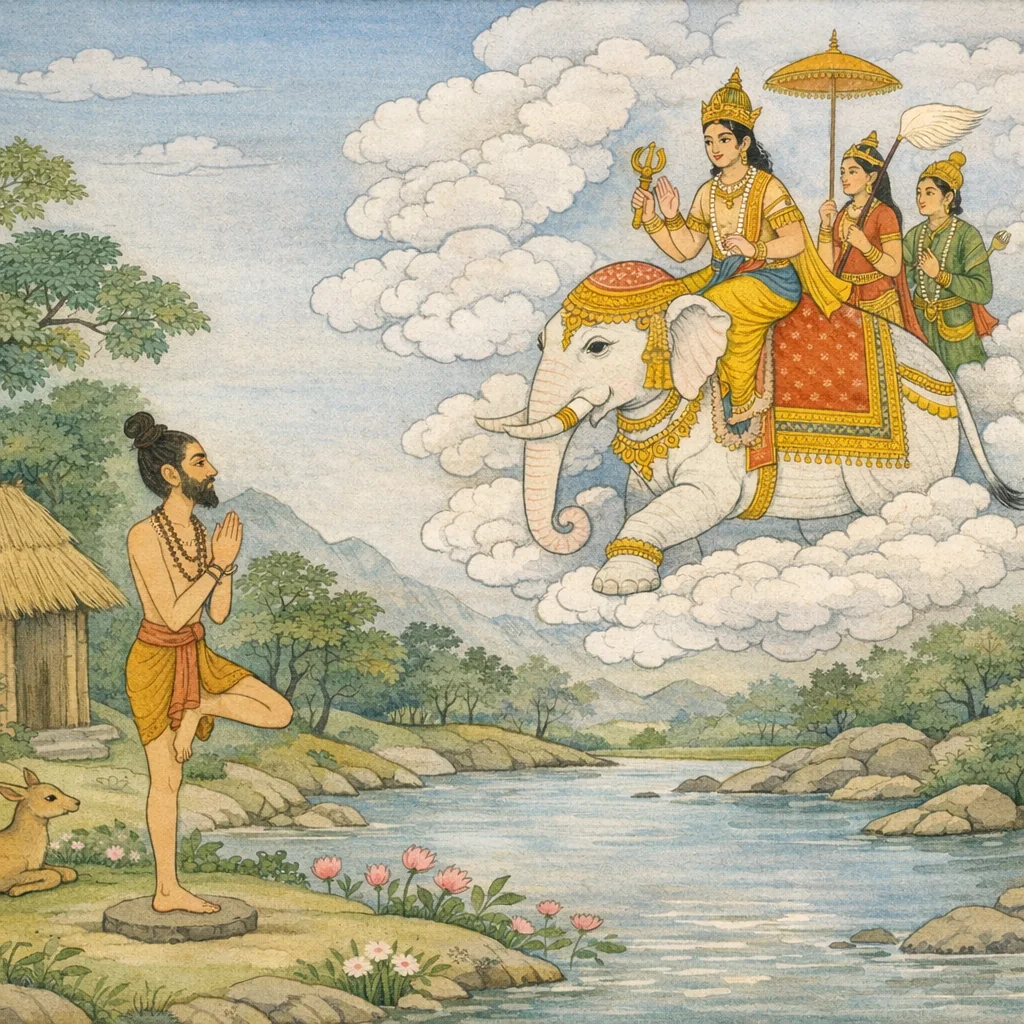
Chapter Arc: भीष्म युधिष्ठिर को मतंग ऋषि की अद्भुत तपस्या का प्रसंग सुनाते हैं—एकपाद खड़े रहकर सहस्र-वर्ष ब्रह्मचर्य और संकल्प, केवल ‘ब्राह्मण्य’ की प्राप्ति हेतु। → हजार वर्ष पूर्ण होने में कुछ ही शेष रहते इन्द्र (वृत्रहा शक्र) स्वयं आते हैं। मतंग अपनी साधना का लक्ष्य स्पष्ट करते हैं—‘ब्राह्मणत्व’ कैसे प्राप्त हो? इन्द्र समझाते हैं कि ब्राह्मणों के तृप्त होने से देव-पितर तृप्त होते हैं, और ब्राह्मणत्व दुर्लभ तथा प्राप्त होने पर भी दुरनुपालन है। मतंग का आग्रह और इन्द्र की मर्यादा-स्थापना के बीच तनाव बढ़ता है। → मतंग की तपस्या-शक्ति चरम पर पहुँचती है; वे गिरने लगते हैं तो इन्द्र समस्त भूतों के हित में तत्पर होकर दौड़कर उन्हें थाम लेते हैं—यहीं इन्द्र का निर्णायक वचन प्रकट होता है कि इस जन्म में ‘ब्राह्मणत्व’ का विधान मतंग के लिए ‘विरुद्ध’ दीखता है, पर वे वरदान देकर उनकी साधना को निष्फल नहीं होने देते। → मतंग विनयपूर्वक कहते हैं—यदि मैं कृपापात्र हूँ तो वर दीजिए। इन्द्र वर देते हैं: त्रिलोके अतुल कीर्ति, स्त्रियों में पूजनीयता, ‘छन्दोदेव’ नाम से प्रसिद्धि, और उत्तम लोक/स्थान की प्राप्ति। वर देकर इन्द्र अन्तर्धान होते हैं; मतंग प्राण त्यागकर उत्तम पद को प्राप्त होते हैं।
Shlokas
Verse 1
ऑपन--माज बछ। अप ऋाल आज एकोनत्रिशो& ध्याय: मतड़की तपस्या और इन्द्रका उसे वरदान देना भीष्म उवाच एवमुक्तो मतड़स्तु संशितात्मा यतव्रत: । सहस्रमेकपादेन ततो ध्याने व्यतिष्ठत,भीष्मजी कहते हैं--युधिष्ठिर! इन्द्रके ऐसा कहनेपर मतंग अपने मनको और भी दृढ़ और संयमशील बनाकर एक हजार वर्षोतक एक पैरसे ध्यान लगाये खड़ा रहा
Bhishma said: Thus addressed, the sage Mataṅga—his mind firmly disciplined and his vows restrained—then stood absorbed in meditation for a thousand years, balancing on a single foot. The passage highlights the ethical ideal of steadfast self-control: when tested or instructed by a higher power, one responds not with argument but with intensified inner discipline and unwavering austerity.
Verse 2
त॑ सहस्रावरे काले शक्रो द्रष्टमुपागमत् । तदेव च पुनर्वाक्यमुवाच बलवृत्रहा,जब एक हजार वर्ष पूरे होनेमें कुछ ही बाकी था, उस समय बल और वृत्रासुरके शत्रु देवराज इन्द्र फिर मतंगको देखनेके लिये आये और पुनः उससे उन्होंने पहलेकी कही हुई बात ही दुहरायी
Bhishma said: When the thousand-year period was almost complete, Śakra (Indra), the slayer of Vṛtra and lord of the gods, came again to see him. And once more he repeated to him the very same words he had spoken before—pressing the matter again at the close of the long interval.
Verse 3
मतडज् उवाच इदं वर्षसहसंर वै ब्रह्मचारी समाहित: । अतिष्ठमेकपादेन ब्राह्म॒ण्यं नाप्तुयां कथम्,मतंगने कहा--देवराज! मैंने ब्रह्मचर्य-पालनपूर्वक एकाग्रचित्त हो एक हजार वर्षोंतक एक पैरसे खड़ा होकर तप किया है। फिर मुझे ब्राह्मणत्व कैसे नहीं प्राप्त हो सकता?
Mataṅga said: “O king of the gods! Keeping brahmacarya and with my mind gathered in concentration, I have performed tapas for a thousand years, standing upon one foot. How, then, could I fail to attain Brahminhood?”
Verse 4
शक्र उवाच चण्डालयोनौ जातेन नावाप्यं वै कथंचन । अन्यं काम॑ वृणीष्व त्वं मा वृथा तेडस्त्वयं श्रम:,इन्द्रने कहा--मतंग! चाण्डालकी योनिमें जन्म लेनेवालेको किसी तरह ब्राह्मणत्व नहीं मिल सकता; इसलिये तुम दूसरी कोई अभीष्ट वस्तु माँग लो। जिससे तुम्हारा यह परिश्रम व्यर्थ न जाय
Śakra said: “O Mataṅga, one who is born from a Caṇḍāla womb cannot, by any means, attain Brahminhood. Therefore choose some other desired boon, so that this effort of yours may not be wasted in vain.”
Verse 5
एवमुक्तो मतड़स्तु भृूशं॑ शोकपरायण: । अध्यतिष्ठद् गयां गत्वा सों5गुछ्ठेन शतं समा:,उनके ऐसा कहनेपर मतंग अत्यन्त शोकमग्न हो गयामें जाकर अंगूठेके बलपर सौ वर्षोतक खड़ा रहा
Thus addressed, Mataṅga—overwhelmed by intense sorrow—went to Gayā and undertook a severe vow of austerity, standing balanced upon his thumb for a hundred years.
Verse 6
सुदुर्वहं बहन् योगं कृशो धमनिसंततः । त्वगस्थिभूतो धर्मात्मा स पपातेति नः श्रुतम्,उसने दुर्धर योगका अनुष्ठान किया। उसका सारा शरीर अत्यन्त दुर्बल हो गया। नस- नाड़ियाँ उबड़ आयीं। धर्मात्मा मतंगका शरीर चमड़ेसे ढकी हुई हड्डियोंका ढाँचामात्र रह गया। उस अवस्थामें अपनेको न सँभाल सकनेके कारण वह गिर पड़ा--यह बात हमारे सुननेमें आयी है
We have heard that, while undertaking an exceedingly difficult discipline of yoga, he became emaciated, his veins standing out. That righteous one was reduced to little more than skin and bones, and in that condition, unable to steady himself, he fell down.
Verse 7
त॑ पतन्तमभिद्रुत्य परिजग्राह वासव: । वराणामीश्वरो दाता सर्वभूतहिते रत:
As he was falling, Vāsava (Śakra, Indra) rushed toward him and caught him. Sovereign among bestowers of boons, he grants gifts with a mind devoted to the welfare of all beings.
Verse 8
उसे गिरते देख सम्पूर्ण भूतोंके हितमें तत्पर रहनेवाले वर देनेमें समर्थ इन्द्रने दौड़कर पकड़ लिया ।। शक्र उवाच मतज़ ब्राह्मणत्वं ते विरुद्धमिह दृश्यते । ब्राह्माण्यं दुर्लभतरं संवृतं परिपन्थिभि:,इन्द्रने कहा--मतंग! इस जन्ममें तुम्हारे लिये ब्राह्मणत्वकी प्राप्ति असम्भव दिखायी देती है। ब्राह्मणत्व अत्यन्त दुर्लभ है; साथ ही वह काम-क्रोध आदि लुटेरोंसे घिरा हुआ है
Seeing Mataṅga fall, Indra—mighty to grant boons and ever intent on the good of all beings—ran forward and caught him. Śakra (Indra) said: “O Mataṅga, in this very life the attainment of brahminhood appears barred to you. Brahminhood is exceedingly hard to obtain, and its path is hemmed in by highwaymen—desire and anger and the like—who obstruct the way.”
Verse 9
पूजयन् सुखमाप्रोति दुःखमाप्रोत्यपूजयन् । ब्राह्मण: सर्वभूतानां योगक्षेमसमर्पिता,जो ब्राह्मणका आदर करता है वह सुख पाता है, और जो अनादर करता है वह दुःख पाता है। ब्राह्मण समस्त प्राणियोंको योगक्षेमकी प्राप्ति करानेवाला है
Śakra said: “One who honors (the Brāhmaṇa) attains happiness; one who does not honor him attains sorrow. For the Brāhmaṇa is devoted to securing yoga and kṣema—welfare and protection—for all living beings.”
Verse 10
ब्राह्मणेभ्योडनुतृप्यन्ते पितरो देवतास्तथा । ब्राह्मण: सर्वभूतानां मतंग पर उच्यते,मतंग! ब्राह्मणोंके तृप्त होनेसे ही देवता और पितर भी तृप्त होते हैं। ब्राह्मणको समस्त प्राणियोंमें सर्वश्रेष्ठ कहा जाता है
Śakra said: “When the Brāhmaṇas are duly satisfied, the Pitṛs (ancestors) and the gods too become satisfied. O Mataṅga, the Brāhmaṇa is declared the foremost among all beings.”
Verse 11
ब्राह्मण: कुरुते तद्धि यथा यद् यच्च वाउछति । वद्दीस्तु संविशन् योनीर्जायमान: पुन: पुन:
Śakra said: “A brāhmaṇa indeed brings about that very result—whatever and however he wills. But one who is bound by the consequences of action enters womb after womb, being born again and again.”
Verse 12
तदुत्सृज्येह दुष्प्रापं ब्राह्म॒ण्यमकृतात्मभि:
Therefore, let this be set aside here: for those who have not disciplined and refined themselves, true brahminhood is exceedingly hard to attain.
Verse 13
मतंग उवाच कि मां तुदसि दुःखार्त मृतं मारयसे च माम्
Mātaṅga said, “Why do you torment me? I am already stricken with suffering—indeed as good as dead—yet you still seek to kill me.”
Verse 14
ब्राह्मणं यदि दुष्प्रापं त्रिभिर्वर्ण: शतक्रतो
Mātaṅga said: “O Śatakratu (Indra), if a true brāhmaṇa is indeed hard to obtain among the three social orders, then one must understand that brahminhood is not a mere label of birth but a rare attainment grounded in conduct and inner worth.”
Verse 15
यः पापेभ्य: पापतमस्तेषामधम एव सः
Mātaṅga said: “He who is the most sinful among sinners is, among them, the very lowest.”
Verse 16
दुष्प्रापं खलु विप्रत्वं प्राप्त दुरनुपालनम्
Mātaṅga said: “Indeed, the state of being a brāhmaṇa is hard to attain; and once attained, it is difficult to preserve and live up to.”
Verse 17
एकारामो हाहं शक्र निर्दधन्द्ो निष्परिग्रह:
Mātaṅga said: “O Śakra (Indra), I live content with but one simple delight; alas, though I am without possessions and free from all grasping, I am being burned (by suffering).”
Verse 18
दैवं तु कथमेतद् वै यदहं मातृदोषतः
Matanga said: “But how can this be attributed to fate—this condition of mine that has arisen because of my mother’s fault?”
Verse 19
नूनं दैव॑ न शक््यं हि पौरुषेणातिवर्तितुम्
Matanga said: “Truly, destiny cannot be overstepped by human effort.”
Verse 20
एवंगते तु धर्मज्ञ दातुमरहसि मे वरम्
Matanga said: “Since matters have come to this point, O knower of dharma, you ought to grant me a boon.”
Verse 21
वैशम्पायन उवाच वृणीष्वेति तदा प्राह ततस्तं बलवृत्रहा
Vaiśampāyana said: Then the mighty slayer of Vṛtra said to him, “Choose (a boon).”
Verse 22
चोदितस्तु महेन्द्रेण मतड्: प्राब्रवीदिदम् । वैशम्पायनजी कहते हैं--जनमेजय! तब बल और वृत्रासुरको मारनेवाले इन्द्रने मतड़से कहा--“तुम मुझसे वर माँगो।” महेन्द्रसे प्रेरित होकर मतड़ने इस प्रकार कहा -- २१ $ || यथा कामविहारी स्यां कामरूपी विहड्भरम:
Vaiśampāyana said: Urged by Mahendra (Indra), Mataḍa spoke these words. Indra—renowned for strength and for slaying Vṛtra—invited Mataḍa to ask for a boon, and Mataḍa spoke as follows.
Verse 23
ब्रद्मक्षत्राविरोधेन पूजां च प्राप्रुयामहम् । यथा ममाक्षया कीर्तिर्भिवेच्चापि पुरंदर
May I attain honor and due reverence without setting the Brahmin and the Kshatriya orders at odds; and, O Purandara, may my fame also become imperishable.
Verse 24
कर्तुमहसि तद् देव शिरसा त्वां प्रसादये । देव पुरंदर! आप ऐसी कृपा करें जिससे मैं इच्छानुसार विचरनेवाला तथा अपनी इच्छाके अनुसार रूप धारण करनेवाला आकाशचारी देवता होऊँ। ब्राह्मण और क्षत्रियोंके विरोधसे रहित हो मैं सर्वत्र पूजा एवं सत्कार प्राप्त करूँ तथा मेरी अक्षय कीर्तिका विस्तार हो। मैं आपके चरणोंमें मस्तक रखकर आपकी प्रसन्नता चाहता हूँ। आप मेरी इस प्रार्थाकको सफल बनाइये ।। शक्र उवाच छन््दोदेव इति ख्यातः स्त्रीणां पूज्यो भविष्यसि
O god, you are able to grant this; with bowed head I seek your favor. O Purandara, show such grace that I may become a sky-roaming deity, free to wander as I wish and to assume whatever form I desire. Free from any opposition between Brahmins and Kshatriyas, may I receive worship and honor everywhere, and may my imperishable fame spread far. I lay my head at your feet and seek your pleasure; make this prayer succeed. Śakra said: “You will become renowned by the name ‘Chandodeva,’ and you will be honored and worshipped by women.”
Verse 25
एवं तस्मै वरं दत्त्वा वासवो<न्तरधीयत
Having thus granted him the boon, Vāsava (Indra) disappeared from sight—signaling that divine aid is bestowed and then withdrawn, leaving the recipient to uphold dharma through their own conduct.
Verse 26
एवमेतत् परं स्थान ब्राह्म॒ण्यं नाम भारत । तच्च दुष्प्रापमिह वै महेन्द्रवचनं यथा,भारत! इस तरह यह ब्राह्मणत्व परम उत्तम स्थान है। जैसा कि इन्द्रका कथन है, उसके अनुसार यह इस जीवनमें दूसरे वर्णके लोगोंके लिये दुर्लभ है
Śakra (Indra) said: “So indeed it is, O Bhārata: the state called brāhmaṇya is the highest station. And in this very life it is truly hard to attain for those of other social orders—so declares Mahendra (Indra).”
Verse 28
इस प्रकार श्रीमह्ााभारत अनुशासनपर्वके अन्तर्गत दानधर्मपर्वमें इन्द्र और मतज्ञका संवादविषयक अट्ठाईसवाँ अध्याय पूरा हुआ
Thus ends the twenty-eighth chapter in the Dānadharma section of the Anuśāsana Parva of the Śrī Mahābhārata, dealing with the dialogue between Indra and the wise knower (Matijña). This closing colophon signals the completion of a teaching episode centered on the ethics of giving and the discernment that guides righteous generosity.
Verse 29
इति श्रीमहाभारते अनुशासनपर्वणि दानधर्मपर्वणि इन्द्रमतड्रसंवादे एकोनत्रिंशो5ध्याय:
Thus, in the Śrī Mahābhārata, within the Anuśāsana Parva—specifically in the section on the dharma of giving—ends the dialogue between Indra and Mataḍrasa, concluding the twenty-ninth chapter. The colophon signals a transition: the teaching on charity and righteous conduct has been framed through Indra’s instructive exchange, emphasizing that dāna (generosity) is to be understood as a disciplined ethical duty within dharma.
Verse 113
पर्याये तात कम्मिंश्रिद् ब्राह्मण्यमिह विन्दति । ब्राह्मण जो-जो जिस प्रकार करना चाहता है, अपने तपके प्रभावसे वैसा ही कर सकता है। तात! जीव इस जगत्के भीतर अनेक योनियोंमें भ्रमण करता हुआ बारंबार जन्म लेता है। इसी तरह जन्म लेते-लेते कभी किसी समयमें वह ब्राह्मणत्वको प्राप्त कर लेता है
Śakra said: “In the course of time, dear child, a being in this world attains Brahminhood at some particular turn. Moving within this world through many wombs and forms of birth, the embodied self is born again and again. Thus, after repeated births, at some time it comes to obtain the state of being a Brahmin.”
Verse 126
अन््यं वरं वृणीष्व त्वं दुर्लभो5यं हि ते वर: । अत: जिनका मन अपने वशमें नहीं है, ऐसे लोगोंके लिये सर्वथा दुष्प्राप्य ब्राह्मणत्वको पानेका आग्रह छोड़कर तुम कोई दूसरा ही वर माँगो। यह वर तो तुम्हारे लिये दुर्लभ ही है
Śakra said: “Choose some other boon. This boon you seek is indeed difficult for you to obtain. Therefore, abandon the insistence on attaining Brahminhood—which is altogether unattainable for those whose minds are not under their control—and ask for a different boon.”
Verse 136
त्वां तु शोचामि यो लब्ध्वा ब्राह्माण्यं न बुभूषसे । मतंगने कहा--देवराज! मैं तो यों ही दुःखसे आतुर हो रहा हूँ, फिर तुम भी क्यों मुझे पीड़ा दे रहे हो? मुझ मरे हुए को क्यों मारते हो? मैं तो तुम्हारे लिये शोक करता हूँ, जो जन्मसे ही ब्राह्मणत्वको पाकर भी तुम उसे अपना नहीं रहे हो
Matanga said: “I grieve for you—because, having obtained the state and dignity of Brahminhood, you do not wish to uphold it. It is for your sake that I lament: you possess by birth what should be embraced through conduct, yet you refuse to make it your own.”
Verse 143
सुदुर्लभं सदावाप्य नानुतिष्ठन्ति मानवा: । शतक्रतो! यदि क्षत्रिय आदि तीन वर्णोके लिये ब्राह्मणत्व दुर्लभ है तो उस परम दुर्लभ ब्राह्मणत्वको पाकर भी मनुष्य ब्राह्मणोचित शम-दमका अनुष्ठान नहीं करते हैं। यह कितने दुःखकी बात है!
Matanga says: “Even when something exceedingly rare is obtained, people often fail to live up to it. O Śatakratu (Indra)! If Brahminhood is hard to attain for the other three social orders beginning with the Kṣatriyas, then how grievous it is that, even after gaining that supremely rare status, humans still do not practice the Brahmin’s proper disciplines—tranquility and self-restraint.”
Verse 153
ब्राह्म॒ण्यं यो न जानीते धनं लब्ध्वेव दुर्लभम् । वह पापियोंसे भी बढ़कर अत्यन्त पापी और उनमें भी अधम ही है, जो दुर्लभ धनकी भाँति ब्राह्मणत्वको पाकर भी उसके महत्त्वको नहीं समझता है
Matanga said: “He who does not recognize the true worth of brāhmaṇahood—though he has obtained it, as one might obtain a rare treasure—is worse than sinners: exceedingly sinful, and the lowest even among them. For to possess a hard-won spiritual privilege and yet fail to understand its meaning is a grave moral fall.”
Verse 166
दुरावापमवाप्यैतन्नानुतिष्ठन्ति मानवा: । पहले तो ब्राह्मणत्वका प्राप्त होना ही कठिन है। यदि वह प्राप्त हो जाय तो उसका पालन करना और भी कठिन हो जाता है; किंतु बहुत-से मनुष्य इस दुर्लभ वस्तुको पाकर भी तदनुकूल आचरण नहीं करते हैं
Matanga said: “Having obtained this hard-to-attain state, people still do not live in accordance with it. To become a brāhmaṇa is itself difficult; and once attained, to uphold the conduct befitting it is even more difficult. Yet many, even after gaining this rare status, fail to practice the discipline and dharma that should follow from it.”
Verse 173
अहिंसादममास्थाय कथं नाहामि विप्रताम् । शक्र! मैं एकान्तमें आनन्दपूर्वक रहता हूँ तथा द्वद्धों और परिग्रहोंसे दूर हूँ। अहिंसा और दमका पालन किया करता हूँ। ऐसी दशामें मैं ब्राह्मणत्व पाने योग्य क्यों नहीं हूँ?
Matanga said: “Having taken refuge in non-violence and self-restraint, why should I not attain the status of a brahmin? O Śakra, I live in solitude with inner joy, keeping far from the pairs of opposites and from possessiveness. I practice non-violence and discipline. In such a condition, why should I be considered unfit to obtain brahminhood?”
Verse 186
एतामवस्थां सम्प्राप्तो धर्मज्ञ: सन् पुरंदर । पुरंदर! मैं धर्मज्ञ होकर भी केवल माताके दोषसे इस अवस्थामें आ पहुँचा हूँ। यह मेरा कैसा दुर्भाग्य है?
Matanga said: “O Purandara (Indra)! Though I am one who knows dharma, I have fallen into this condition solely because of my mother’s fault. What kind of misfortune is this that has come upon me?”
Verse 193
यदर्थ यत्नवानेव न लभे विप्रतां विभो । प्रभो! निश्चय ही पुरुषार्थके द्वारा दैवका उल्लंघन नहीं किया जा सकता; क्योंकि मैं जिसके लिये ऐसा प्रयत्नशील हूँ उस ब्राह्मणत्वको नहीं उपलब्ध कर पाता हूँ
Matanga said: “O mighty lord, though I strive with all my effort for that very goal, I still do not attain the state of being a brāhmaṇa. O master, it is certain that destiny cannot be overstepped by human exertion alone; for despite my intense striving, I do not obtain the brāhmaṇa-hood for which I labor.”
Verse 203
यदि ते5हमनुग्राह्म: किंचिद् वा सुकृतं मम । धर्मज्ञ देवराज! यदि ऐसी अवस्थामें मैं आपका कृपापात्र हूँ अथवा यदि मेरा कुछ भी पुण्य शेष हो तो आप मुझे वर प्रदान कीजिये
Matanga said: “If I am worthy of your favor, or if any merit of mine still remains, then, O knower of dharma, O king of the gods, grant me a boon.”
Verse 243
कीर्तिश्व ते&तुला वत्स त्रिषु लोकेषु यास्यति । इन्द्रने कहा--वत्स! तुम स्त्रियोंके पूजनीय होओगे। “छन्दोदेव” के नामसे तुम्हारी ख्याति होगी और तीनों लोकोंमें तुम्हारी अनुपम कीर्तिका विस्तार होगा
Śakra (Indra) said: “Dear child, your incomparable fame will spread through the three worlds.”
Verse 256
प्राणांस्त्यक्त्वा मतज्रीडपि सम्प्राप्त: स्थानमुत्तमम् । इस प्रकार उसे वर देकर इन्द्र वहीं अन्तर्धान हो गये। मतंग भी अपने प्राणोंका परित्याग करके उत्तम स्थान (ब्रह्मलोक)-को प्राप्त हुआ
Śakra (Indra) said: “Having relinquished his life-breaths, Mataṅga too attained the supreme abode.” Thus, after granting him the boon, Indra disappeared there itself; and Mataṅga, abandoning his mortal life, reached the highest state—Brahmaloka.
Frequently Asked Questions
Yudhiṣṭhira asks Bhīṣma to specify, with detail, who among beings are pūjya (worthy of honor) and namaskārya (worthy of salutation) for human society.
Reverence should be directed not only toward divine/cosmic supports but also toward human embodiments of dharma—Veda-centered learning, disciplined austerity, truthful and non-harming conduct, generosity, hospitality, and service to parents and teachers—because these sustain both personal formation and social order.
Yes: it repeatedly states that those who honor the virtuous, remain devoted to truth, self-study, proper ritual maintenance, and right conduct toward parents/gurus ‘cross difficulties’ (durgāṇi atitaranti) and obtain well-being in this world and the next.