Adhyaya 129
Adhyāya 129 — Public Acclaim of the Pāṇḍavas and Duryodhana’s Appeal to Dhṛtarāṣṭra
Upa-parva: Ādi Parva — Court Politics and Succession Anxiety (Public Acclaim of the Pāṇḍavas)
Vaiśaṃpāyana reports that Duryodhana observes Bhīma’s exceptional vigor and Arjuna’s completed training, and—together with Karṇa and Śakuni—pursues multiple covert strategies aimed at eliminating the Pāṇḍavas. The Pāṇḍavas, aware of these maneuvers, refrain from public exposure and remain aligned with Vidura’s counsel. Meanwhile, citizens gather in public spaces to discuss governance: they note Dhṛtarāṣṭra’s blindness and prior non-accession, recall Bhīṣma’s earlier renunciation of kingship, and propose Yudhiṣṭhira’s consecration as a compassionate, truth-aligned ruler who would honor elders (Bhīṣma and Dhṛtarāṣṭra) with due respect and material security. Hearing this civic preference, Duryodhana experiences intensified envy and distress, cannot tolerate the discourse, and approaches his father. He frames the citizens’ talk as ominous, warns that Bhīṣma does not seek the throne, argues that if Pāṇḍu gained kingship through personal qualities while Dhṛtarāṣṭra did not, then the dynasty’s future status is threatened if the Pāṇḍavas inherit. He urges swift action so that he and his line do not become dependent and dishonored, presenting the matter as an urgent question of political survival and legitimacy.
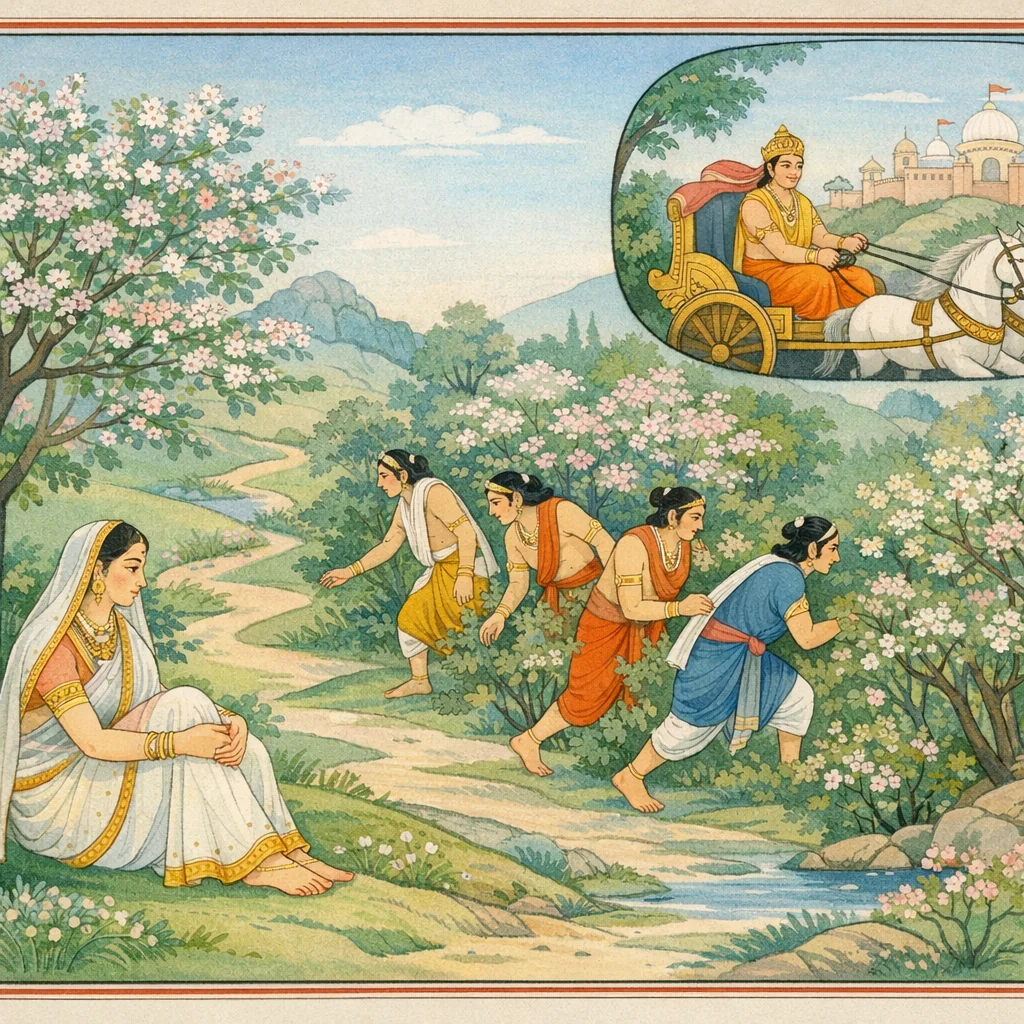
Chapter Arc: उद्यान में खेलते-खेलते भीमसेन का अचानक ओझल हो जाना—और कुन्ती का हृदय-विदारण संदेह कि कहीं अनिष्ट तो नहीं हुआ। → कुन्ती युधिष्ठिर को छोटे भाइयों सहित शीघ्र खोज करने को कहती है; भाई उद्यान, मार्गों और आस-पास के स्थलों में ढूँढ़ते हैं, पर ‘वृकोदर’ कहीं नहीं मिलता। उधर नगर-जीवन सामान्य चलता दिखता है—रथ, गज, अश्व और विविध सवारियों की चहल-पहल—जो संकट के बीच एक तीखा विरोधाभास रचती है। → दुर्योधन भीम को न देखकर भीतर-ही-भीतर प्रसन्न होता है और भाइयों सहित नगर में प्रवेश करता है; वहीं कुन्ती का आग्रह और व्याकुलता चरम पर पहुँचती है—‘महाबाहु भीमसेन का पता बताओ’—मानो मातृत्व का भय स्वयं कथा का शिखर बन जाता है। → खोज-प्रयास जारी रहते हैं और अध्याय का शीर्ष-संकेत ‘भीमप्रत्यागमन’ यह आश्वासन देता है कि भीम का लौटना नियत है; पर इस अध्याय में मुख्यतः अनुपस्थिति, खोज और षड्यंत्र-छाया का विस्तार होता है। → भीम कहाँ है, किसके वश में है, और दुर्योधन की प्रसन्नता किस अनिष्ट-योजना का संकेत है—यह प्रश्न अगले प्रसंग के लिए खुला छोड़ दिया जाता है।
Shlokas
Verse 1
अपन काल बा | अप्---#क्रञ ३. दाँतोंसे काट-काटकर खाये जानेवाले मालपूए आदिको भक्ष्य कहते हैं। २. दाँतका सहारा न लेकर केवल जिल्लाके व्यापारसे जिसे भोजन किया जाता है, जैसे हलुआ, खीर आदि। ३. पीनेयोग्य दुग्ध आदि। ४. चूसनेयोग्य वस्तु जिसका रसमात्र ग्रहण किया जाय और बाकी चीजको त्याग दिया जाय, वह चोष्य है, जैसे ईख-आम आदि। ५. लेहा-- चाटनेयोग्य चटनी आदि। अष्टाविशर्त्याधेकशततमो< ध्याय: भीमसेनके न आनेसे कुन्ती आदिकी चिन्ता, नागलोकसे भीमसेनका आगमन तथा उनके प्रति दुर्योधनकी कुचेष्टा वैशम्पायन उवाच ततस्ते कौरवा: सर्वे विना भीम॑ं च पाण्डवा: । वृत्तक्रीडाविहारास्तु प्रतस्थुर्गजसाह्वयम्,वैशम्पायनजी कहते हैं--जनमेजय! तदनन्तर समस्त कौरव और पाण्डव क्रीड़ा और विहार समाप्त करके भीमसेनके बिना ही हस्तिनापुरकी ओर प्रस्थित हुए
Vaiśampāyana said: Then all the Kauravas and the Pāṇḍavas, having concluded their games and recreations, set out for Gajasāhvaya (Hastināpura) without Bhīma. The departure without him quietly signals a lapse in due care and foreshadows the anxiety and intrigue that will follow.
Verse 2
रथैर्गजैस्तथा चाश्नैयनिश्चान्यैरनेकश: । ब्रुवन्तो भीमसेनस्तु यातो हराग्रत एव नः,रथ, हाथी, घोड़े तथा अन्य अनेक प्रकारकी सवारियोंद्वारा वहाँसे चलकर वे आपसमें यह कह रहे थे कि भीमसेन तो हमलोगोंसे आगे ही चले गये हैं। पापी दुर्योधनने भीमसेनको वहाँ न देखकर अत्यन्त प्रसन्न हो भाइयोंके साथ नगरमें प्रवेश किया
Vaiśampāyana said: Traveling on chariots, elephants, horses, and many other kinds of mounts, they went on from there, saying among themselves, “Bhīmasena has gone ahead of us.” Not seeing Bhīmasena there, the sinful Duryodhana became exceedingly pleased and, together with his brothers, entered the city—revealing how malice can turn another’s apparent absence into a cause for joy.
Verse 3
ततो दुर्योधन: पापस्तत्रापश्यन् वृकोदरम् | भ्रातृभि: सहितो ह्ृष्टो नगरं प्रविवेश ह,रथ, हाथी, घोड़े तथा अन्य अनेक प्रकारकी सवारियोंद्वारा वहाँसे चलकर वे आपसमें यह कह रहे थे कि भीमसेन तो हमलोगोंसे आगे ही चले गये हैं। पापी दुर्योधनने भीमसेनको वहाँ न देखकर अत्यन्त प्रसन्न हो भाइयोंके साथ नगरमें प्रवेश किया
Then the sinful Duryodhana, not seeing Vṛkodara (Bhīma) there, became delighted; accompanied by his brothers, he entered the city. The verse underscores a morally charged joy: Duryodhana’s satisfaction arises not from righteousness but from the apparent absence (and presumed disadvantage) of a rival, revealing envy and adharma-driven intent.
Verse 4
युधिष्ठिरस्तु धर्मात्मा हविदन् पापमात्मनि । स्वेनानुमानेन पर॑ं साधुं समनुपश्यति,राजा युधिष्ठिर धर्मात्मा थे, उनके पवित्र हृदयमें दुर्योधनके पापपूर्ण विचारका भानतक न हुआ। वे अपने ही अनुमानसे दूसरेको भी साधु ही देखते और समझते थे
Vaiśampāyana said: Yudhiṣṭhira, righteous by nature, did not recognize the presence of sin within himself; and by judging others through his own disposition, he continually perceived even another person as virtuous.
Verse 5
सो<भ्युपेत्य तदा पार्थों मातरं भ्रातृवत्सल: | अभिवाद्याब्रवीत् कुन्तीमम्ब भीम इहागत:,भाईपर स्नेह रखनेवाले कुन्तीनन्दन युधिष्ठिर उस समय माताके पास पहुँचकर उन्हें प्रणाम करके बोले--“माँ! भीमसेन यहाँ आया है क्या?”
Vaiśampāyana said: Then Pārtha (Yudhiṣṭhira), affectionate toward his brother, approached his mother. Having bowed to Kuntī, he said, “Mother, has Bhīma come here?”
Verse 6
क्व गतो भविता मातरनेंह पश्यामि त॑ शुभे । उद्यानानि वनं चैव विचितानि समन्ततः,“मात:! वह कहाँ गया होगा? शुभे! यहाँ भी तो मैं उसे नहीं देख रहा हूँ। वहाँ हमलोगोंने भीमसेनके लिये उद्यान और वनका कोना-कोना खोज डाला। फिर भी जब वीरवर भीमको हम देख न सके, तब सबने यही समझ लिया कि वह हमलोगोंसे पहले ही चला गया होगा
Vaiśampāyana said: “Where could he have gone, mother? O auspicious lady, I do not see him here. We have searched the gardens and the forest thoroughly in every direction.”
Verse 7
तदर्थ न च त॑ वीरं दृष्टवन्तो वृकोदरम् । मन्यमानास्तत: सर्वे यातो नः पूर्वमेव सः,“मात:! वह कहाँ गया होगा? शुभे! यहाँ भी तो मैं उसे नहीं देख रहा हूँ। वहाँ हमलोगोंने भीमसेनके लिये उद्यान और वनका कोना-कोना खोज डाला। फिर भी जब वीरवर भीमको हम देख न सके, तब सबने यही समझ लिया कि वह हमलोगोंसे पहले ही चला गया होगा
But even after searching for that purpose, they did not see the hero Vṛkodara (Bhīma). Then all of them concluded: “He must have gone ahead of us already.”
Verse 8
आगता: सम महाभागे व्याकुलेनान्तरात्मना । इहागम्य क््व नु गतस्त्वया वा प्रेषित: क््व नु,“महाभागे! हम उसके लिये अत्यन्त व्याकुल हृदयसे यहाँ आये हैं। यहाँ आकर वह कहीं चला गया? अथवा तुमने उसे कहीं भेजा है?”
Vaiśampāyana said: “O noble lady, we have come here with hearts deeply distressed on his account. Having arrived here, where has he gone? Or have you sent him somewhere?”
Verse 9
कथयस्व महाबाहुं भीमसेनं यशस्विनि | न हि मे शुध्यते भावस्तं वीरं प्रति शोभने,“यशस्विनि! महाबाहु भीमसेनका पता बताओ। शोभने! वीर भीमसेनके विषयमें मेरा हृदय शंकित हो गया है
Vaiśampāyana said: “O illustrious lady, tell me of Bhīmasena, the mighty-armed. For my mind does not grow clear regarding that hero, O fair one—doubt has arisen in my heart about him.”
Verse 10
यतः प्रसुप्तं मन्ये5हं भीम॑ नेति हतस्तु सः । इत्युक्ता च ततः कुन्ती धर्मराजेन धीमता,“जहाँ मैं भीमसेनको सोया हुआ समझता था, वहीं किसीने उसे मार तो नहीं डाला?! बुद्धिमान् धर्मराजके इस प्रकार पूछनेपर कुन्ती “हाय-हाय” करके घबरा उठी और युधिष्ठिससे बोली--“'बेटा! मैंने भीमको नहीं देखा है। वह मेरे पास आया ही नहीं
Vaiśampāyana said: “From the very place where I thought Bhīma was asleep—could it be that someone has killed him?” When the wise Dharmarāja spoke thus, Kuntī, struck with alarm and lamentation, replied to Yudhiṣṭhira that she had not seen Bhīma and that he had not come to her.
Verse 11
हा हेति कृत्वा सम्भ्रान्ता प्रत्युवाच युधिष्ठिरम् । न पुत्र भीम॑ पश्यामि न मामभ्येत्यसाविति,“जहाँ मैं भीमसेनको सोया हुआ समझता था, वहीं किसीने उसे मार तो नहीं डाला?! बुद्धिमान् धर्मराजके इस प्रकार पूछनेपर कुन्ती “हाय-हाय” करके घबरा उठी और युधिष्ठिससे बोली--“'बेटा! मैंने भीमको नहीं देखा है। वह मेरे पास आया ही नहीं
Vaiśampāyana said: Startled and crying, “Alas, alas!”, Kuntī replied to Yudhiṣṭhira: “My son, I do not see Bhīma. He has not come back to me.”
Verse 12
शीघ्रमन्वेषणे यत्नं कुरु तस्यानुजै: सह । इत्युक्त्वा तनयं ज्येष्ठं हृदयेन विदूयता,“तुम अपने छोटे भाइयोंके साथ शीघ्र उसे ढूँढ़नेका प्रयत्न करो।” कुन्तीका हृदय पुत्रकी चिन्तासे व्यथित हो रहा था, उसने ज्येष्ठ पुत्र युधिष्ठिरसे उपर्युक्त बात कहकर विदुरजीको बुलवाया और इस प्रकार कहा--“भगवन्! भीमसेन नहीं दिखायी देता, वह कहाँ चला गया?
Vaiśampāyana said: “Make a swift effort to search for him, together with his younger brothers.” Having said this to her eldest son, Kuntī—her heart torn by anxious concern for her child—summoned Vidura and spoke further: “Revered sir, Bhīmasena is nowhere to be seen; where has he gone?”
Verse 13
क्षत्तारमानाय्य तदा कुन्ती वचनमत्रवीत् । क्य गतो भगवतन क्षत्तर्भीमसेनो न दृश्यते,“तुम अपने छोटे भाइयोंके साथ शीघ्र उसे ढूँढ़नेका प्रयत्न करो।” कुन्तीका हृदय पुत्रकी चिन्तासे व्यथित हो रहा था, उसने ज्येष्ठ पुत्र युधिष्ठिरसे उपर्युक्त बात कहकर विदुरजीको बुलवाया और इस प्रकार कहा--“भगवन्! भीमसेन नहीं दिखायी देता, वह कहाँ चला गया?
Vaiśampāyana said: Then Kuntī had the chamberlain Vidura summoned and spoke: “Revered sir, where has Bhīmasena gone? He is not to be seen.”
Verse 14
उद्यानान्निर्गताः सर्वे भ्रातरो भ्रातृभि: सह । तत्रैकस्तु महाबाहुर्भीमो नाभ्येति मामिह,“उद्यानसे सब लोग अपने भाइयोंके साथ चलकर यहाँ आ गये, किंतु अकेला महाबाहु भीम अबतक मेरे पास लौटकर नहीं आया!
Vaiśampāyana said: “All the brothers have come out of the garden and returned here together with their brothers; but Bhīma alone, the mighty-armed one, has not yet come back to me here.”
Verse 15
नच प्रीणयते चक्षु: सदा दुर्योधनस्य सः । क्रूरोडसौ दुर्मति: क्षुद्रो राज्यलुब्धोडनपत्रप:,“वह सदा दुर्योधनकी आँखोंमें खटकता रहता है। दुर्योधन क्रूर, दुर्बुद्धि, क्षुद्र, राज्यका लोभी तथा निर्लज्ज है
Vaiśampāyana said: “And he never pleases Duryodhana’s eyes; he is always an eyesore to him. For Duryodhana is cruel, of perverse judgment, petty-minded, greedy for sovereignty, and shameless—so he cannot bear the sight of one who stands in the way of his ambition.”
Verse 16
निहन्यादपि तं वीर॑ जातमन्यु: सुयोधन: । तेन मे व्याकुलं चित्त हृदयं दहुतीव च,“अतः सम्भव है, वह क्रोधमें वीर भीमसेनको धोखा देकर मार भी डाले। इसी चिन्तासे मेरा चित्त व्याकुल हो उठा है, हृदय दग्ध-सा हो रहा है”
Vaiśampāyana said: “Suyodhana (Duryodhana), whose anger has newly flared up, might even kill that hero. Therefore my mind has become agitated, and my heart feels as though it is being burned.”
Verse 17
विदुर उवाच मैवं वदस्व कल्याणि शेषसंरक्षणं कुरु । प्रत्यादिष्टो हि दुष्टात्मा शेषेडपि प्रहरेत् तव,विदुरजीने कहा--कल्याणी! ऐसी बात मुहसे न निकालो, शेष पुत्रोंकी रक्षा करो। यदि दुर्योधनको उलाहना देकर इस विषयमें पूछ-ताछ की जायगी तो वह दुष्टात्मा तुम्हारे शैष पुत्रोंपर भी प्रहार कर सकता है
Vidura said: “Do not speak like this, auspicious lady. Instead, take measures to protect those who remain. For if that wicked-souled man is confronted and rebuked, he may even strike at your surviving sons as well.”
Verse 18
दीर्घायुषस्तव सुता यथोवाच महामुनि: । आगमिष्यति ते पुत्र: प्रीतिं चोत्पादयिष्यति,महामुनि व्यासने पहले जैसा कहा है, उसके अनुसार तुम्हारे ये सभी पुत्र दीर्घजीवी हैं, अतः तुम्हारा पुत्र भीमसेन कहीं भी क्यों न गया हो, अवश्य लौटेगा और तुम्हें आनन्द प्रदान करेगा
Vidura said: “Your sons are long-lived, just as the great sage foretold. Therefore your son will surely return, wherever he may have gone, and he will bring you joy and reassurance.”
Verse 19
वैशम्पायन उवाच एवमुक्त्वा ययौ विद्वान् विदुर: स्वं निवेशनम् । कुन्ती चिन्तापरा भूत्वा सहासीना सुतैर्गुहि,वैशम्पायनजी कहते हैं--जनमेजय! विद्वान् विदुर यों कहकर अपने घरमें चले गये। इधर कुन्ती चिन्तामग्न होकर अपने चारों पुत्रोंके साथ चुपचाप घरमें बैठ रही
Vaiśampāyana said: Having spoken thus, the wise Vidura departed for his own residence. Meanwhile Kuntī, weighed down by anxious thought, sat silently within the house together with her sons—absorbed in worry over what duty and safety now required.
Verse 20
ततोड्ष्टमे तु दिवसे प्रत्यबुध्यत पाण्डव: । तस्मिंस्तदा रसे जीर्णे सो5प्रमेयबलो बली,उधर, नागलोकमें सोये हुए बलवान् भीमसेन आठवें दिन, जब वह रस पच गया, जगे। उस समय उनके बलकी कोई सीमा नहीं रही
Then, on the eighth day, the Pāṇḍava awoke. When, by that time, the potent essence he had consumed was fully digested, he—mighty and heroic—found his strength to be beyond measure.
Verse 21
त॑ दृष्टवा प्रतिबुध्यन्तं पाण्डवं ते भुजड़मा: । सान्त्वयामासुरव्यग्रा वचनं चेदमन्रुवन्,पाण्डुनन्दन भीमको जगा हुआ देख सब नागोंने शान्त-चित्तसे उन्हें आश्वासन दिया और यह बात कही--
Seeing the Pāṇḍava awaken, the serpents—now calm and unagitated—reassured him and spoke these words.
Verse 22
यत् ते पीतो महाबाहो रसो<यं वीर्यसम्भूतः । तस्मान्नागायुतबलो रणे<धृष्यो भविष्यसि,“महाबाहो! तुमने जो यह शक्तिपूर्ण रस पीया है, इसके कारण तुम्हारा बल दस हजार हाथियोंके समान होगा और तुम युद्धमें अजेय हो जाओगे
Vaiśampāyana said: “O mighty-armed one, the potent essence you have drunk—born of strength and vigor—will make you as powerful as ten thousand elephants. Therefore, in battle you will become unassailable, beyond the reach of your foes.”
Verse 23
गच्छाद्य त्वं च स्वगृहं स्नातो दिव्यैरिमैर्जलै: । भ्रातरस्ते5नुतप्यन्ति त्वां विना कुरुपुड़व,“आज तुम इस दिव्य जलसे स्नान करो और अपने घर लौट जाओ। कुरुश्रेष्ठ! तुम्हारे बिना तुम्हारे सब भाई निरन्तर दुःख और चिन्तामें डूबे रहते हैं!
Vaiśampāyana said: “Go now to your own home after bathing with these divine waters. O bull among the Kurus, your brothers, bereft of you, are continually consumed by grief and anxious remorse.”
Verse 24
ततः स्नातो महाबाहु: शुचि: शुक्लाम्बरस्रज: | ततो नागस्य भवने कृतकौतुकमड़्ल:,तब महाबाहु भीमसेन स्नान करके शुद्ध हो गये। उन्होंने श्वेत वस्त्र और श्वेत पुष्पोंकी माला धारण की। तत्पश्चात् नागराजके भवनमें उनके लिये कौतुक एवं मंगलाचार सम्पन्न किये गये। फिर उन महाबली भीमने विष-नाशक सुगन्धित ओषधियोंके साथ नागोंकी दी हुई खीर खायी
Vaiśampāyana said: Then the mighty-armed Bhīmasena bathed and became purified. He put on white garments and a garland of white flowers. After that, in the dwelling of the Nāga-king, auspicious rites and protective ceremonies were performed for him; and the powerful Bhīma partook of the milk-rice offered by the Nāgas, mixed with fragrant, antidotal herbs.
Verse 25
ओषधीभिरवविषध्नीभि: सुरभीभिर्विशेषत: । भुक्तवान् परमान्नं च नागैर्दत्त महाबल:,तब महाबाहु भीमसेन स्नान करके शुद्ध हो गये। उन्होंने श्वेत वस्त्र और श्वेत पुष्पोंकी माला धारण की। तत्पश्चात् नागराजके भवनमें उनके लिये कौतुक एवं मंगलाचार सम्पन्न किये गये। फिर उन महाबली भीमने विष-नाशक सुगन्धित ओषधियोंके साथ नागोंकी दी हुई खीर खायी
Vaiśampāyana said: Endowed with great strength, Bhīma ate the finest food given by the Nāgas, together with especially fragrant herbs that counteract poison.
Verse 26
पूजितो भुजगैर्वीर आशीर्भिश्चाभिनन्दित: । दिव्याभरणसंछजन्नो नागानामन्त्रय पाण्डव:,इसके बाद नागोंने वीर भीमसेनका आदर-सत्कार करके उन्हें शुभाशीर्वादोंसे प्रसन्न किया। दिव्य आभूषणोंसे विभूषित शत्रुदमन भीमसेन नागोंकी आज्ञा ले प्रसन्नचित्त हो नागलोकसे जानेको उद्यत हुए। तब किसी नागने कमलनयन कुरुनन्दन भीमको जलसे ऊपर उठाकर उसी वनमें (गंगातटवर्ती प्रमाणकोटिमें) रख दिया। फिर वे नाग पाण्दुपुत्र भीमके देखते-देखते अन्तर्धान हो गये
Vaiśampāyana said: The heroic Pāṇḍava (Bhīma), honored by the serpents and greeted with blessings, was adorned with divine ornaments. Having taken leave of the Nāgas with due courtesy and their permission, the foe-subduing Bhīmasena, his mind pleased, prepared to depart from the serpent-realm.
Verse 27
उदतिष्ठत् प्रह्षश्ठात्मा नागलोकादरिंदम: । उत्क्षिप्त: स तु नागेन जलाज्जलरुहेक्षण:,इसके बाद नागोंने वीर भीमसेनका आदर-सत्कार करके उन्हें शुभाशीर्वादोंसे प्रसन्न किया। दिव्य आभूषणोंसे विभूषित शत्रुदमन भीमसेन नागोंकी आज्ञा ले प्रसन्नचित्त हो नागलोकसे जानेको उद्यत हुए। तब किसी नागने कमलनयन कुरुनन्दन भीमको जलसे ऊपर उठाकर उसी वनमें (गंगातटवर्ती प्रमाणकोटिमें) रख दिया। फिर वे नाग पाण्दुपुत्र भीमके देखते-देखते अन्तर्धान हो गये
Vaiśampāyana said: Then Bhīma, the subduer of foes, rose up from the realm of the Nāgas with a heart filled with joy. Lifted up by a Nāga from the waters, that lotus-eyed hero emerged.
Verse 28
तस्मिन्नेव वनोद्देशे स्थापित: कुरुनन्दन: । ते चान्तर्दधिरे नागा: पाण्डवस्यैव पश्यत:,इसके बाद नागोंने वीर भीमसेनका आदर-सत्कार करके उन्हें शुभाशीर्वादोंसे प्रसन्न किया। दिव्य आभूषणोंसे विभूषित शत्रुदमन भीमसेन नागोंकी आज्ञा ले प्रसन्नचित्त हो नागलोकसे जानेको उद्यत हुए। तब किसी नागने कमलनयन कुरुनन्दन भीमको जलसे ऊपर उठाकर उसी वनमें (गंगातटवर्ती प्रमाणकोटिमें) रख दिया। फिर वे नाग पाण्दुपुत्र भीमके देखते-देखते अन्तर्धान हो गये
Vaiśampāyana said: In that very tract of forest, the delight of the Kurus (Bhīma) was set down. And as the Pāṇḍava watched, the Nāgas vanished from sight.
Verse 29
तत उत्थाय कौन्तेयो भीमसेनो महाबल: । आजगाम महाबाहुर्मातुरन्तिकमञ्जसा,तब महाबली कुन्तीकुमार महाबाहु भीमसेन वहाँसे उठकर शीघ्र ही अपनी माताके समीप आ गये
Vaiśampāyana said: Then Kuntī’s son Bhīmasena, of great strength and mighty arms, rose and swiftly went to his mother’s side.
Verse 30
ततो5भिवाद्य जननी ज्येष्ठं भ्रातरमेव च । कनीयस: समाप्राय शिर:स्वरिविमर्दन:,तदनन्तर शत्रुमर्दन भीमने माता और बड़े भाईको प्रणाम करके स्नेहपूर्वक छोटे भाइयोंका सिर सूँघा
Then, having respectfully saluted his mother and also his eldest brother, the foe-crushing hero approached the younger brothers with affection and, as a tender sign of blessing and protection, smelled their heads.
Verse 31
तैश्वापि सम्परिष्वक्त: सह मात्रा नरषभै: | अन्योन्यगतसौहार्दाद् दिष्ट्या दिष्ट्येति चाब्रुवन्,माता तथा उन नरश्रेष्ठ भाइयोंने भी उन्हें हृदयसे लगाया और एक-दूसरेके प्रति स्नेहाधिक्यके कारण सबने भीमके आगमनसे अपने सौभाग्यकी सराहना की --अहोभाग्य! अहोभाग्य!” कहा
His mother and those brothers, the best of men, embraced him as well; and, moved by their mutual affection, they all exclaimed, “Fortune! Fortune!” praising their good lot at Bhīma’s arrival.
Verse 32
ततस्तत् सर्वमाचष्ट दुर्योधनविचेष्टितम् । भ्रातृणां भीमसेनश्व महाबलपराक्रम:,तदनन्तर महान् बल और पराक्रमसे सम्पन्न भीमसेनने दुर्योधनकी वे सारी कुचेष्टाएँ अपने भाइयोंको बतायीं
Then Bhīmasena, endowed with great strength and valor, recounted to his brothers all of Duryodhana’s misdeeds and scheming actions.
Verse 33
नागलोके च यद् वृत्तं गुणदोषमशेषत: । तच्च सर्वमशेषेण कथयामास पाण्डव:,और नागलोकमें जो गुण-दोषपूर्ण घटनाएँ घटी थीं, उन सबको भी पाण्डुनन्दन भीमने पूर्णरूपसे कह सुनाया
Vaiśampāyana said: Whatever had occurred in the realm of the Nāgas—events marked by both merit and fault—Pāṇḍu’s son related all of it completely, leaving nothing unsaid.
Verse 34
ततो युधिछिरो राजा भीममाह वचो<र्थवत् | तृष्णीं भव न ते जल्प्यमिदं कार्य कथंचन,तब राजा युधिष्ठिरने भीमसेनसे मतलबकी बात कही--“भैया भीम! तुम सर्वथा चुप हो जाओ। तुम्हारे साथ जो बर्ताव किया गया है, वह कहीं किसी प्रकार भी न कहना”
Then King Yudhiṣṭhira spoke to Bhīma with words of clear purpose: “Be silent. You must not speak of this matter in any way.”
Verse 35
एवमुक््त्वा महाबाहुर्धर्मराजो युधिष्ठिर: । भ्रातृभि: सहित: सर्वैरप्रमत्तो5भवत् तदा,यों कहकर महाबाहु धर्मराज युधिष्ठिर अपने सब भाइयोंके साथ उस समयसे खूब सावधान रहने लगे
Having spoken thus, the mighty-armed Yudhiṣṭhira—king devoted to dharma—together with all his brothers, from that time onward became thoroughly vigilant.
Verse 36
सारथिं चास्य दयितमपहस्तेन जध्निवान् । धर्मात्मा विदुरस्तेषां पार्थानां प्रददौ मतिम्,दुर्योधनने भीमसेनके प्रिय सारथिको हाथसे गला घोंटकर मार डाला। उस समय भी धर्मात्मा विदुरने उन कुन्तीपुत्रोंकी यही सलाह दी कि वे चुपचाप सब कुछ सहन कर लें
Vaiśampāyana said: He also killed his beloved charioteer with his own hand. At that time, the righteous Vidura counseled the sons of Pṛthā (the Pāṇḍavas) to endure everything in silence.
Verse 37
भोजने भीमसेनस्य पुन: प्राक्षेपयद् विषम् कालकूटं नवं तीक्ष्णं सम्भूृतं लोमहर्षणम्,धृतराष्ट्रकुमारने भीमसेनके भोजनमें पुनः नया, तीखा और सत्त्वके रूपमें परिणत रोंगटे खड़े कर देनेवाला कालकूट नामक विष डलवा दिया
Vaiśampāyana said: Once again, into Bhīmasena’s food, he had poison mixed—fresh Kālakūṭa, sharp and virulent, so dreadful that it made one’s hair stand on end.
Verse 38
वैश्यापुत्रस्तदाचष्ट पार्थानां हितकाम्यया । तच्चापि भुक्त्वाजरयदविकारं वृकोदर:,वैश्यापुत्र युयुत्सुने कुन्तीपुत्रोंक हितकी कामनासे यह बात उन्हें बता दी। परंतु भीमने उस विषको भी खाकर बिना किसी विकारके पचा लिया
Vaiśampāyana said: Yuyutsu, the son of a Vaiśya, wishing well for the sons of Pṛthā (the Pāṇḍavas), reported this matter to them. And Vṛkodara (Bhīma), having consumed that poison, digested it without any harmful change.
Verse 39
विकारं न हाृजनयत् सुतीक्षणमपि तद् विषम् । भीमसंहनने भीमे अजीर्यत वृकोदरे,यद्यपि वह विष बड़ा तेज था, तो भी उनके लिये कोई बिगाड़ न कर सका। भयंकर शरीरवाले भीमसेनके उदरमें वृक नामकी अग्नि थी; अतः वहाँ जाकर वह विष पच गया
Vaiśampāyana said: Even that exceedingly sharp and potent poison produced no harmful change in Bhīma. In the terrible Bhīma, whose frame was of mighty build, it was digested within the belly of Vṛkodara—his inner fire consuming it—so the intended injury failed.
Verse 40
एवं दुर्योधन: कर्ण: शकुनिश्चापि सौबल: । अनेकैरभ्युपायैस्ताज्जिघांसन्ति सम पाण्डवान्,इस प्रकार दुर्योधन, कर्ण तथा सुबलपुत्र शकुनि अनेक उपायोंद्वारा पाण्डवोंको मार डालना चाहते थे
Vaiśampāyana said: Thus Duryodhana, Karṇa, and Śakuni—the son of Subala—were devising many stratagems, intent on killing the Pāṇḍavas.
Verse 41
पाण्डवाश्चापि ततू् सर्व प्रत्यजानन्नमर्षिता: । उद्धावनमकुर्वन्तो विदुरस्थ मते स्थिता:,पाण्डव भी यह सब जान लेते और क्रोधमें भर जाते थे, तो भी विदुरकी रायके अनुसार चलनेके कारण अपने अमर्षको प्रकट नहीं करते थे
Vaiśampāyana said: The Pāṇḍavas too understood all of this; though inwardly seething with indignation, they did not give outward expression to their resentment. Abiding by Vidura’s counsel, they refrained from any rash outburst or precipitate action—choosing restraint and prudence over anger.
Verse 42
कुमारान् क्रीडमानांस्तान् दृष्टवा राजातिदुर्मदान् । गुरुं शिक्षार्थमन्विष्य गौतमं तान् न्न्यवेदयत्,राजा धृतराष्ट्रने उन कुमारोंको खेल-कूदमें लगे रहनेसे अत्यन्त उद्दण्ड होते देख उन्हें शिक्षा देनेके लिये गौतम-गोत्रीय कृपाचार्यकी खोज करायी, जो सरकंडेके समूहसे उत्पन्न हुए और विविध शास्त्रोंके पारंगत विद्वान् थे। उन्हींको गुरु बनाकर कुरुकुल॒के उन सभी कुमारोंको उन्हें सौंप दिया गया; फिर वे कुरुवंशी बालक कृपाचार्यसे धनुर्वेदका अध्ययन करने लगे
Vaiśampāyana said: Seeing those princes absorbed in play and growing exceedingly unruly, the king sought a teacher for their discipline and entrusted them to Gautama—Kṛpa—so that they might be trained. Thus the Kuru boys, placed under his guidance, began the study of martial and scriptural learning, especially the science of archery, so that royal power would be tempered by instruction and restraint.
Verse 43
शरस्तम्बे समुद्भूतं वेदशास्त्रार्थपारगम् । अधिजममुश्न॒ कुरवो धनुर्वेदं कृपात् तु ते,राजा धृतराष्ट्रने उन कुमारोंको खेल-कूदमें लगे रहनेसे अत्यन्त उद्दण्ड होते देख उन्हें शिक्षा देनेके लिये गौतम-गोत्रीय कृपाचार्यकी खोज करायी, जो सरकंडेके समूहसे उत्पन्न हुए और विविध शास्त्रोंके पारंगत विद्वान् थे। उन्हींको गुरु बनाकर कुरुकुल॒के उन सभी कुमारोंको उन्हें सौंप दिया गया; फिर वे कुरुवंशी बालक कृपाचार्यसे धनुर्वेदका अध्ययन करने लगे
Vaiśampāyana said: The Kuru princes approached Kṛpa—born from a clump of reeds and fully accomplished in the meaning of the Vedas and the śāstras—and from him they learned the science of archery. Seeing the royal youths growing unruly through constant play, King Dhṛtarāṣṭra sought out the Gautama-lineage teacher Kṛpācārya and entrusted all the Kuru boys to him, so that discipline and right training might replace mere sport.
Verse 128
इति श्रीमहाभारते आदिपर्वणि सम्भवपर्वणि भीमप्रत्यागमने अष्टाविंशत्यधिकशततमो<ध्याय:
Thus ends the one hundred and twenty-eighth chapter (128th) of the Ādi Parva of the Śrī Mahābhārata, in the Sambhava section, in the episode concerning Bhīma’s return.
Frequently Asked Questions
The dilemma concerns legitimacy versus entitlement: whether kingship should follow mere dynastic proximity or be aligned with capability, public confidence, and dharmic disposition—while rivals contemplate covert action to secure succession.
The chapter underscores that governance is stabilized by restraint, wise counsel, and ethical credibility; when fear and envy govern decision-making, political speech is reinterpreted as threat, inviting escalatory strategies with long-term consequences.
No explicit phalaśruti is stated here; the chapter functions as causal historiography, illustrating how perceptions of legitimacy and unmanaged resentment become formative conditions for later institutional conflict.