Chapter 16: On Merit, Desire, and Social Conduct (Subhāṣita Reflections)
Adhyaya 16
The Consequences of Good and Evil
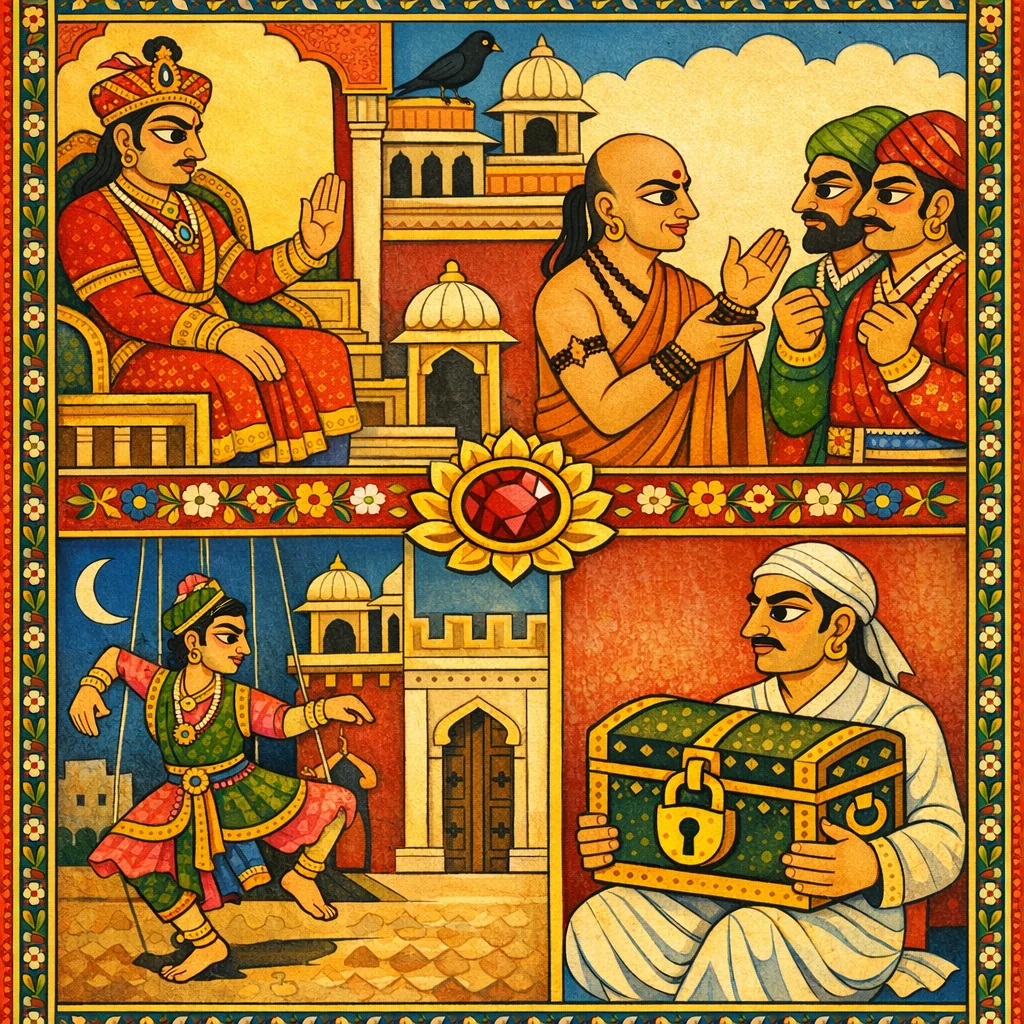
Adhyāya 16 presents a clustered set of subhāṣita-style observations characteristic of Nītiśāstra, moving between social psychology, ethical valuation, and pragmatic conduct. Several verses frame desire as structurally insatiable and cognitively distorting, illustrated through royal and mythical exempla and through aphorisms on wealth, pleasure, and dependence. A sequence on guṇa (intrinsic merit) contrasts inner qualities with external rank, arguing that reputation, discernment, and proper association condition how merit is perceived—metaphors of the crow on a palace and the gemstone needing a setting highlight this evaluative logic. The chapter also records historical social observations on gender and attachment, depicting romantic relations as unstable and strategically risky, a common trope in didactic anthologies. Speech is treated as a low-cost instrument of social cohesion, while charity is differentiated, elevating protective giving (abhaya) as durable. The closing verses emphasize habituation across lifetimes and critique merely book-held learning or inaccessible wealth, aligning knowledge with practical efficacy in time of need.
Key Concepts
Key Principles
Strategic Themes
Shlokas in Chapter 16
Verse 1
न ध्यातं पदमीश्वरस्य विधिवत्संसारविच्छित्तये स्वर्गद्वारकपाटपाटनपटुर्धर्मोऽपि नोपार्जितः । नारीपीनपयोधरोरुयुगला स्वप्नेऽपि नालिंगितं मातुः केवलमेव यौवनवनच्छेदे कुठारा वयम् ॥
I did not duly meditate on the Lord’s abode to cut off samsara, nor did I earn the dharma that can unbar heaven’s gate. Not even in dreams did I embrace a woman’s full breasts and twin thighs. In the end, I was only an axe that felled the “forest” of my mother’s youth.
Verse 2
जल्पन्ति सार्धमन्येन पश्यन्त्यन्यं सविभ्रमाः । हृदये चिन्तयन्त्यन्यं न स्त्रीणामेकतो रतिः ॥
They speak with one man, yet coquettishly look at another; in the heart they think of someone else. A woman’s attachment does not stay with one alone.
Verse 3
यो मोहान्मन्यते मूढो रक्तेयं मयि कामिनी । स तस्या वशगो भूत्वा नृत्येत् क्रीडाशकुन्तवत् ॥
The fool, deluded by infatuation, thinks, “This lustful woman is devoted to me.” Once under her sway, he will dance like a play-bird made to move at another’s cue.
Verse 4
कोऽर्थान्प्राप्य न गर्वितो विषयिणः कस्यापदोऽस्तं गताः स्त्रीभिः कस्य न खण्डितं भुवि मनः को नाम राजप्रियः। कः कालस्य न गोचरत्वमगमत् कोऽर्थी गतो गौरवं को वा दुर्जनदुर्गमेषु पतितः क्षेमेण यातः पथि ॥
Who, on gaining wealth, does not grow proud? What pleasure-seeker is free of vanity? Whose misfortunes have ever wholly vanished? On earth, whose mind has not been troubled by women? Who is dear to every king? Who does not fall within time’s reach? What seeker of riches always attains honor? And who, fallen into the hard terrain of the wicked, walks the road in safety?
Verse 5
न निर्मितो न चैव न दृष्टपूर्वो न श्रूयते हेममयः कुरंगः । तथाऽपि तृष्णा रघुनन्दनस्य विनाशकाले विपरीतबुद्धिः ॥
A deer of gold is neither made, nor ever seen before, nor even heard of; yet the craving of the “delight of the Raghu line” became perverted judgment at the hour of ruin.
Verse 6
गुणैरुत्तमतां याति नोच्चैरासनसंस्थिताः । प्रासादशिखरस्थोऽपि काकः किं गरुडायते ॥
Excellence is gained by virtues, not by sitting on a high seat. Even if a crow stands on a palace spire, it does not become Garuḍa.
Verse 7
गुणाः सर्वत्र पूज्यन्ते न महत्योऽपि सम्पदः । पूर्णेन्दुः किं तथा वन्द्यो निष्कलङ्को यथा कृशः ॥
Virtues are honored everywhere; even great wealth is not always revered. The full moon is not venerated like the blemishless, though slender, crescent.
Verse 8
परैरुक्तगुणो यस्तु निर्गुणोऽपि गुणी भवेत् । इन्द्रोऽपि लघुतां याति स्वयं प्रख्यापितैर्गुणैः ॥
One whose virtues are spoken of by others is deemed virtuous even if he lacks them; but one who proclaims his own virtues makes even Indra seem small.
Verse 9
विवेकिनमनुप्राप्ता गुणा यान्ति मनोज्ञताम् । सुतरां रत्नमाभाति चामीकरनियोजितम् ॥
Qualities, when they dwell in a discerning person, become especially pleasing; as a jewel shines more when set in gold.
Verse 10
गुणैः सर्वज्ञतुल्योऽपि सीदत्येको निराश्रयः । अनर्घ्यमपि माणिक्यं हेमाश्रयमपेक्षते ॥
Even one whose virtues rival the omniscient declines when alone and without support; likewise, even a priceless gem needs a setting of gold.
Verse 11
अतिक्लेशेन यद्द्रव्यमतिलोभेन यत्सुखम् । शत्रूणां प्रणिपातेन ते ह्यर्था मा भवन्तु मे ॥
Wealth gained by excessive hardship, pleasure born of excessive greed, and profit secured by bowing to enemies—may these never become my aims.
Verse 12
किं तया क्रियते लक्ष्म्या या वधूरिव केवला । या तु वेश्येव सामान्या पथिकैरपि भुज्यते ॥
What use is wealth that sits secluded like a cloistered bride? But wealth that is common like a courtesan is enjoyed even by passing travelers.
Verse 13
धनेषु जीवितव्येषु स्त्रीषु चाहारकर्मसु । अतृप्ताः प्राणिनः सर्वे याता यास्यन्ति यान्ति च ॥
In wealth, in the urge to keep living, in women, and in food and work, all beings remain unsated; thus they have gone, are going, and will go on in dissatisfaction.
Verse 14
प्रियवाक्यप्रदानेन सर्वे तुष्यन्ति जन्तवः । तस्मात्तदेव वक्तव्यं वचने का दरिद्रता ॥
All beings are pleased by the gift of pleasing speech; therefore speak such words—there is no poverty in speaking.
Verse 15
क्षीयन्ते सर्वदानानि यज्ञहोमबलिक्रियाः । न क्षीयते पात्रदानमभयं सर्वदेहिनाम् ॥
All gifts, and rites such as sacrifice, oblation, and offerings, are liable to be exhausted; but giving to the worthy and granting fearlessness to all embodied beings are said not to diminish.
Verse 16
तृणं लघु तृणात्तूलं तूलादपि च याचकः । वायुना किं न नीतोऽसौ मामयं याचयिष्यति ॥
Grass is light; cotton is lighter than grass; and a beggar is lighter still than cotton. Why does the wind not carry him off? If it does not, he will return to beg from me again.
Verse 17
वरं प्राणपरित्यागो मानभङ्गेन जीवनात् । प्राणत्यागे क्षणं दुःखं मानभङ्गे दिने दिने ॥
Better to give up life than to live with honor broken. Death brings pain for a moment; dishonor brings pain day after day.
Verse 18
संसारविषवृक्षस्य द्वे फलेऽमृतोपमे । सुभाषितं च सुस्वादु सङ्गतिः सज्जने जने ॥
Worldly life is a poison-tree, yet it bears two fruits like nectar: sweet, well-spoken words and the pleasant company of the virtuous.
Verse 19
जन्म जन्म यदभ्यस्तं दानमध्ययनं तपः । तेनैवाभ्यासयोगेन देही चाभ्यस्यते पुनः ॥
What one has practiced birth after birth—giving, study, austerity—by the power of that very habit, the embodied being practices again.
Verse 20
पुस्तकस्था तु या विद्या परहस्तगतं धनं । कार्यकाले समुत्पन्ने न सा विद्या न तद्धनम् ॥
Learning that stays in a book, and wealth that lies in another’s hands—when the time of need arrives, that is neither learning nor wealth.
Frequently Asked Questions
The text repeatedly foregrounds the Nīti principle that intrinsic merit (guṇa) and discernment (viveka) determine durable esteem more than external rank or wealth, while desire (tṛṣṇā) is portrayed as insatiable and capable of overturning judgment; practical effectiveness is treated as the criterion for knowledge and resources.
Interpersonal relations are depicted through strategic and psychological lenses: romantic attachment is framed as unstable and potentially manipulative (presented as historical social observation), social esteem is shown as reputation-dependent (others’ praise versus self-assertion), and beneficial companionship is identified with association with the virtuous (sajjana-saṅgati) and with pleasant, conciliatory speech.
As a subhāṣita cluster, the chapter aligns with broader Nīti and Artha traditions by emphasizing judgment under desire, the social construction of authority, and the instrumental role of speech and alliance. Its metaphors and maxims parallel themes found in the Arthaśāstra (pragmatic evaluation of persons and resources) and the Pañcatantra (didactic exempla on association, deception, and practical intelligence), though presented here as compact aphorisms for memorization and citation.