Adhyaya 29
Viśukra–Viṣaṅga-vadha (The Slaying of Viśukra and Viṣaṅga) — Lalitopākhyāna
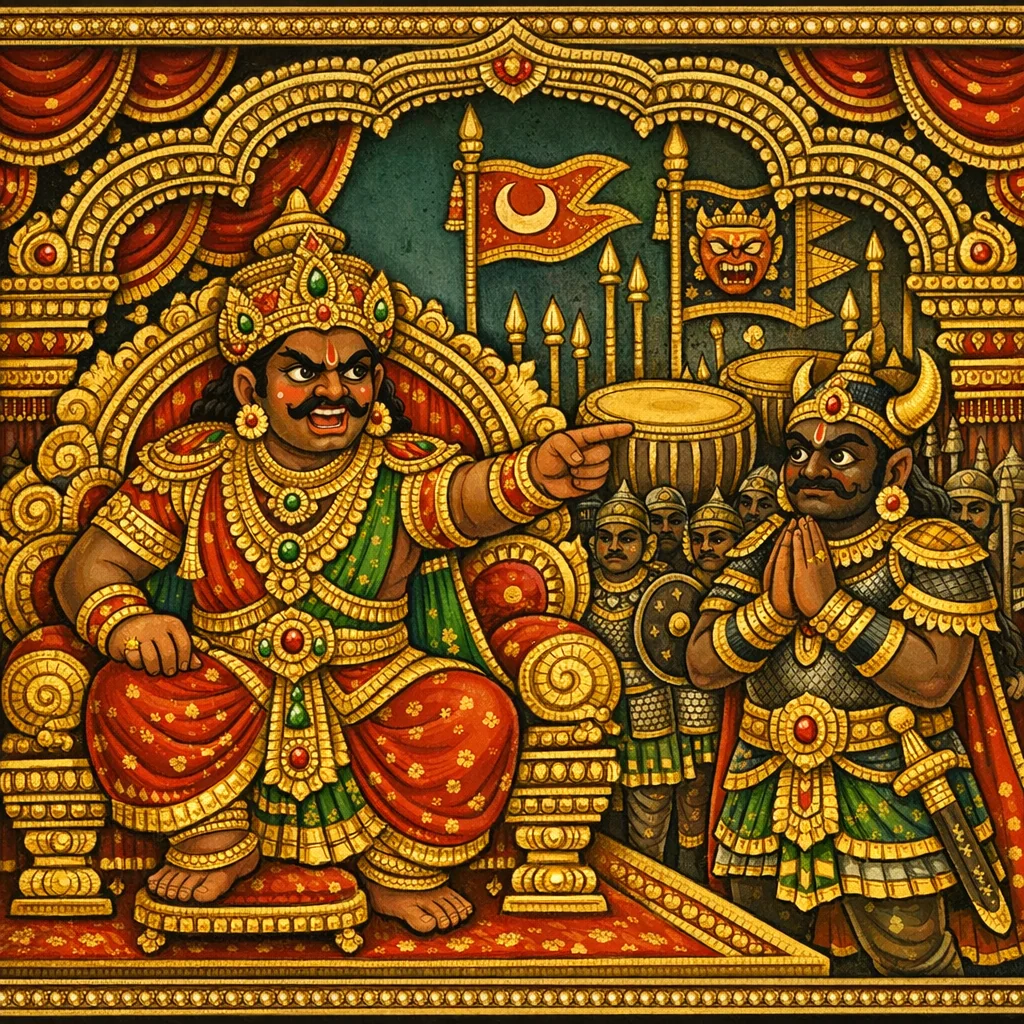
Set within the Hayagrīva–Agastya dialogue of the Lalitopākhyāna, this chapter continues after earlier battle accounts (including Daṇḍanāthā’s defeat of Viṣaṅga and the allied forces’ descriptions). Agastya asks to hear more of Śrī Devī’s prowess in the battle-array (raṇacakra) and how Bhaṇḍāsura responds when calamity strikes his close kin. Hayagrīva extols the Lalitā-carita as a meritorious, sin-destroying narration that, when heard at auspicious times, bestows siddhi and fame. The story then turns to Bhaṇḍa’s grief and rage: he laments, collapses, is consoled, and then hardens into wrath, commanding his general Kuṭilākṣa to ready the bannered army. The chapter’s thrust is an escalation from inner sorrow to military mobilization, preparing renewed conflict with the Devī’s forces and reaffirming the theme of śakti confronting demonic ego-power through ordered battle and divine strategy.
Shlokas
Verse 1
इति श्रीब्रह्माण्डमहापुराणे उत्तरभागे हयग्रीवागस्त्यसंवादे ललितोपख्याने विशुक्रविषङ्गवधो नामाष्टाविंशो ऽध्यायः अगस्त्य उवाच अश्वानन महाप्राज्ञ वर्णितं मन्त्रिणीबलम् / विषङ्गस्य वधो युद्धे वर्णितो दण्डनाथया
Agastya said: O Horse-faced one (Hayagriva), O very wise one, the power of Mantrini has been described, and the killing of Vishanga in battle by Dandanatha has been narrated.
Verse 2
श्रीदेव्याः श्रोतुमिच्छामि रणचक्रे पराक्रमम् / सोदरस्यापदं दृष्ट्वा भण्डः किमकरोच्छुचा
I wish to hear about the valor of Sri Devi in the circle of war. Seeing the calamity of his brother, what did Bhanda do out of grief?
Verse 3
कथं तस्य रणोत्साहः कैः समं समयुध्यत / सहायाः के ऽभवंस्तस्य हतभ्रातृतनूभुवः
How was his enthusiasm for war? With whom did he fight? Who were the helpers of him whose brothers and sons were killed?
Verse 4
हयग्रीव उवाच इदं शृणु महाप्राज्ञ सर्वपापनिकृन्तनम् / ललिताचरितं पुण्यमणिमादिगुमप्रदम्
Hayagrīva said: O great sage, hear this, which cuts away all sins. The holy Lalitā-carita, rich in merit, bestows siddhis such as aṇimā and other divine excellences.
Verse 5
वैषुवायनकालेषु पुण्येषु समयेषु च / सिद्धिदं सर्वपापघ्नं कीर्तिदं पञ्चपर्वसु
At the vaiṣuvāyana seasons and at auspicious sacred times, it grants attainment, destroys all sins, and bestows renown during the five festivals (pañca-parva).
Verse 6
तदा हतौ रणे तत्र श्रुत्वा निजसहोदरौ / शोकेन महताविष्टो भण्डः प्रविललाप सः
Then, there on the battlefield, hearing that his own blood-brothers had been slain, Bhaṇḍa, overwhelmed by mighty grief, began to wail in lamentation.
Verse 7
विकीर्मकेशो धरणौ मूर्छितः पतितस्तदा / न लेभे किञ्चिदाश्वासं भ्रातृव्यसनकर्शितः
His hair disheveled, Bhaṇḍa then fell senseless upon the ground. Worn down by the calamity that befell his brothers, he found not even a little solace.
Verse 8
पुनः पुनः प्रविलपन्कुटिलाक्षेण भूरिशः / आश्वास्यामानः शोकेन युक्तः कोपमवाप सः
Again and again he lamented, his gaze grown crooked and fierce; though others sought to console him, bound to grief, he fell into wrath.
Verse 9
फालं वहन्नतिक्रूरं भ्रमद्भ्रुकुटिभीषणम् / अङ्गारपाटलाक्षश्च निःश्वसन्कृष्णसर्पवत्
Bearing a cruel brow, terrifying with knitting eyebrows, eyes red like burning coal, hissing like a black cobra.
Verse 10
उवाच कुटिलाक्षं द्राक्समस्तपृतनापतिम् / क्षिप्रं मुहुर्मुहुः स्पृष्ट्वा धुन्वानः करवालिकाम्
He spoke quickly to Kutilaksha, the commander of all armies, while repeatedly touching and shaking his sword.
Verse 11
क्रोधहुङ्कारमातन्वन्गर्जन्नुत्पातमेघवत्
Uttering a roar of anger, thundering like a cloud at the time of cosmic dissolution.
Verse 12
ययैव दृष्टया मायाबलाद्युद्धे विनाशिताः / भ्रातरो मम पुत्राश्च सेनानाथाः सहस्रशः
By whose mere glance, through the power of illusion, my brothers, sons, and thousands of army commanders were destroyed in battle.
Verse 13
तस्याः स्त्रियाः प्रमत्तायाः कण्ठोत्थैः शोणितद्रवैः / भ्रातृपुत्रमहाशोकवह्निं निर्वापयाम्यहम्
I shall extinguish the fire of great grief for my brothers and sons with the liquid blood rising from the throat of that arrogant woman.
Verse 14
गच्छ रे कुटिलाक्ष त्वं सज्जीकुरु पताकिनीम् / इत्युक्त्वा कठिनं वर्म वज्रपातसहं महत्
“Go forth, O Kuṭilākṣa; make ready the bearer of the banner.” Having spoken thus, he donned a hard and mighty cuirass, able to endure even the thunderbolt’s fall.
Verse 15
दधानो भुजमध्येन बध्नन्पृष्ठ तथेषुधी / उद्दाममौर्विनिःश्वासकठोरं भ्रामयन्धनुः
With the strap set across the middle of his arm and the quiver bound upon his back, he whirled his bow—hard and unyielding—while his breath surged, fierce and blazing.
Verse 16
कालाग्निरिव संक्रुद्धो निर्जगाम निजात्पुरात् / तालजङ्घादिकैः सार्द्धंपूर्वद्वारे निवेशिते
Wrathful like Kālāgni, the fire of the final age, he strode out from his own city, together with Tālajaṅghā and the others stationed at the eastern gate.
Verse 17
चतुर्भिर्धृतशस्त्रौघैर्धृतवर्मभिरुद्धतैः / पञ्चत्रिंशच्चमूनाथैः कुटिलाक्षपुरःसरैः
With four divisions bearing masses of weapons, armored and haughty, and with thirty-five commanders of the host, Kuṭilākṣa went foremost at their head.
Verse 18
सर्वसेनापतीन्द्रेण कुटिलाक्षेण स क्रुधा / मिलितेन च भण्डेन चत्वारिंशच्चमूवराः
In wrath Kuṭilākṣa, the supreme commander of all the armies, took the lead; and Bhaṇḍa too joined the host; thus forty choice divisions assembled together.
Verse 19
दीप्तायुधा दीप्तकेशा निर्जग्मुर्दीप्तकङ्कटाः / द्विसहस्राक्षौहिणीनां पञ्चाशीतिः परार्धिका
With blazing weapons, radiant hair, and shining mail, they marched forth—two thousand akṣauhiṇīs, and beyond that, eighty-five and a half.
Verse 20
तदेनमन्वगादेकहेलया मथितुं द्विषः / भण्डासुरे विनिर्याते सर्वसैनिकसंकुले
Then the foe pursued him, as though to crush him with effortless sport; when Bhaṇḍāsura marched out, the place was thronged with every host of soldiers.
Verse 21
शून्यके नगरे तत्र स्त्रीमात्रमवशेषितम् / आभिलो नाम दैत्येन्द्रो रथवर्यो महारथः / सहस्रयुग्यसिंहाढ्यमारुरोह रणोद्धतः
In that city left desolate, only women remained. Ābhilo by name, lord of the Daityas, a mahāratha and master of a splendid chariot, mounted—fierce for battle—a war-car adorned with lions of a thousand-yojana might.
Verse 22
तत्वरे विज्वलज्ज्वालाकालाग्निरिव दीप्तिमान् / घातको नाम वै खड्गश्चन्द्रहाससमाकृतिः
Then he rushed on, blazing like Kālāgni, the fire of the world’s end. And the sword called Ghātaka was fashioned in the likeness of Chandrahāsa.
Verse 23
इतस्ततश्चलन्तीनां सेनानां धूलिरुत्थिता / वोढुं तासां भरं भूमिरक्षमेव दिवं ययौ
As the armies surged to and fro, dust rose in billowing clouds. The earth, unable to bear their weight, sent that dust as though up to the very heavens.
Verse 24
केचिद्भूमेरपर्याप्ताः प्रचेलुर्व्योमवर्त्मना / केषाञ्चित्स्कन्धमारूढाः केचिच्चेलुर्महारथाः
Some, finding no room upon the earth, surged along the pathways of the sky; some climbed upon others’ shoulders; and some, mighty chariot-warriors, pressed forward as mahārathas.
Verse 25
न दिक्षु न च भूचक्रे न व्योमनि च ते ममुः / दुःखदुखेन ते चेलुरन्योन्याश्लेषपीडिताः
They found no footing in any quarter, neither upon the earth’s disk nor in the open sky; sorrow upon sorrow, they rushed on, crushed by one another’s clinging press.
Verse 26
अत्यन्त सेनासंमर्दाद्रथचक्रैर्विचूर्णिताः / केचित्पादेन नागानां मर्दिता न्यपतन्भुवि
In the fierce crush of armies, some were ground to dust beneath chariot wheels; some, trampled by the feet of elephants, fell upon the earth.
Verse 27
इत्थं प्रचलिता तेन समं सर्वैश्च सैनिकैः / वज्रनिष्पेषसदृशो मेघनादो व्यधीयत
Thus he moved forth together with all the soldiers, and a cloud-like roar arose—like the crushing stroke of the Vajra, the thunderbolt.
Verse 28
तेनातीव कठोरेण सिंहनादेन भूयसा / भण्डदैत्यमुखोत्थेन विदीर्णमभवज्जगत्
By that exceedingly harsh and ever-mightier lion-roar (siṃha-nāda), issuing from the mouth of Bhāṇḍa the Daitya, the world seemed split asunder and torn.
Verse 29
सागराः शोषमापन्नाश्चन्द्राकारै प्रपलायितौ / उडूनि न्यपतन्व्योम्नो भूमिर्देलायिताभवत्
The oceans were dried up; the Moon, disk-shaped, fled in terror. The stars fell from the sky, and the earth shook and reeled.
Verse 30
दिङ्नागाश्चाभवंस्त्रस्ता मूर्च्छिताश्च दिवौकसः / शक्तीनां कटकं चासीदकाण्डत्रासविह्वलम्
The Dig-nāgas, elephants of the quarters, were struck with fear, and the devas of heaven swooned. The battalion of the Śaktis too was shaken, bewildered by sudden terror.
Verse 31
प्राणान्संधारयामासुः कथञ्चिन्मध्य आहवे / शक्तयो भयविभ्रष्टान्यायुधानि पुनर्दधुः
In the midst of battle they somehow held on to life. The Śaktis, whose weapons had slipped away in fear, took them up again and bore them once more.
Verse 32
वह्निप्राकारवलयं प्रशान्तं पुनरुत्थितम् / दैत्येन्द्रसिंहनादेन चमूनाथधनुःस्वनैः
The ring of the fiery rampart, once calmed, rose up again—stirred by the Daitya lord’s lion-roar and by the thunder of the army-chief’s bowstrings.
Verse 33
क्रन्दनैश्चापि योद्धॄणामभूच्छब्दमयं जगत् / तेन नादेन महता भण्डदैत्यविनिर्गमम् / निश्चित्य ललिता देवी स्वयं योद्धुं प्रचक्रमे
With the warriors’ cries the whole world became a mass of sound. By that mighty roar, the Goddess Lalitā discerned the emergence of Bhaṇḍa-daitya and herself set forth to fight.
Verse 34
अशक्यमन्यशक्तीनामाकलय्य महाहवम् / भण्डदैत्येन दुष्टेन स्वयमुद्योगमास्थिता
Knowing that the powers of others could not fathom the great battle, she herself rose and took up the endeavor, to confront the wicked Daitya Bhaṇḍa.
Verse 35
चक्रराजरथस्तस्याः प्रचचाल महोदयः / चतुर्वेदमहाचक्रपुरुषार्थमहाभयः
Her chariot, the King of the Cakra, began to roll forth in mighty auspiciousness— the great Wheel of the four Vedas, a great dread to the four aims of man.
Verse 36
आनन्दध्वजसंयुक्तो नवभिः पर्वभिर्युतः / नवपर्वस्थदेवीभिराकृष्टगुरुधन्विभिः
Adorned with the banner of Ānanda, it was furnished with nine divisions; in those nine stations stood nine Devīs, drawing and stringing the heavy bows.
Verse 37
परार्धाधिकसंख्यातपरिवारसमृद्धिभिः / पर्वस्थानेषु सर्वेषु पालितः सर्वतो दिशम्
With the splendor of an entourage numbered beyond a parārdha, in every station of its divisions it was guarded from all directions.
Verse 38
दशयोजनमुन्नद्धश्चतुर्योजन विस्तृतः / महाराज्ञीचक्रराजो रथेन्द्रः प्रचलन्बभौ
Rising ten yojanas high and spreading four yojanas wide, the Cakra-King of the Great Queen—lord among chariots—moved forth in radiant majesty.
Verse 39
तस्मिन्प्रचलिते जुष्टे श्यामया दण्डनाथया / गेयचक्रं तु बालाग्रे किरिचक्रं तु बृष्ठतः
When that revered host set forth under Śyāmā, the Daṇḍanāthā, the Wheel of Song (geyacakra) stood at the vanguard, and the Wheel of the Crown (kiricakra) at the rear.
Verse 40
अन्यासामपि शक्तीनां वाहनानि परार्द्धशः / नृसिंहोष्ट्रनरव्यालमृगपक्षिहयास्तथा
For the other Śaktis too, their mounts were countless: Narasiṃha, camels, men, wondrous vyālas, wild beasts, birds, and likewise horses.
Verse 41
गजभेरुण्डशरभ व्याघ्रवातमृगास्तथा / एतादृशश्च तिर्यञ्चो ऽप्यन्ये वाहनतां गताः
There were elephants too, bheruṇḍas (two-headed birds), wondrous śarabhas, tigers, and vātamṛgas swift as the wind; such creatures, and many others besides, attained the station of mounts.
Verse 42
मुहुरुच्चावचाः शक्तीर्भण्डासुरवधोद्यताः / योजनायामविस्तारमपि तद्द्वारमण्डलम् / वह्निप्राकारचक्रस्य न पर्याप्तं चमूपतेः
Again and again, Śaktis of many kinds rose up, intent on the slaying of Bhaṇḍāsura; even the gate’s enclosure, a yojana in breadth, was not sufficient for the army of the Wheel of fiery ramparts, O commander.
Verse 43
ज्वालामालिनिका नित्या द्वारस्यात्यन्तविस्तृतिम् / विततान समस्तानां सैन्यानां निर्गमैषिणी
Jvālāmālinikā, the Ever-abiding, spread the gate to an utmost vastness, so that all the armies seeking to march forth might pass out.
Verse 44
अथ सा जगतां माता महाराज्ञी महोदया / निर्जगामा ग्निपुरता वरद्वारात्प्रतापिनी
Then the Mother of the worlds, the Great Queen of mighty fortune, came forth from the city of Agnipura through the Gate of Boons, radiant in her splendor.
Verse 45
देवदुन्दुभयो नेदुः पतिताः पुष्पवृष्टयः / महामुक्तातपत्रं तद्दिवि दीप्तमदृश्यत
The divine kettledrums resounded, and showers of flowers fell; in the sky there appeared a great pearl-studded parasol, shining brilliantly.
Verse 46
निमित्तानि प्रसन्नानि शंसकानि जयश्रियाः / अभवंल्ललितासैन्ये उत्पातास्तु द्विषां बले
In Lalitā’s host arose auspicious, pleasing omens proclaiming the glory of victory; but in the enemy’s forces there appeared portents of calamity.
Verse 47
ततः प्रववृते युद्धं सेन योरुभयोरपि / प्रसर्पद्विशिखैः स्तोमबद्धान्धतमसच्छटम्
Then battle commenced between the two armies; double-pointed arrows surged forth in masses, weaving a thick canopy of darkness.
Verse 48
हन्यमानगजस्तोमसृतशोणितबिन्दुभिः / ह्नीयमाणशिरश्छन्नदैत्यश्वेतातपत्रकम्
With drops of blood streaming from the slaughtered herds of elephants, the battlefield was reddened; and the Daityas’ white parasol seemed veiled by severed heads falling down.
Verse 49
न दिशो न नभो नागा न भूमिर्न च किञ्चन / दृश्यते केवलं दृष्टं रजोमात्रं च सूर्च्छितम्
No directions are seen, no sky, no Nāgas, no earth—nothing at all appears; only the seen remains: mere dust of rajas, thickly clouded over.
Verse 50
नृत्यत्कबन्धनिवहाविर्भूततटपादपम् / दैत्यकेशसहस्रैस्तु शैवालाङ्कुरकोमला
A host of headless trunks, dancing, came into view like trees upon the bank; soft as sprouting algae, for thousands of Daitya tresses lay upon it.
Verse 51
श्वेतातपत्रयवलयश्वेतपङ्कजभासुरा / चक्रकृत्तकरिग्रामपादकूर्मपरंपरा
It shone with rings of white parasols and with the radiance of white lotuses; in succession, like herds of elephants hewn by the cakra, and like a chain of turtles beneath the feet.
Verse 52
शक्तिध्वस्तमहादैत्यगलगण्डशिलोच्चया / विलूनकाण्डैः पतितैः सफेना बलचामरैः
A lofty heap of stone it was, like the throat-knots of great Daityas shattered by the weapon Śakti; severed trunks fell down, foaming, like cāmara whisks of the host called Bala.
Verse 53
तीक्ष्णासिवल्लरीजालैर्निबिडीकृततीरभूः / दैत्यवीरेक्षमश्रेणिमुक्तिंसपुटभासुरा
The riverbank earth was tightly bound by dense nets of sword-sharp creepers; it gleamed with rows of Daitya heroes’ eyes and beards, like clustered strings of pearls.
Verse 54
दैत्यवाहनसंघातन क्रमीनशताकुला / प्रावहच्छोणितनदी सेनयोर्युध्यमानयोः
A river of blood surged forth, as though crowded with hundreds of water-creatures, born of the crashing of the Daityas’ war-mounts, while the two armies fought.
Verse 55
इत्थं प्रववृते युद्धं मृत्योश्च त्रासदायकम् / चतुर्थयुद्धदिवसे प्रातरा रभ्यभीषणम् / प्रहरद्वयपर्यन्तं सेनयोरुभयोरपि
Thus the battle went on, terrifying, as though Death itself inspired dread. On the fourth day of war, from morning it grew exceedingly dreadful, lasting for both armies until two praharas had passed.
Verse 56
ततः श्रीललितादेव्या भण्डस्याथाभवद्रणः / अस्त्रप्रत्यस्त्रसंक्षोभैस्तुमुलीकृतदिक्तटः
Then the battle arose between the blessed Śrī Lalitā Devī and Bhaṇḍa; the very borders of the quarters were thrown into tumult by the clash of weapon and counter-weapon.
Verse 57
धनुर्ज्यातलटङ्कारहुङ्कारैरतिभीषणः / तूणीरवदनात्कृष्टधनुर्वरविनिः सृतैः / विमुक्तैर्विशिशैर्भीमैराहवे प्राणहारिभिः
Most dreadful was it, with the twang of bowstrings and the roaring Hūṃkāra-cries. From the mouth of the quiver were drawn fine bows, and arrows were loosed—sharp, fearsome, life-stealing upon the field of battle.
Verse 58
हस्तलाघववेगेन न प्राज्ञायत किञ्चन / महाराज्ञीकरांभोजव्यापारं शरमोक्षणे / शृणु सर्वं प्रवक्ष्यामि कुम्भसंभव सङ्गरे
By the swiftness and deftness of her hands, nothing could be made out at all. None could grasp the working of the Great Queen’s lotus-hands as she loosed her arrows. Listen, O Kumbhasambhava: I shall tell you everything of that battle.
Verse 59
संधाने त्वेकधा तस्य दशधा चापनिर्गमे / शतधा गगने दैत्यसैन्यप्राप्तौ सहस्रधा / दैत्याङ्गसंगे संप्राप्ताः कोटिसंख्याः शिलीमुखाः
When she set the arrow, it was as one; when it flew forth, it became ten. In the sky it became a hundred; on reaching the Daitya host, a thousand; and upon striking Daitya limbs, Śilīmukha arrows arrived in koṭis, beyond count.
Verse 60
परान्धकारं सृजती भिन्दती रोदसी शरैः / मर्माभिनत्प्रचण्डस्य महाराज्ञी महेषुभिः
She cast forth utter darkness and with her arrows split heaven and earth. The Great Queen pierced the fierce one’s vital marmas with mighty shafts.
Verse 61
वहत्कोपारुणं नेत्रं ततो भण्डः स दानवः / ववष शरजालेन महता ललितेश्वरीम्
Then Bhaṇḍa the Dānava, his eyes crimson with wrath, showered Laliteśvarī with a vast net of arrows.
Verse 62
अन्धतामिस्रकं नाम महास्त्रं प्रमुमोच सः / महातरणिबाणेन तन्नुनोद महेश्वरी
He unleashed the great weapon called Andhatāmisraka; yet Maheśvarī drove it back with the Mahātaraṇi arrow.
Verse 63
पाखण्डास्त्रं महावीरो भण्डः प्रमुमुचे रणे / गायत्र्यस्त्रं तस्य नुत्यै ससर्ज जगदंबिका
In battle the mighty hero Bhaṇḍa released the Pākhaṇḍāstra; to quell it, Mother Jagadambikā brought forth the Gāyatrīāstra.
Verse 64
अन्धास्त्रमसृजद्भण्डः शक्तिदृष्टिविनाशनम् / चाक्षुष्मतमहास्त्रेण शमयायास तत्प्रसूः
Bhaṇḍa loosed the Andhāstra, the weapon that destroys the Śaktis’ power and sight. The Goddess’s son stilled it with the mighty Cākṣuṣmatāstra.
Verse 65
शक्तिनाशाभिधं भण्डो मुमोचास्त्रं महारणे / विश्वावसोरथास्त्रेण तस्य दर्पमपाकरोत्
In the great battle, Bhaṇḍa released the weapon called Śaktināśa. Yet by Viśvāvasu’s Rathāstra his pride was stripped away.
Verse 66
अन्तकास्त्रं ससर्जोच्चैः संक्रुद्धो भडदानवः / महामृत्युञ्जयास्त्रेण नाशयामास तद्बलम्
The enraged dānava Bhaḍa hurled forth the Antakāstra with a mighty cry. But by the Mahāmṛtyuñjayāstra its power was destroyed.
Verse 67
सर्वास्त्रस्मृतिनाशाख्यमस्त्रं भण्डो व्यमुञ्चत / धारणास्त्रेण चक्रेशी तद्बलं समनाशयत्
Bhaṇḍa unleashed the weapon called Sarvāstrasmṛtināśa, which destroys the very memory of all astras. But Cakreśī, with the Dhāraṇāstra, utterly annihilated its force.
Verse 68
भयास्त्रमसृजद्भण्डः शक्तीनां भीतिदायकम् / अभयङ्करमैन्द्रास्त्रं मुमुचे जगदंबिका
Bhaṇḍa released the Bhayāstra, bringing fear upon the Śaktis. But Jagadambikā loosed the Abhayaṅkara Aindrāstra, bestowing fearlessness.
Verse 69
महारोगास्त्रमसृजच्छक्तिसेनासु दानवः / राजयक्ष्मादयो रोगास्ततो ऽभूवन्सहस्रशः
The Dānava loosed the weapon of great diseases upon the śakti-bearing hosts; then, by the thousand, ailments such as rājayakṣmā and others arose.
Verse 70
तन्निवारणसिद्ध्यर्थं ललिता परमेश्वरी / नामत्रयमहामन्त्रमहास्त्रं सा मुमोच ह
To accomplish its warding off, Lalitā Parameśvarī released the great weapon—the great mantra of the Three Names.
Verse 71
अच्युतश्चाप्यनन्तश्च गोविन्दस्तु शरोत्थिताः / हुङ्कारमात्रतो दग्ध्वारोगांस्ताननयन्मुदम्
Acyuta, Ananta, and Govinda sprang forth like arrows; by the mere utterance “Hūṃ” they burned up those diseases and brought delight.
Verse 72
नत्वा च तां महेशानीं तद्भक्तव्याधिमर्दनम् / विधातुं त्रिषु लोकेषु नियुक्ताः स्वपदं ययुः
Having bowed to Maheśānī, they were appointed to crush the ailments of her devotees in the three worlds; then they returned to their own stations.
Verse 73
आयुर्नाशनमस्त्रं तु मुक्तवान्भण्डदानवः / कालसंकर्षणीरूपमस्त्रं राज्ञी व्यमुञ्चत
Bhaṇḍa the Dānava released the weapon that destroys lifespan; the Queen in turn discharged the weapon taking the form of Kāla-saṃkarṣaṇī, the force that draws in Time.
Verse 74
महासुरास्त्रमुद्दामं व्यसृजद्भण्डदानवः / ततः सहस्रशो जाता महाकाया महाबलाः
Bhaṇḍa the Dānava unleashed an unbridled, mighty asuric weapon; then by the thousand were born beings of vast bodies and tremendous strength.
Verse 75
मधुश्च कैटभश्चैव महिषासुर एव च / धूम्रलोचनदैत्यश्च चण्डमुण्डादयो ऽसुराः
Madhu and Kaiṭabha, and Mahīṣāsura as well; the daitya Dhūmralocana, and asuras such as Caṇḍa and Muṇḍa and the rest.
Verse 76
चिक्षुभश्चामरश्चैव रक्तबीजो ऽसुरस्तथा / शुम्भश्चैव निशुम्भश्च कालकेया महाबलाः
Cikṣubha and Āmara, and the asura Raktabīja as well; Śumbha and Niśumbha; and the mighty Kālakeyas, of tremendous strength.
Verse 77
धूम्राभिधानाश्च परे तस्मादस्त्रात्समुत्थिताः / ते सर्वे दानवश्रेष्ठाः कठोरैः शस्त्रमण्डलैः
Others too, bearing the name “Dhūmra,” arose from that weapon; all of them were the foremost of the Dānavas, bearing grim circles of hardened arms.
Verse 78
शक्तिसेनां मर्दयन्तो नर्द्दन्तश्च भयङ्करम् / हाहेति क्रन्दमानाश्चशक्तयो दैत्यमर्दिताः
They crushed the army of Śakti and roared in dreadful fury; and the śakti-weapons, trampled by the daityas, cried out in lament, “hā hā!”
Verse 79
ललितां शरणं प्राप्ताः पाहि पाहीति सत्वरम् / अथ देवी भृशं क्रुद्धा रुषाट्टहासमातनोत्
Having taken refuge in Lalitā, they cried out in haste, “Protect us, protect us!” Then the Goddess, fiercely enraged, unleashed a dreadful laughter born of wrath.
Verse 80
ततः समुत्थिता काचिद्दुर्गा नाम यशस्विनी / समस्तदेवतेजोभिर्निर्मिता विश्वरूपिणी
Then there arose a glorious Goddess named Durgā, of universal form, fashioned from the radiant powers of all the deities.
Verse 81
शूलं च शूलिना दत्तं चक्रं चक्रिसमर्पितम् / शङ्खं वरुणदत्तश्च शक्तिं दत्तां हविर्भुजा
Śiva, the trident-bearer, bestowed the trident; Viṣṇu, the discus-bearer, presented the cakra; Varuṇa gave the conch; and Agni, eater of oblations, granted the śakti, the spear of power.
Verse 82
चापमक्षयतूणीरौ मरुद्दत्तौ महामृधे / वज्रिदत्तं च कुलिशं चषकन्धनदार्पितम्
In the great battle the Maruts bestowed a bow and inexhaustible quivers; Indra, wielder of the vajra, granted the kuliśa; and Viśvakarman, the divine craftsman, presented the weapon called Caṣakandhana.
Verse 83
कालदण्डं महादण्डं पाशं पाशधरार्पितम् / ब्रह्मदत्तां कुण्डिकां च घण्टामैरावतार्पिताम्
Yama bestowed the staff of Time and the great staff; Varuṇa, bearer of the noose, granted the pāśa; Brahmā gave the kuṇḍikā, the sacred water-vessel; and Airāvata offered the bell.
Verse 84
मृत्युदत्तौ खड्गखेटौ हारं जलधिनार्पितम् / विश्वकर्मप्रदत्तानि भूषणानि च बिभ्रती
She bore the sword and shield bestowed by Mṛtyu, and the necklace offered by the ocean; and she wore the ornaments granted by Viśvakarmā.
Verse 85
अङ्गैः सहस्रकिरणश्रेणिभासुररश्मिभिः / आयुधानि समस्तानि दीपयन्ति महोदयैः
From her limbs shone radiant beams, like ranks of a thousand rays; and all her weapons blazed with mighty splendor.
Verse 86
अन्यदत्तैरथान्यैश्च शोभमाना परिच्छदैः / सिंहवाहनमारुह्य युद्धं नारायणीव्यधात्
Adorned with other splendid gifts and accoutrements, she mounted the lion as her vehicle and waged war like Nārāyaṇī.
Verse 87
तथा ते महिषप्रख्या दानवा विनिपातिताः / चण्डिकासप्तशत्यां तु यथा कर्म पुराकरोत्
Thus were the Dānavas, resembling Mahīṣa, struck down; even as the Caṇḍikā-saptaśatī tells, so had she performed that deed in ages past.
Verse 88
तथैव समरञ्चक्रे महिषादिमदापहम् / तत्कृत्वा दुष्करं कर्म ललितां प्रणनाम सा
So too she waged the battle, dispelling the pride of Mahīṣa and the rest; having accomplished that arduous deed, she bowed in reverence to Lalitā.
Verse 89
मूकास्त्रमसृद्दुष्टः शक्तिसेनासु दानवः / महावाग्वा दिनी नाम ससर्जास्त्रं जगत्प्रसूः
The wicked Dānava loosed the “Mūkāstra” upon the armies of Śakti; then Mahāvāgvādinī, the Mother who brings forth the worlds, created a divine weapon.
Verse 90
विद्यारूपस्य वेदस्य तस्करानसुराधमान् / ससर्ज तत्र समरे दुर्मदो भण्डदानवः
There in the battle, the arrogant Bhaṇḍa-Dānava brought forth vile Asuras—thieves of the Veda, which is the very form of sacred knowledge.
Verse 91
दक्षहस्ताङ्गुष्ठनखान्महाराज्ञ्या तिरस्कृतः / अर्णवास्त्रं महादीरो भण्डदैत्यो रणे ऽसृजत्
Bhaṇḍa-Daitya, a mighty hero, scorned by the Great Queen with the nail of her right thumb, released in battle the Arṇavāstra—the Ocean-weapon.
Verse 92
तत्रोद्दामपयः पूरे शक्तिसैन्यं ममजज च / अथ श्रीललितादक्षहस्ततर्जनिकानखात् / आदिकूर्मः समुत्पन्नो योजनायतविस्तरः
There the raging floodwaters surged forth, and the army of Śakti was submerged. Then, from the nail of the right forefinger of Śrī Lalitā arose Ādikūrma, the Primordial Tortoise, a yojana in breadth and length.
Verse 93
धृतास्तेन महाभोगखर्परेण प्रथीयसा / शक्तयो हर्षमापन्नाः सागरास्त्रभयं जहुः
Upheld by the vast and splendid shell of Ādikūrma, the Śaktis were filled with joy and cast away their fear of the Sāgarāstra, the Ocean-weapon.
Verse 94
तत्सामुद्रं च भगवान्सकलं सलिलं पपौ / हैरण्याक्षं महास्त्रं तु विजहौ दुष्टदानवः
Then the Blessed Lord drank up the entire ocean’s waters; and the wicked dānava Hiraṇyākṣa cast aside his mighty weapon.
Verse 95
तस्मात्सहस्रशो जाता हिरण्याक्षा गदायुधाः / तैर्हन्यमाने शक्तीनां सैन्ये सन्त्रा सविह्वले / इतस्ततः प्रचलिते शिथिले रणकर्मणि
From that, thousands upon thousands of Hiraṇyākṣas arose, wielding maces. As they struck down the army of the śakti-bearers, the host grew terrified and bewildered; the conduct of battle slackened and surged this way and that.
Verse 96
अथ श्रीललितादक्षहस्तमध्याङ्गुलीनखात् / महावराहः समभूच्छ्वेतः कैलाससंनिभः
Then, from the nail of the middle finger of Śrī Lalitā’s right hand, the Great Varāha manifested—white, resembling Mount Kailāsa.
Verse 97
तेन वज्रसमानेन पोत्रिणाभिविदारिताः / कोटिशस्ते हिरण्याक्षा मर्द्यमानाः क्षयं गताः
With that snout, equal to the vajra, the Great Varāha tore asunder Hiraṇyākṣas by countless koṭis; crushed and trampled, they went to destruction.
Verse 98
अथभण्डस्त्वतिक्रोधाद्भुकुटीं विततान ह / तस्य भ्रुकुटितो जाता हिरण्याः कोटिसंख्यकाः
Then Bhaṇḍa, in overwhelming wrath, knit his brows; from that furrow of his brow were born Hiraṇyas, numbering in koṭis.
Verse 99
ज्वलदादित्यवद्दीप्ता दीपप्रहरणाश्व ते / अमर्दयच्चक्तिसैन्यं प्रह्लादं चाप्यमर्दयन्
Blazing like the burning sun, those horses bearing lamp-like weapons crushed Śakti’s host and struck down Prahlāda as well.
Verse 100
यः प्रह्लादो ऽस्ति शक्तीनां परमानन्दलक्षणः / स एव बालकोभूत्वा हिरण्यपरिपीडितः
Prahlāda, the very mark of supreme bliss among the Śaktis, became a child and was oppressed by Hiraṇya.
Verse 101
ललितां शरणं प्राप्तस्तेन राज्ञी कृपामगात् / अथ शक्त्या नन्दरूपं प्रह्लादं परिरक्षितुम्
Prahlāda sought refuge in Lalitā, and the queen was moved to compassion; then, by Śakti’s power, she sought to protect Prahlāda in the form of Nanda.
Verse 102
दक्षहस्तानामिकाग्रं धुनोति स्म महेश्वरी / तस्माद् धूतसटाजालः प्रज्वलल्लोचनत्रयः
Maheśvarī shook the tip of the ring finger of her right hand; from that, her tangled locks were flung aside, and her three eyes blazed forth.
Verse 103
सिंहास्यः पुरुषा कारः कण्ठस्याधो जनार्दनः / नखायुधः कालरुद्ररूपी घोराट्टहासवान्
Lion-faced yet man-formed, with Janārdana below the throat; his weapons were claws—terrible in the guise of Kālarudra, roaring with a dreadful laugh.
Verse 104
सहस्रसंख्यदोर्दण्डो ललिताज्ञानुपालकः / हिरण्यकशिपून्सर्वान्भण्डभ्रुकुटिसंभवान्
He whose arms were numbered by the thousand, like staves of war, was the guardian of the Goddess Lalitā’s sacred wisdom; and Hiraṇyakaśipu, with all those born from Bhaṇḍa’s frowning brow.
Verse 105
क्षणाद्विदारयामास नखैः कुलिशकर्कशैः / बलीन्द्रास्त्रं महाघोरं सर्वदैवतनाशनम् / अमुञ्चल्ललिता देवी प्रतिभण्डमहासुरम्
In an instant she tore it apart with nails harsh and hard as the vajra. Then the Goddess Lalitā released the Balīndra-weapon—most dreadful, the destroyer of all the Devas—against the great Asura Pratibhaṇḍa.
Verse 106
तदस्त्रदर्पनाशाय वामनाः शतशो ऽभवन् / महाराज्ञीदक्षहस्तकनिष्ठाग्रान्महौजसः
To shatter the pride of that weapon, in an instant hundreds of Vāmanas arose, mighty in splendor, born from the tip of the Great Queen’s right little finger.
Verse 107
क्षणेक्षणे वर्धमानाः पाशहस्ता महाबलाः / बलीन्द्रानस्त्रसंभूतान्बध्नन्तः पाशबन्धनैः
Growing from moment to moment, mighty and holding the pāśa in their hands, they bound with pāśa-bonds those beings that had arisen from Balīndra’s weapon.
Verse 108
दक्षहस्तकनिष्ठाग्राज्जाताः कामेशयोषितः / महाकाया महोत्साहास्तदस्त्रं समनाशयन्
From the tip of the right little finger were born the consorts of Kāmeśa; vast of form and great in ardor, they utterly destroyed that weapon.
Verse 109
हैहयास्त्रं समसृजद्भण्डदैत्यो रणाजिरे / तस्मात्सहस्रशोजाताः सहस्रार्जुनकोटयः
On the battlefield, Bhaṇḍa Daitya unleashed the Haihaya weapon; from it arose thousands of Sahasraśo and koṭis upon koṭis of Sahasrārjunas.
Verse 110
अथ श्रीललितावामहस्ताङ्गुष्टनखादितः / प्रज्वलन्भार्गवो रामः सक्रोधः सिंहनादवान्
Then, from the nail of the left thumb of glorious Śrī Lalitā, Bhārgava Rāma sprang forth—blazing, wrathful, and roaring like a lion.
Verse 111
धारया दारयन्नेतान्कुठारस्य कठोरया / सहस्रार्जुनसंख्यातान्क्षणादेव व्यनाशयन्
With the hard-edged blade of his axe (kuṭhāra) he rent them asunder, and in a single moment destroyed hosts as numerous as Sahasrārjuna.
Verse 112
अथ क्रुद्धो भण्डदैत्यः क्रोधाद्धुङ्कारमातनोत् / तस्माद्धुङ्कारतो जातश्चन्द्रहासकृपाणवान्
Then Bhaṇḍa Daitya, enraged, sent forth a huṅkāra cry in wrath; from that huṅkāra was born one bearing the sword Candrahāsa.
Verse 113
सहस्राक्षौहिणीरक्षःसेनया परिवारितः / कनिष्ठं कुंभकर्णं च मेघनादं च नन्दनम् / गृहीत्वा शक्तिसैन्यं तदतिदूरममर्दयत्
Surrounded by a Rākṣasa host of a thousand akṣauhiṇīs, he took with him the youngest Kumbhakarṇa, Megha-nāda, and Nandana; and, seizing the force armed with śaktis, he crushed that army and drove it far away.
Verse 114
अथ श्रीललितावामहस्ततर्जनिकानखात् / कोदण्डरामः समभूल्लक्ष्मणेन समन्वितः
Then, from the nail of the index finger of Śrī Lalitā’s left hand, Rāma of the Kodanda bow manifested, accompanied by Lakṣmaṇa.
Verse 115
जटामुकुटवान्वल्लीबन्ध्धतूणीरपृष्टभूः / नीलोत्पलदलश्यामो धनुर्विस्फारयन्मुहुः
He wore a crown of matted locks, his quiver on the back bound with creepers; dark as the petal of a blue lotus, he repeatedly drew and twanged his bow.
Verse 116
नाशयामास दिव्यास्त्रैः क्षणाद्राक्षससैनिकम् / मर्दयामास पौलस्त्यं कुंभकर्णं च सोदरम् / लक्ष्मणो मेघनादं च महावीरमनाशयत्
Rāma, with divine weapons, destroyed the rākṣasa host in an instant; he crushed the Paulastya, Kumbhakarṇa, and his brother. Lakṣmaṇa too slew Megha-nāda, the mighty hero.
Verse 117
द्विविदास्त्रं महाभीममसृजद्भण्डदानवः / तस्मादनेकशो जाताः कपयः पिङ्गलोचनाः
Bhaṇḍa the dānava unleashed the dread Dvividāstra; from it were born multitudes of monkeys with tawny eyes.
Verse 118
क्रोधेनात्यन्तता म्रास्याः प्रत्येकं हनुमत्समाः / व्यनाशयच्छक्तिसैन्यं क्रूरक्रेङ्कारकारिणः
Inflamed with utmost wrath, they grew fierce—each one equal to Hanumān—and with cruel, roaring cries they annihilated Śakti’s army.
Verse 119
अथ श्रीललितावामहस्तमध्याङ्गुलीनखात् / आविर्बभूव तालाङ्कः क्रोधमध्यारुणेक्षणः
Then, from the nail of the middle finger of Śrī Lalitā’s left hand, Tālāṅka manifested, his eyes crimson in the very midst of wrath.
Verse 120
नीलांबरपिनद्धाङ्गः कैलासाचलनिर्मलः / द्विविदास्त्रसमुद्भूतान्कपीन्सर्न्वान्व्यनाशयन्
Clad in blue raiment, pure as Mount Kailāsa, he destroyed the many monkeys that had arisen from Dvivida’s weapon.
Verse 121
राजासुरं नाम महत्ससर्जास्त्रं महाबलः / तस्मादस्त्रात्समुद्भूता बहवो नृपदानवाः
The mighty one unleashed a great weapon named Rājāsura; from that weapon arose many Dānavas, bearing the form of kings.
Verse 122
शिशुपालो दन्तवक्त्रः शाल्वः काशीपतिस्तथा / पैण्ड्रको वासुदेवश्च रुक्मी डिंभकहंसकौ
There were Śiśupāla, Dantavaktra, Śālva, and the lord of Kāśī; also Paiṇḍraka Vāsudeva, Rukmī, and Ḍimbhaka with Haṃsaka.
Verse 123
शंबरश्च प्रलंबश्च तथा बाणासुरो ऽपि च / कंसश्चाणूरमल्लश्च मुष्टिकोत्पलशेखरौ
Also Śambara and Pralamba, and Bāṇāsura as well; Kaṃsa, the wrestler Cāṇūra, Muṣṭika, and Utpalaśekhara.
Verse 124
अरिष्टो धेनुकः केशी कालियो यमलार्जुनौ / पूतना शकटश्चैव तृणावर्तादयो ऽसुराः
Ariṣṭa, Dhenuka, Keśī, Kāliya, and the twin Yamalārjuna; Pūtanā, Śakaṭa, and Tr̥ṇāvarta and the rest—these were the asuras.
Verse 125
नरकाख्यो महावीरो विष्णुरूपी मुरासुरः / अनेके सह सेनाभिरुत्थिताः शस्त्रपाणयः
Naraka, famed as a mighty hero, and Mura the asura who bore the form of Viṣṇu; and many others rose up with their armies, weapons in hand.
Verse 126
तान्विनाशयितुंसर्वान्वासुदेवः सनातनः / श्रीदेवीवामहस्ताब्जानामिकानखसंभवः
To destroy them all, Vāsudeva the Eternal arose—born from the nail of the ring finger upon the lotus of Śrī-devī’s left hand.
Verse 127
चतुर्व्यूहं समातेने चत्वारस्ते ततो ऽभवन् / वासुदेवो द्वितीयस्तु संकर्षण इति स्मृतः
He set forth the Catur-vyūha, and from it the four came to be. The second was Vāsudeva, remembered as Saṃkarṣaṇa.
Verse 128
प्रद्युम्नश्चानिरुद्धश्च ते सर्वे प्रीद्यतायुधाः / तानशेषान्दुराचारान्भूमभोरप्रवर्तकान्
Pradyumna and Aniruddha as well—each bore his cherished weapons—so as to destroy the remaining wicked, those who had become a burden upon the Earth.
Verse 129
नाशयामासुरुर्वीशवेषच्छन्नान्महासुरान्
Then Uruvīśa destroyed the great Asuras who lay concealed, hidden beneath the guise of Uruvīśa.
Verse 130
अथ तेषु विनष्टेषु संक्रुद्धो भण्ड्रदानवः / धर्मविप्लावकं घोरं कल्यस्त्रं सममुञ्चत
When they had been destroyed, Bhaṇḍra the Dānava, inflamed with wrath, unleashed the dreadful Kalyāstra, the weapon that overturns Dharma.
Verse 131
ततः कल्यस्त्रतोजाता आन्ध्राः पुण्डाश्च भूमिपाः / किराताः शबरा हूणा यवनाः पापवृत्तयः
From that Kalyāstra arose the Āndhras and the Puṇḍas as kings upon the earth; also the Kirātas, Śabaras, Hūṇas, and Yavanas—men of sinful ways.
Verse 132
वेद विप्लावका धर्मद्रोहिणः प्राणहिंसकाः / वर्णाश्रमेषु सांकर्यकारिणो मलिनाङ्गकाः / ललिताशक्तिसैन्यानि भूयोभूयो व्यमर्दयन्
They were disturbers of the Vedas, betrayers of Dharma, and slayers of life; they brought confusion into the orders of varṇa and āśrama, their limbs defiled; and again and again they crushed the armies of Lalitā-Śakti.
Verse 133
अथ श्रीललितावामहस्तपद्मस्य भास्वतः / कनिष्ठिकानखोद्भूतः कल्किर्नाम जनार्दनः
Then, from the radiant lotus of Śrī Lalitā’s left hand, born from the nail of her little finger, appeared Janārdana, named Kalki.
Verse 134
अश्वारूढः प्रतीप्त श्रीरट्टहासं चकार सः / तस्यैव ध्वनिना सर्वे वज्रनिष्पेषबन्धुना
Mounted upon his horse, blazing with radiant glory, he uttered a thunderous laugh (raṭṭahāsa). By that very reverberation—like the crushing stroke of the vajra—all were shaken and brought low.
Verse 135
किराता मूर्च्छिता नेशुः शक्तयश्चापि हर्षिताः / दशावतारनाथास्ते कृत्वेदं कर्म दुष्करम्
The Kirātas swooned and could no longer cry out, while the Śaktis rejoiced. Those Lords of the Ten Avatāras (Daśāvatāra) accomplished this deed, so hard to achieve.
Verse 136
ललितां तां नमस्कृत्य बद्धाञ्जलिपुटाः स्थिताः / प्रतिकल्पं धर्मरक्षां कर्तुं मत्स्या दिजन्मभिः / ललितांबानियुक्तास्ते वैकुण्ठाय प्रतस्थिरे
Having bowed to Lalitā, they stood with hands joined in añjali. To protect Dharma in every kalpa, Matsya, together with the dvijas (twice-born), commissioned by Lalitāmbā, set forth for Vaikuṇṭha.
Verse 137
इत्थं समस्तेष्वस्त्रंषु नाशितेषु दुराशयः / महामोहास्त्रमसृजच्छक्तयस्तेन मूर्छिताः
Thus, when all the weapons had been destroyed, the one of wicked intent unleashed the Mahāmohāstra, the Weapon of Great Delusion. Struck by it, the Śaktis fell into swoon.
Verse 138
शांभवास्त्रं विसृज्यांबा महामोहास्त्रमक्षिणोत् / अस्त्रप्रत्यस्त्रधाराभिरित्थं जाते महाहवे / अस्तशैलङ्गभस्तीशो गन्तुमारभतारुणः
Ambā, releasing the Śāmbhavāstra, destroyed the Mahāmohāstra. In that great battle, where streams of weapon and counter-weapon poured forth, Aruṇa—the lord of the elephant of Mount Asta—began to move to depart.
Verse 139
अथ नारायणास्त्रेण सा देवी ललितांबिका / सर्वा अक्षौहिणीस्तस्य भस्मसादकरोद्रणे
Then the Goddess Lalitāmbikā, by the Nārāyaṇa-weapon, reduced all his akṣauhiṇī armies to ashes upon the battlefield.
Verse 140
अथ पाशुपतास्त्रेण दीप्तकालानलत्विषा / चत्वारिंशच्चमूनाथान्महाराज्ञी व्यमर्दयत्
Next the Great Queen, with the Pāśupata-weapon blazing like the fire of the end of time, crushed forty commanders of the armies.
Verse 141
अथैकशेषं तं दुष्टं निहताशेषबान्धवम् / क्रोधेन प्रज्वलन्तं च जगद्विप्लवकारिणम्
Then that wicked one remained as the sole survivor, all his kinsmen slain; blazing with wrath, he stood as a bringer of upheaval to the world.
Verse 142
महासुरं महासत्त्वं भण्डं चण्डपराक्रमम् / महाकामेश्वरास्त्रेण सहस्रादित्यवर्चसा / गतासुमकरोन्माता ललिता परमेश्वरी
Mother Lalitā Parameśvarī, with the Mahākāmeśvara-weapon radiant as a thousand suns, made Bhaṇḍa—the great asura of mighty essence and fierce valor—bereft of life.
Verse 143
तदस्त्रज्वालयाक्रान्तं शून्यकं तस्य पट्टनम् / सस्त्रीकं च सबालं च सगोष्ठं धनधान्यकम्
Overwhelmed by the blazing fire of that weapon, his city was left a void—women and children, herds and the whole community, wealth and grain alike, all were swept away.
Verse 144
निर्दग्धमासीत्सहसा स्थलमात्रमशिष्यत / भण्डस्य संक्षयेणासीत्त्रैलोक्यं हर्षनर्तितम्
Suddenly the place was scorched to ashes, leaving only a bare patch of ground; with the destruction of Bhaṇḍa, the three worlds danced in joy.
Verse 145
इत्थं विधाय सुरकार्यमनिन्द्यशीला श्रीचक्रराजरथमण्डलमण्डनश्रीः / कामेश्वरी त्रिजगतां जननी बभासे विद्योतमानविभवा विज्यश्रियाढ्या
Thus Kameśvarī, of blameless conduct, accomplished the gods’ task; the Mother of the three worlds shone forth, adorned with the splendor of the royal chariot of Śrīcakra and its maṇḍala, her might blazing, rich in the auspicious glory of victory.
Verse 146
सैन्यं समस्तमपि सङ्गरकर्मखिन्नं भण्डासुरप्रबलबाणकृशानुतप्तम् / अस्तं गते सवितरि प्रथितप्रभावा श्रीदेवता शिबिरमात्मन आनिनाय
The entire host, wearied by the toil of battle and scorched by the fiery might of Bhaṇḍāsura’s arrows—when the sun had set, the illustrious Śrī Devatā, famed for her power, led them back to her own camp.
Verse 147
यो भण्डदानववधं ललितांबयेमं कॢप्तं सकृत्पठति तस्य तपोधनेन्द्र / नाशं प्रयान्ति कदनानि दृताष्टसिद्धेर्भुक्तिश्च मुक्तिरपि वर्तत एव हस्ते
Whoever, even once, recites this account of the slaying of the dānava Bhaṇḍa, composed for Mother Lalitā—O lord of those rich in tapas—his afflictions are destroyed; the eight siddhis come within his grasp, and both worldly enjoyment and liberation rest in his hand.
Verse 148
इमं पवित्रं ललितापराक्रमं समस्तपापघ्नमशेषसिद्धिदम् / पठन्ति पुण्येषु दिनेषु ये नरा भजन्ति ते भाग्यसमृद्धिमुत्तमाम्
This is the holy, purifying hymn of Lalitā’s valor, destroying all sins and bestowing every attainment; those who recite it on auspicious days gain the highest fortune and prosperity.
Frequently Asked Questions
The chapter is structured as Agastya’s inquiry and Hayagrīva’s response (Hayagrīva–Agastya-saṃvāda) within the Lalitopākhyāna, using Q&A to advance the battle narrative and its theological meaning.
Hearing that his close kin (brothers/sons/commanders) have been destroyed through the Devī’s power, Bhaṇḍa passes from mourning and collapse into anger, then commands Kuṭilākṣa to prepare the bannered army for renewed confrontation.
It frames the episode as more than war reportage: the narration itself is presented as purifying and siddhi-giving when heard at auspicious times, a hallmark of śākta-purāṇic storytelling where devotion, ritual time, and cosmological ethics converge.