Adhyaya 73
Jayantī–Kāvyā (Śukra) Saṃvāda: Varadāna and the Ten-Year Concealment
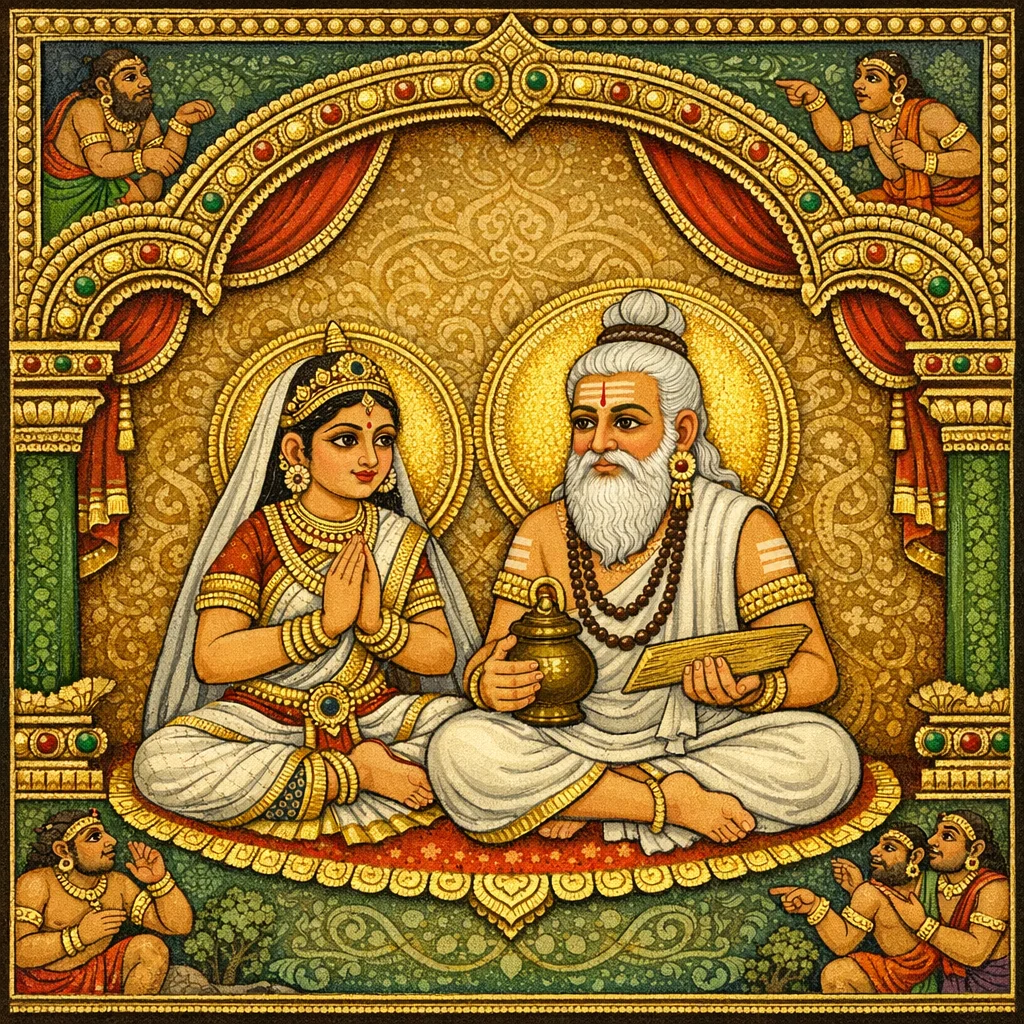
Framed by Sūta’s narration, this chapter continues after a hymn: following intense worship, the deity identified with Īśāna/Nīlalohita grants his presence and then vanishes. The story then turns to a plot‑driving dialogue between Jayantī and Kāvyā (the Bhārgava preceptor, Śukra, guru of the Asuras). Kāvyā asks about her ascetic power and purpose; pleased by her steady devotion, humility, self‑restraint, and affection, he offers a boon (varadāna) though difficult. Jayantī, known as Māhendrī, requests a hidden union: that she and Kāvyā remain together for ten years, made invisible to all beings through māyā. The consequence is politico‑theological: Diti’s sons (Daityas/Asuras) search for their guru Kāvyā but cannot find him, and even Bṛhaspati understands that Jayantī has “confined” Kāvyā by the boon for a decade, temporarily shifting the balance between Devas and Asuras.
Shlokas
Verse 1
इति श्रीब्रह्माण्डे महापुराणे वायुप्रोक्ते मध्यमभागे तृतीय उपोद्धातपादे स्तवसमाप्तिर्नाम द्विसप्ततितमो ऽध्यायः // ७२// सूत उवाच एवमाराध्य देवेशमीशानं नीललोहितम् / प्रह्वो ऽतिप्रणतस्तस्मै प्राञ्जलिर्वाक्यमब्रवीत्
Thus, in the Śrī Brahmāṇḍa Mahāpurāṇa, in the middle section, in the third introductory division spoken by Vāyu, the seventy-second chapter called “Conclusion of the Hymn” is completed. Sūta said: Having thus worshipped the Lord of the gods, Īśāna Nīlalohita, Prahva bowed deeply, joined his palms, and spoke to Him.
Verse 2
काव्यस्य गात्रं संस्पृश्य हस्तेन प्रीतिमान्भवः / निकामं दर्शनं दत्त्वा तत्रैवान्तरधाद्धरः
Touching Kāvya’s body with his hand, he became filled with delight; granting the longed-for vision, Hari vanished there and then.
Verse 3
ततः सो ऽतर्हिते तास्मिन्देवे सानुचरे तदा / तिष्ठन्तीं प्राजलिर्भूत्वा जयन्तीमिदमब्रवीत्
Then, when that god with his attendants had disappeared, he stood with folded hands and spoke thus to Jayantī as she remained there.
Verse 4
कस्य त्वं सुभगे का वा दुःखिते मयि दुःखिता / सहता तपसा युक्तं किमर्थं मां जिगीष्सि
O blessed beauty, whose are you—who indeed are you? When I am sorrowful, you too are sorrowful. Endowed with austerity and endurance, why do you seek to conquer me?
Verse 5
अनया सततं भक्त्या प्रश्रयेण दमेन च / स्नेहेन चैव सुश्रोणि प्रीतो ऽस्मि वरवर्णिनि
O fair-waisted one, O radiant lady: by your constant devotion, humility, self-restraint, and loving affection, I am well pleased.
Verse 6
किमिच्छसि वरारोहे कस्ते कामः समृद्ध्यताम् / तं ते संपूरयाम्यद्य यद्यपि स्यात्सुदुर्लभः
O noble maiden, what do you desire—what wish of yours shall be fulfilled? Even if it be exceedingly hard to obtain, today I shall grant it to you.
Verse 7
एवमुक्ताब्रवीदेनं तपसा ज्ञातुमर्हसि / चिकीर्षितं मे ब्रह्मिष्ठ त्वं हि वेत्थ यथातथम्
Thus she spoke to him: “By austerity (tapas) you are fit to know this. O most steadfast in Brahman, you indeed know, as it truly is, what I intend to do.”
Verse 8
एवमुक्तो ऽब्रवीदेनां दृष्ट्वा दिव्येन चक्षुषा / माहेन्द्री त्वं वरारोहे मद्धितार्थमिहागता
So addressed, he beheld her with divine sight and said: “O fair one of noble form, you are Mahendrī, come here for my welfare.”
Verse 9
मया सह त्वं सुश्रोणि दशवर्षाणि भामिनि / अदृश्यं सर्वभूतैस्तु संप्रयोगमिहेच्छसि
O slender-hipped lady, O radiant one, you wish here to be united with me for ten years, remaining unseen by all beings.
Verse 10
देवीन्द्रनीलवर्णाभेवरारोहे सुलोचने / इमं वृणीष्व कामं त्वं मत्तो वै वल्गुभाषिणि
O noble lady, bright-eyed and radiant as Indra’s sapphire, O sweet-spoken one—choose from me this boon, this desire of yours.
Verse 11
एवं भवतु गच्छावो गृहान्मत्तेभगामिनि / ततः स्वगृहमागम्य जयत्या सहितः प्रभुः
“So be it; let us go home,” O lady whose gait is like an intoxicated elephant. Then the Lord returned to his own dwelling together with Jayatī.
Verse 12
स तया चावसद्देव्या दश वर्षाणि भार्गवः / अदृश्यः सर्वभूतानां मायया संवृतस्तदा
Bhārgava dwelt with that Goddess for ten years; then, veiled by māyā, he became unseen to all beings.
Verse 13
कृतार्थमामतं ज्ञातवा काव्यं सर्वे दितेः सुताः / अभिजग्सुर्गृहं तस्य मुदितास्तं दिदृक्षवः
Knowing that Kāvyā had fulfilled his aim, all the sons of Diti rejoiced; eager to see him, they went to his dwelling.
Verse 14
गता यदा न पश्यन्ति जयत्या संवृतं गुरुम् / लक्षमं तस्य तद् बुद्ध्वा प्रतिजग्मुर्यथागतम्
When they went there, they did not see the guru, hidden by Jayantī; realizing he was not to be seen, they returned as they had come.
Verse 15
बृहस्पतिस्तु संरुद्धं ज्ञात्वा काव्यं वरेण ह / प्रीत्यर्थे दश वर्षाणि जयन्त्या हितकाम्यया
Bṛhaspati, knowing that Kāvyā had been restrained by the power of a boon, stayed (there) for ten years to please Jayantī, who sought his welfare.
Verse 16
बुद्ध्वा तदन्तरं सो ऽथ देवानां मन्त्रचोदितः / काव्यस्य रूपमास्थाय सो ऽसुरान्समभाषत
Perceiving that opening, urged on by the gods’ mantras, he assumed Kāvyā’s form and addressed the asuras.
Verse 17
ततः सो ऽभ्यागतान्दृष्ट्वा बृहस्पतिरुवाच तान् / स्वागतं मम याज्यानां संप्राप्तो ऽस्मि हिताय च
Then, seeing those who had come, Bṛhaspati said to them: “Welcome, you who are worthy of my worship; I have come also for your welfare.”
Verse 18
अहं वो ऽध्यापयिष्यामि प्राप्ता विद्या मया हि याः / ततस्ते हृष्टमनसो विद्यार्थमुपपेदिरे
“I shall teach you the knowledge I have attained.” Then they, joyful at heart, approached him for the sake of learning.
Verse 19
पूर्णे काव्यस्तदा तस्मिन्समये दशवार्षिके / समयान्ते देवयाजी सद्यो जातमतिस्तदा
When that span of ten years was completed, at the term’s end Devayājī’s understanding arose at once.
Verse 20
बुद्धिं चक्रे ततश्चापि याज्यानां प्रत्यवेक्षणे / शुक्र उवाच देवि गच्छाम्यहं द्रष्टुं तव याज्याञ्छुचिस्मिते
Then he resolved to look into those worthy of offering. Śukra said: “O Goddess, O pure-smiling one, I am going to see your yajyas.”
Verse 21
विभ्रान्तप्रेक्षिते साध्वि त्रिवर्णायतलोचने / एवमुक्ताब्रवीद्देवी भज भक्तां महाव्रत / एष ब्रह्मन्सतां धर्मो न धर्मं लोपयामि ते
O virtuous one, with wandering gaze and long eyes of threefold hue—thus addressed, the Goddess replied: “O keeper of the great vow, honor the bhaktas; O Brahman, this is the dharma of the righteous—I shall not diminish your dharma.”
Verse 22
सूत उवाच ततो गत्वा सुरान्दृष्ट्वा देवाचार्येण धीमता
Suta said—then he went forth, beheld the gods, and stood with the wise preceptor of the Devas.
Verse 23
वञ्चितान्काव्यरूपेण वचसा पुनरब्रवीत् / काव्यं मामनुजानीध्वमेष ह्याङ्गिरसो मुनिः
With words cast in poetic guise, he deceived them and spoke again: “Grant me leave as Kāvya; for this is the sage of the Aṅgiras line.”
Verse 24
वञ्चिता बत यूयं वै मयि सक्ते तु दानवाः / श्रुत्वा तथा ब्रुवाणं तं संभ्रान्ता दितिजास्ततः
He said: “Alas, O Dānavas—clinging to me, you have been deceived.” Hearing him thus, the sons of Diti were thrown into alarm.
Verse 25
संप्रैक्षन्तावुभौ तत्र स्थिरासीनौ शुचिस्मितौ / संप्रमूढाः स्थिताः सर्वे प्रापद्यन्त न किञ्चन
There the two sat unmoving, with pure smiles, gazing upon one another; all stood utterly bewildered, finding no refuge in any course.
Verse 26
ततस्तेषु प्रमूढेषु काव्यस्तान्पुनरब्रवीत् / आचार्यो यो ह्ययं काव्यो देवायार्यो ऽयमङ्गिराः
When they were all confounded, Kāvya spoke to them again: “This one is Kāvya, the ācārya; for the Devas, this is the noble Aṅgirā.”
Verse 27
अनुगच्छत मां सर्वे त्यजतैनं बृहस्पतिम् / एवमुक्ते तु ते सर्वे तावुभौ समवेक्ष्य च
“All of you follow me; abandon this Bṛhaspati.” When this was said, they all looked closely at the two of them.
Verse 28
तदासुरा विशेष तु न व्यजानंस्तयोर्द्वयोः / बृहस्पतिरुवाचैनामं भ्रातो ऽयमङ्गिराः
Then the Asuras could not discern any difference between the two. Bṛhaspati said to them, “Brothers, this is Aṅgirā.”
Verse 29
काव्यो ऽहं वो गुरुर्दैत्या मद्रूपो ऽयं बृहस्पतिः / संमोहयति रूपेण मामकेनैष वो ऽसुराः
“O Daityas, I am Kāvya (Śukra), your guru; this Bṛhaspati has assumed my very form. O Asuras, by my likeness he is deluding you.”
Verse 30
श्रुत्वा तस्य वचस्ते वै संमन्त्र्याथ वचो ऽब्रुवन् / अयं नो दशवर्षाणि सततं शास्ति वै प्रभुः
Hearing his words, they conferred and said, “This lord has for ten years continually instructed and governed us.”
Verse 31
एष वै गुरुरस्माकमन्तरेप्सुरयं द्विजाः / ततस्तेदानवाः सर्वे प्रणिपत्याभिवाद्य च
“He alone is our guru; this twice-born seeks to slip within.” Then all those Dānavas bowed down and offered reverent salutations.
Verse 32
वचनं जगृहुस्तस्य विद्याभ्यासेन मोहिताः / ऊचुस्तमसुराः सर्वे क्रुद्धाः संरक्तलोचनाः
Deluded by the practice of learning, they accepted his words. Then all the asuras, wrathful and red-eyed, spoke to him.
Verse 33
अयं गुरुर्हितो ऽस्माकं गच्छ त्वं नासि नो गुरुः / भार्गवो ऽगिरसो वायं भवत्वेषैव नो गुरुः
This teacher is for our welfare; go away—you are not our guru. Let this Bhārgava, of the line of Aṅgirasa, be our guru.
Verse 34
स्थिता वयं निदेशे ऽस्य गच्छ त्वं साधु मा चिरम् / एवमुक्त्वा सुराः सर्वे प्रापद्यन्त बृहस्पतिम्
We stand by his command; go properly—do not linger. Saying so, all the devas sought refuge in Bṛhaspati.
Verse 35
यदा न प्रतिपद्यन्ते तेनोक्तं तन्महद्धितम् / चुकोप भार्गवस्ते षामवलेपेन वै तदा
When they did not accept the great good he had spoken, Bhārgava grew angry because of their arrogance.
Verse 36
बोधितापि मया यस्मान्न मां भजत दानवाः / तस्मात्प्रणष्टसंज्ञा वै पराभवमवाप्स्यथ
Though I have instructed you, the dānavas do not worship me; therefore you will surely lose discernment and meet with defeat.
Verse 37
इति व्याहृत्य तान्काव्यो जगामाथ यथागतम् / शप्तांस्तानसुराञ्ज्ञात्वा काव्येन तु बृहस्पतिः
Having spoken thus, Kāvya (Śukrācārya) departed, returning as he had come. Knowing those asuras to be under a curse, Bṛhaspati reflected upon Kāvya.
Verse 38
कृतार्थः स तदा हृष्टः स्वरूपं प्रत्यपद्यत / बुद्ध्वासुरांस्तदा ब्रष्टान्कृतार्थोंऽतर्द्धिमागमत्
Then, his purpose fulfilled, he rejoiced and returned to his own true form. Realizing that the asuras had fallen from the right way, his task complete, he vanished from sight.
Verse 39
ततः प्रनष्टे तस्मिंस्ते विभ्रान्ता दानवास्तदा / अहो धिग्वञ्चिताः स्नेहात्परस्परमथाब्रुवन्
When he had vanished, the dānavas were thrown into confusion. Then they said to one another, “Alas, shame! Out of affection we have been deceived.”
Verse 40
धर्मतो ऽविमुखाश्चैव कारिता वेधसा वयम् / दग्धाश्चैवोपधायोगात्स्वेस्वे कार्ये तु मायया
The Creator (Vedhas) caused us to remain not turned away from dharma; yet, through the joining of a deceitful stratagem, we were scorched by māyā within our own undertakings.
Verse 41
ततो ऽसुराः परित्रस्ता देवेभ्यस्त्वरिता ययुः / प्रह्लादमग्रतः कृत्वा काव्यस्यानुगमं पुनः
Then the asuras, seized with fear, hurried to the devas; placing Prahlāda in the forefront, they once again followed after Kāvya (Śukrācārya).
Verse 42
ततः काव्यं समासाद्य ह्यभितस्थु रवाङ्मुखाः / तानागतान्पुनर्दृष्ट्वा काव्यो याज्यानुवाच ह
Then, having approached Kavya (Shukracharya), they stood with their faces turned downwards. Seeing them arrived again, Kavya spoke to his disciples.
Verse 43
मया संबोधिताः काले यतो मां नाभ्यनन्दथ / ततस्तेनावलेपेन गता यूयं पराभवम्
I warned you at the proper time, yet you did not heed me. Because of that arrogance, you have met with defeat.
Verse 44
प्रह्लादस्तमथोवाच मानस्त्वं त्यज भार्गव / स्वान्याज्यान्भजमानांश्च भक्तांश्चैव विशेषतः
Prahlada then spoke to him: 'O Bhargava, cast aside your resentment. Accept your disciples who worship you, and especially your devotees.
Verse 45
त्वय्यदृष्टे वयं तेन देवाचार्येण मोहिताः / भक्तानर्हसि नस्त्रातुं ज्ञात्वा दीर्घेण चक्षुषा
When you were unseen, we were deluded by that Preceptor of the Gods. You ought to save us, your devotees, knowing this with your far-reaching vision.
Verse 46
यदि नस्त्वं न कुरुषे प्रसादं भृगुनन्दन / अपध्यातास्त्वया ह्यद्य प्रवेक्ष्यामोरसातलम्
If you do not grant us your grace, O Son of Bhrigu, then rejected by you today, we shall enter Rasatala.
Verse 47
सूत उवाच ज्ञात्वा काव्यो यथातत्त्वं कारुण्येन महीयसा / एवं शुक्रो ऽनुनीतः संस्ततः कोपं न्यवर्त्तयत्
Suta said: Kāvya (Śukrācārya), knowing the truth as it truly was and moved by great compassion—thus appeased and praised—Śukra turned back his wrath.
Verse 48
उवाचेदं न भेतव्यं गन्तव्यं न रसातलम् / अवश्यंभावीह्यर्थो ऽयं प्राप्तो वो मयि जाग्रति
He said: Fear not; you need not go to Rasātala. This matter was inevitable, and it has come upon you while I remained awake and watchful.
Verse 49
न शक्यमन्यथाकर्त्तुं दिष्टं हि बलवत्तरम् / संज्ञा प्रनष्टा या चेयं कामं तां प्रतिलप्स्यथ
It cannot be made otherwise, for destiny is the stronger. And this saṃjñā—this lost awareness—you shall surely regain.
Verse 50
प्राप्तः पर्यायकालो वा इति ब्रह्माभ्यभाषत / मत्प्रसादाच्च युष्माभिर्भुक्तं त्रैलोक्यमूर्ज्जितम्
Brahmā declared: “The time of your turn has come.” And by my grace you have enjoyed the mighty sovereignty of the three worlds.
Verse 51
युगाख्या दश संपूर्णा देवानाक्रम्य मूर्द्धनि / तावन्तमेव कालं वै ब्रह्मा राज्यमभाषत
Rising above the very heads of the gods, ten periods called yugas were completed; for that same span of time Brahmā ordained the kingship and its rule.
Verse 52
सावर्णिके पुनस्तुभ्यं राज्यं किल भविष्यति / लोकानामीश्वरो भावी पौत्रस्तव पुनर्बलिः
In the Sāvarṇika Manvantara, your kingship shall indeed return to you. Your grandson shall again be Bali, Lord of the worlds.
Verse 53
एवं कालमयं प्रोक्तः पौत्रस्ते ब्रह्मणा स्वयम् / तथाहृतेषु लोकेषु न शोको न किलाभवत्
Thus did Brahmā himself speak this time-ordained word concerning your grandson. And when the worlds were taken away, no sorrow arose at all.
Verse 54
यस्मात्प्रवृत्तयश्चास्य न कामैरभिसंधिताः / तस्मादजेन प्रीतेन दत्तं सावर्णिके ऽन्तरे
Because his undertakings were not bound to desires, the pleased Ajā (Brahmā) granted this gift in the Sāvarṇika interval.
Verse 55
देवराज्यं बलेर्भाव्यमिति मामीश्वरो ऽब्रवीत् / तस्माददृश्यो भूतानां कालाकाङ्क्षी स तिष्ठति
The Lord said to me, “The sovereignty of the gods is destined for Bali.” Therefore he remains unseen by beings, awaiting the appointed time.
Verse 56
प्रीतेन चामरत्वं वै दत्तं तुभ्यं स्वयंभुवा / तस्मान्निरुत्सुकस्त्वं वै पर्यायं सहसाकुलः
The pleased Svayambhū has granted you immortality as well. Therefore, though free of longing, you grow suddenly restless as you await your turn.
Verse 57
न च शक्यं मया तुभ्यं पुर स्ताद्वै विसर्पितुम् / ब्रह्मणा प्रतिषिद्धो ऽस्मि भविष्यं जानता प्रभो
O Lord, I cannot move forward before you; Brahmā, who knows what is to come, has forbidden me.
Verse 58
इमौ च शिष्यौ द्वौ मह्यं तुल्यावेतौ बृहस्पतेः / दैवतैः सह संरब्धान्सर्वान्वो धारयिष्यतः
These two disciples of mine are equal to Bṛhaspati; they will hold back all of you who rage, even together with the gods.
Verse 59
सूत उवाच एवमुक्तास्तु दैतेया काव्येनाक्लिष्टकर्मणा / ततस्ताभ्यां ययुः सार्द्धं प्रह्लादप्रमुखास्तदा
Sūta said: When Kāvya, tireless in his deeds, spoke thus, the Daityas then set out together with those two, led by Prahlāda.
Verse 60
अवश्यभाव्यमर्थं तं श्रुत्वा दैतेयदानवाः / सहसा शंसमानास्ते जयं काव्येन भाषितम्
Hearing that matter which was bound to come to pass, the Daitya-Dānavas at once praised the “victory” proclaimed by Kāvya.
Verse 61
दंशिताः सायुधाः सर्वे ततो देवान्समाह्वयन् / अथ देवासुरान्दृष्ट्वा संग्रामे समुपस्थितान्
Then all of them, armored and bearing weapons, called out a challenge to the gods; and seeing gods and asuras assembled for battle…
Verse 62
ततः संवृतसन्नाहा देवास्तान्समयोधयन् / देवासुरे ततस्तस्मिन्वर्त्तमाने शतं समाः / अजयन्तासुरा देवान्नग्रा देवा अमन्त्रयन्
Then the gods, fully armed in mail, fought them in fierce battle. The war between Devas and Asuras went on for a hundred years. At last the Asuras overcame the gods, and the gods were left helpless and without counsel.
Verse 63
देवा ऊचुः शण्डामर्कप्रभावेण जिताः स्मस्त्वसुरैर्वयम् / तस्माद्यज्ञं समुद्दिश्य कार्यं चात्महितं च यत्
The gods said: “By the power of Śaṇḍa and Amarka we have been conquered by the Asuras. Therefore, let us turn to the yajña and do what must be done for our own welfare.”
Verse 64
यज्ञेनोपाह्वयिष्यामस्ततो जेष्यामहे ऽसुरान् / अथोपामन्न्रयन्देवाः शण्डामकारै तु तावुभौ
“By the yajña we shall invoke divine power; then we shall conquer the Asuras.” Saying so, the gods summoned both Śaṇḍa and Amarka and addressed them with due reverence.
Verse 65
यज्ञे चाहूय तौ प्रोक्तौ त्यजन्तामसुरा द्विजौ
Calling them to the yajña, the gods said: “O you two dvijas, abandon the Asuras.”
Verse 66
ग्रहं तु वां ग्रहीष्यामो ह्यनुजित्य तु दानवान् / एवं तत्यजतुस्तौ तु षण्डामकारै तदा सुरान्
“After we have subdued the Dānavas, we shall accept you and grant you fitting honor and station.” Hearing this, Śaṇḍa and Amarka then abandoned the gods.
Verse 67
ततो देवा जयं प्राप्ता दानवाश्च पराभवम् / देवासुरान्पराभाव्य शण्डामर्कावुपागमन्
Then the gods attained victory, and the Dānavas met with defeat. Having overcome the Asuras, they approached Śaṇḍa and Amarka.
Verse 68
काव्यशापभिभूताश्च अनाधाराश्च ते पुनः / बाध्यमानास्तदा देवैर्विविशुस्ते रसातलम्
Overwhelmed by Kāvyā’s curse, they again became without support. Pressed hard by the gods, they then entered Rasātala.
Verse 69
एवं निरुद्यमास्ते वै कृता शक्रेण दानवाः / ततः प्रभृति शापेन भृगुनैमित्तिकेन च
Thus Śakra (Indra) rendered the Dānavas devoid of enterprise. From that time onward, through the curse occasioned by Bhṛgu, this condition endured.
Verse 70
यज्ञे पुनः पुनर्विष्णुर्यज्ञे ऽथ शिथिले प्रभुः / कर्तुं धर्मव्यवस्थान मधर्मस्य प्रणाशनम्
In the sacrifice (yajña), Viṣṇu manifests again and again; and when the yajña grows slack, the Lord comes to establish the order of dharma and to destroy adharma.
Verse 71
प्रह्नादस्य निदेशे तु ये ऽसुरा न व्यवस्थिताः / मनुष्यवध्यांस्तान्सर्वान्ब्रह्मा व्याहरत प्रभुः
But those Asuras who did not abide by Prahlāda’s command—Lord Brahmā declared them all to be ‘slayable by human beings’.
Verse 72
धर्मान्नारायणस्तस्मात्संभूतश्चाक्षुषे ऽन्तरे / यज्ञं प्रवर्त्तयामास वैन्यो वैवस्वते ऽन्तरे
Thus, from Dharma, Nārāyaṇa arose in the Cākṣuṣa Manvantara; and in the Vaivasvata Manvantara, Vainya set the sacred yajña in motion.
Verse 73
प्रादुर्भावे तु वैन्यस्य ब्रह्मैवासीत्पुरोहितः / चतुर्थ्यां तु युगाख्यायामापन्नेषु सुरेष्वथ
At Vainya’s manifestation, Brahmā himself served as the purohita; and in the age called the fourth Yuga, when the gods had fallen into distress.
Verse 74
संभुतः स समुद्रान्तर्हिरण्यकशिपोर्वधे / द्वितीयो नरसिंहो ऽभूद्रौद्रः सुतपुरस्सरः
He arose within the ocean’s depths for the slaying of Hiraṇyakaśipu; he was the second Narasiṃha—fierce and wrathful, foremost among the sons.
Verse 75
यजमानं तु दैत्येन्द्रमदित्याः कुलनन्दनः / द्विजो भूत्वा शुभे काले बलिं वैरोचनं जगौ
To the yajamāna, lord of the Daityas, the delight of Aditi’s line (Viṣṇu) came at an auspicious time, taking the form of a twice-born brāhmaṇa, and addressed Bali Vairocana.
Verse 76
त्रैलोक्यस्य भवान्राजा त्वयि सर्वं प्रतिष्ठितम् / दातुमर्हसि मे राजन्विक्रमांस्त्रीनिति प्रभुः
The Lord said: “O King, you are the ruler of the three worlds; all is established in you. Therefore, O King, grant me the gift of three strides of land.”
Verse 77
ददामीत्येव तं राजा बलिर्वैरोचनो ऽब्रवीत् / वामनं तं च विज्ञाय ततो ऽदान्मुदितः स्वयम्
King Bali, son of Virocana, declared, “I shall give.” Recognizing that one as Vāmana, he rejoiced and himself bestowed the gift.
Verse 78
स वामनो दिवं खं च पृथिवीं च द्विजोत्तमाः / त्रिभिः क्रमैर्विश्वमिदं जगदाक्रामत प्रभुः
O best of the twice-born! That Lord Vāmana, with three strides, encompassed heaven, the mid-sky, and earth—this entire universe.
Verse 79
अत्यरिच्यत भूतात्मा भास्करं स्वेन तेजसा / प्रकाशयन्दिशः सर्वाः प्रदिशश्च महायशाः
The greatly renowned Spirit of beings outshone the sun with his own radiance, illuminating every direction and all the intermediate quarters.
Verse 80
शुशुभे स महाबाहुः सर्वलोकान्प्रकाशयन् / आसुरीं श्रियमाहृत्य त्रींल्लोकांश्च जनार्द्दनः
Mighty-armed Janārdana shone forth, illumining all the worlds; he seized the asuric splendor and brought the three worlds under his sway.
Verse 81
स पुत्रपौत्रानसुरान्पातालतलमानयन् / नमुचिः शंबरश्चैव प्रह्रादश्चैव विष्णुना
By Vishnu, the asuras—together with their sons and grandsons—were brought down to the depths of Pātāla; Namuci, Śambara, and Prahlāda as well.
Verse 82
क्रूरा हता विनिर्दूता दिशः संप्रतिपेदिरे / महाभूतानि भूतात्मा सविशेषाणि माधवः
When the cruel were slain and driven away, the quarters became calm; Madhava, the Soul of beings, manifested the great elements with their distinct attributes.
Verse 83
बलिं चं सबलं विप्रास्तत्राद्भुतमदर्शयत् / तस्य गात्रे जगत्सर्वमात्मानमनुपश्यति
There the brahmanas revealed Bali with his host in a wondrous vision; within his limbs the whole universe beholds its own Atman.
Verse 84
न किञ्चिदस्ति लोकेषु यदव्याप्तं महात्मना / तद्वै रूपमुपेन्द्रस्य देवादानवमानवाः
In all the worlds there is nothing that is not pervaded by that Great Soul; such indeed is the form of Upendra—O devas, danavas, and humans.
Verse 85
दृष्ट्वा संमुमुहुः सर्वे विष्णुतेजोविमोहिताः / बलिः सितो महापाशैः सबन्धुः ससुत्दृद्गणः
Seeing this, all were stunned, bewildered by Vishnu’s radiance; Bali was bound with mighty nooses, together with his kin and his sons.
Verse 86
विरोचनकुलं सर्वं पाताले सन्निवेशितम् / ततः सर्वामरैश्वर्यं दत्त्वेन्द्राय महात्मने
All the lineage of Virocana was settled in Patala; then the entire sovereignty of the immortals was bestowed upon great Indra.
Verse 87
मानुषेषु महाबाहुः प्रादुरास जनार्द्दनः / एतास्तिस्रः समृतास्तस्य दिव्याः संभूतयः शुभाः
Among humankind, Janārdana of mighty arms manifested. These three are remembered as His divine, auspicious incarnate appearances.
Verse 88
मानुष्यः सप्त यास्तस्य साग्रगास्ता निबोधत / त्रेतायुगे तु दशमे दत्तात्रेयो बभूव ह
Know His seven foremost manifestations in human form. In the Tretā Yuga, at the tenth occasion, Dattātreya indeed came to be.
Verse 89
नष्टे धर्मे चतुर्थश्च मार्कण्डेयपुः सरः / पञ्चमः पञ्चदश्यां तु त्रेतायां संबभूव ह
When dharma had perished, the fourth was reckoned as Mārkaṇḍeya, the foremost. And in the Tretā, at the fifteenth occasion, the fifth manifestation arose.
Verse 90
मान्धाता चक्रवर्त्तित्वे तस्योतथ्यः पुरस्सरः / एकोनविंशयां त्रेतायां सर्वक्षत्रान्तकृद्विभुः
As Mandhātā, the universal emperor, Utathya is spoken of as his forerunner. In the nineteenth occasion of the Tretā, the Sovereign appeared as the ‘ender of all kṣatriyas’.
Verse 91
जामदग्न्यस्तदा षष्ठे विश्पामित्रपुरस्सरः / चतुर्विंशे युगे रामो वसिष्ठेन पुरोधसा
Then, as the sixth, Jāmadagnya (Paraśurāma) appeared, with Viśvāmitra as his forerunner. In the twenty-fourth age, Rāma arose, with Vasiṣṭha as his royal priest.
Verse 92
सप्तमो रावणस्यार्थे जज्ञे दशरथात्मजः / अष्टमो द्वापरे विष्णुरष्टाविंशे पराशरात्
For the purpose concerning Rāvaṇa, in the seventh incarnation was born the son of Daśaratha. In the Dvāpara age, Viṣṇu appeared as the eighth, and in the twenty-eighth he arose from Parāśara.
Verse 93
वेदव्यासस्ततो जज्ञे जातूकर्ण्यपुरस्सरः / तथैव नवमे विष्णुरदित्याः कश्यपात्मजः
Then was born Vedavyāsa, going forth in the forefront with Jātūkarṇya. Likewise, in the ninth incarnation Viṣṇu appeared as the son of Kaśyapa, born of Aditi.
Verse 94
देवक्यां वसुदेवात्तु जातो गार्ग्यपुरस्सरः / अप्रमेयो नियोगश्च यतकामवरो वशी
In Devakī, from Vasudeva, he was born, going forth in the forefront like Gārgya. He is immeasurable; his descent is by divine appointment; he grants boons as desired and is the all-subduing Lord.
Verse 95
क्रीडते भगवांल्लोके बालः क्रीडनकेरिव / न प्रमातुं महाबाहुं शक्यो ऽसौ मधुसूदनः
The Blessed Lord sports in the world like a child, like an infant playing with a toy. That mighty-armed Madhusūdana cannot be measured or fully comprehended by anyone.
Verse 96
परं ह्यवरमेतस्माद्विश्वरूपान्न विद्यते / अष्टाविंशतिके तद्वद्द्वापरस्याथ संक्षये
Nothing is higher or lower than this Universal Form (Viśvarūpa). So it is also in the twenty-eighth (in the sequence of incarnations); then the Dvāpara age comes to its end.
Verse 97
नष्टे धर्मे तदा जज्ञे विष्णुर्वृष्णिकुले प्रभुः / कर्तुं धर्मव्यवस्थानमसुराणां प्रणाशनम् / माहयन्सर्वभूतानि योगात्मा योगमायया
When dharma had perished, then Lord Vishnu was born in the Vrishni line. To re-establish the order of dharma and to destroy the asuras, the Yogātman glorified all beings through Yogamāyā.
Verse 98
प्रविष्टो मानुषीं योनिं प्रच्छन्नश्चरते महीम्
Entering a human womb, he moves upon the earth in a hidden guise.
Verse 99
विहारार्थं मनुष्येषु सांदीपनिपुरस्सरः / यत्र कंसं च शाल्वं च द्विविदं च महासुरम्
For the sake of divine play among humankind, he went forth toward the city of Sāndīpani, where were Kamsa, Śālva, and Dvivida, the great asura.
Verse 100
अरिष्ठं वृषभं चैव पूतनां केशिनं हयम् / नागं कुवलयापीडं मल्लं राजगृहाधिपम्
He also subdued Ariṣṭa the bull, Pūtanā, Keśī the horse, the elephant Kuvalayāpīḍa, the malla wrestler, and the lord of Rājagṛha.
Verse 101
दैत्यान्मानुषदेहस्थान्सूदयामास वीर्यवान् / छिन्नं बाहुसहस्रं च बाणस्याद्भुतकर्मणा
The Mighty One slew the daityas dwelling in human bodies; and by a wondrous deed he severed the thousand arms of Bāṇāsura.
Verse 102
नरकश्च हतः संख्ये यवनश्च महाबलः / हृतानि च महीपानां सर्वरत्नानि तेजसा
In battle, Naraka was slain, and Yavana too, the mighty one; and by radiant prowess all the kings’ treasures of gems were seized.
Verse 103
कुरुवीराश्च निहताः पार्थिवा ये रसातले / एते लोकहितार्थाय प्रादुर्भावा महात्मनः
The Kuru heroes too were slain—those kings who dwelt in Rasatala; these great souls manifested solely for the welfare of the worlds.
Verse 104
अस्मिन्नेव युगे क्षीणे संध्याशिष्टे भविष्यति / कल्किर्विष्णुयशा नाम पाराशर्यः प्रतापवान्
When this very age is spent and only the twilight remains, there shall arise Kalki—valiant Parāśarya—named Viṣṇuyaśā.
Verse 105
दशमो भाव्यसंभूतो याज्ञवल्क्यपुरस्सरः / अनुकर्षन्स वै सेनां हस्त्यश्वरथसंकुलाम्
He shall be the future tenth incarnation; with Yājñavalkya at the fore, he will draw forth an army thronged with elephants, horses, and chariots.
Verse 106
प्रगृहीतायुधैर्विप्रैर्वृतः शतसहस्रशः / नात्यर्थं धार्मिका ये च ये च धर्मद्विषः क्वचित्
He will be surrounded by hundreds of thousands of brāhmaṇas bearing weapons; and even those not greatly righteous—indeed, at times hostile to dharma—will be there as well.
Verse 107
उदीच्यान्मध्यदेशांश्च तथा विन्ध्या परान्तिकान् / तथैव दाक्षिणात्यांश्च द्रविडान्सिंहलैः सह
He brought under his sway the peoples of the North and of Madhyadeśa, the borderlands by the Vindhya, and likewise the Southerners—the Dravidas—together with the Siṃhalas.
Verse 108
गान्धारान्पारदांश्चैव पह्लवान्पवनाञ्छकान् / तुबराञ्छबरांश्चैव पुलिन्दान्बरदान् वसान्
He subdued the Gandhāras and the Pāradas, the Pahlavas, the Pavanas, and the Śakas; and also the Tubaras, Chabaras, Pulindas, Baradas, and Vasas.
Verse 109
लंपाकानाङ्घ्रकान्पुण्ड्रान्किरातांश्चैव स प्रभुः / प्रवृत्तचक्रो बलवान्म्लेच्छानामन्तकृद्बली
That Lord subdued the Lampākas, the Āṅghras, the Puṇḍras, and the Kirātas as well; setting his wheel in motion, he became mighty—the valiant bringer of the mlecchas’ end.
Verse 110
अदृश्यः सर्वभूतानां पृथिवीं विचरिष्यति / मानवः स तु संजज्ञे देवसेनस्य धीमतः
Invisible to all beings, he shall roam the earth. He was born as a man in the house of the wise Devasena.
Verse 111
पूर्वजन्मनि विष्णुर्यः प्रमितिर्नाम वीर्यवान् / गोत्रेण वै चन्द्रमसः पूर्णे कलियुगे ऽभवत्
In a former birth he was the valorous Pramiti, of Viṣṇu’s own nature; and when the Kaliyuga had fully come to pass, he appeared in the Candramasa gotra.
Verse 112
इत्येतास्तस्य देवस्य दक्षसंभूतयः स्म-ताः / तन्तं कालं च कायं च तत्तदुद्दिश्य कारणम्
Thus are remembered these births of that Deity, sprung from Daksha; pointing to the thread, to Time, and to the body, the corresponding cause is set forth.
Verse 113
अंशेन त्रिषु लोकेषु तास्ता योनीः प्रपत्स्यते / पञ्चविंशे स्थितः कल्पे पञ्चविंशत्स वै समाः
With a portion of himself he enters those various wombs in the three worlds; abiding in the twenty-fifth kalpa, he remains indeed for twenty-five years.
Verse 114
विनिघ्नन्सर्वभूतानि मानुषानेव सर्वशः / कृत्वा बीजावशेषां तु महीं क्रूरेण कर्मणा
Slaying all beings everywhere—humans above all—by a cruel deed he leaves the earth with only a remnant of seed.
Verse 115
शान्तयित्वा तु वृषलान्प्रायशस्तान धार्मिकान् / ततः स वै तदा कल्किश्चरितार्थः ससैनिकः
But after pacifying the vṛṣalas—most of whom still upheld dharma—then Kalki, with his host, becomes fulfilled in his purpose.
Verse 116
कर्मणा निहता ये तु सिद्धास्ते तु पुनः स्वयम् / अकस्मात्कुपितान्योन्यं भविष्यन्ति च मोहिताः
Those siddhas who were slain by that deed will arise again of themselves; suddenly deluded, they will grow wrathful toward one another.
Verse 117
क्षपयित्वा तु तान्सर्वान्भाविनार्थेन चोदितः / गङ्गायमुनयोर्मध्ये निष्ठां प्राप्स्यति सानुगः
Having destroyed them all, urged on by a purpose yet to come, he with his followers shall attain steadfast observance between the Gaṅgā and the Yamunā.
Verse 118
ततो व्यतीते कल्पे तु समाप्ते सहसैनिके / नृपेष्वथ विनिष्टेषु तदा त्वप्रग्रहाः प्रजाः
Then, when that kalpa has passed and ended along with its mighty armies, and the kings have perished, the people will become unrestrained and without governance.
Verse 119
रक्षणे विनिपृत्ते तु हत्वा चान्योन्यमाहवे / परस्परत्दृतस्वाश्च निरानन्दाः सुदुःखिताः
When protection has fallen away, they will slay one another in battle and seize each other’s wealth; joyless, they will be grievously afflicted.
Verse 120
पुराणि हित्वा ग्रामांश्च तुल्यास्ता निष्परिग्रहाः / प्रनष्टश्रुतिधर्माश्चनष्टधर्माश्रमास्तथा
They will abandon the ancient towns and villages; all will be alike, without possessions. The dharma of the Śruti will be lost, and the order of the dharma-āśramas will likewise perish.
Verse 121
ह्रस्वा अल्पायुषश्चैव भविष्यन्ति वनौकसः / सरित्पर्वतसेविन्यः पत्रमूलफलाशनाः
Those who dwell in the forests will be short of stature and short-lived; they will resort to rivers and mountains, living on leaves, roots, and fruits.
Verse 122
चीरपत्राजिनघराः संकरं घोरमास्थिताः / अल्पायुषो नष्टवार्ता बह्वाबाधाः सुदुःखिताः
Clad in rags, leaves, and deer-skins, they will resort to a dreadful confusion of dharma. Short-lived, bereft of the tidings of right conduct, afflicted by many troubles, they will be deeply miserable.
Verse 123
एवं काष्ठामनुप्राप्ताः कलिसंध्यांशके तदा / प्रजाः क्षयं प्रयास्यन्ति सार्द्धं कलियुगेन तु
Thus, when they reach that extremity in the twilight-portion of Kali, the peoples will pass into decline together with the Kali Yuga itself.
Verse 124
क्षीणे कलियुगे तस्मिन्प्रवृत्ते च कृते पुनः / प्रपत्स्यन्ते यथान्यायं स्वभावादेव नान्यथा
When that Kali Yuga has waned and the Kṛta Yuga begins anew, people will, by their very nature—no otherwise—fall into conduct that accords with justice.
Verse 125
इत्येतत्कीर्त्तितं सर्वं देवासुरविचेष्टितम् / यदुवंशप्रसंगेन महद्वो वैष्मवं यशः
Thus has all the striving of devas and asuras been recounted; and, in connection with the lineage of Yadu, great Vaiṣṇava glory has been proclaimed for you.
Verse 126
तुर्वसोस्तु प्रवक्ष्यामि पूरोर्द्रुह्योरनोस्तथा
Now I shall speak of Turvasu, and likewise of Puru, Druhyu, and Anu.
Frequently Asked Questions
Jayantī, identified as Māhendrī, receives a boon from Kāvyā (Śukra) and uses it to remain with him for ten years while both are concealed from all beings by māyā, disrupting the Asuras’ access to their preceptor.
Kāvyā is a Bhārgava authority and the Asura-guru; his temporary withdrawal affects the Daityas (Diti’s sons) and is noticed by Bṛhaspati, highlighting how guru-lineage power mediates cosmic politics beyond mere battlefield conflict.
No—based on the sampled verses, the content centers on Jayantī–Kāvyā and Deva–Asura preceptor dynamics rather than Lalitopakhyana’s Śākta theology (e.g., Lalitā, Bhāṇḍāsura) or specific vidyā/yantra exegesis.