Adhyaya 16
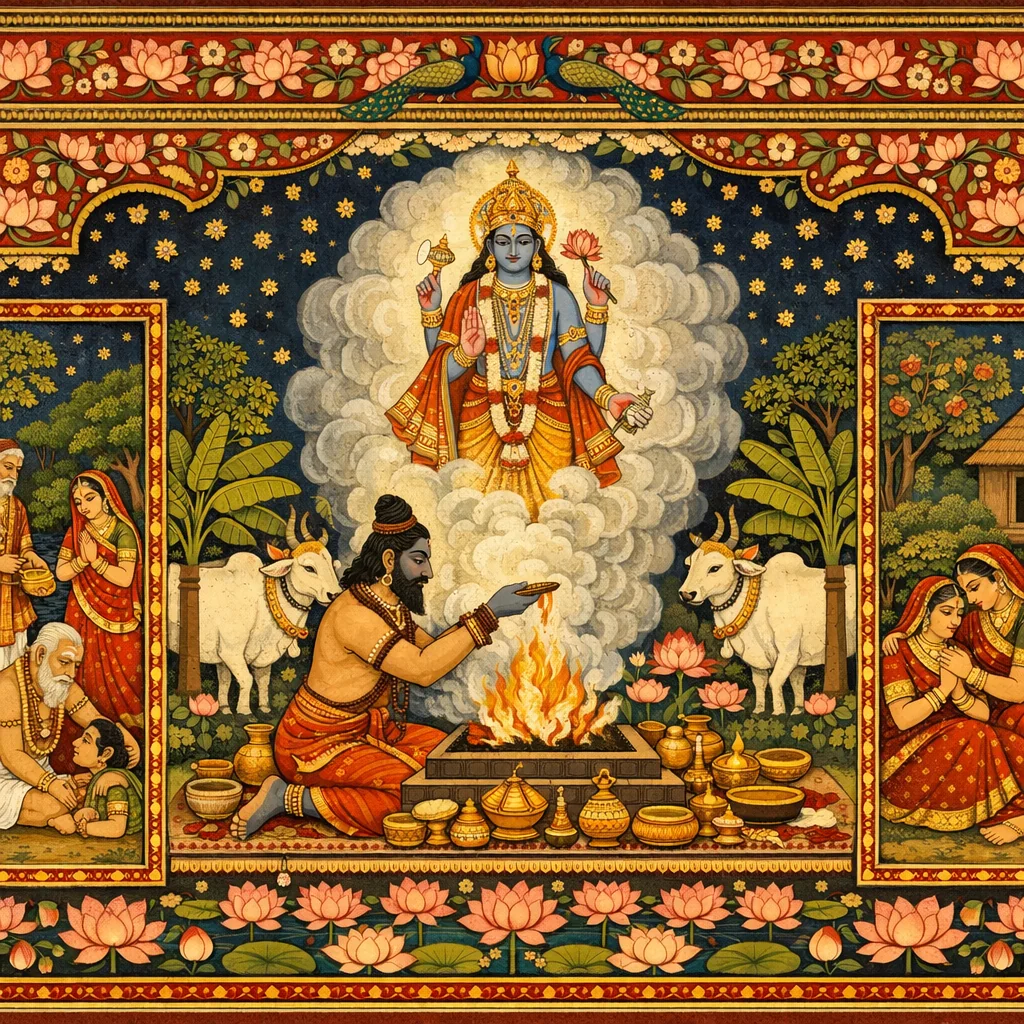
Paraśurāma Avenges Jamadagni; Restoration Through Sacrifice; Viśvāmitra’s Line and Devarāta (Śunaḥśepha)
Śukadeva narrates Paraśurāma's strict obedience in executing his mother Reṇukā and brothers upon Jamadagni's order, then reviving them via a boon. Following Jamadagni's murder by Kārtavīryārjuna’s sons, Paraśurāma annihilates the corrupt kṣatriya race twenty-one times. He performs sacrifices to Lord Vāsudeva, revives his father, and retires to Mahendra Mountain. The chapter concludes with Viśvāmitra’s lineage and the adoption of Śunaḥśepha (Devarāta).
Shlokas
Verse 1
श्रीशुक उवाच पित्रोपशिक्षितो रामस्तथेति कुरुनन्दन । संवत्सरं तीर्थयात्रां चरित्वाश्रममाव्रजत् ॥ १ ॥
Śrī Śukadeva said: O Parīkṣit, delight of the Kuru line, when Lord Paraśurāma received his father’s instruction, he at once assented, saying, “So be it.” For a full year he journeyed on pilgrimage to sacred tīrthas, and then returned to his father’s āśrama.
Verse 2
कदाचिद् रेणुका याता गङ्गायां पद्ममालिनम् । गन्धर्वराजं क्रीडन्तमप्सरोभिरपश्यत ॥ २ ॥
Once, Reṇukā, the wife of Jamadagni, went to the bank of the Gaṅgā to fetch water. There she beheld Citraratha, king of the Gandharvas, adorned with a garland of lotuses, sporting in the Gaṅgā with celestial Apsarās.
Verse 3
विलोकयन्ती क्रीडन्तमुदकार्थं नदीं गता । होमवेलां न सस्मार किञ्चिच्चित्ररथस्पृहा ॥ ३ ॥
She had gone to the river to fetch water, but as she watched Citraratha at play, a slight longing arose within her, and she forgot that the hour for the homa, the fire sacrifice, was slipping away.
Verse 4
कालात्ययं तं विलोक्य मुने: शापविशङ्किता । आगत्य कलशं तस्थौ पुरोधाय कृताञ्जलि: ॥ ४ ॥
Later, realizing that the time had been exceeded, Reṇukā feared her sage-husband’s curse. Returning, she set the waterpot before him and stood with folded hands in humble reverence.
Verse 5
व्यभिचारं मुनिर्ज्ञात्वा पत्न्या: प्रकुपितोऽब्रवीत् । घ्नतैनां पुत्रका: पापामित्युक्तास्ते न चक्रिरे ॥ ५ ॥
The great sage Jamadagni, discerning the adulterous impulse within his wife’s mind, became enraged and said, “My sons, slay this sinful woman!” Yet the sons, though commanded, did not carry out his order.
Verse 6
राम: सञ्चोदित: पित्रा भ्रातृन् मात्रा सहावधीत् । प्रभावज्ञो मुने: सम्यक् समाधेस्तपसश्च स: ॥ ६ ॥
Jamadagni commanded Rama (Paraśurāma) to slay his disobedient brothers and his mother, who had committed adultery in the mind. Knowing his father’s power, born of austerity and samādhi, Lord Paraśurāma at once killed his mother and brothers.
Verse 7
वरेणच्छन्दयामास प्रीत: सत्यवतीसुत: । वव्रे हतानां रामोऽपि जीवितं चास्मृतिं वधे ॥ ७ ॥
Jamadagni, son of Satyavatī, pleased with Paraśurāma, offered him any boon. Rama replied, “Let my mother and brothers whom I have slain live again, and let them not remember being killed by me—this is the blessing I seek.”
Verse 8
उत्तस्थुस्ते कुशलिनो निद्रापाय इवाञ्जसा । पितुर्विद्वांस्तपोवीर्यं रामश्चक्रे सुहृद्वधम् ॥ ८ ॥
Thereafter, by Jamadagni’s boon, they at once rose up safe and joyful, as if easily awakened from deep sleep. Paraśurāma had slain his own kin only by his father’s command, fully aware of his father’s ascetic power and learning.
Verse 9
येऽर्जुनस्य सुता राजन् स्मरन्त: स्वपितुर्वधम् । रामवीर्यपराभूता लेभिरे शर्म न क्वचित् ॥ ९ ॥
O King Parīkṣit, the sons of Kārtavīryārjuna, defeated by Paraśurāma’s superior might, never found happiness, for they continually remembered the slaying of their father.
Verse 10
एकदाश्रमतो रामे सभ्रातरि वनं गते । वैरं सिषाधयिषवो लब्धच्छिद्रा उपागमन् ॥ १० ॥
Once, when Rama (Paraśurāma) left the āśrama for the forest with his brothers, the sons of Kārtavīryārjuna, eager to exact revenge, seized the opportunity and approached Jamadagni’s dwelling.
Verse 11
दृष्ट्वाग्न्यागार आसीनमावेशितधियं मुनिम् । भगवत्युत्तमश्लोके जघ्नुस्ते पापनिश्चया: ॥ ११ ॥
The sons of Kārtavīryārjuna were determined to commit sinful deeds. Therefore when they saw Jamadagni sitting by the side of the fire to perform yajña and meditating upon the Supreme Personality of Godhead, who is praised by the best of selected prayers, they took the opportunity to kill him.
Verse 12
याच्यमाना: कृपणया राममात्रातिदारुणा: । प्रसह्य शिर उत्कृत्य निन्युस्ते क्षत्रबन्धव: ॥ १२ ॥
With pitiable prayers, Reṇukā, the mother of Paraśurāma and wife of Jamadagni, begged for the life of her husband. But the sons of Kārtavīryārjuna, being devoid of the qualities of kṣatriyas, were so cruel that despite her prayers they forcibly cut off his head and took it away.
Verse 13
रेणुका दु:खशोकार्ता निघ्नन्त्यात्मानमात्मना । राम रामेति तातेति विचुक्रोशोच्चकै: सती ॥ १३ ॥
Lamenting in grief for the death of her husband, the most chaste Reṇukā struck her own body with her hands and cried very loudly, “O Rāma, my dear son Rāma!”
Verse 14
तदुपश्रुत्य दूरस्था हा रामेत्यार्तवत्स्वनम् । त्वरयाश्रममासाद्य ददृशु: पितरं हतम् ॥ १४ ॥
Although the sons of Jamadagni, including Lord Paraśurāma, were a long distance from home, as soon as they heard Reṇukā loudly calling “O Rāma, O my son,” they hastily returned to the āśrama, where they saw their father already killed.
Verse 15
ते दु:खरोषामर्षार्तिशोकवेगविमोहिता: । हा तात साधो धर्मिष्ठ त्यक्त्वास्मान्स्वर्गतो भवान् ॥ १५ ॥
Virtually bewildered by grief, anger, indignation, affliction and lamentation, the sons of Jamadagni cried, “O father, most religious, saintly person, you have left us and gone to the heavenly planets!”
Verse 16
विलप्यैवं पितुर्देहं निधाय भ्रातृषु स्वयम् । प्रगृह्य परशुं राम: क्षत्रान्ताय मनो दधे ॥ १६ ॥
Thus lamenting, Lord Paraśurāma entrusted his father’s body to his brothers and, taking up his axe himself, resolved to annihilate all the kṣatriyas from the face of the earth.
Verse 17
गत्वा माहिष्मतीं रामो ब्रह्मघ्नविहतश्रियम् । तेषां स शीर्षभी राजन् मध्ये चक्रे महागिरिम् ॥ १७ ॥
O King, Paraśurāma went to Māhiṣmatī, whose splendor had been ruined by the sin of killing a brāhmaṇa, and in the midst of that city he piled the severed heads of Kārtavīryārjuna’s sons into a great mountain.
Verse 18
तद्रक्तेन नदीं घोरामब्रह्मण्यभयावहाम् । हेतुं कृत्वा पितृवधं क्षत्रेऽमङ्गलकारिणि ॥ १८ ॥ त्रि:सप्तकृत्व: पृथिवीं कृत्वा नि:क्षत्रियां प्रभु: । समन्तपञ्चके चक्रे शोणितोदान् ह्रदान् नव ॥ १९ ॥
With the blood of those sons, Lord Paraśurāma created a ghastly river that struck terror into kings who disrespected brahminical culture. On the plea of avenging his father’s murder, the Lord eradicated the sinful kṣatriyas from the earth twenty-one times, and at Samanta-pañcaka He formed nine lakes filled with their blood.
Verse 19
तद्रक्तेन नदीं घोरामब्रह्मण्यभयावहाम् । हेतुं कृत्वा पितृवधं क्षत्रेऽमङ्गलकारिणि ॥ १८ ॥ त्रि:सप्तकृत्व: पृथिवीं कृत्वा नि:क्षत्रियां प्रभु: । समन्तपञ्चके चक्रे शोणितोदान् ह्रदान् नव ॥ १९ ॥
With the blood of those sons, Lord Paraśurāma created a ghastly river that struck terror into kings who disrespected brahminical culture. On the plea of avenging his father’s murder, the Lord eradicated the sinful kṣatriyas from the earth twenty-one times, and at Samanta-pañcaka He formed nine lakes filled with their blood.
Verse 20
पितु: कायेन सन्धाय शिर आदाय बर्हिषि । सर्वदेवमयं देवमात्मानमयजन्मखै: ॥ २० ॥
Thereafter, Paraśurāma joined his father’s head to the dead body and placed the whole upon kuśa grass. By offering sacrifices, he began to worship Lord Vāsudeva, the all-pervading Paramātmā within all the devas and every living being.
Verse 21
ददौ प्राचीं दिशं होत्रे ब्रह्मणे दक्षिणां दिशम् । अध्वर्यवे प्रतीचीं वै उद्गात्रे उत्तरां दिशम् ॥ २१ ॥ अन्येभ्योऽवान्तरदिश: कश्यपाय च मध्यत: । आर्यावर्तमुपद्रष्ट्रे सदस्येभ्यस्तत: परम् ॥ २२ ॥
After the sacrifice was completed, Lord Paraśurāma bestowed the eastern quarter upon the hotā, the southern upon the brahmā, the western upon the adhvaryu, and the northern upon the udgātā as sacred gifts.
Verse 22
ददौ प्राचीं दिशं होत्रे ब्रह्मणे दक्षिणां दिशम् । अध्वर्यवे प्रतीचीं वै उद्गात्रे उत्तरां दिशम् ॥ २१ ॥ अन्येभ्योऽवान्तरदिश: कश्यपाय च मध्यत: । आर्यावर्तमुपद्रष्ट्रे सदस्येभ्यस्तत: परम् ॥ २२ ॥
He granted the intermediate quarters to the other priests, the central region to Kaśyapa, Āryāvarta to the upadraṣṭā, and whatever remained he distributed among the sadasyas, the assisting priests.
Verse 23
ततश्चावभृथस्नानविधूताशेषकिल्बिष: । सरस्वत्यां महानद्यां रेजे व्यब्भ्र इवांशुमान् ॥ २३ ॥
Thereafter, having performed the avabhṛtha-snāna and washed away all sin, Lord Paraśurāma shone on the bank of the great river Sarasvatī like the sun in a clear, cloudless sky.
Verse 24
स्वदेहं जमदग्निस्तु लब्ध्वा संज्ञानलक्षणम् । ऋषीणां मण्डले सोऽभूत् सप्तमो रामपूजित: ॥ २४ ॥
Thus Jamadagni, worshiped by Lord Paraśurāma, regained his body with full remembrance, returned to life, and became the seventh sage among the Saptaṛṣis.
Verse 25
जामदग्न्योऽपि भगवान् राम: कमललोचन: । आगामिन्यन्तरे राजन् वर्तयिष्यति वै बृहत् ॥ २५ ॥
O King Parīkṣit, Bhagavān Paraśurāma, the lotus-eyed son of Jamadagni, will in the next manvantara become a great proclaimer of Vedic wisdom—indeed, one of the Saptaṛṣis.
Verse 26
आस्तेऽद्यापि महेन्द्राद्रौ न्यस्तदण्ड: प्रशान्तधी: । उपगीयमानचरित: सिद्धगन्धर्वचारणै: ॥ २६ ॥
Lord Paraśurāma still dwells on Mount Mahendra, serene in mind, having laid aside the weapons of a kṣatriya. Siddhas, Cāraṇas, and Gandharvas continually sing and venerate his sacred deeds.
Verse 27
एवं भृगुषु विश्वात्मा भगवान् हरिरीश्वर: । अवतीर्य परं भारं भुवोऽहन् बहुशो नृपान् ॥ २७ ॥
Thus Bhagavān Hari, the Supreme Soul and sovereign Lord, descended in the Bhṛgu line and relieved the earth of its burden by repeatedly slaying unrighteous kings.
Verse 28
गाधेरभून्महातेजा: समिद्ध इव पावक: । तपसा क्षात्रमुत्सृज्य यो लेभे ब्रह्मवर्चसम् ॥ २८ ॥
Viśvāmitra, son of Mahārāja Gādhi, blazed with power like a kindled fire. By severe austerities he renounced the kṣatriya station and attained the spiritual splendor of a brāhmaṇa.
Verse 29
विश्वामित्रस्य चैवासन् पुत्रा एकशतं नृप । मध्यमस्तु मधुच्छन्दा मधुच्छन्दस एव ते ॥ २९ ॥
O King Parīkṣit, Viśvāmitra had 101 sons. The middle one was named Madhucchandā, and in connection with him the others too were renowned as the Madhucchandās.
Verse 30
पुत्रं कृत्वा शुन:शेफं देवरातं च भार्गवम् । आजीगर्तं सुतानाह ज्येष्ठ एष प्रकल्प्यताम् ॥ ३० ॥
Viśvāmitra accepted Śunaḥśepha, the son of Ajīgarta—born in the Bhṛgu line and also called Devarāta—as his own son, and instructed his other sons to honor him as their eldest brother.
Verse 31
यो वै हरिश्चन्द्रमखे विक्रीत: पुरुष: पशु: । स्तुत्वा देवान् प्रजेशादीन् मुमुचे पाशबन्धनात् ॥ ३१ ॥
In King Hariścandra’s yajña, Śunaḥśepha was sold by his father as a human victim. He hymned the devas and the prajāpatis, and by their mercy he was released from the bonds.
Verse 32
यो रातो देवयजने देवैर्गाधिषु तापस: । देवरात इति ख्यात: शुन:शेफस्तु भार्गव: ॥ ३२ ॥
Though Śunaḥśepha was born in the Bhārgava line, he was greatly advanced in tapas and spiritual life; therefore the devas of the sacrifice protected him. Hence he became renowned also as Devarāta, counted among the descendants of Gādhi.
Verse 33
ये मधुच्छन्दसो ज्येष्ठा: कुशलं मेनिरे न तत् । अशपत् तान्मुनि: क्रुद्धो म्लेच्छा भवत दुर्जना: ॥ ३३ ॥
When asked to accept Śunaḥśepha as the eldest son, the elder fifty Madhucchandās refused. Therefore the sage Viśvāmitra, angered, cursed them: “O wicked sons, become mlecchas, opposed to Vedic culture.”
Verse 34
स होवाच मधुच्छन्दा: सार्धं पञ्चाशता तत: । यन्नो भवान् सञ्जानीते तस्मिंस्तिष्ठामहे वयम् ॥ ३४ ॥
When the elder brothers were cursed, Madhucchandā, together with the younger fifty, approached their father and said, “Dear Father, we shall abide by whatever arrangement you decide.”
Verse 35
ज्येष्ठं मन्त्रदृशं चक्रुस्त्वामन्वञ्चो वयं स्म हि । विश्वामित्र: सुतानाह वीरवन्तो भविष्यथ । ये मानं मेऽनुगृह्णन्तो वीरवन्तमकर्त माम् ॥ ३५ ॥
Thus the younger Madhucchandās accepted Śunaḥśepha as their eldest brother and seer of mantras, saying, “We shall follow your commands.” Viśvāmitra, pleased with his obedient sons, blessed them: “Because you have honored my order, may you become fathers of valiant sons.”
Verse 36
एष व: कुशिका वीरो देवरातस्तमन्वित । अन्ये चाष्टकहारीतजयक्रतुमदादय: ॥ ३६ ॥
Viśvāmitra said, “O descendants of Kauśika, this Devarāta is my son and also one of you; therefore obey his command.” O King Parīkṣit, Viśvāmitra had many other sons as well—Aṣṭaka, Hārīta, Jaya, Kratumān, and others.
Verse 37
एवं कौशिकगोत्रं तु विश्वामित्रै: पृथग्विधम् । प्रवरान्तरमापन्नं तद्धि चैवं प्रकल्पितम् ॥ ३७ ॥
Thus Viśvāmitra cursed some of his sons, blessed others, and also accepted a son by adoption. In this way the Kauśika line became diversified; yet among them all, Devarāta was regarded as the eldest.
Frequently Asked Questions
The chapter presents the episode as a severe dharma-test highlighting the extraordinary potency (tejas) of a brāhmaṇa sage established in austerity and the principle of ājñā-pālana (carrying out the father/guru’s command). Reṇukā’s fault is explicitly mental inclination, showing that inner intention is morally weighty in Vedic ethics. Paraśurāma’s compliance is not portrayed as cruelty for its own sake, since Jamadagni immediately offers a boon and Paraśurāma requests restoration—indicating the episode’s didactic purpose: the seriousness of fidelity, obedience, and the spiritual authority of tapas.
The text frames it as avatāra-kārya: the Lord’s corrective intervention when rulers become a burden (kṣatra-bhāra) and lose respect for brahminical culture. The murder of Jamadagni—an innocent brāhmaṇa engaged in yajña and meditation—becomes the immediate occasion, but the stated broader cause is systemic sinful governance. The repeated ‘twenty-one times’ emphasizes thorough societal correction across generations, not personal vendetta alone.
Samanta-pañcaka functions as a stark narrative symbol of the consequences of adharma in political power. The ‘nine lakes’ motif memorializes the scale of the purge and serves as a warning to kings who disregard brahminical restraint and yajñic order. In Bhāgavatam’s moral historiography, such imagery is meant to produce vairāgya (sobriety) and reinforce that violence born of tyranny rebounds upon the perpetrators and their dynasties.
After retaliation, the narrative turns to restoration and purification: worship of Vāsudeva through sacrifice, avabhṛtha-snāna, and dāna to ṛtviks. The directional gifts dramatize total renunciation of sovereignty and conquest; Paraśurāma relinquishes the fruits of power and reorients the episode toward dharma—showing that even divine correction culminates in devotion, sacrifice, and detachment rather than permanent rule.
Devarāta, also known as Śunaḥśepha, is the son of Ajīgarta (Bhṛgu-line) who is sold for sacrifice in Hariścandra’s yajña but is saved by prayers to the demigods. Viśvāmitra adopts him and orders his sons to accept him as eldest, creating a key lineage junction: a spiritually exalted figure is integrated into the Kauśika dynasty. The episode highlights that spiritual qualification can transcend birth-designations, aligning with Viśvāmitra’s own transformation from kṣatriya to brāhmaṇa through tapas.
The curse is presented as a consequence of rejecting the father’s dharmic command to accept Devarāta as eldest. It illustrates how lineage identity in the Bhāgavatam is not merely biological but also cultural and ethical: opposition to Vedic principles and disobedience to a qualified patriarch-sage results in loss of Vedic standing (symbolized by ‘mleccha’ status), while obedience receives blessing for prosperous progeny.