Adhyaya 48
Kṛṣṇa Visits Trivakrā; Akrūra’s Praise and the Hastināpura Mission
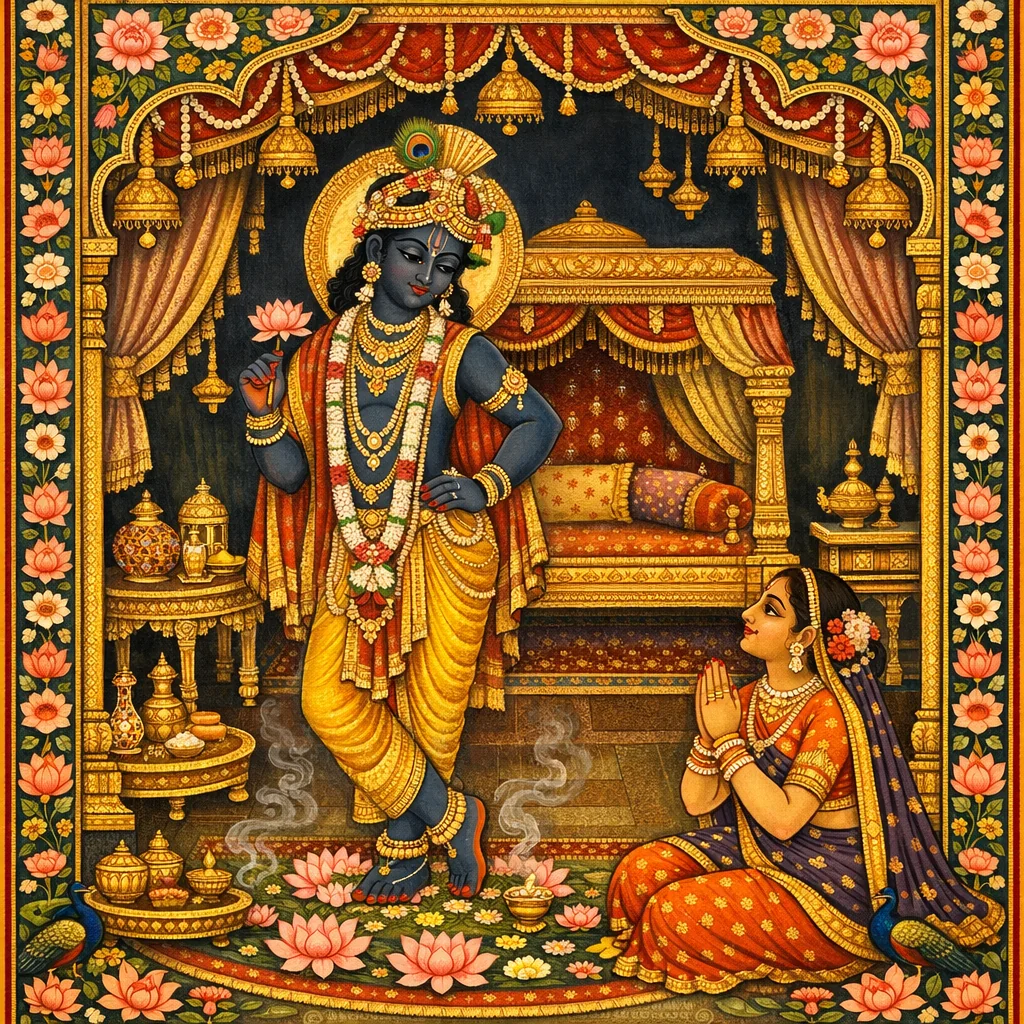
After hearing Uddhava’s report and continuing to stabilize Mathurā after Kaṁsa’s fall, Lord Kṛṣṇa turns to fulfill personal and political duties. He visits Trivakrā, the maidservant who once offered Him sandalwood paste; her home is portrayed as sensually opulent, and Kṛṣṇa, following human custom, grants her intimate association. Yet the Purāṇa stresses the deeper truth: contact with Kṛṣṇa purifies—fragrance from His lotus feet calms her lust and removes her distress. He departs promising future fulfillment, while warning that seeking mere sense pleasure after worshiping Viṣṇu is a poor boon. The narrative then moves to Akrūra’s house, where Akrūra performs pāda-prakṣālana and formal worship and offers an extended stuti, praising Kṛṣṇa-Balarāma as the nondual cause, controller of the guṇas, and restorer of Vedic dharma through avatāras. Pleased, Kṛṣṇa honors saintly devotees as superior purifiers and sends Akrūra to Hastināpura to learn the Pāṇḍavas’ condition under Dhṛtarāṣṭra, setting up the next arc of diplomacy and protection (poṣaṇa).
Shlokas
Verse 1
श्रीशुक उवाच अथ विज्ञाय भगवान् सर्वात्मा सर्वदर्शन: । सैरन्ध्रया: कामतप्ताया: प्रियमिच्छन् गृहं ययौ ॥ १ ॥
Śukadeva Gosvāmī said: Next, having understood Uddhava’s report, Lord Śrī Kṛṣṇa—the all-seeing Soul of all—wished to please the maidservant Trivakrā, who was tormented by lust, and thus went to her home.
Verse 2
महार्होपस्करैराढ्यं कामोपायोपबृंहितम् । मुक्तादामपताकाभिर्वितानशयनासनै: । धूपै: सुरभिभिर्दीपै: स्रग्गन्धैरपि मण्डितम् ॥ २ ॥
Trivakrā’s home was lavish with costly furnishings and filled with sensual arrangements meant to kindle desire. It was adorned with strings of pearls and banners, canopies, fine beds and seats, and also fragrant incense, lamps, flower garlands, and sandalwood aroma.
Verse 3
गृहं तमायान्तमवेक्ष्य सासनात् सद्य: समुत्थाय हि जातसम्भ्रमा । यथोपसङ्गम्य सखीभिरच्युतं सभाजयामास सदासनादिभि: ॥ ३ ॥
Seeing Him arrive at her house, Trivakrā at once rose from her seat in excitement. Approaching with her girlfriends, she respectfully welcomed Lord Acyuta, offering Him an excellent seat and other articles of worship.
Verse 4
तथोद्धव: साधु तयाभिपूजितो न्यषीददुर्व्यामभिमृश्य चासनम् । कृष्णोऽपि तूर्णं शयनं महाधनं विवेश लोकाचरितान्यनुव्रत: ॥ ४ ॥
She likewise honored saintly Uddhava with a seat, but Uddhava merely touched it and sat on the floor. Then Lord Kṛṣṇa, conforming to worldly etiquette, quickly made Himself comfortable upon an opulent bed.
Verse 5
सा मज्जनालेपदुकूलभूषण- स्रग्गन्धताम्बूलसुधासवादिभि: । प्रसाधितात्मोपससार माधवं सव्रीडलीलोत्स्मितविभ्रमेक्षितै: ॥ ५ ॥
Trivakrā bathed, anointed her body, and dressed in fine garments; she adorned herself with jewelry, garlands, and perfume, chewed betel, drank fragrant liquor, and then approached Lord Mādhava with shy, playful smiles and coquettish glances.
Verse 6
आहूय कान्तां नवसङ्गमह्रिया विशङ्कितां कङ्कणभूषिते करे । प्रगृह्य शय्यामधिवेश्य रामया रेमेऽनुलेपार्पणपुण्यलेशया ॥ ६ ॥
Calling forward His beloved, shy and anxious at this new intimacy, the Lord took her bangled hand and drew her onto the bed; thus He enjoyed with the beautiful girl, whose only small merit was that she had offered Him fragrant ointment.
Verse 7
सानङ्गतप्तकुचयोरुरसस्तथाक्ष्णो- र्जिघ्रन्त्यनन्तचरणेन रुजो मृजन्ती । दोर्भ्यां स्तनान्तरगतं परिरभ्य कान्त- मानन्दमूर्तिमजहादतिदीर्घतापम् ॥ ७ ॥
Simply by smelling the fragrance of Kṛṣṇa’s lotus feet, Trivakrā cleansed away the burning lust Cupid had aroused in her breasts, chest, and eyes. Then, with both arms, she embraced her beloved Śrī Kṛṣṇa—the very form of bliss—between her breasts, and her long-standing distress was cast off.
Verse 8
सैवं कैवल्यनाथं तं प्राप्य दुष्प्राप्यमीश्वरम् । अङ्गरागार्पणेनाहो दुर्भगेदमयाचत ॥ ८ ॥
Thus, having attained the hard-to-attain Supreme Lord—the Master of liberation—by the simple offering of body ointment, unfortunate Trivakrā, alas, submitted to Him the following request.
Verse 9
सहोष्यतामिह प्रेष्ठ दिनानि कतिचिन्मया । रमस्व नोत्सहे त्यक्तुं सङ्गं तेऽम्बुरुहेक्षण ॥ ९ ॥
[Trivakrā said:] O beloved, please stay here with me for a few more days and enjoy. O lotus-eyed one, I cannot bear to give up Your association.
Verse 10
तस्यै कामवरं दत्त्वा मानयित्वा च मानद: । सहोद्धवेन सर्वेश: स्वधामागमद् ऋद्धिमत् ॥ १० ॥
Granting her the boon that her desire be fulfilled, considerate Śrī Kṛṣṇa, Lord of all beings, honored Trivakrā and, with Uddhava, returned to His own supremely opulent abode.
Verse 11
दुराराध्यं समाराध्य विष्णुं सर्वेश्वरेश्वरम् । यो वृणीते मनोग्राह्यमसत्त्वात् कुमनीष्यसौ ॥ ११ ॥
Lord Viṣṇu, the Supreme Lord of all lords, is ordinarily difficult to approach. One who has properly worshiped Him yet chooses the boon of mundane sense pleasure is surely of poor intelligence, being satisfied with an insignificant result.
Verse 12
अक्रूरभवनं कृष्ण: सहरामोद्धव: प्रभु: । किञ्चिच्चिकीर्षयन् प्रागादक्रूरप्रीयकाम्यया ॥ १२ ॥
Then Lord Kṛṣṇa, accompanied by Balarāma and Uddhava, went to Akrūra’s house to have certain matters attended to, and He also wished to please Akrūra.
Verse 13
स तान्नरवरश्रेष्ठानाराद् वीक्ष्य स्वबान्धवान् । प्रत्युत्थाय प्रमुदित: परिष्वज्याभिनन्द्य च ॥ १३ ॥ ननाम कृष्णं रामं च स तैरप्यभिवादित: । पूजयामास विधिवत् कृतासनपरिग्रहान् ॥ १४ ॥
Seeing from afar his own relatives, the most exalted among men, Akrūra rose up in delight. Embracing them and offering greetings, he bowed to Śrī Kṛṣṇa and Balarāma, and They greeted him in return. Then, after his guests had taken their seats, Akrūra worshiped them in accordance with scriptural rites.
Verse 14
स तान्नरवरश्रेष्ठानाराद् वीक्ष्य स्वबान्धवान् । प्रत्युत्थाय प्रमुदित: परिष्वज्याभिनन्द्य च ॥ १३ ॥ ननाम कृष्णं रामं च स तैरप्यभिवादित: । पूजयामास विधिवत् कृतासनपरिग्रहान् ॥ १४ ॥
Seeing from afar his own relatives, the most exalted among men, Akrūra rose up in delight. Embracing them and offering greetings, he bowed to Śrī Kṛṣṇa and Balarāma, and They greeted him in return. Then, after his guests had taken their seats, Akrūra worshiped them in accordance with scriptural rites.
Verse 15
पादावनेजनीरापो धारयन् शिरसा नृप । अर्हणेनाम्बरैर्दिव्यैर्गन्धस्रग्भूषणोत्तमै: ॥ १५ ॥ अर्चित्वा शिरसानम्य पादावङ्कगतौ मृजन् । प्रश्रयावनतोऽक्रूर: कृष्णरामावभाषत ॥ १६ ॥
O King, Akrūra washed the lotus feet of Lord Kṛṣṇa and Lord Balarāma and bore that sacred water upon his head. He then worshiped Them with divine garments, fragrant sandal paste, flower garlands, and excellent ornaments.
Verse 16
पादावनेजनीरापो धारयन् शिरसा नृप । अर्हणेनाम्बरैर्दिव्यैर्गन्धस्रग्भूषणोत्तमै: ॥ १५ ॥ अर्चित्वा शिरसानम्य पादावङ्कगतौ मृजन् । प्रश्रयावनतोऽक्रूर: कृष्णरामावभाषत ॥ १६ ॥
Having thus worshiped the two Lords, Akrūra bowed with his head upon the ground. Placing Lord Kṛṣṇa’s feet upon his lap, he gently massaged them and, in humble reverence, addressed Kṛṣṇa and Balarāma.
Verse 17
दिष्ट्या पापो हत: कंस: सानुगो वामिदं कुलम् । भवद्भयामुद्धृतं कृच्छ्राद् दुरन्ताच्च समेधितम् ॥ १७ ॥
[Akrūra said:] It is our great good fortune that You two Lords have slain the wicked Kaṁsa along with his followers, rescuing our dynasty from endless distress and causing it to flourish.
Verse 18
युवां प्रधानपुरुषौ जगद्धेतू जगन्मयौ । भवद्भयां न विना किञ्चित्परमस्ति न चापरम् ॥ १८ ॥
You both are the original Supreme Person—the cause of the universe and its very substance. Apart from You, no subtle cause and no manifest product of creation exists at all.
Verse 19
आत्मसृष्टमिदं विश्वमन्वाविश्य स्वशक्तिभि: । ईयते बहुधा ब्रह्मन् श्रुतप्रत्यक्षगोचरम् ॥ १९ ॥
O Supreme Absolute Truth, by Your own energies You create this universe and then enter within it. Thus You are perceived in many forms—through hearing from sacred authorities and through direct experience.
Verse 20
यथा हि भूतेषु चराचरेषु मह्यादयो योनिषु भान्ति नाना । एवं भवान् केवल आत्मयोनि- ष्वात्मात्मतन्त्रो बहुधा विभाति ॥ २० ॥
Just as the great elements—earth and the rest—shine forth in many forms among all moving and unmoving species, so You, the one independent Supreme Soul, appear as manifold within the variegated objects of Your creation.
Verse 21
सृजस्यथो लुम्पसि पासि विश्वं रजस्तम:सत्त्वगुणै: स्वशक्तिभि: । न बध्यसे तद्गुणकर्मभिर्वा ज्ञानात्मनस्ते क्व च बन्धहेतु: ॥ २१ ॥
With Your own energies—the modes of passion, ignorance and goodness—you create, dissolve and sustain the universe, yet You are never bound by those modes or by the actions they produce. Since You are the original source of all knowledge, what could ever bind You in illusion?
Verse 22
देहाद्युपाधेरनिरूपितत्वाद् भवो न साक्षान्न भिदात्मन: स्यात् । अतो न बन्धस्तव नैव मोक्ष: स्यातां निकामस्त्वयि नोऽविवेक: ॥ २२ ॥
Since it has never been shown that You are covered by material designations such as a body, it follows that for You there is no literal birth and no duality within the Self. Therefore You undergo neither bondage nor liberation; and if it seems so, it is only by Your lila-will, or else by our lack of discernment.
Verse 23
त्वयोदितोऽयं जगतो हिताय यदा यदा वेदपथ: पुराण: । बाध्येत पाषण्डपथैरसद्भि- स्तदा भवान् सत्त्वगुणं बिभर्ति ॥ २३ ॥
For the welfare of the entire universe You first proclaimed the ancient path of the Vedas. Whenever that path is obstructed by wicked people who follow atheistic ways, You then assume an incarnation, all of which stand in the transcendental mode of goodness.
Verse 24
स त्वं प्रभोऽद्य वसुदेवगृहेऽवतीर्ण: स्वांशेन भारमपनेतुमिहासि भूमे: । अक्षौहिणीशतवधेन सुरेतरांश- राज्ञाममुष्य च कुलस्य यशो वितन्वन् ॥ २४ ॥
O Lord, You are that very Supreme Person, and now You have descended into the home of Vasudeva with Your plenary portion to remove the earth’s burden. By slaying hundreds of akshauhini armies led by kings who are expansions of the demigods’ enemies, You also spread the fame of our dynasty.
Verse 25
अद्येश नो वसतय: खलु भूरिभागा य: सर्वदेवपितृभूतनृदेवमूर्ति: । यत्पादशौचसलिलं त्रिजगत् पुनाति स त्वं जगद्गुरुरधोक्षज या: प्रविष्ट: ॥ २५ ॥
Today, O Lord, our dwelling has become supremely blessed because You have entered it. You are the very form of the devas, the forefathers, all beings, human rulers and the demigods, and the water that washes Your feet purifies the three worlds. O Adhokṣaja, You are indeed the spiritual master of the universe.
Verse 26
क: पण्डितस्त्वदपरं शरणं समीयाद् भक्तप्रियादृतगिर: सुहृद: कृतज्ञात् । सर्वान् ददाति सुहृदो भजतोऽभिकामा- नात्मानमप्युपचयापचयौ न यस्य ॥ २६ ॥
What learned person would seek shelter anywhere but in You? You are dear to Your devotees, truthful in speech, a benevolent friend and ever grateful. To those who worship You in sincere friendship You grant all they desire—even Your own self—yet You neither increase nor diminish.
Verse 27
दिष्ट्या जनार्दन भवानिह न: प्रतीतो योगेश्वरैरपि दुरापगति: सुरेशै: । छिन्ध्याशु न: सुतकलत्रधनाप्तगेह- देहादिमोहरशनां भवदीयमायाम् ॥ २७ ॥
By our great good fortune, O Janārdana, You are now visible to us here, though even the masters of yoga and the foremost devas attain this only with difficulty. Please quickly cut the ropes of our deluded attachment to children, wife, wealth, influential friends, home and body—for all such attachment is merely the effect of Your māyā.
Verse 28
इत्यर्चित: संस्तुतश्च भक्तेन भगवान् हरि: । अक्रूरं सस्मितं प्राह गीर्भि: सम्मोहयन्निव ॥ २८ ॥
Thus worshiped and fully glorified by His devotee, the Supreme Lord Hari, smiling, spoke to Akrūra, as if completely enchanting him with His words.
Verse 29
श्रीभगवानुवाच त्वं नो गुरु: पितृव्यश्च श्लाघ्यो बन्धुश्च नित्यदा । वयं तु रक्ष्या: पोष्याश्च अनुकम्प्या: प्रजा हि व: ॥ २९ ॥
The Supreme Lord said: You are Our spiritual master, Our paternal uncle, and a kinsman ever worthy of praise. We are like your children, always dependent on your protection, sustenance and compassion.
Verse 30
भवद्विधा महाभागा निषेव्या अर्हसत्तमा: । श्रेयस्कामैर्नृभिर्नित्यं देवा: स्वार्था न साधव: ॥ ३० ॥
Exalted souls like you are truly worthy of service and are the most worshipable guides for those who seek life’s highest good. Demigods often pursue their own interests, but saintly devotees never do.
Verse 31
न ह्यम्मयानि तीर्थानि न देवा मृच्छिलामया: । ते पुनन्त्युरुकालेन दर्शनादेव साधव: ॥ ३१ ॥
No one can deny that holy places have sacred waters and that the demigods appear as deities of earth and stone. Yet these purify only after a long time, whereas saintly persons purify simply by being seen.
Verse 32
स भवान् सुहृदां वै न: श्रेयान् श्रेयश्चिकीर्षया । जिज्ञासार्थं पाण्डवानां गच्छस्व त्वं गजाह्वयम् ॥ ३२ ॥
You are indeed the best of Our friends; therefore go to Hastināpura and, as the well-wisher of the Pāṇḍavas, find out how they are faring.
Verse 33
पितर्युपरते बाला: सह मात्रा सुदु:खिता: । आनीता: स्वपुरं राज्ञा वसन्त इति शुश्रुम ॥ ३३ ॥
We have heard that when their father passed away, the young Pāṇḍavas were brought with their deeply grieving mother to the royal capital by the king, and that they now live there.
Verse 34
तेषु राजाम्बिकापुत्रो भ्रातृपुत्रेषु दीनधी: । समो न वर्तते नूनं दुष्पुत्रवशगोऽन्धदृक् ॥ ३४ ॥
As for them, Dhṛtarāṣṭra, Ambikā’s son, has become weak-minded and fallen under the sway of his wicked sons; thus that blind king is not treating his brother’s sons with fairness.
Verse 35
गच्छ जानीहि तद् वृत्तमधुना साध्वसाधु वा । विज्ञाय तद् विधास्यामो यथा शं सुहृदां भवेत् ॥ ३५ ॥
Go and find out whether Dhṛtarāṣṭra is acting rightly or wrongly at present. When We know, We shall make the proper arrangements so that auspiciousness may come to Our dear friends.
Verse 36
इत्यक्रूरं समादिश्य भगवान् हरिरीश्वर: । सङ्कर्षणोद्धवाभ्यां वै तत: स्वभवनं ययौ ॥ ३६ ॥
Thus instructing Akrūra, the Supreme Lord Bhagavān Hari then returned to His own residence, accompanied by Śrī Saṅkarṣaṇa and Uddhava.
Frequently Asked Questions
He goes to reciprocate with her prior service—her offering of ointment—and to settle an obligation created by her desire. The Bhāgavata presents this as divine reciprocation (bhakta-vātsalya) while emphasizing that proximity to Kṛṣṇa purifies: her lust-born distress is extinguished by contact with His lotus feet, illustrating that the Lord is the ultimate purifier even when He appears to act within social convention.
The chapter states that simply by smelling the fragrance of Kṛṣṇa’s lotus feet, the burning effects of Cupid in her body and senses are cleansed. The theological point is that viṣaya-driven kāma is not “validated” as a final goal; rather, when directed toward Kṛṣṇa, it is neutralized and elevated, relieving distress and implying movement toward śuddha-bhakti (purified devotion).
It frames a hierarchy of benedictions: Viṣṇu is difficult to approach, and worship that culminates in worldly enjoyment is called alpa-phala (insignificant result). In bhakti hermeneutics, this verse protects readers from misreading the Trivakrā episode as an endorsement of hedonism; it asserts that the highest fruit of worship is devotion and freedom, not temporary pleasure.
Akrūra is Kṛṣṇa’s relative and a prominent Yadu devotee. His reception—embrace, formal seating, foot-washing, gifts, and praise—models Vedic hospitality and arcana-like devotion, while his stuti functions as condensed Vedānta: Kṛṣṇa as the cause and substance of creation, controller of guṇas without entanglement, and the avatārī who restores the Vedic path.
To gather accurate intelligence about the Pāṇḍavas’ welfare after their father’s death and to assess whether Dhṛtarāṣṭra—said to be influenced by his sons—is treating them justly. This sets up the Bhāgavata’s movement from Mathurā’s stabilization to broader dharma-protection (poṣaṇa) through diplomacy and intervention on behalf of devotees.