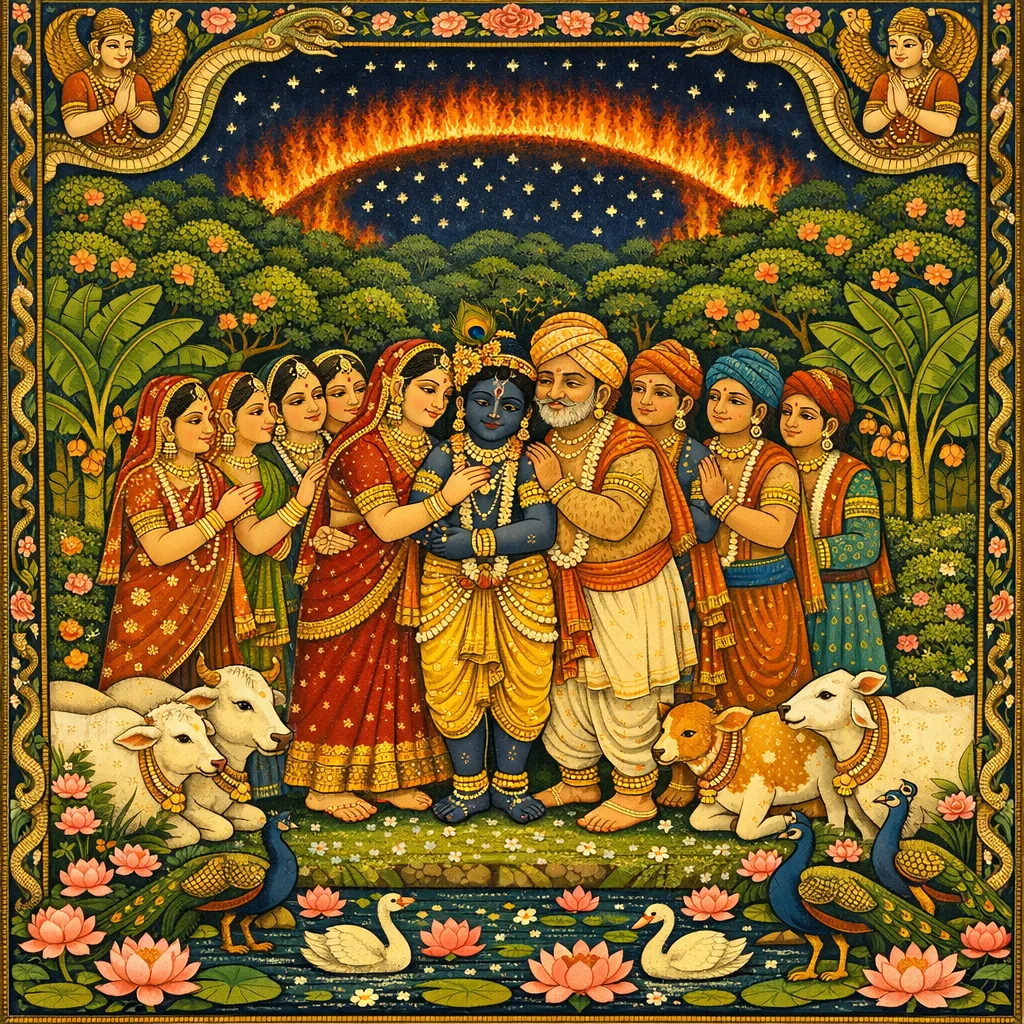
Adhyaya 17
Garuḍa, Saubhari’s Curse, Kāliya’s Refuge, and Kṛṣṇa Saves Vraja from Forest Fire
After Śrī Kṛṣṇa chastises Kāliya in the Yamunā, Parīkṣit asks why Kāliya left Ramaṇaka Island and why Garuḍa opposed him in particular. Śukadeva explains the serpents’ monthly tribute to Garuḍa: all complied, but Kāliya arrogantly consumed the offerings, provoking Garuḍa’s attack. Defeated, Kāliya fled to a lake near the Yamunā that Garuḍa could not enter because of Saubhari Muni’s curse—uttered after Garuḍa seized a fish there despite being forbidden. Thus Kāliya’s “refuge” is karmically protected yet spiritually poisonous, and later dismantled by Kṛṣṇa. The narrative returns to Kṛṣṇa emerging brilliantly from the lake; Vraja’s life returns as parents, elders, and Balarāma embrace Him. Brāhmaṇas advise charity as a protective rite, which Nanda performs. As Vraja rests by the Kālindī, a forest fire suddenly encircles them; crying to Kṛṣṇa and Balarāma, they are saved when Kṛṣṇa effortlessly swallows the fire, revealing His sustaining protection (poṣaṇa) over Vraja.
Shlokas
Verse 1
श्रीराजोवाच नागालयं रमणकं कथं तत्याज कालिय: । कृतं किं वा सुपर्णस्य तेनैकेनासमञ्जसम् ॥ १ ॥
King Parīkṣit inquired: “Why did Kāliya abandon Ramaṇaka Island, the abode of the serpents? And why did Suparṇa Garuḍa become hostile to him alone—what improper deed had he done?”
Verse 2
श्रीशुक उवाच उपहार्यै: सर्पजनैर्मासि मासीह यो बलि: । वानस्पत्यो महाबाहो नागानां प्राङ्निरूपित: ॥ २ ॥ स्वं स्वं भागं प्रयच्छन्ति नागा: पर्वणि पर्वणि । गोपीथायात्मन: सर्वे सुपर्णाय महात्मने ॥ ३ ॥
Śukadeva Gosvāmī said: “O mighty-armed Parīkṣit, to avoid being eaten by Garuḍa, the serpents had long ago made an arrangement: each month they would place a tribute of fruits and vegetation at the base of a tree. Thus, at every appointed time, each nāga offered his own share to the great Suparṇa Garuḍa, as the price of protection.”
Verse 3
श्रीशुक उवाच उपहार्यै: सर्पजनैर्मासि मासीह यो बलि: । वानस्पत्यो महाबाहो नागानां प्राङ्निरूपित: ॥ २ ॥ स्वं स्वं भागं प्रयच्छन्ति नागा: पर्वणि पर्वणि । गोपीथायात्मन: सर्वे सुपर्णाय महात्मने ॥ ३ ॥
Śukadeva Gosvāmī said: “O mighty-armed Parīkṣit, to avoid being eaten by Garuḍa, the serpents had long before decreed that each month a tribute of vegetation be placed at the foot of a tree. Thus, at the appointed times, every nāga offered his own share to the great Suparṇa Garuḍa as the price of protection.”
Verse 4
विषवीर्यमदाविष्ट: काद्रवेयस्तु कालिय: । कदर्थीकृत्य गरुडं स्वयं तं बुभुजे बलिम् ॥ ४ ॥
But Kāliya, the son of Kadru, intoxicated by the prowess of his poison, insulted Garuḍa and himself consumed the tribute before Garuḍa could claim it.
Verse 5
तच्छ्रुत्वा कुपितो राजन् भगवान् भगवत्प्रिय: । विजिघांसुर्महावेग: कालियं समुपाद्रवत् ॥ ५ ॥
O King, hearing this, the supremely powerful Garuḍa—most dear to the Supreme Lord—became enraged. Desiring to slay Kāliya, he rushed upon the serpent with tremendous speed.
Verse 6
तमापतन्तं तरसा विषायुध: प्रत्यभ्ययादुत्थितनैकमस्तक: । दद्भि: सुपर्णं व्यदशद् ददायुध: करालजिह्वोच्छ्वसितोग्रलोचन: ॥ ६ ॥
As Garuḍa swooped down with great force, Kāliya—armed with poison—rose up, lifting his many heads to counterattack. Displaying dreadful tongues and glaring, fearsome eyes, he bit Suparṇa with the weapon of his fangs.
Verse 7
तं तार्क्ष्यपुत्र: स निरस्य मन्युमान् प्रचण्डवेगो मधुसूदनासन: । पक्षेण सव्येन हिरण्यरोचिषा जघान कद्रुसुतमुग्रविक्रम: ॥ ७ ॥
The enraged son of Tārkṣya repelled Kāliya’s assault with overwhelming speed. That fearsome, mighty carrier of Lord Madhusūdana struck the son of Kadru with his left wing, radiant like gold.
Verse 8
सुपर्णपक्षाभिहत: कालियोऽतीव विह्वल: । ह्रदं विवेश कालिन्द्यास्तदगम्यं दुरासदम् ॥ ८ ॥
Struck by Suparṇa’s wing, Kāliya became utterly distraught and fled into a lake beside the Kālinḍī (Yamunā). Garuḍa could not enter that lake—indeed, he could not even approach it.
Verse 9
तत्रैकदा जलचरं गरुडो भक्ष्यमीप्सितम् । निवारित: सौभरिणा प्रसह्य क्षुधितोऽहरत् ॥ ९ ॥
In that very lake, Garuḍa once desired to eat a fish, for fish were his natural food. Though forbidden by the sage Saubhari, who was meditating within the water, the hungry Garuḍa dared to seize the fish by force.
Verse 10
मीनान्सुदु:खितान्दृष्ट्वा दीनान्मीनपतौ हते । कृपया सौभरि: प्राह तत्रत्यक्षेममाचरन् ॥ १० ॥
Seeing the wretched fish of that lake plunged into misery at the death of their leader, Saubhari, thinking he was acting mercifully for the welfare of the lake’s residents, uttered the following curse.
Verse 11
अत्र प्रविश्य गरुडो यदि मत्स्यान् स खादति । सद्य: प्राणैर्वियुज्येत सत्यमेतद् ब्रवीम्यहम् ॥ ११ ॥
If Garuḍa enters this lake and eats the fish here, he will at once be bereft of life. What I speak is the truth.
Verse 12
तत् कालिय: परं वेद नान्य: कश्चन लेलिह: । अवात्सीद् गरुडाद् भीत: कृष्णेन च विवासित: ॥ १२ ॥
Among all the serpents, only Kāliya fully learned of this matter; fearing Garuḍa, he took up residence in that lake of the Yamunā, and later Lord Kṛṣṇa drove him out.
Verse 13
कृष्णं ह्रदाद्विनिष्क्रान्तं दिव्यस्रग्गन्धवाससम् । महामणिगणाकीर्णं जाम्बूनदपरिष्कृतम् ॥ १३ ॥ उपलभ्योत्थिता: सर्वे लब्धप्राणा इवासव: । प्रमोदनिभृतात्मानो गोपा: प्रीत्याभिरेभिरे ॥ १४ ॥
Kṛṣṇa rose up from the lake, wearing divine garlands, fragrances, and garments, radiant with many splendid jewels and adorned with gold. Seeing Him, all the cowherd boys sprang up at once, as if the senses of an unconscious man had returned to life; filled with joy, they embraced Him with love.
Verse 14
कृष्णं ह्रदाद्विनिष्क्रान्तं दिव्यस्रग्गन्धवाससम् । महामणिगणाकीर्णं जाम्बूनदपरिष्कृतम् ॥ १३ ॥ उपलभ्योत्थिता: सर्वे लब्धप्राणा इवासव: । प्रमोदनिभृतात्मानो गोपा: प्रीत्याभिरेभिरे ॥ १४ ॥
Kṛṣṇa rose up from the lake, wearing divine garlands, fragrances, and garments, radiant with many splendid jewels and adorned with gold. Seeing Him, all the cowherd boys sprang up at once, as if the senses of an unconscious man had returned to life; filled with joy, they embraced Him with love.
Verse 15
यशोदा रोहिणी नन्दो गोप्यो गोपाश्च कौरव । कृष्णं समेत्य लब्धेहा आसन् शुष्का नगा अपि ॥ १५ ॥
Their life-breath restored, Yaśodā, Rohiṇī, Nanda, and all the cowherd women and men came to Kṛṣṇa, O descendant of Kuru; even the dried-up trees returned to life.
Verse 16
रामश्चाच्युतमालिङ्ग्य जहासास्यानुभाववित् । प्रेम्णा तमङ्कमारोप्य पुन: पुनरुदैक्षत । गावो वृषा वत्सतर्यो लेभिरे परमां मुदम् ॥ १६ ॥
Balarāma embraced His infallible brother Acyuta and laughed, knowing well the vastness of Kṛṣṇa’s potency. In love He lifted Kṛṣṇa onto His lap and gazed at Him again and again; the cows, bulls, and young heifers too attained the highest joy.
Verse 17
नन्दं विप्रा: समागत्य गुरव: सकलत्रका: । ऊचुस्ते कालियग्रस्तो दिष्ट्या मुक्तस्तवात्मज: ॥ १७ ॥
All the venerable brāhmaṇas, together with their wives, came forward to greet Nanda Mahārāja and said, “Your son was in Kāliya’s grip, but by the grace of Providence he is now freed.”
Verse 18
देहि दानं द्विजातीनां कृष्णनिर्मुक्तिहेतवे । नन्द: प्रीतमना राजन् गा: सुवर्णं तदादिशत् ॥ १८ ॥
The brāhmaṇas advised Nanda Mahārāja, “To keep Kṛṣṇa ever free from danger, give charity to the twice-born.” O King, Nanda, his heart satisfied, gladly bestowed cows and gold.
Verse 19
यशोदापि महाभागा नष्टलब्धप्रजा सती । परिष्वज्याङ्कमारोप्य मुमोचाश्रुकलां मुहु: ॥ १९ ॥
Most fortunate mother Yaśodā, having lost her son and then regained Him, placed Him upon her lap and embraced Him again and again; that chaste lady released unceasing streams of tears.
Verse 20
तां रात्रिं तत्र राजेन्द्र क्षुत्तृड्भ्यां श्रमकर्षिता: । ऊषुर्व्रयौकसो गाव: कालिन्द्या उपकूलत: ॥ २० ॥
O best of kings, weakened by hunger, thirst, and fatigue, the people of Vraja and the cows spent that night right there, lying near the bank of the Kālindī (Yamunā).
Verse 21
तदा शुचिवनोद्भूतो दावाग्नि: सर्वतो व्रजम् । सुप्तं निशीथ आवृत्य प्रदग्धुमुपचक्रमे ॥ २१ ॥
Then, from the dry forest arose a raging wildfire; at midnight, while Vraja slept, it surrounded them on all sides and began to scorch them.
Verse 22
तत उत्थाय सम्भ्रान्ता दह्यमाना व्रजौकस: । कृष्णं ययुस्ते शरणं मायामनुजमीश्वरम् ॥ २२ ॥
Then the people of Vraja awoke in panic, scorched by the fire, and took shelter of Kṛṣṇa—the Supreme Lord—who by His spiritual potency appeared like an ordinary human being.
Verse 23
कृष्ण कृष्ण महाभाग हे रामामितविक्रम । एष घोरतमो वह्निस्तावकान् ग्रसते हि न: ॥ २३ ॥
The residents of Vṛndāvana cried out: “Kṛṣṇa! Kṛṣṇa! O most fortunate Lord! O Rāma of unlimited prowess! This most dreadful fire is about to devour us, Your devotees!”
Verse 24
सुदुस्तरान्न: स्वान् पाहि कालाग्ने: सुहृद: प्रभो । न शक्नुमस्त्वच्चरणं सन्त्यक्तुमकुतोभयम् ॥ २४ ॥
O Lord, we are Your own—Your friends and devotees. Please protect us from this insurmountable fire of death. We can never abandon Your lotus feet, which drive away all fear.
Verse 25
इत्थं स्वजनवैक्लव्यं निरीक्ष्य जगदीश्वर: । तमग्निमपिबत्तीव्रमनन्तोऽनन्तशक्तिधृक् ॥ २५ ॥
Seeing His devotees in distress, Śrī Kṛṣṇa, the infinite Lord of the universe and bearer of infinite power, swallowed that fierce forest fire.
Frequently Asked Questions
Kāliya provoked Garuḍa by consuming the serpents’ monthly tribute offerings meant to purchase protection. When Garuḍa attacked, Kāliya fled to a lake near the Yamunā that Garuḍa could not enter because Saubhari Muni had cursed Garuḍa to die if he returned there to eat fish. Knowing of this curse, Kāliya exploited the restricted zone as a refuge—until Kṛṣṇa removed him.
Garuḍa’s hostility is framed as enforcement of an agreed dharmic arrangement: the serpents offered regular tribute in exchange for restraint from predation. Kāliya’s theft of the offerings was direct defiance (dharma-bhaṅga) and personal insult to Garuḍa, prompting Garuḍa’s swift attempt to kill him.
Saubhari Muni is a sage performing meditation within the lake. When Garuḍa, driven by hunger, seized a fish despite Saubhari’s prohibition, the sage—believing he was protecting the lake’s residents—pronounced a curse that Garuḍa would die if he ever again entered that lake to eat fish. The episode illustrates the power of tapas and the complex outcomes of ‘protective’ action mixed with limited vision.
After Kṛṣṇa’s deliverance, the brāhmaṇas recommend dāna as a dharmic reinforcement of auspiciousness and social-spiritual reciprocity, expressing gratitude and invoking protective blessings. In Bhāgavata ethics, such acts support communal order while acknowledging that ultimate protection (poṣaṇa) still rests with Bhagavān.
When a sudden fire surrounded the sleeping Vrajavāsīs, they awoke and took shelter of Kṛṣṇa, praying as devotees. Kṛṣṇa then swallowed the fire, demonstrating effortless lordship and intimate guardianship. Theologically, the episode dramatizes āśraya-tattva: surrender to Kṛṣṇa neutralizes seemingly insurmountable threats, including the ‘fire’ of mortal fear.