Adhyaya 2
Trikūṭa Mountain, Ṛtumat Garden, and the Beginning of Gajendra’s Crisis
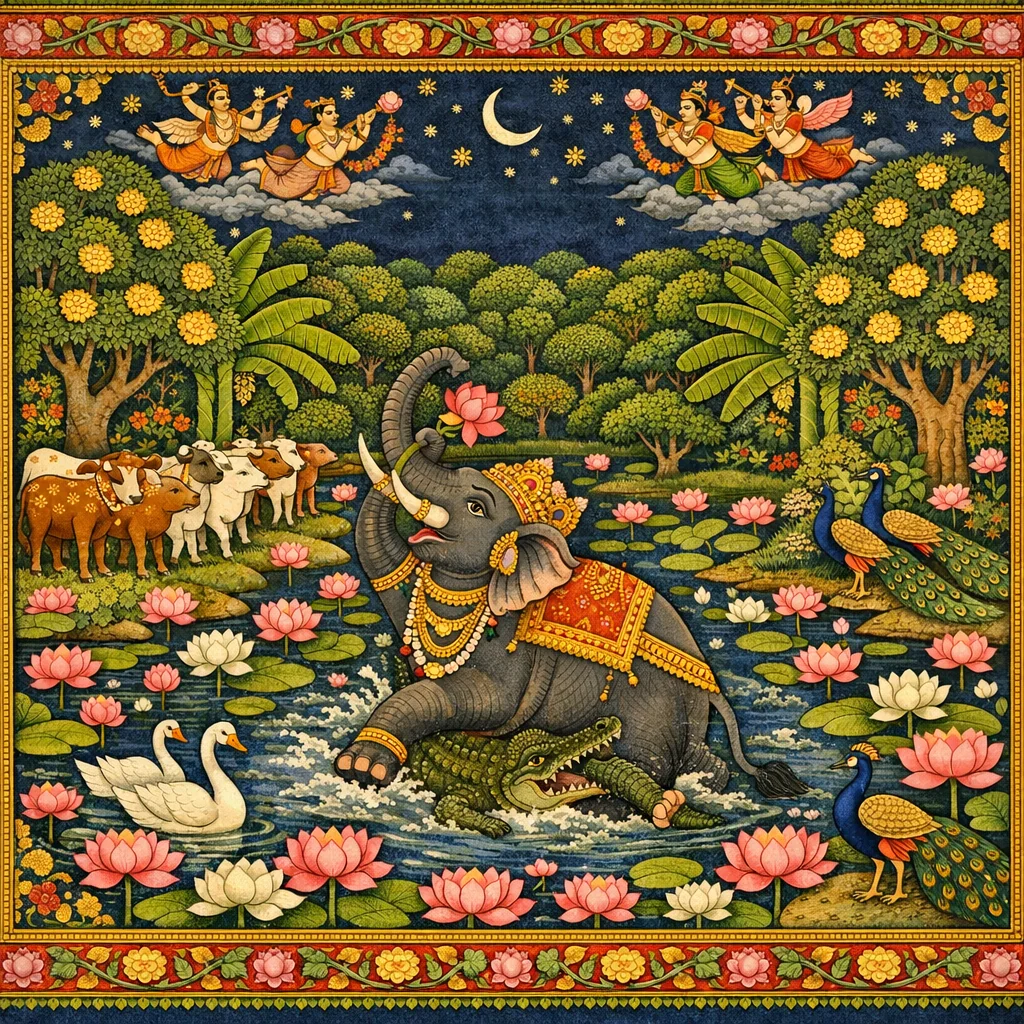
Śukadeva Gosvāmī tells Mahārāja Parīkṣit of the majestic Trikūṭa Mountain rising within the Kṣīra-samudra (Ocean of Milk), describing its three chief peaks and its celestial landscape of jeweled valleys, waterfalls, birds, and heavenly residents. The narration then focuses on Ṛtumat, Varuṇa’s all-season garden, and its lotus-filled lake, a beautiful prelude to a decisive spiritual turning point. There Gajapati (Gajendra), leader of the elephants, comes with his herd to bathe and drink, lovingly caring for his family—an illustration of embodied attachment under māyā. By daiva (providence), a powerful crocodile seizes Gajendra’s leg, beginning a struggle that lasts a thousand years. As Gajendra’s strength fades and the crocodile’s grows in its own element, Gajendra realizes worldly help is futile and resolves to seek the Supreme Lord as the only universal shelter. Thus the chapter moves from cosmic beauty to existential peril, preparing for the coming prayer of surrender and divine intervention.
Shlokas
Verse 1
श्रीशुक उवाच आसीद् गिरिवरो राजंस्त्रिकूट इति विश्रुत: । क्षीरोदेनावृत: श्रीमान्योजनायुतमुच्छ्रित: ॥ १ ॥
Śukadeva Gosvāmī said: O King, there was a great mountain renowned as Trikūṭa. Encircled by the Ocean of Milk, it shone with beauty and rose ten thousand yojanas high.
Verse 2
तावता विस्तृत: पर्यक्त्रिभि: शृङ्गै: पयोनिधिम् । दिश: खं रोचयन्नास्ते रौप्यायसहिरण्मयै: ॥ २ ॥ अन्यैश्च ककुभ: सर्वा रत्नधातुविचित्रितै: । नानाद्रुमलतागुल्मैर्निर्घोषैर्निर्झराम्भसाम् ॥ ३ ॥
The mountain’s length and breadth were equal. Its three chief peaks—of iron, silver, and gold—adorned the directions and the sky. Many other peaks, variegated with jewels and ores, were graced with trees, creepers, and shrubs, while the sweet roar of waterfalls sent forth a pleasing resonance, enhancing the beauty of every quarter.
Verse 3
तावता विस्तृत: पर्यक्त्रिभि: शृङ्गै: पयोनिधिम् । दिश: खं रोचयन्नास्ते रौप्यायसहिरण्मयै: ॥ २ ॥ अन्यैश्च ककुभ: सर्वा रत्नधातुविचित्रितै: । नानाद्रुमलतागुल्मैर्निर्घोषैर्निर्झराम्भसाम् ॥ ३ ॥
The mountain’s length and breadth were equal. Its three chief peaks—of iron, silver, and gold—adorned the directions and the sky. Many other peaks, variegated with jewels and ores, were graced with trees, creepers, and shrubs, while the sweet roar of waterfalls sent forth a pleasing resonance, enhancing the beauty of every quarter.
Verse 4
स चावनिज्यमानाङ्घ्रि: समन्तात् पयऊर्मिभि: । करोति श्यामलां भूमिं हरिन्मरकताश्मभि: ॥ ४ ॥
The mountain’s base is ever washed on all sides by the waves of the Ocean of Milk; and from them arise green emeralds, so that the earth in all eight directions becomes darkly verdant.
Verse 5
सिद्धचारणगन्धर्वैर्विद्याधरमहोरगै: । किन्नरैरप्सरोभिश्च क्रीडद्भिर्जुष्टकन्दर: ॥ ५ ॥
The mountain’s caves were thronged with the denizens of the higher realms—Siddhas, Cāraṇas, Gandharvas, Vidyādharas, Mahoragas (serpents), Kinnaras, and Apsarās—who came there to sport; thus every cavern was alive with heavenly beings.
Verse 6
यत्र सङ्गीतसन्नादैर्नदद्गुहममर्षया । अभिगर्जन्ति हरय: श्लाघिन: परशङ्कया ॥ ६ ॥
Where the caves resound with the songs of the heavenly beings, the lions—proud of their strength—roar in unbearable envy, suspecting that another lion is roaring so.
Verse 7
नानारण्यपशुव्रातसङ्कुलद्रोण्यलङ्कृत: । चित्रद्रुमसुरोद्यानकलकण्ठविहङ्गम: ॥ ७ ॥
The valleys beneath Trikūṭa were filled with many kinds of forest animals, and in the wondrous trees of the devas’ gardens, sweet-throated birds sang and chirped.
Verse 8
सरित्सरोभिरच्छोदै: पुलिनैर्मणिवालुकै: । देवस्त्रीमज्जनामोदसौरभाम्ब्वनिलैर्युत: ॥ ८ ॥
Trikūṭa Mountain held many rivers and lakes, their shores strewn with tiny gems like grains of sand. The water was crystal-clear, and when the celestial maidens bathed there, their fragrance perfumed the water and the breeze, sweetening the whole atmosphere.
Verse 9
तस्य द्रोण्यां भगवतो वरुणस्य महात्मन: । उद्यानमृतुमन्नाम आक्रीडं सुरयोषिताम् ॥ ९ ॥ सर्वतोऽलङ्कृतं दिव्यैर्नित्यपुष्पफलद्रुमै: । मन्दारै: पारिजातैश्च पाटलाशोकचम्पकै: ॥ १० ॥ चूतै: पियालै: पनसैराम्रैराम्रातकैरपि । क्रमुकैर्नारिकेलैश्च खर्जूरैर्बीजपूरकै: ॥ ११ ॥ मधुकै: शालतालैश्च तमालैरसनार्जुनै: । अरिष्टोडुम्बरप्लक्षैर्वटै: किंशुकचन्दनै: ॥ १२ ॥ पिचुमर्दै: कोविदारै: सरलै: सुरदारुभि: । द्राक्षेक्षुरम्भाजम्बुभिर्बदर्यक्षाभयामलै: ॥ १३ ॥
In a valley of Trikūṭa Mountain stood a garden named Ṛtumat, owned by the great-souled devotee Varuṇa and serving as a pleasure-ground for the celestial maidens. It was adorned on every side with divine trees that bore flowers and fruits in every season—mandāras, pārijātas, pāṭalas, aśokas, campakas; cūtas, piyālas, jackfruits, mangoes, āmrātakas, areca palms, coconut palms, date palms, pomegranates; madhukas, śālas, palms, tamālas, asanas, arjunas, ariṣṭas, uḍumbaras, plakṣas, banyans, kiṁśukas, sandalwoods; and also picumardas, kovidāras, saralas, deodaras, grapes, sugarcane, bananas, jambu, badarīs, akṣas, abhayas, and āmalakīs.
Verse 10
तस्य द्रोण्यां भगवतो वरुणस्य महात्मन: । उद्यानमृतुमन्नाम आक्रीडं सुरयोषिताम् ॥ ९ ॥ सर्वतोऽलङ्कृतं दिव्यैर्नित्यपुष्पफलद्रुमै: । मन्दारै: पारिजातैश्च पाटलाशोकचम्पकै: ॥ १० ॥ चूतै: पियालै: पनसैराम्रैराम्रातकैरपि । क्रमुकैर्नारिकेलैश्च खर्जूरैर्बीजपूरकै: ॥ ११ ॥ मधुकै: शालतालैश्च तमालैरसनार्जुनै: । अरिष्टोडुम्बरप्लक्षैर्वटै: किंशुकचन्दनै: ॥ १२ ॥ पिचुमर्दै: कोविदारै: सरलै: सुरदारुभि: । द्राक्षेक्षुरम्भाजम्बुभिर्बदर्यक्षाभयामलै: ॥ १३ ॥
In a valley of Trikūṭa Mountain stood a garden named Ṛtumat, owned by the great-souled devotee Varuṇa and serving as a pleasure-ground for the celestial maidens. It was adorned on every side with divine trees that bore flowers and fruits in every season—mandāras, pārijātas, pāṭalas, aśokas, campakas; cūtas, piyālas, jackfruits, mangoes, āmrātakas, areca palms, coconut palms, date palms, pomegranates; madhukas, śālas, palms, tamālas, asanas, arjunas, ariṣṭas, uḍumbaras, plakṣas, banyans, kiṁśukas, sandalwoods; and also picumardas, kovidāras, saralas, deodaras, grapes, sugarcane, bananas, jambu, badarīs, akṣas, abhayas, and āmalakīs.
Verse 11
तस्य द्रोण्यां भगवतो वरुणस्य महात्मन: । उद्यानमृतुमन्नाम आक्रीडं सुरयोषिताम् ॥ ९ ॥ सर्वतोऽलङ्कृतं दिव्यैर्नित्यपुष्पफलद्रुमै: । मन्दारै: पारिजातैश्च पाटलाशोकचम्पकै: ॥ १० ॥ चूतै: पियालै: पनसैराम्रैराम्रातकैरपि । क्रमुकैर्नारिकेलैश्च खर्जूरैर्बीजपूरकै: ॥ ११ ॥ मधुकै: शालतालैश्च तमालैरसनार्जुनै: । अरिष्टोडुम्बरप्लक्षैर्वटै: किंशुकचन्दनै: ॥ १२ ॥ पिचुमर्दै: कोविदारै: सरलै: सुरदारुभि: । द्राक्षेक्षुरम्भाजम्बुभिर्बदर्यक्षाभयामलै: ॥ १३ ॥
In a valley of Trikūṭa Mountain stood a divine garden named Ṛtumat. It belonged to the great Varuṇa and served as a playground for the celestial maidens. Adorned on every side with trees that bore flowers and fruits in every season, it was rich with mandāras, pārijātas, pāṭalas, aśokas, campakas, cūtas, piyālas, jackfruits, mangoes and many other trees.
Verse 12
तस्य द्रोण्यां भगवतो वरुणस्य महात्मन: । उद्यानमृतुमन्नाम आक्रीडं सुरयोषिताम् ॥ ९ ॥ सर्वतोऽलङ्कृतं दिव्यैर्नित्यपुष्पफलद्रुमै: । मन्दारै: पारिजातैश्च पाटलाशोकचम्पकै: ॥ १० ॥ चूतै: पियालै: पनसैराम्रैराम्रातकैरपि । क्रमुकैर्नारिकेलैश्च खर्जूरैर्बीजपूरकै: ॥ ११ ॥ मधुकै: शालतालैश्च तमालैरसनार्जुनै: । अरिष्टोडुम्बरप्लक्षैर्वटै: किंशुकचन्दनै: ॥ १२ ॥ पिचुमर्दै: कोविदारै: सरलै: सुरदारुभि: । द्राक्षेक्षुरम्भाजम्बुभिर्बदर्यक्षाभयामलै: ॥ १३ ॥
That garden also held madhuka trees, śālas, palms, tamālas, asanas, arjunas, ariṣṭas, udumbaras, plakṣas, banyans, kiṁśukas, and sandalwoods. With ceaseless varieties of flowers and fruits, Varuṇa’s park ever shone like a pleasure-ground for the celestial maidens.
Verse 13
तस्य द्रोण्यां भगवतो वरुणस्य महात्मन: । उद्यानमृतुमन्नाम आक्रीडं सुरयोषिताम् ॥ ९ ॥ सर्वतोऽलङ्कृतं दिव्यैर्नित्यपुष्पफलद्रुमै: । मन्दारै: पारिजातैश्च पाटलाशोकचम्पकै: ॥ १० ॥ चूतै: पियालै: पनसैराम्रैराम्रातकैरपि । क्रमुकैर्नारिकेलैश्च खर्जूरैर्बीजपूरकै: ॥ ११ ॥ मधुकै: शालतालैश्च तमालैरसनार्जुनै: । अरिष्टोडुम्बरप्लक्षैर्वटै: किंशुकचन्दनै: ॥ १२ ॥ पिचुमर्दै: कोविदारै: सरलै: सुरदारुभि: । द्राक्षेक्षुरम्भाजम्बुभिर्बदर्यक्षाभयामलै: ॥ १३ ॥
There were also grapes, sugarcane, bananas, jambu, badarīs, akṣas, abhayas, and āmalakīs, with picumardas, kovidāras, saralas, and sura-dārus all around. Thus, enriched with flowers and fruits in every season, the garden displayed divine splendor in the valley of Trikūṭa.
Verse 14
८.२.१४-१९ बिल्वै: कपित्थैर्जम्बीरैर्वृतो भल्लातकादिभि: । तस्मिन्सर: सुविपुलं लसत्काञ्चनपङ्कजम् ॥ १४ ॥ कुमुदोत्पलकह्लारशतपत्रश्रियोर्जितम् । मत्तषट्पदनिर्घुष्टं शकुन्तैश्च कलस्वनै: ॥ १५ ॥ हंसकारण्डवाकीर्णं चक्राह्वै: सारसैरपि । जलकुक्कुटकोयष्टिदात्यूहकुलकूजितम् ॥ १६ ॥ मत्स्यकच्छपसञ्चारचलत्पद्मरज:पय: । कदम्बवेतसनलनीपवञ्जुलकैर्वृतम् ॥ १७ ॥ कुन्दै: कुरुबकाशोकै: शिरीषै: कूटजेङ्गुदै: । कुब्जकै: स्वर्णयूथीभिर्नागपुन्नागजातिभि: ॥ १८ ॥ मल्लिकाशतपत्रैश्च माधवीजालकादिभि: । शोभितं तीरजैश्चान्यैर्नित्यर्तुभिरलं द्रुमै: ॥ १९ ॥
Within that garden lay a vast lake, encircled by bilva, kapittha, jambīra, bhallātaka and other trees, its lotus blossoms gleaming like gold. Adorned with kumuda, utpala, kahlāra and śatapatra flowers, the lake enhanced the mountain’s splendor.
Verse 15
८.२.१४-१९ बिल्वै: कपित्थैर्जम्बीरैर्वृतो भल्लातकादिभि: । तस्मिन्सर: सुविपुलं लसत्काञ्चनपङ्कजम् ॥ १४ ॥ कुमुदोत्पलकह्लारशतपत्रश्रियोर्जितम् । मत्तषट्पदनिर्घुष्टं शकुन्तैश्च कलस्वनै: ॥ १५ ॥ हंसकारण्डवाकीर्णं चक्राह्वै: सारसैरपि । जलकुक्कुटकोयष्टिदात्यूहकुलकूजितम् ॥ १६ ॥ मत्स्यकच्छपसञ्चारचलत्पद्मरज:पय: । कदम्बवेतसनलनीपवञ्जुलकैर्वृतम् ॥ १७ ॥ कुन्दै: कुरुबकाशोकै: शिरीषै: कूटजेङ्गुदै: । कुब्जकै: स्वर्णयूथीभिर्नागपुन्नागजातिभि: ॥ १८ ॥ मल्लिकाशतपत्रैश्च माधवीजालकादिभि: । शोभितं तीरजैश्चान्यैर्नित्यर्तुभिरलं द्रुमै: ॥ १९ ॥
The lake was graced with the splendor of kumuda, utpala, kahlāra, and śatapatra flowers. Bumblebees, intoxicated by honey, hummed, and melodious birds sang all around, making the place exquisitely delightful.
Verse 16
८.२.१४-१९ बिल्वै: कपित्थैर्जम्बीरैर्वृतो भल्लातकादिभि: । तस्मिन्सर: सुविपुलं लसत्काञ्चनपङ्कजम् ॥ १४ ॥ कुमुदोत्पलकह्लारशतपत्रश्रियोर्जितम् । मत्तषट्पदनिर्घुष्टं शकुन्तैश्च कलस्वनै: ॥ १५ ॥ हंसकारण्डवाकीर्णं चक्राह्वै: सारसैरपि । जलकुक्कुटकोयष्टिदात्यूहकुलकूजितम् ॥ १६ ॥ मत्स्यकच्छपसञ्चारचलत्पद्मरज:पय: । कदम्बवेतसनलनीपवञ्जुलकैर्वृतम् ॥ १७ ॥ कुन्दै: कुरुबकाशोकै: शिरीषै: कूटजेङ्गुदै: । कुब्जकै: स्वर्णयूथीभिर्नागपुन्नागजातिभि: ॥ १८ ॥ मल्लिकाशतपत्रैश्च माधवीजालकादिभि: । शोभितं तीरजैश्चान्यैर्नित्यर्तुभिरलं द्रुमै: ॥ १९ ॥
In that sacred grove lay a vast lake, radiant with lotus blooms gleaming like gold, and adorned with kumuda, utpala, kahlāra, and śatapatra flowers that heightened the mountain’s beauty. Around it stood bilva, kapittha, jambīra, bhallātaka and other trees; bees, intoxicated by nectar, hummed, while melodious birds filled the air with sweet song.
Verse 17
८.२.१४-१९ बिल्वै: कपित्थैर्जम्बीरैर्वृतो भल्लातकादिभि: । तस्मिन्सर: सुविपुलं लसत्काञ्चनपङ्कजम् ॥ १४ ॥ कुमुदोत्पलकह्लारशतपत्रश्रियोर्जितम् । मत्तषट्पदनिर्घुष्टं शकुन्तैश्च कलस्वनै: ॥ १५ ॥ हंसकारण्डवाकीर्णं चक्राह्वै: सारसैरपि । जलकुक्कुटकोयष्टिदात्यूहकुलकूजितम् ॥ १६ ॥ मत्स्यकच्छपसञ्चारचलत्पद्मरज:पय: । कदम्बवेतसनलनीपवञ्जुलकैर्वृतम् ॥ १७ ॥ कुन्दै: कुरुबकाशोकै: शिरीषै: कूटजेङ्गुदै: । कुब्जकै: स्वर्णयूथीभिर्नागपुन्नागजातिभि: ॥ १८ ॥ मल्लिकाशतपत्रैश्च माधवीजालकादिभि: । शोभितं तीरजैश्चान्यैर्नित्यर्तुभिरलं द्रुमै: ॥ १९ ॥
Stirred by the roaming fish and tortoises, the water rippled and seemed adorned with lotus pollen that had fallen upon it. The lake was encircled on all sides by kadamba, vetasa, nala, nīpa, vañjulaka and many other plants.
Verse 18
८.२.१४-१९ बिल्वै: कपित्थैर्जम्बीरैर्वृतो भल्लातकादिभि: । तस्मिन्सर: सुविपुलं लसत्काञ्चनपङ्कजम् ॥ १४ ॥ कुमुदोत्पलकह्लारशतपत्रश्रियोर्जितम् । मत्तषट्पदनिर्घुष्टं शकुन्तैश्च कलस्वनै: ॥ १५ ॥ हंसकारण्डवाकीर्णं चक्राह्वै: सारसैरपि । जलकुक्कुटकोयष्टिदात्यूहकुलकूजितम् ॥ १६ ॥ मत्स्यकच्छपसञ्चारचलत्पद्मरज:पय: । कदम्बवेतसनलनीपवञ्जुलकैर्वृतम् ॥ १७ ॥ कुन्दै: कुरुबकाशोकै: शिरीषै: कूटजेङ्गुदै: । कुब्जकै: स्वर्णयूथीभिर्नागपुन्नागजातिभि: ॥ १८ ॥ मल्लिकाशतपत्रैश्च माधवीजालकादिभि: । शोभितं तीरजैश्चान्यैर्नित्यर्तुभिरलं द्रुमै: ॥ १९ ॥
All around, the lake was beautified by kunda, kurubaka, aśoka, śirīṣa, kūṭaja, iṅguda, kubjaka, and by svarṇa-yūthī, nāga, punnāga, and jātī trees. Many fragrant blossoms made the banks exquisitely charming.
Verse 19
८.२.१४-१९ बिल्वै: कपित्थैर्जम्बीरैर्वृतो भल्लातकादिभि: । तस्मिन्सर: सुविपुलं लसत्काञ्चनपङ्कजम् ॥ १४ ॥ कुमुदोत्पलकह्लारशतपत्रश्रियोर्जितम् । मत्तषट्पदनिर्घुष्टं शकुन्तैश्च कलस्वनै: ॥ १५ ॥ हंसकारण्डवाकीर्णं चक्राह्वै: सारसैरपि । जलकुक्कुटकोयष्टिदात्यूहकुलकूजितम् ॥ १६ ॥ मत्स्यकच्छपसञ्चारचलत्पद्मरज:पय: । कदम्बवेतसनलनीपवञ्जुलकैर्वृतम् ॥ १७ ॥ कुन्दै: कुरुबकाशोकै: शिरीषै: कूटजेङ्गुदै: । कुब्जकै: स्वर्णयूथीभिर्नागपुन्नागजातिभि: ॥ १८ ॥ मल्लिकाशतपत्रैश्च माधवीजालकादिभि: । शोभितं तीरजैश्चान्यैर्नित्यर्तुभिरलं द्रुमै: ॥ १९ ॥
The lake and its banks were adorned with mallikā and śatapatra, and with creepers such as mādhavī and jālakā. The shores were further graced by many trees that, as if in an eternal season, bore flowers and fruits at all times. Thus the entire mountain shone in splendid beauty.
Verse 20
तत्रैकदा तद्गिरिकाननाश्रय: करेणुभिर्वारणयूथपश्चरन् । सकण्टकं कीचकवेणुवेत्रवद् विशालगुल्मं प्ररुजन्वनस्पतीन् ॥ २० ॥
Once, the leader of the elephants dwelling in the forest of Mount Trikūṭa wandered toward the lake with his female companions. As he went, he broke many plants, creepers, thickets, and trees, heedless of their piercing thorns.
Verse 21
यद्गन्धमात्राद्धरयो गजेन्द्रा व्याघ्रादयो व्यालमृगा: सखड्गा: । महोरगाश्चापि भयाद्द्रवन्ति सगौरकृष्णा: सरभाश्चमर्य: ॥ २१ ॥
Simply by catching the scent of that Gajendra, other elephants, tigers and fierce beasts—lions, rhinoceroses, great serpents, and black-and-white sarabhas—fled in fear; the camarī deer also ran away.
Verse 22
गोपुच्छशालावृकमर्कटाश्च । अन्यत्र क्षुद्रा हरिणा: शशादय- श्चरन्त्यभीता यदनुग्रहेण ॥ २२ ॥
By the mercy of that elephant, foxes, wolves, buffaloes, bears, boars, gopucchas, porcupines, monkeys, rabbits, other deer and many small creatures roamed elsewhere in the forest without fear; they were not afraid of him.
Verse 23
स घर्मतप्त: करिभि: करेणुभि- र्वृतो मदच्युत्करभैरनुद्रुत: । गिरिं गरिम्णा परित: प्रकम्पयन् निषेव्यमाणोऽलिकुलैर्मदाशनै: ॥ २३ ॥ सरोऽनिलं पङ्कजरेणुरूषितं जिघ्रन्विदूरान्मदविह्वलेक्षण: । वृत: स्वयूथेन तृषार्दितेन तत् सरोवराभ्यासमथागमद्द्रुतम् ॥ २४ ॥
Scorched by heat, the lord of elephants moved surrounded by male and female elephants, with young ones following, their musth flowing. By the weight of his body he made Mount Trikūṭa tremble on every side, while honey-loving bees attended him, drinking that flow. From afar he caught the lotus pollen’s fragrance borne by the breeze from the lake; with eyes dazed by intoxication and encircled by his thirst-stricken herd, he quickly reached the lake’s shore.
Verse 24
स घर्मतप्त: करिभि: करेणुभि- र्वृतो मदच्युत्करभैरनुद्रुत: । गिरिं गरिम्णा परित: प्रकम्पयन् निषेव्यमाणोऽलिकुलैर्मदाशनै: ॥ २३ ॥ सरोऽनिलं पङ्कजरेणुरूषितं जिघ्रन्विदूरान्मदविह्वलेक्षण: । वृत: स्वयूथेन तृषार्दितेन तत् सरोवराभ्यासमथागमद्द्रुतम् ॥ २४ ॥
Scorched by heat, the lord of elephants moved surrounded by male and female elephants, with young ones following, their musth flowing. By the weight of his body he made Mount Trikūṭa tremble on every side, while honey-loving bees attended him, drinking that flow. From afar he caught the lotus pollen’s fragrance borne by the breeze from the lake; with eyes dazed by intoxication and encircled by his thirst-stricken herd, he quickly reached the lake’s shore.
Verse 25
विगाह्य तस्मिन्नमृताम्बु निर्मलं हेमारविन्दोत्पलरेणुरूषितम् । पपौ निकामं निजपुष्करोद्धृत- मात्मानमद्भि: स्नपयन्गतक्लम: ॥ २५ ॥
The king of elephants entered that lake of pure, cool, nectar-like water, fragrant with the pollen of golden lotuses and water lilies. Bathing fully, his fatigue was washed away; then, drawing water with his trunk, he drank to his heart’s content until satisfied.
Verse 26
स पुष्करेणोद्धृतशीकराम्बुभि- र्निपाययन्संस्नपयन्यथा गृही । घृणी करेणु: करभांश्च दुर्मदो नाचष्ट कृच्छ्रं कृपणोऽजमायया ॥ २६ ॥
Like a man bereft of spiritual wisdom and bound by family attachment, Gajendra, deluded by Śrī Kṛṣṇa’s external māyā, lifted water from the lake with his trunk, sprinkling it to bathe and give drink to his wives and calves; he did not heed the hardship of that labor.
Verse 27
तं तत्र कश्चिन्नृप दैवचोदितो ग्राहो बलीयांश्चरणे रुषाग्रहीत् । यदृच्छयैवं व्यसनं गतो गजो यथाबलं सोऽतिबलो विचक्रमे ॥ २७ ॥
O King, by providence a mighty crocodile, enraged, seized Gajendra’s leg in the water. Though this calamity came unbidden, the powerful elephant struggled with all his strength to free himself from the danger sent by fate.
Verse 28
तथातुरं यूथपतिं करेणवो विकृष्यमाणं तरसा बलीयसा । विचुक्रुशुर्दीनधियोऽपरे गजा: पार्ष्णिग्रहास्तारयितुं न चाशकन् ॥ २८ ॥
Thereafter, seeing their leader Gajendra dragged swiftly by the stronger crocodile, the she-elephants, hearts stricken, cried out in grief. The other elephants tried to rescue him by grasping from behind, but the crocodile’s great strength made deliverance impossible.
Verse 29
नियुध्यतोरेवमिभेन्द्रनक्रयो- र्विकर्षतोरन्तरतो बहिर्मिथ: । समा: सहस्रं व्यगमन् महीपते सप्राणयोश्चित्रममंसतामरा: ॥ २९ ॥
O King, in this manner the elephant and the crocodile fought, each dragging the other in and out of the water, for one thousand years. Beholding this struggle of two living beings, the demigods were astonished.
Verse 30
ततो गजेन्द्रस्य मनोबलौजसां कालेन दीर्घेण महानभूद् व्यय: । विकृष्यमाणस्य जलेऽवसीदतो विपर्ययोऽभूत् सकलं जलौकस: ॥ ३० ॥
Thereafter, dragged into the water and battling through many long years, Gajendra’s mental resolve, bodily strength, and sensory power were greatly spent. The crocodile, however—being a creature of the waters—grew ever more eager, increasing in physical might and sensual force.
Verse 31
इत्थं गजेन्द्र: स यदाप सङ्कटं प्राणस्य देही विवशो यदृच्छया । अपारयन्नात्मविमोक्षणे चिरं दध्याविमां बुद्धिमथाभ्यपद्यत ॥ ३१ ॥
Thus Gajendra, the king of elephants, by the will of Providence fell into the crocodile’s grip. Being embodied, he was helpless and for a long time could not free himself. Afraid of death, he pondered deeply and at last came to this resolve.
Verse 32
न मामिमे ज्ञातय आतुरं गजा: कुत: करिण्य: प्रभवन्ति मोचितुम् । ग्राहेण पाशेन विधातुरावृतो- ऽप्यहं च तं यामि परं परायणम् ॥ ३२ ॥
Neither my kinsmen and friends among the elephants can rescue me from this peril—what then of my wives? By the will of the Ordainer I am bound in the crocodile’s noose; therefore I seek shelter in Bhagavān, the supreme refuge of all.
Verse 33
य: कश्चनेशो बलिनोऽन्तकोरगात् प्रचण्डवेगादभिधावतो भृशम् । भीतं प्रपन्नं परिपाति यद्भया- न्मृत्यु: प्रधावत्यरणं तमीमहि ॥ ३३ ॥
The Supreme Personality of Godhead is supremely powerful. The serpent of time—death—rushes with fearful force to swallow all, yet one who, in dread, takes shelter of the Lord is protected, for even death flees in fear of Him. Therefore I surrender to Him, the mighty supreme authority and true refuge of all.
Frequently Asked Questions
The ornate cosmographic description establishes the divine setting within the Kṣīra-samudra and highlights a key Bhāgavatam motif: even the most exalted, pleasure-filled environments cannot protect an embodied being from daiva and kāla (time). The contrast intensifies the lesson that true safety lies not in circumstance but in taking shelter of Bhagavān.
Gajendra’s affectionate care for wives and children—bathing them, providing water, and laboring for their comfort—is explicitly likened to a human lacking spiritual knowledge who is bound by family attachment. The point is not to condemn duty, but to show how māyā can eclipse awareness of the Lord until crisis reveals the limits of worldly dependence.
A powerful crocodile, arranged by providence, seizes Gajendra’s leg in the lake. The crocodile’s growing strength in water symbolizes how material nature empowers different forces according to their ‘element’ (field of advantage), teaching that embodied power is conditional and that reliance on strength alone cannot overcome divinely arranged danger.
They attempted to pull him from behind but could not overcome the crocodile’s superior strength in its domain. The narrative underscores that even sincere social support has limits against daiva; this prepares the doctrinal pivot toward exclusive dependence on the Supreme Lord.