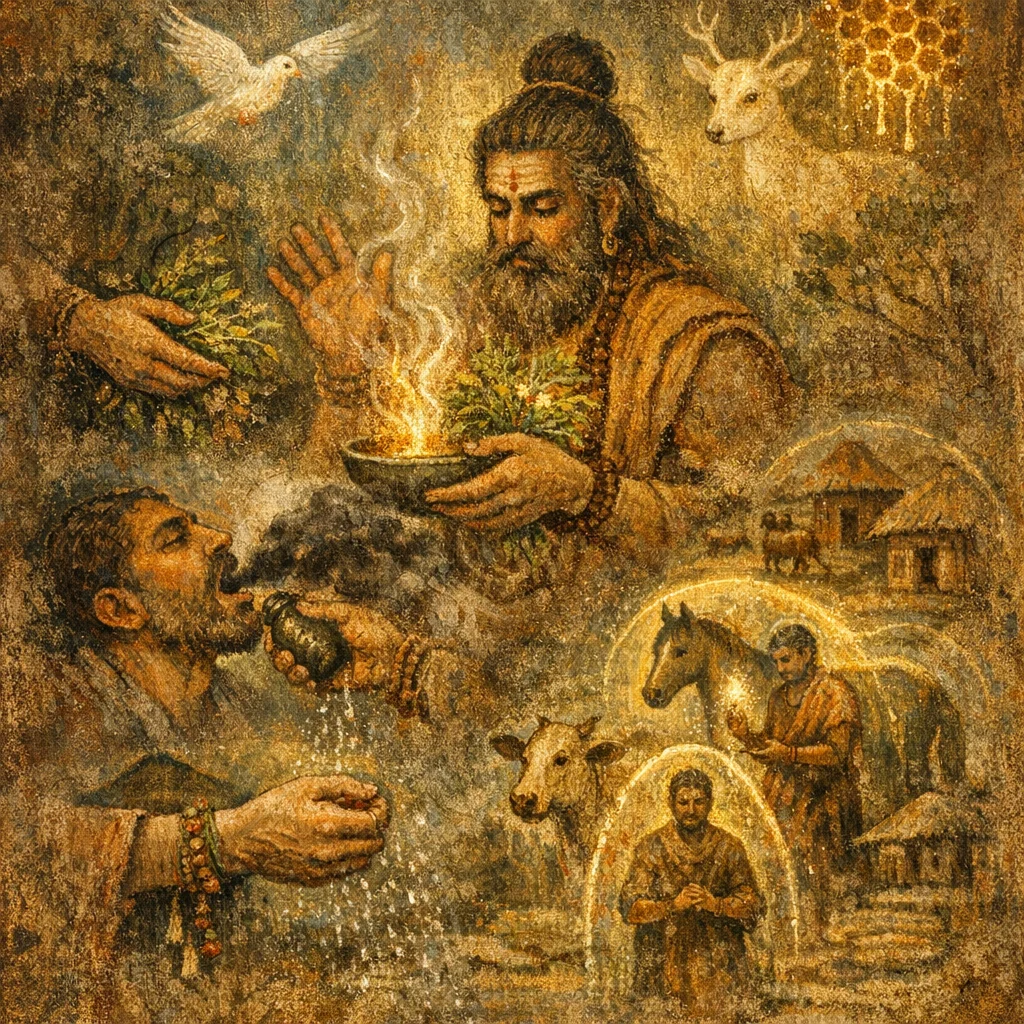
Sukta 7
Rishi: Atharvanic tradition (often associated with Bhṛgu/Angiras lineages in herb materials; exact anukramaṇī assignment varies)
Devata: Oṣadhayaḥ (Herbs) personified
Chandas: Mixed meters in the hymn per tradition; this verse commonly treated as a lyric in a triṣṭubh/jagatī-family environment, but exact chandas should be verified against padapāṭha/anukramaṇī.
Mantras
Mantra 1
ओषधयः। १२ पञ्चपदा विराडतिशक्वरी, १४ उपरिष्टान्निचृद् बृहती, २६ निचृत्, २८ भुरिक्। या बभ्रवो याश्च शुक्रा रोहिणीरुत पृश्नयः । असिक्नीः कृष्णा ओषधीः सर्वा अच्छावदामसि
Ye herbs that are brown, and ye that gleam in white, ye ruddy ones, and ye of speckled hue; ye dark, ye black—O all ye healing plants, to you we speak, inviting you draw near.
Mantra 2
त्रायन्तामिमं पुरुषं यक्ष्माद् देवेषितादधि । यासां द्यौष्पिता पृथिवी माता समुद्रो मूलं वीरुधां बभूव
Let them protect this man from yakṣma, from the malady the Gods have sent. Of those whose father is the Sky, whose mother is the Earth, whose root and primal source the Ocean-waters have become.
Mantra 3
आपो अग्रं दिव्या ओषधयः । तास्ते यक्ष्ममेनस्य१मङ्गादङ्गादनीनशन्
The Waters are first; divine are the Herbs: they, for thee, have driven out the sin-tainted yakṣma, from limb after limb.
Mantra 4
प्रस्तृणती स्तम्बिनीरेकशुङ्गाः प्रतन्वतीरोषधीरा वदामि । अंशुमतीः काण्डिनीर्या विशाखा ह्वयामि ते वीरुधो वैश्वदेवीरुग्राः पुरुषजीवनीः ॥४ यद् वः सहः सहमाना वीर्यं१यच्च वो बलम्। तेनेममस्माद् यक्ष्मात् पुरुषं मुञ्चतौषधीरथो कृणोमि भेषजम्
Herbs that spread abroad, stalk-bearing, single-spiked, that widely stretch themselves—these do I address. The ray-endowed, the jointed, those that are many-branched, I call—ye plants, All-gods’ own, fierce, preservers of man’s life. What conquering might is yours, what potency, and what your strength—therewith, O herbs, release this man from this yakṣma; so do I make the remedy.
Mantra 5
जीवलां नघारिषां जीवन्तीमोषधीमहम्। अरुन्धतीमुन्नयन्तीं पुष्पां मधुमतीमिह हुवेऽस्मा अरिष्टतातये
The life-bestowing, the harmless, the living herb do I invoke—Arundhatī, that leadeth upward, flowering, honey-sweet—here I call her, for this man, unto unharmed security.
Mantra 6
इहा यन्तु प्रचेतसो मेदिनीर्वचसो मम । यथेमं पारयामसि पुरुषं दुरितादधि
Hither let my wise, fatness-giving words come—so that we may bring this man safe across, away from distress.
Mantra 7
अग्नेर्घासो अपां गर्भो या रोहन्ति पुनर्णवाः । ध्रुवाः सहस्रनाम्नीर्भेषजीः सन्त्वाभृताः
Agni’s fodder, the Waters’ embryo—those that grow, the ever-renewing: steadfast, thousand-named, let the healing ones be brought hither.
Mantra 8
अवकोल्बा उदकात्मान ओषधयः । व्यृऽषन्तु दुरितं तीक्ष्णशृङ्ग्यः
The Avakolbā herbs, water-essenced—sharp-horned—let them sweep away distress.
Mantra 9
उन्मुञ्चन्तीर्विवरुणा उग्रा या विषदूषणीः । अथो बलासनाशनीः कृत्यादूषणीश्च यास्ता इहा यन्त्वोषधीः
Loosening, wide-unbinding, fierce are those Herbs that mar the poison; yea, those that slay balāsa, those that spoil the witchcraft: let those Herbs come hither unto this place.
Mantra 10
अपक्रीताः सहीयसीर्वीरुधो या अभिष्टुताः । त्रायन्तामस्मिन् ग्रामे गामश्वं पुरुषं पशुम्
Bought off and mightier—those Plants which have been duly praised—let them in this village guard the cow, the horse, the man, the beast.
Mantra 11
मधुमन्मूलं मधुमदग्रमासाम्मधुमन्मध्यं वीरुधां बभूव । मधुमत् पर्णं मधुमत् पुष्पमासां मधोः संभक्ता अमृतस्य भक्षो घृतमन्नं दुह्रतां गोपुरोगवम्
Honeyed their root, honeyed their summit; honeyed the midmost of the plants hath grown. Honeyed their leaf, honeyed their blossom; sharers in sweetness, food of immortality—let them yield ghee and nourishment, cow-leading, for the cattle-wealth.
Mantra 12
यावतीः कियतीश्चेमाः पृथिव्यामध्योषधीः । ता मा सहस्रपर्ण्योऽ मृत्योर्मुञ्चन्त्वंहसः
Whatsoever, how many soever, these Herbs are upon the earth—let those thousand-leaved release me from distress, from death.
Mantra 13
वैयाघ्रो मणिर्वीरुधां त्रायमानोऽभिशस्तिपाः । अमीवाः सर्वा रक्षांस्यप हन्त्वधि दूरमस्मत्
The tiger-like amulet of the plants, protecting, warding off imprecation—let it smite away all sicknesses, all demons, far from us.
Mantra 14
सिंहस्येव स्तनथोः सं विजन्तेऽग्नेरिव विजन्त आभृताभ्यः । गवां यक्ष्मः पुरुषाणां वीरुद्भिरतिनुत्तो नाव्याऽएतु स्रोत्याः
As at the lion’s roaring they are driven apart, as by Agni’s might they are driven forth from the gathered remedies: the yákṣma of cattle, the yákṣma of men—by the plants thrust utterly away—let it depart by boat unto the running streams.
Mantra 15
मुमुचाना ओषधयोऽग्नेर्वैश्वानरादधि । भूमिं संतन्वतीरित यासां राजा वनस्पतिः
Releasing (from bonds) are the Herbs, from Agni, from Vaiśvānara; spreading themselves upon the Earth—go ye forth—of whom the Forest-Lord is the King.
Mantra 16
या रोहन्त्याङ्गिरसीः पर्वतेषु समेषु च । ता नः पयस्वतीः शिवा ओषधीः सन्तु शं हृदे
What herbs, Angirasa-born, grow upon the mountains and upon the level plains—let those, rich in sap as milk, auspicious herbs be ours, for welfare to the heart.
Mantra 17
याश्चाहं वेद वीरुधो याश्च पश्यामि चक्षुषा । अज्ञाता जानीमश्च या यासु विद्म च संभृतम्
The plants that I know, and those that I behold with mine eye; the unknown also that we yet recognize; and those in which we know the gathered store (of virtue)—
Mantra 18
सर्वाः समग्रा ओषधीर्बोधन्तु वचसो मम । यथेमं पारयामसि पुरुषं दुरितादधि
Let all the Herbs, whole and entire, awaken to my word, that we may bring this man safely across, away from distress and evil.
Mantra 19
अश्वत्थो दर्भो वीरुधां सोमो राजामृतं हविः । व्रीहिर्यवश्च भेषजौ दिवस्पुत्रावमर्त्यौ
The Aśvattha, the Darbha, Soma the King of plants—ambrosia as oblation: and Rice with Barley, a pair of remedies, Heaven’s sons, immortal.
Mantra 20
उज्जिहीध्वे स्तनयत्यभिक्रन्दत्योषधीः । यदा वः पृश्निमातरः पर्जन्यो रेतसावति
Start forth, O Herbs, when it thunders, when it roars aloud over you—when Parjanya, for you whose mothers are the speckled one, waters with seed.
Mantra 21
तस्यामृतस्येमं बलं पुरुषं पाययामसि । अथो कृणोमि भेषजं यथा सच्छतहायनः
Of that ambrosia we make this man to drink the strength; moreover I prepare the remedy, that he may be of a hundred years.
Mantra 22
वराहो वेद वीरुधं नकुलो वेद भेषजीम्। सर्पा गन्धर्वा या विदुस्ता अस्मा अवसे हुवे
The Boar knows the plant; the Mongoose knows the remedy. What Serpents and Gandharvas know—those I invoke for this man’s aid.
Mantra 23
याः सुपर्णा आङ्गिरसीर्दिव्या या रघतो विदुः । वयांसि हंसा या विदुर्याश्च सर्वे पतत्रिणः । मृगा या विदुरोषधीस्ता अस्मा अवसे हुवे
What fair-winged, Angirasa, heavenly ones the swift have known—what birds, what geese have known, yea what all winged creatures; what wild beasts have known of herbs—those I invoke for this man’s aid.
Mantra 24
यावतीनामोषधीनां गावः प्राश्नन्त्यघ्न्या यावतीनामजावयः । तावतीस्तुभ्यमोषधीः शर्म यच्छन्त्वाभृताः
As many as are the healing herbs whereon the inviolable cows do feed, as many as those whereon goats and sheep do browse,—so many herbs, brought hither, let them bestow on thee protection and repose.
Mantra 25
यावतीषु मनुष्याऽ भेषजं भिषजो विदुः । तावतीर्विश्वभेषजीरा भरामि त्वामभि
What remedies, among mankind, the healers know,—so many, all-healing, do I bring hither and apply upon thee.
Mantra 26
पुष्पवतीः प्रसूमतीः फलिनीरफला उत। संमातर इव दुह्रामस्मा अरिष्टतातये
Flower-bearing, richly teeming, fruit-bearing, yea fruitless also,—like mothers all together let us milk them for this man, for unimpaired security.
Mantra 27
उत् त्वाहार्षं पञ्चशलादथो दशशलादुत। अथो यमस्य पड्वीशाद् विश्वस्माद् देवकिल्बिषात्
I have lifted thee forth from the fivefold snare, and also from the tenfold snare; yea, moreover from Yama’s binding, from every god-provoked offence.
Frequently Asked Questions
It is a bhaiṣajya (healing) hymn used to summon medicinal herbs as divine helpers, especially to remove yakṣma (wasting/consumption-type illness) and restore strength.
The color and form catalog is a ritual way of saying “all herbs without exception,” ensuring the healer calls every available medicinal power—creepers, stalked plants, single-spiked, many-branched, and more.
Besides curing disease, the hymn seeks complete deliverance: freedom from death’s noose imagery (Yama’s bond) and from pollution-like guilt or offence (devakilbiṣa) believed to sustain misfortune or illness.