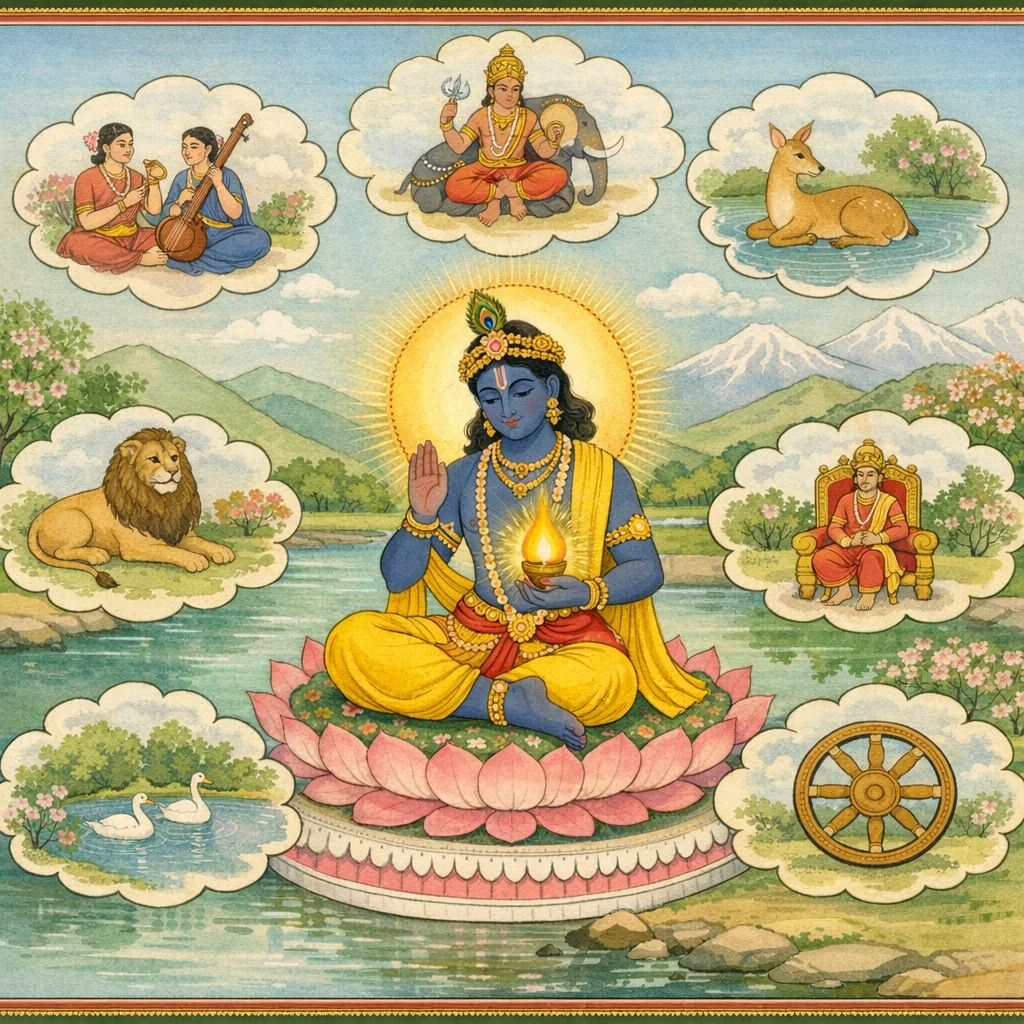
Chapter 10: Vibhuti Yoga
विभूतियोग
The Yoga of Divine Manifestations
Chapter 10 (Vibhūti-yoga) deepens the devotional-metaphysical arc of the Gītā by mapping how the Absolute becomes intelligible to the finite mind through discernible excellences (vibhūtis). Kṛṣṇa, addressing Arjuna’s receptive yet questioning consciousness, clarifies that even celestial and sage lineages do not fully grasp the origin of the Divine, because the Divine is their very source. The ethical framework shifts from dilemma-resolution to contemplative orientation: knowledge of Kṛṣṇa as unborn, beginningless Lord dissolves delusion and loosens karmic bondage. Kṛṣṇa presents an interior soteriological path—steady devotion met by “buddhi-yoga,” the illuminating discernment that dispels ignorance from within. Arjuna responds with theological affirmation and requests a systematic catalogue of divine pervasions to stabilize meditation. Kṛṣṇa then enumerates archetypal manifestations across cosmology, psychology, language, time, leadership, and excellence, concluding that the world is sustained by a mere “portion” of divine potency. The chapter thus teaches a practical contemplative method: recognize the sacred through the highest exemplars, converting perception into devotion and clarity.
Speakers
Key Concepts
Philosophical Constructs
Shlokas in Chapter 10
Verse 1
श्रीभगवानुवाच । भूय एव महाबाहो शृणु मे परमं वचः यत्तेऽहं प्रीयमाणाय वक्ष्यामि हितकाम्यया ॥ १०.१ ॥
The Blessed Lord said: Once more, O mighty-armed, hear My supreme word, which I shall speak to you—who are dear to Me—for your welfare.
Verse 2
न मे विदुः सुरगणाः प्रभवं न महर्षयः । अहमादिर्हि देवानां महर्षीणां च सर्वशः ॥ १०.२ ॥
Neither the hosts of gods nor the great seers know My origin; for in every way I am the source of the gods and the great seers.
Verse 3
यो मामजमनादिं च वेत्ति लोकमहेश्वरम् । असंमूढः स मर्त्येषु सर्वपापैः प्रमुच्यते ॥ १०.३ ॥
He who knows Me as unborn and beginningless, as the great Lord of the worlds—he, undeluded among mortals, is freed from all sins.
Verse 4
बुद्धिर्ज्ञानमसंमोहः क्षमा सत्यं दमः शमः । सुखं दुःखं भवोऽभावो भयं चाभयमेव च ॥ १०.४ ॥
Intellect, knowledge, freedom from delusion, forgiveness, truth, self-restraint, inner calm; pleasure and pain, being and non-being, fear and fearlessness—
Verse 5
अहिंसा समता तुष्टिस्तपो दानं यशोऽयशः । भवन्ति भावा भूतानां मत्त एव पृथग्विधाः ॥ १०.५ ॥
Non-violence, equanimity, contentment, austerity, charity, fame and infamy—these diverse states of beings arise from Me alone, in manifold ways.
Verse 6
महर्षयः सप्त पूर्वे चत्वारो मनवस्तथा । मद्भावा मानसा जाता येषां लोक इमाः प्रजाः ॥ १०.६ ॥
The seven great seers of old, and the four Manus likewise, were born of My mind, endowed with My nature; from them have sprung these creatures in the world.
Verse 7
एतां विभूतिं योगं च मम यो वेत्ति तत्त्वतः । सोSविकल्पेन योगेन युज्यते नात्र संशयः ॥ १०.७ ॥
He who truly knows this—My divine manifestations and My yoga—is united with Me through unwavering yoga; of this there is no doubt.
Verse 8
अहं सर्वस्य प्रभवो मत्तः सर्वं प्रवर्तते । इति मत्वा भजन्ते मां बुधा भावसमन्विताः ॥ १०.८ ॥
I am the source of all; from Me everything proceeds. Knowing thus, the wise worship Me, endowed with devotion of the heart.
Verse 9
मच्चित्ता मद्गतप्राणा बोधयन्तः परस्परम् । कथयन्तश्र्च मां नित्यं तुष्यन्ति च रमन्ति च ॥ १०.९ ॥
With minds fixed on Me and life-breath devoted to Me, enlightening one another and ever speaking of Me, they remain content and rejoice.
Verse 10
तेषां सततयुक्तानां भजतां प्रीतिपूर्वकम् । ददामि बुद्धियोगं तं येन मामुपयान्ति ते ॥ १०.१० ॥
To those who are ever steadfastly united with Me, who worship Me with love, I bestow that buddhi-yoga—the yoga of discerning wisdom—by which they come to Me.
Verse 11
तेषामेवानुकम्पार्थमहमज्ञानजं तमः । नाशयाम्यात्मभावस्थो ज्ञानदीपेन भास्वता ॥ १०.११ ॥
Out of compassion for them alone, I, abiding in their very inner being, destroy the darkness born of ignorance with the radiant lamp of knowledge.
Verse 12
अर्जुन उवाच । परं ब्रह्म परं धाम पवित्रं परमं भवान् पुरुषं शाश्र्वतं दिव्यमादिदेवमजं विभुम् ॥ १०.१२ ॥
Arjuna said: You are the Supreme Brahman, the supreme abode, the supremely pure; the eternal Divine Person, the primal God, unborn, all-pervading.
Verse 13
आहुस्त्वामृषयः सर्वे देवर्षिर्नारदस्तथा । असितो देवलो व्यासः स्वयं चैव ब्रवीषि मे ॥ १०.१३ ॥
All the sages proclaim You thus; so too the divine seer Nārada, Asita, Devala, and Vyāsa; and You Yourself also declare it to me.
Verse 14
सर्वमेतदृतं मन्ये यन्मां वदसि केशव । न हि ते भगवन्व्यक्तिं विदुर्देवा न दानवाः ॥ १०.१४ ॥
I hold all this to be true that You speak to me, O Keśava; for, O Lord, neither the gods nor the demonic beings truly know Your manifestation.
Verse 15
स्वयमेवात्मनात्मानं वेत्थ त्वं पुरुषोत्तम । भूतभावन भूतेश देवदेव जगत्पते ॥ १०.१५ ॥
You alone know Yourself by Yourself, O Supreme Person. O source of all beings, Lord of beings, God of gods, Lord of the universe.
Verse 16
वक्तुमर्हस्यशेषेण दिव्या ह्यात्मविभूतयः । याभिर्विभूतिभिर्लोकानिमांस्त्वं व्याप्य तिष्ठसि ॥ १०.१६ ॥
Please tell me, without omission, Your divine manifestations—those manifestations by which You pervade these worlds and abide (within them).
Verse 17
कथं विद्यामहं योगिंस्त्वां सदा परिचिन्तयन् । केषु केषु च भावेषु चिन्त्योऽसि भगवन्मया ॥ १०.१७ ॥
How shall I know You, O Yogin, by constantly meditating upon You? And in what ways and in what states are You to be contemplated by me, O Lord?
Verse 18
विस्तरेणात्मनो योगं विभूतिं च जनार्दन । भूयः कथय तृप्तिर्हि शृण्वतो नास्ति मेऽमृतम् ॥ १०.१८ ॥
Explain again, in detail, O Janārdana, Your yoga and Your manifestations; for, while hearing Your nectar-like words, I find no satisfaction (no satiety).
Verse 19
श्रीभगवानुवाच । हन्त ते कथयिष्यामि दिव्या ह्यात्मविभूतयः प्राधान्यतः कुरुश्रेष्ठ नास्त्यन्तो विस्तरस्य मे ॥ १०.१९ ॥
The Blessed Lord said: Very well—now I shall tell you of My divine manifestations, in their principal forms, O best of the Kurus; for there is no end to the expanse of My manifestations.
Verse 20
अहमात्मा गुडाकेश सर्वभूताशयस्थितः । अहमादिश्च मध्यं च भूतानामन्त एव च ॥ १०.२० ॥
O Gudākeśa, I am the Self abiding in the hearts of all beings; I am the beginning, the middle, and also the very end of beings.
Verse 21
आदित्यानामहं विष्णुर्ज्योतिषां रविरंशुमान् । मरीचिर्मरुतामस्मि नक्षत्राणामहं शशी ॥ १०.२१ ॥
Among the Ādityas I am Viṣṇu; among luminaries I am the radiant Sun; among the Maruts I am Marīci; among the stars I am the Moon.
Verse 22
वेदानां सामवेदोऽस्मि देवानामस्मि वासवः । इन्द्रियाणां मनश्चास्मि भूतानामस्मि चेतना ॥ १०.२२ ॥
Among the Vedas I am the Sāma Veda; among the gods I am Vāsava (Indra); among the senses I am the mind; and among beings I am consciousness.
Verse 23
रुद्राणां शंकरश्चास्मि वित्तेशो यक्षरक्षसाम् । वसूनां पावकश्चास्मि मेरुः शिखरिणामहम् ॥ १०.२३ ॥
Among the Rudras I am Śaṅkara; among the Yakṣas and Rākṣasas I am the lord of wealth (Kubera); among the Vasus I am Fire; among mountains I am Meru.
Verse 24
पुरोधसां च मुख्यं मां विद्धि पार्थ बृहस्पतिम् । सेनानीनामहं स्कन्दः सरसामस्मि सागरः ॥ १०.२४ ॥
Among priests, O Pārtha, know Me to be the foremost—Bṛhaspati; among commanders I am Skanda; among bodies of water I am the ocean.
Verse 25
महर्षीणां भृगुरहं गिरामस्म्येकमक्षरम् । यज्ञानां जपयज्ञोऽस्मि स्थावराणां हिमालयः ॥ १०.२५ ॥
Among the great sages I am Bhṛgu; among words I am the single imperishable syllable (Oṁ). Among sacrifices I am the sacrifice of japa (sacred repetition); among immovable things I am the Himālaya.
Verse 26
अश्वत्थः सर्ववृक्षाणां देवर्षीणां च नारदः । गन्धर्वाणां चित्ररथः सिद्धानां कपिलो मुनिः ॥ १०.२६ ॥
Among all trees I am the Aśvattha (sacred fig); among divine sages I am Nārada. Among Gandharvas I am Citraratha; among the perfected ones I am the sage Kapila.
Verse 27
उच्चैःश्रवसमश्वानां विद्धि माममृतोद्भवम् । ऐरावतं गजेन्द्राणां नराणां च नराधिपम् ॥ १०.२७ ॥
Among horses know Me as Uccaiḥśravas, born of nectar; among lordly elephants I am Airāvata; and among men I am the king.
Verse 28
आयुधानामहं वज्रं धेनूनामस्मि कामधुक् । प्रजनश्चास्मि कन्दर्पः सर्पाणामस्मि वासुकिः ॥ १०.२८ ॥
Among weapons I am the Vajra (thunderbolt); among cows I am Kāmadhuk, the wish-fulfilling cow. I am procreation, and I am Kandarpa (the god of love); among serpents I am Vāsuki.
Verse 29
अनन्तश्चास्मि नागानां वरुणो यादसामहम् । पितॄणामर्यमा चास्मि यमः संयमतामहम् ॥ १०.२९ ॥
Among nāgas I am Ananta; among aquatic beings I am Varuṇa. Among the ancestors I am Aryaman; among those who restrain and govern I am Yama.
Verse 30
प्रह्लादश्चास्मि दैत्यानां कालः कलयतामहम् । मृगाणां च मृगेन्द्रोऽहं वैनतेयश्च पक्षिणाम् ॥ १०.३० ॥
Among the Daityas I am Prahlāda; among those who reckon, I am Time. Among beasts I am the lord of beasts; among birds I am Vainateya (Garuḍa).
Verse 31
पवनः पवतामस्मि रामः शस्त्रभृतामहम् । झषाणां मकरश्चास्मि स्रोतसामस्मि जाह्नवी ॥ १०.३१ ॥
Among purifiers I am the wind; among weapon-bearers I am Rāma. Among aquatic creatures I am the makara; among rivers I am Jāhnavī (the Gaṅgā).
Verse 32
सर्गाणामादिरन्तश्च मध्यं चैवाहमर्जुन । अध्यात्मविद्या विद्यानां वादः प्रवदतामहम् ॥ १०.३२ ॥
Of creations I am the beginning, the end, and also the middle, O Arjuna. Of knowledges I am the knowledge of the Self; among those who debate, I am true discourse.
Verse 33
अक्षराणामकारोऽस्मि द्वन्द्वः सामासिकस्य च । अहमेवाक्षयः कालो धाताहं विश्वतोमुखः ॥ १०.३३ ॥
Among letters I am ‘A’; among compounds I am the dvandva. I alone am imperishable Time; I am the sustainer, facing all directions.
Verse 34
मृत्युः सर्वहरश्चाहमुद्भवश्च भविष्यताम् । कीर्तिः श्रीर्वाक्च नारीणां स्मृतिर्मेधा धृतिः क्षमा ॥ १०.३४ ॥
I am death that takes away all; and I am the arising of those who are yet to be. Among women I am fame, prosperity, speech, memory, intelligence, steadfastness, and forbearance.
Verse 35
बृहत्साम तथा साम्नां गायत्री छन्दसामहम् । मासानां मार्गशीर्षोऽहमृतूनां कुसुमाकरः ॥ १०.३५ ॥
Among the Sāma hymns I am the Bṛhat-sāman; among metres I am the Gāyatrī. Among months I am Mārgaśīrṣa; among seasons I am spring, the flower-bearing season.
Verse 36
द्यूतं छलयतामस्मि तेजस्तेजस्विनामहम् । जयोऽस्मि व्यवसायोऽस्मि सत्त्वं सत्त्ववतामहम् ॥ १०.३६ ॥
Among those who deceive I am gambling; among the radiant I am radiance. I am victory; I am steadfast resolve; I am goodness among the good.
Verse 37
वृष्णीनां वासुदेवोऽस्मि पाण्डवानां धनंजयः । मुनीनामप्यहं व्यासः कवीनामुशना कविः ॥ १०.३७ ॥
Among the Vṛṣṇis I am Vāsudeva; among the Pāṇḍavas I am Dhanañjaya (Arjuna). Among sages too I am Vyāsa; among poets I am Uśanā (Śukra).
Verse 38
दण्डो दमयतामस्मि नीतिरस्मि जिगीषताम् । मौनं चैवास्मि गुह्यानां ज्ञानं ज्ञानवतामहम् ॥ १०.३८ ॥
Among those who restrain and discipline I am the rod (authority); among those who seek conquest I am right policy. Among secrets I am silence; among the wise I am knowledge.
Verse 39
यच्चापि सर्वभूतानां बीजं तदहमर्जुन । न तदस्ति विना यत्स्यान्मया भूतं चराचरम् ॥ १०.३९ ॥
And whatever is the seed of all beings, that I am, O Arjuna. There is no being—moving or unmoving—that can exist without Me.
Verse 40
नान्तोऽस्ति मम दिव्यानां विभूतीनां परन्तप । एष तूद्देशतः प्रोक्तो विभूतेर्विस्तरो मया ॥ १०.४० ॥
O Parantapa (scorcher of foes)! There is no end to My divine manifestations. This vastness of My vibhūtis has been spoken by Me only in brief, by way of indication.
Verse 41
यद्यद्विभूतिमत्सत्त्वं श्रीमदूर्जितमेव वा । तत्तदेवावगच्छ त्वं मम तेजोंऽशसंभवम् ॥ १०.४१ ॥
Whatever being is endowed with vibhūti—prosperity, splendor, or mighty power—know that to be born of a portion of My radiance (tejas).
Verse 42
अथवा बहुनैतेन किं ज्ञातेन तवार्जुन । विष्टभ्याहमिदं कृत्स्नमेकांशेन स्थितो जगत् ॥ १०.४२ ॥
Or what is the use of knowing all this in detail, O Arjuna? I sustain and pervade this entire universe, standing by a single portion of Myself.
Frequently Asked Questions
It trains attention: instead of being scattered by complexity, the mind learns to anchor on the highest exemplars (vibhūtis). This converts admiration into contemplative focus, reducing confusion (asammoha) and strengthening steady devotion.
Kṛṣṇa is presented as the unborn, beginningless source and inner presence of all beings; even cosmic intelligences arise from Him. The many excellences of the world are readable as partial disclosures of one sustaining Reality.
By providing a method of discernment: when Arjuna asks how to contemplate the Divine in daily experience, Kṛṣṇa offers a structured map of manifestations and promises buddhi-yoga to the devoted—turning uncertainty into guided insight.
Use ‘vibhūti-practice’ as a focus tool: identify the highest form of excellence in your work (integrity, mastery, service), treat it as a cue for remembrance and humility, and make decisions from clarity rather than reactivity—supporting leadership, stress regulation, and purpose.