
Bhagavad Gita — Vibhuti Yoga, Shloka 41
Vibhuti Yoga
यद्यद्विभूतिमत्सत्त्वं श्रीमदूर्जितमेव वा । तत्तदेवावगच्छ त्वं मम तेजोंऽशसंभवम् ॥ १०.४१ ॥
yad yad vibhūtimat sattvaṁ śrīmad ūrjitam eva vā | tat tad evāvagaccha tvaṁ mama tejo-'ṁśa-sambhavam || 10.41 ||

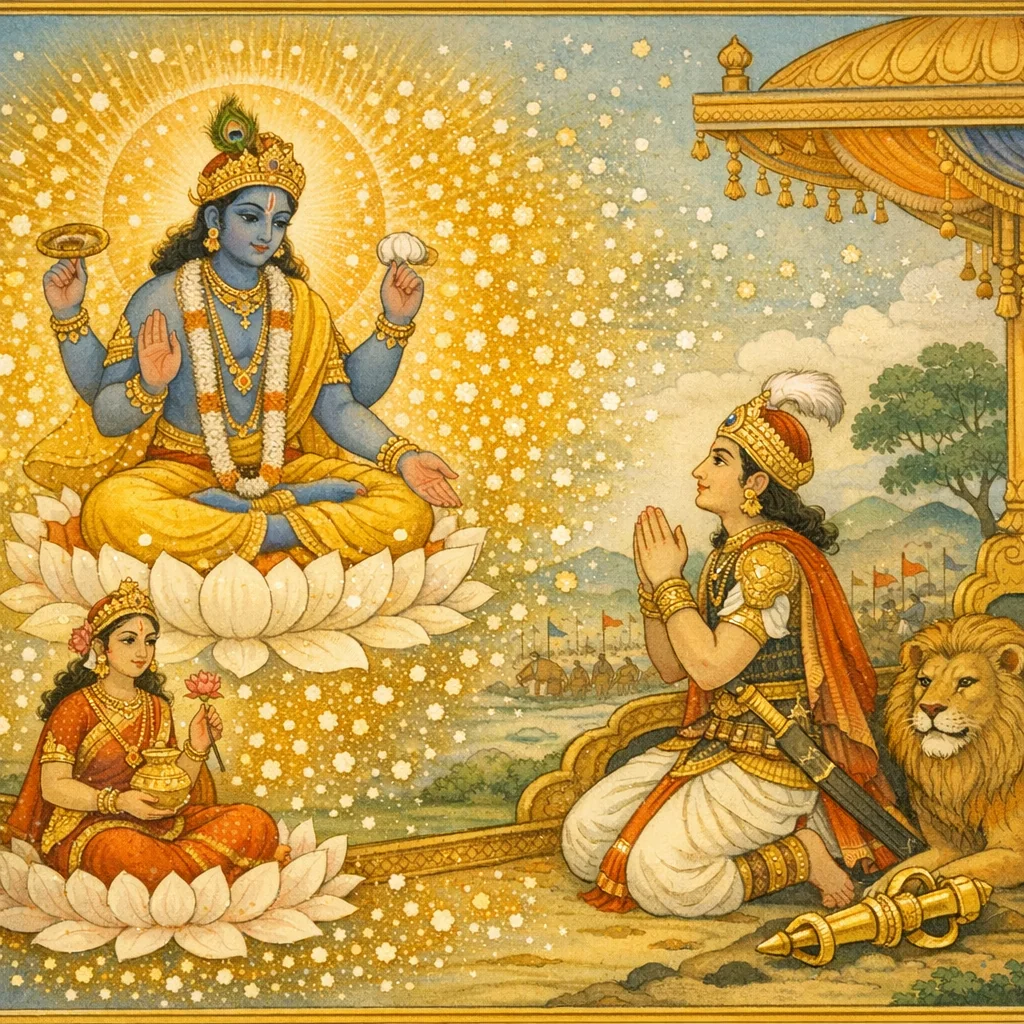
Whatever being is endowed with vibhūti—prosperity, splendor, or mighty power—know that to be born of a portion of My radiance (tejas).
जो जो ऐश्वर्ययुक्त, शोभायुक्त या सामर्थ्ययुक्त वस्तु है, उसे तुम मेरे तेज के अंश से उत्पन्न जानो।
Whatever being is endowed with manifestation, prosperity, or power—know that to arise from a portion of my radiance.
The key term tejas (“radiance/energy/splendor”) is rendered variously as divine brilliance, power, or glory. Some commentaries stress moral-spiritual excellence; others include all forms of extraordinary capability.
FAQs
The verse offers a way to interpret encounters with excellence—admiration can be redirected from envy or fixation toward appreciation and learning, seeing greatness as participatory rather than isolating.
It proposes a participatory ontology: exceptional qualities in beings are not self-originating but derive from a share of the divine ‘radiance’ sustaining the cosmos.
After listing specific vibhūtis, Krishna gives Arjuna a general heuristic: identify any remarkable splendor as rooted in the divine.
It can ground an ethic of respect for talent and achievement while discouraging absolutizing individuals—excellence is acknowledged without deifying the person.