
Bhagavad Gita — Vibhuti Yoga, Shloka 1
Vibhuti Yoga
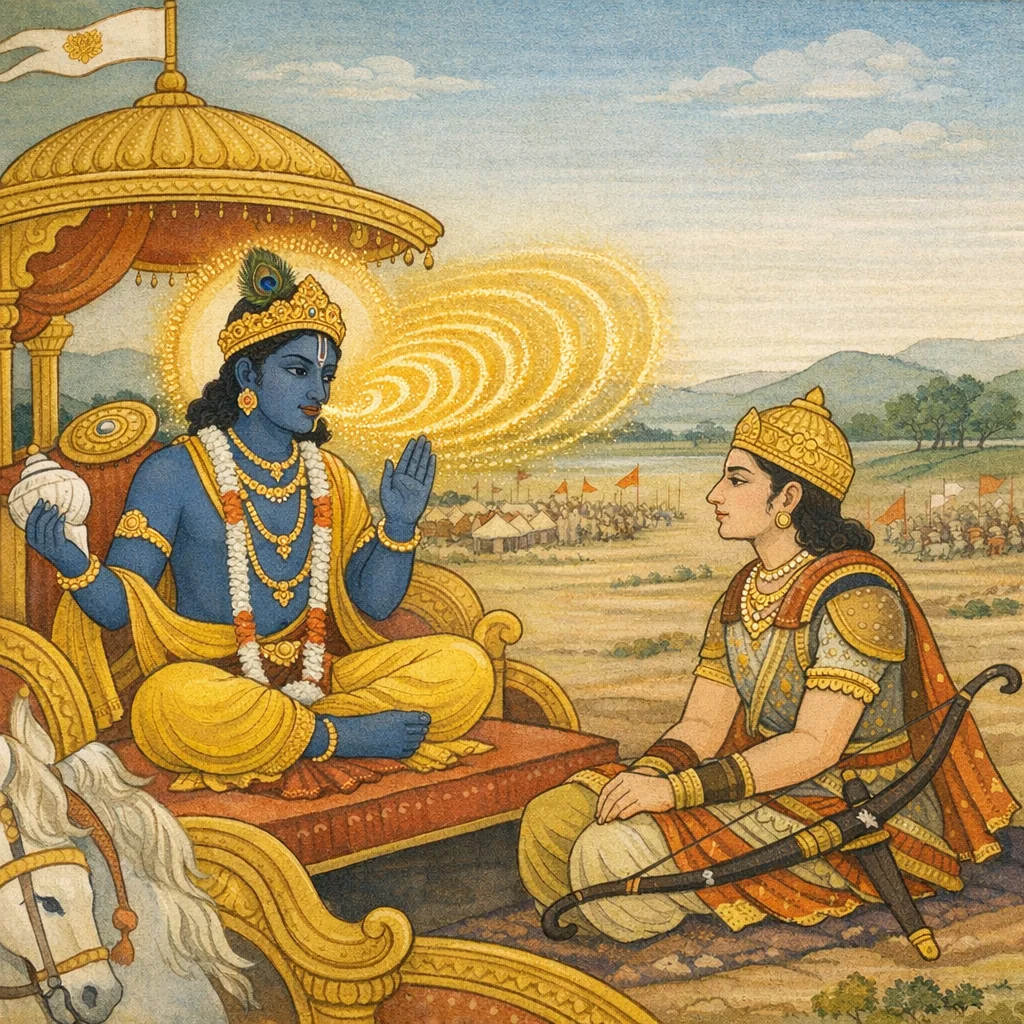
श्रीभगवानुवाच । भूय एव महाबाहो शृणु मे परमं वचः यत्तेऽहं प्रीयमाणाय वक्ष्यामि हितकाम्यया ॥ १०.१ ॥
śrī-bhagavān uvāca | bhūya eva mahā-bāho śṛṇu me paramaṁ vacaḥ | yat te ’haṁ prīyamāṇāya vakṣyāmi hita-kāmyayā || 10.1 ||

The Blessed Lord said: Once more, O mighty-armed, hear My supreme word, which I shall speak to you—who are dear to Me—for your welfare.
The Blessed Lord said: Again, O mighty-armed, hear My supreme word, which I shall speak to you, who are dear to Me, for your welfare.
The Lord said: Once more, O mighty-armed, listen to My highest teaching, which, desiring your good, I will declare to you who are pleasing (to Me).
‘prīyamāṇāya’ can be read as ‘to you who are dear/pleasing’ (recipient characterization) rather than as Arjuna’s emotional state. The verse is a formal transition introducing Chapter 10’s focus on divine ‘vibhūti’ (manifest excellences).
FAQs
The verse models supportive instruction: repeating key ideas and framing them as for the listener’s welfare can increase receptivity and reduce defensiveness.
By announcing ‘highest teaching,’ it signals a shift to describing how the ultimate reality can be recognized through exemplary manifestations within the world.
It opens Chapter 10 and prepares the audience for an enumerative discourse on divine excellences (vibhūtis) that make the transcendent intelligible through immanent signs.
In teaching or mentoring contexts, it supports the value of reiteration and benevolent intent: complex ideas often require multiple presentations oriented to the learner’s good.