
Bhagavad Gita — Vibhuti Yoga, Shloka 21
Vibhuti Yoga
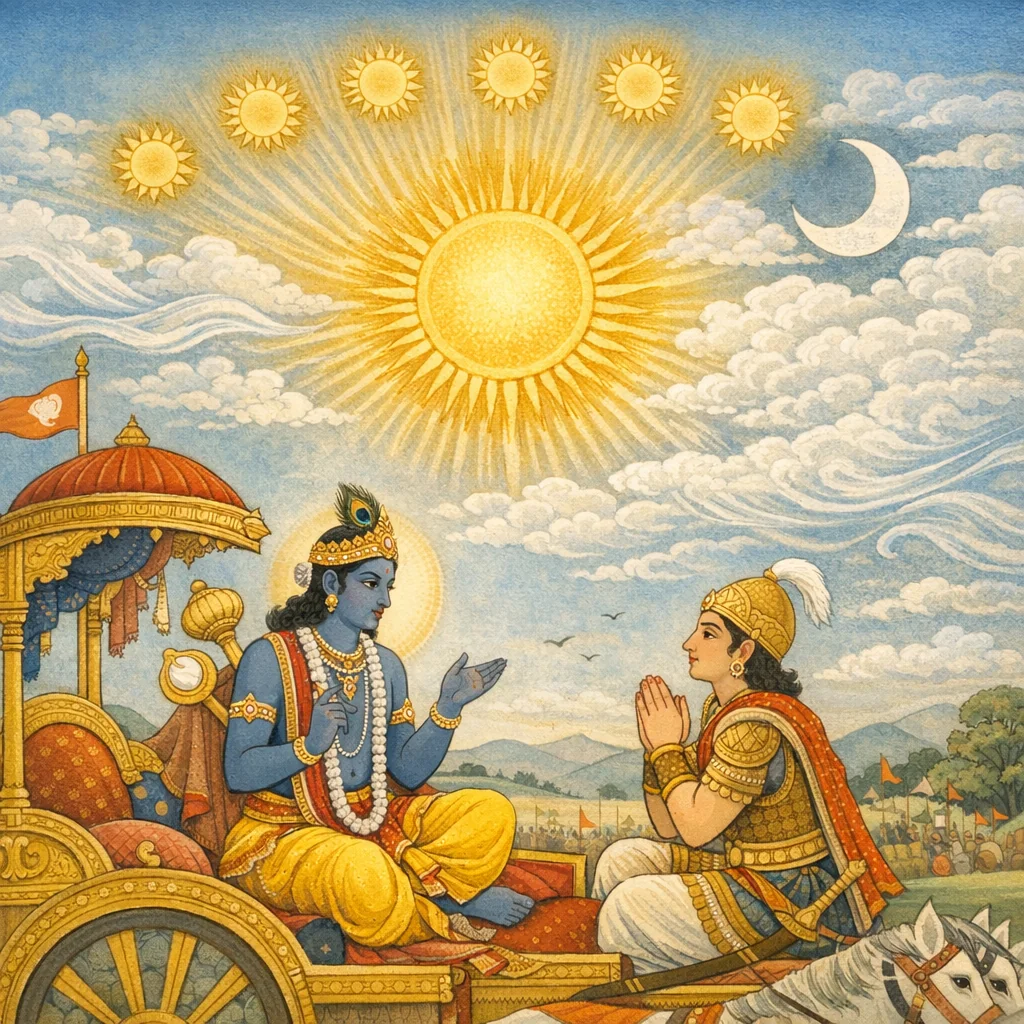
आदित्यानामहं विष्णुर्ज्योतिषां रविरंशुमान् । मरीचिर्मरुतामस्मि नक्षत्राणामहं शशी ॥ १०.२१ ॥
ādityānām ahaṃ viṣṇur jyotiṣāṃ ravir aṃśumān | marīcir marutām asmi nakṣatrāṇām ahaṃ śaśī || 10.21 ||

Among the Ādityas I am Viṣṇu; among luminaries I am the radiant Sun; among the Maruts I am Marīci; among the stars I am the Moon.
Among the Adityas I am Vishnu; among lights I am the radiant Sun; among the Maruts I am Marichi; among the stars I am the Moon.
Among the Ādityas I am Viṣṇu; among luminous bodies I am the sun with rays; among the Maruts I am Marīci; among the constellations I am the moon.
‘jyotiṣām’ can denote ‘lights’ broadly (luminaries) rather than abstract ‘light.’ ‘śaśī’ is the moon; some translations say ‘among stars I am the moon,’ though technically the moon is not a star—this reflects idiomatic grouping of celestial lights.
FAQs
Using prominent natural symbols (sun, moon) stabilizes attention and evokes clarity and regularity—qualities associated with disciplined understanding.
The divine is indicated through the most eminent instance within a category; excellence functions as a sign (liṅga) of the sacred presence.
This continues the illustrative list, drawing from Vedic-deity groupings (Ādityas, Maruts) familiar to early Indian audiences.
Encourages a non-sectarian reverence for natural phenomena as reminders of intelligibility and value in the world.